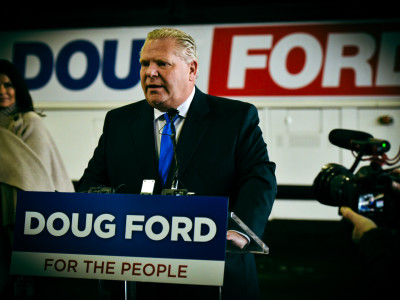
One letter, two choices: that’s what the Doug Ford government left the Town of Caledon with when it asked the municipality to withdraw its proposed legislative amendments to create stricter policies for pits and quarry operations; or risk provincial intervention.
After another move by Ford and his PC government to lord authority over land use decisions in Ontario, stripping local governments of their traditional responsibilities, the Town is refusing to bend. It has spent more than four years creating a shield against giant corporate aggregate interests that have left gaping pits and quarries across the pristine rural community’s vast landscape.
Latest Episode

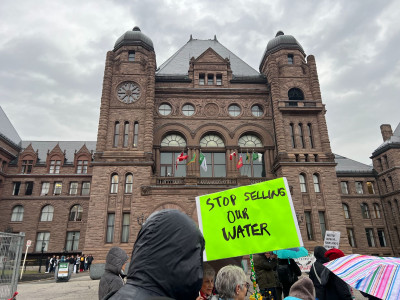
Niagara residents and frontline workers are raising the red flag on the Doug Ford government’s proposed legislative changes over water governance. They fear multiple omnibus bills have little to do with cutting costs and are more about centralizing power.
With the highest water and wastewater bills in the province, a majority of Niagara residents worry Ontario’s water systems shaped by Bill 60 and 98 could further destabilize their own financial future.

A haunting visual and emotional reckoning—3,000 dead birds laid bare—served as a wakeup call for change as part of FLAP Canada’s annual exhibit, ‘Birds Without Borders’ on April 11.
For the first time in close to two decades, migratory birds travelling back to Ontario to enjoy spring won’t have policy protections — a stark turn away from decades of bird-safe building progress. The PCs’ latest housing legislation, Bill 98, if passed, is about to make matters worse.
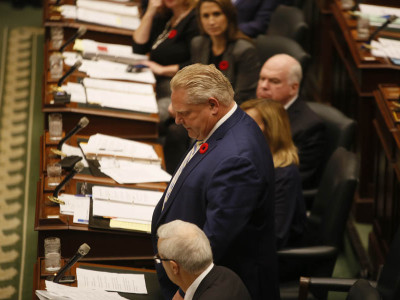
Peel’s provincial elected officials have refused to answer questions about the PC government’s controversial proposal to shield them from access to information rules.
The freedom of information system is a critical tool for the public and media to hold the government to account. The proposed changes are being labelled as further democratic backsliding under Doug Ford’s leadership.
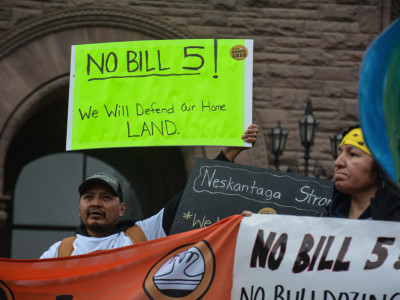
A coalition of environmental and public interest groups is taking the Doug Ford government to court, challenging the constitutional validity of the Special Economic Zones Act introduced as part of its contentious Bill 5.
While the PCs claim the regulations are necessary to speed up projects that will benefit Ontario’s long-term economic growth, legal experts argue it creates “lawless zones” where legal rights, protections and accountabilities can be overridden at the discretion of Cabinet, to the benefit of Ford’s inner circle.
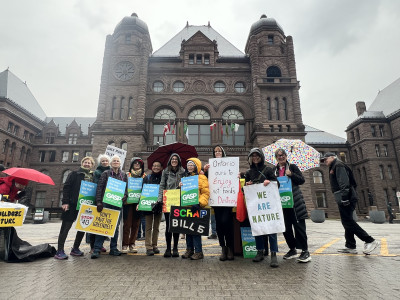
On March 26, grandmothers and grandfathers gathered outside Queen’s Park pleading with the Doug Ford PC government to not bulldoze their children’s and grandchildren’s future.
Instead, leaning on global uncertainty to justify its spending, the government unveiled the 2026 budget: ‘A Plan to Protect Ontario’ which dismisses climate change and prioritizes highways, while offering little to struggling families.
Latest Episode

It’s been two years since the Ontario Science Centre closed. While the Doug Ford government recently awarded a contract to a builders’ group for a new location at Ontario Place, local grassroots groups are fighting to preserve the landmark building.
As Ontarians navigate the political games, one astronomer has been on a mission to bring the planetarium experience to young kids, to inspire Canadians as the Artemis II mission and astronaut Jeremy Hansen capture the national imagination.
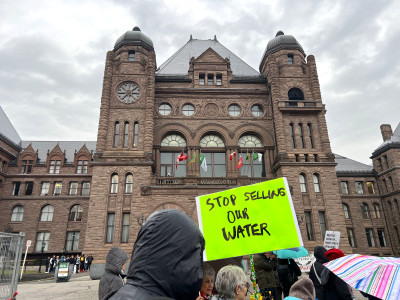
Doug Ford’s approval rating has dropped into net-negative territory, mirroring the housing starts in Ontario that are near historic lows. That has only pushed his PC government to fast-track more legislation that guts environmental protections in the name of affordable housing.
With Bill 60, Queen’s Park has expanded the private sector’s stake in water and wastewater services, with little clarity on the implications — leaving the Region of Peel struggling for answers as it transitions to an untested model for water management that more than 1.8 million residents rely on.

The Firearm Safety Education Service of Ontario (FSESO), the group solely responsible for training those looking to get a legal gun licence in Ontario, has been accused of putting business interests ahead of public safety.
The organization is facing allegations of conflict of interest, nepotism and questionable spending by whistleblowers who contacted The Pointer.

Sales are rising at the province’s first South Asian destination store in Brampton, but consumers across the GTA still face long trips, slow delivery, and limited shelf space. It's the same rules, but uneven access in the way Ontario’s liquor system treats South Asian spirits and others that cater to specific groups across the region.

Pushback against the Ford government’s plan to merge Ontario’s 36 conservation authorities into seven mega-regional bodies is intensifying as municipalities including those in Peel and advocacy groups rush to express their opposition before the December 22 submission deadline.
Conservation authorities stress they are already fulfilling their critical role effectively despite minimal funding currently provided by the PCs. Critics warn the proposed changes could threaten local decision-making, undermine watershed protection and curtail critical work to mitigate the increasing impacts of climate change.
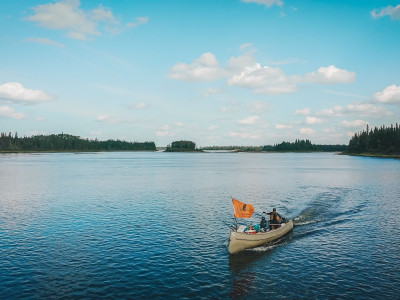
This is a story of two Indigenous youth who could be living the ordinary chaos of their early twenties, but instead have inherited the burden of protecting their land, their waters and their communities from a “model of prosperity” built at the expense of the natural world.
Rather than look away, they stepped forward, and said—‘Here We Stand’, picking up the torch passed down by exhausted elders.
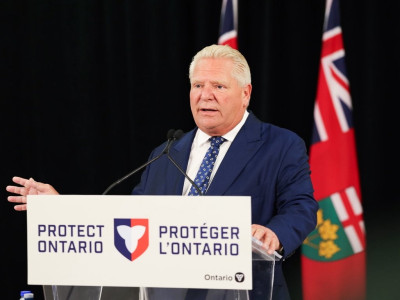
In Doug Ford’s Ontario, sustainability never stood a chance. Years of stripping away environmental safeguards led to an inevitable conclusion. On November 6, his PC government unveiled its Fall Economic Statement, completely abandoning its legally binding emissions targets and shelving its climate plan. Mark Carney might have had a role in it.
Experts warn this mix of fiscal recklessness and environmental backsliding risks pushing Ontario residents into ecological and economic crises.
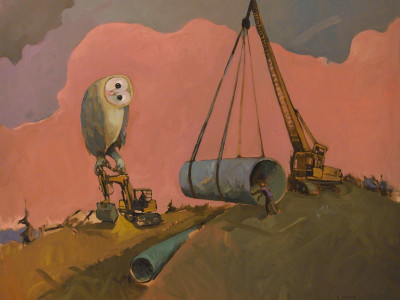
Ontario’s push to accelerate road and mining development in the Ring of Fire has been framed through a series of negotiations with First Nations, including the recent Community Partnership Agreement with Webequie First Nation.
The Doug Ford government portrays these deals as pathways to economic growth and jobs; Indigenous leaders warn that consultation remains incomplete, and critical environmental and cultural concerns have been sidelined.
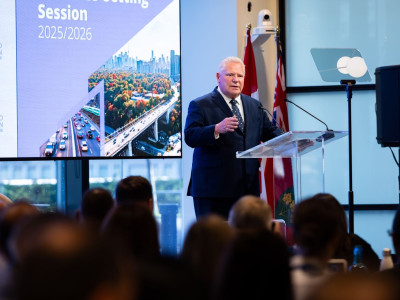
The provincial Legislature is back in session this week.
After an extended summer recess, MPPs inside Queen’s Park face an ongoing housing crisis, rising unemployment and inflation, a dangerous shortage of doctors, transportation infrastructure that has become an international embarrassment and universities, colleges and schools that are woefully underfunded. Despite Doug Ford’s frequent promises to turbocharge Ontario’s economy, the province is foundering badly while residents continue to sink financially.
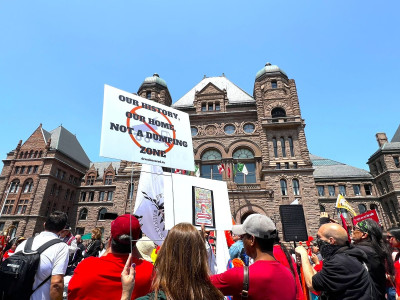
The future of Ontario’s environment could be shaped by the unchecked "opinion" of the provincial cabinet. The draft regulations for Bill 5’s Special Economic Zones show just how much power ministers might have over project approvals, shutting out traditional oversight that has protected the province’s water, farmland, greenspaces and most sensitive ecosystems for decades.

Data show Automated Speed Enforcement cameras significantly reduce speeding in school and community safety zones across Brampton. The effort by officials to curb the city’s infamous dangerous driving is now at risk as Premier Doug Ford is determined to scrap the cameras, calling them a “cash grab”.
Brampton drivers already struggle with the highest auto insurance rates in Ontario, which could get even worse if the calming effect of speed cameras is removed.
Leaving the final decision to remove a councillor found guilty of harassment or other bad behaviour in the hands of their fellow elected officials was widely criticized during a set of roundtables hosted by the provincial government this summer.
For experts, it represents a critical flaw in the proposed bill 9, which aims to tighten accountability of municipal officials, ensuring any new legislation will rarely be used. So far, the Ford PCs have refused to make any changes.
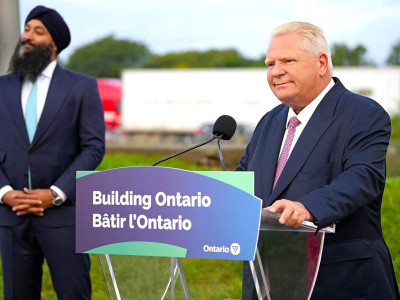
Truck horns blared and STOPTHE413 signs lined the roadsides as Premier Doug Ford and Transportation Minister Prabmeet Sarkaria declared the “beginning” of Highway 413 construction in Caledon on August 27.
Despite the fanfare, what’s actually underway isn’t the highway itself — just a few “early works”.
After the 26-minute press conference, The Pointer fact-checked statements made by Ford, Sarkaria and Caledon Mayor Annette Groves, uncovering repeated exaggerations and misleading claims.
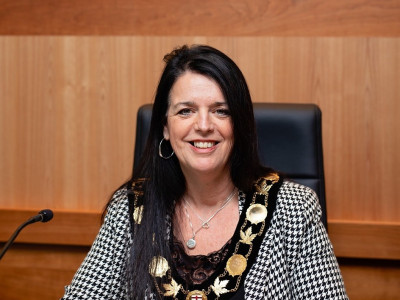
The firing of a CAO in Haldimand County has drawn widespread criticism against the municipality's mayor. Shelley Ann Bentley first refused to accept the provincial powers, then did so behind her council’s back, two months after an independent investigation launched by the CAO implicated her in the leaking of confidential information. Shortly after the popular CAO’s actions to ensure accountability, she was fired.
The fiasco has ignited debate about the PCs’ strong mayor legislation that has been criticized as undemocratic. A recent report has revealed it’s not achieving its goal of helping facilitate housing development.
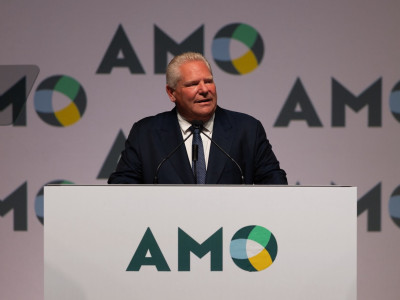
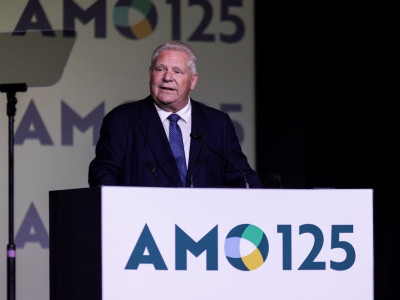
During the recent Association of Municipalities of Ontario conference in Ottawa, Premier Doug Ford announced a funding increase to help the province’s cities and towns build new housing. But stakeholders say the amount falls far short of what is needed in Peel, and hundreds of other municipalities across Ontario.

As concerns over Canada’s poorly managed immigration system continue to spread, Brampton-based Gandhi Immigration Limited serves as an example of abuse that has plagued the sector.
The director of the firm was, according to Ontario’s Attorney General, responsible for wrongdoing that led to a $40,000 fine for wilfully misrepresenting two immigration files by adding fake work experience to the applications of clients hoping to settle in Canada. The PCs have tabled tough new legislation to combat chronic problems in the immigration consulting sector.
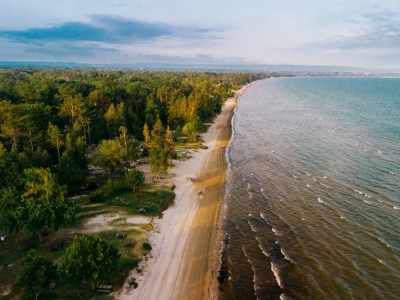
Some of Ontario’s favourite camping spots, nestled near habitats home to many endangered and at-risk species, are facing development pressures under plans by the provincial government. The PC move to transfer parts of Wasaga Beach to municipal control for tourism development has raised red flags; the risk of commercialization could forever alter the park’s delicate ecosystem.
A few hours north, the government's proposal to widen Highway 69 threatens portions of Grundy Lake and French River provincial parks, where even small land removals for development could disrupt fragile habitats and wildlife corridors.

As the annual Association of Municipalities of Ontario conference begins, nearly half of Ontario’s municipalities have already signed onto the cause promoted by The Women of Ontario Say No. Founder Emily McIntosh is determined to make Bill 9 stronger—so local elected officials who behave abusively are held accountable.

Egregious cases of animal cruelty continue to be exposed across Ontario.
Advocates say the entire animal welfare system is broken, and next Saturday they will take to the streets in Niagara Falls to confront the increasingly disturbing treatment of animals across the province.
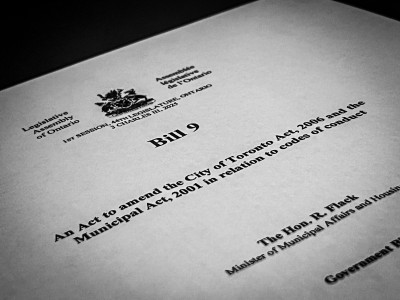
The PC government is taking its proposed new municipal accountability legislation on the road this month to gather feedback from elected officials, stakeholders and the public across Ontario.
During the first two hearings last week, committee members heard disturbing stories of a municipal government system that resembles the wild west.

After Niagara Falls residents were twice denied an opportunity to address a proposed new provincial law, they will get their chance at a public meeting Friday. A women’s rights group was shut down when attempting to delegate on Bill 9, which aims to create tighter accountability rules for municipal council members, including those who are charged with assault.
Local officials claim that because Councillor Mike Strange is currently facing an intimate partner violence assault charge, the new rules being considered by Queen’s Park can not be addressed inside council chambers. Three women who wanted to voice their views were arrested after Mayor Jim Diodati refused to let them express themselves.
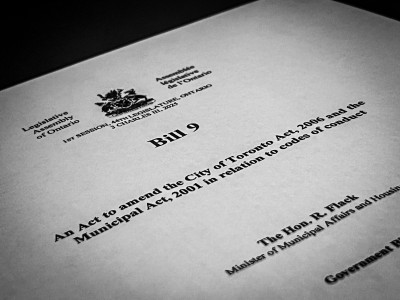
The new legislation is meant to create mechanisms to remove elected officials for “serious contraventions” of local codes of conduct. But some municipal elected officials fear the process could be abused to remove councillors with dissenting views to the majority of council.
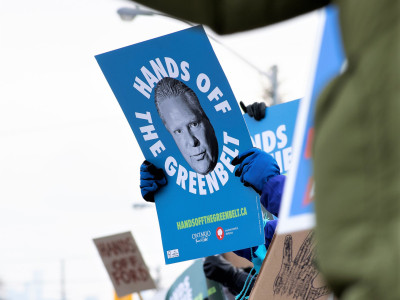
Ontario’s information and privacy watchdog has released a scathing report on the PC government’s handling of documentation related to its attempt to remove 7,400 acres of land from the Greenbelt.
The report details how the PC government violated the law surrounding record retention. The land swaps, which were reversed after public outcry, are now under investigation by the RCMP.
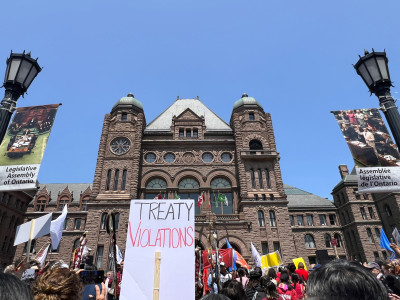
In less than two months since Bill 5 was introduced on April 17, Ontario Premier Doug Ford’s government bulldozed it into law, using economic benefits as justification. With choking wildfire smoke darkening the sky outside, the legislation was passed inside Queen’s Park, stripping away environmental safeguards and overriding Indigenous rights. It hands Ford unchecked powers to fast-track development.
First Nations and environmental groups are vowing to use Bill 5 as a legal roadblock that could render the legislation into a progress-blocking misstep by those pushing rapacious growth.
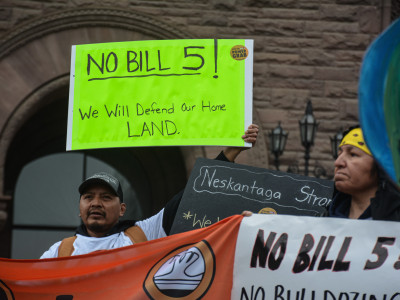
From the muskeg of the Ring of Fire to the marble halls of Queen’s Park, a storm is gathering in Ontario. Bill 5, the Ford government’s so-called economic legislation, threatens to bulldoze through environmental protections, democratic processes and treaty rights, to speed up growth.
Indigenous leaders aren’t staying silent—rights are not “red tape”. Fueled by memories of past betrayals like Bill C-45, they warn: this is how Idle No More began, and it will happen again.
Toronto has made it clear that without green building standards emission reduction targets can’t be met.
As the Ford government barrels ahead with its latest housing bill — the seventh in just six years — environmental safeguards are once again on the chopping block. Bill 17 promises faster builds, but at what cost?

With tariffs on both sides of the border, the organization, which relies heavily on donations from individuals and corporations (many tied to the U.S.) is already feeling the impact.
Prices at the grocery store are being felt, while the budgets of both those who are relied on for donations and those who are on the brink of food insecurity are being stretched.
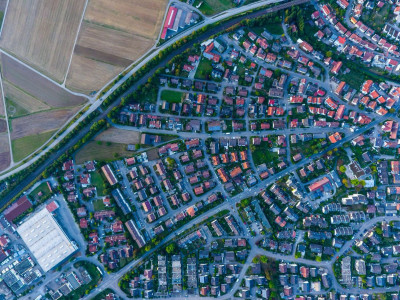
Since Doug Ford’s 2018 campaign, when he promised to tackle Ontario's housing crisis, his governments have systematically weakened planning laws and stripped conservation authorities of their power in favour of builders.
A scandal involving backroom dealing with powerful developers, including Greenbelt land swaps and questionable approval processes, exposed Ford’s secretive plans to do what he promised: open up Ontario’s protected greenspace for sprawl development that makes housing even less affordable.
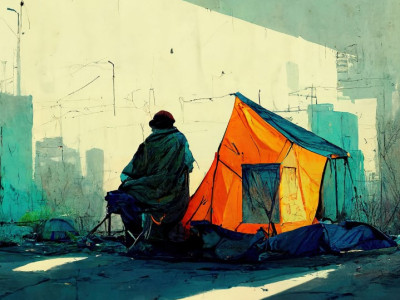
Human Rights issues were raised at a recent council meeting, where a proposal to avoid using the Notwithstanding Clause to clear homeless encampments was brought forward.
In the end, with the mayors of Niagara’s largest cities firmly behind Doug Ford’s plan to forcibly remove those staying in encampments, efforts to act with compassion were defeated.

After five years of legislative violations, shelved reports and blatant discrimination, a 2023 review concluded Ontario was in the midst of an “accessibility crisis”. Instead of acknowledging his alarming conduct, Premier Doug Ford—following a pattern of behaviour since being elected in 2018—refuses to prioritize the needs of those living with disabilities.
Advocates are demanding change as the province enters a historically short provincial election campaign.

Ontario's environmental future hangs in the balance as the PC government under Premier Doug Ford continues to rush through controversial policies without meaningful public input or environmental studies. From the rushed Highway 413 approval to the secretive clearing of trees at Ontario Place, Ontarians are left in the dark, their voices ignored by a government determined to fast-track projects that pose a range of risks.
The latest Ontario Auditor General’s report paints a damning picture of a government that does not care about its own obligations under the Environmental Bill of Rights.
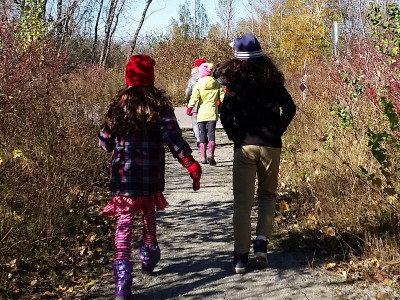
A new report highlights a $21 million gap in the ability of Ontario’s largest school boards to provide critical outdoor education for young learners.
The cost amounts to less than a tenth of a percent of the PC’s education budget, but the government refuses to answer questions about whether it will protect funding to strengthen the relationship between young people and the environment that surrounds them.
An increasing number of children and youth suffering from trauma, addiction and violence are not getting the help they desperately need from the system designed to help them. This has led to a growing number of complaints about Ontario’s children’s aid societies, which have exposed a fractured system whose underfunding is putting more young people at risk.
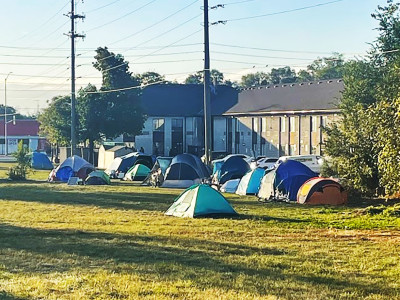
As the number of unhoused people in municipalities across the province continues to rise, Ontario’s Big City Mayors have launched a campaign called ‘Solve the Crisis’.
The growing problem in their backyard needs a coordinated effort by upper levels of government, mayors say. A new provincial ministry with designated funding specifically to tackle homelessness, is a starting point.
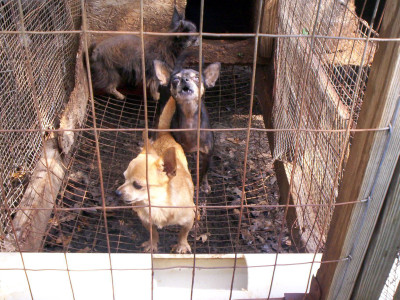
A new law touted as the solution to shutting down puppy mills across Ontario is nothing but window dressing, advocates state.
The government currently has no idea how many puppy mills operate in the province, and without a licensing regime to identify them and set detailed standards of care for these animals—which the new legislation lacks—little will change for animals in desperate need of aid.
After the PC government set the annual rental increase guideline at 2.5 percent for the third consecutive year, local housing advocacy group Peel ACORN is condemning the decision. It creates more incentive for landlords to “renovict” tenants, the group says. It wants Queen’s Park to introduce a sweeping policy of rent control that applies to all residential buildings.

As electric vehicle sales stagnate, governments are working with manufacturers to create a greener system for cars. The NDP's transportation critic Jennifer French tells The Pointer the biggest barrier is the lack of charging infrastructure, something that requires a government-led solution, instead of the roadblocks Doug Ford keeps putting up.
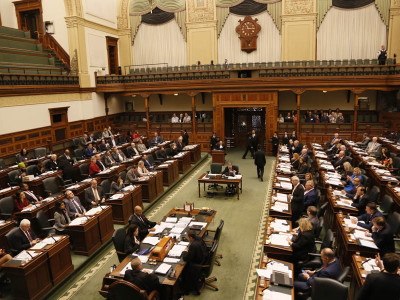
Advocates and survivors are demanding the PC government stop delaying and officially declare intimate partner violence an epidemic in Ontario.
The move comes following the murder of a 58-year-old mother by her 25-year-old son in a Mississauga hotel room.
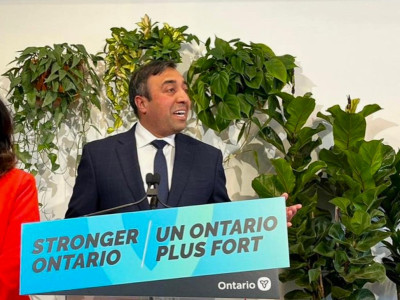
After leaving the PC caucus in September in the wake of an integrity commissioner investigation into the PC government’s Greenbelt land swap scandal, Mississauga East—Cooksville MPP Kaleed Rasheed has vowed to clear his name and rejoin his PC colleagues at Queen’s Park. But he refuses to provide further details about his involvement in the $8.3 billion land deal, which was ultimately reversed by the PCs after their backroom dealings with developers were exposed.

A workforce shortage is limiting access to affordable child care.
A report from the Ontario Coalition for Better Childcare — the province’s central advocacy group for a universal early childhood education and care system — shows that Ontario has fallen behind most other provinces on wages in the sector.

The PC government has announced it will move forward with the restoration of the previously cancelled downtown Mississauga LRT loop and an extension of the transit line into the Brampton city centre, after the city’s council members rejected the provincially funded alignment in 2015.
But the big question remains: will Doug Ford approve the Brampton LRT alignment demanded by Patrick Brown, who has insisted on a tunnel option that would cost almost $3 billion, about three times more than a surface route?
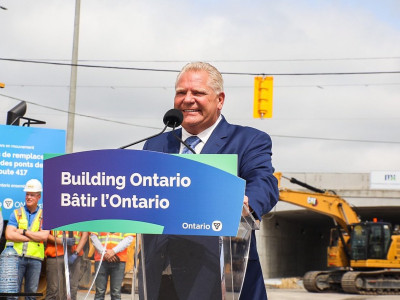
On Tuesday the PC government and Premier Doug Ford unveiled the Get it Done Act, an omnibus piece of legislation that Ford billed as a path to getting critical infrastructure built to support housing while keeping “costs down” for people and businesses.
This legislation furthers the environmentally destructive agenda the PCs have been advancing since 2018 by stripping down the environmental assessment process for major infrastructure projects like Highway 413 while doing little to promote the types of housing development Ontario desperately needs.

Food Banks Mississauga CEO projects food bank usage will reach an alarming eight percent of the city’s population by May.
While the organization exceeded its fundraising goal in its latest food drive by 21 percent, it is approaching a tipping point where it may soon need to start turning clients away, or providing less food.
Similar situations across Ontario are leading to calls for upper levels of government to reform critical social assistance programs that are currently legislating people to live in poverty.

As the PC government pressures some of Ontario’s largest municipalities to get housing built, a recent policy report from the Ontario Real Estate Association reveals housing starts were down in 2023. Based on data from the report, the annual pace of construction would need to nearly double to 150,000 new units by 2025 to have any hope of achieving the PCs’ ambitious goal.
Municipalities want the PCs to adjust the criteria for provincial funding incentives, using units approved, rather than housing starts, which cities often can not control.
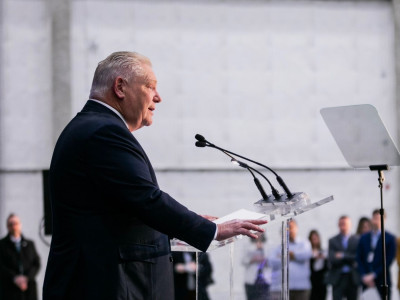
Amid more resignations and newly surfaced emails, Premier Doug Ford is still struggling to regain support from much of his political base, after his PCs schemed to remove 7,400 acres from the protected Greenbelt. While the land has since been returned to its previous status, new information continues to emerge about the backroom deals and unethical process that caused the scandal.
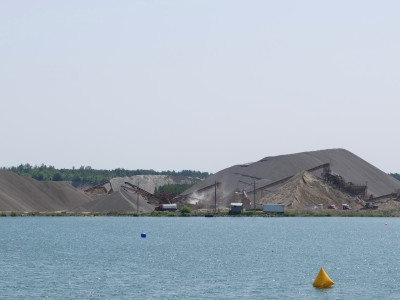
A report from Ontario’s Acting Auditor General Nick Stavropoulos, published last month, picks apart the Ministry of Natural Resources and Forestry which has essentially handed the reins to the aggregate industry, failing to enforce regulations. Community advocates across Caledon have long fought the approval of new pits and quarries, with little oversight of these operations after they are allowed by the Province.