

Peel joins growing list of municipalities opposing Doug Ford’s conservation authorities merger
In one of Aesop’s fables a father, frustrated with his quarreling sons, handed them a bundle of sticks and challenged each to break it, only to show that while a single stick snaps easily, the bundle cannot.
As the ancient Greek storyteller taught, “In unity is strength”.
It’s a lesson Ontario municipalities and their 36 Conservation Authorities are putting to practice, banding together to resist the PC government’s latest attempt to unravel a carefully woven system of environmental protection, one that has already been drastically weakened in the seven years under Premier Doug Ford’s leadership.
In the summer of 2019 the PCs appointed Doug McNeil as Ontario’s Special Advisor on Flooding, tasking him with reviewing the province’s flood management systems following a series of damaging severe storm events earlier that year.
More than 2,000 homes were flooded in the spring, causing an estimated $74 million in insured damages across Ontario, according to Catastrophe Indices and Quantification (CatIQ) Inc.
When McNeil delivered his report that November, it contained 66 recommendations aimed at strengthening the province’s flood resilience and also highlighted what was already working: despite being Canada’s most populous province, Ontario accesses federal disaster relief far less frequently than others, not because it faces fewer risks but because its prevention systems work, largely thanks to the 36 conservation authorities at the frontlines of the fight against climate change.
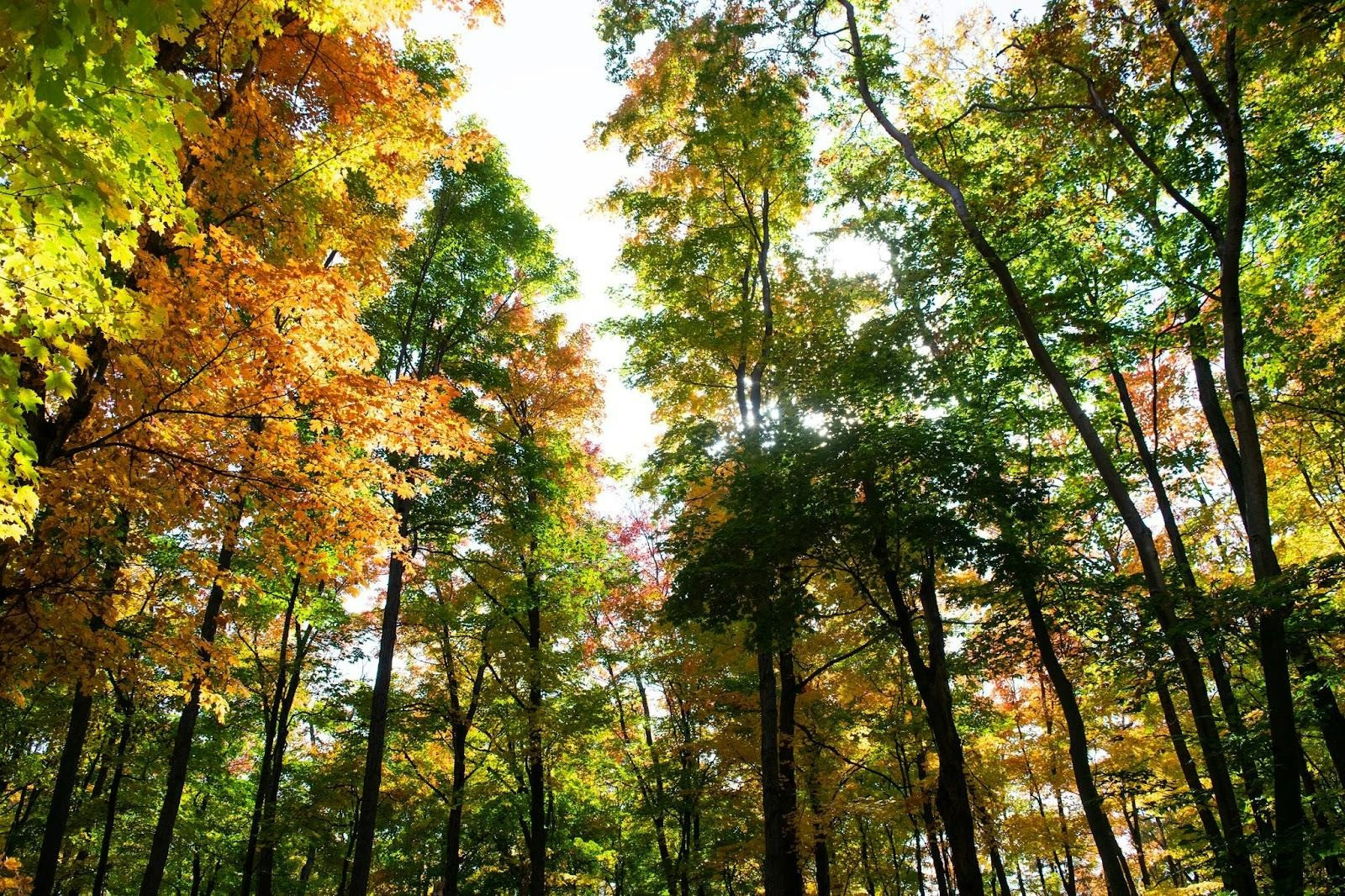
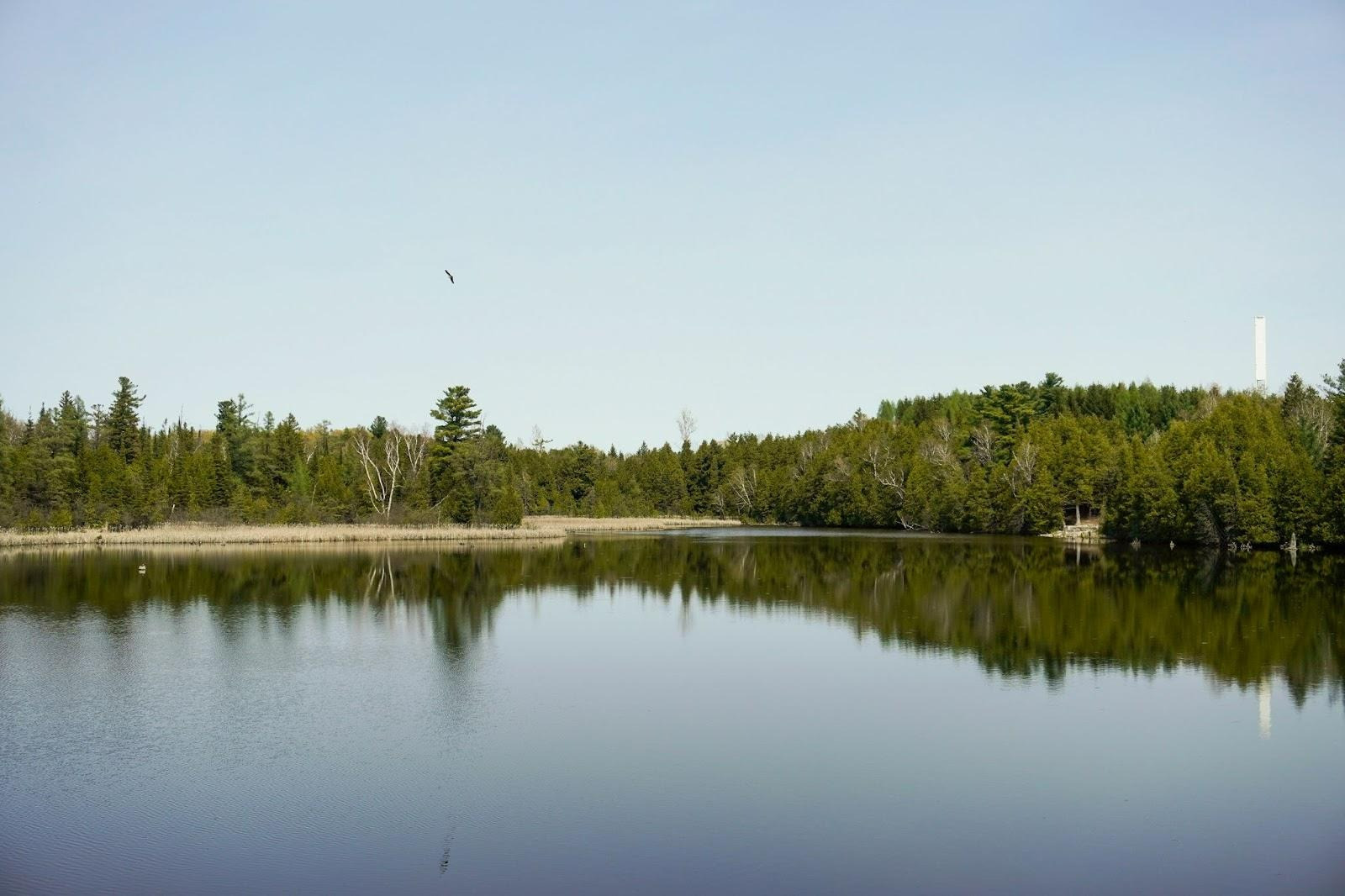

For decades, Conservation Authorities across Ontario have protected the province’s natural world, while helping municipalities grow sustainably. More recently their work to mitigate flood risk and help counter the impacts of a rapidly changing climate has been critical to communities across Ontario.
(Top and middle, Alexis Wright/The Pointer; bottom, Joel Wittnebel/The Pointer)
“Losses associated with flooding and other natural hazards continue to increase because of increasing property values and income levels, urbanization, ongoing loss of wetlands and other green infrastructure, and the increasing frequency and intensity of extreme rainfall events,” McNeil wrote in the report.
“As these losses rise, so does the value of Ontario’s floodplain and broader hazard management policies.”
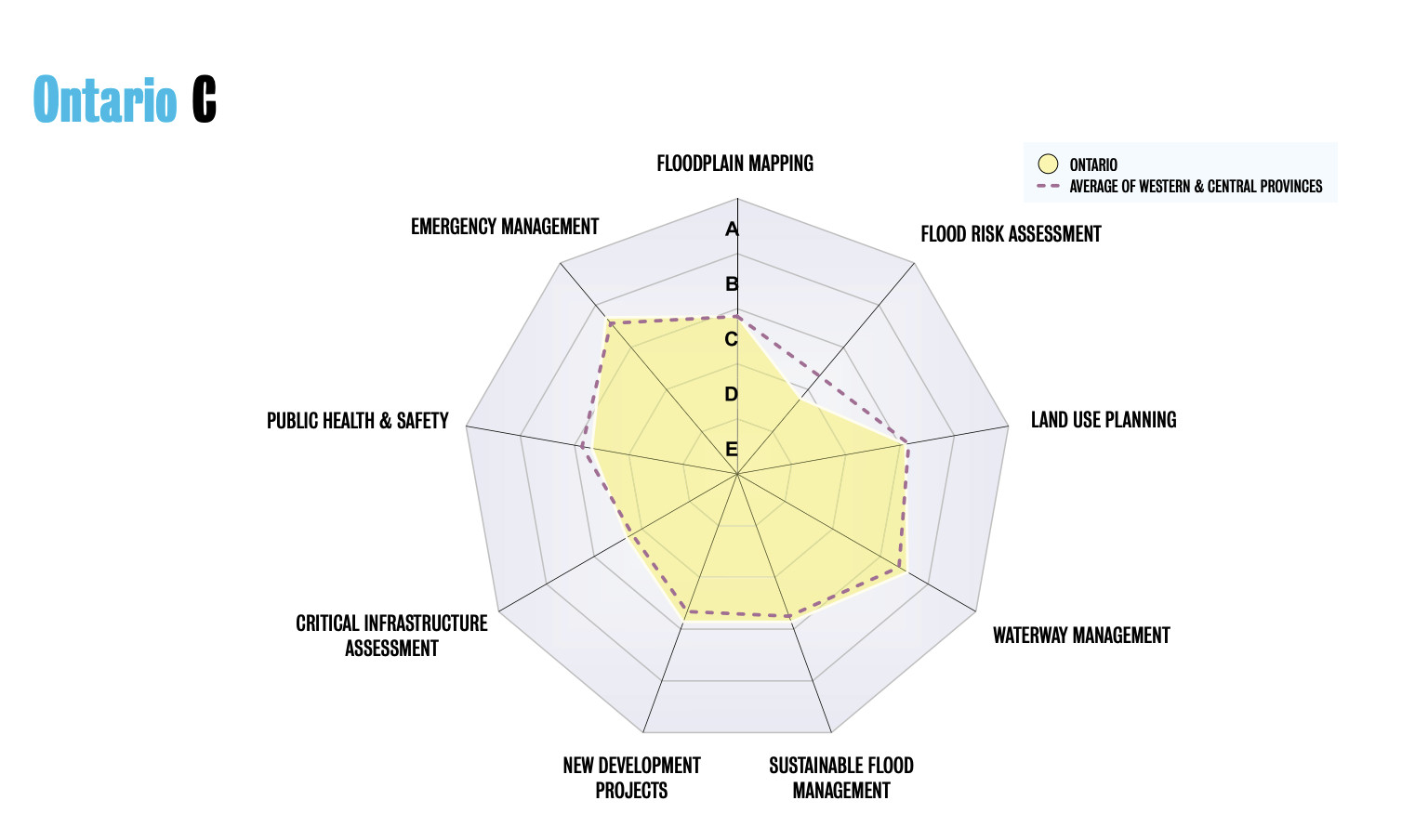
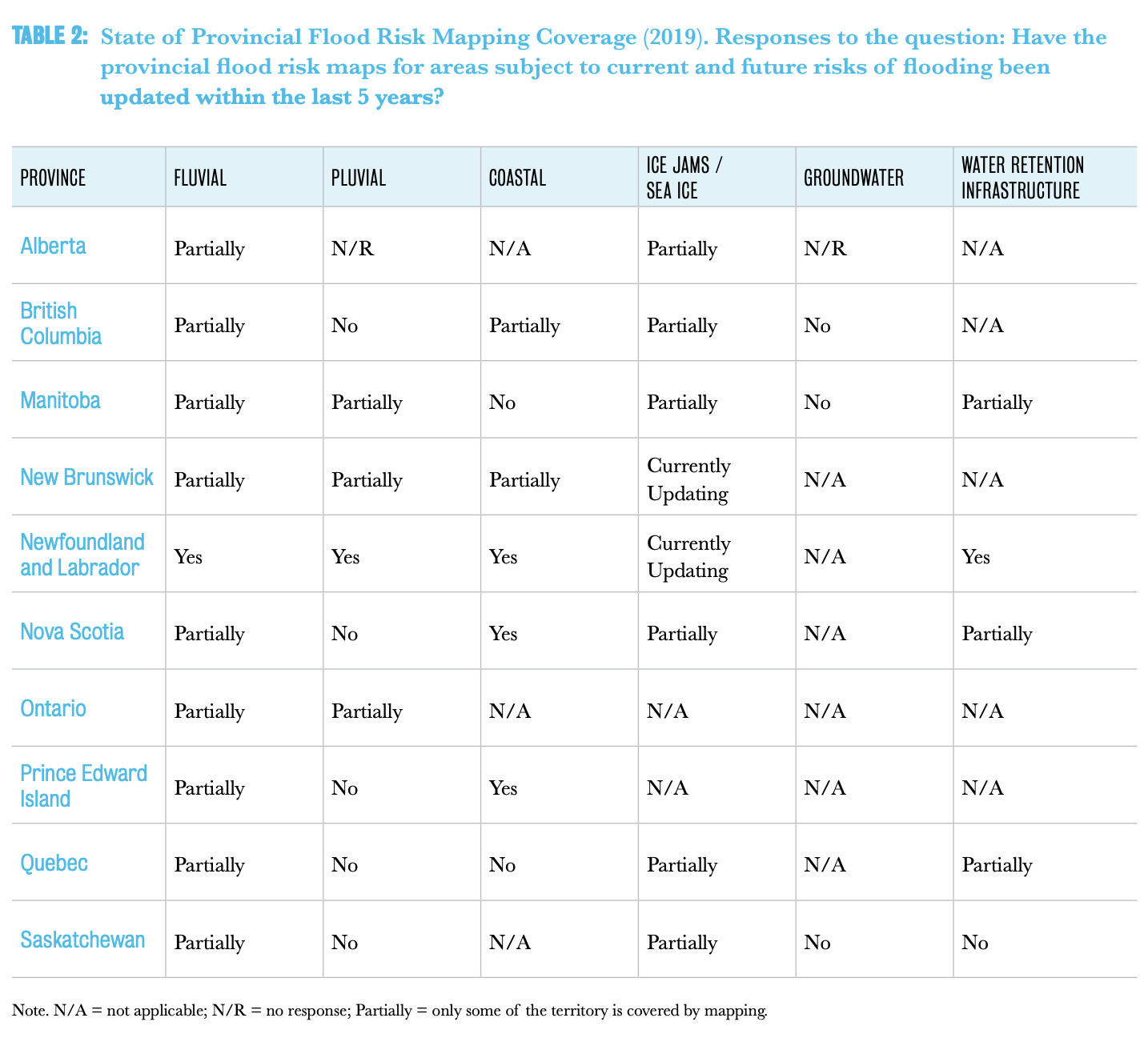
“The most common form of flooding in Ontario is urban, wherein stormwater exceeds infrastructure capacities and Capabilities,” a 2020 report by the University of Waterloo and Intact noted. Ontario was graded C on Flood Preparedness and Risk Assessment due to “the province not always making assessments publicly available, and frequently passing the responsibility for the development of assessments to local governments”. Researchers also pointed out that since not all municipalities of Ontario have been covered by Conservation Authorities, it results in certain gaps in terms of preparedness for the significant parts of Ontario that lack local CAs — underscoring the need for strengthening local knowledge and CAs at a time when a growing population and development needs are putting pressures on the natural world.
(University of Waterloo/Intact)
Provincial policies have been estimated to lower flood and natural hazard management expenses by 20 to 80 percent, depending on “urban density and property values”, savings possible due to conservation authorities and watershed-based planning.
That finding sat discomfited alongside the Ford government’s actions that same year, when conservation authorities were already underfunded, sharing just $7.4 million among 36 CAs, had their provincial funding slashed in half, despite Ford having promised “the province is 100 percent behind them.”
Five years later, in July 2024, severe thunderstorms dumped more than 100 millimetres of rain in parts of Southern Ontario, particularly across the Greater Toronto Area (GTA), triggering flash flooding that submerged roads, disrupted subway service, caused power outages, and damaged homes and businesses, resulting in nearly $1 billion in insured losses.
From $74 million to $1 billion — that is $926 million that could have gone to improving the lives of over 160 million Ontarians.
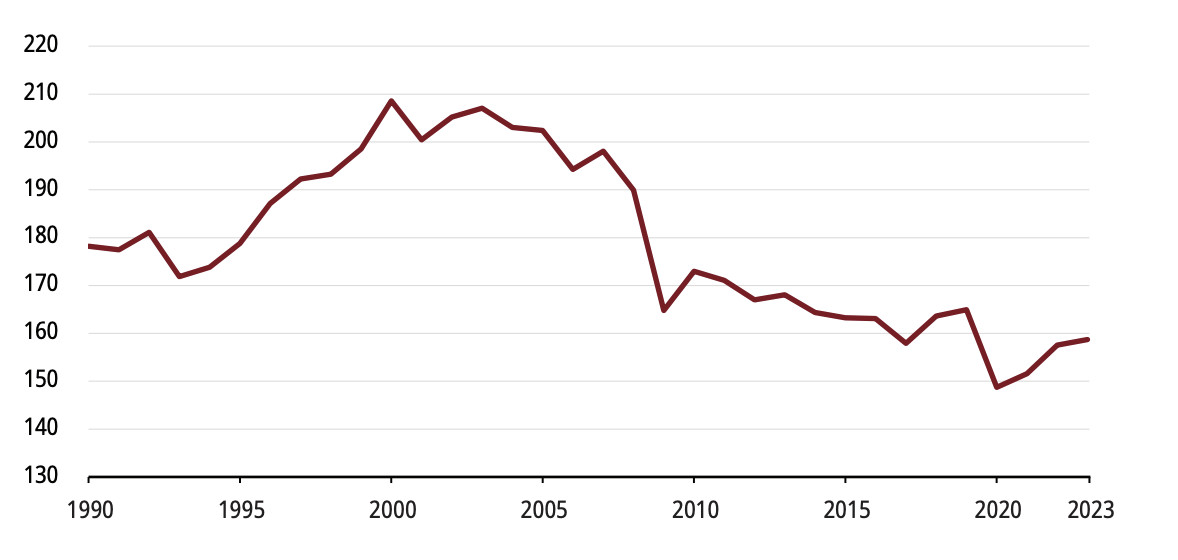
As shown in the 2025 Ontario Auditor General’s report, greenhouse gas emissions went down dramatically in 2020 due to the pandemic-related decreases in transportation and industrial activity.
(Environment and Climate Change Canada/Auditor General’s 2025 report)
In the Region of Peel, the Toronto and Region Conservation Authority (TRCA) and Credit Valley Conservation (CVC) together “conserve, restore and manage natural resources, address climate change risks and protect people and property” for 98 percent of the region with Conservation Halton responsible for the remaining 1.1 percent.
Under the umbrella of tasks conservation authorities are responsible for, some key ones include updating floodplain maps, refining rainfall and intensity-duration-frequency (IDF) curves and working with local governments to forecast and mitigate emerging risks before disasters strike.
On October 31, the province announced plans to amalgamate its 36 CAs into seven regional bodies under a new centralized agency called the Ontario Provincial Conservation Agency (OPCA).
“Conservation authorities play a vital role in protecting our communities and managing our watersheds, but the system has become too fragmented, inconsistent and outdated,” environment, conservation and parks minister Todd McCarthy said during the announcement, arguing that varying standards and policies among the CAs have created “unpredictable” turnaround times for developers and municipalities.
McCarthy claimed the consolidation “will ensure faster, more transparent permitting and more front-line services, so that we can reduce delays to get shovels in the ground sooner, so that we can support economic growth and so that we can keep our community safe from floods and other natural hazards.”
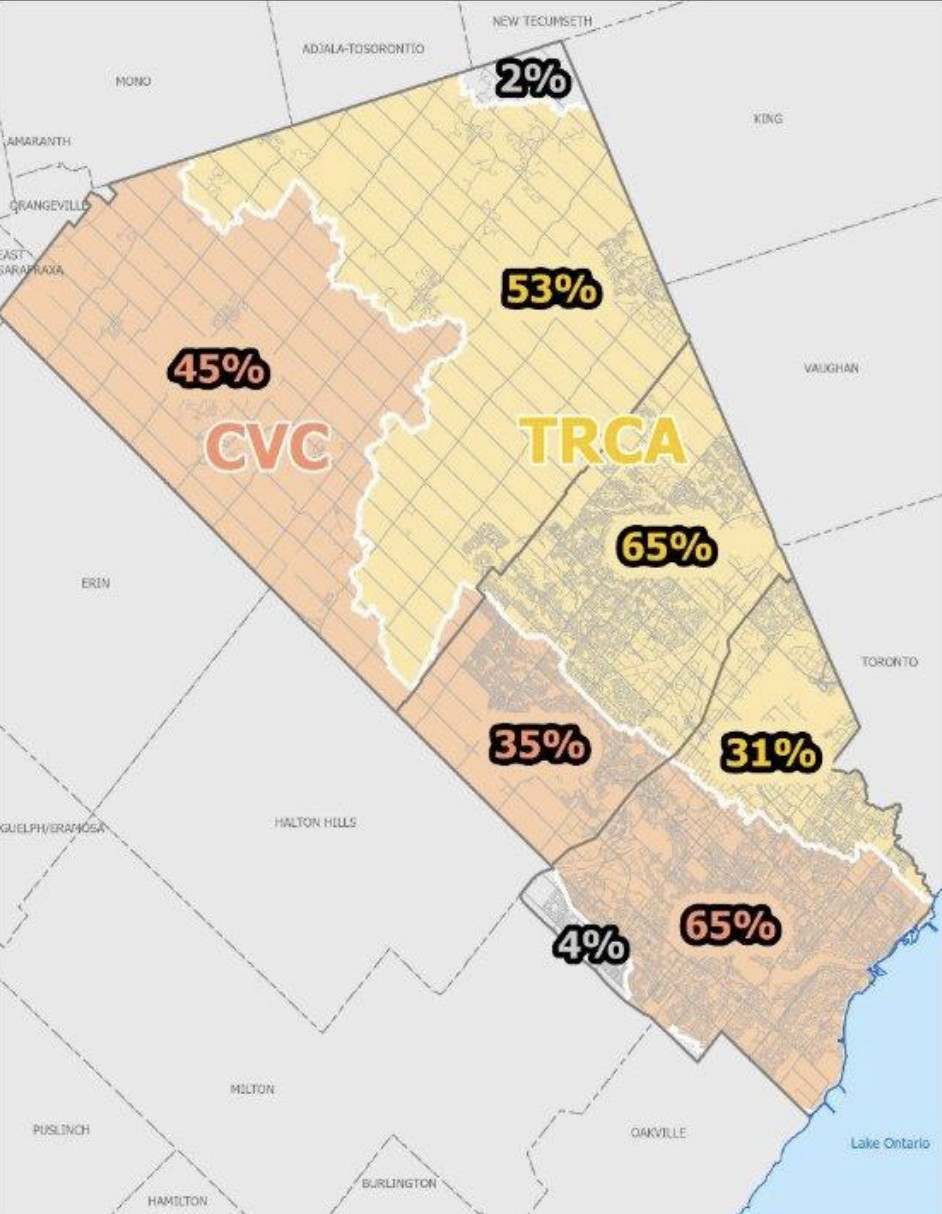
Together, the Toronto and Region Conservation Authority (TRCA) and Credit Valley Conservation (CVC) regulate nearly 38,000 hectares of land, manage more than 240 kilometres of trails, and protect 100 percent of Peel’s population from flood and erosion hazards through dams, dikes, flood control systems and early warning programs. In 2024, conservation authority–owned green spaces across Peel welcomed more than 650,000 visitors.
(Credit Valley Conservation)
On December 4, as TRCA Chief Executive Officer John MacKenzie and CVC Chief Administrative Officer Terri LeRoux made the case for their 2026 budgets, they also warned of the considerable financial, administrative and local risks posed by the province’s recent proposal that already leaves many questions unanswered.
While TRCA is expected to see little impact, CVC would undergo a major change, being merged with Hamilton Region CA, Niagara Peninsula CA and Halton Region CA under the proposed Western Lake Ontario Regional Conservation Authority.

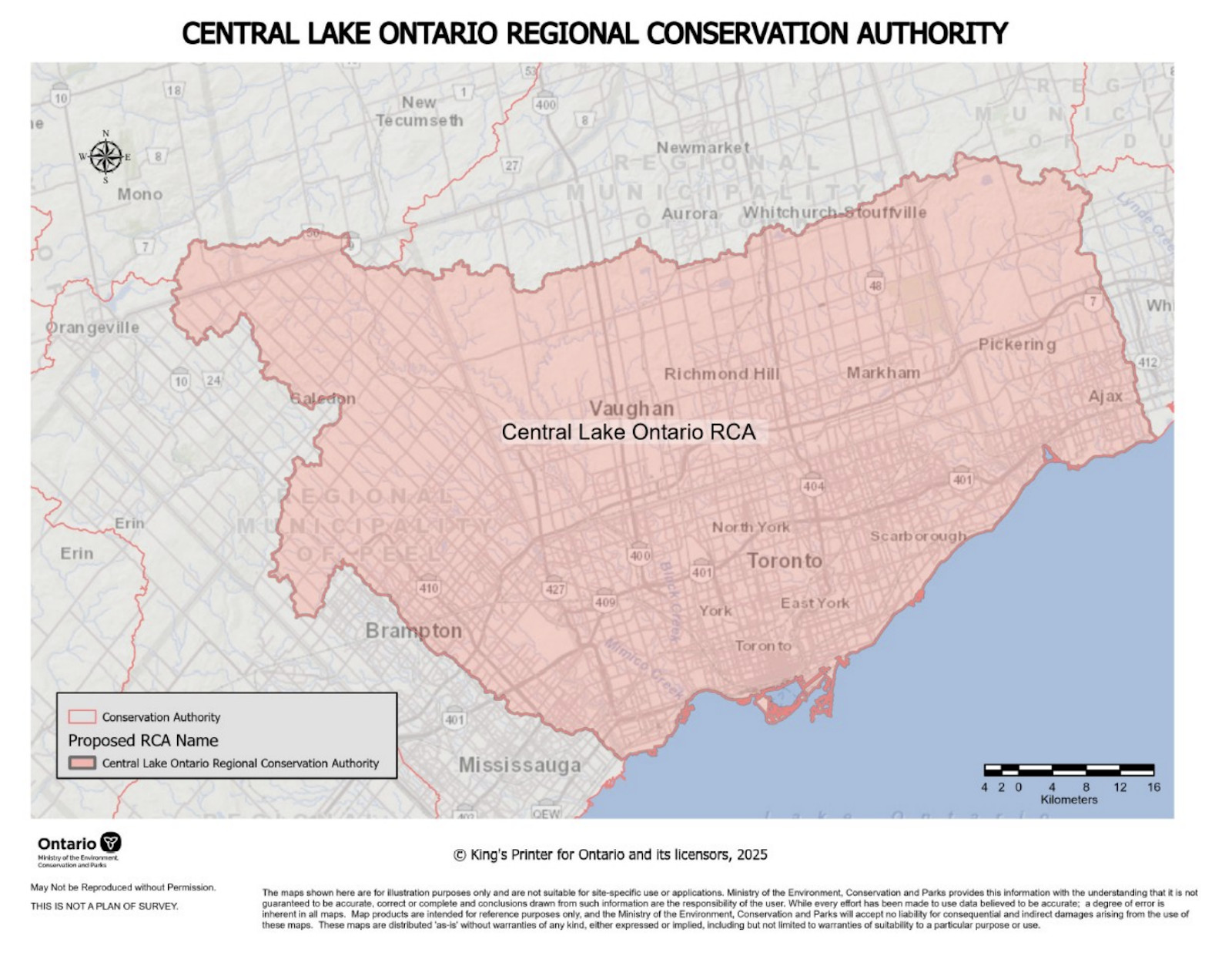
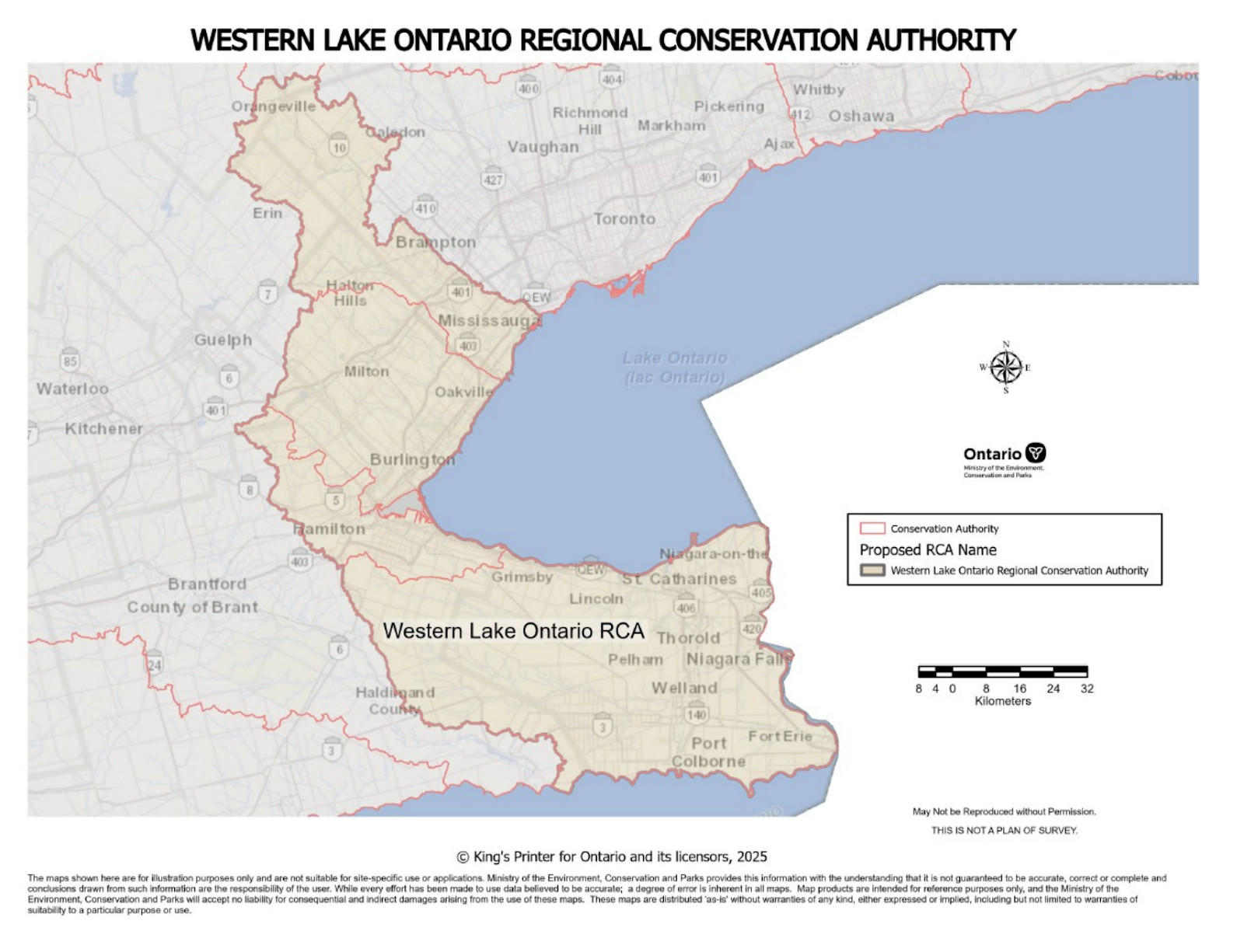
Under the proposed consolidation plan for Ontario's conservation authorities (CAs), the new Central Lake Ontario Regional Conservation Authority (RCA) would primarily encompass the existing Toronto and Region Conservation Authority (TRCA), covering areas north of Toronto, through York, Peel, Durham Regions and into the Kawarthas. Meanwhile, Credit Valley Conservation will be clubbed together with Hamilton Region CA, Niagara Peninsula CA and Halton Region CA under the broader Western Lake Ontario Regional Conservation Authority.
Amid concerned faces around the council table and a tense back-and-forth over the risks, LeRoux cautioned the “main” risk with the proposed changes is “the loss of local voice” and erosion of a system that has existed for close to 80 years, “built and embedded on local watershed science and expertise and local decision making”.
Mississauga Ward 2 Councillor Alvin Tedjo echoed those concerns, saying he would be uneasy about “sharing priorities” with the Niagara River and Niagara Falls while the Region of Peel’s talking about the Jim Tovey Lakeview Conservation Area “at the same time”.
The Niagara Peninsula Conservation Authority (NPCA) shares these practical anxieties. NPCA passed a resolution on December 5 opposing the province’s plan, underlining the risk with the proposed Western Lake Ontario Regional Conservation Authority, covering nearly 490,000 hectares and two million people, weakening local governance, disrupting long-standing community partnerships and diverting resources from frontline watershed programs.
“Should the Province decide to move forward with the RCA [seven regional conservation authorities] framework, it will be imperative that existing staff complements be maintained, and RCAs can fill roles that will enable the continuation of current programs and services, to ensure continuity of front‑line services without disruption,” NPCA Board Chair John Metcalfe said in a letter to the province.
On December 10, Tedjo said the changes are particularly troubling for the City of Mississauga, which would remain the largest taxpayer to the new Western Lake Ontario Regional Conservation Authority while seeing its influence sharply reduced.
He said historically provincial agencies are funded by the province but “for some reason” funding for OPCA will be “downloaded onto municipalities”.
“We have no idea how much that's going to be, other than the fact that they're creating a new tax for us to operate one of their own agencies, which is obviously inappropriate,” he said.
“Our influence will be diluted from essentially 90 percent of the CVC to less than a quarter while still being the largest single contributor to this organization. That's a big problem.”
Mississauga Councillor Chris Fonesca added that the impact of this on property tax also remains “unclear”.
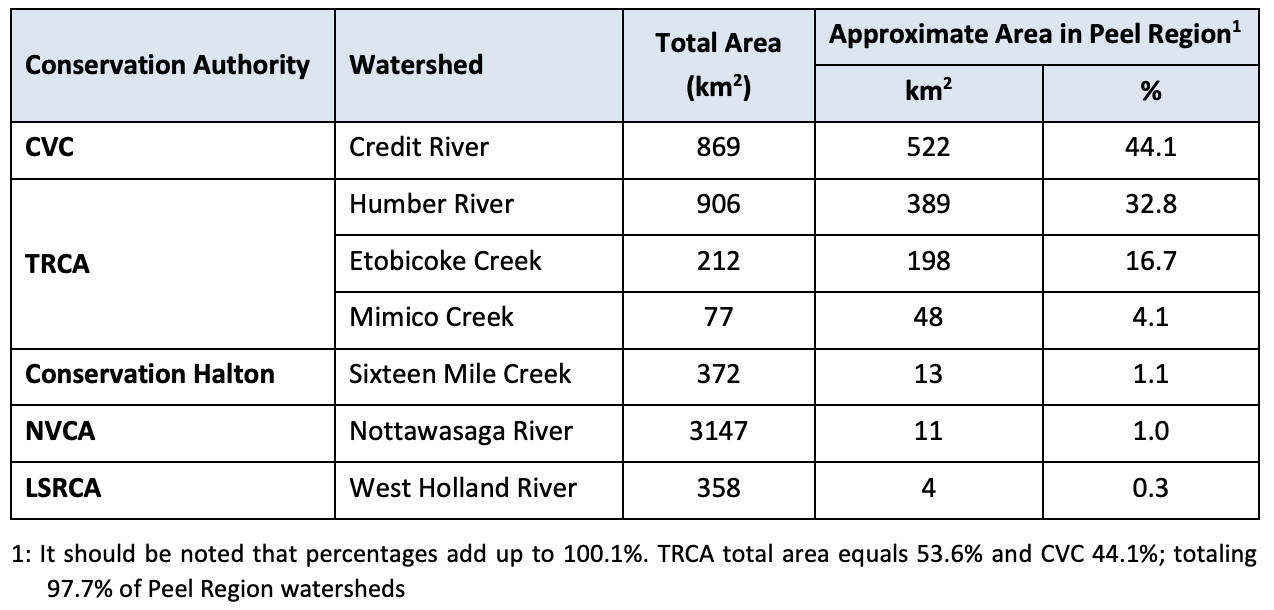
The watersheds in Peel Region are managed by five conservation authorities: Toronto and Region Conservation Authority (TRCA), Credit Valley Conservation Authority (CVC), Conservation Halton, Lake Simcoe Region Conservation Authority (LSRCA) and Nottawasaga Valley Conservation Authority (NVCA). The Region of Peel covers portions of seven different watersheds with most of the watersheds (approximately 98 percent of total area of the Region) managed by either TRCA (54 percent) or CVC (44 percent).
Since the announcement, Mississauga and Caledon joined the growing list of municipalities sending in letters to the province, expressing their opposition to the amalgamation which was originally proposed under Bill 68, Plan to Protect Ontario Act (Budget Measures).
On December 16, the Town of Caledon requested the province “to pause implementation of the proposed consolidation and work collaboratively with municipalities, conservation authorities, Indigenous communities, and stakeholders to explore alternatives that improve consistency and efficiency without undermining local decision-making”.
On November 24, the City of Mississauga also asked for permission to conduct public consultations in addition to the comment period and submit additional feedback on any related regulations as they are developed.
Greater Sudbury Mayor Paul Lefebvre shared that he had signed a letter alongside the mayors of Timmins, North Bay, Thunder Bay and Sault Ste. Marie opposing the amalgamation.
On December 9, Greater Sudbury council also officially opposed the province’s plan to merge Conservation Sudbury with the Mattagami, Sault Ste. Marie and North Bay-Mattawa conservation authorities into the proposed Northeastern Ontario Regional Conservation Authority, warning that it would raise municipal costs, introduce “unnecessary bureaucracy”, dilute local governance, reduce municipal representation from a single watershed-focused board to one overseeing 14 municipalities or townships and compromise the authority’s ability to respond effectively to local watershed and community needs.
“Municipalities provide approximately 54 percent of conservation authority funding, while the Province of Ontario provides approximately 5 percent,” the motion read.
Kawartha Lakes, a municipality that battled wildfires this summer, serving as a wake-up call for Canadians that wildfires can be a problem for heavily populated regions, also passed a similar motion on December 15.
Chances are, you are now wondering why is local knowledge so essential?
The answer lies in the delicate balance of ecosystems like Lake Simcoe, one of Canada’s largest lakes, where decades of focused monitoring, science and community collaboration have shaped a legislated protection plan unlike any other in Ontario.
The Lake Simcoe Region Conservation Authority (LSRCA) has spent 75 years developing the Lake Simcoe Protection Plan (LSPP), tracking phosphorus levels, rising chloride concentrations from road salt, climate-driven flood risks and dwindling natural heritage cover.
“The LSPP is the only watershed-specific, legislated protection plan of its kind in Ontario,” Rescue Lake Simcoe Coalition (RLSC) said in a letter sent to the province on December 4.
“It is grounded in place-based science and decades of monitoring, modelling and stakeholder engagement. Its success depends on continuous, locally informed scientific work and collaboration between municipalities, the conservation authority and the province.”
Lake Simcoe Watch Chair Jack Gibbons argued in his recent newsletter that under the proposed Huron-Superior Regional Conservation Authority, Lake Simcoe would become just one department among many in a sprawling jurisdiction stretching from Newmarket to the Bruce Peninsula and even including areas along the north shore of Lake Superior near Thunder Bay.
This is a change the lake system cannot bear.
Lake Simcoe’s challenges are acute and unique as phosphorus levels remain high, chloride concentrations continue to rise, intense rainfall increases flood risks, and natural-heritage cover is below recommended thresholds. Local scientists, municipal partners and community organizations have been instrumental in monitoring these conditions and implementing adaptive management but under a mega-authority, this specialized knowledge risks being subordinated to broader, multi-regional priorities.
“The Lake Simcoe Protection Plan was developed almost 20 years ago. Sadly, implementation of the plan has been weak but that is no reason to abandon a local focus in favour of vast bureaucracy,” Gibbons said.
This isn’t just about the environment, it’s about the economics as well.
“The value of ecosystem goods and services provided by the Lake Simcoe watershed is estimated at more than $975 million per year with over $200 million annually from tourism alone,” the letter stated.
Shifting governance to a distant, multi-watershed authority could hamper effective decision-making, slow responses to urgent local issues, and increase operational complexity and costs.
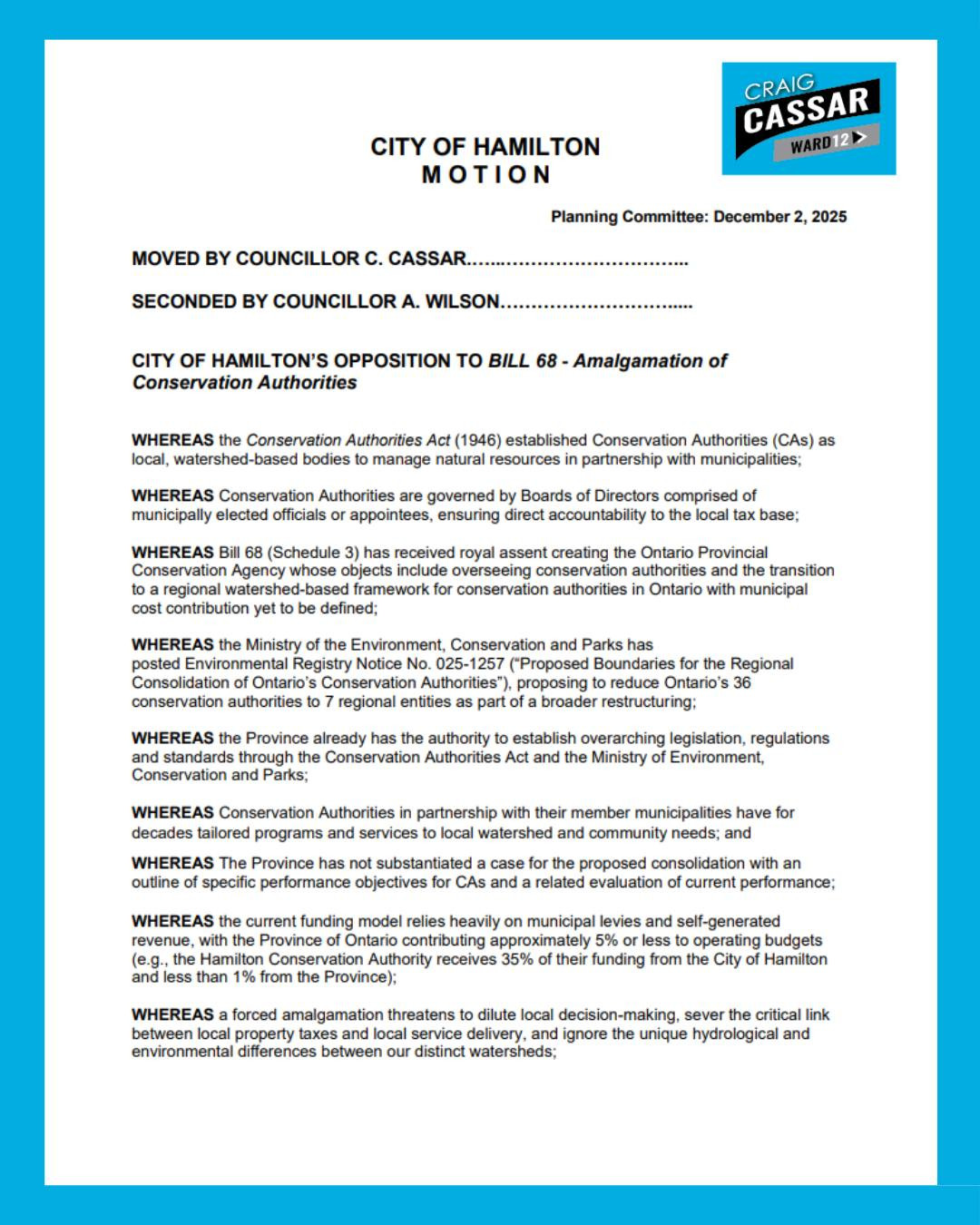
On December 2, the City of Hamilton council unanimously voted against the proposed conservation authorities merger with the Hamilton Conservation Authority (HCA) with the province has provided no evidence for the consolidation, key details remain unknown, local decision-making would be harder to maintain, mergers are costly with no funding plan and strong conservation relies on existing local relationships and the HCA’s already efficient, reliable services.
(Craig Cassar/City of Hamilton)
Since 2018, the PCs have introduced have completely rewritten how land use planning is done in Ontario and gutted environmental protections via omnibus bills in the name of accelerating housing development and cutting “red tape”. Yet, last year, housing starts reached the lowest they have been in Ontario at any point in the last decade.
“We have two of the best conservation authorities in Canada that respectfully service the community and take care of our watershed, we pump out more permits than anybody else,” Tedjo said.
“If the mandate of the province is to build homes, we will build more homes in the next ten years than any other municipality or CA in the country…we're not against change but we are very supportive of not allowing anybody from another municipality, say Niagara, to be voting on or have any influence on anything with respect to the Region of Peel.”
At its November 28 meeting, the CVC Board of Directors submitted a response to the Environmental Registry of Ontario (ERO) posting, wherein the province is accepting comments on the proposed changes until December 22, after staff conducted a preliminary review of the proposed consolidation, analyzing governance, operational, financial and watershed impacts which raised “substantial risks”.
“CVC does not support consolidation as proposed,” the submission noted.
“While consolidation may improve equity and service delivery in some regions, the proposed boundaries introduce significant governance, financial, operational, and service-delivery risks for highcapacity conservation authorities like CVC that are effectively supporting safe, sustainable growth.”
Before proceeding with consolidation, CVC encouraged the province to evaluate whether “modernization goals could be achieved through enhanced provincial coordination, standardized approaches, and digital integration” delivered through OPCA “without restructuring the existing CA network”.
It’s not just municipalities and conservation authorities that are scratching their heads with some parts of the proposed changes, local Peel residents are right there with them.
Brampton resident David Laing shared that over the years he has been fortunate to build strong relationships with staff at both CVC and TRCA, which have enabled collaborations on initiatives like the Heart Lake Road Ecology Monitoring Project, Bike the Creek and more recently, Brampton Environmental Alliance programs such as Rooted in Hope and Graceful Aging Through Connecting with Nature.
Laing says he cannot imagine how these relationships or these projects would have come about if he had to work with a Conservation Authority potentially six times larger than what exists today.
“The mandate would be so broad that relationships with individual citizens or local environmental organizations would all but impossible,” he added.
Although both CVC and TRCA noted the proposed consolidation is not expected to impact their 2026 budgets, they acknowledged the “uncertainty” that remains especially considering that funding to both conservation authorities has “flatlined” for years.
LeRoux shared CVC receives just $95,000 annually and MacKenzie said TRCA receives roughly $400,000 for stable operations while cost-recoverable development permit fees, another key revenue source, have also been frozen for years.
At the regional council budget meeting, CVC sought $30.1 million from Peel for 2026, a 3.5 percent increase over 2025 with $10.8 million earmarked for operations and $19.4 million for capital projects, primarily focused on flood protection, climate adaptation, and infrastructure maintenance. TRCA requested $21.7 million which includes $2.16 million for operations and $19.56 million for capital investments, representing an overall 2.6 percent increase.
MacKenzie noted even though the province has suggested it may fund the new Ontario Provincial Conservation Agency (OPCA) in its early stages, there is still uncertainty about long-term costs including the potential for new levies or administrative fees charged back to conservation authorities and municipalities.
LeRoux added the province has also floated the idea of funding the new agency through “administrative fees” tied to a centralized “digital permitting system across all of the conservation authorities”.
The Progressive Conservative government insists the changes won’t lead to job cuts, but employees in senior positions could be reassigned to front-line roles.
Canadian microbiologist Andrea Kirkwood calls this claim “comical”.
“Imagine working for a CA for 20 years, building your expertise, and being punished and told you’re now taking an entry-level job,” Kirkwood told The Pointer.
“That’s not a promotion…Does that mean demotions, a pay cut? Is that just a way to try to drive attrition for people to leave?”
She criticized the Ford government’s portrayal of the system as fragmented — “disingenuous.”
“That’s a dishonest way of framing CAs…making it seem like they're bumbling and inefficient and that's not the truth,” Kirkwood told The Pointer.
“There’s no real difficulty for municipalities like Durham Region that deal with multiple conservation authorities. They’ve worked together effectively for decades. This feels like a made-up problem for a solution that no one's asked for, except for the province.”
She says the risk is that a “top-down approach” will strip local authorities of their autonomy, replacing collaboration with political directives that “might allow development to go through with very little consultation at the local level”, and water down conservation effort, which is the last thing Ontario needs right now.
Email: [email protected]
At a time when vital public information is needed by everyone, The Pointer has taken down our paywall on all stories to ensure every resident of Brampton, Mississauga and Niagara has access to the facts. For those who are able, we encourage you to consider a subscription. This will help us report on important public interest issues the community needs to know about now more than ever. You can register for a 30-day free trial HERE. Thereafter, The Pointer will charge $10 a month and you can cancel any time right on the website. Thank you
Submit a correction about this story

