
Ontario’s travelling astronomer takes the planetarium experience across the province as PCs play games with science centre
“Earth sits in a cosmic sweet spot”: far enough from the Sun for oceans to stay liquid and protected by an atmosphere and magnetic shield that keep temperatures stable and radiation at bay, creating the rare balance where life can exist.
That’s one of the many fascinating facts astronomer Ryan Marciniak shares with curious audiences inside his travelling inflatable planetarium, using the night sky to remind people how extraordinary our planet is.
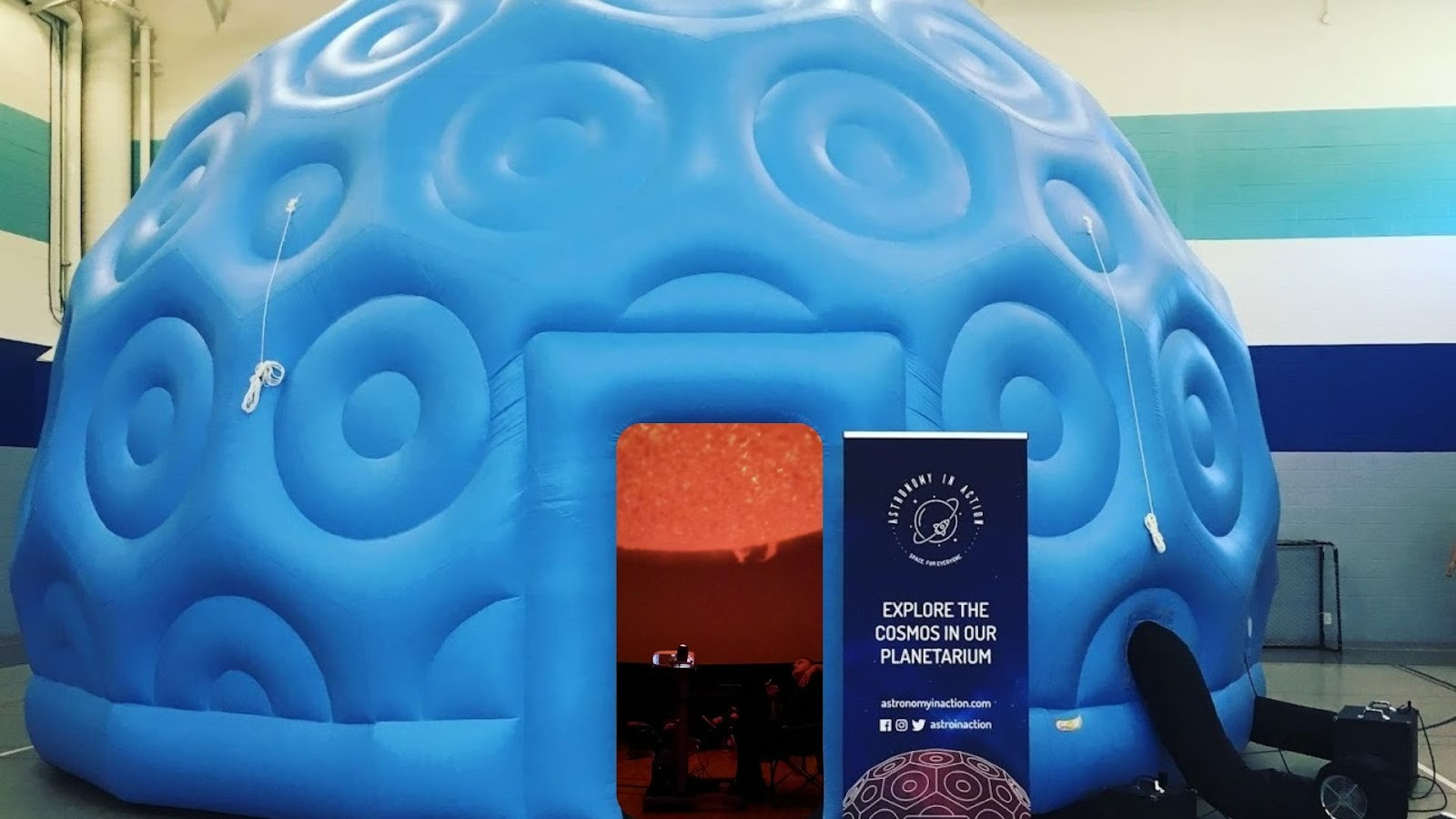
The travelling planetarium Ryan Marciniak uses to inspire children across Ontario.
(Astronomy in Action)
It is a message that has resonated louder since the Ontario Science Centre abruptly shut its doors in 2024, leaving communities across Ontario with fewer places to experience space and science up close — as humanity pushes deeper into space exploration with the Artemis II mission that sent four astronauts including Jeremy Hansen from the Canadian Space Agency on a roughly ten-day flyby around the Moon to test the Orion spacecraft’s life-support systems on April 1, laying the groundwork for future lunar landings and missions to Mars.
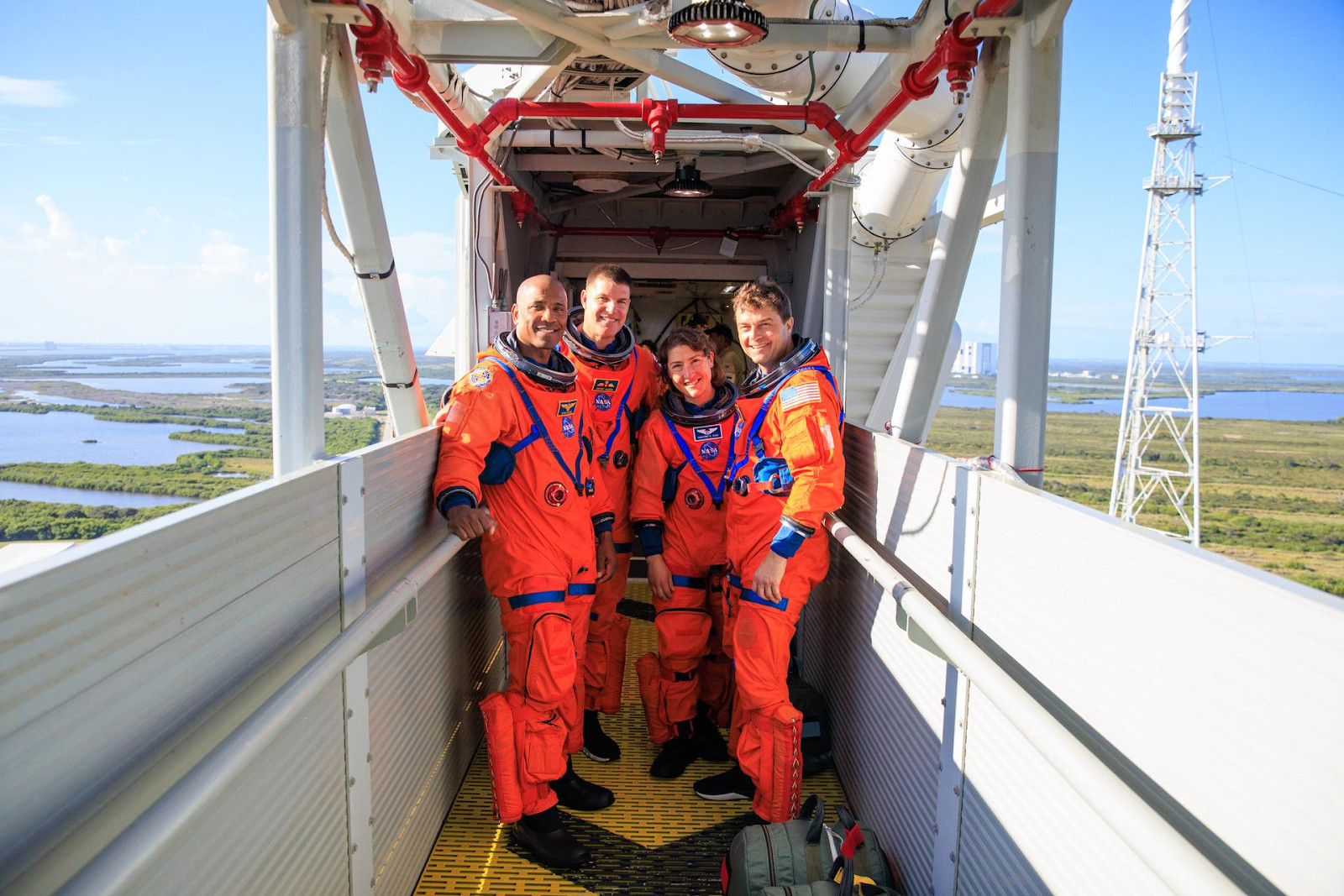
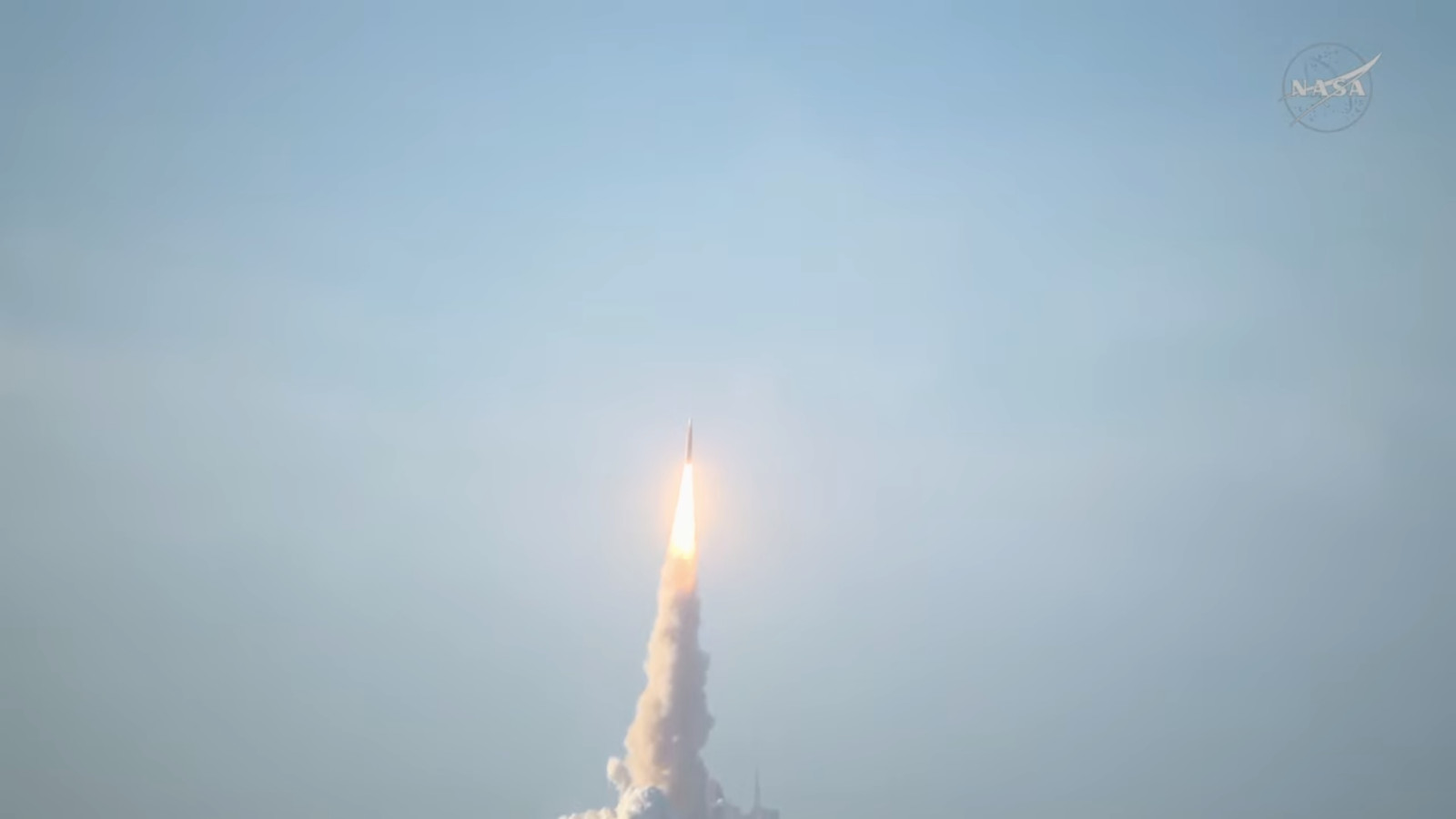
The Artemis II test flight marks the first crewed mission to orbit the Moon since 1972, carrying Commander Reid Wiseman, Pilot Victor Glover, and Mission Specialists Christina Koch (NASA) and Jeremy Hansen (Canadian Space Agency) aboard the Space Launch System rocket and Orion spacecraft, an enduring example of what humanity can achieve when working together. With the successful launch, Hansen became the first non-American and first Canadian to travel to deep space.
(NASA)
“Isn’t it amazing that Earth’s the only known planet with microbial life? How lucky are we!,” he says with excitement that resembles a child discovering the cosmos for the first time.
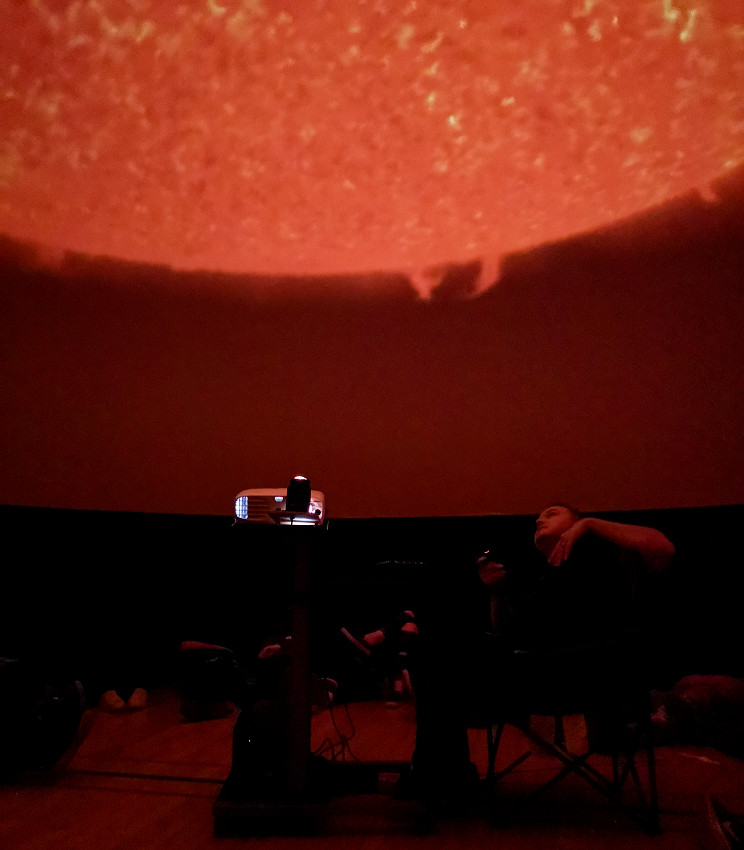
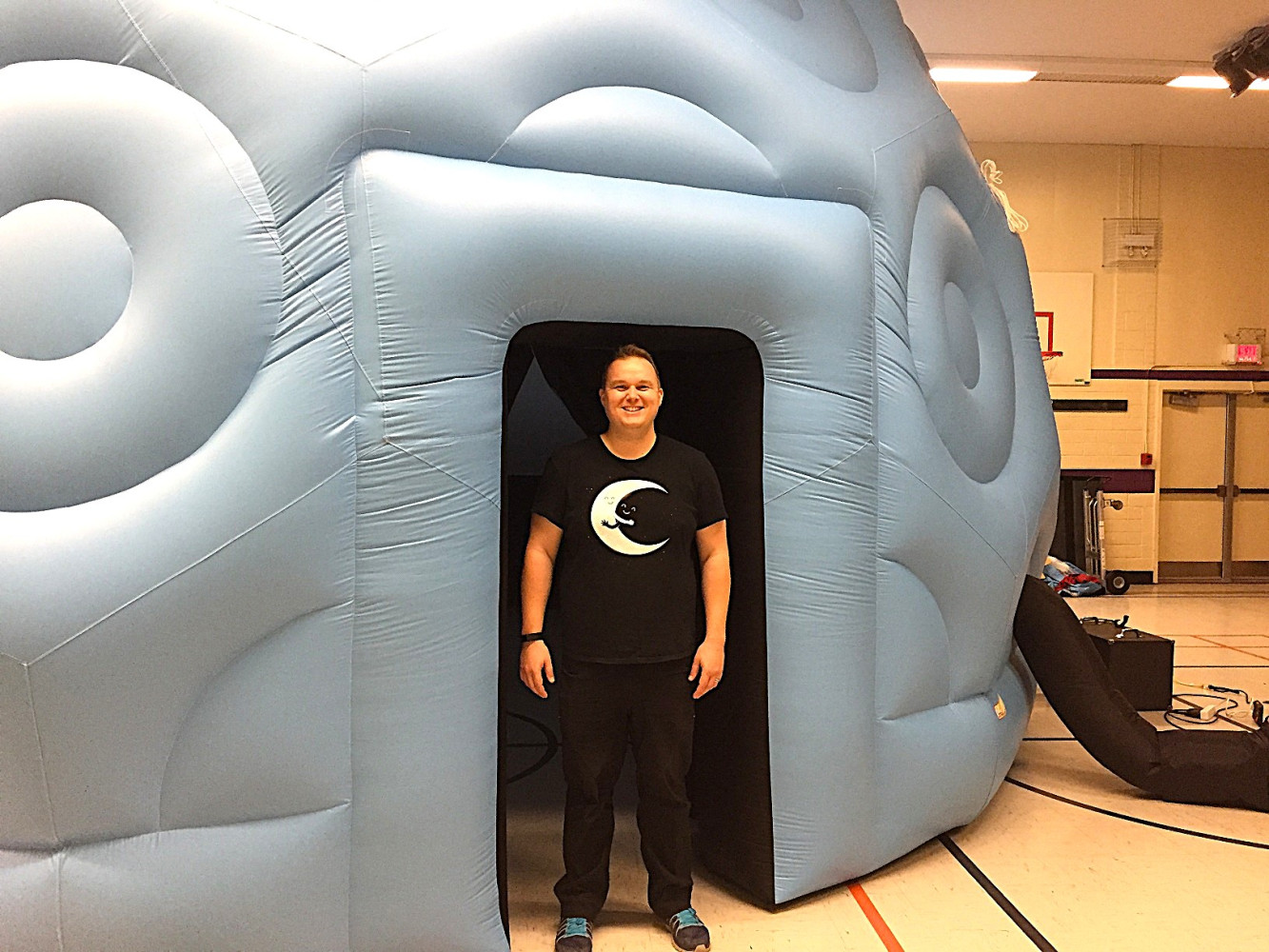
Astronomer and Director of Astronomy in Action Ryan Marciniak testing his program before a show in the inflatable dome.
(Supplied/Ryan Marciniak)
Marciniak was seven years old when he first saw a solar eclipse using a pair of welding masks his teacher had brought for their class.
“I very vividly remember looking at the crescent sun and being so excited about it,” he said, beaming at the memory.
The fascination turned into research and research turned into initiative. Not long after, he asked his teacher if he could create a presentation about eclipses for his classmates, even though no assignment had been given.
“That’s when I knew I loved astronomy and wanted to do something with space,” Marciniak told The Pointer.
“At the time, I didn’t realize the foreshadowing of that moment.”
On his tenth birthday, his parents gifted him a telescope, which he continues to use now and shares with his own two children.
It all started with a teacher’s simple act of encouragement. And it would take another mentor to reshape the trajectory of his life.
In the fall of 2007, Marciniak was wrapping up his final undergraduate year at McMaster University with a degree in physics. His mind was buzzing with problem-solving and research: areas where he had always excelled.
One afternoon, he stepped into the cluttered office of his research supervisor, Doug Welch. Papers teetered in piles, books were stacked haphazardly and Welch had one foot casually resting on a giant box.
“What’s the box?,” he asked.
“It’s the new projector for the planetarium in the basement of the science building,” Welch responded.
A simple question unravelled a conversation about how some people actually travel with inflatable planetariums for a living.
The seed was planted.
Before pursuing his master’s education in astronomy, Marciniak took a year off to work with McMaster’s engineering department on a travelling science show called “Fireball” where he and a colleague crisscrossed Ontario, performing experiments with liquid nitrogen and fire — designed to promote engineering to schools, free of charge.
The roots began to sprout.
He discovered sitting at a desk crunching numbers like a traditional astronomer wasn’t his cup of tea.
“I fell in love with travelling, with sharing science, with being in front of an audience and talking about it. That was the turning point…I realized I really love communicating science,” he shared.
During his graduate degree, Marciniak worked as a Teacher’s Assistant with the Hume Cronyn Memorial Observatory’s Exploring the Stars (EtS) program, leading weeknight sessions filled with hands-on activities, demonstrations and guided telescope observations for school groups, scouts, and the general public for free.
It was “another feather in the cap” confirming what truly brought him joy.
In early 2011, Marciniak started Astronomy in Action, officially stepping into the life of a journeying planetarian.
A year later, he joined the Ontario Science Centre (OSC) part-time as a Recreational Programs Assistant, delivering birthday parties, camps, sleepover programs and large-scale science shows for audiences of up to 300.
His enthusiasm helped him quickly move into a hosting role in 2013, where he engaged with visitors directly, sharing the latest in science and technology while expanding his own knowledge from day to day.
Moving into a full-time role in 2015, he became a Researcher-Programmer, Astrophysics and developed interactive exhibits that translated complex scientific concepts into hands-on, accessible shows through collaboration with scientists and designers using the latest research and technology.
Marciniak was thrilled to be working at the OSC, one of the “two last science centres in North America” capable of fully creating their own exhibits in-house. The other is the Exploratorium in San Francisco.
“They also built exhibits that they then rented out to other science centers around the world to generate revenue — all of that together made it a fantastic institution,” he said.
In 2018, he made the decision to focus on Astronomy in Action full-time and invested heavily in new equipment, giving the company significant momentum.
Walking the halls, greeting visitors, brightening someone’s day and inspiring young voices and adults alike was part of his everyday life up until then.
“It’s not only a cultural staple for all of Southern Ontario and the Greater Toronto Area, it was a central part of the local community near Don Mills,” Marciniak noted.
Jason Ash, Save OSC co-chair, is one of many whose earliest memories were shaped by the science centre, which first opened its doors to the public in 1969 as the world’s first interactive science centre.
As a child, he explored the space exhibits and spent hours imagining himself as an astronaut in the Apollo landing simulator…moments that would replay in his mind every time he visited.
He had no idea then that the place he loved so dearly would one day need him to defend it decades later.
On June 21, 2024, the Province announced the immediate closure of the Ontario Science Centre, citing structural concerns with the building’s roof that could be compromised by cold weather following third-party reports.
Marciniak felt “disappointed” as concern for his colleagues overtook him.
“What’s going to happen to all these people who have worked for years and years to get these positions at this incredible institution?”
“There’s absolutely no reason it should have closed,” Marciniak differed.
Engineers had found that the lightweight concrete used in the 1960s construction, reinforced autoclaved aerated concrete (RAAC), was in “distressed” condition and “at risk” of failing under the weight of snow — more than a year later, critics say the roof remains intact despite this year’s historic snowstorm.
“We never had a doubt that the roof would remain intact,” Ash told The Pointer.
The Pointer reached out to Infrastructure Ontario to confirm this but did not receive a response by the time of publication.
Repairs were technically possible, but the estimated costs ranged between $22 million and $40 million. The Pinchin report included a repair and replacement spending estimate of $229 million over a 20-year period.
The government said a full renovation would require $478 million.
In April 2023, the Doug Ford government shared plans in a business case, which wasn’t made public until eight months after, to move the OSC to Ontario Place, stating the move would save more than $250 million (the cost to restore the Don Mills location would be $1.3 billion over 50 years while building and operating a new science centre at Ontario Place would cost $1.05 billion for the same period).
Within a month, the Ministry of Infrastructure submitted a proposal to decision-makers noting that integrating parking for the entire Ontario Place site into a new science centre would help meet Ontario’s lease obligations to Therme (the megaspa being built on the waterfront) and address “public concerns relating to cost and impact on the environment”— a detail not fully explained in the business case.
In December 2023, the Auditor General reported the business case was based on preliminary and incomplete cost information.
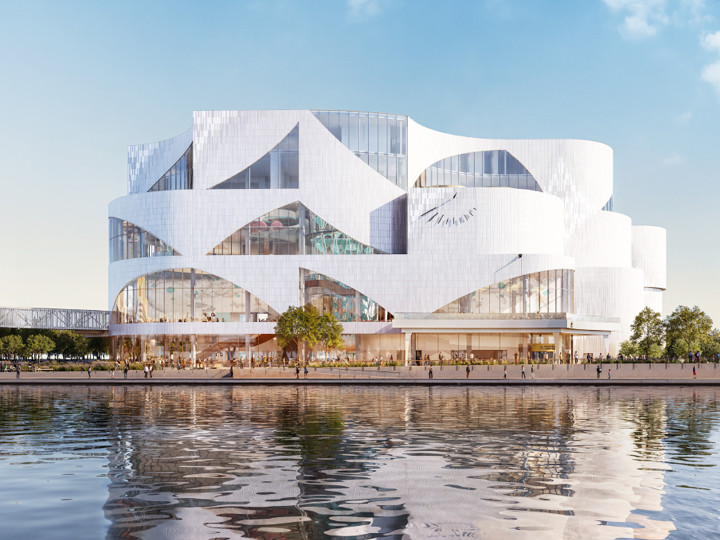
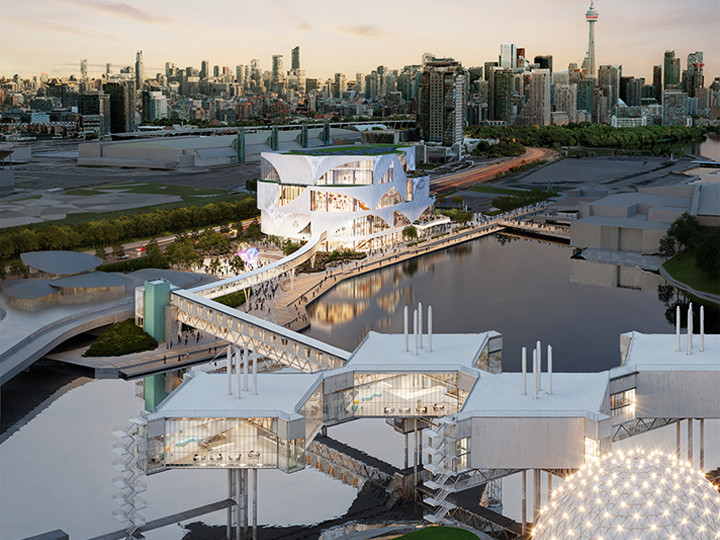
Renderings for the new Ontario Science Centre at the Toronto waterfront.
(Infrastructure Ontario)
On February 26 this year, the Ford government announced it had awarded a $1.04 billion contract for the new Ontario Science Centre at Ontario Place to a builders’ group (Hariri Pontarini Architects and Snøhetta for design, with construction led by Sacyr Canada Inc. and Amico Design Build). The building is expected to open as early as 2029.
But Ash is skeptical about the cost and the timeline both when accounting for major infrastructure projects historically running delayed and often over budget.
“Their language around numbers has been escalating this entire time,” he observed.
A 2024 Auditor General report found that the government’s projected costs for relocating OSC had risen by more than $300 million in under a year after the business case was released.
“As of February 2024, with the inclusion of the design and construction of the Ontario Science Centre (over $700 million), public realm (over $500 million) and parking (over $280 million), and with a $346.9 million increase in site servicing costs,” the report highlighted.
“IO [Infrastructure Ontario] projected the total cost of the redevelopment project to be $2.237 billion. The total estimated costs of redevelopment have not been approved by the government.”
The process to find private-sector partners to redevelop the site was “not fair, transparent or accountable to all participants” as would be required under “best practices”.
Ash doesn’t see the new OSC open within the next four years since the project also includes a parking garage, site preparation, the RBC Amphitheatre rebuild, a second Hotel X, a 5,000-seat indoor theatre, FIFA-related work this summer and the Ontario Line construction, which could together push the deadline further.
The province’s interim location at Harbourfront Centre may require one-year lease renewals into the early 2030s if the Ontario Place site isn’t ready on time.
Toronto City Council has been trying to preserve the landmark structure.
In June 2024, Council voted 19 to one to explore the feasibility of the City taking over the operation of the OSC to keep it at its current location.
Since the province's refusal to back down, the Toronto council adopted a motion in December last year requesting updates on the building’s “current condition”, maintaining outdoor spaces for public recreation and establishing a temporary all-season facility at 770 Don Mills Road to serve the local community.
Community consultations are also planned with Councillors Josh Matlow and Jon Burnside in March for local residents and a citywide session in April.
The 99-year lease (expiring in 2064) of the OSC is co-owned by the City of Toronto and the Toronto and Region Conservation Authority. It prevents the property from being transferred to private developers without the approval of both the Premier of Ontario and the Mayor of Toronto.
The current Mayor Olivia Chow has expressed support for the OSC: “The province can’t just walk away [from the lease terms].”
But that could change this Fall with Ford’s nephew, Michael Ford, joining the mayoral race. A recent poll shows Chow’s still in the lead.
“The public support for OSC hasn’t budged. People still want it where it was,” Ash said.
As OSC’s future navigates the complex maze of political and developmental pressures, Marciniak has continued to bring the planetarium experience directly to people across Ontario.
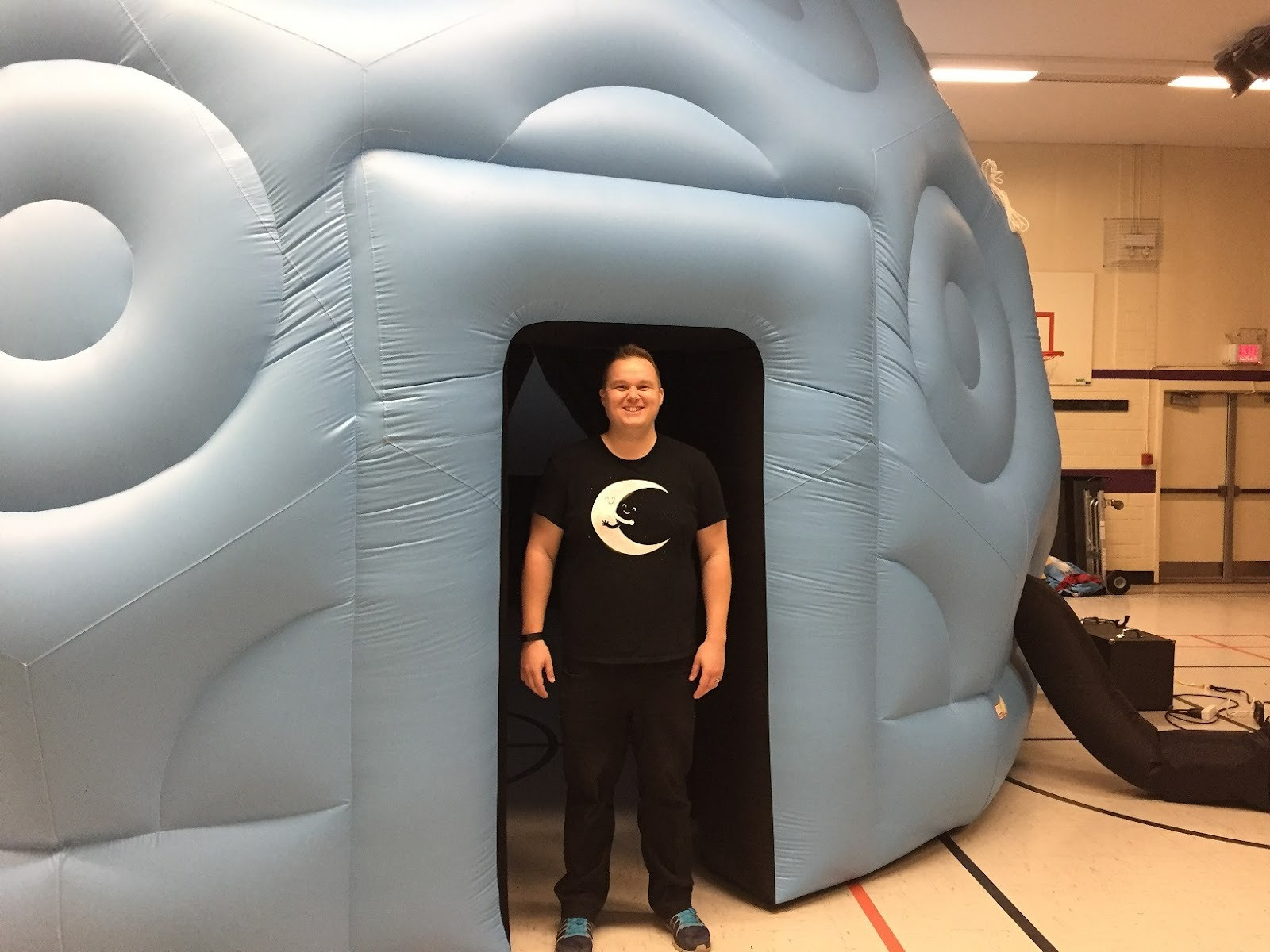
Like many small businesses, Ryan Marciniak’s Astronomy in Action was also impacted during the pandemic. In 2020, as bookings for his travelling planetarium shows were wiped out and public events cancelled, he suddenly found himself without work at a time when he and his wife were expecting their first child, forcing him to put projects on hold, adapt financially and even take on other work just to get by before rebuilding momentum.
(Supplied/Ryan Marciniak)
He sees bringing that fun element of flying across Saturn’s rings or around the Moon as an essential way to spark curiosity in young individuals.
“Classroom teachers do incredible work over a long period, but what getting that planetarium experience firsthand gives that spark…a concentrated moment of inspiration,” he said.
“Not only kids never forget it it but adults also remember their planetarium visits decades later.”
Those “powerful” moments may nudge those young minds to take up a career in the sciences but ultimately, Marciniak’s goal is to “create the next generation of informed citizens” who have an appreciation for the planet they coexist with.
Email: [email protected]
At a time when vital public information is needed by everyone, The Pointer has taken down our paywall on all stories to ensure every resident of Brampton, Mississauga and Niagara has access to the facts. For those who are able, we encourage you to consider a subscription. This will help us report on important public interest issues the community needs to know about now more than ever. You can register for a 30-day free trial HERE. Thereafter, The Pointer will charge $10 a month and you can cancel any time right on the website. Thank you
Submit a correction about this story

