
Ford government’s Bill 98 could be the ‘final death knell’ for birds
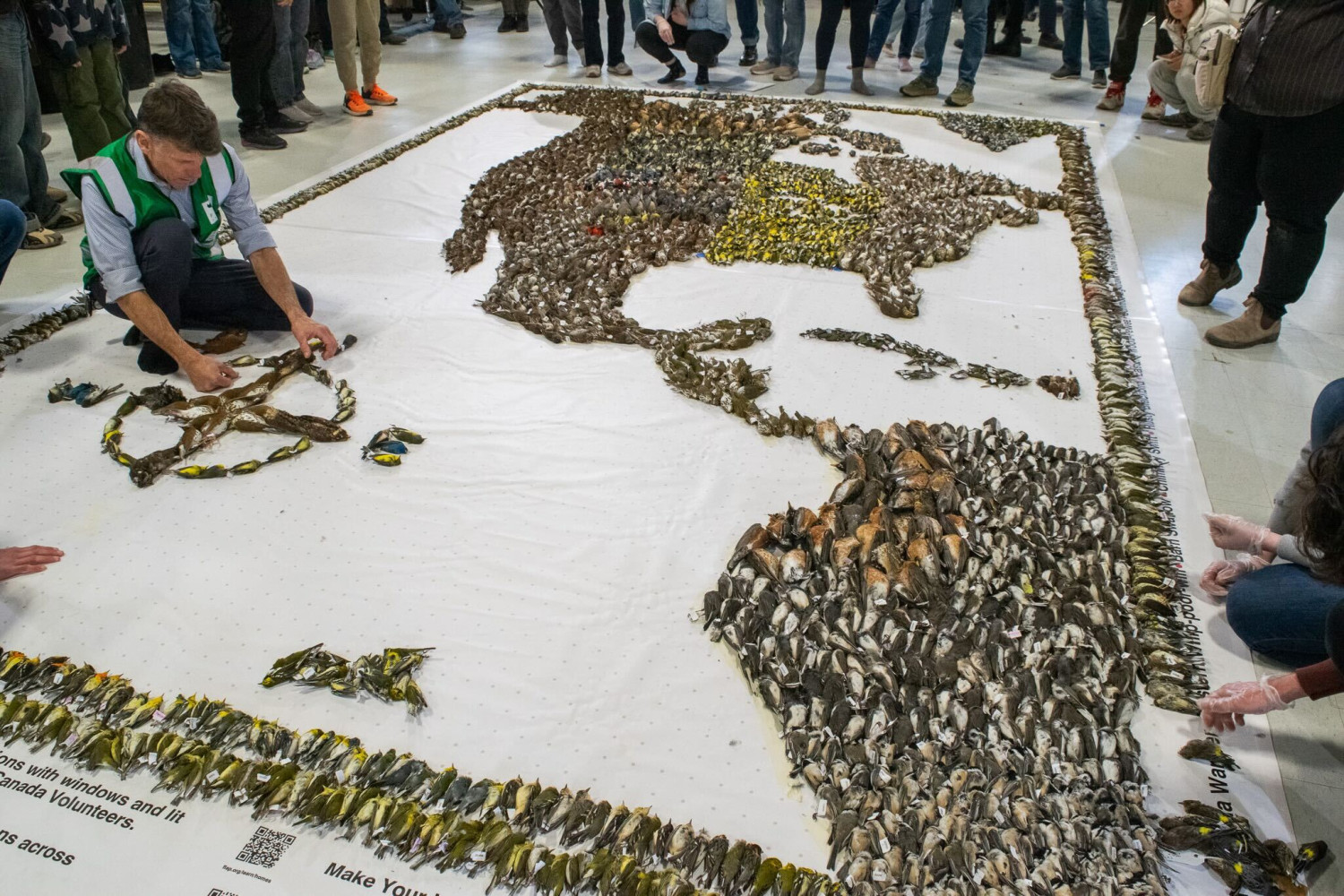
Every year, Fatal Light Awareness Program (FLAP) Canada co-founder Michael Mesure gently arranges the bodies of thousands of birds killed by fatal collisions with buildings into a powerful visual call for change.
The emotional toll is unbearably heavy.
This year, it broke him.
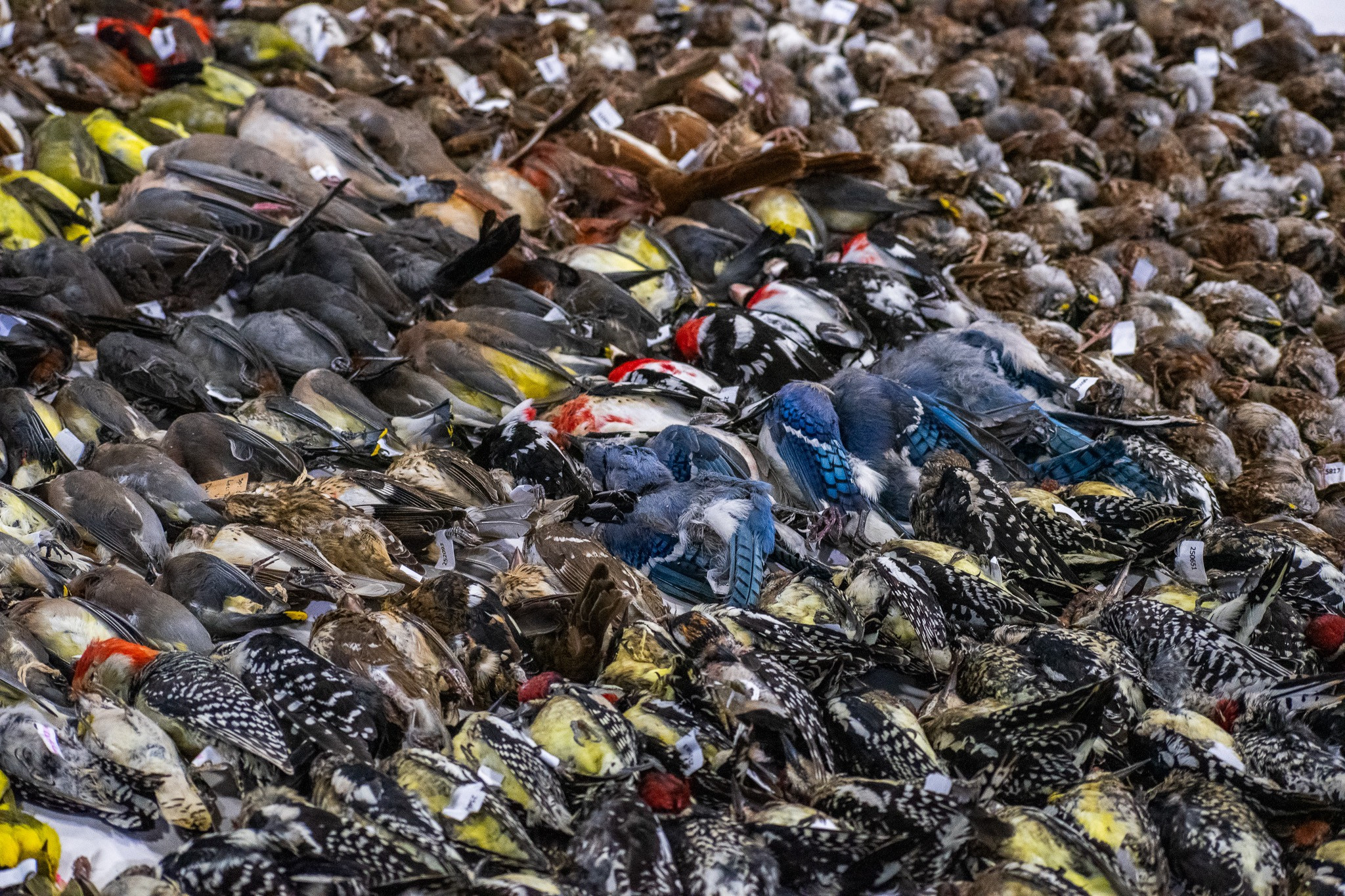
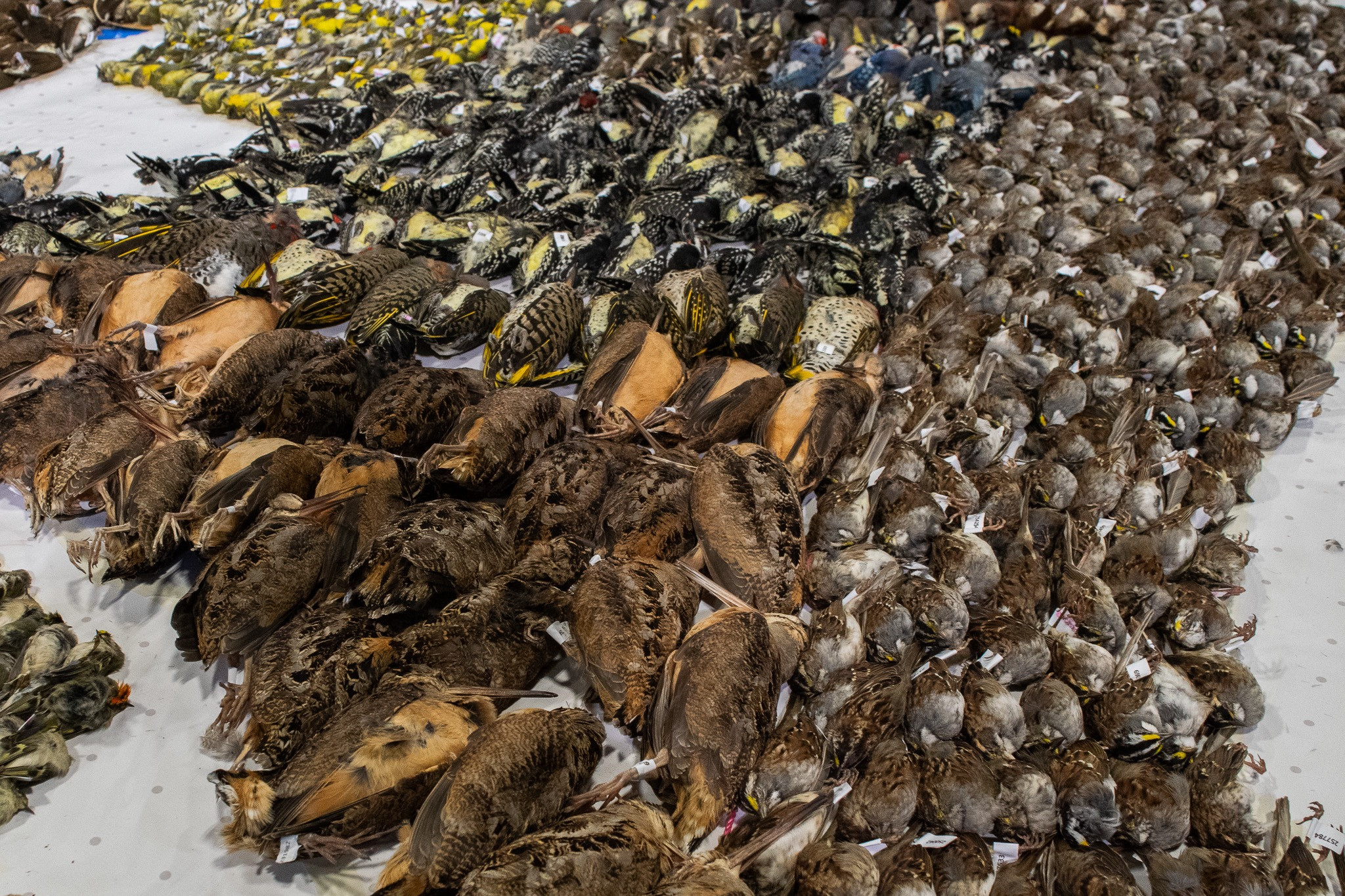
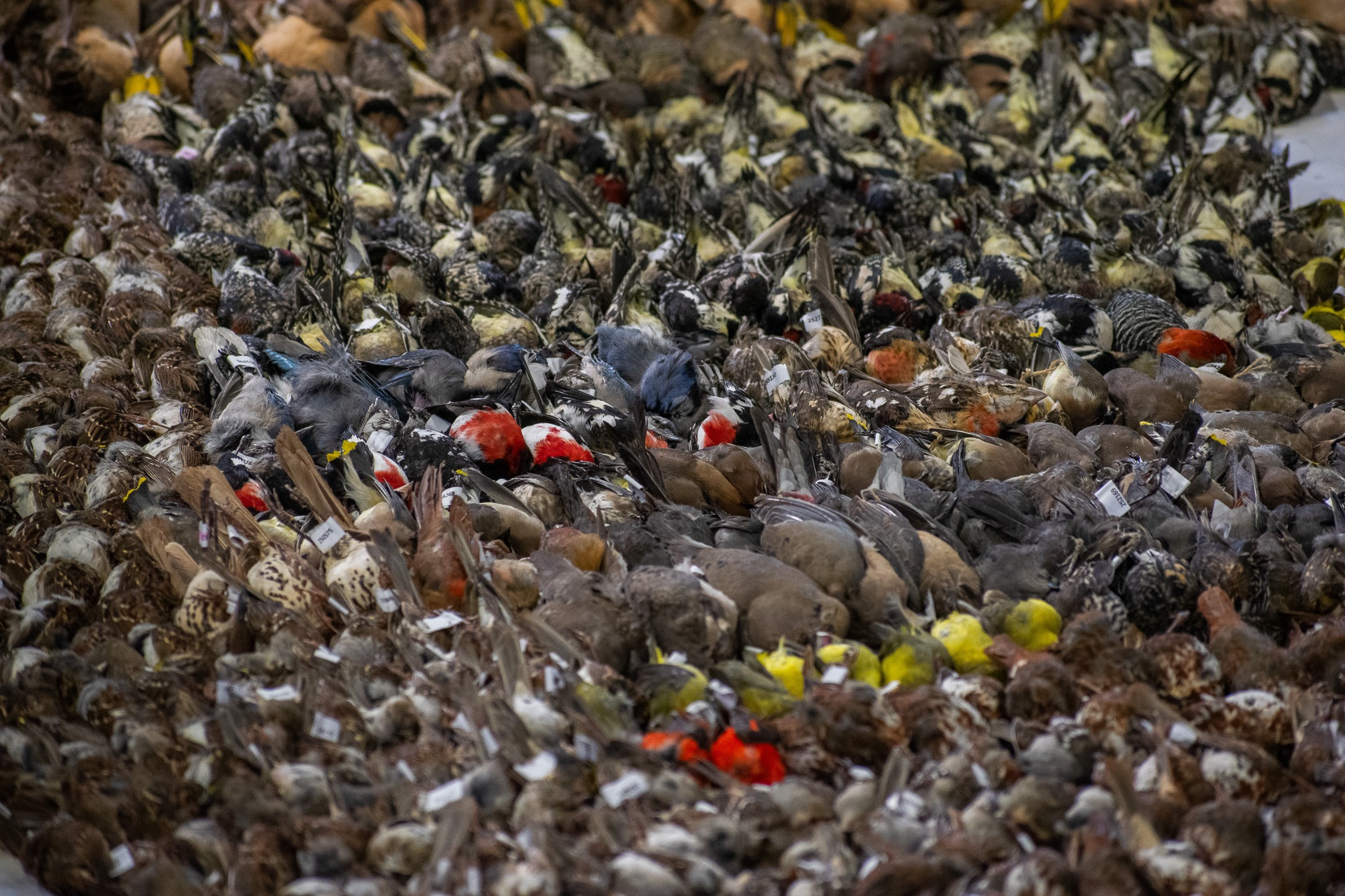
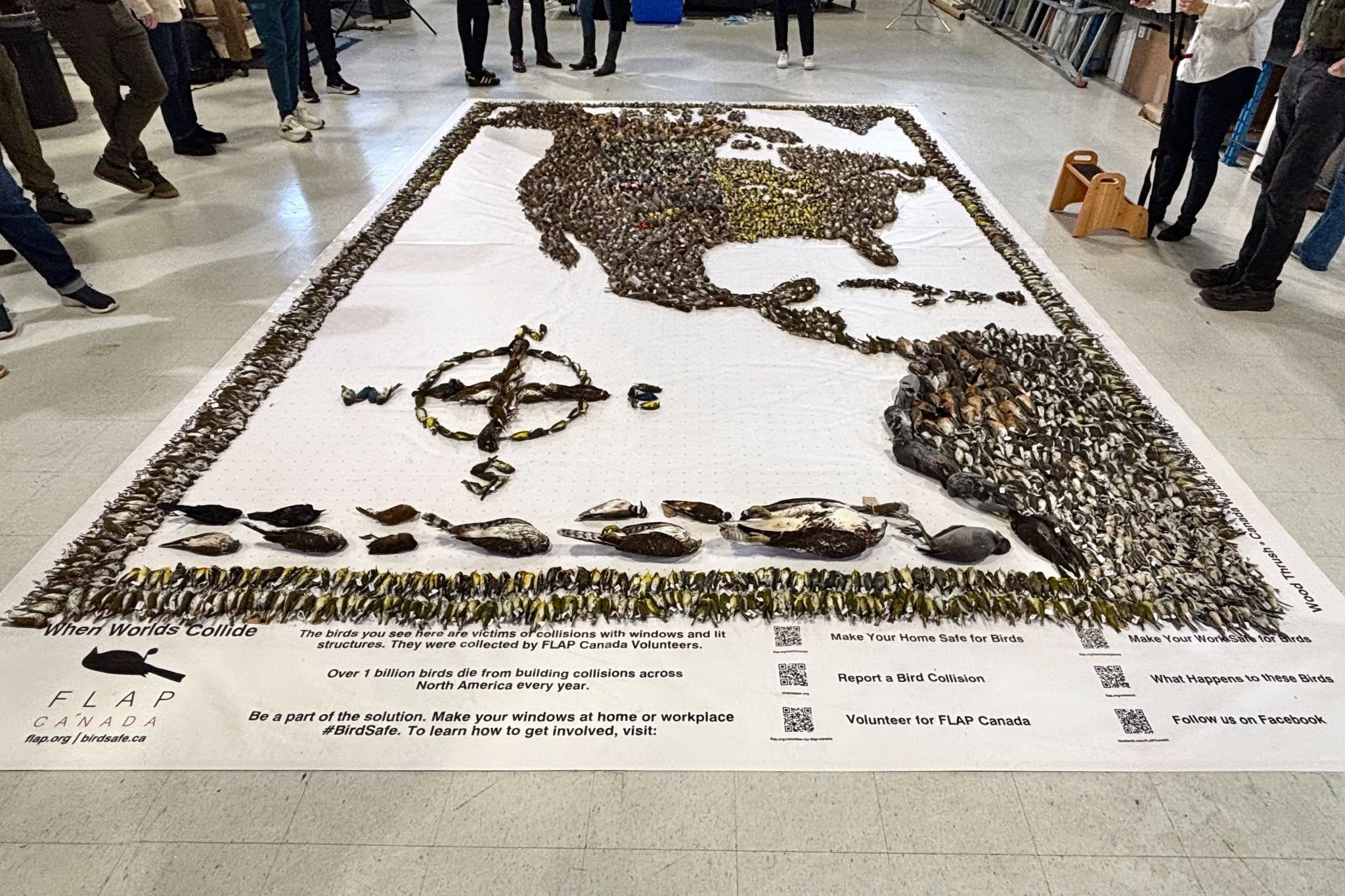
The 3,000 birds laid out in the annual display included many species from passerines, hummingbirds, thrushes, corvids, and even a few birds of prey.
(Alexis Wright/The Pointer)
As he stood before the display, Mesure, who has dedicated more than three decades of his life to the cause, struggled to speak. His voice trembled, words catching in his throat as tears streamed down his face.
For the first time since 2009, birds are no longer protected in Ontario due to housing legislation rushed through Queen’s Park by Premier Doug Ford’s PC government — first with Bill 17, then Bill 60 and now Bill 98.
“I’m always taken by this,” Mesure said, pausing to compose himself at Feather Friendly’s Mississauga headquarters on April 11.
“It’s a painful reminder of what we’re dealing with and how unnecessary it is.”
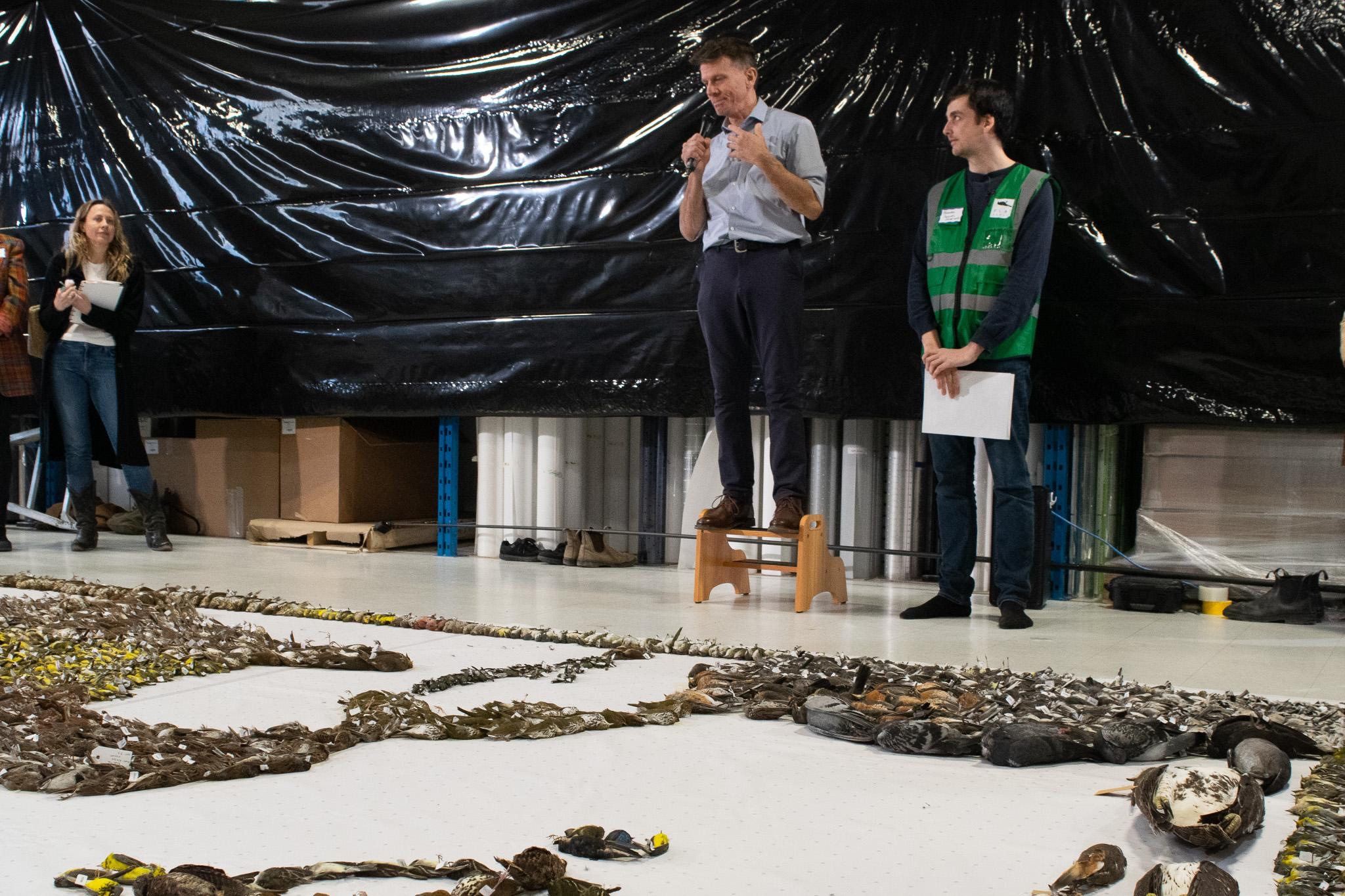

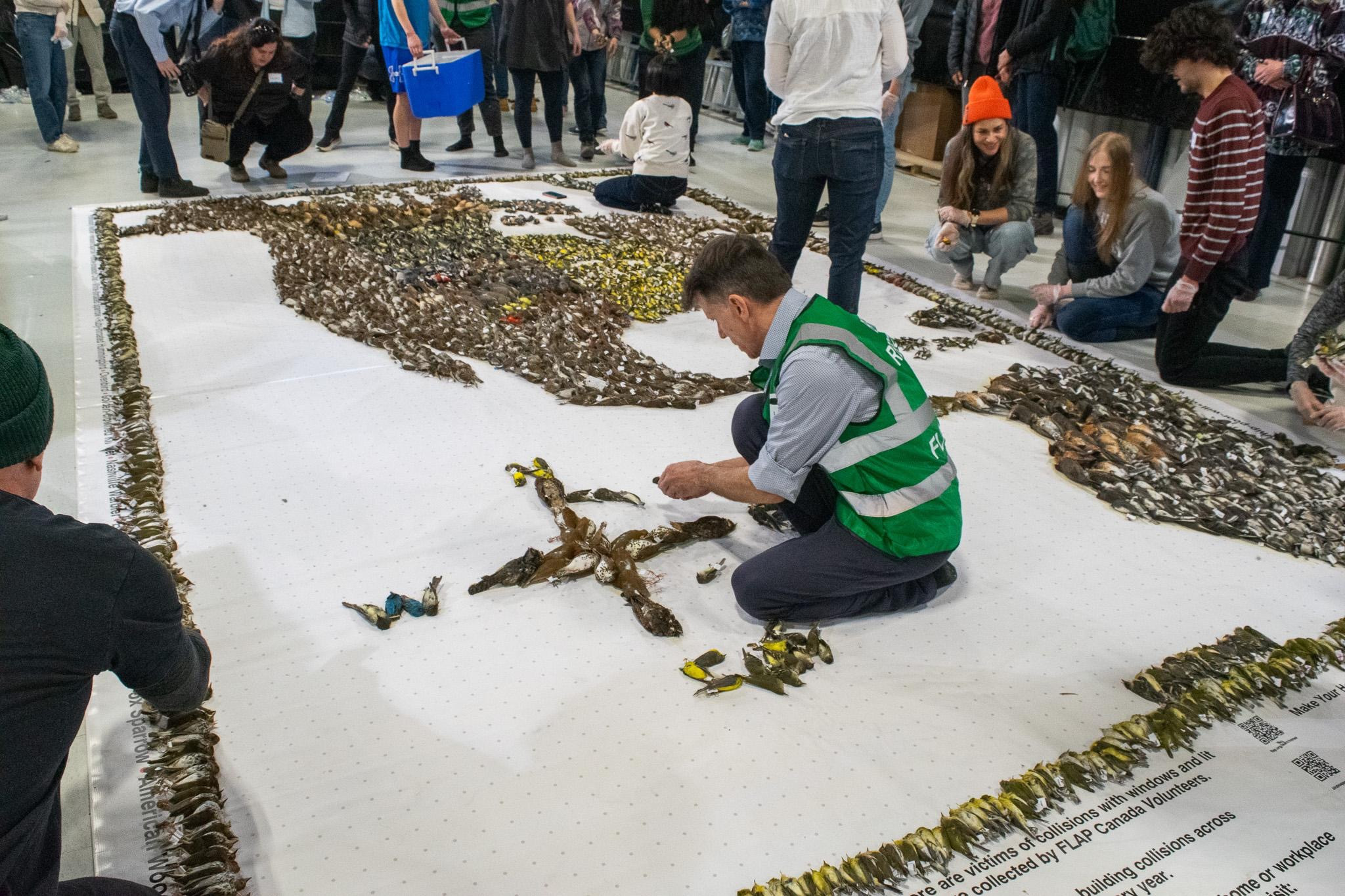
Fatal Light Awareness Program (FLAP) Canada co-founder and executive director Michael Mesure was emotional while talking about increasing bird collisions every year, despite simple solutions.
(Alexis Wright/The Pointer)
The annual installation, typically arranged in symbolic circular patterns, took on a new form this year. Those who entered the space first paused, before shock rendered their faces, then gave way to a look of quiet dread.
A shared sadness settled in that matched the mournful music filling the space as volunteers carefully assembled a map made up of 3,000 dead birds inspired by the Americas, with a simple message: birds do not recognize human borders.
Some migratory birds that die in North America carry seeds from South America in their stomachs, a reminder of how far they travel, and what is lost with each collision.
“To imagine, someone in Brazil may have been the last person to hear that bird sing,” Brendon Samuels, BirdSafe Buildings coordinator for FLAP Canada, told The Pointer.
“Imagine all the ecological services it would have provided…just lost.”
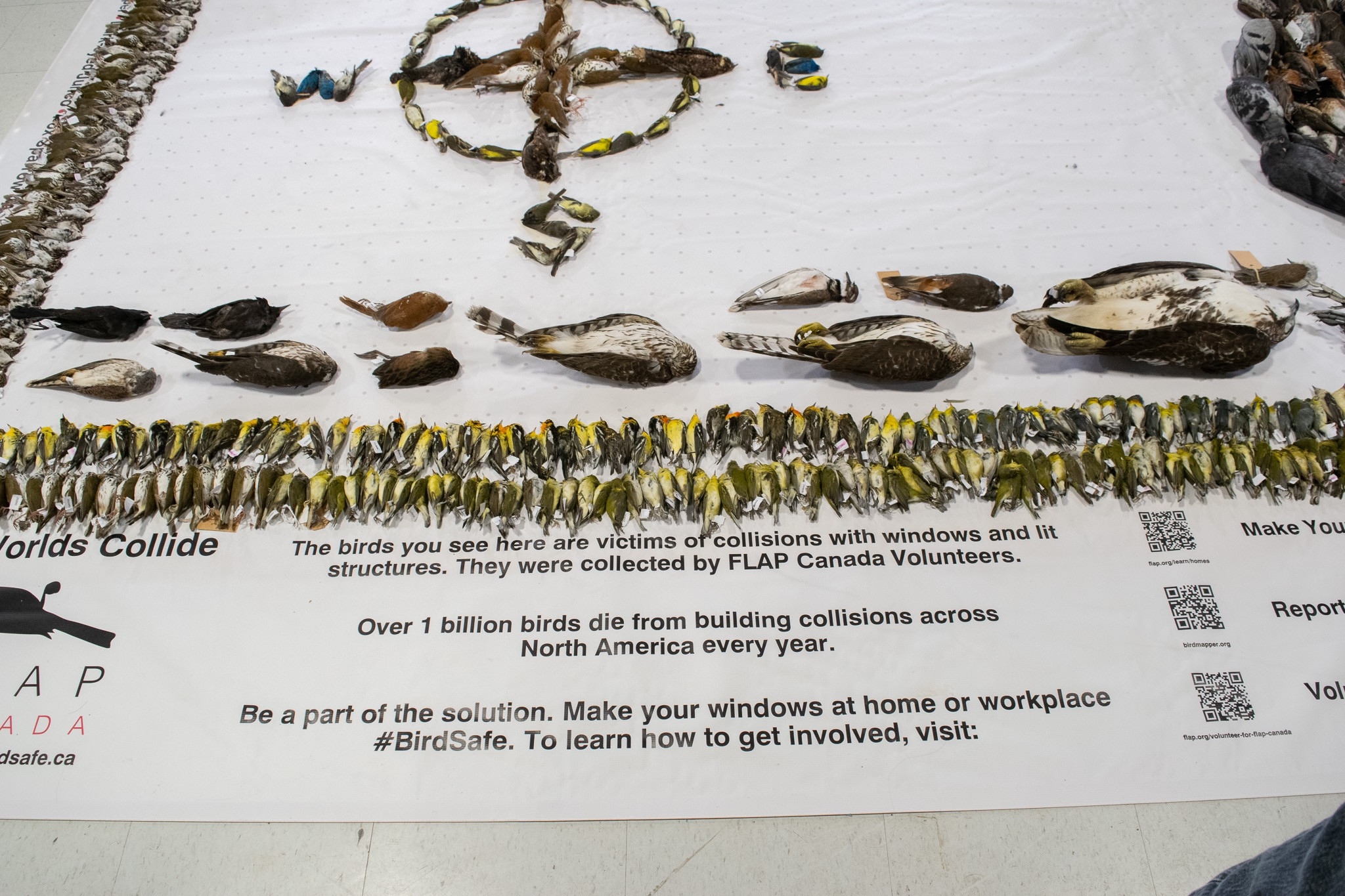
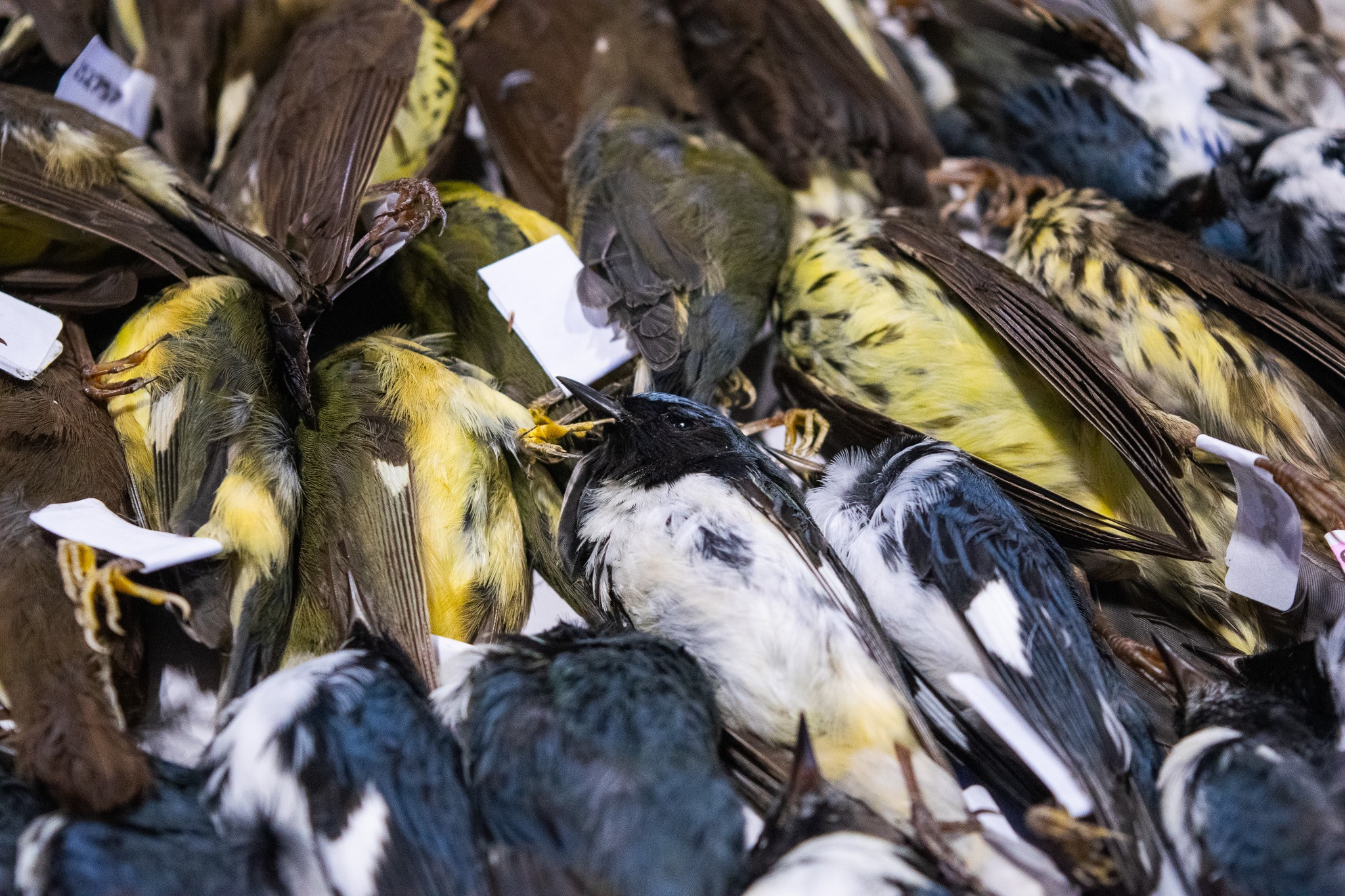
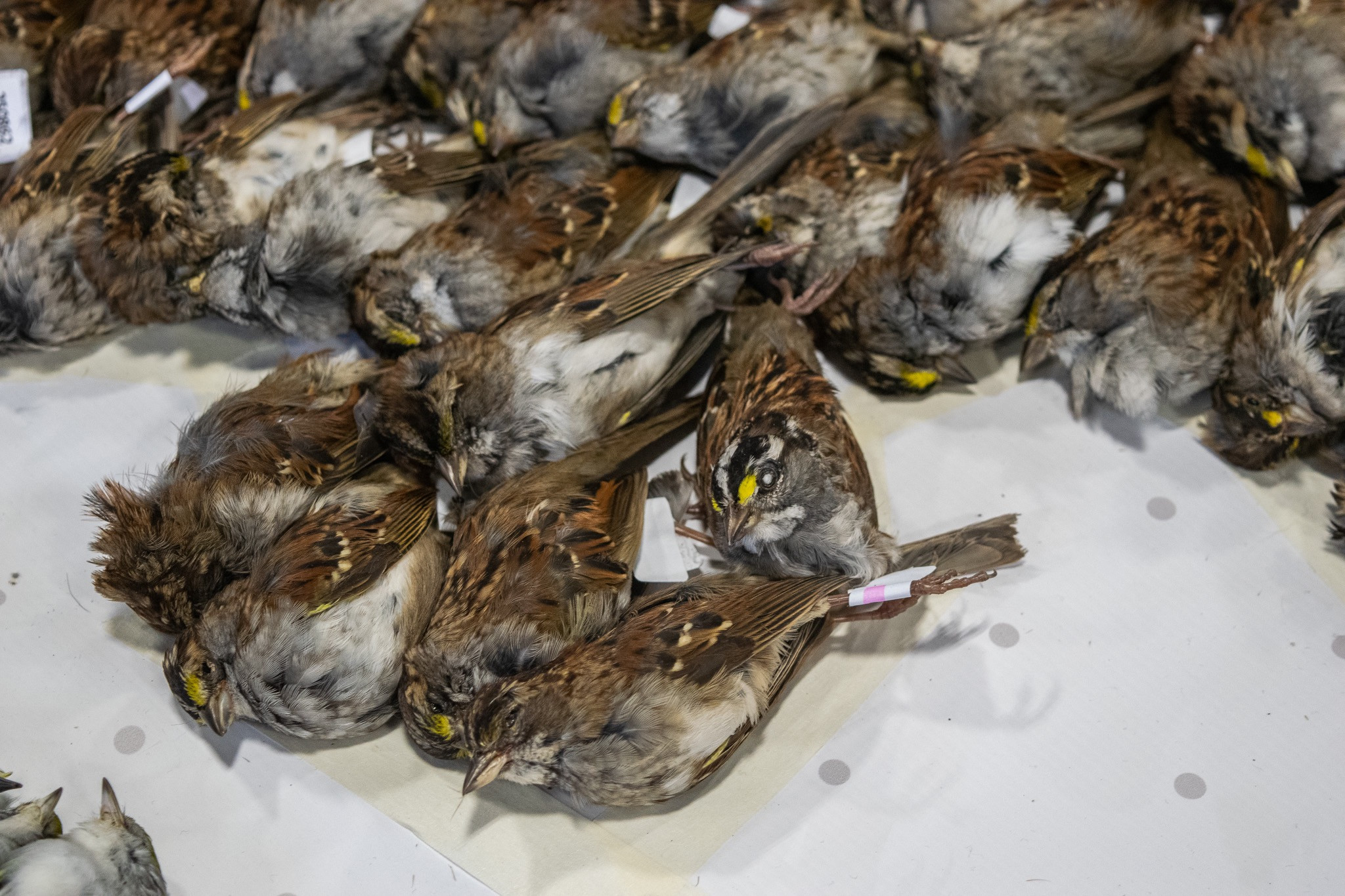
(Alexis Wright/The Pointer)
Samuels opened the program with a moment of silence, asking those gathered to honour the birds, “whose songs can no longer be heard” and sit with the loss.
Ontario Nature’s Executive Director, Andrés Jiménez Monge, shared that he had asked his wife if she wanted to come with him to witness the exhibit but she said, “she couldn't do it again”.
“I kind of wonder, how did they make that a hopeful event?” she asked Jiménez Monge.
He said he had found the answer.
“It's hopeful because I get to mourn with you for all these birds and I don't do it alone.”
He explained further.
“It is hopeful because of the connections and relationships that are formed that will allow us to move forward and reduce the violence against these birds. Because that's exactly what it is…a meaningless loss of life that could easily be corrected.”
Each year, more than one billion birds in North America, including 42 million in Canada die after colliding with buildings and windows. In Toronto, more than 5,000 birds collided with glass in 2025 alone, at least, according to available information. Experts note the actual number is much higher.
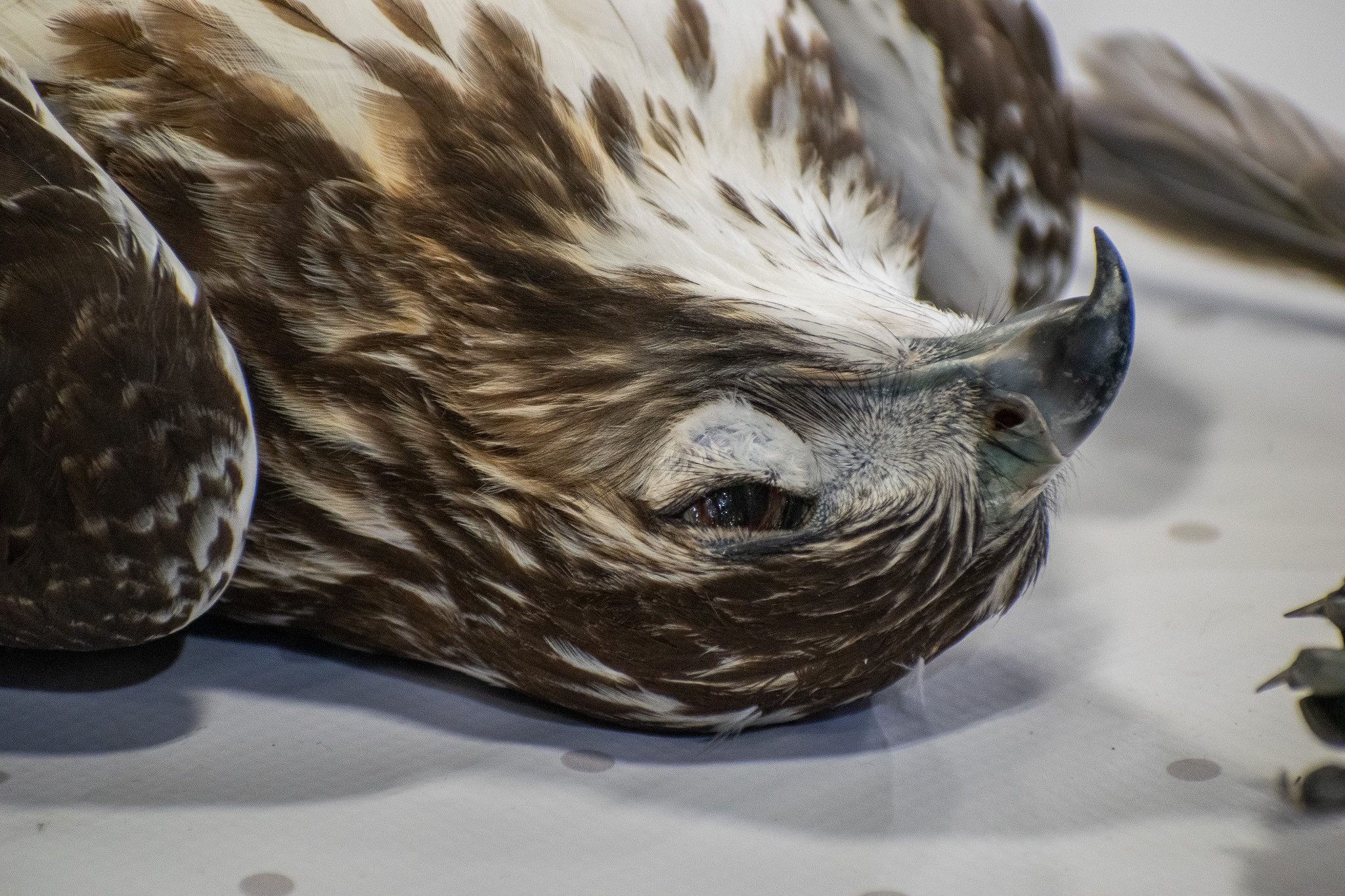
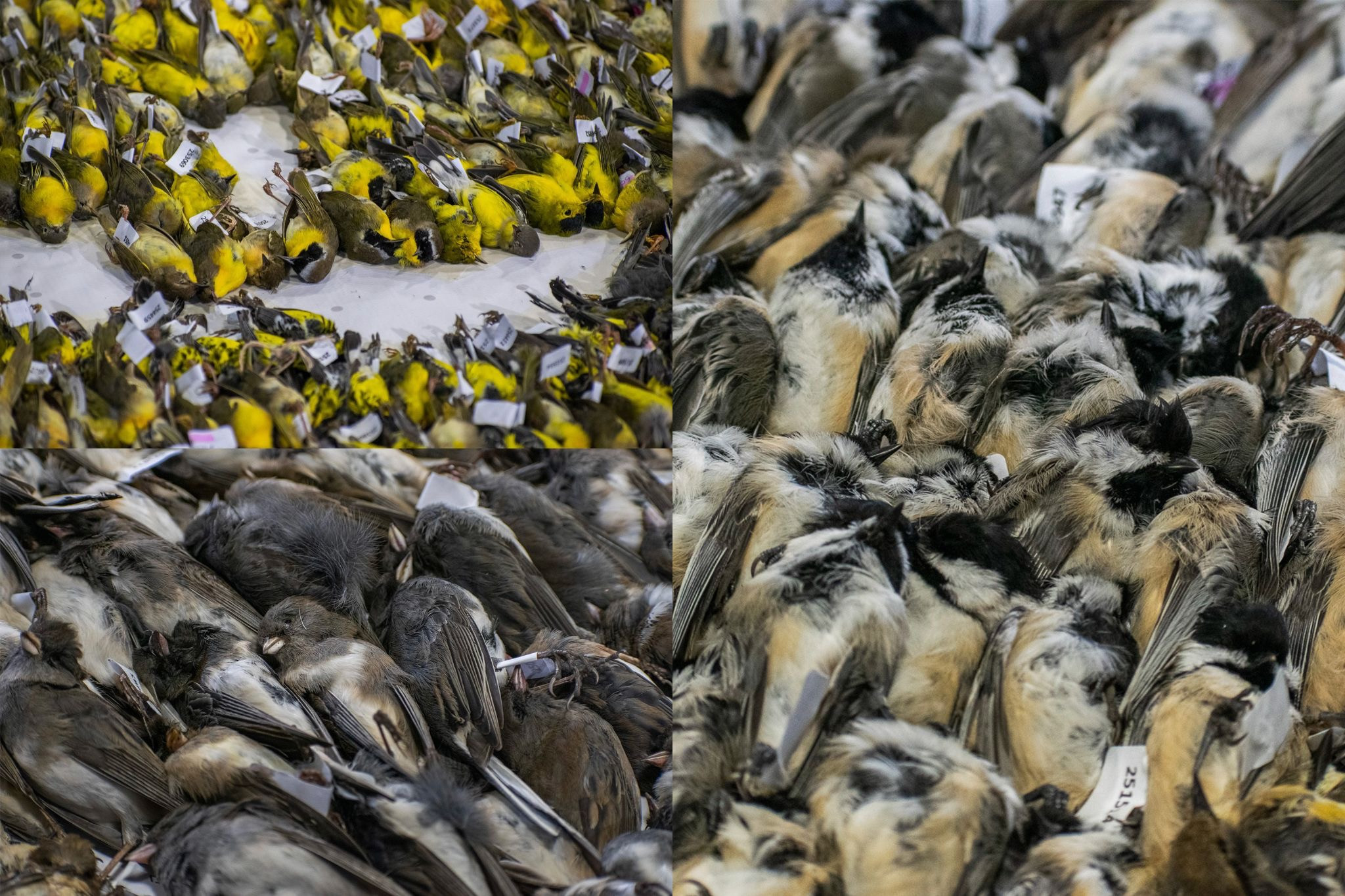
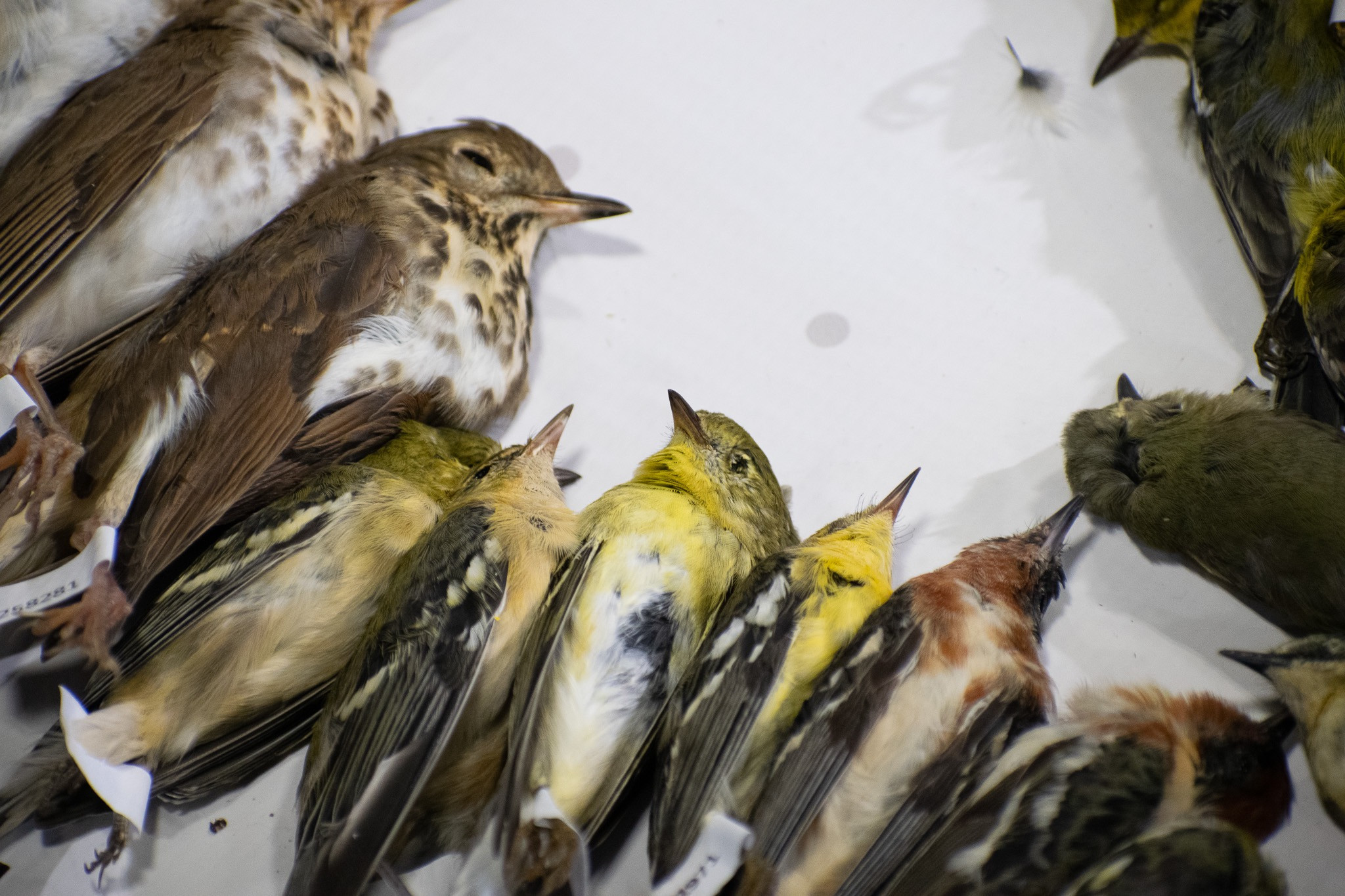
TOP: Red Tailed hawk, BOTTOM: Warblers (top left), Juncos (bottom left) and Chickadees.
(Alexis Wright/The Pointer)
Ontario was on track to become a leader in addressing this crisis until Premier Doug Ford and the PC government came to power.
On June 5, Bill 17, dubbed the Protect Ontario by Building Faster and Smarter Act, received royal assent after being presented as a bid to jumpstart home construction through changes to development charges, building codes and planning. Not mentioned in the fine print of the legislation is, it creates “death traps” for birds.
Bill 17’s Schedule 1 focused on the Ontario Building Code, aiming to assert greater provincial control over how municipalities can influence development approvals. Critics warned the Bill dismantled existing Green Building Standards including bird-friendly design requirements adopted by cities like Toronto and others across Ontario.
Four months later, Minister of Municipal Affairs and Housing Rob Flack went one step further to gut those standards and introduced Bill 60, Fighting Delays, Building Faster Act, to accelerate housing development by restricting municipal green development standards including prohibiting cities from enforcing environmental standards outside the building envelope, such as green roofs and limiting local authority to set standards that go beyond the provincial building code.
“Bill 17 and later Bill 60 were explicitly aimed at removing the authority granted by the province to municipalities under the Planning Act,” Samuels noted.
“There are more building design regulations in the USA than there are in Canada, even though the movement started here with Toronto.”
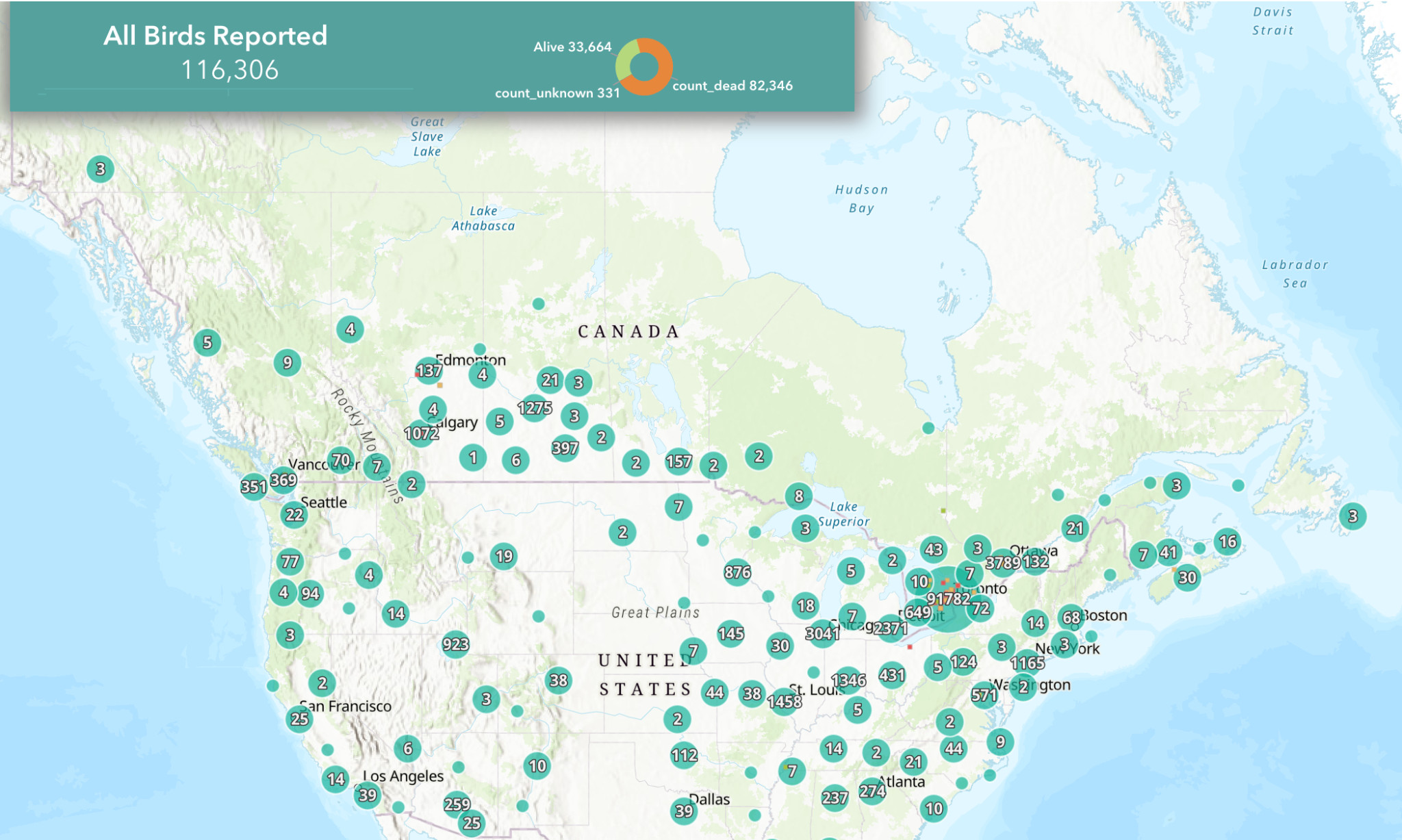
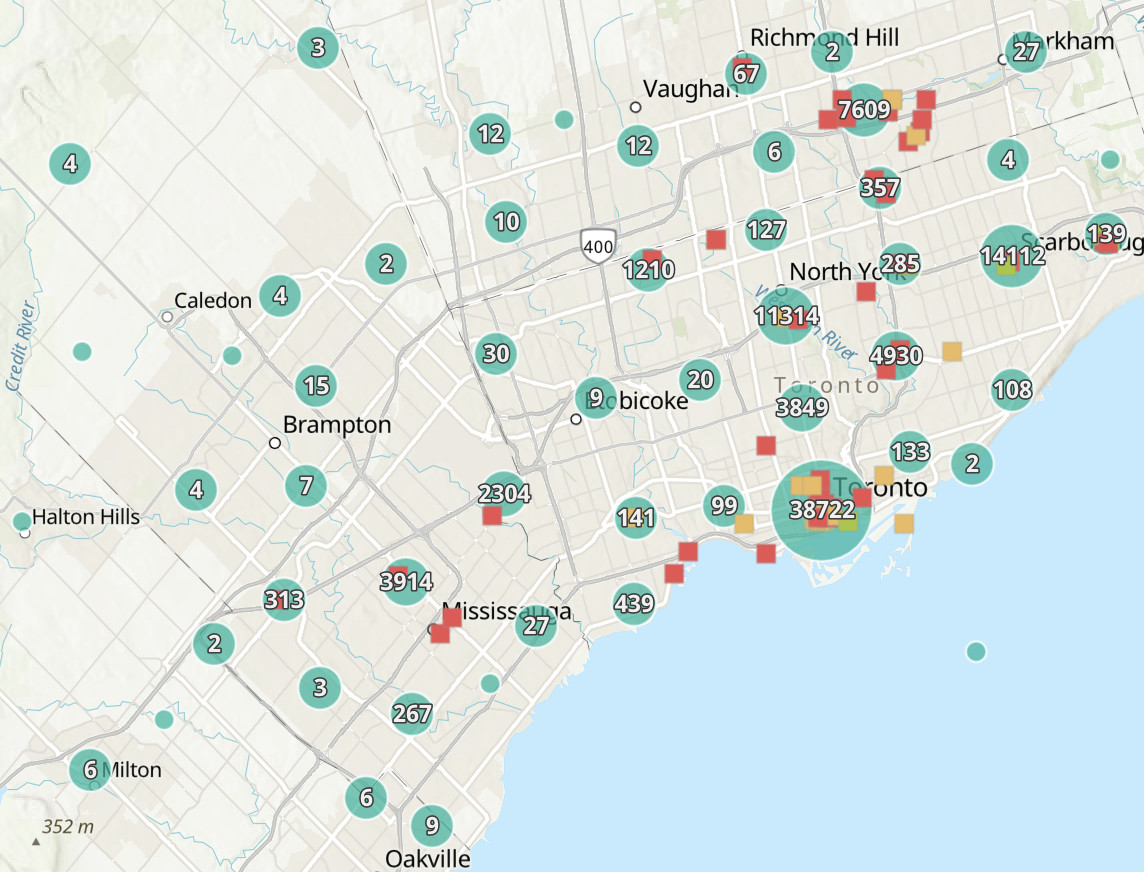
Window collisions are a leading cause of bird deaths across Canada, with the problem particularly acute in the Greater Toronto Area. Toronto alone is home to roughly one-third of the country’s tall buildings; the dense concentration of mid-and high-rise structures creates a hazardous landscape that results in millions of bird deaths each year.
(Global Bird Collision Mapper)
Since taking office in 2018, the PCs under Ford have repeatedly pledged to cut what they call “red tape”—green standards and bird-friendly design appear to fall within the PC definition—in an effort to speed up home construction.
Is it working?
Ontario’s Financial Accountability Officer reported housing starts in the province in the first quarter of 2025 were the lowest they had been since 2009, falling to 16,800 units by year end.
According to market research firm Urbanation, a record was just set, with zero new condo projects started across the Greater Toronto and Hamilton Area in the first quarter of 2026, something that has never happened in decades.
The City of Toronto became the first municipality in North America to adopt the Green Roof By-Law in 2009 three years after introducing it as a “voluntary standard for new development”, later making the Toronto Green Standard (TGS) mandatory by 2010.
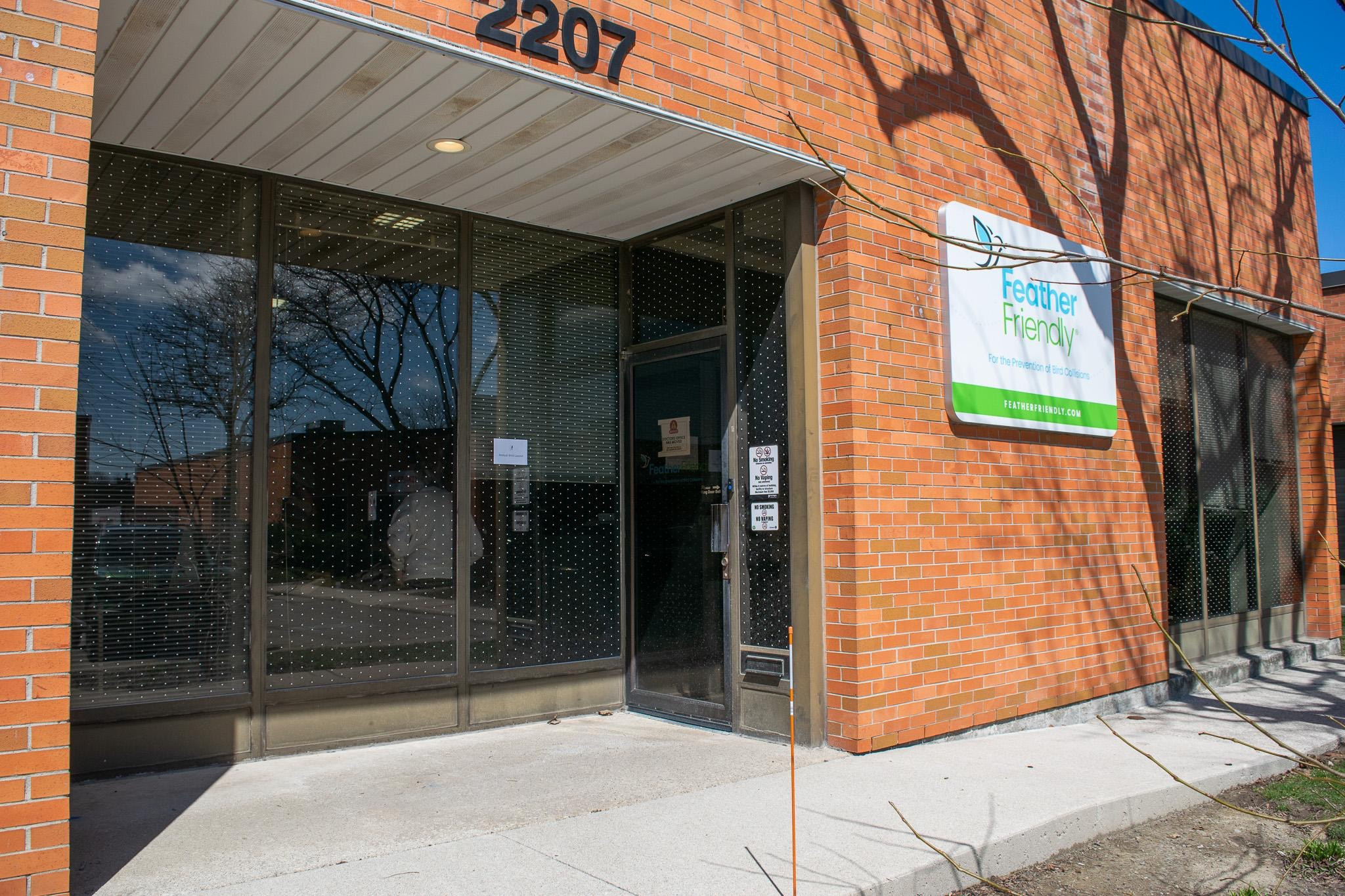
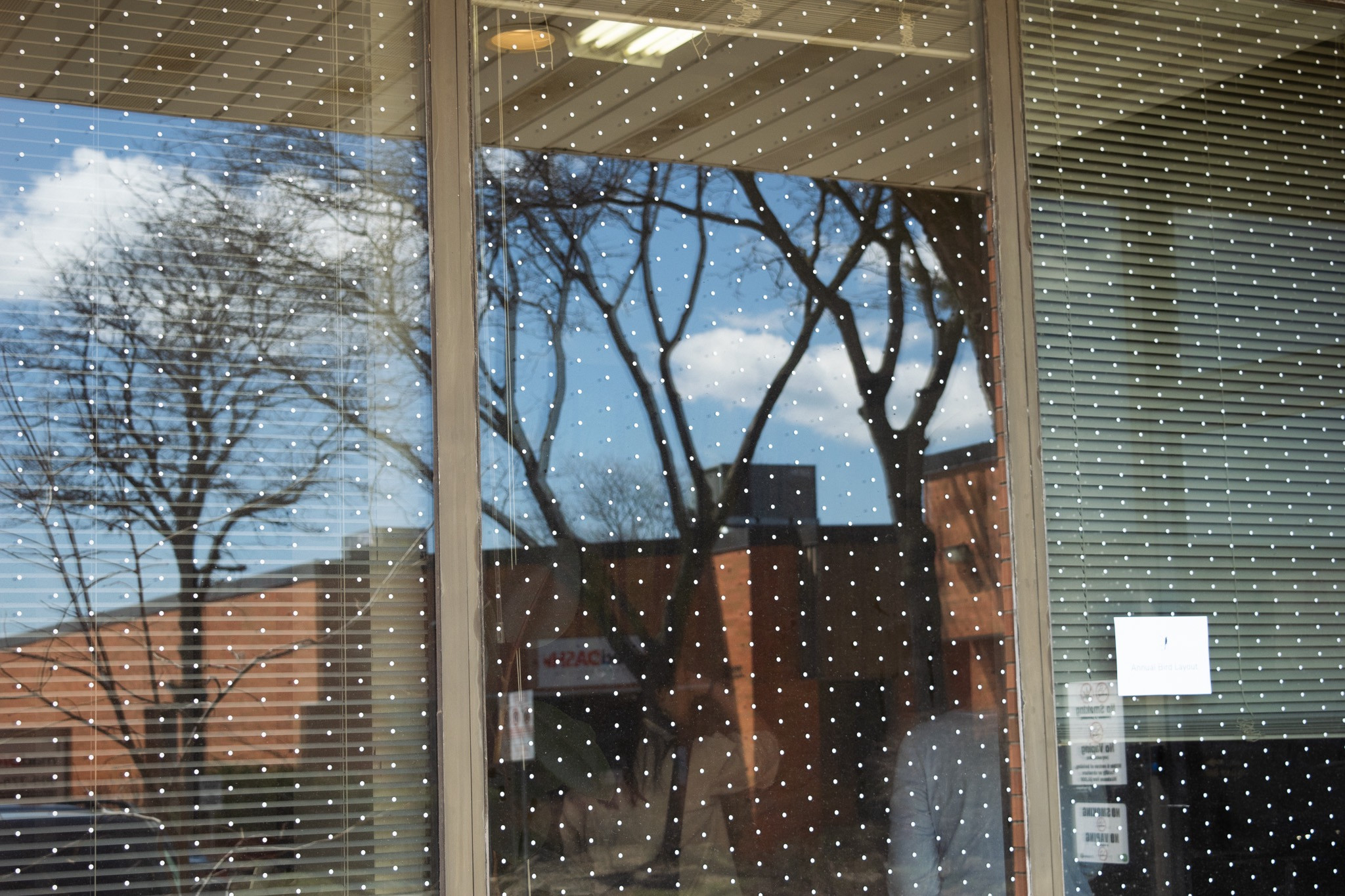
Feather Friendly’s DIY [do it yourself] window markers, simple rows of white dots applied to glass, can reduce bird collisions by more than 95 percent, according to ornithologist Dave Willard, who documented a dramatic drop in fatalities at Chicago’s McCormick Place Lakeside Center after installation, from 1,280 deaths in fall 2023 to just 18 in fall 2024.
(Alexis Wright/The Pointer)
The goal was to improve air quality, reduce the urban heat island effect while cutting energy use and greenhouse gas emissions from new buildings, increasing resilience to power disruptions and encouraging renewable and district energy. It also sought to reduce stormwater runoff and potable water use, improve the quality of water entering Lake Ontario, diverting household and construction waste away from landfill sites; while protecting ecological functions by integrating natural habitats and reducing bird collisions with buildings.
Despite a recession in 2009, Ontario saw a significant rebound in housing starts with total units reaching 63,200 while having bird-friendly policies intact.
By 2021, new housing starts in Ontario numbered just under 100,000 units, largely thanks to trends created by previous Liberal government policies that favoured smart growth.
By the time Ford’s legislation began to impact construction, the numbers started to fall dramatically, a pattern that is continuing.
In the latest provincial budget, the PCs revised their housing starts projection once again to just 64,800 for this year, well below earlier forecasts and far short of the roughly 175,000 annual starts its own calculations initially indicated would be needed to meet the goal of 1.5 million new homes by 2031.
It had taken FLAP Canada more than two decades working with municipalities like Toronto, Mississauga and Markham to introduce bird-safe policies — with Bill 17 and 60, 28 municipalities had lost those protections within months.
The Region of Peel currently does not have any existing green development standards, but each municipality references bird-friendly designs in their development practices.
Housing starts didn’t progress. Bird deaths continued to be reported. But the worst was yet to come.
On March 30, the PCs tabled yet another piece of housing legislation — Bill 98, Building Homes and Improving Transportation Infrastructure Act — which proposes to limit municipal authority to enforce mandatory green development standards (GDS) for new buildings by restricting local rules on energy efficiency, emission targets and sustainability features such as EV-ready parking to, again, accelerate housing development and lower upfront construction costs.
With fewer municipal tools to require higher standards through local green development policies, the Canada Green Building Council noted the provincial building code review becomes increasingly central, raising questions about whether new housing will balance speed with efficiency, resilience, quality and long-term affordability.
In 2021, New Democratic Party (NDP) Member of Provincial Parliament Chris Glover brought forward a “game changer” motion to incorporate bird-friendly building design standards into the Ontario Building Code. It was never adopted.
Clear windows reflect the outdoor scene back to birds who then assume what looks like blue sky in front of them as a hole to fly through, not understanding the human-made glass design.
(Alexis Wright/The Pointer)
At the federal level, officials have taken steps to address the issue through the Greening Government Strategy, which includes measures to reduce bird collisions at federally owned buildings across Canada. Bird-safe design is also gaining broader traction across the public sector and construction industry, including updates to the National Master Construction Specification to reference bird-friendly building practices. The National Master Specification (NMS), widely used by governments and industry as a standardized reference for construction requirements, is supported by major construction associations.
Samuels observed the Province’s actions stand in stark contrast as it had already weakened GDS through earlier legislation though it was unclear how far those changes ultimately went. With Bill 98, the shift is now “unequivocal”: municipalities would lose the ability to enforce building standards.
Many municipalities have adopted voluntary bird-safe guidelines, while mandatory requirements through site plan control are mostly concentrated in the GTA with some cities also referencing bird-friendly design in official plans. But enforcement remains limited, as municipalities are largely restricted to health and safety conditions. As a result, he anticipates decisions to refuse or require stronger bird-safe measures could increasingly be challenged at the Ontario Land Tribunal.
Samuels added that site plan control is an imperfect tool, covering mainly larger developments while most bird collisions occur at single-family homes, and enforcement ultimately rests with building code compliance through inspectors rather than municipal design standards.
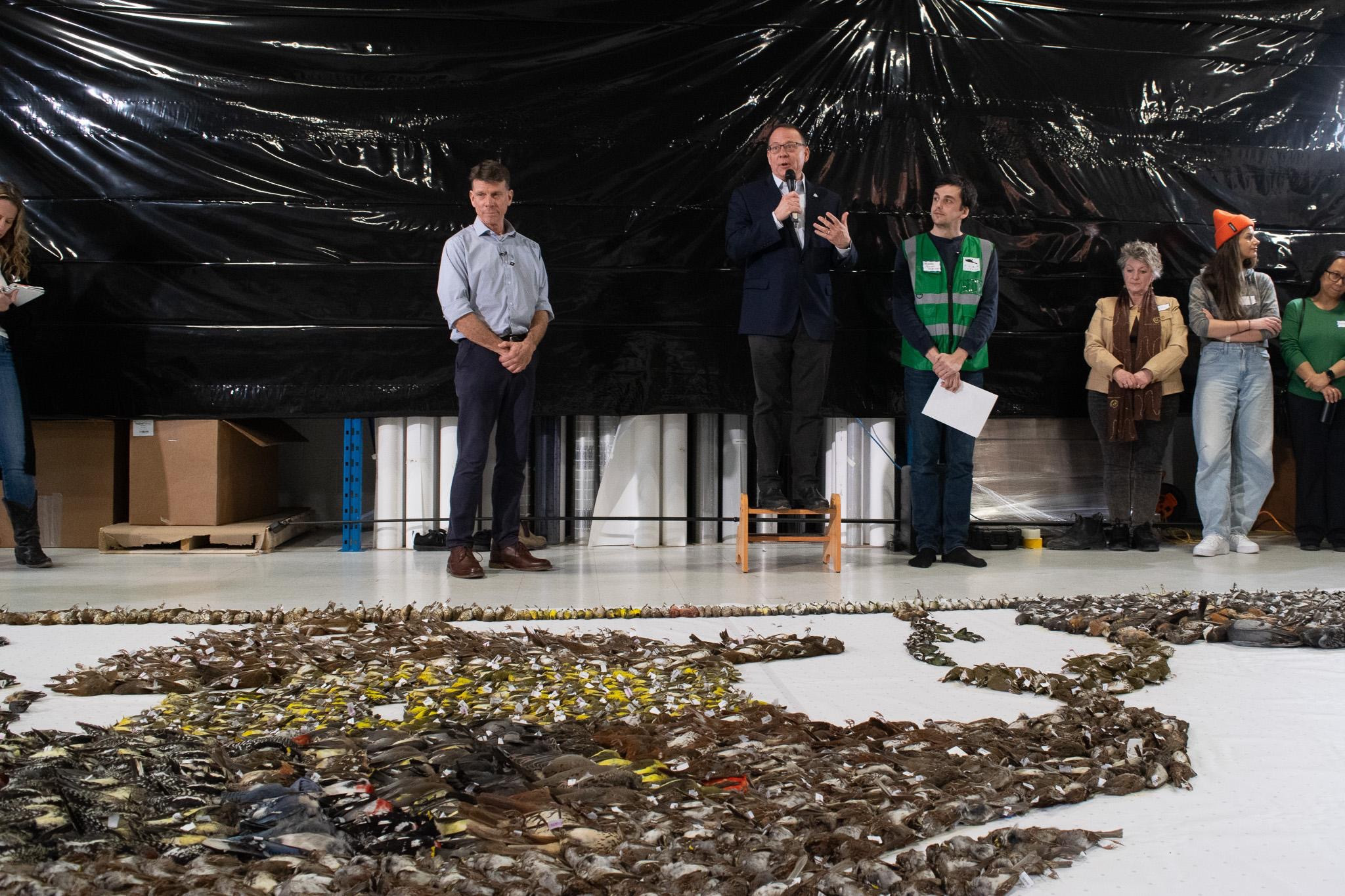
Ontario Green Party leader Mike Schreiner speaking at the FLAP Canada annual event alongside FLAP co-founder Michael Mesure (left) and Brendon Samuels, BirdSafe Buildings coordinator for FLAP Canada (right).
(Alexis Wright/The Pointer)
On Saturday, Green Party leader Mike Schreiner called the proposed legislation the “final death knell into green building standards in Ontario” and promised to fight against gutting environmental protections in construction the following Monday.
On April 13, Bill 98 was debated in the provincial legislature and was referred to a Standing Committee.
“All of what we have built since 2008 is being done away with in one fell swoop through the adoption of Bill 98,” Samuels warned.
The PCs have already gutted the Endangered Species Act, considered a gold standard for protecting and recovering species at risk, and replaced it with a much weaker version, the Species Conservation Act — critics have called it a “pay-to-slay legislation, which wrongly incentivizes habitat destruction”. “In this age of catastrophic decline in biodiversity, our government needs to prioritize habitat protection, not make it easier for developers to make money,” one ERO posting states.
He views the move as an “interesting intergovernmental conflict” between provincial policy and Canada’s broader climate and biodiversity commitments including obligations under the Migratory Birds Convention with the United States to protect migratory species and reduce human-caused mortality.
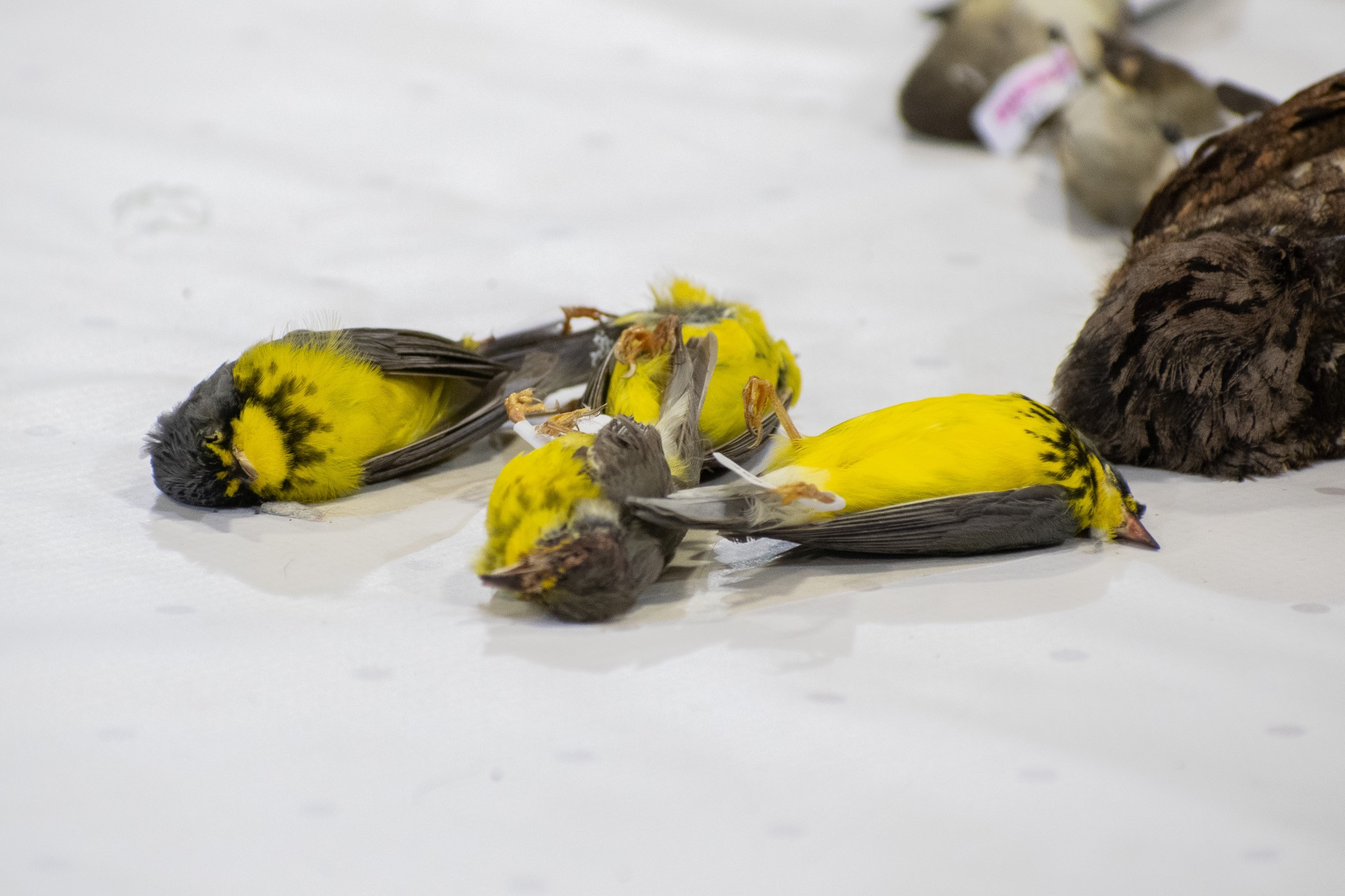
The Canada Warbler (bottom) is listed as Threatened under the Federal Species at Risk Act (SARA), and was considered Special Concern under the now dismantled provincial Endangered Species Act.
(Alexis Wright/The Pointer)
“You now have the provincial government at odds with the federal government's priorities and it's unclear to me what Ottawa has to say about what Ontario is doing.”
However, Ottawa’s far from perfect. Nearly one quarter of the 577 migratory animals (70 percent birds and 19 percent fish) found in Canada are at some level of risk since the country is not a member of the Convention on the Conservation of Migratory Species of Wild Animals (CMS), also known as the Bonn Convention. A recent United Nations interim report revealed nearly half of the world’s migratory species are declining including 26 Convention on the Conservation of Migratory Species of Wild Animals-listed species (18 migratory shorebirds) now facing higher extinction risk, largely driven by human activities.
“We have a climate emergency action plan in most communities that is probably not gonna be achievable anymore, because they can't regulate at the level required,” Samuels told The Pointer.
“How do we get the different levels of government in Canada talking to them over there? That's a nation-building project!”
Despite provincial rollbacks, local leaders are taking responsibility. On April 15, the City of Toronto accelerated bird-protection retrofits at Metro Hall and expanded mitigation measures across all City-owned buildings, following renewed calls for the municipality to lead by example on migratory bird safety.
Samuels highlighted change is slow but steady, with awareness of bird-building collisions rising in recent years, reflected in online search trends. New partnerships are also expanding work with governments on risk assessments and policy. Retrofitting is growing across sectors, from private homes to major sites like the Royal Bank Plaza, as well as public buildings such as community centres and provincial park facilities.
“Every conversation like this holds space for a better future. It may not be visible yet but we keep that possibility alive,” he admitted.
“Every piece of treated glass is saving birds. People are choosing to act because of the stories being told. It’s not yet at the scale we want but the movement is growing.”
Carol Lorenzana, a mother of two, was urged by her colleague to start checking the ground outside her workplace for birds that had struck the building’s windows.
What she found changed her daily routine: sparrows and other small birds, evidence of impacts most people walk past without noticing. Over time, those small checks became a habit and then a responsibility she no longer felt she could ignore.
“I’m really interested in wildlife,” Lorenzana told The Pointer — it is a love that she wants to pass down to her children. She had come to the event with her five-year-old daughter.
“I want my daughter to understand what’s happening around her.”
Despite the emotion of the day, she said the growing turnout offered a sense of progress: “Hopefully, more people will take steps, like treating their windows, so birds can keep migrating safely.”
The successful turnout, with a special appearance by author Margaret Atwood, left Mesure feeling optimistic about FLAP’s goal to continue working toward reversing the shift in authority, so that local regions can regain the ability to implement the bird-safe measures they were once able to advance.
“We also need to get Canada back on the map as a leader in the space.”
Email: [email protected]
Email: [email protected]
At a time when vital public information is needed by everyone, The Pointer has taken down our paywall on all stories to ensure every resident of Brampton, Mississauga and Niagara has access to the facts. For those who are able, we encourage you to consider a subscription. This will help us report on important public interest issues the community needs to know about now more than ever. You can register for a 30-day free trial HERE. Thereafter, The Pointer will charge $10 a month and you can cancel any time right on the website. Thank you
Submit a correction about this story

