
Ontario’s first South Asian destination LCBO
When Ontario’s liquor board opened its first South Asian destination store in Brampton in December, it marked a long awaited shift for consumers who had spent years struggling to find Indian and other South Asian spirits on LCBO shelves. Importers say sales of Indian-made whisky and rum at the store have been strong since launch, with some products selling out within weeks.
But while the move has expanded choice in one location, it has also exposed the limits of Ontario’s centralized alcohol system, where access depends less on demand than on geography, timelines and regulatory processes.
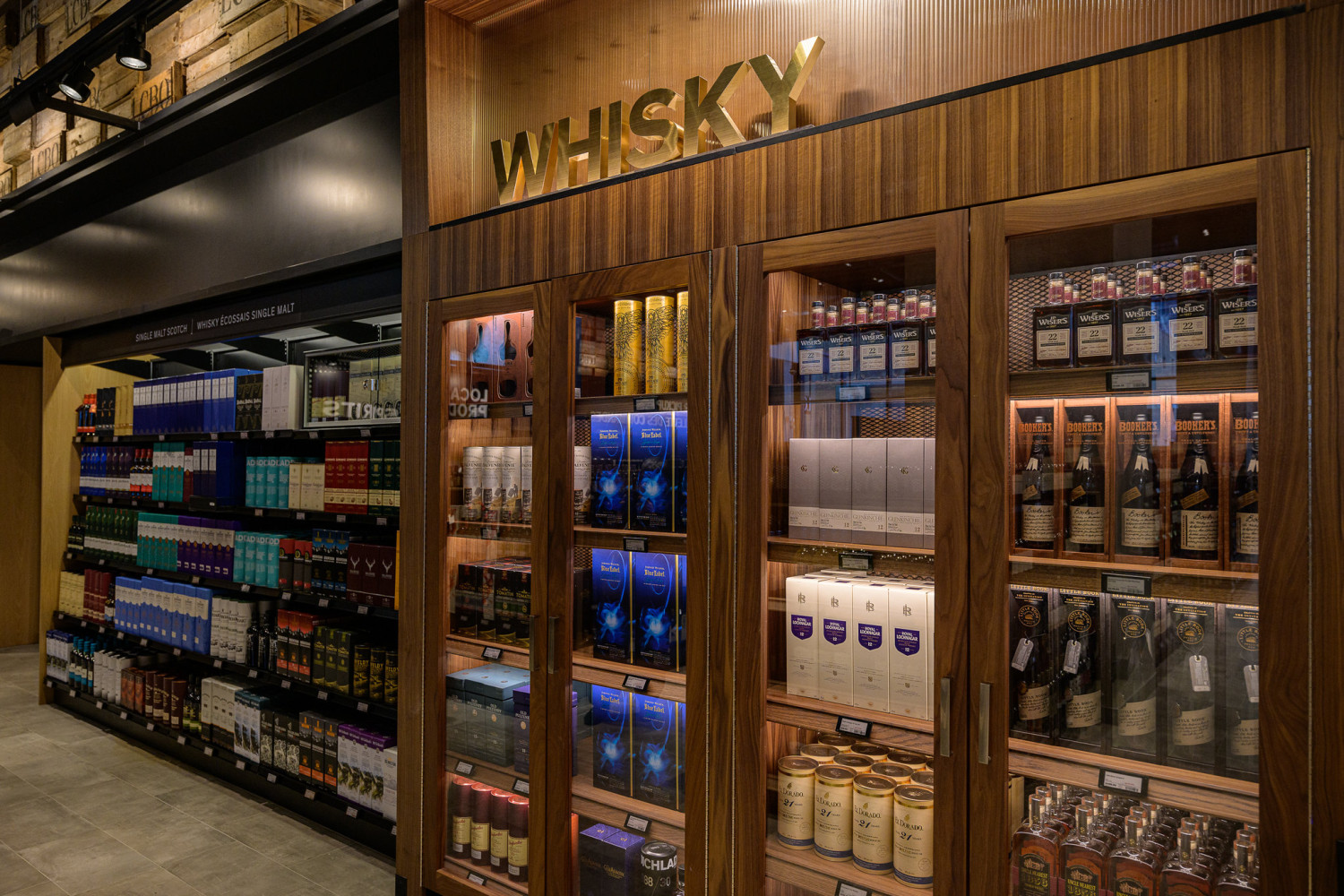
The destination store as a concept is not new, LCBO has 18 destination stores across Ontario, including locations highlighting products from regions such as Eastern Asia, Greece, Portugal and Central Europe. Typically, LCBO names an existing store as a “destination store” to carry a curated assortment tied to a particular collection or region. The Brampton store, located at 9970 Airport Road, just south of Bovaird Drive, is the first LCBO designated for South Asian spirits.
The LCBO in an email response said the Brampton store reflects growing consumer interest and that it plans to execute two South Asian-specific product calls this year tied to that location. The agency did not describe the designation as a pilot project, but it also did not indicate that all South Asian products would be expanded province-wide. South Asian spirits were available at the LCBO prior to the designation, including products such as Old Monk rum and Punjabi Club whisky.
The LCBO added that destination stores operate under the same rules as any other retail outlet and are designated at the agency’s discretion. “There are many considerations when selecting destination store locations, including minimum sales thresholds and demographic data to ensure the stores' success.”
The Alcohol and Gaming Commission of Ontario, in an emailed response, confirmed it does not regulate the LCBO, which operates as a Crown agency reporting to the province.
Importers and consumers, however, say that under this model, a single destination store cannot realistically serve a dispersed South Asian population across Brampton and the Greater Toronto Area, leaving many customers to travel long distances or wait up to two weeks for delivery, as demand for Indian spirits continues to grow.
“If people staying in Etobicoke or Toronto want Indian brands, they have to come all the way to Brampton. It’s easily about two hours round trip. Many customers have told us that travelling two hours just to buy one bottle is a hassle,” said Balaji Nagaraja, founder of Great White Northern Spirits, an importer of Indian alcohol products.
LCBO sells Indian spirits at its stores and online includes single malts like Paul John, Nirvana and Amrut, blended whiskies such as Royal Challenge and Antiquity Blue, Indian rum Old Monk, and craft gin like Jaisalmer.
Nagaraja added the option to order online, which does little to solve the access problem for many consumers. “Over the website, it says 10 to 15 days (for delivery),” he said. “That’s a pretty long time.”
The Airport Road LCBO in Brampton has been designated a “destination store” for South Asian spirits, a move the LCBO explains was done to accommodate growing consumer demand for these products.
(LCBO)
Despite the access challenges, Nagaraja said demand for Indian spirits at the Brampton store has been clear since it opened. “We received an order for 50 cases, and all 50 cases were sold within two weeks of launch. That happened with just one store,” he said.
The gap in access matters because Brampton and the surrounding region are home to one of the largest South Asian populations in the country. According to Statistics Canada’s 2021 census, more than half of Brampton’s residents identify as South Asian. Across Ontario, more than 1.5 million people identify as South Asian, representing roughly 11 per cent of the province’s population. Importers say that scale of demand — spread across Brampton, the Greater Toronto Area and beyond — cannot realistically be served through a single destination store.
Ontario operates a partly liberalized but still centralized alcohol retail system. While the province has expanded sales of beer, wine, cider and ready-to-drink beverages to licensed grocery and convenience stores, the LCBO remains the primary importer and wholesaler for alcohol in the province and continues to control product listings for most retail channels. Spirits including whisky are still largely sold through LCBO stores and LCBO.com.
Even in a case where private retailers, for example a restaurant, which is permitted to sell alcohol, must order from the LCBO’s approved catalogue. Products must first pass through structured product calls, lab testing and compliance verification before they can be listed.
In contrast, Alberta privatized liquor retail in the 1990s and allows private liquor stores to operate independently once products are registered through the provincial distributor. Retailers in Alberta can choose from a range of products and are not limited to centralized merchandising decisions as Ontario.
The EC Hurdle
Even when demand is clear, expanding South Asian spirits across more LCBO stores can be slow because of lab testing tied to federal safety standards. Under Health Canada guidelines, distilled spirits sold in Canada are expected to meet a maximum ethyl carbamate level of 150 micrograms per kilogram.
Health Canada regulates its levels because prolonged exposure at elevated concentrations has been linked to potential cancer risk. Products above 150 micrograms per kilogram will not be approved for sale.
Ethyl carbamate (EC) is a naturally occurring compound that can form during fermentation and distillation, and products that exceed the threshold cannot be listed for sale. Importers say some Indian single malt whiskies struggle to meet that limit, delaying or preventing wider distribution even when products perform well at a destination store.
Nagaraja said that has been a recurring hurdle for Indian single malts. “The criteria has to be anything lesser than 150,” he said. “But most of our (imported from India) brands come in at around 170 or 180, so they fail at the lab stage.”
Nagaraja attributed the higher ethyl carbamate readings to the type of grain used, saying Indian single malts are made with six-row barley, unlike Scotch whisky, which typically uses two-row barley.
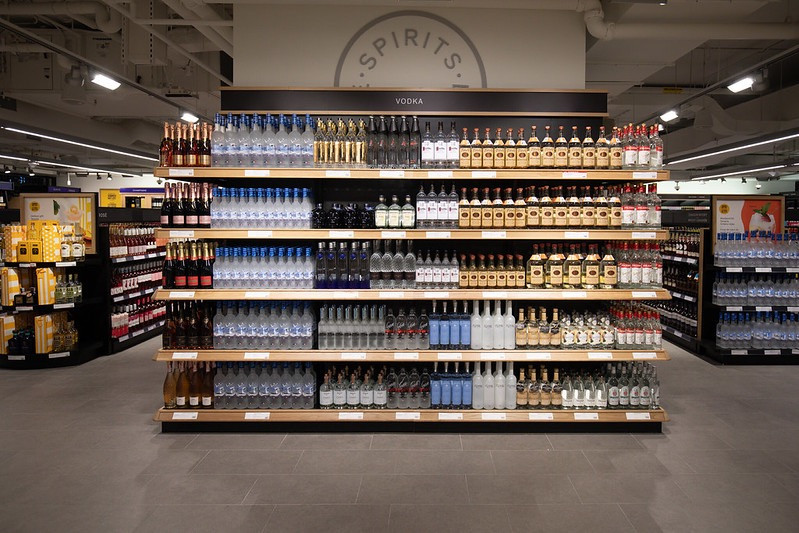
Beyond the Brampton store, Indian spirits will be sold at Toronto Pearson Airport; Nagaraja described it as its first dedicated “India aisle” in the duty-free departures area. “This is the first time in Toronto we are having the India aisle,” he said, adding that seven Indian products have been listed. The store is operated by Avolta, a global airport duty-free retailer. However, he noted that access is limited. “It is only for the duty free shops… only for the departures,” he said, meaning customers must have an international ticket to purchase from that section.
At a time when vital public information is needed by everyone, The Pointer has taken down our paywall on all stories to ensure every resident of Brampton, Mississauga and Niagara has access to the facts. For those who are able, we encourage you to consider a subscription. This will help us report on important public interest issues the community needs to know about now more than ever. You can register for a 30-day free trial HERE. Thereafter, The Pointer will charge $10 a month and you can cancel any time right on the website. Thank you
Submit a correction about this story

