
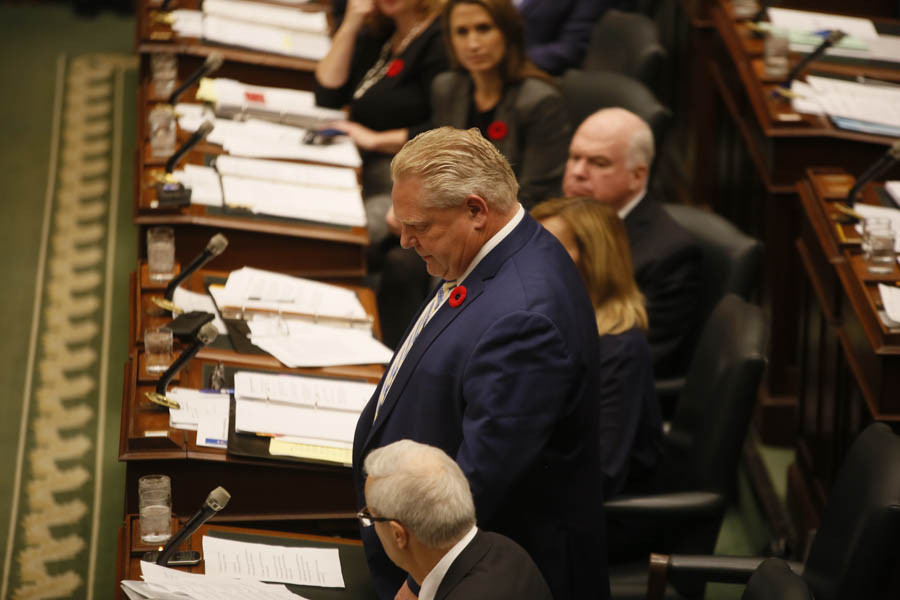
Doug Ford is stifling the public’s right to access government records—Peel MPPs don’t want to talk about it
After learning Premier Doug Ford planned to bring forward new laws to shield himself and his closest political allies from public scrutiny by exempting their documents and communications from public access to information rules, Mississauga resident Hardeep Singh was deeply concerned.
Did his local MPP, PC Nina Tangri (Mississauga–Streetsville) support this move? Was she concerned about the roadblocks it would create for journalists and the public to access critical information about how government decisions are made, and how taxpayer dollars are being used?
He sent those questions to Tangri on March 14.
Six days later he received a response—not from Tangri —but her executive assistant. The email claimed Tangri was away from the office, and for that reason, she had not reviewed the proposed legislation in enough detail to form a position. Under the proposed rules, as the Associate Minister of Small Business, Tangri would be one of the many politicians exempt from access to information requests.
“Once she returns, she will be reviewing the legislation in detail along with the concerns and questions you have raised,” Amrit Barn, Tangri’s EA, replied in an email shared with The Pointer. “As with all proposed bills, members of caucus participate in internal discussions, briefings, and analysis before they are in a position to provide formal public comment or indicate how they will vote. Because this review process is still underway, we are not yet able to provide a definitive position.”
Barn said an update would be provided “once she (Tangri) has had the opportunity to examine the legislation and receive the necessary briefings”.
As of April 8, he has received no response.
“The irony is hard to miss: a constituent can't get their MPP's position on a transparency bill,” Singh said.

PC MPP Nina Tangri (Mississauga-Streetsville) has refused to explain her position on new controversial legislation that would exempt senior government officials, including her, from access to information requests from the public and media.
(Government of Ontario)
The Pointer reached out to all of Peel’s MPPs for their comments on the new legislation, and to respond to critics who are concerned this will shield them and top government officials from accountability.
None responded.
Under the new rules, all of them would be exempt from FOI requests as all of Peel’s twelve MPPs, who are all members of the PC Party, hold either minister, associate minister, or parliamentary assistant positions.
The proposal to shield Premier Ford, his Cabinet (including ministers, associate ministers, parliamentary assistants and their staff) from access to information requests received swift condemnation from privacy experts, opposition politicians and advocacy groups who rely on the system as a tool for holding the government accountable.
“Doug Ford is changing the rules so he can hide the truth from Ontarians,” Ontario NDP Leader Marit Stiles said when Ford first proposed the changes during a March 13 press conference. “An honest government doesn’t change the rules to hide from the public. But Doug Ford’s government does.”
Three days later, Ford appeared surprised when questioned repeatedly about the proposal.
“Folks this isn’t anything new,” he claimed on March 16. “It’s not pulling a rabbit out of your hat.”
Ford claims the changes align Ontario’s access to information rules with the federal government and other jurisdictions in the country (the Information and Privacy Commissioner has since explained this is blatantly misleading); and necessary to protect the confidentiality of Cabinet discussions and the privacy of the constituents who reach out to him with “very personal, personal issues”.
“I’m not going to release personal, confidential information about people’s lives, that’s what it comes down to,” he declared.
Ford either failed to explain, or does not understand that existing freedom of information laws already protect individual privacy and Cabinet deliberations—meaning these issues are already exempt from disclosure when requested by the public or journalism outlets.
When pressed on the issue, Ford expanded his reasons, claiming the changes were also necessary to protect his administration from nefarious actors looking to obtain government secrets, pointing directly at the Chinese government.
“We got to protect ourselves from the communist Chinese who are infiltrating our country, Canada, the U.S. everything into our education system, into high tech companies, that’s who we have to protect from too,” Ford said.
“These are ridiculous excuses,” Stiles said after the March 16 press conference. “The Premier isn’t worried about China, he is worried about what the people of Ontario will see when his phone records are released. This is democratic backsliding, plain and simple. The Premier is making every excuse under the sun to justify changing the rules so he and his Cabinet can hide from public accountability.”
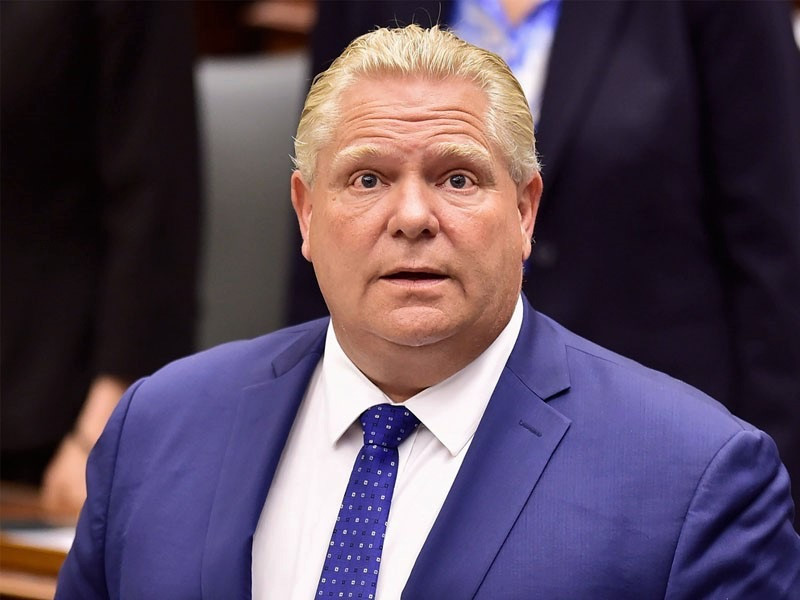
Premier Doug Ford made a number of misleading claims about why the changes to Ontario’s access to information rules were necessary. His changes would make Ontario an “outlier” when it comes to accessing government information, and would create the longest timelines for access in Canada.
(The Pointer files)
The sweeping changes were introduced as part of the PCs’ omnibus budget bill (Bill 97) on March 26 with no public consultation beforehand.
The move comes amidst an ongoing court battle between Global News and the Ontario government over access to Ford’s phone records. The IPC ordered those records released in 2024. The Ford government requested a judicial review of that decision, and lost. It was seeking leave to appeal before proposing to change the law entirely. The retroactive nature of Bill 97—barring access to the records of the premier and Cabinet dating back to 1988—means the IPC order to release Ford’s phone records could now be quashed.
In addition to accusations Ford is attempting to shield his phone records from public view, others have condemned the clear attack on the public’s right to information about government decision making.
It is through these access requests that controversies like the Greenbelt scandal have come to light.
FOI requests exposed how a 2023 plan from the Doug Ford government to swap lands in the Greenbelt would have created a massive windfall for preferred developers who acquired properties in the protected area. The scheme—currently being investigated by the RCMP— would have increased the value of the land held by these developers, all with close political connections to Ford, by $8.3 billion.
Margaret Prophet, Coordinator of the Ontario Greenbelt Alliance, speaking on behalf of the Ontario Greenbelt Alliance Steering Committee explains how FOI requests have served to protect the Ontario Greenbelt for a number of years—even before the Ford government attempted to portion off large chunks of it to PC-connected developers.
“The Greenbelt is for the greater public good. The right to understand how it is governed is too,” she wrote in a statement to The Pointer. “This is a decision with consequences that stretch far beyond any single government or any single scandal. The Greenbelt will still be there. The decisions about what gets built on its edges, what infrastructure runs through it, what gets removed from its boundaries, and who benefits - those decisions will keep being made. The only question is whether future Ontarians will have the same tools to see how.
She continued: “We do not write access to information law for the government of the day. We write it for every government that will ever hold office, and for every generation of Ontarians who will live with what those governments decide. Weakening that law now doesn't just affect what we can learn today. It determines what future generations will be allowed to know.”
The legislation passed second reading at Queen’s Park on April 2 and has been referred to the Standing Committee on Finance and Economic Affairs.
IPC Commissioner Patricia Kosseim says she has “serious” concerns with the law and warned the provincial government that approving it in its current form would set a dangerous precedent. While Ford claims the new rules will bring Ontario in line with other jurisdictions and improve privacy; Kosseim says it will actually do the opposite.
“We are living in perilous times of declining trust in governments worldwide. Misinformation and disinformation have overtaken citizens’ ability to distinguish facts from fiction. Many are struggling to understand the ‘why’ behind government decisions and actions and to discern the truth about important issues impacting their everyday lives,” she wrote in a submission to the PC government. “Transparency. Privacy protection. Accountability. These are the foundational building blocks of a healthy democracy. Ontario must work more diligently than ever to preserve these rights and values, not diminish them. It must show courage and leadership to be that beacon of light and hope in a time of darkness. Just as government needs public trust to enable its work, society needs to be able to trust its government.”
While Ford claimed to be concerned about nefarious actors like the Chinese government accessing government records through the FOI system, Kosseim explains the changes he is proposing would actually make the information ecosystem at Queen’s Park more vulnerable to cyberattacks than it is now.
Exempting Cabinet ministers, associate ministers, parliamentary assistants and their staff from requirements under FOI law means the government business they conduct on their devices is no longer subject to the safeguards in place at Queen’s Park to protect this information.
“Allowing them to conduct government-related business on their personal email accounts and devices significantly increases the risk of privacy breaches and cyberattacks. These risks are further amplified when they keep these personal email accounts and devices after they leave government,” Kosseim says.
She condemned other aspects of the legislation, including the extension of the timelines for a government response to an FOI request from 30 calendar days to 45 business days—which essentially doubles the current timeframe— which puts Ontario out of line with other jurisdictions in Canada.
“Moving to 45 business days would make Ontario’s response times the longest in Canada,” she wrote, adding this would make Ontario “a clear outlier”.
Kosseim also questioned a portion of the legislation that proposes new plan from the PC government for handling complex access requests. Under the current proposal, the government is proposing a new scheme to release information from large requests in stages. Requesters have few avenues to challenge any schedule proposed by the government. While they can appeal the initial release timeline to the IPC, the legislation allows the government to amend this timeline whenever they please. The amendments can not be appealed to the IPC.
“This creates the potential for multiple amendments by institutions and delays for requesters who would have no further recourse to the IPC,” Kosseim explains. “Rather than streamlining the request process and making it fair for everyone, the bill creates a labyrinth that leaves Ontarians one wrong turn away from hitting a dead end.”
Email: [email protected]
At a time when vital public information is needed by everyone, The Pointer has taken down our paywall on all stories to ensure every resident of Brampton, Mississauga and Niagara has access to the facts. For those who are able, we encourage you to consider a subscription. This will help us report on important public interest issues the community needs to know about now more than ever. You can register for a 30-day free trial HERE. Thereafter, The Pointer will charge $10 a month and you can cancel any time right on the website. Thank you
Submit a correction about this story

