
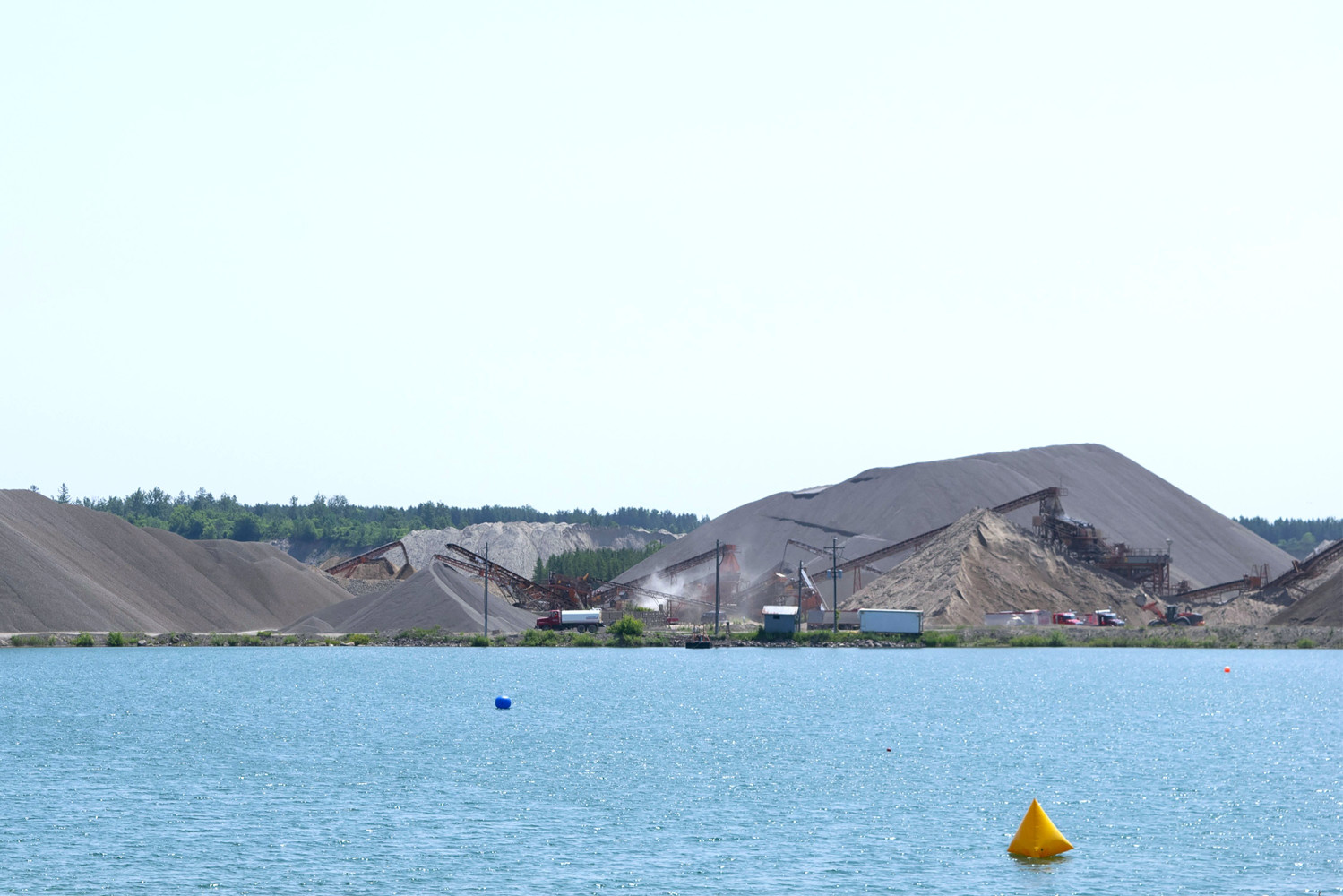
‘We don’t respond well to threats’: Caledon pushes back against Doug Ford’s attack on environment & local governance
Two years ago, residents in Caledon were finally able to catch a breath after the Town took steps to strengthen policies governing the extractive aggregate industry. It might have been short-lived as the Doug Ford government tightened its grip on local decision making, choking the town’s air, water and well-being…again.
At a May 19 Planning and Development Committee meeting, Town staff and councillors wrestled with a sharply worded letter from the PC government pushing back against the Town’s proposed revisions to its aggregate policies—the failure to abide may push Ford and his colleagues to take “further actions to protect provincial interests”.
It set off an extended debate over planning authority and the limits of municipal control under Ontario’s Planning Act—which have already been challenged by the long list of recent legislation forced through by the Progressive Conservative government including Bill 100, the Better Regional Governance Act, which grants the Minister of Municipal Affairs and Housing the power to hand-pick the heads of council in eight upper-tier municipalities such as Peel.
“As a community, we don't respond well to threats. We especially don't respond well to threats from our own government,” Forks of the Credit Preservation Group (FCPG) director Debra Wilson sternly said.
In October 2022, council enacted Interim Control By-law No. 2022-075 to temporarily freeze applications and the development of new gravel pits and quarries, and passed a resolution mandating a review of aggregate resource policies, officially starting work on Official Plan Amendment 1 (OPA 1).
The need to update these overarching policies was urgent, especially since the Town was considering a proposal for an 800-acre mega blasting quarry from CBM Aggregates, a subsidiary of Brazilian aggregate giant Votorantim Cimentos—the first of its kind in the town.
"Aggregate resources are essential for road and building construction, but it is also recognized that a quarry blasting below the water table is one of the most noxious, toxic and destructive uses of land, with no reasonable prospect of post-extraction rehabilitation,” a 2022 study by Caledon resident and former FCPG board member, Tony Sevelka, noted.
“If permitted and established in the wrong geographic location, a blasting quarry operation can result in significant deleterious impacts on the environment and local inhabitants and can disrupt short and long-term land use planning objectives.”
For decades, community members have watched Caledon become a graveyard of the natural world with moonscapes, trucks and dust haunting the landscape. Currently, 1,800 hectares of land within the Town of Caledon are subject to the cutting, digging and hauling of aggregate extraction, primarily in Ward 1.
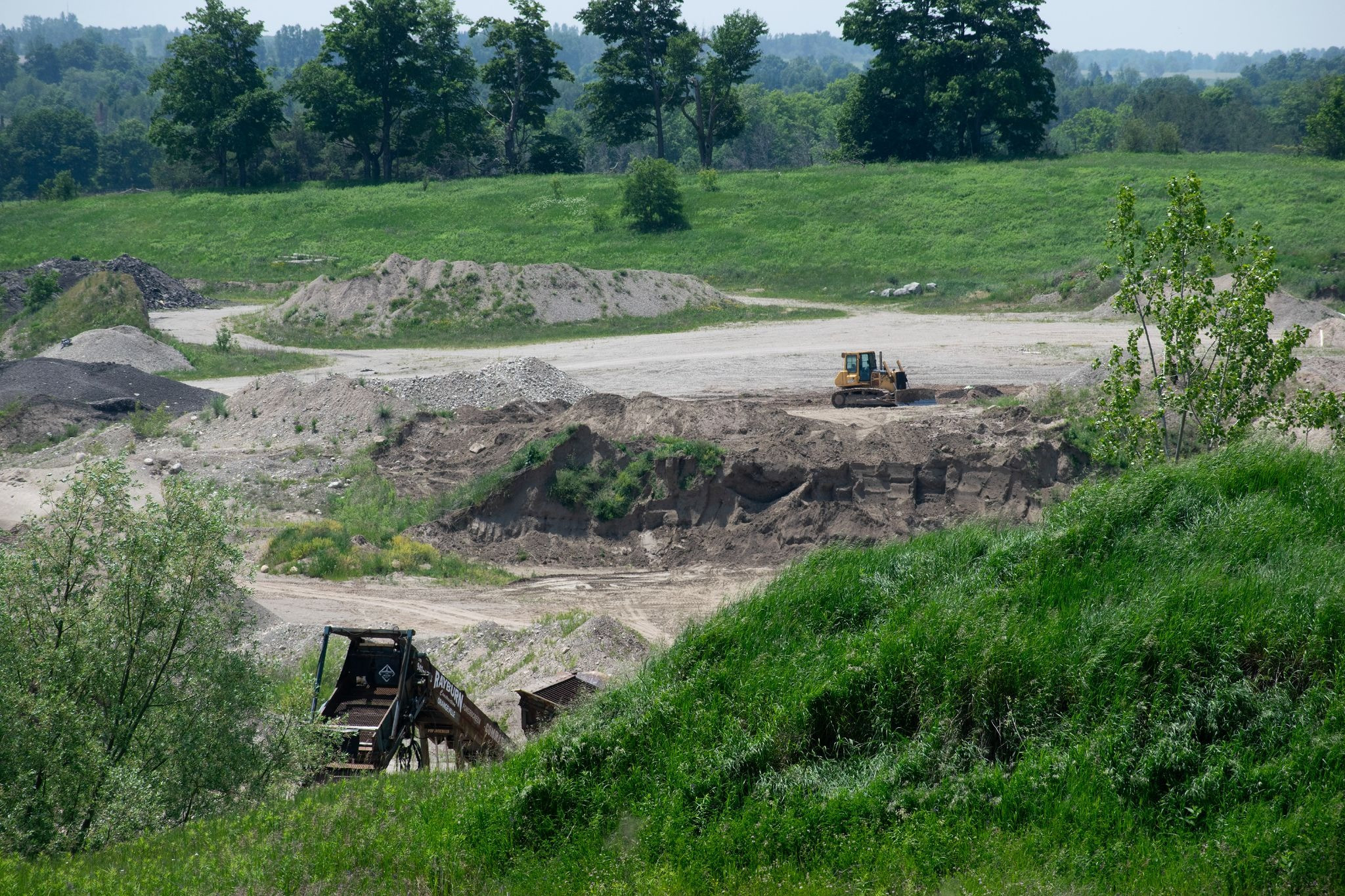
Moonscapes created for aggregate extraction are a common blighted sight in Caledon.
(Alexis Wright/The Pointer)
Despite being a major supplier of aggregate (material used to make concrete for homes, roads and infrastructure) in the province, residents and advocates have shared concerns about the misinformation being provided by the aggregate industry, CBM in particular: among these claims was the idea that Caledon needs more aggregate operations to support Ontario’s appetite for stone, sand and gravel.
“Not only did CBM’s expert not produce any evidence to support this claim” but an FCPG expert used the Ministry of Natural Resources’ online information and licensing tools to calculate that “at minimum 13.4 million tons of gravel per year were generally excavated, but in reality, only about 3 million tons per year are actually taken,” Anthony Fairclough, FCPG member, said.
There is an “unlimited amount of aggregate licensed to be extracted in Caledon.” Existing aggregate operations, therefore, could meet current demands without the need for new pits or quarries.
The community argued that local policies have failed to adequately protect their ecological as well as their physical health. A 2022 study ranked the town last in the quality of its regulations on air and water protection, hydrogeological impacts and First Nations consultation.
On October 7, 2024, following discussions between the Town council and staff, and local groups, OPA 1 was adopted to establish updated mineral aggregate resource policies, modernizing extraction guidelines, integrating scientific and community inputs to balance industry needs with the protection of rural communities and the natural environment.
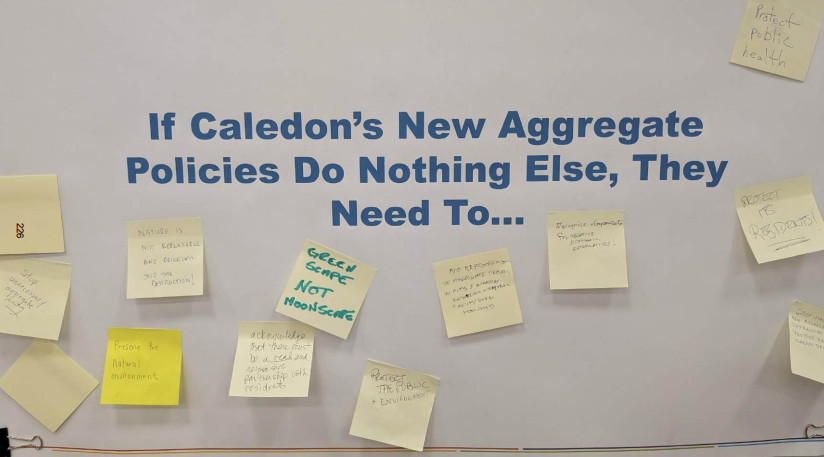
Residents were asked for their input in creating the Future Caledon Plan as well as the aggregate policies that would define the community’s wellbeing.
(Town of Caledon)
Among the recommendations in the proposed Official Plan amendment, Caledon proposed to prohibit mineral aggregate operations in evaluated non-provincially significant wetlands and unevaluated wetlands and their supporting features, while adding new requirements for blast impact, flyrock and vibration management plans tied to proposals like the CBM quarry.
The amendment was passed alongside Comprehensive Zoning By-law 2024-083 to implement the recommendations of the Supplementary Aggregate Resources Policy Study, introducing a new Chapter 20 (Mineral Aggregate Policies) into the Future Caledon Official Plan. It updated legal definitions for pits, quarries, asphalt plants and related operations, replacing “gravel pit” and “quarry” with Class A and B categories based on extraction intensity, tightening permitted uses in the MX zone and restricting or reshaping where aggregate and related industrial activities can occur while also re-designating select lands from extractive industrial to agricultural, environmental protection and open space uses.
Environmental advocate and lawyer David Donnelly, who has been closely monitoring quarry disputes across the province, lauded the Town’s commitment to air quality protection by adhering to the 2021 World Health Organization (WHO) standards for PM2.5 and PM10, two harmful types of particulate matter.
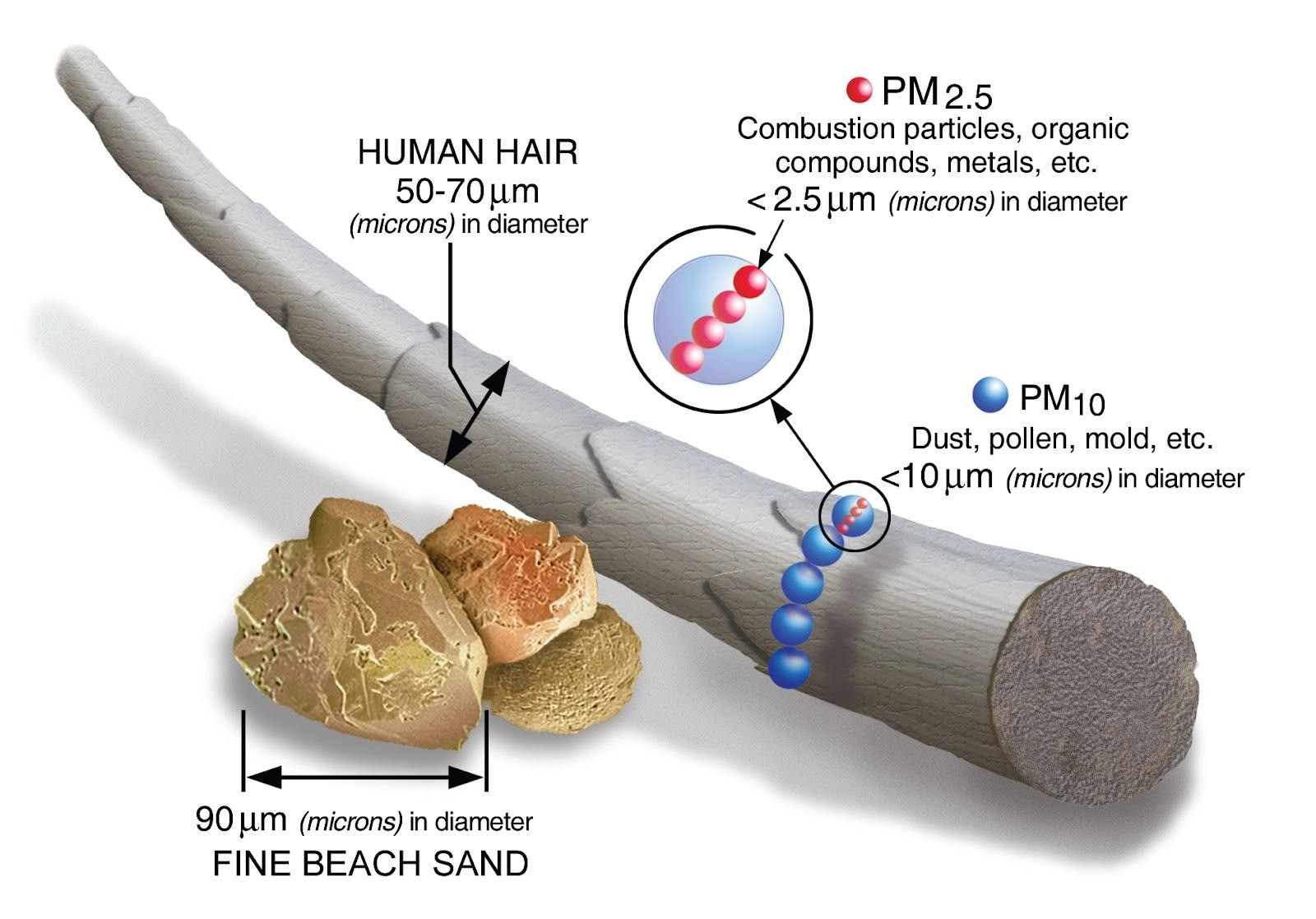
Particulate matter refers to chemical particles with a diameter of less than 44 microns, roughly half the diameter of a grain of beach sand. Quarries are known to produce high concentrations of PM 10 which is particulate matter with a diameter of 10 microns, and PM 2.5 which has a diameter of 2.5 microns.
(Environmental Protection Agency)
Donnelly described the policy change as a “near perfect reading of the public desire” to protect both the environment and the interests of the community at a time when most of the province is still following the older 2005 WHO standard.
Critics argued the measures still fell short, lacking firm setbacks from homes and relying on discretionary language that only “encourages” or “may” require key studies and plans.
Following council's approval, the OPA required provincial approval, which came after more than a year…On October 22, 2025, the Ontario Ministry of Municipal Affairs and Housing officially approved the Future Caledon Official Plan (OPA) with modifications.
OPA 1, on the other hand, which was dedicated to local pits and quarry operations, was not approved until January 6 this year. Delayed, it also came with a caveat: 60 modifications including the removal of enhanced environmental protections, deletion of WHO-based air quality standards, elimination of water protection policies for private wells and rejection of local measures to manage noise, dust and truck traffic.
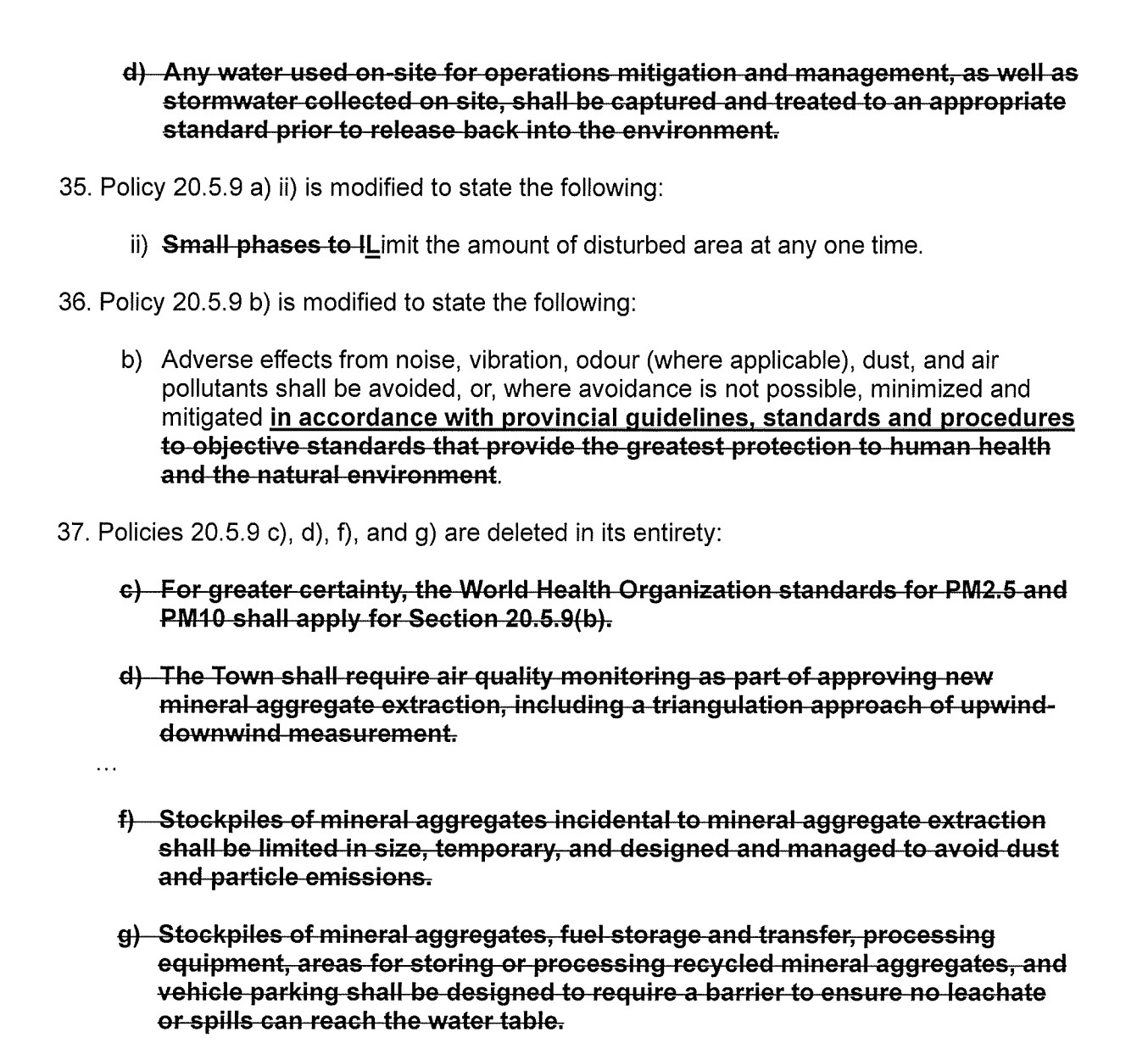
Removing stronger air quality standards tied to the 2021 World Health Organization guidelines for PM2.5 and PM10 were among the several modifications sent by the province that weakened many of the environmental and health protections that the Town of Caledon had spent years developing through OPA 1.
(Town of Caledon)
“The 60 modifications have been made to ensure consistency and conformity with the mineral aggregate resources policies of the Provincial Planning Statement, 2024 (PPS), Greenbelt Plan, Oak Ridges Moraine Conservation Plan and Niagara Escarpment Plan, and compliance with applicable legislation,” the notice of decision stated.
The “final decision” was “not subject to appeal”.
A week later, during a general committee meeting, as council debated next steps, the Town’s Planning Commissioner Eric Lucic warned it was a “done deal” since the ministry has the last word.
“I don’t think anything’s a dead deal,” Ward 1 Councillor Lynn Kiernan responded as she proposed to bring the Town’s rejected policies to the Top Aggregate Producing Municipalities of Ontario (TAPMO) and use the collective influence to push for stronger province-wide performance standards.
In February, staff were asked to review the changes and report back on priority matters for a potential new amendment. In parallel, the town also began work on an updated zoning bylaw to align with any revised policy direction.
That same month, media reports came out noting the Ontario Stone, Sand & Gravel Association (OSSGA), a not-for-profit association representing over 280 sand, gravel and crushed stone producers, supported the 60 provincial modifications to OPA 1.
Building on its stance as reflected in a letter to the Town in September 2024, OSSGA favoured that aggregate resources must be managed at the provincial level to avoid fragmented local standards that could disrupt supply, increase costs and create regulatory inconsistency across the province.
Town’s Manager of Policy and Heritage Lesley Gill Woods shared the zoning bylaw originally adopted alongside OPA 1 in 2024 has been under appeal at the Ontario Land Tribunal, “awaiting resolution”, adding further complexity to the process. Rather than defending the existing framework while simultaneously revising policy, staff recommended a more streamlined approach: repeal and replace.
“When OPA 1 was approved with modifications, we thought, okay, we can go ahead,” Gill Woods said.
“Instead of fighting a zoning bylaw amendment, the decision was: why don't we just repeal that and propose a new one that goes with this proposed new OPA.”
The Town consulted with members of the public in March on the proposed new Official Plan Amendment and draft aggregates OPA and zoning bylaw amendment, which were posted on the Town’s website later that month, followed by a statutory public meeting on April 21.
On May 4, that momentum broke when the Town received a letter from the Minister of Municipal Affairs and Housing, Rob Flack.
“I strongly recommend that the Town withdraw its proposed amendment and proceed with implementation of its current Official Plan, including the mineral aggregate policies approved through Official Plan Amendment 1,” Flack said.
“If the Town does not do so, the Ministry may need to take further action to protect provincial interests.”
Critics argue that after the province extensively modified OPA 1, Caledon began revising its policies and seeking meaningful consultation with “one key request of the Ministry of Municipal Affairs and Housing and the Ministry of Natural Resources” to “engage in meaningful consultation”. Instead of having those important conversations, the PCs chose to threaten the Town.
“After practicing law for 25+ years, it is my opinion the
Minister’s actions are inappropriate and unprecedented,” Donnelly said.
“As Ontarians become increasingly concerned about water security, environmental resilience, and responsible land-use planning, the Province should be supporting municipalities that are trying to get these policies right — not punishing them for trying.”
FCPG’s Deborah Wilson condemned the Ford government’s position, noting it was “not just puzzling, it’s ridiculous” to suggest the Town’s proposed amendment would work against provincial objectives when the draft policies had not even been finalized or formally presented to council.
Councillor Dave Sheen dissected the ambiguity of the province’s language, particularly around the phrase “further action” could be taken: “What does that mean?…How does council make an informed decision when you have no idea what is at risk?”
Staff reiterated that potential outcomes could include the province revoking delegated approval authority or directly intervening through ministerial powers, which would limit municipal control and remove appeal rights.
Council was presented with three options by staff: proceed as planned, revise the amendments in a limited way or withdraw the proposal entirely.
When Mayor Annette Groves asked staff what could realistically happen if the town chose to proceed despite the province’s warning, council was informed that while municipalities lead planning processes locally, the province ultimately holds final approval power.
One possibility is that Ontario could declare a “provincial interest”, effectively taking over approval authority for the amendment.
“What are the provincial interests?,” Wilson asked.
“Obviously not people, residents, voters, they weren't even mentioned in the letter from the province…The only interests being protected by this letter's demands are those of the aggregate mining companies in this province.”
Another, more extraordinary mechanism under the Planning Act could allow the province to issue its own official plan amendment, overriding municipal policy entirely.
“Do you think there's an opportunity that we can make some recommendation, some suggestion that would fall within the policies of the ARA [Aggregate Resources Act] with respect to air quality that the province would be amenable to?,” Groves asked.
“The province has given the corporation pretty clear direction what they think about the contents of OPA 1,” Future Caledon Lead Planner Joe Nethery said.
“How much more time, energy and resources does council wish to put into this?”
Even though the Town has a delegated authority to approve its own official plan amendments, the province can override that authority in specific instances. With the City of Toronto’s employment lands file ( Official Plan Amendments 668, 680 and 804), the province revoked their delegated approval authority for certain employment-area OPAs through regulation, making ministerial approval the final step for OPA 804, which itself was advanced to align the Official Plan with Bill 97 and the 2024 Provincial Planning Statement including the redesignation of roughly 255 hectares of employment lands to support mixed-use regeneration and other policy changes.
Another tool under provincial disposition is Section 23 of the Planning Act under which the Minister may intervene where a proposed municipal official plan amendment is considered to conflict with matters of provincial interest. In such cases, the Minister can issue an order that effectively has the same force as a council-adopted official plan amendment once approved.
“Nothing has changed since 2024…the province continues to hold the power in terms of setting the legislation, setting the policy, setting the rules around how all of this works,” Nethery cautioned.
“That's how it works in Ontario. There is nothing that we are going to be able to do through this assignment that changes that without spending buckets of time and money…we've pushed pretty hard on this assignment and the province is pushing back.”
If the Town were to back down, staff explained only specific policies modified in OPA 1 would be affected while much of the broader 13-item aggregate policy work program would remain intact and ongoing. It helped reframe the debate for some council members, who noted that much of the Town’s broader work on air quality monitoring, human health impact assessments and operational standards for aggregate sites was still progressing independently of the disputed amendment.
Councillor Nick de Boer suggested the Town can continue refining its approach while strengthening the evidentiary basis for its position.
“We're not saying a moratorium or ending any pits and stopping them from happening. We're just saying that we would like to see them have a little bit more respect for the people that are in the community,” de Boer said.
“The Premier does want to push back but I don't think that there's merit in giving up what we really, truly believe in, if that's what we want to continue to do. We are talking about the health and well-being of the community, and an industry that's been hosted in Caledon for probably a couple 100 years.”
Wilson highlighted past legal successes where municipal and community evidence had been accepted in disputes involving aggregate operations, showing municipalities could still influence conditions of approval even within provincial frameworks. On March 14 last year, the Ontario Land Tribunal dismissed CBM’s appeal and upheld Caledon’s Aggregate Reform Interim Control By-law, affirming the Town’s authority to pause new gravel pit applications while it updates its planning framework to protect residents and natural resources. In the landmark ruling, the Tribunal found there was an ample supply of aggregate and that Caledon’s efforts to preserve its community character were in the public interest.
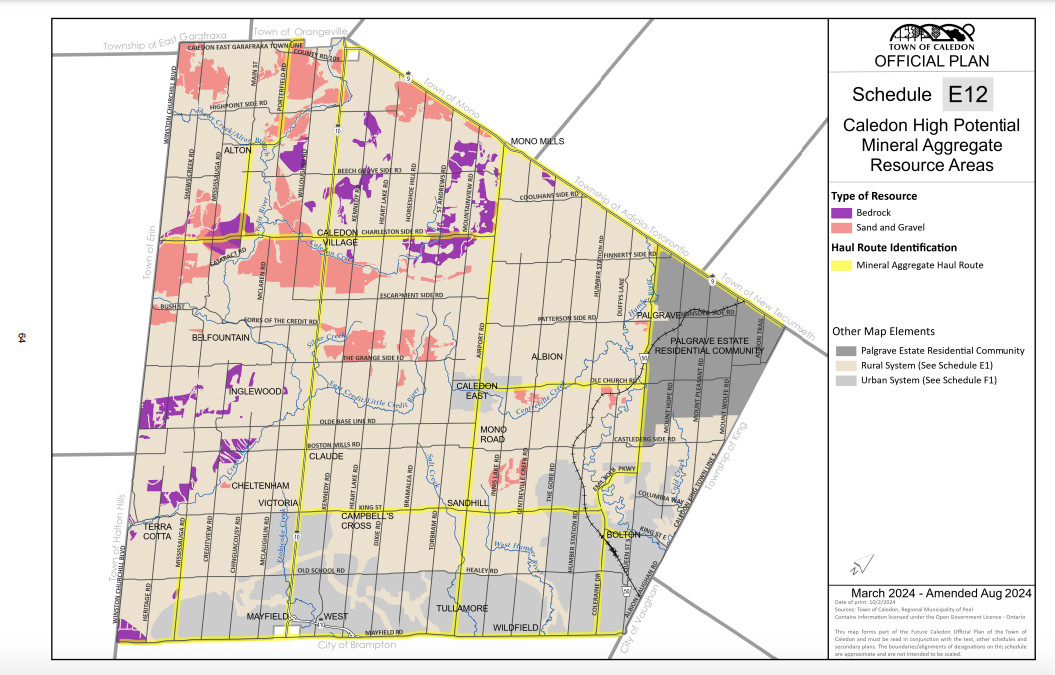
Aggregate extraction in Caledon dates back to the mid-19th century, growing alongside the expansion of regional railways in the 1870s as stone and gravel were required to build Ontario’s early infrastructure. The industry took on a larger footprint in the early 1980s when rapid growth across the Greater Toronto Area drove demand for materials and modern open-pit operations expanded across the rural landscape.
(Town of Caledon)
As Council members oscillated between pressing forward in the hope of influencing provincial policy or adjusting course to avoid losing control of the process entirely, they concluded Caledon should not abandon its policy goals on air quality, groundwater protection and community health simply due to provincial resistance.
“I don't believe that the things that we're asking for here are divergent from the provincial interests at all,” Councillor Doug Maskell emphasized.
“Clean water is an interest of everybody, clean air is an interest of everyone, preserving habitats is for everyone.”
Despite the intensity and posed urgency of the debate, no immediate decision was made on whether to proceed, revise or withdraw the proposed amendments.
“I want to believe that there may be still an opportunity for us to have a little bit further discussion on this,” Councillor Tony Rosa said.
It was unanimously agreed that Groves would personally contact Queen’s Park to open a direct line of communication.
“We can't have this as a political decision. These political decisions have not served us well,” the Mayor said.
“We need something that is going to be not political but something that we can defend…happy to have those conversations with the minister to see if the opportunity exists.”
The Pointer reached out to MPP for Dufferin—Caledon Sylvia Jones for a comment but did not receive a response by the time of publication.
Her team said a response will be provided; The Pointer will update the story if Jones replies.
Staff will also continue parallel discussions with ministry officials and continue technical work before reconvening on June 16 as originally planned.
Email: [email protected]
At a time when vital public information is needed by everyone, The Pointer has taken down our paywall on all stories to ensure every resident of Brampton, Mississauga and Niagara has access to the facts. For those who are able, we encourage you to consider a subscription. This will help us report on important public interest issues the community needs to know about now more than ever. You can register for a 30-day free trial HERE. Thereafter, The Pointer will charge $10 a month and you can cancel any time right on the website. Thank you
Submit a correction about this story

