
‘Legacy undone by terrible decisions’: Caledon reacts to Annette Groves’ upcoming exit after turbulent term
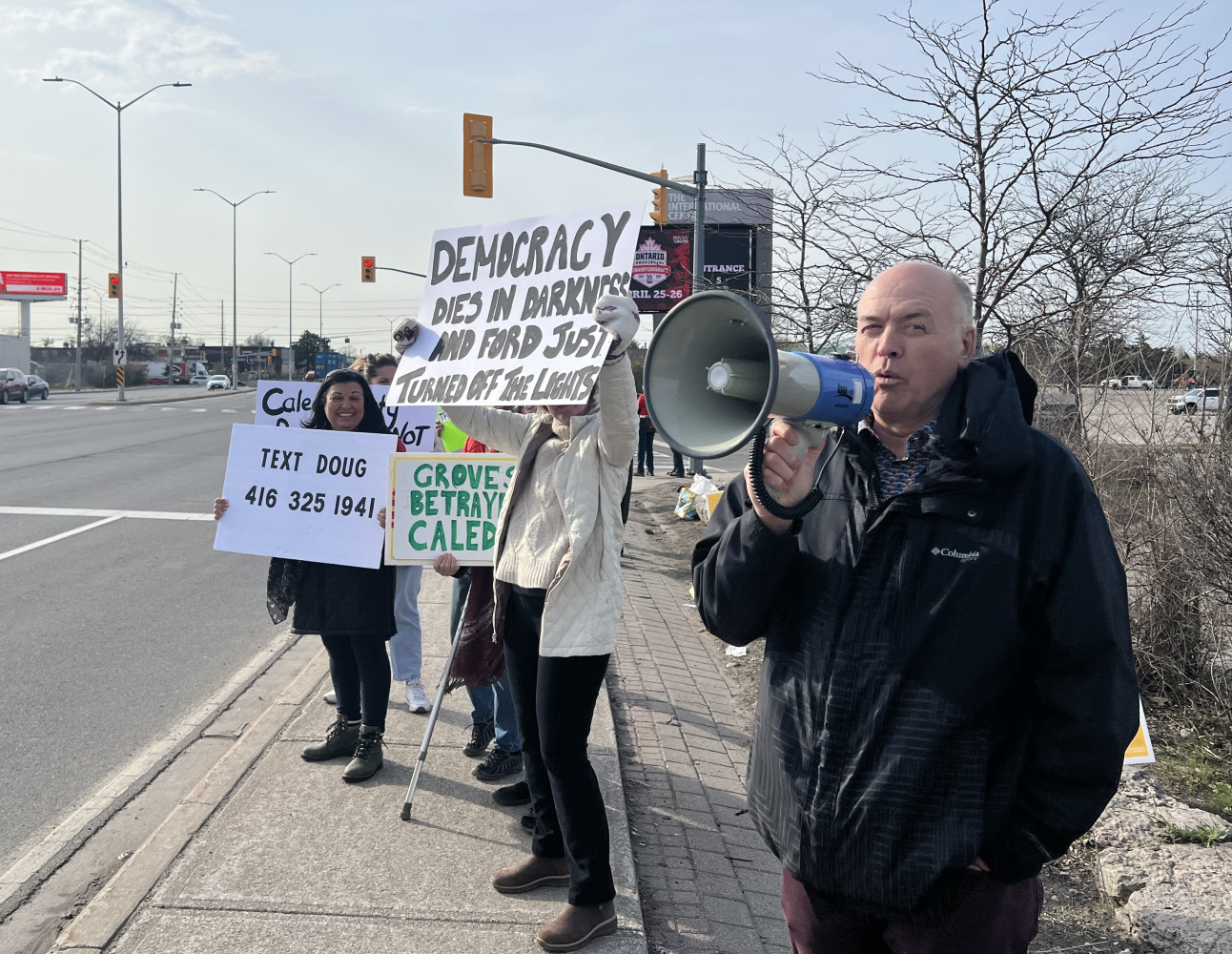
Aly Livingston stood outside the Mayor’s Gala hosted by Caledon’s Annette Groves in bright yellow stockings and black boots, “like a bumblebee” in the cold, holding a “STOP THE 413, DON’T PAVE THE GREENBELT” sign as she spoke out for the natural world.
The protest was the latest action taken by Caledon residents against Mayor Groves who, after being elected in 2022 on a platform to protect the town's vital greenspace and stop the PC government’s controversial Highway 413 project, has done the exact opposite.
Inside the Mississauga conference centre, Groves rubbed elbows with Ontario Premier Doug Ford and other supporters.
Nobody knew that four hours later, Groves would announce she was stepping down.
Livingston’s family moved to Caledon in 1980, when their home was an old five-acre farm surrounded by open fields, a “beautiful” stretch of land her parents still inhabit to this day.
Growing up, town life meant open land and small, inspiring routines: riding horses, helping in her mother’s shop in Caledon Village, long stretches along scenic roads (until they were disrupted by aggregate trucks, even then).
She remembers Swan Lake when it was quarry lands. It is now a rehabilitated water body owned by the developer Cortellucci family that is trying to fill it with construction waste. The controversial project has been supported and pushed by Groves.
Today, gravel trucks, long a blight across much of the expansive rural municipality, crowd Caledon’s roads more than ever; vast stretches of lush, natural land have been transformed into moonscapes from aggregate operations, and the remaining agricultural lands are under constant threat from developers and the politicians who push their latest plans.
She understands the province needs more housing but questions if the construction popping up on the edges of Brampton and Caledon are really affordable.
“It's been so sad to see it change, the highways, the stalled housing and the traffic, but also the way that government has become so corrupt,” Livingston told The Pointer, expressing deep disappointment with both provincial and local leaders.
“This is a not so slow fall into tyranny. Democracy is gone. What are we teaching people? We're teaching people that if you can't get what you want, circumvent, don't consult…We don't value science. We don't value just due process. It's a quick, easy business deal.”
Having witnessed the town’s “unique character”, which Groves had promised to protect, instead erode under her leadership, Livingston’s mother had wanted to join her at the protest outside The International Centre in Malton at 5 p.m. on April 24, when the gala was being held. But she couldn’t make the walk.
“I told her, ‘I’ve got paper in the car…what do you want me to write on your sign?’” Livingston asked her mother.
It didn’t take her long to respond: “Just shake your fist and tell Ford he’s an asshole.”
Just a day before, Ford’s Progressive Conservatives passed Bill 97, ironically titled Plan to Protect Ontario Act (Budget Measures), that rubber stamped the consolidation of the province’s 36 Conservation Authorities into nine regional bodies despite worries that the move will weaken protections for groundwater and drinking water sources.
The legislation also introduced changes to freedom-of-information rules that, Peel Member of Provincial Parliament continue to remain silent on, would make the Premier and his cabinet effectively immune from public requests, including provisions that are retroactive to 1988, raising concerns about transparency around decisions such as the Greenbelt development process.
“There are five Cabinet Ministers offices that deal with every single aspect of development and resource management in the province. Those are Minister Rob Flack, Housing and Rural Affairs, Minister Todd McCarthy, Environment Conservation and Parks, Minister Mike Harris, Natural Resources, Minister Stephen Lecce, Energy and Mines and Minister Victor Fedeli, Economic Development, Job Creation and Trade,” Caledon resident Keirstyn Parfitt wrote in an email.
“Every one of these Ministers has involvement in the development and resource management decisions that directly affect Caledon residents in their daily lives…There were 22 MPP's absent from last Thursday's vote on Bill 97 including every single one of these Cabinet Ministers.”
Parfitt and Livingston’s outrage matched with the roughly two dozen protesters who stood outside the venue, joined by passing cars and trucks that honked loudly in support as high-end vehicles drove in for the gala.
The group was already preparing for the next day: 52 “Fight Ford” rallies were organized across Ontario on April 25 including one by grassroots group STOPTHE413 at the end of Ford’s residential street and another outside Dufferin-Caledon MPP Sylvis Jones’ office.
Just as they were preparing for another day of protest, Caledon residents were hit with an unexpected reveal. At 9:15 p.m., Groves announcement her retirement “after much reflection”.
“This is not a decision that comes lightly, but one made with careful thought and a deep sense of gratitude. Serving the residents of Caledon has been the honor of a lifetime,” Groves said in a video posted on her social media.
“While this chapter is coming to a close, my commitment to this community will always remain.”
Many in the community have since acknowledged that public office comes with pressure and scrutiny and wished the Mayor well.
“No matter the differences we have had and not being in agreement with a lot of the decisions you made for Caledon, I truly want to say thank you for your service,” resident Mira Budd, who has often been critical of the current council, said in a social media post.
“It’s not easy being in the public eye and no matter what you still did it with grace.”
There are others who agree with what the weight of the crown can do, but believe that should not excuse the expectations Groves’ created during her 2022 campaign only to alarmingly give in to external interests as soon as she secured her victory; she had vowed to reduce “heavy truck traffic” which was one of her “top priorities” along with protecting the environment from the aggregate industry and unchecked development. She also claimed strong opposition to the controversial Highway 413. The community voted for her with the hope and trust that she would stand firm against the Ford government’s encroachment of Caledon’s rural landscape, long regarded as one of the greenest municipalities in Ontario.
Cheryl Connors, who has fought through the battles of living next to a quarry and has called Caledon home for more than two decades, was not surprised by the surprise announcement from the unpopular mayor.
“It's been overwhelmingly clear that she has, other than a small group of aggressive and vocal supporters, very little support from all over the town of Caledon,” Connors told The Pointer.
“She ran on a strong public interest platform, and to do the exact opposite was such a betrayal to so many people. It also makes it really hard for anyone who wants to enter public service in the future because it feeds this jaded sentiment that politicians just say whatever it takes to get elected.”
Groves has had a lengthy political tenure in Caledon, first being elected in October 2000 as a councillor representing Bolton and serving as Ward 5 councillor for more than two decades with re-election victories in 2003 and 2006 before later serving as a Regional Councillor.
During her campaign, she put forth her bold vision for the town: under her leadership “growth will pay for growth” and infrastructure will be “in place before development happens.
“I will also ensure that developers do not plan our community but the people plan our own community and our future,” Groves said.
Using her past record of voting on important council issues, she promised to continue pushing back against urban sprawl ministerial zoning orders (MZO) “which are undemocratic and circumvents the public process”, warehousing and distribution centers and property tax increases.
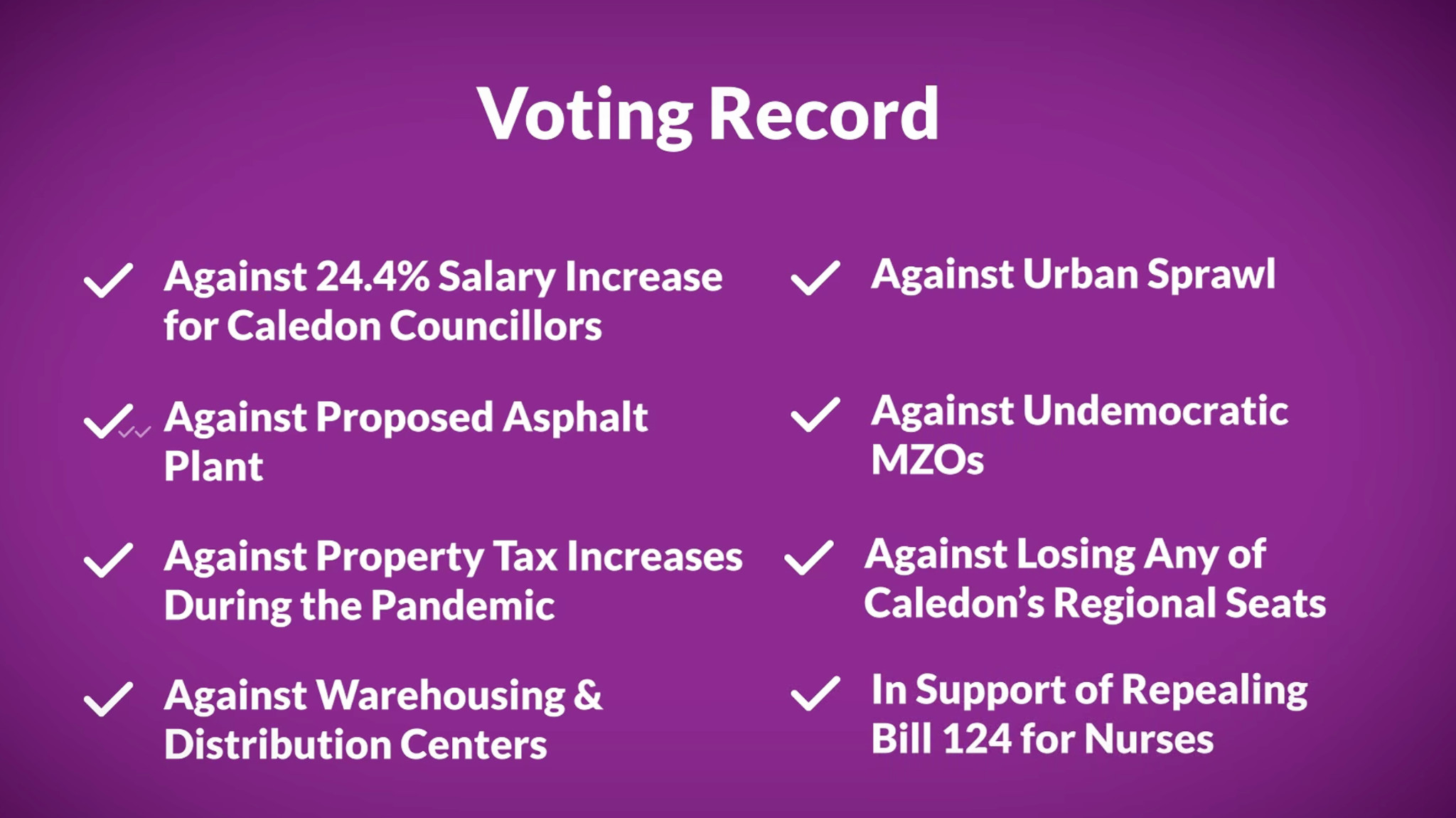
During her campaign, Annette Groves pledged to protect Caledon’s environment, limit urban sprawl, support local agriculture, remove heavy truck traffic and ensure that “developers do not plan our community” as she framed the 2022 election as a critical moment to preserve the town’s rural character and public voice.
(Annette Groves Mayor of Caledon/Facebook)
Groves said she would continue to support a moratorium on aggregate pits “to preserve our natural heritage and our environment” and “ensure proper monitoring and enforcement” of Caledon’s water sources including the Credit River. For eliminating heavy traffic from the town, she pledged to “continue” her advocacy to the Premier for “the extension of highway 427 to 89”.
On November 15, 2022, she was sworn in as the town’s eighth mayor, defeating former councillor Jennifer Innis who had been questioned about her support for the aggregate industry on multiple occasions — the two candidates had hardly ever seen eye to eye on one particular project: Highway 413.
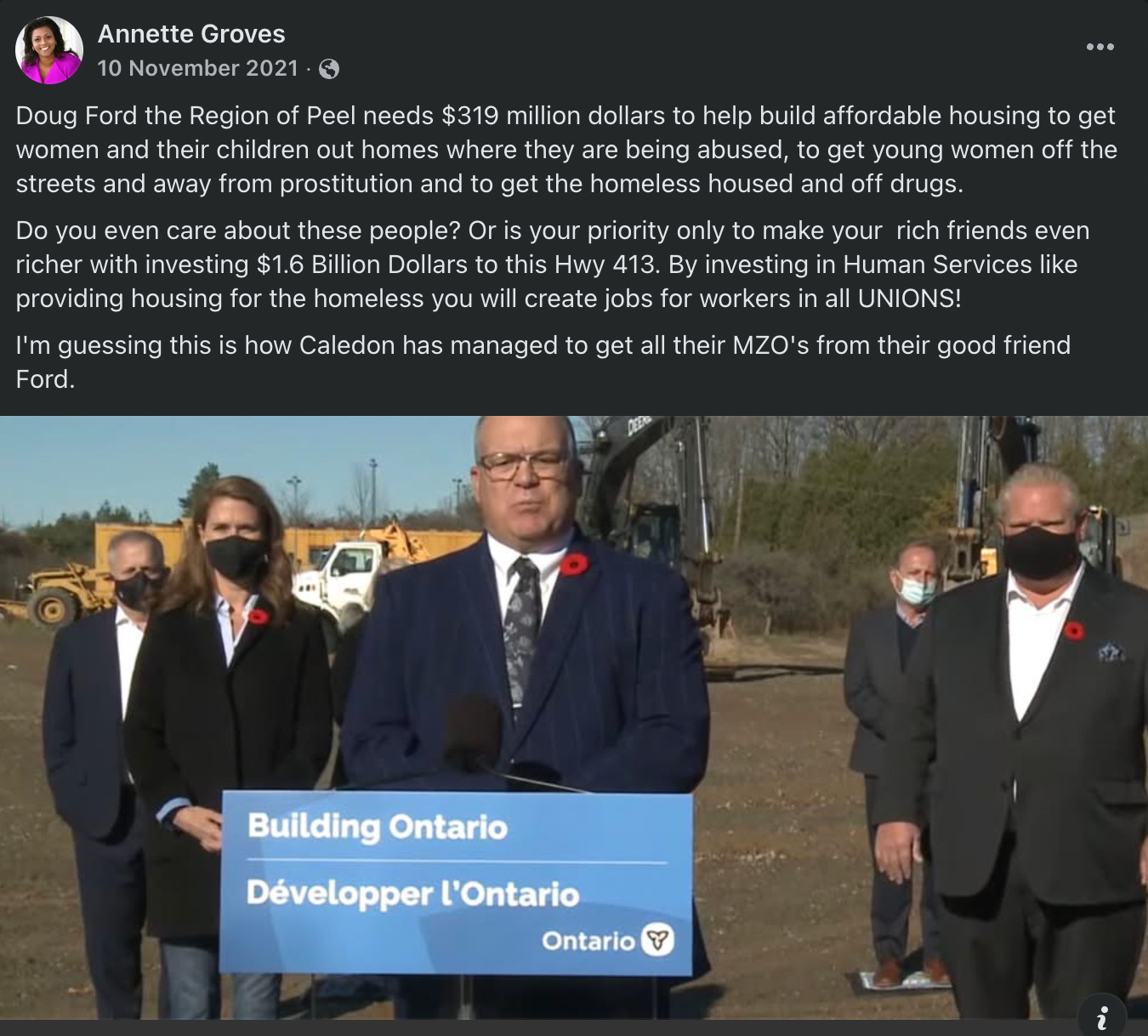
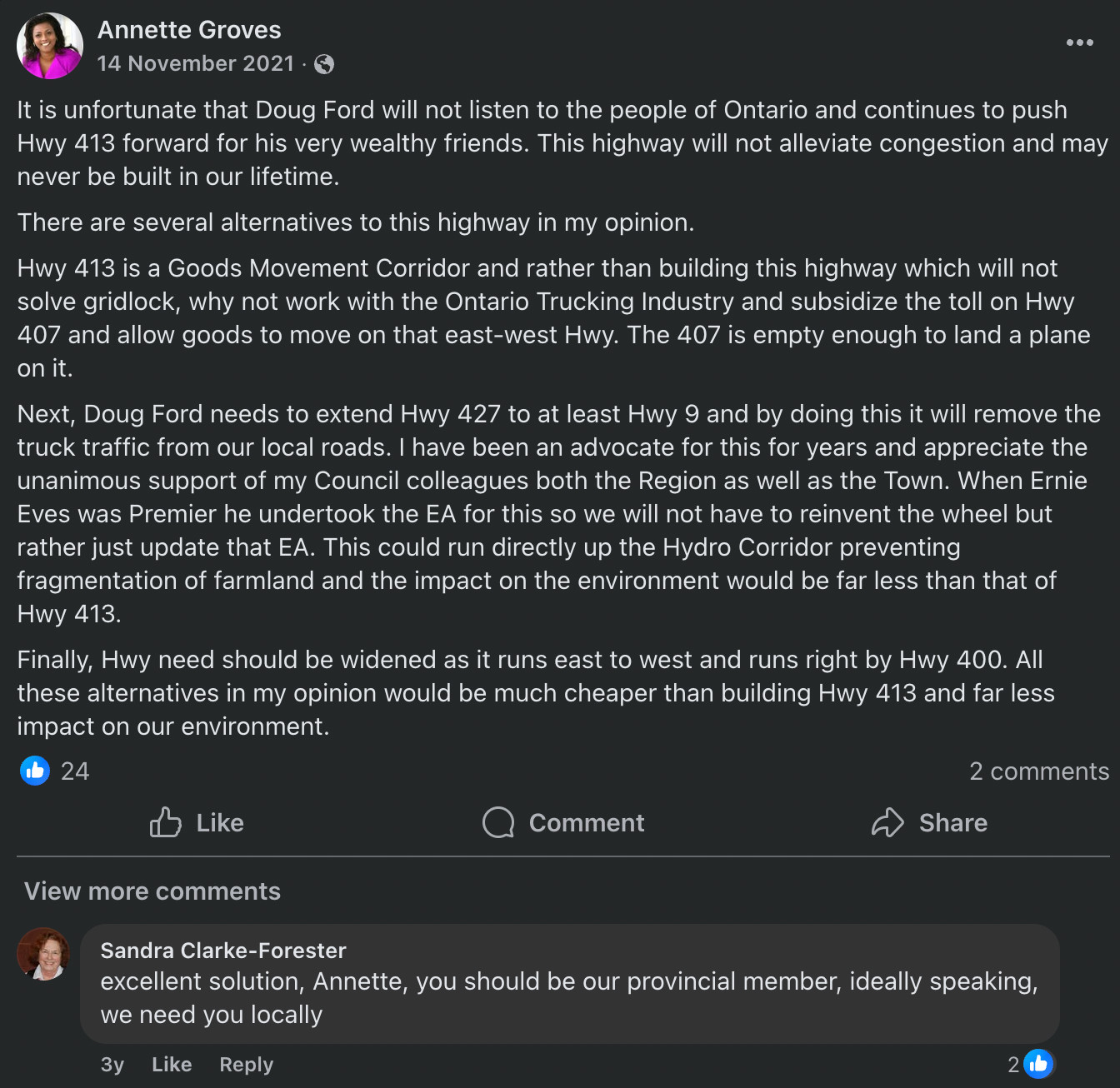
In 2021, then Caledon councillor Annette Groves offered alternatives to building Highway 413: “Hwy 413 is a Goods Movement Corridor and rather than building this highway, which will not solve gridlock, why not work with the Ontario Trucking Industry and subsidize the toll on Hwy 407 and allow goods to move on that east-west Hwy. The 407 is empty enough to land a plane on it.”
(Annette Groves/Facebook)
Groves had introduced a motion against the highway’s construction in 2022 — a theme that continued into her leadership. In November 2024, Caledon council voiced its opposition to the PCs’ Highway 413 strategy under Bill 212, after Ward 3 Councillor Doug Maskell tabled a motion rejecting the legislation.
On August 27 last year, that changed.
As STOPTHE413 signs lined the road and truck horned blaring in support of the opposition, Ford, unphased, announced at the Caledon press conference that construction was “beginning” on the highway. Standing beside him was Groves.
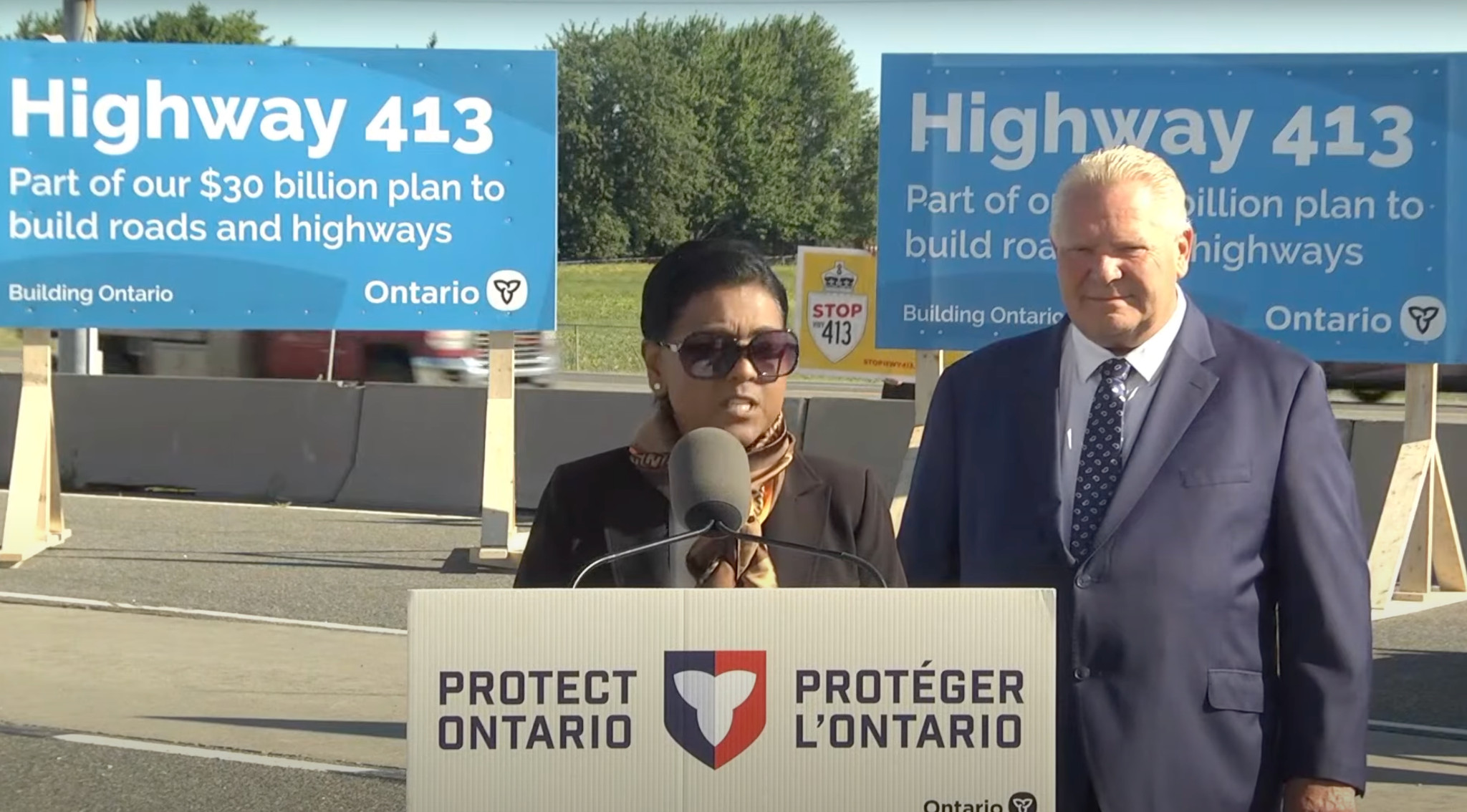
“The Highway 413 corridor will be a big help for our villages by supporting the extension of Highway 410 and easing truck congestion on Highway 10, Caledon village and is a welcome addition to the folks in Valleywood. It will also spur the extension of Highway 427 and reduce the number of heavy trucks travelling on Highway 50,” Caledon Mayor Annette Groves said at the press conference.
(Premier of Ontario/YouTube)
“This announcement marks a key step for the town towards achieving its goal and vision, and town staff will make every effort to support and work in partnership with the province to ensure the successful delivery of Highway 413 and mitigate any impacts to our community,” Groves said during the press conference.
Three months earlier, she had taken steps that broke two of her campaign promises: protecting water sources and limiting the impacts of the aggregate industry. On May 13, she quietly introduced a motion to permit construction fill to be dumped into the rehabilitated Swan Lake, a move normally initiated by a developer through a formal application.
“If Jennifer [Innis] had voted this way, no one would have been surprised, because she didn't wildly say, I'm here to protect the environment,” Connors said.
After months of fierce public backlash including from farmers with properties neighbouring the lake, council halted the proposal for the remainder of the term. But it was too late by then…Many residents had already expressed they no longer planned to support Groves in the next municipal election.
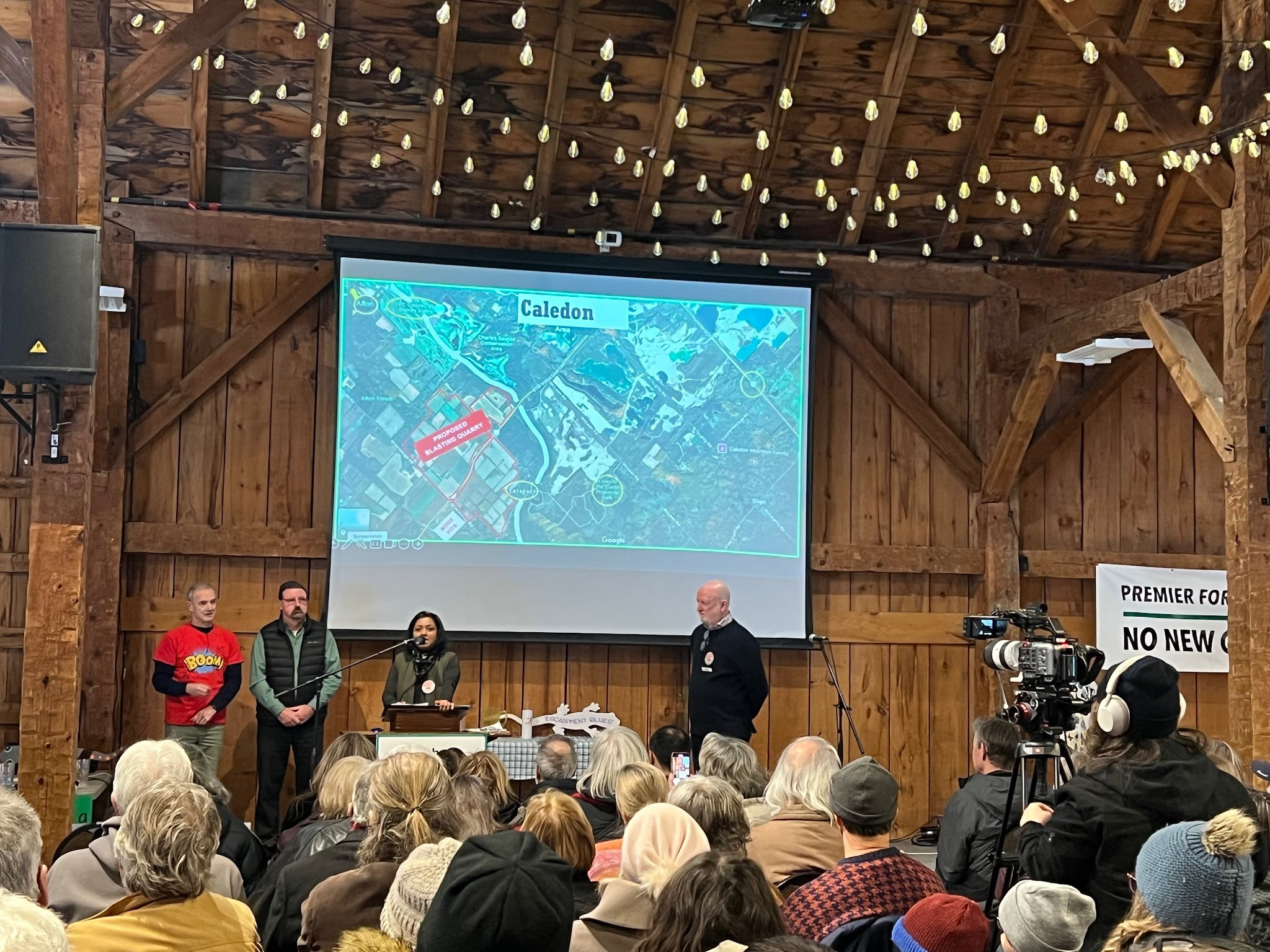
Among them was Caledon resident Tony Sevelka, a prominent voice opposing the application for an 800-acre, below-water-table blasting quarry by Canada Building Materials (CBM), cutting through 1,000 acres of green space perilously close to rural homes and critical water sources, to operate in the hamlet of Cataract just steps away from his house.
Sevelka had supported Groves in 2022 and initially spoke highly of her leadership…until February last year. He welcomed her support for a two-year Interim Control By-law (ICBL), introduced in October 2022 and later extended to October 18, 2024, which temporarily paused new pit and quarry applications and gave residents time to organize. The ICBL was extended in September 2023—which was appealed by CBM.
The two-year period provided the town with "some breathing room" to protect the community's wellbeing. In October 2024, under Groves’ Caledon, in partnership with the Forks of the Credit Preservation Group, updated its Official Plan, introducing new policies that prevent mineral aggregate operations in evaluated non-provincially significant wetlands, unevaluated wetlands and their associated features.
Environmental lawyer and advocate David Donnelly, of the Reform Gravel Mining Coalition, commended Caledon for adopting the World Health Organization’s 2021 standards for PM2.5 and PM10 in its air quality policies, a move he called “long overdue,” noting that most of Ontario still follows the outdated 2005 standards.
He described Caledon’s proposed policy shift as a “near perfect reading of the public desire” to protect the environment and uphold community interests.
Despite the updated plan, the threat of the blasting quarry persists with approval potentially allowing it to operate for “over 50 years”.
Forks of the Credit Preservation Group chair David Sylvester (left), Caledon ward 3 Councillor Doug Maskell and mayor Annette Groves at a Milton rally opposing aggregate pits across the province. At the rally, Groves focused on getting money from aggregate producers in return for the stress they put on municipal infrastructure.
(Anushka Yadav/The Pointer)
As Spring arrived, the Mayor’s responses stopped.
By October, the mold had spread further when a Site Alteration Bylaw drew residents to a public open house where they were met with a police presence and a process many viewed as rushed and opaque. The proposed rules, framed by staff as long-overdue modernization, raised red flags: they could enable large-scale dumping of construction fill into local landscapes including water bodies while concentrating decision-making power in the hands of senior staff.
“I don't think she's ever going to get elected again after that fiasco, and I do think that that should be investigated by the OPP, because it's unprecedented what she's done,” Sevelka had told The Pointer previously.
On July 25, Sevelka filed formal complaints with the Ontario Ombudsman and the Information and Privacy Commissioner, calling for “transparency” and an investigation into what he alleged are serious procedural failures and potential abuse of power in the Town of Caledon’s handling of the CBM quarry claiming significant information regarding the proposal was being deliberately held from residents.
The distrust that Connors mentioned was playing out as residents felt their input was being increasingly sidelined. It had been building like steam in a pressure cooker for over a year.
On March 26, 2024, Groves used her strong mayor powers to push through 12 controversial zoning by-law amendments that rezoned nearly 5,000 acres of land across the town, paving the way for the construction of 35,000 new homes, almost three times the town’s provincial housing target. She had previously indicated the bylaws would not be brought forward until after the summer but they were put to a vote in June.
On December 5, Democracy Caledon filed a notice of application with the Ontario Superior Court of Justice, seeking to quash the 12 by-laws, arguing that the rezonings are inconsistent with the Town’s Official Plan, the Region of Peel’s Official Plan and were approved without the necessary environmental and infrastructure studies.
Despite objections from the Region of Peel, the Toronto Region Conservation Authority and even Ontario’s Minister of Municipal Affairs and Housing, Groves and a majority of council approved the zoning changes with only councillors Dave Sheen, Lynn Kiernan, and Christina Early voting against the amendments while Councillor Nick de Boer abstained.
“They gifted the Town of Caledon to the developers. Where's all the housing?,” Connors chuckled at the irony.
“Any legacy that Annette Groves might have had for her long service to the town was undone by the by the terrible decisions that she implemented as mayor.”
The final nail in the coffin came on April 21, when Groves was the only one to vote against Councillor Sheen’s motion opposing Bill 100, Better Regional Governance Act, a provincial plan to appoint a regional head for the Region of Peel with strong-mayor style powers.

Caledon Mayor Annette Groves with Ontario Premier Doug Ford and Dufferin-Caledon MPP Sylvia Jones.
(Doug Ford/Facebook)
As photographs from Mayor Groves’ gala began circulating, scrutiny over the event has only intensified with residents still waiting for a clear, public breakdown of donations, donors and expenditures from last year’s event.
The question was first raised by Connors during a July 8 question period, prompting Groves to confirm that Cortel Group’s Nick Cortellucci donated more than $25,000 to the 2025 gala.
“Mr. Cortellucci also supported Caledon Day a few years ago, and no one raised concerns then,” Groves responded.
“These funds support local charities that provide vital services we could not afford otherwise. I find your question completely inappropriate. Again, there will be an audited financial statement from the Mayor’s Gala for everyone to see.”
Mayor’s galas across the GTA have faced controversy over transparency and concerns about developer influence with similar events in Mississauga and Brampton eventually ending after public backlash.
With six months left until the next municipal election, Connors says it is important for Caledon’s next mayor to understand that “protecting the environment is a core value of the people who live here…
“There is a widespread desire for change. The residents of Caledon are looking for elected officials who will serve the public interest and not pretend to hide that they work for developers, and forget who elected them.”
Email: [email protected]
At a time when vital public information is needed by everyone, The Pointer has taken down our paywall on all stories to ensure every resident of Brampton, Mississauga and Niagara has access to the facts. For those who are able, we encourage you to consider a subscription. This will help us report on important public interest issues the community needs to know about now more than ever. You can register for a 30-day free trial HERE. Thereafter, The Pointer will charge $10 a month and you can cancel any time right on the website. Thank you
Submit a correction about this story

