
‘Mega money, mega risk’: Caledon residents won’t give up their fight against blasting quarry proposal
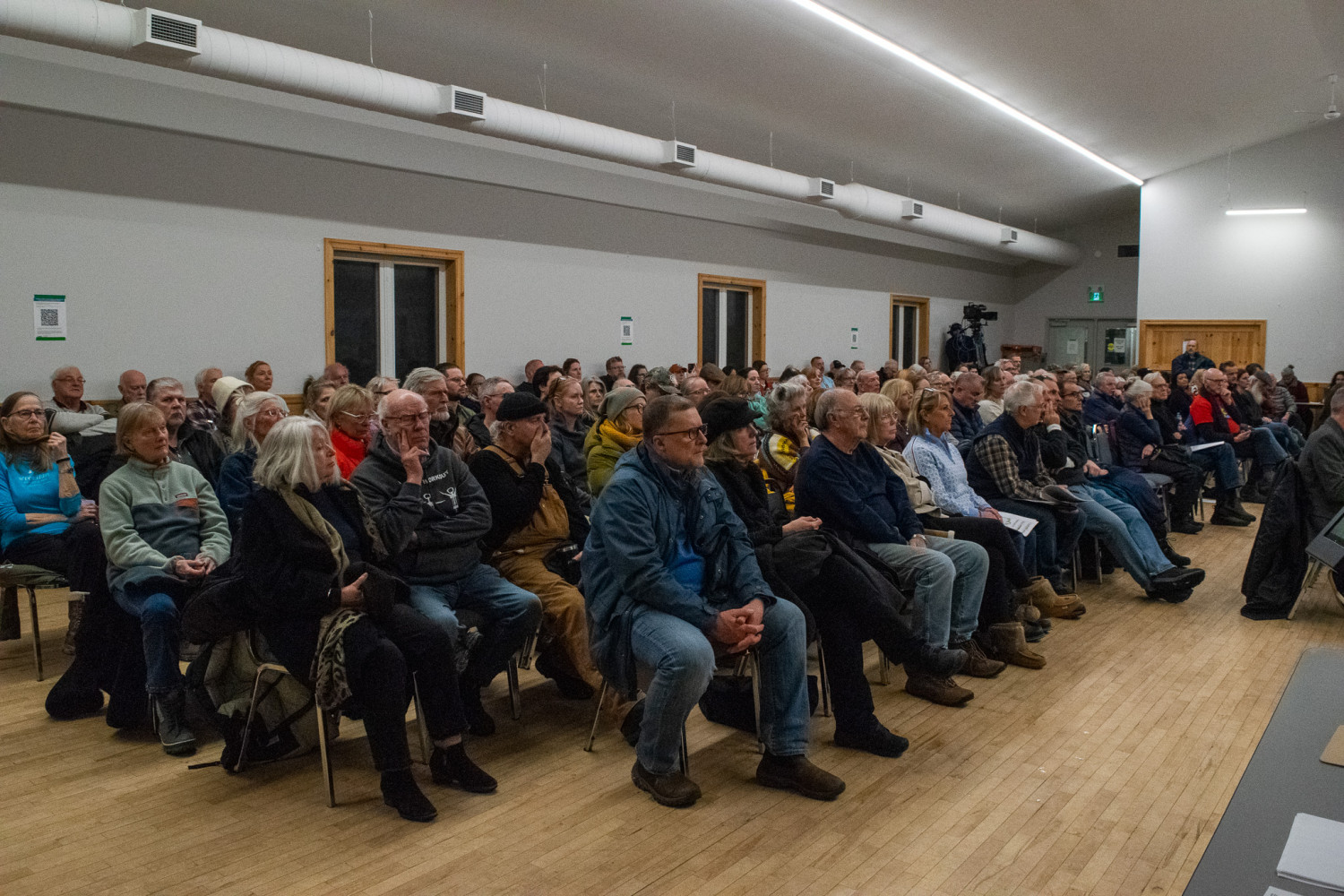
The frigid winter evening in Caledon on January 29 was not enough to stop local residents, who laced on their boots and crunched through the snow to the Alton Legion hall. Inside, hundreds of anxious citizens filled the seats, gathering to raise their voice.
The town’s first mega-blasting quarry would deepen the scars the aggregate industry has already gouged into their lives.
For Brazilian conglomerate Votorantim Cimentos’s subsidiary CBM (Canada Building Materials) Aggregates, the battle over roughly 700 acres in Caledon is about accessing 78 million tons of high-quality limestone and 4 million tonnes of sand and gravel. Under the Town’s Official Plan the land is designated for aggregate extraction, with CBM applying to remove up to 2.5 million tons a year.
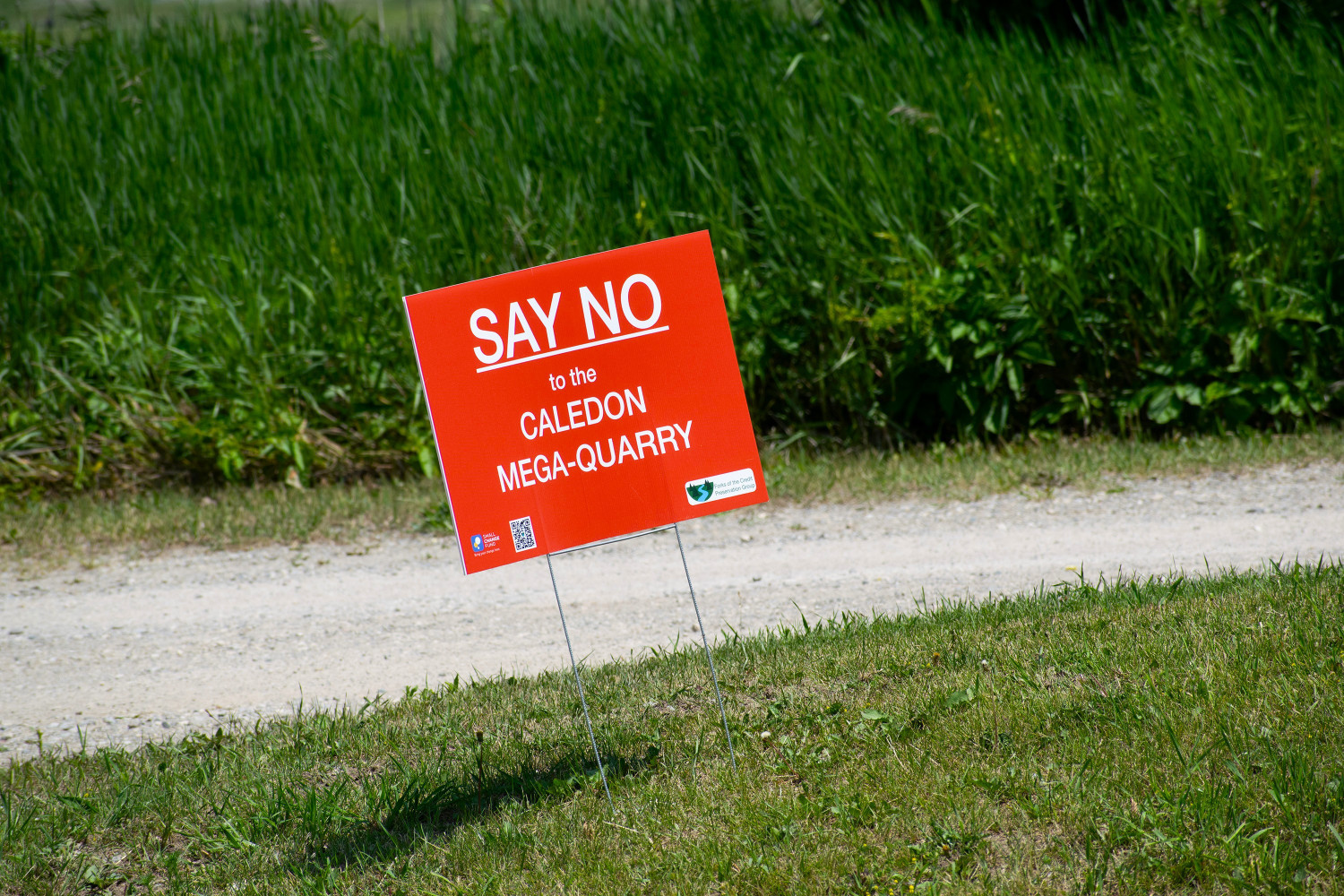
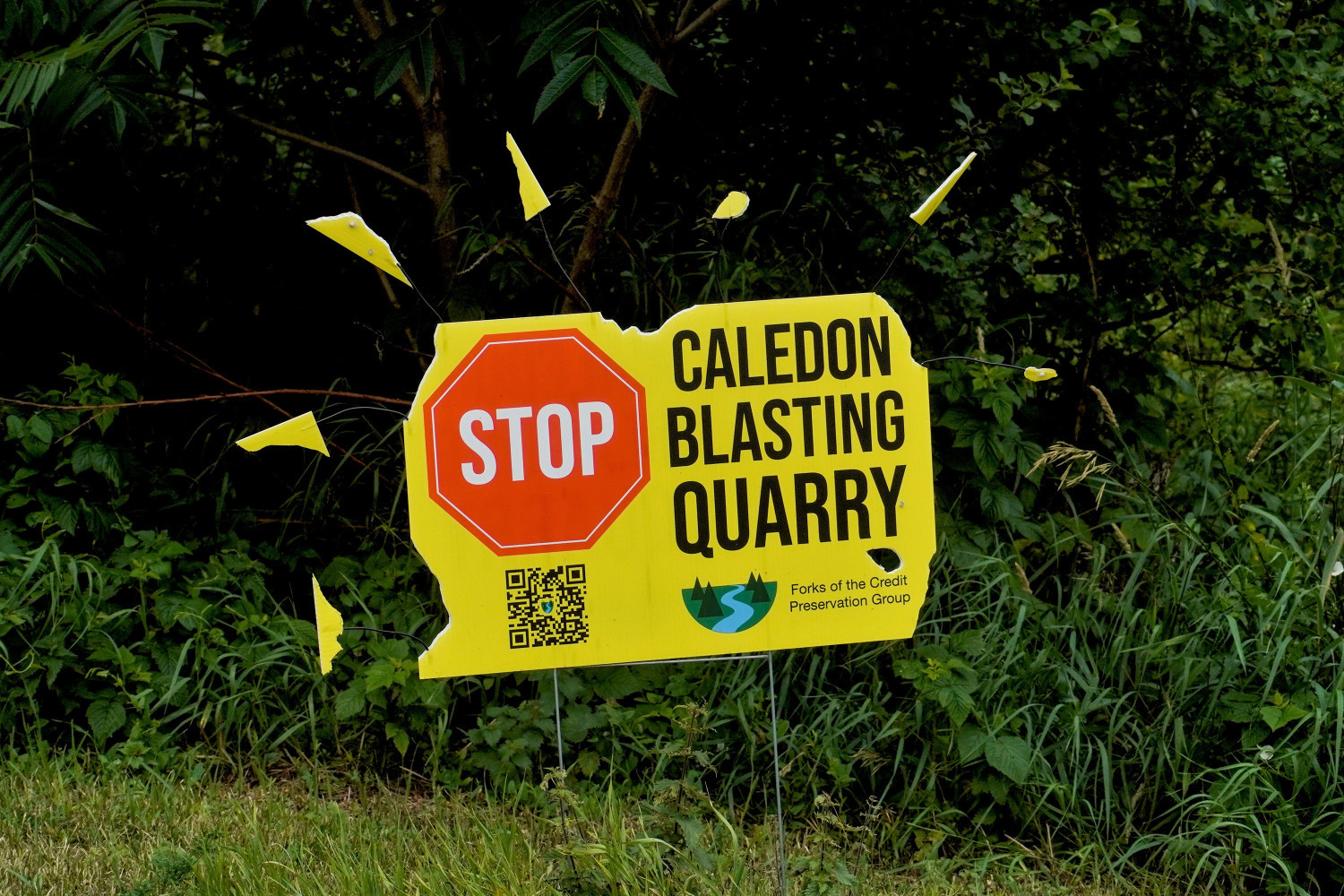
Signs like these have become a common sight along roads and streets in Caledon.
(The Pointer files)
To proceed, the company requires amendments to Caledon’s Official Plan and zoning bylaw under the Planning Act, as well as a Class A licence under the Aggregate Resources Act, overseen by the Ministry of Natural Resources (MNR).
For people who call Caledon home, the fight is about safeguarding their community for generations to come.
“What benefits or protections do the citizens of Caledon gain from any of this?,” resident Gord Boughner, who moved to Caledon two years ago, asked council at the public meeting two weeks ago.
Boughner said he wonders why, at a time when Canada is focused on asserting its sovereignty, the Town is even considering allowing a foreign-owned “Goliath” to wield so much influence over local land, water and air, leaving community members to bear the environmental, health and safety risks.
“Mega money means mega risk,” Boughner warned.
The province has already approved aggregate extraction licenses allowing roughly 13 to 14 times more material to be removed annually than is actually consumed. Then, why did we need more?
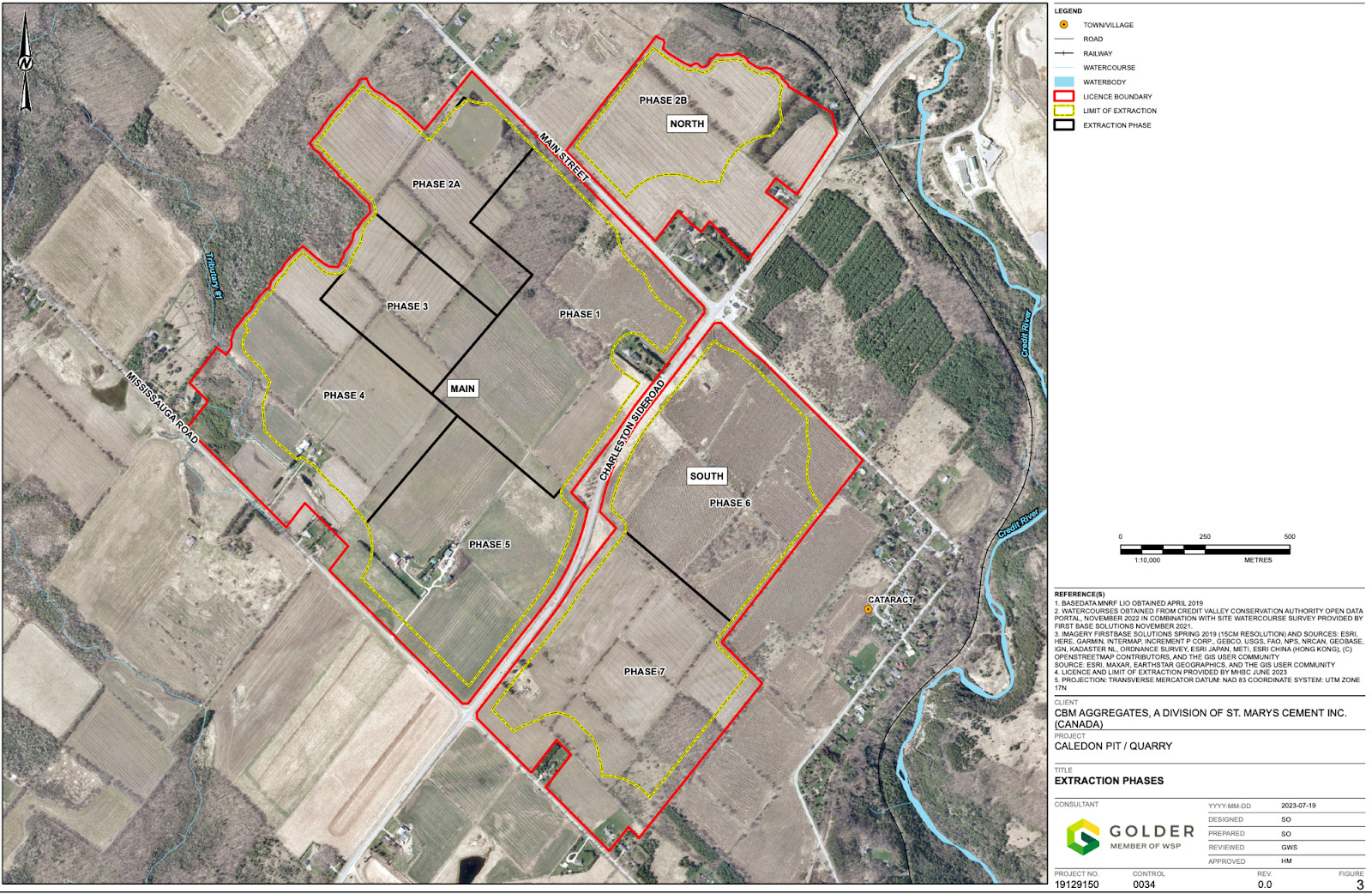
The proposed CBM quarry spans roughly 700 acres across the northwest, northeast and southwest quadrants of Charleston Side Road and Main Street. Of this, 199.5 hectares (493 acres) are designated for extraction while the remaining 61.7 hectares (152.5 acres) serve as buffer or setback areas. Extraction is planned in seven phases beginning in the Northwest Quadrant for phases one to five, then moving to the Northeast Quadrant in phase 2B about ten years later and finally to the southern lands south of Charleston around 30 years after the main area starts.
(Golder Associates/WSP/Town of Caledon)
One resident, initially quiet, had been intently listening as her neighbours spoke boldly. Tamara Limebeer had come to the second public meeting to hear updates from Town staff and representatives from Glen Schnarr & Associates, retained by CBM, to assist with the Planning Act applications and provide professional guidance.
But as the four hour meeting wore on, something changed for Limebeer, whose property is just nine kilometres from the proposed site in northwest Caledon near Charleston Side Road and Main Street.
The thought of the 200 animals on her farm, all relying on water from her private well, “compelled” her to speak.
“My family has farmed here since 1859. Who is going to water my cattle when my well is compromised by a blasting quarry,” Limebeer asked with disappointment and frustration visible on her face.
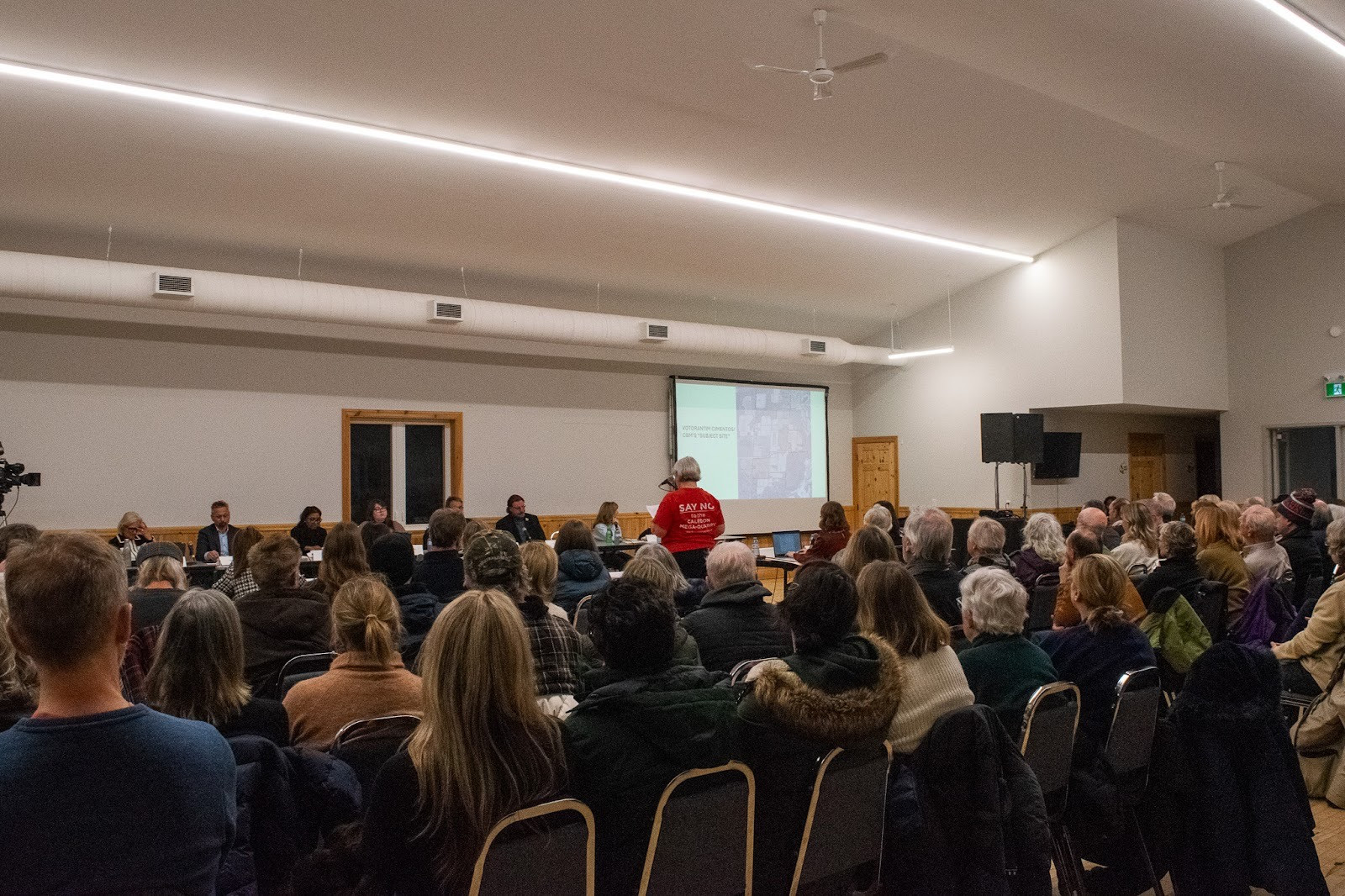
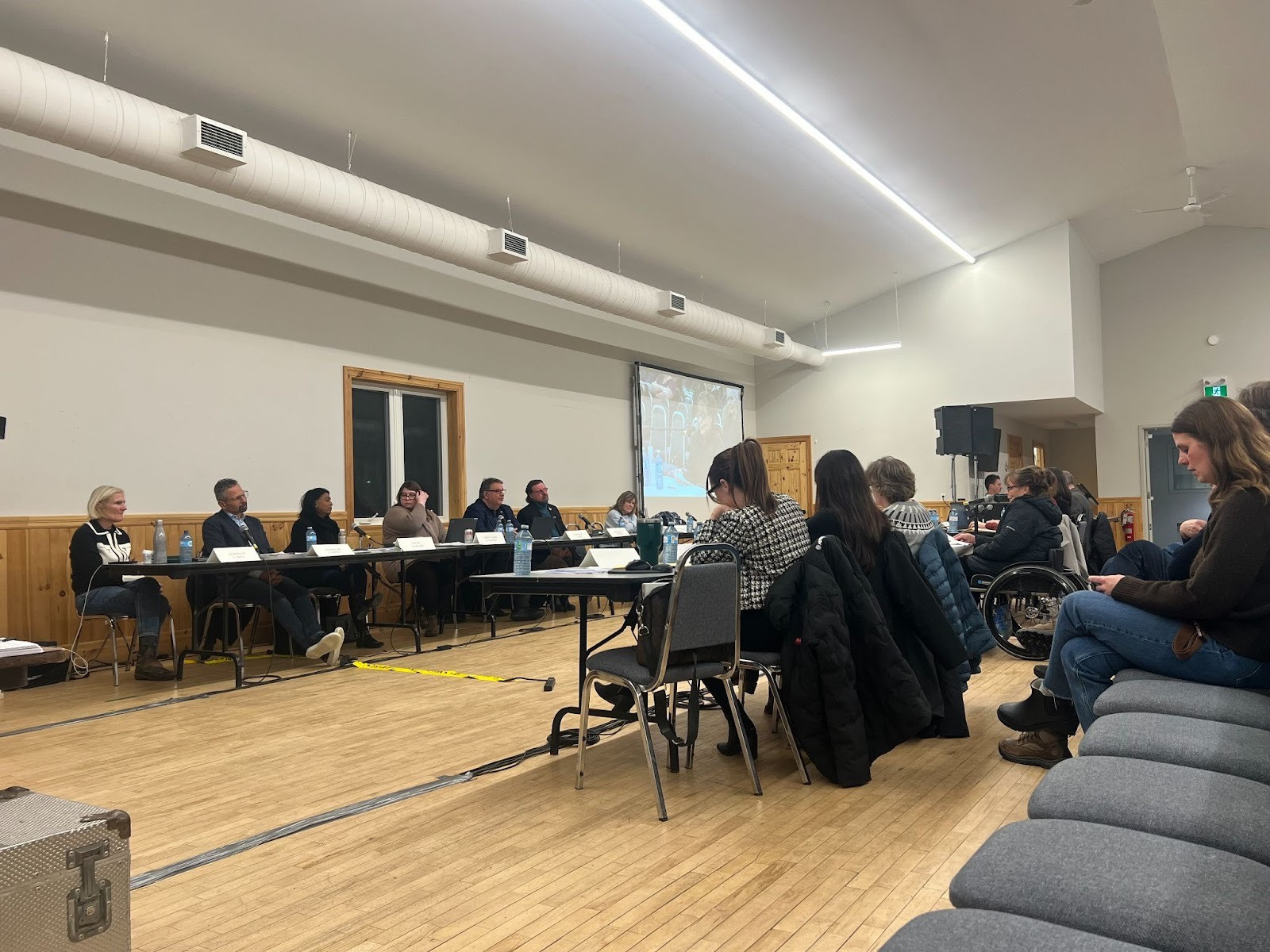
Caledon resident Tamara Limebeer shares her fears with a blasting quarry that would impact her “working farm” where animals rely on water from her private well.
(Top: Alexis Wright, Down: Anushka Yadav/The Pointer)
Earlier in the evening, Karen Bennett, a partner at Glen Schnarr & Associates, explained that engineering and consultancy firm, WSP, had designed the application to protect private wells, outlining a detailed groundwater monitoring program and surveys of all wells within one kilometre of the site before extraction begins to establish baseline conditions.
“Technical studies have confirmed that if there's an impact, wells can be deepened to maintain existing water quantity and quality,” Bennett said.
In a 2022 report, CBM noted under typical blasting conditions, “stresses introduced into the bedrock by the explosive detonation and the accompanying gas pressures create and extend fractures within the bedrock around each borehole” but that fracture development is “usually limited to a distance of about 20 to 30 times the borehole diameter,” restricting impacts to “an area immediately around each blast”.
The report mentioned studies on private wells finding that vibrations below “about 25 mm/s [millimetres per second]” result only in “slight temporary” water-level changes of three to six centimetres, with no impact on well capacity. A vibration limit of 50 mm/s is described as adequate to prevent significant damage, though “temporary turbidity may be caused” at lower levels.
Because provincial guidelines cap vibrations at the nearest residence at “12.5 mm/s,” it was concluded that quarry blasting “would have no effect on the neighbouring water wells”.
Critics argue that those conclusions rest on controlled assumptions that conflict with legal precedent and documented real-world outcomes.

Many residents appreciated the extensive studies undertaken by Caledon resident Tony Sevelka who has spent much of his prime retirement years dedicated to researching the risks involved with blasting quarries and flyrock.
(Alexis Wright/The Pointer)
Cataract resident who lives steps away from the proposed blasting quarry site and author of multiple peer-reviewed studies on flyrock, Tony Sevelka, pointed to the Acton Quarry, operating since the 1900s, where residents living well beyond a 200-metre radius of the Dufferin Aggregates site reported water quantity and quality issues. Yet the company only monitored groundwater impacts within that chosen radius around the quarry boundary.
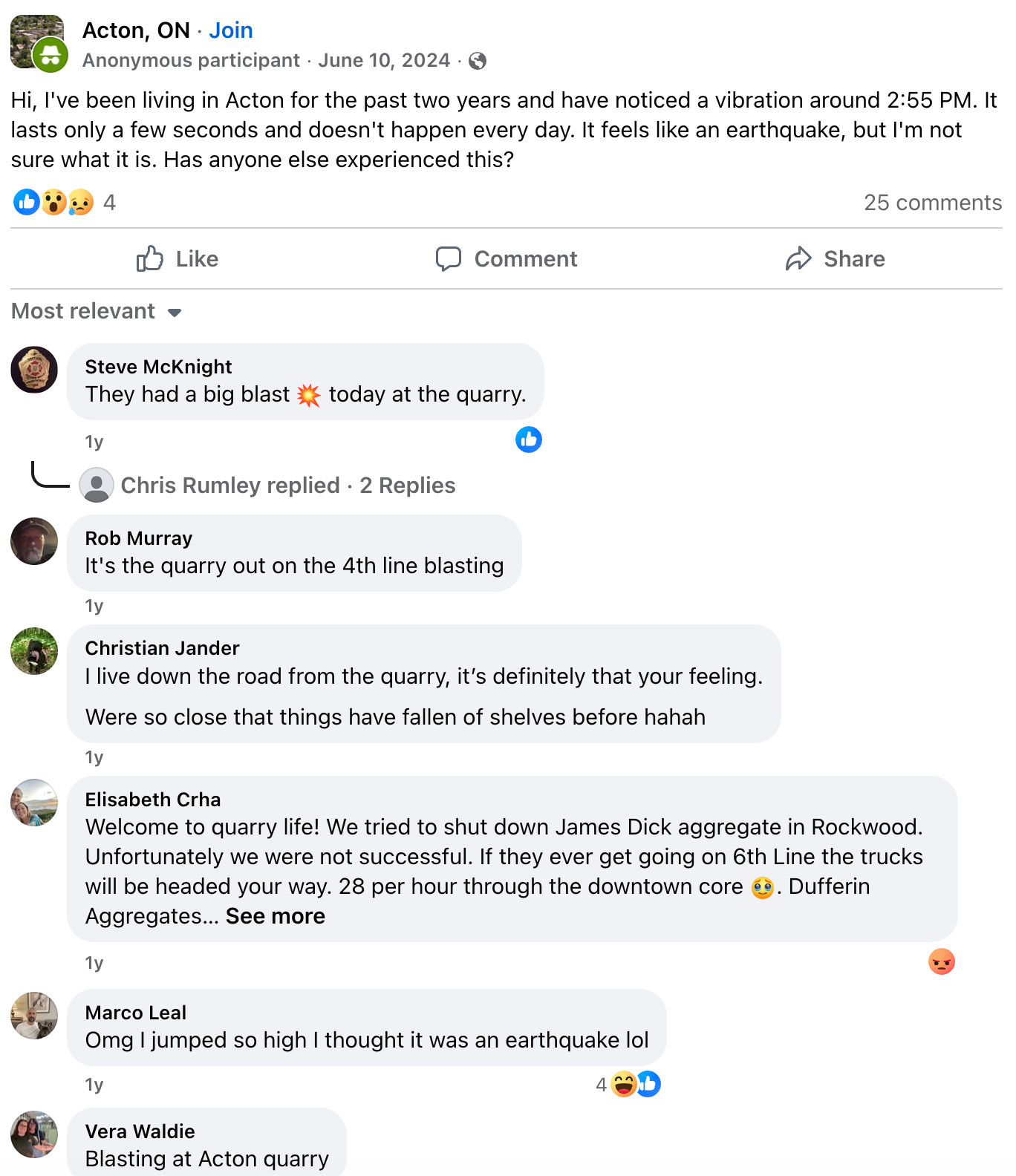
Residents have been sharing their experiences living near the Acton Quarry for years now on social media.
(Facebook)
A 2013 Joint Agency Review Team (JART) report on the Acton Quarry noted that private well failures, water shortages, turbidity, and sedimentation occurred at distances well beyond the assumed impact zones, even though blasting and dewatering operations were reportedly within regulatory limits.
In 2010, the Listers, who lived 1.8 kilometres from the quarry, reported that their farm had faced water shortages since 2005 and over two years had required water deliveries every two days, costs covered by Dufferin Aggregates.
In 2012, another resident, Steve Hepman, shared that “eight years ago” his family had lost all their water due to their wall collapsing. “My 200-foot well is full of 100 feet of sand,” Hepman said.
Bennett noted a private well complaint procedure, reviewed by provincial ministries, has been “designed and updated” requiring the company to investigate any complaints within 24 hours.
“This will ensure all wells are protected,” she added.
“If warranted”, a well contractor would be contacted and residents will be provided with a temporary water supply within that same timeframe (similar to what Dufferin Aggregates did).
“If the issue can't be easily determined and rectified, if well interference is deemed to be due to aggregate extraction, CBM is responsible to remedy,” Bennett said.
“Planning policy requires the proposal to minimize the risk to public health and safety on surrounding uses in accordance with provincial guidelines, standards, policies and procedures.”
Limebeer emphasized the one-kilometre monitoring and response radius outlined by CBM leaves her family, farm and livestock unprotected.
“I do not have 24 hours to wait for a well assessment. I don't have time to wait for temporary water,” she said. “We have animals that need water.”
To illustrate her concern, Limebeer described ongoing issues linked to blasting at the Lafarge pit on Charleston Sideroad, where detonations by the Region of Peel Police Bomb Squad are audible from her property and strong enough to rattle her home.
“On the days that they detonate those explosives...those explosions are audible, we can hear them. They rattle the pictures on my wall, the china in my cabinet,” she said.
“And I'm scared that they're going to affect our water.”
Following the explosions, Limebeer shared her well has repeatedly filled with sand, requiring multiple cleanouts by a well contractor.
She then asked whether the one-kilometre radius could change.
“I can’t answer that. It’s one-kilometre at the moment in the studies…in accordance with provincial standards and guidelines,” Bennett responded, drawing audible expressions of concern from the room.
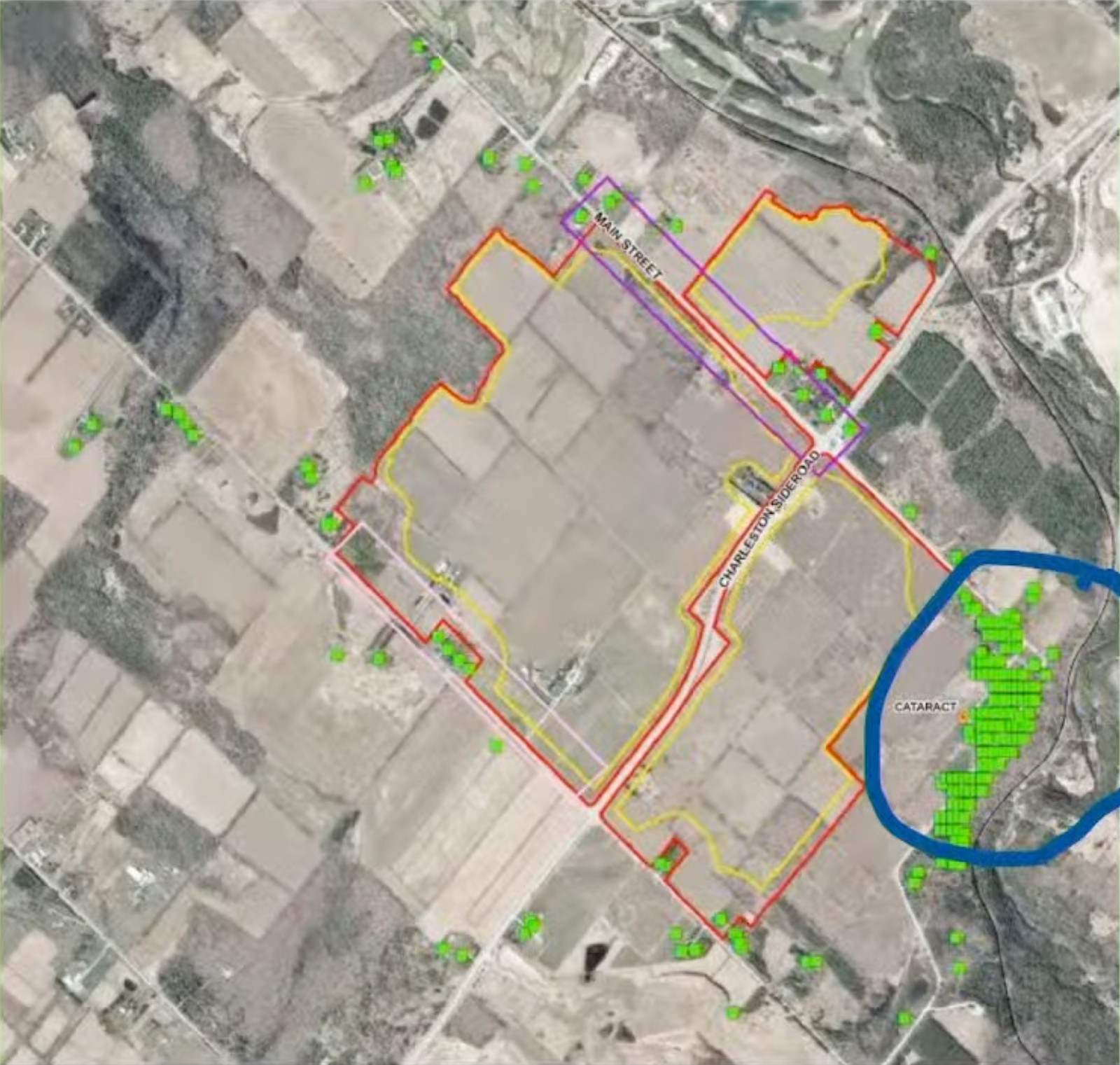
Deborah Wilson, a local resident and board member of the Forks of the Credit Preservation Group, told Caledon council that the images presented by Votorantim Cimentos/CBM are misleading, wherein they have identified only 23 wells that will be impacted by their operations. Wilson said the site was portrayed as a brown, empty expanse, a vast area of nothingness, that failed to reflect the lived reality of the community. She pointed to the green dots squares on the company’s maps marking nearby homes, including her own, and noted that more than 100 households sit within the surrounding area. “What we all have in common is we get our water for drinking and other uses from our own private well,” she added.
(Forks of the Credit Preservation Group)
Resident, Debra Wilson, who sits on the board of the Forks of the Credit Preservation Group, reminded council that private well users are uniquely vulnerable as they are not protected under “any provincial Water Acts”.
“We are not connected to any municipal water system. If our water supply drops or runs out, if our water is contaminated, we have to figure out the remedies,” Wilson warned.
“What happens if a resident has an issue [due to the CBM quarry]?…A local resident has to take on a deep pocketed multinational corporation. Even municipalities do not find it easy to resolve serious issues with this company.”
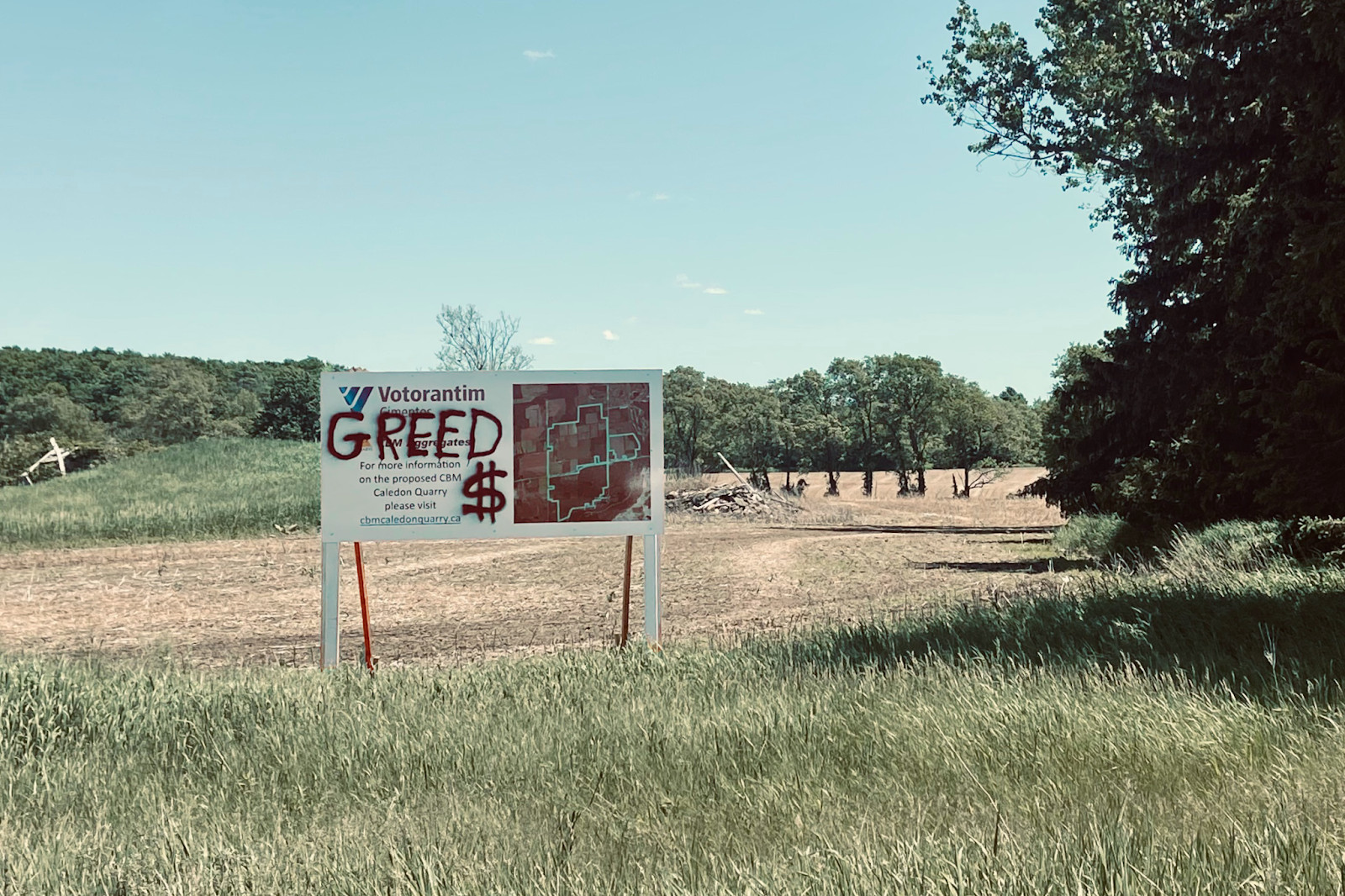
In June 2022, Caledon resident Marlena Perich noticed a Votorantim Cimentos CBM blasting quarry proposal sign in a field, which had been defaced with graffiti.
(Marlena Perich)
In 2020, concerns over groundwater impacts linked to CBM’s Roszell Pit in Puslinch escalated to the point where council directed the company to cease extraction activities in a portion of the pit after observing declining water levels in nearby wetlands and private ponds and raised the issue with MNR the following year.
Township consultants concluded while drought conditions played a role, extractive activities and on-site mitigation measures including a berm and silt barrier were failing to prevent water loss and may have exacerbated the problem, potentially causing permanent impacts.
By 2022, those concerns culminated in a unanimous council vote ordering CBM to halt aggregate extraction in one of the ponds until the issues were resolved.
CBM maintained it had operated within approved thresholds and attributed water level declines primarily to low precipitation. Puslinch’s hydrogeologist maintained that quarry operations were affecting groundwater unevenly and undermining wetland conditions.
In 2023, council reports indicated little progress was made and the issues persisted despite ongoing monitoring and interventions.
“If municipalities can’t get serious water issues resolved, what hope do residents have?,” Wilson asked.
By 2024, Ontario’s Auditor General revealed the aggregate industry was ignoring the Aggregate Resources Act, confirming long-standing local concerns that the Ministry of Natural Resources and Forestry provided insufficient oversight.
The report laid bare the reality of pit operators frequently skirting the rules and systemic issues such as inspector shortages, low inspection rates, widespread non-compliance, unpaid fees and unrehabilitated sites posing significant environmental and community risks.
During the public meeting, Mayor Annette Groves also expressed frustration with the Ministry of Natural Resources about “enforcement”.
“I don't have a lot of confidence right now in that ministry…we've been asking for enforcement on our roads with the gravel trucks that we have today. I don't see any enforcement,” Groves said.
She added that she is even more concerned because everything the Town asked for in the Official Plan Amendment 1 aggregate policies hasn’t even been considered or looked at.
The Pointer reached out to MNR for a statement but did not receive a response by the time of publication.
On January 27, Councillors Christina Early and Lynn Kiernan introduced a motion seeking advocacy support from the Top Aggregate Producing Municipalities of Ontario (TAPMO).
In municipalities like Caledon that house significant aggregate operations, the current provincial policies do not adequately protect “public health or community well-being” despite the “sustained and cumulative impacts” of quarries “on municipal infrastructure, rural communities, agricultural lands, sensitive water resources, and local air quality”, the motion cited.
Council voted unanimously in favour of the motion — a move welcomed by some residents.
“Caledon’s progressive aggregate-mining policies reflect months of careful work and real local insight,” Wilson told The Pointer.
“With the support of TAPMO, we hope that we can come together with the province to align on meeting Ontario’s needs while protecting what matters most, and ensuring that our water, farmland and communities are not put at unnecessary risk.”
The Town has also expressed its objection to the blasting quarry in the past. On June 23, 2025, council wrote a letter to the Ministry of Natural Resources citing unresolved concerns related to hydrogeology, water resources, blasting, natural heritage, air quality, noise, agricultural impacts, traffic and site planning and noting that multiple peer reviews and agency comments remained outstanding.
But water concerns for Caledon don’t end there. To keep the quarry floor dry for excavation, the plan calls for pumping millions of litres of groundwater each day throughout the operation’s lifespan.
Originally, CBM proposed dewatering via an armored channel across conservation lands, a plan later abandoned following public concerns. The revised design included infiltration trenches and a groundwater mitigation system intended to address impacts south of the site, beginning in later phases of extraction.
Lesley Gill Woods, the Town’s Manager of Strategic Policy Planning, explained water would be directed from a northern settling pond to Osprey Valley Golf Course’s holding ponds for irrigation with excess potentially discharged into the Credit River system.
Critics worry the water will not remain in those ponds and will eventually flow into the Credit River.
A rare, self-sustaining population of brook trout, which spawns just downstream of the quarry, is highly vulnerable to changes in water conditions. As a cold-water species, brook trout rely on consistently low temperatures, conditions the Credit River has naturally maintained for centuries.
Pumped groundwater held in surface ponds for days or weeks warms to ambient temperatures, particularly in spring and summer and carries sediment before eventually being released into the river. This influx of warmer, sediment-laden water can alter the river’s delicate thermal balance, threatening the trout’s ability to survive and reproduce.
In a memorandum early last year, Shannon Catton, senior ecologist at North-South Environmental, documented multiple brook trout and redd (spawning) sites along the stretch of the Credit River adjacent to the proposed quarry, underscoring the need for more thorough impact assessments.
She flagged concerns including updating the blasting threshold to the current Department of Fisheries and Oceans (DFO) standard of 50 kilopascals (kPa), down from the outdated 100 kPa and considering fish habitats both upstream and downstream of Charleston Sideroad within 400 metres of the pit.
Catton called for a detailed analysis of dewatering operations, covering discharge timing, water volumes, groundwater interactions and temperature shifts, to properly evaluate risks to brook trout and their sensitive spawning grounds.
As retired MNRF fisheries biologist and renowned fisheries advocate in southern Ontario, Jack Imhof said, “A state-of-the-art design may not be required everywhere, but we should not be destroying the last remaining healthy subwatershed for expediency”.
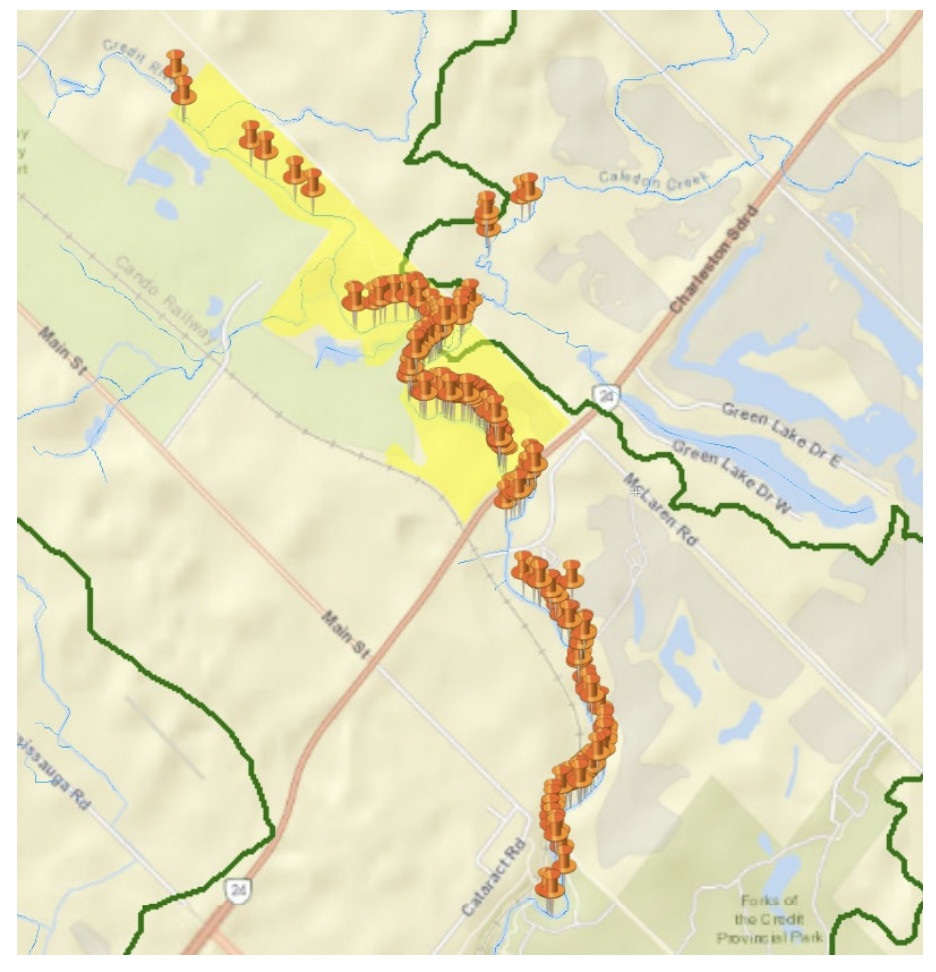
Credit Valley Conservation (CVC) has provided extensive data, including recent 2024 surveys, covering the stretch from Charleston Sideroad upstream to the boundary of CVC’s property (highlighted in yellow on the map). Notably, redds have been recorded within 400 metres of the proposed extraction limit and adjacent to the golf course where quarry dewatering discharge is planned. This underscores the need for a comprehensive impact assessment to protect this critical fish habitat.
Wilson expressed concern about relying on Osprey Valley Golf Course to absorb the quarry’s pumped groundwater as highly uncertain. Will the golf course even exist, have the same ownership or remain functional in 40 to 60 years?
She warned the complex system proposed to manage the water could fail and ultimately allow most of the 500 million litres per year to flow uncontrolled into the Credit River.
The Town of Caledon’s peer review of CBM’s hydrogeological reports, conducted by ARL Groundwater Resources in December 2024, broadly agreed that the technical reporting was comprehensive and sufficient to support Official Plan and zoning amendments.
ARL noted the work program and methodologies, including groundwater monitoring, pumping tests and a conceptual site model using a three-dimensional HydroGeoSphere tool, were “reasonable” for a pit of this size.
But significant gaps remained including cross-sections and maps illustrating hydrostratigraphic units, groundwater levels and relationships to private wells and the Cataract Provincially Significant Wetland (PSW) being insufficiently detailed, making it difficult to independently assess the modelling predictions.
More information on existing private wells was needed alongwith surveys to encourage well owners’ participation to ensure dewatering does not cause ongoing interference, particularly as operations shift to the South Area.
Mitigation strategies including infiltration trenches, a slurry wall and grouting of weathered bedrock are intended to maintain groundwater beyond the quarry boundaries. But these measures are “ambitious” and require careful maintenance over decades to prevent failure, the Town’s peer reviewer noted.
“It is not possible to have a certainty. And when dealing with our drinking water, it's not time to be ambitious,” Wilson said.
The quarry will also result in the removal of 22.2 hectares of key natural heritage features alongwith prime agricultural land.
“While we appreciate that the community doesn't support the removal of any of these features, these are features that are permitted to be removed in accordance with the applicable planning policies,” Bennett said.
To mitigate the impacts, WSP has designed measures to offset the removal and plans to create 91.2 hectares of new natural heritage features, progressively implemented during the early stages of the operation as part of final rehabilitation. A new note in the Aggregate Resources Act site plans requires additional monitoring and auditing to ensure all habitats are successfully established.
But residents called for stronger commitments, including the replacement of mature trees over 15 centimetres in diameter during rehabilitation, not just saplings along with guarantees to maintain surrounding groundwater levels or halt operations if conditions are not met, as recommended by independent environmental consultants.
Many argue that a more effective approach would be the company investing in true long-term protections for Caledon residents, including the establishment of a fully independent oversight organization staffed with professional experts to monitor and enforce all operational commitments outlined in the site plans.
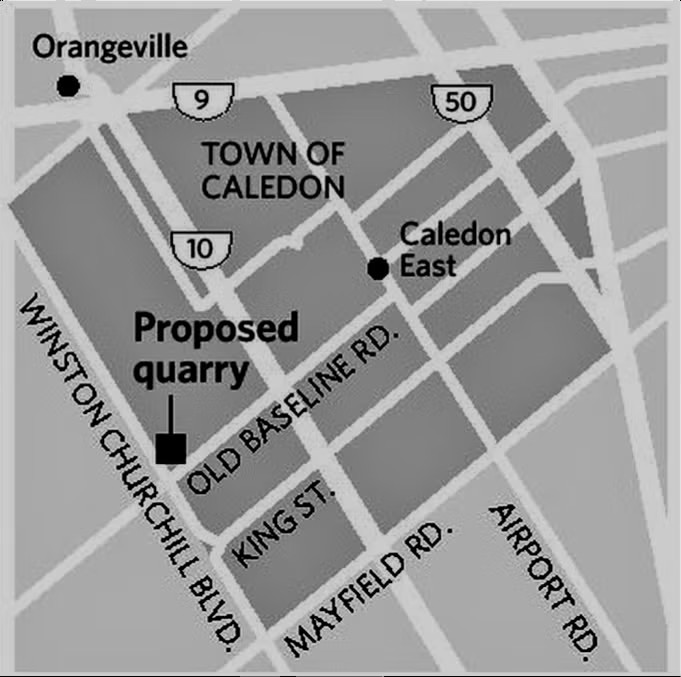
The Rockfort Quarry, planned for 58 hectares in rural Rockside, Caledon, would have destroyed historic farmland used since the early 1800s. The Ontario Municipal Board (OMB), now the Local Planning Appeal Tribunal (LPAT), rejected the proposal in 2010, ruling that while some buildings could be saved, the loss of fields, hedgerows, orchards, and the Westerveld farm’s complete destruction made the impact on the cultural heritage landscape “unacceptable.” The decision stressed that conservation requires protecting the broader landscape, not just isolated elements.
(Town of Caledon)
Residents argue Caledon has already paid the price for lenient, optimistic assumptions in the past, particularly when it comes to aggregate truck traffic, which brings three devils with it: chronic dust, vibration and safety risks—sometimes with fatal consequences.
In August 2020, a dump truck hauling 62,000 kilograms of aggregate from a Lafarge pit ran a red light at Highway 10 and Olde Base Line, killing 50-year-old Caledon resident Patricia Lopez.
The court later found the truck was overweight, mechanically unsafe and driven with a “complete disregard for public safety,” a case frequently cited by residents as evidence that the road network is already beyond its limits.
A family “lost a mother, grandmother, sister, wife”, resident Cheryl Connors said. “And that loss is irreplaceable.”
Connors stressed that Lopez’s death must not be forgotten and warned that the community is already at capacity
“The tipping point happened long ago and we cannot keep having more trucks on the road,” she added.
“Is there a metric? How many deaths do you project, and how many deaths are okay before the company does something about it?”
CBM consultant Bennett acknowledged community frustration with truck volumes but said Charleston Sideroad and Highway 10 are designated high-capacity regional arterials where truck traffic is planned.
Under the proposal, 95 percent of quarry truck traffic would travel east on Charleston Sideroad toward Highway 10, with 90 percent heading south, five percent heading north on Highway 10, and the remaining travelling west on Charleston Sideroad.
Bennett noted that there has been discussion of a long-term concept for a potential truck bypass around Caledon Village. CBM cannot initiate the bypass themselves, as the required lands are privately owned, and the project can only be pursued by the Town through expropriation.
“If this process does get initiated by the town, CBM would be very happy to get involved and participate,” she added, prompting another roar from the audience.
A 2024 Caledon Aggregate Review Team (CAART) report previously noted several safety and traffic concerns raised by peer reviewers remain unresolved.
The proposed quarry entrance on Charleston Sideroad, noting it may conflict with snow storage and recommending a midblock location based on Peel Region’s 600-metre spacing guidance.
CAART also called attention to inconsistencies in the Transportation Impact Study including mismatched Saturday peak hour counts, insufficient time-of-day truck distribution data and a lack of clarity on how passenger vehicles and staff traffic were accounted for.
The review called for more conservative sightline analyses using a 100 km per hour design speed and additional documentation of stopping sight distances and intersection visibility.
CAART further emphasized that a thorough collision analysis along the haul route to Highway 10 including midblock segments and turning movements was needed to identify potential hotspots and mitigation strategies.
Bennett noted regional staff have “no outstanding concerns” following revisions made in March 2025 to the access design, including relocating the entrance roughly 200 metres west, adding turning lanes and installing a traffic signal at CBM’s expense.
For Connors, who is Executive Director of the Canadian Network for Respiratory Care (CNRC), health concerns remain largely unaddressed in air quality assessments which focus narrowly on particulate matter averages and fail to examine real-world human health impacts.
Both short-term exposure spikes and long-term chronic exposure to quarry-related pollutants including silica dust, nitrogen oxides and sulphur dioxide are linked to respiratory disease, cardiovascular events and increased cancer risk, particularly for children and seniors.
Connors said the absence of a human health risk assessment and real-time air monitoring leaves residents vulnerable because “mitigation” does not eliminate harm, it simply reduces it.
In October 2024, the Town adopted the 2021 World Health Organization (WHO) standards for PM2.5 and PM10, fine particulate matter produced in high concentrations by quarries, as part of the amendments to its Official Plan.
Sevelka, who lives with bronchitis, has had to invest in an air purifier due to dust and vibrations from trucks carrying heavy loads of aggregate, which disrupt daily life.
These vibrations could now be accompanied by flyrock, dangerous rock fragments propelled beyond the blast site during quarrying, which presents another major hazard from the CBM mega-quarry.
Flyrock can cause property damage and injury while the visual and environmental impacts of blasting leave long-lasting scars on the landscape.
“While we do acknowledge that a blast is loud and that it creates vibration, we want to clarify that blasting is subject to limits for ground vibration and air pressure,” Bennett clarified.
“And fly rock is not permitted to leave the license to site.”
Chuckles of those in attendance roared across the room at the comment.
Bennett said CBM has responded to peer review comments by recommending additional blasting requirements including pre-blast inspections of structures within 500 metres (with landowner authorization) to establish baseline conditions and post-blast inspections once extraction is no longer occurring within 500 metres.
Residents within 500 metres will be notified before a blast, and the Town of Caledon will also be informed. Additional site plan measures include electronic detonators to employ the best available technology and a province-mandated requirement to take all reasonable steps to prevent flyrock from leaving the site.
Sevelka, who has studied flyrock extensively, argues Ontario’s current regulatory framework is inadequate. The Aggregate Resources Act (ARA), which governs Ontario’s aggregate industry, lacks clear definitions or enforceable standards for flyrock, leaving residents without robust protections.
To address these risks, the Town of Caledon proposed updates to its Official Plan in October 2024 requiring new blast impact assessments including flyrock and vibration management plans specific to the CBM quarry.
While stronger than previous regulations, critics noted that mandatory setbacks between quarries and homes are still missing and the language is vague and non-binding with operators only “encouraged” to act rather than required to do so.
Sevelka has been calling for three key safety measures namely a minimum 500-metre onsite setback from property boundaries; a minimum 1,000-metre offsite separation distance from sensitive land uses and settlement area boundaries; and a requirement that all contaminants, as defined by the Ontario Environmental Protection Act, remain onsite.
These are essential given the ARA’s failure to clearly define flyrock or establish meaningful protections for nearby residents.
He also argues that while the developer’s studies are published on the Town’s website, public objections are not, a gap that he believes undermines transparency and fairness.
In July last year, Sevelka filed a formal complaint, requesting the Ontario Ombudsman’s Office investigate the Town of Caledon’s handling of Votorantim Cimentos’ quarry application, citing serious concerns over procedural fairness and abuse of power.
He argued that the Town’s failure to acknowledge or track objections, prevent public dialogue, and outsource public engagement to a private consultant undermines transparency and accountability. Sevelka calls for corrective action to ensure a fair process, highlighting the need for transparency, public participation, and environmental justice in such a significant development.
On January 9, Sevelka told The Pointer he received a phone call from the Ombudsman’s office and was informed they are looking into the matter.
The Pointer contacted the Ombudsman’s office for confirmation; however, as is standard practice, the office does not disclose information about investigations.
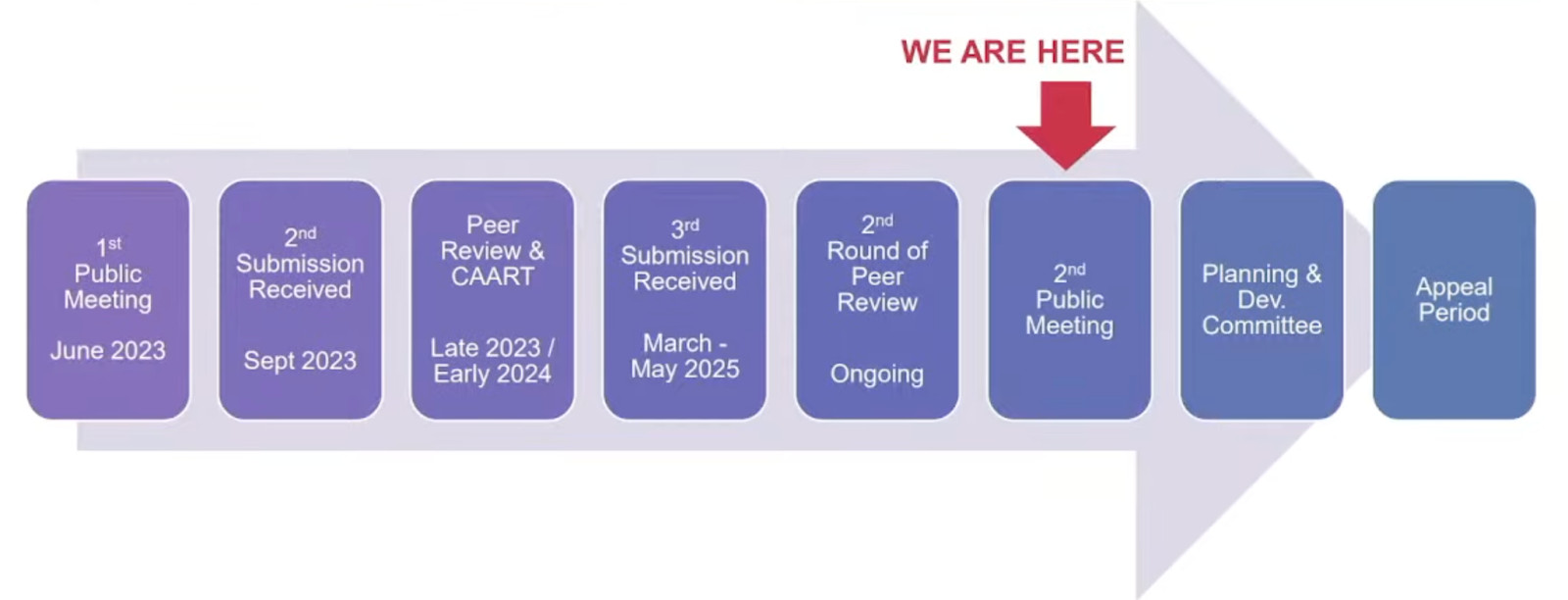
The CBM blasting quarry application is at the sixth stage in the process. If the Town of Caledon decides to vote against the application, the company can appeal at the Ontario Land Tribunal.
(Town of Caledon)
For the time being, the CBM mega-quarry application “is not a done deal”.
“No decision has been made on this application,” Groves said.
“There will be a recommendation coming to council. At that time, council will make that decision, whether it's a yay, whether it's a nay, and then there's a process that follows.”
Email: [email protected]
At a time when vital public information is needed by everyone, The Pointer has taken down our paywall on all stories to ensure every resident of Brampton, Mississauga and Niagara has access to the facts. For those who are able, we encourage you to consider a subscription. This will help us report on important public interest issues the community needs to know about now more than ever. You can register for a 30-day free trial HERE. Thereafter, The Pointer will charge $10 a month and you can cancel any time right on the website. Thank you
Submit a correction about this story

