
Attawapiskat First Nation youth taking Ford’s PCs to Ontario’s highest court in landmark Bill 5 challenge
Ramon Kataquapit of Attawapiskat First Nation was 22 when former prime minister Justin Trudeau left an unsettling impression on him. It foreshadowed the scene he witnessed at Queen’s Park a year later which has pushed him to take legal action for the “lands, waters, and rights” of his people.
In February 2024, Ramon, a North Bay-resident, took his seat beside Nishnawbe Aski Nation (NAN) Grand Chief Alvin Fiddler, surrounded by members of NAN’s Oshkaatisak Council. They were all in Thunder Bay, ready to talk about clean water and community needs with Trudeau. As soon as the conversation began, he noticed something that left a deep impression on him: the “disrespect” from Trudeau.
“He wouldn't even look at our chief,” Ramon told The Pointer. “When they brought up something, he would just dismiss them quickly.”
That was the first lesson for Ramon on how Canadian politicians “don't take [Indigenous] leadership seriously”.
For the rest of the year he focused on his undergraduate studies in Indigenous Wellness and Addictions Prevention and poured his energy into land and water advocacy through music, the one thing that “healed” him during difficult times.
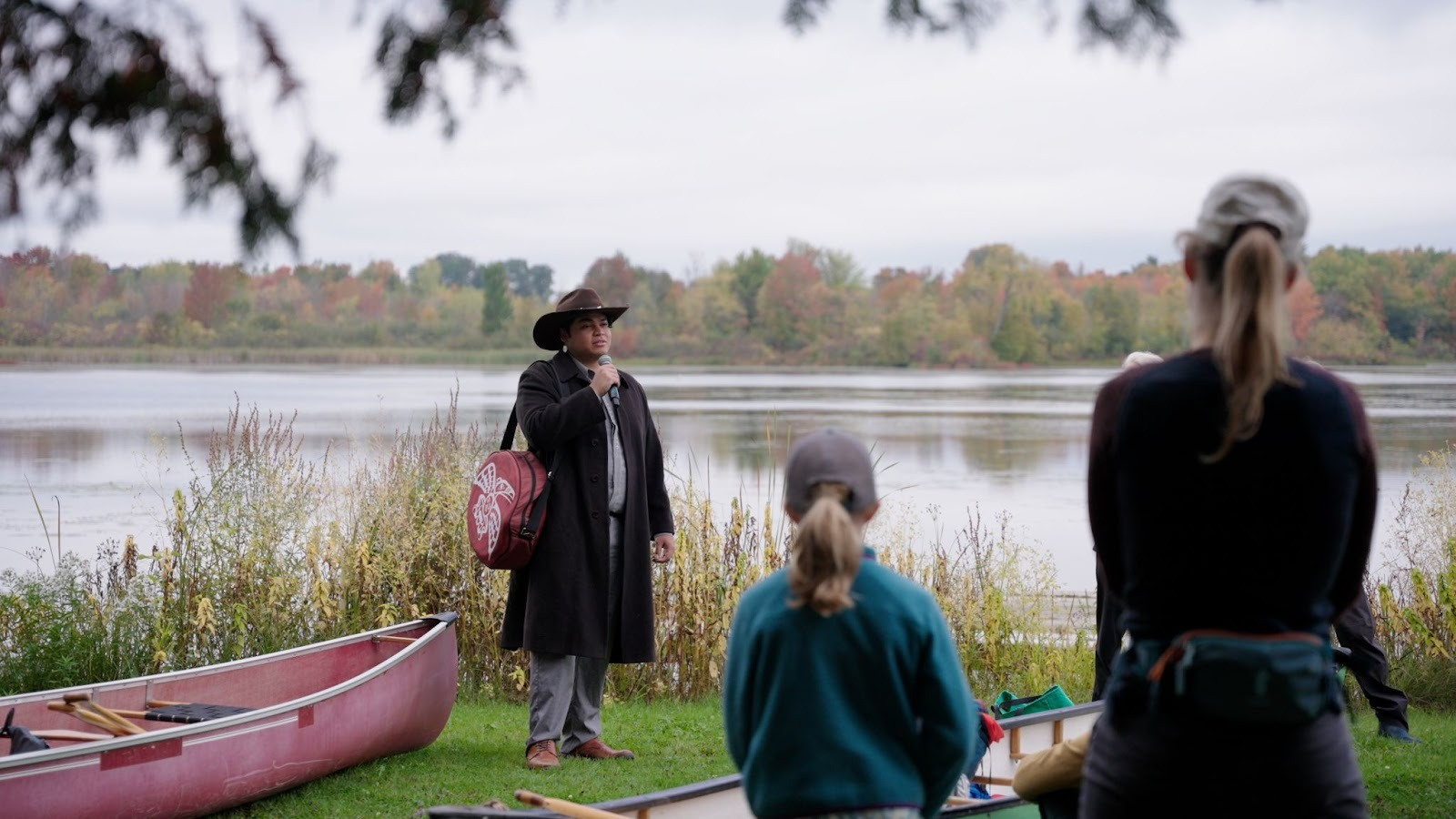
23-year-old Ramon Kataquapit of Attawapiskat First Nation has been travelling across Ontario since June, spreading awareness about the implications of Bill 5 on the natural world as well as Indigenous ways of life. “If I decided to walk away and chase an easy life, I’d be setting a dangerous precedent, the same one Bill 5 sets for the next generation. And if we don’t stand up and fight now, there may be nothing left for them to inherit,” Ramon said at an event on November 18.
(Legal Advocates for Nature's Defence)
By late May, he found himself at Queen’s Park, as Premier Doug Ford’s government pushed to pass Bill 5, dubbed the Protect Ontario by Unleashing Our Economy Act, with minimal debate after its introduction on April 17.
Sitting inside the legislature, he listened to his elders speak at committee hearings, given “less than ten minutes” each to respond on behalf of 133 First Nations.
“I saw how defeated they looked, helpless, even, because they had done everything they could to advocate, and still no one listened. Our Treaty rights weren’t respected. It showed me, again, exactly how the government views our people and our highest leadership as something they can simply bypass, along with our inherent and sacred Treaty rights,” Ramon recalled.
“I felt something click inside that day, and I felt numb.”
By early June, Ramon remembers walking out of Queen’s Park after one of the Standing Committee on the Interior meetings and seeing a group set up outside with microphones, medicines, and drums, giving “the leadership” a space to address the people about what had happened inside.
The leaders spoke for five minutes, outlining how they planned to respond. “You’re going to see us in the streets. You’re going to see us blockading,” he recalled them saying, but then they left.
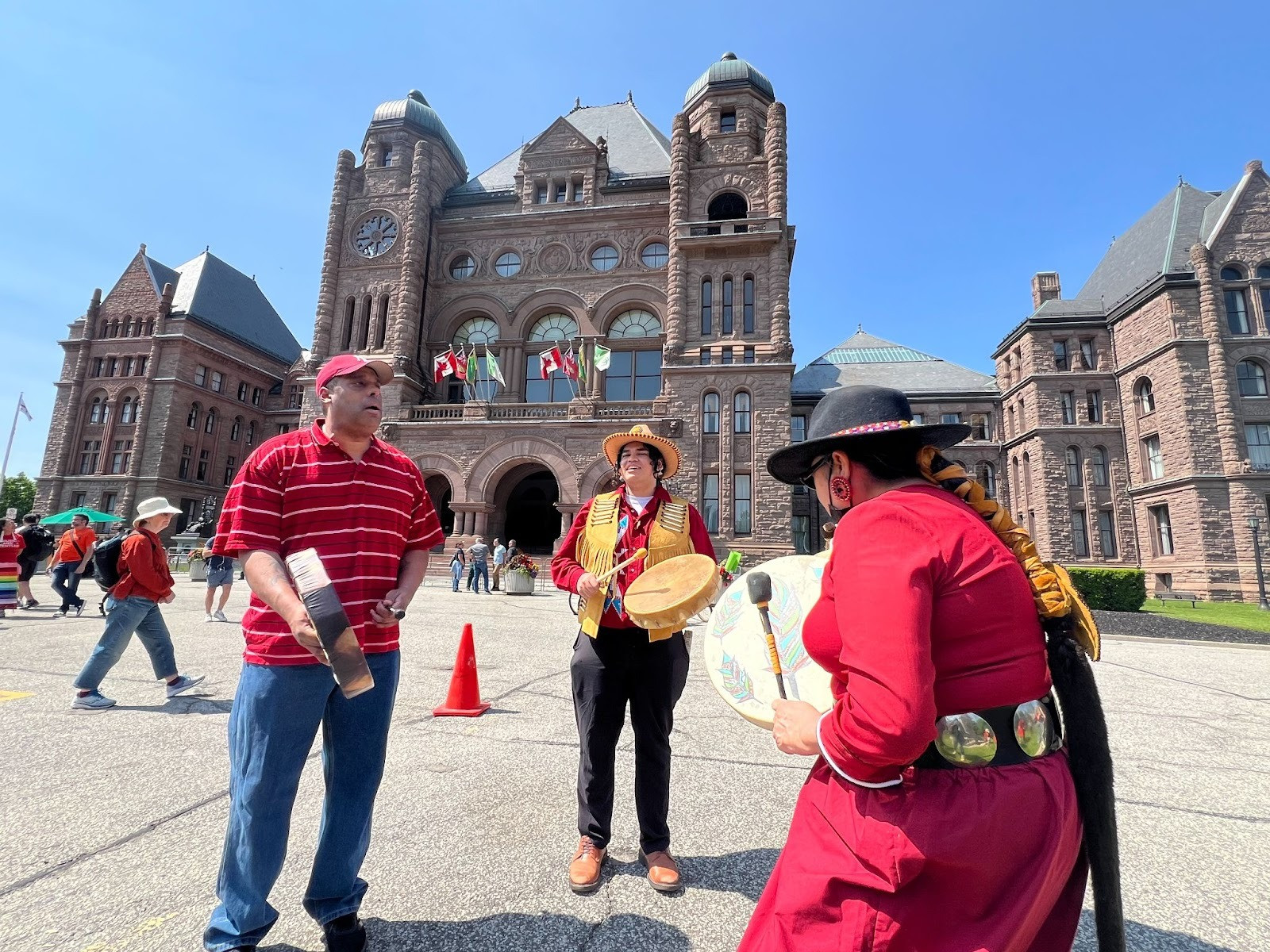
On June 2, Ramon Kataquapit of Attawapiskat First Nation sang a song of hope with his family outside Queen’s Park after people started dispersing following a rally against Bill 5.
(Anushka Yadav/The Pointer)
“But the people [from many First Nations] still stayed behind. And I just decided to stay behind with them,” Ramon said, marking the beginning of the encampment outside the provincial legislature and the movement that would grow over the following weeks.
“The leadership that we have, they're scarred, they're very old too. They had a life of fighting. They were born in assimilation, the same way we were. So I understood why they started to become slow to react or scared to react in ways that youth aren’t.”
That day, he also decided to hit the brakes on his university education and “fight” for his people.
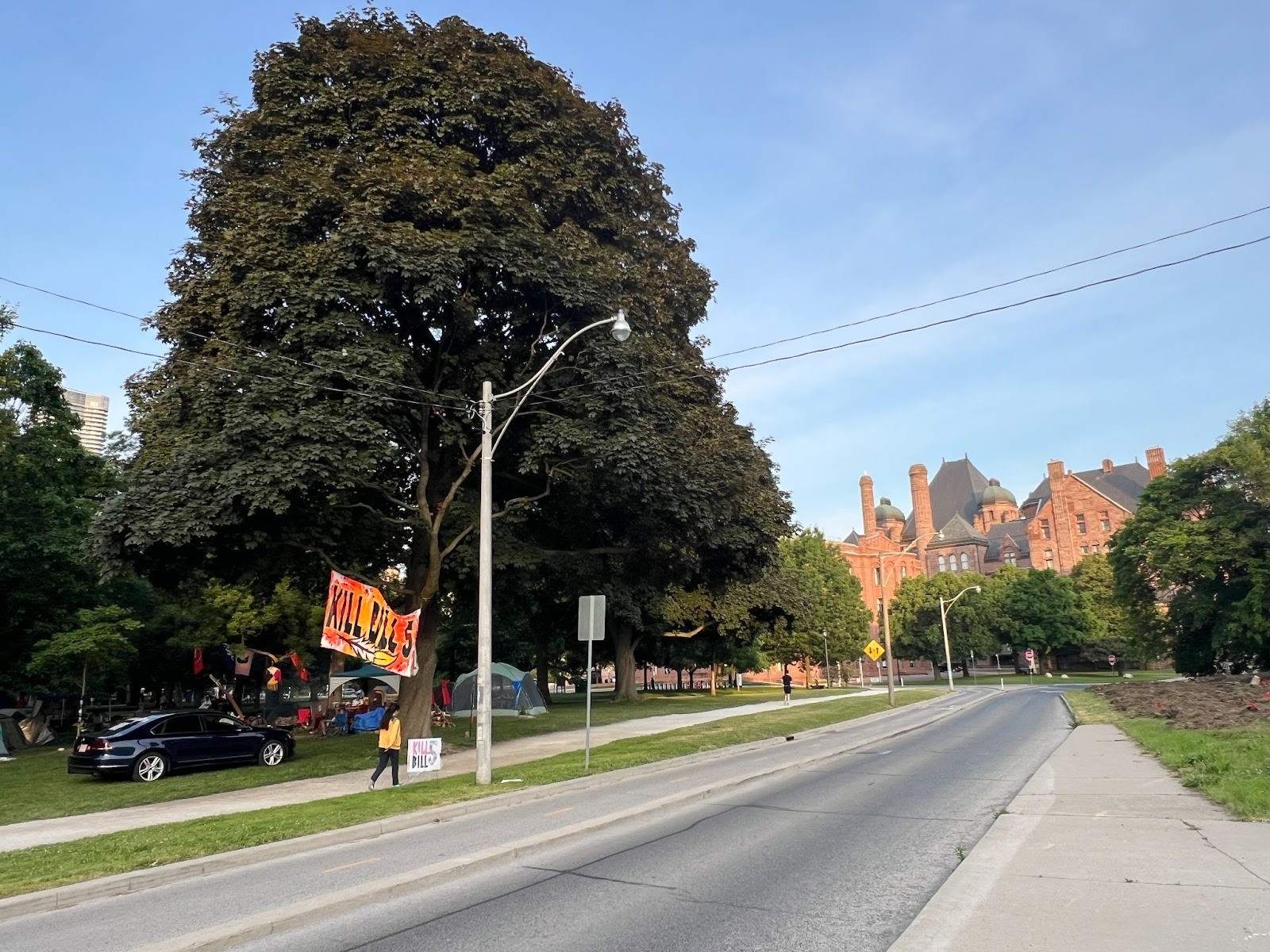
20-year-old Jon-Enosse Trudeau, who was the firekeeper at the encampment outside Queen’s Park, said he chose to join the movement to ensure Indigenous youth have a voice in shaping the future, seeing it as his responsibility to uplift the next generation of leaders.
(Anushka Yadav/The Pointer)
Teaming up with some of his friends including Keira Spence and Jon-Enosse-Trudeau, Ramon started “Okiniwak”, which translates to “the leading youth”, a grassroots youth-led movement that is now taking the Ford government to court.
“If our leadership won't be taken seriously, if the treaties won't be taken seriously, if our past isn't taken seriously, we’ll make sure that our future will be,” Ramon said.
“And part of that goal is equity, equality, and environmental stewardship, and strengthening Treaty rights.”
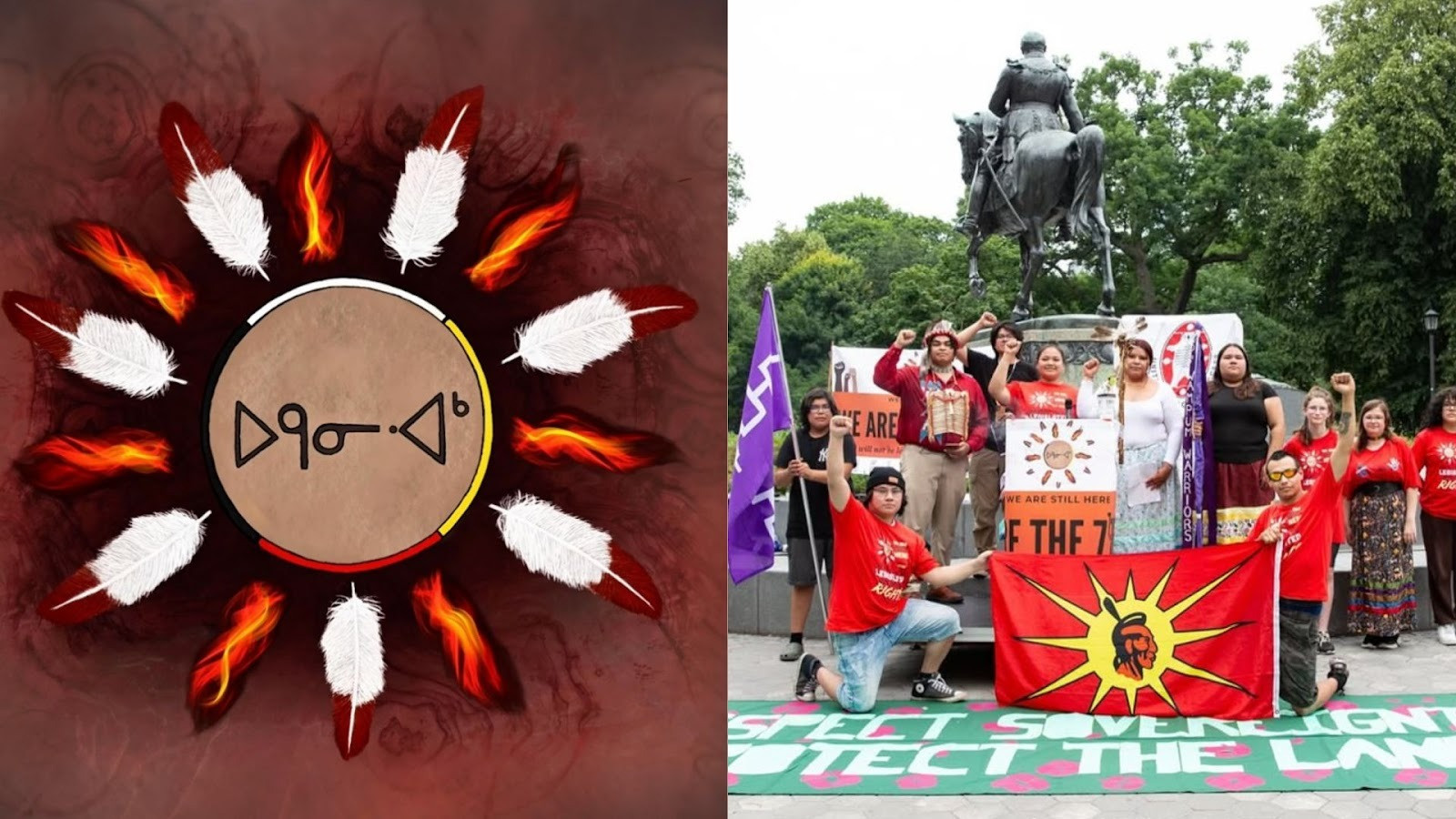
Keira Spence, 20, designed the logo of the Okiniwak movement (left) and on July 1, Canada Day, the youth organized their first independent rally against Bill 5. Hundreds showed up at Queen’s Park as military personnel fired cannons behind the legislative building, shaking the ground and rattling the young activists’ hearts in a moment that brought echoes of past crises for Indigenous communities, Spence told The Pointer. Ramon says the experience taught them how to manage large crowds, anticipate challenges like heat exhaustion, and ensure the safety of participants. Their activism quickly escalated when, at a subsequent rally on Parliament Hill in Ottawa, youth from Mishkeegogamang First Nation also marched to the Canadian Museum of History as chiefs met with the prime minister, asserting that Indigenous youth voices must be heard directly and not lost in translation. Over the next two months, the Okiniwak movement brought similar rallies and events to North Bay, returned to Queen’s Park on August 8, and then travelled to Moose Cree First Nation, Mattagami First Nation, and Kingston. With minimal funding and relying on local support, they coordinated events across the province. By the time they reached Kingston, colder weather had dampened responses to rallies, prompting the movement to shift focus toward workshops, lectures, film screenings, and collaborative meetings with other organizations, a strategy that continues to define their approach today.
(Okiniwak/Instagram/Compiled by The Pointer)
On December 8, Legal Advocates for Nature’s Defence (LAND) submitted, on behalf of Ramon and the Friends of the Attawapiskat River founder Michel Koostachin, a request for leave to intervene in the Ontario Superior Court of Justice, highlighting the impacts of Bill 5 on Indigenous communities, lands, and waters, particularly in Treaty 9 territory and the Hudson-James Bay lowlands.
“I am concerned that Bill 5 will harm my generation and those yet to come by fast-tracking development without proper consent or consideration for the ecosystems that sustain us, including in the lands and water where the Ring of Fire is proposed,” Ramon’s affidavit submitted to the court notes.
“Known as the “Breathing Lands”, the peatlands and waters of the North are sacred to us. In addition to storing
vast amounts of carbon, helping to offset climate change, the peatlands also serve as the foundation for our way of life. Once disturbed, the peatlands cannot return to their natural state and our way of life will forever be changed.”
On May 26, during the committee hearing on the bill, Koostachin, who had spent over $1,000 one-way to have his community’s voice heard at Queen’s Park, criticized the Ford government’s promises of jobs tied to the Ring of Fire road, drawing on his own experience working at De Beers’ Victor Diamond Mine.
“Mostly the jobs that we received at De Beers were janitorial or custodial positions. We didn’t get any managerial positions; not because of our work ethic, because we’re the original people of this land,” he said.
“What’s going to happen now? Companies are coming in, promising prosperity. I don’t believe in it because I’m still suffering from your version of prosperity.”
When the last truck rolled out of De Beers’ mine in May 2019, over 8 million carats of diamonds had been extracted, generating billions in revenue but the local community remained in poverty, facing unsafe drinking water and failing infrastructure. Two months after the mine’s closure, Attawapiskat declared a state of emergency over water contamination.
In April 2024, United Nations special rapporteur Pedro Arrojo-Agudo condemned Canada for its continued failure to guarantee clean drinking water for First Nations, calling it a “flagrant” human rights violation. He condemned the ongoing marginalization of Indigenous communities and the criminalization of those defending their land and water, warning that such actions could tarnish Canada’s international reputation.
On July 16, chiefs from four of the nine First Nations and senior counsel Kate Kempton of Woodward and Company LLP announced a fast-tracked constitutional challenge against Bill 5, which passed on June 5, and key sections of the federal government’s Bill C-5, which received royal assent on June 26, arguing these laws grant provincial and federal cabinets sweeping, unchecked powers to override protections for the environment, human rights, and Indigenous consultation processes.
LAND Founder and legal expert Kerrie Blaise explained the latest intervention represents a “unique” perspective “complementary” to the broader First Nations’ challenge (nine First Nations are currently challenging the legality of Bill 5) which focuses on collective rights and the duty to consult under Canadian law, while her clients are positioned to highlight the direct impact of Bill 5 on their families, communities and their ability to exercise their Indigenous rights on the land and waterways they depend on.
“Mike and Ramon are so uniquely placed to really speak to what does this mean for the Attawapiskat river, for their families and the practice of their rights and culture,” Blaise told The Pointer.
“It’s the first instance we’re aware of where Indigenous youth are intervening in this way to defend Treaty rights and the environment.”
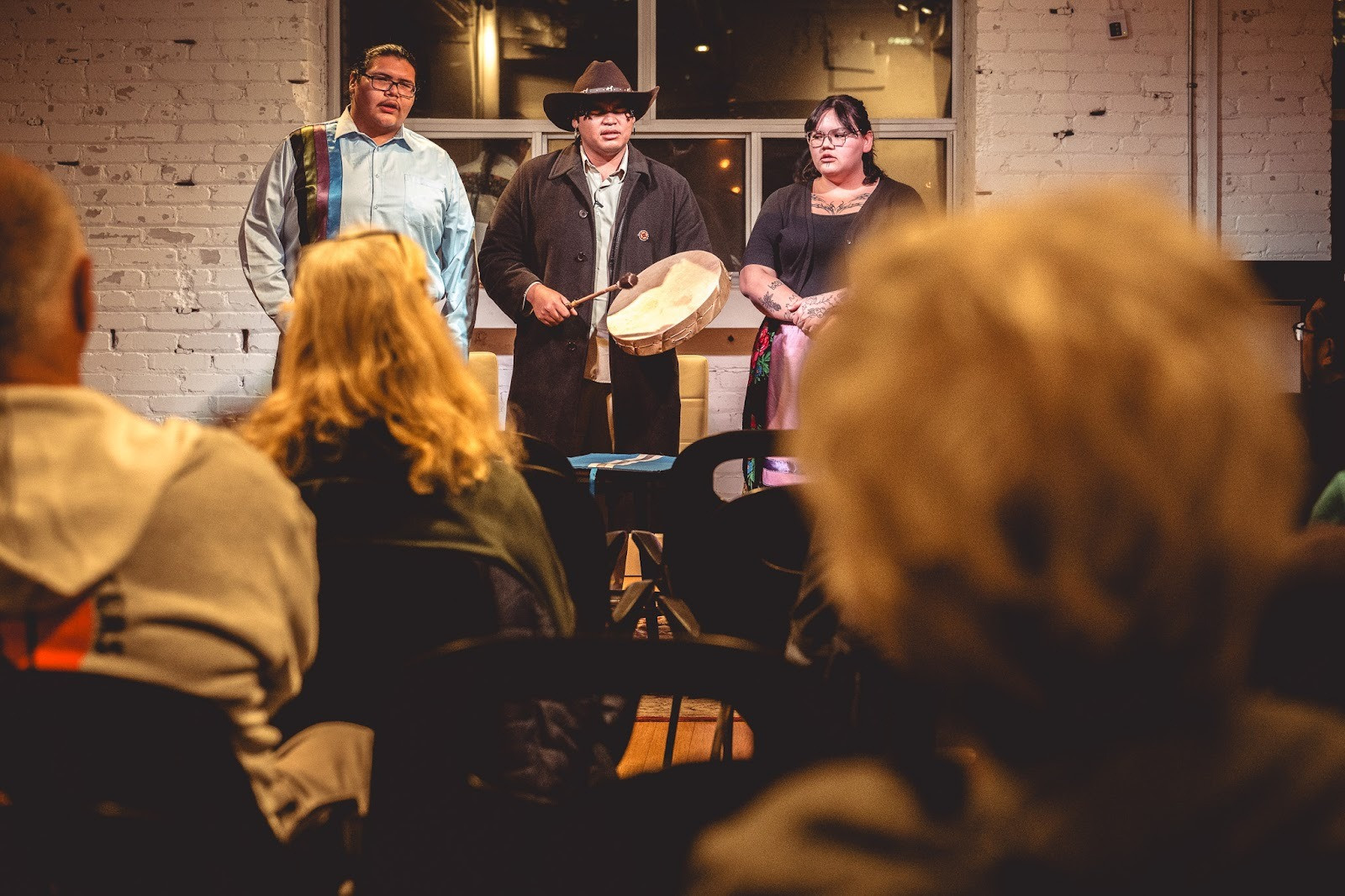
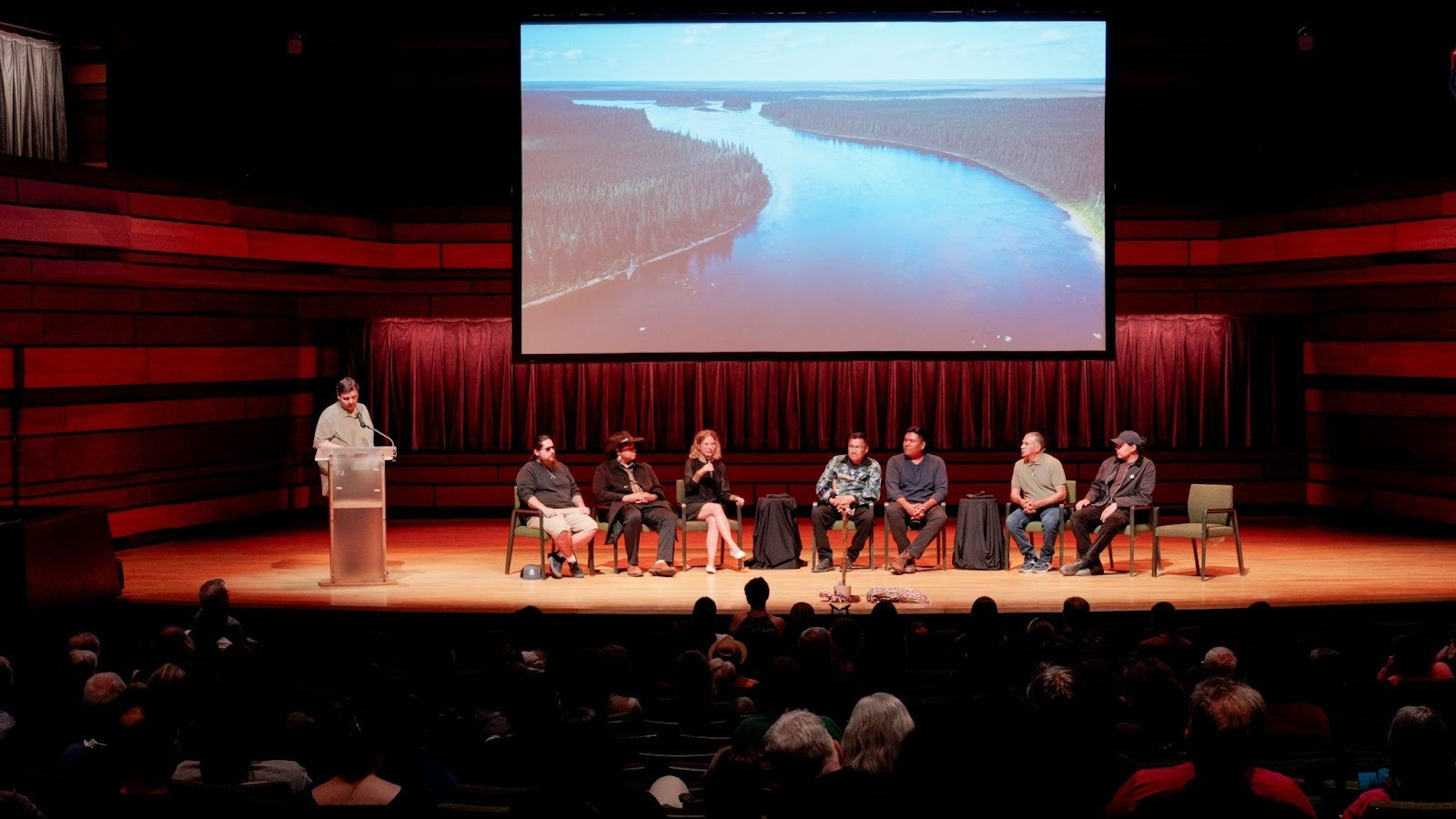
After kicking off the launch of ‘Here We Stand’ in Toronto, Legal Advocates for Nature’s Defence Founder Kerrie Blaise, Okiniwak co-founder Ramon Kataquapit and Friends of the Attawapiskat River founder Michel Koostachin have been travelling across Ontario to raise awareness about the impacts of Bill 5, promote their legal challenge and fundraise for their cause.
(Eleven North Visuals)
She explained the legal arguments will address three main points including the doctrine of reconciliation, which requires the Crown to consider Indigenous law and the spirit of Treaty Nine, obligations under the United Nations Declaration on the Rights of Indigenous Peoples (UNDRIP), including free, prior, and informed consent and a Charter challenge under Section 15(1), arguing that meaningful participation by grassroots rights holders is essential to combat environmental racism.
On June 20, 2024, the federal government passed the National Strategy Respecting Environmental Racism and Environmental Justice Act (Bill C-226) to tackle environmental racism but little progress has been made since.
The law requires Ottawa to assess and prevent discriminatory environmental harms and develop a national strategy to support affected communities. This fall, a federal report offered few concrete commitments and scarcely addressed Indigenous rights, research needs or compensation.
Critics note while Canada has pledged to implement UNDRIP and updated the Canadian Environmental Protection Act to recognize the impacts of toxic substances on vulnerable communities, the government has not committed to securing free, prior and informed consent for decisions that expose First Nations to hazardous materials, nor has it clearly accounted for how toxic contamination affects Treaty rights.
With no dedicated funding for Indigenous participation in the strategy’s development and consultation, which closed on December 12, many First Nations fear the federal approach risks repeating the same patterns of environmental injustice the legislation was meant to confront.
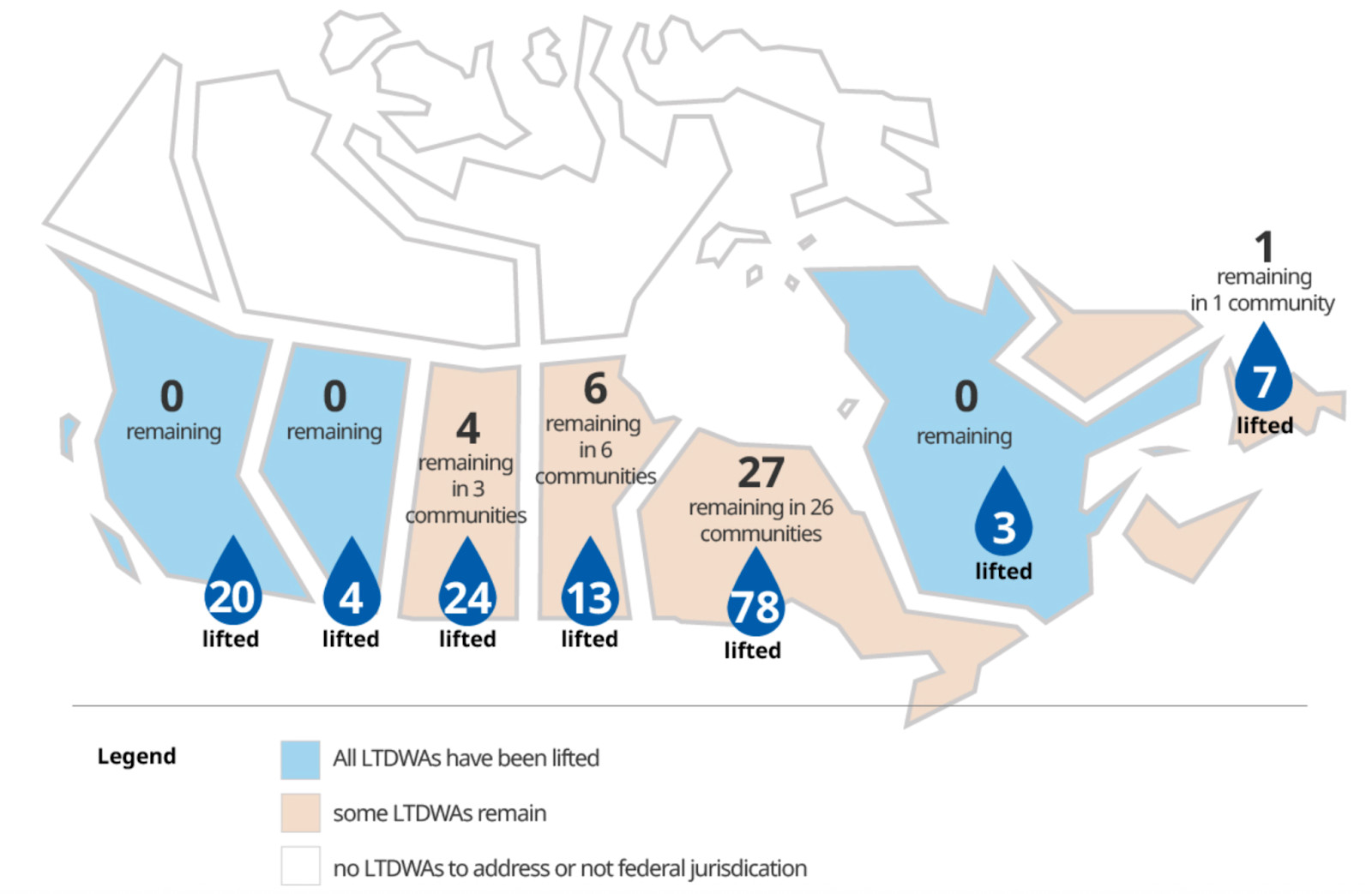
Ontario has 26 First Nation communities under active long-term drinking water advisories.
(Government of Canada)
On October 2, the province released a draft of the legal regulations to implement the Special Economic Zones under Bill 5 intending to “facilitate dialogue concerning its contents” but it did little to address Indigenous consultation, with no explicit ban on exemptions that could result in significant and irreversible damage to the environment or human health.
Under the regulations for designated projects, the government requires the “Minister [to be] of the opinion that the project will likely succeed after considering the following” factors, including “whether work has been done to identify potential impacts on health and the environment, and whether risk mitigation strategies have been identified to deal with such impacts.”
The regulation simply calls for these impacts and strategies to be identified, with no reference to whether they align with established environmental laws or regulations.
Indigenous communities provided detailed feedback on the draft regulation calling for transparency through a public registry of proposed and designated projects. They also demanded the creation of an appeal process, stronger supports for Indigenous business participation, and restrictions on zone designations in areas of environmental or cultural significance or under active land claims, according to the Indigenous Communities Consultation Feedback report on the Environmental Registry of Ontario (ERO) posting.
Ontario reaffirmed its “commitment to meeting the Duty to Consult,” but offered no concrete mechanism to uphold Indigenous rights or consultation requirements as part of the draft regulations, and said it is “considering other mechanisms” to make information public, that potential appeals “would be considered” later, and that existing programs already support Indigenous businesses.
“That’s deeply alarming. That’s going backwards in Canada. It’s significantly out of sync with the expectations of all Canadians,” Ontario Nature’s conservation campaigns and advocacy manager, Shane Moffatt, told The Pointer.
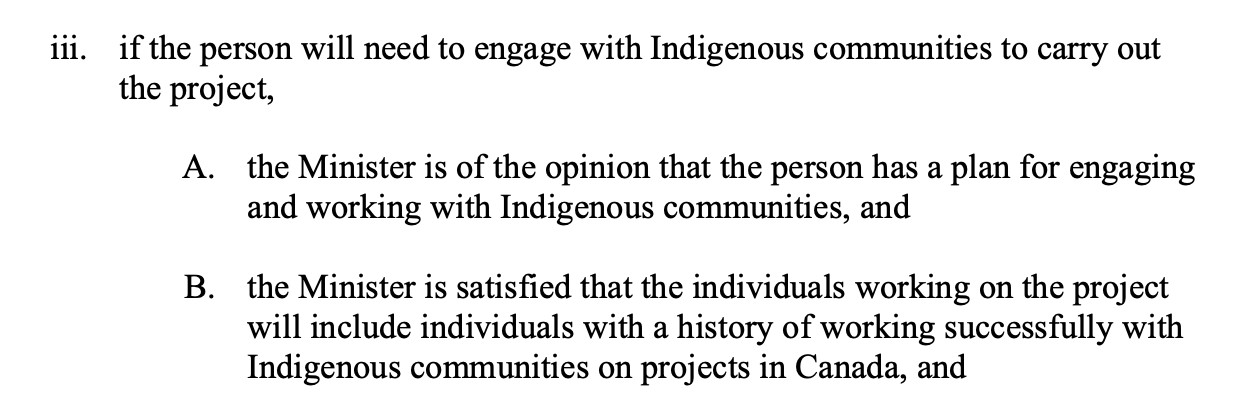
Though the draft regulation includes some vague mentions of Indigenous engagement plans, it leaves the decision to the minister’s opinion.
(Government of Ontario)
LAND staff lawyer Kanisha Acharya-Patel told The Pointer that while their challenge will mostly focus on Bill 5, “that's not to say that the clients won't maybe comment on some aspects of Bill C-5.”
In June, as Ramon watched elders being dismissed and talked over during the Bill 5 committee hearings, he wasn’t alone in feeling a growing urgency. His cousin, 20-year-old Jeronimo Kataquapit, was at the Mushkegowuk Special Chiefs Assembly listening to leaders express frustration over being given just one week to respond to sweeping legislative changes.
Jeronimo knew what he had to do. He called his parents and said, “Mom, Dad, actually, let’s go. We can’t wait around. They’re [the province] not waiting around anymore, they’re coming.”
That gave birth to ‘Here We Stand’, a call to action to everyone, everywhere to take action against Ontario's Bill 5 and Ottawa’s Bill C-5 to protect Indigenous people's inherent rights and Treaty rights and their land, water, and animals for current and all future generations.

On November 18, many attendees who watched the film ‘Here We Stand’, made by filmmaker Eric Treleaven, were moved to tears by Jeronimo Kataquapit’s willingness to fight despite a health condition. Treleaven told The Pointer that making the film was “life-changing” as he camped three nights at the Attawapiskat River and witnessed the sheer beauty of the natural world that is now at risk.
(Anushka Yadav/The Pointer)
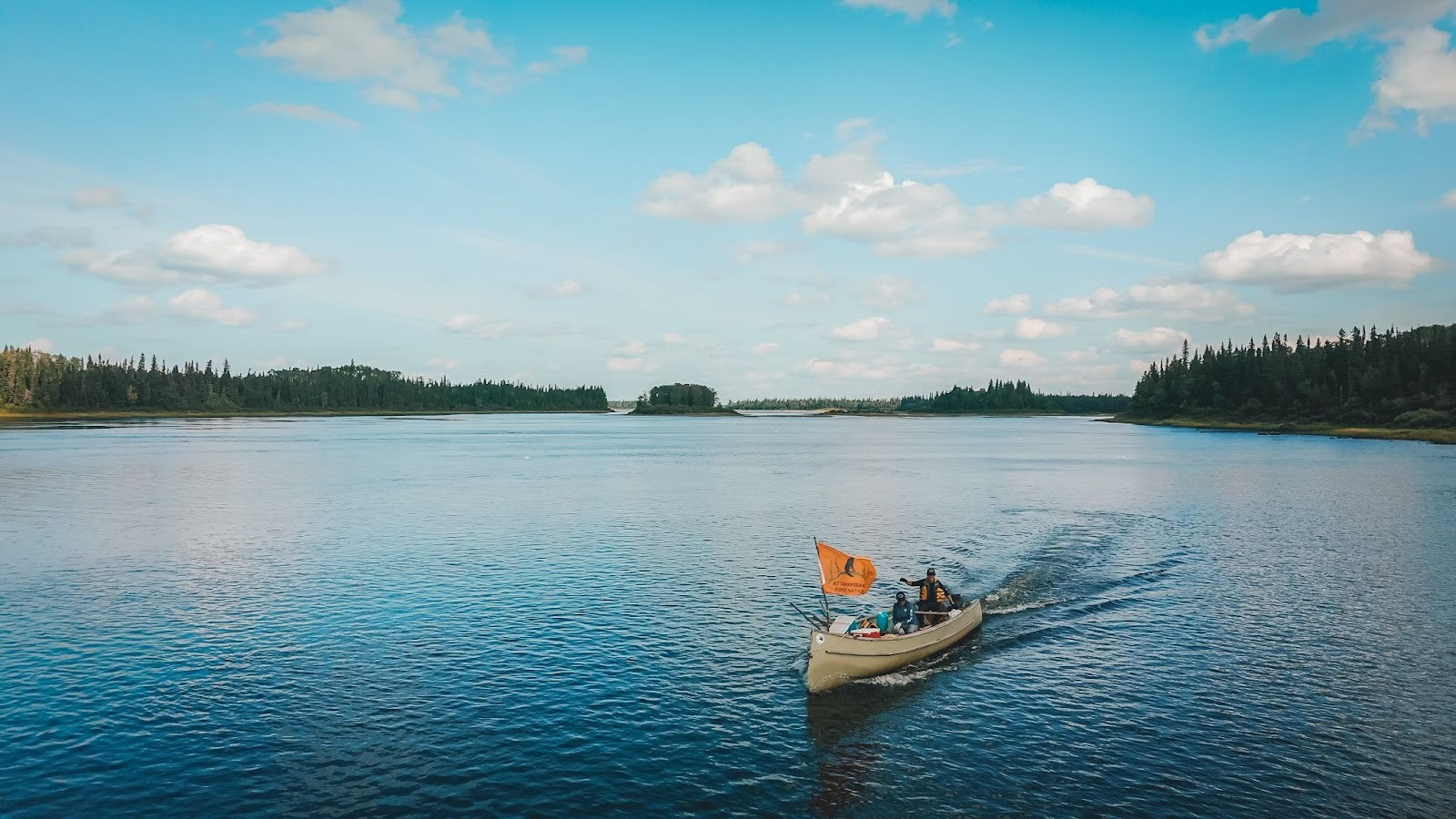
The plan was simple but bold: travel more than 400 kilometres up the Attawapiskat River, plant family flags, raise teepee poles, and establish an encampment to protect the watershed at the edge of the Ring of Fire.
“I’m pretty sure the Ring of Fire is going to be one of the largest mining projects in Canada, maybe North America,” Jeronimo says in the short film ‘Here We Stand’, which premiered November 18 at the Centre for Social Innovation in Toronto, in an event co-hosted by Okiniwak, LAND and Ontario Nature.
For him, the Ring of Fire is not a “special economic zone.” It is home.
The James Bay lowlands, one of the most intact ecosystems on the continent and critical to climate resilience, are where he spent his entire life and so did his parents.
“I grew up thinking everyone would hop on a four-wheeler or a canoe after school,” he says in the film.
“You’d see belugas coming in, seals, a hundred geese flying overhead. Maybe even a polar bear every second day, if you were lucky.”
But to the Ford government as well as Carney, the Ring of Fire presents an economic opportunity for building Canada “strong” against the financial strains of a world still refusing to reckon with the escalating impacts of climate change.
How is Canada becoming stronger and Ontario “unleashing its economy” when the largest mining stake in the Ring of Fire is now controlled by an Australian billionaire with a controversial record in his dealings with Indigenous communities at home?
Andrew Forrest, the mining mogul behind Wyloo Metals, took over Noront Resources—the previous proponents of the Eagle’s Nest Mine project—in a $600-million deal in 2022. The acquisition happened just as the Ford government positioned the Ring of Fire’s nickel, copper, platinum and palladium deposits at the centre of its $3.5-billion critical minerals strategy. At the same time, Forrest’s operations in Australia were facing accusations of offering inadequate royalty deals, pressuring communities, and undermining traditional leadership in Native Title negotiations.
One thing hasn’t changed in all these years: the opposition to the road to the Ring of Fire by First Nations. On June 18, members of Attawapiskat and Neskantaga First Nations undertook a historic land-based action, travelling the Attawapiskat River by canoe and float plane to assess the proposed crossing for the Northern Road Link. Elders witnessed alarmingly low water levels, another sign of climate change and made it clear that there would be no river crossing without free, prior, and informed consent.
“The Attawapiskat River is not a corridor for extraction — it is a lifeline,” Neskantaga Chief Gary Quisses said.
“Our ancestors are buried along its shores, our children learn from its currents, and we will defend it through any means necessary.”
Jeronimo had planned to stay on the river and later join the encampment in the Ring of Fire, but he was forced to return home unexpectedly after discovering “something growing” in his throat, a lump that required medical attention.
During the November 18 screening, Ramon told the audience that even from home, his cousin remained the voice and spark behind Here We Stand, bringing people together, insisting the fight for the natural world continue.
Jeronimo’s father, James Kataquapit, warns that the Ring of Fire’s mineral extraction could irreversibly damage the land and waterways, comparing the underground deposits to an egg: once broken, their contents spill uncontrollably, contaminating the Attawapiskat River and affecting not just the local community but all living beings who rely on the ecosystem.
“For thousands of years, our people lived in balance with the land. We never overhunted, never overcrowded, and when we saw the land reaching its limits, we cared for it or moved. But colonialism brought a mindset of ‘take, take, take’, the idea that you always need more, a bigger house, a better car, a thicker wallet, a more expensive jacket. It’s a worldview built on endless wanting, and it’s never satisfied,” Ramon said.
“Now they’re coming again with another wave of assimilation aimed at my generation. And no, it’s not going to happen. Even if I have to die, I’ll die fighting.”
Email: [email protected]
At a time when vital public information is needed by everyone, The Pointer has taken down our paywall on all stories to ensure every resident of Brampton, Mississauga and Niagara has access to the facts. For those who are able, we encourage you to consider a subscription. This will help us report on important public interest issues the community needs to know about now more than ever. You can register for a 30-day free trial HERE. Thereafter, The Pointer will charge $10 a month and you can cancel any time right on the website. Thank you
Submit a correction about this story

