
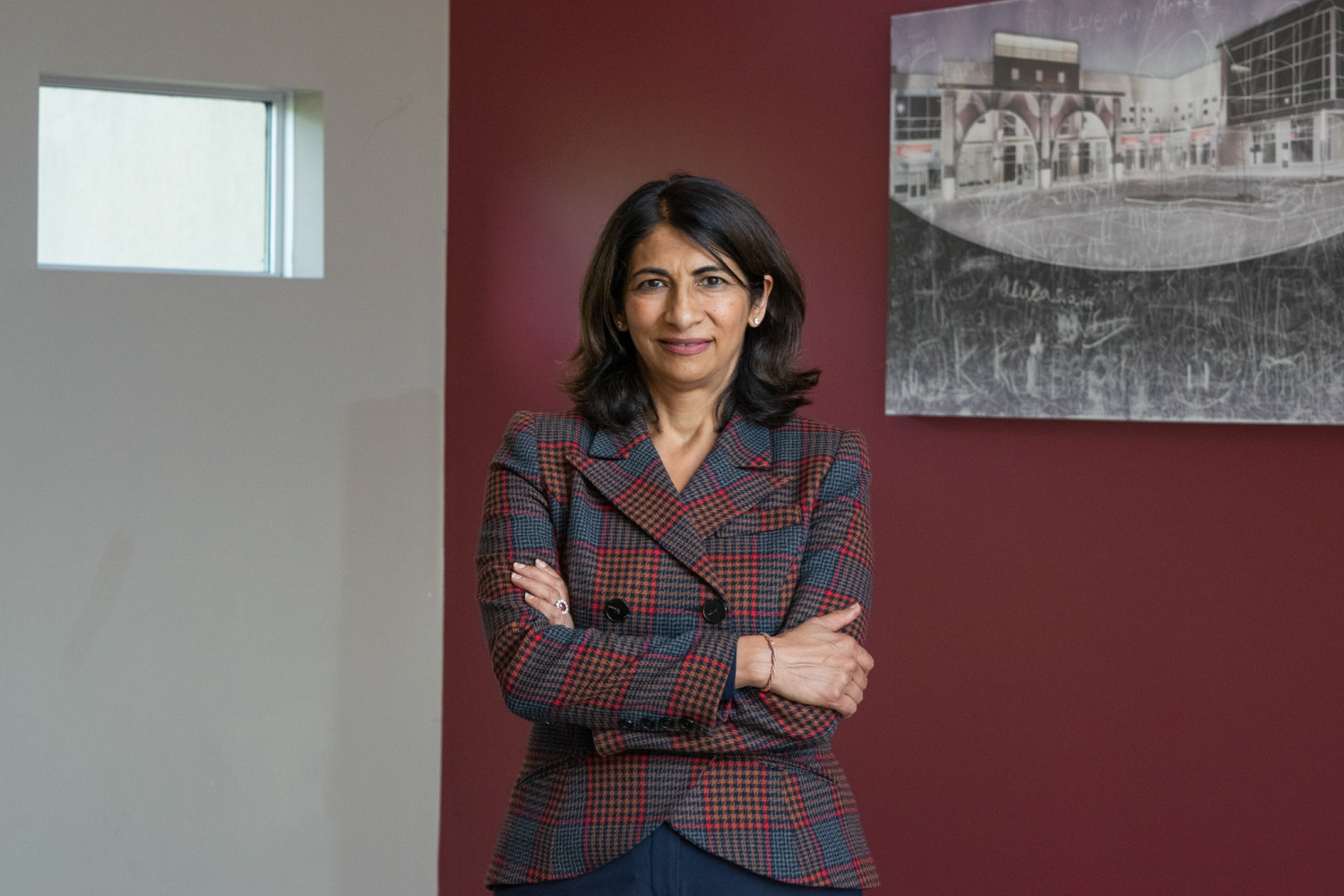
Dipika Damerla vows to protect ‘every last dollar’ from taxpayers in second bid to become mayor of Mississauga
Dipika Damerla has spent 15 years in Canadian politics. She has no intentions of stopping anytime soon.
A dream that took root long before she immigrated from India in the early ‘90s has carried her from the other side of the world, to Canada’s dizzying corporate ranks and eventually to Mississauga’s council chambers, with a seven-year stint as an MPP inside Queen’s Park in between.
She has never been one to bite her tongue.
It’s a quality that has served her well, in politics, and in life.
From her reflexive distaste for wasteful spending, one of the hard-learned lessons from a life re-rooted in a new continent, to challenging developers thirsting for more profit, Damerla is clearly wound by a desire to serve the public.
Born to middle-class Telugu parents in Telangana state, near the heart of India, her childhood was shaped as much by the rugged hills of the Deccan Plateau as it was by observing the inequalities around her.
Damerla knew she wanted to be a leader, but, as so often happens, life took a different course.
She became a chartered accountant, got married in her early 20s and moved to a place called Ontario, where a new, unfamiliar country brought unique challenges. Difficult housing conditions offered her first glimpse of the struggles facing newcomers, while the complexities of translating her Indian experience into the Canadian context forced her to navigate an unfamiliar professional landscape—hurdles she would solve personally and politically.
Determined to find her footing, she went on to earn a Master of Business Administration from the University of Toronto before entering the corporate banking sector, gaining experience at the Royal Bank of Canada and the Bank of Nova Scotia with a brief stint in journalism, before serving as the Ward 7 councillor for the last eight years.
Entrepreneurship and the ups and downs of being a business owner filled out her pre-politics career, allowing her to deploy a vast range of experience as a legislator, tackling everything from education policy and healthcare to economic development.
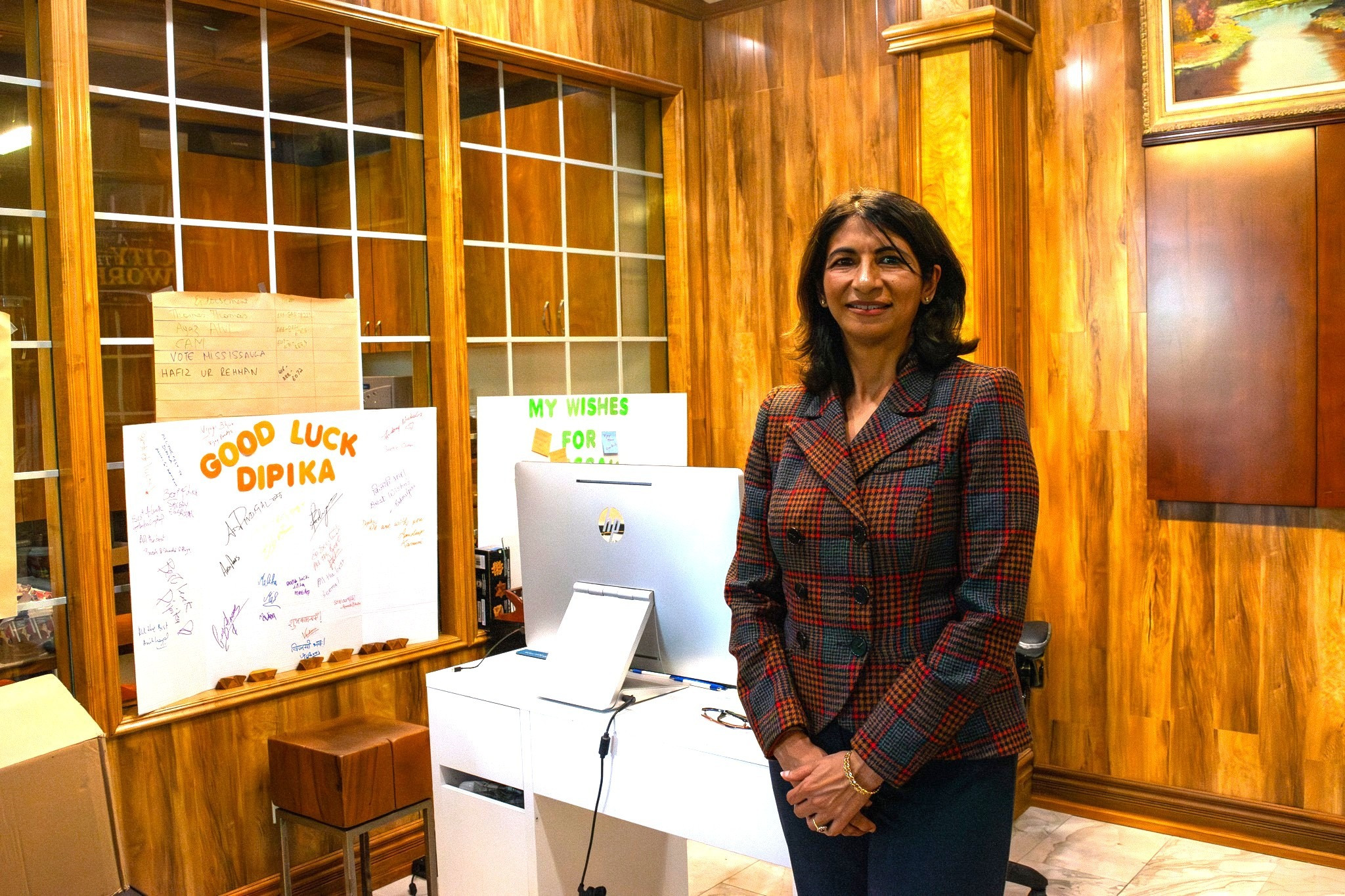
Dipika Damerla is running to be mayor of Mississauga for the second time in two years, and is still a member of council, where she has served for eight years, following seven years as a Mississauga MPP. (Alexis Wright/The Pointer)
Now, she hopes to bring her financial experience to the Mississauga mayor’s office, pledging to “fight for every last dollar” as she positions lowering property taxes as a central plank of her 2026 mayoral campaign.
“This is a really important election, and people have a very clear choice. You can either go with a mayor who wants to come back, and it's not her dream job; it's not plan A, plan B, it's plan D, and a mayor who has frankly failed at leading the city on important issues,” Damerla says.
“If you really believe that Mississauga can be better, more affordable, that our taxes need to be brought under control, that we deserve a quality of City services, that's what I'm running on.”
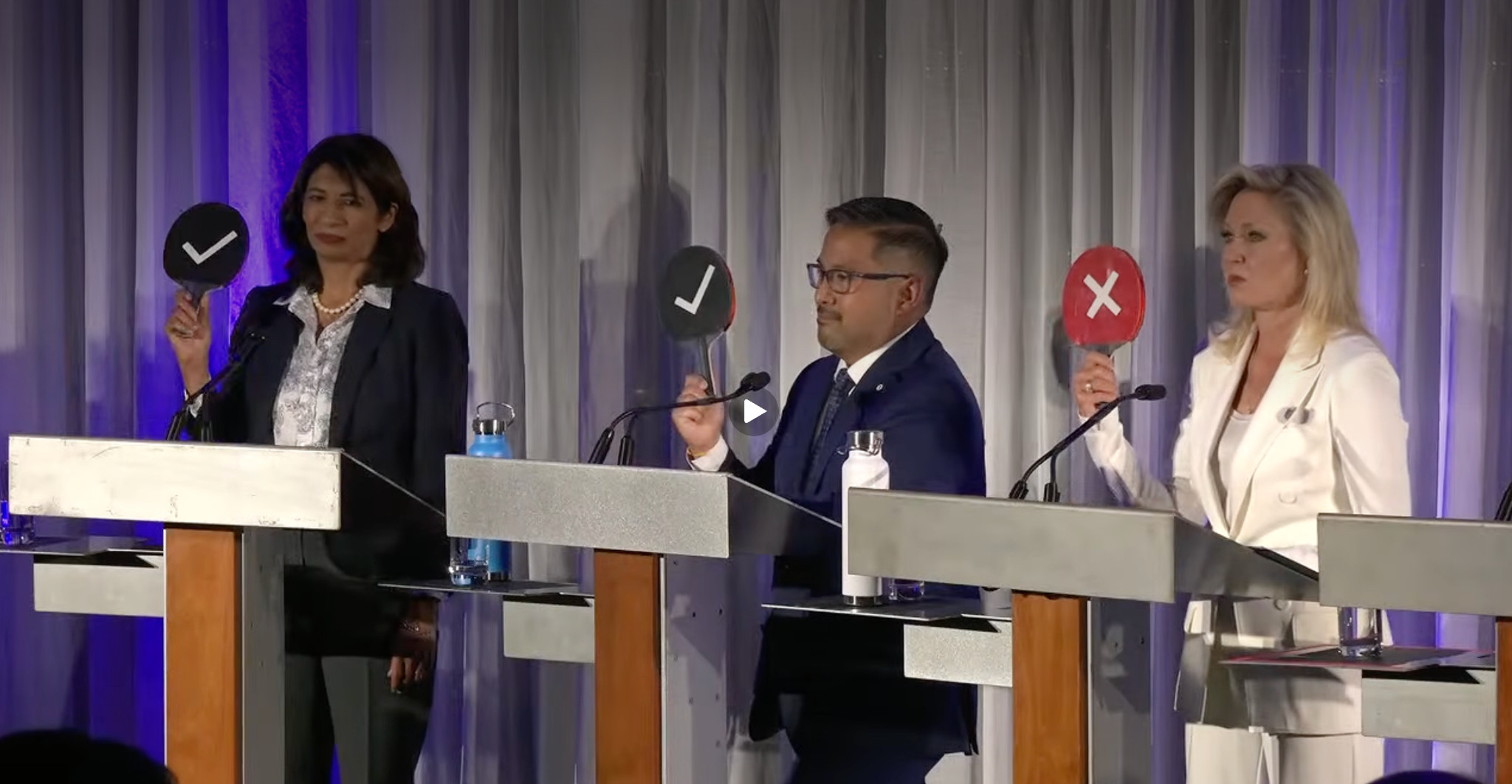
When asked if candidates saw themselves as Mississauga mayor for more than eight years, Dipika Damerla answered she does. (Screengrab from POLICORNER)
She has spent years navigating the machinery of government: In 2011, she found her way to Queen’s Park serving as Parliamentary Assistant to Bob Chiarelli, the Minister of Infrastructure at the time, prior to expanding her portfolio in social services, finance and economic affairs, tourism and culture, health and long-term care.
In 2012, she introduced a resolution at Queen’s Park calling for reforms to Ontario’s Condominium Act to streamline dispute resolution between condominium owners and boards after observing that the existing process was too lengthy and expensive. It laid the groundwork for a provincial review and creation of the Condominium Authority of Ontario (CAO).
Before her election to the Ontario Legislature, Damerla served as a senior policy adviser to Ontario’s Minister of Economic Development and Trade, going on to represent Cooksville as an Ontario Liberal Member of Provincial Parliament (MPP) for seven years.
After her 2018 provincial election defeat by PC Kaleed Rasheed, Damerla shifted her sights to City Hall, becoming Ward 7’s first new councillor in more than 30 years—a role she has held since.
In 2024, she made her first bid for the mayor’s office in a by-election triggered by Bonnie Crombie’s departure to lead the Ontario Liberal Party. Carolyn Parrish won with 43,494 votes, Alvin Tedjo finished second with 35,005. Damerla came third with 27,119 votes.
Two years later, she is back on the ballot, facing her colleagues: Parrish, Tedjo, Crombie, along with some new names: Karam Ahmed, Aamir Bhatti, Gord Elliott, Frank Fang, Amjad Jilani, Mohsin Khan, Mike Matulewicz, Fadi Naami, David Shaw and Ana Luisa Vasquez De Espinal.

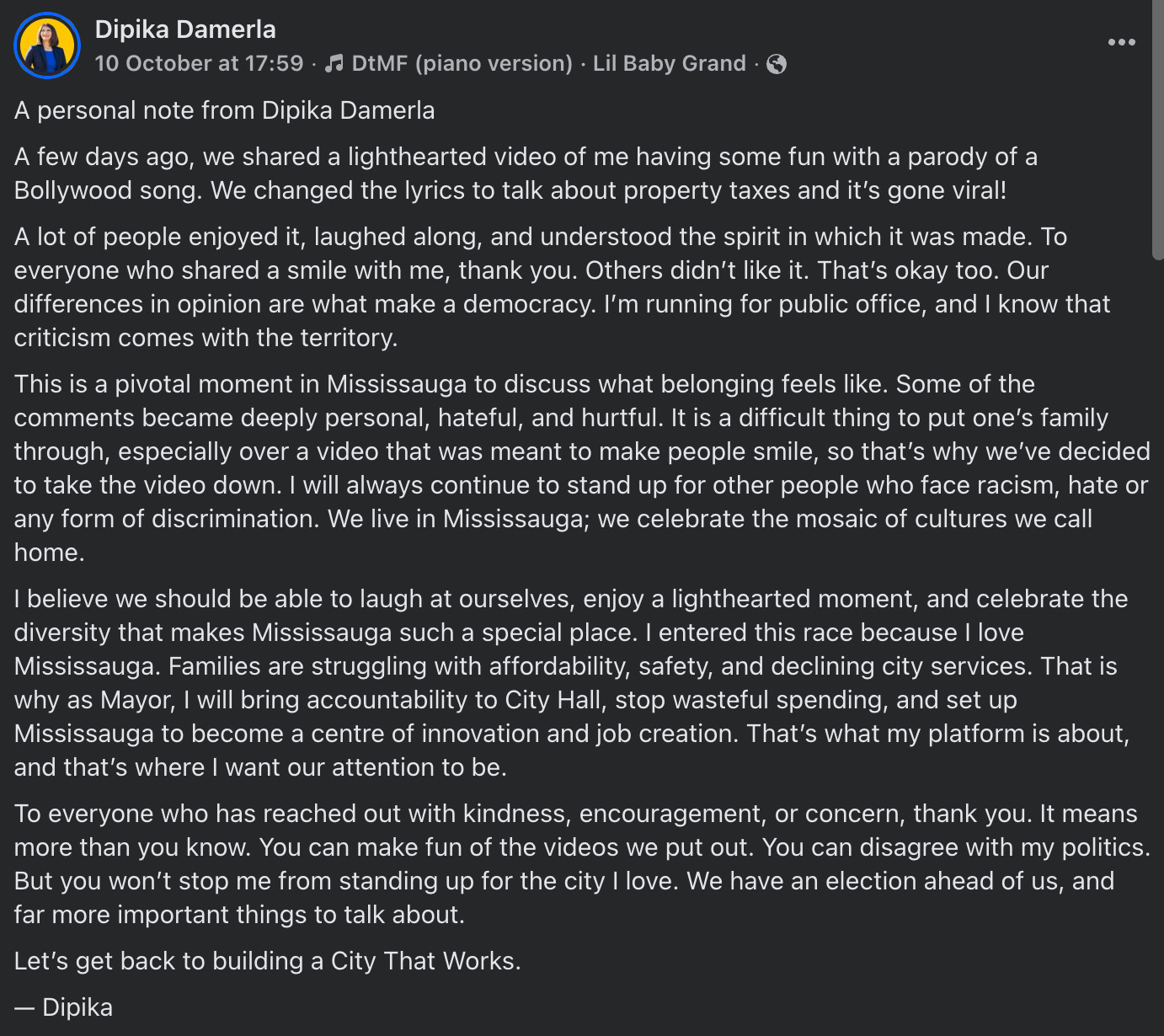
Mississauga mayoral candidate Dipika Damerla deleted a Bollywood-style campaign video featuring a rewritten version of the popular Hindi Song ‘Kya Hua Tera Wada,’ using its tune to promise voters she would not raise property taxes (“Property Tax Nahi Badhega”). After the video drew mixed reactions including hateful comments, Damerla said she would continue to stand up against racism and discrimination. (Screengrab from Dipika Damerla/Facebook)
Her campaign has centred heavily on the cost of running Mississauga and the amount residents are being asked to contribute through their property taxes. One of Damerla’s first priorities as mayor would be freezing taxes in 2027, then bringing in an independent auditor general, permanently, to find the waste that has driven the budget beyond sustainable levels, largely due to excessive salary and benefit costs.
Damerla wants to go through every department budget with a scalpel.
Tedjo is also campaigning on a tax freeze, one that has been widely panned as nothing more than an election stunt that would cripple the municipality.
Freezing taxes, the former mayor has pointed out, could mean dipping into reserves and taking on long-term debt because the City would still have to pay for its obligations even if tax revenue did not increase.
Damerla would not reduce or eliminate services to make the one-year freeze possible. The following year, the goal would be to keep increases at or below inflation unless the City introduces new services.
While property taxes in Mississauga have surged for a range of reasons, primarily due to rising inflation but also because of runaway staffing costs that started decades ago, radical reductions in the fees collected from developers under Parrish have added to the pressure by shifting more of the cost of growth-related infrastructure onto taxpayers and renters (who cover property tax costs).
“When properly formulated, development charges ensure that growth-related capital costs are recovered from growth through an appropriate combination of property taxes, user fees, and development charges, all levied at efficient levels,” the Institute on Municipal Finance and Governance’s Economist Adam Found explained in his recent study.
“It is in that sense that growth would rightly pay for growth.”
In March, the City of Mississauga extended development charge (DC) incentives after becoming the first Ontario municipality in January of 2025 to scale back DCs by up to 100 percent following recommendations from mayoral incumbent Carolyn Parrish’s Housing Task Force, which is made up of developers.
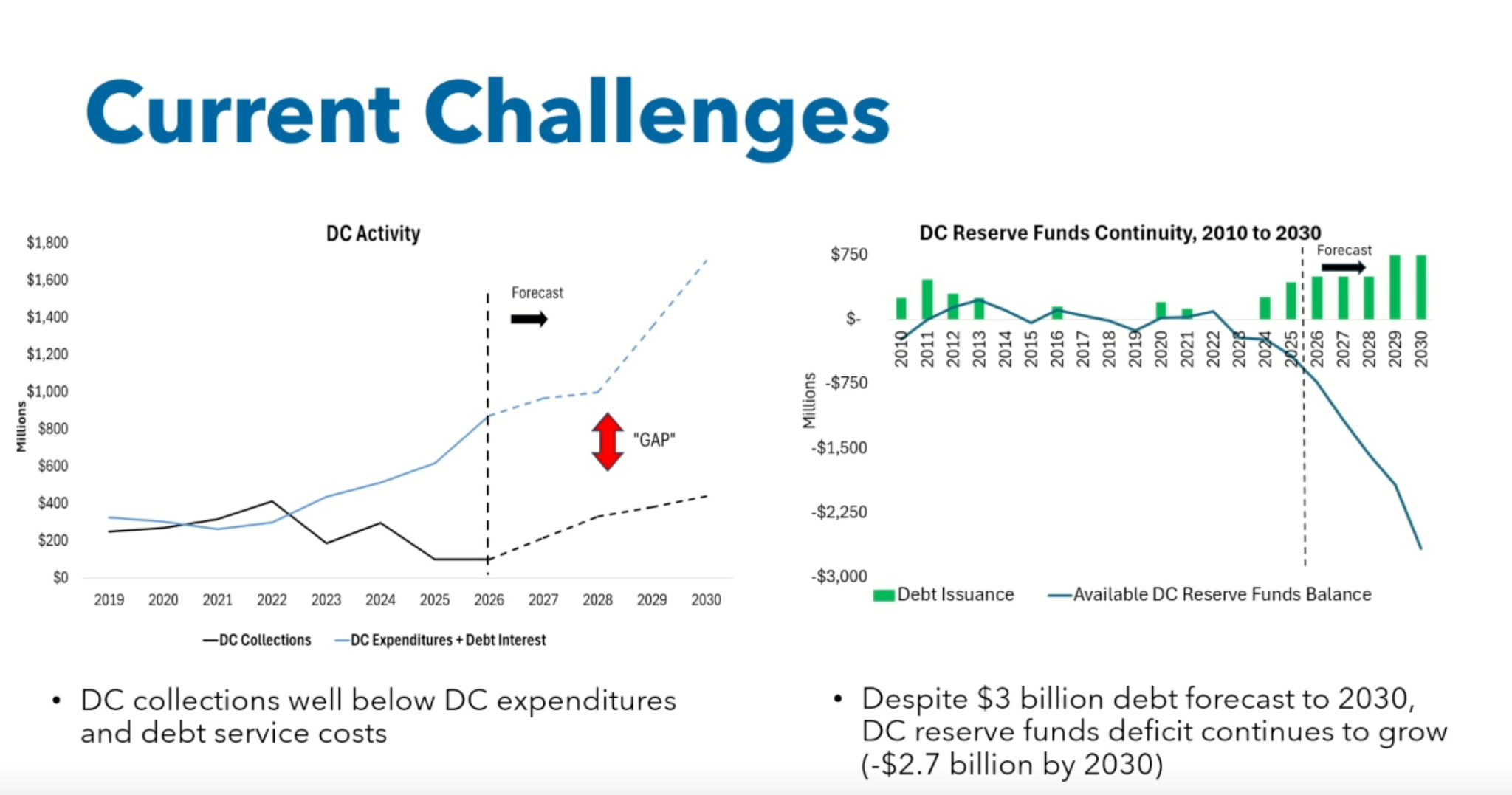
Peel Region’s Chief Financial Officer and Commissioner of Corporate Services, Davinder Valeri, warned that while short-term reserve deficits can be managed, the scale of the current projected shortfall is unsustainable. (Region of Peel)
“This is high noon. I've heard from the beginning, money's coming, money's coming, money's coming,” Damerla, visibly frustrated, said during the meeting while supporting a pause until funding arrives from upper levels of government.
“How many more times are we going to wait for the province to give us the money? Even the province doesn't have the money.” 

On March 30, Prime Minister Mark Carney joined Premier Doug Ford to announce the Canada-Ontario Partnership to Build, an $8.8 billion cost-shared plan over ten years aimed at funding housing-enabling infrastructure, transit and affordable housing projects while supporting municipalities that reduce residential DCs between 30 to 50 percent for a duration of three years.
Damerla warned the funding commitment falls far short of Peel’s infrastructure needs since the Region alone would require roughly $650 million annually, nearly the same amount the federal and provincial governments are offering to all Ontario municipalities combined.
“It's not happening. So, unless we are really comfortable with putting this on the property taxpayer or ratepayer, and I am not. Then we have to pause this,” she said.
“If we stick with the status quo, next year probably taxpayers are going to be hit with a $1,150 bill.”
In mid-July, Mississauga applied for $2.2 billion in funding through the provincial and federal Development Charge Reduction Project, that aims to offset reductions in development charges and encourage housing construction, and received nearly $400 million in September after reducing its DCs on several rental housing categories by 50 to 100 percent for three years to qualify.
While a tax freeze may sound appealing to residents as a magical solution after several consecutive years of steep increases, its long-term consequences could prove more arduous to manage. Brampton Mayor Patrick Brown froze the city’s budget for three years after taking office in 2018—a decision that has since contributed to mounting financial pressures and the City halting or delaying projects while scaling back essential services as it struggles to make up for lost revenue. Taxes still went up dramatically, including the Region of Peel portion of the bill, the skyrocketing utility charge, special levies and a range of user fee increases Brampton residents have been struggling with, as Brown’s so-called freeze has been widely condemned.
The question of what residents receive for their tax dollars has become one of the key financial issues in this year’s mayoral race.
Rather than relying solely on spending cuts, Damerla wants to examine how effectively the City can use its existing revenue. One of the first things she pledges to do as mayor is hire an independent auditor general who can provide another layer of oversight separate from council.
“Think of an Auditor General as a watchdog of the taxpayer whose full-time job is to look for waste, find savings and even look into fraud,” Councillor Damerla said in a February Instagram post.
Damerla has already made the issue a significant part of her work on council.
Earlier this year, she was the lone councillor to support establishing an independent auditor general for Mississauga when council considered the issue. The proposal was ultimately defeated as council chose options that would expand existing audit functions and open the City’s fraud hotline to public complaints.
“The most shocking thing was that the current mayor voted against it. Why would you vote against transparency? Why would you vote against finding savings? It makes no sense,” she told The Pointer.
The discussion emerged amid resident concerns about above-inflation tax increases and whether taxpayers were receiving value for their money, as more than half of the City of Mississauga’s budget — 54.3 percent — was dedicated to salaries and benefits.
Damerla continued advocating for the idea publicly after council rejected the proposal, including hosting a town hall to explain the powers and responsibilities of an auditor general.
Her position is also tied to her previous work at the regional level where she played a leading role in the establishment of Peel’s independent Office of the Auditor General, with Nick Stavropoulos announced as Peel’s first independent auditor general in January to balance the region’s $6.2 billion annual budget.
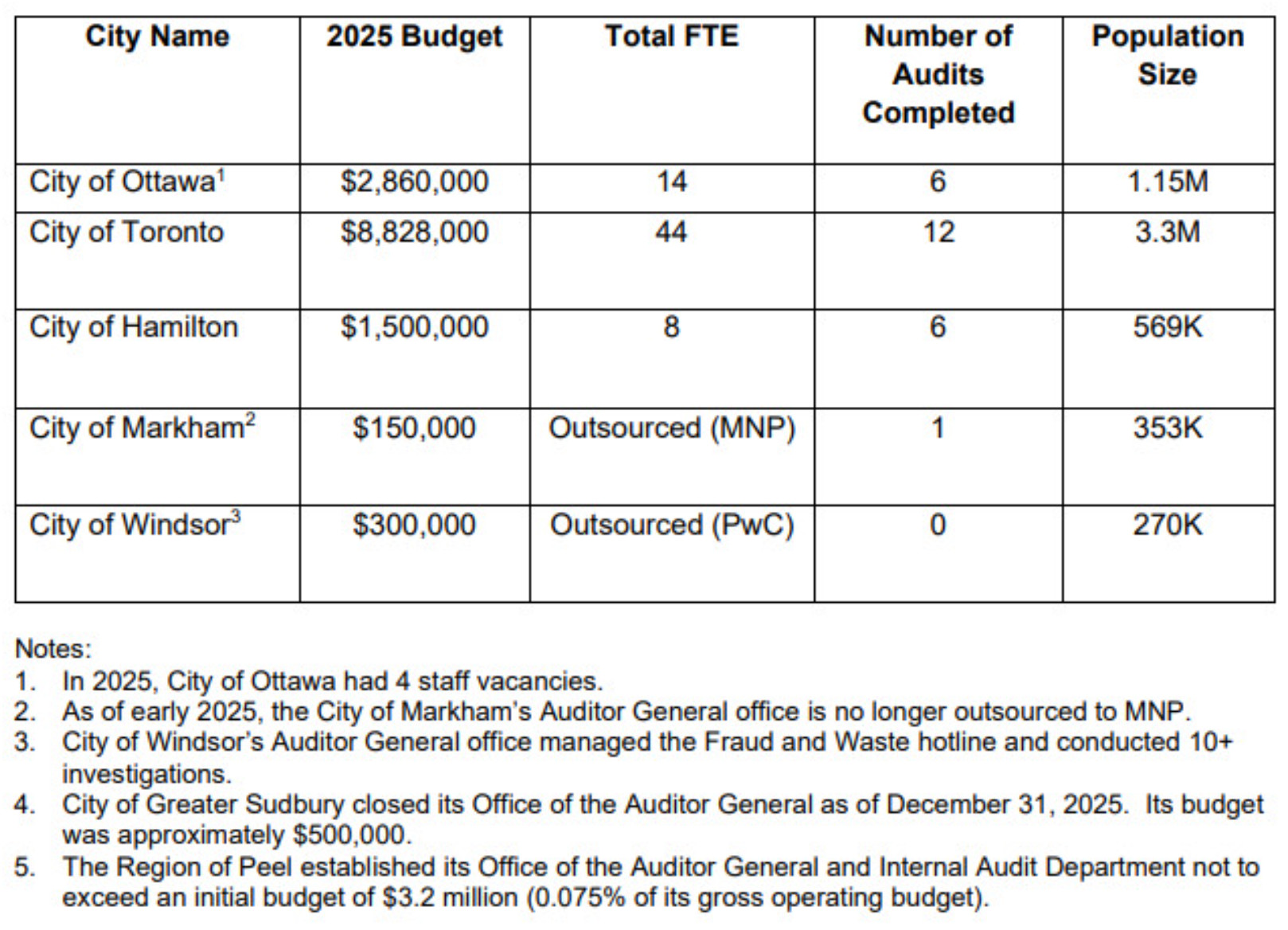
On March 4, the City of Mississauga staff provided a comparison of other municipalities in Ontario who have an Auditor General, looking at costs, staffing and audits completed. (City of Mississauga)
For Damerla, bringing that same principle to Mississauga would be about determining where taxpayers’ money could be saved before asking residents to pay more. That argument extends beyond City Hall itself and into one of the largest areas of municipal spending in Peel.
Damerla’s third immediate priority would be asking Premier Ford to change the formula used to divide Peel Police funding between Mississauga and Brampton, with the goal of making the split 50/50.
Her position on police spending is not new: She previously brought forward a motion seeking an audit of Peel Police to examine police spending that has doubled to $1 billion in eight years. The motion was defeated, but Damerla vowed to revive the push if elected mayor.
She introduced the motion at Peel Regional Council requesting that the Peel Police Services Board voluntarily allow the Region’s auditor general to examine police spending. The proposed review would have looked at whether public money was being spent efficiently and effectively. The motion was shot down.
Damerla’s argument was not necessarily that Peel Police should automatically receive less money; instead, she said an independent review could identify where changes should be made and determine whether savings could be found.
“If you can find any savings, we can put them to the frontline,” Damerla previously said. “Why wouldn't all of us embrace that?”
Peel Regional Police’s [PRP] budget increased by 23.3 percent in 2025, an increase of $144 million, followed by more than a 14 percent increase for 2026, that residents and councillors found unacceptable.
In tandem with PRP’s substantial budget increases in recent years, police chief Nishan Duraiappah has seen substantial increases to his own salary. Since being hired at the end of 2019, Duraiappah’s salary has more than doubled to over $600,000 last year, making him the highest-paid police official in all of Canada. Duraiappah’s first full year on the job was in 2020, when he earned $299,196, compared to last year when he earned $604,449, resulting in a 102 percent increase in five years.
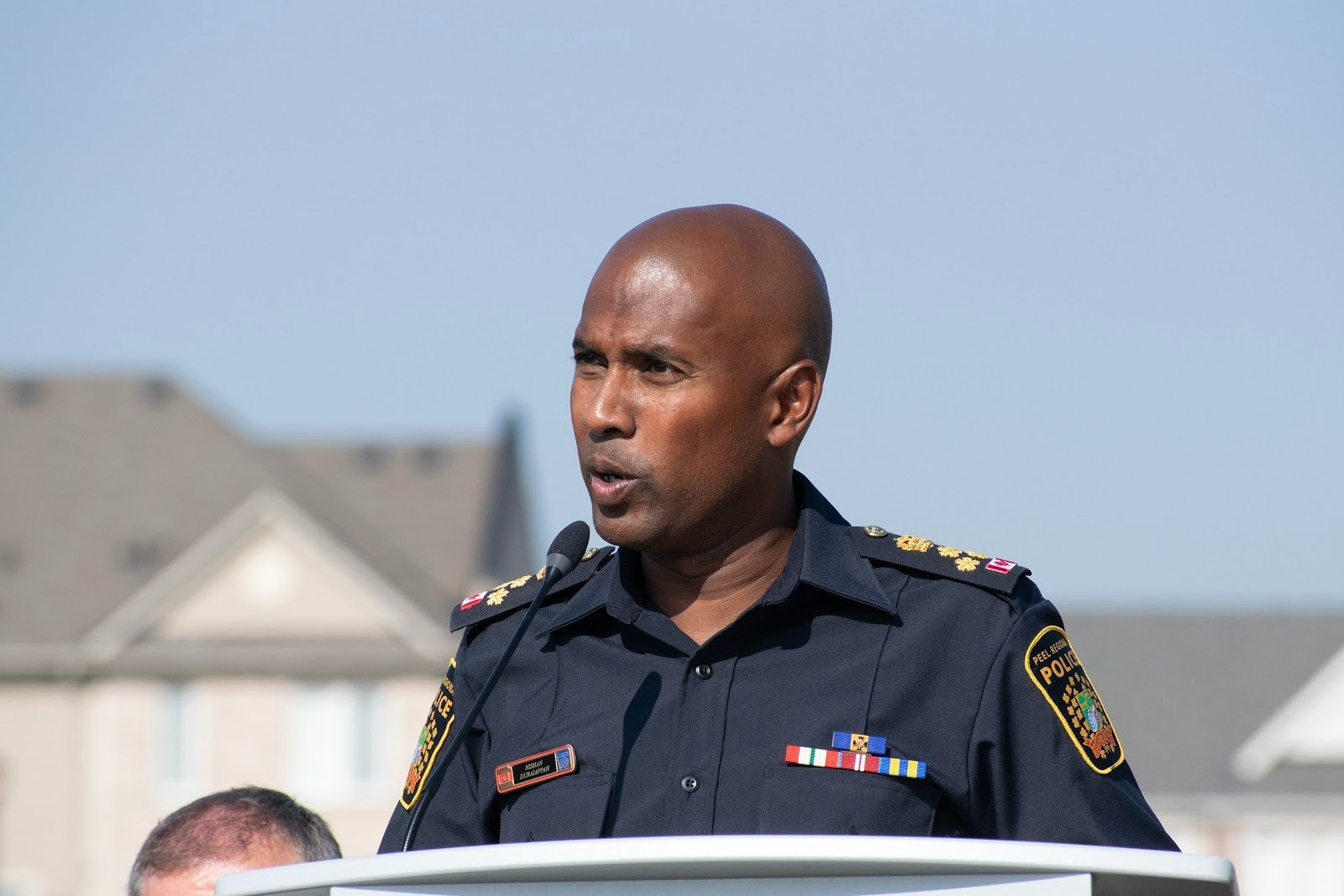
Since being appointed to Police Chief at the end of 2019, Nishan Duraiappah has brought forward substantial budget increases to Peel Police, effectively doubling their budget. Dipika Damerla said one of her top priorities is to change the funding formula split between Brampton and Mississauga to reduce the amount the City has to spend yearly, and lower property taxes. (Alexis Wright/The Pointer)
Damerla doesn’t want to enter the mayor’s office with a predetermined goal of cutting the police budget, but would rely on an independent auditor to determine what changes were necessary and how much could potentially be saved or redirected, while looking at using technology to help address crime.
She wants to work with Peel Police to expand CCTV monitoring at major intersections to help catch crimes such as break-ins and thefts while ruling out their use for speeding tickets or other traffic enforcement. Questionably, should that move forward, Peel Police would retain full responsibility for monitoring the cameras, but who monitors them—an officer or AI—is up in the air.
For Damerla, the police issue is therefore connected to the same central theme as her tax and auditor-general proposals: determining whether residents are getting sufficient value from the public money being spent.
While affordability and fiscal restraint anchor much of Damerla’s platform, she is determined to look beyond cost-cutting and investing in economic development to establish Mississauga as a city that no longer exists in Toronto’s shadow.
She envisions doing that by bringing more manufacturing and development to the city, waiving development charges and property taxes for businesses that want to expand manufacturing for five to seven years.
“If you want to increase jobs in Mississauga and you need to build something, I am there to remove the costs,” Damerla said.
“If you're a [business] and you want to expand your factory or you want to build a new factory, I want you to come to Mississauga; I don't want you to go anywhere else. I want to make it as attractive as possible.”
In March, City staff brought forward a “once in a generation opportunity” for Mississauga’s downtown — $2.5-billion revamp, championed by Parrish, on 12 acres of municipally owned land. The early concept includes a convention centre, hotel, residential tower, a “Sky Park” and replacing the current Living Arts Centre with a 2,500–5,000 capacity state-of-the-art entertainment venue.
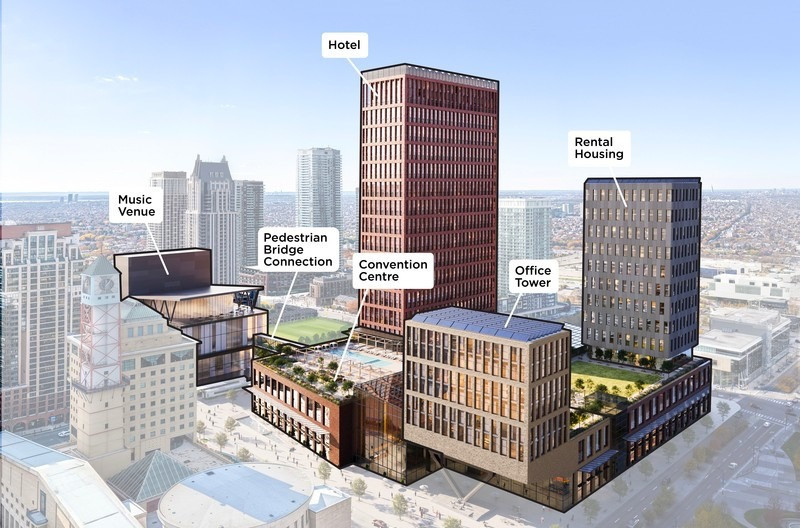
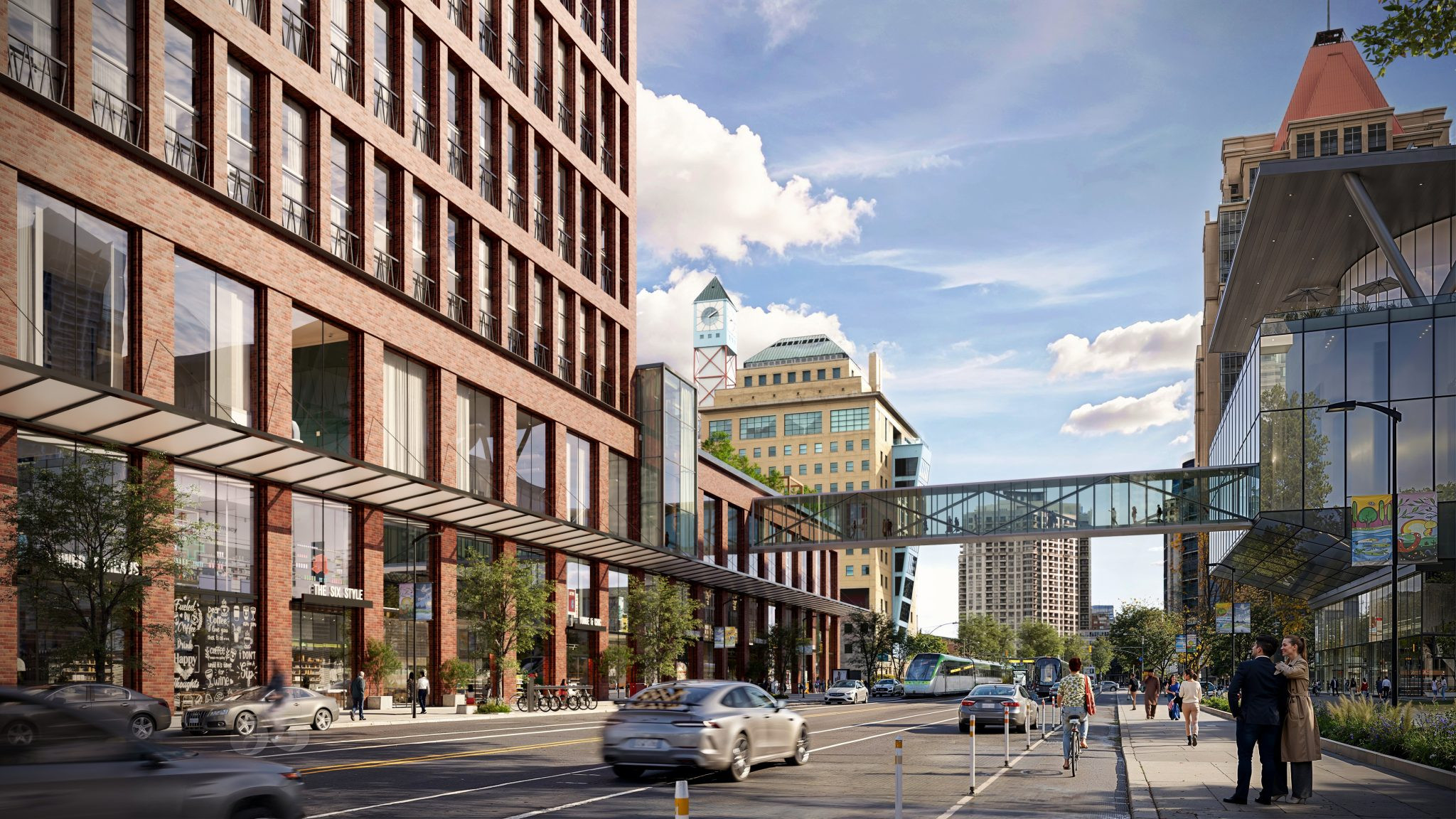
The City of Mississauga Downtown Vision is a $2.5 billion proposed redevelopment plan spearheaded by Mayor Carolyn Parrish to transform 12 acres of public land surrounding City Hall and the Living Arts Centre. (Renderings from City of Mississauga)
But what would the ambitious project cost taxpayers? That still remains a mystery.
In July, the City approved $300,000 for public consultation and market analysis of the proposal. The funding for the consultation is set to come from the Municipal Accommodation Tax Reserve rather than residential property taxes, and the approval did not itself authorize construction or commit taxpayers to funding the entire project or to whether the project will go forward.
Damerla, however, fiercely opposes Parrish’s plan to build a convention centre in the heart of downtown Mississauga as ‘they often lose money’. She did not say whether she would halt the redevelopment if she assumes the mayor’s office.
Her apprehension stems from the backward approach of asking residents whether they want a major new facility without first establishing how much it could ultimately cost them, or if they really want it.
The City is already overseeing multiple infrastructure projects with massive costs: the decade-long construction of the Hazel McCallion LRT line, which has seen numerous timeline revisions by Metrolinx and extreme criticism from councillors who say the project has affected numerous businesses along its route; the construction of the Peter Gilgan Hospital, which previously reported the project was projected to be $4 billion over budget; and the Lakeview Village project along Mississauga’s waterfront that has seen several back-and-forth over the project's expected residential unit capacity.
Put together, Damerla’s proposals suggest her campaign is about finding savings for residents from the City and its police board and creating higher levels of accountability when residents are often feeling unheard when expressing their concerns or questioning what exactly their taxes are being spent on.
Her platform ultimately rests on the idea that Mississauga as Canada’s seventh-largest city can spend differently without providing less, pursue development without accepting every proposal and attract new businesses while keeping an eye on what existing taxpayers can afford.
Email: [email protected]
At a time when vital public information is needed by everyone, The Pointer has taken down our paywall on all stories to ensure every resident of Brampton, Mississauga and Niagara has access to the facts. For those who are able, we encourage you to consider a subscription. This will help us report on important public interest issues the community needs to know about now more than ever. You can register for a 30-day free trial HERE. Thereafter, The Pointer will charge $10 a month and you can cancel any time right on the website. Thank you
Submit a correction about this story

