
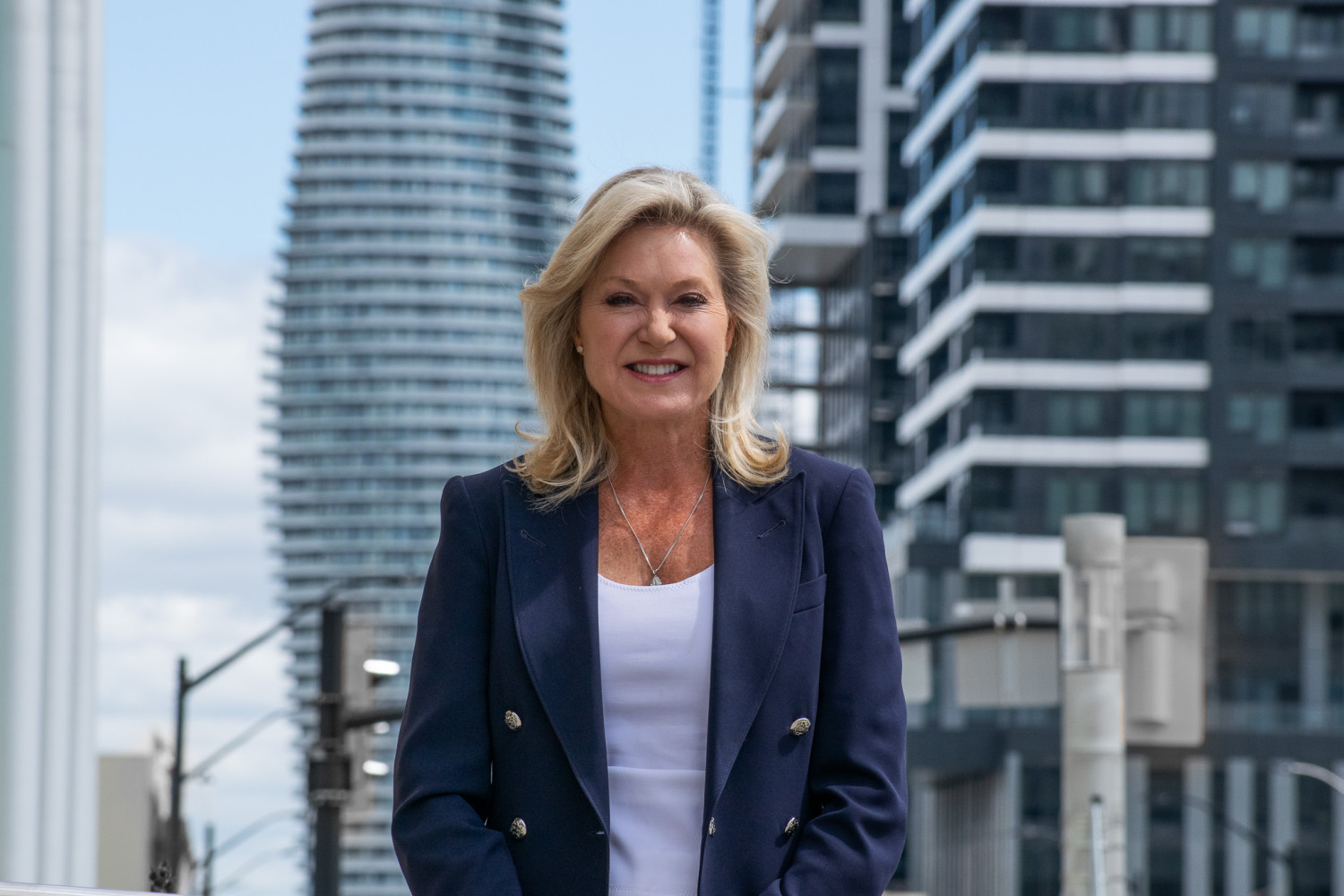
‘Everything I love and care about is right here’: In her push to regain the mayor’s seat Bonnie Crombie promises tax relief and a prosperous future for Mississauga
When Bonnie Crombie departed the mayor’s chair in 2024, she told The Pointer she wakes up each morning thinking of her constituents, with one thought on her mind.
“What more can I do to make their lives better?”
“That will always be forefront in my mind,” she said.
Entering the fray for what is shaping up to be the most contentious mayoral race Mississauga has seen in decades, at a pivotal point in the municipality’s history, that mindset is guiding her early campaign messaging.
In a wide-ranging interview, Crombie explained that if elected to the post she previously held for almost a decade, she will take a hard look at City spending, with plans to bring in an outside auditor to review every line of Mississauga’s budget. The balancing act, she explains, is utilizing taxpayer dollars effectively; investing to build the city of the future, while avoiding the type of cuts that only cripple residents down the road.
There are plenty of savings that can be found in between, for the taxpayer, she vows.
Her offer to Mississauga residents is “a future you can afford and experience you can trust.”
With a growing infrastructure gap, massive proposals for downtown growth, and a ballooning police budget that no politician in Peel has been willing to stand up against, the vision Crombie has for Mississauga will require balancing what the municipality realistically requires of its taxpayers and the politically popular path many elected officials take when trying to get elected, promising cuts that simply are not realistic.
Crombie says she knows where the real savings can be found and she will help an external auditor focus on the places where waste makes the work of staff more difficult.
She is the daughter of immigrant parents who arrived from Poland in the ‘50s and settled in Toronto, where she was born in 1960.
She earned a political science degree specializing in international relations before getting an MBA and was partly educated abroad. She worked for Fortune 500 corporations including the Walt Disney Company and McDonald’s Canada as a public affairs consultant.
She previously served as a Liberal MP between 2008 and 2011 and a Mississauga councillor from 2011 to 2014, where she prioritized transit and mixed-use residential housing.
Crombie was first elected mayor in 2014 following the retirement of Mississauga icon Hazel McCallion. She was reelected in 2018 and again in 2022 in a landslide victory, receiving 77 percent of the votes cast.
She urges critics who are labelling her return to Mississauga as a backup plan after resigning as leader of the Ontario Liberals to study her previous success in the mayor’s chair.
“They should judge me on my track record and what I delivered here because I delivered results,” she said, touting her past connections to the City.
“Everything I love and care about is right here. I want to ensure that we have livable neighbourhoods, we have housing that's affordable, we have a cost of living that's affordable for our residents, that we live in a safe city led by a leader who is accountable and transparent, and is a good steward of taxpayers' money. I looked around and I didn't feel that was happening.”
In the bid to become Mississauga’s next mayor, she is not the only one with experience.
Along with facing off against incumbent mayor Carolyn Parrish, who is seeking her first full term as mayor after winning the byelection following Crombie’s departure; she is also competing against two current councillors, former political ally Alvin Tedjo, who campaigned alongside her during her run for the Liberal leadership, and two-term councillor and former MPP Dipika Damerla.
Tedjo and Damerla also ran for the mayor’s seat in the 2024 byelection with Tedjo’s 35,005 votes coming in second to Parrish’s 43,494. Damerla finished third with 27,119 votes.
Other candidates in the 10-person race include Frank Fang, Amjad Jilani, Mike Matulewicz, Fadi Naami, David Shaw and Ana Luisa Vasquez De Espinal.
It comes as no surprise that the City’s budget and its impact on local taxpayers are front and center in the race.
Mississauga residents have voiced growing frustration with their hefty tax bills in recent years, including an 8.8 percent increase in 2025, and a further 4.39 percent hike this year. Some vocal critics argued City officials and members of council were trying to mislead residents about the true increase in order to quell rising dissent during an election year.
Crombie vows to increase transparency at City Hall when it comes to the budget and City spending by hiring an independent auditor general (AG) to conduct a full value-for-money audit of “every department”.
She admits she was shocked when council voted down a motion from Damerla to hire an AG, similar to the Region of Peel.
“There has been a lot of spending in the past two years and I want to understand better where, when, why, and what we could do better because I am about to cut taxes and I want to know where there can be savings made,” Crombie told The Pointer.
She made it clear that reducing the financial burden on residents is a top priority, particularly seniors living on fixed incomes who struggle to keep up with the rising costs of living.
“What I hate hearing is that ‘taxes went up 10 percent and now I have to cut back on my groceries’.”
Reducing the tax burden is easier said than done.
Mississauga is urbanizing fast, infrastructure is becoming more expensive to build and maintain and the municipality is being asked to accommodate significantly more housing and residents.
The City's financial decisions over the next several years will determine not only how much residents pay today, but what kind of infrastructure they inherit tomorrow.
Mississauga currently owns about $14 billion in assets, much of which needs repair or replacement the City does not have the money for. According to the 2026 budget document, the City of Mississauga has an annual infrastructure gap of $119 million—meaning these repairs or replacements are necessary but the municipality does not have the money to purchase them.
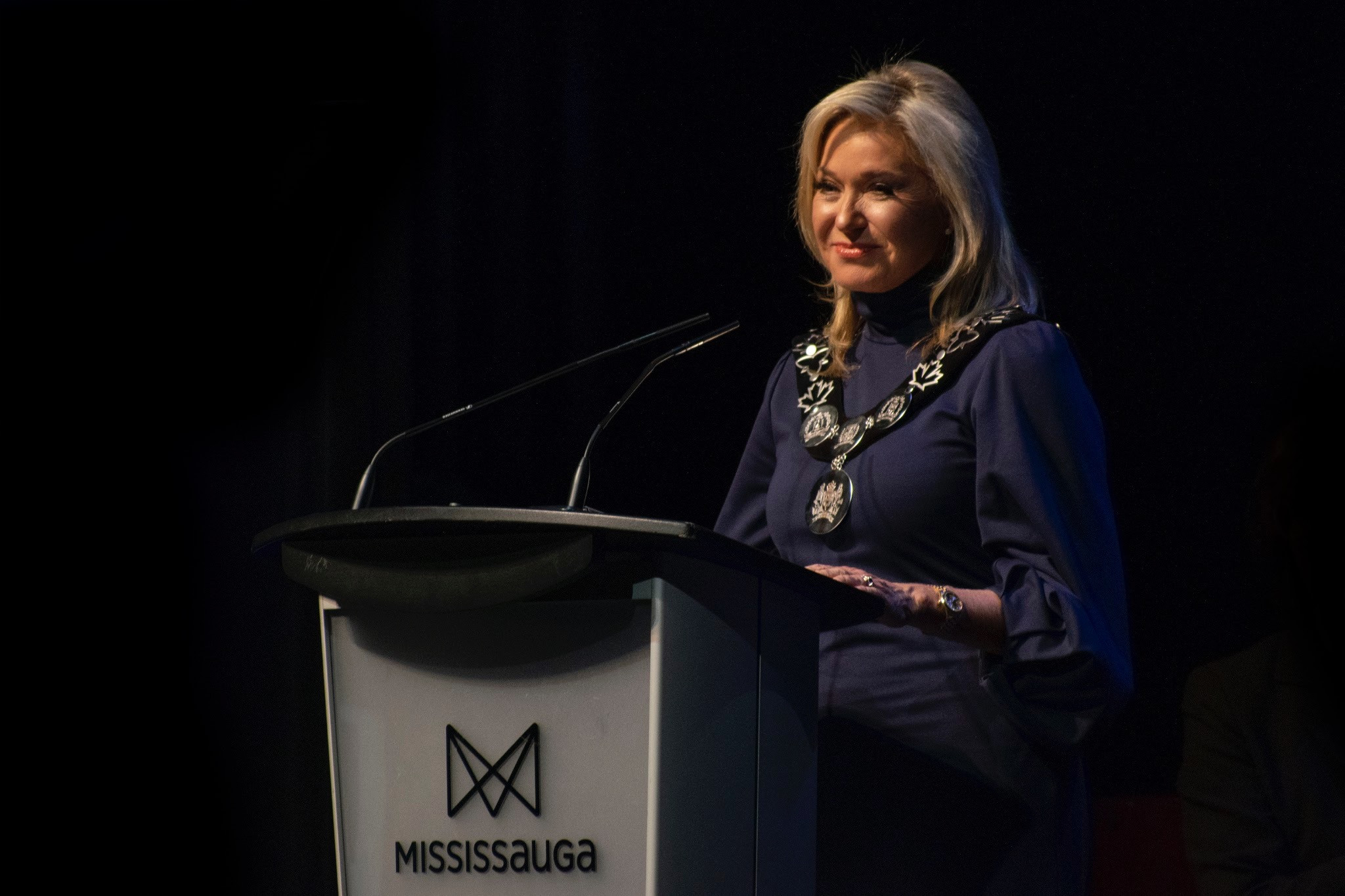
Former mayor Bonnie Crombie is hoping Mississauga residents will return her to the post she left in 2024, promising them “a future you can afford and experience you can trust.”
(Alexis Wright/The Pointer files)
Despite the lack of funds, council voted this year to cut the infrastructure levy—a tax on residents meant to help close this gap—by two percent.
This led to the deferral of $59.7 million in Parks, Forestry & Environment work; $109.9 million for roads; $26.3 million for Fire & Emergency Services; $23 million for Mississauga Library; and $34.4 million for Recreation & Culture spending.
While certain candidates for mayor, including Tedjo, are campaigning on freezing the City’s budget, Crombie just doesn’t see how that is fiscally possible.
“You can't freeze, as you can't make up the savings,” she said. “I think you could do it a year, maybe two, but you would be dipping in reserves and that just means you're using money that's reserved for something else. You can do that in the short term, but you can't do that in the long term. So I think a more practical solution is to look for ways to save money, and to find efficiencies.”
Patrick Brown's failed fiscal strategy in Brampton provides a warning about what can happen when spending cuts are prioritized without sufficient attention to future infrastructure needs.
Brown, who has been mayor of Brampton since 2018, imposed budget freezes during his first several years in office. Residents are now seeing the long-term consequences in Brampton's capital budget. Brown’s 2026 financial plan shows projects delayed, reduced or pushed into future years, while the municipality is relying more heavily on debt and funding from other levels of government that may not materialize.
In Mississauga, the next mayor will not only be tasked with finding the money to pay for the delayed projects in 2026, but all the work that has accumulated over this calendar year.
Along with the assistance of an auditor general, Crombie wants to refocus the corporation on a lean methodology—a management approach that prioritizes incremental improvements while eliminating waste—to make the City “trimmer, slimmer, more efficient”.
She plans to propose managers reduce spending in their departments by 10 percent in her first two years, something she doesn’t see as a challenge as “spending has been out of control”.
Crombie says when she was mayor the City would save $5 million annually with this lean approach.
While getting a handle on the City’s own finances will be critical to reducing the burden on taxpayers, the new mayor will also need to contend with the outside forces increasing the tax burden, the largest one being the budget of the Peel Police.
In 2026, Peel Police received an $837.3 million operating budget—a more than 80 percent increase from $462.5 million in 2021. The budget could go over a billion dollars next year for a force that serves approximately 1.6 million residents in Brampton and Mississauga.
The biggest chunk of that increase came in 2025 when the Peel Police Services Board and regional council rubber-stamped a budget hike of 23.3 percent—more than the increases over the entire decade prior to Chief Nishan Duraiappah’s arrival in 2019. This came on the heels of a 14 percent increase the year before.
The 2025 budget was labelled as “ludicrous” by local residents and an “utter failure of governance” by police experts.
A significant portion of this budget is for salaries and benefits for officers and none have benefited more than Chief Duraiappah.
Since his appointment as Peel Police chief at the end of 2019, Duraiappah has seen his salary skyrocket to the point where he is now the highest-paid police official in the country, earning $611,678.46 including benefits. Chief Duraiappah earned $311,253.89 in 2020, his first full year as chief.
The force has also faced questions about excessive spending in other areas, including senior Peel Police officials having taxpayer-funded Ford SUVs that can cost as much as $85,000 with senior officers encouraged to use the vehicles as personal and family cars.
While not coming out strongly against the unsustainable budget increases afforded to police in recent years, Crombie admitted “there's a limit to what we can afford”.
Crombie was a member of the police board and regional council when the 14 percent increase for 2024 was approved.
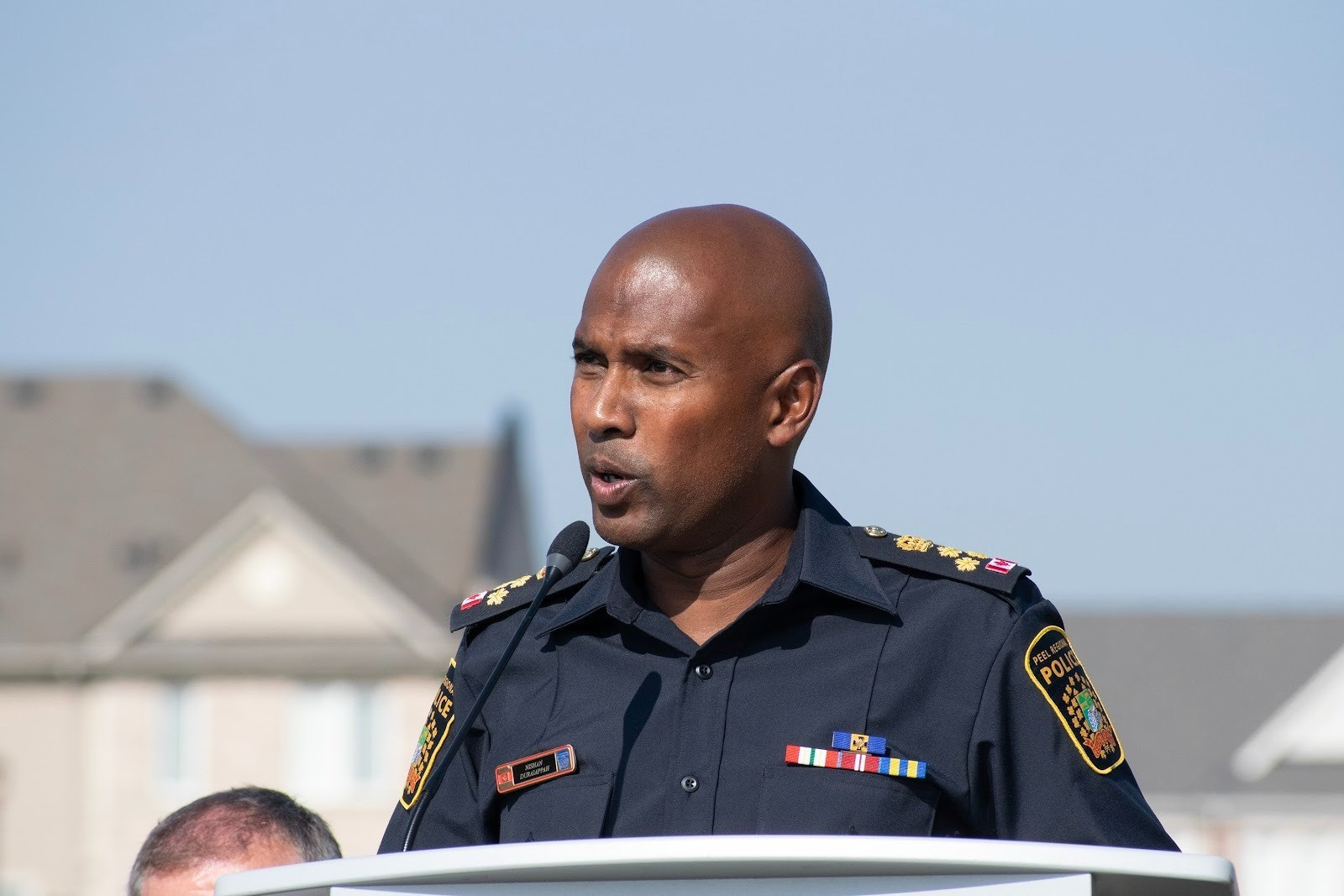
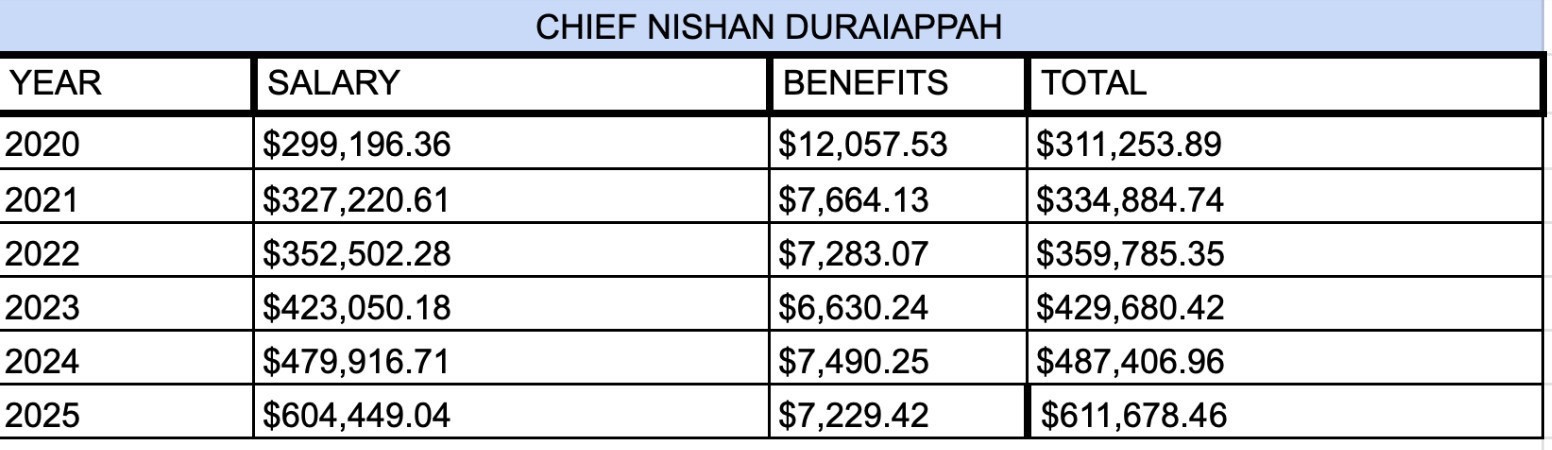
The salary of Peel Police Chief Nishan Duraiappah has more than doubled in his five years with the force, making him the highest-paid police official in Canada.
(The Pointer files)
Crombie says she would retake a seat on the board if elected mayor of Mississauga. During her previous stint on the board, Crombie was a part of the push to get Duraiappah hired. She was a driving force for progressive change within the police service and often challenged former chief Jennifer Evans on issues of discriminatory police behaviour like carding.
In November 2024, Mayor Parrish resigned from the police services board, claiming she was restricted from criticizing the exorbitant budget increases as a sitting board member.
Crombie disagrees with the move.
“The opportunity to critique the budget and have input to change it was at the police board, not to leave and to criticize it from the outside,” she said. “You have to actively participate in shaping the budget to make a difference, not leave, which I feel is an abdication of responsibility.”
After getting the City’s books in order, Crombie says the priority will be on making housing more affordable, and improving desperately needed high-order transit.
When she was first elected in 2014, she was the first new mayor Mississauga had in nearly 40 years. Crombie quickly began to shift the city away from the sprawling development that had become a cornerstone of Hazel McCallion’s time as mayor.
Transit expansion was a top priority when she was elected in 2014. The giant parking lots that checkered the city were replaced by high-rises, commercial developments and other features of a booming cosmopolitan city that was quickly sprouting out of its suburban roots.
In 2026, this means figuring out exactly what is happening with the Hurontario LRT.
The LRT was originally set to open during Crombie’s last term as mayor. Plagued by delays, Metrolinx and the PC government now claim it will officially open in 2028.
Crombie says the lack of communication with residents throughout the disruptive construction has only made the delays tougher to swallow.
“I would have created a panel that involved residents and councillors, Mobilinx and Metrolinx and local businesses, so they could better understand what the delays are, so that they could better communicate it to their business improvement area, their communities, and hold Metrolinx and Mobilinx accountable,” she says.
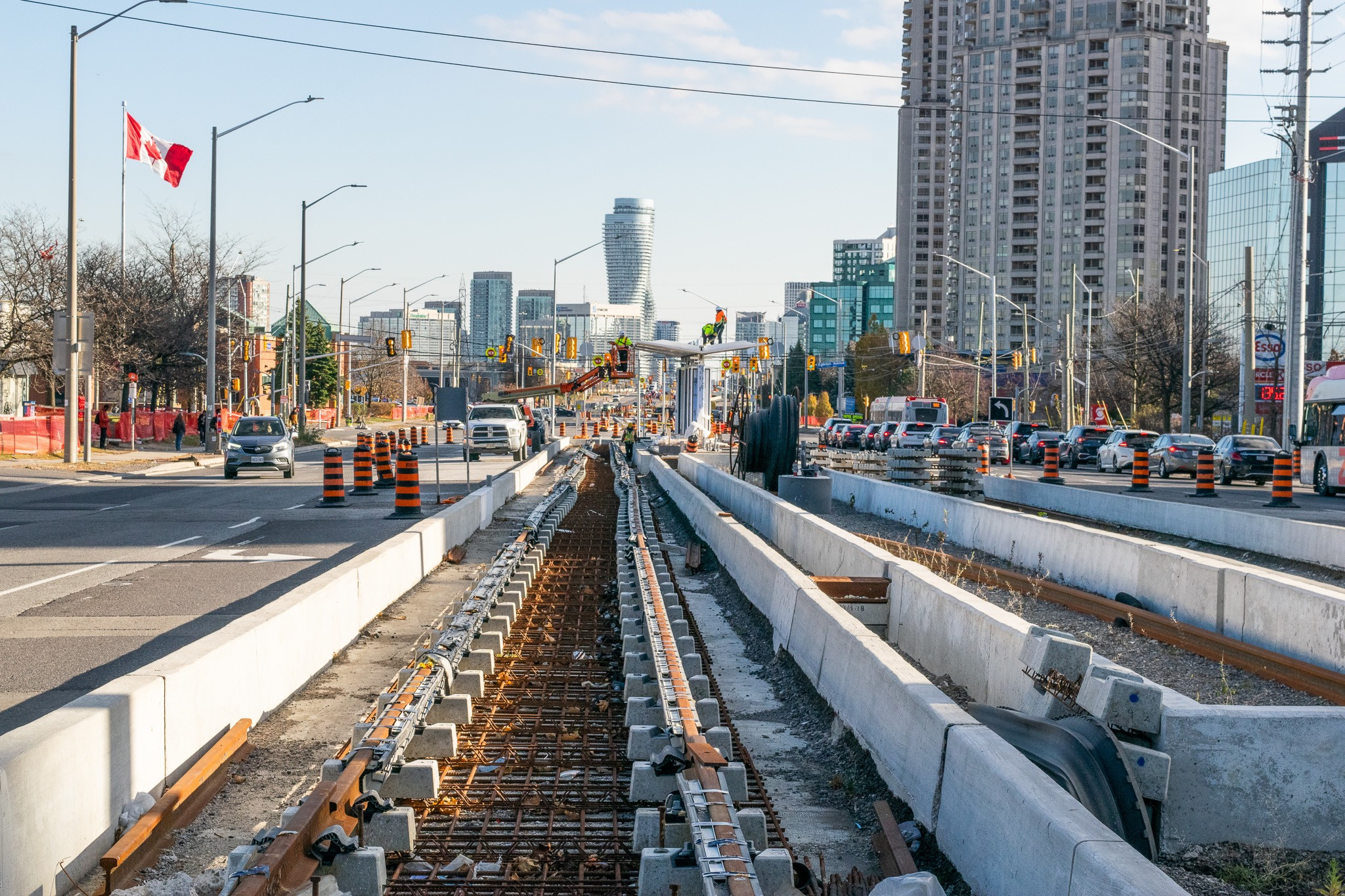
Originally scheduled to open in 2022, the Hurontario LRT has been plagued by delays. The PC government and Metrolinx claim the corridor will open for passengers in 2028.
(Alexis Wright/The Pointer files)
One of the biggest challenges facing municipal leaders in Mississauga will be managing the growth planned for the municipality.
Under the PC government’s housing pledge, between 2022 and 2031, Mississauga must build 120,000 housing units. As of 2024, the latest year for which Ontario government data is available, Mississauga had only managed to build 12,099.
Much of this growth is in the form of high-rise condominiums. These developments have transformed the downtown skyline, while massive communities such as the Lakeview Village project and Brightwater are adding thousands of new homes along the waterfront.
In 2024, Mississauga recorded approximately $1.56 billion in new assessment value with new condominium assessment alone accounting for about $826 million, placing the city second in Ontario behind Toronto for new residential condominium assessment.
Crombie plans to continue the City’s development charge (DC) reductions done under Parrish in order to drive down the cost of a home for first-time buyers.
The decision is a potentially controversial one as many municipalities fear the cut to these fees that help support infrastructure development will result in a heavier burden being placed on taxpayers. In May, that fear played out at the regional level, where Peel officials warned that declining DC revenue, rising infrastructure costs and increased borrowing were already putting pressure on the Region’s ability to fund the water and wastewater infrastructure needed to support rapid growth.
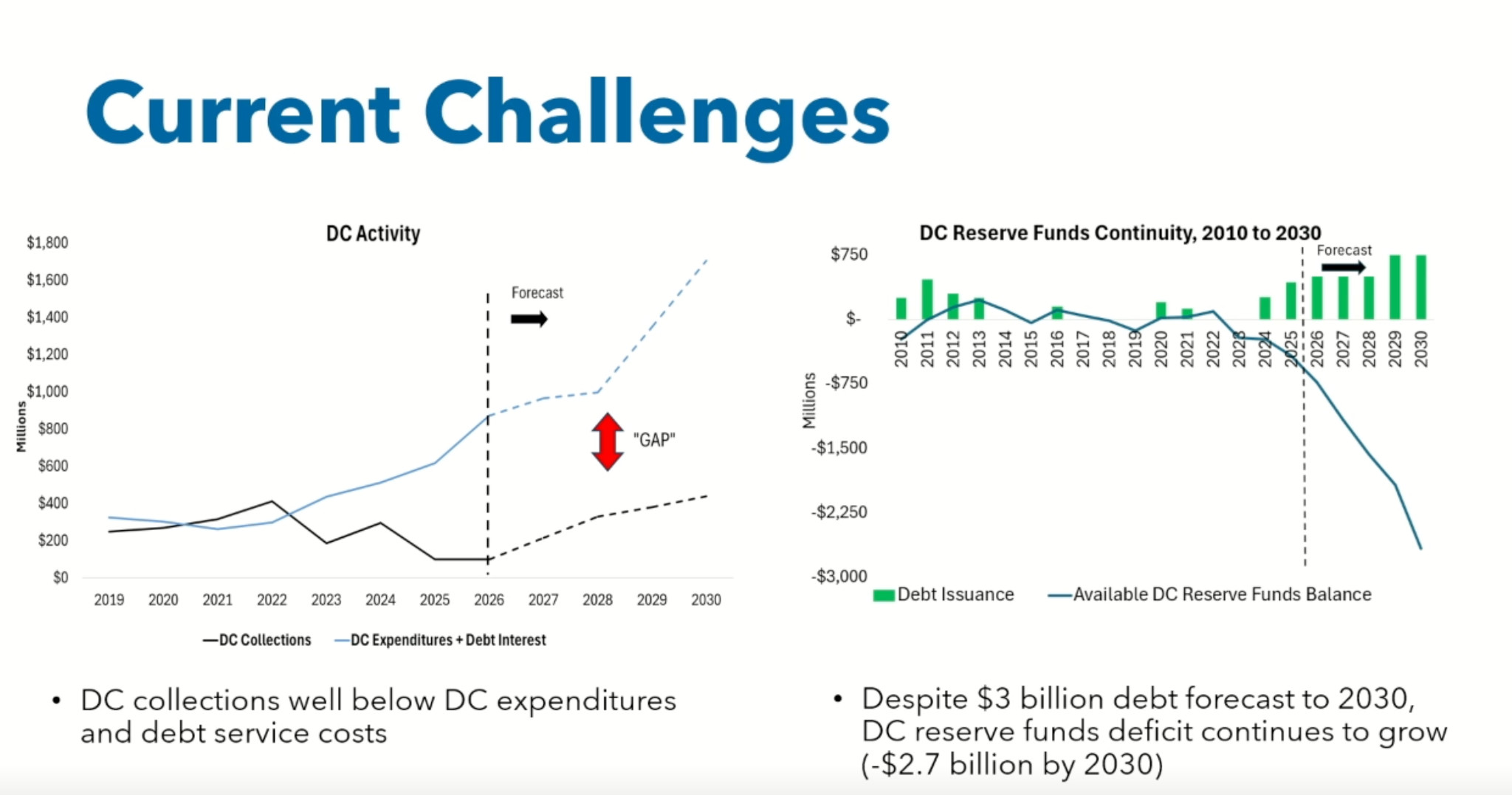
Peel Region’s Chief Financial Officer and Commissioner of Corporate Services, Davinder Valeri, warned that while short-term reserve deficits can be managed, the scale of the current projected shortfall from lost development charge revenue is unsustainable if all planned water and wastewater construction projects proceed as scheduled.
(Region of Peel)
Following the passage of Bill 17 at Queen’s Park, municipalities need to approve reduction in DCs in order to be eligible for funding relief to help close the gap left behind by this lost revenue.
A staff report highlighted Peel’s Development Charge Reserve Funds, the accounts used to finance growth-related infrastructure, are projected to plunge deeper into deficit, growing from approximately $728 million by the end of 2026 to nearly $2.7 billion by 2030, even after taking on roughly $3 billion in additional debt if current construction plans continue.
“A small deficit in the DC reserve funds can be managed for a short period of time but the current deficit is too large and cannot be sustained,” Peel Region’s Chief Financial Officer and Commissioner of Corporate Services, Davinder Valeri, said.
To keep Peel’s original water and wastewater infrastructure program on schedule while balancing the reserve funds, staff estimated Peel would require roughly $700 million from upper levels of government this year followed by another $650 million in 2027.
After months of uncertainty, the federal government announced the launch of the Development Charge Reduction Program in June, an $8.8-billion cost-sharing program designed to encourage municipalities to reduce development charges by between 30 and 50 percent for at least three years.
At the Association of Municipalities of Ontario (AMO) conference this week, the PCs and federal government announced a new, joint $1 billion funding stream to help municipalities that have cut development charges.
It’s unclear whether Peel will receive enough to cover the entire shortfall.
“When I was leader of the party in Queen's Park, I wanted to eliminate all DCs,” Crombie said, noting that cities have become too reliant on development charges.
Crombie admits that reducing development charges only makes sense if the savings ultimately benefit consumers.
“The point of reducing the development charges is to make the cost of building lower for the developer, but ultimately that would have to lead to a reduction in the price of the home,” she said. “I think because of competition, that would happen. You can't have one group saying, we're passing the savings on and one group not because guess where everyone's going to go?”
Along with housing, significant attention has recently been paid to the City’s downtown and a proposal from local councillors for a $2.5 billion convention centre and entertainment district.
The proposal involves a significant redevelopment of approximately 12 acres of City-owned land surrounding City Hall and the Living Arts Centre.
It has been deemed a “once in a generation” opportunity.
The early vision includes a convention centre, hotel, residential tower, a 5,000-seat entertainment venue and a large public space known as the “Sky Park” with the estimated value of the entire vision at approximately $2.5 billion.
There’s no denying the downtown needs to see significant growth. Projections from the City indicate the downtown population will increase from about 36,000 people in 2021 to nearly 89,000 by 2051.
Yet the proposal has received mixed reviews.
Supporters of the project see it as a chance to finally give Mississauga the kind of downtown to match its size and economic importance. Critics have questioned whether the project is financially realistic at a time when taxpayers are already facing rising costs.
Crombie has no idea how the City could pay for such a massive initiative.
“The City can't afford it. I'm not going to put [that] on the taxpayers, it would be a huge tax burden,” she said. “I couldn't do it unless I knew it would be funded by different levels of government.”
Council has approved $300,000 for public consultation and market analysis related to the downtown proposal with the money coming from the Municipal Accommodation Tax Reserve, which is funded by taxes paid by visitors staying in Mississauga hotels rather than directly from residential property taxes.
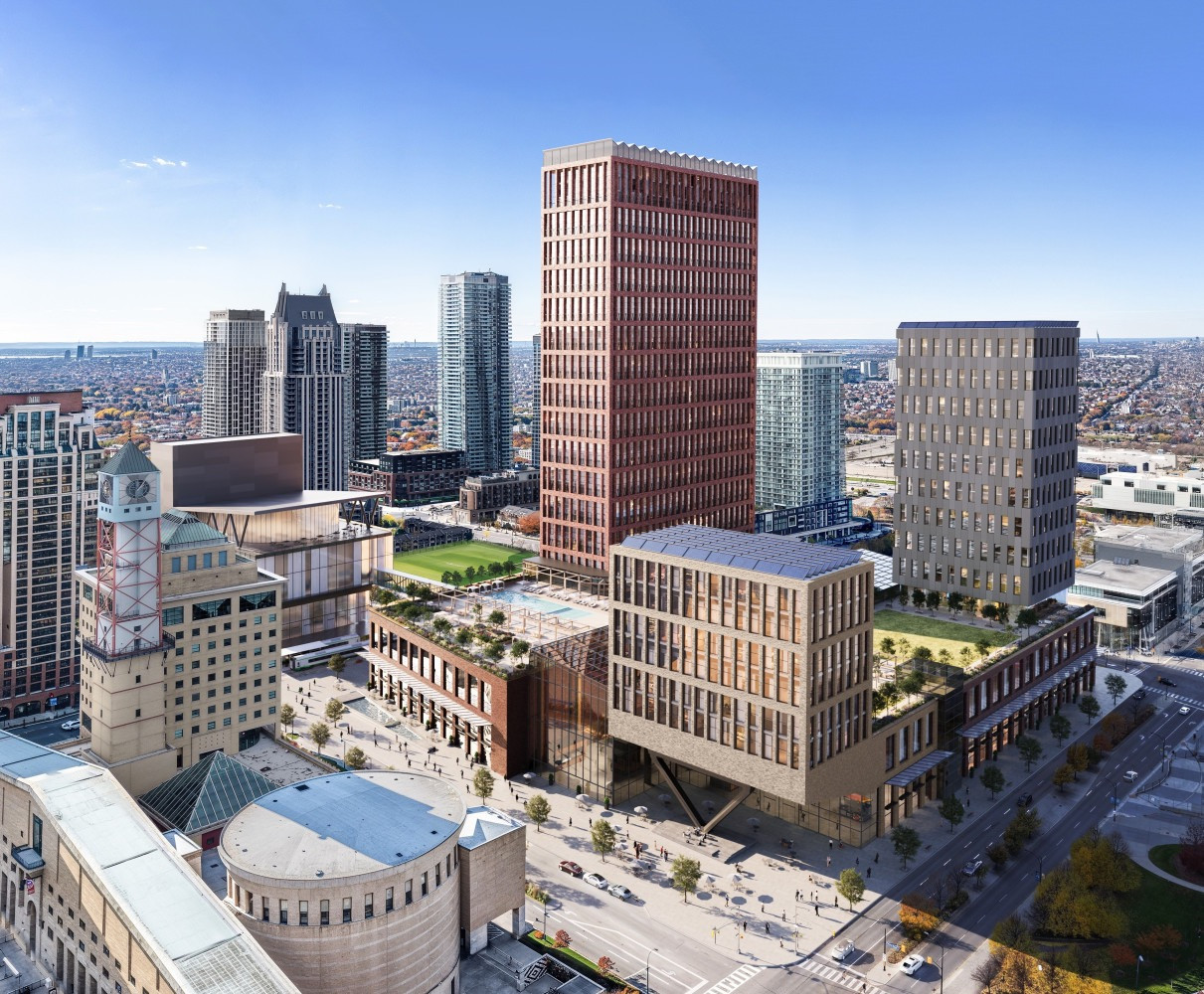
A rendering released by the City of Mississauga of the proposed downtown redevelopment.
(City of Mississauga)
Crombie’s return to Mississauga comes at a contentious time as Ontario Premier Doug Ford said he would “send an army” to stop her from winning reelection. Just last week, it was revealed by The Trillium that the PCs paid thousands of dollars to follow Crombie to Jamaica in 2023 for the purposes of keeping tabs on her shortly after she was elected Liberal leader.
For her part, Crombie says she is not worried about Ford’s previous comments: “the people of Mississauga will decide, not the ‘army’”.
“I like the Premier very much. He and I want the same thing. He wants, and I want, a stronger Mississauga and a prosperous Mississauga, and he wants a stronger, more prosperous province. Together we can get that done,” Crombie said. “We worked very collaboratively when I was mayor. I called him out on some things, yes, but only because I was standing up for my residents.”
Email: [email protected]
At a time when vital public information is needed by everyone, The Pointer has taken down our paywall on all stories to ensure every resident of Brampton, Mississauga and Niagara has access to the facts. For those who are able, we encourage you to consider a subscription. This will help us report on important public interest issues the community needs to know about now more than ever. You can register for a 30-day free trial HERE. Thereafter, The Pointer will charge $10 a month and you can cancel any time right on the website. Thank you
Submit a correction about this story

