
Mississauga residents skeptical after Lakeview Village proposal drops by 4K units to accommodate more townhomes
When the number of units for Mississauga’s giant new waterfront community along its eastern lakeshore was suddenly changed overnight from 8,000 to 16,000 units, concerns over the type of rapid densification that leads to a cascading range of challenges spread throughout the surrounding neighbourhoods.
Those residents around Lakeview Village can now breathe a little easier.
The sprawling 177-acre project slowly taking shape where the former coal-fired Lakeview power plant sat had been carefully planned for years by local stakeholders, council members, developers, residents and City Hall staff. After their decade-long collaboration to create a gentle, human scale design that would welcome all of Mississauga back to Lake Ontario’s majestic waterfront, which had been cut off by industry for more than a century, in May of 2023, the Doug Ford government, at the behest of the development consortium that will build the historic project, issued a Minister’s Zoning Order, doubling the maximum number of residential units from 8,000 to 16,000, leaving many who worked on the painstakingly crafted plan feeling a deep sense of betrayal.
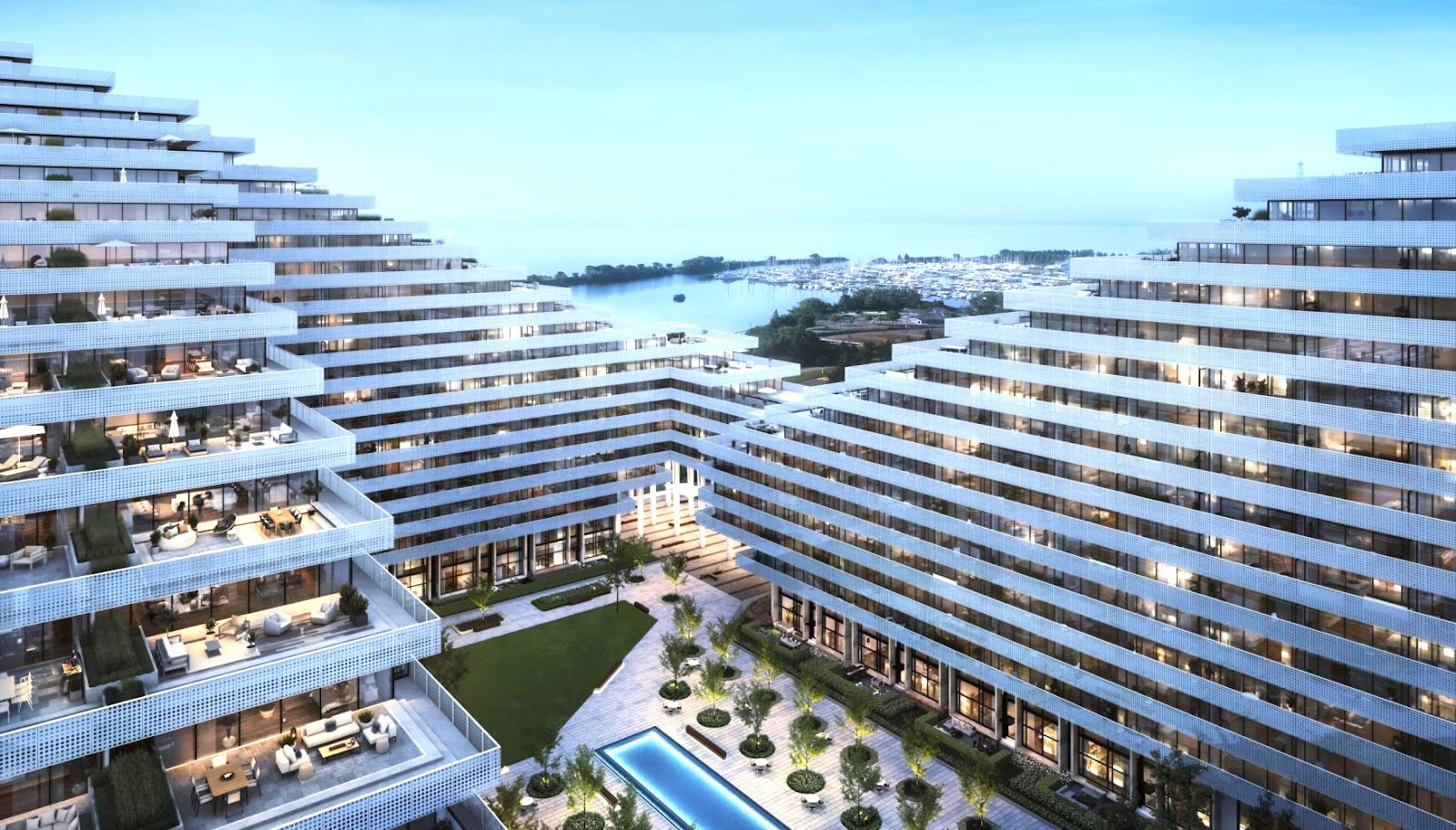
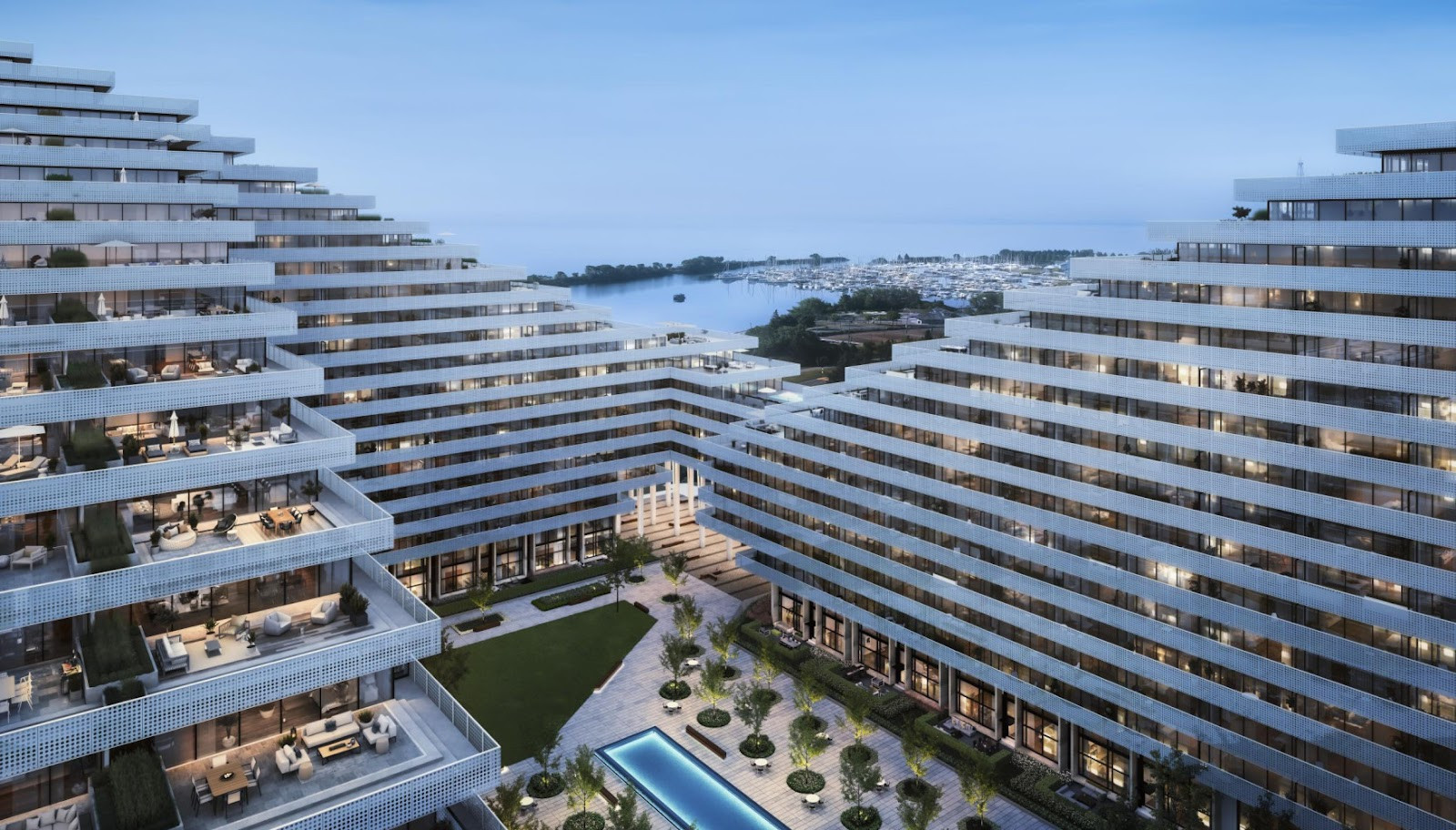
The look of Lakeview Village was much more dense than originally envisioned after the developer pushed the provincial government to allow double the number of units.
(Lakeview Community Partner/Tridel)
Now, three years after the zoning order steamrolled those plans, the City of Mississauga has confirmed to The Pointer that the massive waterfront development is projected to house closer to 12,000 units, cautioning that what the Province allowed is still the maximum threshold for residential density.
“The City is processing several initial phase Site Plan Approval application submissions from the ownership consortium of Lakeview for a range of built form and uses, including townhomes,” the City’s communications team shared with The Pointer this week. “There have been three blocks which have come forward with the development of townhomes in blocks which had been previously slated to accommodate the development of apartments. It is anticipated that more townhome proposals may come forward in Lakeview. As a result, the trajectory of the density has been lowered and may be projecting towards around 12,000 units.”
The focus on creating more townhouses, replacing some of the apartment buildings originally envisioned, fits with trends across the province, after planners began recognizing the mismatch between the smaller units builders have flooded onto the market for two decades, and what more buyers today are looking for. The City’s own Lakeview Village webpage now describes the project as a 12,000-unit development, including 800 affordable or attainable units. Three blocks that had previously been planned for apartments are now being changed to townhouse development, according to information provided to Deborah Goss, president of the Lakeview Ratepayers Association.
Goss, who said she spoke with her contacts at the City and the builder, ARGO Development (the company behind the village’s construction), told The Pointer the reduction was not renegotiated down to 12,000 units, rather, the new figure reflects where trends are currently heading based on the new types of housing being proposed, and emphasized she views the change as positive, catering more to families and those not seeking to own a detached house.
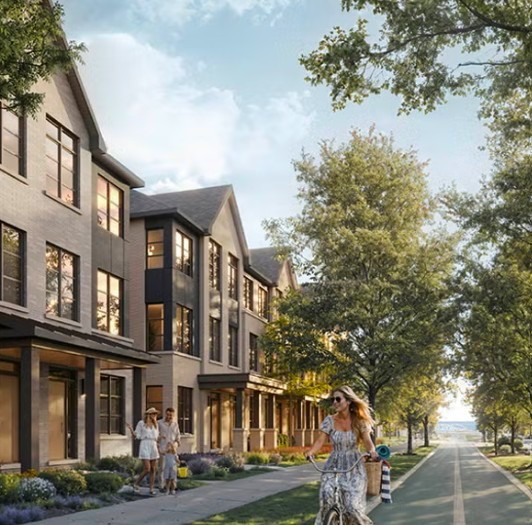
Townhomes will now be more of a focus in Lakeview Village.
(Branthaven)
She said for her the issue is no longer about how many homes Lakeview Village will eventually include, but what those homes will look like and whether the development retains the mixture of housing and public amenities that residents had spent years advocating for.
“It’s not about the number at this point. I've learned to say, ‘let's just not talk numbers’, because it's better to talk about what the housing mix is.”
The shift also reflects the reality of a housing market that has changed considerably since the province doubled the permitted density three years ago. The condominium market has slowed; and developers have faced difficulty moving new high-rise projects forward as demand for different forms of housing has increased.
It has created an opening for townhouses to become a more central feature of the future Village than originally expected, and while the final number remains uncertain, the change could produce a neighbourhood that looks considerably different from what the 16,000-unit figure first suggested. Residents were concerned about what the changed density for the area would look like, after years of planning for much more human-scale built form along the Lake Ontario waterfront.
The residential village project promises to foster an entire new community with schools, arts and culture spaces, recreation and ample shopping, built on the former Lakeview Power Generating Station lands which had cut off the surrounding community from the waterfront for decades.
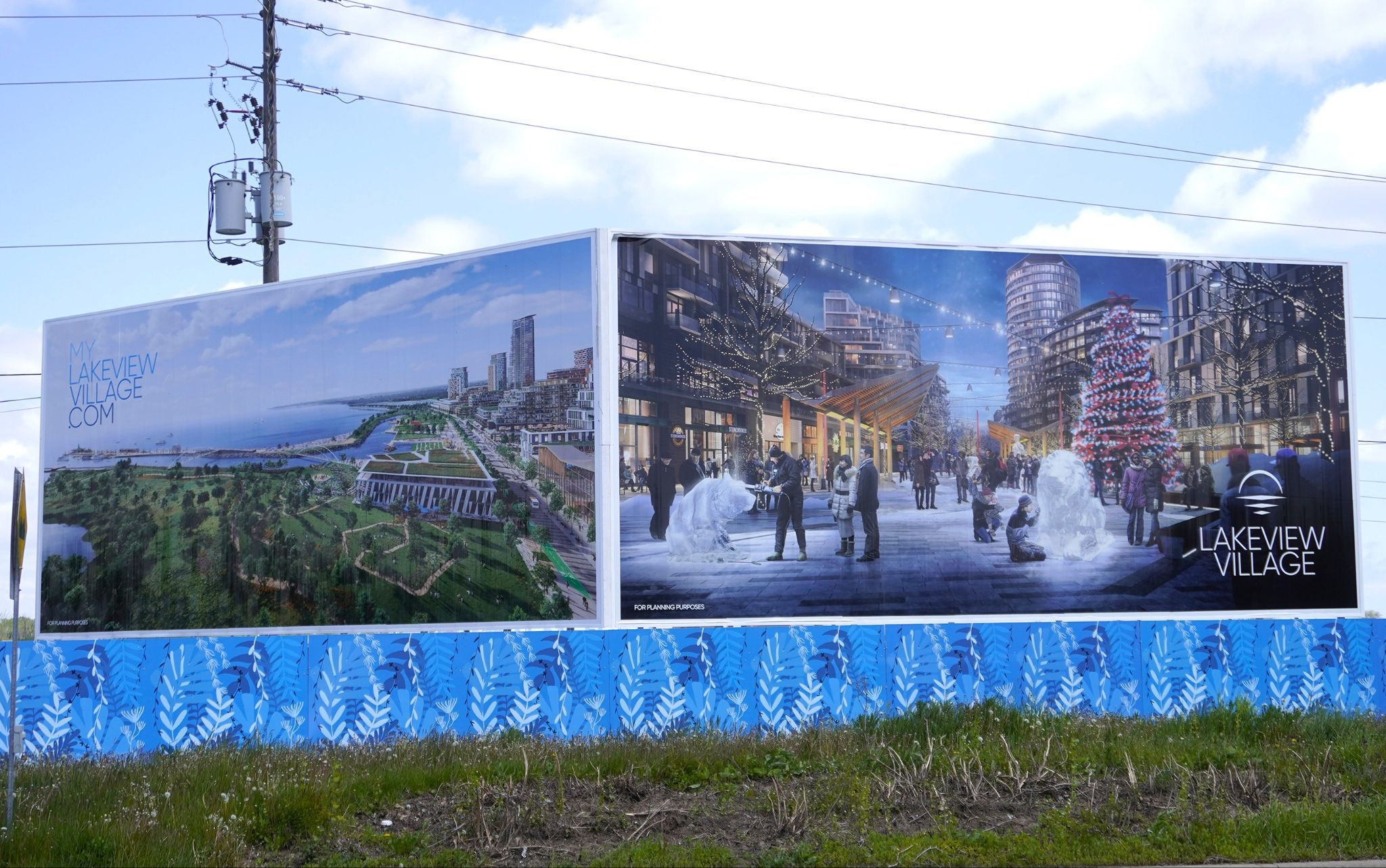
Lakeview Village will reconnect Mississauga with its eastern waterfront.
(Alexis Wright/The Pointer)
The redevelopment became Mississauga’s largest urban planning project ever and was closely associated with the late Ward 1 councillor Jim Tovey who died suddenly in January 2018 after years advocating for the waterfront to be returned to public use. The original planning process was gradual. Residents, City officials, elected representatives and other stakeholders worked for years on how to reimagine the former industrial lands, to transform them into a destination built around a mixed-use community, ensuring access to the waterfront for everyone.
The City’s own documentation shows the endorsed Lakeview Village Development Master Plan in 2019 was to accommodate 8,026 units, with only four percent for townhouses, with the majority of units in mid-rise and taller buildings reaching into the skyline, before a revised planning process increased the number slightly to 8,050 units.
Goss said she was involved throughout the entire process since the beginning and remembers when Lakeview was still being considered at a much smaller scale, before the giant size increases changed the entire orientation and its rollout.
“When we started this, it was a 5,400-unit project, when the local community brought this to the idea of being a residential area. And then by the time we got to the official plan of approval, we were at 8,000.”
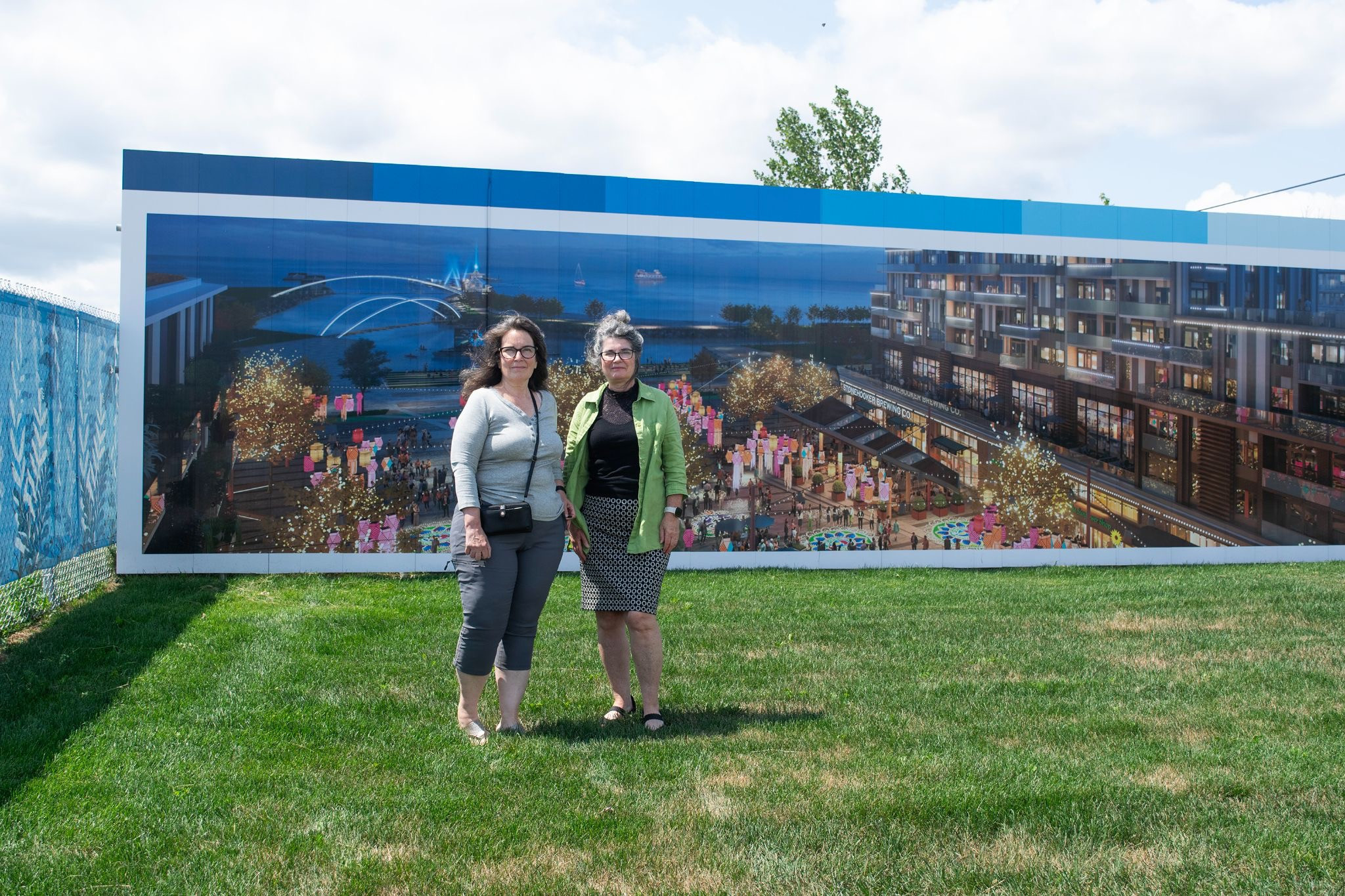
Deborah Goss, right, and Mary Simpson have been instrumental in the design work for Lakeview Village and are happy the final number of units might now be closer to what they originally envisioned.
(Alexis Wright/The Pointer)
The final municipal planning framework was significantly different from what would come later, after the PC government got involved. The City had approved a development based around a mixture of building forms, parks, employment space, commercial amenities and public access to the waterfront. The City’s 2019 master plan described Lakeview Village as a predominantly mid-rise, mixed-use community, with townhouses, mid-rise buildings and some taller built-form elements. That gradual approach became one of the defining characteristics of the original vision.
Then came the MZO.
At the time the surprise decision came, it effectively doubled the projected population from approximately 20,000 residents to about 40,000, well beyond what community members, ratepayer groups and residents were fighting for, essentially throwing out the years of discussion and partnership. The sudden move, motivated by developer-profits, was viewed as “insanity.” The decision came without the same community planning process that had produced the original Lakeview plan with Bonnie Crombie, who was mayor at the time, speaking out against the increase. She said the community had spent more than a decade working with Lakeview Community Partners to establish a master-planned waterfront community…then Doug Ford stepped in.
The decision created immediate concern among residents and municipal officials about how roads, schools, transit, parks and other infrastructure could accommodate the additional density, resulting in the City subsequently working with the provincial Land and Development Facilitator and Lakeview Community Partners to establish the agreements necessary to move construction forward. In May 2024, the City said those agreements included requirements needed to accommodate up to 16,000 residential units and noted that the site had only originally been zoned for 8,050 units before the MZO doubled the number.
The latest update from the City is not that Mississauga has reduced Lakeview Village from 16,000 units to 12,000, or that the MZO has been replaced or disregarded. According to the City’s communications, the redevelopment “projected” to land around 12,000 residential units, still means the number could change as development evolves alongside market conditions, which could result in a higher or lower number of residential units as the massive development process, which is expected to continue beyond 2040, wraps up construction in about 15 years.
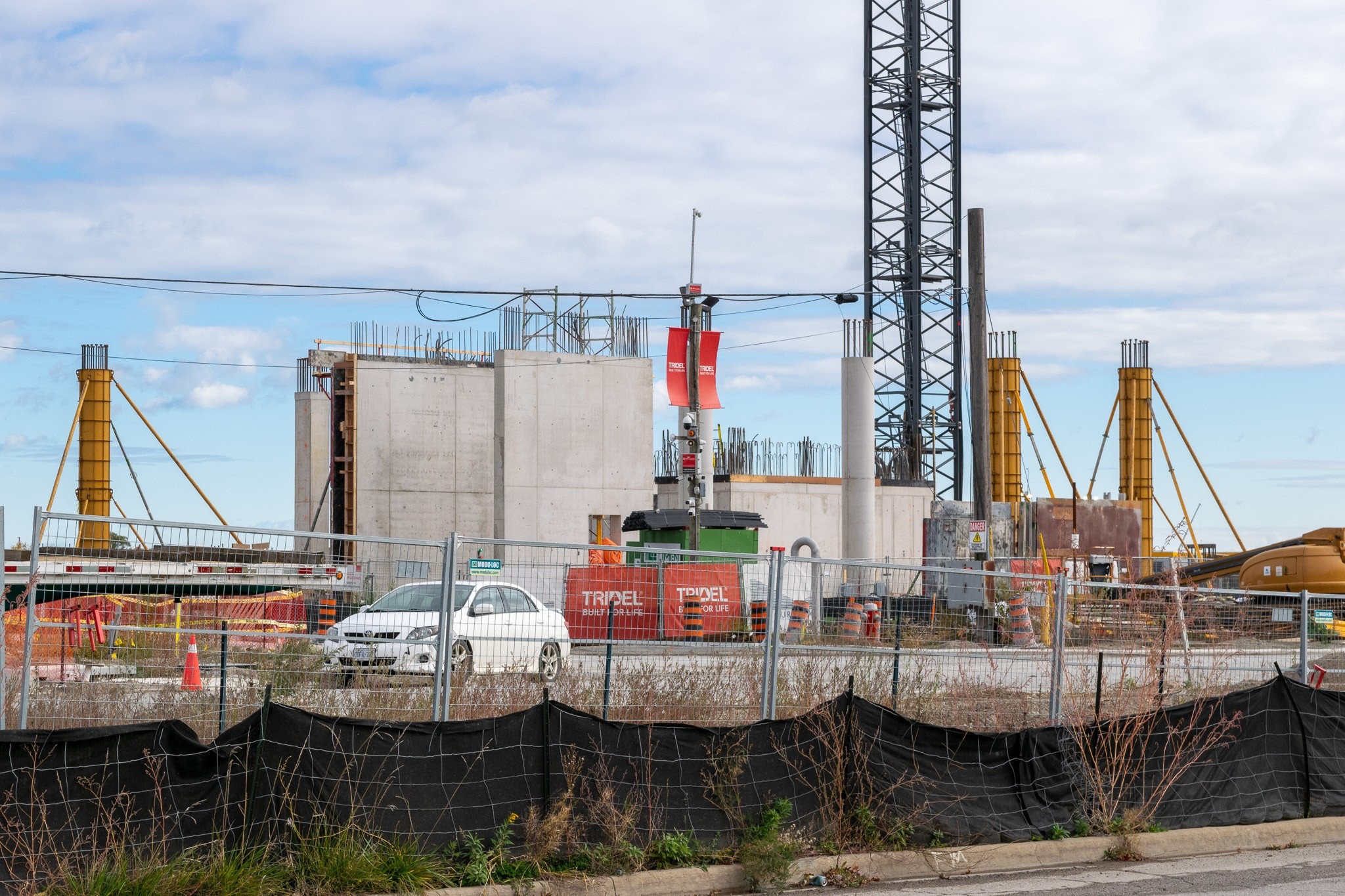
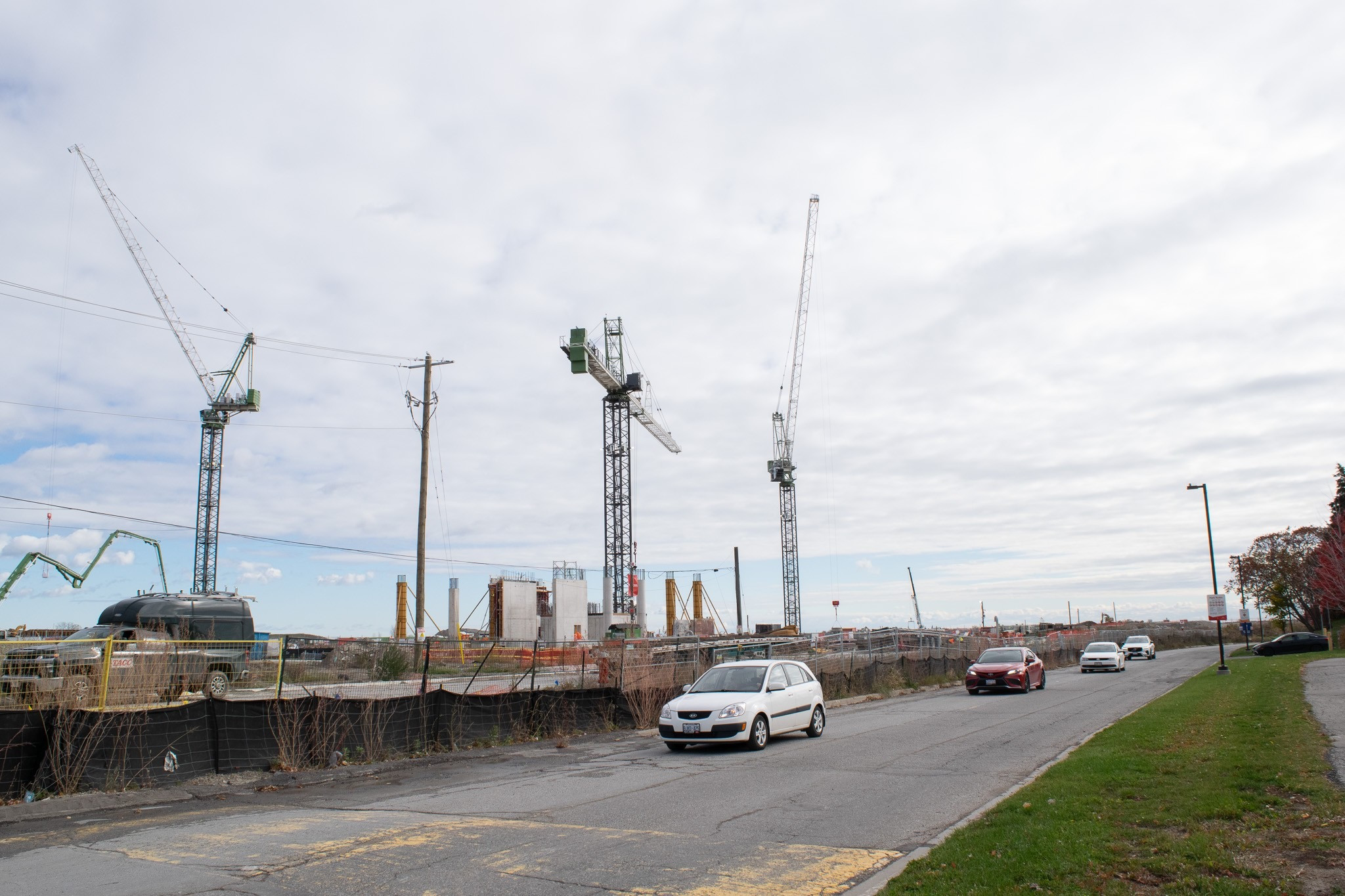
Lakeview Village, being built on 177 acres of former provincially owned industrial land, will be completed in about 15 years.
(Alexis Wright/The Pointer)
The reduction is being driven in part by the updated housing mix of the area. According to information provided to Goss by the City, blocks 4, 8 and 9 are changing from apartment development to townhouse development, lowering the number of units that can be accommodated in those precincts.
Goss was initially cautious about the new number because she wanted to know whether the reduction represented a formal negotiation between the City and the developer, however, after speaking with City officials and reviewing the information available to her, the explanation became clearer: the reduction to the 16,000-unit capacity stems directly from the changes in the proposed housing mix, but the City nor the developer has negotiated a number lower than what the MZO allows.
She stressed the difference between a projection and a commitment—the number has changed too many times for her to count. The distinction is important because Lakeview Village is expected to take years to complete with the first properties not slated to be done until 2028. The housing market could change again before or after.
“Maybe it's going to take a lot longer for this project than originally. We all thought maybe it will evolve; it won't be about the numbers, it will be about how the development evolves.”
The condominium market has weakened since the 16,000-unit MZO was issued, making it more difficult to move additional high-rise projects forward. In 2024, Lakeview was already facing the broader problems affecting the Greater Toronto Area condominium market, while some of the units being marketed on the site were priced well beyond what many Mississauga residents could afford.
Tirdel, one of the partners in the Lakeview Village consortium, was seen promoting its luxury development and future housing on its website. A 599-square-foot unit was listed at $787,000; while a 1,621-square-foot unit would cost $2,525,000. The Region of Peel reported that the current market prices were too expensive for over 80 percent of residents in the region, with few details on how many of Lakeview’s units would be considered affordable under the definition used by Peel Region (a cost that represents 30 percent or less of a household’s income spent on total housing).
In Canada’s Census 2021, the median individual income in Mississauga was $39,200 before taxes, and $35,600 after taxes. This would mean the monthly income would be less than $3,000 after taxes. With a $40,000 deposit the one-bedroom mortgage cost for Tridel’s 599-square-foot unit at a five-year fixed rate of 5.54 percent (amortized over 25 years) is $4,577. The figure does not include all the other expenses used to calculate overall housing cost, such as utilities, property tax, insurance and maintenance, on top of monthly condo fees charged by the property manager. This could result in a final monthly cost of $6,500 which would require a salary of about $240,000 before taxes for a unit just under 600 square feet.
As the individual units seemed out of reach for almost all residents looking to live along the waterfront, the proposed townhouses provide developers with another way to bring housing to the site at a potentially manageable cost. Ward 1 councillor Stephen Dasko told The Pointer that developers approached him about replacing some proposed tower developments with townhouses and said he supported the idea because the homes would be more family-oriented and could provide another option for people trying to enter the market.
“When they came with this, I thought this is a very credible and important initiative.”
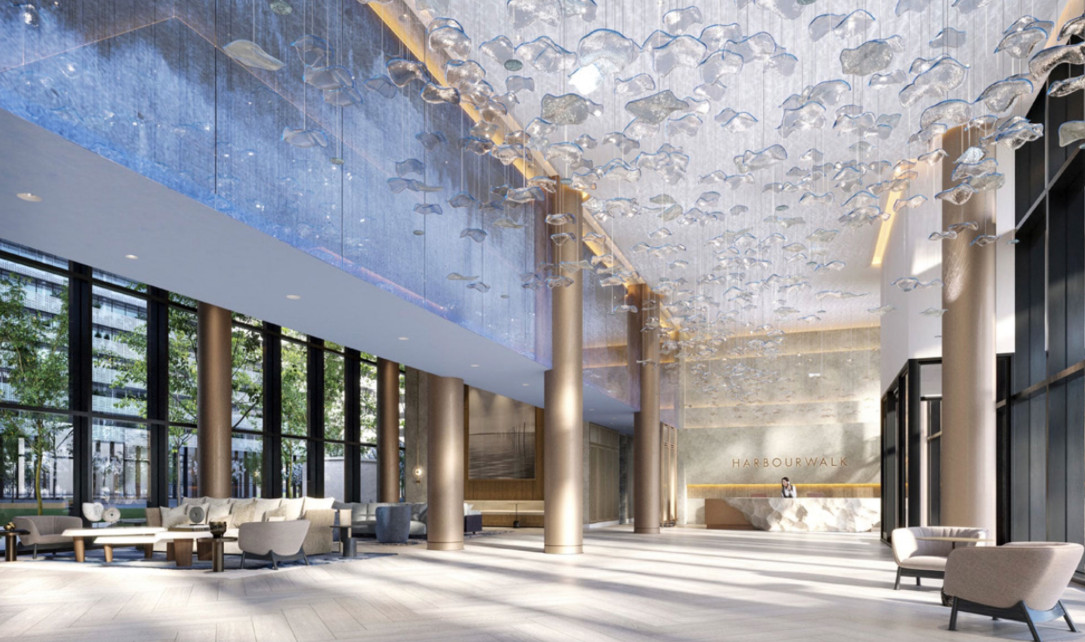
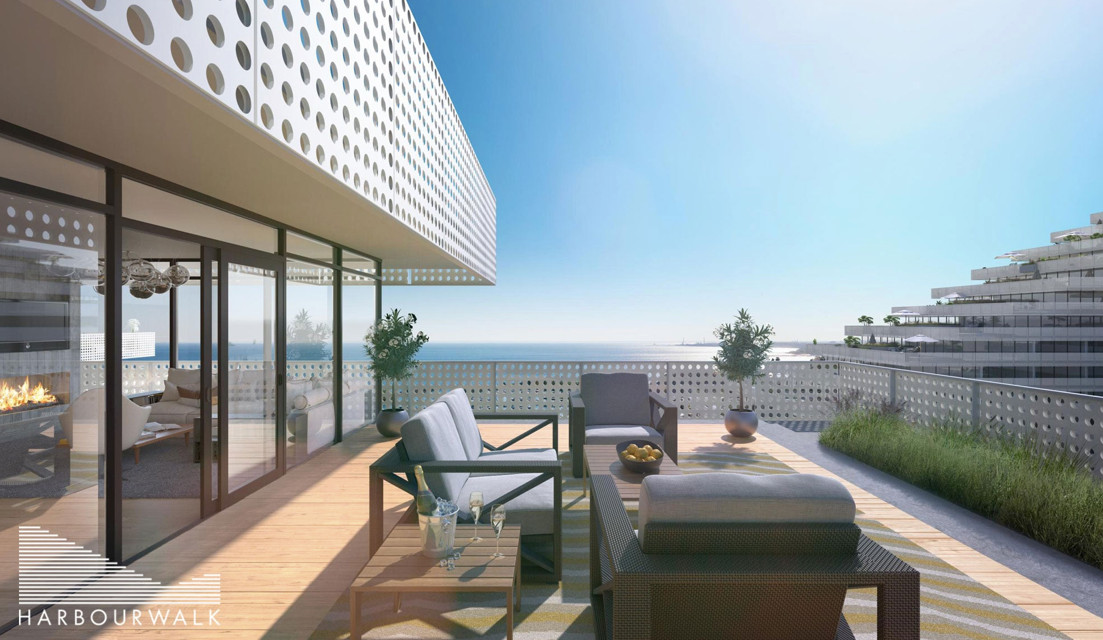
Early renderings show the lavish interiors of the proposed condos at Lakeview Village.
(Tridel)
Dasko said some of the new townhouse projects are being marketed in the mid-$500,000s. That would not make the units affordable for lower income earners but would allow middle-income earners to find housing in Lakeview. The luxury condominium units that have been previously marketed at Lakeview would, however, remain out of reach for most.
One development currently being marketed in Lakeview Village, Aura by Caivan, advertises townhouses from the high $500,000s. For Goss, the move toward townhomes represents something the community has been asking for.
“The condo market not being the place to be right now has been good for Lakeview and the housing mix of having townhouses is something that we always advocated for. So, we'll get townhouses for now in the next year and a half to two years. That's a good thing.”
The change also means the final community could have a different physical character than what people imagined when the province announced the 16,000-unit MZO. Instead of simply adding more towers, some of the additional development pressure is being absorbed through different forms of housing.
“It's better for people wanting to move into the community because they've got choices. They've got choices if they want to buy a condo, if they want to buy a townhouse, whereas prior to that, they didn't really have much of a choice unless they were buying a single-family home,” Goss said. “It's just offering more choices, which is a good thing.”
The city describes the current development as a 177-acre mixed-use neighbourhood with residential, employment, parks, trails, transit and public waterfront amenities. An Innovation Corridor is intended to provide employment space supporting thousands of jobs. The City says Lakeview Village is expected to have more than 1.5-million square feet of employment space for approximately 9,000 jobs.
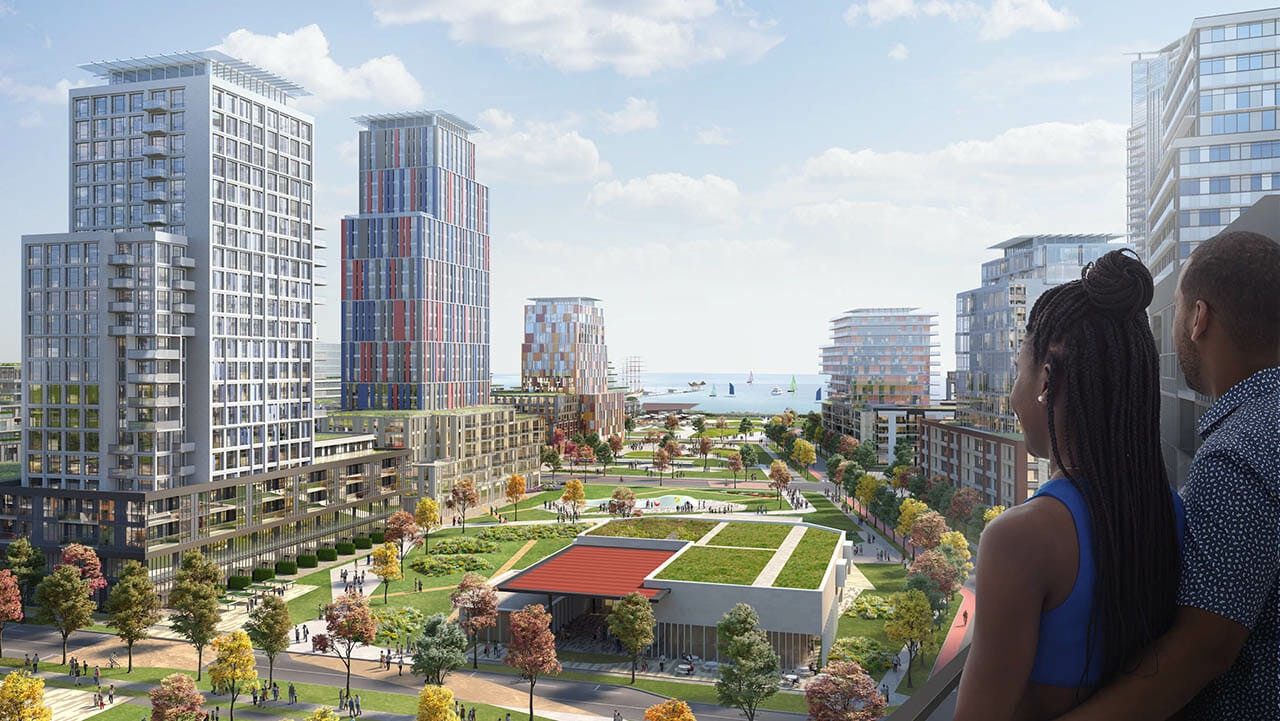
An early rendering of the Lakeview Village project.
(City of Mississauga)
The employment component is an important aspect of the future community because, according to Dasko, the idea is that people will be able to live, work, shop and spend time in the same neighbourhood and said the townhouse development fits into that vision.
The City and Dasko confirmed that construction is already underway for on-site services including water, sanitary and hydro infrastructure, storm drainage and roads. Construction on Lakeview Village’s first residential building, Harbourwalk by Tridel (described as luxury condo living), began in October 2024. Buildings are being constructed while other portions of the site are still being designed, approved and brought to market.
Residents are questioning whether the infrastructure promised to support these new residential buildings will arrive quickly enough. Goss said her issue is not about the unit count, but whether the City delivers the green public spaces that were part of the original vision.
“The focus was done, finished, approved, [and] everybody sort of swallowed what happened, and we had to move on, there's only so much time you can spend on this. For me, it's been the push for the parkland.”
The City plans for more than 45 acres of parkland and green space across Lakeview Village, including six parks.
City officials say a planned pedestrian bridge will connect the waterfront trail across the existing channel toward the Jim Tovey Lakeview Conservation Area.
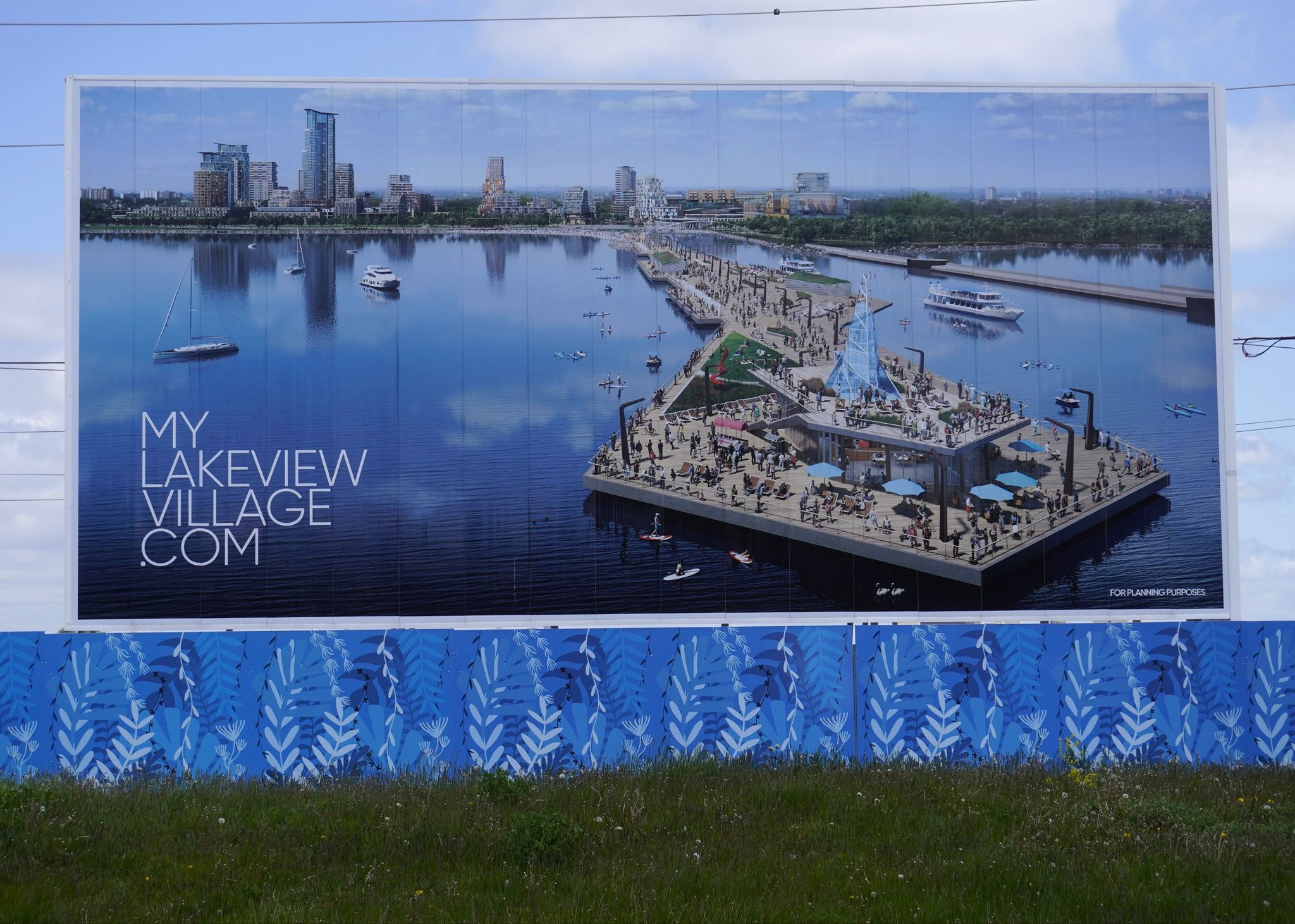
Another major piece of the Lakeview Village project is the planned pier, described as an “iconic” feature that will hopefully become a year-round destination for residents and visitors.
“People need to be out of their homes, out of their condos, which mostly it's condos right now, there will be townhomes, but the townhomes don't really have a lot of garden space with them,” Goss said, emphasizing that the pier and other features will help connect residents to the surrounding natural world.
Initial funding breakdowns suggested the $120 million budget for the pier would be split between the City of Mississauga, the Government of Ontario, the Lakeview Community Partners and the Region of Peel, with each contributing $30 million. The City, Province and Lakeview Community Partners have each approved their share.
The Region of Peel’s contribution created significant turmoil at the upper-tier municipality, with councillors outside Mississauga refusing to fund the full $30 million. Instead, council approved $5 million, contingent on the Province covering the remaining $25 million for the Region.
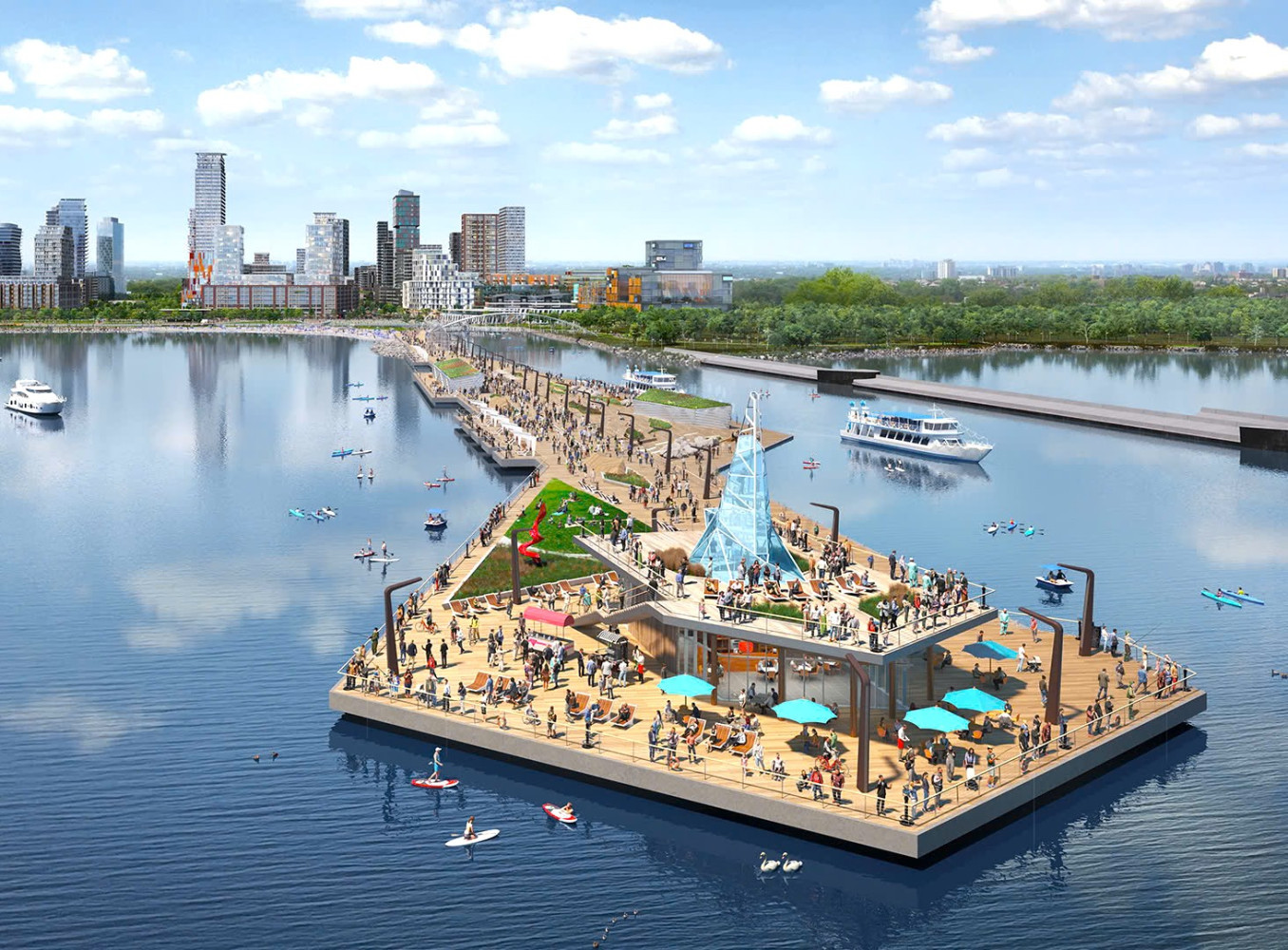
The proposed pier at Lakeview Village.
(Lakeview Community Partners Limited)
Lakeview Village remains one of the largest new communities being built in Mississauga, with Lakeshore Road as the primary east-west corridor serving the area. The waterfront village could see over 20,000 residents that will eventually need to travel throughout different areas of the city. To tackle the issue and avoid gridlocking an area that already sees high amounts of drivers during rush hour, Dasko said higher-order transit will be imperative to accommodate the development. Dasko says the City has been advancing the Lakeshore Bus Rapid Transit project to add several stops along the corridor to support the community, with federal and provincial funding supporting the plan.
The longer-term goal, he said, is to create stronger connections between Mississauga and Toronto and make Lakeview less vehicle dependent, which is consistent with the City's vision for the area as a complete community.
The shift toward townhouses is also taking place against a complicated history between Lakeview residents and the City.
Goss said she was involved in the Lakeview Community Advisory Panel, which gave residents a formal role in the earlier planning process. That process helped shape the development that ultimately reached the 8,000 units, which made the provincial MZO that ballooned the number overnight hard to swallow, suddenly doubling the capacity without any consultation with the panel, she said.
“The slap in the face was the 16,000, because we negotiated ourselves to that 8,000. That was done. It was finished.”
The MZO was not negotiated through a community planning process. After it was steamrolled through in 2023, residents felt they were blindsided by the PC government. Goss says the decision changed the community's relationship with the provincial government and how local stakeholders view development processes that are supposed to be influenced by residents who expect to shape their own community. They haven’t had the same formal involvement with the project since.
“I don't see it as a developer decision. It was a provincial decision,” she said. “There's been no communication from the City since the official plan amendment. I ask questions every so often, and I do get some answers, but we haven't been part of the process since that MZO came in place, which blindsided us.”
Goss said she wished her association could have been part of the conversation around the recent proposed reduction.
“It would have been nice to have invited in the Lakeview Community Advisory Panel."
When she reached out to the City, officials remained entirely receptive to working with her and the ratepayer’s association, responding to all her questions within 12 hours, but there was no invitation to help shape the latest decisions around the types of housing stock that will be offered and how the changes will impact the final numbers the City has to plan for.
The shift toward townhouses does not resolve the broader affordability concerns that have surrounded Lakeview Village since the MZO was put in place. In 2024, The Pointer reported that only five percent of the units would be “affordable” but the plan lacked clarity about how those homes would actually be priced within reach for lower income earners.
The issue is particularly relevant because the province's justification for increasing Lakeview's density was tied to Ontario's housing supply crisis. But more units do not automatically mean more affordable housing. The new townhouse developments could provide a different price point than some of the condominium units previously marketed at Lakeview, but they should not automatically be described as affordable housing unless they meet the applicable definitions established by Peel Region. Dasko said the developers reached out to him several months ago and were interested in making the townhouses part of the “missing middle”, offering them in the mid-$500,000 range.
“It's a collaborative process. They came forward [and] said that they wanted to make them more affordable.”
He added that the City cannot dictate market prices unless the housing is formally designated as affordable housing and then can work with the developer on how to design them with affordability in mind. The shift from towers to townhouses may make the development more accessible to some households, but it does not by itself help solve the lack of affordable housing in the project. It does, however, provide a broader range of housing types which Goss considers a victory.
“We wanted this to be a complete neighborhood,” Goss said. “Not just having an area full of high-rises.”
For her, the success of Lakeview Village will ultimately be measured by whether it becomes the human-scale complete community that residents envisioned, rather than limiting the final number of units.
For a development that has moved from 5,400 homes to 6,800, then 8,000, then 16,000, another change in the number is hardly unprecedented or surprising to Goss. What is different now for her is the reason for it.
For the residents who spent years arguing that the waterfront should become a village-like community rather than simply another collection of towers, Goss sees this as a step in the right direction.
“Instead of just having condos, now you've got townhouses, so it's better for the community.”
Email: [email protected]
At a time when vital public information is needed by everyone, The Pointer has taken down our paywall on all stories to ensure every resident of Brampton, Mississauga and Niagara has access to the facts. For those who are able, we encourage you to consider a subscription. This will help us report on important public interest issues the community needs to know about now more than ever. You can register for a 30-day free trial HERE. Thereafter, The Pointer will charge $10 a month and you can cancel any time right on the website. Thank you
Submit a correction about this story

