
Peel votes to fund Lakeview Pier–but debate over who really pays exposes deeper rift
Peel taxpayers will cover at least $5 million for a planned $120 million waterfront pier in Mississauga, and potentially as much as $30 million after regional councillors voted on June 25 to back the Jim Tovey Lakeview Pier project.
The vote was not unanimous.
The original proposal under a May 14 motion at Peel Region Council was for the City of Mississauga, the Province and the development consortium constructing Lakeview Village, Lakeview Community Partners, to each contribute $30 million, with a request that the Region of Peel cover the remaining $30 million.
Two Brampton council members said the spending could not be justified with residents lining up at food banks and facing other dire challenges as affordability problems persist.
A new, scaled-back motion to fund the Lakeview Pier passed with all members in support except Councillors, Gurpartap Singh Toor and Navjit Kaur Brar, who both represent Brampton.
It commits the Region to an initial $5 million contribution, conditional on the Province funding the remaining $25 million, which would put the amount covered by Ontario taxpayers at $55 million.
Funding for the project has exposed rifts on Peel’s shaky regional council, as Mississauga members continue to agitate for independence and the transition to single-tier status like Toronto, Hamilton and other large Ontario cities that are not forced to operate under a two-tier system of regional local governance.
On May 14, Mississauga Mayor Carolyn Parrish first brought her motion forward, requesting $30 million from the Region to support the pier project. The debate at the May 14 meeting laid bare a divide that has long simmered at Peel Regional Council. Brampton Mayor Patrick Brown questioned why the region would "write blank cheques" for a project outside its jurisdiction when Peel taxpayers were already stretched thin, while Councillor Gurpartap Toor of Brampton said he could not face his constituents and justify spending $30 million on "a nice pier in Mississauga."
Parrish pushed back sharply, calling Brown’s speech a “performance.”
Brown has repeatedly gone begging to Peel Region Council for funding bailouts after he failed to raise revenues to cover critical Brampton needs, such as money for the city’s second hospital. Even though the Province made it clear that the local share contribution for the expansion of the Peel Memorial Wellness facility into a larger healthcare site was Brampton’s responsibility alone, Brown refused to support a Brampton Council motion that eventually passed without his vote, after he tried unsuccessfully to get Peel Region to cover costs for the project.
Brown and Parrish have also clashed over spending for Peel Police, with the Mississauga mayor claiming her city’s taxpayers are subsidizing policing costs in Brampton, and floating the idea that Mississauga should have its own independent police force so Brampton’s needs don’t continue to burden her city’s taxpayers.
Parrish argued the ask for the pier was modest given that Mississauga taxpayers fund 60 per cent of the regional tax base and that the pier would generate tourism revenue benefiting all of Peel, while residents from across the region would enjoy its amenities. She said annual revenues raised could fund other projects.
The debate ended abruptly when Caledon members disconnected from the virtual meeting, leaving council without quorum, and the meeting was adjourned.
Mississauga Ward 1 Councillor Stephen Dasko, who seconded the motion, said what happened "wasn't the most desired outcome."
Then, two weeks later at the May 28 meeting, Peel Council again decided to defer discussion of the Lakeview Pier until its meeting scheduled for June 25, commissioning a staff report in the meantime on potential funding options.
The Jim Tovey Lakeview Conservation Area, named after the late Mississauga councillor who championed the project, sits on the former Lakeview Generating Station lands on Lake Ontario’s north shore. Peel Region has already spent approximately $58 million constructing the conservation area, with roughly $31 million of that funded through property taxes and about $27 million from water and wastewater capital projects. The conservation area opened on May 30.
The future pier will be the cornerstone of Mississauga’s waterfront redevelopment and a centrepiece of the Lakeview Village project, which is a broader development that has been fundamentally reshaped by Queen’s Park.
As previously reported by The Pointer, in 2023 Premier Doug Ford’s government issued a Minister’s Zoning Order that doubled the size of Lakeview Village from roughly 8,000 units to 16,000, overnight, overriding nearly two decades of community-led city planning without any local consultation.
The decision handed developers the ability to strip height restrictions, eliminate minimum setbacks and scrap the townhome requirement, changes that Mississauga’s own planners were left scrambling to accommodate. The ripple effects have since spread to neighbouring waterfront developments like Rangeview just north of Lakeview Village and Brightwater a few kilometres to the west along the Lake Ontario waterfront just past Mississauga Road. Developers behind both are now pushing for increased density in an area where infrastructure is already struggling to keep pace.
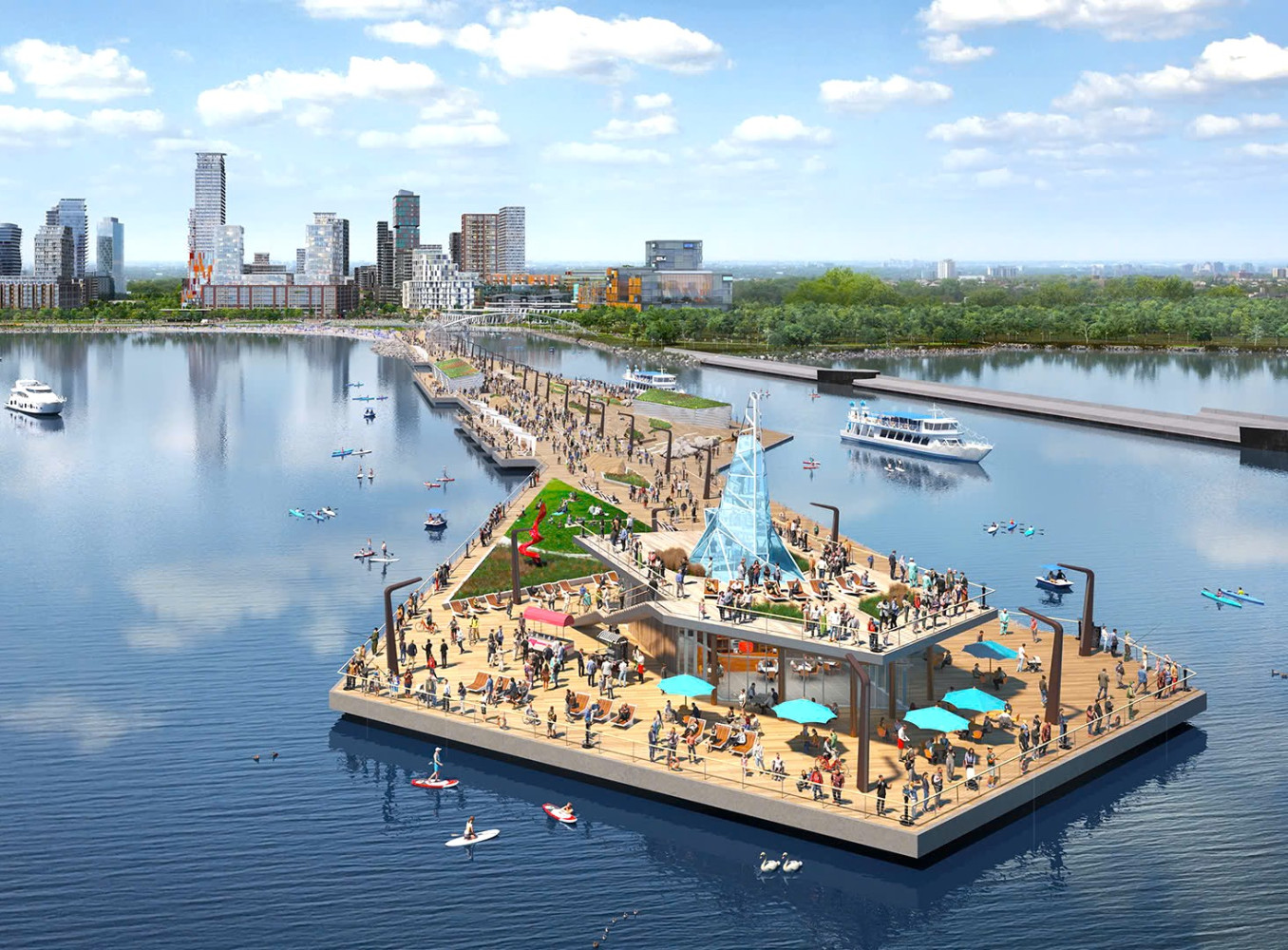
The pier is a central feature of the Lakeview Village plan and is described in a staff report as a tourism, recreation and cultural destination. It also comes with a total estimated cost of $120 million.
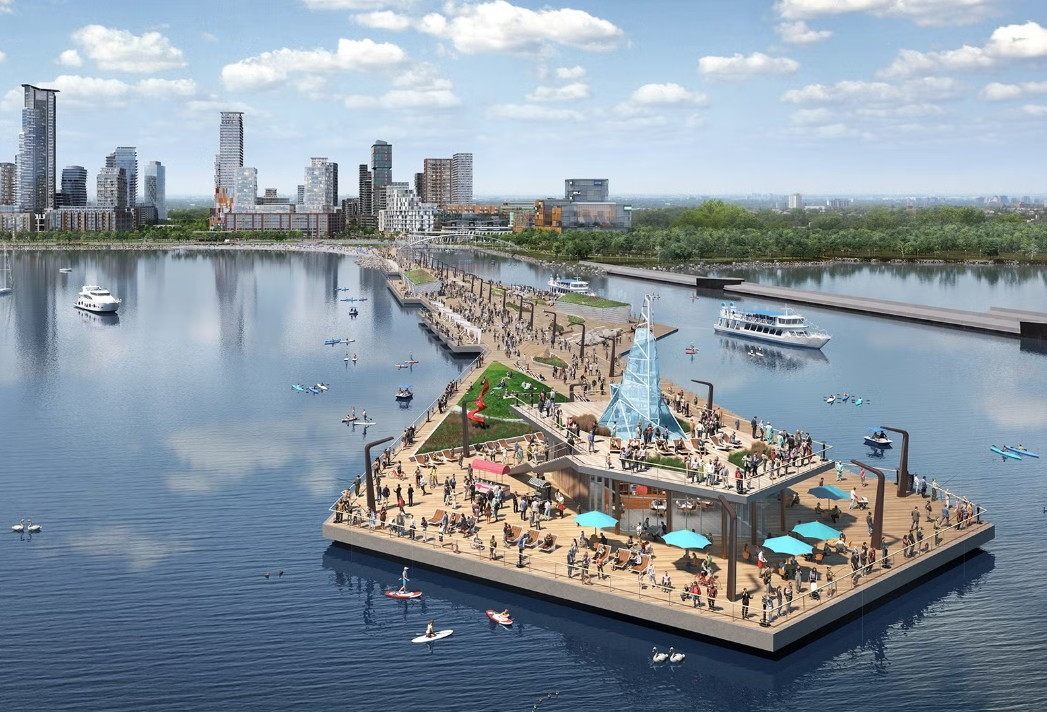
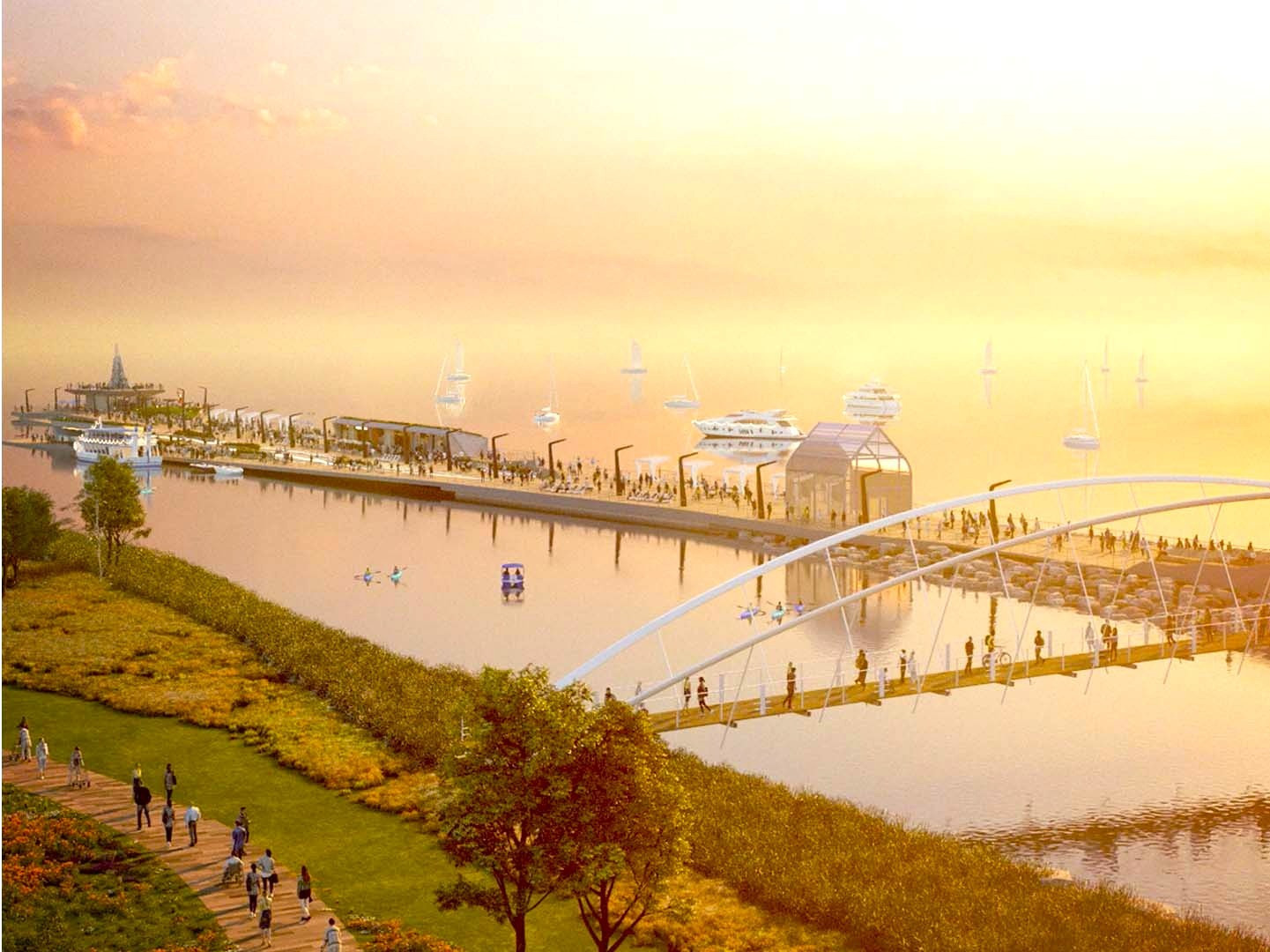
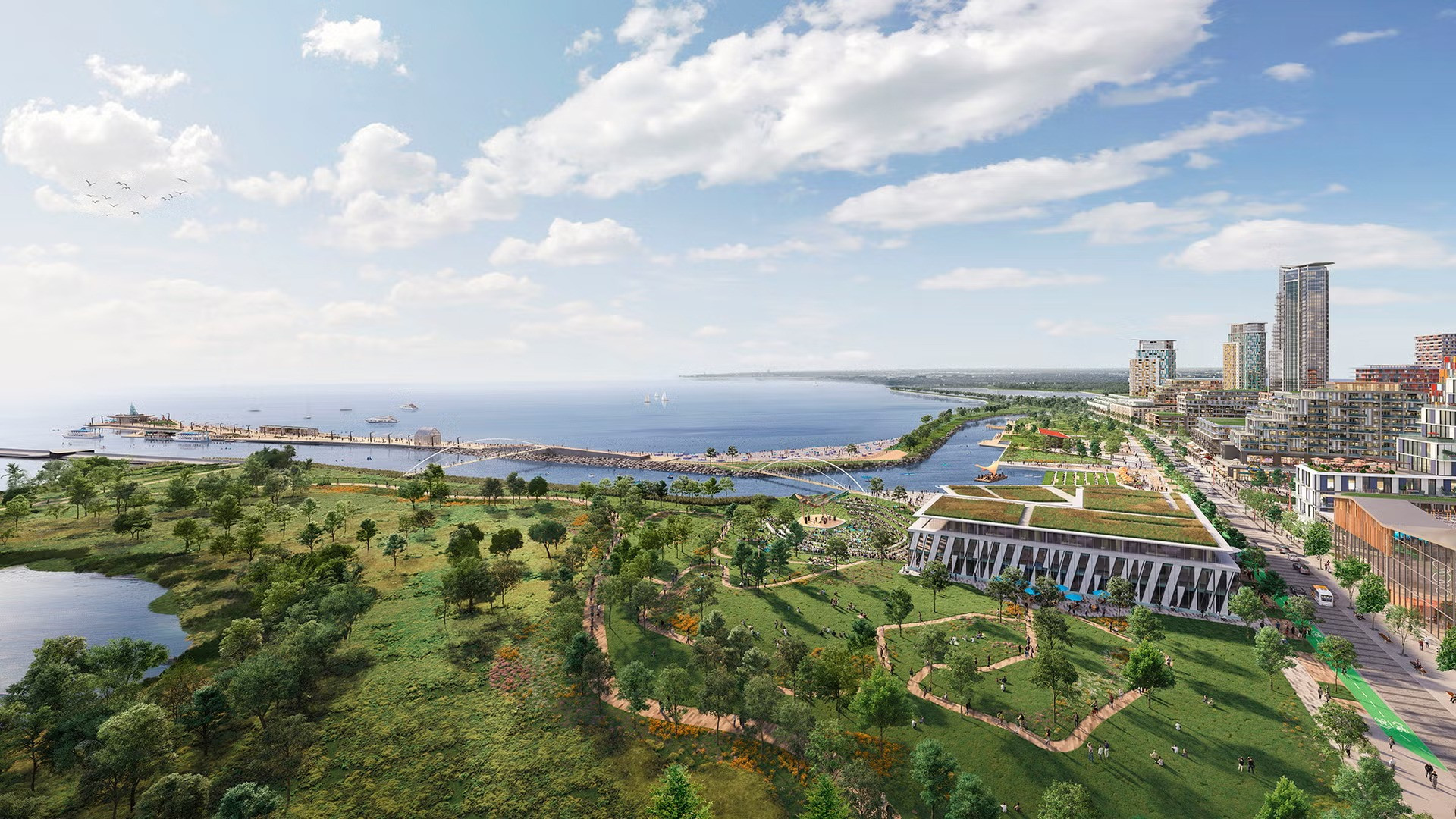
Renderings of the Jim Tovey Lakeview Village Pier on Lake Ontario.
(Lakeview Community Partners Limited)
At the May 14 Peel Council meeting, a motion was made asking the Region of Peel to commit to the full $30 million share, one quarter of the total cost. After pushback from Brampton and Caledon members of council, led by Brown, the June 25 vote represented a more scaled back compromise among councillors.
Peel Region will contribute $5 million toward the pier, contingent on the provincial government stepping in to fund the remaining $25 million, on top of the $30 million Regional Staff said Queen’s Park had already committed to. The motion indicates that “in accordance with their communications to the Regional Chair and Mayors” the Province is willing to provide the additional funding.
When the proposed amount for the Region to cover was $30 million, before the scaled back motion reduced the figure to $5 million, a staff report from Chief Financial Officer Davinder Valeri laid out two scenarios for how the region might fund a $30 million contribution, the full share, that was originally requested by Councillor Dasko and Mayor Parrish.
In Valeri’s report, the impact would range from a 0.76 percent property tax increase if funded in a single year, to 0.25 percent if the funding was spread over three years. Under a 20-year financing model, the annual tax impact would be a smaller 0.06 per cent. However, Peel would pay approximately $18.15 million in interest over 20 years, bringing the total cost to roughly $48.15 million.
Staff explicitly recommended against drawing from existing reserves, noting the contribution was never planned within Peel’s 10 year capital framework and that reserve capacity is needed for core infrastructure and service commitments.
But all of that has now changed, with only $5 million required from Peel Region under the motion approved at the end of last month.
The June 25 discussion was particularly animated.
Regional Chair Nando Iannicca, who said he personally committed Peel to the project when first approached by the Premier’s office, framed the $5 million contribution as prudent.
“Great cities have great waterfronts,” he said. “Understand it that way.”
Councillor Toor delivered the most detailed dissent, arguing that $5 million in regional tax dollars cannot be justified. He argued that tourism investment cannot happen first when his constituents are struggling to find jobs and money for basic needs such as groceries.
“I have tears in the eyes of my residents every single day,” he said. “I cannot, in good conscience, go out there and say I’m giving five million dollars to an amazing project–it’s amazing, it’s a landmark tourist destination, there’s no doubt about it. But how do I go out there and say I’m spending five million dollars on something that we could wait on?”
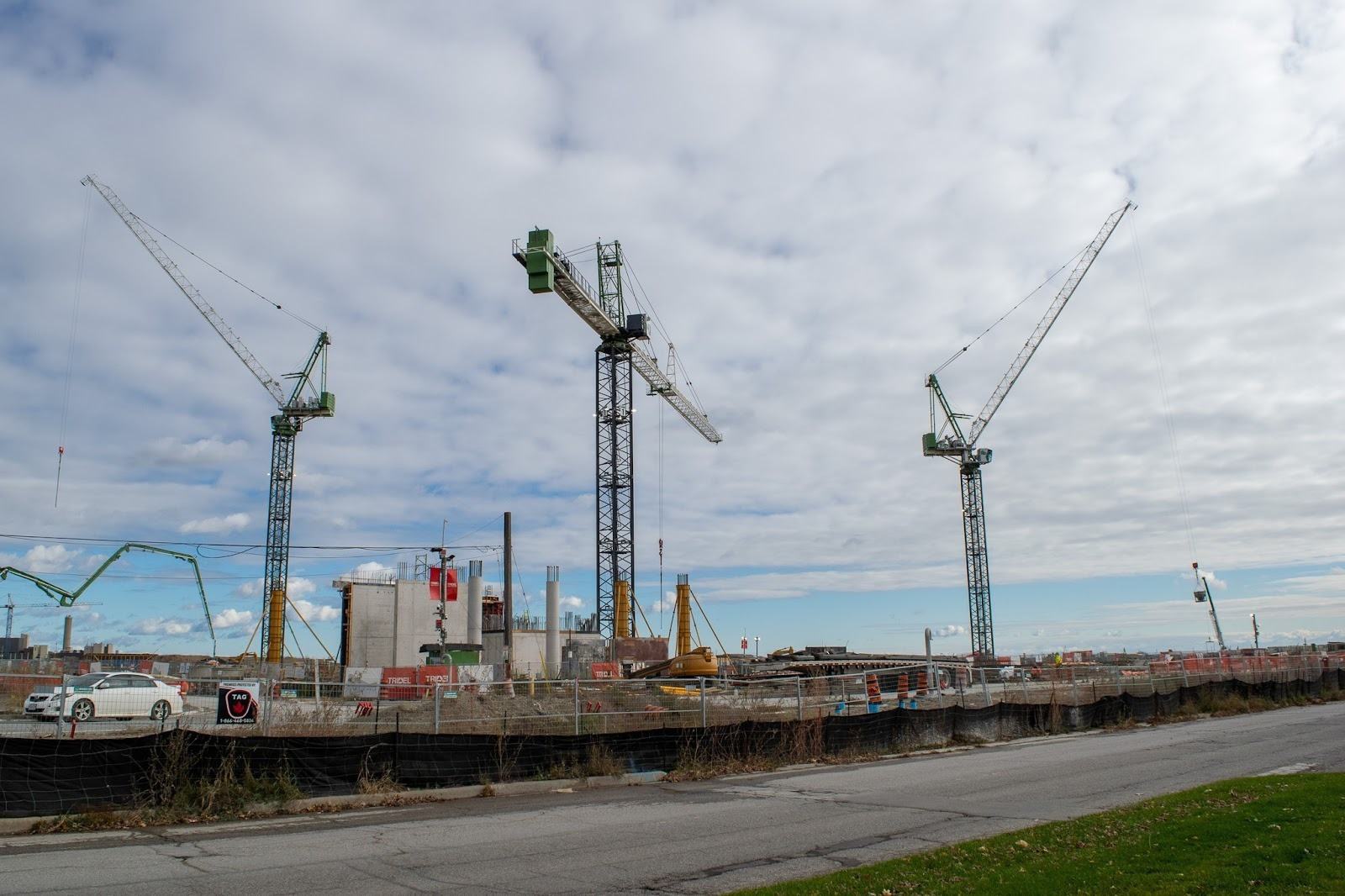
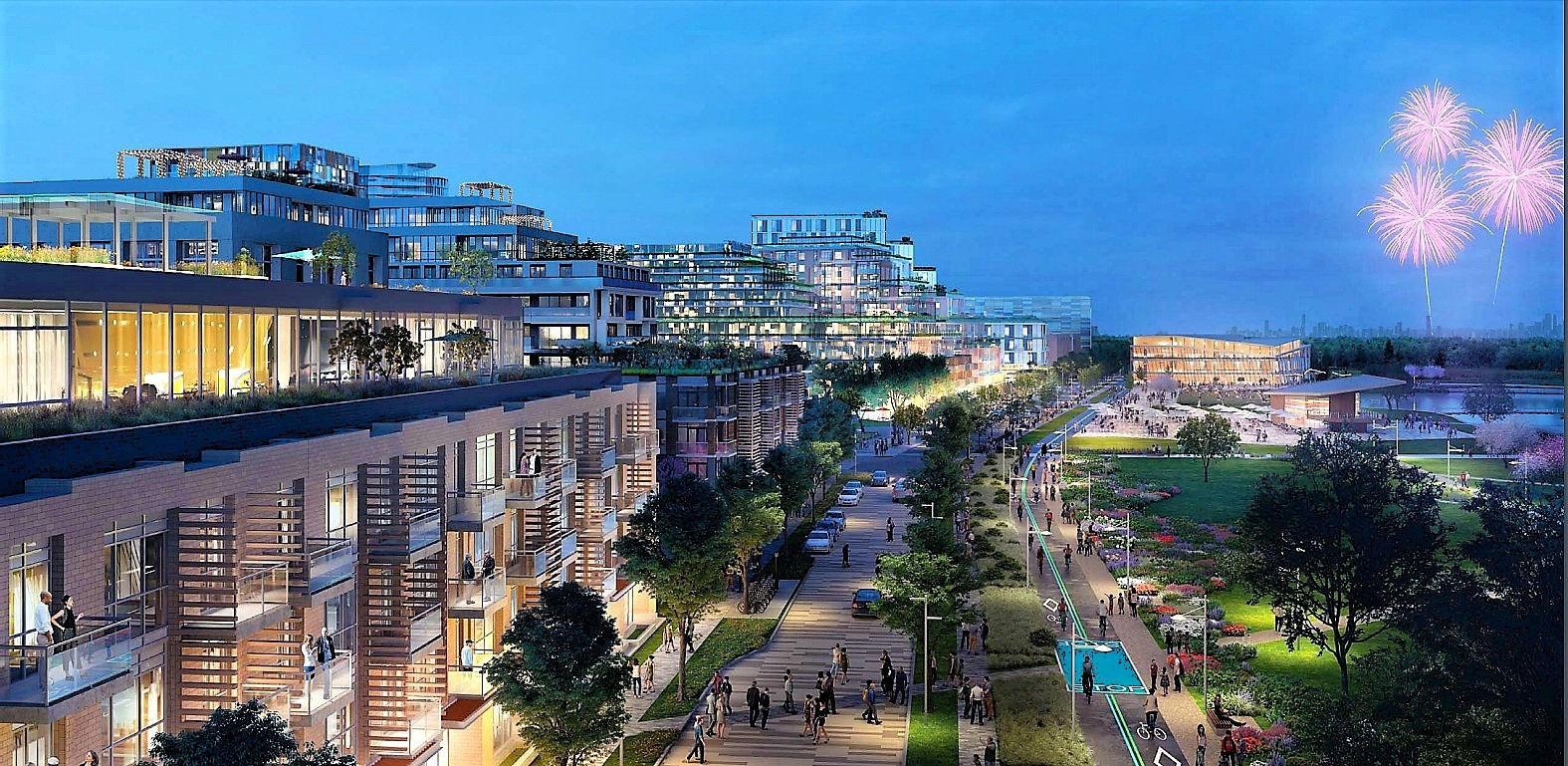
Above: Cranes currently tower over the site of the future Lakeview Village on Mississauga's eastern waterfront. The vision will transform the site of a former coal-fired power plant into a bustling residential development (below).
(Alexis Wright/The Pointer; Lakeview Community Partners)
Councillor Dipika Damerla, who voted yes, offered pointed criticism alongside her support. She questioned how residents will know which part of their property tax bill is funding projects that should belong to another level of government.
“One of the reasons senior levels of government get away with it is because we (City of Mississauga councillors) are willing to own the tax increase,” she said. “If the property taxpayer knew where their money was going, senior levels of government would hear about it. It would change things.”
The vote to fund the Lakeview pier was initially bundled with a separate motion to contribute toward Toronto Metropolitan University’s (TMU) medical school in Brampton. It is unclear why the two items were bundled together after Brown’s insistence, which appeared as a quid pro quo, forcing Mississauga’s support for a project in his city, if Mississauga members expected him and his Brampton colleagues to support the pier. But under Councillor Toor’s insistence the two projects were separated, and both passed.
Under current estimates parts of the Lakeview Village project’s harbourfront features could be completed sometime in 2029.
Email: [email protected]
At a time when vital public information is needed by everyone, The Pointer has taken down our paywall on all stories to ensure every resident of Brampton, Mississauga and Niagara has access to the facts. For those who are able, we encourage you to consider a subscription. This will help us report on important public interest issues the community needs to know about now more than ever. You can register for a 30-day free trial HERE. Thereafter, The Pointer will charge $10 a month and you can cancel any time right on the website. Thank you
Submit a correction about this story

