
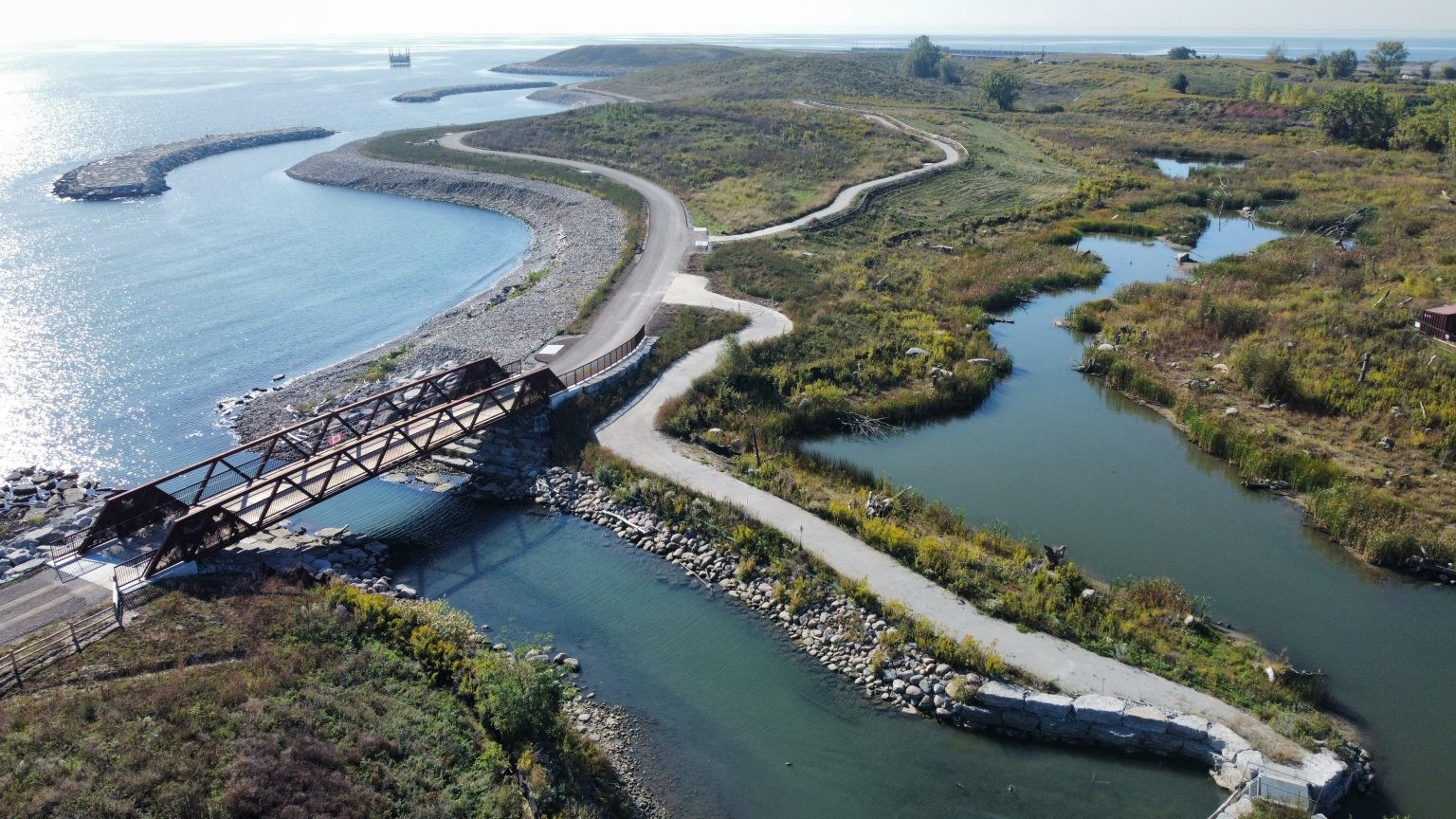
‘A better place for our children’: Jim Tovey Conservation Area set to open this spring
“The most important work we can accomplish is to leave our community a better place for our children,” late Mississauga Ward 1 councillor Jim Tovey said.
His words have since become the guiding principle for the Lakeview community he loved dearly and for the Jim Tovey Conservation Area that is set to welcome kids and families starting May 30 — more than eight years after his death.
Born in Malton and raised in Victory Village in Mississauga to World War II veteran John Tovey and his wife Joan Munn, Tovey’s life was stitched together by creativity and community. After spending 15 years as a vocalist, he sought refuge in carpentry, the local arts community and heritage restoration.
It was in 1989 that he found home in the southeast corner of Lakeview — a community he would help shape into one of Canada’s most ambitious waterfront transformations.

Late-Mississauga Councillor Jim Tovey speaking at the One Million Trees Mississauga launch event at Serson Park on September 22, 2017.
(Alex Gregory/LinkedIn)
It all started at a kitchen table.
In the summer of 2005, Tovey sat down with architecture professor John Danahy to reimagine how the industrial Ontario Power Generation lands could be transformed into a spot for residents to enjoy the pristine waterfront.
“This was probably the only case where a citizens group, a ratepayers group, developed a community plan,” Danahy told The Pointer.
Danahy had hopped on board as a pro bono consultant to the Lakeview Ratepayers Association (LRA) to facilitate community engagement.
One of Tovey’s defining traits was his openness to bringing more voices into the conversation. Rather than sidelining citizens, “a common criticism of modern planning”, the former councillor actively invited residents, experts and community groups to shape the vision for Lakeview.
“Lakeview, at that point, had been taking the brunt of everything that the rest of Mississauga and West Toronto didn’t want…people had been cut off from the waterfront for decades from Cawthra to Marie Curtis Park,” Danahy recalled.
The 177-acres was the site of the notorious coal-fired power station known as ‘the Four Sisters’ which rose above the shores of Lake Ontario. The soaring smokestacks, which expelled a toxic plume of smoke into the surrounding air, and the rest of the plant were demolished in a matter of seconds on June 28, 2007, after 43 years of operation.
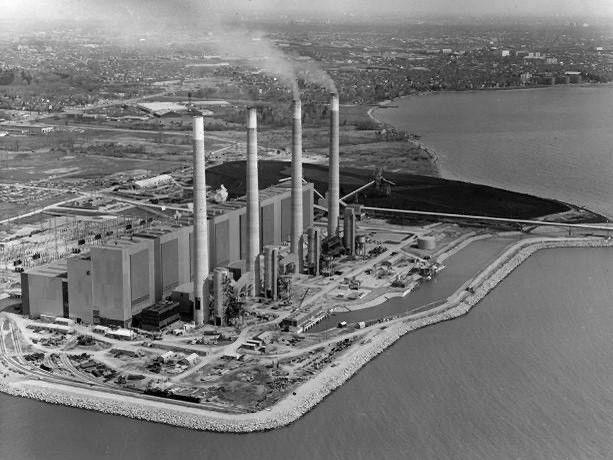
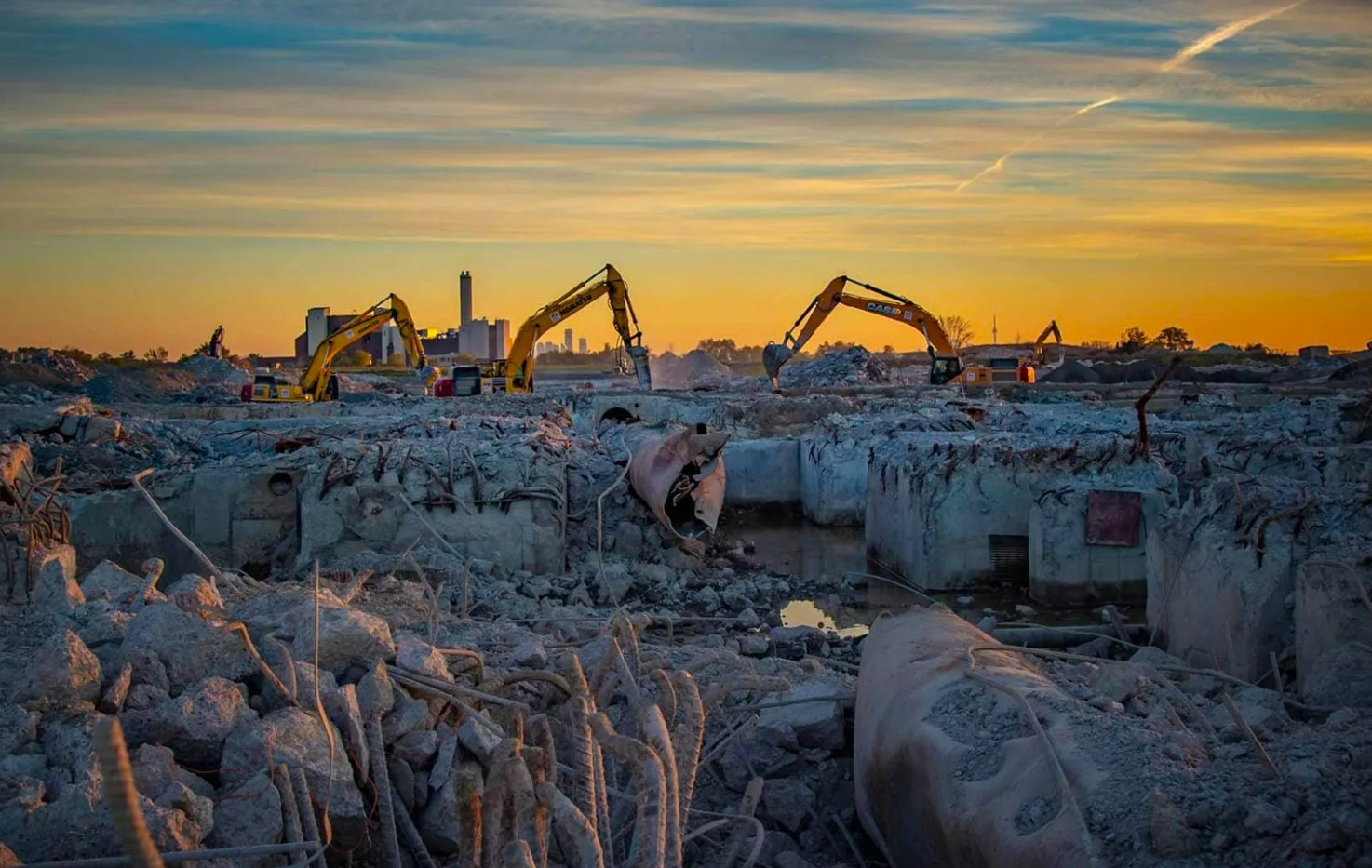

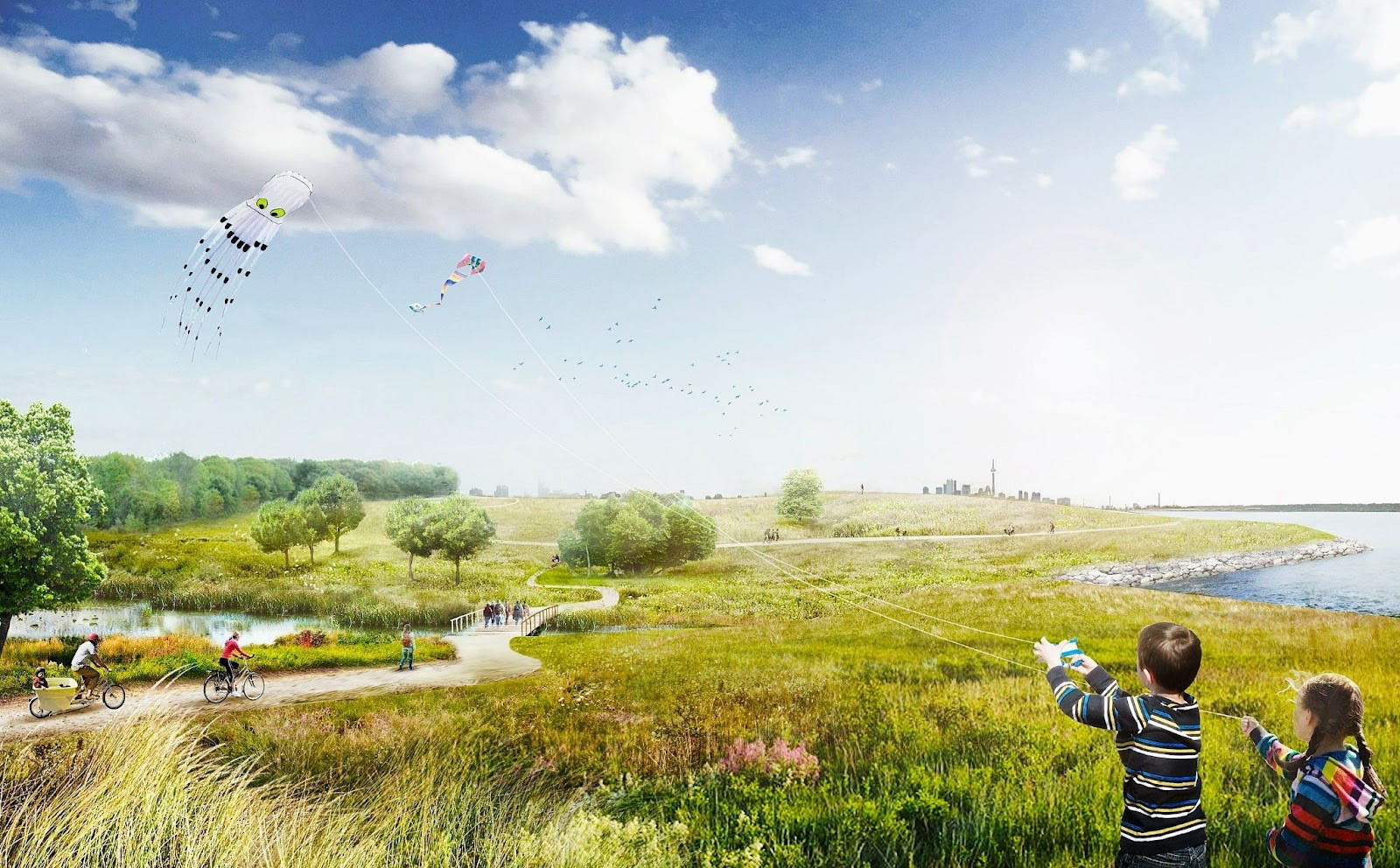
Top; the former Lakeview Power Generating Station; early demolition and beginning of the transformation; bottom, renderings of the conservation areas next to the future Lakeview Village.
(Lakeview Community Partners/City of Mississauga)
Member of Parliament for Mississauga-Lakeshore Charles Sousa recalled sitting down in a boardroom with Ward 6 councillor at the time Carolyn Parrish, long before she became mayor, (Ward 2 councillor) Pat Mullin, Tovey and (Ward 1 councillor) Carmen Corbasson, discussing the best approach to “enable the place to be protected”, ensuring the site would not “host another emitter” since the Ontario government was planning to build a new, modern gas-fired power plant on the same site.
For the next three years, numerous community-wide meetings were held to get feedback.
Soon, Tovey, Sousa and Danahy came to be known as the “three amigos”.
It wasn’t just these stalwarts alone that cooked the recipe for a sustainable future — it was a visit to Sweden after Tovey got elected as Ward 1 Councillor in 2010.
There, Tovey learned about low-carbon district energy systems, networks powered by heat from wastewater, steam from incinerated waste and excess warmth from supermarkets and data centres. When combined with heat pumps, such systems meet over 75 percent of a city’s energy demand.
Absolutely! The Lakeview Legacy Project: a vision of a sustainable village and lakefront park system, under Tovey’s leadership of LRA, was conceived soon after.
With support from Danahy and students at the University of Toronto’s Centre for Landscape Research, extensive research and community input, Tovey presented the Legacy Plan to City Council in February 2008. At the same time, Sousa brought the economic and environmental vision to the provincial cabinet as a Member of Provincial Parliament back then. Sousa is now the Member of Parliament for Mississauga—Lakeshore.
Their plan was persuasive enough: after 120 years of military and industrial use, the land would be freed for public leisure, putting the lake back into Lakeview.
By 2009, the Lakeview Legacy Project became the first citizen-driven master plan adopted at all levels of government in North America, winning two national planning awards.
Between 2010 and 2014, the community worked with the City to refine the dream, culminating in the 2014 approval of the Inspiration Lakeview Master Plan. In November 2021, the Lakeview Development Recommendation Report was approved by the Planning and Development Committee.
In 2023, the province issued a Minister’s Zoning Order (MZO) for the site, approving a request from Lakeview Community Partners to significantly increase density, doubling the number of planned units from roughly 8,000 to 16,000, along with other mixed-uses on approximately 72 hectares of land between Lakeshore Road East and Lake Ontario, while removing key planning controls such as height and density limits and reducing requirements for setbacks, amenity space and other hard fought community design features.
Critics have pointed out the move overrode more than 20 years of municipal planning and consultation and also went against what Tovey envisioned — the Jim Tovey Conservation Area was spared.
In a recent letter to Mayor Parrish, dated March 3, Minister of Municipal Affairs and Housing Rob Flack said the MZO was amended to include what he described as “minor and technical changes” to zoning requirements, intended to clarify interpretation, streamline development review and update mapping within the Lakeview lands as the project moves ahead.
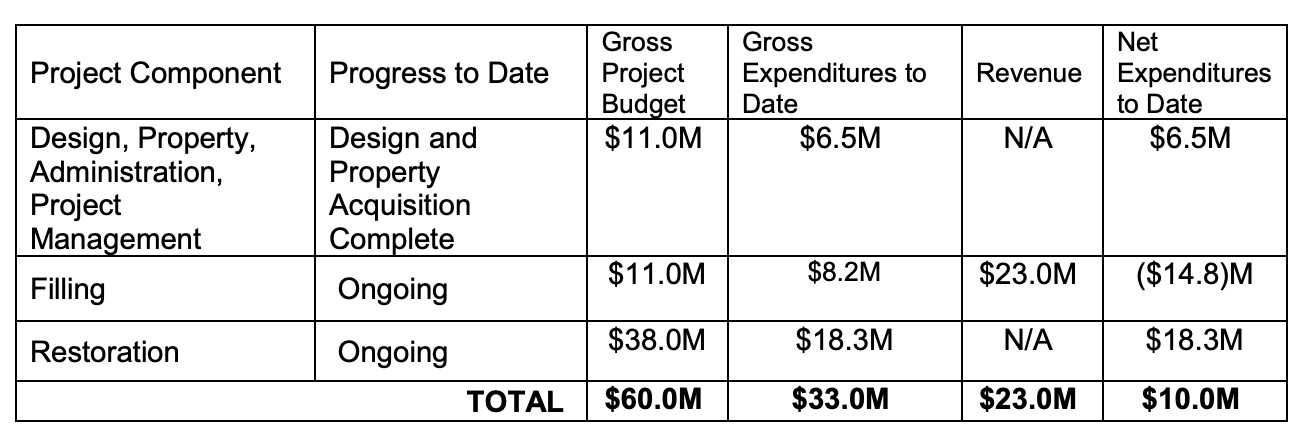
In 2021, the City of Mississauga reported the Jim Tovey Conservation Area expenses totalled $33 million with $23 million offset by revenue from accepting fill, resulting in a net spend of $10 million.
The total budget of the project was estimated to be approximately $60 million. On November 17, 2023, CVC was awarded a $4.1 million investment from the Government of Canada through the Active Transportation Fund to support the conservation area.
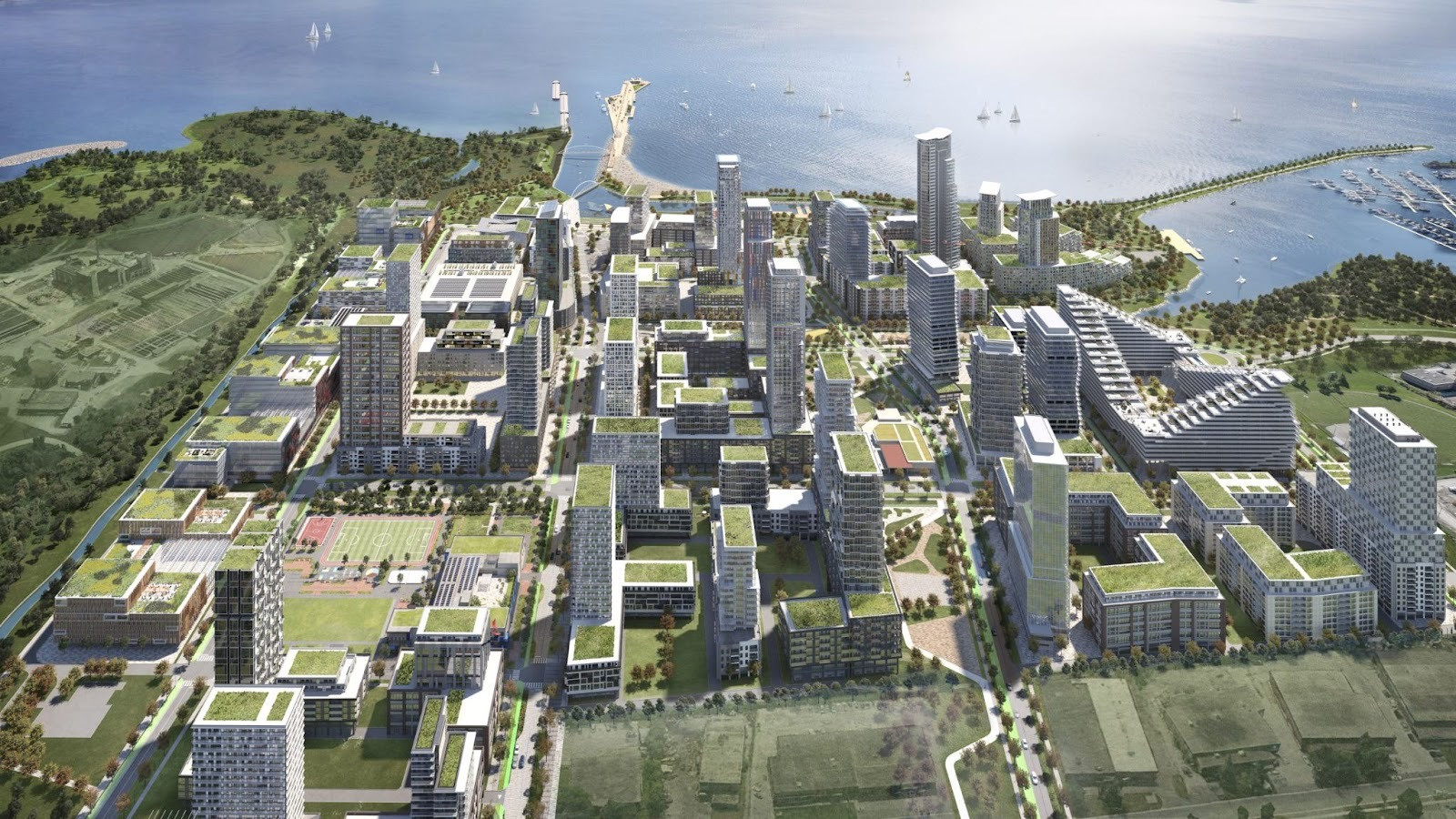
Rendering of the Lakeview Village. Lakeview Community Partners Limited (LCPL) purchased the project site from Ontario Power Generation in 2017 and has since worked with the City to develop the development master plan. The district energy system for Lakeview Village will be owned, operated and maintained by Enwave.
(City of Mississauga)
On January 15, 2018, Tovey passed away suddenly at the age of 68 while driving back from a council meeting.
Just a day earlier, he was still deeply immersed in the Lakeview Village vision, inaugurating Morphology, an evolving photography exhibit documenting the construction of the 26-hectare conservation area along the Lake Ontario shoreline.
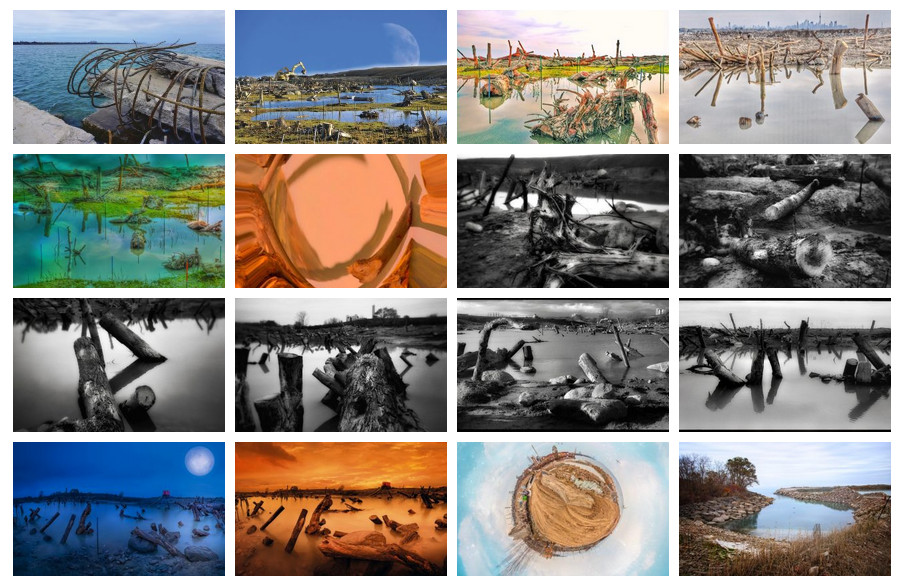
On January 14, 2018, Jim Tovey inaugurated a photography exhibit, Morphology, to document the development of the conservation area in Lakeview Village and highlight the importance of restoring coastal wetlands in urban spaces, using art as a bridge between residents and the environment.
(Lakeview Ratepayers’ Association)
“Jim had amazing leadership, an incredibly intelligent man with remarkable energy and a set of ethics that is rare among anyone who gets involved in political life,” Danahy reminisced.
“Most people get in politics, enjoy the game of politics; he did his politics on the basis of an ethical approach to the next generations. There is nobody that holds a candle to that.”
For Tovey, the Lakeview project was a balance of environmental as well as Indigenous reconciliation.
That meant reaching out to experts beyond the “settler”, traditional planning circles.
Barry Gilbert, founder of Eagle Spirits of the Great Waters, a local Indigenous-led community organization made up of residents in Lakeview and Port Credit with Indigenous roots, was brought in to work alongside the Mississaugas of the Credit First Nation to provide community insight and cultural guidance as the conservation area took shape.
One man who carried Tovey’s collaborative spirit into the design process itself is CVC’s Director, Parks, Lands and Community Engagement, Jesse de Jager.
“Together, they ensured Indigenous voices were involved in shaping the public spaces visitors will experience, from landscape features to interpretive elements, as natural systems experts from conservation authorities focused on restoring wetlands and habitat,” Danahy said.
The conservation area was later named in Tovey’s honour for transforming the waterfront as well as his environmental legacy with the Credit Valley and Toronto and Region conservation authorities (TRCA), and the Great Lakes St. Lawrence Cities Initiative.
“It’s not just memorializing him,” Danahy said. “Everything about it came about because of the way he thought about the problem.”
In October, members of CVC, TRCA and the Region of Peel, along with Ward 1 Councillor Stephen Dasko and MP Sousa, visited the Jim Tovey Conservation Area to witness how far the once-industrial shoreline had come.
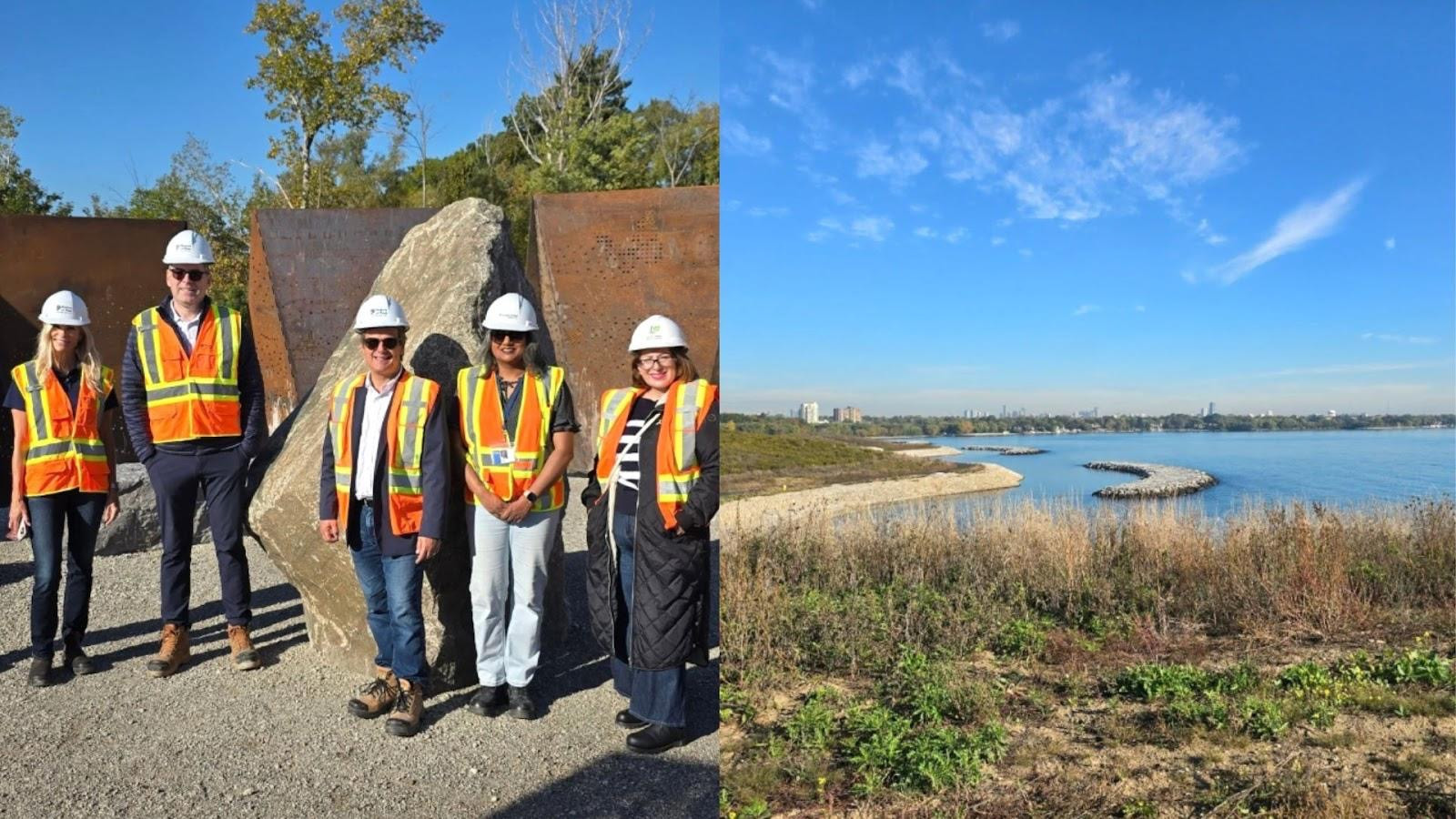
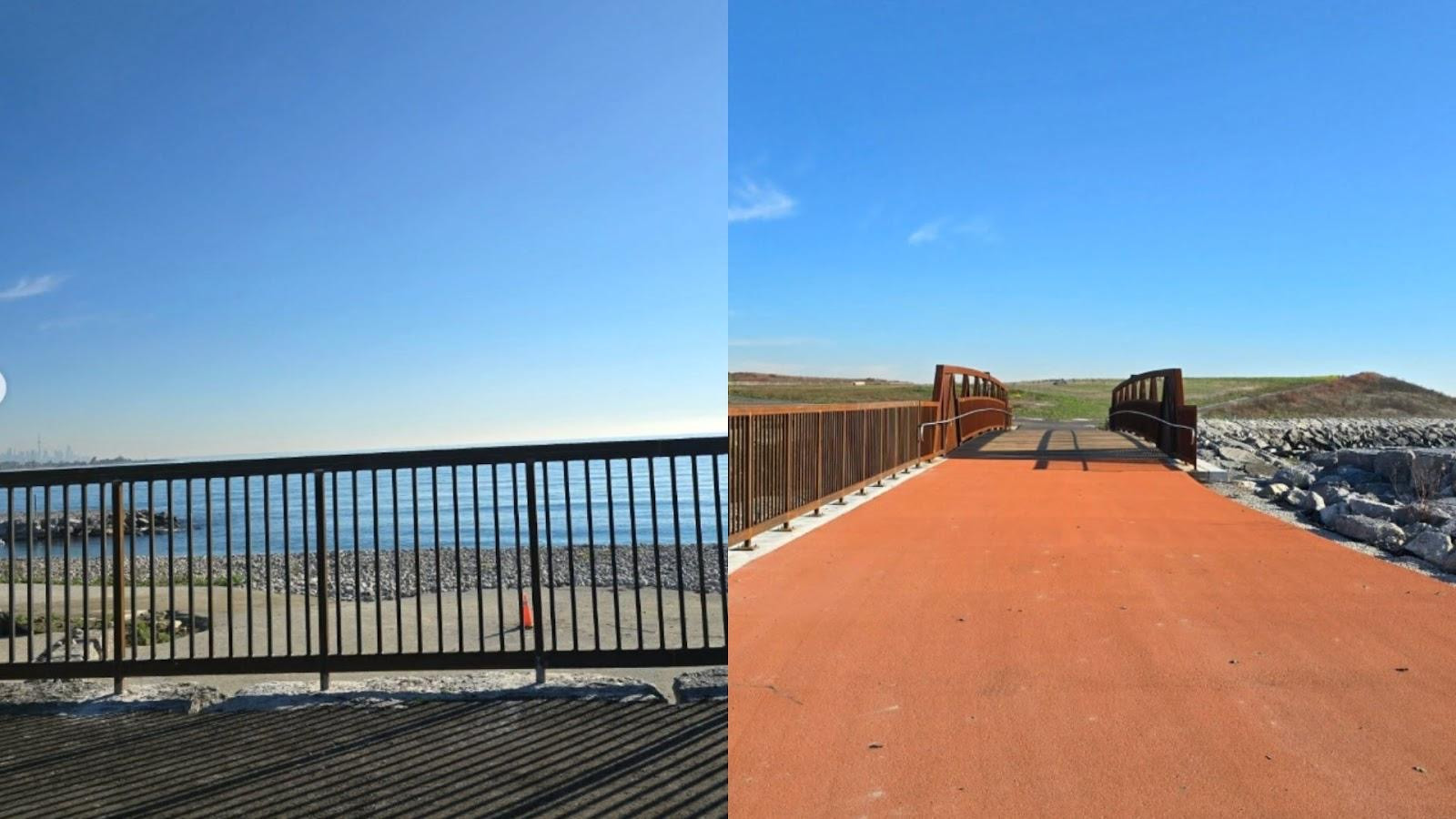
In mid-October last year, Ward 1 Councillor Stephen Dasko visited the Jim Tovey Conservation Area alongwith Member of Parliament for Mississauga-Lakeshore Charles Sousa and members of the conservation team.
(Stephen Dasko/Instagram/Canva)
A newly paved 1.9-kilometre stretch of the Great Lakes Waterfront Trail began winding through the site, reconnecting a portion of Lake Ontario’s shoreline that had long been inaccessible until last year. Another 1.7 kilometres of secondary trails now meander through meadows, wetlands and young forests, inviting visitors into newly restored habitats.
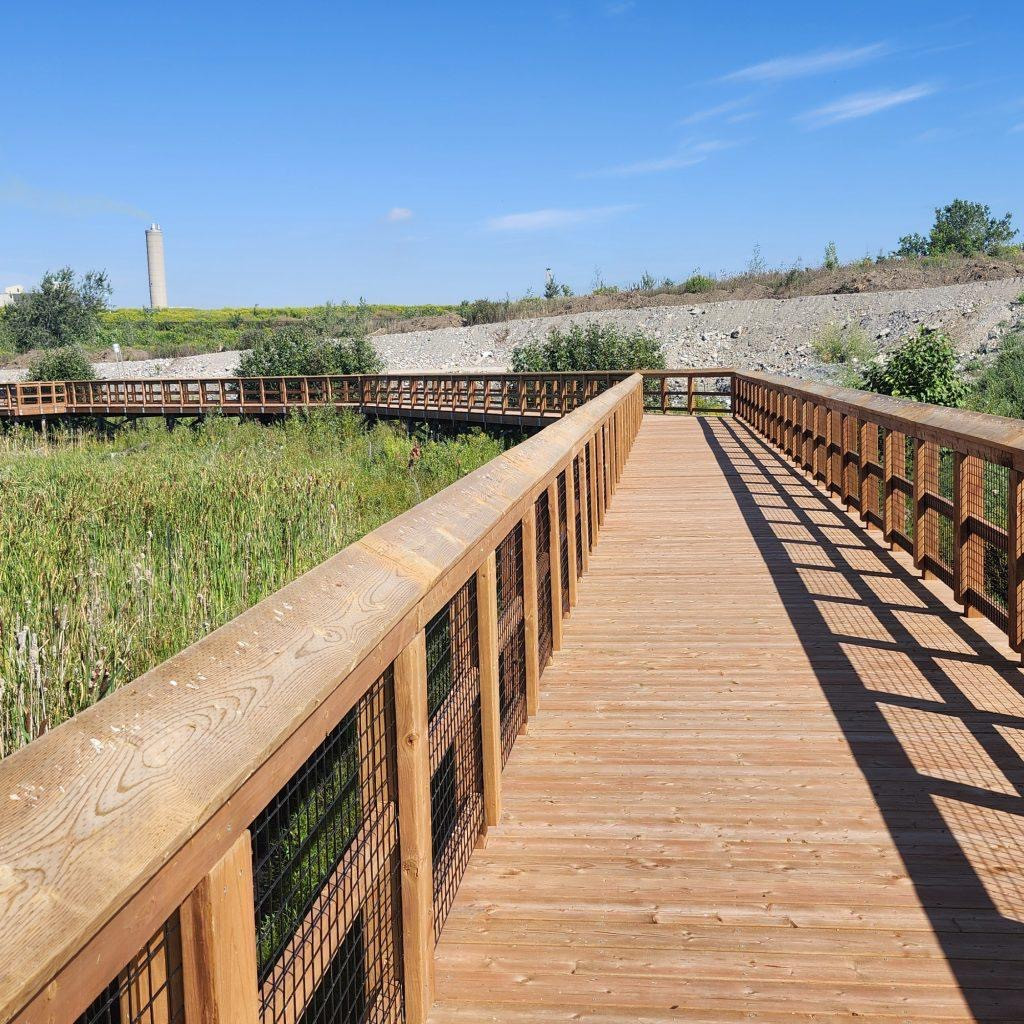
A 170-metre accessible boardwalk trail was among the many projects completed in 2025 at the Jim Tovey Conservation Area.
(Credit Valley Conservation)
Last year, CVC also installed a 170-metre accessible boardwalk, complete with a viewing platform with views of the wetlands and lakefront. Trail-side fencing has been put in place to protect sensitive ecosystems, so that visitors can enjoy the area’s natural beauty while minimizing their impact on local wildlife.
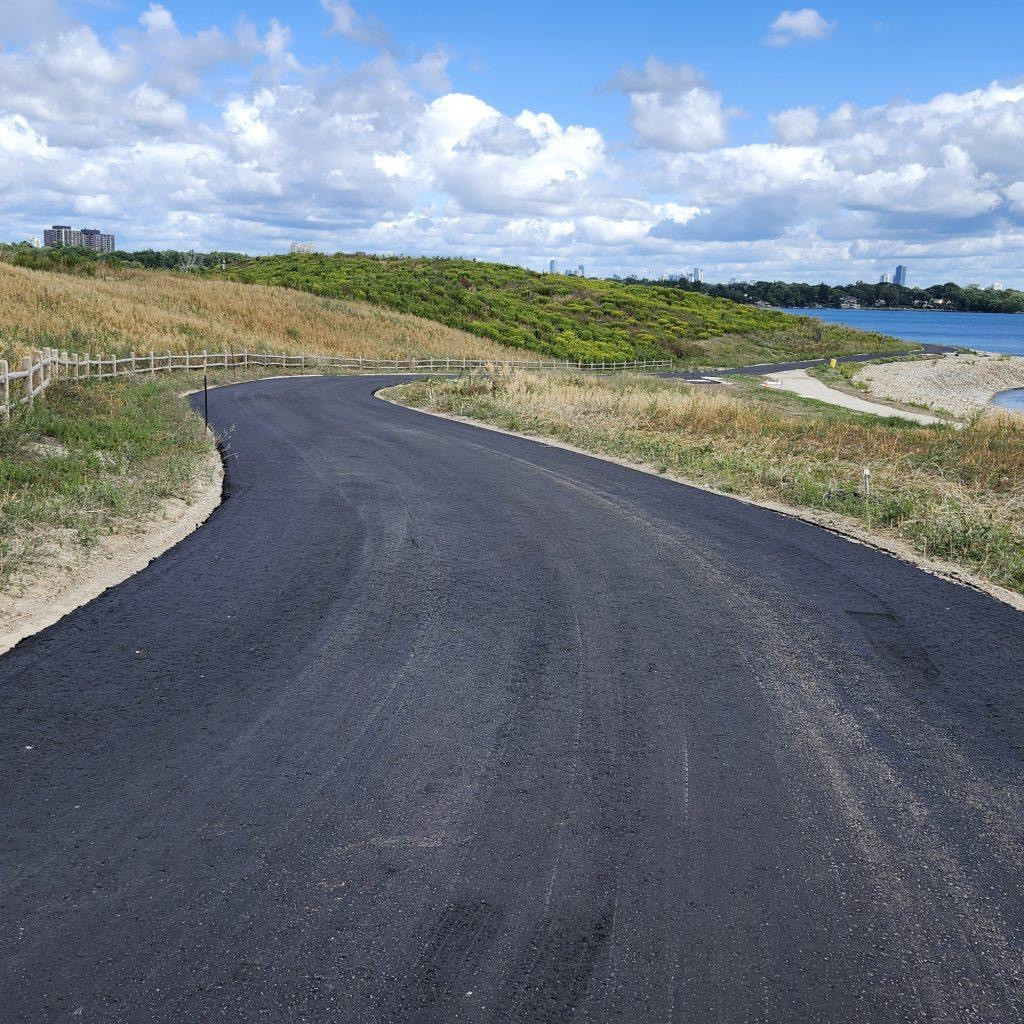
A newly paved section of the Great Lakes Waterfront Trail now winds through the site, reconnecting a stretch of Lake Ontario’s shoreline that was previously inaccessible to the public, bringing the vision of a connected, accessible greenspace to life.
(Credit Valley Conservation)
Two new pedestrian bridges now link trails, boardwalks and scenic lookouts across the site, blending in with the landscape seamlessly.
“This spring we’ll be busy as we prepare the site - installing signage, benches, waste receptacles, bike racks, and other finishing touches to ensure the park is welcoming and easy to navigate,” CVC Acting Manager, Land Planning, Kate Burges, told The Pointer.
Since 2017, tens of thousands of native trees and shrubs have been planted to strengthen the shoreline’s resilience. Conservation teams recently completed their first controlled, prescribed grassland burn to clear invasive species and encourage diverse native growth.
Three newly created wetlands are already showing signs of life. “Previously during our spring monitoring, we found northern pike, suggesting our wetlands likely serve as spawning grounds for these impressive fish, and many more,” Burges reported.
Trail cameras have also captured white-tailed deer, kingfishers, trumpeter swans and snapping turtles — early proof that wildlife is reclaiming the revitalized waterfront, soon to be shared with the people of Mississauga.
“We’re excited to be nearing completion of the public spaces and recreation areas at the Jim Tovey Lakeview Conservation Area and preparing to welcome the public to the opening in May,” Burges said.
Email: [email protected]
At a time when vital public information is needed by everyone, The Pointer has taken down our paywall on all stories to ensure every resident of Brampton, Mississauga and Niagara has access to the facts. For those who are able, we encourage you to consider a subscription. This will help us report on important public interest issues the community needs to know about now more than ever. You can register for a 30-day free trial HERE. Thereafter, The Pointer will charge $10 a month and you can cancel any time right on the website. Thank you
Submit a correction about this story

