
‘The City is dreadfully inefficient’: Mississauga residents question if new mayor can deliver tax relief without sacrificing services in 2027 budget
“What voice do people have?”
That was the question that drove many frustrated Mississauga voters to find out if they could change the way City Hall manages their money.
“I personally think the voice is minimal, if any; I really believe that,” Athina Tagidou, president of the Applewood Heights Residents’ Association, told The Pointer, even though her fellow electors rejected two veteran municipal candidates vying to be mayor once again, in favour of a relative newcomer.
After attending budget meetings, organizing public consultations, challenging council decisions and pressing for independent financial oversight, she said many residents feel their participation is often overlooked by career politicians who settle into their council roles for life.
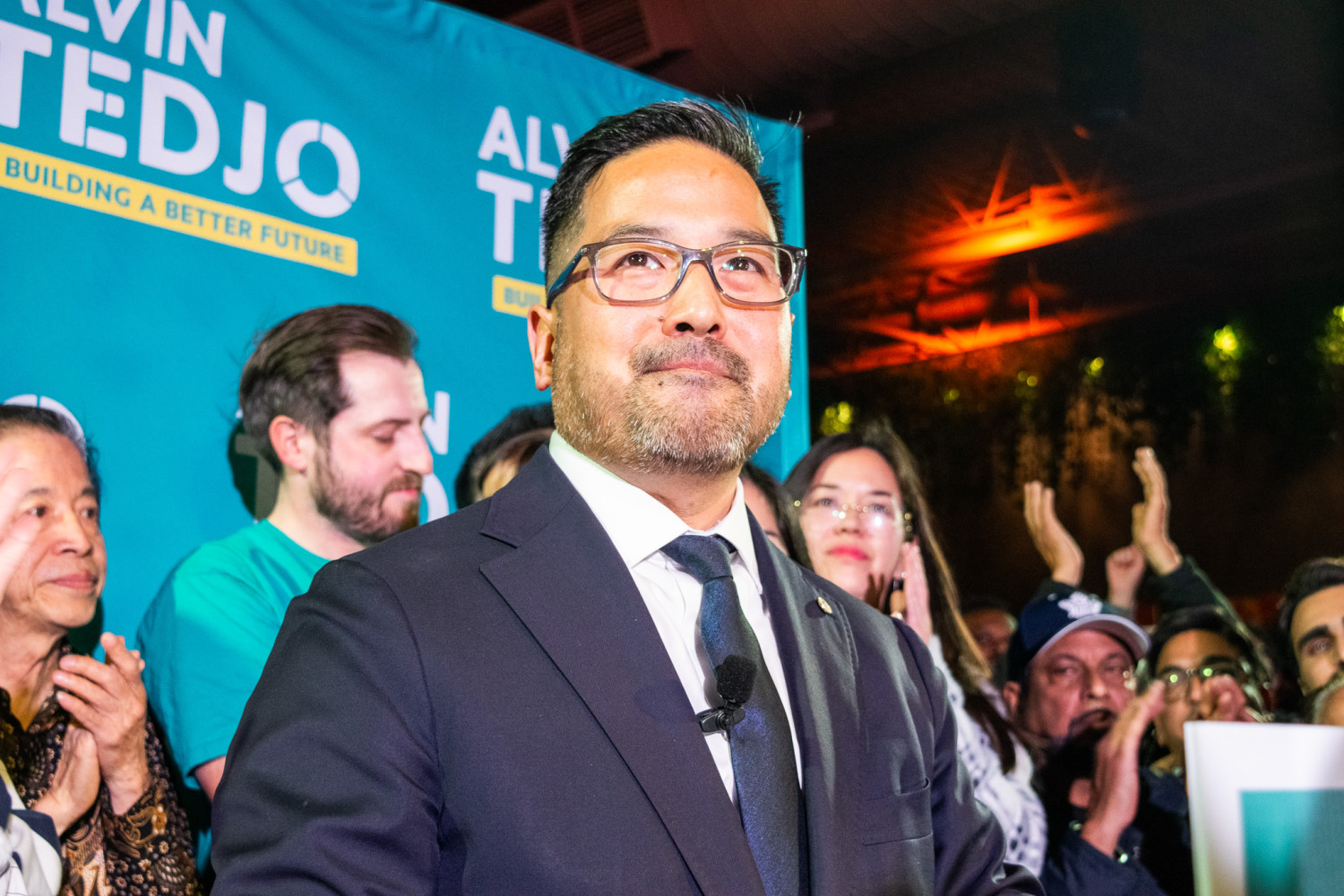
Incoming mayor Alvin Tedjo has sat on council for four years and will now prepare his first budget as residents' association and the city’s taxpayers keep a close eye on the politically ambitious man who made a lot of big promises to get elected, two years after his first bid to lead the city when he ran in a by-election just 18 months after he began as a rookie councillor.
Tagidou and others are already asking how the mayor-elect will deliver on his promises.
The 2027 budget will be an early test for Tedjo, who campaigned on freezing Mississauga's portion of the property tax for two years while finding efficiencies within the municipal corporation.
For residents who have closely followed the City's finances, the commitment comes with questions about where savings will come from, what spending can realistically be reduced and whether the City can maintain existing services and infrastructure, kicking the can down the road when residents could be crippled by future costs that will only compound.
Tedjo has to avoid the path of his fellow mayor to the north, Brampton’s Patrick Brown, whose disastrous financial management has left his city in a mess, after he too won in surprising fashion back in 2018, by making the same populist promise of tax freezes Tedjo used to propel himself to victory two weeks ago.
Tedjo worked closely behind the scenes with Brown’s team during the election, which raises even more questions about how the new mayor will be guided, after the scandal-plagued Brampton mayor, with a reckless track record of misleading the public, played such a large role in his win.
Brown led the unsustainable rapid increase of the Peel Police budget, which was called an “utter failure of governance” by critics, then eventually secured the endorsement of the police union for Tedjo and himself, while Brown’s financial mismanagement drove Brampton’s finances over a cliff.
It raises many questions about how fiscal management will be handled by Tedjo, who can claim regional taxes that pay for services like policing are not part of his City Hall budget, and that he only promised a two-year freeze on Mississauga’s part of the bill, but the amount owing that comes in the mail combines both the Mississauga budget and the Peel Regional budget for one overall increase.
Taxpayers will now be watching to see if, for example, the endorsement by the police union arranged by Brown will render Tedjo silent when one of the most costly expenses for homeowners, policing, is negotiated by local elected officials.
Tagidou said the Applewood budget review committee was established following the 9.21 percent property tax increase residents were shocked by in 2025. The increase prompted her to press council on the financial decisions behind the City's growing tax burden under previous mayor Carolyn Parrish, who lost to Tedjo.
At the time, she noted residents were encouraged to become more involved in the budget process if they wanted to understand how municipal finances were determined. Rather than leave residents to navigate the process on their own, she and other association members formed the committee to scrutinize the City, Peel Region and police budgets.
Committee members from the Applewood Heights community and other parts of Mississauga began attending budget meetings, gathering financial information and delegating to council.
Tagidou said the committee also organized a public information session at the Bertha Community Library, where nearly 25 residents attended to hear from City representatives, including councillors and members of the budget committee, about how municipal budgets are developed.
The group's experience with public consultations left her questioning whether council was genuinely interested in hearing from residents.
During the 2026 budget process, the community-based committee requested an evening consultation rather than a daytime meeting so working residents had an opportunity to participate. The request was accommodated, and 16 presentations were made by residents who volunteered their time to challenge spending decisions and propose alternatives to the tax increase.
Tagidou said the people who delegated were not simply expressing dissatisfaction with their property tax bill; many had researched the City's finances and prepared detailed arguments about where savings could be found.
“We don't always agree with everything” council members do, Tagidou said, but she felt let down by the lack of consideration for the ideas brought forward by residents.
A criticism Mississauga council members have faced for more than a decade is the runaway costs for staffing inside City Hall, particularly the amount of taxpayer dollars going to management salaries, bonuses and even perks like car allowances, while so many residents suffer under a prolonged cost of living crisis.
There were 985 City of Mississauga staff on the Ontario Sunshine list in 2016, which shows all provincial public sector employees making $100,000 or more. Last year, in 2025, there were 2,449 City of Mississauga employees on the list, and they collectively made $317 million, not including benefits, with an average raise of 6.5 percent compared to the previous year.
Outgoing councillor Dipika Damerla, who ran for mayor, tried through much of the year to examine City Hall spending including a department-by-department review of staffing levels. “Think of an Auditor General as a watchdog of the taxpayer whose full-time job is to look for waste, find savings and even look into fraud,” Damerla said in a February 4 Instagram post.
It left dozens of resident association members and others who delegated in March in support of an independent auditor general disappointed. Resident Christine Koczmara told council members during the meeting on March 4 that “benefits experienced by other Canadian municipalities where independent Auditor General offices have delivered substantial return on investment, improved service delivery and strengthened public trust” were being ignored by all the council members except Damerla, who had stressed that staffing levels, management salaries, bonuses and perks desperately need to be reviewed.
She told The Pointer ahead of the election that after serving as an MPP for seven years, working under strict accountability and oversight measures, it was alarming to see the lack of independent financial watchdog functions inside Mississauga City Hall.
Tedjo was not in attendance for the March 4 vote but indicated he was supportive of an independent auditor general, and during the election campaign confirmed he would support the hiring of an AG free from influence to act as a financial watchdog for taxpayers.
Parrish had dismissed the dozens of residents who spoke out during the March meeting asking for an AG and a review of staffing and other costs at City Hall, calling them “complainers”.
Tagidou was offended.
“That's not what they deserve. They deserve credit for what they did. And unfortunately, it wasn't received as it should have been received.”
The experience has contributed to a growing reluctance among some of the community-based budget committee members to continue organizing public presentations. Some feel their work just falls on deaf ears.
Tagidou said the committee presented concerns about the 2026 budget, but the final property tax increase remained at 5.21 percent without changing even slightly following the public consultations.
Despite their preparation, she said residents were left with little indication that their recommendations had been considered.
When the City of Mississauga released its 2026 budget earlier this year, it outlined a strategy to temper the immediate tax increase by deferring approximately $259 million in infrastructure investments and reducing the planned infrastructure levy.
The City's budget, which does not include the Region of Peel expenditure for the year, increased by 4.39 percent.
Martina Wood, a retired chartered professional accountant who ran in the recent municipal election for Ward 6, said residents could be disappointed if they interpret the mayor's tax-freeze commitment as a guarantee that their entire property tax bill will remain unchanged.
“The first thing that I would say is we pay taxes to get services, so the City should not be cutting services,” she said.
Wood pointed out that Mississauga's portion of the overall property tax bill accounts for approximately 37 percent of the overall amount, with the Region of Peel portion representing about 40 percent and the education amount making up the remainder. Even if the City freezes its own portion, increases at the regional level could still leave residents paying more.
Critics have pointed out that what Brown did not tell Brampton residents when he promised a multi-year tax freeze in 2018 is that user fees could still go up, utility rates could still spike (and they did), special levies for dedicated funding could be approved and other cost increases could be quietly applied to make it look like the City Hall budget was being frozen. The big deception, which critics have pointed to for years, is when mayors make claims of tax freezes, then shift more and more spending to the regional budget which continues to either be funded by taxpayers directly or indirectly through debt.
For example, after Brown supposedly froze his budget, cancelling critically needed utility and road upgrades, it forced the Region of Peel to spend even more money for its responsibilities as a partner in those projects (to upgrade regional infrastructure). Some of those costs would have been shared; instead, Brampton taxpayers had to pay even more in taxes to the Region for increased project costs. Then, they will be taxed again, for even higher amounts for the same work, when Brampton is finally ready to do its work on the city roads and utilities, in some cases having to rip up the same infrastructure shortly after completion of the regional work, which was supposed to be done at the same time to save taxpayers money.
Wood believes the challenge for the incoming administration is finding savings without compromising the services residents are already paying for.
“The City should try to pay less to deliver the same services, and if the City stops giving up revenue, then maybe we'd be better off too.”

Recent Ward 6 candidate Martina Wood cautioned residents to view Alvin Tedjo’s promised property tax freezes as financial relief, as a majority of the property tax bill comes from Peel Region and is largely tied to Peel Police's annual budget. (Screenshot from MartinaWoodforward6 website)
Wood cautioned against treating a tax freeze as an automatic financial victory. A municipality can temporarily limit increases by deferring infrastructure renewals, reducing contributions to capital reserves, borrowing money which has to be paid as debt by taxpayers or shifting expenditures into future years.
Short-term relief, popular with voters, may ease some immediate burden on taxpayers, but they could be left in a much worse situation in three or four years.
Municipal finance experts have shown that the only way to provide services and infrastructure to residents at a sustained level, without incurring inflation-rate tax increases, is to cut internal costs on expenditures such as salaries. Higher levels of government have routinely imposed salary freezes to help taxpayers. Mississauga has not done the same, while its staff now make far more than their counterparts doing similar work for the province or federal government.
The police budget, which is part of the regional responsibility that all twelve of Mississauga’s municipal elected officials vote on at Peel council, is one of the more glaring examples. The average raise received by the 2,641 employees of Peel Police on the Sunshine list in 2025 was 12 percent and the average salary, mostly for constables, was $151,000. Dozens of Peel Police constables made more than $200,000 and the top-paid constable in 2025 made $262,000, more than many full-time doctors earned in Ontario.
By comparison, RCMP constables made on average about $110,000 in 2025.
Top director positions inside City Hall came with salaries around $250,000 in 2025, while many directors earned between $150,000 and $200,000. Director-level salaries at the Government of Ontario earned much less in 2025, typically between $130,000 and $180,000.
Wood is concerned that instead of looking at possible areas of savings that make sense, decisions to cut services or infrastructure could just lead to much bigger problems for taxpayers in a few years. She pointed to the City's decision to reduce its planned infrastructure levy from three percent to one percent for the 2026 budget, warning that the reduced contribution could create additional pressure very soon.
Wood believes an independent Auditor General or value-for-money review team would help identify areas where the municipality could reduce costs without cutting services or critically needed infrastructure such as transit, roads and utilities including storm/flood management work.
“I think over time, like in the next year, they should put together a value-for-money team and look for the savings, and you know, value for money team, Auditor General, that kind of thing.”
Wood said the previous council's rejection of an independent Auditor General in March left Mississauga without the kind of external financial scrutiny she believes is necessary. She questioned the idea of relying on the Region of Peel's Auditor General through a contract arrangement, arguing the City should have an independent office.
The demand for independent oversight has also been a longstanding priority for Tagidou's committee. She said members previously made presentations requesting an independent Auditor General, but the proposal was not supported by council.
Instead, the City moved forward with internal auditing measures and a whistleblower process.
Tagidou said internal auditors do not provide the same level of independence as an external Auditor General, and the committee intends to raise the issue again.
“We're hoping that this January, this will be again on the table of hiring an independent auditor general. And we will definitely be there for that, to make that request and a little friendly reminder.”
George Tavares, a resident who regularly attends council meetings and presents recommendations on municipal spending, also sees independent oversight as essential if Tedjo intends to find meaningful internal savings.
He said internal audits can establish whether procedures have been followed, but an independent Auditor General should be able to examine whether the work being paid for has actually been completed and whether the municipality’s taxpayers are receiving value for their money.
He believes the difference between checking that a process was followed and investigating whether the intended result was achieved is fundamental to financial accountability.
His broader criticism is that Mississauga has become unnecessarily expensive to operate because of what he sees as excessive administration, repeated consultations and a reluctance among officials to make decisions.
“The City is dreadfully inefficient.”
Tavares contends the City should consider zero-based budgeting, which would require departments to justify expenditures rather than automatically carrying forward previous spending levels.
He pointed to the City's vehicle fleet as one example of where savings could be found, arguing that maintaining rarely used vehicles creates unnecessary expenses for insurance, fuel, maintenance and seasonal equipment.
“If they got rid of ten percent of the fleet that they currently have, then that means the projected consumption of fuel would drop. The cost of ownership, insurance, maintenance, snow tires, all of that stuff, disappears. And then there would be significant savings.”
Rather than maintaining vehicles that may only occasionally be needed, Tavares suggested the City could rent additional vehicles when necessary.
He said savings do not necessarily need to come from reducing public services or cutting positions, but from questioning whether the municipality needs to maintain every existing expense.
Tavares also raised concerns about the cost of decision-making at City Hall, pointing to the Bloor Street integration project as an example of what he considers excessive spending on discussions and consultations.
The City previously reported spending approximately $1.7 million discussing a project with a construction budget of $27 million.
“You don't need five different committees to sit down and then outsource different people to give you information, especially if it's information that you already know exists or you already know the answer. You're just looking for justification,” he said.
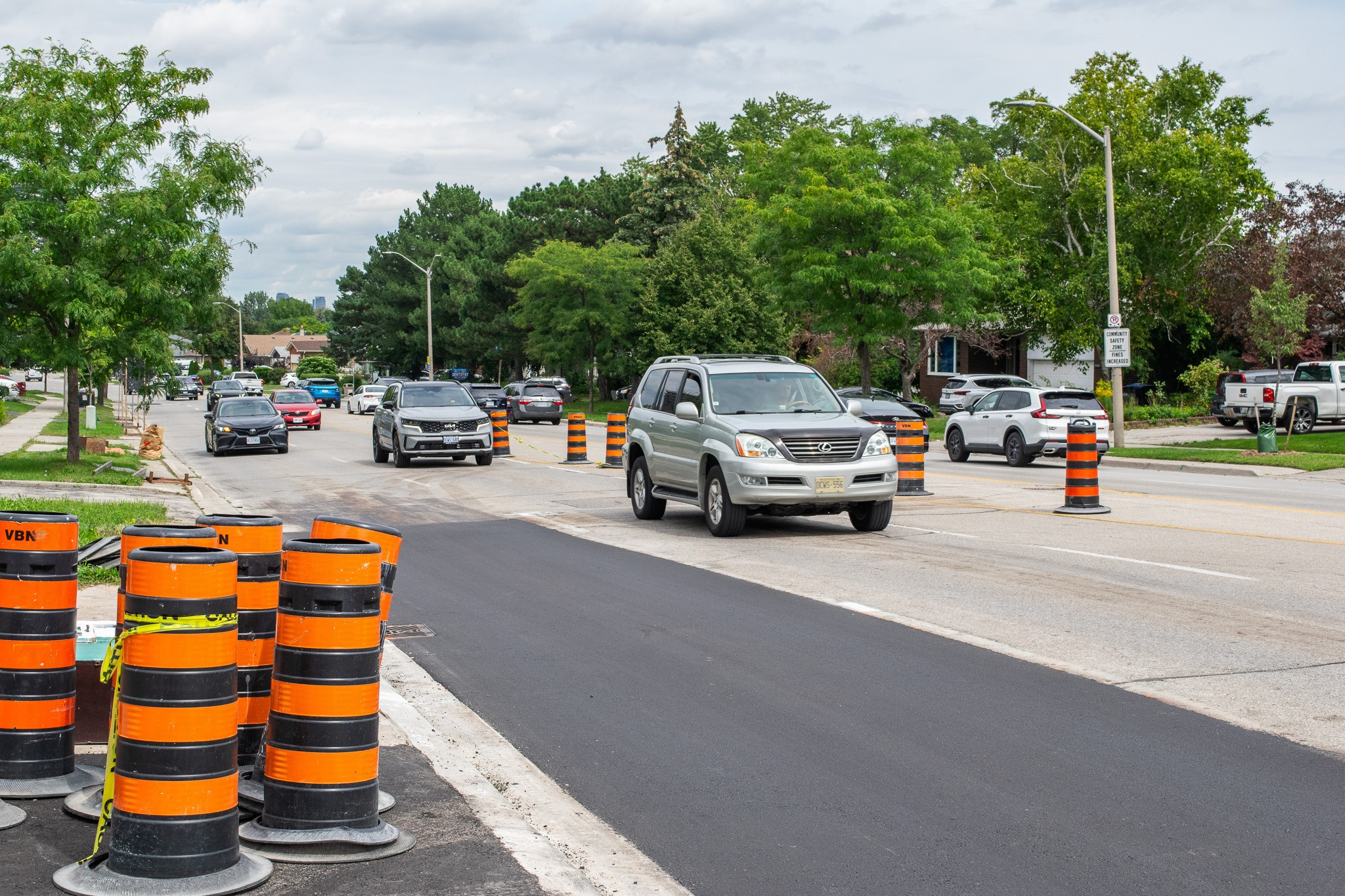
When the City of Mississauga first planned to repave Bloor Street in Ward 3, residents found the idea to be a net positive for residents of the community. But years later, after several public consultations and pushback from residents after council sought to add bike lanes that Ontario Premier Doug Ford later said he would be removing in Toronto following Bill 212, residents question what is going to happen with the main thoroughfare in their community and what the over a million dollars was spent on. (Alexis Wright/The Pointer)
For Tavares, the problem is not necessarily a lack of information, but the absence of leadership willing to act on it. He said the incoming administration should create an environment where councillors and residents feel comfortable proposing cost-saving measures, rather than treating those suggestions as criticism of existing decisions.
He recalled previous budget discussions where only a small number of councillors put forward specific ideas for savings, despite the size of the City's operating budget.
Tavares argued that even relatively small reductions across departments could produce substantial savings when applied across an $800-million-plus municipal budget.
He believes the new mayor could help change that culture by encouraging councillors and staff to bring forward proposals rather than simply defending existing expenditures.
Tagidou, however, said residents are also concerned about whether the City will continue introducing new projects and commitments while attempting to freeze taxes.
The committee wants the City to maintain its existing service levels while limiting additional capital spending, particularly on projects that are not essential or related to aging infrastructure.
“We'd like to see the level of services as they are now. We'd like to see that, but we'd like a cap on staffing and also no new projects, no new infrastructure projects, unless it's sort of aging,” she said.
Tagidou said the committee does not believe residents should automatically be asked which public services they are willing to sacrifice whenever council looks for savings.
Instead, she said elected officials should examine their own compensation, administrative expenditures and capital priorities before considering reductions to services, and questioned whether the City needs to continue spending on certain redevelopment projects while residents are being asked to absorb substantial tax increases.
The same scrutiny is being directed toward Peel Police, whose budget represents a substantial portion of the Region of Peel's overall spending.
Tagidou said the committee previously struggled to access Peel Police Board finance committee meetings because they were not open to the public. After requesting greater transparency, the group was successful in getting those meetings made publicly accessible and livestreamed.
However, residents still cannot make deputations or ask questions during the finance committee discussions.
The committee's attention has now turned to the proposed 2027 police budget discussed on Novemeber 2nd, which Tagidou said includes a minimum increase of ten percent and plans to hire 94 additional officers.
She said the police budget is expected to move through the police board and regional council before residents see its impact on their property tax bills.
The issue has been a recurring subject of scrutiny from residents for years as Peel Police have seen their budget more than double in six years, from $445.8 million in 2020 to $837.3 million in 2026.
Despite the police force that governs Peel Region, and whose budget is expected to be over a billion dollars next year, its crime solvency rates have consistently decreased year after year to their lowest levels in 2026 across the board for all crimes involving police.

Peel Police’s budget is one of the largest driving factors for increases to Peel residents' property tax bill while the force has repeatedly denied the need for an independent Auditor General to find efficiencies and cut back on spending. (Alexis Wright/The Pointer File Photo)
Wood said the public needs more information about what taxpayers are receiving in return for the growing investment.
She questioned the value of certain police expenditures, including the service's helicopter, and argued that the public should be able to see evidence of its effectiveness.
“How much goes to emergency response? How much is proactive community policing? Which here in Mississauga, I don't see a lot of proactive community policing. And how do they measure that performance and report it to the public?”
Wood said residents should be able to assess the cost of police equipment, training and operations against measurable public-safety outcomes.
She also argued that the funding arrangement between Mississauga and Brampton should be reconsidered. Under the current arrangement, Mississauga contributes 62 percent of the regional police costs, compared with Brampton's 38 percent, which is based on property value for each municipality.
Wood believes the allocation should be examined in light of the two municipalities' populations and the distribution of policing resources.
She said changing the arrangement could create an opportunity to reduce the financial burden on Mississauga taxpayers, although the province would need to be involved in changing the formula.
Beyond policing, Wood raised concerns about the long-term consequences of reducing development charges for residential construction.
She argued that development charges are an important source of funding for infrastructure needed to support new housing, particularly water and wastewater systems.
The concern is that reducing those revenues without identifying a replacement could leave municipalities with fewer resources to build and maintain infrastructure as development continues.
Wood said the issue becomes even more pressing if the City freezes taxes while infrastructure costs continue to rise, and the City reduced or eliminated development charges for several development projects earlier this year in their attempt to be eligible for additional funding from the province and the federal government.
She also questioned the proposed restructuring of Peel's water and wastewater system, warning that creating a corporate structure could eventually open the door to profits being taken out of a service that should remain focused on residents.
For Wood, the financial consequences of the City's decisions cannot be measured exclusively through the next property tax bill.
She said infrastructure delays, borrowing and lost revenue can create obligations that future residents will ultimately have to pay for.
Despite the concerns, Wood believes Tedjo could make the two-year freeze possible if the City begins an independent value-for-money review quickly enough.
Tagidou is less convinced.
She said the committee believes one year may be achievable, but maintaining a zero percent increase for two consecutive years could be difficult given existing commitments, staffing agreements and the City's financial pressures.
She also questioned the size of Tedjo's newly announced leadership team, saying residents deserve to know whether those positions are paid and where the money will come from.
The committee is not dismissing the new mayor's promises, but Tagidou said members are waiting to see whether his administration will follow through on the changes they have been advocating for.
For residents who have spent years calling for those changes, the first budget will provide an early indication of whether the new administration is prepared to challenge the financial practices that have frustrated them.
Tavares said he remains cautiously optimistic about Tedjo's leadership, particularly because the mayor has shown interest in some of the proposals residents have previously raised.
“A good idea not shared is one thing, but a good idea not implemented is a lost opportunity,” he said.
For Tagidou, however, the next few months will determine whether residents have reason to believe their voices will finally carry more weight at City Hall.
The committee has already decided against organizing another public budget review meeting this year, largely because members are discouraged by what they believe was a lack of response to their previous efforts.
She said the group wants a municipal administration that listens, explains its decisions and recognizes the time and effort residents put into understanding the City's finances while paying attention to what they need to build a better, more affordable life in the community.
“At this point, we just want to see what Alvin Tedjo is going to do. We're just waiting to see how he's going to do what he said he's going to do,” Tagidou said.
Email: [email protected]
At a time when vital public information is needed by everyone, The Pointer has taken down our paywall on all stories to ensure every resident of Brampton, Mississauga and Niagara has access to the facts. For those who are able, we encourage you to consider a subscription. This will help us report on important public interest issues the community needs to know about now more than ever. You can register for a 30-day free trial HERE. Thereafter, The Pointer will charge $10 a month and you can cancel any time right on the website. Thank you
Submit a correction about this story

