
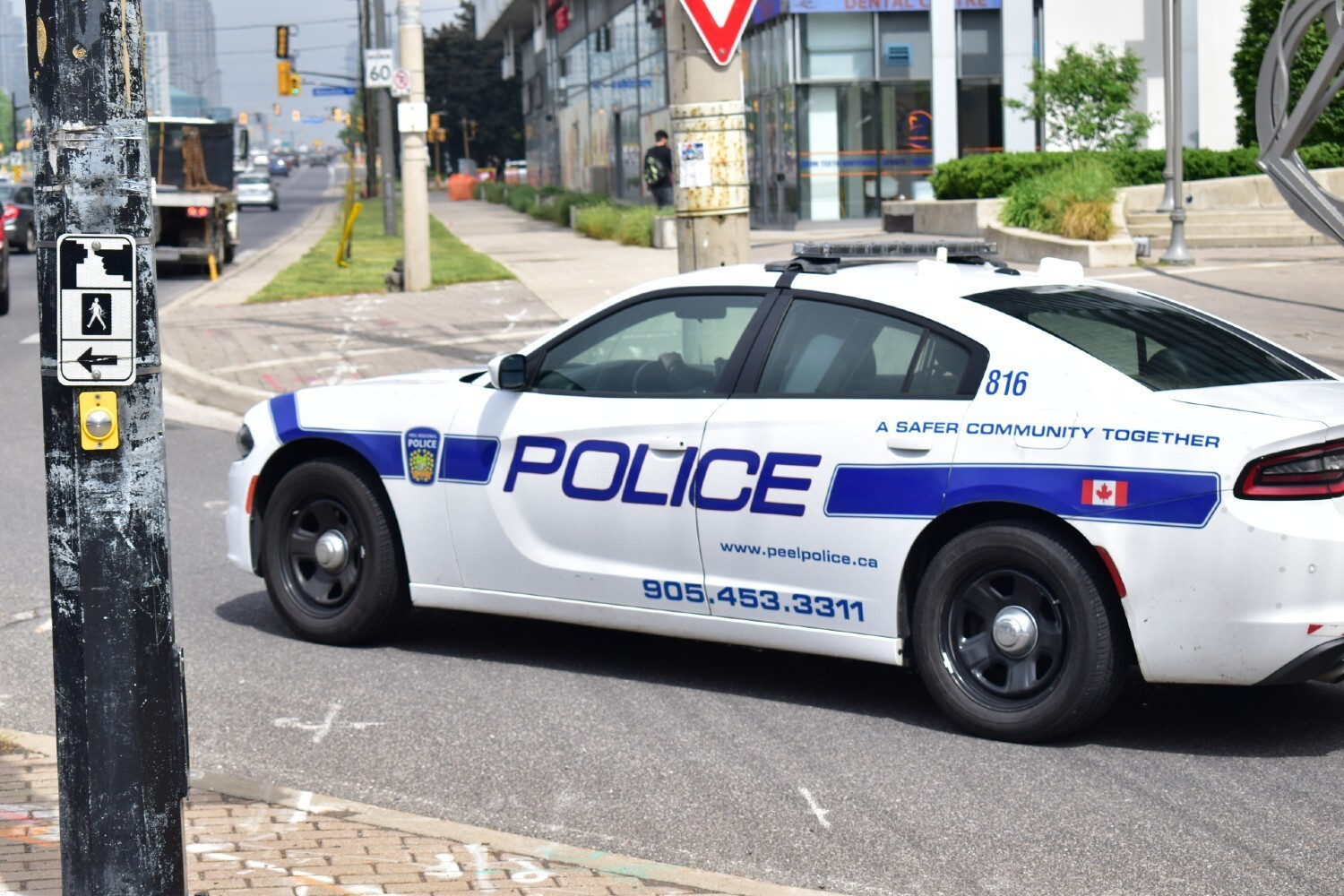
An avalanche of more money to solve less crime: Peel Police annual report reveals disturbing trend
Over the last five years, the solvency rates for Peel Police have consistently declined.
Over the same period the force's budget has increased almost 80 percent, an unsustainable rate widely characterized as a glaring example of police excess and government recklessness.
While the police agency responsible for Brampton and Mississauga has gotten worse at solving crime, it has been repeatedly rewarded at budget time with massive amounts of extra money. The influx of taxpayer dollars has not resulted in better policing outcomes, but it has resulted in higher salaries for top police officials in Peel. Figures from Ontario’s Public Sector Salary Disclosure for 2025 show Chief Nishan Duraiappah made over $600,000. He is now the highest paid policing official in all of Canada.
Duraiappah’s first full year on the job was in 2020, when he earned $299,196, compared to last year when he earned more than double that amount (excluding benefits), resulting in a 102 percent increase in five years.
The massive jump in the chief’s salary reflects the increase for the Peel Police budget over roughly the same period.
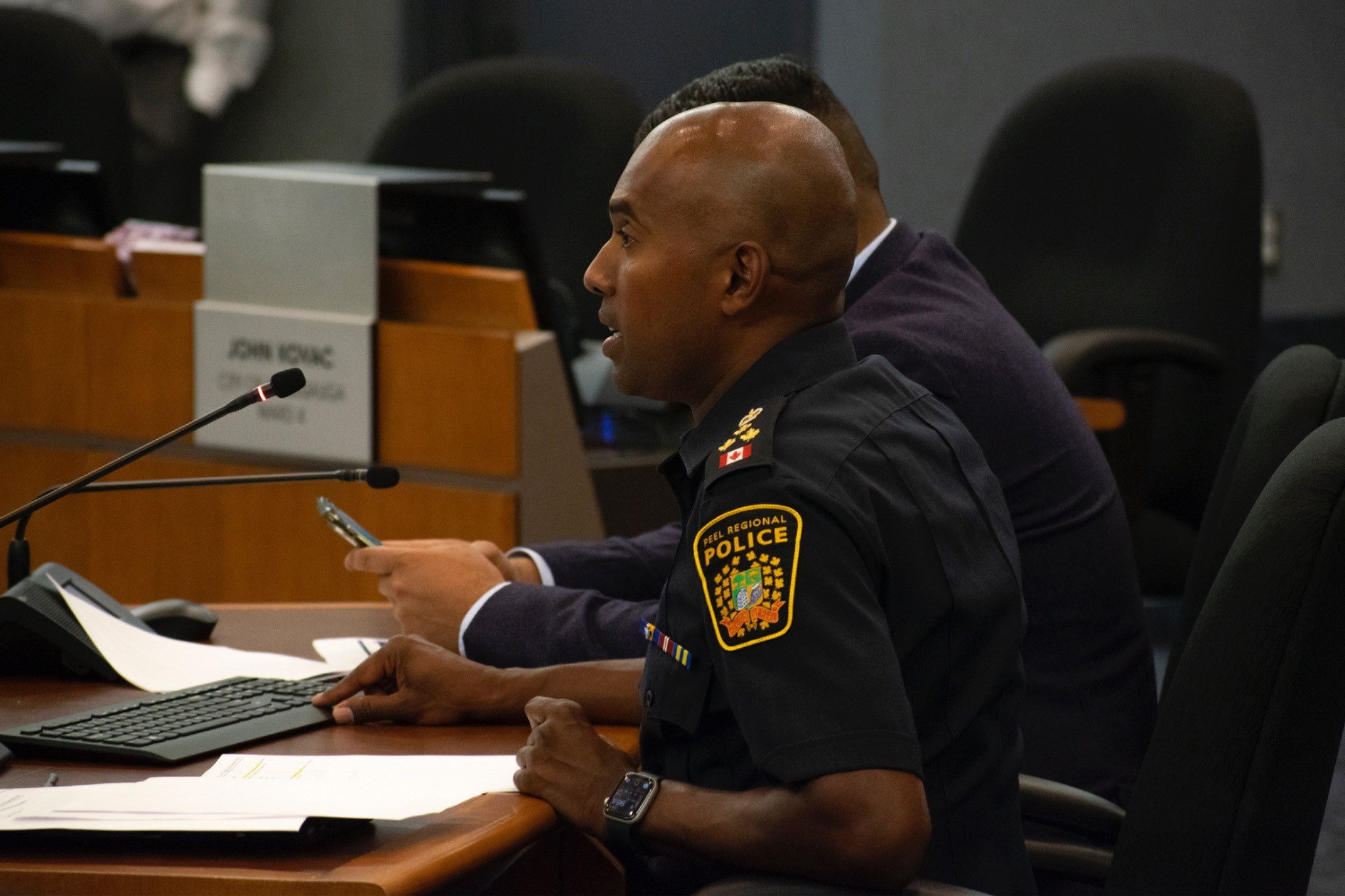
Following sharp annual increases to the Peel Police budget since Chief Nishan Duraiappah arrived in 2019, he has become the highest paid police chief in Canada. In the same period, the force’s ability to solve crime has gotten worse, since he arrived.
(Alexis Wright/The Pointer Files)
While salaries and budgets have jumped, violent crime has been increasing across Mississauga and Brampton.
The Violent Crime Severity Index for the two cities has steadily climbed since Duraiappah arrived in 2019 and Brampton and Mississauga’s populations continued to grow.
The police force’s inability to solve some of the most troubling crimes is illustrated in two charts that appear in Peel Police’s 2025 annual report released earlier this month.
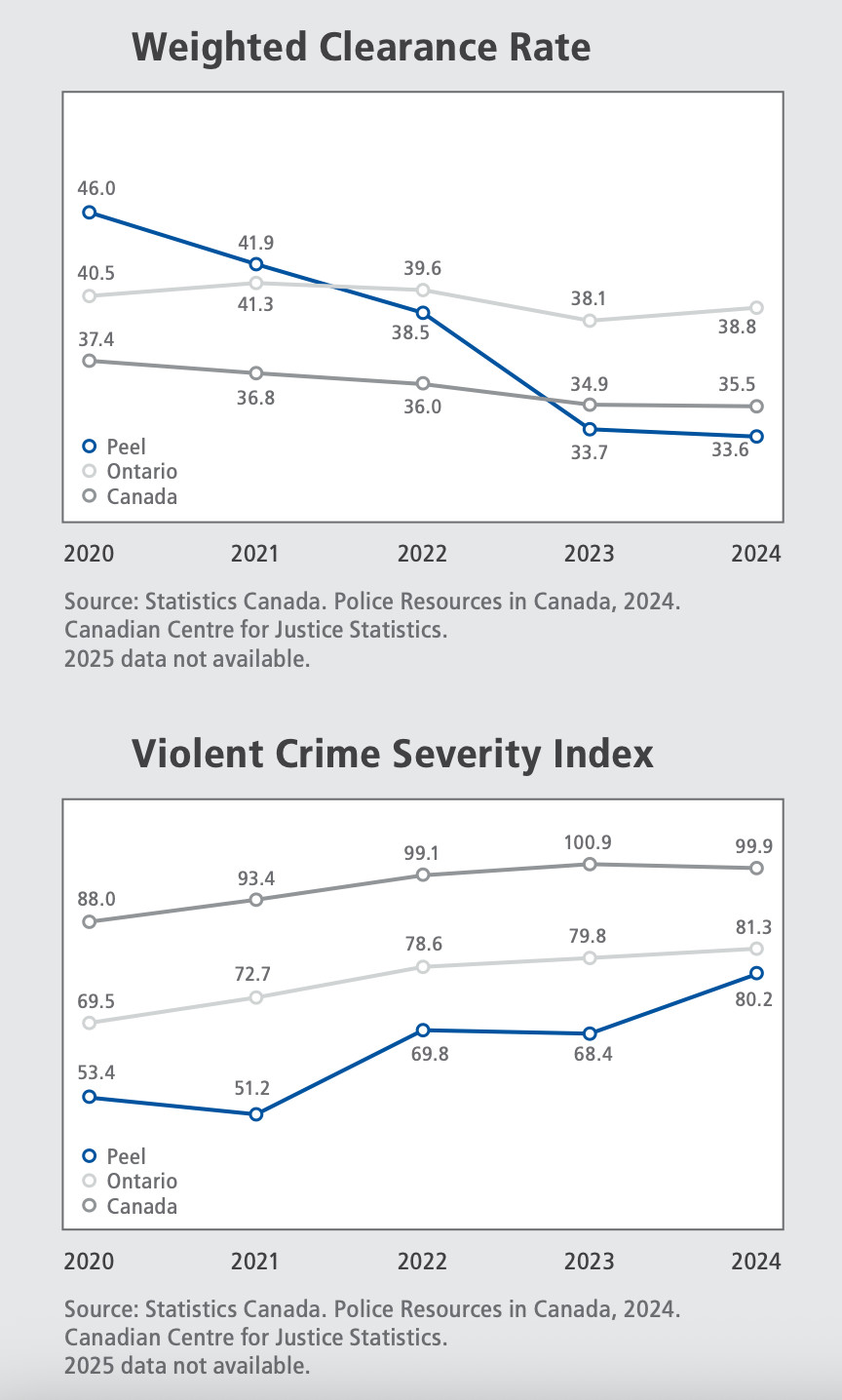
As clearance rates have gotten worse since 2020, the amount of severe violent crime has also increased.
Since being hired in 2019, Chief Duraiappah has maintained the budget increases for his force are essential to help Peel Police grapple with the growing population in the cities they serve, and the increasing complexity of crime arriving in the region.
In 2026, Peel Police received an $837.3 million operating budget—a more than 80 percent increase from $462.5 million in 2021. The budget could go over a billion dollars next year for a force that serves approximately 1.6 million residents.
When he first arrived, Duraiappah vowed his approach to reforming Peel Police, an agency that had lost the trust of its diverse community following years of harassment and discrimination at the hands of officers, would be different.
Instead, he has followed the same playbook police have been using for decades: more money, more officers, while crime continues to get worse. Meanwhile, the Peel Police Services Board, which is supposed to govern the force and keep its budget in line with taxpayer expectations, consistently refused to take a closer look at the dollars flowing from the pockets of Mississauga and Brampton property owners. The approach has been labelled “an utter failure of governance”.
Experts know simply throwing more money and more frontline officers at crime doesn’t work. This has been proven over the last five years in Mississauga and Brampton.
In 2019, there were a total of 41,268 Criminal Code violations in Peel. Officers solved 49.3 percent of them. The following year, 35 new officers were approved by the board, and despite recording nearly 5,000 less violations, Peel officers only solved 47.2 percent of them. The trend continued the following year. In 2021, 27 new officers were hired and there were nearly 1,000 fewer crimes, but only 43.9 percent of them were solved, a dramatic drop in just two years.
Factoring in the pandemic, potential onboarding delays and the effect of having more inexperienced officers on patrol, might account for some of the rapidly declining crime solvency rates. However, the trend continued as the COVID-19 pandemic was left behind. In 2022, 26 new officers were approved, but Peel officers only solved 39.8 percent of the criminal code violations they dealt with. Finally, in 2023, 70 new officers were approved, the largest number in years, but solvency rates dropped again, this time to 36.7 percent of the 53,057 criminal infractions.
The trend is seen in all types of crime. Solvency rates for Crimes Against Persons have dropped from 77.9 percent in 2019 to 63.7 percent in 2025. Crimes Against Property solvency rates dropped from 29.8 percent in 2019 to 18.9 percent last year (this is a small uptick from 17.8 percent in 2024). This despite the hiring of 135 additional officers in 2024.
Last year, the organization hired 300 more uniformed staff, the most in any single year in its history.
The approach has not only seen Peel Police’s ability to solve crime decrease, it also means the organization is failing to address the root causes of crime.
“There's no correlation between police funding and crime rates,” Patrick Watson, an assistant professor at the University of Toronto’s Centre for Criminology and Sociolegal Studies, said.
“If they got 300 new officers in Peel next month, I wouldn't expect to see a dramatic decline in anything. A year from now, you might see some city dispersal [of] petty crime, but I think more serious crime with professional criminals, criminals who know what they're doing, who have some criminal training and some criminal experience, they're not going to be deterred by 300 new officers coming on.”
Watson, who researches policing oversight and municipal government, has carefully studied the lack of impact increased police spending in the wrong areas has on reducing crime rates.
In 2025, Peel Police reported a two percent uptick in crimes against persons, from 14,643 in 2024 to 14,965. Crimes against persons include homicides, attempted murder, non-sexual assaults, sexual violations, robberies, indecent harassing communication, criminal harassment, uttering threats, and other types of crime.
Between 2020 and 2025, crimes against persons increased from 8,574 to 14,965, while the percentage of those offences solved fell from nearly 78 percent to 63.7 percent. Property crime solvency rates dropped from 25.7 percent to 18.9 percent over the same period.
“There is the theory that there's deterrence, or there's the theory that when we have more police officers, we ought to actually see crime go up, because there are more crimes being processed. At the same time, we should see our clearance rate go up as well, but clearance rates are trickier than that,” Watson said.
While the numbers are clear, he emphasized that crime statistics themselves only tell part of the story.
“We all know that there's a certain amount of crime that just goes completely undetected… as a result, we know that crime rates are sort of rough approximations and we kind of estimate here and there, but we can't do that with any certainty.”
The increase in reported offences does not necessarily mean Peel has become dramatically more dangerous. More officers on the street can lead to more offences being reported and entered into police databases.
Additional staffing can increase detection, but solving increasingly complex cases requires experienced investigators and specialized expertise.
“New officers coming online are going to free up more experienced officers to look after some of the more legally complex parts of the job. Like evidence gathering,” Watson said. “It's a question of whether or not those officers can free up some of the existing officers. While they get seasoned in sort of the crime scene in Peel.”
That experience gap could help explain why solvency rates have continued to decline despite the hiring and spending spree over the last five years.
Watson noted that the benefits of the expansion may not be seen for several years, as veteran officers transition into more specialized roles and younger members gain experience.
This does little to assuage the concerns of residents who are watching their tax bills increase mainly due to the request of Peel Police, especially when senior officers are rewarded with significant salary bumps and lavish personal SUVs.
It also comes at a time when significant questions are being asked about police accountability in Ontario following the explosive findings of a York Police investigation that implicated seven current members of the Toronto Police Service and one retired member.
“I think that the one thing that really needs to be taken up right now, in terms of who the police are, and what's going on with the police budget, are these corruption allegations,” Watson said, referring to the ongoing Project South investigation.
In early February 2026, the probe uncovered a vast network of organized crime, with the alleged help of police officers to carry out shootings and other crimes across Southern Ontario that saw three Peel officers suspended following the ongoing investigation and connections to the three members of the local force.
Questions surrounding police oversight intensified after Peel councillors recently rejected a request for the Region’s auditor general to examine the skyrocketing Peel Police budget.
Watson believes pressure for proper police accountability has to come from the public.
“I think the public does need to be really mindful, you know, that it is their money, and this is how their money is being spent. I think what we've learned is that the public really needs to pay very, very close attention to what it is that's being done with their tax dollars,” he said. “I think, fortunately, that's the price of democracy, that there's no days off for us, we really have to stay on top of this stuff.”
Taxpayers across Mississauga and Brampton have demanded an audit of the Peel Police budget and more transparency, only to be shot down by Brampton Mayor Patrick Brown, who also sits on the police board, is close friends with the chief and has refused to finally have a sweeping audit of police spending conducted. When the recent motion was defeated, he called it a waste of money, after rubber stamping a 100 percent increase for the police budget since he became mayor in 2018.
“It's not going to be overnight,” Watson said of the required public pressure needed to change the reckless political approach and runaway police spending, to produce actual results. “It's not going to be next year. Even if you've got 300 new officers coming on, you won't start to see downstream effects for that until three, four or five years later. And by then, the entire political class has changed over.”
Email: [email protected]
At a time when vital public information is needed by everyone, The Pointer has taken down our paywall on all stories to ensure every resident of Brampton, Mississauga and Niagara has access to the facts. For those who are able, we encourage you to consider a subscription. This will help us report on important public interest issues the community needs to know about now more than ever. You can register for a 30-day free trial HERE. Thereafter, The Pointer will charge $10 a month and you can cancel any time right on the website. Thank you
Submit a correction about this story

