
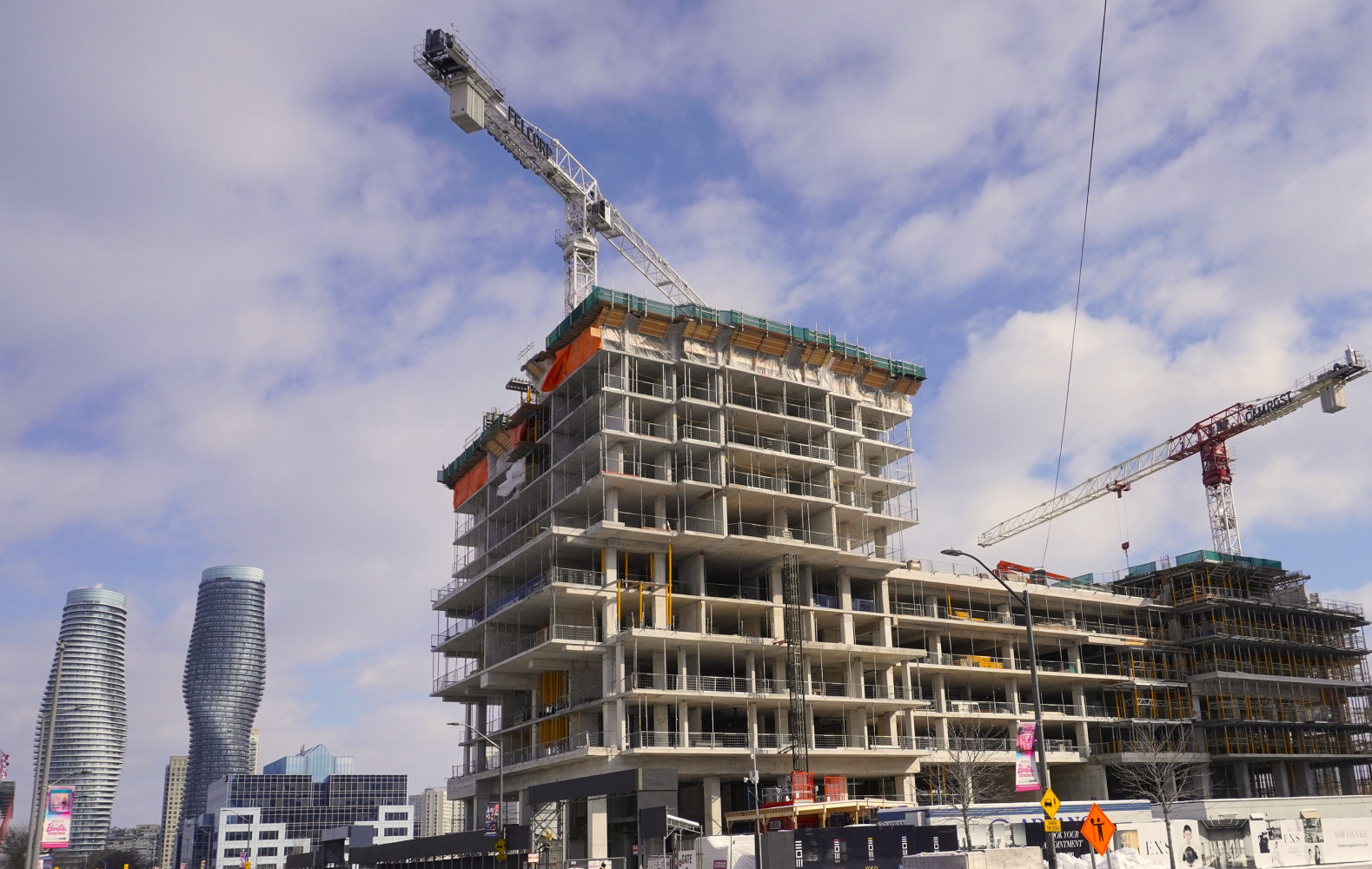
As Mississauga extends cuts to fees developers pay, questions swirl about who will cover multi-billion-dollar gap for infrastructure
Affordable housing is the backbone of a thriving community. Single-bedroom apartments once obtainable on a minimum-wage job have become a vestige of what once was.
That was the problem Mayor Carolyn Parrish, who is running for re-election, found herself in when she was elected mayor in June of 2024 following a by-election win after former mayor Bonnie Crombie stepped down to lead the Ontario Liberal Party.
Parrish ran her campaign on several promises for residents. One of them was to make housing more affordable again.
In the days following her election, she established a Housing Task Force with an aim to cut away the red tape bogging down developers and get shovels in the ground faster.
Several builders who helped fund her campaign later got a seat at the table on the task force.
Municipal election finance rules limit an individual who wishes to donate to a candidate with a $1,200 contribution cap. Parrish’s campaign funding disclosure shows, for example, the family name DeGasperis, associated with TACC developments and other real estate developers in the Vaughan area, appears three times on her contribution list, associated with their company name, TACC.
Kaneff Development, a builder that dominated parts of Mississauga’s residential construction scene generations ago, donated through nine separate individuals totalling $10,800, and was later added to Parrish’s roster of developers on her housing task force.
The list of developers who helped fund Parrish’s 2024 campaign and were then put on her task force includes Deco, Tridel, TACC, OPUS Homes, Kaneff Group, Orlando Corporation, Argo, Liberty Development Corporation, Doracin Terra Street Ltd., TMG Builders, Kaneff Golf and Smart Centres REIT.
In total, individuals connected to developers, including the ones listed above, contributed $163,150 to help Parrish secure her seat as mayor.
This is very common, as successful mayoral candidates across the GTA have for decades received the lion’s share of their campaign contributions from developers who seek a good relationship with city hall.
Emails between Parrish and the developers obtained by The Pointer through a freedom of information request show the builders asked to have the municipal fees they pay for local infrastructure to service new homes and residents, known as development charges, either slashed or eliminated.
The requests were in line with a joint provincial-federal push to bring down the cost of homes, in part by reducing municipal development charges, hoping that the savings for builders would be passed onto buyers and renters, as the cost to build each unit would decline. The problem is there is no guarantee the savings would be passed onto buyers.
On March 30, the provincial and federal governments announced an $8.8-billion investment for Ontario municipalities through the new Development Charge Reduction Program (DCRP) to incentivize municipalities to reduce their fees builders are charged, in the hope that homes would become more affordable.
Under the initiative, Ottawa and Queen’s Park promised to cost-match almost $9 billion over 10 years to municipalities, but only if they slash development charges by 30 to 50 percent for at least three years.
Applications were open from June 1 to June 19.
The two higher levels of government are splitting the total investment under the DCRP evenly with each contributing $4.4 billion to spur affordable housing construction and accelerate infrastructure projects needed to support new communities including roads, sewers and water systems.
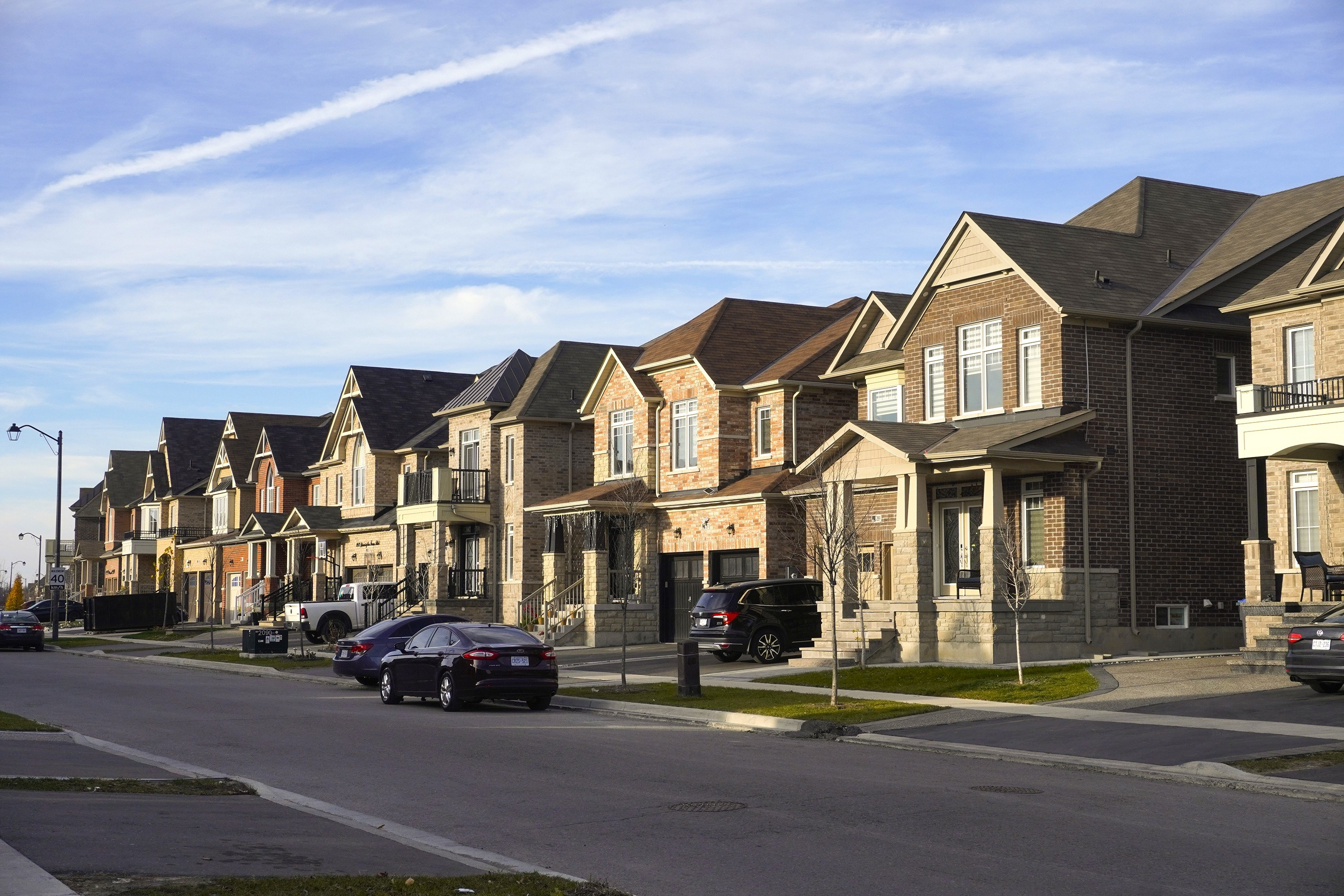
The lack of affordable housing across Peel is one of the biggest issues ahead of this year's municipal election. (The Pointer file photo)
The DCRP is part of the Canada-Ontario Partnership to Build, which also temporarily lifts the HST (Harmonized Sales Tax) on new homes priced under $1.5 million for qualifying agreements signed between April 2026 and March 2027 (the maximum rebate is $130,000, equivalent to the full HST on a home valued at $1 million).
The measures are intended to lower upfront costs of building and buying new homes after housing costs skyrocketed for more than a decade before cooling off slightly over the last 18 months. Mississauga is among Ontario’s most expensive housing markets and the Region of Peel has published data recently that show 80 percent of residents cannot afford the cost of housing.
“The reduction in development charges over this four-year period is estimated to reduce the cost of building new homes by up to $36,140 per home,” the provincial government highlighted in a statement.
“When combined with the up to $130,000 in savings enabled through the expanded HST relief on eligible new homes, these initiatives could save Mississauga families up to $166,140 off the cost of a new home.”
This assumes, on a $1 million home, that all $36,140 in development charge savings would be taken off the sale price. There is no requirement for developers who receive the benefit to pass all or any of it onto buyers.
Critics have also pointed out that the full $130,000 HST rebate up to a new home price of $1.5 million is not what it appears, as developers can still bake all or part of the discount into the sale price by simply inflating the listed figure.
But something had to be done to try and bring prices down, as many prospective buyers were painfully aware of.
Mississauga politicians have argued that extraordinary measures were required to kick-start the affordable housing market.
In 2023, the PCs had asked Mississauga to build 120,000 new homes by 2031. Of the 10,000 that had to be built in 2024 to meet the target, only 3,496 were completed, a third of the city’s share toward the PC government’s ambitious goal of 1.5 million new homes across Ontario by 2031, according to the province’s housing development tracker.
To meet their goal, the PCs launched the $1.2 billion Building Faster Fund to encourage municipalities to reach their housing target. Access to the funding required them to reach at least 80 percent of their annual target in order to be eligible for the provincial money. Mississauga missed out on more than $25 million for falling so far behind its 2024 housing target.
In response, City Hall and its elected officials have doubled down on the development charge incentive, going far beyond the requirement to be eligible for part of the joint $8.8 billion provincial-federal fund.
After Parrish and the rest of council initially approved a motion that qualified Mississauga for the funding, they expanded the cuts and City Hall now offers builders a 100 percent reduction on development charges for three-bedroom units in rental buildings, as well as one-bedroom-plus-a-den units and two-bedroom units; and a 50 percent reduction in development charges for all other qualifying new residential units. All of the development fee reductions are in place until the end of March, 2029.
A month ago, on September 3, the provincial and federal governments announced $401 million in funding from the $8.8 billion fund to Mississauga, after it dramatically expanded its development charge cuts far beyond what the joint program requires (a 30 to 50 percent reduction in development charges).
Supporters of the strategy insist it is necessary to get new housing in Mississauga built.
“We’ve seen some of it; the market is obviously still lagging behind, and the recession isn’t helping,” Ward 2 Councillor Alvin Tedjo, who is running for mayor, told The Pointer. “So the conditions aren’t great, so we need to extend these incentives to get more building done, which I fully support.”
He said the City had little choice but to move quickly.
“We were only told on June 1 that this fund would open and it should be open until June 19, so with the urgency of it,” he said council held a last-minute special council meeting to approve the extension.
Passed on June 3 during the special council meeting, the motion makes the benefits to developers far more lucrative than what the Ontario-Canada program requires.
But a multi-billion-dollar question looms.
Is the money on the table from Queen’s Park and Ottawa nearly enough to make up for the billions in lost fees developers will no longer have to pay?
On May 28, following two dire reports by Region of Peel staff and a nearly two-hour council discussion, the Region decided to pause hundreds of millions of dollars in new water and wastewater infrastructure projects starting June 11, to avoid putting residents under “major financial burden” due to a “large increase in utility rates”, if Peel does not receive financial support from the provincial and federal governments.
Regional officials warned that continuing to build the pipes, pumping stations, trunk sewers, reservoirs and treatment infrastructure needed to support rapid housing growth would place unsustainable pressure on utility ratepayers and property taxpayers.
Peel Region’s Chief Financial Officer and Commissioner of Corporate Services, Davinder Valeri, explained that development charge collections and debt financing had historically been sufficient to support Peel Region’s water and wastewater capital program including principal and interest payments, while keeping reserve balances near zero.
However, beginning in 2023, accelerated infrastructure spending tied to the PC government’s push to force municipalities to build 1.5 million homes by 2031, combined with reductions to development charges that the PCs simultaneously introduced, created a widening gap between the revenue Peel collects through fees from developers and the cost of funding major infrastructure projects.
The Region has increasingly relied on debt to manage the mismatch, issuing more than $900 million in DC-backed debt since 2024. Despite those decisions, projected expenditures continue to outpace revenues while borrowing costs are also on the rise.
As a result, Peel’s Development Charge Reserve Funds, the accounts used to finance growth-related infrastructure, are projected to plunge deeper into deficit, growing from approximately $728 million by the end of 2026 to nearly $2.7 billion by 2030, even after taking on roughly $3 billion in additional debt if current construction plans continue.
“A small deficit in the DC (development charge) reserve funds can be managed for a short period of time but the current deficit is too large and cannot be sustained,” Valeri stressed.
To keep Peel’s original water and wastewater infrastructure program on schedule while balancing the reserve funds, staff estimated the Region would require roughly $700 million from upper levels of government this year followed by another $650 million in 2027.
This does not include billions needed for roads, other hard infrastructure, community centres, policing, libraries and everything else fees paid by developers have traditionally covered to accommodate new homes and residents, under the policy that “growth should pay for growth”.
Parrish had originally pushed for building fee cuts at the Region, similar to her moves inside Mississauga City Hall, leading a vote to reduce regional development charges by 50 percent.
The decision followed a letter from Ontario Municipal Affairs and Housing Minister Rob Flack to the three Peel mayors and Regional Chair Nando Iannicca confirming the province would provide $1.3 billion through the Building Ontario Fund, to help offset lost municipal revenue tied to the reduced building charges.
A previous investigation by The Pointer had warned that amount won’t be nearly enough to cover all the lost revenue due to the dramatically reduced developer fees.
In May, the Region of Peel’s Chief Administrative Officer Gary Kent defended a staff recommendation to pause new growth-related capital procurements, saying the Region’s financial position had become impossible to justify.
“We don't want to be here,” Kent admitted.
“If you’re saying to someone, we’re going to give you $1 and I’ve only got 50 cents in two or three years’ time, just, as an accountant, as the CAO of this organization, as someone who loves this community and loves the growth, I can't reconcile that at all.”
During the May Region of Peel council meeting members voted in favour of a motion put forward by Mississauga Councillor Joe Horneck to pause “all new growth-related capital procurements for water and wastewater” projects “until a sufficient commitment of funding is received (from the Province).”
Peel council made it clear that they did not have the funding to support Doug Ford’s housing targets, as they estimated the cost would be $20.4 billion to cover the infrastructure needed for the 246,000 new homes the PCs want built in Peel by 2031 (120,000 in Mississauga, 113,000 in Brampton and 13,000 for Caledon). This represents more than two-and-half-times the number of new units the Region had forecasted over the same period.
In June 2025, the Canadian Mortgage and Housing Corporation (CMHC) said up to 4.8 million new homes would need to be built over the next decade across the country to restore affordability levels last seen in 2019, based on projected demand. The national housing agency said between 430,000 and 480,000 new housing units are needed per year across the ownership and rental markets by 2035 in order for the market to be able to catch up.
In Toronto alone, they estimate a 70 percent increase in homebuilding over the decade would be needed to help improve affordability issues, as the entire GTA is currently lacking homeownership options that match local incomes.
Development charges are paid by builders to help fund a slew of infrastructure such as roads, water and wastewater systems, transit facilities, parks, libraries, community centres, police and fire facilities and other municipal services needed to support residents. Without the developer fees, municipalities must either find alternative funding sources (such as raising property taxes) or reduce planned infrastructure spending.
While City Hall labelled the development charge reduction policy a tool to jump-start housing, critics and some councillors, including Ward 7 Councillor and mayoral candidate Dipika Damerla, are questioning whether the financial risks have been fully examined.
“The DC incentives that we have provided have cost the City so far $21 million in lost revenue,” she said. “So far, we’ve been able to cover that from the housing accelerator fund (a federal government program).”
For Damerla, the longer-term picture remains uncertain.
“My understanding is the extension (of the DC reductions) for the next three years is dependent on the province giving us the money. The only question that still worries me, though, is: will the province make us full, 100 percent, 90 percent or 80 percent, because whatever is not made whole, then the City has to find revenues.”
Those concerns have become increasingly pronounced at Peel Regional Council, where elected members have repeatedly warned that the numbers simply do not add up.
“Despite Peel issuing over $900 million in DC debt since 2024, the DC reserve balance continues to trend negative,” Peel’s commissioner of Public Works Kealy Dedman said during Peel’s regional council meeting at the end of May. “The current spending continues, but the DC reserve funds are starting to fall much deeper into a deficit. This deficit is expected to grow to about $700 million by the end of this year and reach $2.7 billion by the end of 2030. This is even after we've added $3 billion to a new DC-supported debt.
“This forecast assumes that all planned construction projects move ahead as planned. Now, a small deficit in the DC reserve funds can be managed for a short period of time, but the current deficit is too large and cannot be sustained.”
Mississauga’s DC reduction extension represents the latest chapter in a long-growing conflict between municipalities, developers and upper levels of government over who should pay for the infrastructure required to accommodate growth.
While Mississauga officials, led by Parrish, argue the developer incentives are necessary to get shovels in the ground, questions remain about whether the policy is producing enough housing to justify the potential of significant revenue loss if the development fees are not replaced, and even if Ottawa and Queen’s Park make up for the loss, it’s still coming from taxpayers, who are essentially putting more money in the pockets of developers.
“I am very, very concerned about that because that would be downloading something onto the property taxpayer that right now the property taxpayer does not pay for,” Damerla told The Pointer.
Other critics are also concerned that if developers do not pass the savings from reduced DCs on to buyers or renters, the system could ultimately fail to deliver the affordability it was designed to achieve.
“If they're not passed on to the consumer, basically the program is a disaster,” retired professor emeritus of political science at Western University, Andrew Sancton, said. He has spent decades studying municipal finance. “If we have a genuine competitive development process, you would think that the charges would be passed on, or almost would be passed on. It means it's a kind of collusion going on, and it would be a serious problem.”
Parrish has repeatedly said the developer incentives are critical for reviving a stagnant housing market, a position that’s in lock step with Ford and the development industry. Parrish did not respond to questions from The Pointer.
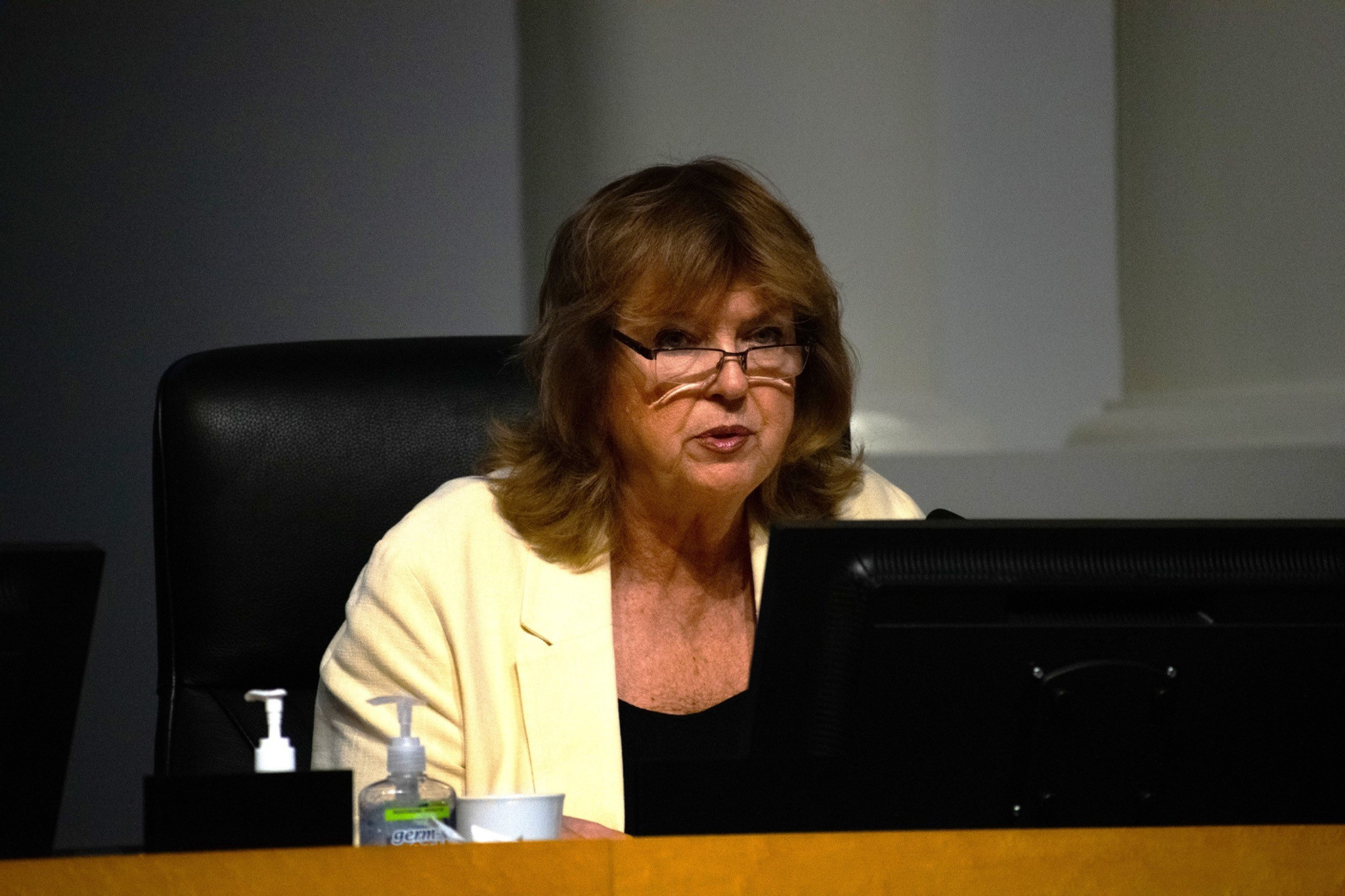
Mississauga Mayor Carolyn Parrish has aggressively pushed cuts to fees that developers pay. (Alexis Wright/The Pointer)
Though Tedjo voted for the DC reductions and the extension of the fee cuts, he acknowledged there are no guarantees that savings will ultimately be passed on to homebuyers or renters—a clause never written into the motion, nor talked about in depth during council meetings.
“There isn’t a specific thing that says we can guarantee it,” he said, referring to the hope that developers will pass on all the savings they are getting from government incentives to buyers and renters.
That uncertainty leaves a sour taste in some councillors' mouths.
It is “not clear” to Damerla if there are assurances that savings received by developers will ultimately reach consumers.
“We need to build more housing, no questions about it, but what I want to make sure is that we don’t just shift the burden onto existing taxpayers, especially the property tax, because the property tax is a very regressive tax.
“We have a housing crisis, but we also have a property tax crisis. We have both of them. So we need to be careful that in solving one, we don’t create another one.”
Sancton argues the issue raises broader questions about fairness.
“I’m concerned about these sudden drops in development charges.” He pointed to homeowners who purchased newly built homes years ago and absorbed DC costs through their purchase price, only to see newer buyers potentially benefit from lower fees. Sancton had previously sold his house and moved into a condo due to the increase in DC reductions that led to overall higher property taxes.
And if municipalities lower DCs without receiving replacement funding, “of course the general property taxpayers would have to pay,” he said. “That’s exactly why a lot of people are opposed to unilateral reductions in development charges.”
“The issue is to make sure that we spend only that much that we will actually receive from the province,” Damerla said. “If the province wants to give us $300 million, then we say we’re only gonna spend and build $300 million.
“The whole point is that right now builders are saying that they’re not building because the numbers don’t work,” Damerla said. “Removing certain costs helps them start to build.” But she wonders if that leaves Mississauga taxpayers on the hook for all the municipal services, infrastructure and other features new homes and new residents require.
Sancton echoed her concern, saying that when municipalities reduce development charges without proper replacement funding, they merely shift the costs elsewhere.
“This is all Band-Aid, right,” Damerla said. “The model is broken right now and it needs to be fixed.”
Email: [email protected]
At a time when vital public information is needed by everyone, The Pointer has taken down our paywall on all stories to ensure every resident of Brampton, Mississauga and Niagara has access to the facts. For those who are able, we encourage you to consider a subscription. This will help us report on important public interest issues the community needs to know about now more than ever. You can register for a 30-day free trial HERE. Thereafter, The Pointer will charge $10 a month and you can cancel any time right on the website. Thank you
Submit a correction about this story

