
Mississauga mayoral candidates clash over city’s financial future during salty first debate
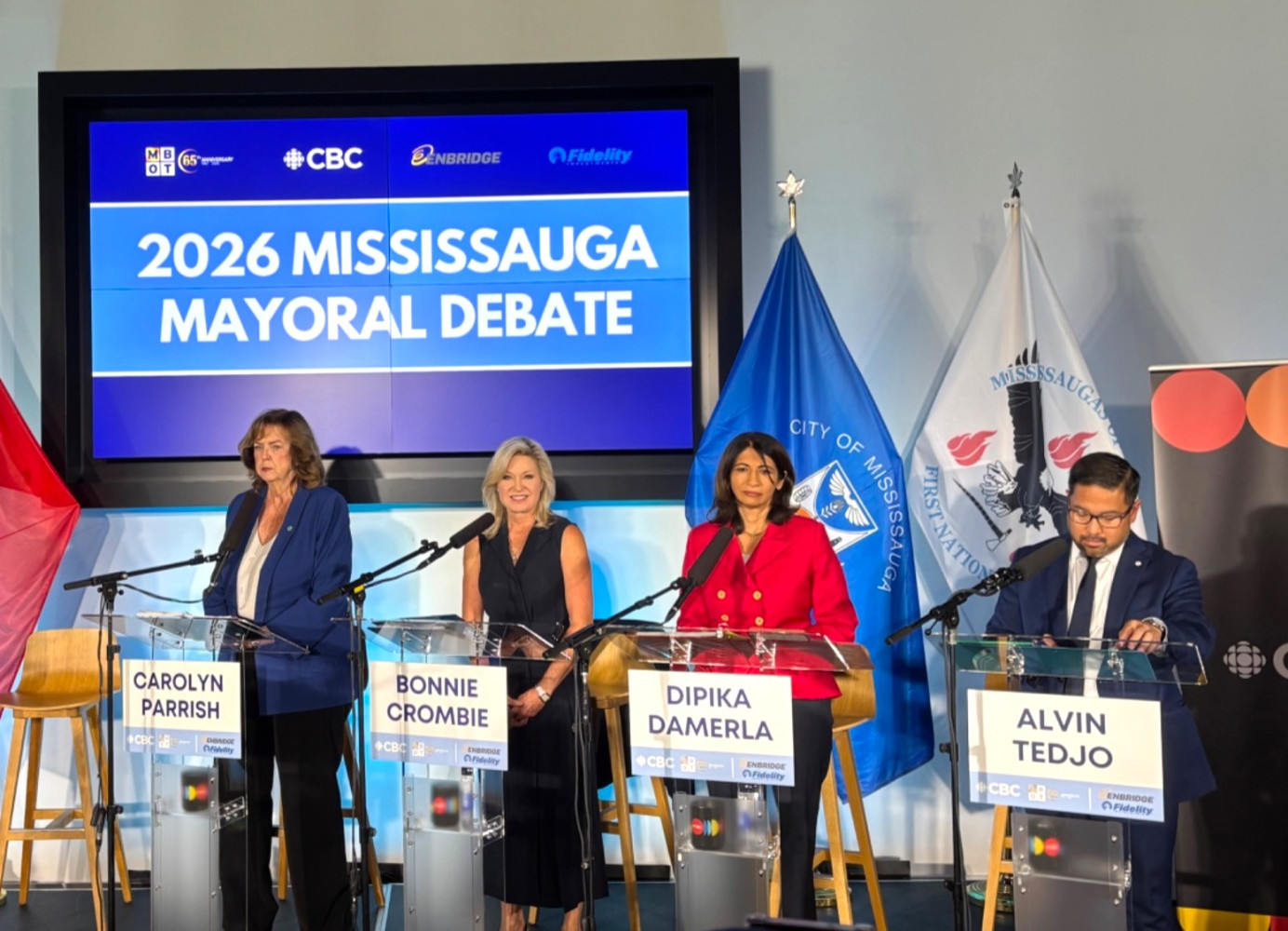
With Mississauga’s mayoral race entering its final stretch ahead of the municipal election on October 26, four candidates took the stage at Sheridan College Friday, promising voters sharply distinct visions for the city’s future—often turning the debate into a heated back-and-forth over taxes, policing, transportation and economic development.
It was hosted by Mississauga’s Board of Trade, and brought together incumbent Carolyn Parrish, former mayor Bonnie Crombie, Ward 2 councillor Alvin Tedjo and Ward 7 councillor Dipika Damerla as they each made their case to lead one of Canada’s fastest-growing cities.
From Parrish’s decision to quit the Peel Police Services Board to tax increases under her brief two-year term after winning a byelection when Crombie stepped down to lead the Ontario Liberals, the incumbent was kept on her back foot for much of the afternoon as the other three took aim at her record and leadership style.
Many of the exchanges focused on how each candidate would attract local, national and international investment while managing ongoing fiscal pressures such as the city’s daunting infrastructure deficit.
Tedjo, who has voted in favour of tax increases in his rookie term as a councillor, proposed freezing property taxes for two years. He argued residents needed greater financial certainty as household cost of living continues to rise.
He said the City should look for efficiencies, reconsider spending priorities and introduce new revenue sources rather than relying on annual tax increases, proposing a vacant homes tax, which he said could provide additional revenue for priorities such as community safety, but did not offer any costing to explain how the municipality, which is facing a $1.2 billion dollar infrastructure deficit over the next ten years, would pay for all of the needs that can only be met if the budget is expanded in line with increasing costs for everything from labour, to fuel to run its transit system and other fleets, and the rising cost of energy to run Mississauga’s massive network of properties.
Tax freezes are not a new topic of conversation in municipal politics, and have been criticized for the strain they put on local governments’ future operations, and the crippling burden they place on taxpayers when compounding costs have to be paid.
Just north of Mississauga, when Patrick Brown became Mayor in 2018, one of his first orders of business was enforcing similar tax freezes that lasted until 2022, as critical projects to move the city forward were cancelled, while an actual freeze was never even achieved. Special levies, sharp utility rate increases and the rapidly rising Region of Peel budget all contributed to drive up taxes for Brampton homeowners, despite Brown’s claims of a freeze, which was widely panned as a political stunt to get himself elected.
Beyond all the burdens tax cuts create for residents in the future, a big criticism is the inability of blanket freezes to actually help those who need it, while ensuring others continue to pay their fair share. The biggest benefits go to people like the Mississauga mayor, who makes close to a quarter-of-a-million-dollars a year, including their Regional salary and what they receive for sitting on various boards. Wealthy residents who typically own more expensive properties, would see significant gains from a property tax freeze they don’t need, while the millions in lost revenue impact lower income earners much more severely.
In Brampton, which is facing a massive capital project backlog exceeding $1.5 billion while Brown’s budget freezes have left community and flood mitigation projects in limbo, critical projects repeatedly delayed, downsized or simply left underfunded, and services such as transit running on fumes, as the City increasingly relies on debt and reserve accounts to keep the lights on.
In a previous sit-down interview with The Pointer, Crombie said the City could freeze taxes for “a year, maybe two,” but it wouldn’t be a practical long-term solution.
“You can’t freeze, as you can’t make up the savings,” she said.
“You would be dipping in reserves and that just means you’re using money that’s reserved for something else. You can do that in the short term, but you can’t do that in the long term. So I think a more practical solution is to look for ways to save money and to find efficiencies.”
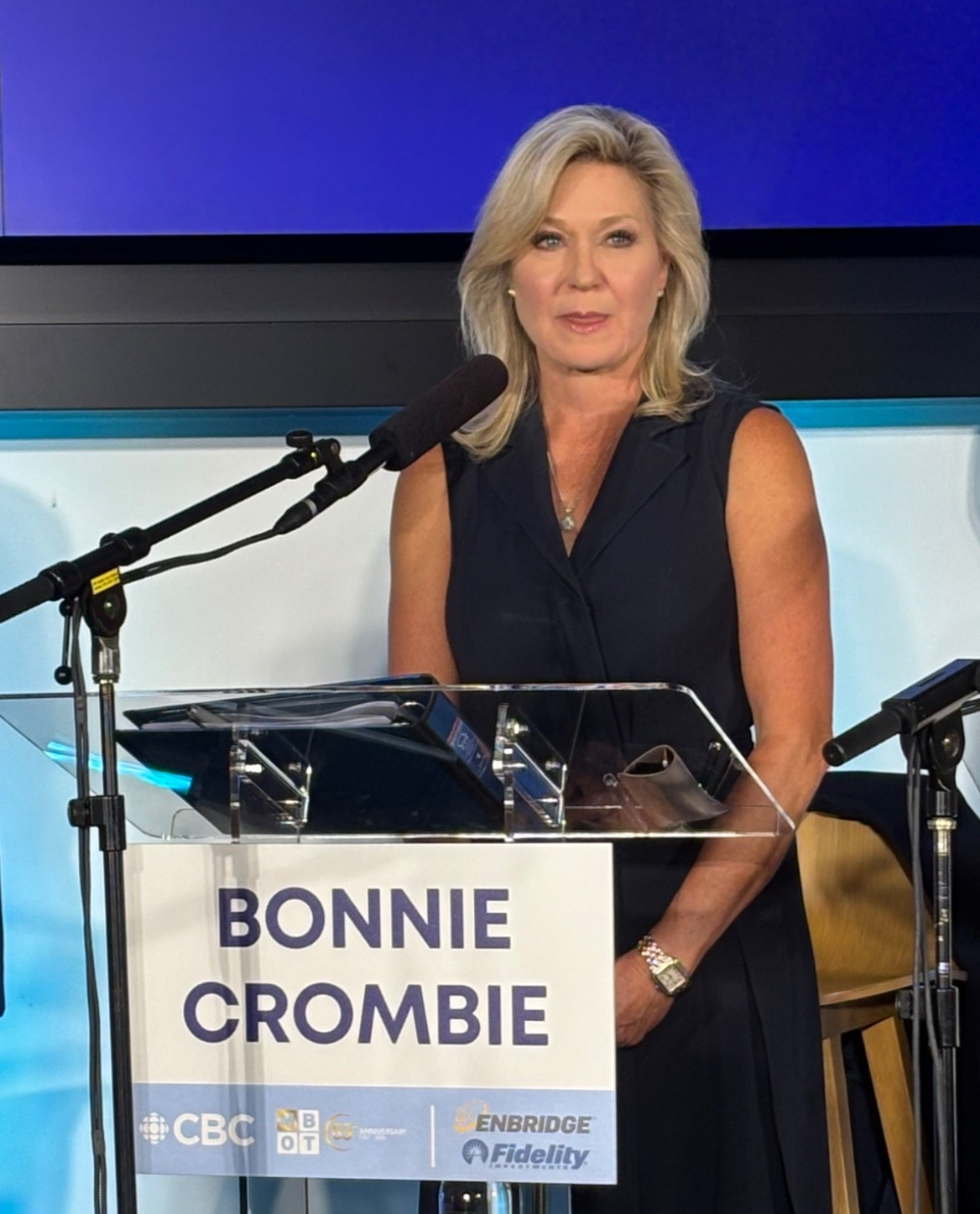
Former mayor Bonnie Crombie, who is running for the job again, spoke about building a subway line connecting Mississauga to Toronto to get people in her city moving much more efficiently. (Benjamin Steeves/The Pointer File Photo)
During the debate, Damerla also focused on affordability and financial accountability, but stayed away from a potentially disastrous tax freeze, arguing that the City should instead examine how existing tax dollars are being spent, reaffirming her commitment to introduce a municipal auditor general for Mississauga which was voted down by council in March when Parrish said she trusted staff to do their job and pushed back against residents who supported Damerla and her idea to bring in a financial watchdog.
Crombie said she would maintain tax increases at or below the rate of inflation, arguing Mississauga needs to remain attractive to businesses by investing in the city, not cutting programs, spending and services. She said to draw future partners who will drive economic growth and opportunity, Mississauga needs a responsible leader who has balanced fair revenue collection with smart fiscal policy that creates prosperity.
Parrish, who came under fire throughout the debate, and at times seemed somewhat confused, at one point wildly mistaking the amount received from higher levels of government for a housing-related funding envelope, defended her leadership over the past two years. She claimed taxes were kept relatively low during her two years, which other candidates have questioned during the campaign, pointing to sharp increases in utility costs, some services, regional taxes and the use of ongoing special taxes for specific needs. Parrish repeatedly pointed to the expanding police budget as a problem, despite her support for the dramatic increases to the Peel Police budget over her two years.
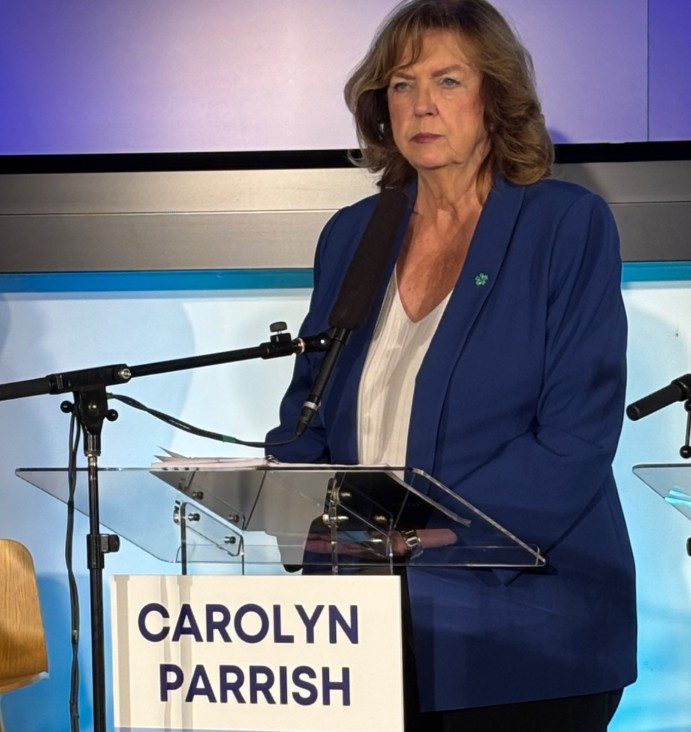
Carolyn Parrish is trying to win her first full term as mayor after taking over for Bonnie Crombie in 2024 when a byelection was called after Crombie stepped down to take over the Ontario Liberal leadership. (Benjamin Steeves/The Pointer File Photo)
In 2024, while Crombie was still mayor before she stepped down to lead the Liberal Party of Ontario, the City announced a property tax increase of 6.8 percent to the Mississauga portion of the bill (the overall tax increase was much lower because it is blended with the provincial education tax portion and the Region of Peel tax increase) before Parrish increased it substantially in 2025 to what amounted to an overall 9.2 percent tax hike during her first year as mayor, with a 5.21 percent jump in 2026—marking a compounded increase of about 15 percent on the overall tax bill over Parrish’s two years as mayor.
The City of Mississauga had to put out a press release under Parrish’s leadership in May of 2025, as residents expressed anger over their spiking taxes: “Wondering why your taxes are so high,” the release asked. “It’s important to understand where the 9.2 per cent increase is coming from,” the City of Mississauga communication stated, before blaming much of the spike on the police budget.
During the debate the Peel Regional Police budget was one of the most contentious issues for candidates, and Parrish was questioned about her decision to quit the Police Board at the end of 2024, relinquishing her responsibility to represent taxpayers at the table.
Parrish confirmed she would not return to the board if re-elected. Parrish questioned whether residents are receiving enough explanation for the growing cost of policing, stating she had appointed a capable representative to the board and could continue advocating for Mississauga through other political channels, including discussions with Premier Doug Ford about the police funding formula to make the share between Brampton and Mississauga more acceptable, something Damerla has also been calling for during the campaign.
Both Crombie and Tedjo argued the mayor should remain directly involved with the police board, particularly because Mississauga contributes approximately 62 percent of the Peel Police budget, calling Parrish’s decision to quit the board an “abdication of responsibility”.
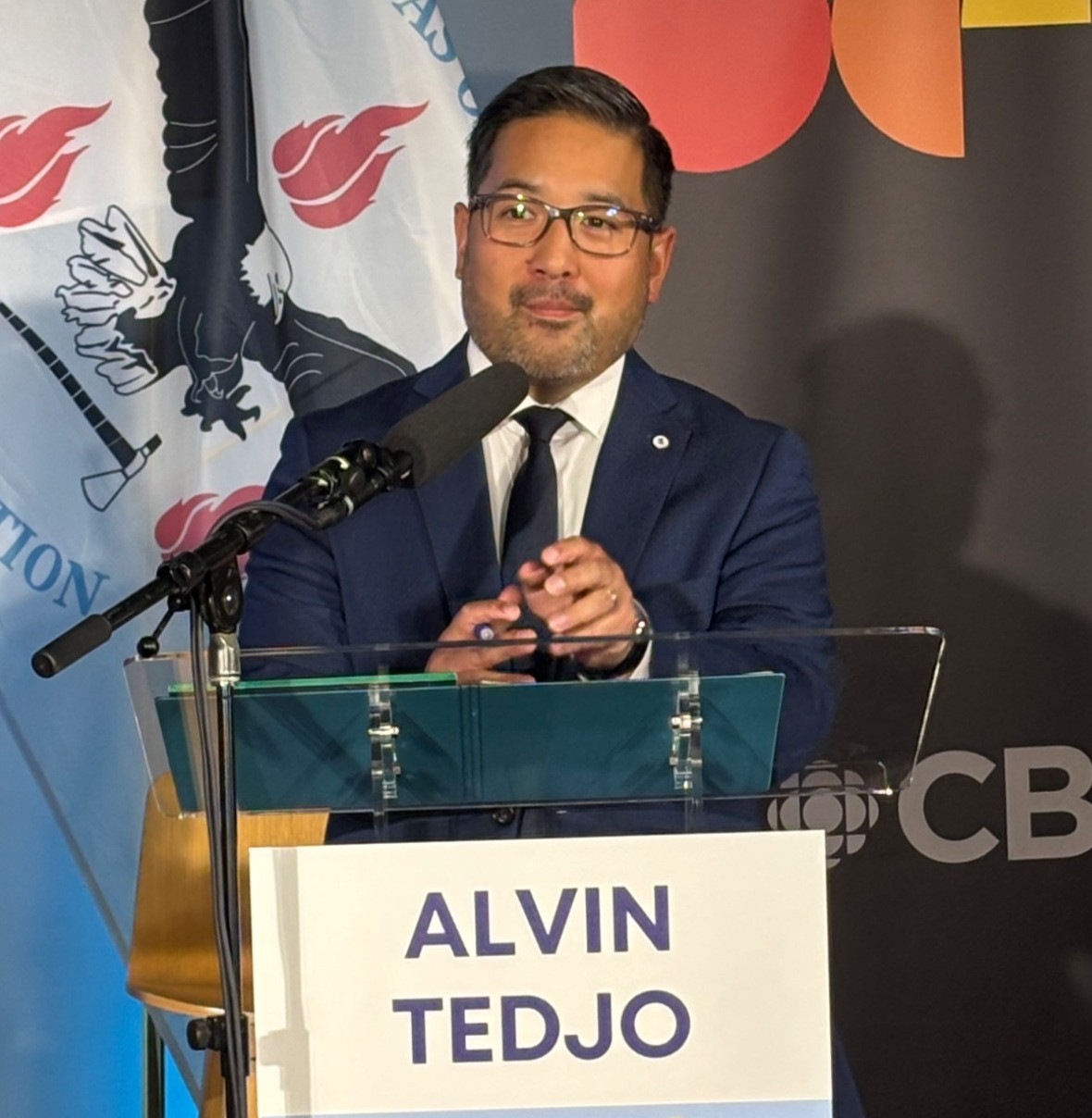
Ward 2 Councillor Alvin Tedjo, who ran previously in the 2024 mayoral by-election and finished in second place behind Parrish, says he plans on hiring more front-line police officers, while simultaneously freezing property taxes, which has sparked criticism from voters who call his contradictory claims an election stunt. (Benjamin Steeves/The Pointer File Photo)
Crombie said the existing police funding arrangement is unfavourable to Mississauga but argued the City needs to have its mayor on the Police board to negotiate changes that work for the city’s taxpayers. Tedjo also said the mayor should advocate directly for the City and questioned if Parrish’s decision to quit the board reduced Mississauga’s influence over police spending.
Peel Police have been heavily criticized in recent years since Nishan Duraiappah was appointed Chief in 2019. In 2026, Peel Police received an $837.3 million operating budget – a more than 80 percent increase from the $462.5 million allocated in 2021. The largest increase came in 2025 when the Peel Police Services Board and regional council approved a police budget hike of 23.3 percent ($144 million), more than all of the combined increases in the decade prior to Duraiappah’s arrival.
Since he was appointed Chief, Duraiappah has seen his salary skyrocket, making him the highest-paid police official in the country, earning $611,678.46 including benefits in 2025. For comparison, during his first full year in office in 2020, Duraiappah earned $311,253.89, before an almost 100 percent increase in five years.
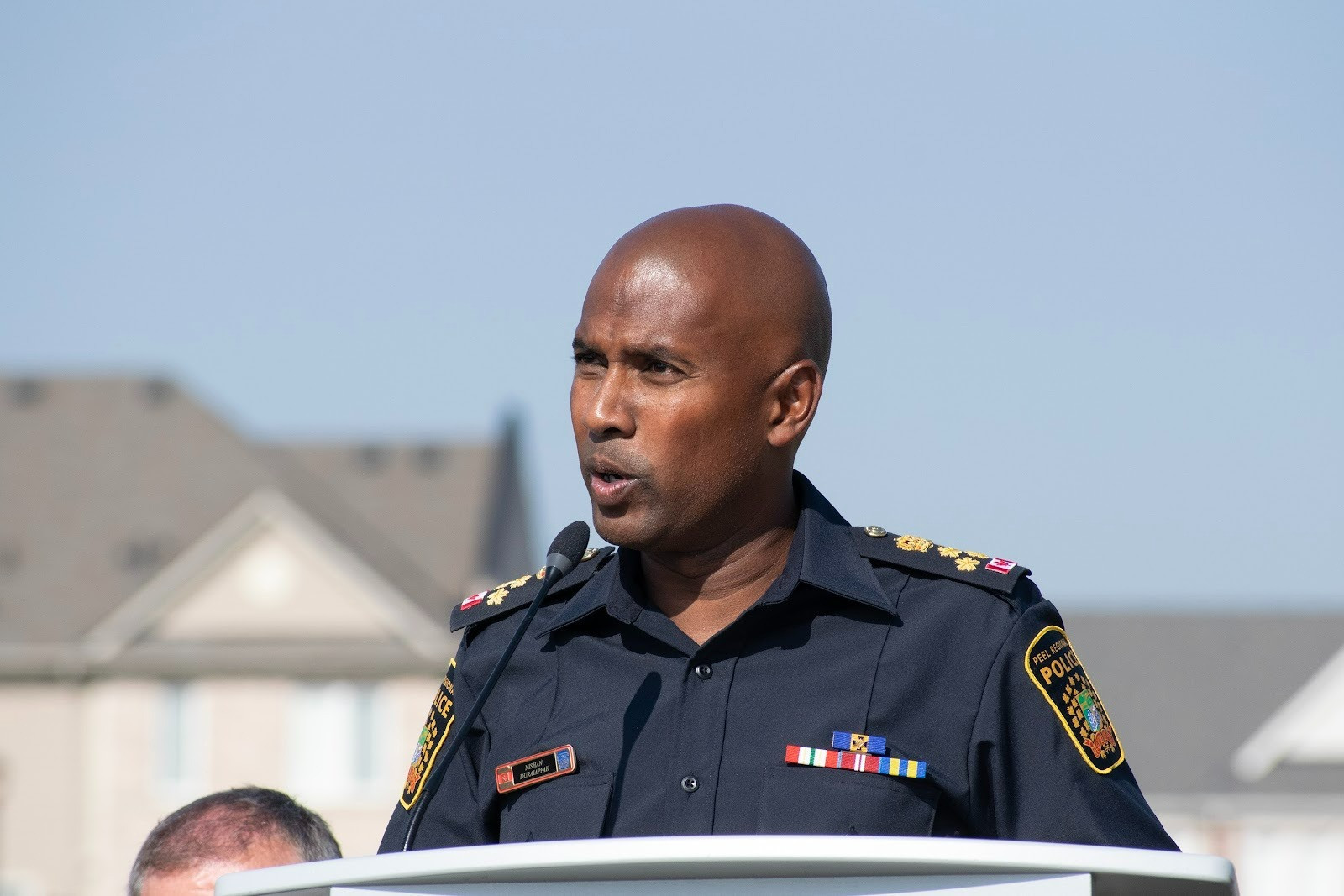
Since becoming police Chief in 2019, Nishan Duraiappah, backed by his friend Brampton Mayor Patrick Brown, has pushed for substantial increases to Peel Police’s budget, doubling it in six years, while increases to his and other senior officers' salaries have raised questions from advocates who wonder if funding is being allocated properly, while crime solvency rates have declined for years. (Alexis Wright/The Pointer)
Tedjo, who was endorsed by the Peel Police union on September 21, said he would look at hiring upwards of 300 new frontline officers, failing to explain how this fits with his campaign pledge to freeze taxes, while Crombie emphasized she would invest in frontline policing and pursue a more equitable funding arrangement between Mississauga and Brampton so her city’s taxpayers would stop subsidizing their neighbours to the north. Parrish suggested that civilian personnel could respond to certain calls where a uniformed officer may not be necessary.
Economic development was another major issue during the debate, particularly as local businesses face uncertainty due to the trade conflict with the U.S.
Crombie said approximately 90,000 Mississauga jobs were affected by tariffs and proposed creating a tariff action team to help businesses navigate municipal processes. She also proposed helping companies obtain approvals critical to their business model within 90 days and creating a dedicated municipal ambassador to connect businesses with the appropriate city department when critical matters need immediate action.
She argued that Mississauga’s Pearson Airport, its skilled workforce and quality of life were important advantages, but businesses need a more predictable municipal approval process.
Tedjo focused on industries such as advanced manufacturing, aerospace, life sciences, food and beverage and transportation. He argued the City needs to do more to support existing businesses while creating opportunities for new companies and pointed to entrepreneurship programs at Sheridan College.
Parrish said Mississauga continued to attract companies despite broader economic uncertainty during her two years on the job. She said companies need help diversifying, particularly those affected by changes in the automotive industry. She said connecting automotive parts manufacturers with the aerospace sector should be a priority so companies could apply their existing expertise to other industries. She also proposed reducing development charges on industrial and commercial land to encourage job creation.
Damerla wants City Hall to increase support for startups and emerging industries and proposed an innovation incubation centre, beginning with health sciences. She said the City should make it easier for startups to navigate municipal processes.
Another central topic of debate for candidates was the City’s recent push for additional data centres within Mississauga’s border. Residents have frequently challenged council members over any perceived support of data centres, and saw victory when council recently voted to impose a one-year interim control by-law to halt any approvals while further study is conducted into the future of data centres in the city.
In line with Doug Ford, Parrish, in opposition to the overwhelming responses from Mississauga residents who communicated their concerns to City Hall, argued that energy-hungry date centre infrastructure is necessary for a modern economy and Mississauga could not expect to attract industries such as artificial intelligence, software development and life sciences without supporting the infrastructure those industries require. She previously said there is “fear of the unknown” among residents about large-scale data centres; but she believes the City should examine their environmental, social, and infrastructure impacts before moving forward safely once the one-year moratorium expires.
When Damerla was given an opportunity to speak about the topic, she distinguished between the different types of data centres. She said facilities supporting hospitals, universities, colleges, municipalities and existing businesses could serve a different purpose from large-scale facilities that consume significant amounts of electricity and water while creating relatively few permanent jobs. She fought against their implementation near residential areas. She said Mississauga should assess each proposal based on its infrastructure and energy requirements, employment opportunities and long-term economic value rather than treating all data centres the same.
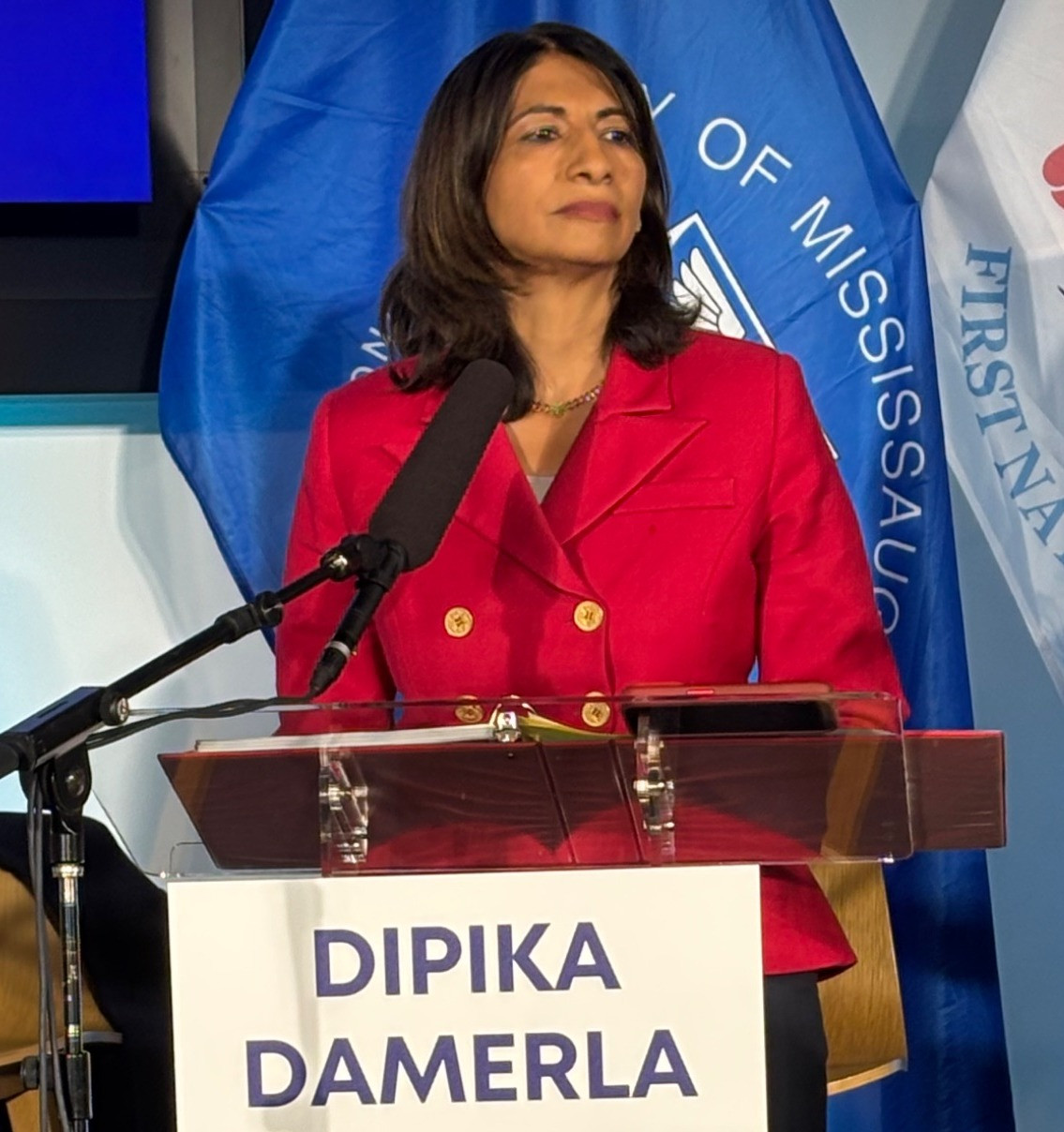
Ward 7 councillor Dipika Damerla wants higher levels of accountability and transparency inside City Hall including a permanent municipal auditor general to protect taxpayers, which Carolyn Parrish voted down earlier this year. (Benjamin Steeves/The Pointer File Photo)
The issue produced a heated exchange between Tedjo and Parrish over a proposed data centre development in Tedjo’s ward, which he voted in favour of, highlighting the difficulty of applying a consistent approach to developments that can have citywide economic and infrastructure implications.
Transportation was another point of contention: while candidates agreed on the need for better regional transit, they differed over which projects should receive priority.
Crombie said extending the TTC Line 2 subway into Mississauga from Kipling Station across a major east-west corridor would dramatically improve movement and connect with major bus routes. Mississauga residents have for decades complained that transit into Toronto is not efficient, while large parts of the city do not have convenient, close transit access that a subway line would immediately solve. Crombie said it would be a gamechanger for Mississauga while immediately injecting hyper-growth into the region’s transit network. A Mississauga subway would require cooperation among the provincial government, Toronto, Metrolinx and the TTC, Crombie said, reminding voters that she has a long track record of effectively working across governments and agencies.
Damerla challenged Crombie to prioritize between the subway extension and two-way, all-day service on the Milton GO line. Crombie said the subway is much more impactful and achievable, citing obstacles associated with expanding GO service on a line that also carries freight and additional costs, bottlenecks that have been in place for years with no signs of a solution.
The candidates were also asked about Ridgeway Plaza in Mississauga’s west end, where large crowds and demonstrations have erupted in recent years.
Parrish proposed acquiring land behind the plaza and constructing a four-storey parking facility that would charge users and eventually pay for itself.
Crombie questioned if the City should take responsibility for building and operating such a facility and suggested approaching private operators instead. She also raised concerns about late-night activity affecting nearby residents and said more needs to be done proactively to work with the community on the underlying reasons for the out-of-control gatherings in a commercial space.
Damerla and Tedjo emphasized the plaza’s role as a destination within Mississauga. Both supported creating more public space and improving walkability while addressing parking and neighbourhood concerns.
Email: [email protected]
At a time when vital public information is needed by everyone, The Pointer has taken down our paywall on all stories to ensure every resident of Brampton, Mississauga and Niagara has access to the facts. For those who are able, we encourage you to consider a subscription. This will help us report on important public interest issues the community needs to know about now more than ever. You can register for a 30-day free trial HERE. Thereafter, The Pointer will charge $10 a month and you can cancel any time right on the website. Thank you
Submit a correction about this story

