
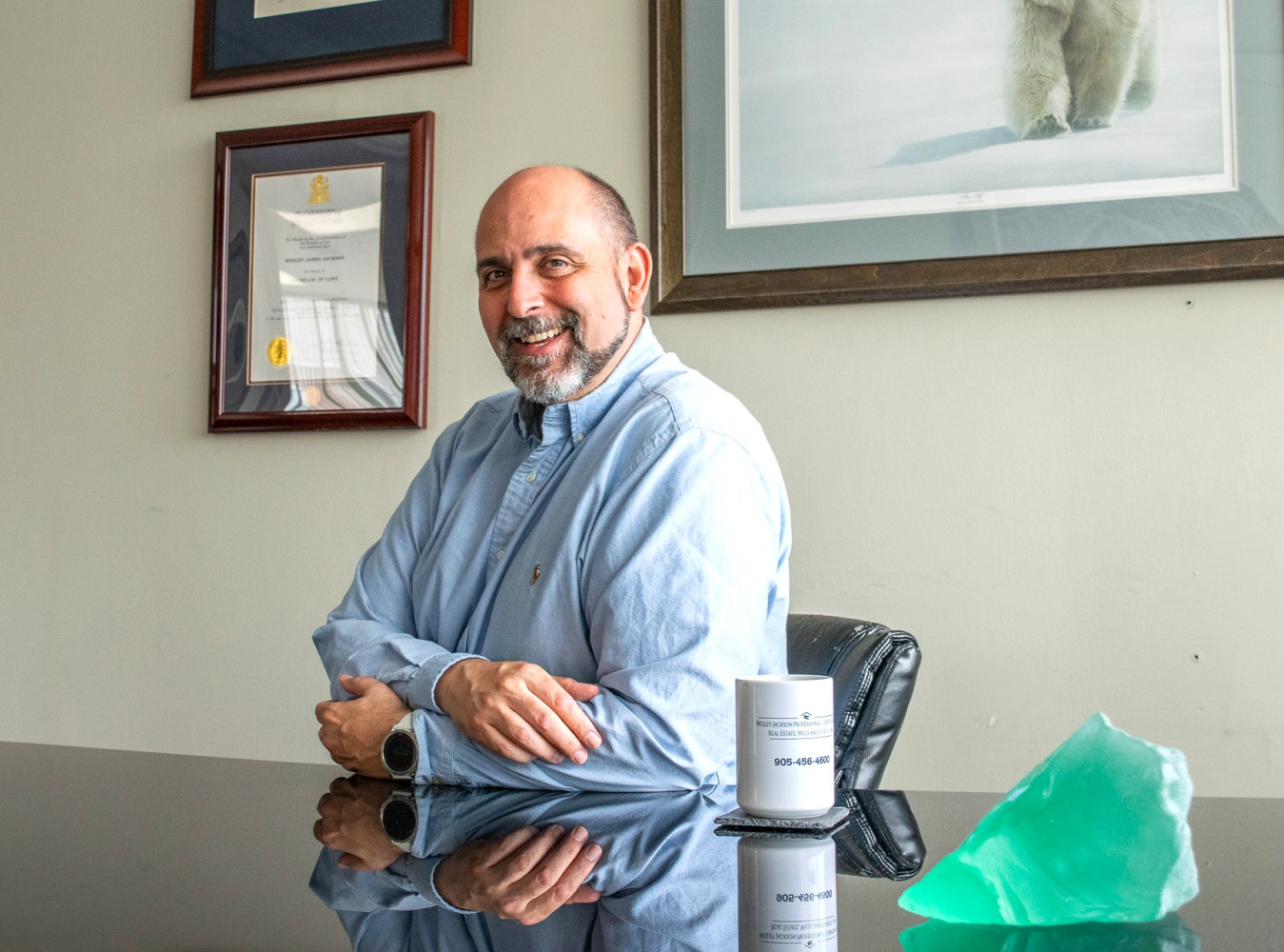
Brampton mayoral candidate Wesley Jackson is a man with big ideas
Wesley Jackson has been a lawyer in Brampton for 23 years. From his law office just off the city’s central thoroughfare, he has watched how his community has rapidly changed.
Brampton’s struggles have been widely documented, from two decades of political dysfunction inside City Hall to a cascading swell of growth-related challenges.
Jackson has a plan for his city.
He ran for mayor in 2018, when his campaign website told voters the city needed “an independent voice focused on integrity, responsible government and practical results.”
After eight years, much of his message remains the same. A detailed list of specific actions to turn Brampton’s economic fortunes around, and ways he plans to address the frustration of residents tired of Patrick Brown’s broken promises and indifference toward the city, as he continues to focus on his federal political profile, fill Jackson’s constant messaging.
In an interview with The Pointer, he opened up about the issues residents are struggling with, such as housing, affordability and crime.
Jackson is tired of Brampton city council constantly blaming the Region of Peel for the ongoing housing crisis, while ignoring what City Hall needs to do, as Brampton’s largest landowner.
“The bone I have to pick with many councillors is they pass the buck to the Region of Peel as if we don’t understand that they sit as both city councillors and regional councillors.”
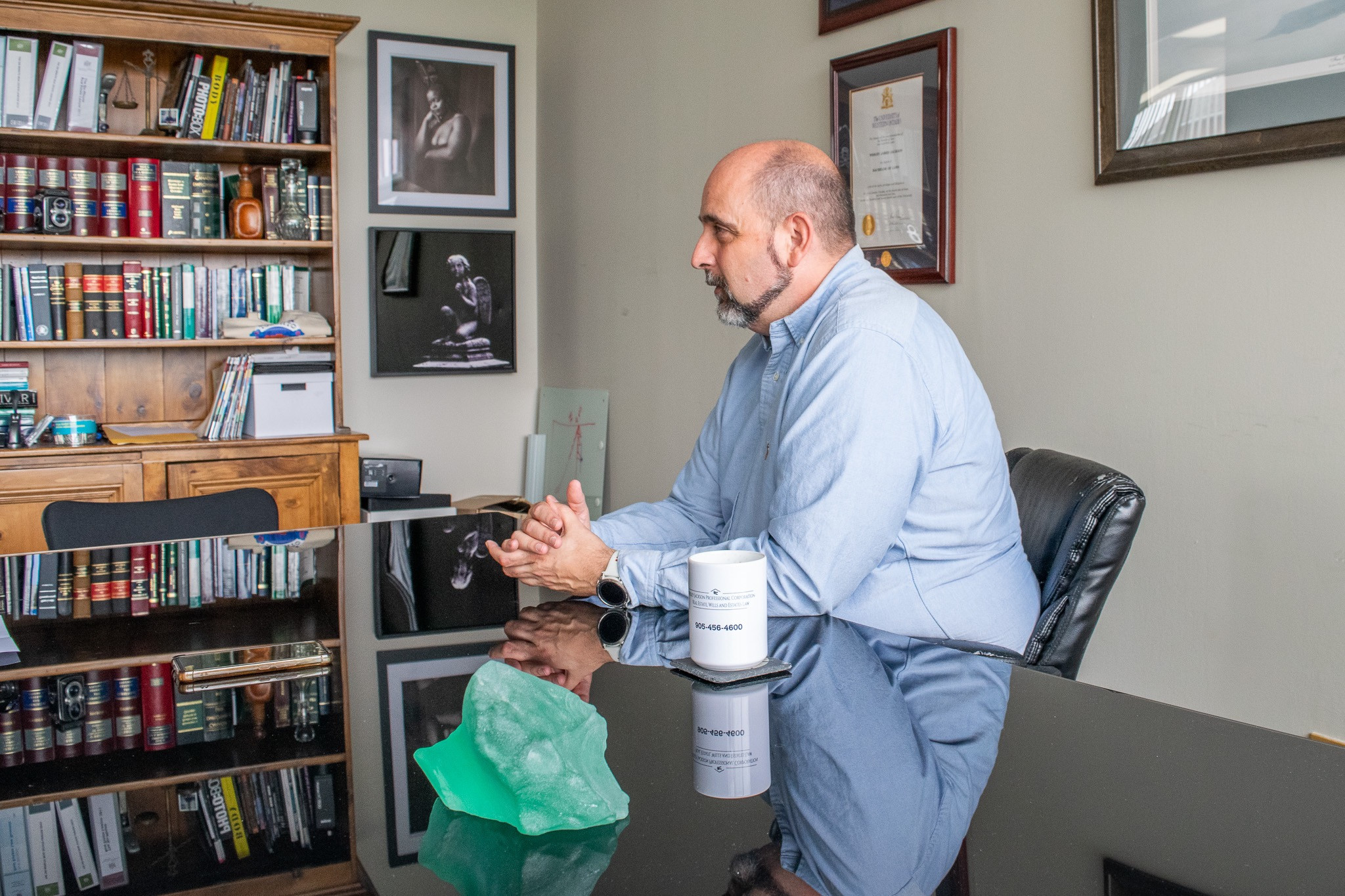
“This council cancelled the hospital levy only years later to realize that we should have had it all along, and had to reintroduce it,” mayoral candidate Wesley Jackson says.
(Alexis Wright/The Pointer)
Jackson would use municipal land in a variety of ways. Through long-term leases, cooperative housing investment, and “housing money in lieu of parkland” from developers, he would build up investments for the type of housing Brampton residents actually need.
“It’s a failure to invest in cooperative housing. It’s a failure to invest in really divesting the city of some of its real estate holdings” to create housing aligned with the changing priorities of residents today and in the future.
Jackson knows personally how the city’s poorly matched housing stock is impacting families. His mother had to be moved 20 minutes outside Midland, the only affordable housing she could find.
“The equity of her home is not going to support a long and comfortable life without the financial support of her children.” Jackson, if elected, would prioritize housing for seniors transitioning out of independent living, and those who might have to shift from multi-generational arrangements.
Brampton broke ground on only 4,759 housing units last year, a significant drop from prior years and well short of what is required to meet its rapidly increasing population growth. Despite $114 million in federal Housing Accelerator Fund money tied to specific yearly targets, the city has been falling behind on its required residential construction needs, which has led to well-documented problems with widespread illegal housing.
Brown and his council allies have failed to build affordable, missing-middle housing and rental units, and last year lost $25 million in provincial funding for housing due to poor leadership inside City Hall.
Jackson also plans to finally bring badly needed hospital and other healthcare investments to the city. The constant Peel Memorial Phase 2 announcements, to build a second major primary care facility, are smoke and mirrors, he says: “announcements aren’t beds.” Construction claims by Brown have been wildly misleading, as there are still no signs of major work at the site. Brampton is the largest city in Canada without more than one hospital.
Jackson says he will turn inaction on one of the most critical issues facing his fellow residents, into hope for better healthcare in the future.
He also criticizes City Hall and its financial mismanagement around the hospital levy, which was cancelled, then reinstated, which he says hurt taxpayers more than if it had been maintained or phased down gradually.
His solution is a multi-part healthcare strategy beyond just the expansion of Peel Memorial. He would introduce financial incentives for doctors to put up practices in Brampton, better paramedic resources, expanded Wheel-Trans-style transport to Credit Valley Hospital, and would utilize pharmacists, under what provincial legislation was designed to do, for more frontline care to reduce hospital pressure.
“This council cancelled the hospital levy only years later to realize that we should have had it all along, and had to reintroduce it,” he said. “Some of that kind of financial mismanagement has been a step backwards.”
Brampton city council in 2022 initially resisted a levy for Peel Memorial’s $125-million municipal share requirement. Brown was running for the federal Conservative Party leadership and prioritized his campaign claims of being fiscally tough, refusing to support desperately needed healthcare investment in Brampton. Councillor Pat Fortini, who is now running for election in Caledon, brought forward a motion to secure the investment, which passed 9-1, with Brown not participating in the vote.
Brown resisted the local funding share needed for Peel Memorial’s expansion, which also included a cancer centre component at Civic hospital, while he campaigned for the federal Conservative leadership on a budget-freeze platform. Brampton Councillor Michael Palleschi, an ally of the mayor, was quoted suggesting support for the hospital levy was politically motivated to “make Mayor Brown look bad” in the federal Conservative leadership race, suggesting Brown was more concerned about his campaign slogan, than the biggest problem facing Brampton residents—the dire lack of hospital beds.
Almost a decade after Peel Memorial’s expansion was supposed to be finished, basic questions about the cost, when the Province will finally put the needed money in its budget, and if it will even have acute care beds, still have not been answered, while Brown continues to claim the construction he refused to help fund is about to begin.
“By the time the second hospital is built, we will be further behind our bed-to-citizen ratio than we are today,” Jackson said.
Jackson is also aware of Brampton’s underdeveloped infrastructure, especially what he considers to be a glaring section of the city, the central Queen Street corridor through downtown between Highway 410 and McLaughlin Road.
“If you’re a visiting dignitary, you get off at Queen Street to head to City Hall, what impression does the city of Brampton give to that dignitary?” he asked.
Pock marked roads, deserted or boarded buildings, and a complete lack of modern urban features that define other big cities in Canada, but not Brampton, are what Jackson wants to change.
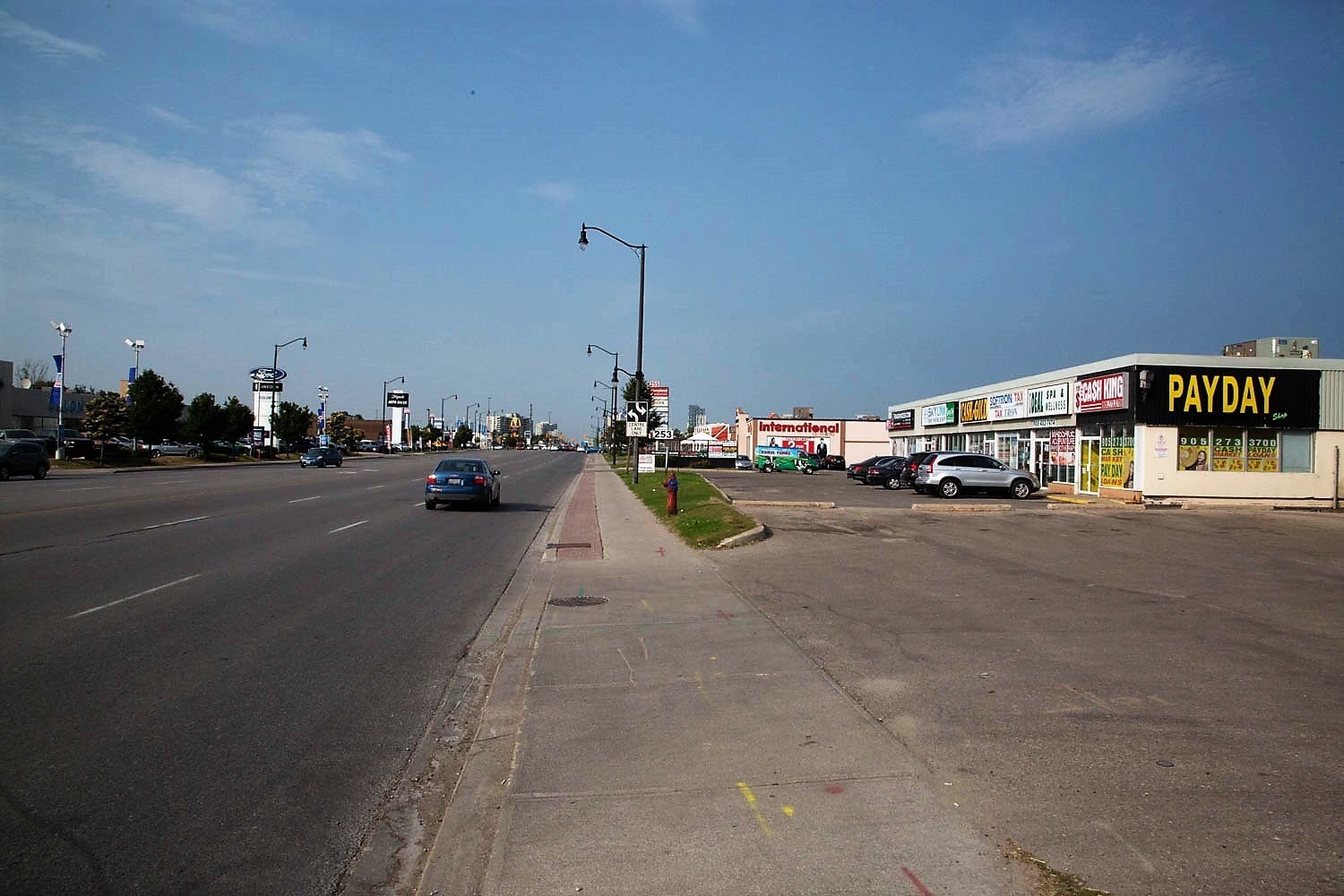
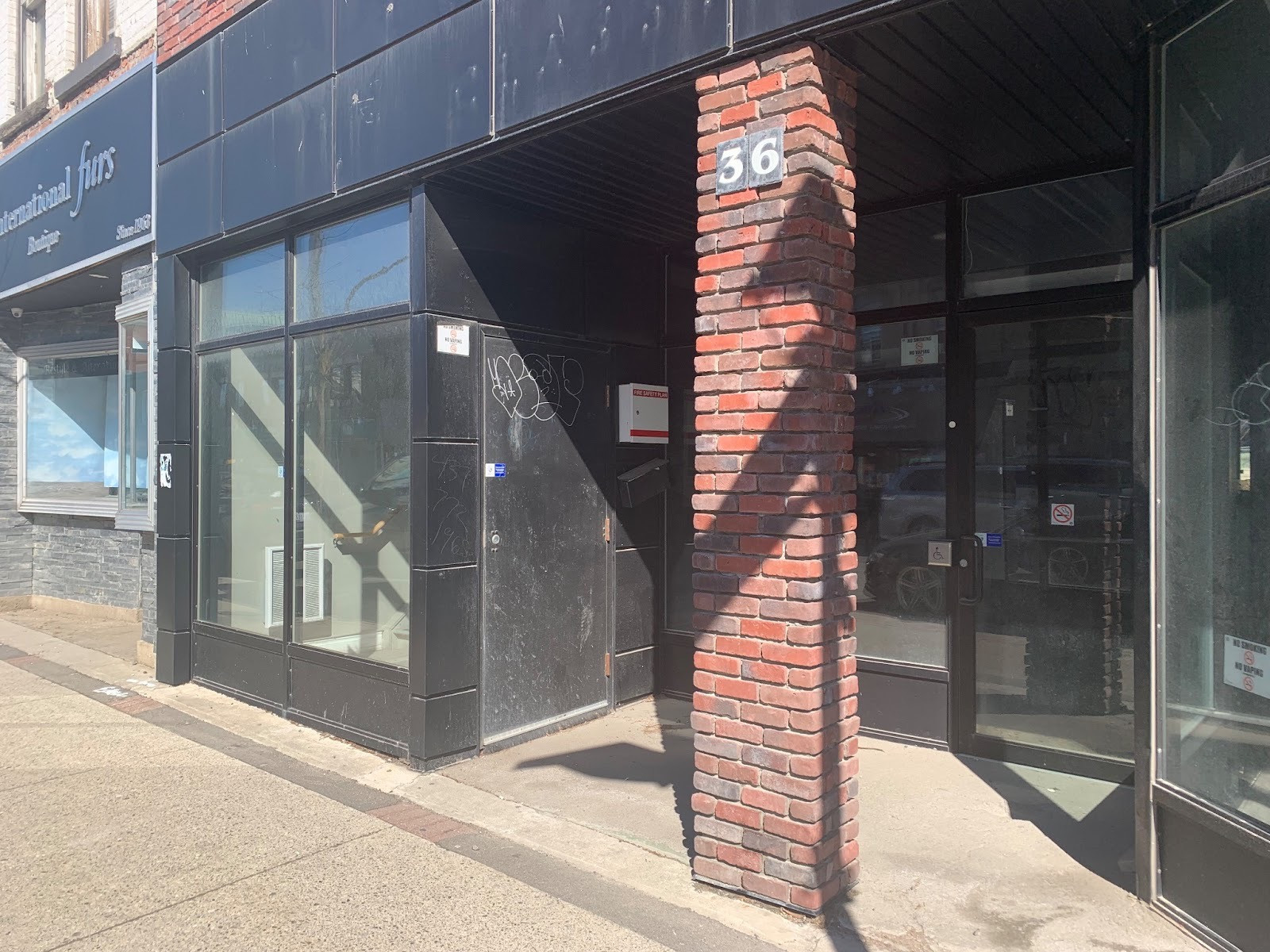
Brampton’s Queen Street corridor including its downtown has been an embarrassment for more than two decades. Wesley Jackson wants to completely reimagine the district and bring critical investments such as healthcare to the area.
(The Pointer file photos)
Jackson says the small amount of attention paid to the area has been almost exclusively on the Four Corners intersection at Main and Queen Streets where City Hall stands, while other parts of the corridor have been left to wither.
“Four Corners gets an inordinate amount of attention because it actually has four councillors. Bramalea City Centre doesn’t get four councillors. Gore Meadows doesn’t get four councillors.”
He would also expand Zum bus routes and transit-oriented development clustered around GO stations, citing a missed opportunity to buy a warehouse next to the Bramalea GO station.
He is critical of the $11-million Autonomous Rapid Transit (ARGO) bus investment Brown gave to a private company with no public consultation and no explanation for why Brampton Transit service then had to be cut this summer.
Accountability and transparency are high on Jackson’s priority list. His 10-point anti-corruption procurement plan modeled on cities like Montreal and Toronto is centered on an independent auditor-general, rather than a whistleblower hotline that is routed through the CAO’s office.
“Right now, the City Hall whistleblower hotline is routed to the CAO’s office. What employee feels safe reporting wrongdoing (to the top employee)? If I suspect there’s problems in the chain of command, how am I expected to call someone in the chain of command?”
Jackson pointed to a motion by Deputy Mayor Harkirat Singh (one of Brown’s closest allies) directing funding to a housing project before the recipient organization actually owned the land. The Pointer reported in December 2025 that Singh introduced a motion to hand $10.8 million (part of $24 million in total) to an organization he was directly involved with, Niwaas Living, which he failed to disclose when he pushed to give millions of dollars to the group.
There was no accompanying staff report, and Jackson provided details of the situation to The Pointer which led to the reporting.
He also pointed out how political figures spend thousands of dollars on social media, referring to an investigation which found Mayor Brown’s office spent close to $430,000 of taxpayer money over a three-year period on social media, along with other unusual expenses, including thousands of dollars for framing hockey jerseys, lavish spending on flowers, coffee, soft drinks and $10,000 for folders to put certificates in. After The Pointer sent Brown detailed questions about the spending, he altered the underlying expense records, removing descriptions of some of the most questionable items, but it was too late, as The Pointer was able to publish the details before he had them scrubbed.
Additionally, Jackson brought up the Regeneration Outreach Centre that was forced to relocate because residents brought up complaints about homeless individuals in the area, and legal threats from the City of Brampton, pushed by Brown and his main council ally, Councillor Rowena Santos. The widely beloved charitable organization had operated from Grace United Church in downtown Brampton for years, providing essential services to vulnerable residents.
The dispute intensified in 2025 when Santos introduced a motion directing the city solicitor to warn the church and Regeneration Outreach about alleged health and safety concerns. Brampton council unanimously supported the move, and another legal threat followed later that year.
A proposed replacement site was found at a former fire station at 8 Rutherford Road South, about two kilometres from the existing hub. Regeneration CEO Ted Brown remained optimistic, saying that the site is accessible by public transit and that could allow his organization to serve the homeless.
It’s the type of behaviour that Jackson says turns people away from City Hall, and causes trust in politicians to erode.
He also criticized City Hall’s handling of the Centre for Innovation project. The City of Brampton told the Association of Municipalities of Ontario in 2018 it needed $30 million to build a Centre for Innovation, while eventually spending $78 million for a property owned by a former public utility, $11 million on the secretive Argo transit deal and tens of millions on other highly questionable expenditures. Brampton taxpayers learned the utility property had been sold for less than half the $78 million the City paid, just two years earlier, raising questions about Brown’s connections to the person who flipped the property to the municipality.
Jackson turned his attention to the Brampton Stellantis plant as an example of the city’s failure to strategically diversify its local economy. His ten-point economic plan was released a full week before Brown released his own ten-point economic plan which is very similar to the one Jackson had thought about for years.
Jackson sees this as a failure of the mayor to prevent a dire situation like this from happening.
“The mayor is the chief, is the head of sales and marketing for the city. So the mayor is going to have a significant role in convincing these large international investors to come to Brampton and take over the site if that is what's going to happen. A healthy, robust job economy here in Brampton could have cushioned the blow.
“What have you done for the last eight years to ensure that Stellantis never leaves?
“We need a mayor that works for Brampton, not a Brampton that works for the mayor.”
Email: [email protected]
At a time when vital public information is needed by everyone, The Pointer has taken down our paywall on all stories to ensure every resident of Brampton, Mississauga and Niagara has access to the facts. For those who are able, we encourage you to consider a subscription. This will help us report on important public interest issues the community needs to know about now more than ever. You can register for a 30-day free trial HERE. Thereafter, The Pointer will charge $10 a month and you can cancel any time right on the website. Thank you
Submit a correction about this story

