
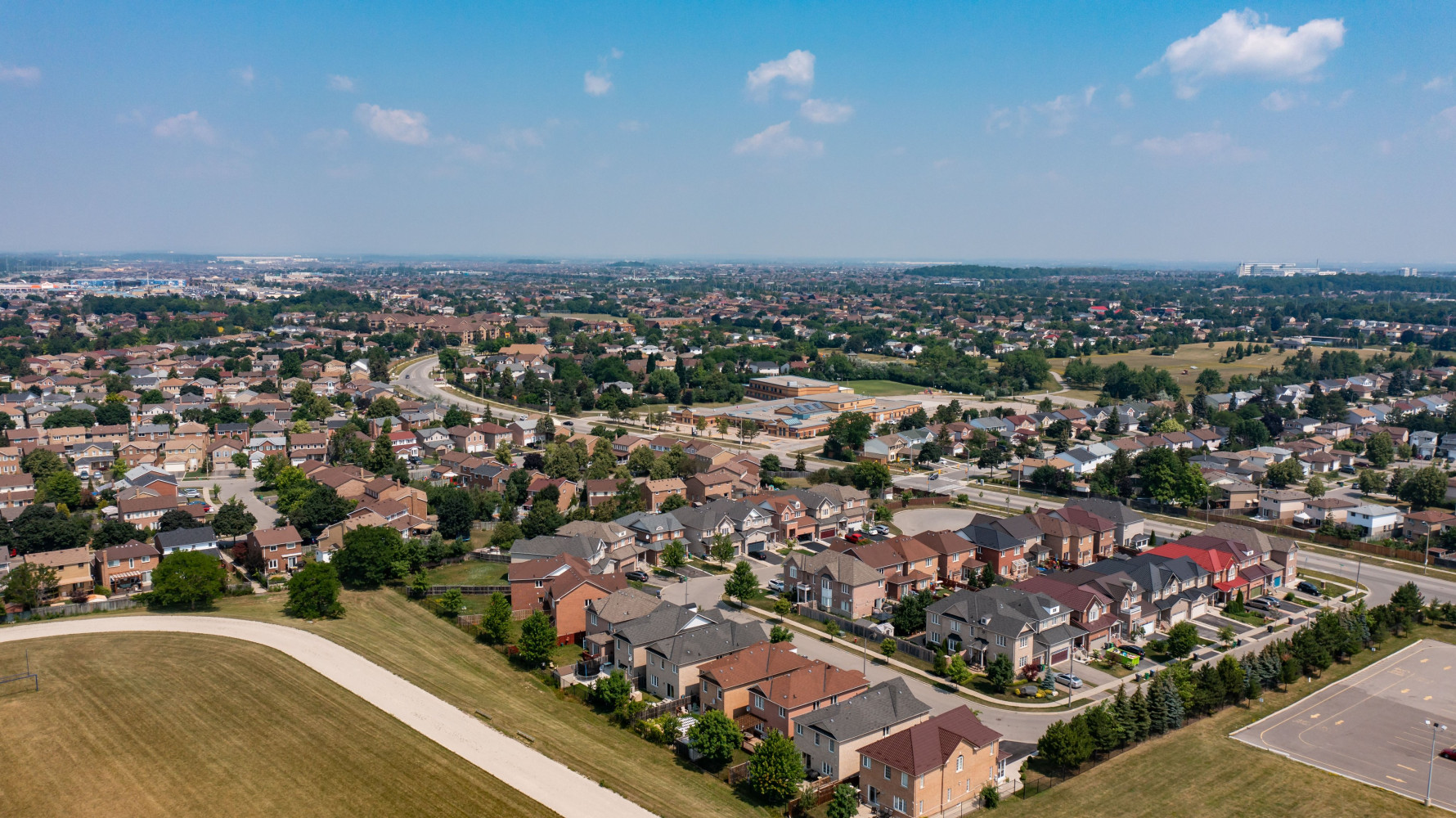
Brampton’s housing starts falling further behind rapidly rising demand
Since Brampton committed to building 113,000 new homes by 2031, the goal has drifted further and further out of reach.
The City has failed to meet even a minimum number of housing units to stay on track for the ambitious target—11,300 units annually—and last year the City didn’t even reach half of that number.
Brampton is not alone. Since late 2022 when the PC government under Premier Doug Ford rammed through its controversial Bill 23, legislating the goal of building 1.5 million homes across Ontario by 2031, housing starts have plummeted to the lowest levels in decades, as Ford created uncertainty in the municipal housing system that had worked effectively since Ontario’s population boom began in the 1950s.
The lack of new construction in recent years, under Ford’s leadership, has driven up the price of existing homes, pushing many buyers out of the market. In 2024, new home sales reached record lows in Ontario.
“Going all the way back to 1980, new home sales were never this low, until 2025 where the GTA recorded only 5,500 total new home sales,” Gord Buck told Brampton councillors last month. Buck is the founder of Argo, a prominent GTA developer. “This is not just a slow down, this is a collapse.”
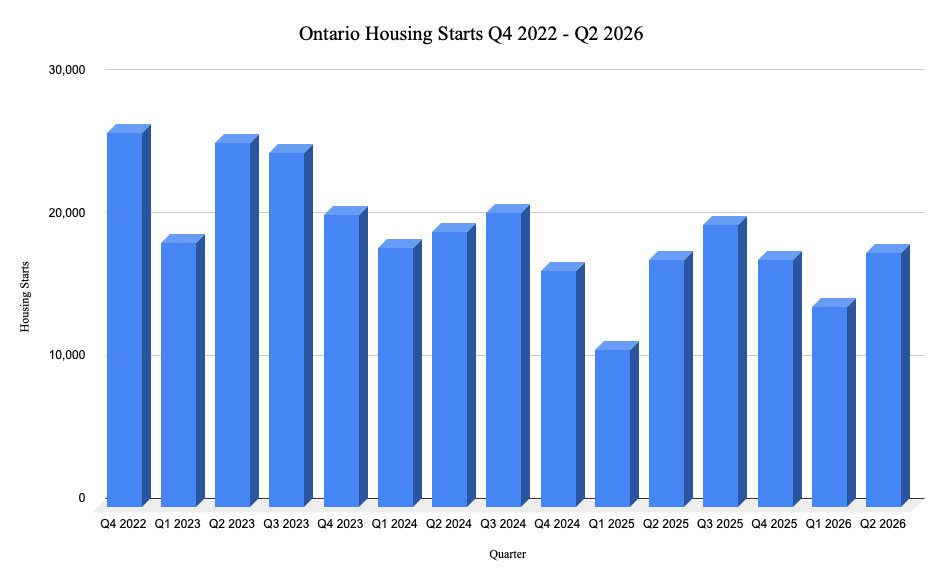
Housing starts in Ontario have been on a general decline since the fourth quarter of 2022, when Premier Doug Ford introduced Bill 23, meant to accelerate home construction.
(Statistics Canada data)
Buck appeared before council on June 10, advocating for the City of Brampton to cut its development charges by 50 percent to spur home construction.
He argued that with the HST rebate offered by the federal government on new homes in Ontario, along with the development charge (DC) rebate already in place at the Region of Peel (under legislation introduced by the PCs that calls for DCs to be cut and offers incentives to municipalities that do so) Brampton needed to follow suit.
“Today we have homes everywhere you can buy and there are no buyers. The market turned April 1 with this HST announcement and the regional development charge reduction that you’ve already done, we need to continue that momentum here in Brampton,” Buck said.
For years, prominent developers, backed by BILD—the lobbying organization for residential home builders in Ontario—have argued municipal development charges are a barrier to home building. According to Buck, in Peel, DCs can add up to $154,000 to the price of a single-detached house (a cost that is passed onto the homebuyer).
Until the PC government took up the developer agenda to cut DCs as its own, the thought of reducing or eliminating the fees builders pay to cover infrastructure was rarely put on the table. These fees have actually steadily increased over the years as the costs to build roads, water mains, sewer systems, community centres, libraries and all the other local infrastructure DCs are supposed to pay for have gone up. (The idea is that builders should be required to cover the share of this infrastructure that their clients will need when they buy and move into a new home, which the developer makes a handsome profit on.)
They can choose to pass on the cost of a DC to buyers which they generally do. But what’s not clear, is if builders will pass on the savings to buyers when DCs are reduced; or does the break on fees simply become more profit for developers.
The impacts of DC reductions are already being felt in Peel, and they are not positive. In June last year, the Region approved a 50 percent reduction in DCs. Not even a year later, following two dire reports by staff and a nearly two-hour council discussion on May 28, the Region of Peel decided to pause hundreds of millions of dollars in new water and wastewater infrastructure projects starting June 11, to avoid putting residents under “major financial burden” due to “large increase in utility rates”, if it does not receive financial support from the provincial and federal governments.
“In Peel Region we jumped without a parachute," Mayor Patrick Brown admitted in response to Buck’s request for a DC cut at the City of Brampton.
Despite the acknowledgement of the risk, it did not stop Brown from recommending the City reduce DCs by 30 percent. The motion approved by council also allowed for a further reduction to 50 percent—similar to what is currently in place in Mississauga—if the provincial government is able to provide further funding support to offset the revenue losses from reducing building fees.
On March 30, the Ontario and federal governments said they would cost match $8.8 billion dollars ($4.4 billion from the province and $4.4 billion from the federal government) under the Development Charge Reduction Program (DCRP) over ten years for municipalities across the province, but only if they reduced development charges by 30 to 50 percent for at least three years in order to be eligible for the funding.
The goal is to bring down fees builders have to pay to cover local infrastructure costs so they will be incentivized to construct more homes and pass the development charge savings onto consumers. It’s unclear how this will help cover the gap for all of Ontario’s municipalities. The Region of Peel alone has identified more than $20 billion needed to pay for critical infrastructure to support the PCs’ 2031 housing targets (Peel is expected to get 246,000 new homes built by 2031 under the PC plan).
Even with a DC reduction in Brampton, it will take an unprecedented level of development activity to reach the housing targets mandated by the Ford government.
In 2023, the first full year after Bill 23 was approved, Brampton broke ground on 7,028 housing units, well short of the 11,300 needed to meet its annual target. Despite this, the City was still awarded $25.5 million from the PC government through its Building Faster Fund.
“Brampton has shown it can get it done on housing and we are proud to reward them for their success,” Ford said in a press release.
In the years since, Brampton’s housing construction has continued to decline.
In 2024, only 5,791 units were constructed—well off the target according to Ontario’s housing supply progress tracker.
Last year, ground was broken for only 4,759 residential units.
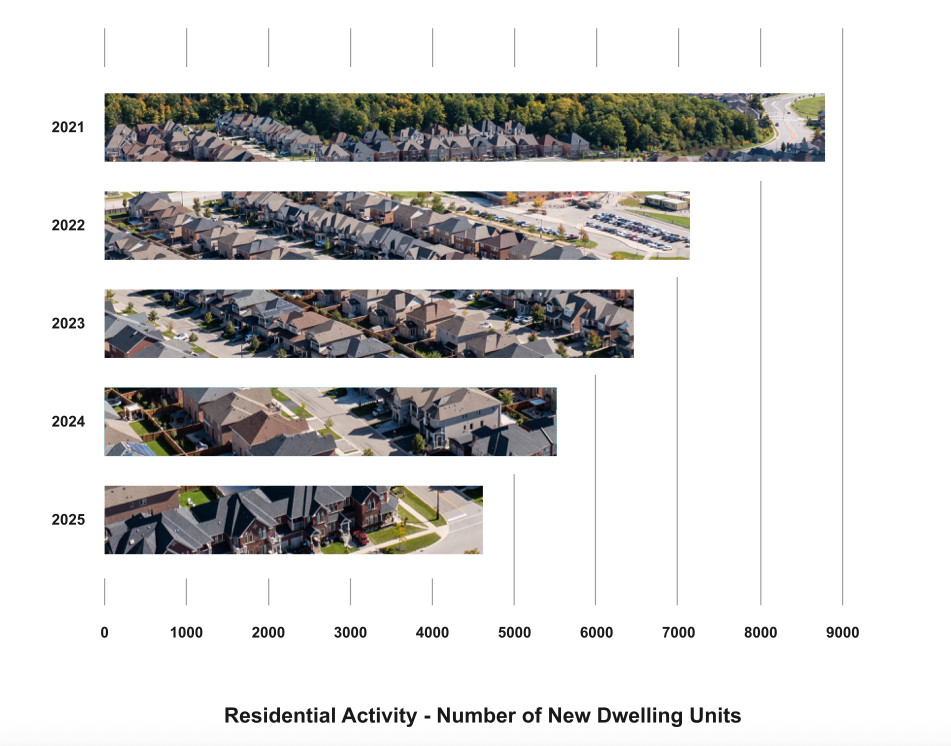
Since the approval of Premier Doug Ford’s Bill 23, which set the goal of 1.5 million new homes by 2031, residential construction in Brampton has consistently declined.
(City of Brampton)
While housing construction continues to decline, Brampton’s population continues to grow. Projections from the City of Brampton show the municipality could reach more than 1 million people by 2051, 25 years from now, compared to just over 400,000 residents in 2006, twenty years ago.
There were already more than 32,000 households on Peel’s centralized waiting list for housing support (as of 2023), and the city has a higher rate of families in core housing need compared to the Ontario and national averages; it all points to a desperate need for not only new residential construction, but new homes that are affordable.
On June 10, council voted to designate $12.48 million of federal funding through the Housing Accelerator Fund (HAF) to a 104-unit non-profit development at Church Street East and Beech Street.
Brampton secured its HAF agreement in October 2023, which approved $114 million to support the development of 24,000 units over the next decade. The funding was structured as four annual payments, with future tranches conditional on the city meeting its action plan targets. Meeting these targets has been a struggle. Last year, the City missed out on $25 million in provincial funding through the PCs’ Building Faster Fund after it failed to stay on track with housing development.
The Church Street East project, a proposal by Church Two Non-Profit Corporation would see 52 affordable units and 52 market-rate units built at 55-61 Beech Street and 132-142 Church Street East, with some units specifically for women and children fleeing domestic violence, in partnership with Armagh House.
The motion allocates $12.48 million from the next HAF installment, anticipated early in 2027.
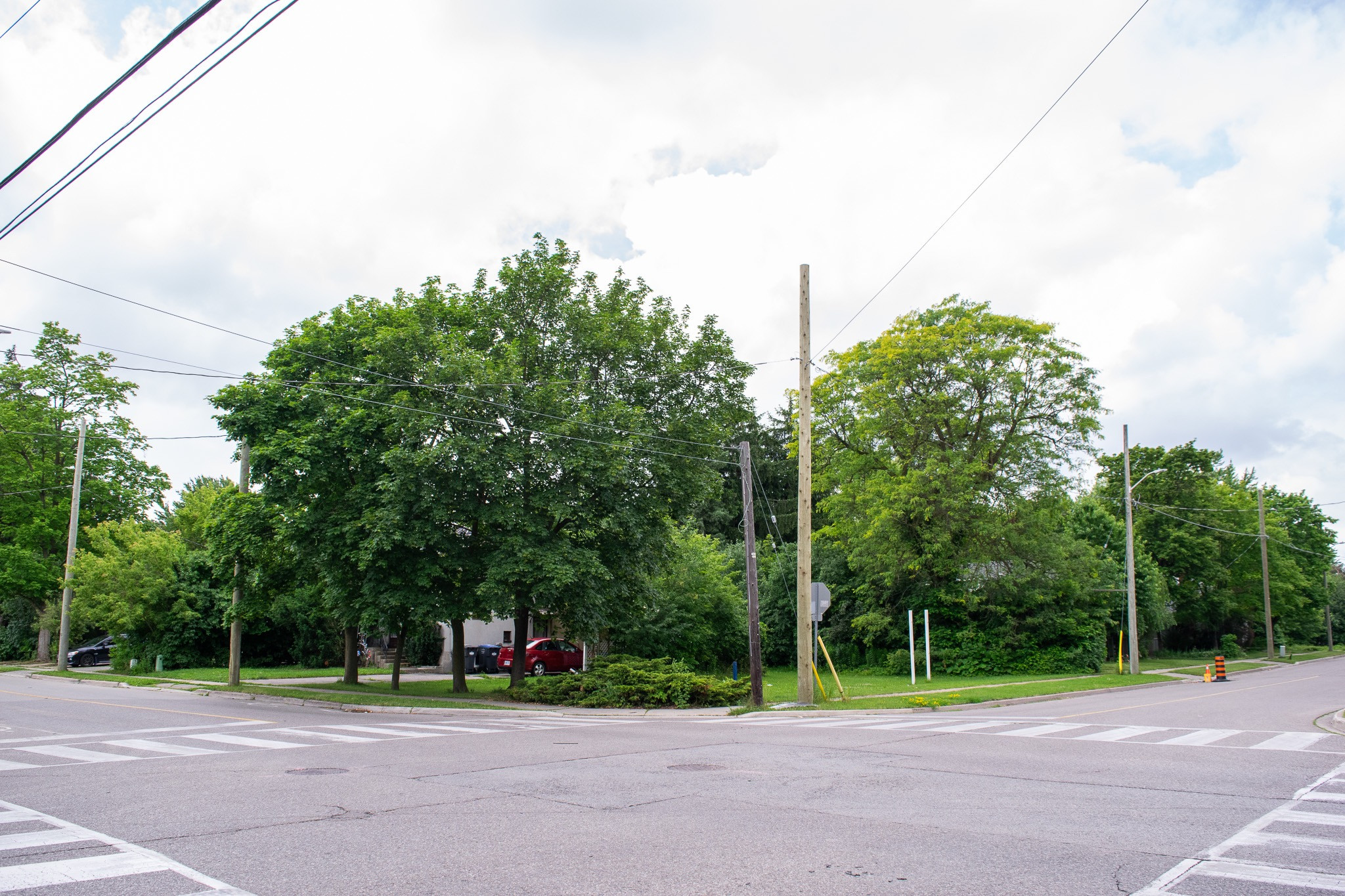
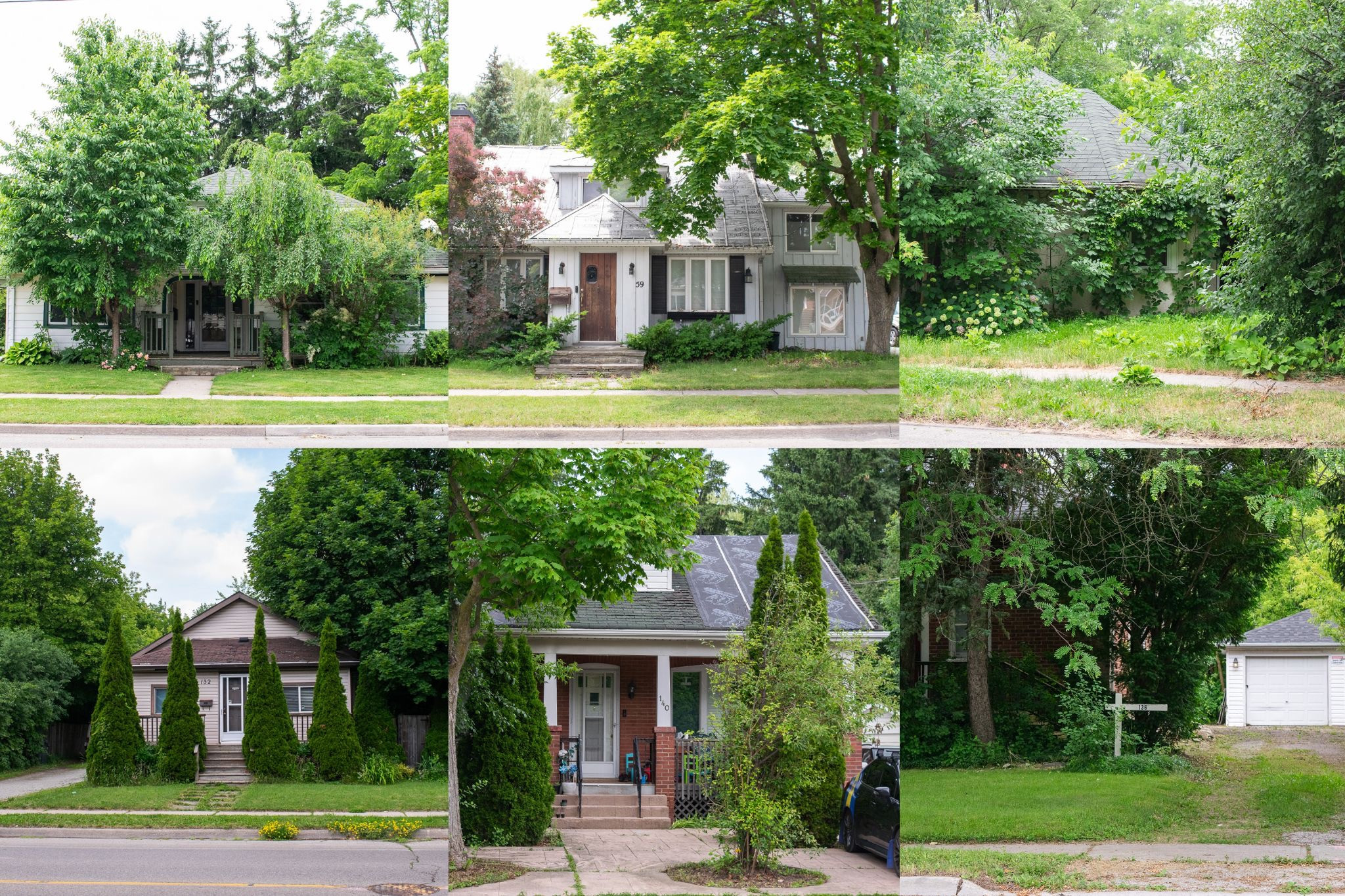
The area near Beech Street and Church street has been slated for the new construction of affordable housing. However, some experts say that the city of Brampton cannot accomplish its housing targets.
(Alexis Wright/The Pointer)
Azad Goyat, founder and director of the Brampton Housing Providers Association (BHPA), says the housing shortfall is not simply a political failure. He is currently running for a council seat in Wards 9 and 10 in the October municipal election.
He says that it reflects a combination of economic pressures, approval delays, and a rental market that has quietly deflated. Developers, he says, are pulling back.
“Developers are postponing their projects,” he said.
Part of the reason, he argues, is that even newly approved housing is unaffordable for the people that need it most. He pointed out that while the city of Brampton is building condos, it does not help those who need affordable housing.
“Even if they approve the houses and the houses are not sold, the situation is still bad,” he said. “People cannot afford the houses.”
According to Buck, reducing DC charges has the biggest impact on affordable housing.
“The reduction is most important for the affordable product because you have more units per acre. The more units per acre, you have more development charges per acre and it just drives up the price of that house.”
Councillor Michael Palleschi questioned the optics of reducing the DC charges, speculating residents would have a difficult time understanding how any savings would be passed onto the homebuyer.
“The stigma around the development industry is it’s for profit, you’re out there to make money,” Palleschi said on June 10. “How do I then go to my residents to say, ‘they’re not putting anything in their pocket?’”
"We're building homes today at a loss,” Buck replied. “We’ll start projects where we're hoping to make, four percent, five percent return, those margins we would never even have looked at things 20 years ago,” he said. “What will stop us, the industry, from profiting on this, bring on supply.”
Email: [email protected]
Email: [email protected]
At a time when vital public information is needed by everyone, The Pointer has taken down our paywall on all stories to ensure every resident of Brampton, Mississauga and Niagara has access to the facts. For those who are able, we encourage you to consider a subscription. This will help us report on important public interest issues the community needs to know about now more than ever. You can register for a 30-day free trial HERE. Thereafter, The Pointer will charge $10 a month and you can cancel any time right on the website. Thank you
Submit a correction about this story

