
Despite concerns over lack of bylaw officers, Brampton council expands new landlord oversight citywide
Following the fatal Banas Way house fire in Brampton last month that claimed the lives of five individuals, including a toddler and newborn, the city’s Residential Rental Licensing program was back in the spotlight.
The specific cause of the fire has not yet been announced but concerns have been raised that the home might not have been safe due to non-compliance with property, fire or building-code standards.
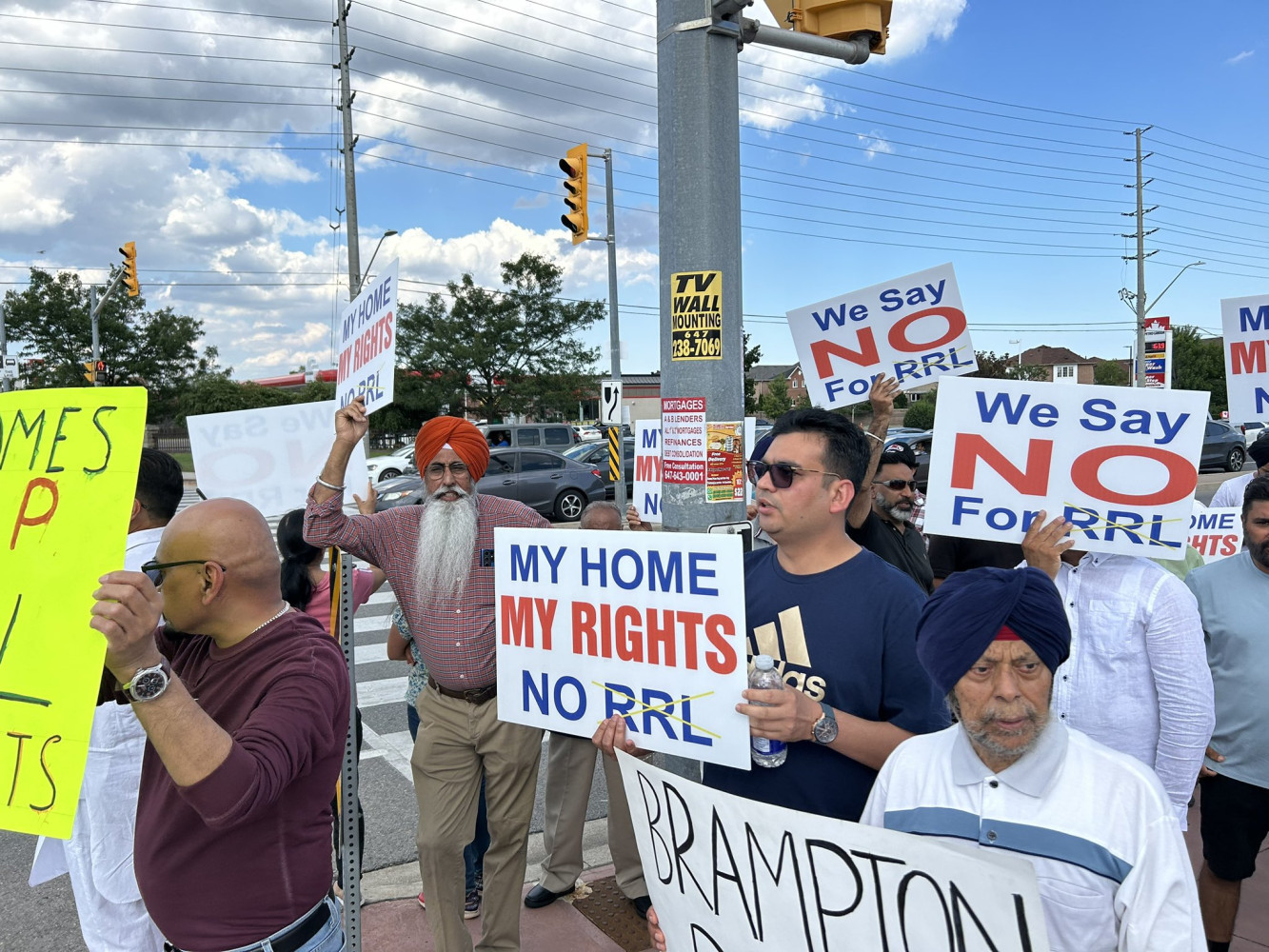
At the December 10 council meeting, members ratified a motion to approve the expansion of the RRL program in phases across the city, starting in Wards 2 and 8, and then later in Wards 6, 9, and 10, starting in 2026. This follows the previous roll-out across the rest of the city, which was met with anger among many property owners who said the plan’s heightened standards were unfair, and not needed due to existing property standards bylaws.
Council members raised concerns over funding for the program’s extension to the other half of Brampton during the November 26 committee of council meeting, pointing out that RRL expansion across all wards would require additional funding to enforce the program efficiently. City staff have yet to report back on the resources and staffing needs required to support the expansion citywide, and questions were raised about why council members green-lit the move when a funding stream has not been identified.
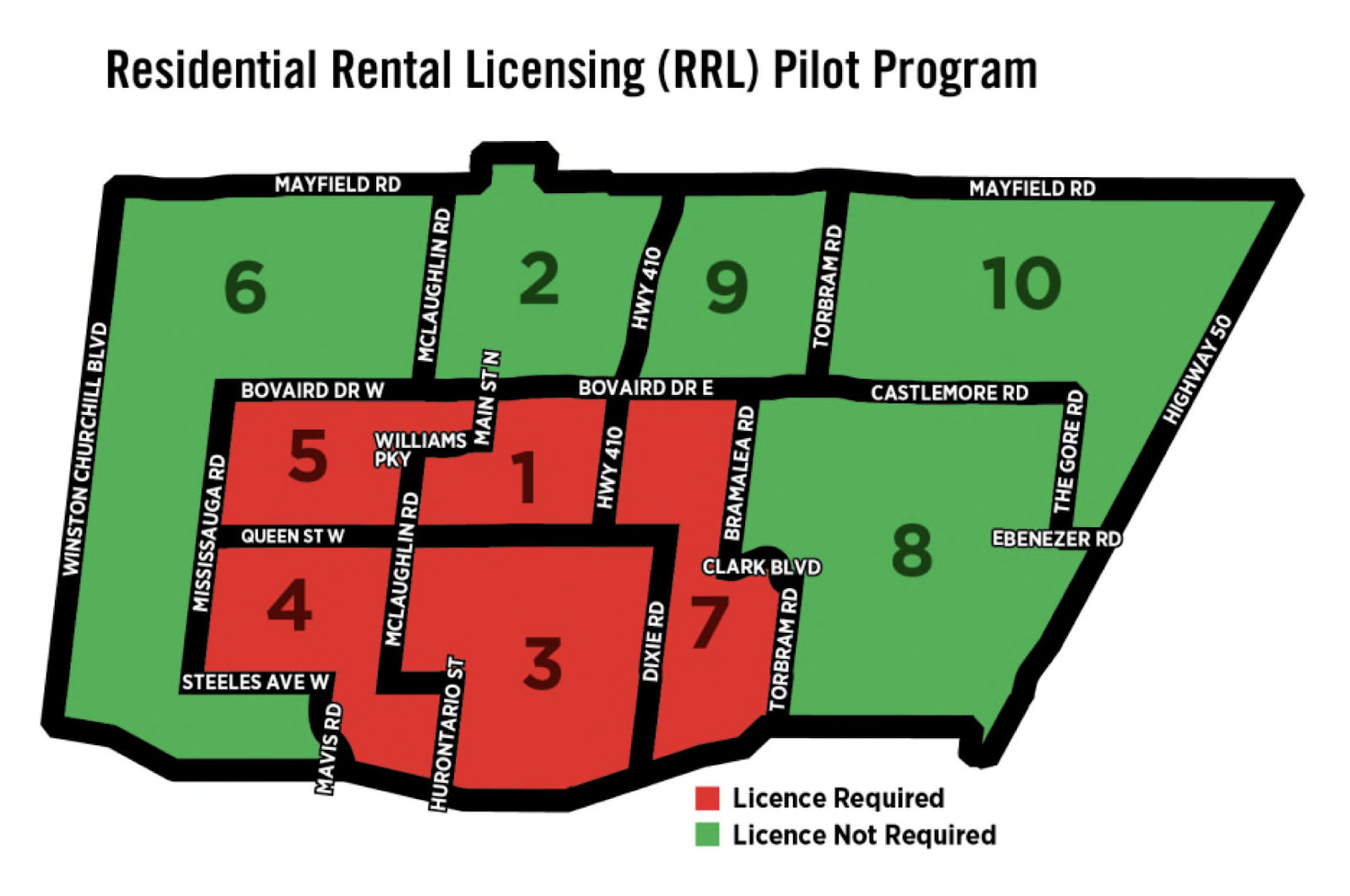
Brampton’s licensing program for small landlords will be expanded starting next year.
(City of Brampton)
To deal with the housing crisis in Ontario, the PC government has made it easier for property owners to add Additional Residential Units (ARUs), often to existing homes, but in cities like Brampton, where a mix of rapid growth and poor housing stock has created a chaotic housing market, abusive practices have been a problem for years. A lack of enforcement in Brampton and Mayor Patrick Brown’s failure to budget for the required number of bylaw staff, have led to widespread building and fire code violations in these secondary suites. In 2022 it was estimated by City officials that 50,000 illegal units were operating in Brampton, and some have since said this number is low.
Instead of committing to responsible funding of bylaw officers, council members such as Brown and Rowena Santos have ignored the responsibility and asked Queen’s Park to bail out the city. At the meeting Santos said council should “advocate to the province for funding… . Unfortunately, to hire more fire prevention officers, building code compliance officers, and bylaw officers requires a lot more resources.”
Another significant challenge the city is dealing with is that the bylaw inspectors require permission from the landlord or tenant to investigate compliance issues.
Council has directed staff to send a letter to the Minister of Municipal Affairs and Housing, all Brampton-area Members of Provincial Parliament, and the Association of Municipalities of Ontario (AMO), requesting that the Building Code Act be amended to provide conditional authority to bylaw officers to enter these units without warrants, in order to verify building and fire-code compliance.
The Pointer asked Brampton officials how many additional bylaw inspectors are required to support enforcement of the RRL program across all wards and whether the four additional inspectors identified in the November 26 report are sufficient.
They did not respond.
According to the City’s published RRL data, so far in 2025, 455 penalty notices have been issued by the enforcement team for non-compliance, 448 proactive inspections have been initiated, and 581 licenses (indicating compliance with fire safety, occupant-number guidelines, proper waste management, parking rules and other requirements) have been issued.
Collectively, in 2024 and 2025, $527,535 has been collected through fines, and 869 properties have been brought into compliance as a result of RRL inspections.
During the November meeting, Mayor Brown addressed the need to hire more fire prevention and property standards officers and claimed the funding source will be identified in the upcoming budget process.
“As we are moving forward with that, I don’t think the staff will have that analysis ready today, but we will have a clearer picture of additional staffing and funding details during the budget process,” he said.
Brown’s call to hire more bylaw officers contrasts with his earlier fiscal strategy, which included significant cuts in the 2025 budget, as reported by The Pointer in January this year. Desperately needed investments in critical areas have been impacted by his demand to keep budgets low, while his own spending on the mayor’s office, the number of staff that support him, and the frequent travel around the world by Brown, his council allies and staff, has skyrocketed.
After the November 20 Banas Way house fire, Brown tried to give himself credit for curbing illegal rental units across the city, despite for years opposing the efforts led by the former Brampton councillor Jeff Bowman, who wrote a letter in 2019 to Ontario Premier Doug Ford to give City bylaw officers more powers to inspect homes suspected of having illegal rentals, and make amendments to the Fire Protection and Prevention Act (1997) and the Building Code Act (1992) to make it easier for officials to gain entry, even into illegal units.
In June, council approved expansion of the RRL program in Wards 2 and 8 for another three years, until December of 2028.
This will add approximately 3,666 additional registered units to the program and will introduce more complex requirements for basement units that would result in longer inspections and follow-up timelines.
The program was initially a two-year pilot program, started in January 2024, and is currently operational in Wards 1,3,4,5, and 7. It was set to expire by the end of 2025.
Under the program, landlords renting four or fewer units are required to obtain a license and submit an application to ensure that their properties comply with the fire and safety codes.
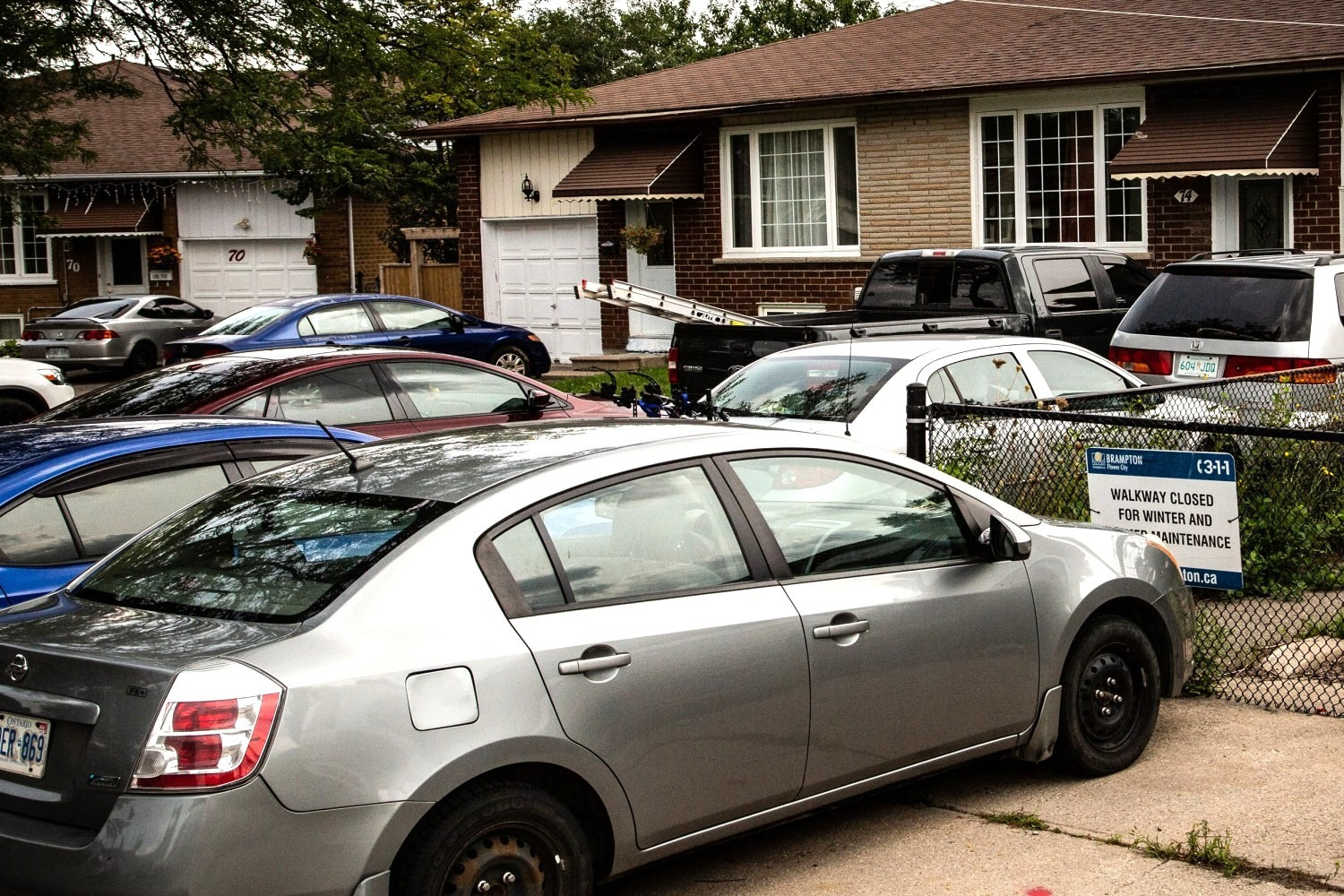
For years, Brampton officials have failed to create proper rental housing stock, leading to the proliferation of secondary suites in houses across the city, which has led to a wide range of property standard issues.
(The Pointer files)
If landlords fail to comply with license conditions, the graduated penalties are $600 for the first offence, $900 for the second and $1200 for any subsequent offence.
Since the RRL was launched last year, it sparked controversy when a group of small-scale landlords vigorously opposed the program and filed a petition to eliminate it, arguing that sufficient rules were already in place. They described the program as a “money grab” and said they were unfairly targeted.
"So basically, this RRL will not be needed. And we are totally against this program in Brampton, because at the same time, Brampton city is hungry for money," Azad Goyat, a founder of the Brampton Housing Providers Association (BHPA), representing landlords against the RRL program, said in June.
"To enforce this program, it needs additional work. It costs money. It cost $1.3 million. They are not collecting any fee, as they waived it in 2024; they waived it for people in 2025. Basically, it's taxpayer money from where the money will come."
Many welcomed the move, as it addresses multiple property standards issues, like overcrowded driveways, overflowing garbage bins and the lack of compliance with fire, electrical and building codes. Others felt it unfairly targets small landlords who are already struggling due to high mortgage rates and poor infrastructure in the city, while large-scale property owners and landlords of high-rise rentals face few consequences for the deplorable conditions council often hears about.
As of May this year, 26,743 ARUs were registered across the city, with 2,138 active investigations. From January 1 to April 30, the City issued 119 penalty notices to landlords for ARU-related violations, resulting in fines totalling $90,500. In 2024, 439 penalty notices were sent that resulted in fines of $354,750.
Residents will have to wait till next year’s budget is finally brought forward by Brown, to find out how he plans to pay for the Residential Rental Licensing program’s expansion across all of Brampton.
Email: [email protected]
At a time when vital public information is needed by everyone, The Pointer has taken down our paywall on all stories to ensure every resident of Brampton, Mississauga and Niagara has access to the facts. For those who are able, we encourage you to consider a subscription. This will help us report on important public interest issues the community needs to know about now more than ever. You can register for a 30-day free trial HERE. Thereafter, The Pointer will charge $10 a month and you can cancel any time right on the website. Thank you
Submit a correction about this story

