
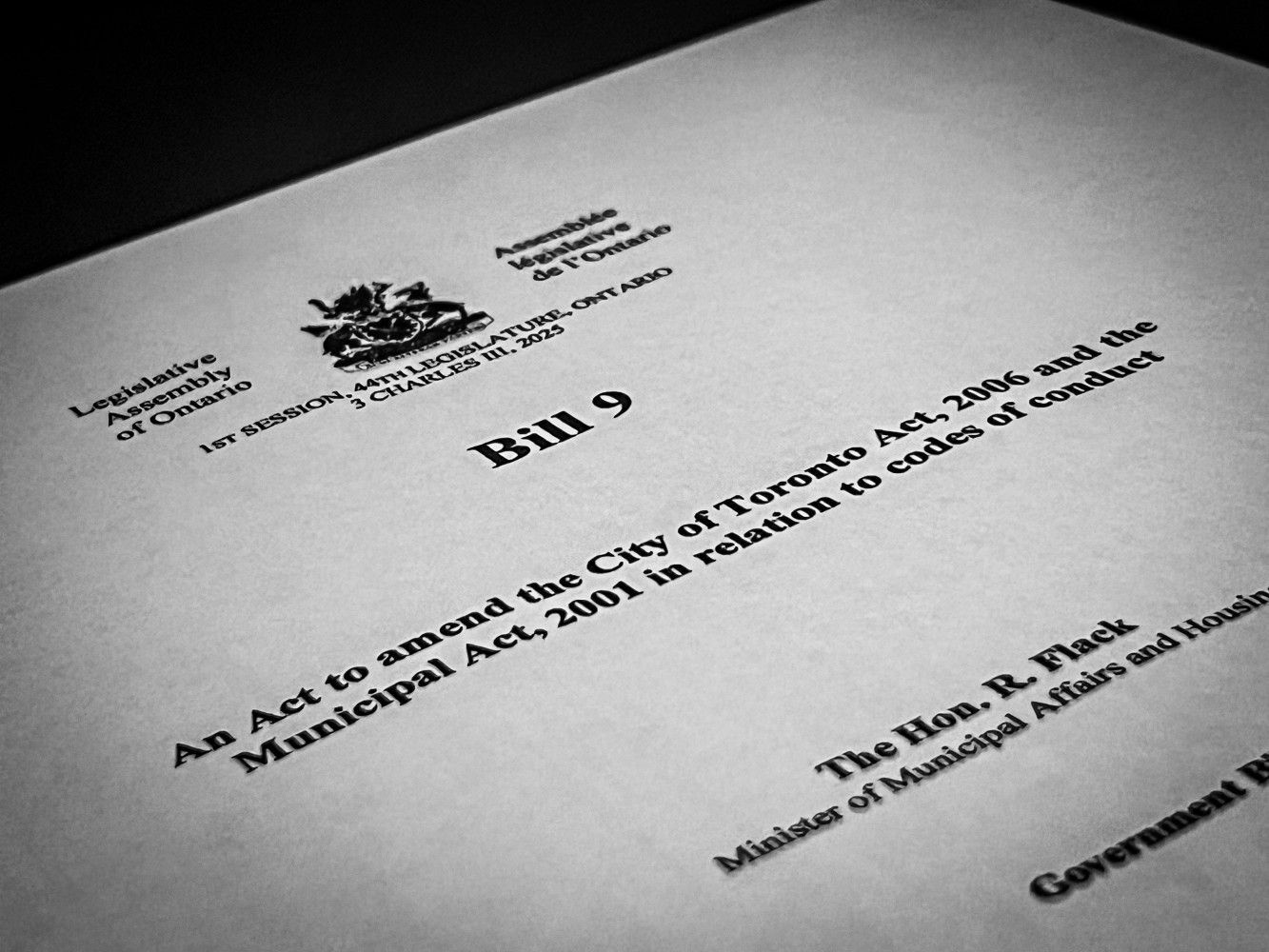
‘No racism in eastern Ontario’: Calls for stronger municipal accountability mechanisms ignored as PCs push through Bill 9
After it languished at Queen’s Park for months, the PC government’s municipal accountability legislation, Bill 9, finally passed on May 26. Critics argue it ignores many of the key recommendations from stakeholders that would have significantly improved Ontario’s broken accountability system for local elected officials.
During a series of hearings held across the province last summer, the PCs heard a long list of recommended improvements to their draft legislation—many of which were ultimately ignored when the proposed legislation passed this week.
It still needs to receive Royal Assent before becoming law.
Those recommendations included calls for enhanced qualifications for local integrity commissioners, and a requirement that the individual must be a lawyer in order to hold the position. The Bill is also being criticized for leaving the ultimate decision for removing a local elected official from office to a unanimous vote by their fellow council members. Critics say this will be virtually impossible given the political alliances that form at the local level.
The Bill passed with an almost unanimous vote of 110-1 and is set to be implemented before the upcoming municipal elections this October.
In an Ontario Legislative meeting in July 2025, Guy Giorno, a lawyer and integrity commissioner who has handled the job for 20 Ontario municipalities including Brampton until 2019, expressed his concerns about what was then the proposed bill. He highlighted the lack of direction on required qualifications for those holding a municipal integrity commissioner position. He shared several concerning examples of how this can go wrong, including one municipality which unknowingly hired an IC who had previously been suspended by the Law Society of Ontario for a misappropriation of funds.
“Many municipalities, without knowing it, have appointed as their integrity commissioner a lawyer who was previously suspended by the law society for misappropriating $63,000 from his client’s trust account. One GTA municipality, without knowing it, appointed someone with a criminal record. Another individual was charged with sexual assault, and the charge was dropped in exchange for a 12-month peace bond. As soon as the peace bond expired, the individual started an integrity commissioner business,” he told the public hearing last summer when the provincial government held similar information gathering sessions for Bill 9 in communities across Ontario.
Giorno, while supportive of the legislation, said having no set qualifications for ICs in Ontario has led to numerous questionable investigations in the province.
“In North Stormont, a female councillor felt that she was excluded from decision-making by ‘an old boys’ club’ of the other councillors, all male. The integrity commissioner, in his wisdom, found the woman had harassed the men by using a ‘gender-based stereotype’ that was unwelcome,” Giorno shared. “The mayor of Arnprior denied that there was racism in eastern Ontario, and the integrity commissioner of Arnprior said that, no, it wasn’t a breach. A councillor disagreed with the mayor and said racism does exist and the Black community deserved an apology, and the integrity commissioner ruled that she was in the wrong. He said her pay should be suspended for 30 days.”
The Pointer has previously reported on several examples of integrity commissioners being in a clear conflict of interest, or ignoring key pieces of evidence when making recommendations in their reports. Brampton integrity commissioner Muneeza Sheikh was let go from her position in March 2022 after council members learned she had billed Brampton taxpayers seven times more than the city’s previous ICs: $321,000 during her first full year as IC in 2020 and then $340,000 in 2021 despite it only being a part time role. Sheikh later contacted all members of council via email and threatened legal action. She was later rehired by Brampton Mayor Patrick Brown. Sheikh publicly voiced support of Brown’s leadership as the head of the provincial PCs following accusations in 2018 that he had previously raped one young woman and attempted to rape another (he denies the allegations). Sheikh’s husband at the time did work for Brown and he used pictures of himself and her together in his campaign material.
Sheikh said she had no personal ties to Brown. Giorno stepped down from the job, prior to Sheikh’s hiring by Brown, when he was elected mayor because Giorno said his own previous ties to Brown could create the appearance of a conflict.
When Rebel News posted a video of him playing a pick-up hockey game during the 2020 COVID-19 lockdown in a City of Brampton arena that had been shut down but reopened on Brown’s direction, so he and his buddies could play while kids were locked out from the arena, Sheikh dismissed a complaint without speaking to key witnesses and despite clear evidence that Brown had violated City policies and Code of Conduct rules.
In Niagara Region, the IC for St. Catharines, Micheal Maynard, excused Mayor Mat Siscoe in May 2025 for his use of taxpayer dollars to endorse Premier Doug Ford ahead of the last provincial election. “Some City resources appear to have been used to organize the Mayor’s appearance at the event with Premier Ford,” Maynard wrote in his report. Despite acknowledging the mayor clearly violated the Code of Conduct, which was made clear in the complaint filed to him, the IC refused to recommend any penalty.
In Niagara Falls, where Maynard, who is not a lawyer, is also the IC, he rejected a resident’s request for a Code of Conduct investigation into councillor Mike Strange after his behaviour at a July 2025 council meeting when he attempted to fill council chambers with his own supporters and block out the Women of Ontario Say No (WOSN), a non-partisan advocacy group created in 2022 to push for stronger accountability measures in municipal government, particularly to address harassment and violence following failures to protect women in all levels of government. Members of the group sought to attend the meeting to provide information ahead of the provincial committee’s public hearing on Bill 9 in Niagara Falls, but were later barred from speaking altogether after Mayor Jim Diodati claimed the group could not address council due to criminal allegations that Councillor Strange faced after he was charged with assaulting his intimate partner early last year (he was found not guilty at trial). Diodati claimed the group’s co-founder intended to address the criminal charge which he said was explicitly not allowed at a council meeting. He then later allowed Strange to use a council meeting to address the charge, which the mayor had specifically claimed was not allowed when WOSN wanted to address Bill 9 and told the mayor the charge would not be mentioned in any way.
WOSN members were eventually removed from council chambers during the July meeting, and were later arrested but were subsequently released without any charges laid.
At face value, bill 9 and the use of an Ontario Integrity Commissioner, introduces a new mechanism for holding municipal officials accountable for sexual harassment/assault, derogatory remarks and other ethical violations.
It also mandates a standardized code of conduct for municipal officials, and streamlines a consistent process for integrity commissioner investigations across Ontario. It also establishes a role for the Integrity Commissioner of Ontario to provide education, training and other functions for local municipal integrity commissioners.
But municipal councillors, integrity commissioners and advocacy groups repeatedly said it needed to go much further to fix an integrity commissioner system that allows local councils to pick and choose who is investigating them, and avoid accountability.
Many voiced concern that the decision to remove an elected official is now going to be ultimately left to the local council with all members who vote needing to be in favour of a recommendation for removal.
Niagara NDP MPP Jeff Burch believes the removal provision of the legislation will rarely be used.
“I think it'd be very slim chance of it ever happening. I mean it's possible, obviously, but I mean even if someone's sick, let's say a councillor can't show up for the vote or sometimes people intentionally don't vote on things. We see that happen all the time because they don't want to be involved in a contentious decision. Often a council will have two or three different kinds of camps and they support each other.”
Burch voted in favour of Bill 9. In a released statement he labelled it “a positive step forward.”
“However, there is still more work to do, including ensuring that there is a reasonable process for removal of elected officials for egregious acts of sexual harassment and violence.”
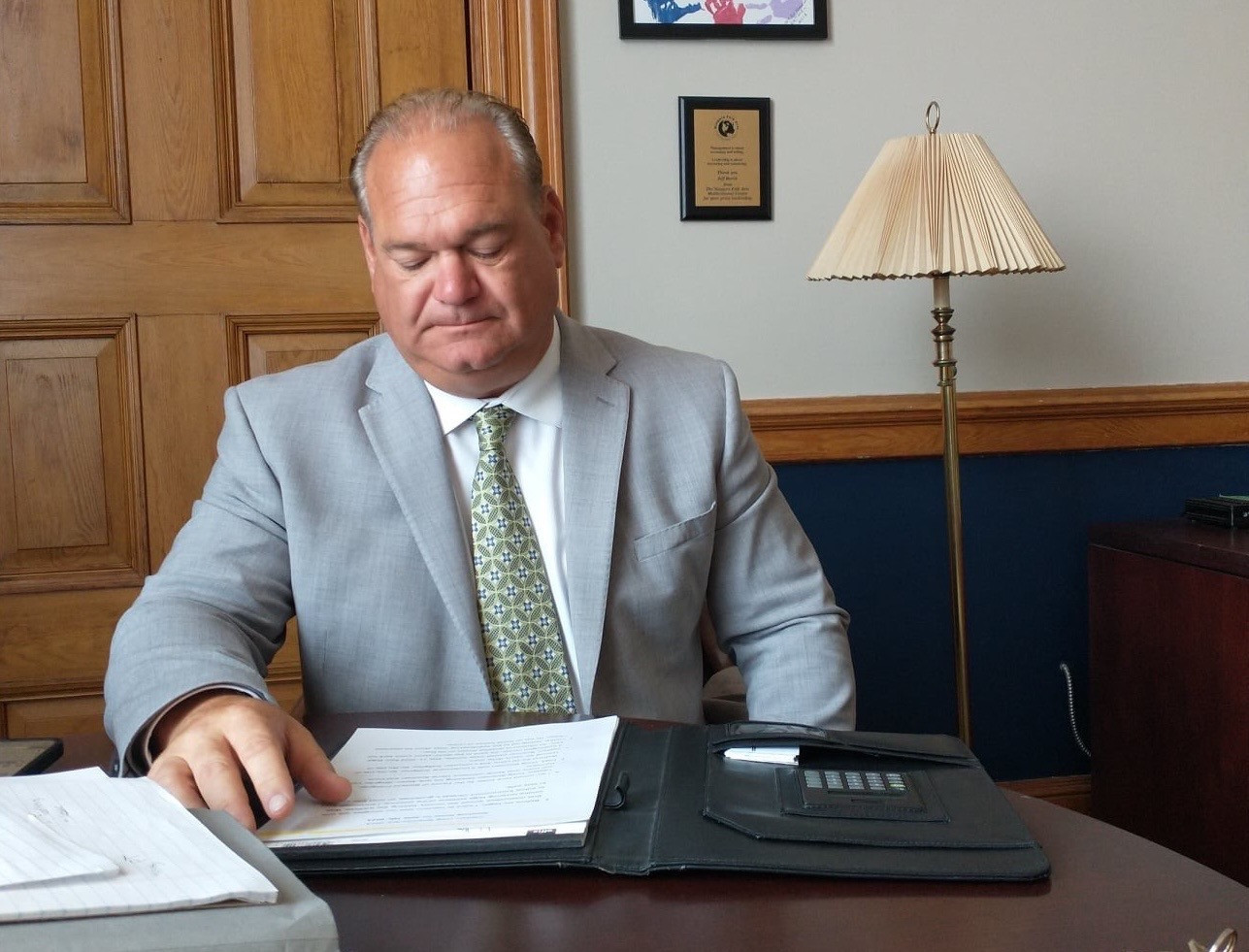
NDP MPP Jeff Burch (Niagara Centre) called Bill 9 a “positive step forward” but wants to see a different mechanism for removing council members from office to make it easier.
(Jeff Burch/X)
Under the previous system, each municipality was responsible for creating its own code of conduct and enforcement protocols. The Municipal Act outlines general areas that the code of conducts should address, but left the specifics up to local councils, which resulted in inconsistent policies and procedures that often left residents confused and frustrated in their attempts to seek accountability.
As previously reported by The Pointer, Niagara Falls represents an alarming example of the issues with the current system, where residents were previously charged a $500 fee to file a complaint against a council member for the city’s integrity commissioner to investigate, which was later increased to a $1,000 fee in February this year, further restricting access for Niagara residents, despite warnings from the Ontario Ombudsman that any fee creates a barrier to accountability. The Ombudsman has repeatedly told Niagara Falls Council to eliminate the fee or reduce it to somewhere between $10 and $20 like other municipalities that choose to charge any fee at all. Instead, they doubled it to $1,000. Niagara Falls Mayor Jim Diodati and other council members continue to ignore the Ontario Ombudsman.
Under the proposed changes, local integrity commissioners will still handle the bulk of responsibility for investigating contraventions of the council code of conduct. It is only when an integrity commissioner believes the contravention is serious enough to warrant the member’s removal, that they will hand the investigation over to the provincial integrity commissioner for review. If that review determines the contravention was of a “serious nature” and “has resulted in harm to the health, safety or well-being of any person” the provincial IC can recommend to the local council that the elected official be removed from office.
It would then be brought back to that local council for a vote on the recommendation. A unanimous vote would then be required to remove the council member.
The legislation comes after sexual harassment allegations against former Ottawa councillor Rick Chirelli, which has attracted attention from WOSN.
“This is a critical step,” the founder of WOSN Emily McIntosh told reporters at Queen’s Park. On their website, WOSN thanks the collective voice of stakeholders to help bring about some changes, but criticizes the legislation for not going far enough to ensure accountability.
McIntosh noted that even if both local and provincial Integrity Commissioners agree that a council member should be removed, the final decision still rests solely on a unanimous council vote. “We do need to be strengthened, it does need to be better. The unanimous vote threshold is not okay because all of us can have one person to derail ultimate accountability,” she told reporters. WOSN continues to advocate for the removal of the final council vote altogether.
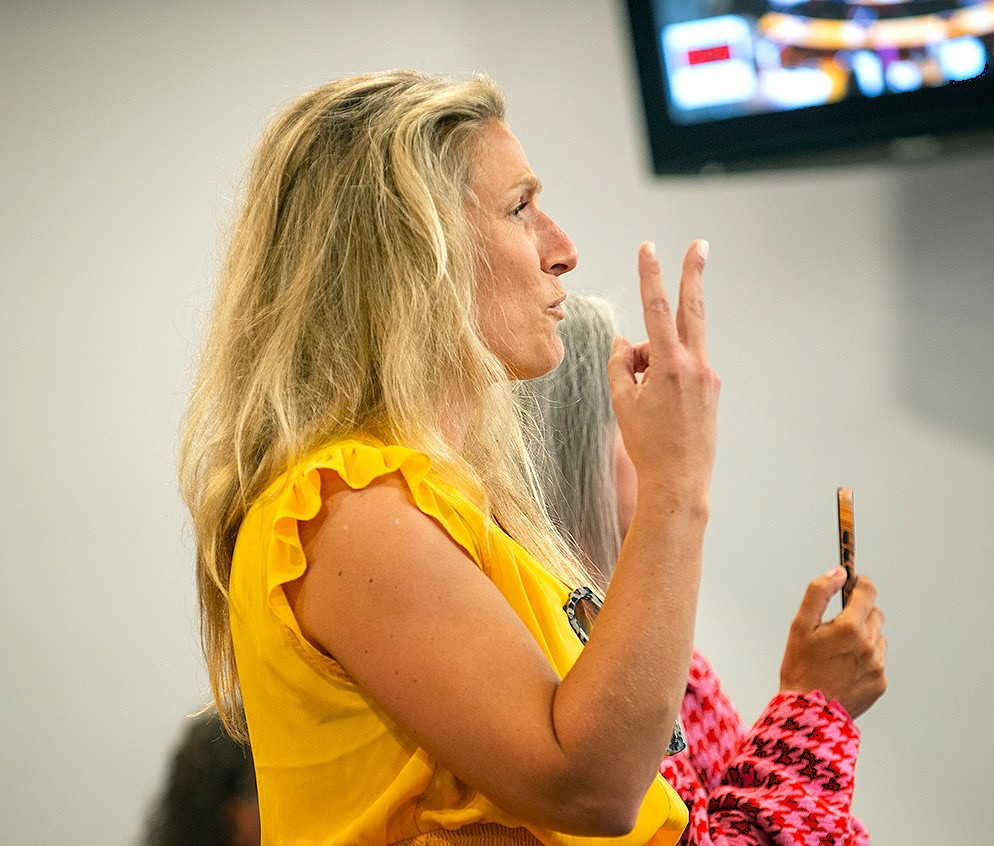
Emily McIntosh, the founder of Women of Ontario Say No (WOSN) has been advocating for enhanced accountability mechanisms at the local level for years.
(Jerry Manco)
Mississauga Ward 7 Councillor Dipika Damerla, shares similar concerns, and fears leaving the decision to remove a council member up to a single council vote by the rest of the members could lead to further politicization of an already flawed process.
“I feel like in a democracy, it should be up to the people, you get elected by the people and you should be removed by the people,” she told The Pointer. “I'm not saying that if you're elected today, the only time the public can weigh in is at the next election, but I'm a firm believer in democracy and this is not democracy where a democratically elected councillor can then be removed by an integrity commissioner or council voting on it.”
Damerla worries leaving the choice up to politicians could lead to the process being weaponized by blocs of councillors to punish their opposition.
“I'm not saying it would always happen, but it opens the door to that.”
Email: [email protected]
At a time when vital public information is needed by everyone, The Pointer has taken down our paywall on all stories to ensure every resident of Brampton, Mississauga and Niagara has access to the facts. For those who are able, we encourage you to consider a subscription. This will help us report on important public interest issues the community needs to know about now more than ever. You can register for a 30-day free trial HERE. Thereafter, The Pointer will charge $10 a month and you can cancel any time right on the website. Thank you
Submit a correction about this story

