
‘Greenwashing by governments more harmful’: Who is holding Ottawa and Queen’s Park accountable?
When the federal and provincial governments promote themselves as friends of the environment, while pushing legislation and projects that will devastate landscapes and impact our well being, who holds them accountable for the blatant greenwashing?
Perhaps no one.
“There's little greenwashing specific laws in Canada overall, and there are no laws that prohibit the government specifically from greenwashing,” Ecojustice Finance Lawyer Tanya Jemec told The Pointer.
“The only greenwashing-specific laws in Canada are limited to deceptive marketing.”
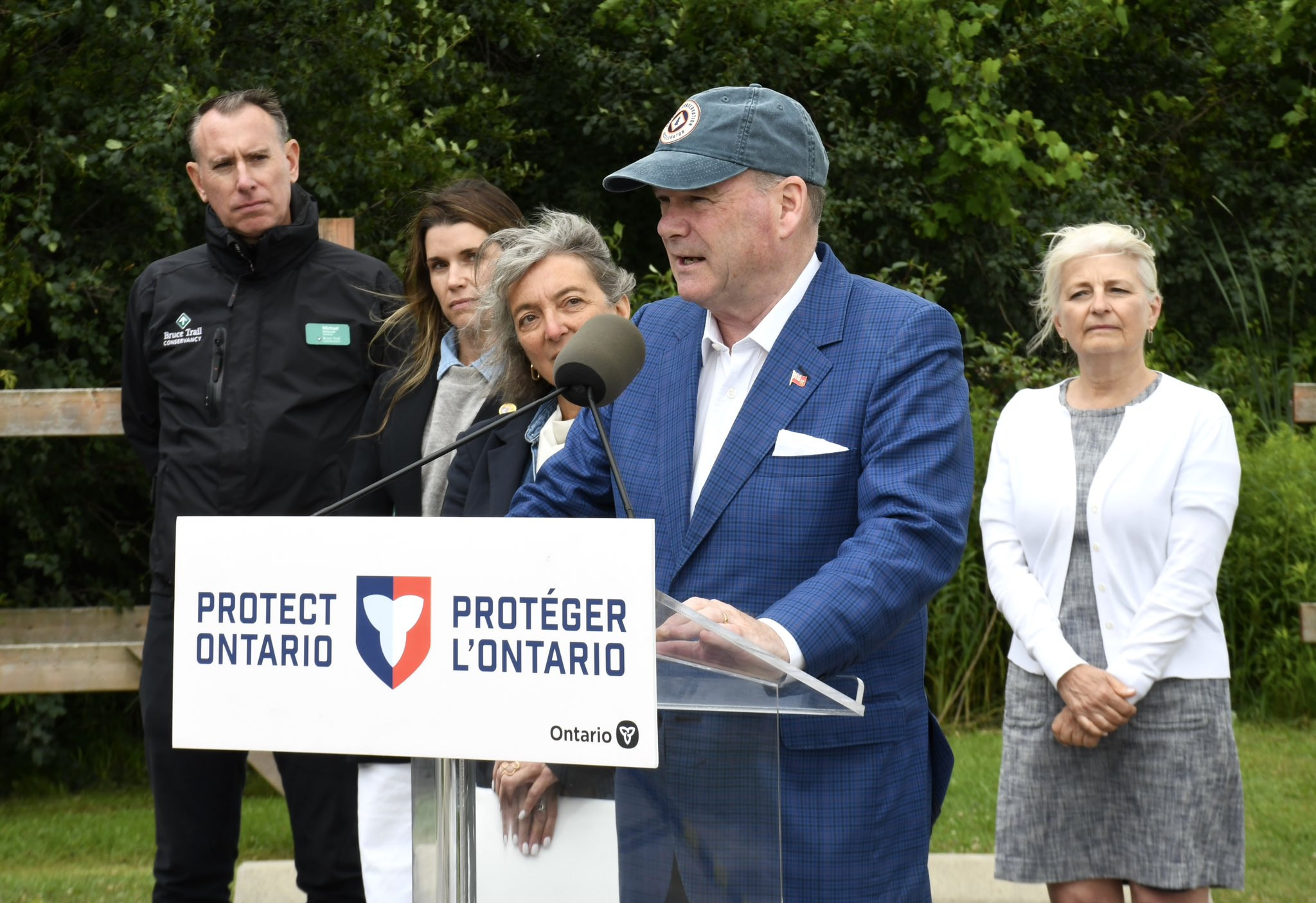
In July, Ontario Environment Minister Todd McCarthy touted his PC government’s commitment to conservation, while its policies continue to devastate environmental protection across the province, a classic example of greenwashing, the practice of promoting yourself as green, when you are anything but.
The Competition Act has historically required corporations and businesses making environmentally friendly claims about their products or activities to base them on adequate and proper testing using internationally recognized methodologies, to prove what they say.
In 2024, major changes to the Competition Act through omnibus Bill C-59 expanded the Competition Tribunal’s powers to review past anti-competitive deals, impose larger penalties and allow private parties to seek compensation from June 2025. Rules were introduced to target misleading environmental claims, implement stronger protections for whistleblowers and penalties for companies that breach agreements—changes that were opposed by several fossil fuel companies.
In Prime Minister Mark Carney’s first budget, Ottawa loosened those anti-greenwashing regulations, removed the requirement for internationally recognized methodologies and restricted third-party access for business-level environmental claims. Carney also scrapped an emissions cap on oil and gas production and struck an agreement with Alberta that included federal support for a proposed new bitumen pipeline to the West Coast.
Seven months later, Carney acknowledged that national emissions are expected to rise as his government moves away from some of the climate policies introduced under former prime minister Justin Trudeau, which he criticized as too costly and politically divisive.
“The old plan was an open opportunity for those people who wish to pull Canada apart, both at home and from abroad. Our new plan will help build clean energy…make Canada more sustainable, more affordable and more prosperous,” Carney said in a video titled ‘Forward Guidance’ released on June 30.
“It will build Canada strong together.”
The same day, Environment and Climate Change Canada released a 30-second video featuring wind turbines and solar panels and promising that Canada would build a “cleaner future”.
On August 18, NDP parliamentary leader Don Davies penned a letter to the Competition Bureau to investigate whether Carney’s own admission that emissions will rise in the short term undermines the government’s clean-energy advertising claims.
“Government advertisements claim that their climate plan will lower greenhouse gas emissions, but the Prime Minister has already admitted that emissions will increase,” Davies noted.
“This is greenwashing, and it's illegal.”
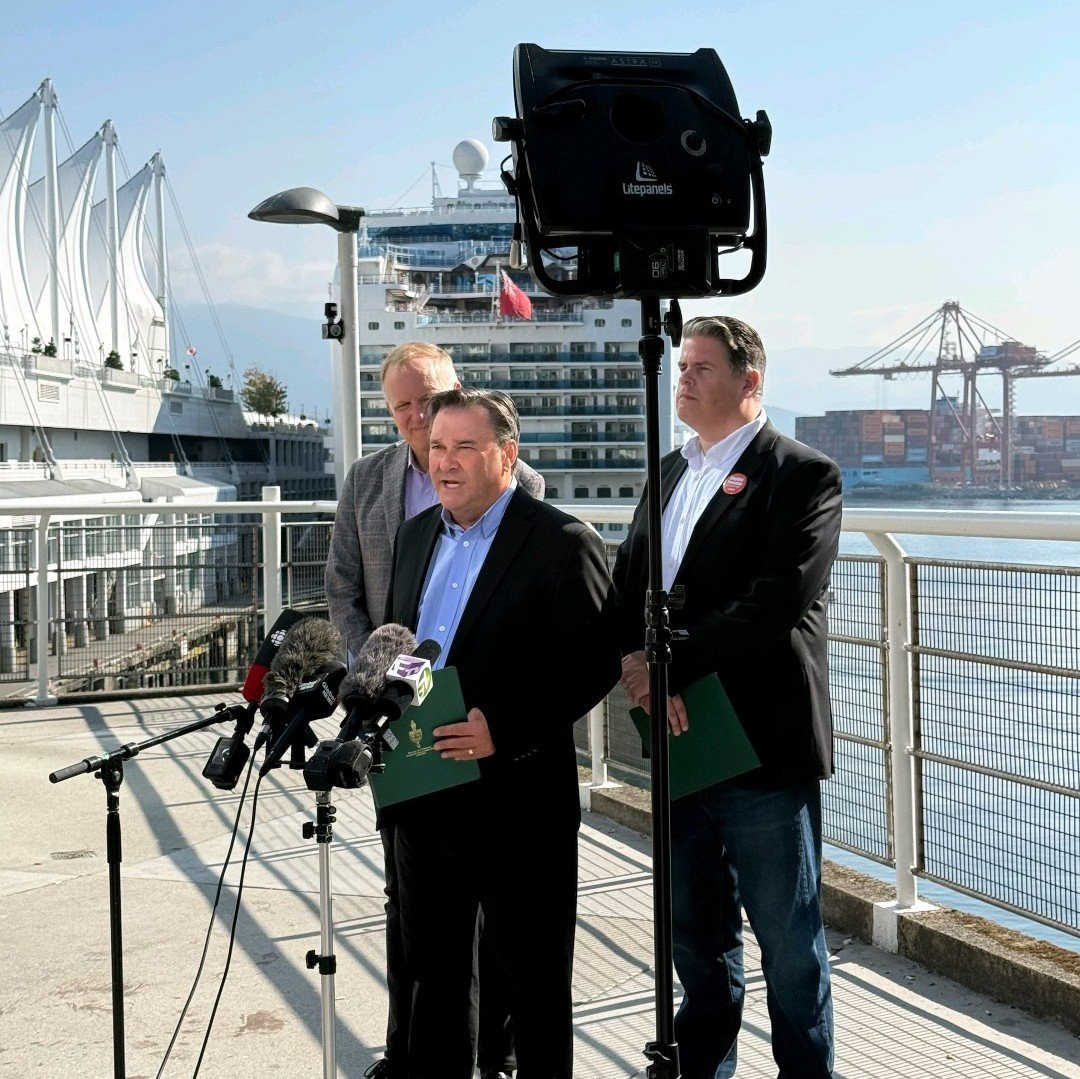
“As Canada burns, the federal government is expanding new fossil fuel projects that accelerate climate change. Yet the Carney government is using taxpayer dollars to mislead Canadians on their climate policy,” NDP parliamentary leader Don Davies said on August 18.
(Don Davies/X)
He argued Canada’s greenwashing rules require environmental claims in advertising to be supported by evidence, and questioned whether those claims can be reconciled with rising near-term emissions and the possibility of public money supporting a proposed oil pipeline through Alberta and B.C.
“[Greenwashing claims] become even more complicated when you're talking about government actors,” Jemec said.
One form of greenwashing is cherry picking and/or selective disclosure, when true positive environmental attributes are highlighted alongside failure to disclose other significant negative impacts.
While other jurisdictions have laws or regulatory guidance addressing selective disclosure, there still aren’t similar provisions specifically applying to governments across Canada.
Most existing greenwashing rules are designed to protect consumers from misleading claims made by private businesses. Governments, however, make environmental claims to the public without necessarily being subject to those same rules.
This enormous gap becomes harder to ignore when pro-environment announcements by governments collide with what is happening on the ground—coincidences that have played out both nationally and in Ontario.
On July 22, Ontario Minister of the Environment, Conservation and Parks Todd McCarthy, along with Minister Dabrusin, celebrated the completion of a three-year, $10-million agreement that permanently protected nearly 19,400 hectares, created 12 provincial parks and conservation reserves and expanded 50 others, as part of Ottawa’s broader $3.8-billion A Force of Nature conservation strategy.
“By working together, Ontario and Canada have permanently protected a combined area that is nearly twice the size of the City of Guelph,” McCarthy, who is also Ontario's Acting Minister of Infrastructure, said.
The announcement came just a day after Ecojustice filed a court injunction seeking to protect Piping Plover habitat at Wasaga Beach while its litigation against the federal environment minister and the Town of Wasaga Beach proceeded.
After a slow start to the spring, Wasaga Beach’s only returning Piping Plover pair this year, Ollie and Patty, finally arrived with their telltale orange bills tipped in black—a breeding-season marker that fades to black fully when they aren’t breeding—and set about rebuilding what had become a familiar ritual on the beach: nesting, hatching and raising their young.
On June 13, the pair’s nest hatched three chicks that looked like tiny furballs.
“Sadly, all three disappeared in a wild rainstorm the next day,” Katie Krelove, the Ontario campaigner for the Wilderness Committee, shared.
It is a devastating consequence that conservationists feared would happen after the Town of Wasaga Beach performed mechanical beach raking in a protected shore area in April — six months after the Doug Ford government passed Bill 68 (the Plan to Protect Ontario Act (Budget Measures), 2025), which legally severed and transferred significant portions of Wasaga Beach Provincial Park’s beachfront to the Town, despite 98 percent Ontarians opposing the proposal.
Their existence at the beach is no less than a miracle.
Plovers made a return to Ontario in 2007—the same year as the province established its Endangered Species Act—after a disappearance of over three decades, being considered extirpated from the Great Lakes by 1986 after shoreline development and the expansion of recreational use following World War II had wiped out a population of 70 to 90 breeding pairs along the region’s shores.
Since 2008, Wasaga Beach has hosted 59 nests, producing 87 fledglings—nearly half of all Piping Plover fledglings recorded in the province, according to Birds Canada Ontario Piping Plover Program Coordinator Sydney Shepherd.
“These young plovers go on to breed at other sites across Ontario. In fact, a third of Ontario’s breeding Piping Plover population came from Wasaga Beach,” Birds Canada Ontario Piping Plover Field Biologist JulieAnn Prentice added.
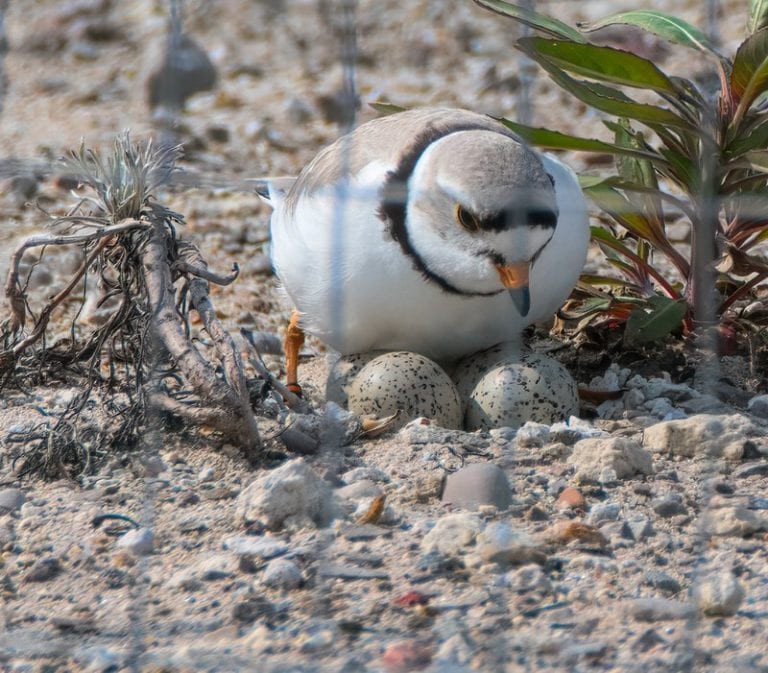
“Piping Plovers use all parts of a natural beach to complete their breeding life cycle. This is why many parks do not remove the rocks and driftwood from the beach. Protecting these beach features gives the birds the best chance at surviving and recovering the population throughout the Great Lakes,” Piping Plover specialist and ecologist Ian Fife wrote in a blog for Ontario Parks.
(Neal Mutiger/The Friends of Nancy Island & Wasaga Beach Park)
In June last year, Bill 5, dubbed the Protect Ontario by Unleashing our Economy Act, repealed the gold standard Endangered Species Act and replaced it with the Species Conservation Act to speed up industrial and infrastructure projects by narrowing the legal definition of protected habitat down to immediate dwellings like dens or nests instead of entire ecosystems.
“Piping Plovers exhibit high site fidelity and rely on key habitat features like dunes, woody debris and native vegetation for their survival,” Environmental Defence Executive Director Tim Gray said.
“Removing natural materials and mechanically ranking the beach, even before the birds return, will destroy key habitat and likely cause the birds to abandon their nesting area, interrupt courtship activities, and make them more susceptible to predators.”
On January 27, following the loss of provincial protections, Ecojustice filed a formal request on behalf of Environmental Defence and Ontario Nature calling on federal Environment, Climate Change and Nature Minister Julie Dabrusin to recommend an emergency order under the federal Species at Risk Act to protect critical Piping Plover habitat at Wasaga Beach.
The conservation groups called for action by March 1 before nesting season to avoid delays that could have “serious consequences for the species’ survival and recovery in Ontario”.
There was no response from Minister Dabrusin.
“An injunction as a last resort was necessary to prohibit further damage,” Ecojustice managing lawyer Kegan Pepper-Smith told The Pointer.
Although the beach’s only Piping Plover nest this year was lost in a storm, he stressed that does not lessen the importance of protecting the habitat, which expert evidence has already identified as vital to the species’ re-establishment in Ontario. Piping Plovers migrating south, “whether they're adults or juveniles”, could also stop at the beach to rest, feed or assess it as a future nesting site.
Environment and Climate Change Canada confirmed that the imminent threat assessment, which will provide the scientific basis for determining whether an emergency order is warranted under the federal Species at Risk Act, is ongoing and expected to be completed by the end of summer.
“Our clients are saying that might be all well and good but the damage and destruction is ongoing, and that's why the injunction is required to preserve the habitat and protect the species while that process plays out,” Pepper-Smith reiterated.
Ecojustice has asked the court to hear the injunction on an expedited basis but no hearing date has been scheduled.
More recently, the Ontario government announced nearly $1.2 million for Brampton’s Heart Lake Road Wetlands Connectivity Project to restore 25 acres of wetlands, upgrade stormwater infrastructure, remove invasive species and plant native vegetation to reduce flood risk and strengthen the local ecosystem—the announcement came over three months after The Pointer reported on delayed provincial grant decisions threatening to leave some turtle nests without protection during the 2026 nesting season, as Bill 5 weakened provincial protections for species at risk and shifted more responsibility for habitat and wildlife conservation onto municipalities and volunteer-led groups.
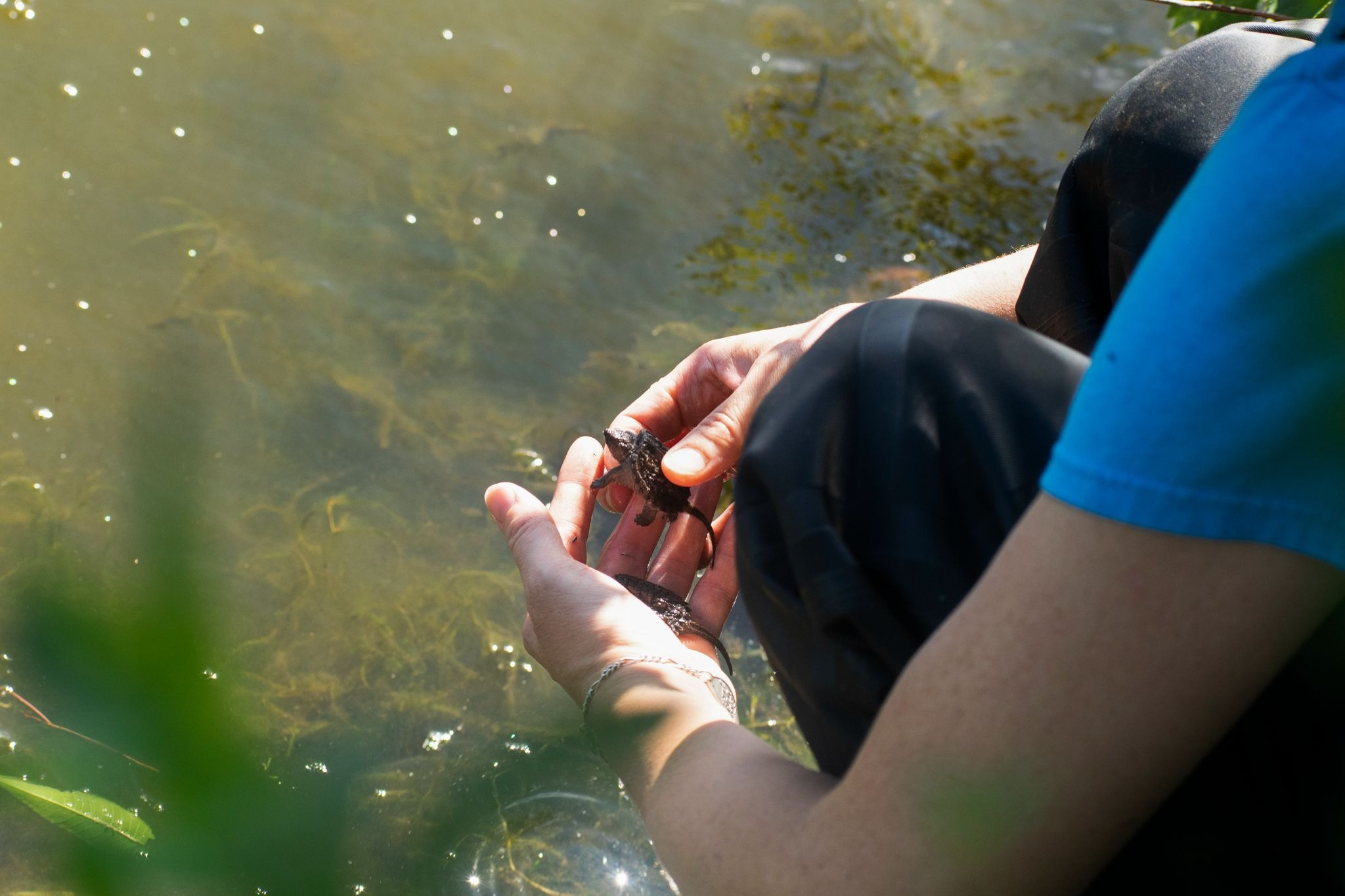
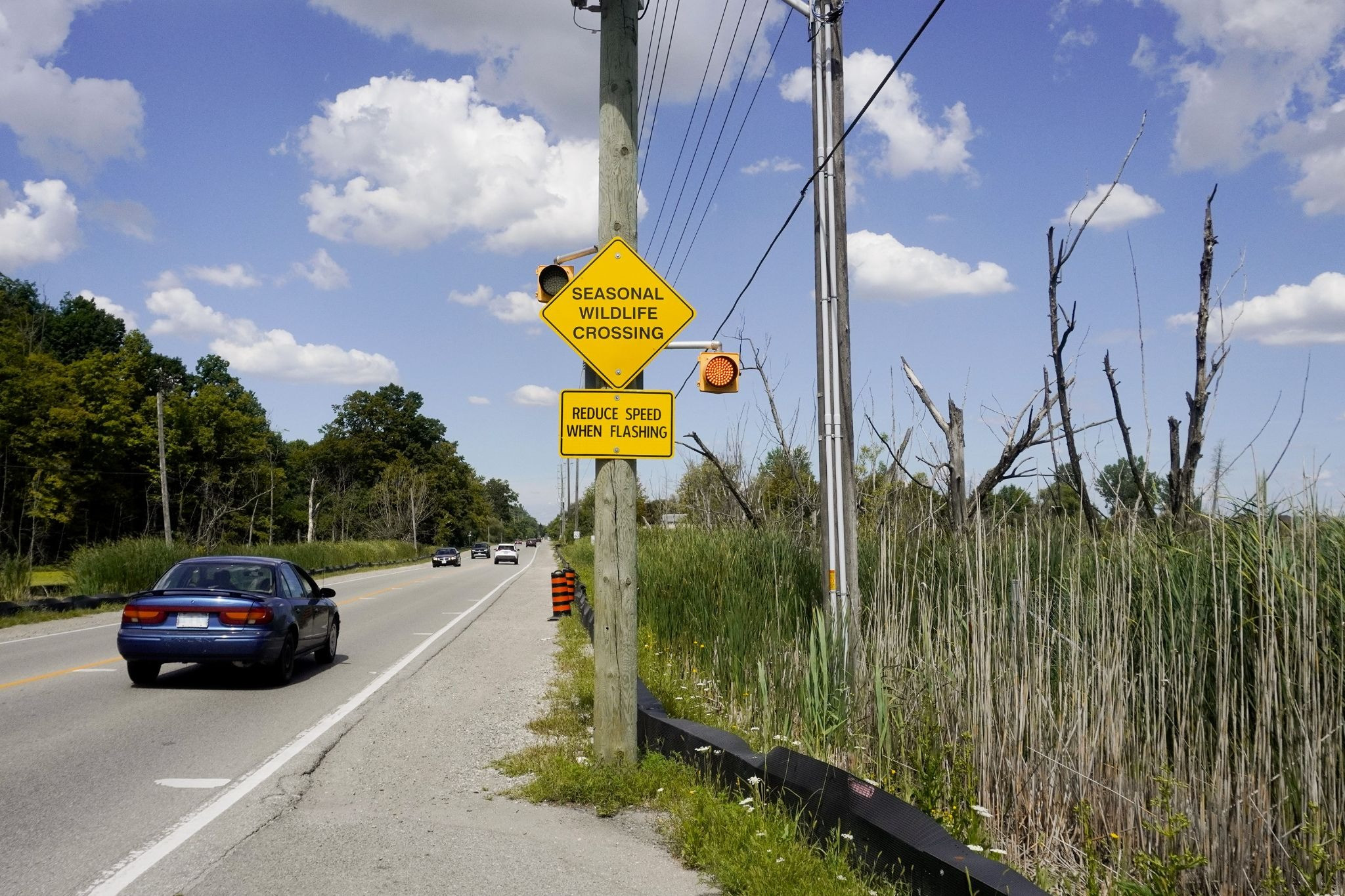
Turtle reproduction is highly sensitive and slow. Eggs are vulnerable to predation and environmental disruption and many species take 15 to 30 years to reach reproductive age, which means population recovery can take decades to stabilize. Brampton’s 418-acre Heart Lake Conservation Area is surrounded by urban threats to wildlife.
(Alexis Wright/The Pointer; bottom photo Wikimedia Commons)
“Wetlands are vital natural infrastructure that protect our homes and businesses against drought and flooding, clean the water and create habitat for a variety of wildlife,” McCarthy said on August 10, noting that the project would be led by the City of Brampton in partnership with the Toronto and Region Conservation Authority (TRCA).
While touting the importance of wetlands, the Ford government has simultaneously weakened the conservation authorities responsible for protecting them and continued to advance major infrastructure projects like Highway 413 that would irrevocably damage those sensitive ecosystems at a time when Southern Ontario has already lost more than 72 percent of its original wetlands due to urban development.
“The irony of this government announcing $1.2 million for restoring this wetland when essentially Highway 413, which will be a 10-lane, 210-foot-wide highway across the headwaters, is less than a kilometre away from Heart Lake,” Environmental Defence Associate Director Mike Marcolongo told The Pointer.
“It's like giving people a water pill when there's a forest fire burning.”
While restoration efforts such as removing invasive species to improve exclusion fencing along roads near Heart Lake are necessary, he stressed that it cannot be separated from decisions that could introduce new environmental pressures into the same watershed as the Ford government robs “the treasury of $16 to $18 billion for a highway that will have a significant ecological impact downstream including Heart Lake”.
Salt pollution and toxic runoff containing heavy metals such as cadmium, oils and microplastics can make their way into Spring Creek, which flows from Heart Lake and into Etobicoke Creek.
The “litany of pollutants” will harm vulnerable species like the eastern musk turtles, a species of Special Concern in Canada under the federal Species at Risk Act, that are bottom-dwelling foragers who depend on mollusks and insects for food; Heart Lake is one of the few waterways in the GTA where they can be found.
“We’re all connected, and if you’re paving over the headwaters of Heart Lake, it will have significant impacts on the water quality of Heart Lake and destroy the food sources for the species,” Marcolongo said.
The natural world is resilient but its capacity to recover is not endless; a truth that the human race continues to dissociate from.
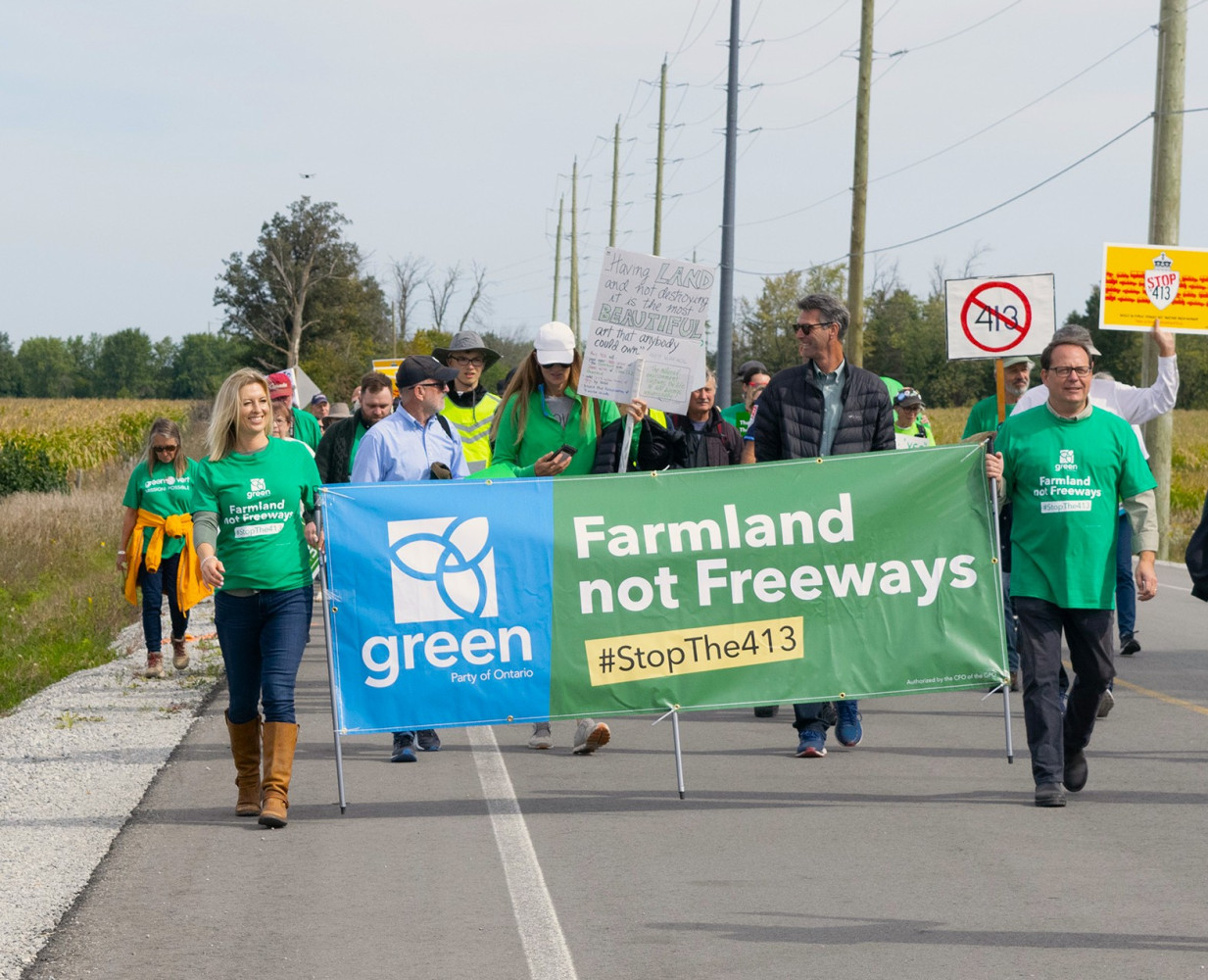
Coined as the “highway to hell”, critics have noted that the province has chosen the most ecologically damaging route for the 52-kilometre transit corridor—that would harm at least 29 federally protected species at risk and directly destroy roughly 300 hectares of forests, wetlands and other natural ecosystems and an additional 500 hectares of surrounding natural areas—despite internal Ontario’s Ministry of Transportation (MTO) documents revealing that commuters across the Greater Toronto Area will face crushing travel times by 2041, even if the 413 and the other highway projects proposed by the Progressive Conservatives are constructed.

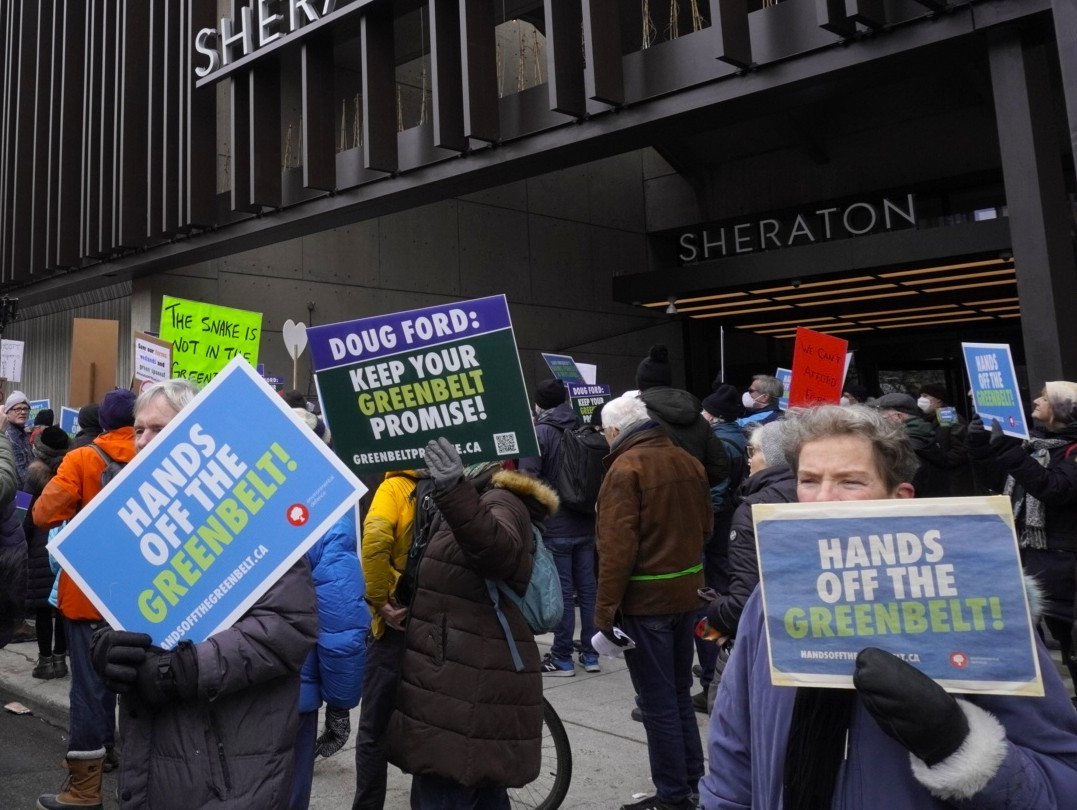
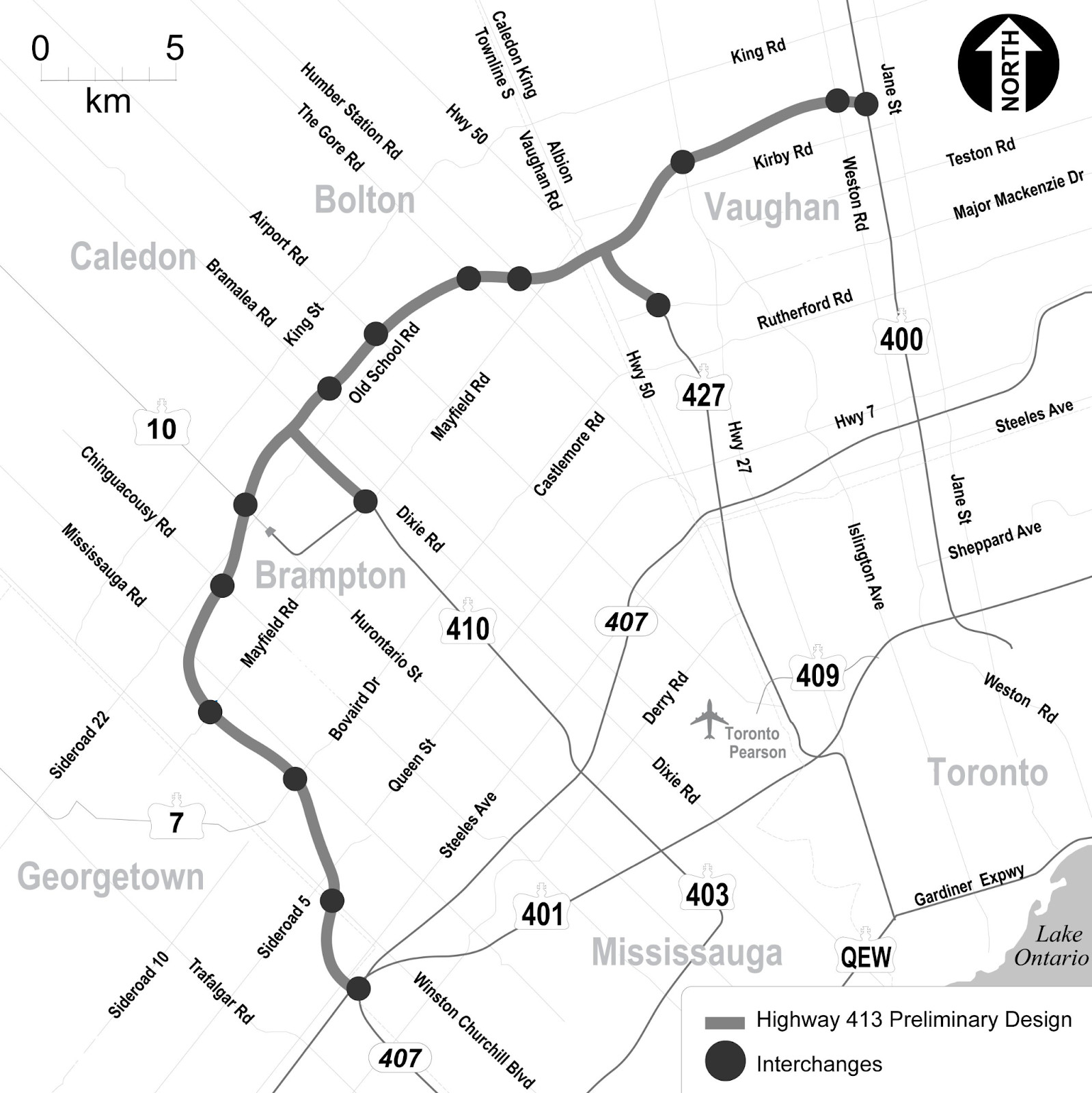
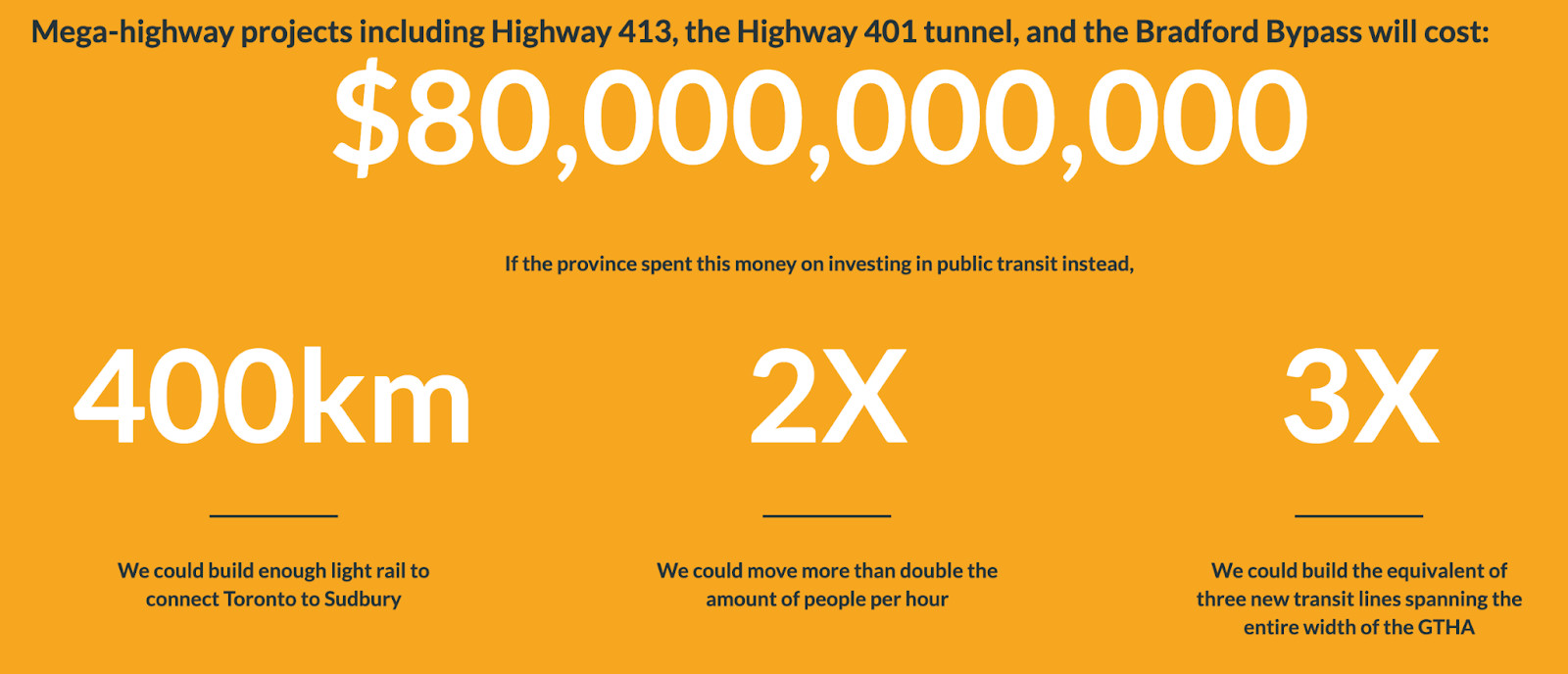
An Environmental Defence and Transport Action Ontario report shows that instead of spending $80 billion on mega-highways like Highway 413, the province could build 400 kilometres of rapid transit, doubling transit service and moving more than twice as many commuters per hour while also reducing gridlock, curbing urban sprawl and protecting the environment.
(Top two images Alexis Wright/The Pointer; Government of Ontario; Environmental Defence)
In 2021, the Justin Trudeau government stepped in after determining the highway could cause adverse effects on federally protected species at risk and raised concerns related to Indigenous rights and heritage, prompting Ottawa to designate the highway for a federal impact assessment, which was ultimately denied in November 2024 after a Memorandum of Understanding (MOU) was signed leading to the creation of a federal-provincial working group in April 2024.
The process remains opaque and federal officials involved in the working group have expressed frustration with the province “not effectively engaging” or simply providing minimal updates, leaving them reliant on media reports.
In August last year, Ford and his transportation minister, Brampton MPP Prabmeet Sarkaria, were seen making a string of misleading statements suggesting construction had begun on Highway 413, when the work underway was actually limited to early construction activities—a move critics suspected may have been intended to create pressure on the federal government to approve the project.
The documents show MTO proposed splitting the required environmental jeopardy assessment into four separate assessments aligned with the highway’s construction segments rather than assessing the highway in its entirety. Federal officials warned that the approach risks generating an “incomplete picture” for understanding species populations and cumulative impacts, particularly for the endangered Redside Dace.
“MTO’s showing their cards quite early in the process that their intentions aren't to follow the science to try and address the fact that unfortunately, there's a number of species that will be extirpated,” Marcolongo noted.
“The approach is: let us move forward on the rest of the project and we'll chat with you later about the even more difficult permitting section.”
The province remains “nowhere near applying for their permits from the federal government” for Highway 413.
“They're still breaking up the procurement into three sections but it’ll be a single jeopardy assessment as they move forward with final design, and that will take two years alone just for the final design,” he said.
For Victor Doyle, who spent more than 25 years as a senior planner at the Ontario Ministry of Municipal Affairs and Housing, shaping anti-sprawl and watershed policies across the Greater Golden Horseshoe while guiding the Greenbelt legislation before retiring just ahead of the Ford government taking office, the Heart Lake funding announcement is akin to a “slap in the face” compared to what the PCs have done “more universally across all of Ontario, and particularly in the Golden Horseshoe”.
Shortly after the Greenbelt scandal came to light in late 2022, the province announced the creation of Uxbridge Urban Provincial Park in April 2023—“most of the land, virtually all of it [1,300 acres], was already protected” and publicly owned under the Oak Ridges Moraine Conservation Plan.
“It's a pretty subjective call to say whether something's greenwashing or not in the absence of laws but it is certainly mollifying people by throwing crumbs at them,” Doyle added.
“Just look at their [PC government’s] legacy of dismantlement of environmental legislation, regulations, and policy.”
Whether it is the Redside Dace threatened by the Highway 413 corridor, Piping Plovers at Wasaga Beach or turtles at Heart Lake, the puzzle citizens are left to piece together every day is contained in a box full of questions: the timing of an announcements, how much is actually being invested and can it meaningfully offset the damage being done in parallel, especially when fewer, delayed resources are directed toward the conservation work needed to protect these species in the first place?
In Ontario, the Ford government’s recent rollbacks to exclude records held by the Premier, cabinet ministers, parliamentary assistants, and their political staff from the Freedom of Information and Protection of Privacy Act (FIPPA) will make it “even harder” to verify the information presented to Ontarians.
“People want to trust their governments; they want to be able to believe that what their government is telling them is true,” Jemec said.
“So, when greenwashing is done by governments, it's arguably even more harmful because people do expect their government to be truthful and to act in the best interest.”
Email: [email protected]
At a time when vital public information is needed by everyone, The Pointer has taken down our paywall on all stories to ensure every resident of Brampton, Mississauga and Niagara has access to the facts. For those who are able, we encourage you to consider a subscription. This will help us report on important public interest issues the community needs to know about now more than ever. You can register for a 30-day free trial HERE. Thereafter, The Pointer will charge $10 a month and you can cancel any time right on the website. Thank you
Submit a correction about this story

