
Municipalities feeling the brunt of Bill 5; local turtle conservation group goes to City of Brampton for support
When computer programmer Ruth Takayesu moved to Brampton from Mississauga with her husband in the thick of the pandemic, she did not realize her life was about to change… completely.
Within a year, she would be traversing the city’s wetlands and saving turtles.
“I've always been a turtle lover,” Takayesu tells The Pointer.
In 2020, the couple, new to town, knew little about Brampton beyond the fact that Etobicoke Creek was just a 20-minute walk away and there were trails to explore and lakes to boat in.
While Takayesu worked remotely, her retired husband spent his days walking through the city, discovering pockets of nature hidden within the urban landscape. One day, he told her about a lake he thought she would love.
Armed with her camera, Takayesu went to Loafer’s Lake to see it for herself and what she saw took her back to her childhood.
“Oh, my gosh, there are turtles here!,” she exclaimed.
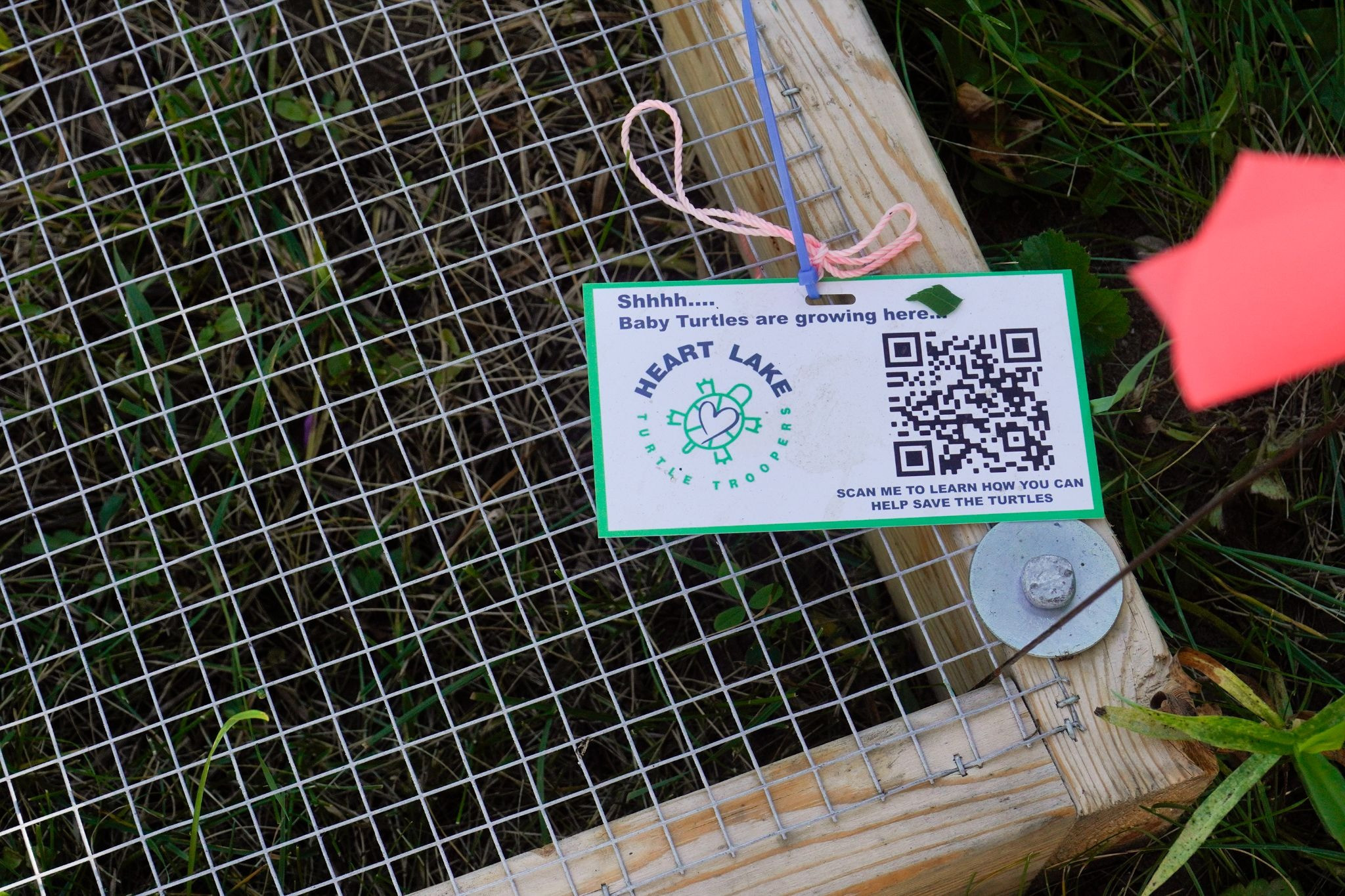
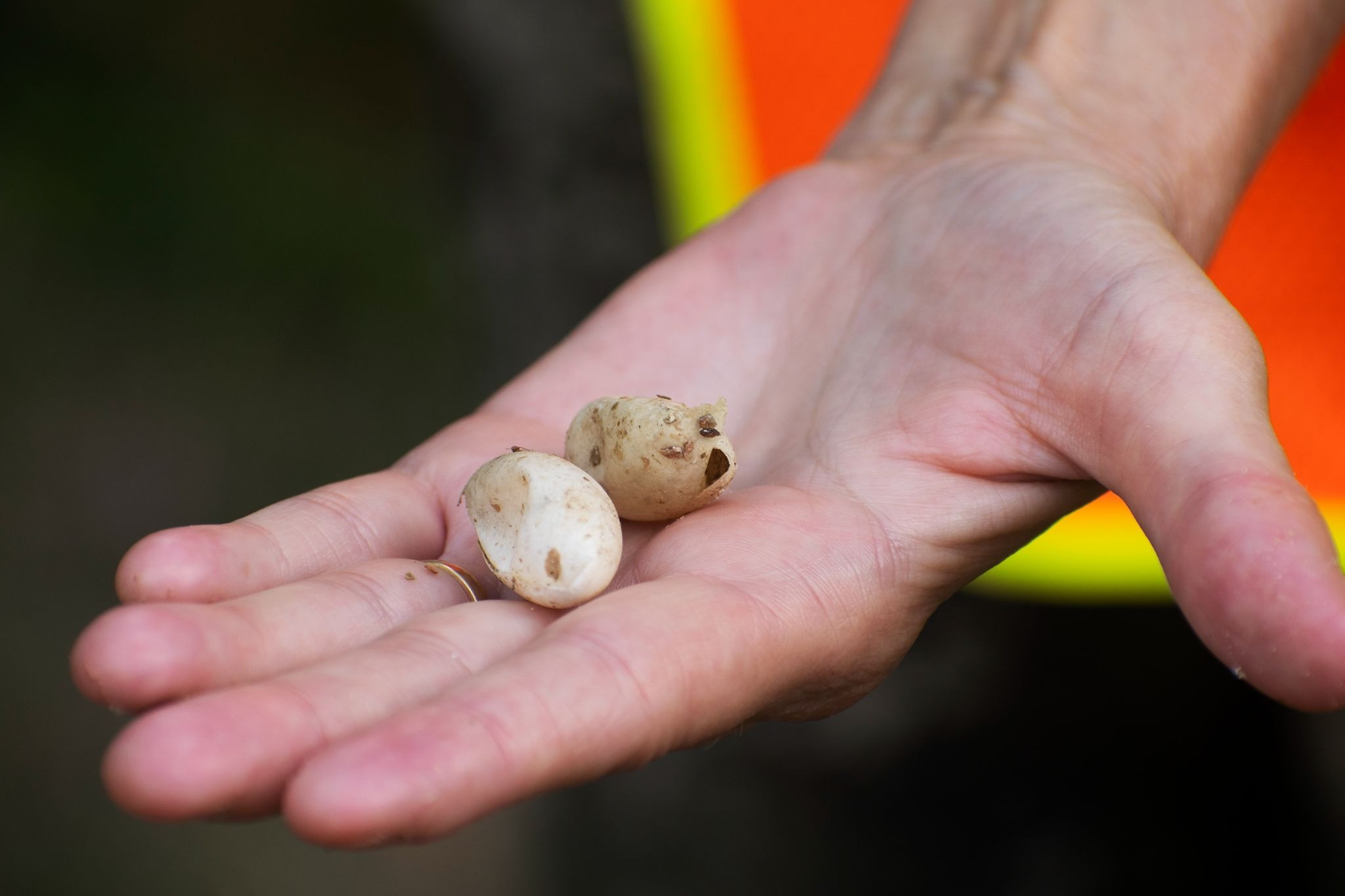
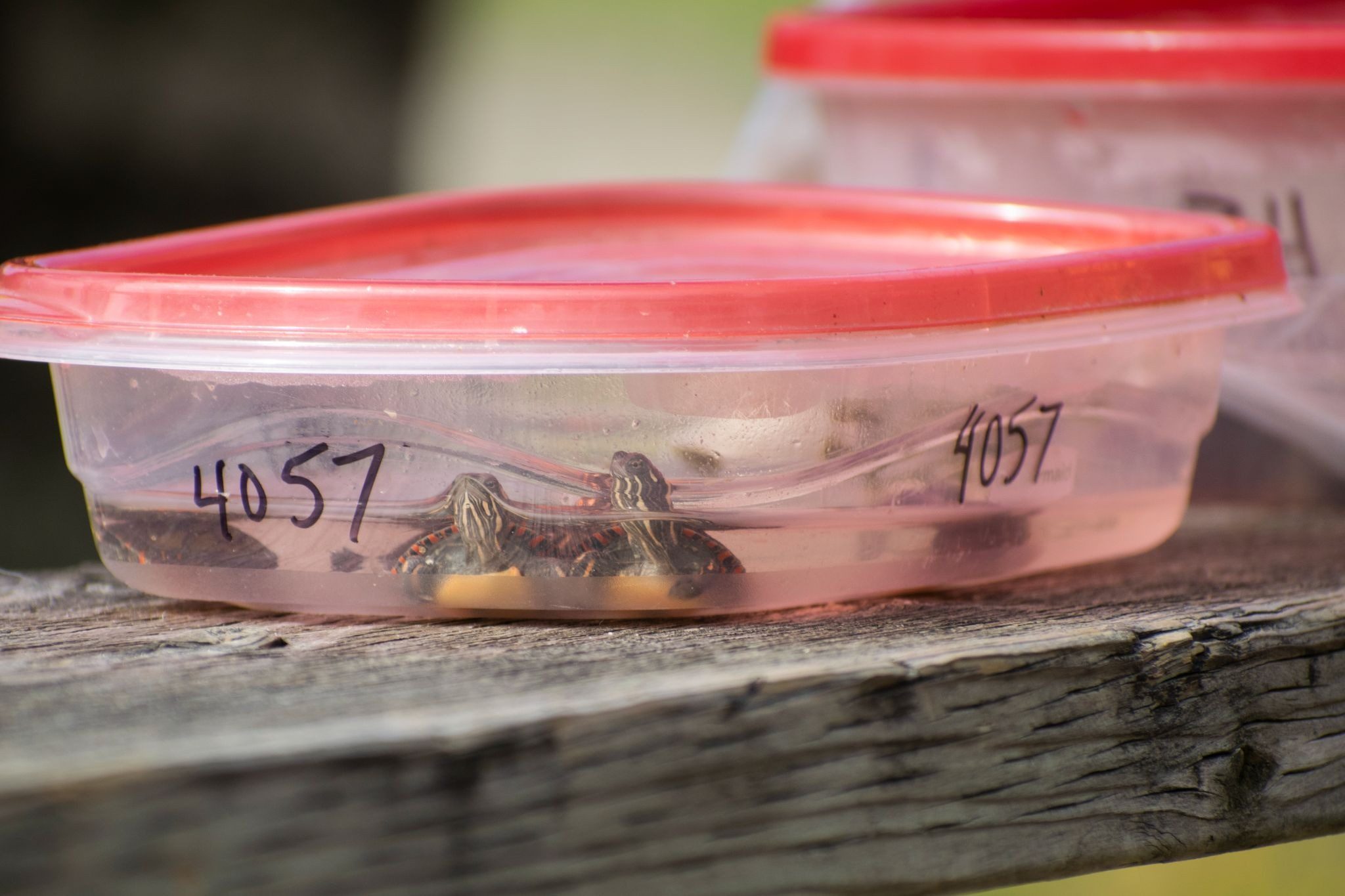
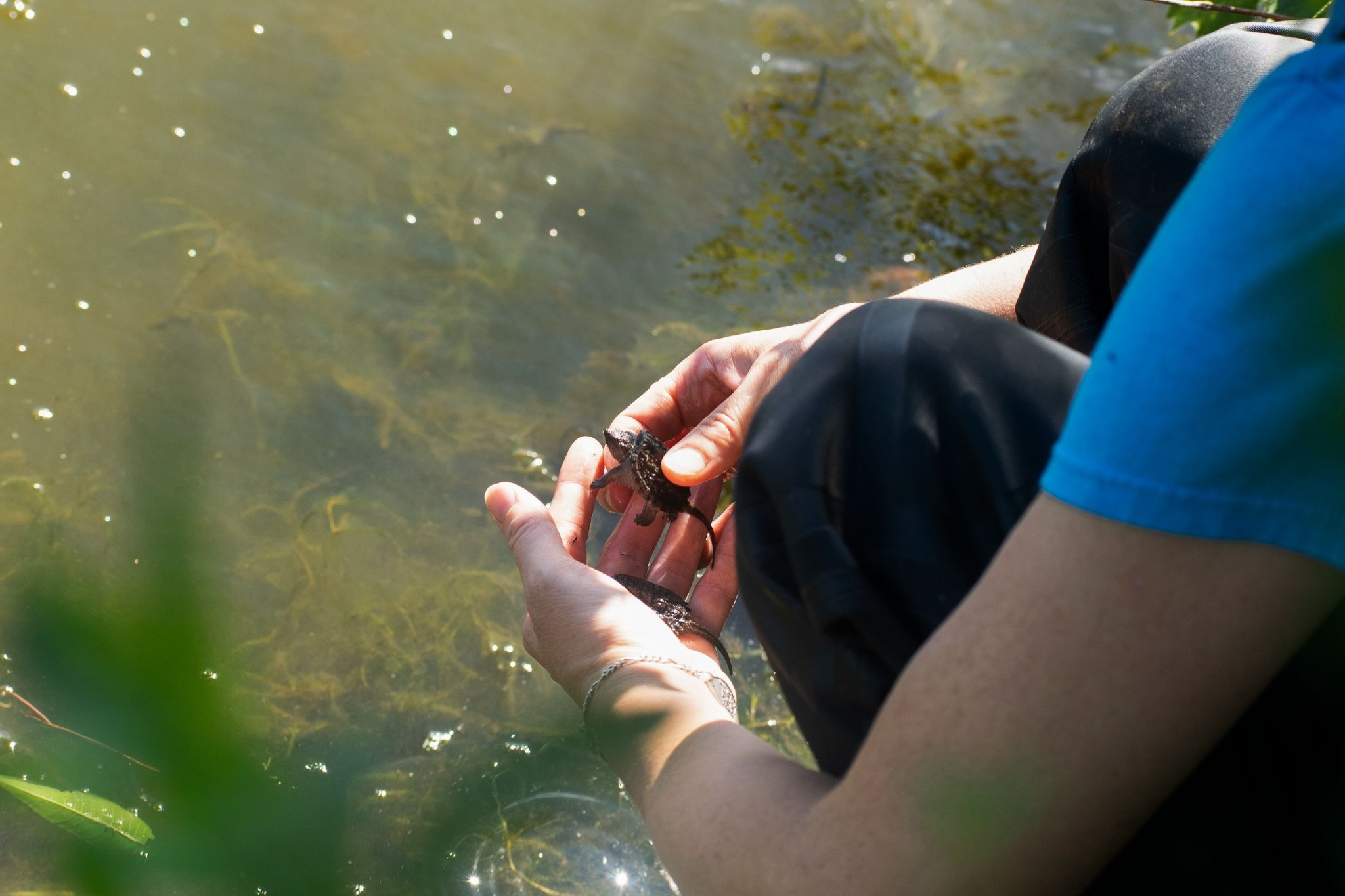
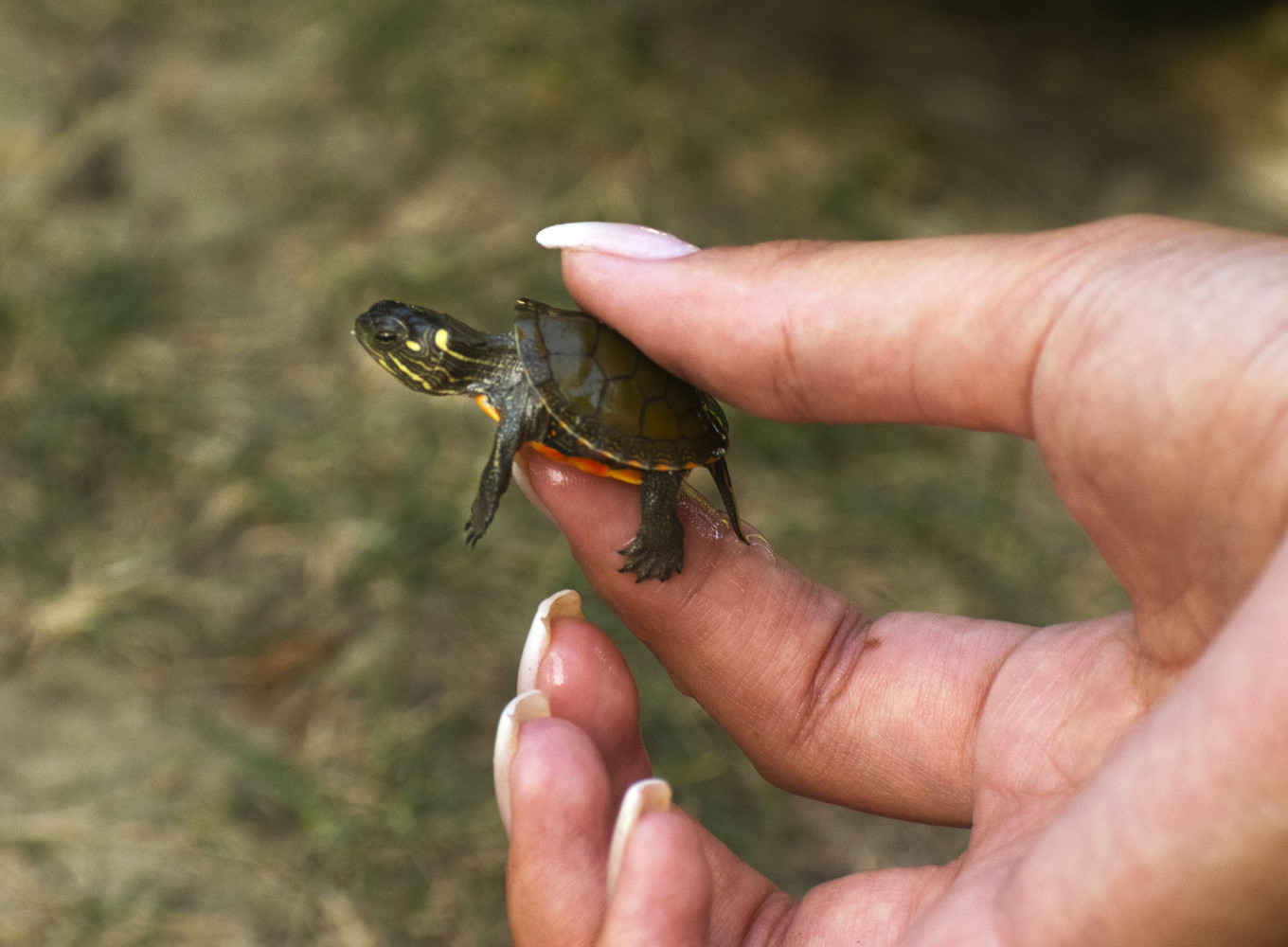
Turtle reproduction is highly sensitive and slow. Eggs are vulnerable to predation and environmental disruption and many species take 15 to 30 years to reach reproductive age, which means population recovery can take decades to stabilize. Brampton’s 418-acre Heart Lake Conservation Area is surrounded by urban threats to wildlife.
(Alexis Wright/The Pointer; bottom photo Wikimedia Commons)
As a child, Takayesu had kept pet turtles at home including species she later learned were threatened in Ontario. “We didn't know at the time we shouldn't own them” — an experience that would later fuel her passion for planting awareness about turtle conservation without judgment.
“I am not a biologist, I’m a computer geek. My last iteration before I retired was continuous improvement,” she says.
“I had a lot of reading and learning to do about turtles, so I could educate other people and tell them why they shouldn’t try and take a native Ontario turtle out of the water or put a pet turtle in the water.”
Ontario is home to eight native species of freshwater turtles including Blanding’s Turtle, Eastern Musk Turtle (also known as the Stinkpot), Northern Map Turtle, Northern Painted Turtle (including Midland and Western subspecies), Snapping Turtle, Spiny Softshell Turtle, Spotted Turtle and Wood Turtle — the greatest density and variety of turtle species in Canada.
Tragically, nearly all of these native species are currently designated as species at risk.
That’s why spotting the green creatures was no less than a miracle for Takayesu. After that day, the couple started boating more, exploring the beautiful waters within the city.
“When we are out on the water, all I do is look at turtles,” she laughs.
“In those first few months, I saw more turtles in Brampton than I've seen probably in my lifetime, which blew my mind that an urban setting could have so many.”
In the spring of 2021, a flyer from a local councillor arrived in the mail asking residents if they wanted to help turtles in the city. Her husband glanced at it and immediately handed it to her: “This sounds like you.”
As fate would have it, the same year the couple was building a life in Brampton, two women, Lori Leckie-Addison and Christina Cicconetti, with immense love for the natural world, had started a local, non-profit group in October 2020 to protect the lives of Brampton’s turtles.
In a heartbeat, Takayesu joined the Heart Lake Turtle Troopers just as the group was beginning to work with its first turtle nests, at a time when volunteers were still learning the basics and relied mainly on initial guidance from the Toronto and Region Conservation Authority (TRCA).
She later helped shape how the group operates today, supporting more structured training for new volunteers through both online sessions and on-site orientation, so they can learn wetlands safety, understand local nesting “hot spots”, and become familiar with essential field practices like accessing equipment and protecting nests.
What got her “hooked was watching a turtle nest” for the first time in her life.
One afternoon, an alert popped up in the group’s emergency chat saying turtles were actively nesting nearby. Even though her workday was not over, Takayesu immediately left to see it for herself.
“I had never seen a turtle nest before up to that point,” she recalls, retelling the profound personal experience of watching the ancient ritual.
“It meant so much to me. That’s what we try to teach people — that you can watch and appreciate it respectfully while making sure the mother turtle gets back safely to her wetland.”
The decline of turtle populations in Canada and around the world is closely tied to human activity—from industrial development and urban sprawl to one of the most persistent threats: road mortality.
“Turtles tend to stick to the areas that they have an internal mapping system that keeps them to a certain area and has them nesting in their favourite spots around that area,” Takayesu explains.
“When we take over and change the landscape and water systems through human activity, we make that spot difficult to get to, use, and impede their ability to do things.”
Research by David Seburn at the Canadian Wildlife Federation found more than 2,000 turtles were killed on roads in eastern Ontario between 2017 and 2024.
What makes this loss especially devastating is that roadkill often affects turtles that have already survived for decades to reach maturity. By the time they are finally able to reproduce, many never get the chance to do so safely, making each loss not just individual but deeply consequential for already vulnerable populations.
In 2024, Takayesu was among the volunteers and community advocates who helped build support for the City of Brampton’s Road Ecology Program, a council-endorsed initiative working towards reducing wildlife-vehicle collisions and protecting habitats fragmented by roads.
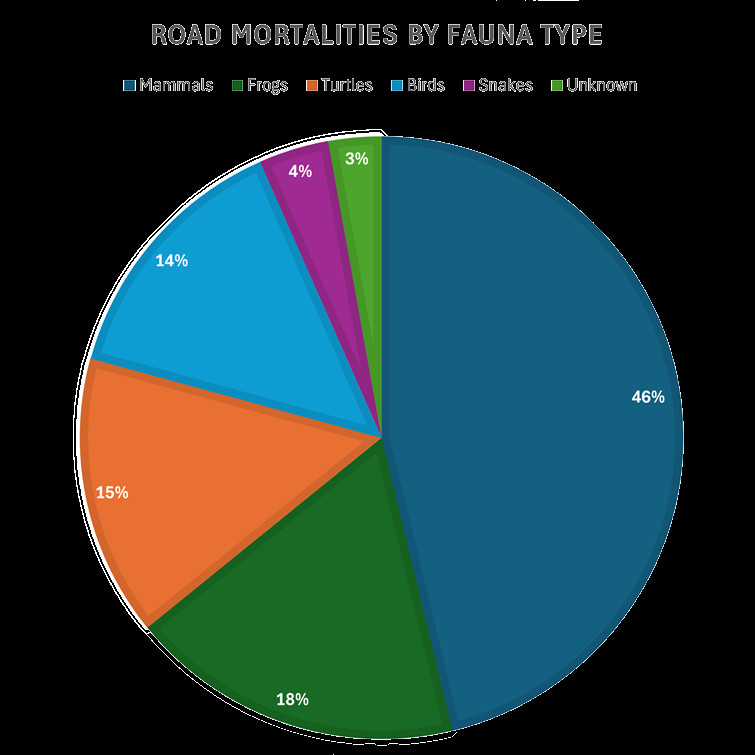
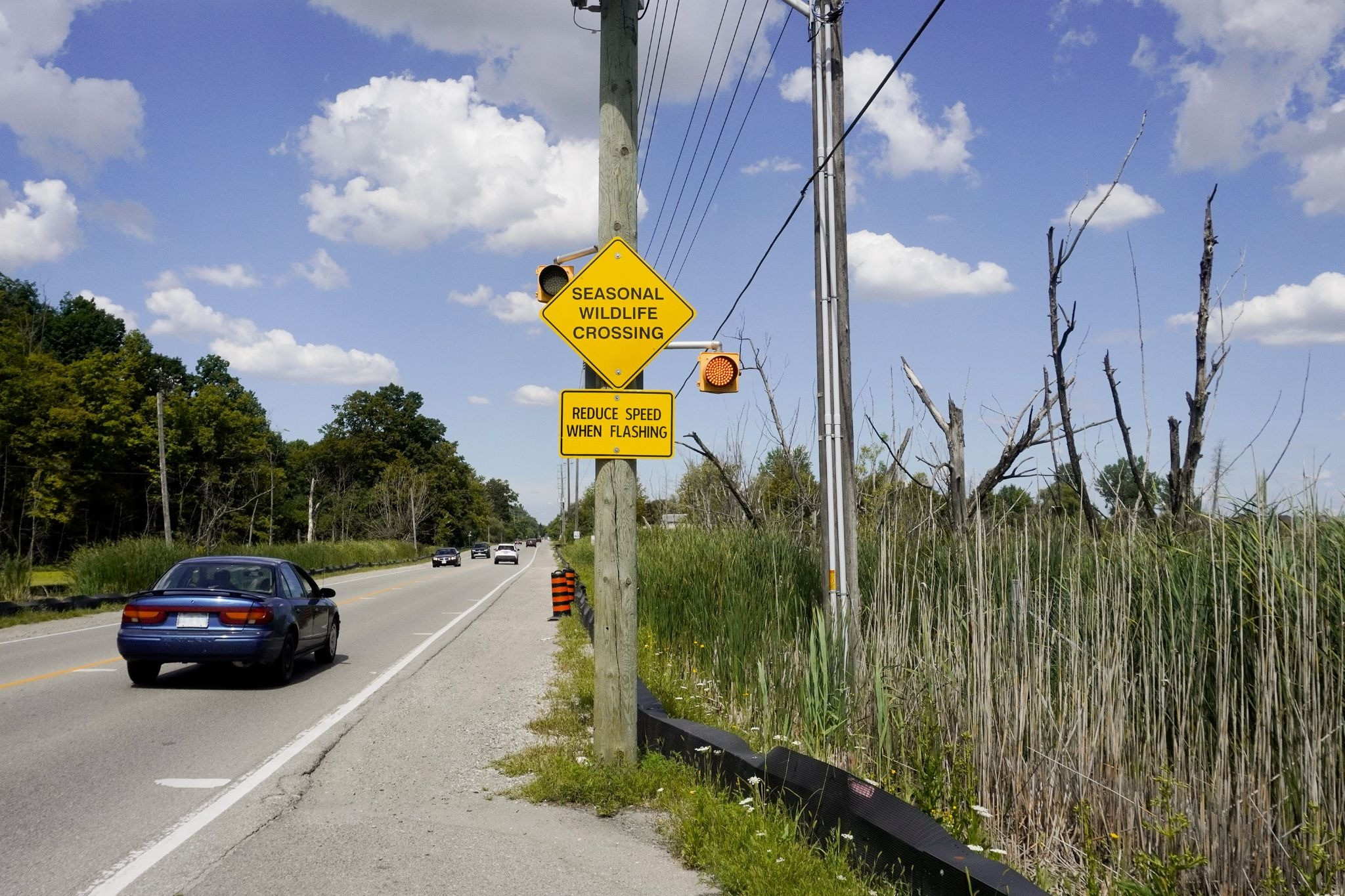
During the 2025 monitoring season, 27 trained volunteers conducted road ecology monitoring along Heart Lake Road from Sandalwood Parkway East to Mayfield Road, up to three times a week. Using a geospatial app, they recorded wildlife sightings and road mortalities, tracked turtle nests installed protective boxes when safe, checked wildlife exclusion infrastructure for repairs and conducted traffic counts. In total, 106 wildlife deaths from vehicle collisions were recorded last year—mammals, frogs, turtles and birds being the most affected.
(Top: Alexis Wright/The Pointer; Bottom: City of Brampton)
The program officially recognized that streets cutting through wetlands, rivers and woodlands can disrupt movement, isolate populations and increase wildlife mortality — especially among turtles, frogs, and other slow-moving species already vulnerable to traffic.
In 2016, Brampton’s first wildlife culvert was installed along with eco fencing in a provincially significant wetland to direct animals towards a passage with two more culverts added once the effectiveness was tested.
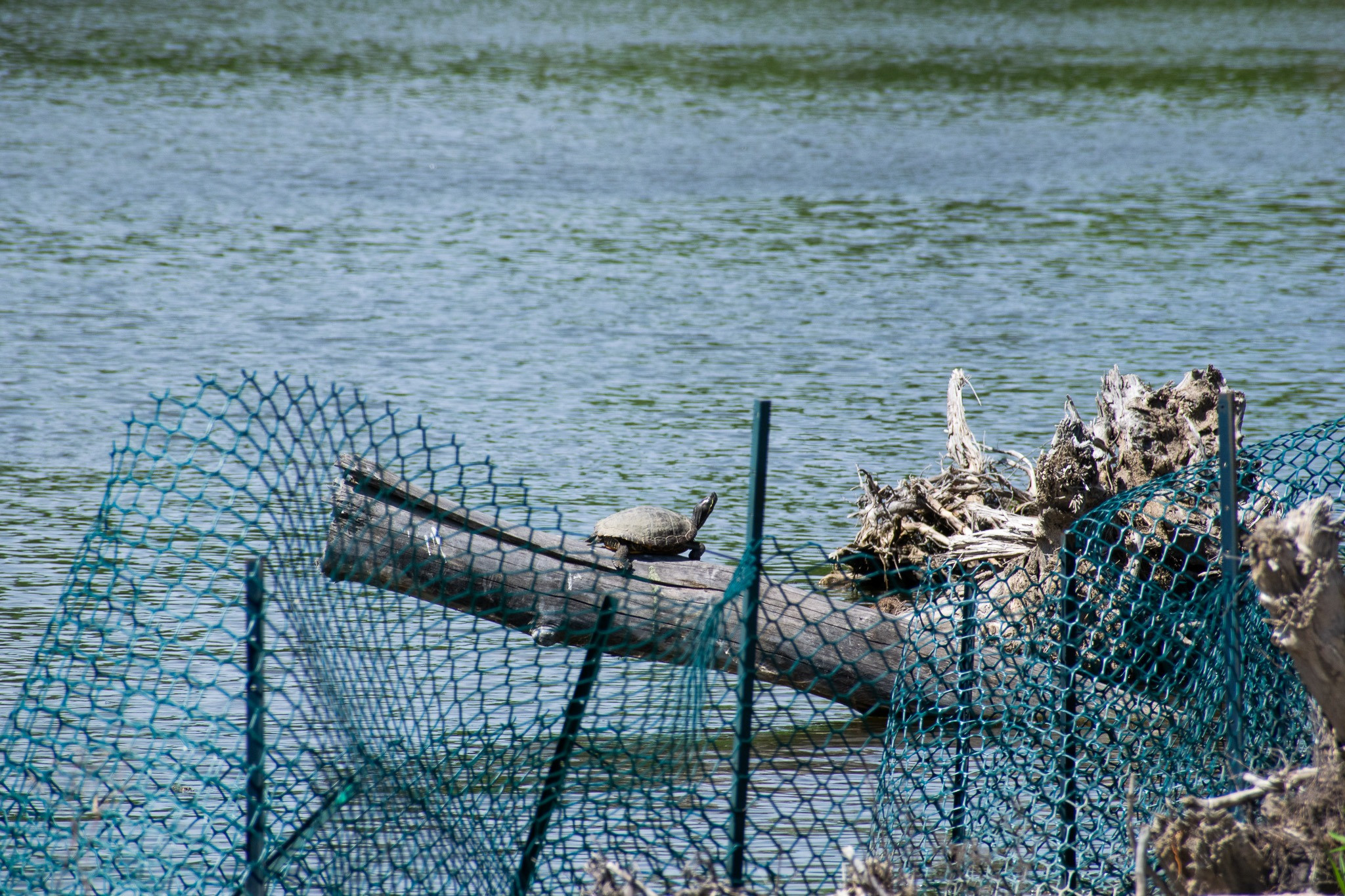
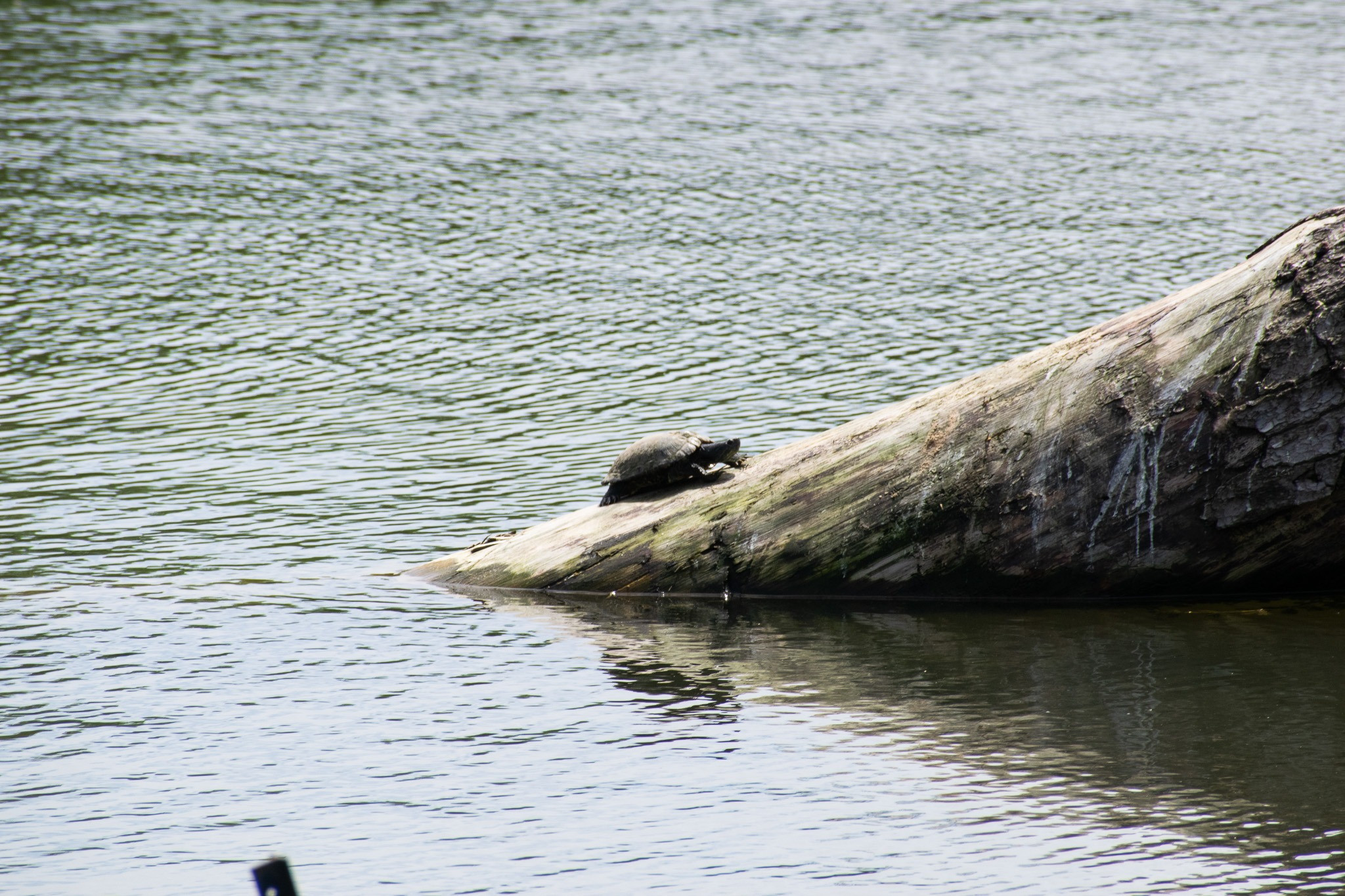
Red-eared slider, a non-native or invasive species in Ontario, spotted basking in the sun at Loafer’s Lake on May 21. They are native to the central and southern United States and northern Mexico, and are highly trafficked in the pet trade. Many people release them into ponds when they get too big, as the species can live for up to 30 to 50 years.
(Alexis Wright/The Pointer)
A permanent fence was expected to follow but the temporary fix “stayed temporary”. In 2023, 21 turtles of breeding age were hit by vehicles on Heart Lake Road between Sandalwood Parkway and Countryside Drive—only one survived.
“The City's constantly patching the fencing. We're constantly messaging them, saying there's a dead turtle on the road now, and there's a breach in the fencing,” Takayesu shares.
“I feel like each year we hit some major battle, and we rise to the occasion to find a solution for it. You can sit back and be the victim, or you can try and change things.”
In 2021, Heart Lake Turtle Troopers protected about 70 nests. By 2022, that number had doubled to roughly 140, and over the past three years, the group has consistently safeguarded around 180 nests annually.
The protection goes beyond installing nest guards; it also includes carefully excavating and relocating nests when turtles lay eggs in high-risk areas such as road edges, parking lots or active construction sites where the eggs would otherwise be vulnerable to damage or destruction.
Beyond unchecked development and road mortality, turtles also face threats from poaching in parts of Ontario.
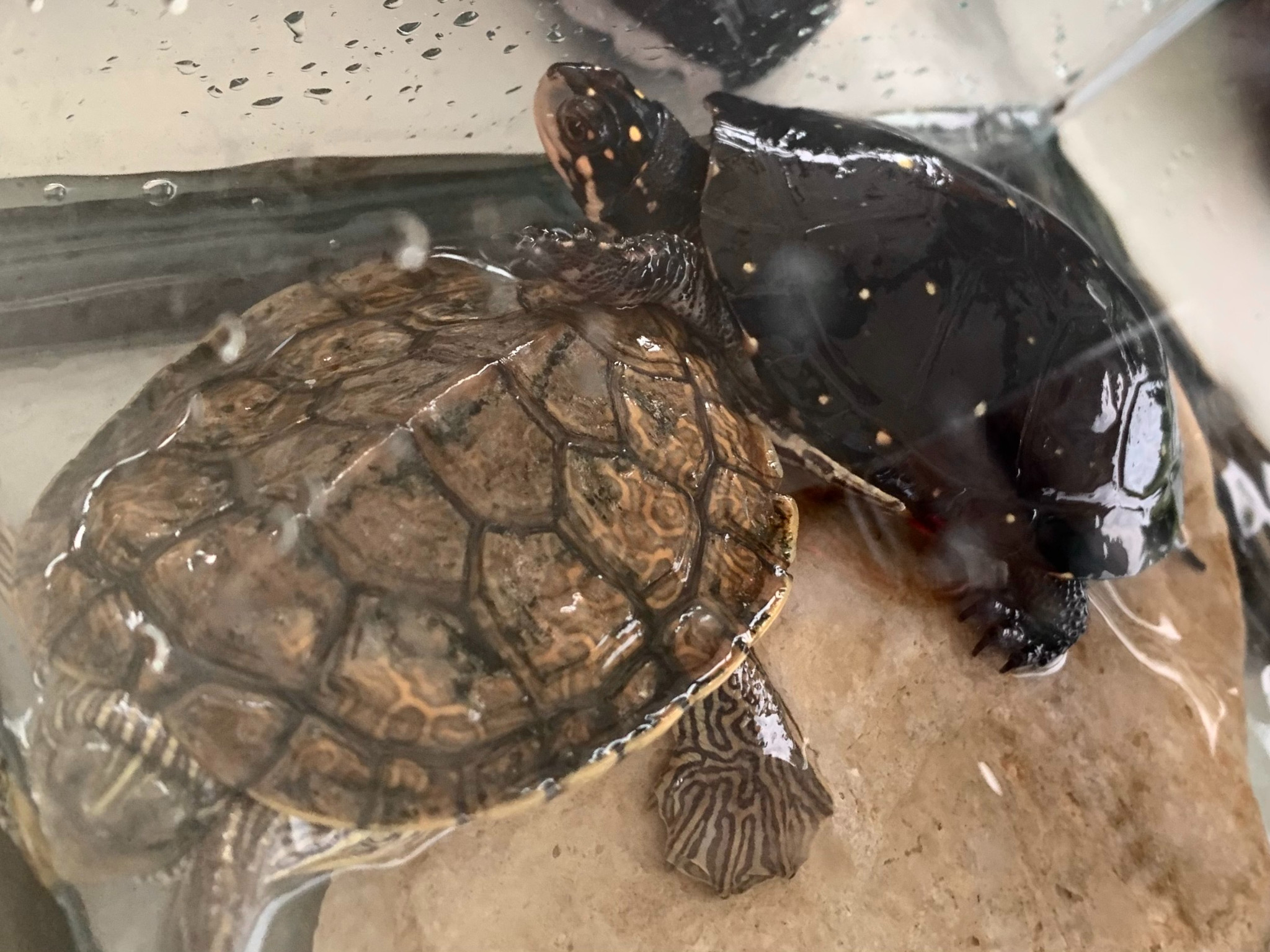
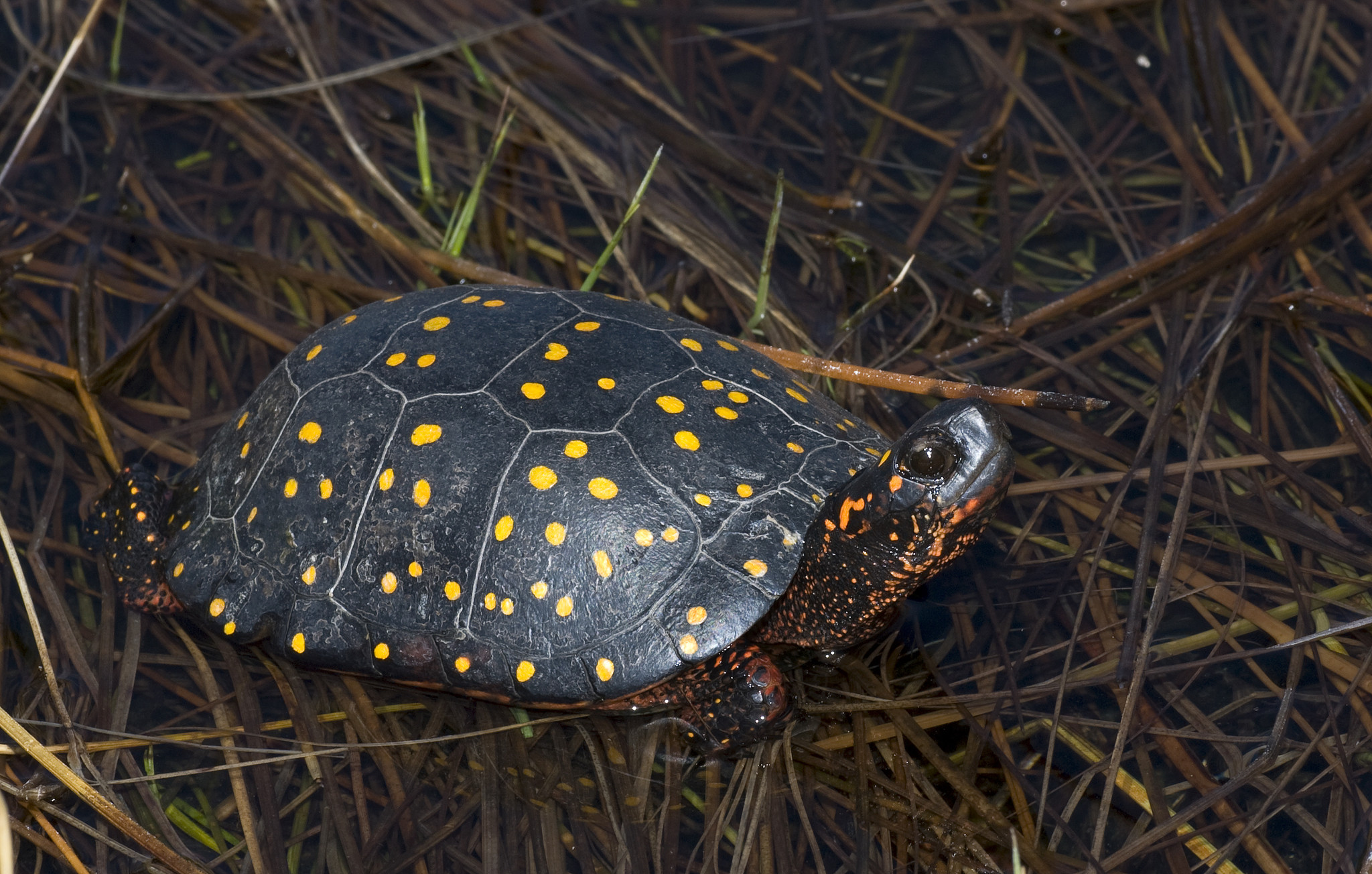
Historically, poaching is common among Spotted turtles due to their small size and beautiful spots being sought out by poachers. As a result, their populations have been decimated in Ontario dramatically over the years.
(Top: Alexis Wright/The Pointer; Bottom: iNaturalist)
“People will take either turtle eggs if they can find them to use for medicinal purposes or as a delicacy for food or actual adult turtles and make some meal out of them,” Takayesu says.
When threats from fishing are added to the mix, the population of species of special concern, both federally and provincially, suffer.
“When you fish, you've got a good chance of hooking a turtle, because they'll go for whatever the fish is going for as well.”
“Every year, we get called at Heart Lake Conservation area for some hooked turtle…It's not just turtles. It's any wildlife that gets impacted by that.”
Fishing is regulated through a mix of provincial rules and the City of Brampton’s Park Lands By-law 161-83 but inconsistent signage and unclear public messaging were contributing to confusion and unintentional harm.
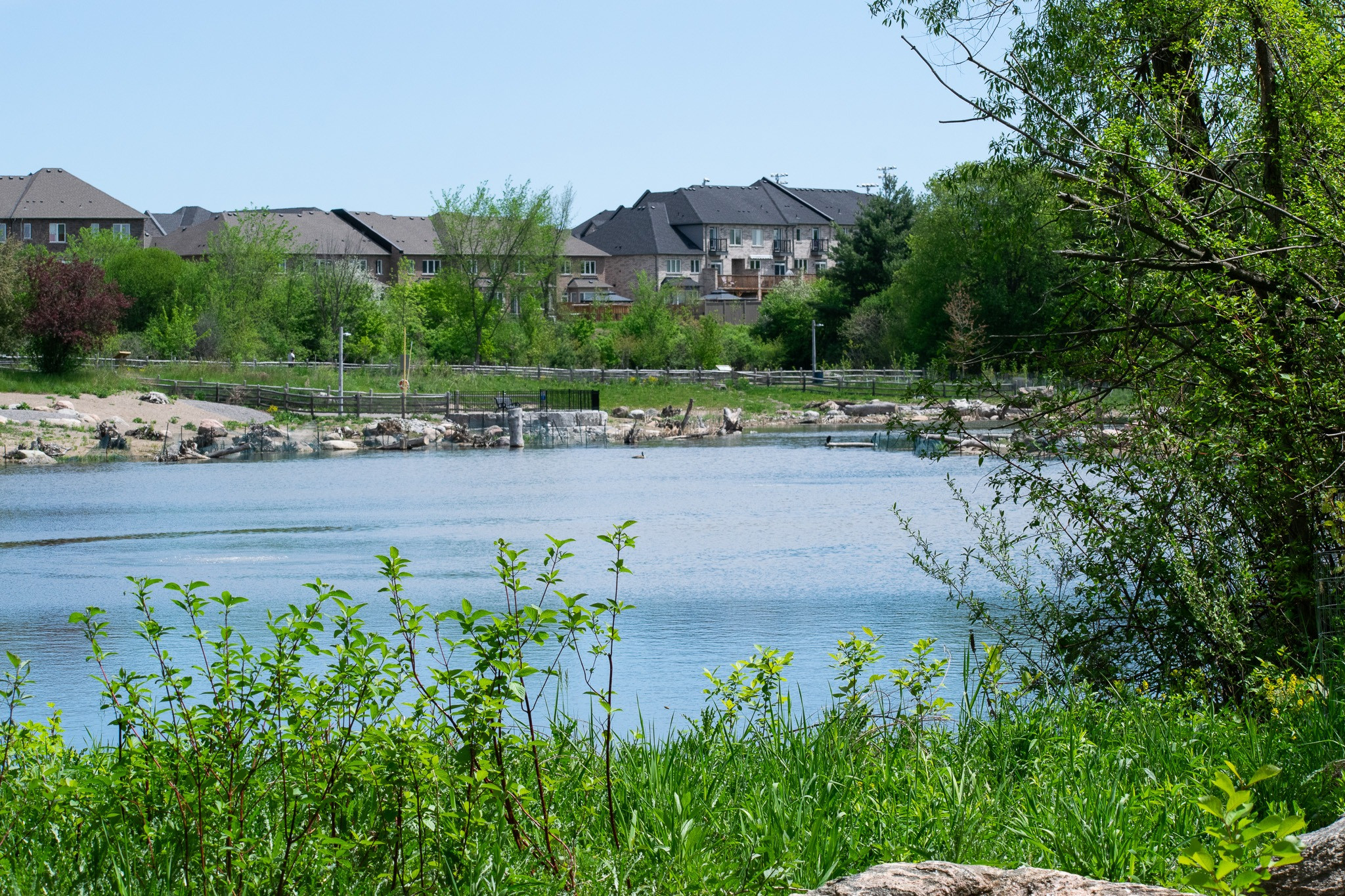
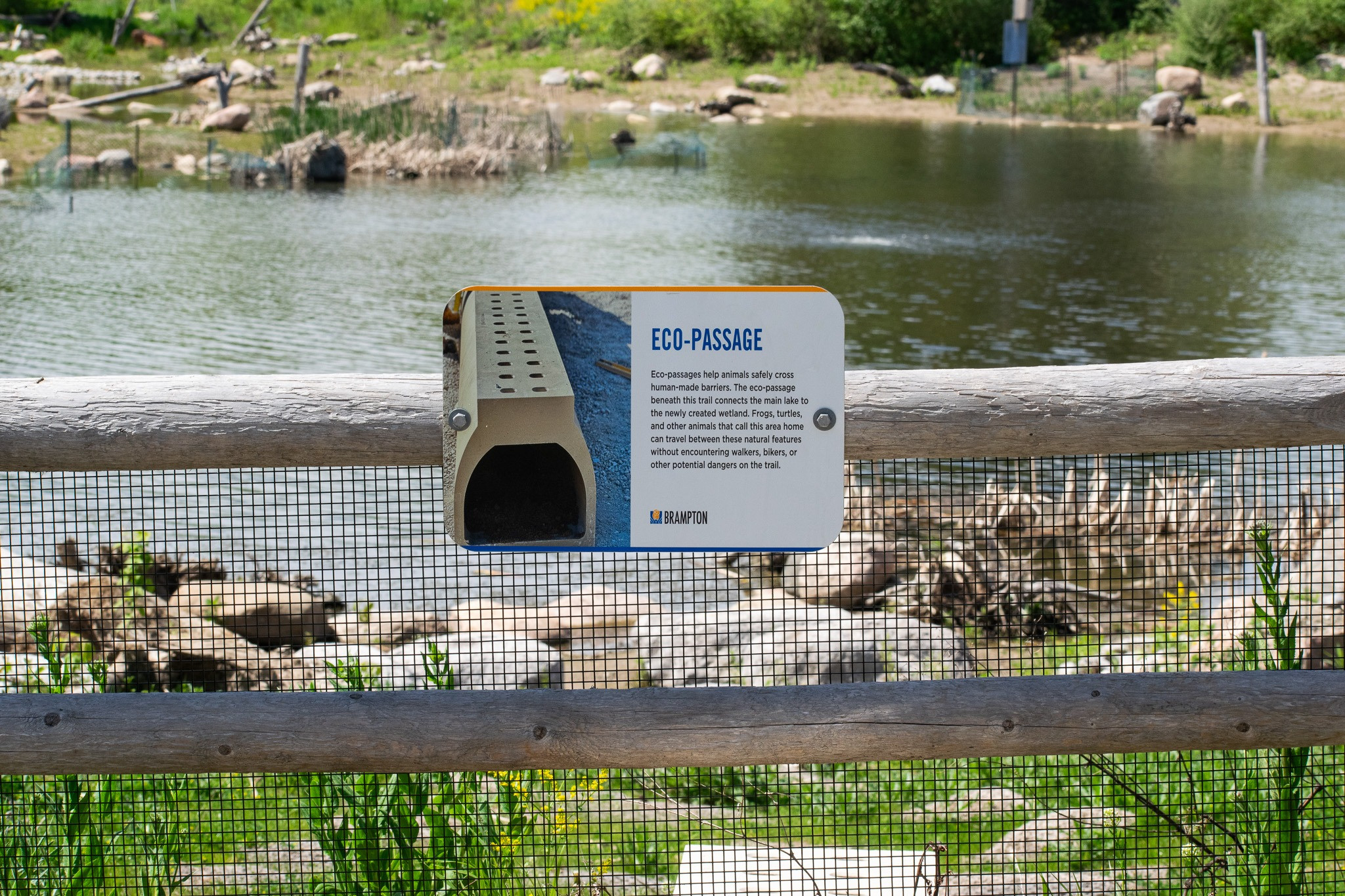
The Loafers Lake Wetland Restoration project was completed through a partnership between the City of Brampton and the Toronto and Region Conservation Authority. It was designed to strengthen wetland habitat and improve ecological connectivity along Etobicoke Creek while enhancing public access to the community space. Funded in part through Ontario’s Wetland Conservation Partnership Program, the project introduced a range of environmental features like improved shoreline and wetland habitat, viewing platforms, a bio-swale, trail realignments, fish cribs, dedicated turtle nesting beaches, duck boxes and an eco-passage that allows wildlife to safely move beneath the trail system.
(Alexis Wright/The Pointer)
On May 20, Takayesu returned to City Hall to urge council to prohibit fishing in the newly restored, ecologically sensitive wetlands at Loafers Lake and Donnelly East Ponds—both home to turtles.
“Turtles are essential to healthy ecosystems. They act as gardeners and janitors of our waterways; they clean, add aquatic systems, and disperse seeds,” she said during her delegation.
But conservation work in the region is highly dependent on a fragile funding system that supports turtle incubation and head-start programs run through Scales Nature Park under the Saving Turtles at Risk Today (START) initiative.
Nest excavation, not simply digging up eggs, but a highly technical process of collecting and incubating eggs under controlled conditions requires specialized facilities, trained staff and long-term monitoring.
The START program makes that possible, which has a base operating cost for incubation services, with additional per-egg expenses at roughly $30,000. In Brampton, annual incubation efforts cost approximately $32,000 and support the protection of thousands of eggs.
Takayesu introduced “Blandy” — a Blanding’s turtle, a threatened species in Ontario and a small cluster of her offspring currently under care at Scales Nature Park.
“We have had two reports of Blanding’s turtles in Brampton in the last five years and Blandy is one of them,” she noted.
Blandy alone laid 13 eggs, which were incubated and then head-started, a process that includes incubation followed by up to two years of feeding, cleaning and monitoring and has a price tage of about $5,000 per year or roughly $10,000.
“Between incubation and head-start, Brampton has effectively received this support at no cost for several years,” Takayesu said.
But the START program is now in “jeopardy” as the Scales Nature Park faces a “major funding shortfall” as a direct result of “a lot of changes to the federal and provincial funding”.
“A few years ago, one of their major contributors just kind of dried up, and then a couple of the grants they were relying on disappeared last year, too.”
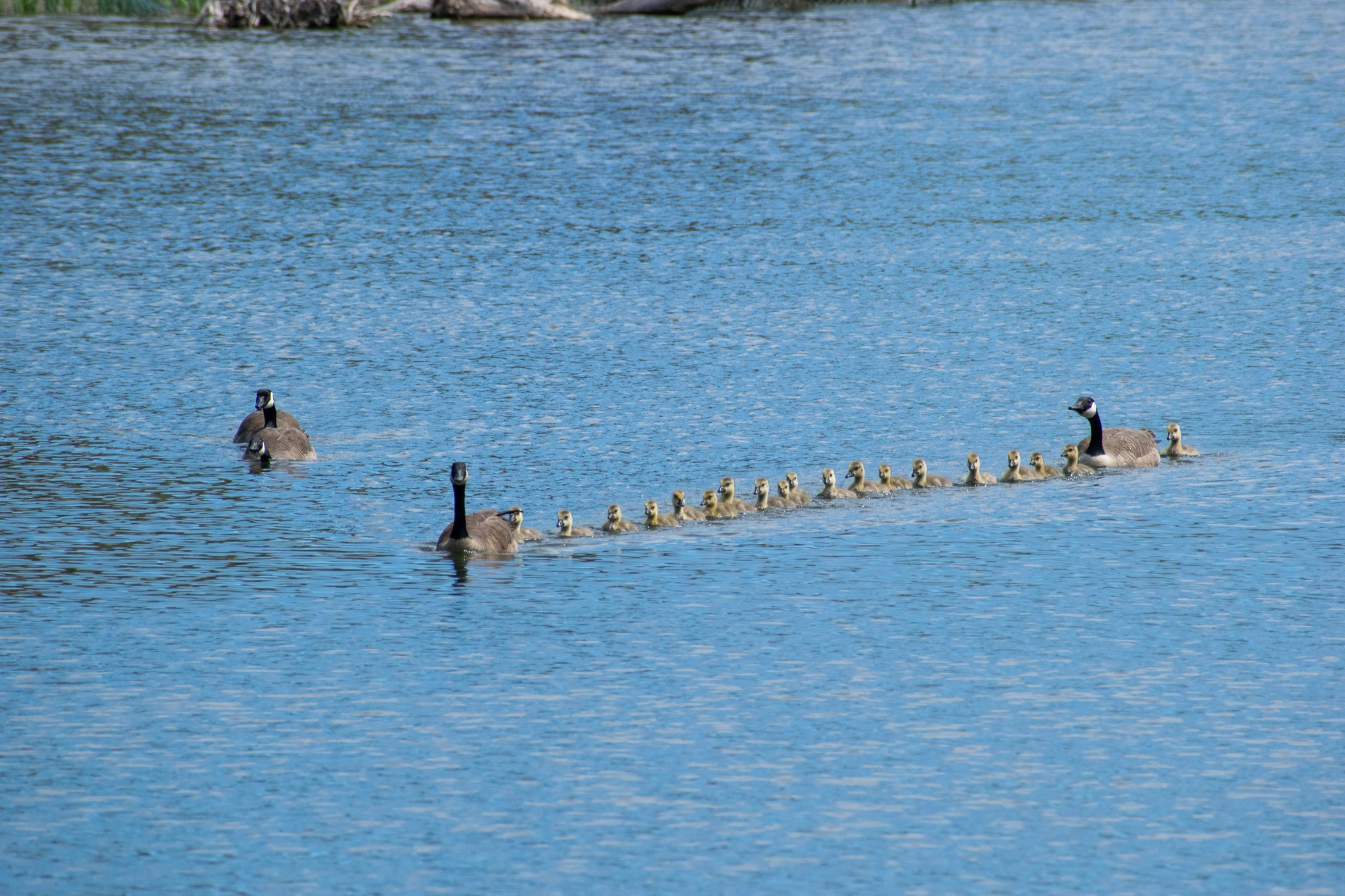
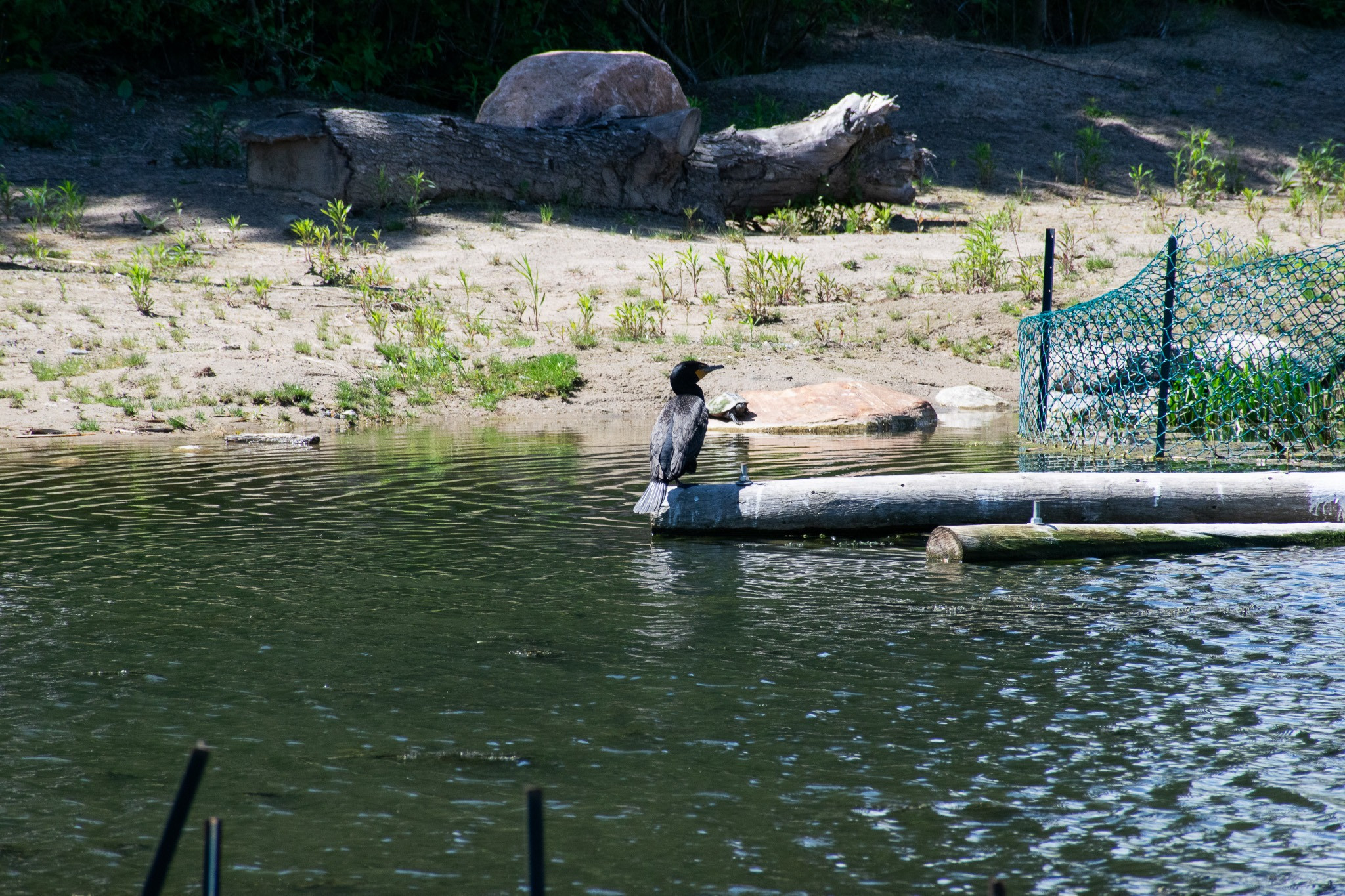
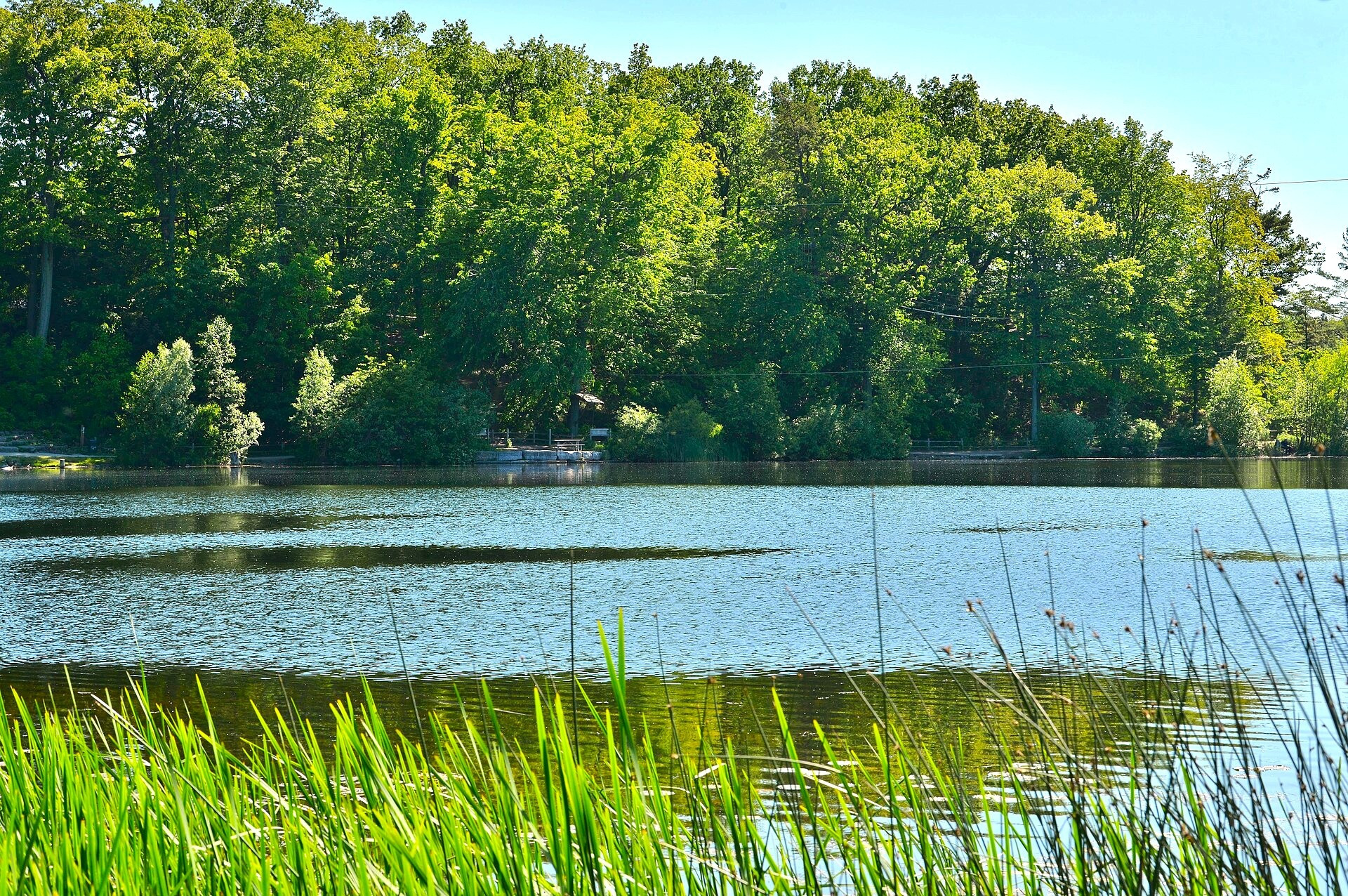
Among the wildlife seen at Loafer’s Lake are Canada geese, cormorant, eastern kingbird and painted turtles.
(Alexis Wright/The Pointer)
With Bill 5 now in effect, the provincial protections for turtle habitat have disappeared as well with the repeal of the gold standard Endangered Species Act, pushing the species further into dangerous territory and increasing the role of Ottawa.
“Now that the provincial government has removed all protection for endangered and threatened species, it is the federal government's responsibility automatically to replace the provincial protections that were removed word for word,” Environmental Defence Program Manager, Land Use and Ontario Environment and Counsel, Phil Pothen, tells The Pointer.
“The federal government can do that pretty much with the stroke of a pen…it is a real head scratcher, why that action hasn't come yet.”
Scales Nature Park has continued to pursue new funding and has been preparing for the upcoming incubation season but shifting timelines and delayed provincial grant decisions have created ongoing uncertainty. One of the applications expected to begin by April 1 had still not received confirmation, leaving programs in limbo.
“The wheels turn slowly sometimes and that's impacting us,” Takayesu says.
“If we hear later in August or November that we got the grant, well, it's too late for the season. That'll help us next year, but that doesn’t help us now.”
The program has been looking for approximately $50,000 this year to maintain full incubation capacity but only about $18,000 has been raised across participating groups.
While incubation will continue, it will be scaled back.
“This means a cap on the number of eggs incubated, so high-risk nests may go unprotected, meaning more predation, egg damage or an increased likelihood of hatchlings dying as they emerge from their nests,” Takayesu says.
“To fully protect nests in 2026, we must close a $30,000 gap.”
She asked council to help identify provincial and federal funding opportunities as well as explore longer-term support through the proposed expansion of the Advanced Brampton Fund in 2027 to include environmental projects, enabling the Heartlake Turtle Troopers to collaborate on a potential satellite incubation site in partnership with Scales Nature Park, integrating environmental conservation into municipal funding streams.
While council did not make immediate funding commitments or policy changes, staff was directed to explore other funding options, improve public communication and come up with ideas for signage clarity with a clear public list of approved fishing locations on the City’s website and improved signage at permitted sites to distinguish where fishing is and is not allowed.
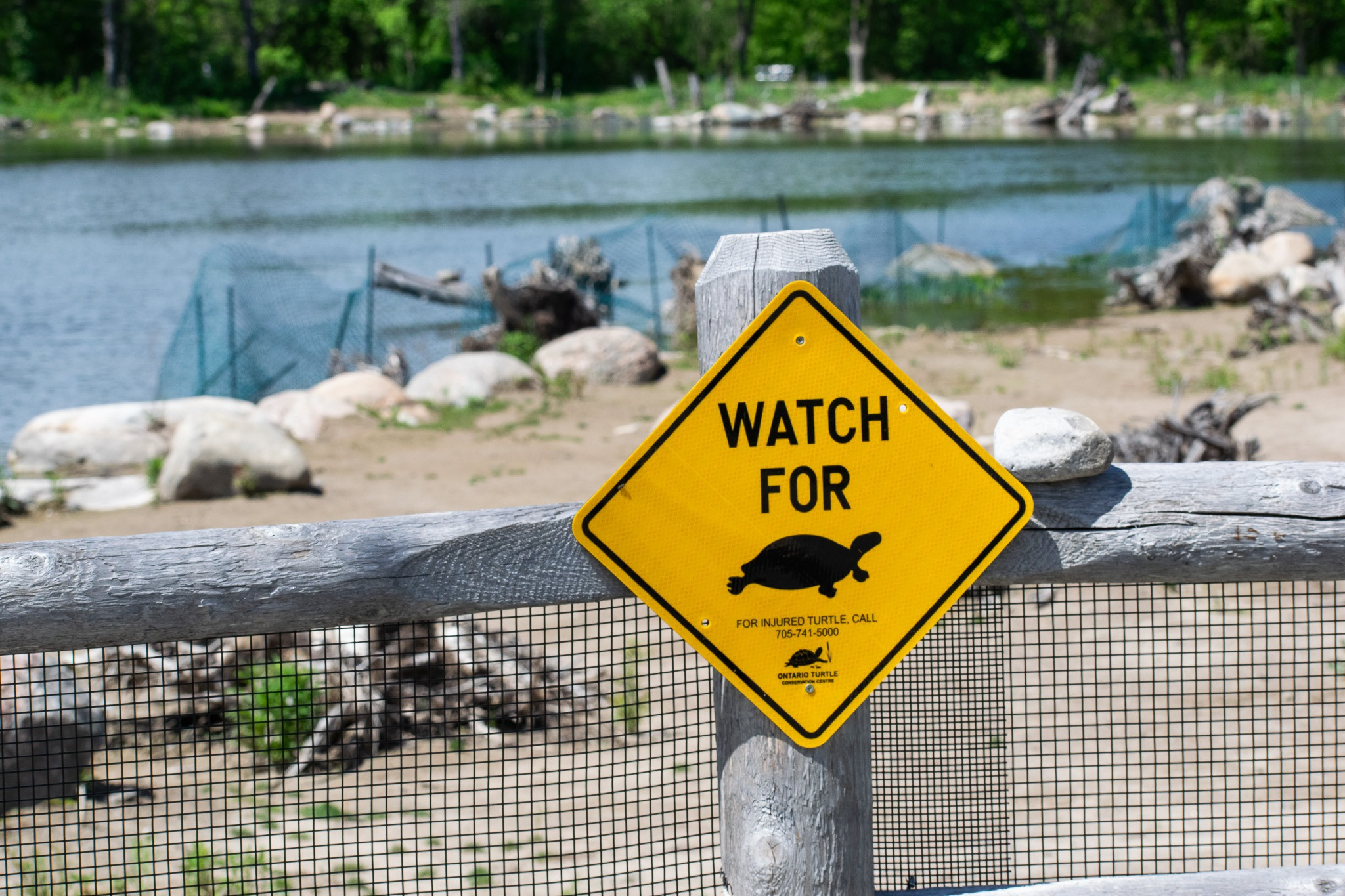
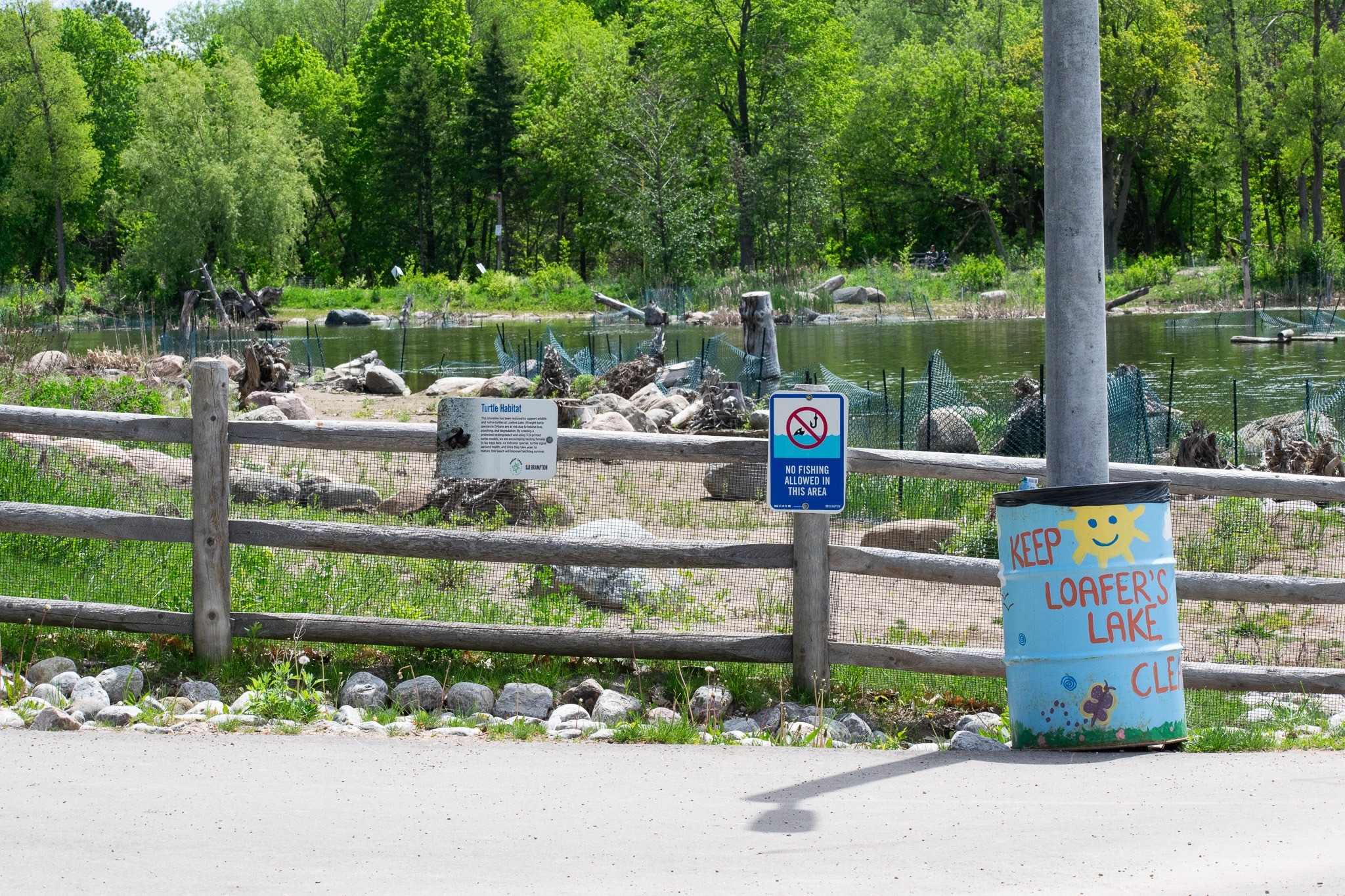
No fishing signs are posted at Loafer’s Lake currently but conservationists are seeking clearer signs to protect turtles in the area.
(Alexis Wright/The Pointer)
Upon Councillor Michael Palleschi’s request, staff is also exploring an honorary designation for the stretch of Heart Lake Road from Sandalwood to Mayfield that would recognize and celebrate Heart Lake Turtle Troopers’ contributions with a report back on a proposed name and signage.
“The group is really proud of the work that they do, so I think if we can get some sign that just recognizes it there, it would make us all feel good,” Takayesu says.
As local groups turn to their municipalities for support in species protection and conservation, attempts can be made to introduce municipal protections but experts contend it is difficult to replicate the scale and consistency of provincial safeguards through piecemeal bylaws and motions.
“Municipalities can play a role through official plans, policies and zoning bylaws to ensure sensitive habitats are protected but they wouldn't really have the ability to enforce prohibitions around harassing wildlife or disturbing species of its habitat,” Ontario Nature Conservation Policy and Campaigns Director, Tony Morris, told The Pointer.
Municipalities can still support conservation efforts by encouraging stewardship initiatives and working alongside volunteer-led community groups.
“Ultimately, it is going to be very difficult to preserve the critical mass of habitat required with motions across multiple jurisdictions since endangered species aren't contained within a particular municipality,” Pothen argues.
One of the most effective tools municipalities still have is controlling urban sprawl. Once surrounding landscapes are converted to urban uses through roads, parking lots, and development, the ecological function of nearby habitats can quickly deteriorate due to runoff, heat effects and fragmentation.
“The most important takeaway from the situation of Loafer’s Lake and the Donnelly Pond, both artificial ponds within modest strips of land that has otherwise been lost to sprawl is that while the effort that went into naturalizing them was justified, the massive cost of doing that and the intensive ongoing support that's required from volunteers just to eke out content value for a fairly tough species like snapping turtle, it illustrates that the number one most important thing for municipalities to do is to say we are not going to expand outwards any further,” Pothen says.
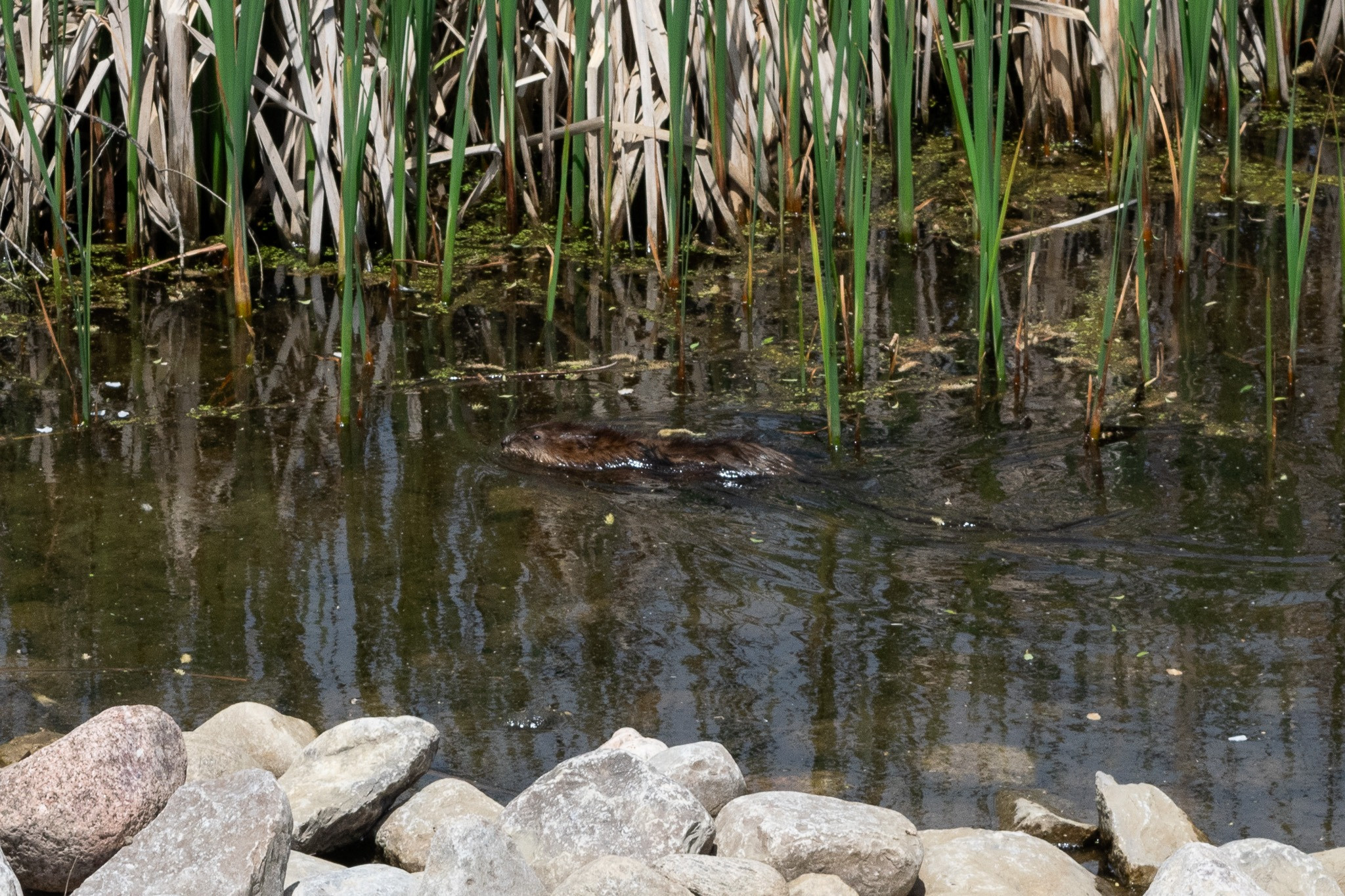
Muskrat taking a lazy swim at Donnelly Pond, part of a thriving ecosystem the City of Brampton is now trying to protect through a major wetland restoration project aimed at improving habitat, water quality and climate resilience. Led in partnership with the Toronto and Region Conservation Authority and supported through federal funding, the Donnelly Ponds Restoration Project includes shoreline and aquatic habitat enhancements, stormwater management upgrades, new trails and viewing platforms, and interpretive signage designed to reconnect residents with the area’s ecological significance. Located within Donnelly East Park and White Spruce Valley along the Esker Lake Trail, the ponds sit within the Brampton Esker, a glacial landform that plays an essential role in water filtration, flood control and wildlife connectivity.
(Alexis Wright/The Pointer)
Once land is approved for development, it becomes increasingly difficult to reverse ecological impacts later, even if projects have not yet been built.
Pothen criticizes the idea that municipalities should pre-emptively implement provincial growth mandates due to political pressures: local councils should not “do the province’s job for them”.
Instead, municipalities should make it clear when decisions are driven by provincial direction, allowing accountability for those mandates to remain visible to the public.
“There is a dangerous narrative that, frankly, is being pushed by the provincial government that development of land within these new greenfield areas is inevitable, and that is simply not true,” Pothen says.
“The only way that development will happen is if municipalities roll over and let it happen. There is very little prospect of any significant portion of these lands being developed, no matter what effort the Ford government puts into making that happen.”
Email: [email protected]
At a time when vital public information is needed by everyone, The Pointer has taken down our paywall on all stories to ensure every resident of Brampton, Mississauga and Niagara has access to the facts. For those who are able, we encourage you to consider a subscription. This will help us report on important public interest issues the community needs to know about now more than ever. You can register for a 30-day free trial HERE. Thereafter, The Pointer will charge $10 a month and you can cancel any time right on the website. Thank you
Submit a correction about this story

