
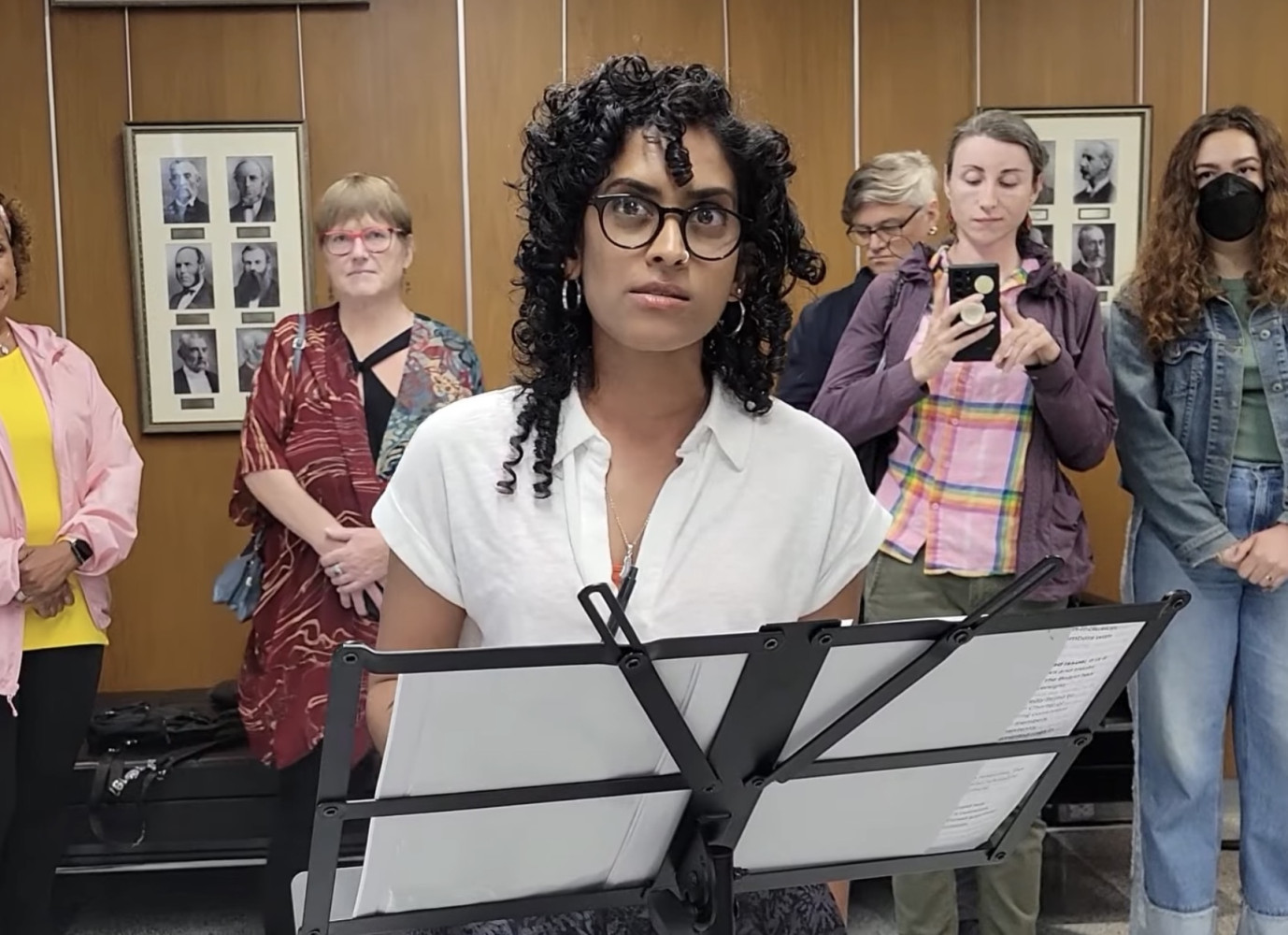
Resignation of Hamilton Police board member the latest signal of crisis in law enforcement oversight
“Dear Mayor Horwath and Members of the Hamilton City Council:
I have served as your Citizen Appointee on the Hamilton Police Service Board since November 2023. As a practicing family physician, an equity scholar, and a neurodiverse, Racialized woman, I entered this role deeply aware that large segments of our community harbor a profound mistrust of law enforcement. I sought to bring both accountability and transparency to this role, to better address hate in our city, and to work towards finding common ground to bridge the widening divides in our community.
As the first Citizen Appointee to be nominated jointly by a collaborative committee of both citizens and City Councillors in Hamilton, my selection was intended to symbolize a commitment to the representation of communities historically alienated by policing
systems. But that commitment has remained entirely symbolic. Over the course of my tenure, I have experienced persistent mistreatment from colleagues, including ongoing commentary that is exclusionary, patronizing, and focused on my identity.”
That was the beginning of a letter Doctor Anjali Menezes wrote to the board on June 25 announcing her immediate resignation, almost three years after the citizen-member and physician was appointed to the Hamilton Police Service Board.
Menezes spoke candidly with The Pointer about what led to her resignation following years of discrimination as the only marginalized member on the all-white board, and the unwillingness of her former colleagues to enact effective policies that would protect Hamilton's most vulnerable communities from discrimination by police officers.
“This is me trying to communicate for the first time to the public the concerns that extend from open board meetings to things that have happened in closed board meetings, that span my own lived personal experiences of my own treatment, but also what I have been witnessing on a structural level, institutional level, across the Hamilton Police Service, and the procedures and policies or lack thereof.”
When Menezes first accepted her citizen appointment in late 2023, she was under the impression the position would allow her to benefit and strengthen the relationship between the city’s police and all Hamiltonians they serve.
Instead, she says she encountered an oversight body that routinely dismissed concerns about systemic racism, ignored evidence and treated its only racialized citizen appointee differently than her colleagues.
The build-up to her departure culminated at the end of May and “was really a continuous concern of a differential in treatment,” after she filed a complaint to the Ontario Inspector General of Policing in January 2025. That complaint followed repeated motions she introduced that were disregarded, as board members repeatedly referred to her as ‘the member’ or ‘little young lady’, never learning how to pronounce her name.
The investigation into her complaint remains ongoing.
“That is textbook dehumanization, that's a reflection of how this board views racialized populations,” she said.
“It's not about a name that is complicated to pronounce, it's simply ‘we don't care about understanding or seeing her as human’, and that is how this board has systematically treated the racialized community of Hamilton.”
She says the treatment she experienced was never solely about personal differences, it reflected a broader governance culture that routinely minimized concerns raised by racialized communities while accepting police explanations with little scrutiny.
“Any misbehaviour, any misconduct by a police service (member) ultimately is a failure of governance,” she said.
“What we are seeing when we don't take this culture seriously and we endorse police services not caring about the culture, the values, and any kind of oversight or regulation, is that police service members feel like they can do anything and they are untouchable.”
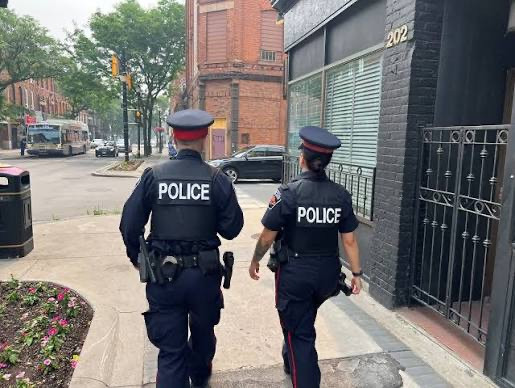
Questions have routinely been raised about the oversight of frontline policing as systemic discrimination continues to be shown in the practices of police services across Ontario.
(Hamilton Police Service)
In a report from July 2021 made by McMaster University in partnership with Hamilton Centre for Civic Inclusion (HCCI), they found individuals from Black, LGBTQ+, and Indigenous communities did not feel comfortable reporting hate related crimes to police based on past experiences, witnessing police themselves committing hate-based crimes, and a history of police violence within marginalized communities.
All groups surveyed mentioned one consistency: having no faith that even if they reported a hate-based crime to police, it would be taken seriously or the guilty party would face little to no consequences. A Black participant shared “it seems pointless sometimes to go to authority”.
Another Black individual whose responses were included in the study shared that, “there is a list of police officers that cannot be trusted and I also think that sometimes in certain situations they are the ones that are committing the hate crime.”
One Indigenous participant stated “a lot of the times police aren't necessarily there to help or they can cause further harm in a situation where harm has already been caused. Particularly if it's a hate crime, there's a perception that the police aren't really there to
solve it and if anything, they might make it worse,” with another Indigenous member surveyed adding they would not go Hamilton police for any assistance based on previous interactions with their community.
Similarly, an LGBTQ+ participant noted, “historically the police aren’t known to protect the LGBT community as citizens.”
The aforementioned survey consisted of 14 questions covering participants’ age, race, sexuality, and gender identity. The researchers encountered challenges in recruiting participants in part due to COVID-19 restrictions at the time, and scheduling conflicts that limited individuals’ availability or willingness to participate. A total of 16 participants volunteered for the study; however, the sample did not include members of the Muslim community. The researchers acknowledged that because of these recruitment challenges and the limited sample size, the findings may not fully represent the full experiences of all communities the study aimed to examine.
In an email to The Pointer, Executive Director of the Hamilton Police Service Board Kirsten Stevenson said the Board governs the service through its policies, which are published on their website, and oversight of Ontario Police Service Boards is provided by both the Inspectorate of Policing as well as the Law Enforcement Complaints Agency, stating “the Board has full confidence in these organizations.”
"It's important to point out that the Inspectorate of Policing has a representative attend our meetings to monitor our performance and to ensure the board is governing effectively. Former Member Dr. Menezes has been sharing many of her own opinions, which is certainly her right,” she wrote.
Stevenson said if Menezes submitted complaints or concerns to the Inspectorate of Policing, they are not able to comment on the matter to ensure the integrity of the process, but thanked Menezes for her service and time on the board.
Menezes expressed she was grateful for her position on the board, but discussed how she talked with students she works with at McMaster University and Mohawk, coming to the conclusion during those conversations that she had become used to the board’s treatment toward her and questioned “how can I promote people to stand up for themselves when faced with discrimination, but (I don’t) do the same when it pertains to (me).”
Hamilton's police board was given $239 million for its net operating budget in 2026, but Menezes had fears inflation pressure would outweigh the funding increases over the last few years and the budget would not be enough to provide adequate policing for Hamilton.
“That is the failure of governance. This is a failure of the chief if you can't give us an accurate prediction,” she said.
Along with the budget issues she has raised, Menezes also flagged the board’s handling of matters impacting Hamilton’s visible minority communities.
Hamilton Police released its annual hate crime statistics on July 20. The data presented in the report show hate crimes and hate-related incidents in Hamilton have risen to their highest levels in the past decade. Hamilton Police recorded 332 hate-based occurrences, a 12 percent increase from 2024, including 138 hate crimes and 194 hate-related incidents that did not meet the legal threshold for criminal charges.
It marks a significant increase compared to 82 total reports in 2020, revealing a consistent upward trend in reported hate-motivated behaviour. The report also notes that 22 percent of hate crimes cases were cleared through an arrest or because a victim chose not to proceed with charges. The rest have not resulted in charges.
The statistics indicate that racial bias was the most common motivation behind reported incidents, followed by religion and sexual orientation, with Black, Jewish, and LGBTQ+ communities among those most frequently targeted. Hate-motivated graffiti accounted for 54 percent of all reported hate crimes in 2025 compared to 40 percent in 2024. The report emphasizes that these acts often involve extremist messaging intended to intimidate vulnerable communities rather than simple acts of vandalism.
The report highlights that hate crimes remain significantly underreported, meaning the actual number of incidents is likely higher than official statistics suggest. In response, Hamilton Police established a hate crime case review team in June 2024 composed of 14 representatives from LGBTQ+, Black, Indigenous, Jewish, Muslim and South Asian communities to evaluate past investigations and recommend improvements to the police service and the board.
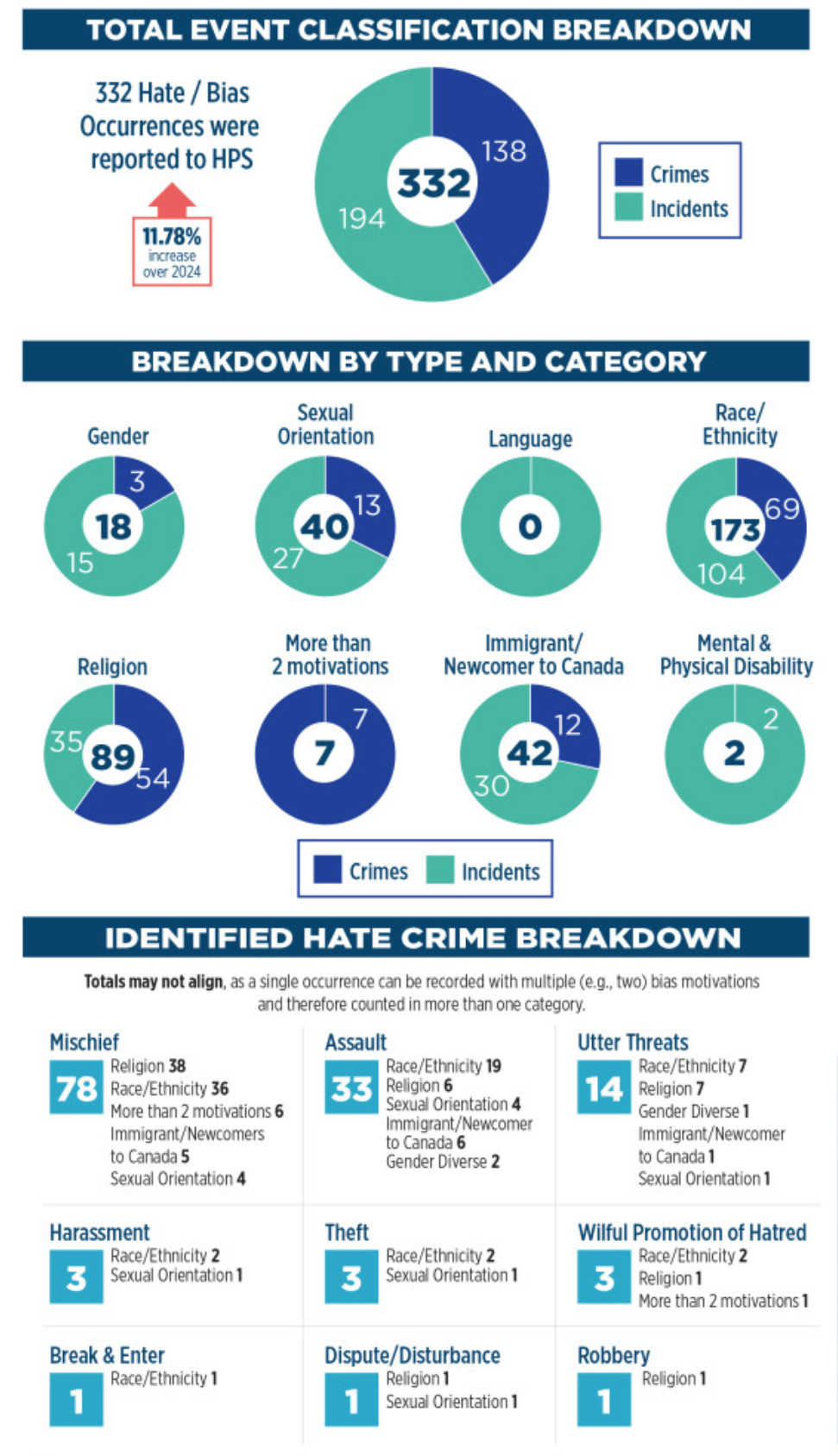
A Hamilton Police report highlighted 2025 hate crime statistics.
(Hamilton Police)
Judicial findings, independent reviews and human rights investigations have documented similar concerns within Peel Regional Police and Niagara Regional Police over the handling of crimes and policing that directly impacts marginalized communities, raising questions about whether police boards are fulfilling their legislated responsibilities to provide independent civilian oversight.
The similarities between Hamilton and Peel extend beyond community concerns; Peel Police has done harm to marginalized communities for decades, as documented in public reports, criminal cases and news reports. More than half-a-decade ago, Peel Police had to sign an agreement with the Ontario Human Rights Commission to address systemic discrimination by the force. It has since failed to make meaningful change, as revealed by its own data and statistics including use-of-force cases against Black residents in particular that show discriminatory treatment.
Police boards across Ontario face mounting questions about systemic racism, as use-of-force data, incidents of racial profiling and discriminatory application of the criminal code persist, while police boards and police leaders maintain they are working to change baked-in cultures that harm racialized communities and other marginalized groups.
“What are we paying all of these so-called equity advisors and equity specialists in the police service if nothing ever changes?” Doctor Menezes questions. “I think as an oversight body responsible for public funds, I would argue that is a waste of public funds if we refuse to do anything about it.”
Under Ontario’s Community Safety and Policing Act, police service boards are responsible for governance and not operational policing. Their responsibilities include approving the annual budget, setting strategic priorities, ensuring accountability and maintaining public confidence in policing.
Menezes argues many boards defer almost entirely to police leadership. That concern surfaced repeatedly during debates over Hamilton’s use-of-force reporting, school resource officers and requests for independent reviews.
She said evidence demonstrating disproportionate impacts on Black, Indigenous and LGBTQ+ communities was routinely overshadowed by anecdotal arguments or assurances from police leadership.
“There's actually only evidence of harm,” she said, referring to school resource officer programs.
“As the Police Service Board, we refused to acknowledge that. What does that mean about our oaths and how we are upholding the law?”
While Peel represents perhaps the clearest example of systemic findings supported by judicial evidence, similar concerns have emerged in Niagara Falls.
Earlier this year, the Niagara Regional Police Service Board approved the purchase of a $534,650 anti-drone surveillance system from Israeli defence company D-Fend, whose technology is used against Palestinians in their ongoing conflict. Public agendas and meeting minutes originally identified the company before later being altered to remove its name, prompting criticism from community advocates who questioned why public records had been changed.
Executive member of Niagara Region Anti-Racism Association (NRARA) Saleh Waziruddin argued the changes undermined public confidence while raising broader concerns about surveillance technology and its potential impact on racialized communities.
The controversy comes as Niagara Police leadership also faces long-standing criticism for officer engagements with Black and marginalized communities.
“From the beginning, the police have basically been gaslighting the public and gaslighting elected officials,” Waziruddin said in a recent interview with The Pointer.
According to the service’s own race-based data, Black residents experience use-of-force rates approximately nine times higher based on their representation within the general population which is among the highest rates in Ontario. In December 2025, Justice Amy Ohler found Niagara officers had engaged in racial profiling while arresting a Black man, concluding that “race-based decision-making in policing, whether conscious or not, is wrong.” Judge Ohler ignored the race-based accusations of the police officer who arrested the Black man, explaining that accepting his biased claims “would imperil the long-term repute of the administration of justice.”
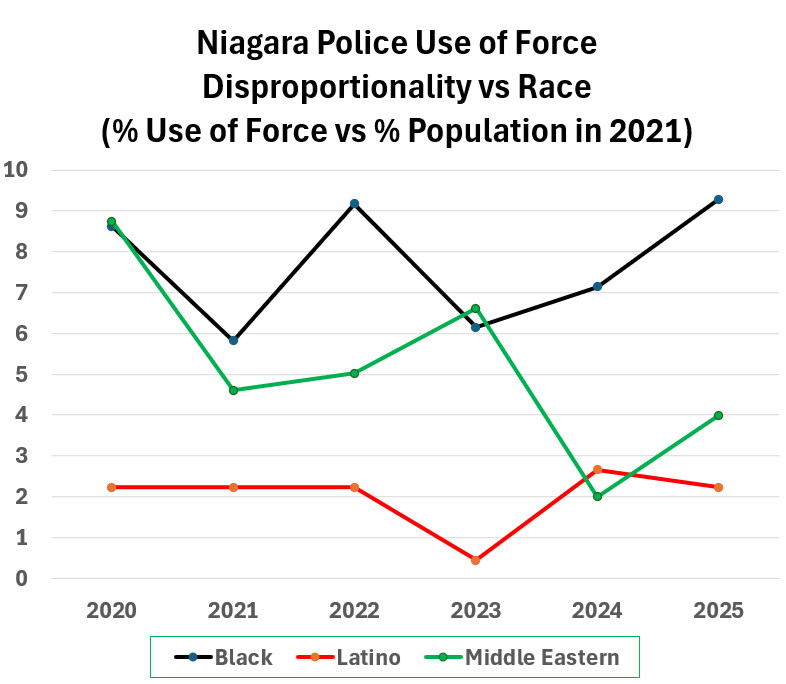
A graph that showcases Niagara police's disproportionate use-of-force, with Black communities seeing the highest levels compared to other marginalized communities.
(Niagara Region Anti-Racism Association)
Waziruddin discussed how Niagara Police were initially opposed and voted against police worn body cameras until there was a provincial mandate for them. They later reversed course after several police services across Ontario got body cameras without provincial legislation telling them to. Waziruddin said this proved the board didn’t require legislation and were simply opposed to the original motion.
Waziruddin argued despite other municipalities discussing systemic racism within their respective boards and police forces and their disproportionate use of force towards marginalized communities, Niagara Police remained silent.
“Hamilton, Peel, and Toronto, they've acknowledged that there's disproportionate use of force against Black people. In Toronto, they apologized for it. In Niagara, it's complete denial. There's no mention of it from any board member here, whereas the other police forces recognize it's a problem.”
“Many of us don't see the police as safe,” he told The Pointer.
For Doctor Menezes, Hamilton is part of a much larger pattern. She says it took several years of activist work in Hamilton, led by Black community leaders advocating for a racialized person on the Board before her appointment. The pressure from community leaders led the Board to look externally in 2023 and seek counsel from citizens and community members for almost six months before Menezes appointment in November 2023. Out of the seven members on the board, three are appointed by the provincial government, three are Hamilton municipal councillors, and one is the citizen appointee.
Even before her appointment to the board, controversy erupted surrounding the selection process. A week before her appointment was announced, then-citizen representative Fred Bennick resigned and was immediately reappointed as a provincial member, allowing him to remain on the Board.
“There was an integrity commissioner complaint saying that somebody from the selection committee leaked the details of who was being selected to Bennick, because importantly for him to have been provincially appointed, that would have been a several-week, if not months-long process.”
After speaking with all members of the board, the investigation by Hamilton's Integrity Commissioner was inconclusive and was unable to determine whether there was a leak or who the source of the leak may have been.
Menezes’ concerns about the use of taxpayer dollars are shared by critics of the Peel Regional Police force. For several years, the police budget in Peel has become the most contentious issue facing the regional government, with critics arguing the Peel Police Board has failed to provide meaningful financial oversight while routinely approving unprecedented spending increases. Since Chief Nishan Duraiappah took over the service in 2019, the force’s operating budget has skyrocketed from $445.8 million in 2020 to $837.3 million in 2026, an increase of more than 80 percent in six years, and is projected to surpass $1 billion next year. One of the most dramatic increases came last year, with the board approving a 23.3 percent hike ($144.1 million) in a single year followed by another increase of more than 14 percent ($75.4 million) for 2026. The 2025 increase alone exceeded the cumulative budget growth over the decade before Duraiappah became chief. Throughout the approvals, board members faced repeated criticism for accepting police budget requests with no questions or detailed financial analysis explaining how the additional funding would be spent.
Former Toronto Police Service Board chair from 2005 to 2015, Alok Mukherjee, described the lack of scrutiny as “an utter failure of governance.” He previously told The Pointer it was unprecedented for a police service to increase its budget by roughly 40 percent in two years, and that without meaningful examination by the governing board the public had no idea how its money was being spent, or if public safety was the actual driver of the massive spending increases.
The rapid, unsustainable growth of the Peel police budget has coincided with a dramatic increase in compensation for Peel’s senior police leadership. Chief Duraiappah’s salary has more than doubled during his first five years as chief, rising from $299,196 in 2020, to $604,449 in 2025, making him the highest-paid police chief in Canada. Other senior officers have also received substantial increases to their salary, with one deputy chief in Peel making about half-a-million dollars, which is more than any chief in the country, outside Peel.
Critics repeatedly questioned why the board approved these expenditures without requiring independent financial analysis, business plans or external audits demonstrating the need for such significant increases. Despite the dramatic salary increases seen across the force, Peel Police’s ability to solve crime appears to be diminishing.
Requests for proper financial oversight intensified after Mississauga Councillor Dipika Damerla (who is running for mayor) requested that the Police Service Board voluntarily allow the Region’s Auditor General to conduct a value-for-money review of police spending.
“If you can find any savings, we can put them on the frontline. If the Auditor General comes up with some recommendations and said you can save money here by doing this, and this, or [that] money isn’t being spent as efficiently as it could be, you are able to harvest some savings while those savings can now be used to the frontline,” Damerla previously told The Pointer. “Why wouldn’t all of us embrace that?” she asked when her motion was defeated in a move led by Brampton Mayor Patrick Brown who sits on the Peel Police Board and is a good friend of the Chief. Brown has refused to provide any scrutiny of the police budget.
Despite calls from residents, taxpayer groups and some councillors, the request for the audit was voted down by Brown and his council allies at the Region, maintaining Peel’s reliance and faith on internal oversight rather than opening its finances to independent scrutiny.
The mounting frustration over the board's handling of the police budget ultimately contributed to Mississauga Mayor Carolyn Parrish’s resignation from the Police Board in November 2024. Parrish voiced tepid opposition to the 23.3 percent budget increase, warning that continued budget hikes of that magnitude were unsustainable, expressing little confidence that the board would challenge the financial demands of police leadership. She ultimately supported the budget claiming she had no option, then later said stepping down from the board was necessary so she could speak freely about the issue, arguing the governance structure prevented meaningful oversight.
Even after her resignation and despite several requests from regional council to revisit police spending and authorize an independent audit, the Police Board led by Brown has refused to take a second look at the budget, reinforcing the criticism that it functions as a rubber stamp for police spending rather than an independent body responsible for protecting taxpayers.
In April 2025, an Ontario Superior Court ruling delivered one of the strongest rebukes of systemic racism within a Canadian police service. Justice Renu Mandhane concluded that racial profiling is “systemic and intractable” within Peel Regional Police after finding a Black driver had been unlawfully stopped, detained and searched because of his race.
The ruling examined a 2023 traffic stop involving Peel officer Vishal Gandhi, who arrested and handcuffed a Black man before confirming whether his driver’s licence was actually suspended. Justice Mandhane found the officer repeatedly violated the man's Charter rights, lacked basic knowledge of legal arrest powers, and relied on racial stereotypes that associated Black men with criminality. She ultimately concluded the man “was subjected to the arrest, detention and search because he was a Black man.”
While the rulings centred on the actions of one officer, Mandhane’s broader findings pointed to institutional failures that extended far beyond a single interaction.
In 2016, Peel police arrested a six-year-old girl in part due to her race, handcuffing her hands and ankles behind her back after being called to her school for acting out. The Human Rights Tribunal of Ontario later concluded the force used to detain the girl was “disproportionate to what was necessary to provide adequate control and amounts to clear overreaction in the circumstances.”
“While the officers had a legitimate duty to main the safety of the (young girl), others and themselves in circumstances where (her) behaviours were challenging and might have created a safety risk, did not give them license to treat the applicant in a way they would not have treated a White six-year-old in the same circumstances,” tribunal adjudicator Brenda Bowlby wrote in her decision in November 2019.
Mandhane noted that Peel Police’s history of anti-black racism, combined with evidence presented during the hearing, demonstrated a deeply rooted organizational problem despite years of public commitments to reform.
Data collected by the service has consistently shown Black residents experience use-of-force at rates almost three times higher than residents in other demographics, while making up less than 10 percent of the total population. In 2024, Peel Police recorded a 111 percent increase in use-of-force reports compared to 2023. Black individuals were involved in 28 percent of those incidents. Given the substantial increase to their use-of-force reports, Peel Regional Police later deflected the increase to Black community members in their report.
The report claimed according to analysis, “data clearly indicates that any population that has the following risk factors are most likely to have a Use of Force encounter: Youth (under 30) and male; Unstable home life; Addictions and mental health; Basic need challenges; Prior police arrests; Nature of crime - gun, gangs, drugs and/or organized crime.”
The report left members of the community shocked and perturbed as the police force used overly racist stereotypes, after voluntary interviews with 10,000 people taken into custody in 2024 stating Blacks have issues with addiction, unstable home life and gang involvement, requiring more than likely force used against them while providing no data or any other evidence provided that draws the line between the background of Black individuals is directly connected with the higher rates of force used against them
Police carding, also known as street checks, is a practice where officers stop, question and document individuals without any specific offense, suspicion or active investigation, which has routinely disproportionately affected Black residents at higher levels than white residents for decades.
Following the court ruling, Black community advocate David Bosveld told The Pointer the decision simply confirmed what residents have experienced for decades.
“I’m not surprised. This is the history of police, and it continues to this day,” he said.
“If it’s not racial profiling, it's carding. If it’s not carding, it's excessive use-of-force. It’s ongoing. It’s deeply systemic.”
While Peel Police did not comment on the specific case because it remained within the appeal period, they pointed to work undertaken through its 2020 agreement with the Ontario Human Rights Commission (OHRC), including race-based data collection, mandatory human rights training and the creation of an Anti-Racism Advisory Committee.
Community advocates argue that many of those commitments have not produced measurable results. Justice Mandhane’s ruling came nearly five years after Peel signed the agreement with the OHRC, indicating that despite Peel’s commitment, it is largely failing to address the core mission of the human rights project. In 2023, Peel Police released a list of recommendations to improve the service, but many community members say tangible change has yet to occur.
An assessment conducted by the Canadian Centre for Diversity and Inclusion released in 2018, before Chief Nishan Duraiappah assumed leadership, uncovered widespread discrimination within the organization and described a culture where senior officers appeared unwilling to acknowledge or address systemic problems. The assessment showed almost a third of leaders within the force in 2017-18 “indicated their belief that these systemic oppressions do not exist within PRP.” Years later, several critics argue meaningful institutional change remains elusive.
The disconnect between promises and outcomes closely mirrors concerns Menezes says she experienced in Hamilton.
Similar to Menezes appointment, Peel’s Police Service Board saw years of advocacy and pushback from Black community members for representation on the Board.
In 2023, the board unanimously voted to appoint Len Carby, the first Black man to be given the role.
His appointment did not come as win for all as Brampton Mayor Patrick Brown in messages sent to his Mayor’s Black Advisory Group, described the choice between Carby and the incumbent Ahmad Attia as “whether we should fire the first muslim rep to appoint a Black candidate,” meant as an attempt to mislead the groups understanding of the situation and influence support for Attia.
Since Carby’s appointment, like Menezes, little change has come from the board's decision making or their handling of anti-Black racism.
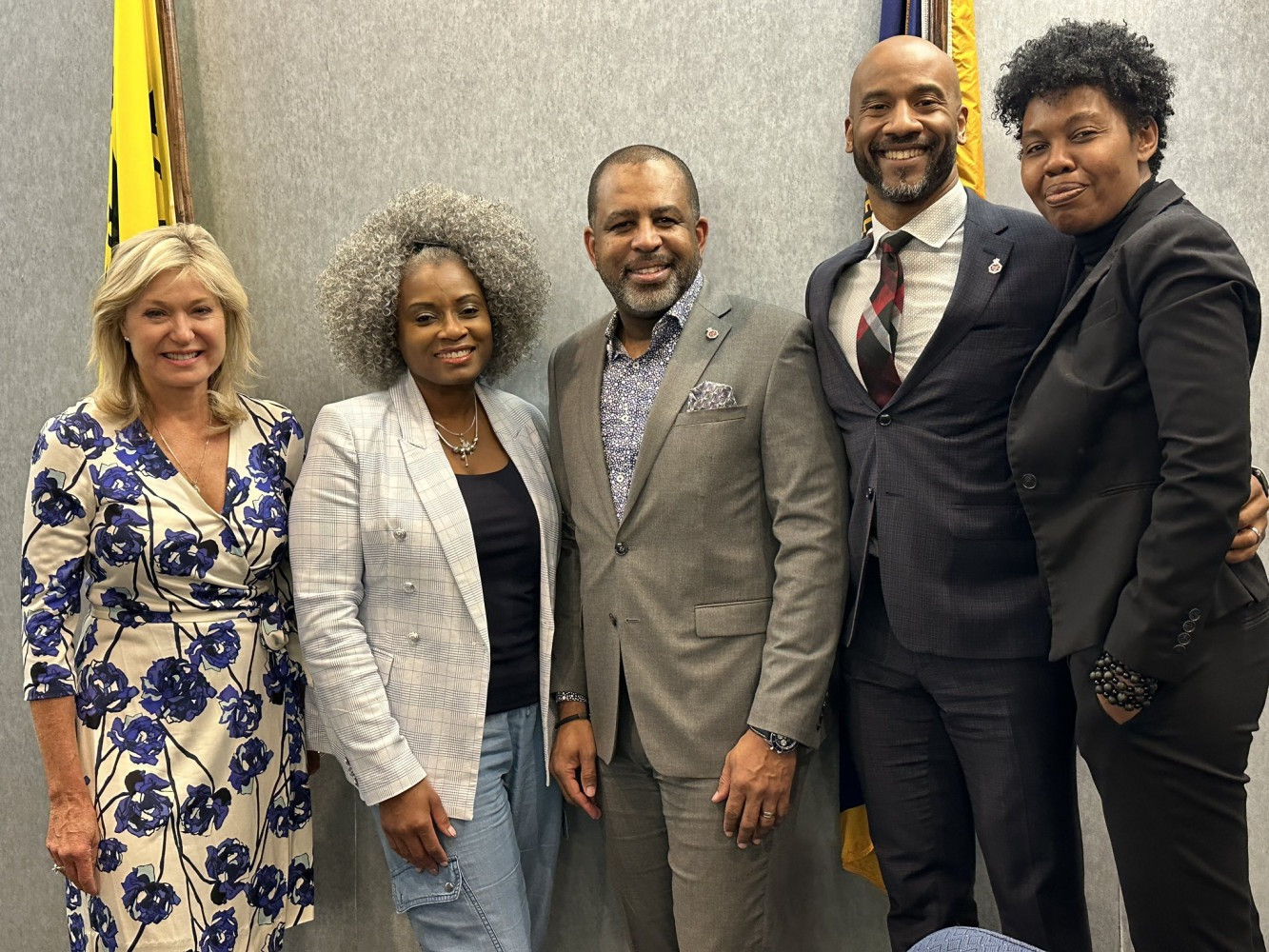
Len Carby (middle) was appointed as the first Black man to be on Peel’s Police service board. While the community first celebrated this historic win for the Black community, Carby’s appointment has led to little change on the board.
(Bonnie Crombie/X)
Since the beginning of Doctor Menezes’ appointment, she said the “approach to me is ‘how dare you be selected by this different process, you're not one of us.’”
“That outsider belief I think has really defined my term on the board. Because I've [been] selected differently, I was treated as an outsider and somebody who is somehow a threat to their established principles and practices of being the higher white upper class who controls the police.”
Although public attention often focuses on the actions of frontline officers, Menezes had deep rooted concerns that the board often did not challenge police leaders on any of their reports, instead celebrating their accomplishments and following the direction of their reports along with claims they were tackling harm towards marginalized communities, sidelining any negative behaviour that activists and community leaders for years had been claiming was systematically harming them by simply looking away.
“My job here is not to be a cheerleader,” she said. “Our job is governance. If our only job is to cheerlead, then it's a misuse of public funds because they could be much more effectively used.”
One example involved her request in January 2026 for an independent review examining Hamilton Police's internal culture and accountability practices. Board members rejected the proposal, arguing that commissioning an outside review would signal a lack of confidence within the police service.
She experienced similar resistance after introducing a motion in May 2025 to examine Charter right violations by officers. Rather than discussing institutional patterns, officers attended a following meeting to explain the pressures individual frontline officers face, where one officer broke down and stressed she has to make ‘life or death decisions on the spot’.
“I don't care what happens at an individual level, that's not the point of this board,” Menezes said. “Of course I care, but I have to do my role as a board member, which is I'm concerned about what's happening at the policing level, at the institutional level.”
“What I need to understand is what you are doing at a systems level, when you're seeing systematic, racial differentials in attainment. That is an indication that we are failing as a system.”
One of Menezes’ most significant concerns centred on how Hamilton Police reports racial disparities, criticizing proposals to change the benchmark population used in the use-of-force reporting.
Rather than comparing police interactions within Hamilton’s general population, she said several members of the board supported changing the comparison to only look at the communities Hamilton Police frequently interacts with, essentially skewing the numbers of interactions Black residents have with police ballooning the number higher than in actuality.
“When you're making that assumption-changing the benchmark population-what you're assuming is that somehow inherently, Black people are more prone to crime,” she expressed with extreme and heavy frustration over the board's proposal.
“I'm gonna disagree fundamentally with that assumption. Actually, the province fundamentally disagrees with that assumption.”
Lacking the expertise and understanding to deal with issues faced by Black communities has also been levelled at Peel Police.
The push for a dedicated anti-racism Black advisory committee in Peel followed years of advocacy by Black community leaders. Dave Bosveld, one of Peel's most outspoken Black community advocates spent years delegating before the Peel Police board, meeting with senior municipal officials and police administrators, urging the board to establish a permanent advisory committee focused exclusively on anti-Black racism. As the board debated governance reforms throughout 2021, Boseveld and other advocates argued that a dedicated body was necessary because Black residents had experienced uniquely harmful interactions with Peel Police, including disproportionate carding, racial profiling, excessive use of force and a long history of mistrust documented over years of independent reviews.
When the proposal formally came before the board in 2021, Bosveld and other community members made clear they were not asking for a general diversity initiative. They sought an advisory committee specifically mandated to address anti-Black racism, educate board members on the lived experiences of Black residents, review policies through that lens and ensure those most affected by discriminatory policing have a direct role in shaping police governance.
The request reflected the reality that Peel’s Black community remained entirely absent from the seven-member police service board, despite Black residents being disproportionately affected by policing practices.
“It’s clear to me that they’re intentionally choosing to not engage with critical voices in the community,” Bosveld said at the time. “I don’t see how any commitment to this work can be taken as serious.”
“Black people are still dying and or being harmed. To get a handle on that, it would make sense to include Black people… this is not a radical thing we’ve been asking for.”
The board rejected the proposal, instead accepting the recommendation of its executive director Robert Serpe, who advised there was no need for a committee devoted specifically to anti-Black racism. Serpe recommended establishing a broader Diversity and Inclusion advisory committee, despite having no background in policing, equity and inclusion, or expertise in the relationship between Black communities and law enforcement. In doing so, the board ignored the advice of its own retained expert, University of Toronto sociology professor Akwasi Owusu-Bempah, who appeared before the board in September 2021 and explicitly supported the creation of a dedicated anti-Black advisory body.
Owusu-Bempah warned that when anti-Black racism is subsumed within broad diversity initiatives, the specific concerns, lived experiences and systemic barriers facing Black communities are often overshadowed by the competing priorities of other equity-seeking groups. He told board members in September 2021 that a dedicated committee would ensure those issues remained visible rather than being diluted under a generalized diversity mandate.
“When diversity committees, writ-large, are struck, the views, interests, concerns and issues related to various groups that come under the umbrella of diversity, often get lost. When the issues facing Black people are subsumed under diversity, which includes sexual orientation, race and ethnicity, because those two things are distinct, then those concerns do often get lost.”
As Hamilton's police board also struck down a very similar motion brought forward, in 2025, Hamilton police reported the lowest use-of-force numbers in six years, with a sharp decline in both incidents and people involved. Police recorded 198,356 interactions with the public. Of those, 203 resulted in a use-of-force report involving an individual, down 28 percent from 282 incidents in 2024.
Menezes said altering the benchmark effectively erases systemic racism from statistical analysis.
“This is an erasure of the experiences, the lived realities of racialized people in Hamilton. The failure of this board to recognize that, indeed, the failure of this board to fulfill its duty in governance… boards need to rely not just on information provided to them by the chief of police, they should be also seeking expert outside opinions.”
She discussed how board members often approve lengthy reports (occasionally distributed the night before board meetings and can exceed several hundred pages) without meaningful discussion.
Despite the volume of material, she mentioned discussions regularly concluded with members stating they had “no concerns.”
While the board may not be worried about systemic racism within Hamilton's police, race-motivationed detentions from officers are commonly reported. In 2025, an Ontario judge dismissed a firearm and drug-related arrest, ruling the man was racially profiled by Hamilton police during a 2022 traffic stop and violated his Charter rights.
The officers stopped Mustafa Elawad on July 5, 2022, testifying that it was because the plates on his rental Volkswagen were obstructed. According to the court, during the stop, officers asked for Elawad’s car key, prompting him to run away, which resulted in later towing and searching the vehicle where officers found drugs and a loaded handgun. Officers later arrested Elawad.
Elawad asked the court to exclude the evidence taken during the search of the vehicle, claiming that he was stopped because he was a Black man and police did not properly inform him of the reason for the stop or subsequent investigation, adding he was also not provided his right to counsel.
Justice Michael Bordin threw out the evidence in early March 2025, which he found was unlawfully obtained, and said admitting it would bring the administration of justice into disrepute.
“The justice system must dissociate itself from conscious racial profiling and cumulative breaches of Charter rights. Society’s interest in the adjudication on the merits of this case must yield to the important long-term interests served by excluding the evidence,” Bordin wrote in his decision.
“I do not accept that the officers observed the VW’s front plates to be obstructed and have very serious doubts that the officers observed the VW’s rear plates at all, or that they observed them to be obstructed when the VW drove past the cruiser,” he continued.
He concluded that regardless of whether the officers saw the plates, he was persuaded that the officers engaged in racial profiling and stopped Elawad because of the colour of his skin.
Before her appointment to the board, Menezes openly shared she had little idea what a police service board was and what it entailed being a member.
“To be honest, I didn’t know what a police service board was until 30 minutes before my interview.”
That lack of public understanding, she argues, allows oversight failures to continue largely unnoticed, with the discrimination towards herself not being isolated.
Hamilton Police faced repeated criticism over its relationship with racialized and marginalized communities, particularly following the force’s response to Hamilton’s 2019 Pride celebration.
During Pride month that year, officers made numerous arrests after a violent clash erupted outside the city’s Pride event between far-right demonstrators, Pride participants and counterprotesters. Community members later accused Hamilton Police of failing to adequately protect LGBTQ+ attendees and being slow to intervene once the violence started, which saw several arrests of Pride event attendees. The incident sparked months of public criticism and further damaged trust between police and many members of Hamilton's LGBTQ+ community.
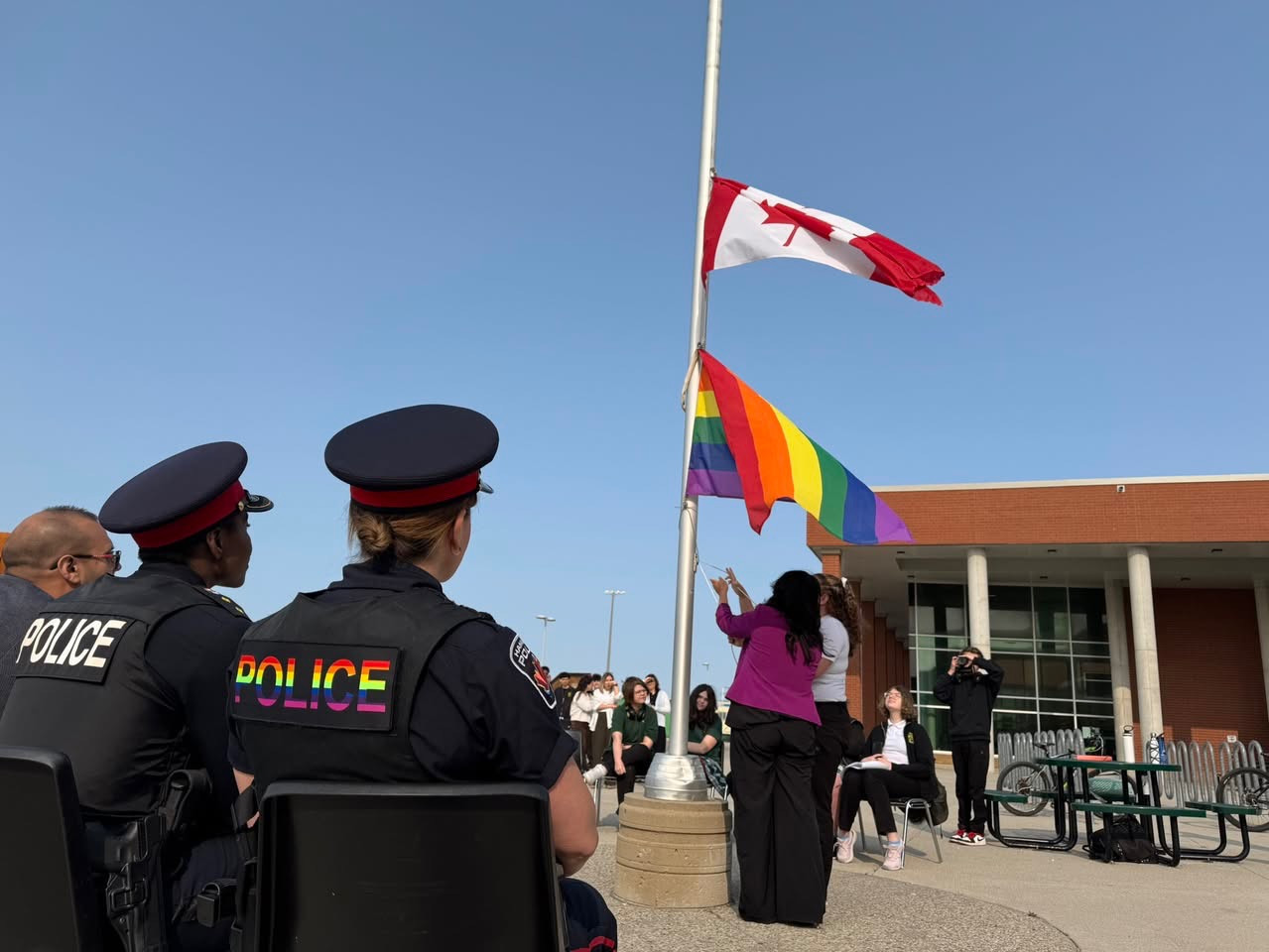
Hamilton Police clashed with protestors and those in attendance at Hamilton’s 2019 Pride celebration, which saw heavy backlash for the arrests of event attendees and the failure to swiftly protect LGBTQ+ residents and supporters.
(Hamilton Police/Facebook)
Hamilton police chief Eric Girt later released a statement apologizing for the disturbing police handling of the violent clash and promised to address the issues exposed by the 2019 incident. Hamilton Police Service and the Board later commissioned an independent review from Scott Bergman of Cooper, Sandler, Schime & Bergman LLP, that compiled the findings into the Bergman report. Presented in June 2020, the police force accepted all 38 recommendations from the report, focused on accountability, operational planning, community engagement, police training and culture reform, and future Pride event safety measures. Over half of the recommendations have since been implemented.
Hamilton Police also faced scrutiny over allegations of extremism within its own ranks. In 2022, a Hamilton Police officer was investigated after social media posts were exposed dating back to 2020 of him sharing content from extremist groups like Diagolon and Second Sons, promoting anti-immigration messages, ‘white genocide,’ and calling for a government coup. Following the investigation, he was suspended but later reassigned to a non-public-facing role and currently remains as an officer on Hamilton's police force.
Doctor Menezes believes these controversies reinforce why police boards can not simply accept assurances from police leadership that problems are being addressed and further called on Ontario's Solicitor General to dissolve the board in her letter of resignation.
“The role and function of policing is dependent on its ability to maintain and secure public trust,” she said.
“I think what differentiates Hamilton from these other jurisdictions is the complete silence from all municipal leadership about giving a crap about falling trust in policing. I think there's a complete silence from the entire police service board about falling levels of trust in policing.”
Doctor Menezes says that while her experience with the Hamilton Police Board has been challenging, and at times disturbing, ultimately it has given her immense opportunity. It also forced her to take a difficult look into the mirror.
“I would say that I've learned a lot in this role on this board. There are communities and community groups I never would have been working with. I've learned so much about policing. I am very proud of the motion that I put together about charter rights. I'm very proud of the motion I put together about an independent civilian review. I am still very ashamed of the behaviour that I endorsed and the example that I set for young people in Hamilton–I think we should all be. As a board, we should be ashamed of the example that we're setting. I think as Hamiltonians we should be ashamed of the example that we are setting.”
Email: [email protected]
At a time when vital public information is needed by everyone, The Pointer has taken down our paywall on all stories to ensure every resident of Brampton, Mississauga and Niagara has access to the facts. For those who are able, we encourage you to consider a subscription. This will help us report on important public interest issues the community needs to know about now more than ever. You can register for a 30-day free trial HERE. Thereafter, The Pointer will charge $10 a month and you can cancel any time right on the website. Thank you
Submit a correction about this story

