
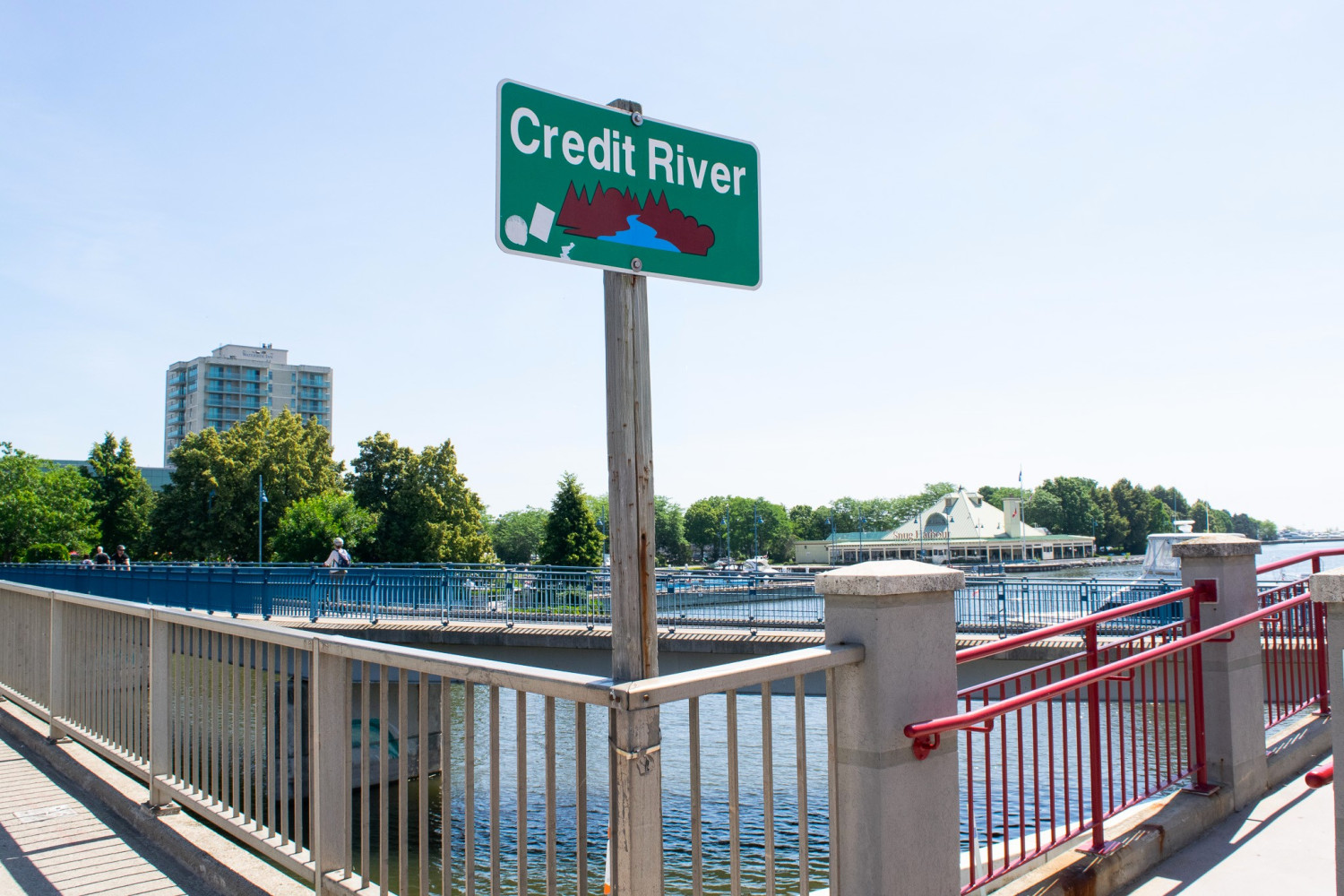
In Doug Ford’s Ontario, over two thousand species in Credit River are fighting to stay afloat
“It's hard to be mad when you feel like you're part of something big.”
That’s the lesson a young Mabel Tanaka’s grandmother imparts as the two sit together in a quiet forest glade after the six-year-old gets in trouble for trying to free pets from a confined artificial habitat in the movie Hoppers.
Once Mabel follows her grandmother’s advice to stay “still”, “watch and listen”, she observes the sacred waters, the towering trees and the varied species including beavers that call the glade home.
Nature, Mabel realized, was never a place to be conquered but to belong to, a home for all life to find peace and to remind human beings of their responsibility to care for the world around them.
Years later, after her grandmother is gone, Mabel returns to the same glade only to discover that Beaverton town’s Mayor Jerry Generazzo planned to drive a beltway through it, claiming the wildlife had already disappeared.
Refusing to believe it, the young woman embarks on a remarkable journey that leads her to inhabit a robotic beaver that bridges the gap between human and animal communication—leading her to discover the beavers were scared out of the glade by fake trees that emit high-frequency noises intolerable to animals, installed by Mayor Generazzo so he could develop the land as he pleased to win voter support.

Released in March, Daniel Chong’s movie Hoppers follows Mabel Tanaka, an animal-loving college student who transfers her mind into a robotic beaver to communicate with animals and save their habitat from destruction due to a beltway project pushed by a local politician.
(Pixar)
As she traverses the world of different species, she learns beavers were responsible for keeping their waters clean and shielding the town from flooding by constructing dams and lodges that slow the flow of water and spread it across the floodplain, transforming the landscape into a natural sponge.
Hoppers may be fiction but it mirrors the massive environmental damage unfolding across Ontario today.
The Credit River, much like the glade, has been under threat from multiple infrastructure projects including the Erin Wastewater Treatment Facility (WWTF), a blasting quarry in the Town of Caledon and our own version of the beltway: Highway 413.
And in the process, unchecked development might once again have unleashed a war against the natural world…
In 2023, more than a decade after the Town of Erin identified the West Credit River (subwatershed of the Credit River) as a highly sensitive watercourse, the revival of the highly contentious Erin Water and Wastewater Treatment Plant (WWTF) resulted in the destruction of a beaver dam that had been keeping the water cool, clean and healthy since its inception. A multigenerational family of beavers who had been calling the area home for decades — gone — to pave the way for future housing development.
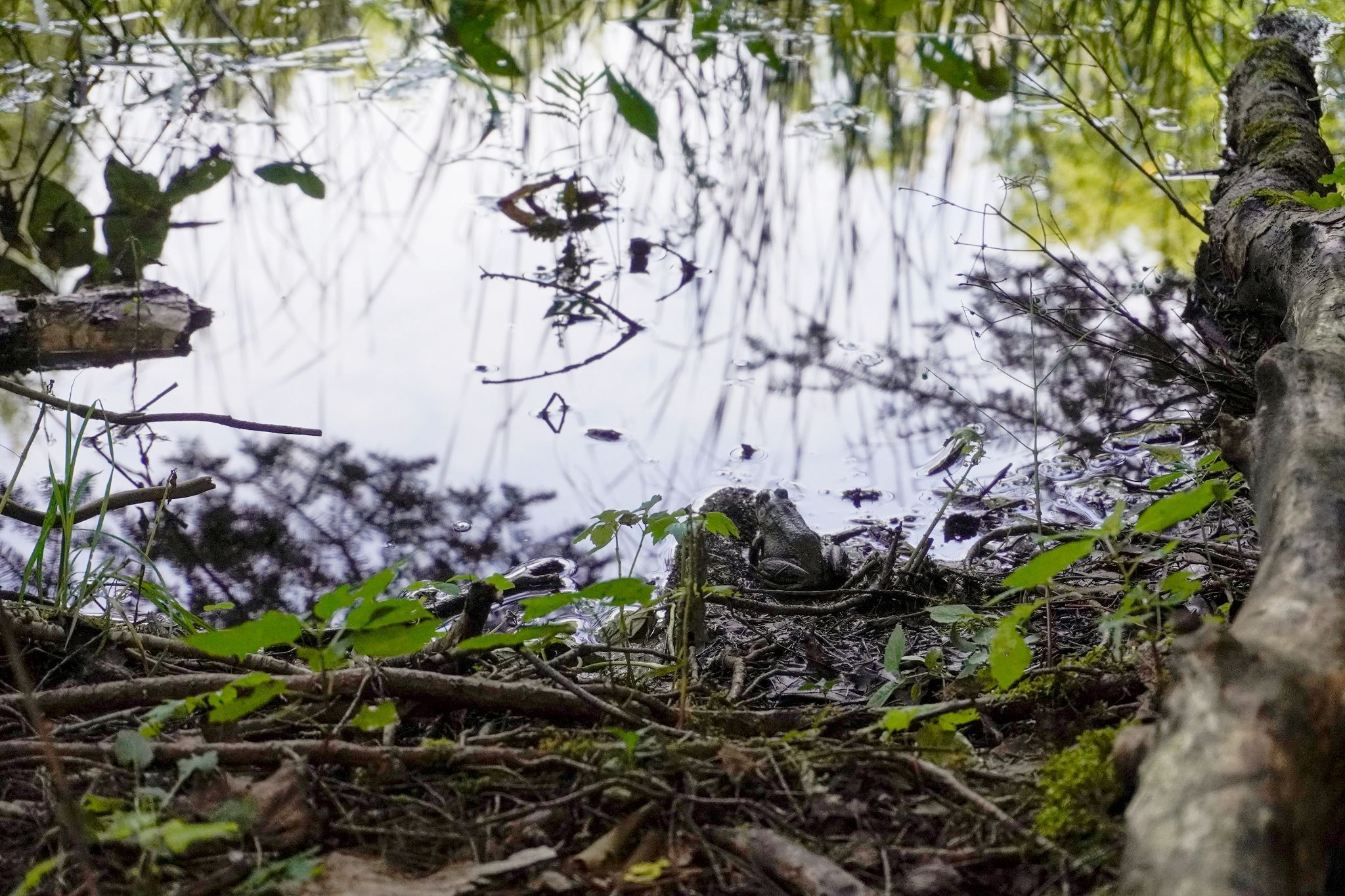
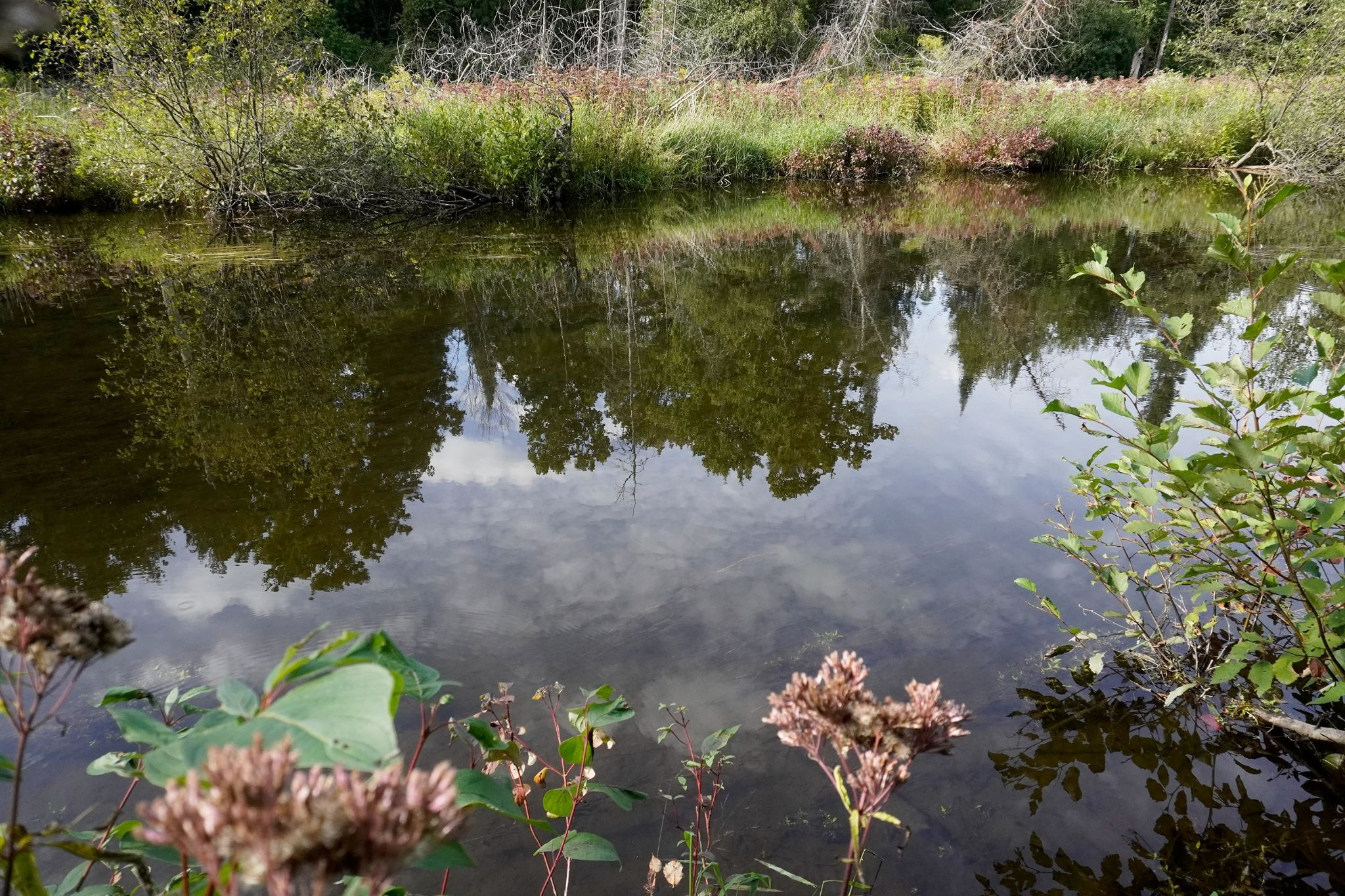
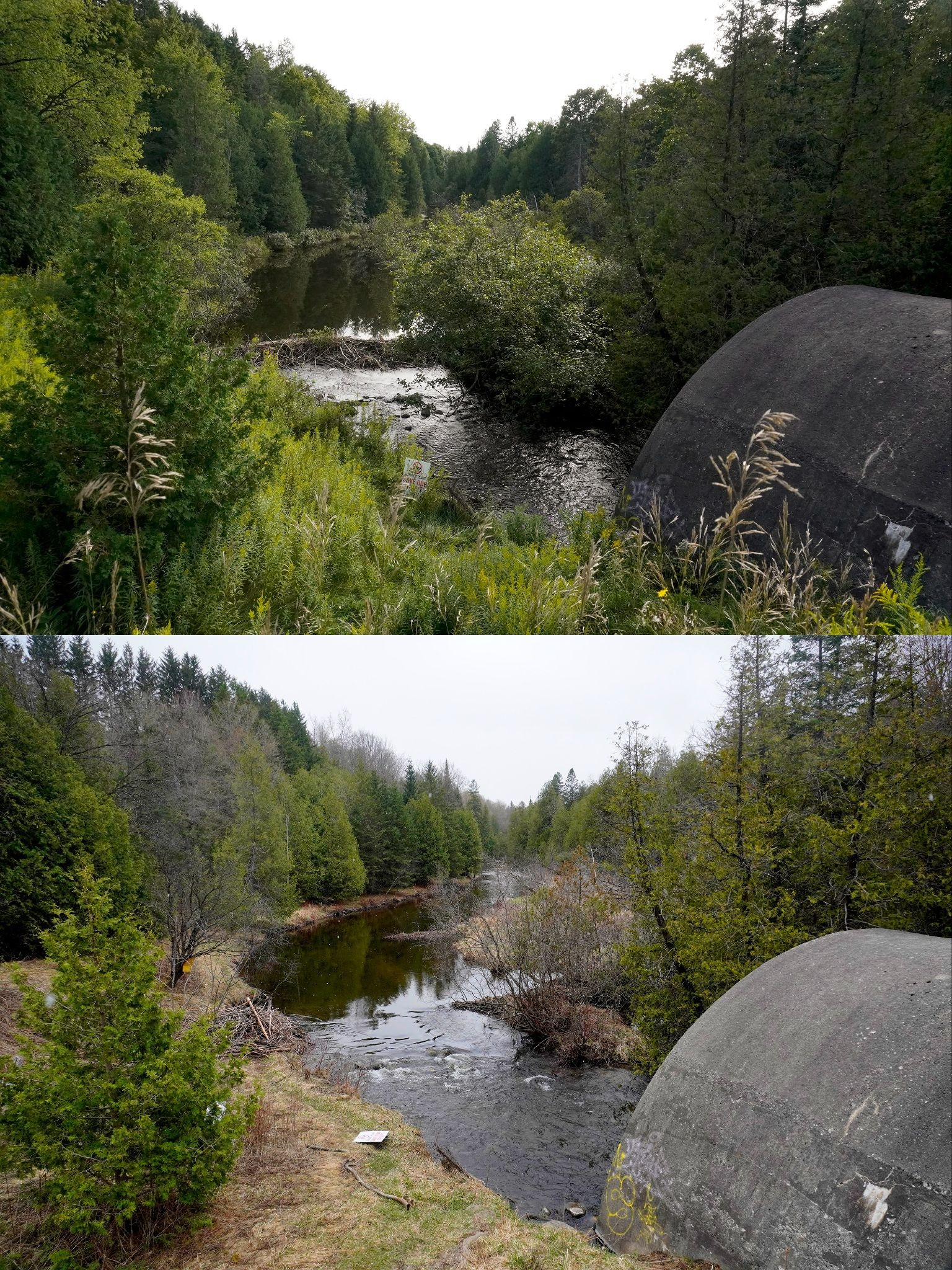
Before (September 2022; top) and after (May 2023; bottom) the removal of the beaver dam on the West Credit River at the border of the town of Erin and Caledon.
(Alexis Wright/The Pointer)
“Continual removal of beavers from an entire section of river may have some localized impacts as beavers are an integral part of ecosystem health and many species benefit from their presence. River channel morphology, sediment transfer and other geomorphic aspects of the river may also be altered from their permanent removal,” Steve Noakes with the Coalition of the West Credit River told The Pointer.
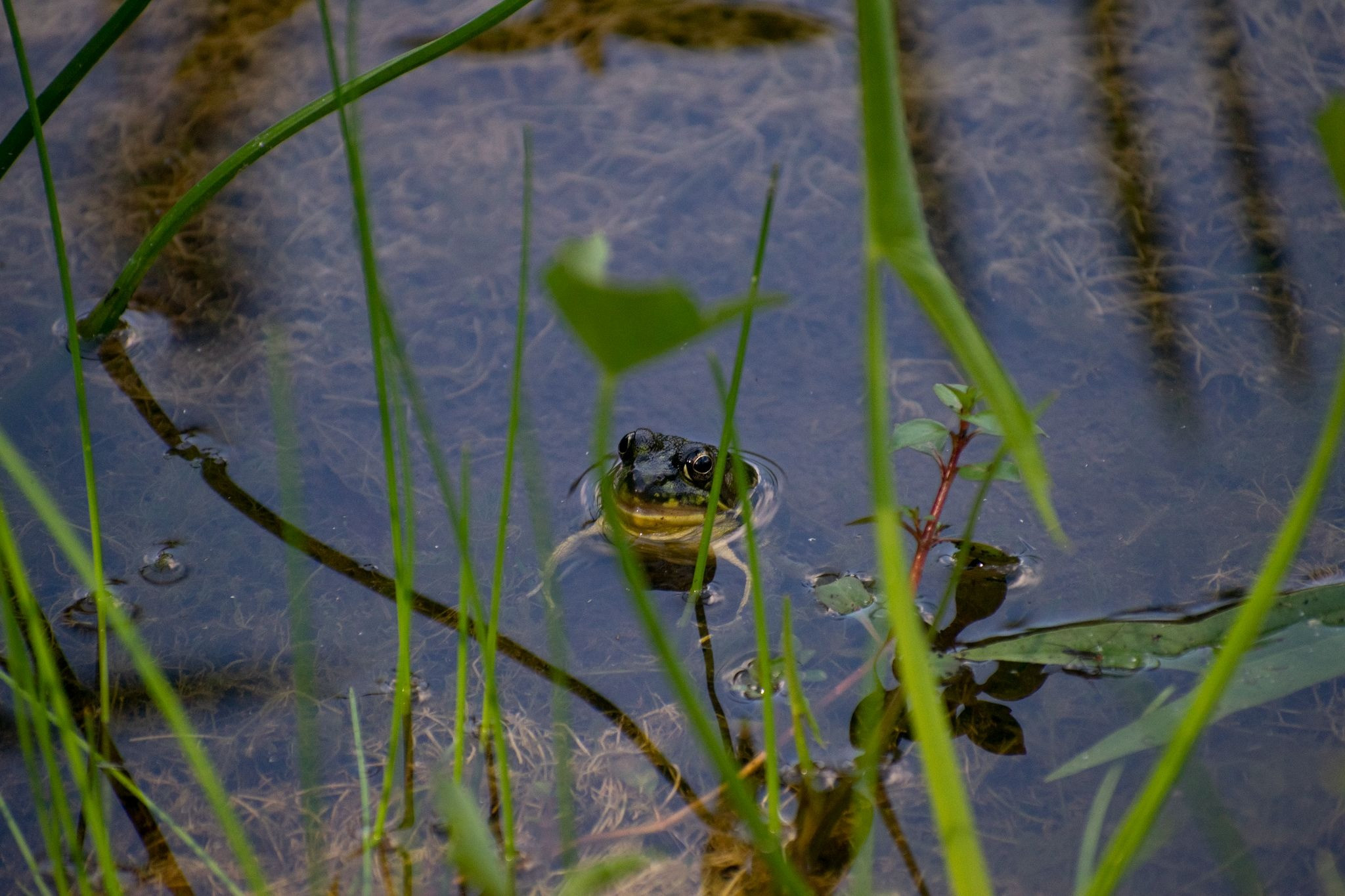
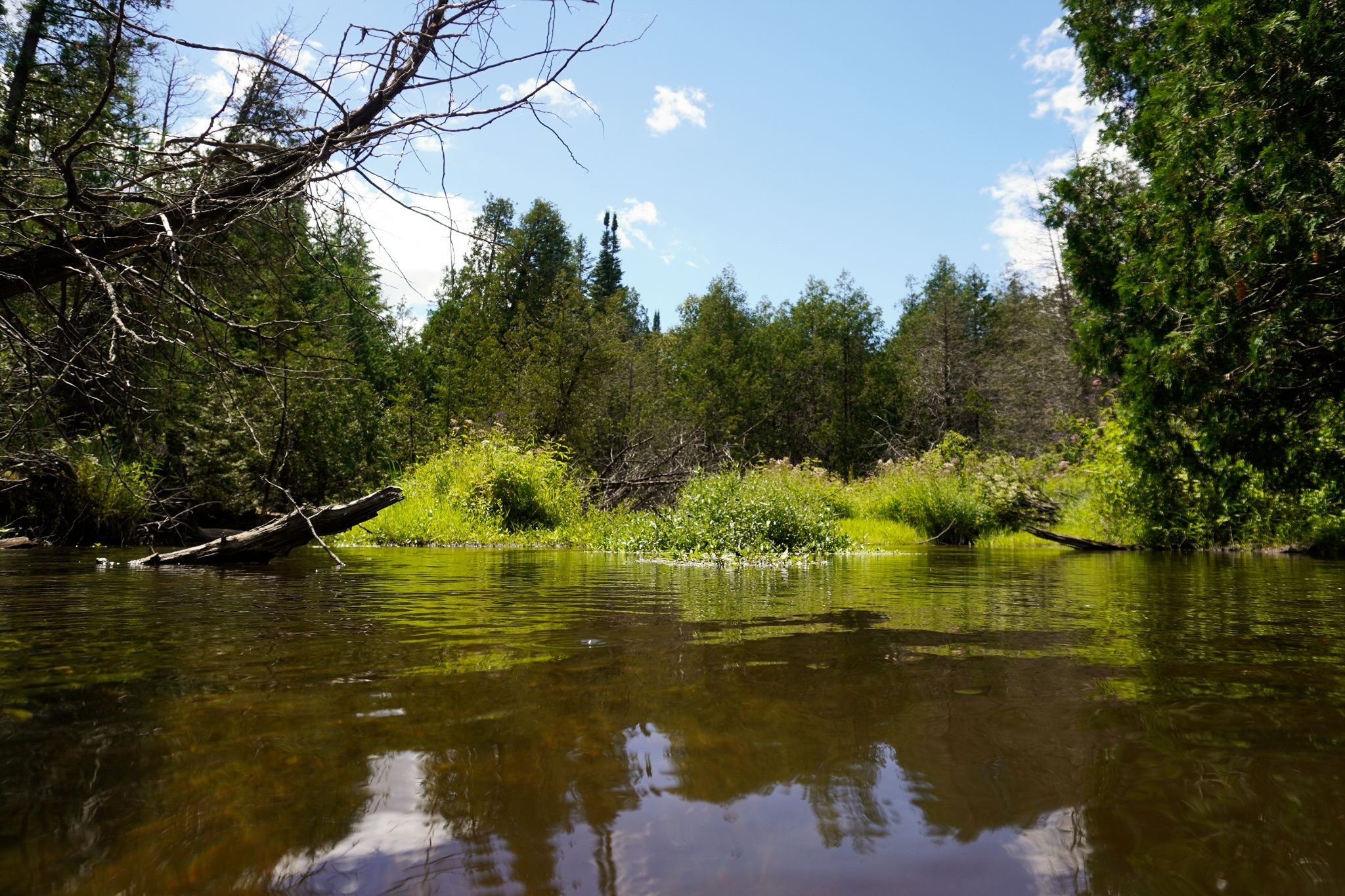
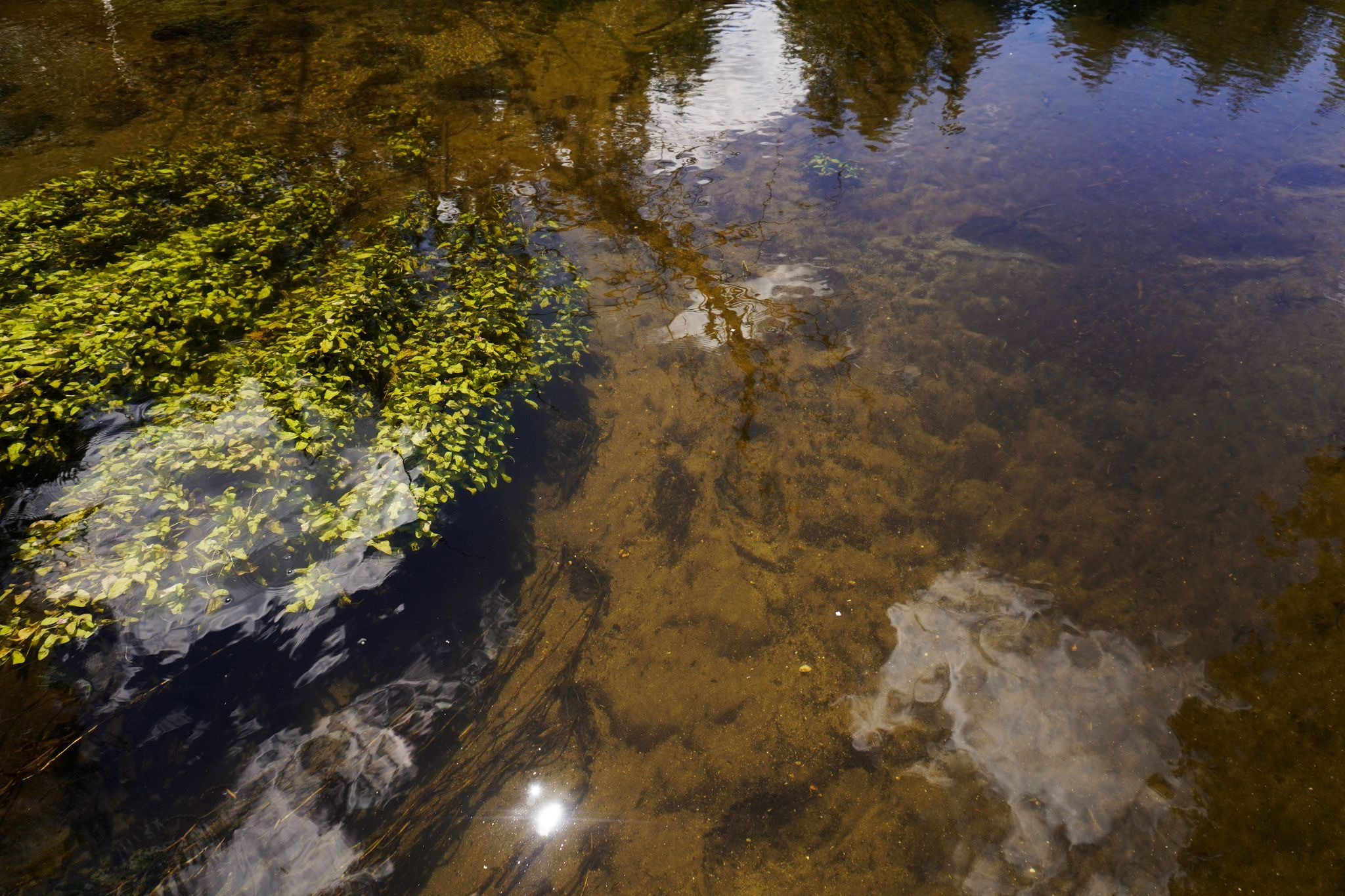
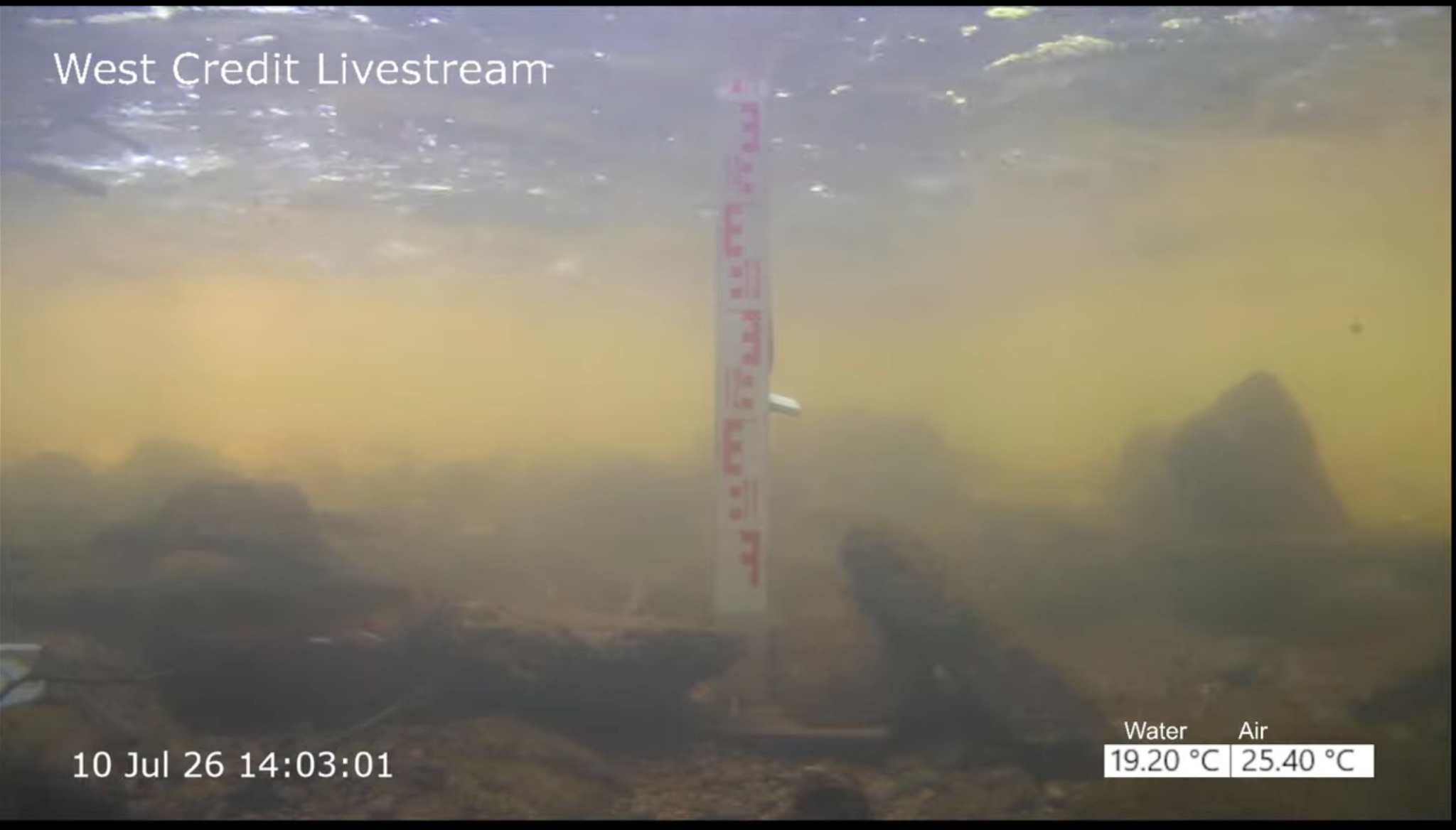
The Coalition for the West Credit River installed an underwater camera in Caledon’s West Credit River between Belfountain and the Village of Erin — “one of the few remaining self-sustaining Brook Trout populations in southern Ontario”. As seen in the video, while the Credit River is comparatively cleaner in the north, it is still not as clear as it once was in the past.
(TOP three: Alexis Wright/The Pointer, BOTTOM: Brook Trout of the West Credit River/YouTube)
When the dam was intact, the tributary of the West Credit was approximately six to seven metres wide with a steady stream. Since its removal, the water current is stronger, making it inhospitable for frogs and salamanders. Once the WWTF begins operating, the quality of the pristine coldwater river will be severely impacted by temperature spikes and higher chemical concentrations from the dumping of 7.2 million litres a day of treated effluent, impacting significant Brook trout populations along with many other species of flora and fauna as a result.
The West Credit River is one of the nine tributaries of the 1,500 km long Credit River that originates North of Peel, crossing through Caledon and into Mississauga before meeting the effusive Lake Ontario.
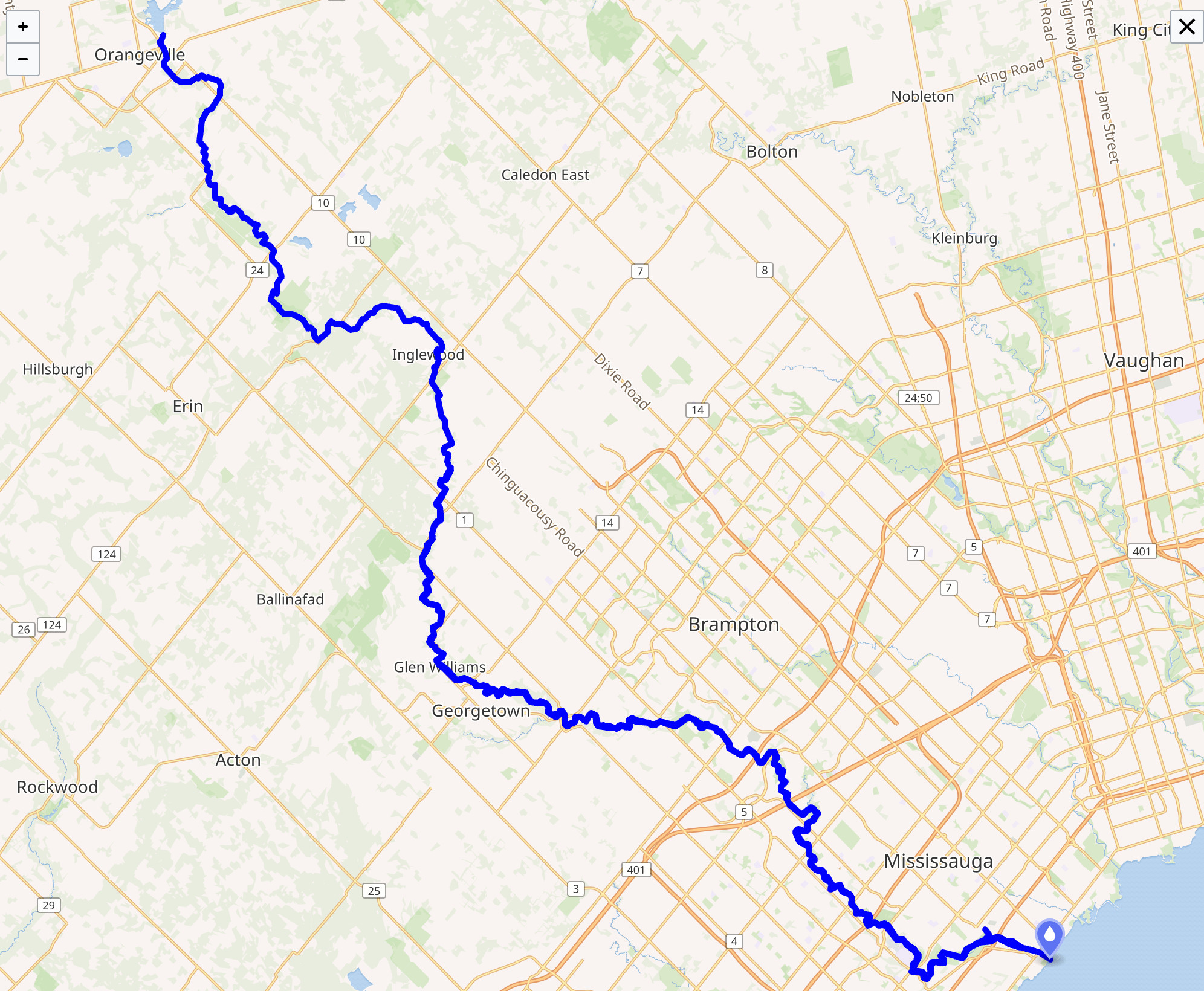
The expansive Credit River is almost 90 kilometres long with a watershed that encompasses over 1,000 square kilometres.
(Google Maps)
In recent years, the Credit River and its tributaries have repeatedly been placed under flood watches as climate change fuels more intense rainstorms, rapid snowmelt and higher water levels even in low-level areas as seen this March as well.
But the runoff rushing into the Credit River carries not just water; it washes thousands of tonnes of road salt, a toxic substance under the Canadian Environmental Protection Act. Peel region alone applies between 24,000 and 28,000 tonnes of “carefully managed” road salt each winter to maintain more than 1,600 kilometres of regional roads—an issue that can worsen with the controversial Highway 413’s construction through not only more road salt being used but also construction debris and vehicle pollution.
Scientists estimate 40 to 70 percent of the chloride from road salt eventually reaches freshwater systems, threatening municipal drinking water sources and critical habitat for species at risk across Peel.
A 2021 Toronto and Region Conservation Authority (TRCA) report found medium chloride concentrations had climbed above the chronic effects threshold for aquatic life. The number of monitoring stations exceeding that guideline increased drastically from four to 12 stations between 1991 and 1995 to 11 of 12 between 2016 and 2020.
Canadian water quality guidelines warn long-term chloride levels above 120 milligrams per litre (mg/L) can harm aquatic life while concentrations around 640 mg/L can cause acute toxicity, forcing freshwater organisms to survive in conditions similar to seawater than the ecosystems they evolved to inhabit.
Between late November 2025 and early March, one of the Credit River’s tributaries, Fletcher’s Creek, recorded unhealthy chloride levels while the Credit River at Mississauga Golf and Country Club, Huttonville Creek and Levi Creek at Derry Road have fluctuated between at-risk and unhealthy conditions.
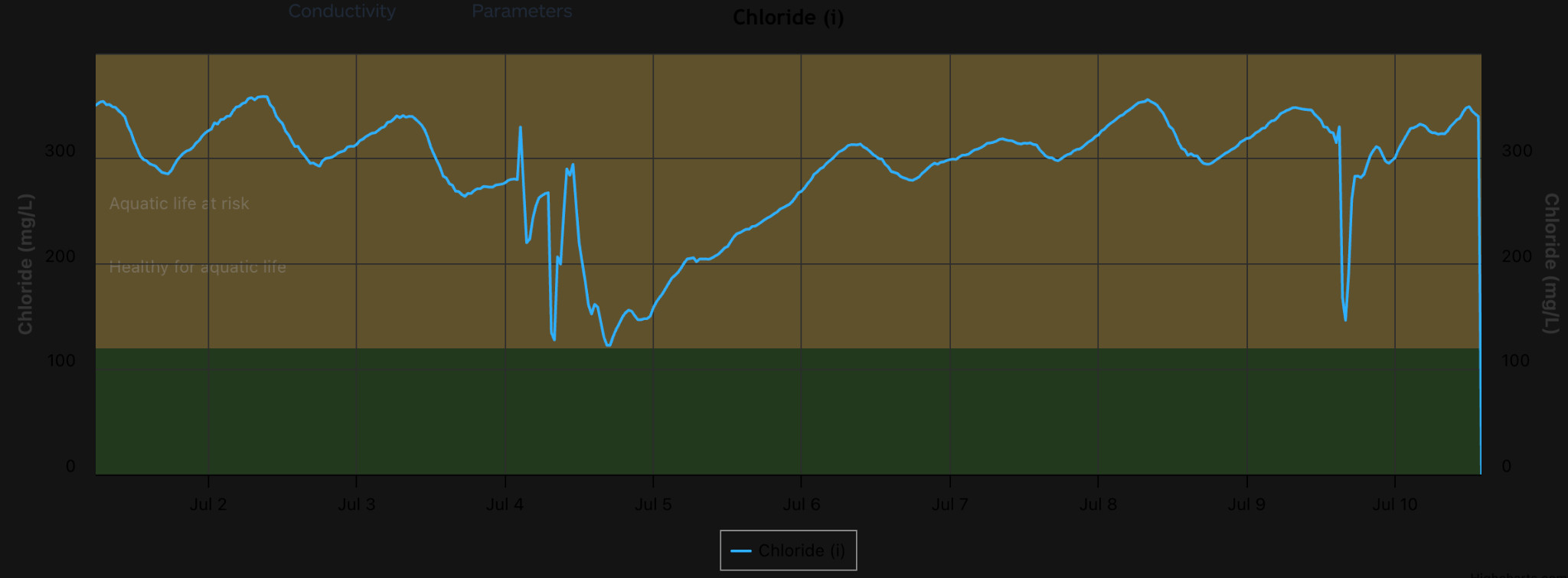
Fletchers Creek Real-Time Water Quality Station shows elevated chloride levels as of July 10.
(Credit Valley Conservation)
Only the Credit River at Old Derry Road has remained below the unhealthy threshold, even though it has regularly registered at-risk chloride levels.
The conditions have persisted beyond winter. Even with summer now in full swing, at least one water quality station in Caledon, Brampton and Mississauga each continue to detect elevated chloride levels above 300 mg/L.
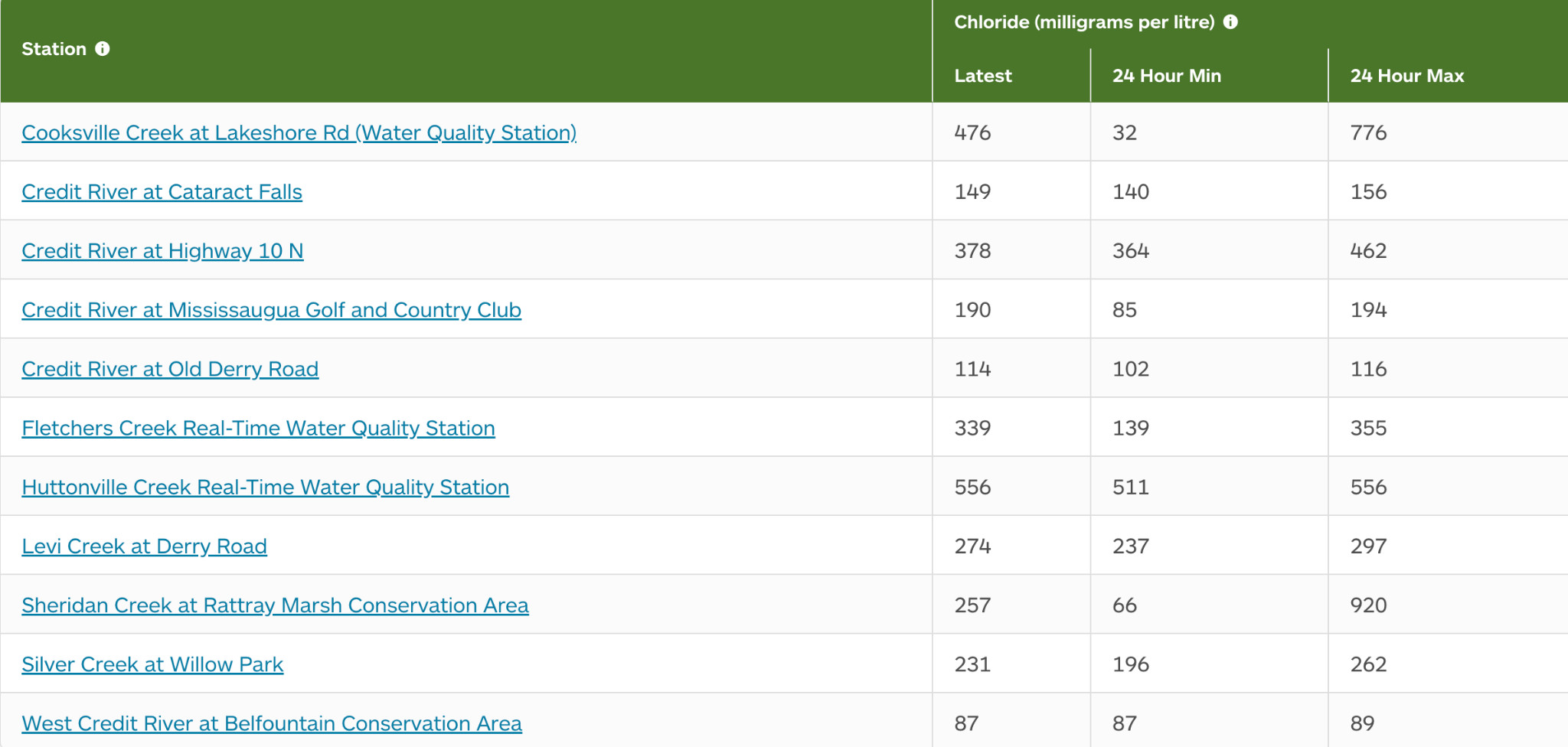
Only two water quality monitoring stations in the Region of Peel have safe levels of chloride in the Credit River.
Chloride is just one part of a lethal puzzle.
In the beautiful, green Caledon where the Credit River’s east and west tributaries meet at the Forks of the Credit Provincial Park, one imminent peril is hanging around adjacent to the west boundary of the park through a proposed 800-acre blasting quarry.
While residents await a decision on the blasting quarry and beginning of construction of Highway 413, under current conditions, the untarnished waters of the Credit River in Caledon still remain translucent and offer a meditative abode in the lap of nature.
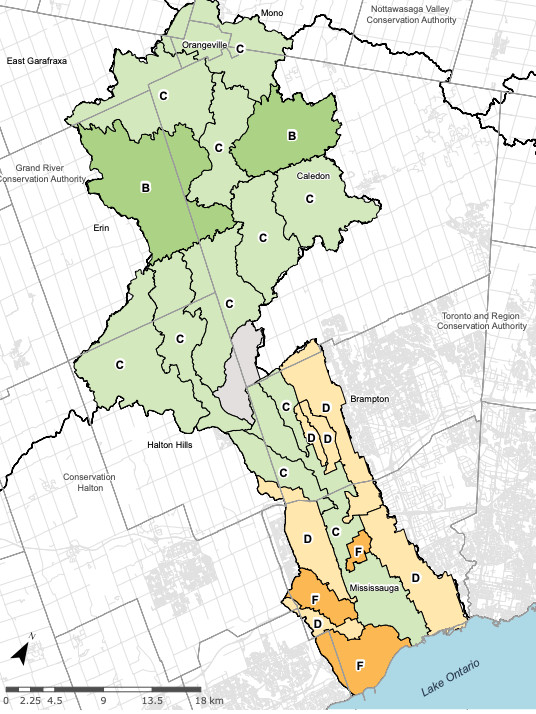
“Water quality in rural streams, such as those in the middle and upper watershed, is better than in urban streams such as those in the lower watershed,” a 2023 Credit Valley Conservation report noted. Most of the Credit River watershed secured a fair or poor rating.
(Credit Valley Conservation)
But towards Mississauga, the environment looks robbed of its true nature. Hot, dry spring and summer temperatures coupled with high phosphorus runoff have given birth to algae blooms that have turned the water opaque, giving it a blue-green colour — which has also led to many residents complaining it to be unsuitable for swimming and recreation.
The Pointer team recently went to the Port Credit bridge over the river, sandwiched between the Lakeview Wastewater Treatment Plant (former G.E. Booth Wastewater Treatment Plant) and Clarkson Wastewater Treatment Plant, and only spotted seagulls, swallows and mallard ducks with rare signs of any aquatic life.
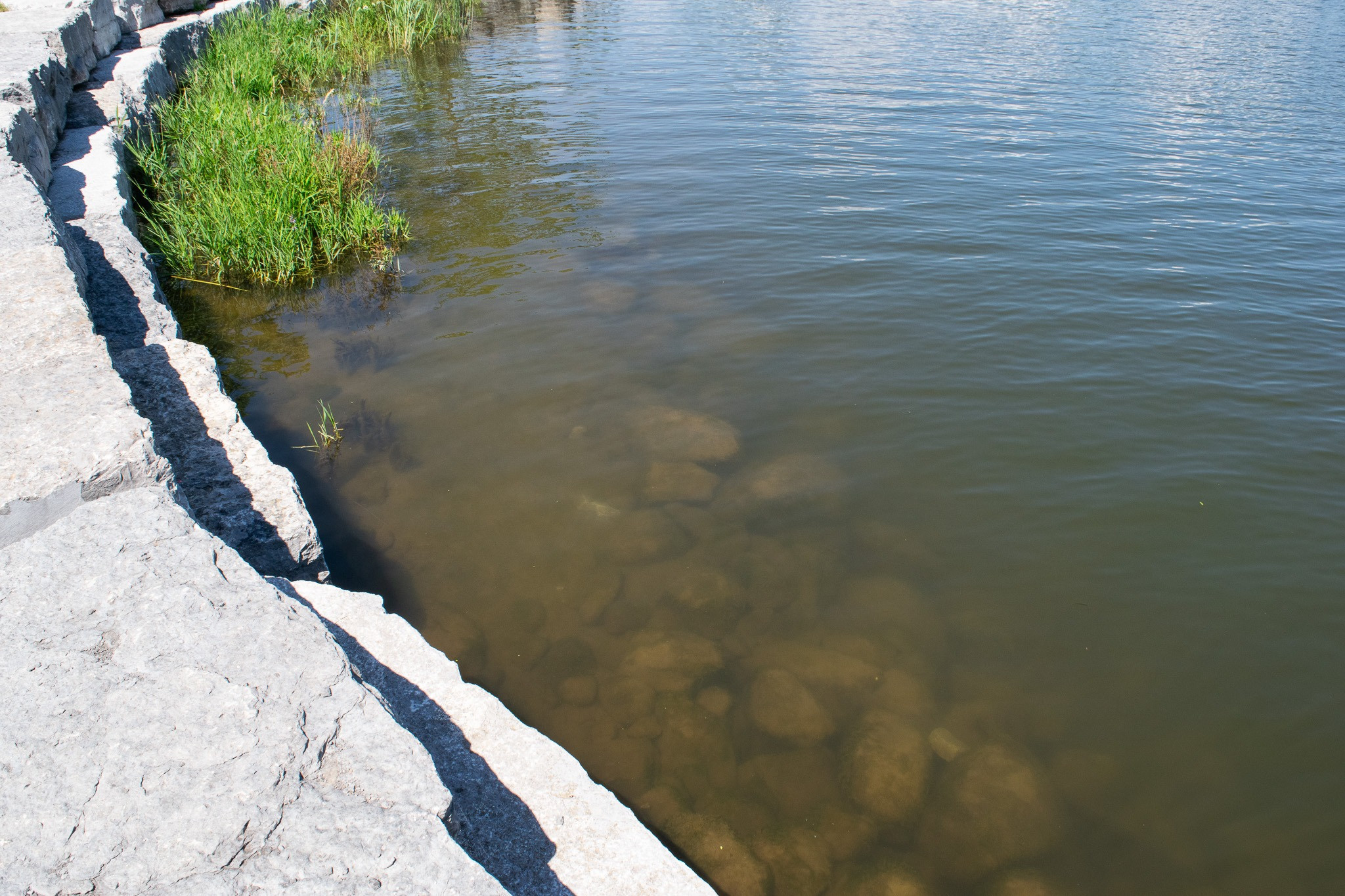
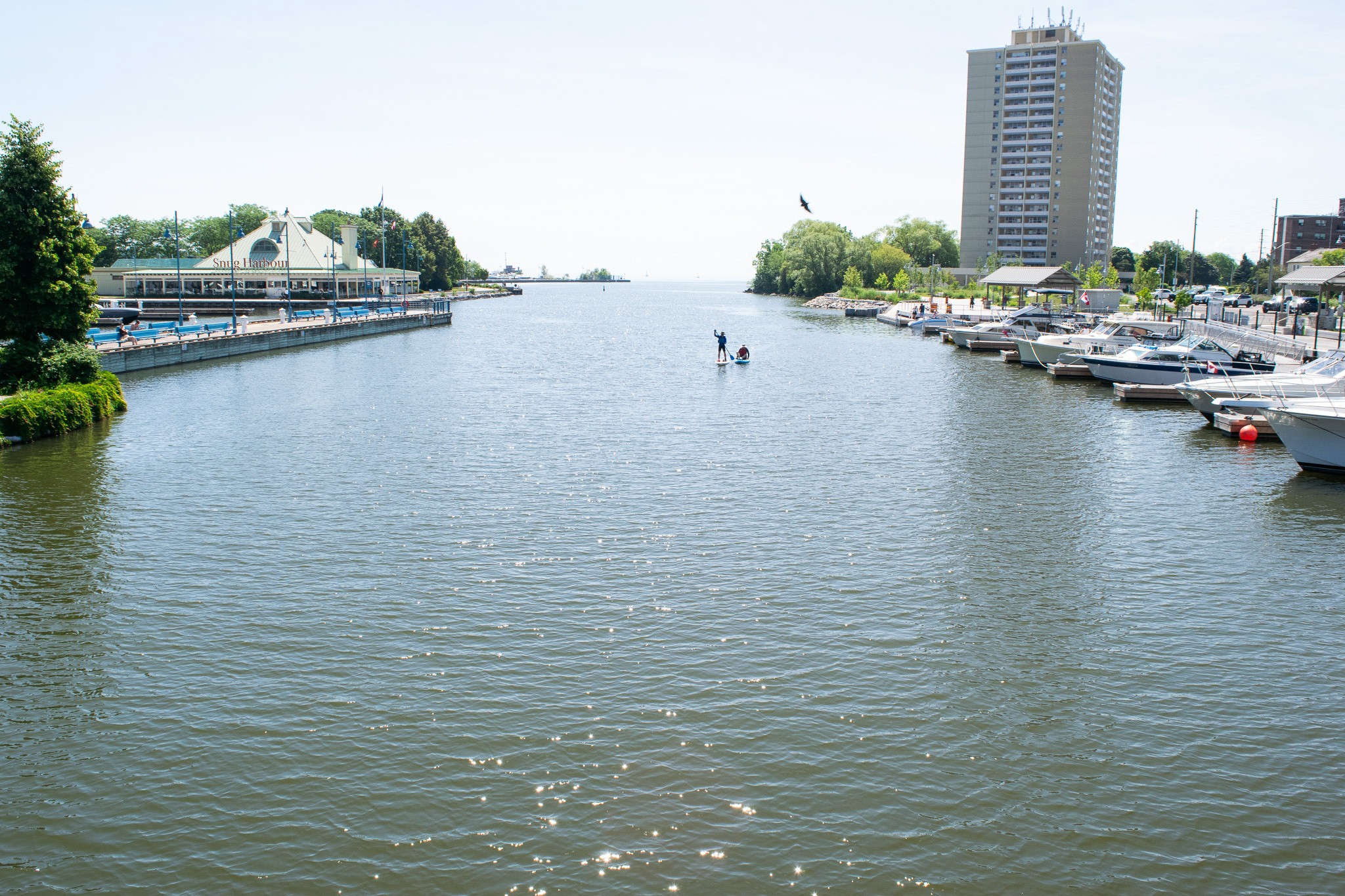
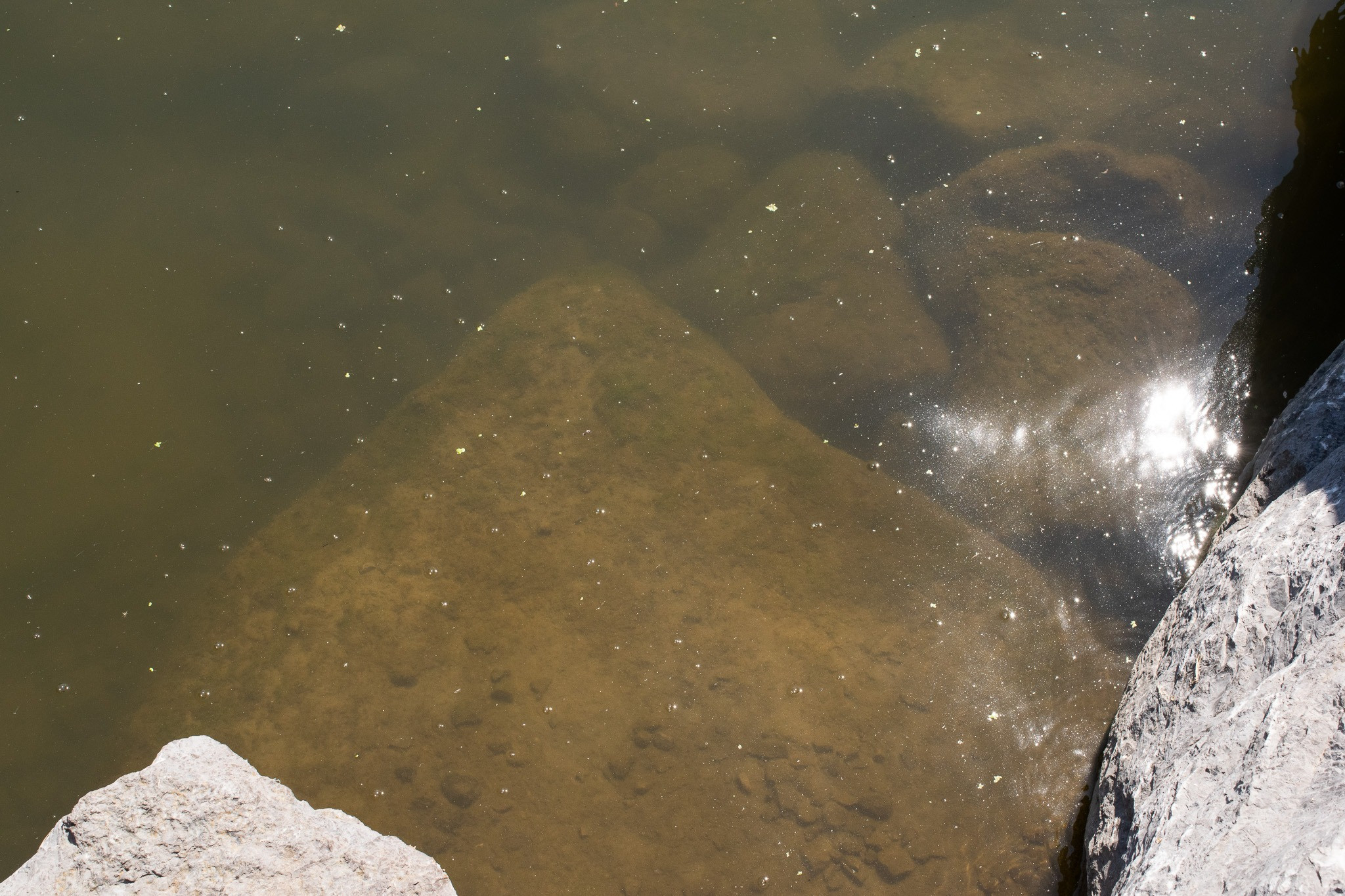
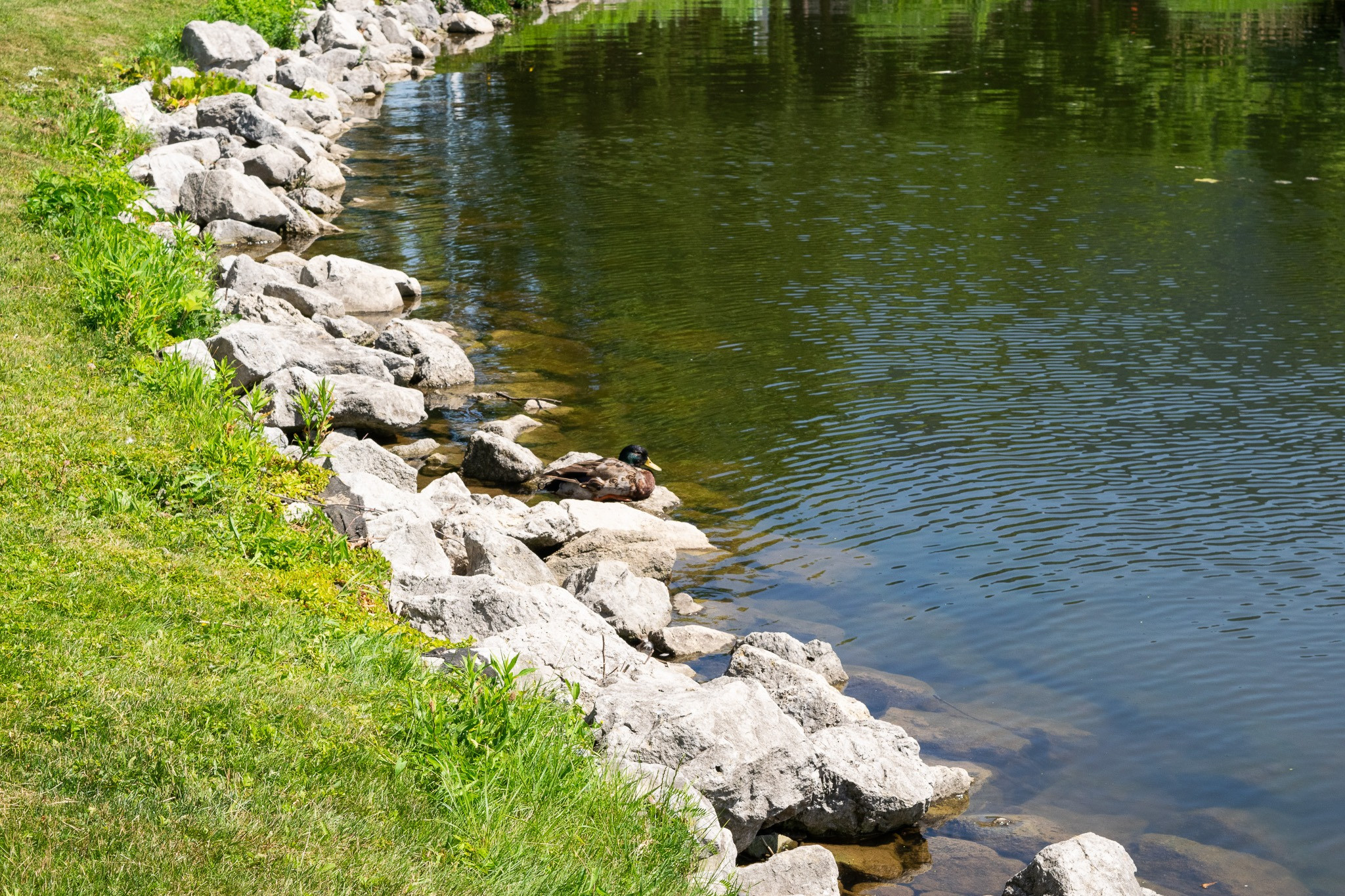
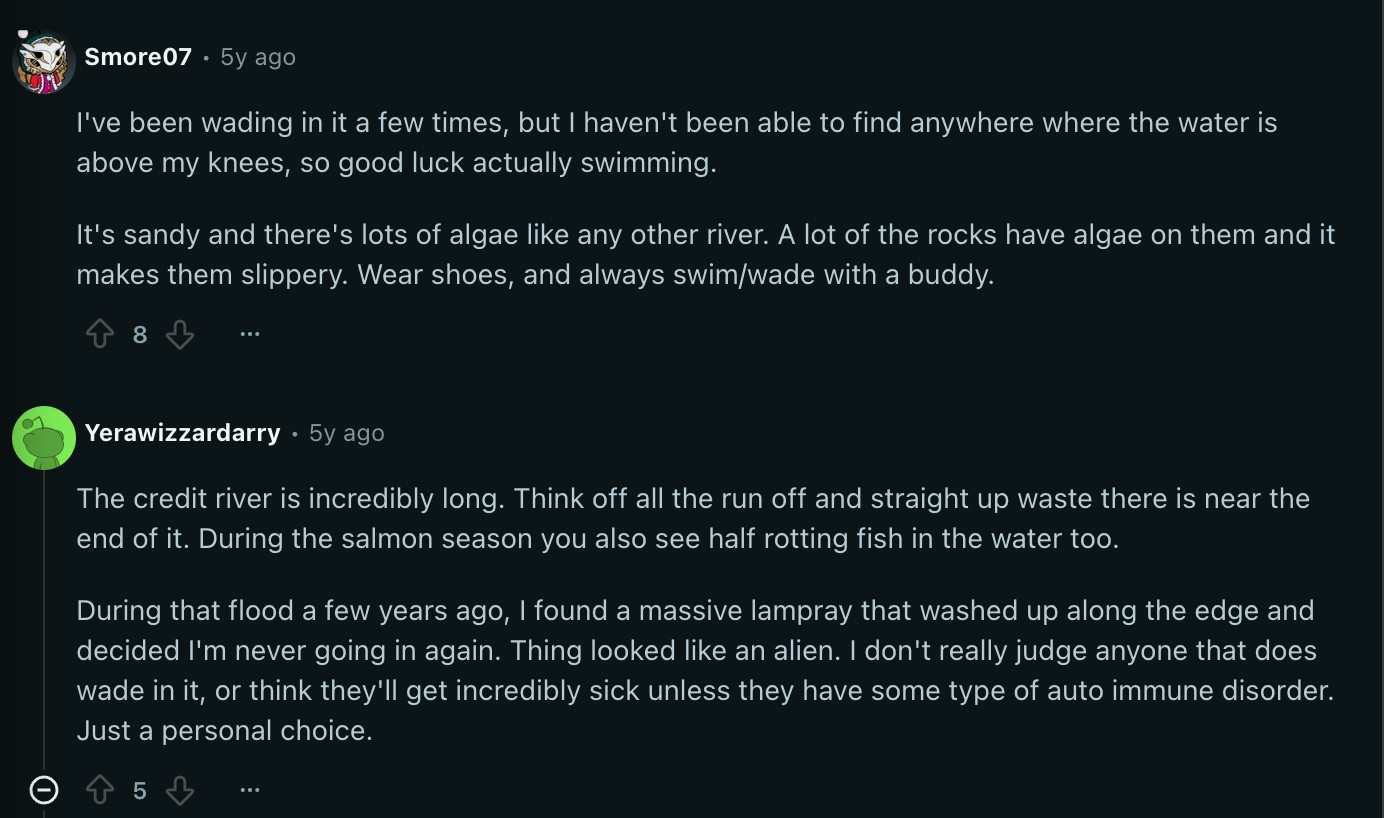
Many parts of the Credit River have blue-green algae blooms that are toxic to humans and pets, making the waters unfit for swimming.
(TOP: Alexis Wright/The Pointer, BOTTOM: Reddit)
The Credit River watershed has more than 1,800 species of plants and animals; 65 species at risk, five turtle species, eight snake species, 17 amphibian species, 64 fish species and 244 bird species call the regal waters their home.
But as water conditions shift, fewer native species may be able to thrive while invasive species gain a foothold. Last year, a Mississauga teen spotted red swamp crayfish, native to the southern United States and northern Mexico, in Lake Aquitaine.
Decades of urbanization have now placed the watershed under pressure with the loss of over 50 native species, prompting conservation groups to call for “immediate conservation action and restoration” to protect its ecological future that will have consequences for the region’s economy as well. A Pembina Institute and CVC report confirmed the damage to the river will have economic impacts as well as the Credit River watershed provides at least $371 million per year in ecological services including $187 million from wetlands and over $237 million in natural water filtration — a number that has since risen exponentially since the report’s release in 2009.
The question now is whether Ontarians can do what Mabel’s grandmother taught her: to stay still, watch and listen to the natural world’s cry for help; or stand by as our glade, the Credit River, dies a slow death?
Email: [email protected], [email protected]
At a time when vital public information is needed by everyone, The Pointer has taken down our paywall on all stories to ensure every resident of Brampton, Mississauga and Niagara has access to the facts. For those who are able, we encourage you to consider a subscription. This will help us report on important public interest issues the community needs to know about now more than ever. You can register for a 30-day free trial HERE. Thereafter, The Pointer will charge $10 a month and you can cancel any time right on the website. Thank you
Submit a correction about this story

