Mississauga teen’s incredible invasive species discovery sparks rapid response at Lake Aquitaine
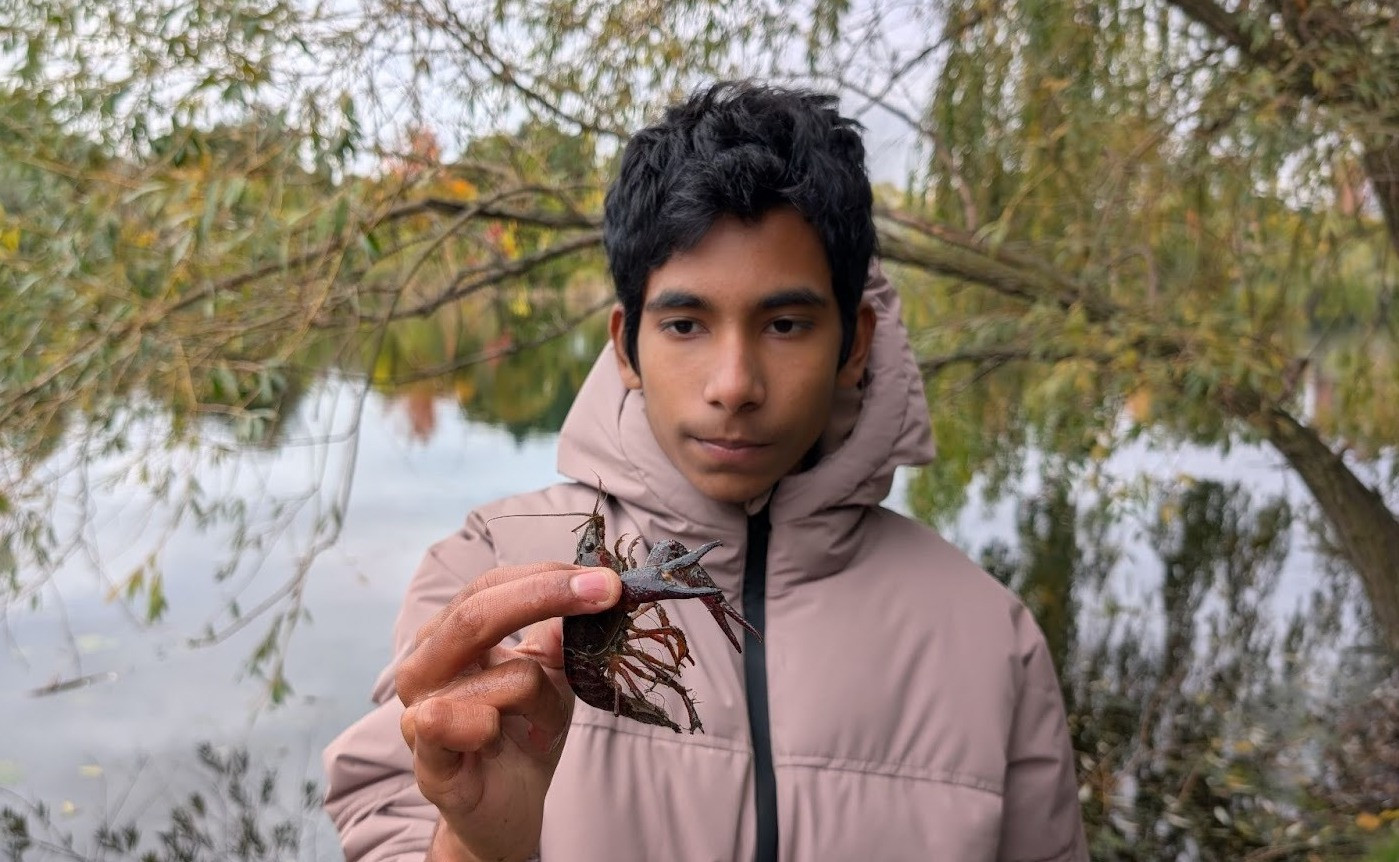
Mississauga teen Santhosh Durga Thyagarajan was just 10 years old when he first saw a red swamp crayfish on a screen in his home in India. As fate would have it, he would come face-to-face with the invasive species three years later in a lake thousands of kilometres away.
In 2020, when schools were closed and the world slowed, a young Santhosh, curious by nature and endlessly captivated by insects, walked for hours through the fields of his south Indian hometown, Erode, in the state of Tamil Nadu, discovering tiny ecosystems within leaf litter and beneath stones.
“I like being outside a lot,” he told The Pointer.
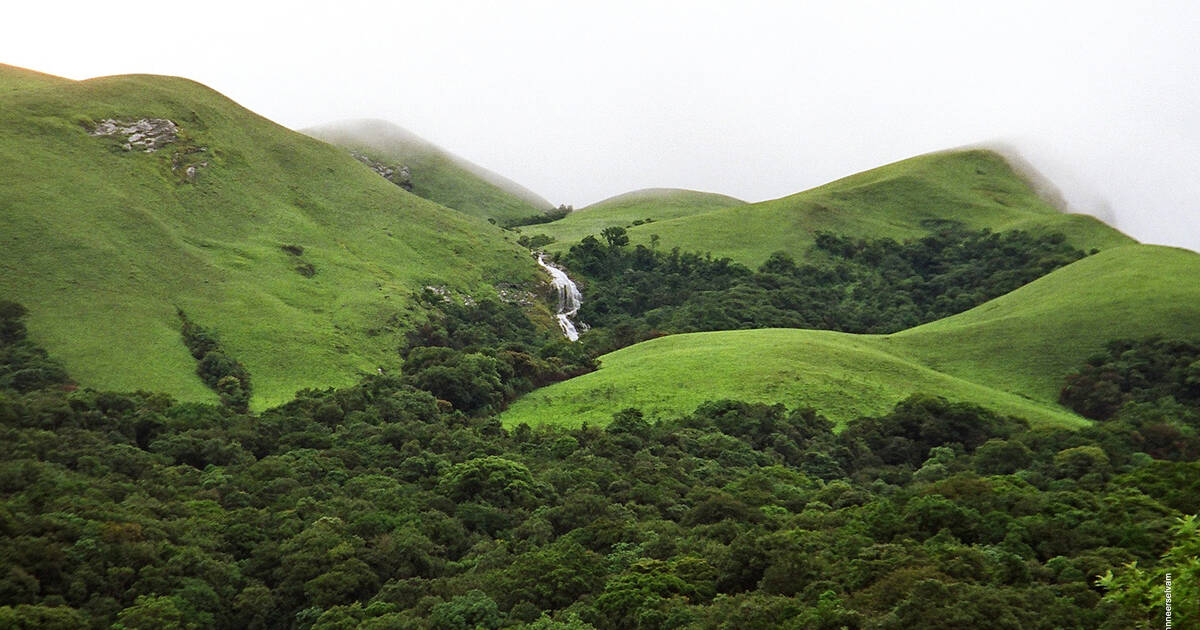
The small city sits where the sacred Cauvery (Kaveri) River begins its long journey from the ancient Western Ghats, carrying life-giving water across southern India to nourish a wide, fertile delta celebrated in local culture and literature.
The natural world there, rich with biodiversity and stories, was waiting to be noticed by a small kid.
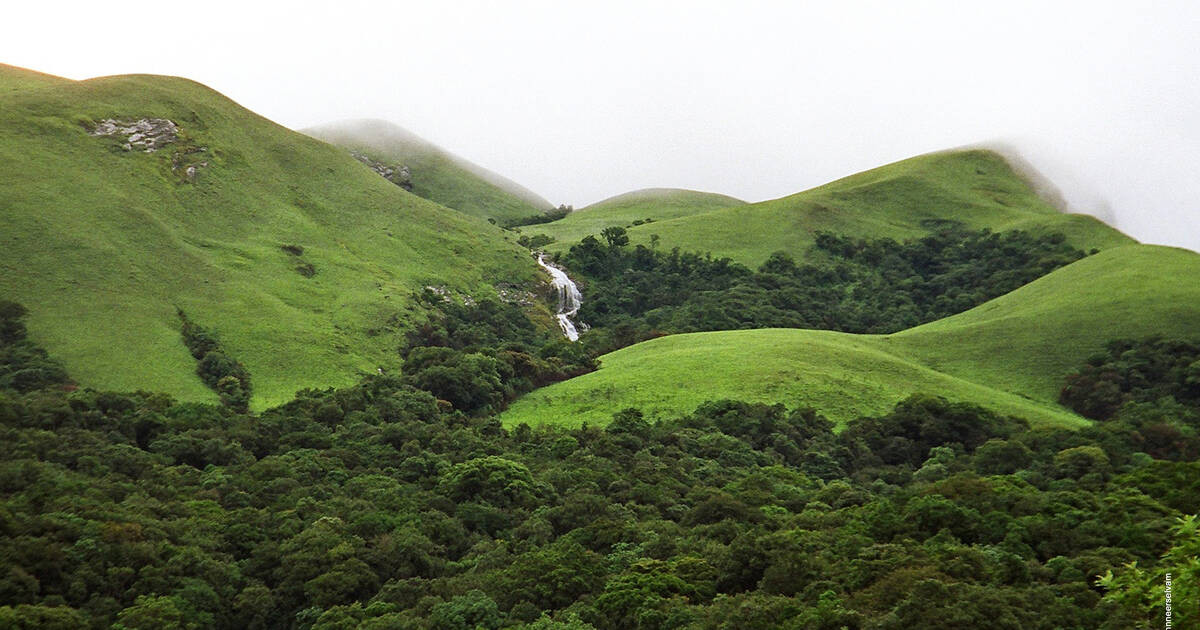
The Western Ghats, an ancient mountain range older than the Himalayas, are a globally significant biodiversity hotspot that helps shape India’s climate and ecology. At least 325 globally threatened species, as classified by the IUCN (International Union for Conservation of Nature and Natural Resources) call the region their home. The mountain range was declared a UNESCO World Heritage Site in 2012. Despite the recognition, mining and quarrying have been major threats to the ecosystem for years.
(UNESCO)
Every day, Santhosh would take his grandfather’s hand and wander the lush fields with him and his grandmother. His grandfather, a farmer who knew the land intimately, would point out plants, insects and other curiosities, often sharing interesting facts with his young grandson along the way.
“Initially, it wasn’t about identifying anything,” Santhosh recalled with a big smile. “But over time, I started observing insects closely and asking questions.”
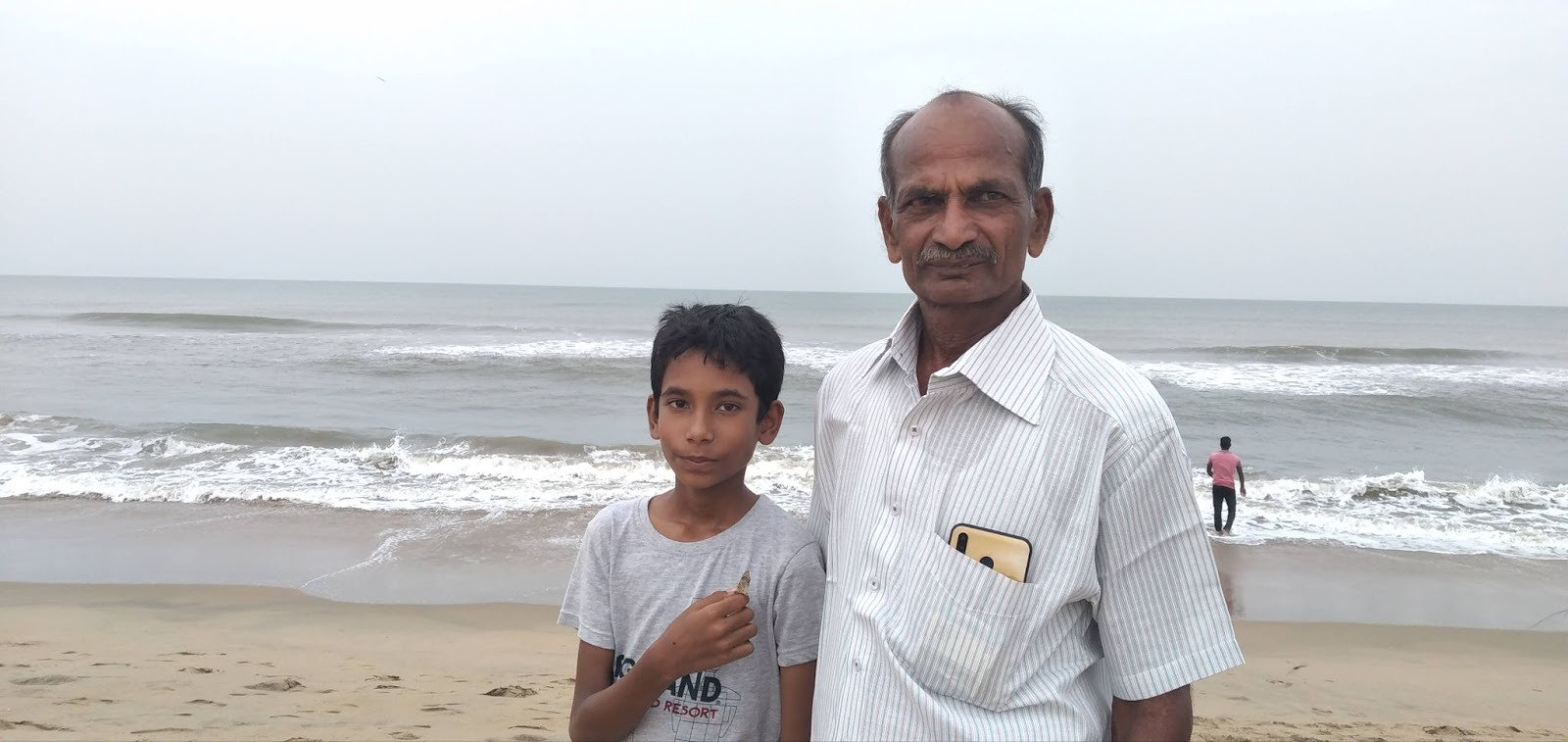
Mississauga resident Santhosh Durga Thyagarajan with his grandfather in Erode, Tamil Nadu, India. “Santhosh has volunteered with a volunteer-driven environmental education and conservation group called Suzhal Arivom in India and has done over 50 events on insects, especially specific insect walks, school and college guest lectures and field study for conservation of rural and urban habitats,” Durgadevi Ramasamy, Santhosh’s mother, told The Pointer.
(Submitted/ Durgadevi Ramasamy)
His grandparents “weren’t big fans of insects”, but his grandfather would bring him wasp nests or unusual, “cool insects” he found while farming.
“That made me more and more interested in seeing all kinds of other organisms,” he said with a big smile.
As the list of his questions grew longer, Santhosh turned to the expansive world of the internet, reading about insects and species from across India and around the globe.
During one of those searches, he came across the red swamp crayfish, an invasive species native to the southern United States and northern Mexico that has spread to freshwater habitats worldwide.
Known for its hardy nature, crayfish females can carry 100 to 600 eggs per brood, with a generation completing in about four and a half months, and the species can live up to four years. Highly adaptable, they tolerate a wide range of habitats and can migrate, burrow and spread rapidly while altering ecosystems by feeding on aquatic vegetation, insects, fish eggs and amphibians.
Santhosh absorbed one video to another on this fascinating, but damaging species, then moved on to other interests.
Four years later, Santhosh moved to Canada with his parents, settling in Mississauga, drawn by the city’s green spaces and patches of forest, which his parents had promised would allow him to explore the area’s natural beauty.
One spot became a familiar oasis for the family; Lake Aquitaine.
“The first night when we landed, before we even went to our house, the first place we went was the lake,” he reminisced, looking at his mother, Durgadevi Ramasamy, who sat next to him.
Visiting the lake together as a family brought a quiet sense of comfort, a small reminder of home in India, as the familiar rhythm of water and trees eased the leap into a new life.
After that, “he spent most of his evenings, early mornings before school and weekends at the lake,” Durgadevi said.
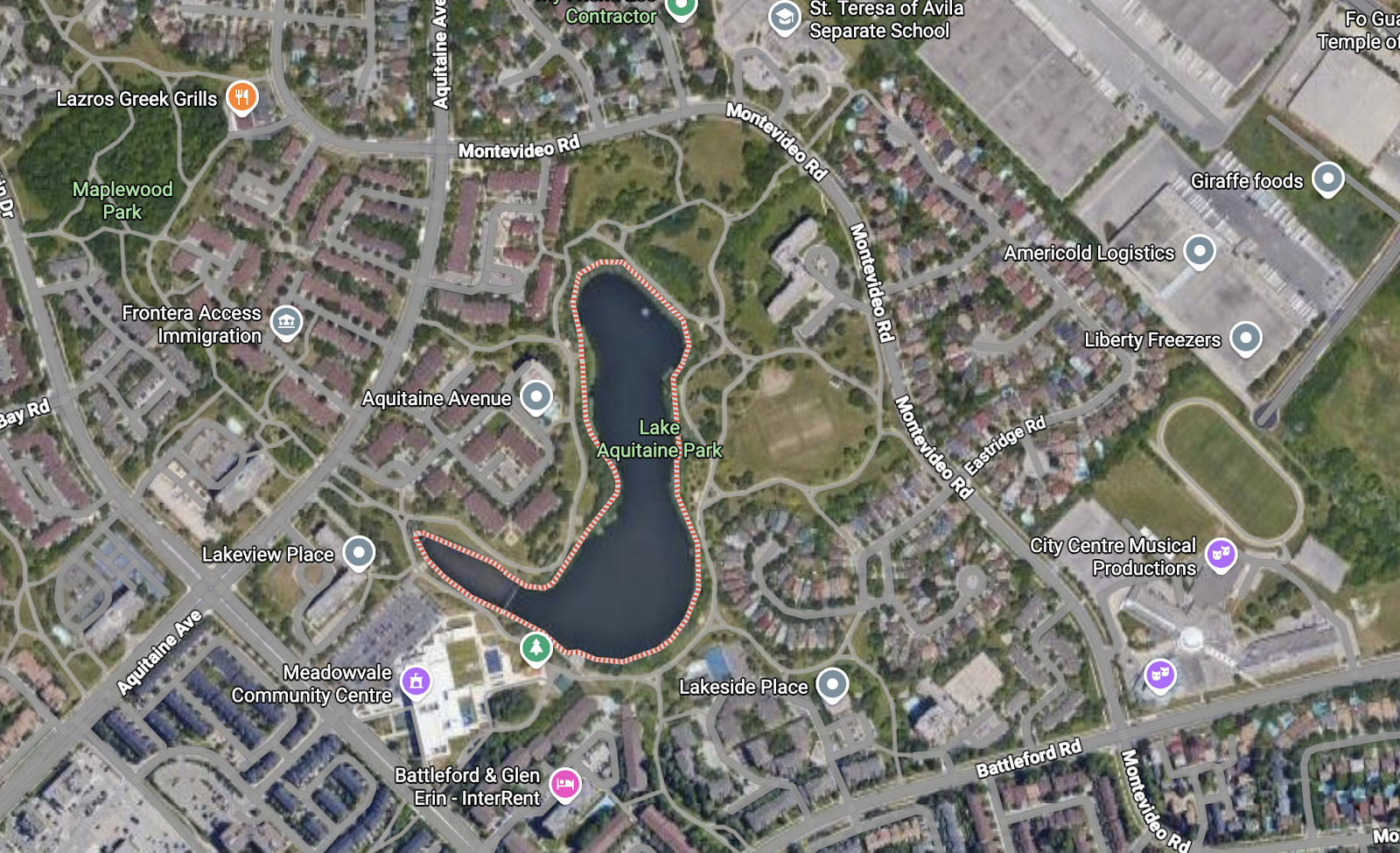
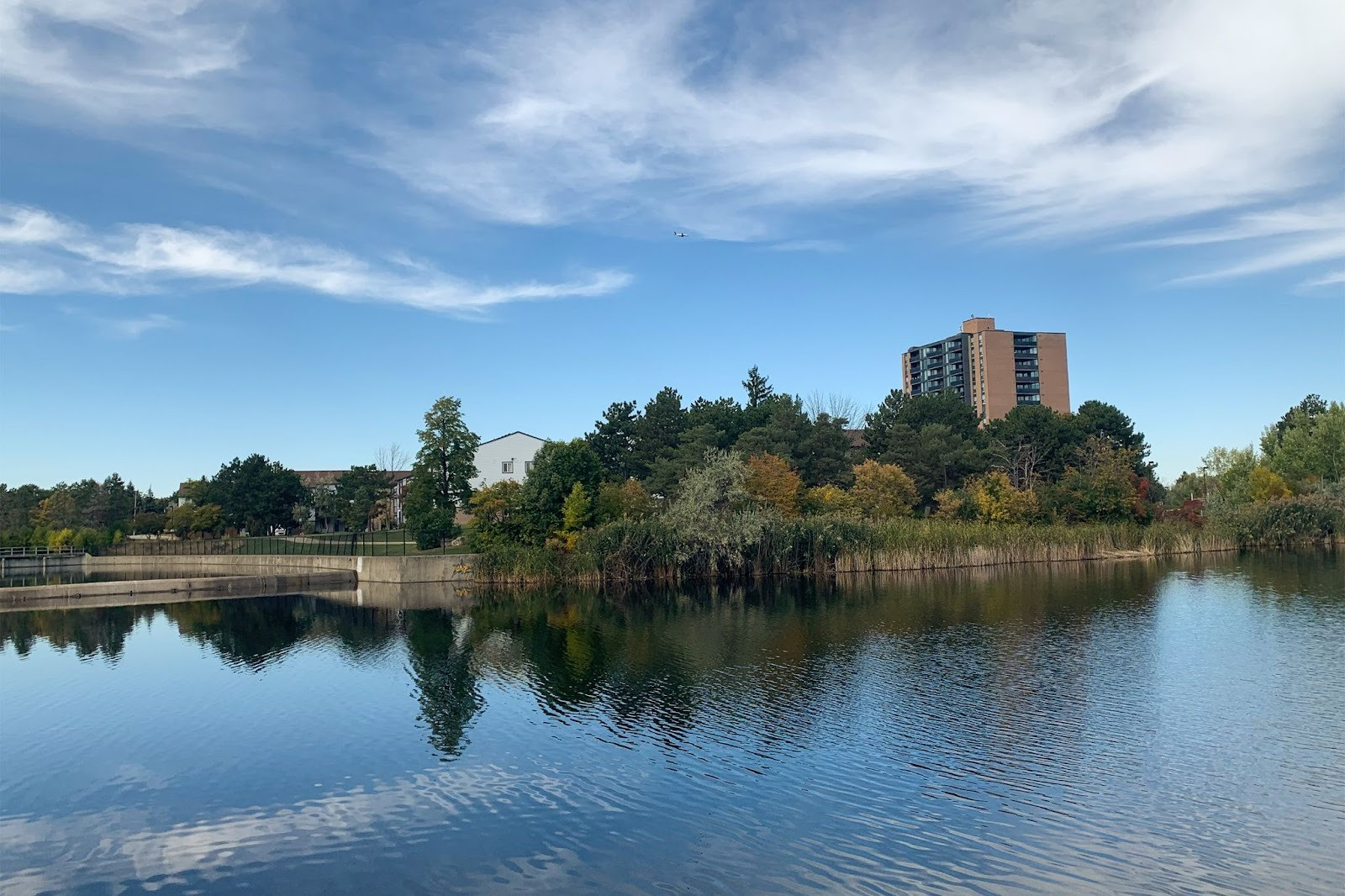
“Lake Aquitaine is actually a man-made stormwater management pond fed by run-off water from the surrounding area. It is intended to improve water quality before it enters the Credit River. It is surrounded by trails and also contains a variety of fish such as largemouth bass, smallmouth bass, rock bass, perch and crappie,” the City of Mississauga website explains.
(Google Maps/Alexis Wright/The Pointer)
Aquitaine is a man-made lake at the heart of Meadowvale West in Mississauga.
But it wasn’t always a lake. Like Santhosh, it has undergone a long journey.
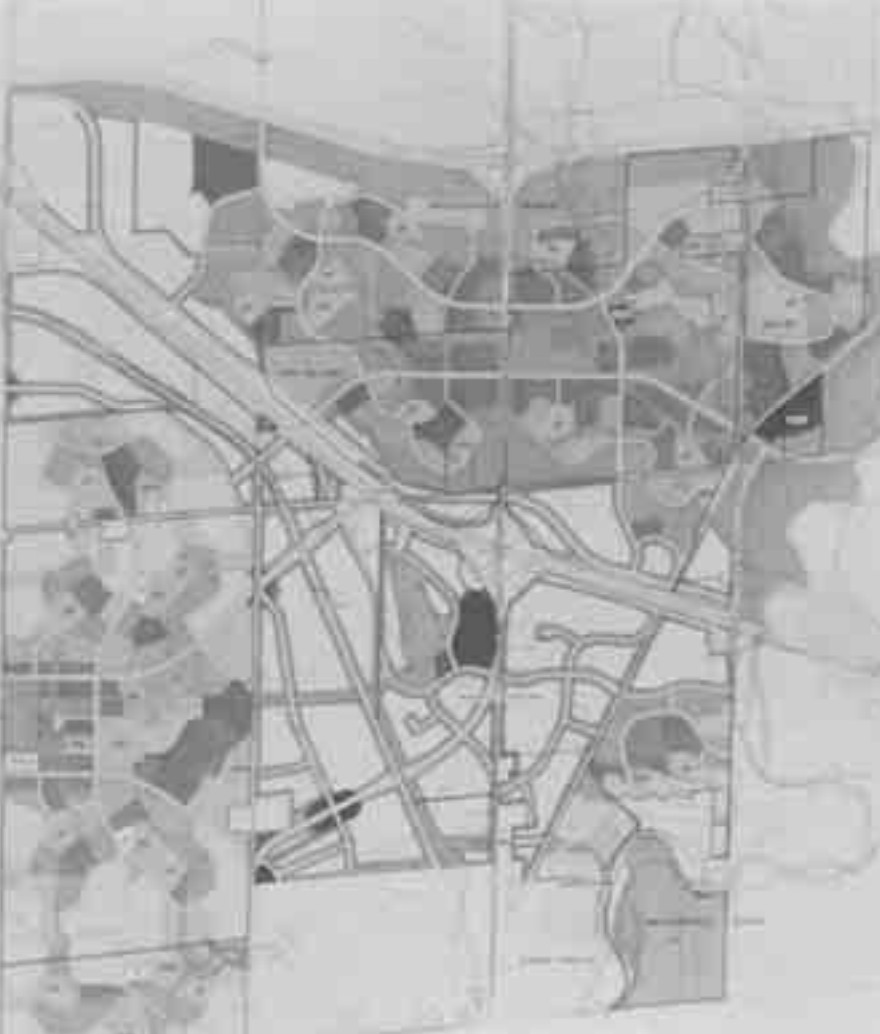
Lake Aquitaine was born from a bold vision in the late 1960s to create a modern “new town” in Mississauga.
Meadowvale West, part of the larger Meadowvale New Town, was designed by Macklin Hancock, a former World War II fighter pilot and Harvard-trained architect and urban planner whose work had already reshaped communities like Don Mills in Toronto.
Hancock envisioned Meadowvale as a place where people could live, work, shop and play, all while surrounded by green spaces, curving streets and interconnected trails.
“Meadowvale was ‘the’ place when we designed it,” Hancock said. “People came from Australia and around the world to see it. It was the cat’s meow.”
Excavation for Lake Aquitaine began in 1975, transforming 41 acres of farmland into a 12-acre lake holding roughly 37 million gallons of water, surrounded by 28 acres of parkland. A one-acre settling pond filtered run-off before it entered the lake, and a spillway controlled water levels.
The area was extensively landscaped with over 1,200 trees, 15,000 shrubs, and 130,000 square yards of sod, while benches and lanterns were added along the walking paths. Rainbow trout were stocked in the lake, and soon robins, Canada geese and mallard ducks were nesting along its shores.
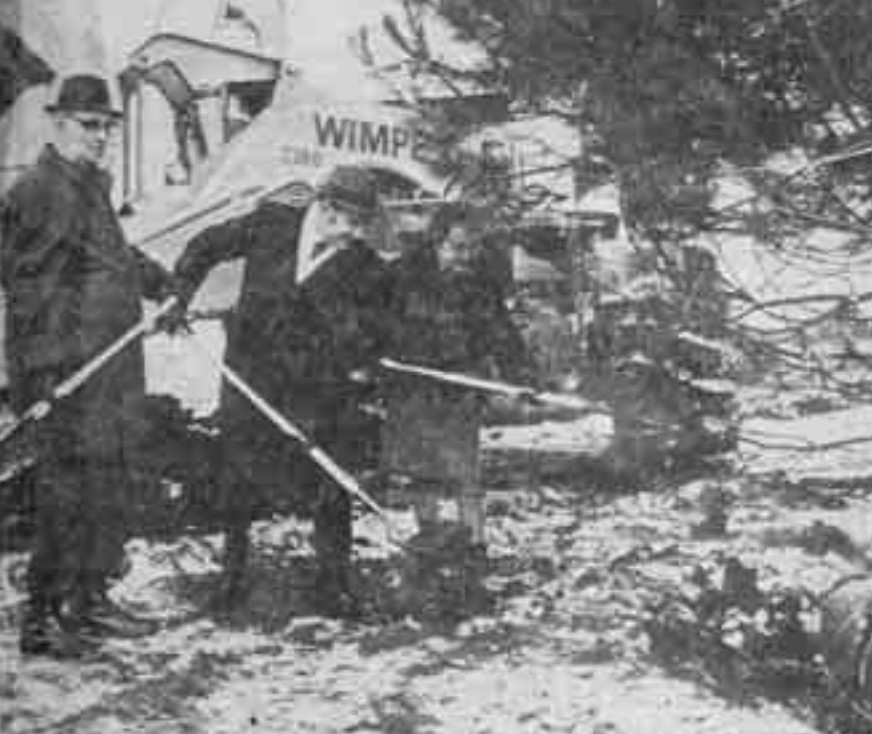
A Christmas tree planting ceremony on December 14, 1970, marked the official start of construction for the Meadowvale project, attended by H. Peter Langer, Deputy Reeve Roy McMillan, and Streetsville Mayor Hazel McCallion. “This tree is just one of hundreds we will be planting throughout Meadowvale, reflecting our commitment to preserve the natural beauty of the area and enhance it wherever possible,” Langer said at the event.
Officially opened in 1977, Lake Aquitaine was designed as both a stormwater management pond and a recreational haven. Fed by local run-off and equipped with a settling pool and spillway to protect water quality before it flowed into the Credit River, the lake soon became a thriving centre of biodiversity.
Today, Lake Aquitaine is home to 690 species of fauna including endangered species, as recorded by Santhosh over nearly three years.
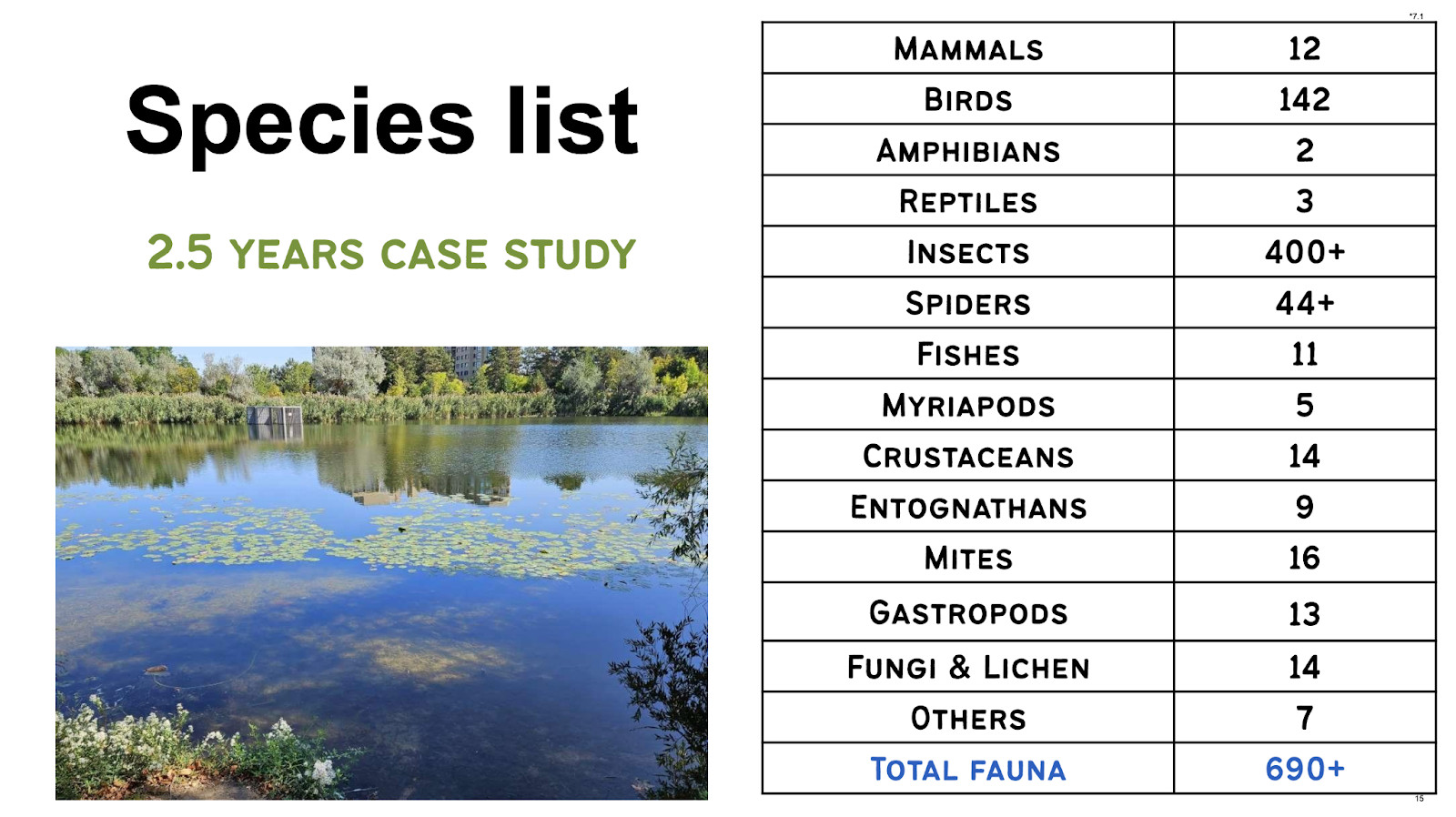
On February 3, Santhosh Durga Thyagarajan shared at the City of Mississauga’s Environmental Action Committee that he had recorded at least 12 mammal species (muskrats, evening bats and eastern meadow voles); 142 bird species of birds,. including endangered species like the Acadian flycatcher and Kirtland’s warbler as well as species of special concern like the Canada warbler, barn swallow, common nighthawk and eastern wood-pewee. He has also spotted five reptiles and amphibians (common snapping turtle, midland painted turtle and American bullfrog), over 44 spider species, more than 400 insect species, from monarch butterflies to the destitute-former borer and firefly larvae and over 11 fish species.
It was these recording surveys that led him to a familiar face.
On August 14, Santhosh set out to record aquatic insects at one of the lake’s popular fishing spots, a location frequented by visitors, but not formally designated for research.
“I was catching insects, looking around and then I noticed something big and red on the side,” he recollected, his eyes widening as if the memory were as clear as day.
“At first, I thought it was a fish. I was really stunned.”
Memories of the video of red swamp crayfish he had watched in India resurfaced and he couldn’t believe he had found one years later.
“Could that be a crayfish in a pond? I had only ever seen them in rivers!,” he wondered.
To confirm his discovery, he consulted a crayfish guide he had picked up at a CVC job fair in 2025 and confirmed the species was prohibited in Ontario and not yet established.
“I thought this is the first record for Ontario,” Santhosh said.
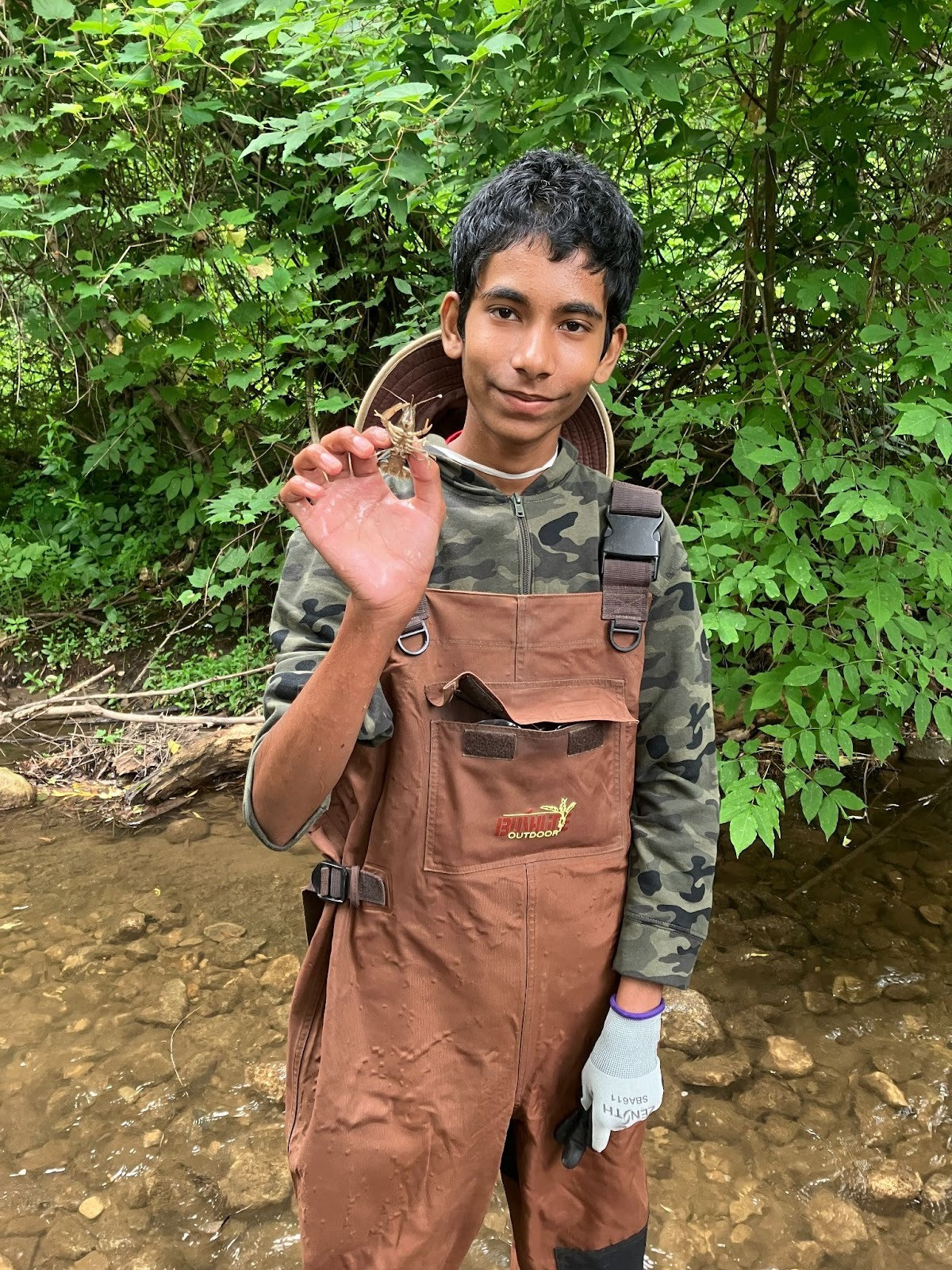
Thrilled, he photographed the specimen, noting it was an adult male that appeared weak and sluggish.
“Since it's an invasive species, I just let it dry out in the sun. Once it died, I made sure it was safely returned to the spot where I found it. That way, it wouldn’t cause any harm and I figured other organisms could eat it.”
He then started looking for more.
Less than two feet away he discovered another one, but this crayfish was missing some of its body parts. He photographed it as well.
Santhosh then cross-checked records and learned that there had only been one previous record near Detroit.
In Ontario, they are classified as prohibited under the Invasive Species Act, meaning possession, collection or transfer without a permit is illegal.
He speculated on how the crayfish arrived in Lake Aquitaine. Perhaps it was introduced as bait for bass fishing or discarded after cooking?
He shared his findings on iNaturalist, a social media platform for naturalists, and also with the City of Mississauga’s invasive species management team, who helped confirm and document the discovery.
After consulting with City staff, Santhosh returned to the lake, collected the crayfish and kept it in his freezer until a member of the CVC team could retrieve it.
CVC and the Ontario Federation of Anglers and Hunters undertook rapid response efforts, capturing 10 individuals, both male and female, alive and deceased.
It suggested a potential for a larger breeding population.
In the months that followed, Santhosh kept a close eye on the lake, discovering one crayfish each month until November.
“Altogether, I recorded at least six individuals myself, and CVC found a couple more shortly afterward,” he added.
Santhosh was soon known as the “crayfish whisperer” among his CVC volunteer group.
Thanks to his superpower, he helped CVC uncover a tiny but formidable invader threatening one of Ontario’s prized waterways: the Credit River watershed.
At the February 3 Environmental Action Committee, CVC Aquatic Ecologist, Andrea Dunn, explained the 870-square-kilometre Credit River Watershed encompasses “diverse” natural lands, forests, wetlands, and urban centres including Brampton, Mississauga, Orangeville, and Georgetown.
Despite heavy urbanization, the watershed supports cold-water fisheries upstream and warm-water species downstream, as well as migratory salmon and trout, making it one of Ontario’s most popular angling (fishing) regions.
This popularity means it also becomes a pathway for invasive species through releases from bait buckets, aquarium trade and equipment that isn’t properly cleaned.
Dunn noted several invasive aquatic species are already present including common carp, mystery snails and round goby, with the red swamp crayfish now added to the list.
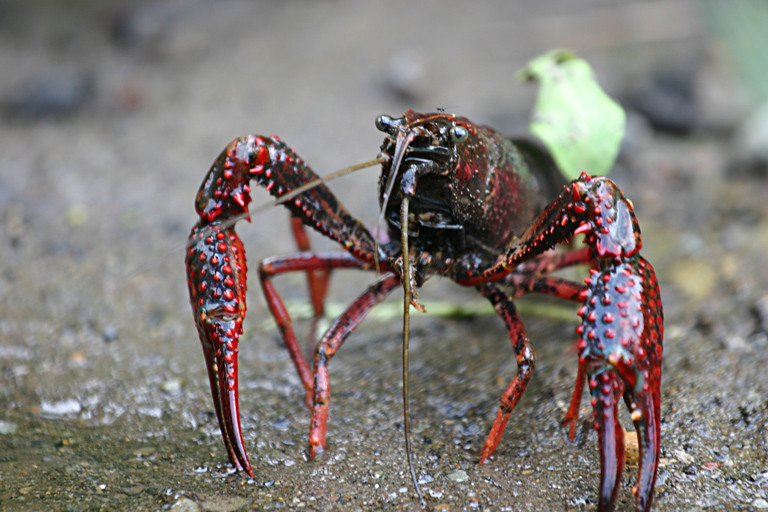
Procambarus clarkii, commonly called the red swamp crayfish, Louisiana crawfish, or mudbug, is easily recognized by its deep red colour, long claws and elongated head. Its first pair of legs display rows of bright red bumps, while the carapace just below the head has few or no spines, giving it a distinctive look.
(Mike Murphy/Wikimedia)
“Once invasive crayfish are established, they're almost impossible to eradicate,” she told the committee.
Dunn explained red swamp crayfish can survive temperatures as low as 2.5 degrees Celsius and tolerate highs up to 36 to 38 degrees Celsius. Within that range, they can burrow or dig holes to dwell in, allowing them to survive harsh winters and hot summers.
Their two-phase life cycle, a stationary phase near burrows and a wandering phase during reproductive or stressful periods, means they can travel one to two kilometres per night, with some studies observing movement up to 17 kilometres over four nights.
Following Santhosh’s report, a working group was formed, combining City staff, provincial agencies, academics and conservation authorities, with plans to alert the public later in February.
CVC is taking a targeted, science-based approach, including trapping two to three times a week during reproductive periods, monitoring surrounding water bodies, and checking burrows in late summer. Innovative methods such as environmental DNA (eDNA) testing and mimicked burrows using PVC (Polyvinyl chloride) pipes aim to catch reproductive females.
“Because if you can capture the females when they have eggs or [are] young, you're taking out 100 to 600 individuals at a time, which is great,” Dunn said, noting outreach and education are also central, encouraging anglers and residents to prevent the introduction of invasive species.
While chemical or biological controls are not currently feasible, City staff confirmed that early intervention and community awareness are the best tools to prevent the species from becoming fully established.
The City committed to a multi-pronged response to the red swamp crayfish at Lake Aquitaine and support ongoing monitoring and trapping. This includes surveys at the lake two to three times per week during key reproductive periods (between spring (April) and autumn (October)), and checking nearby water bodies within a two-kilometre radius to track potential spread.
Amazed at what one Grade 10 student’s observation has achieved, Ward 2 Councillor Alvin Tedjo joked: “My son is also in grade 10, I'm questioning what his education is at the moment.”
With bright, proud eyes, Durgadevi says she has always felt “very happy” watching her son cherish and care for the natural world.
For Santhosh, the experience has only deepened his passion. He looks forward to a future as an entomologist and is grateful to CVC for giving him the space to explore what he truly loves.
Email: [email protected]
At a time when vital public information is needed by everyone, The Pointer has taken down our paywall on all stories to ensure every resident of Brampton, Mississauga and Niagara has access to the facts. For those who are able, we encourage you to consider a subscription. This will help us report on important public interest issues the community needs to know about now more than ever. You can register for a 30-day free trial HERE. Thereafter, The Pointer will charge $10 a month and you can cancel any time right on the website. Thank you
Submit a correction about this story