

Roadsalt overuse is choking Peel’s water — a salt-loving plant could be the solution
In a winter that shattered snowfall records across Ontario, the first weekend of March brought an early taste of spring: rain and warmer temperatures sent snow rapidly melting across the Credit River watershed, triggering floods across Peel. Hidden in that runoff was a larger threat to many species.
Each winter, many Canadians wish for a white holiday season, for backyard rinks to freeze solid and for the perfect opportunity to frolic in fresh powder. Snow is stitched into the country’s identity.
This winter granted that wish, making history just a month into the season.
By the afternoon of January 26, Toronto Pearson Airport recorded a record-breaking single-day snowfall of 46 centimetres — officially making January 2026 the snowiest January with a cumulative snowfall of 88.2 centimetres and the snowiest single month since record-keeping began in 1937, according to Environment Canada.
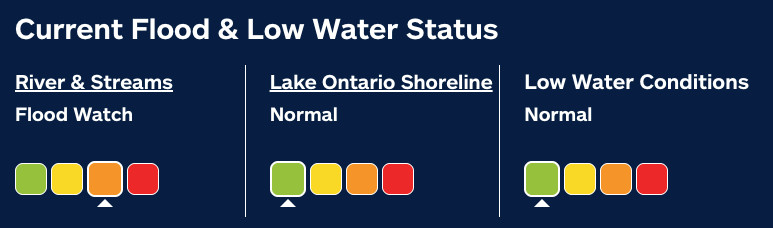

Credit Valley Conservation issued a Flood Watch from March 6 to 8 for “the Credit River and its major tributaries, as well as increased flows and water levels in low-lying areas”.
(Credit Valley Conservation)
But the love of snow withers as it piles high on driveways, narrows sidewalks, and turns into slippery, dangerous ice.
On average, more than 21,000 Ontarians visit an emergency room every winter due to injuries from slipping and falling on ice and snow, as reported by UHN Foundation.
To prevent such injuries and reduce collisions on slick roads, municipalities turn to a familiar fix: road salt.
The use of salt for deicing roads began in the U.S. in the late 1930s, when New Hampshire experimented with spreading granular sodium chloride on roads in 1938. By the winter of 1941-42, the state had formally adopted a salt-spreading policy, applying roughly 5,000 tons on highways that season.
The practice soon travelled north. By the late 1940s, southern Ontario was salting roads as urban growth demanded clearer, safer winter travel.
Before that, sand and gravel were commonly used to provide traction on slippery roads but they didn’t melt the ice.
Today, Canada is one of the largest users of road salt in the world, with more than 5 million tonnes, (4.75 million tonnes of sodium chloride (NaCl) road salt and 0.1 million tonnes of calcium chloride (CaCl2), used every year to make winters safer for drivers and pedestrians.
This year’s record-breaking snowstorm has even led to Ontario experiencing a “critical road salt shortage”, a statement by Draglam Salt highlighted. It has further led to the price of bulk rock salt to surge over $300 per metric ton in early 2026.
But as trucks spread tonnes of sodium chloride across roads, parking lots and sidewalks, a question arises beneath the slush: where does it all end up and who pays the environmental cost?
On February 24, Caledon Ward 3 councillor Doug Maskell asked that question in the council chambers after learning that the Town of Caledon uses between 10,000 and 11,000 tonnes of salt per year.
That figure is likely higher since it does not include roads maintained by the Region of Peel including Mississauga Road, Hurontario Road, Dixie Road, Airport Road, The Gore Road, Highway 50, Charleston Sideroad, Old Church Road, Olde Baseline Road, King Street and Mayfield Road.
Julian Perez, Manager, Transportation Maintenance, Peel Region, Public Works, told The Pointer that Peel uses 24,000 to 28,000 tonnes of “carefully managed” road salt to maintain more than 1,600 km of Regional roads during winter.
During the council meeting, Maskell shared he “oftentimes” notices a lot of salt caked to his dog’s paws whenever they come back from a walk, which led him to introduce the motion.
“We use salts because we have to…it is very toxic in the environment,” he said.
On March 7, Credit Valley Conservation issued a flood watch for the Credit River watershed as temperatures climbed up to 17 degrees Celsius, as a weather system moving through southern Ontario brought with it over 15 millimetres (mm) of rain while the snowpack was “actively melting”.
CVC Flood Duty Officer Kristopher Robinson noted the watershed contained “a significant snow water equivalent, ranging from approximately 100 mm in the upper watershed to 50 mm in the lower watershed” with frozen ground limiting absorption.
“As snow and ice melt continue, the saturated ground and local streams and rivers may become icy and hazardous, particularly near culverts, bridges, and dams,” Robinson said in a statement.
“Children should be warned to stay away from all water courses.”
But what was slowly creeping in the creeks and rivers poses harm to children and adults alike: road salt — listed as a toxic substance under the Canadian Environmental Protection Act.
Scientists estimate 40 to 70 percent of the chloride from road salt ends up in freshwater systems, impacting municipal drinking water sources and critical habitat of species at risk in all three municipalities in the Region of Peel.
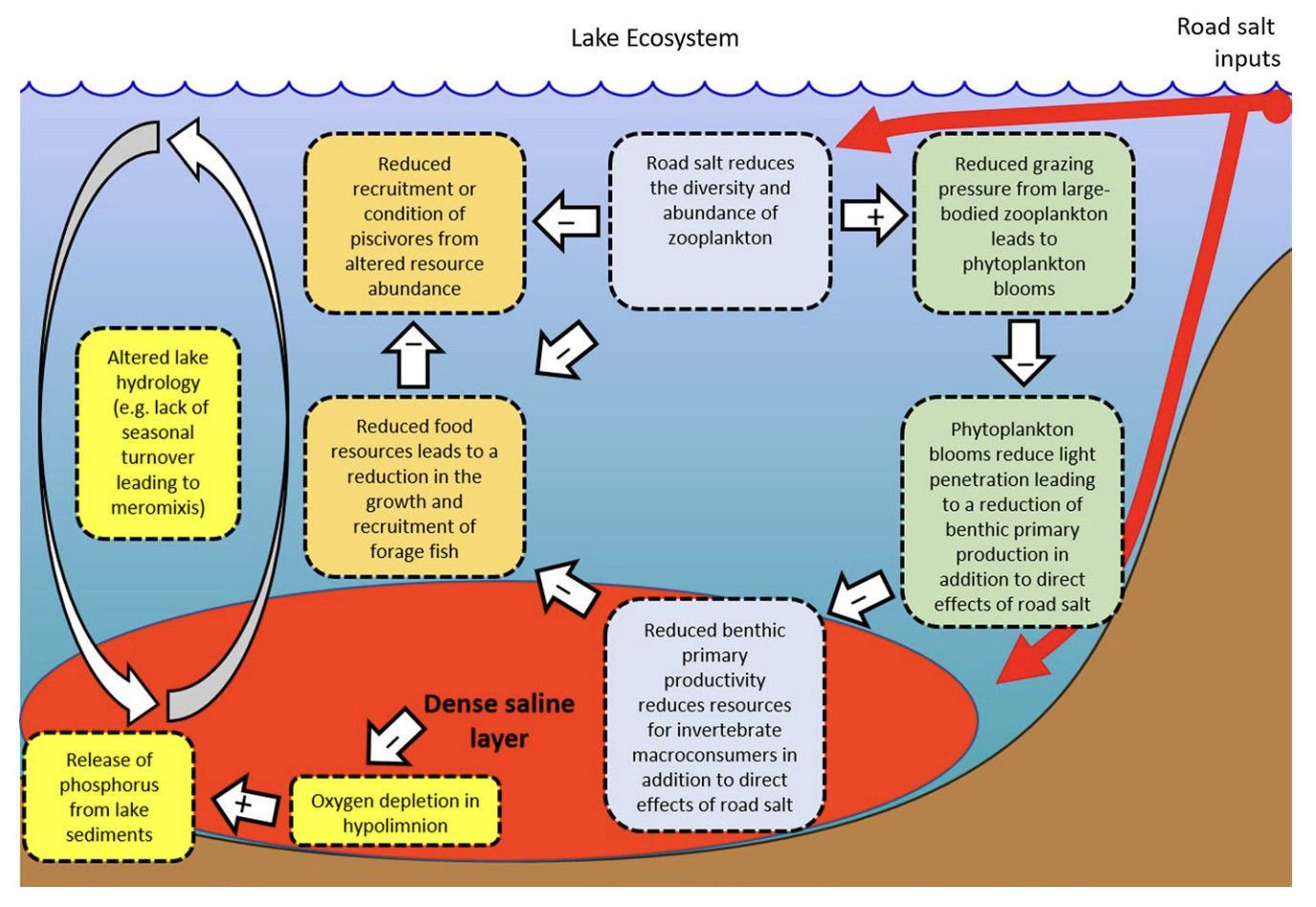
A 2018 study done by U.S.-based researchers noted that compared to rivers, streams and wetlands, relatively little is known about how road salts affect lake communities but the impacts can be severe. Chloride concentrations of 217 to 445 mg/l in natural lakes were linked to shifts in species composition, favouring salt-tolerant phytoplankton and zooplankton and reducing populations of large-bodied grazers like Daphnia. In turn, it can trigger trophic cascades, where unchecked phytoplankton growth leads to algal blooms that shade benthic organisms and reduce primary production. The added stress of fish predation, combined with elevated chloride levels (around 1,000 mg/l), can increase the mortality of native clams and zooplankton, disrupting food webs as a result. Road salt can also interact with environmental factors such as low calcium or oxygen depletion, creating dense saline layers that release phosphorus from sediments and exacerbate algal blooms. These cascading effects ripple through the ecosystem, reducing macroinvertebrate diversity, limiting fish recruitment and affecting higher-level predators, ultimately altering lake structure, function and ecosystem services.
(William D. Hintz/Rick A. Relyea)
“Our reliance on salt is leading to negative impacts. While some efficiency has been created, salt application rates continue to be high,” CVC previously told The Pointer.
A 2021 report by Watershed Planning and Ecosystem Science for the Toronto and Region Conservation Authority (TRCA) found median chloride concentrations had climbed to roughly the chronic effects guideline. The number of monitoring stations exceeding that benchmark rose sharply over time: from four of 12 stations between 1991 and 1995 to 11 of 12 stations between 2016 and 2020.
Water quality guidelines put in place to protect wildlife state that a concentration of chlorides higher than 120 milligrams per litre (mg/l) over a long period of time can cause harm to aquatic life. Levels about 640 mg/l are enough to cause acute harm as freshwater organisms are forced to try survive in conditions more similar to a saltwater ocean than the freshwater ecosystem they’re adapted to.
An investigation by The Pointer uncovered in June and July 2022, when salt application is typically minimal, most of the 11 monitoring stations maintained by Credit Valley Conservation (CVC) recorded chloride levels above thresholds associated with long-term harm. Several spikes reached concentrations nearly three times higher than levels considered acutely harmful to aquatic life.
In 2001, a federal report found “high releases of road salts were having an adverse effect on freshwater ecosystems, soil, vegetation and wildlife”.
It took three years for Ottawa to release a “code of practice” to guide the public and private sectors about the optimum use of road salt while maintaining safe driving conditions during harsh winter periods. But no target or goals were ever set.
A set of performance indicators and targets came a decade later — not too little but too late.
Recent measurements taken at the two stations monitored by CVC in Caledon show that chloride levels have consistently been high enough to be unhealthy or at risk for aquatic life in the last three months.
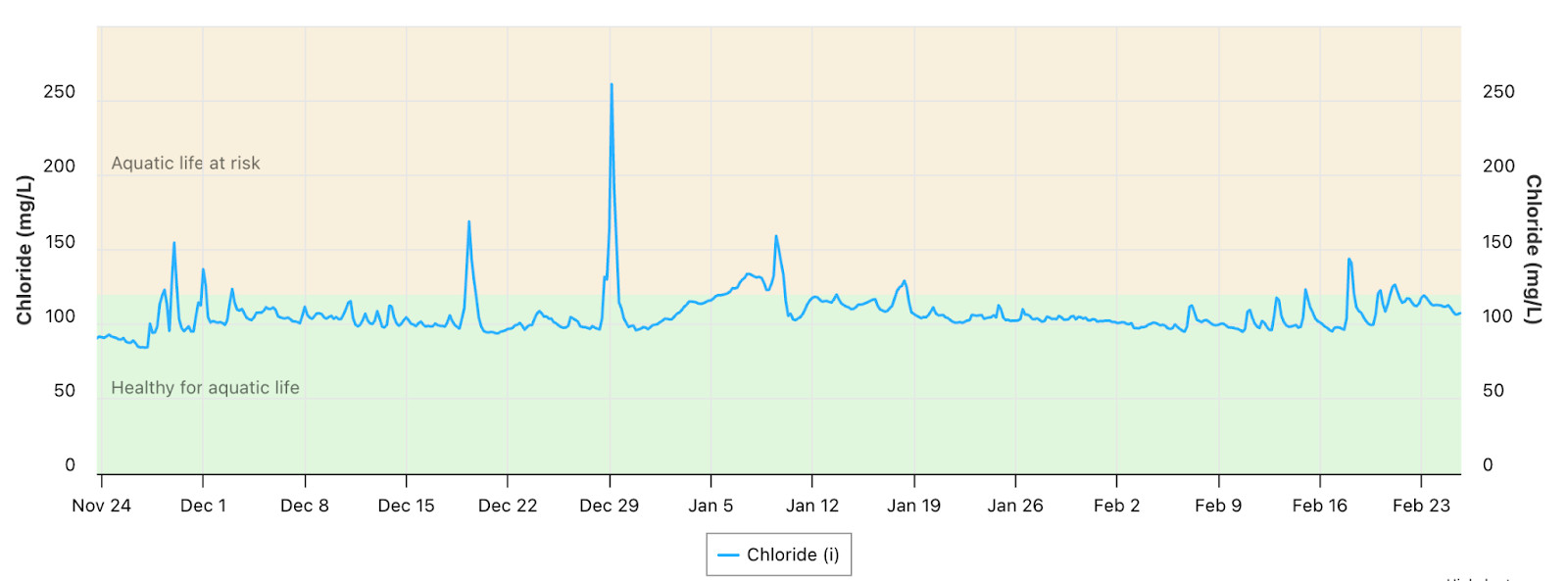
While the last recorded chloride levels at West Credit River at Belfountain Conservation Area seem to be healthy, there have been spikes in December, January and February putting aquatic life at risk.
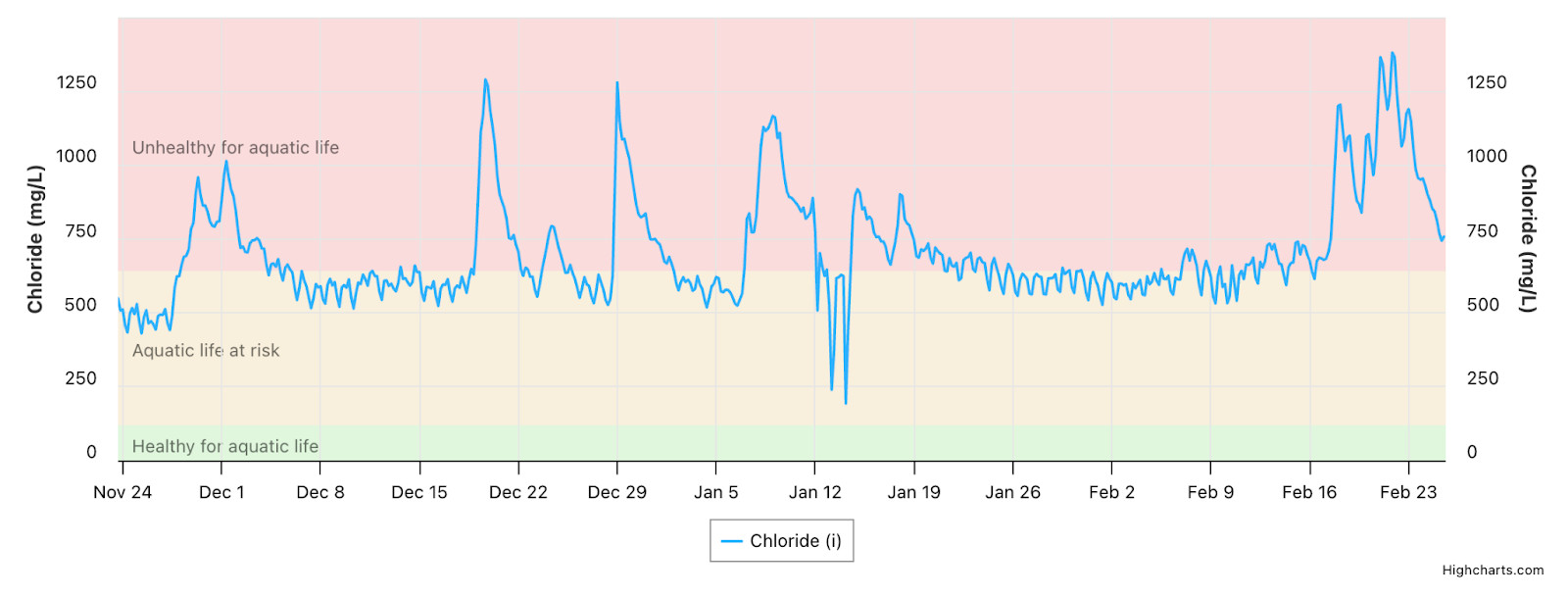
Chloride levels in Credit River at Highway 10 North have been either unhealthy or at risk for aquatic life since December.
“Increased numbers of slips and falls claims, and other injury/collision claims related to snow and ice, are resulting in salt applicators overusing salt beyond levels considered best practices,” Maskell’s motion stated.
“Unlimited contractor liability is making it difficult or expensive for snow and ice management contractors to obtain insurance coverage, resulting in contractors leaving the business, thereby making it difficult for municipalities and private owners to find contractors.”
The motion urged the Ontario government to develop limited liability legislation for snow and ice contractors, establish standardized best management practices and fund an expert advisory committee to address the environmental impacts of road salt.
Ward 4 Councillor Nick de Boer said he “wouldn’t support any request to reduce liability”.
“If we push the Province, which in all likelihood won’t support limited liability, we’re going to end up having slips and falls,” de Boer noted, warning that icy conditions in parking lots and on sidewalks can lead to serious, sometimes life-altering injuries.
Instead, he introduced a motion to refer the matter to Town public works staff for further review, which was ultimately defeated.
Research by Lake Simcoe Region Conservation Authority on friction testing of surfaces with snow noted “over-application of salt does not translate to safer conditions”.
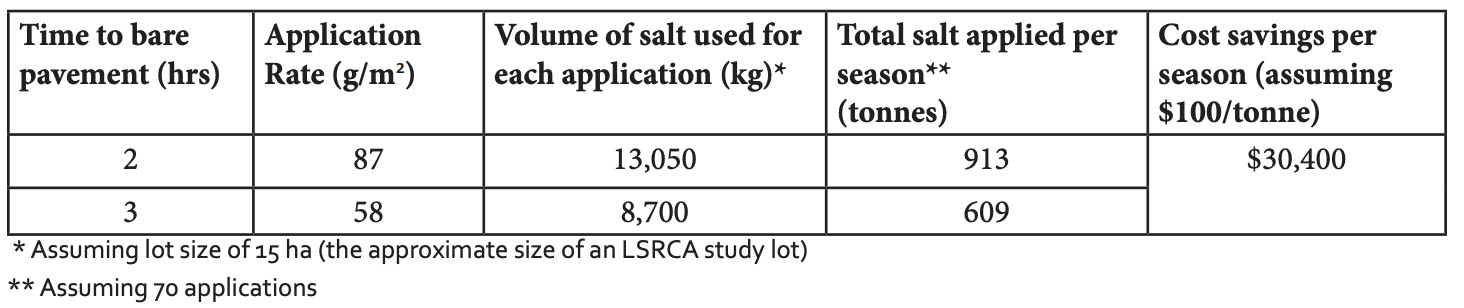
A 2020 research by the Lake Simcoe Region Conservation Authority, using friction testing, demonstrated that a properly treated, lightly salted surface with a friction value of “µ = 0.63” was significantly safer than an oversalted surface “µ = 0.26”. In some cases, areas where more than ten times the recommended application rate was used performed no better than surfaces that had simply been shovelled, with both registering similarly low friction values in the 0.20 range.
(Lake Simcoe Region Conservation Authority)
Applying salt at recommended rates of roughly 58 grams per square metre for moderate winter events and allowing slightly longer “bare pavement return times” can maintain safety while significantly reducing environmental damage and costs.
Another way to reduce chloride levels is through using liquid brines (salt dissolved in water).
CVC Water Quality Science Coordinator Lorna Murison told The Pointer when liquid brines are applied ahead of a storm, they adhere more effectively to pavement and begin working immediately, reducing the tendency for salt to bounce or scatter into boulevards and storm drains.
“Sodium chloride will really work only down to about -7 or -10 and then it stops being effective,” Murison said.
But she had found a solution to that problem in a research in 2023: adding organic byproducts like beet juice to liquid brine.
“When you add beet juice, it brings that working temperature down to much colder temperatures; it also has this like stickiness to it,” she explained.
“If you're using it as an anti-icer and putting it down before snowfall, here's more of a chance that it’ll stick around longer. If you get a bit of rain before the snow, there’s less chance of it getting washed off or carried away by vehicles.”
But “there’s always a trade-off” as even organic additives are not impact-free; beet juice is high is potassium which is also toxic for aquatic species. As they break down, they can consume oxygen in waterways, potentially harming aquatic life.
“If people were to start applying a lot more beet juice and if this were to be a practice that would get widely adopted, we don't really know how much of that would get into the waterways,” she noted.
“It's hard to fully understand what the impacts would be. We just know that there's definitely a potential for there to be impacts, even with an organic product.”
She recommended the conversation should focus on smarter application rather than wholesale replacements — advice in line with CVC Senior Engineer of Water and Climate Change Science, Amanjot Singh, who previously told The Pointer, “the only mitigation strategy to reduce chloride concentration in GTA streams is by reducing application of road salt”.
While municipalities in Peel have made efforts to reduce the amount of salt dumped into the environment, Singh had warned any efficiencies achieved could be offset by the growth the region is experiencing in both its road network and commercial land — a reality that has increasingly become challenging for both Caledon and Mississauga.
Maskell’s original motion passed with an amendment requiring staff to provide a full report back. Councillors de Boer and Christina Early voted in opposition.
Town staff was asked to review Caledon’s Salt Management Plan (last updated in 2020) and investigate ways to reduce salt use while maintaining public safety — aligning with the Town’s official plan, Future Caledon, which commits to “protect, restore and enhance natural features and areas, and water resource systems to be healthy, sustainable and resilient”.
It will also be sent to all municipalities, the Region of Peel, Association of Municipalities of Ontario (AMO), Conservation Ontario, the Ontario Municipal Water Association, MPP Sylvia Jones, Minister Todd McCarthy (MECP), Attorney General Doug Downey and Premier Doug Ford.
Less than a week later in Mississauga, similar discussions swirled council chambers but around a natural solution that doesn’t come with the environmental “trade-offs” of beet juice: phytoremediation, a method that uses vascular plants to intercept and remove salt from the soil.
Like Caledon, Mississauga’s waterways are also crawling with high chloride levels, creating unwelcome conditions for aquatic life.
Out of the seven stations that CVC takes chloride measurements for, three (Cooksville Creek at Lakeshore Road, Fletchers Creek and Sheridan Creek at Rattray Marsh Conservation Area) had unhealthy levels consistently since the end of November; three stations (Credit River at Mississaugua Golf and Country Club, Huttonville Creek Real-Time and Levi Creek at Derry Road) flipflopped between unhealthy and at-risk. Only Credit River at Old Derry Road hasn’t moved from at-risk to unhealthy during the same period.
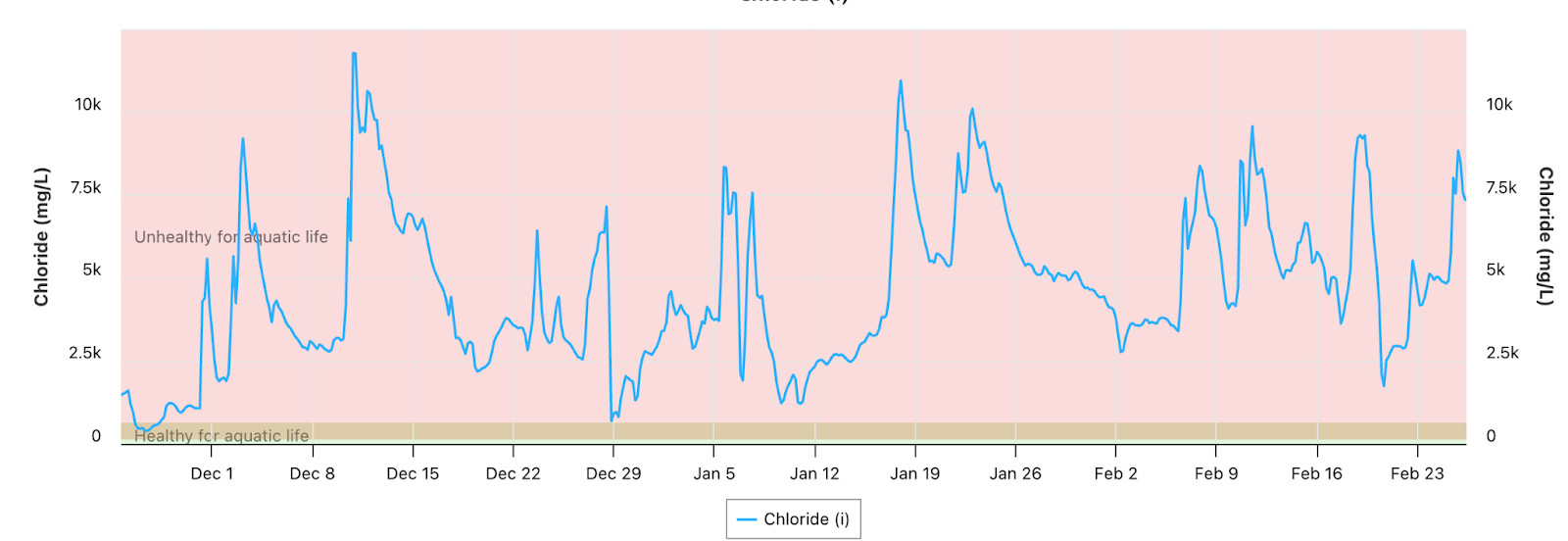
In the last three months, the highest chloride level detected in Cooksville Creek at Lakeshore Rd (Water Quality Station) was on December 11, 2025 at 11,785.50 mg/l.
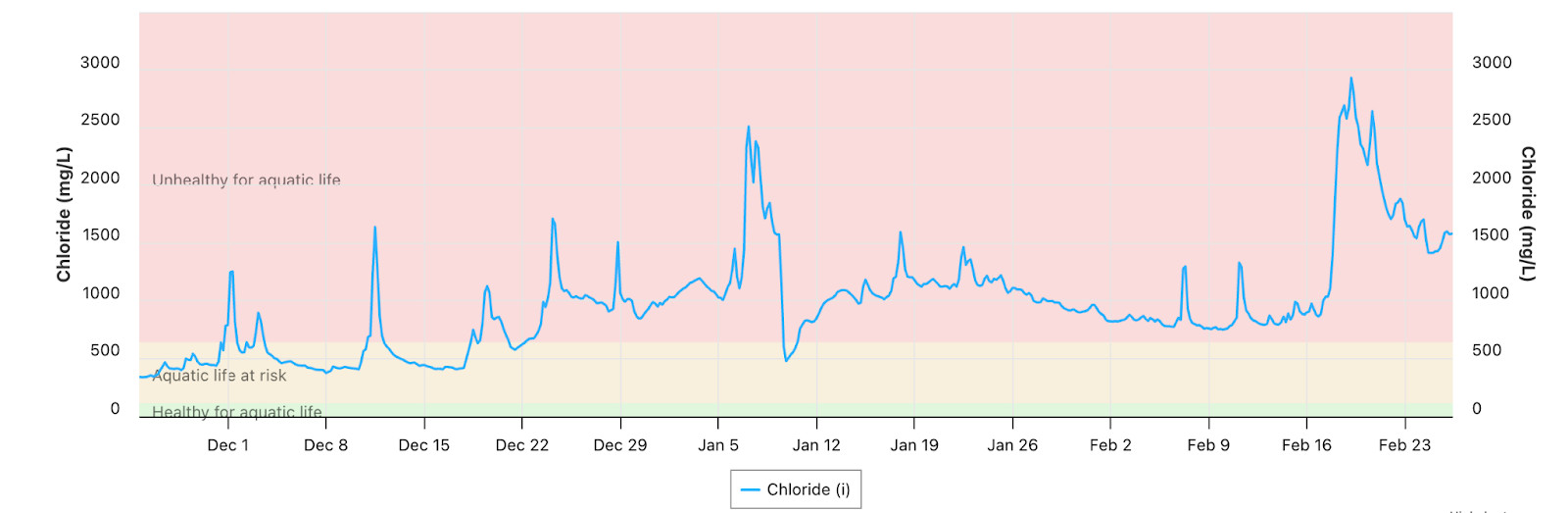
The highest chloride concentration recorded by the Credit Valley Conservation at Levi Creek at Derry Road this year was on February 19 at 2,932.50 mg/l.
On March 3, Lyndsay Cartwright, research scientist with the Toronto and Region Conservation Authority, and Amanda Chiasson, research student at Queen’s University, told the City’s Environmental Actions Committee that a “shining star” has emerged in efforts to tackle road salt pollution: halophytes.

Halophytes are salt-tolerant plants that thrive in high-salinity soils or waters, using specialized adaptations to survive where most plants cannot and can aid in remediating salty environments.
(Partners in Project Green)
Described as “salt lovers”, halophytes are plants native to Canada that either block salt at the roots or absorb and store it to protect the ecosystems surrounding them.
The bonus: the plants can be harvested to remove chloride from soil and repurposed as compost, animal feed or even biofuel.
In 2022, a team from the Toronto and Region Conservation Authority, Queen’s University and the Royal Military College of Canada established a phytoremediation field site near Toronto Pearson Airport where road salt accumulation was detected.
Researchers planted four different halophyte species to assess how well they would establish in roadside conditions and how much salt they could remove from the soil.
Plant and soil samples were collected at the end of each growing season, with data gathered from 2022 through 2024 as the project continues.
The results showed that all four halophyte species established successfully and produced substantial biomass. Prairie cordgrass and switchgrass, the larger species, generated significantly more biomass than rough dropseed and side-oats grama.
“For phytoremediation, generally, more biomass means more salt being extracted from the soil,” Chiasson told the committee.
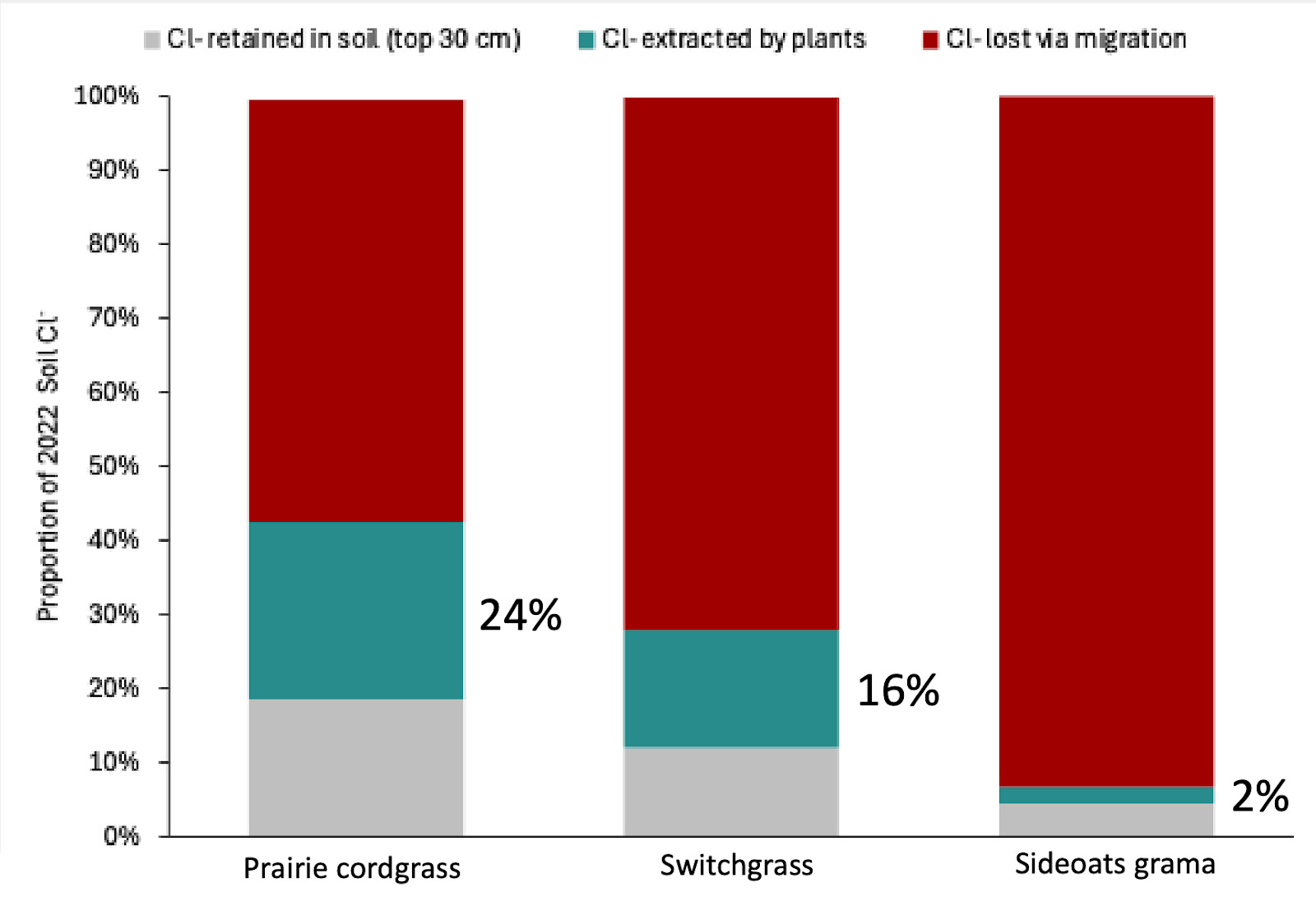
The teal bars indicate that over the first three years of the project, prairie cordgrass extracted about 24 percent of the chloride initially present in the soil in 2022. By 2024, switchgrass had removed about 16 percent, while sideoats grama extracted only about two percent. In comparison, the grey bars show that between five and 19 percent of the original chloride remained in the soil. The red bars indicate that 56 to 93 percent of the chloride either migrated deeper into the ground or moved away from the site into downstream environments.
(Toronto Region Conservation Authority)
Prairie cordgrass and switchgrass were found to be the most promising candidates for road salt mitigation in southern Ontario.
“Planting halophytes along roadsides could reduce the amount of legacy salt that leaches from this roadside soil into freshwater systems by up to 24 percent,” she added.
The researchers are already working with the York region and Richmond Hill on introducing halophytes into their roadside seed mixes, particularly to tackle chloride concentrations in Lake Wilcox, which have been steadily rising since the early 2000s.
But similar to Caledon, the overuse of road salt remains a persistent issue due to fears of liability across Mississauga and the province.
“Ontario has a road-salt problem,” Jonathan Scott, Executive Director of the Rescue Lake Simcoe Coalition and a Councillor in Bradford West Gwillimbury, said.
“And at its core, this is a problem of law. The law is creating incentives that no longer work. And our lakes are paying the price.”
On February 26, the Rescue Lake Simcoe Coalition and Kristyn Wong-Tam MPP, Ontario NDP Opposition Critic for the Attorney General, held a press conference at Queen’s Park, joining municipal leaders, industry representatives, and environmental advocates from across Ontario to call for provincial action on road salt pollution and winter maintenance reform.
Ontario’s Occupiers’ Liability Act requires property owners and contractors to take reasonable care to keep premises safe. But critics argue it does not provide clear statutory due diligence defence for winter maintenance providers who follow recognized best practices in good faith.
“The law does not reward evidence-based practice. It rewards visible over-application,” Scott added.
It results in environmental damage, higher municipal and small-business costs, infrastructure corrosion and continued legal uncertainty.
Part of the solution can be found where the use of road salt began in North America: New Hampshire — a state that since changed its practices.
In 2013, New Hampshire launched Green SnowPro, a program that provides limited liability protection to certified winter maintenance contractors and the property owners who hire them, as long as they follow best practices and are not negligent.
Contractors are required to complete training through the University of New Hampshire, pass an exam, submit annual salt use reports and maintain certification through refresher courses. Since its launch, the program has allowed participants to reduce salt usage by over 40 percent and cut operational costs.
The group is now calling on the Province to modernize the occupiers’ liability framework by creating a clear due diligence defence tied to provincially approved winter maintenance standards.
“If a contractor or property owner can demonstrate they followed recognized best practices, that compliance should be recognized in court as evidence they met their duty of care,” Scott said.
TRCA’s Sustainable Technologies Evaluation Program (STEP) Research Scientist and Program Manager Daniel Filippi said they are also working on the Smart About Salt training and certification program, a non-profit initiative recognized under the New Hampshire liability model.
In early February, the TRCA board also passed a resolution suggesting that the Attorney General of Ontario introduce limited liability protection legislation for salt contractors.
Filippi noted there are ongoing pilot projects examining increased use of liquid brine as a pre-treatment to reduce overall granular salt application.
Supported by funding from the Ministry of the Environment, Conservation and Parks under the Canada-Ontario Agreement, the project, in “early stages”, involves monitoring salt use and measuring chloride concentrations in stormwater outfalls to assess impacts on receiving water bodies.
Mississauga Environmental Action Committee members expressed interest in further collaboration, data sharing and exploring how the findings could inform municipal winter maintenance and stormwater management practices.
Email: [email protected]
At a time when vital public information is needed by everyone, The Pointer has taken down our paywall on all stories to ensure every resident of Brampton, Mississauga and Niagara has access to the facts. For those who are able, we encourage you to consider a subscription. This will help us report on important public interest issues the community needs to know about now more than ever. You can register for a 30-day free trial HERE. Thereafter, The Pointer will charge $10 a month and you can cancel any time right on the website. Thank you
Submit a correction about this story

