
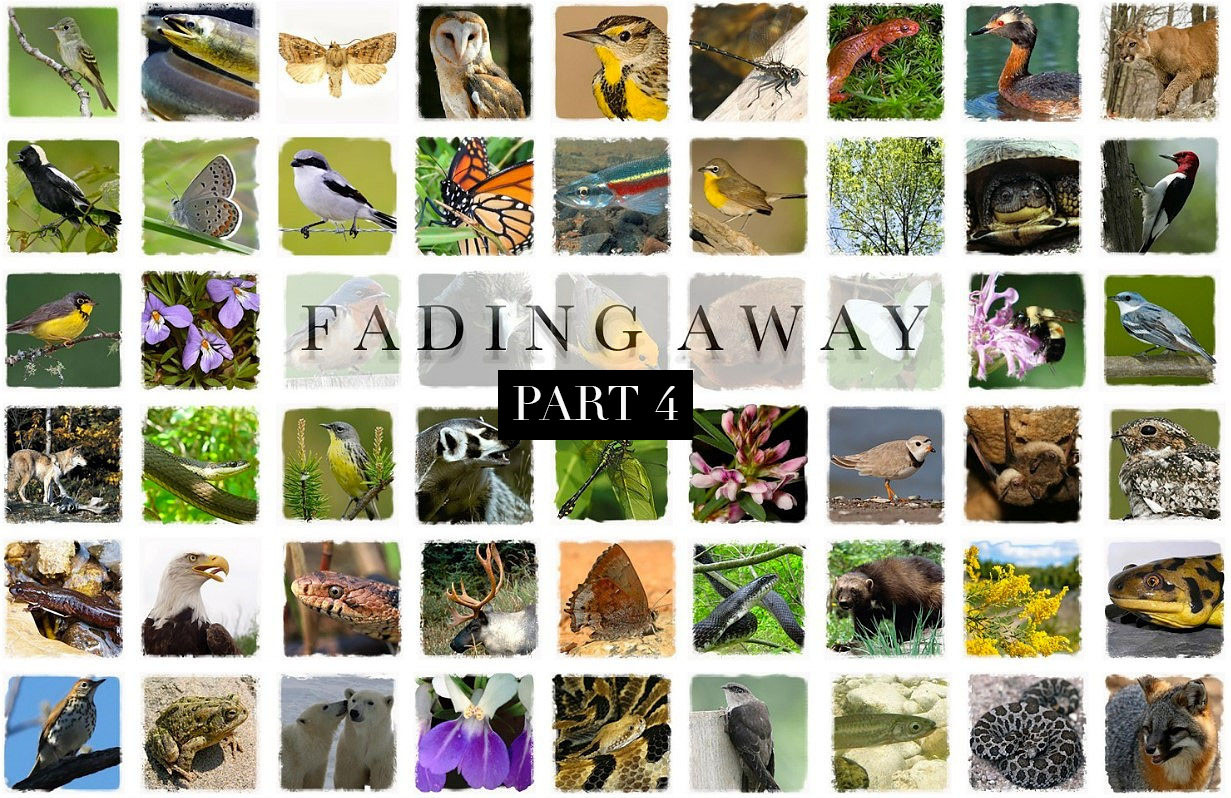
Greenbelt home to nearly 70% of species at risk in last two decades but PCs stay silent on mandatory review
Fading Away is an ongoing series from The Pointer analyzing how the Ontario government's decision making, and its repeated disregard for environmental stewardship, is impacting the province's most at-risk wildlife. Read the previous stories here: Part 1, Part 2, Part 3.
“Our ecosystem is like a Jenga tower. Each piece of that tower is an individual species. If you keep pulling out pieces, eventually, that tower will collapse.” The stark warning from Ontario Nature Conservation Policy and Campaigns Director, Tony Morris, has fallen on deaf ears within Ontario’s powerful majority PC government led by Doug Ford.
He has repeatedly tried to open up the protected Greenbelt, home to dozens of threatened species, for sprawling residential construction.
Ontario is one of the most biodiverse provinces in Canada, home to more than 30,000 known species—243 of which were listed on the Species at Risk list (prior to Bill 5) as a result of “habitat loss, pollution, invasive species, climate change and disease”, according to a 2019 discussion paper ‘10th year review of Ontario’s Endangered Species Act’ by the Ford government.
Today, Southern Ontario alone hosts 133 at-risk species—98 percent of which face local extinction without provincial action to protect them, a new Ontario Nature report released on May 22 (also celebrated as World Biodiversity Day) revealed.
The region has “one of the highest concentrations of species at risk of extinction in Canada”, the 2023 State of the Environment report by Ontario’s Auditor General flagged.
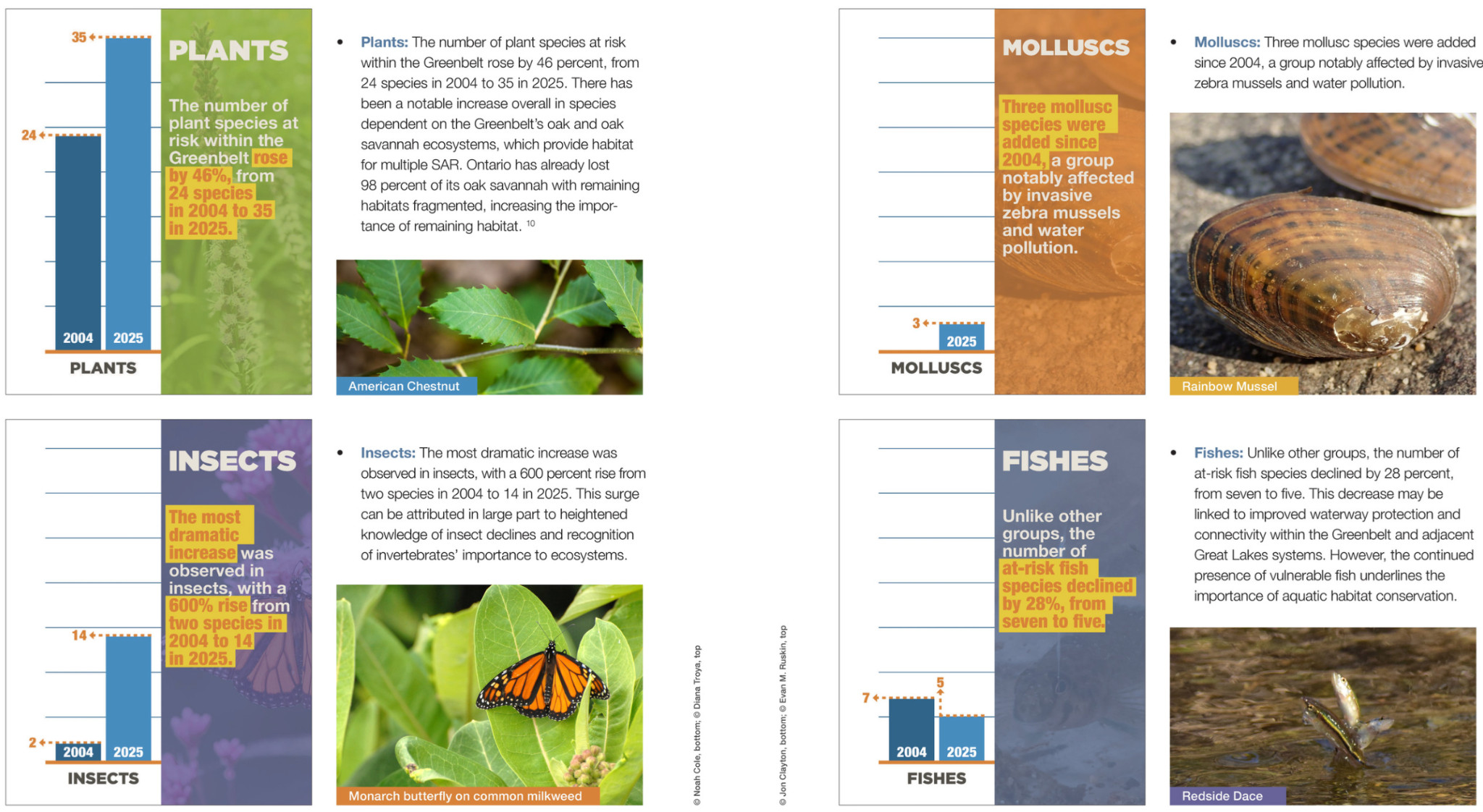
A new Ontario Nature report shows a rapid rise in species at risk within the Greenbelt across multiple taxonomic groups since 2004: Plant species at risk increased by 46 percent, from 24 to 35 while insect species saw the most dramatic jump, rising 600 percent from two to 14. Molluscs increased modestly with three additional species added over the period, a group particularly vulnerable to invasive zebra mussels and water pollution. Fish species at risk, on the other hand, declined by 28 percent (from seven to five).
(Ontario Nature)
For the past year, Morris has spent countless hours navigating the political maze inside and outside Queen’s Park, pushing back against policies threatening the province’s biodiversity and advocating for stronger conservation protections at a time when the public discourse remained dominated by fears of Donald Trump tariffs and economic warfare.
“We keep viewing nature as something to extract value out of. Eventually, those costs are gonna catch up with us,” Morris admitted.
“I’ve obviously been thinking about it a lot because it's taken up most of my days in the last year.”
On May 22 last year, committee hearings for Bill 5, dubbed Protect Ontario by Unleashing our Economy Act, kicked off… There, Morris found himself on the receiving end of pointed, personal questions from Mississauga–Lakeshore Member of Provincial Parliament Rudy Cuzzetto, who demanded to know whether Morris owned an electric car and where the minerals for his aluminum water bottle came from.
He had expected “interesting questions from the government”—just not ones that deflected from the real issues: “We don’t solve our economic problems by copying Donald Trump’s playbook. We don’t sacrifice endangered species. That’s not consistent with Canadian values.”
Two weeks later, Bill 5 was turned into law giving Ford and his “handpicked cabinet” the authority to establish “special economic zones” that allowed projects and “trusted proponents” to bypass provincial and municipal laws, all under the guise of cutting “red tape” to expedite resource extraction.
Perhaps, one of the most gutpunching changes for the environment was the burial of the gold-standard Endangered Species Act. It was replaced by the new Species Conservation Act (SCA), a shell of the former legal mechanism that gutted any available protection for at-risk wildlife by changing the legal definition of “habitat” for animals, birds and plants.
Under Bill 5, instead of broad ecosystem-based protections that encompass the full range of areas species need to survive and recover, habitat was deduced down to a species’ immediate physical spaces like nests, dens, root zones or narrowly defined life-process areas.
It removed the focus on helping rebuild and recover the populations of species in decline and eliminated the ability of enforcement officers to stop projects that pose damage to species habitat.
In 2021, the province’s auditor general had already found that permits to harm species at risk habitat had increased over 6,000 percent since 2008. Many of these permits were being approved automatically leading to a damning conclusion that the Ministry of the Environment was facilitating and enabling the harm of at-risk species, the opposite of its mandate.
“Recovery is no longer even a tenant of the piece of legislation,” Morris criticized.
“Because the Species Conservation Act’s definition of habitat is so limited, outside of the Greenbelt areas, it really isn't going to have a desired impact of protecting and helping species recover…which is why policies and plans like the Greenbelt become more and more important for protecting connectivity and habitats for biodiversity.”
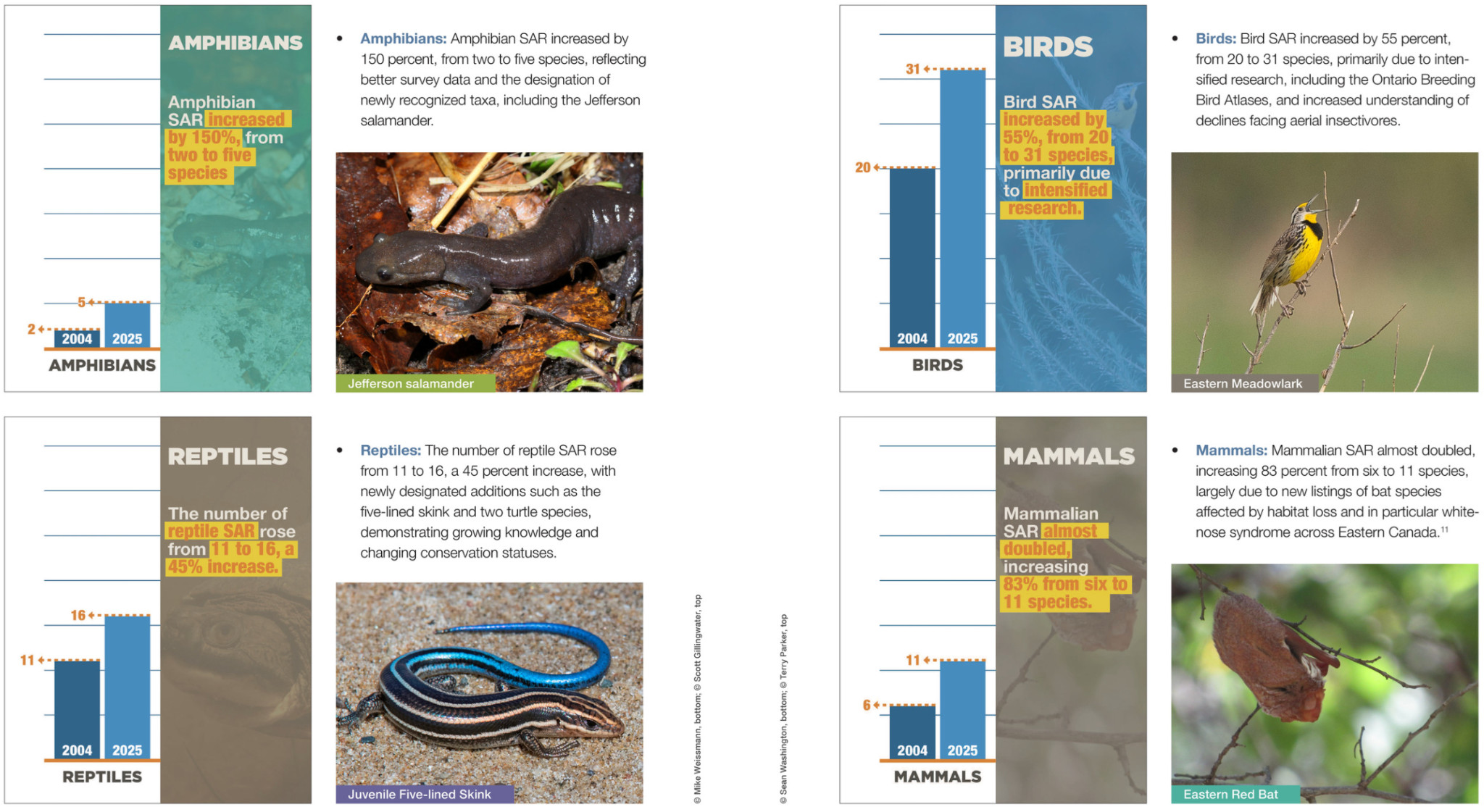
Amphibian species that are at risk increased by 150 percent, from two to five species in the Greenbelt while reptiles rose from 11 to 16. Bird species at risk grew by 55 percent, from 20 to 31, while mammals nearly doubled—increasing 83 percent from six to 11 species.
(Ontario Nature)
Despite the unfettered paving over of homes of species for houses aimed for future growth, there is one safe haven for biodiversity in Ontario: the Greenbelt.
The Greenbelt has protected nearly 800,000 hectares of farmland, forests, wetlands and watersheds from urban sprawl leading to a 68 percent increase in species at risk in the area from 72 in 2004 to 121 in 2025.
Morris, who grew up just outside Hamilton, was in high school when the Greenbelt Plan was passed in 2005, establishing a 2-million-acre protected area that includes the Niagara Escarpment, the Oak Ridges Moraine and nearly one million acres of prime farmland, among them the Holland Marsh and the Niagara region’s tender fruit and grape-growing lands, at a time when population increase was also driving demand for more housing.
“I grew up in a town that was surrounded by farmland and forests and was seeing rapid urban sprawl. I remember really thinking there must be a better way to do this,” he shared.
“That's part of where my conservation mindset and my values came from.”
That same year, the province introduced the Growth Plan for the Greater Golden Horseshoe under the Places to Grow Act, which was enacted in 2006 to guide density targets, direct growth inward, and reduce the social, economic, and environmental costs of sprawl.
The Greenbelt and the Growth Plan for the Greater Golden Horseshoe were meant to work in harmony: one protecting farmland and water, the other directing growth inward through higher density, transit investment, and efficient infrastructure. By October 2024, the PCs had repealed the Growth Plan for the Greater Golden Horseshoe.
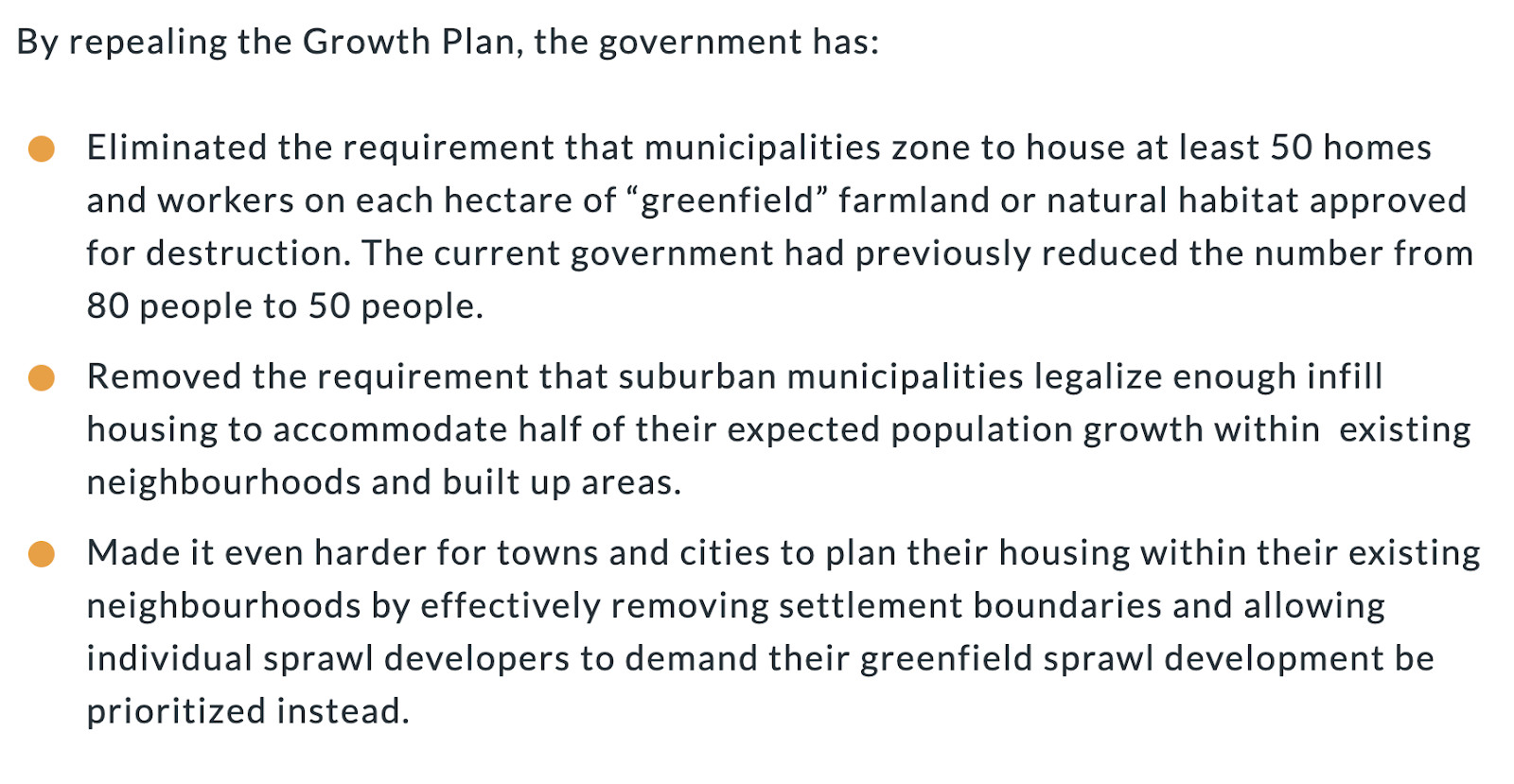
“The Ontario government’s repeal of the Growth Plan for the Greater Golden Horseshoe may be a death sentence for the province’s best farmland and many endangered species, and it also ends any real hope of fixing the housing shortage,” Environmental Defence land use and land development program manager, Phil Pothen, said in response to Ontario’s Provincial Planning Statement.
Within two years of the Greenbelt Plan, Queen’s Park passed the Endangered Species Act (2007) and the Clean Water Act (2006), adding more layers of protection for Greenbelt lands to help prevent species extinction and safeguard the province’s vital water resources—now at risk as the PCs continue to butcher the province’s environmental framework with every year in power while pushing for more unwanted highways like the Bradford Bypass and Highway 413 as well as unchecked development.
Like Hamilton, Caledon has also borne the brunt of housing and aggregate pressures. About 45 percent of the Region of Peel falls within Ontario’s protected Greenbelt, with the vast majority of that land located in the largely rural Town of Caledon.
In 2024, Mayor Annette Groves using Ontario’s Strong Mayor powers advanced a developer-backed plan supported by a majority of council to rezone 12 properties across the town—much of it greenspace, farmland and portions of the Greenbelt—to enable the construction of roughly 35,000 new homes after the province had assigned the Town a housing target of about 13,000 units by 2031. The rezoning covered roughly 5,000 acres, well beyond what was required to meet that target.
Today, as an avid cyclist pedaling through the pristine green corridors, Morris observes the contrast firsthand as protected farmland and forest abruptly meet the edges of expanding subdivisions.
“You see the Greenbelt signs but then you see that suburban sprawl right up to the boundary.” He paused and continued, “those were also agricultural lands we are continuing to lose.”
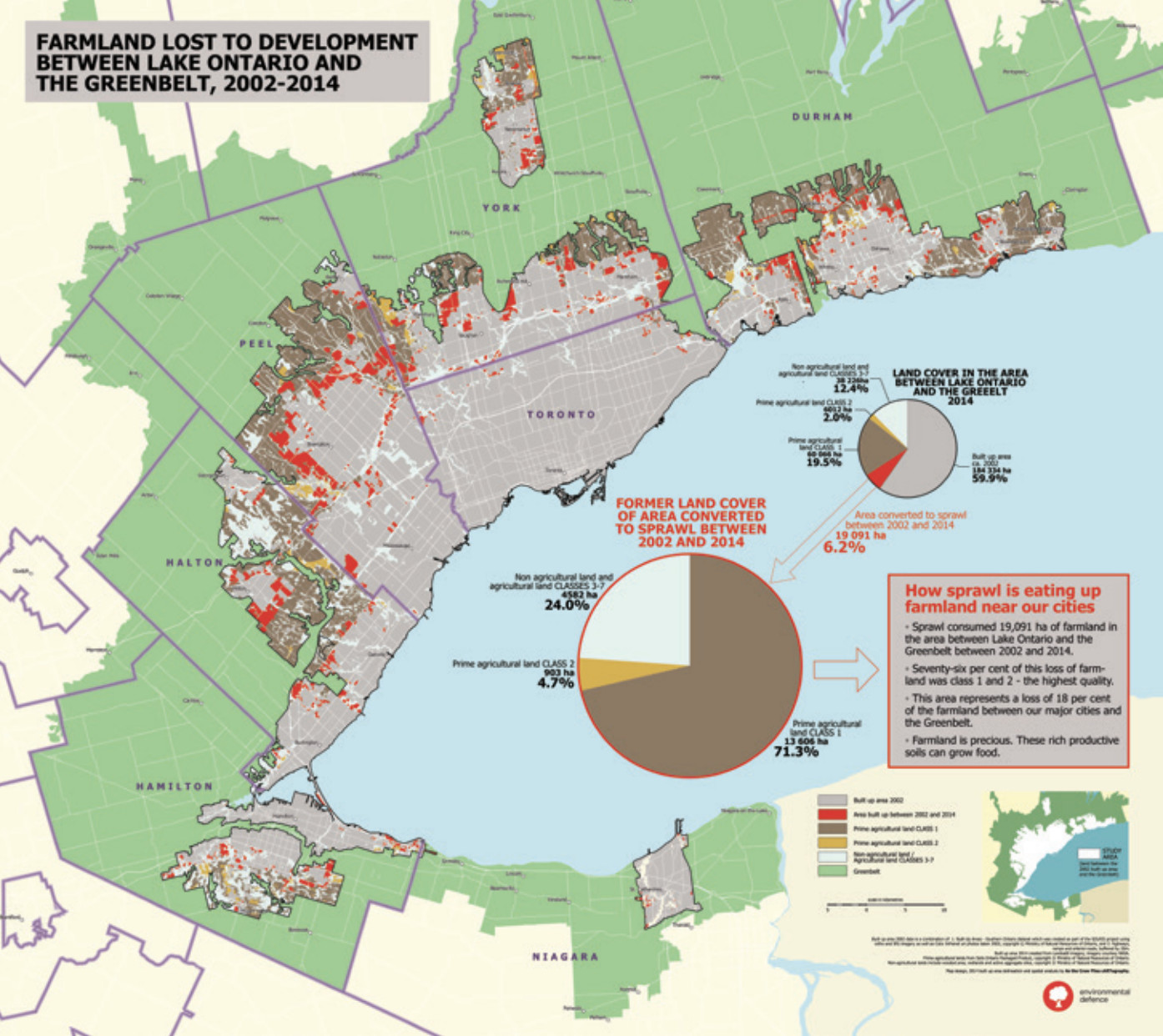
Between 2002 and 2014, Ontario lost 18,978 hectares of the best farmland (Class 1 and Class 2) between Lake Ontario and the Greenbelt. Without the Greenbelt, the province would have lost an estimated quarter million acres of fertile farmland by 2031 to sprawl development.
(Dumb Growth to Smart Growth/Environmental Defence)
In 2018, during his election campaign, Ford told a room full of developers that his government would “open a big chunk” of the Greenbelt if elected. Although that promise was later backtracked following the revelation of the Greenbelt scandal, where a land swap removed 7,400 acres of protected land for housing and prompted independent investigations into a flawed process that allegedly favoured well-connected developers, the PCs have found other ways to attack the Greenbelt: highways.
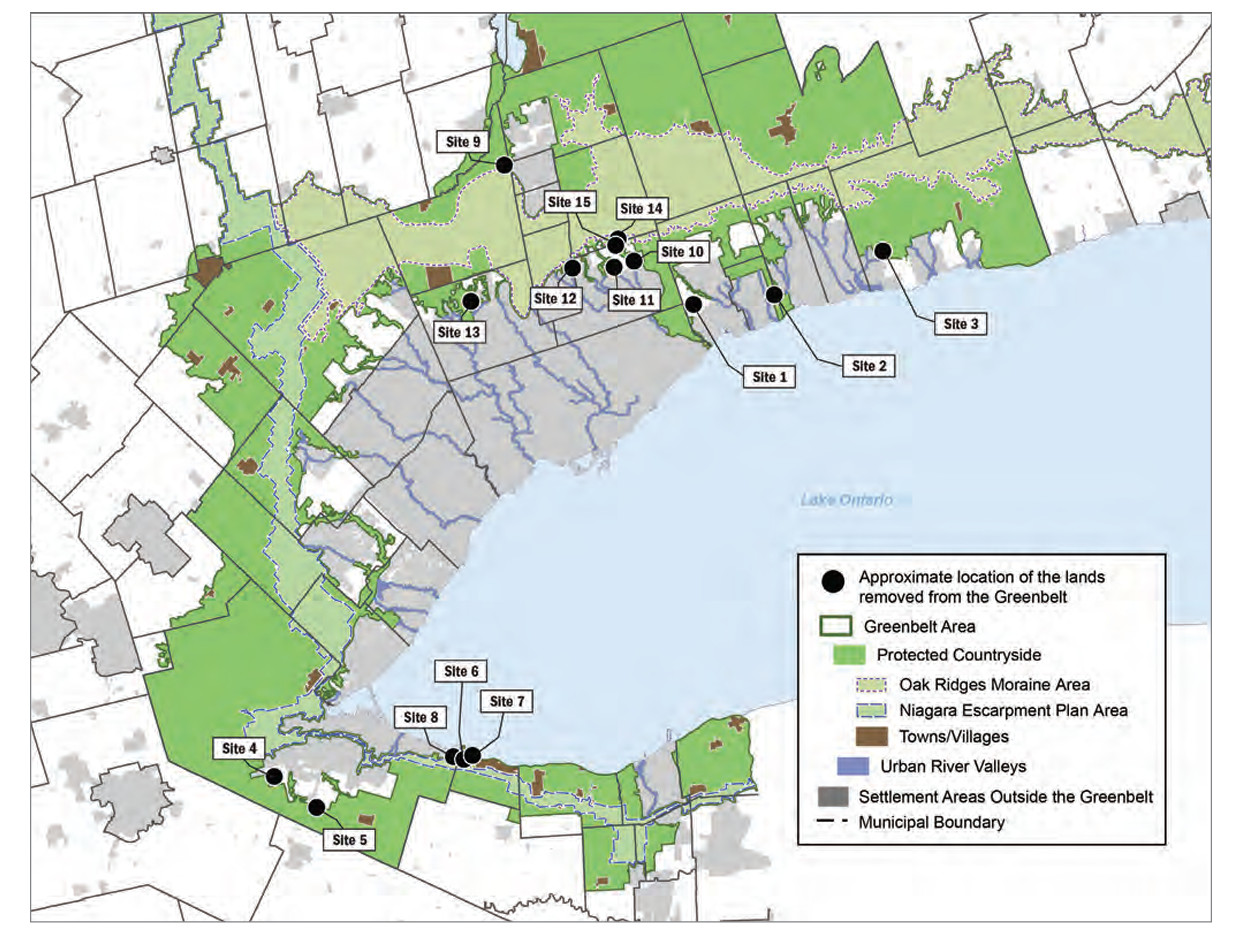
The 15 parcels of land removed from the protected Greenbelt by the Progressive Conservative government in 2022.
(Environment Registry of Ontario)
“As I’ve said, we aren’t going to hold up Highway 413, the Bradford Bypass, over a grasshopper — not happening,” Ford said.
“We have a mandate to build. We’re going to build, and we’re going to respect the environment at all costs.”
A recent analysis by Environmental Defence and reviews of the Ministry of Transportation's Environmental Impact Assessment Report (EIAR) confirm the proposed 52-kilometer Highway 413 will pave over approximately 300 hectares of vital forests, meadows and wetlands while destroying or degrading thousands of acres of sensitive natural areas, threatening approximately 29 federally listed at-risk species (and up to 65 total in the Credit River watershed), including birds, insects and fish.
The redside dace, a small minnow-like fish, highly sensitive to changes in water quality and temperature, is a valuable indicator of aquatic ecosystem health within the Greenbelt.
Its populations are largely restricted to small, clear shaded streams and forested watersheds. Recent surveys have indicated many populations remain stable only where robust riparian buffers are in place and where land use pressures are minimized or avoided entirely. Ontario Nature’s latest report highlighted the fish’s population is shrinking by more than five percent annually across Ontario, yet the PCs approved about 500 permits from 2007 to 2020 for activities affecting its habitat.
The federal government recently announced a critical habitat order prohibiting any destruction of the redside dace's remaining habitat in a number of important watersheds overlapping the Greenbelt including Saugeen River, Bronte River, Credit River, Humber River, Don River, Rouge River, Duffins Creek and Carruthers Creek.
But proposals for major infrastructure projects like Highway 413 and Bradford bypass and urbanization pressures in headwater areas surrounded by or adjacent to the Greenbelt continue to threaten the indicator species, already under threat due to climate change, construction and aggregate operations in the Region of Peel and surrounding municipalities contrary to what residents want.
A 2024 EKOS poll commissioned by the David Suzuki Foundation shows that 74 percent of Ontarians, rising to 81 percent in Toronto, agree the Greenbelt is no place for new highways.
Opposition from Vaughan to Milton, the route for the proposed Highway 413, is even stronger, with 81 percent of respondents siding with farmers who oppose the road, including residents of the 905 region, city dwellers, and even many daily car drivers.
Morris says the Premier’s words reflected “a fundamental misunderstanding of how ecosystems work”.
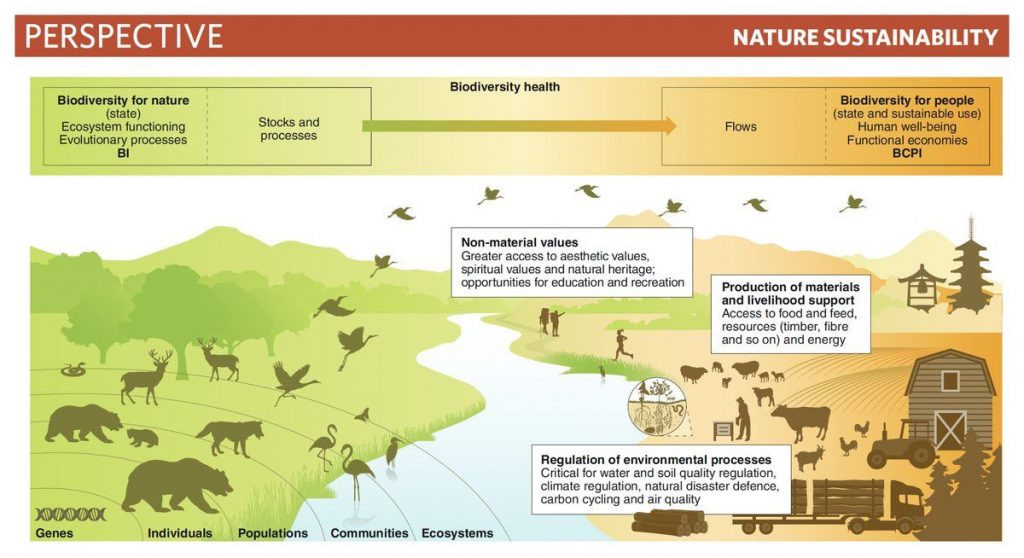
Biodiversity is essential for human survival because it underpins the systems that sustain food, water, climate and health. Biodiversity loss and climate change are deeply interconnected crises that cannot be addressed in isolation, since both are driven by human activity and reinforce one another. In agriculture, where biodiversity has historically been diminished through land conversion and intensive practices, its value is clear: diverse ecosystems provide critical services such as nutrient cycling, soil formation, pest control, water filtration and carbon storage. From the microbes in a single handful of soil to entire wetlands and forests, biodiversity supports the productivity and resilience of the natural systems human beings rely on every day. It is also what keeps ecosystems stable in the face of stress, helping prevent collapse, reduce the impacts of extreme weather and maintain the long-term ability of land to produce food. Therefore, protecting biodiversity is not separate from human progress, it is the foundation that makes it possible.
“We depend on that [Jenga] tower [of ecosystems] for clean water, clean air, food, nature access, mental well-being,” he emphasized.
“We really need to stop viewing nature as something outside—humans are part of nature. And we need to start thinking of economic solutions that recognize the value of nature. And work to protect it and restore it.”
Ontario’s Greenbelt generates approximately $9.6 billion in annual economic activity and supports around 177,700 full-time jobs through agriculture, recreation, and tourism, and also delivers $3.2 billion in ecosystem services such as flood protection and water purification, helping reduce infrastructure and healthcare costs for Ontario families.
It also helps reduce carbon emissions by acting as a large-scale carbon sink, where its forests, wetlands and agricultural soils absorb and store significant amounts of atmospheric carbon dioxide through carbon sequestration, capturing approximately 0.55 megatonnes of carbon annually and reducing the net emissions from the area to 4.35 megatonnes per year—benefits that grow more vital as climate risks rise.
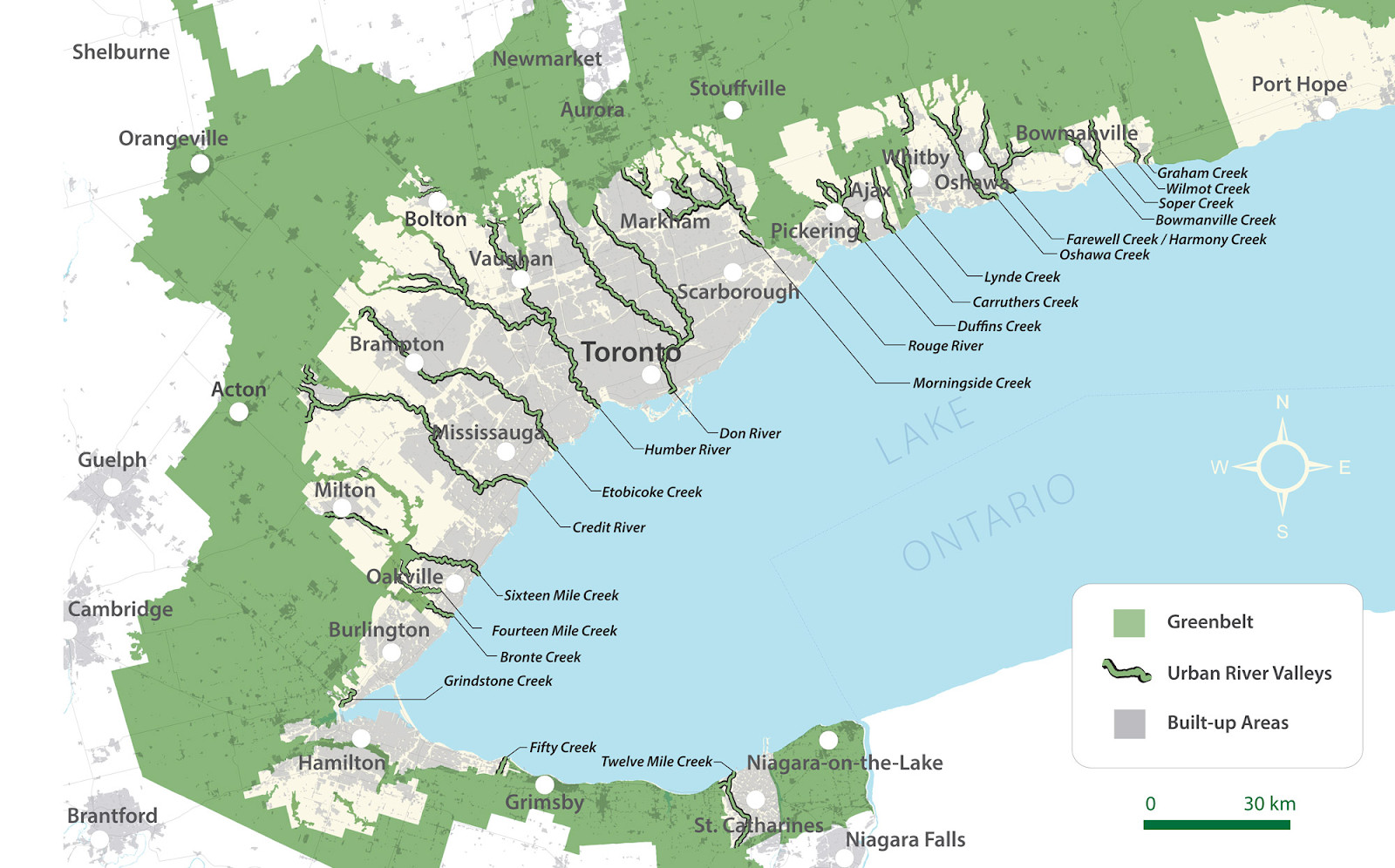
In 2017, Greenbelt protections were expanded to include 21 major urban river valleys and seven coastal wetlands across the Greater Golden Horseshoe, including the Credit, Rouge, Don, Humber, Etobicoke, Duffins, Twelve Mile, Fifty, Grindstone, Bronte, Fourteen Mile, Oshawa, Sixteen Mile, Lynde, Graham, Carruthers, Farewell, Harmony, Soper, and Wilmot Creeks. By 2020, the Greenbelt was providing $3.2 billion per year in ecosystem services to the region, including $224 million in flood protection for private property and $52 million in carbon sequestration annually.
That’s why Morris believes the Greenbelt plan was “ahead of its time”.
Even though the legislation was not popular initially, especially among farmers who hoped to sell their land to developers and retire or buy land further north, it has come around to be one of the most “cherished public” policies.
In May 2022, the Ontario Federation of Agriculture eventually called for growth inward rather than outward sprawl.
“For decades, farmers have been losing prime farmland to urban sprawl,” Ontario Federation of Agriculture (OFA) former vice president Drew Spoelstra said in a statement.
“OFA believes fixed, permanent urban boundaries will help limit the loss of agricultural land. By redeveloping vacant or underused space, utilizing areas with poor soils or drainage, reinventing existing infrastructure, or building higher density development, we would be able to preserve Ontario’s productive land for food production.”
An Ontario Greenbelt Alliance survey shows 80 to 90 percent of Ontarians support the Greenbelt and it is “one of the province’s most trusted and recognized environmental protections”.
Although the Ontario Greenbelt Plan is subject to a mandatory comprehensive review every ten years, the Ford government has yet to publicly advance the review that was due in February 2025.
The Pointer reached out to the Ministry of Municipal Affairs and Housing for a statement but did not receive a response by the time of publication.
“It’s disappointing,” Morris said, adding that stronger protections are still needed across the Greenbelt.
He insists the Greenbelt review must be “evidence-based” and hold the government accountable for its broken promises as it is now “the only plan left standing” to protect Ontario’s farmland, natural areas, and water systems.
Doyle recommended “tightening the infrastructure policies,” banning land “swaps,” and allowing only “minor boundary refinements.”
The new plan requires a “robust public consultation process led by an objective and interdisciplinary and multi-sectoral panel,” grounded in collaboration with conservation authorities, academics, municipalities, and non-governmental organizations. Doyle emphasizes the process must be transparent, with data publicly available, just as it was in 2015, when research on farmland loss, infrastructure costs, and watershed health showed the Greenbelt was “generally working.”
A recent Greenbelt Foundation report highlighted the practice of Natural Asset Management (NAM) as a vital approach for municipalities to recognize, value, and manage natural assets as essential infrastructure.
Local governments are encouraged to adopt two key strategies: first, integrating natural assets like forests, wetlands and waterways into traditional asset management plans alongside roads and bridges, allowing municipalities to balance the services, costs, and risks these assets provide. Second, embedding natural assets and their ecosystem services into broader municipal policies including official plans, climate action strategies, development guidelines and tree protection bylaws.
The dual approach helps to safeguard natural resources and elevates their importance in land-use decisions and budgeting processes.
Akin to the Greenbelt Foundation’s asks, Ontario Nature is calling on the Ministry of Municipal Affairs and Housing and the Ministry of Environment, Conservation and Parks to restore a landscape-level approach to biodiversity protection including introducing enforceable buffers and setbacks around species at risk habitat, restricting infrastructure and aggregate extraction in high-value ecological areas and ensuring that ecological connectivity is maintained through measures such as wildlife corridors and crossings.
Morris recommended meaningfully inculcating Indigenous rights and knowledge into land-use planning while expanding Greenbelt boundaries where ecologically necessary because it “isn’t just a buffer against urban sprawl; it’s a refuge for a diversity of life.”
Email: [email protected]
At a time when vital public information is needed by everyone, The Pointer has taken down our paywall on all stories to ensure every resident of Brampton, Mississauga and Niagara has access to the facts. For those who are able, we encourage you to consider a subscription. This will help us report on important public interest issues the community needs to know about now more than ever. You can register for a 30-day free trial HERE. Thereafter, The Pointer will charge $10 a month and you can cancel any time right on the website. Thank you
Submit a correction about this story

