

Officer training helps identify more human traffickers in Peel, but bloated police budget starves critical services to help survivors
In 2023, it was announced that Peel Police officers were going to be educated to spot the signs of those experiencing human trafficking, training that was developed by survivor Timea Nagy after her own personal experience being trafficked.
“We're actually one of the only police services to have that training delivered to all of our frontline people, so we are seeing an increase in reports coming from our frontline officers to our investigative unit,” Deputy Chief Nick Milinovich said to the media during a human trafficking symposium hosted by Peel Police and Victim Services of Peel on February 25 and 26.
“We're seeing officers recognize the signs earlier for human trafficking. The training that our frontline officers receive is unique to the function as a police officer,” Milinovich added.
According to him—Peel Police Chief Nishan Duraippah was not present on the first day of the symposium—the human trafficking unit has investigated almost 1,000 complaints, supported 175 survivors in court and charged more than 200 individuals with human trafficking related offences in the last five years.
“Scale that up beyond Peel, to other municipalities, scale it up to the province, on a national level, and then give some thought to who is affected by all of those incidents. We really begin to understand the scope of the issue.”
The Region of Peel has been an epicentre of human trafficking in Canada for a decade.
In Canada, human sex trafficking increased nearly fourfold between 2014 and 2024, increasing from 143 police-reported incidents in 2014 to 503 in 2024—374 of these were reported in Ontario. The startling increase in just 10 years is only a fraction of the actual incidents occurring across Canada as many victims refuse to come forward to police.
According to data from Statistics Canada, there were 596 police-reported incidents of human trafficking (including labour trafficking) in 2022 across the country. The same year, in Peel alone, over 600 survivors and individuals at risk of trafficking received assistance from service providers, an 801 percent increase from the year before.
Numbers ballooned even higher in 2024, increasing an additional 116 percent, with the Region assisting 1,323 survivors or individuals at risk of sex trafficking.
There are numerous reasons for the discrepancy. A majority of survivors do not trust police or other institutions set up to help them, according to a Human Trafficking Needs Assessment completed by Family Services of Peel (FSP) in 2019. A survey conducted by FSP in 2020 found almost 95 per cent of the 91 survivors assisted by local organizations largely indicated a “lack of trust in the system.”
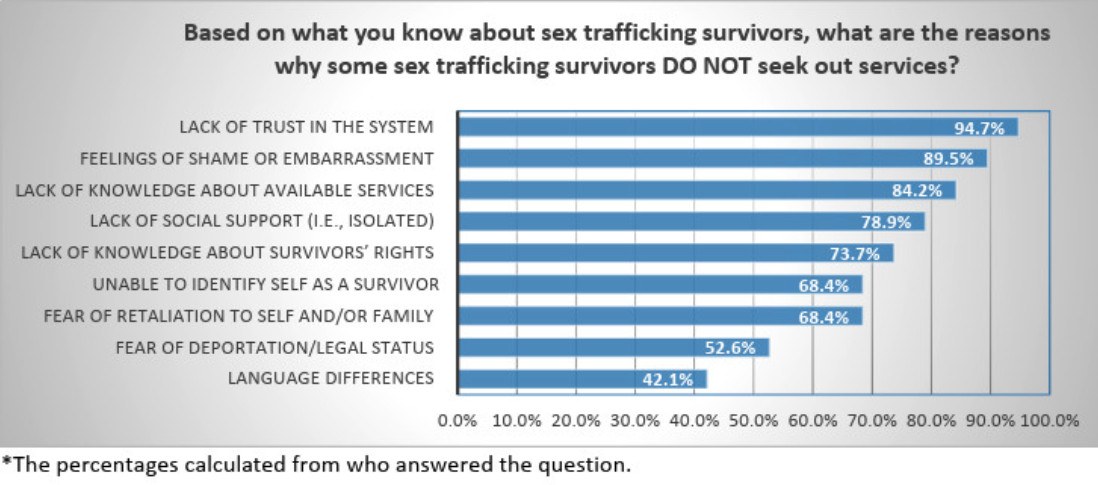
A report from Family Services of Peel, outlined the range of reasons human trafficking victims and survivors do not trust the systems meant to help them.
(Family Services of Peel)
Ahead of February’s symposium there was a clear reminder of just how frequently traffickers use Peel to conduct their business.
On February 23, Peel police arrested four individuals in connection to the trafficking of several young female victims ranging from 11 to 14-years-old.
One of the suspects arrested was only 15.
“It's a reminder of how important this work is and the experiences that some of our survivors are suffering through,” Milinovich said to the media after the symposium. “I really believe it's a violation of human decency. It should not be happening.”
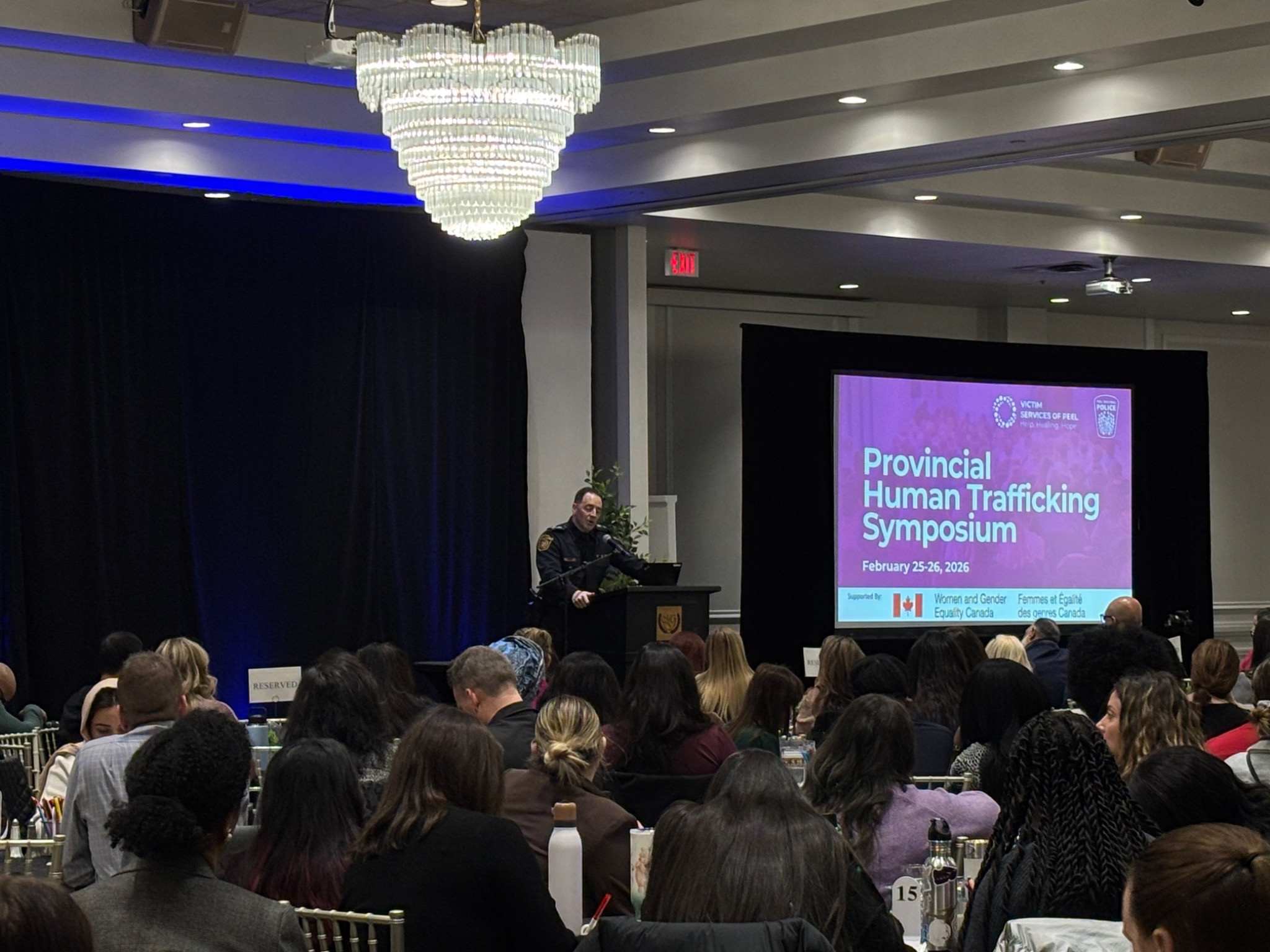
Peel Police Deputy Chief Nick Milinovich spoke at Peel’s Human Trafficking Symposium in February. While hinting that more funding needs to be put toward frontline services to help survivors, he failed to acknowledge how the unsustainable increases to the police budget take funding away from these critical services.
(Benjamin Steeves/The Pointer)
Following the symposium, The Pointer sent a list of questions to Peel Police to learn what will be done with the testimonials and comments made by survivors and service providers during the symposium.
They did not respond.
The silence follows years of police leaders and local officials providing assurances that combatting this brutal crime is a top priority, while rarely matching their verbal commitments with action.
For example, during the symposium, Deputy Chief Milinovich acknowledged:
“If we want people to feel comfortable and to heal and to move on from their lives, it is unbelievably important that we support the services that help them do that. But also the people that are experiencing those things, we need to wrap our arms around them.”
This reference to frontline support echoes what service providers in Peel have been telling The Pointer for years. But it rings hollow from a Deputy Chief who stays silent during budget time when the police service continues to receive unsustainable increases in funding, including to his own salary, which, along with the Chief’s and other senior officers, make them some of the highest paid police officials in the country.
Regional Chair Nando Iannicca, who is also Chair of the Peel Police Board, attempted to provide his assurances to attendees at the symposium.
“For every dollar that you put towards preventing these outcomes, you save up to $16 at the back end,” he said. “We know that enforcement alone cannot solve this problem, but building trust within the public and ensuring policies are effective are what keeps people safe.”
The Police Board he oversees is responsible for approving the budget of Peel Police. Not once over the last five years has Iannicca raised this issue during budget time, or pointed out to the board that if more money were invested into frontline, preventative services, it would provide valuable benefits to victims and survivors of human sex trafficking.
Instead, Iannicca, and others on the board, have rubber-stamped massive increases to the police budget—14 percent in 2024; 23.3 percent in 2025; and 9.9 percent in 2026—taking money away from these vital services in Peel.
He and Chief Duraippah know the skyrocketing police budget, largely to pad excessively high salaries, is starving critical frontline support services—stakeholders in Peel have repeatedly pointed this out to them.
“This is a bad direction to go,” Michelle Bilek, who has worked in Peel's affordable housing sector for decades, told regional councillors ahead of them approving the largest budget increase for Peel Police in the organization’s history. She noted no social services in Peel would ever get anywhere close to the same level of increase. It is more likely that money that might have been directed to a range of services, will instead go to police.
While Peel funds a human trafficking services hub to help survivors and provides $1.5 million annually for a limited number of shelter spaces dedicated to survivors, the funding is dwarfed by the almost $1 billion Peel police budget, which almost doubled in just six years.
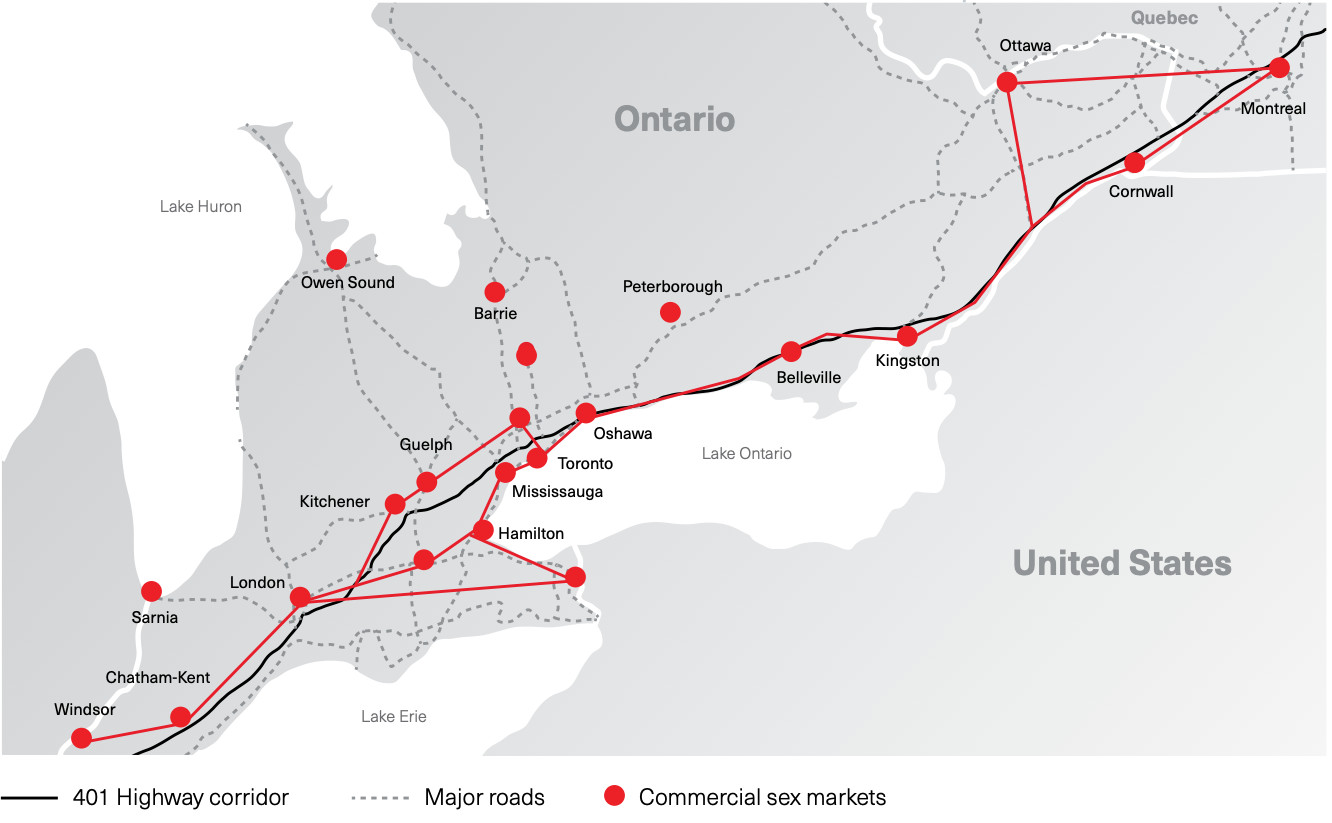
Human traffickers are known to operate along the Highway 401 corridor, capitalizing on the densely populated regions along the route while also allowing them to transport their victims frequently and with ease.
(Canadian Centre to End Human Trafficking)
Solicitor General Michael Kerzner also spoke during the event, detailing the changes last year made within the Accommodation Sector for the Registration of Guests Act, requiring Hotels, Motels and Airbnbs, at the beginning of 2026, to record names and the residence of the guest(s), their primary phone number, vehicle information such as license plate and billing address, all of which must be kept for six years from the end of the fiscal period when it was recorded.
Kerzner thanked the federal government for the $267 million of taxpayer money provided over three years through the Community Safety and Policing Grant, which complements funding the PCs have added into the human trafficking services sector since 2018. This includes $20 million annually announced in 2019 followed by an additional $307 million over five years starting in 2020.
While the investment by the PCs marked a significant increase from the previous Liberal government, service providers are still experiencing difficulties obtaining sustained funding. Much of the government grant funding is short-term, which does not align with the long-term supports needed to help survivors of human trafficking rebuild their lives.
In his closing remarks, Kerzner noted how the fight against human trafficking must be done together rather than by separate entities.
“We have to understand that if we lose our commitment, if we lose our drive, if we lose our enthusiasm, we'll never get to the finish line,” Kerzner said.
Following him was Brampton MPP Charmaine Williams who discussed the detrimental impacts human trafficking has on its survivors and the families left behind.
“When I look around this room, this room is packed with so much knowledge,” she said, calling on those gathered to work together.
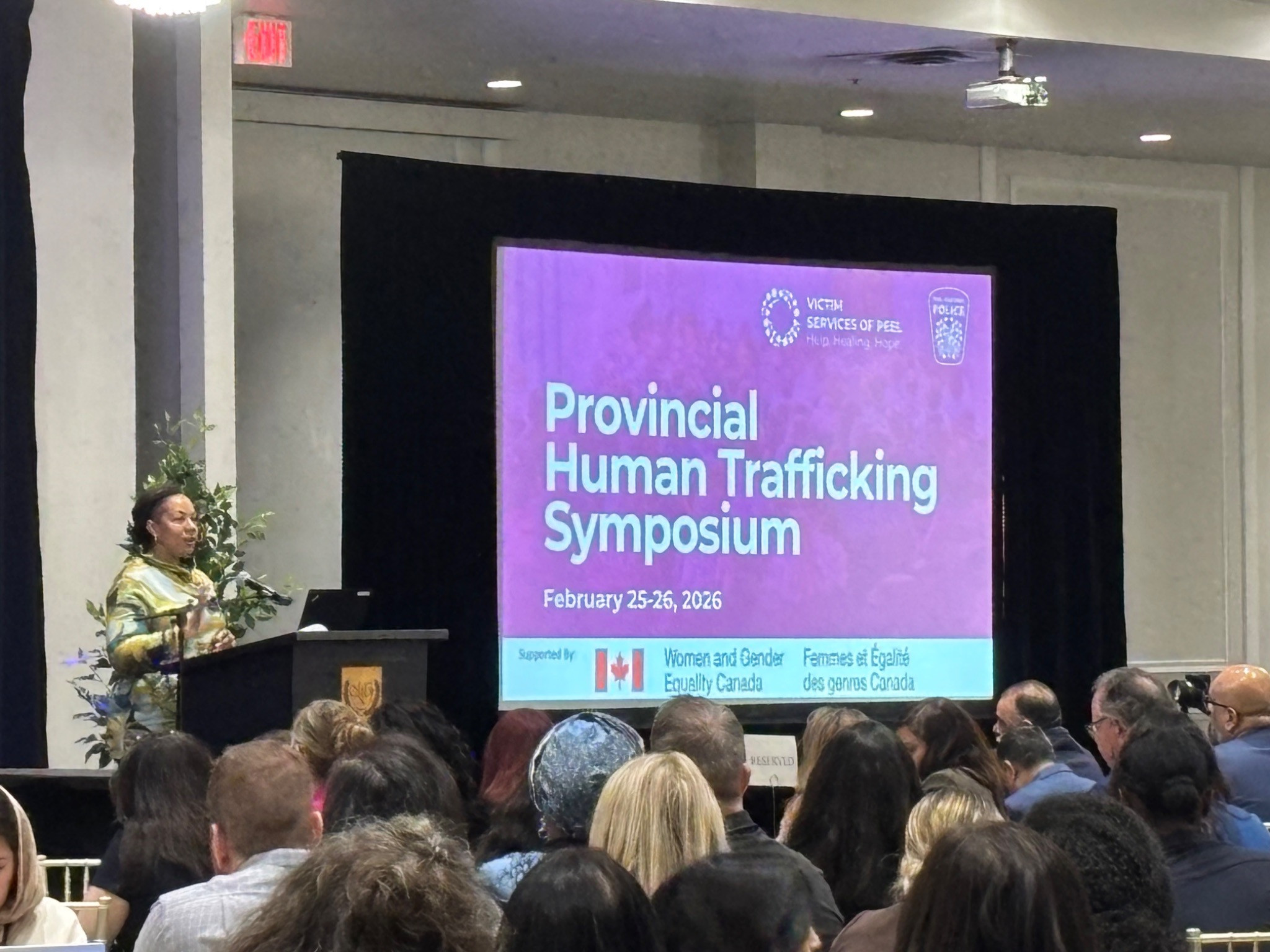
Brampton MPP Charmaine Williams speaking to a room of over 400 people during Peel’s human trafficking symposium in February.
(Benjamin Steeves/The Pointer)
She discussed how the PCs renewed Ontario’s anti-human trafficking strategy in 2025, committing more than $345 million over the next five years, and scaling up programs like CARE (Children at Risk of Exploitation), bridging child protection workers, police officers and indigenous liaisons together, supporting more than 200 children between the ages of 12 and 17.
While the majority of people trafficked are women (82 percent), between 18 and 24, those under the age of 18 make up almost a quarter (23 percent) of the total number of women trafficked across Canada, according to 2024 data from Statistics Canada.
Williams, looking out over the packed audience of stakeholders—an illustration of how widespread the crime of human trafficking in Peel has become—continued.
“You know, I see people who refuse to give up on safety, refuse to give up on dignity, and hope.”
Email: [email protected]
Email: [email protected]
At a time when vital public information is needed by everyone, The Pointer has taken down our paywall on all stories to ensure every resident of Brampton, Mississauga and Niagara has access to the facts. For those who are able, we encourage you to consider a subscription. This will help us report on important public interest issues the community needs to know about now more than ever. You can register for a 30-day free trial HERE. Thereafter, The Pointer will charge $10 a month and you can cancel any time right on the website. Thank you
Submit a correction about this story

