
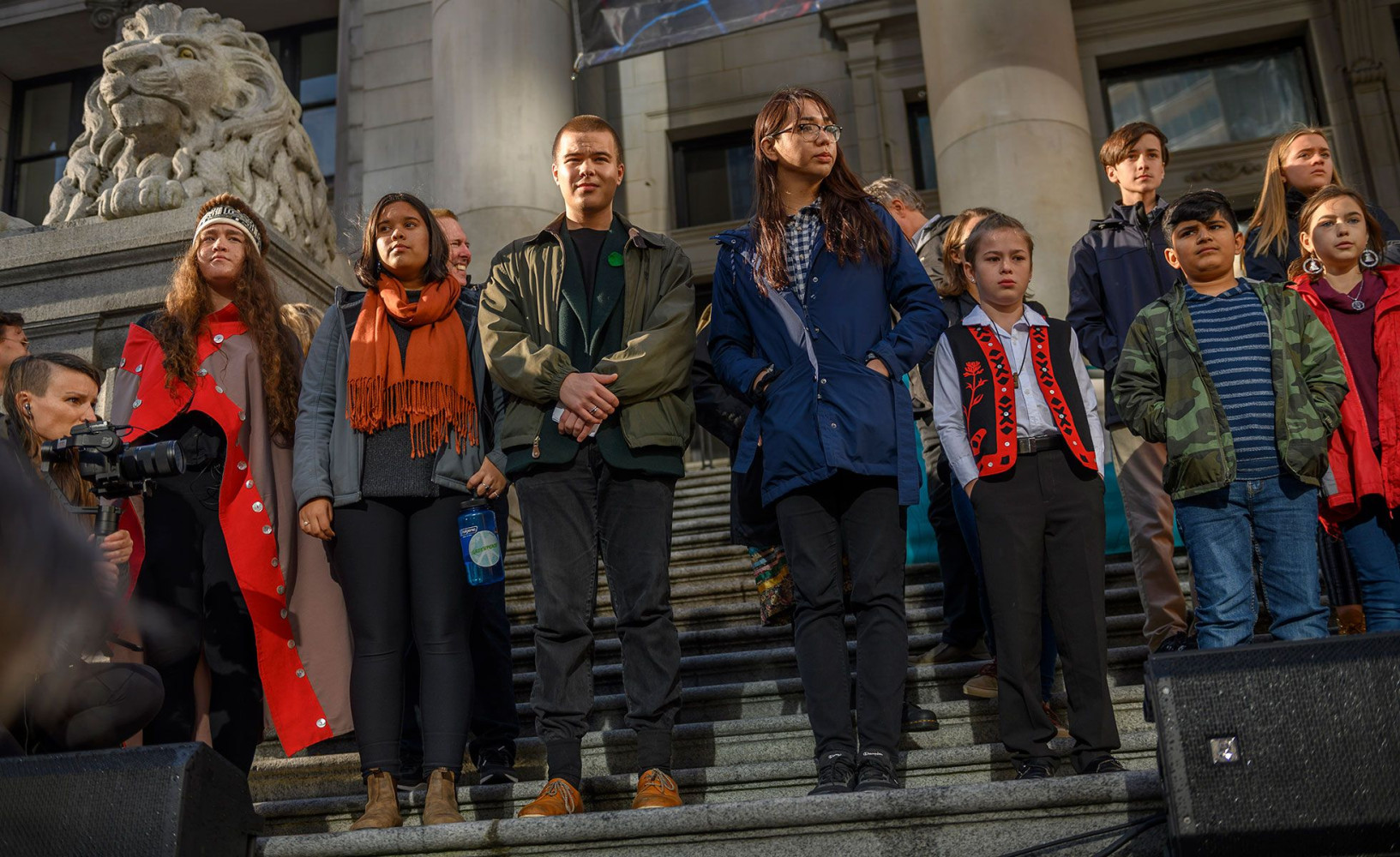
Canada’s first federal youth-led climate trial begins in Federal Court
In a legal challenge pitting a roster of federal lawyers backed by the full force of Canada’s ruling government against a group of youth fighting for their future, 15 young Canadians — including Mississauga resident Mikaeel Mahmood — finally got their day in Federal Court on Monday. They launched an unprecedented eight-week trial in Vancouver over the federal government’s role in the climate crisis.
For most of his life, Mahmood thought climate change just meant bad weather.
Then, his daily walk to school became an unwelcome experiment.
Punishing heat made the trek nearly unbearable. Polar vortices made getting to school impossible.
His ideal life, to one day become a farmer, began to melt with the rising temperatures, droughts and biblical rainfall reaping widespread crop failure.
In October 2019, when he was just 10, Mahmood joined 14 other young Canadians from seven provinces and two territories. They came together, like characters in an epic Marvel feature, to take on Ottawa in court over the federal government’s continued greenhouse gas emissions and its response to the climate crisis.
“We don’t have a second chance — this is our one planet,” he said.
“It’s a planet that I like, and certainly don’t want to risk. It’s our right to a safe world, and governments need to respect that.”
They argued their constitutional right to life, liberty and security of the person under Section 7 and 15 of the Canadian Charter of Rights and Freedoms, was being gravely threatened. A similar challenge, known as the Mathur case, is facing the Ontario government in provincial court.
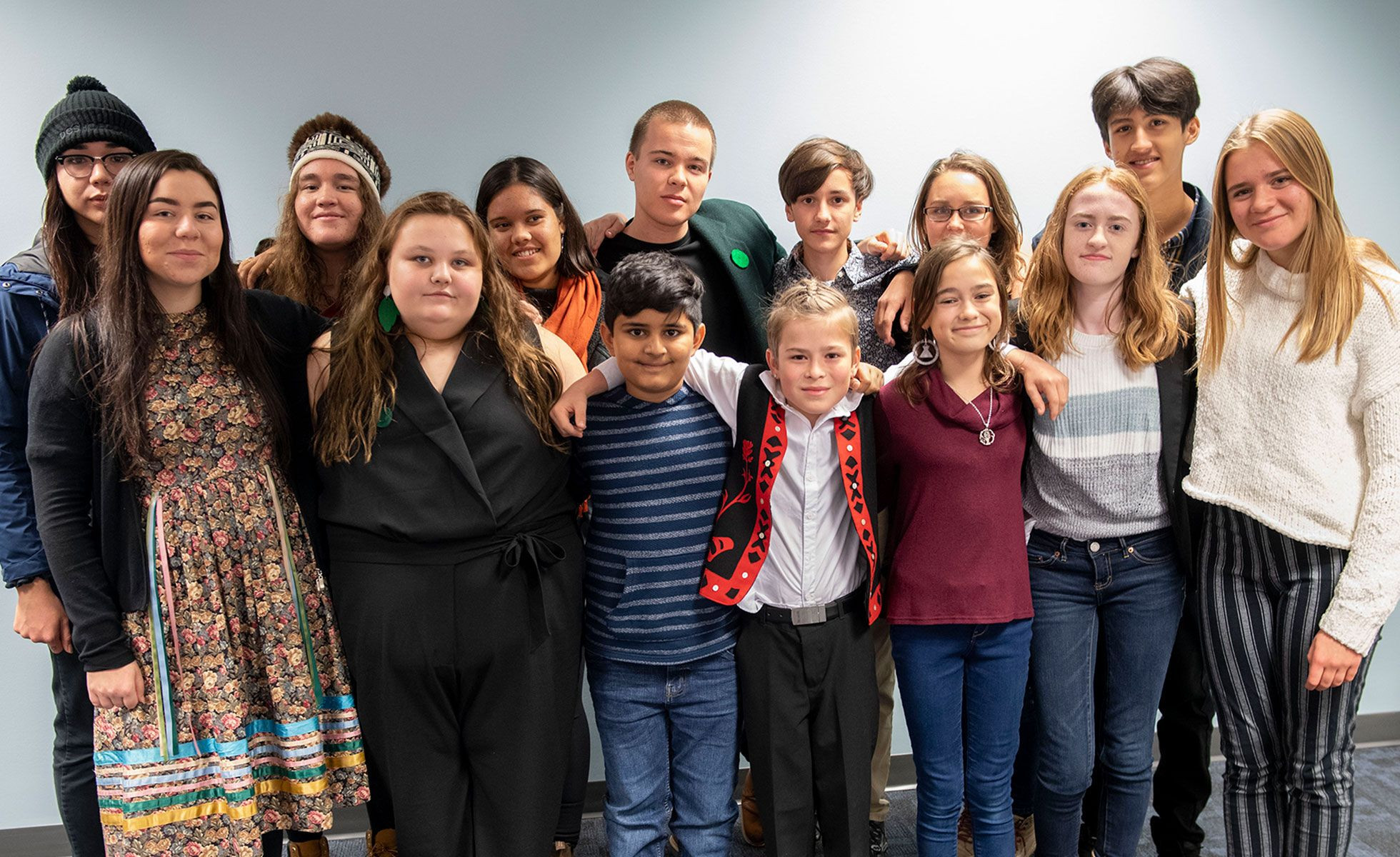
Mikaeel Mahmood (center) is the youngest plaintiff in the climate lawsuit ‘La Rose et al. v. Her Majesty the King’. (Robin Loznak/Our Children’s Trust)
A year later, the Federal Court dismissed the lawsuit, La Rose et al. v. Her Majesty the Queen, after the team of federal government lawyers brought a motion to strike it.
Justice Michael Manson concluded it was “plain and obvious” that the case would fail as the sweeping claims of the young plaintiffs regarding constitutional rights and the public doctrine were too broad and political for judicial intervention, lacking a reasonable cause of action under Canadian law.
The plaintiffs refused to give up. They appealed in November 2020.
In December 2023, three justices at the Federal Court of Appeal unanimously ruled that the youth deserve a trial and partially overturned the lower court’s decision; it allowed the plaintiffs’ Section 7 argument—that Ottawa’s decisions impacting climate change threaten their constitutional rights—to proceed. However, the appeal court did not reinstate the claims under Section 15 and the public trust doctrine remained dismissed.
Justice Donald Rennie rejected the notion that the complexity of climate change or the political nature of climate legislation automatically made the dispute unsuitable for the courts.
“The argument is novel, but it is not doomed to fail,” he wrote in the decision.
“Courts should be cautious in striking claims at an early stage.”
The court recognized the possibility that Section 7 could, in exceptional circumstances, impose “positive obligations” on governments to protect fundamental rights; whether such an obligation exists in this case would have to be determined at trial.
Traditionally, Section 7 has been understood primarily as protecting people from government actions that deprive them of life, liberty or security of the person in ways that are inconsistent with the principles of fundamental justice.
The plaintiffs have been asking the court to consider whether those protections can go further when government inaction contributes to serious harm that could be prevented by reasonable and achievable policy decision-making.
On October 26, one of the plaintiffs, Kira Young — an undergraduate student at McMaster University — appeared before Federal Court Justice Simon Fothergill to tell the horrifying tale of how the raging 2023 wildfires (which burned 18.5 million hectares of land across the country) forced her family to flee their Yellowknife home, leaving her “fearful” about the future of the place where she grew up.
Raised in the Northwest Territories, spending time outdoors — skiing, cycling, canoeing and sailing — has shaped Young’s identity and remains “very important” to her physical and mental health.
During a canoe trip on the Keele River in the summer of 2023, however, Young and her family encountered something unusual, an active wildfire with thick smoke making visibility poor as she struggled to breathe, coughing.
“We were in such an incredibly special and important place, and we were watching it burn,” she testified.
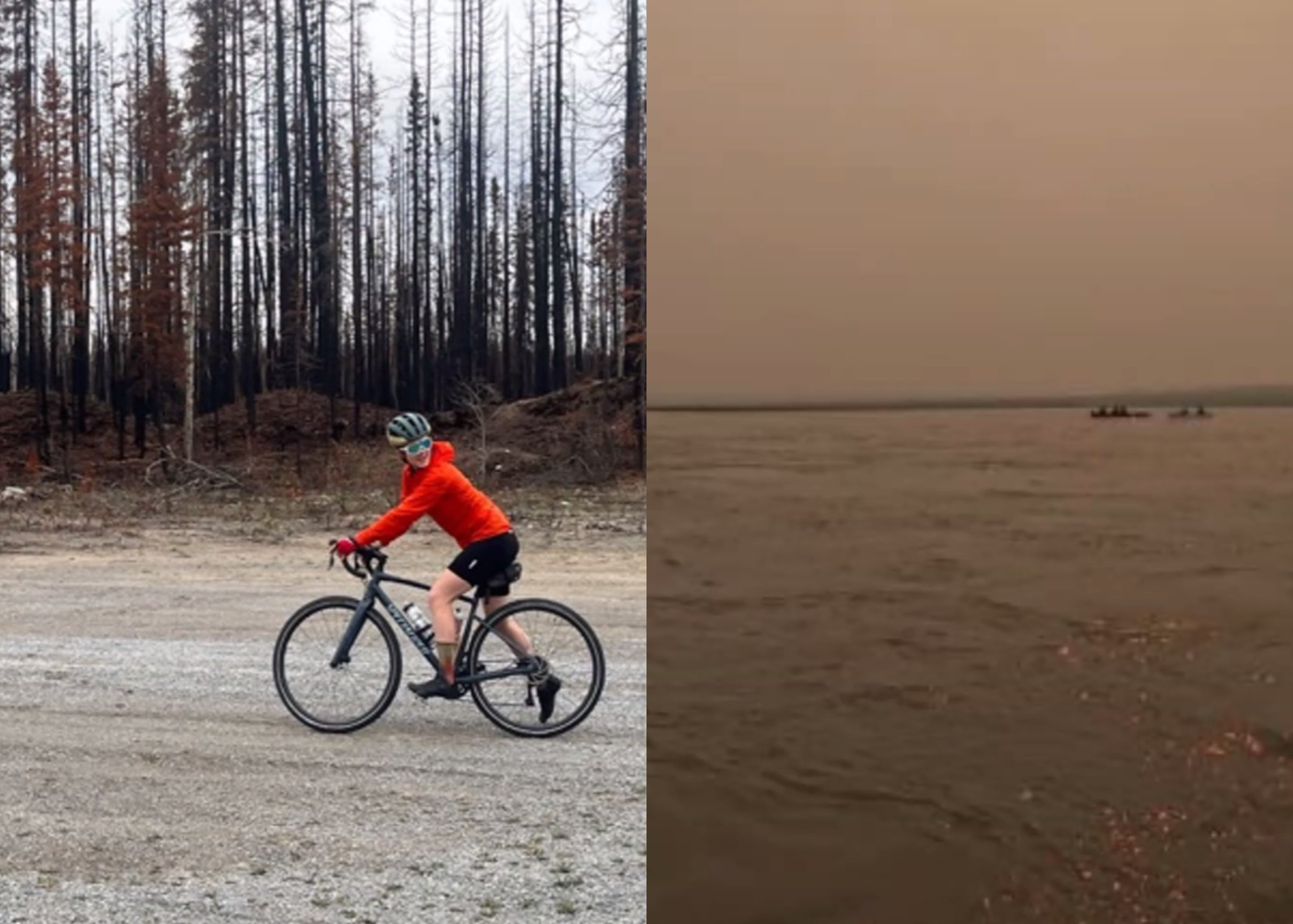
Yellowknife resident Kira Young described her harrowing accounts of escaping the 2023 wildfires and their aftermath. (Screengrabs from court proceedings)
On August 16, Young received an evacuation alert giving residents 36 hours to leave. Her family packed essentials and irreplaceable belongings, but she had to leave behind her guitar, which she had played since childhood. She recorded herself playing one last song, unsure whether she would ever see it again.
Young left with her father and brother the next day while her mother, a healthcare worker, remained behind.
“It was very hard. I felt so powerless…we weren't sure when, when we were gonna see her again,” she said.
As they began their journey, she remembered clearly driving through smoke and flames but one incident remains etched in her mind; watching the skeleton of a warehouse in Enterprise, a community destroyed by wildfire, she wondered if “this was the fate of our home that we had just left”.
“I was terrified. I was so sad. I was despondent,” she told the court.
The intensity of that feeling had only started to soften when this year, during a 10-day cycling trip from Yellowknife to Edmonton, she witnessed the aftermath of wildfires: in forests where trees and ground had been blackened by flames, she was struck by the ‘unusual silence’ compared with the sounds of life in healthy forests.
“I find it disturbing and quite sad,” she said, adding that the destruction left her anxious about the future of other “vibrant” places she loves.
The plaintiff’s lawyer Catherine Boies Parker, K.C. of Arvay Finlay LLP, argued that such experiences make the La Rose case urgent as it pertains to the “most fundamental rights of children in Canada—the right to life, liberty and security of the person and how those rights are affected by what the Supreme Court of Canada has called an ‘existential threat’”.
She based the Section 7 violation on two arguments: first, the federal government’s emissions targets and climate plan interfere with the rights to life, liberty and security of Canadians, and that interference is inconsistent with the principles of fundamental justice. The government’s framework is, therefore, arbitrary, “grossly disproportionate” to its objectives and inconsistent with the legal obligations that should inform the Charter analysis.
“In the extraordinary circumstances, raised by climate change, Section 7 imposes a positive obligation on the government to take steps to protect the plaintiffs from the harm associated with GHG emissions, and that the government has, and continues to fail that obligation,” Parker contended.
While climate-related harms are “already severe”, Parker noted, delaying significant GHG reductions will intensify the damage and make more of its consequences irreversible on human timescales.
The central question is whether Canada’s contribution to the threat facing children can be treated as a “purely political matter” or whether government action must meet minimum standards grounded in “constitutional principles and legal norms”.
“These young, vulnerable plaintiffs say that the Charter must provide them with a degree of protection from their own government’s actions that contribute to the greatest threat to personal security that humans have ever faced,” she said.
In June this year, Prime Minister Mark Carney had declared that the policy changes his government is making to maintain sovereignty will translate to “higher” emissions “in the next few years than they were projected to be under the previous government’s plan”.
“We can’t afford to restrain the growth of an important part of our energy mix, oil and gas to meet a short-term goal,” he said — six months after Canada signed a memorandum of understanding with Alberta to advance fossil fuel infrastructure that could drive emissions higher and further entrench Canada’s position (currently 13th) among the world’s largest greenhouse gas emitters.
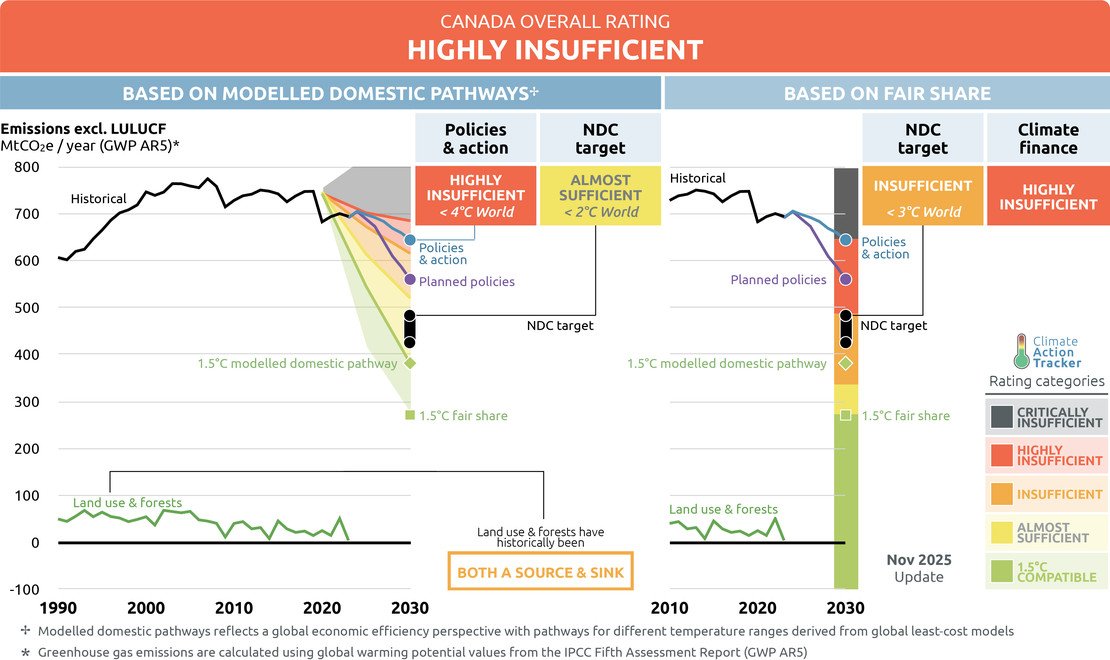
Canada’s climate performance is “Highly Insufficient,” according to the Climate Action Tracker. Despite legally binding net-zero and 2030 targets, policy delays, rollbacks, and continued reliance on oil and gas, along with the removal of the consumer carbon price, mean Canada is off track. Even full implementation of current measures would still put emissions on a path consistent with 4 degrees Celsius of warming. (Climate Action Tracker)
On September 4, federal scientists revealed changes to Canada’s climate are now “irreversible” with the country being on track for an average temperature rise of 5 degrees Celsius (C) by 2100 under “current policies” — just two days after a United Nations Environment Programme (UNEP) report titled ‘Limiting Overshoot’ reported global emissions reductions have not happened at the pace needed due to existing and planned fossil fuel infrastructure; even an optimistic scenario based on full implementation of current government pledges and additional net-zero commitments puts expected peak warming at about 1.8 degrees Celsius.
“Then, you have the federal government both actively authorizing GHGs through a number of statutes, while also legislating reductions of GHGs; you have the government legislating compliance with its international obligations, well, not fulfilling those international obligations,” Parker said.
“So is this an act or a mission? It's hard to sort it out.
“...There is no evidence to support an assertion that Canada's competitiveness or economic resiliency will be promoted by excess GHG emissions.”
The historical lawsuit is not asking a judge to design Canada’s climate policy or dictate every measure the government must adopt. Instead, it stresses that the Charter requires the federal government to establish sufficiently ambitious emissions-reduction objectives and implement a plan rooted in science capable of meeting them.
Parker argued that the federal government that has admitted “climate change is causing harm to Canadian youth” should retain the authority to determine how to achieve those objectives but that the courts must be able to determine whether the resulting framework meets a minimum constitutional standard.
A requirement for stringent due diligence — taking all available measures to prevent significant harm to the climate system — could provide a legal standard against which the government’s actions are assessed.
She acknowledged that the standard has not yet been recognized in Canadian domestic law but international legal developments and the evidence presented at trial could help establish its relevance.
In a 2021 ruling on the Greenhouse Gas Pollution Pricing Act (GGHPPA), the Supreme Court of Canada confirmed that Ottawa has the authority to establish minimum national pricing standards for GHG emissions as a backstop where provinces or territories do not meet federal stringency requirements. Judges affirmed that climate change poses a grave threat to humanity and the only way to address it is by reducing GHG emissions.
Governments have been aware of the problem for decades and have even gone on to be signatories to multiple national and international agreements including the 2015 Paris Agreement and the Canadian Net Zero Emissions Accountability Act.
“And yet, despite these decades of explicit international commitments and legislative promises, the defendant has repeatedly failed to set sufficient targets, repeatedly failed to meet those insufficient targets,” Parker pointed out.
“And most importantly, continues to maintain a course of action that supports levels of GHG emissions that cause harm to the plaintiffs. 

“When the government acts in a manner that interferes with the physical and emotional integrity of its people, especially its most vulnerable people, the rule of law requires the court to assess whether that interference is consistent with the Constitution—That responsibility doesn’t disappear just because the issues are complex, polycentric or politically significant.”
In July 2025, a 15-judge panel at the International Court of Justice (ICJ) declared that states have a clear, binding legal obligation under international law derived from treaties like the Paris Agreement, customary international law and human rights law to curb emissions and prevent environmental harm. The 133-page advisory opinion, considered a “huge legal win” by many experts, found that inaction which may include greenlighting new fossil fuel projects, failing to regulate private emissions and/or providing public fossil fuel subsidies can constitute an internationally wrongful act.
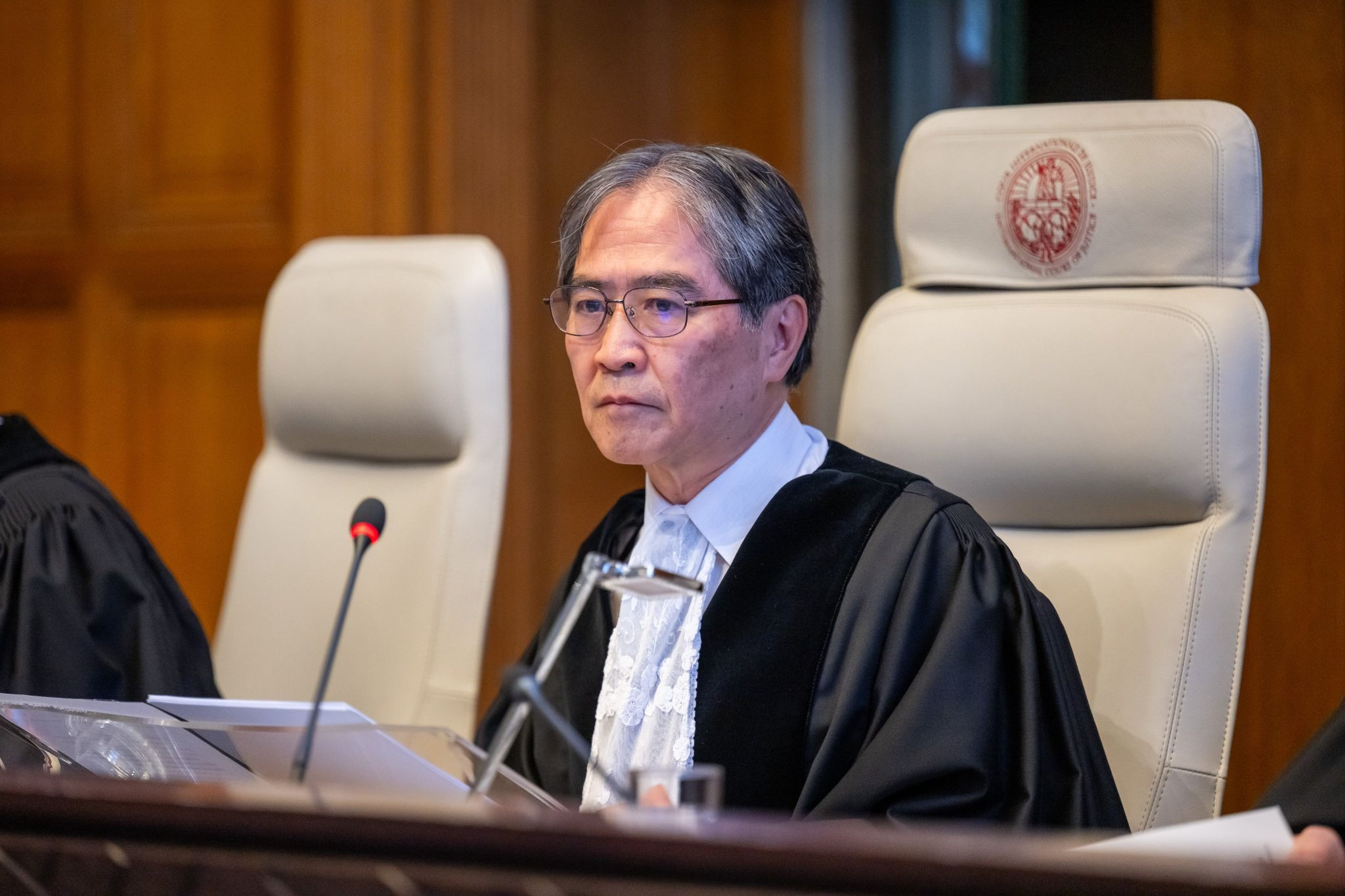
“The adverse effect of climate change may significantly impair the effective enjoyment of such human rights as the right to health, the right to an adequate standard of living, which encompasses access to food, water, and housing,” ICJ president Yuji Iwasawa said, noting that climate change impacts women, children and Indigenous people more. (International Court of Justice)
“This opinion should have serious implications for Canadian policy. If we believe in science and the rule of law, then we must accept the obligations and thresholds the ICJ laid out as a bottom line,” one of the plaintiffs, Albert Lalonde, previously told The Pointer.
Ecojustice lawyer Fraser Thomson noted that while the ICJ advisory opinion is nonbinding, Canadian courts have historically treated similar opinions as authoritative interpretations of international law, potentially offering persuasive guidance as judges consider the constitutional implications of climate change — and La Rose could help understand its weight in the national context.
“Enforcement remains a challenge, but establishing this norm is itself powerful,” he said.
Parker believes without meaningful judicial oversight, the rights of children and young people could be left at the mercy of political priorities that shift with each government.
“They [children] have no access to the ballot box,” she said.
“The plaintiffs and all children and youth in Canada deserve better than that.”
However, the federal government’s legal representative B.J. Wray contended while referring to Justice Rennie’s ruling that Section 7 does not guarantee Canadians a particular legislative framework that maximizes their life, liberty and security. Instead, the Charter protects against deprivations of those interests caused by government action.
“To engage Section 7, courts have required more than that a harm could be alleviated by state action,” she said.
“The harm must arise from the state action itself.”
That distinction is pertinent because in the government’s view, the plaintiffs are seeking to establish a positive constitutional obligation requiring Ottawa to take specific kinds of action to protect them from the effects of global climate change.
Wray argued that neither the Charter nor Canada’s international climate commitments create the obligation the plaintiffs are asking the court to recognize. The Net-Zero Emissions Accountability Act establishes procedures for setting emissions targets, preparing reduction plans and reporting on progress rather than imposing the substantive obligations the plaintiffs claim.
“The Charter was never intended to solve existential crises,” Wray told the court, arguing that the case that dives into “unchartered waters”, as described by Justice Fothergill, would require the judge to create a new constitutional obligation rather than apply an established one.
Justice Fothergill acknowledged that he was “mindful” that the case raises difficult questions about the boundaries of Section 7 including whether recognizing a positive right could have implications for other areas of government responsibility such as housing and health care — “for which the government doesn’t currently recognize a freestanding obligation”.
Wray maintained Ottawa’s climate obligations must be understood within the limits of the existing legal framework and international agreements may aid in informing the interpretation of Charter rights but they cannot independently establish a Charter infringement.
She also challenged the plaintiffs’ argument that the national emissions policies can be linked to the individual harms they have experienced. “Climate change is a global problem that can only be remedied with a global solution,” she said.
Canada currently accounts for about 1.4 percent of annual global greenhouse gas emissions, and it cannot control its effects through domestic policy alone.
Even if Canada immediately reduced its emissions to near zero, government experts are expected to testify that the change would have no discernible effect on global temperatures, precipitation or extreme weather patterns.
“Because climate change is a global phenomenon, the impact of climate change in Canada is largely determined by the choices of other countries. No single country can mitigate the impacts of climate change within its borders,” Wray argued.
She said federal scientists will explain in the coming weeks how Canada’s emissions have declined from 2005 levels, emissions per capita have also fallen by nearly 30 percent since then, and that emissions intensity has decreased as its economy has grown.
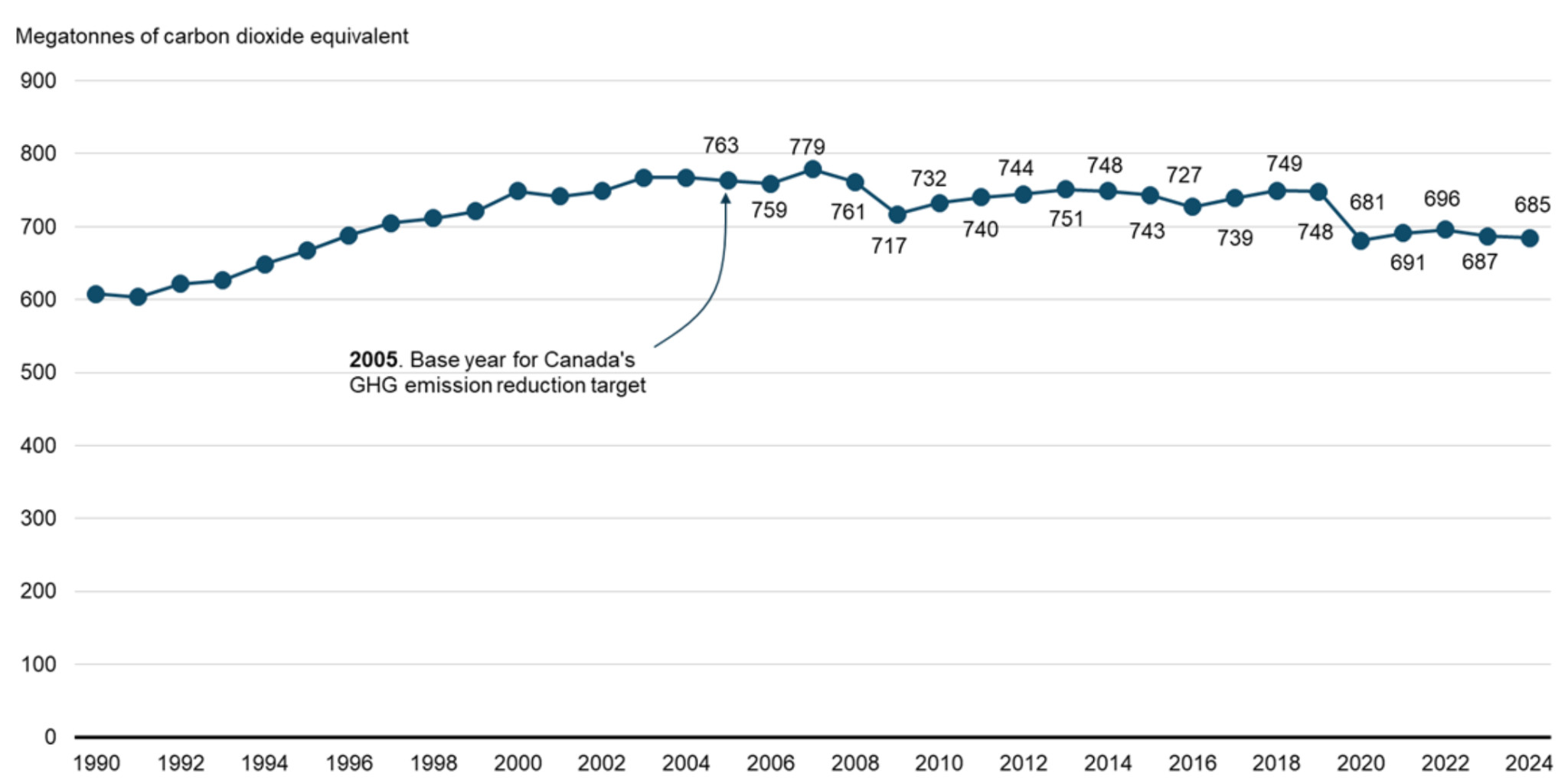
“Canada's total GHG emissions in 2024 were 685 megatonnes of carbon dioxide equivalent (Mt CO2 eq), a 0.3 percent decrease from 687 Mt CO2 eq in 2023,” the federal government reported. (Government of Canada)
They will also explain that international climate agreements require countries to pursue mitigation measures but do not establish an agreed method for determining whether an individual country’s emissions targets are legally sufficient to achieve a global temperature goal.
Wray said the government’s position is clear that climate change requires collective international action, and the Charter should not be interpreted to impose an obligation on Canada that it cannot fulfil on its own.
The plaintiffs counter that Canada does not need to solve the climate crisis independently to be held accountable for its own contribution to it; accepting the government’s position would allow individual countries to evade responsibility because no single country can prevent climate change by itself.
A recent independent analysis by the Canadian Climate Institute based on the latest Early Estimate of National Emissions (EENE) also examined that Canada’s emissions increased in 2025 to around 691 megatonnes of CO2 equivalent — an increase of about one percent or six megatonnes, compared to 2024 — with oil and gas continuing to be the largest emitting sector.
“The latest numbers show Canada’s goal of net zero emissions is nowhere in sight. At this rate, Canada would be lucky to hit its 2030 target in 2050—20 years behind schedule,” Canadian Climate Institute President Rick Smith said.
“That’s an outcome we frankly can’t afford.”
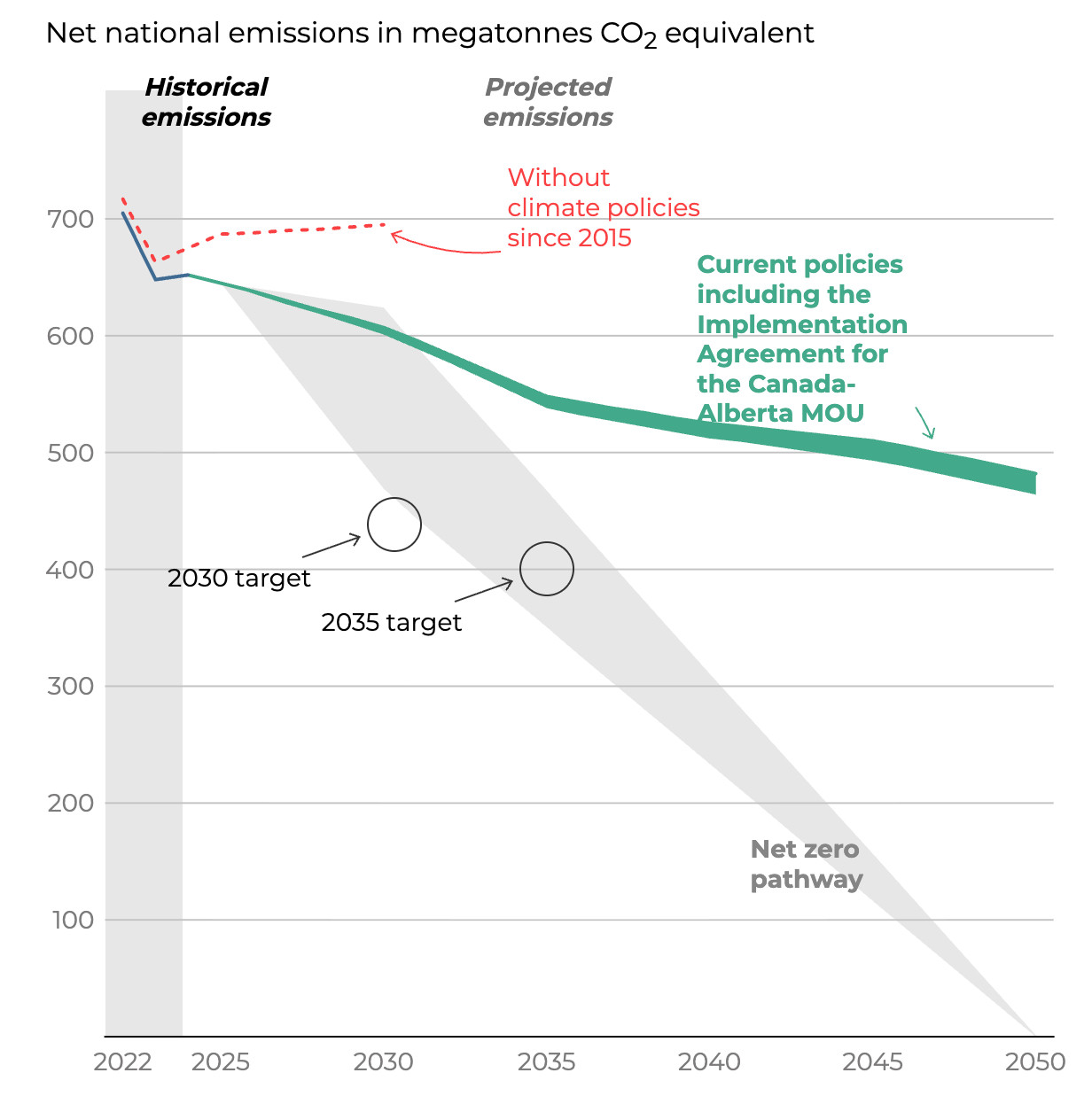
“Under today’s policies—including the implementation agreement for the Canada-Alberta Memorandum of Understanding (MOU)—Canada would be more than 20 years behind schedule in achieving its international climate commitments,” a Canadian Climate Institute report noted. (Canadian Climate Institute)
When Justice Fothergill asked whether the plaintiffs believed the targets set by the government are “insufficient as a matter of law”, Parker responded, “yes”.
He added, “And certainly, the government mustn’t make things worse.”
Email: [email protected]
At a time when vital public information is needed by everyone, The Pointer has taken down our paywall on all stories to ensure every resident of Brampton, Mississauga and Niagara has access to the facts. For those who are able, we encourage you to consider a subscription. This will help us report on important public interest issues the community needs to know about now more than ever. You can register for a 30-day free trial HERE. Thereafter, The Pointer will charge $10 a month and you can cancel any time right on the website. Thank you
Submit a correction about this story

