
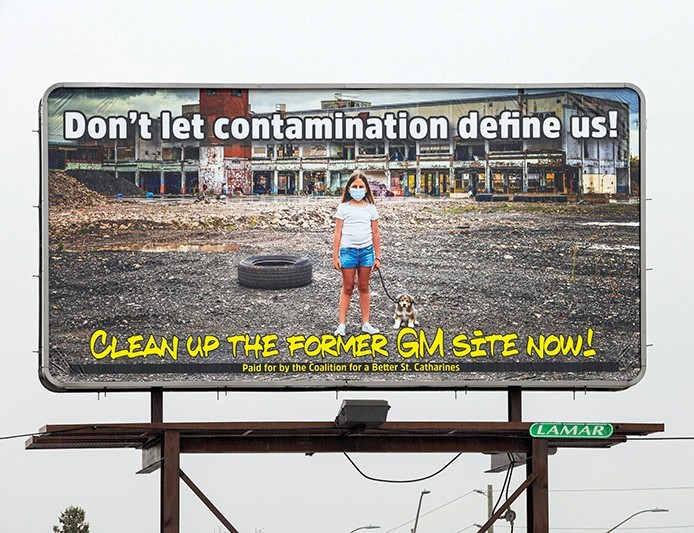
Niagara Public Health won’t investigate threats from asbestos, other contaminants on GM site
The recent discovery of asbestos contamination in the soil at the former General Motors site in St. Catharines has added a serious public health dimension to longstanding concerns about the condition of the derelict property.
The presence of soil that contains asbestos raises questions about the potential for microscopic fibres to become airborne and be inhaled by people living and working in the surrounding community. Despite these risks, Niagara Region Public Health is taking a mostly hands off approach compared to the actions seen in municipalities dealing with similar contaminated sites.
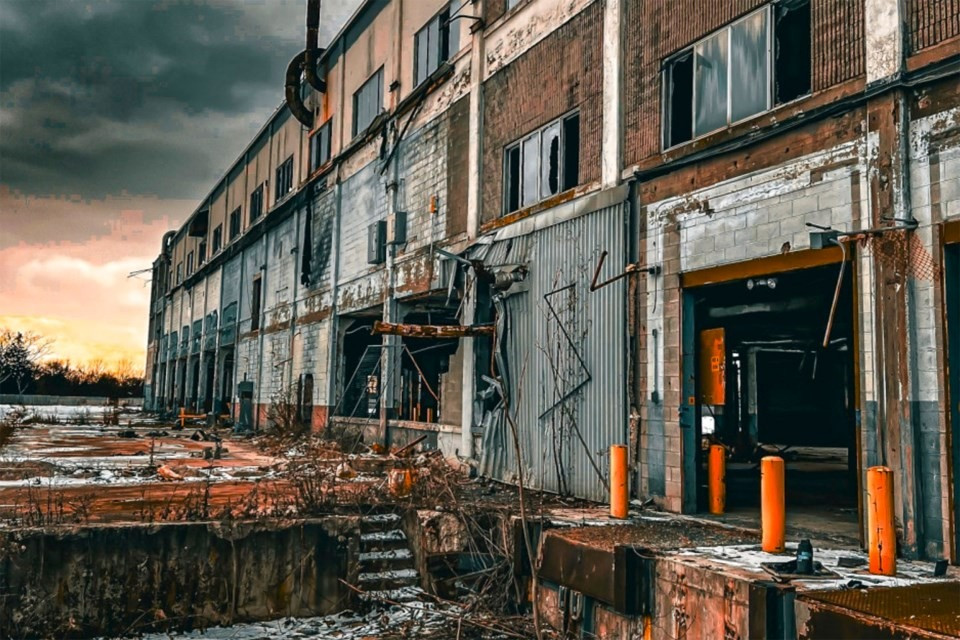
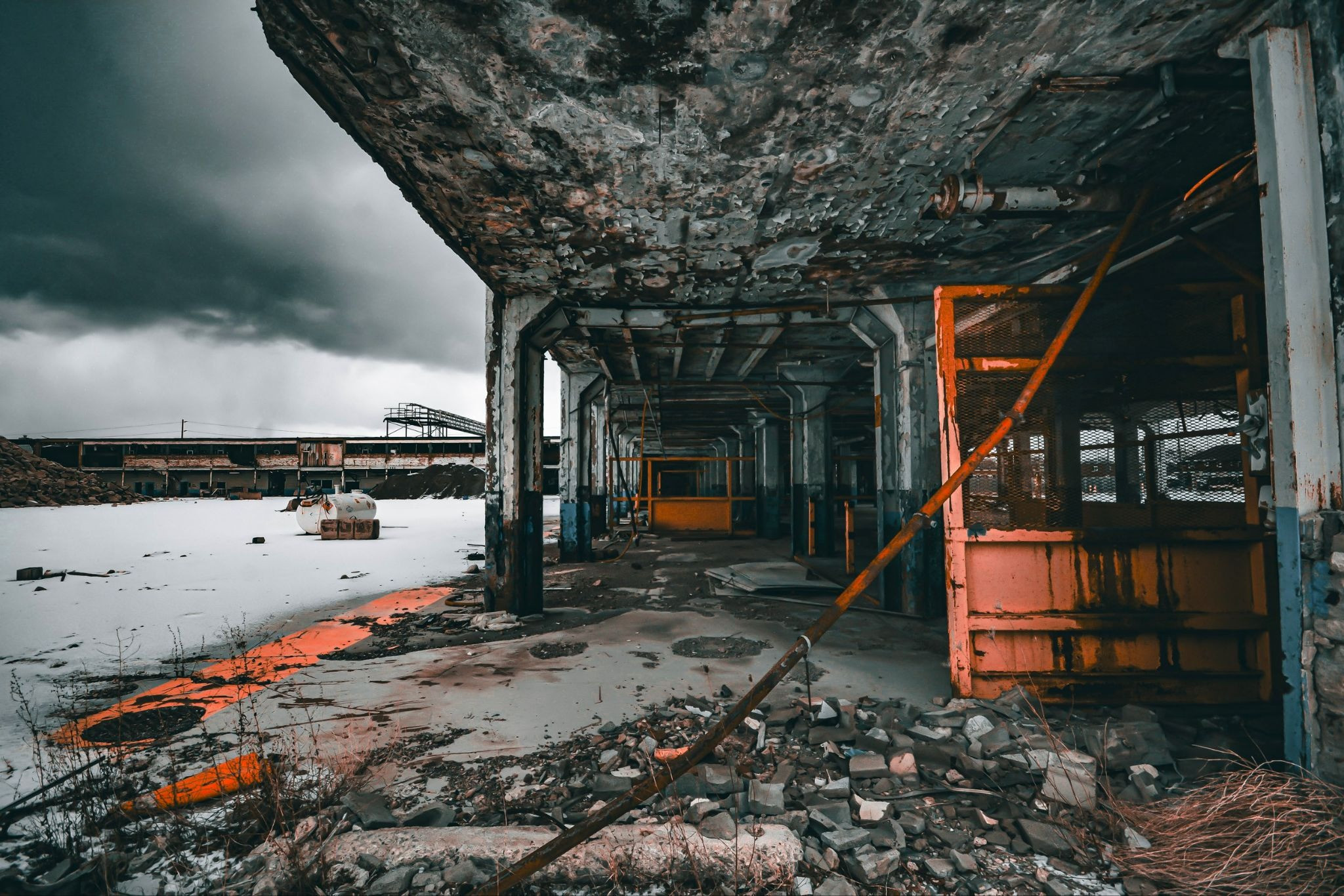
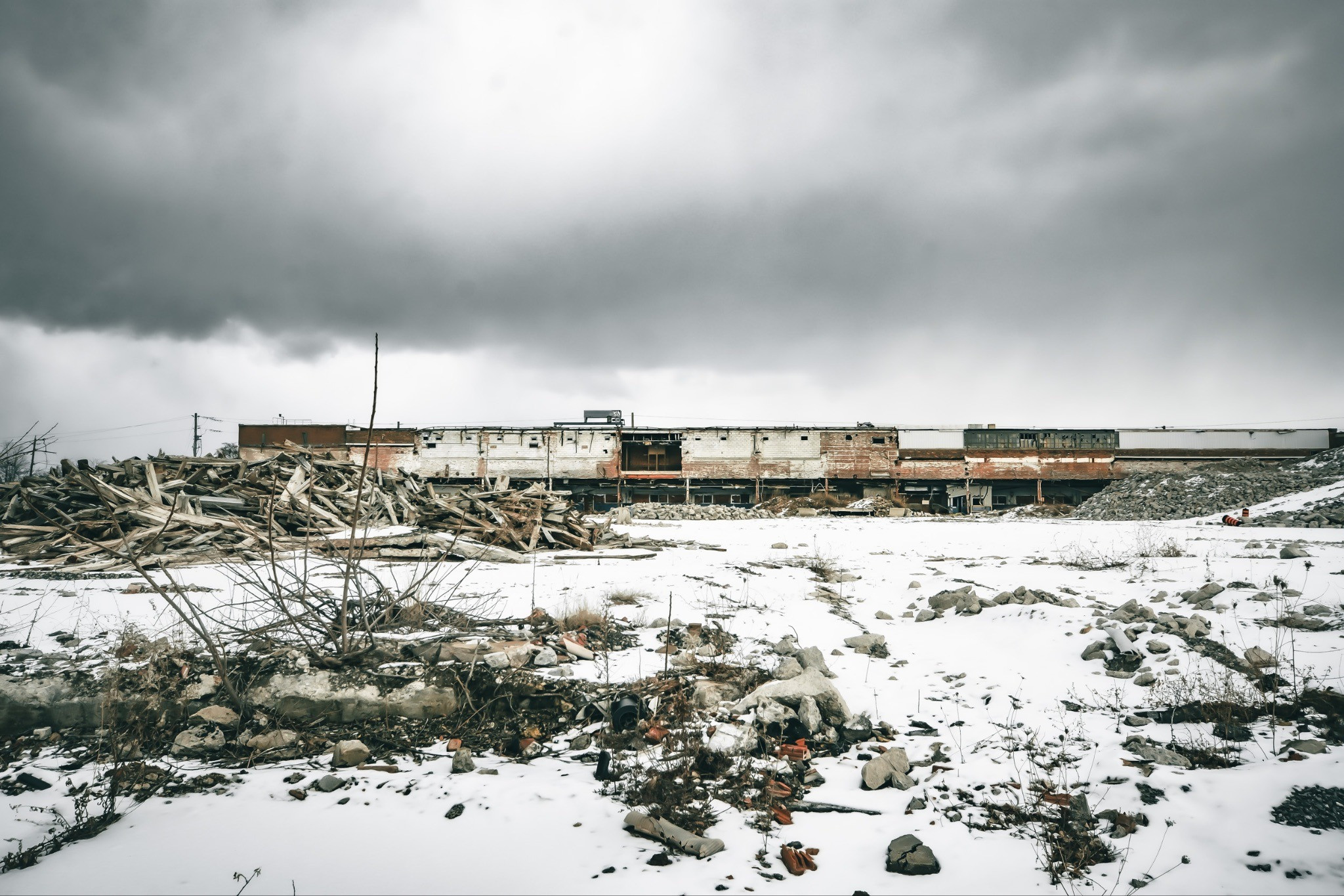
The crumbling buildings on the 55-acre former GM site right next to downtown St. Catharines have caused concerns about asbestos for more than a decade.
(Joel Wittnebel/The Pointer)
Regional Councillor Haley Bateman, a member of the Public Health Board, has been pressing the health unit to exercise its independent responsibility to investigate potential health hazards at the former GM site.
In remarks to The Pointer, Bateman said she met with Dr. Azim Kasmani, Niagara’s medical officer of health, and regional staff to discuss a lack of engagement on the issue of the GM site by public health.
“What the City of St. Catharines is dealing with, with respect to the GM site, is similar to what other communities are dealing with, the one difference being support from local levels of government to actively engage to ensure the safety of residents,” Bateman said.
She said public health must play a leadership role when residents raise concerns about potential risks.
“Public health has a responsibility to act as a leader to ensure the safety of residents,” she said.
Bateman said she believes Sections 10 and 11 of the HPPA clearly establish an obligation for medical officers of health to investigate potential hazards.
“The act is very clear that every medical officer of health shall inspect or cause the inspection of the health unit served by him or her for the purpose of preventing, eliminating and decreasing the effects of health hazards in the health unit,” she said.
“There is no way that this can be misinterpreted.”
Across Canada, public health agencies have a mandate that includes protecting and promoting the health of communities, preventing disease and addressing the environmental conditions in which people live, work and raise their families. The Canadian Medical Association identifies environmental monitoring, including tracking soil contamination, as part of public health's role in protecting communities.
Ontario's Health Protection and Promotion Act (HPPA) gives that responsibility a statutory framework. Section 10 requires every medical officer of health to inspect, or cause the inspection of, their health unit for the purpose of "preventing, eliminating and decreasing the effects of health hazards," while Section 11 specifically requires that, when a complaint is made about a potential environmental health hazard, the medical officer of health shall, in consultation with the ministry responsible for the matter, investigate to determine whether the health hazard exists.
Bateman said she has not received information from the public health department detailing what investigations have taken place on the GM site.
“I have been told that they are engaged with the Ministry. I have no way of knowing what investigations have taken place and the outcome of those.”
Residents and Bateman have pointed to Peterborough as an example of a different approach to the issues presented to a community from a contaminated industrial site.
At the former General Electric (GE) property in Peterborough, the municipality has worked with the Environment Ministry, Lakeland Public Health and the company to coordinate communication and health and safety planning related to demolition and potential site impacts.
The former manufacturing plant in Peterborough, which employed 6,000 staff at its peak and sparked the nickname ‘Electric City’, officially ended full-scale manufacturing operations in 2018, after 126 years of heavy industrial activity on the site.
GE now plans to demolish 25 vacant, deteriorating buildings, raising concerns that asbestos dust and other cancer-causing industrial residues could spread into nearby residential neighborhoods. The site’s long industrial history has left buildings contaminated with hazardous materials, including chrysotile asbestos, PCBs, beryllium, and industrial solvents.
A February 2026 report to Peterborough City Council outlined the roles of the agencies involved and specifically addressed the role of public health.
The report stated: “Lakelands Public Health is not the lead regulatory authority for demolition activities. However, a health unit has an independent statutory role under the Health Protection and Promotion Act (HPPA) to assess and respond to health hazards.”
Peterborough’s report described bi-weekly meetings between the City, MECP, and Lakeland Public Health to ensure agencies understood their responsibilities and shared information about all activities at the site.
Residents in St. Catharines say that approach demonstrates that public health agencies can remain actively involved while environmental regulators maintain their lead responsibilities.
In Niagara, instead of bi-weekly meetings and open information, residents are given silence, vague commitments and blatantly misleading information.
The MECP has attempted to downplay concerns on the site, Mayor Mat Siscoe has repeated misleading information about the City’s role on the site, the municipality has fought to keep critical environmental assessment from the public, and attempts to get further information from the Province have been shut down by ministry officials.
Residents say all they are asking for is a site-specific assessment of current conditions, including whether asbestos identified in soil could become airborne.
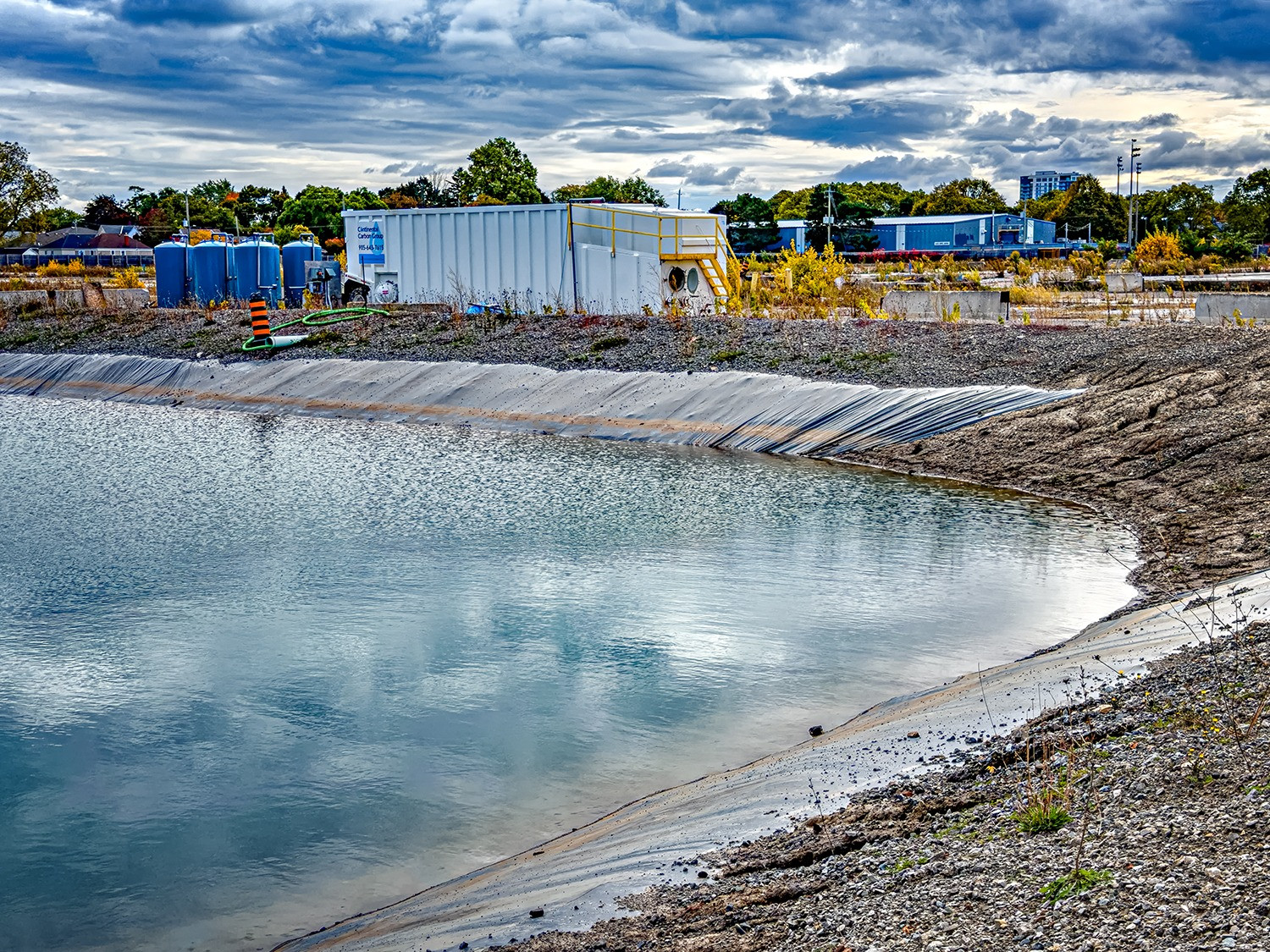
A pond meant to contain potentially contaminated stormwater on the St. Catharines GM site was recently observed overflowing following two torrential rainstorms. Officials with the Ministry of the Environment Conservation and Parks said they were monitoring the situation.
(Submitted)
Niagara Region Public Health maintains it is following evidence-based processes and working with the appropriate regulatory agencies.
Dr. Hamidah Meghani, Associate Medical Officer of Health, reminded residents that the former GM site is private property and “the immediate grounds should not be accessed” and assured that, “If there’s any public health information or guidance for the public, Niagara Region Public Health will share it clearly and as quickly as possible.”
With soil testing and other reports documenting the presence of asbestos at the site at alarming rates, residents and elected officials remain unconvinced that Niagara Region Public Health is living up to its mandate.
Vicki-Lynn Smith, a long-time St. Catharines resident who lives near the former GM property, filed a formal complaint with the Niagara Region Public Health in mid-July, requesting an investigation under the HPPA.
(Editor’s Note: Vicki-Lynn Smith is the sister of reporter Ed Smith.)
In her complaint, Smith details how she became concerned after learning that asbestos had been identified in portions of soil at the former GM site. She recounted how she experiences recurring throat irritation and a persistent cough and noticed those symptoms occurring or worsening when winds blew from the direction of the industrial site.
While admitting she could not establish that asbestos exposure was the cause of her symptoms, she argued that the combination of documented asbestos contamination, wind conditions and the potential for soil disturbance warranted investigation. She asked Niagara Region Public Health to assess whether asbestos fibres from the site could become airborne, determine whether current site conditions presented a potential exposure pathway, coordinate appropriate monitoring if required and provide information to the public.
Public health officials told her they are following the process used by health units across Ontario and working with the Ministry of the Environment, Conservation and Parks (MECP), which, according to public health officials, is the agency with primary jurisdiction and expertise regarding environmental monitoring.
In her email exchanges with public health, Smith questioned the relevance of the two MECP reports. The first, a five-year dustfall study, notes that it “is not an indicator of human or environmental health risk.”
Smith says the study had nothing to do with measuring asbestos: it “was not designed for, nor was it capable of detecting asbestos in samples.”
A dustfall study is a monitoring of the amount of dust in the air, it does not analyze the specifics of that dust. By the report’s own definition, it is a measure of “aesthetic based parameters and not an indicator of risk to health”; the report is meant to measure “soiling and nuisance issues”, for example, residents who live near the site may complain of dirty windows because of the amount of dust blowing from the site, and the study tracks that. It does not measure the contaminants in the air.
Regarding the second report, Smith questioned whether a three-month high-volume air-sampling study conducted in 2020 could be used to assess current risk. She argued that site conditions have changed considerably in the six years since the sampling and questioned whether such a limited historical snapshot (when the state of the soil and weather conditions were not indicative of broader conditions) could be considered representative of the day-to-day reality of the site now.
In a series of email exchanges provided to The Pointer, public health officials did not respond to Smith’s offer to provide a copy of the laboratory soil analysis, and repeatedly pointed to two air-monitoring studies conducted by the MECP. Based on those studies, officials claimed they were “not aware of evidence indicating off-site public health risks above the background risk in an urban area.”
In response to questions from The Pointer, Dr. Meghani (with Niagara Region Public Health) said both MECP studies are relevant and that “while some elevated dust levels were measured, these were temporary and coincided with major construction activities.”
Dr. Meghani also commented that public health had not received any soil samples and that based on the information available, “the samples (reported by The Pointer) may not have been collected by qualified environmental professionals”.
The health unit acknowledged that asbestos poses a health concern when fibres become airborne and are inhaled, and that the potential for exposure depends on factors including the presence and condition of asbestos-containing materials and the possibility that soil or other materials may be disturbed. Public health officials then provided to Smith a link to further information about the risks of asbestos in the environment, information that appears to reinforce rather than resolve the concerns Smith has raised about the former GM site.
Recent testing confirmed the presence of asbestos in soil samples taken from the former GM site.
(Joel Wittnebel/The Pointer files)
Smith points out that the information supplied by public health advises people who suspect asbestos may be present in their environment to “Be concerned, Don’t panic and Take Action.” Yet, “our own health authorities refuse to enter into meaningful dialogue about the obvious risk we all face living in the shadow of the GM site.”
The same information provided by public health states, “Breathing asbestos can cause cancer and other diseases. Current science indicates that breathing any type of asbestos at any level can increase the risk of disease.”
A second St. Catharines resident, Al McKay, has now taken his concerns directly to the Niagara Region Public Health and Social Services Committee, raising questions about a different potential pathway for contaminants to reach the surrounding community: stormwater and flooding.
In his letter to the committee, McKay says recent increasingly severe rainfall events raise questions about what may happen to contaminated soil, sediments, groundwater or other hazardous materials on the former GM property when the site experiences heavy runoff or flooding.
He is asking the public health department to determine whether contaminated water or sediment has left the property during recent rainfall events, whether stormwater leaving the site has been tested, and whether surrounding surface water, sediment or drainage systems have been examined for contaminants associated with the site's industrial history.
McKay also wants the Region to determine whether flooding could transport contaminants onto neighbouring properties or into municipal infrastructure, and to establish clear notification procedures for residents if contamination is detected.
“The Region should not wait for proof of harm before investigating a reasonable and foreseeable public-health risk,” McKay wrote. “The time to establish what is happening with contaminated runoff, stormwater and flooding at the former GM property is before the next major rainfall event, not after.”
Email: [email protected]m
At a time when vital public information is needed by everyone, The Pointer has taken down our paywall on all stories to ensure every resident of Brampton, Mississauga and Niagara has access to the facts. For those who are able, we encourage you to consider a subscription. This will help us report on important public interest issues the community needs to know about now more than ever. You can register for a 30-day free trial HERE. Thereafter, The Pointer will charge $10 a month and you can cancel any time right on the website. Thank you
Submit a correction about this story

