
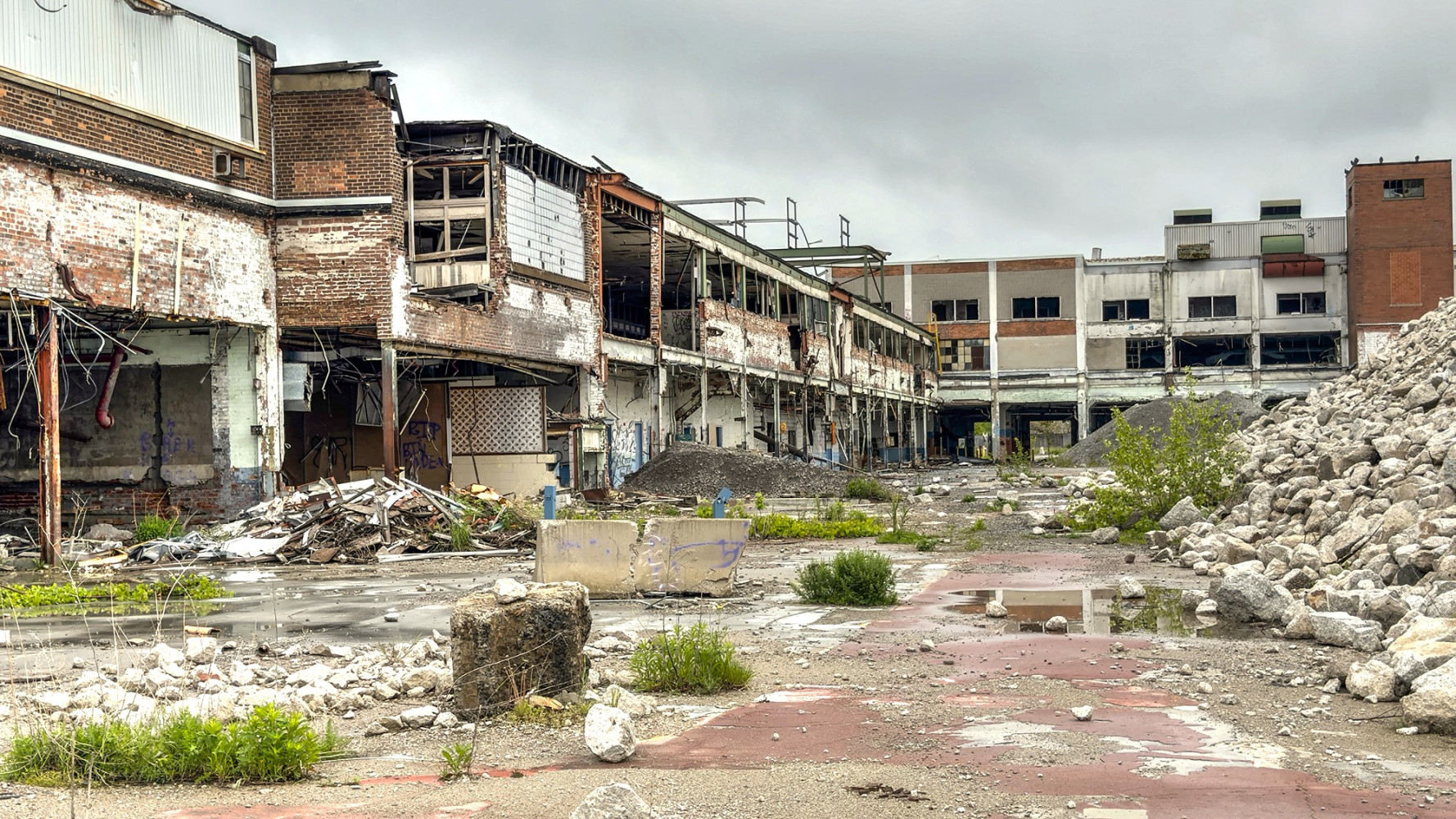
Asbestos found in soil sample from former GM Site in St. Catharines hours after push for provincial action
A private laboratory report has confirmed the presence of asbestos in soil at the former General Motors site on Ontario Street, right next to downtown St. Catharines. The alarming data confirming the presence of a highly dangerous cancer causing compound significantly escalates long-standing concerns about one of the city’s most controversial industrial properties.
Received just hours after residents and advocates appeared at Queen’s Park to press the provincial government for intervention at the contaminated site, the lab report confirms the worst fears of local residents. The presence of chrysotile asbestos, the most commonly used and widely studied form of the carcinogenic mineral, was detected in soil samples taken by The Pointer recently. The concentration recorded in the sample showed that for every 100 grams of dry soil, 0.5 grams are asbestos, or 0.5 percent, a threshold that under Ontario occupational health regulations is treated as asbestos-containing material requiring strict handling protocols.
The lab’s confirmation was received by The Pointer on the afternoon of May 27, accompanied by a brief email: “Good afternoon, Please see your lab report attached. It confirms the presence of asbestos in the soil material.”
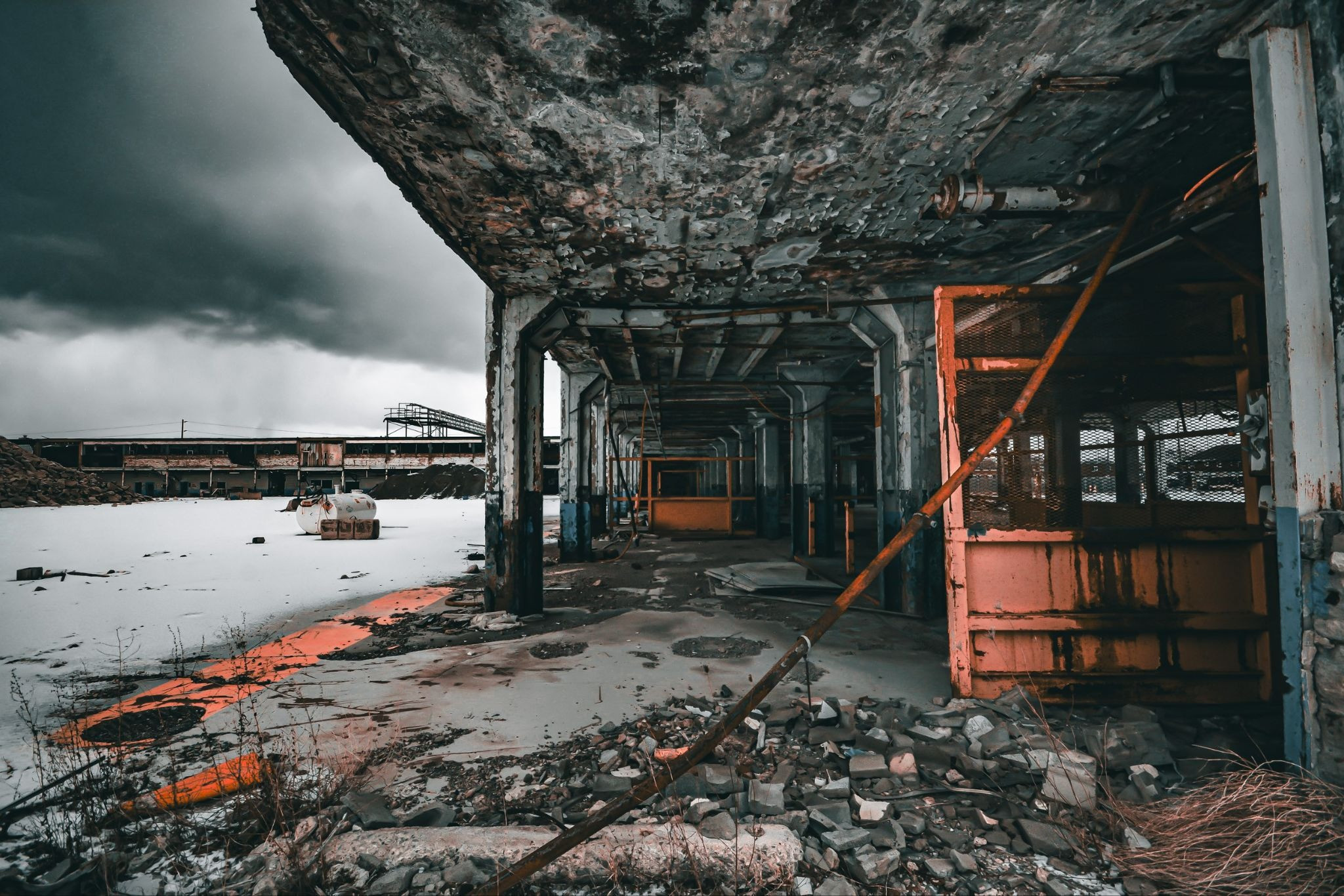
Crumbling buildings where asbestos could be present are found throughout the 55-acre former GM site.
(Joel Wittnebel/The Pointer)
Environmental experts note that a 0.5 percent asbestos concentration is a concern.
Dean Fitzgerald, a Senior Ecologist with Integrated Ecosystem Solutions whose career spans more than 30 years in environmental assessment, brownfield remediation, aquatic ecology, and environmental health analysis, said Ontario's 0.5 percent asbestos threshold is a well-established regulatory benchmark grounded in decades of scientific research.
"There's either fire, or no fire," Fitzgerald said when discussing asbestos classification standards. "0.5 is a hard threshold. The limits are based on numerous human health studies. The learning has been done, and there is little room for debate once that threshold is crossed."
The five-page report includes certification of analysis indicating chrysotile asbestos present in significant amounts. The finding marks the first publicly documented laboratory confirmation of asbestos in soil at the former GM site, a property that has been the subject of environmental concerns, redevelopment disputes, and ongoing public scrutiny since General Motors ceased operations in 2010.
Earlier the same day, members of the Coalition for a Better St. Catharines were at Queen’s Park, where they watched St. Catharines NDP MPP Jennie Stevens press members of the provincial government during Question Period to take stronger action on contamination concerns at the site.
Only hours later, the laboratory evidence confirmed the very substance brought up inside Queen’s Park when many of the contamination concerns were highlighted in front of legislators.
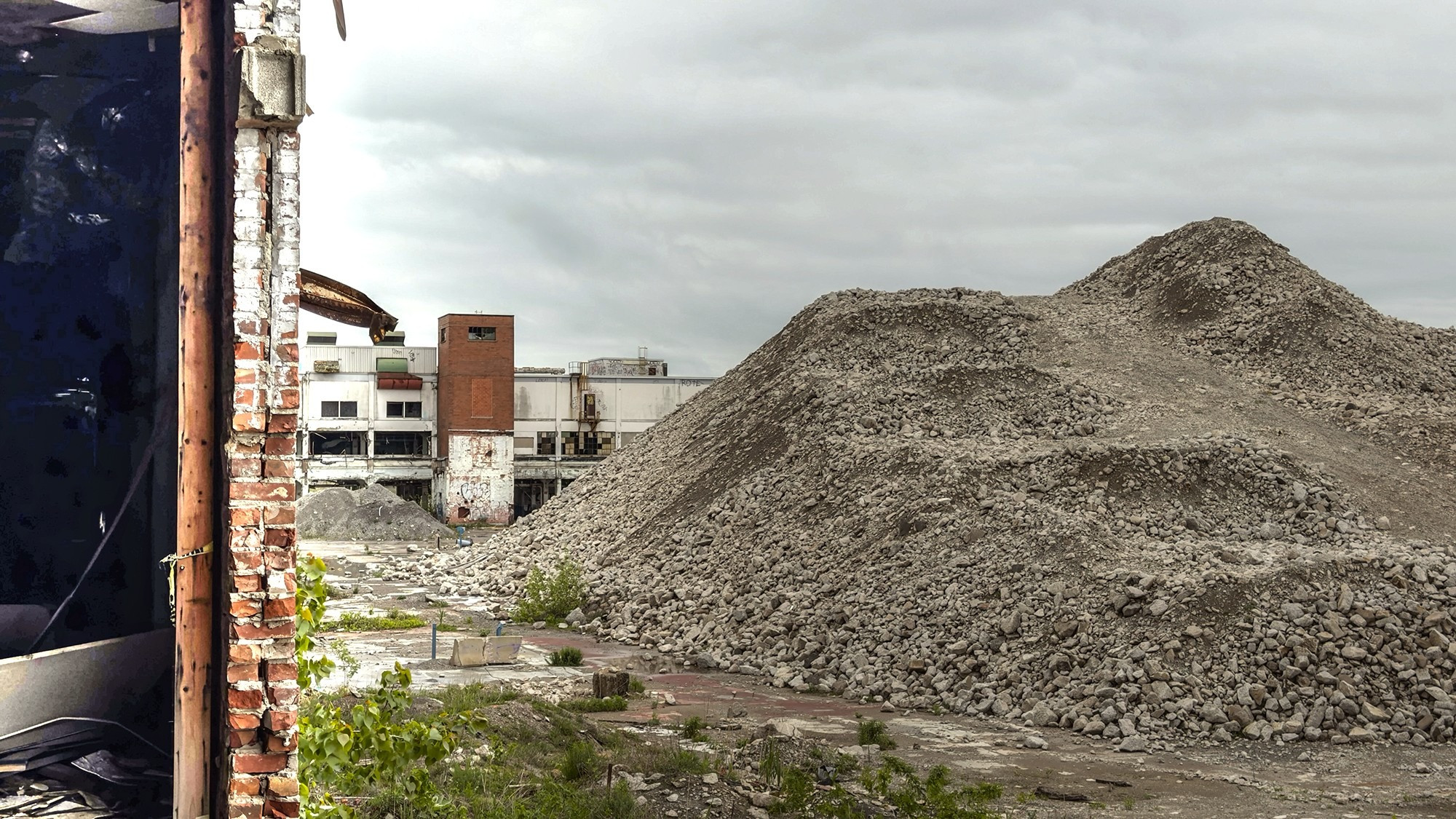
Piles of rubble and soil where asbestos particles could gather.
(Ed Smith/The Pointer)
The reported concentration of 0.5 percent is particularly significant under Ontario’s Occupational Health and Safety Act (OHSA) regulations. Under Regulation 278, materials containing more than 0.5 percent asbestos are typically classified as asbestos-containing material (ACM), triggering mandatory safety requirements for handling, removal and disposal.
The classification means any excavation, demolition, or redevelopment work at the site must follow strict asbestos management protocols, including protective equipment for workers, containment measures, and regulated disposal procedures.
Provincial guidelines further require property owners to conduct formal assessments where asbestos is present or suspected. Under Ministry of Environment, Conservation and Parks (MECP) guidance, owners are responsible for ensuring that any material likely to be disturbed is examined and classified, and that detailed reports are prepared outlining whether asbestos is present, whether it is friable or non-friable (meaning it can become easily airborne), and where it is located.
Demolition activity is not permitted where asbestos-containing material may be disturbed unless it has been properly removed or managed in accordance with provincial standards.
The confirmation of asbestos in soil therefore places new regulatory obligations on the property owner and any contractors working on the site. It is unclear if any regulations regarding asbestos have been followed up until now, when some demolition activity has taken place on the site, which Mayor Mat Siscoe has pushed for residential development during his time on council, even before he became mayor. Last term of office he voted in favour of a controversial motion that provisionally changed the zoning of the site for residential development, despite no efforts to evaluate the degree of industrial contamination, which could make the site off limits for any residential redevelopment.
The interim motion signalled to the prospective developer at the time that the luxury project being pushed by council would go forward, but the decision did come with the requirement of proper environmental testing before the rezoning could be made official. Critics pointed out it was a backward approach, which gave the appearance of green-lighting residential development on one of the most heavily industrialized urban properties in Ontario.
Residents and other stakeholders warned the decision could put lives at risk, as Siscoe and his fellow council supporters rushed forward to pave the way for the development plan, despite no work to find out how much pollution was on the site.
The Pointer then learned of backroom dealings between former mayor Walter Sendzik, the property owner and senior City Hall staff, to pass the interim rezoning motion and transfer much of the risk for the site’s condition onto the municipality, instead of the property owner.
City officials including Mayor Siscoe, the former mayor and senior staff have rushed forward to redevelop the site for years, while failing to get the property tested, and cleaned up.
Then, after a more than two-year freedom of information investigation by The Pointer, when the City fought to keep information from the public, alarming environmental testing reports were finally disclosed showing extremely dangerous levels of highly toxic chemicals, as much as 1,100 times above allowable limits, that were on the site the last time extensive environmental assessments were done in 2010 and 2012.
It was a long list of cancer causing chemicals, heavy metals, petroleum hydrocarbons (PHCs) and other industrial wastes that can be incredibly harmful to humans, fish and other aquatic life at high concentrations. Lead contamination—which can hamper brain development in fetuses, infants and children, was found at 10 times the level established to protect human health and the environment; PHC F1 (a class of petroleum hydrocarbons that includes things like gasoline) was present at levels more than 20 times healthy limits; trichloroethylene (TCE), a known human carcinogen, was present at more than 30 times healthy limits; benzene, another known carcinogen, was found at levels more than 50 times set limits; polychlorinated biphenyls (PCBs), were found at more than 85 times the set limit; and PHC F3 (another class of PHCs which includes diesel) was detected at 1,100 times the limit.
And now, a sample sent to a lab by The Pointer has found dangerous levels of asbestos in the surface soil, with concerns that during the summer the highly cancerous particles can be lifted by the wind and spread throughout the surrounding area, while young people continue to access the private property.
The lab findings come right after the City of St. Catharines issued new property standards orders related to conditions at the former GM lands, following inspections that identified ongoing concerns at the site. Those orders require the property owner to address hazardous conditions and potentially undertake cleanup or demolition work under municipal authority. The orders as issued do not address asbestos and the strict regulations around any work where the dangerous toxin is present.
The former GM property has been the subject of environmental concern for more than a decade-and-a-half. Since General Motors ceased operations in 2010, residents living near the industrial site have raised repeated concerns about contamination, structural deterioration and the refusal of officials including Mayor Siscoe to take responsibility for cleanup.
Previous environmental assessments conducted at the site documented a range of hazards, but asbestos in soil does not appear to have been directly tested for in the earlier official studies commissioned by General Motors.
The Phase I Environmental Site Assessment (2010) identified structural asbestos within building materials on-site, including floor tiles, roofing, siding, and insulation. However, that assessment did not include soil sampling or testing for asbestos contamination in the ground.
A later Phase II Environmental Site Assessment focused on soil and groundwater conditions and identified nearly 25 contaminants of concern, including elevated levels of PCBs, lead, and petroleum hydrocarbons. That investigation also does not appear to have included asbestos as a tested soil contaminant.
The earlier assessments documented significant environmental risks at the property, but left a key gap in testing for asbestos in soil—the recent laboratory findings appear to be the first publicly documented confirmation of asbestos contamination in the ground at the former GM site.
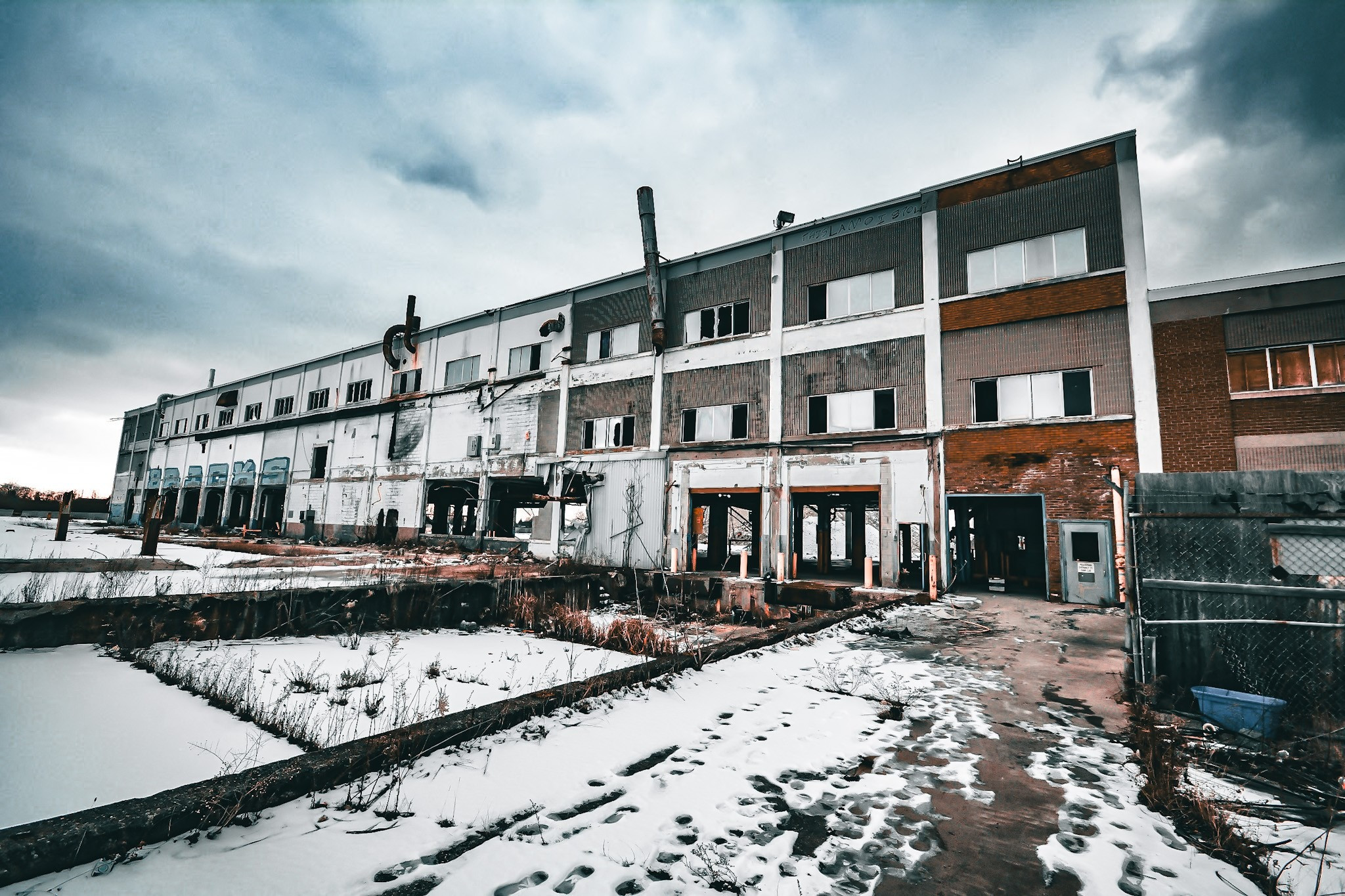
(Joel Wittnebel/The Pointer)
The December 2024 article by The Pointer reported on internal environmental documents obtained through freedom of information requests, which further detailed contamination concerns that had not been disclosed to the public. However, even that data did not confirm asbestos in soil, and air sampling conducted at the time did not detect airborne asbestos particles. This was prior to the demolition that has since occurred sporadically on the site after GM stopped operations, and the general decay of the crumbling, since abandoned property where people commonly wander around.
Air testing was conducted under the oversight of the site’s owners at the time, and questions about the scope and transparency of earlier assessments have never been answered.
Asbestos is a known carcinogen linked to serious long-term health conditions, including mesothelioma, lung cancer, and other respiratory diseases. The Canadian Cancer Society identifies chrysotile asbestos as the most commonly used form of asbestos globally, historically found in building materials, insulation and industrial products.
According to the National Cancer Institute, asbestos fibers can become airborne when disturbed, increasing risk of inhalation exposure over time. Once airborne, fibers can remain in the environment and accumulate in the lungs, where they may contribute to disease decades after exposure.
For residents living near the former GM site, the risks are not abstract.
“Exposure to a designated substance such as asbestos has no cure,” St. Catharines resident John Pula told The Pointer. Pula is the former health and safety representative for the Canadian Auto Workers union at the Ontario Street GM plant, where he worked for years to protect employees from exposure to hazardous substances, including asbestos.
“The latency period of the disease is from 20 to 40 years after exposure,” he emphasized.
Today, Pula lives blocks away from the same industrial property where he once worked to contain those risks. He recounts how asbestos was used in almost everything the plant was producing at the time and was so prevalent he would have been shocked to learn it was not in the soil. “It was just everywhere, in the air, on walls, windows, floors, everywhere.
“At the town hall meeting on April 15 Mayor Siscoe agreed to re-test the site for asbestos, on April 26 I sent him a follow up request, as of June 1st I have not had a reply from the Mayor.”
Concerns have also been raised by other residents who live in close proximity to the site.
In April, The Pointer interviewed Yolanta Dawe, who has lived approximately 100 metres from the former GM property for the past 20 years. She described ongoing respiratory issues that worsen during windy conditions.
Last August, she said she “could not breathe” until the damper December weather started.
While such symptoms may be consistent with exposure to airborne irritants, health authorities caution that direct causation between environmental exposure and individual illness cannot be established without long-term epidemiological study.
The National Cancer Institute notes that when asbestos-containing materials are disturbed, fibers can become airborne and, over time, contribute to serious respiratory disease, and the 0.5 percent threshold is critical to the requirement of regulations that protect human health.
The distinction is significant because materials exceeding the threshold are generally treated as asbestos-containing material under Ontario regulations, triggering specific requirements for handling, transportation, disposal and worker protection.
Fitzgerald said the presence of asbestos in soil becomes particularly concerning when conditions allow contaminated material to dry out and become airborne.
"When the soil dries out it will blow around and create dust. This dust then contains the harmful asbestos," he explained.
Based on the laboratory results, Fitzgerald said the appropriate response would involve professional remediation and disposal procedures.
"Given the sample contained 0.5 to 5.0 percent asbestos, the proper path forward would be to recommend removal with appropriate safety controls, followed by proper disposal," he said.
Once material exceeds the regulatory threshold, Fitzgerald added, "it justifies a coordinated cleanup involving qualified professionals who use specialized methods while wearing personal protective equipment."
He also noted that any future demolition activity at the former GM site could present additional risks if proper monitoring is not undertaken.
"It is well known that building demolition creates significant amounts of dust," Fitzgerald said. When a building is demolished, it’s one of the most dangerous acute exposure periods, although long-term exposure when a building is intact also poses severe risks to health.
The lab confirmation arrives amid renewed political attention on the site, including Wednesday’s appearance by members of the Coalition for a Better St. Catharines at Queen’s Park.
The citizen-led organization, formed in 2019, has spent years warning about potential contamination and calling for stronger oversight of the former GM lands. On May 27, several Coalition members travelled to Queen’s Park at the invitation of St. Catharines MPP Jennie Stevens, where they watched from the public gallery as she pressed the province to take stronger action on the site during Question Period.
Later that day, while speaking with The Pointer about the visit to Queen’s Park and Stevens’ advocacy, Coalition member Gwen Kennedy reflected on what she viewed as growing momentum around the issue. At the time of the interview, neither Kennedy nor other Coalition members were aware that laboratory results confirming the presence of asbestos in soil samples from the former GM property would arrive just hours later.
In response to questions about the City’s recent enforcement actions and the broader campaign for remediation, Kennedy said the organization remained encouraged by recent developments but believed much more work remained.
“While we are cautiously optimistic about the City’s recent order requiring the owners of the GM site to clean up the property at ground level, we view it as only one of many steps required,” Kennedy said.
“Our primary goal remains the complete remediation of this toxic site so it is fully safe for the community.”
During Question Period, Stevens called on the Minister of the Environment to use existing enforcement tools to ensure the site is properly cleaned up.
She referenced long-standing concerns raised by residents regarding asbestos, PCBs, and other contaminants, and cited recent municipal enforcement action as evidence that conditions at the site continue to require intervention.
“Local residents are tired of finger-pointing and delays while this contaminated site continues to sit in the middle of a community and a neighbourhood,” Stevens said.
She argued that municipalities cannot be expected to shoulder the full financial burden of remediation.
In response, Environment Minister Todd McCarthy said the province had been monitoring the site since 2023 and had previously directed dust mitigation measures during construction activity.
McCarthy also stated that concerns related to untreated stormwater previously stored on-site had been referred to the ministry’s enforcement and investigation branch.
“As this matter may be subject to investigation, it would be inappropriate to speculate further,” he said.
Following the Question Period, Stevens said she was encouraged by the Minister’s willingness to meet.
“I’m encouraged that our motion has helped move this issue forward. The Minister’s commitment to meet with me next week is a positive step in the right direction,” she said, referring to a communication she received from the Minister shortly after Question Period concluded.
The exchange between Stevens and Minister McCarthy lasted only a few minutes, but its implications may extend far beyond the Legislature.
For residents and advocates who have spent years raising red flags about the site, the combination of political pressure at Queen’s Park and newly confirmed contamination lab results represent a significant escalation in the matter as stakeholders demand an accelerated cleanup, and enforcement efforts to pressure the property owner to take responsibility for the crumbling property which sits right next to downtown St. Catharines.
Email: [email protected]
At a time when vital public information is needed by everyone, The Pointer has taken down our paywall on all stories to ensure every resident of Brampton, Mississauga and Niagara has access to the facts. For those who are able, we encourage you to consider a subscription. This will help us report on important public interest issues the community needs to know about now more than ever. You can register for a 30-day free trial HERE. Thereafter, The Pointer will charge $10 a month and you can cancel any time right on the website. Thank you
Submit a correction about this story

