
In election year pressure mounts on St. Catharines council over long-stalled GM site cleanup
A billboard is now saying what many residents in St. Catharines have felt for years: enough is enough.
After nearly a decade of delays and inaction on the former General Motors site on Ontario Street, frustration has spilled far beyond the Coalition for A Better St. Catharines. Residents, former workers and a growing chorus of community voices are uniting around a single demand this municipal election year: action to finally fix the city’s most significant environmental and political failure in decades.
The 55-acre former GM site in the heart of St. Catharines tells the story of a complex legacy of industrial contamination. The result of decades of heavy manufacturing that left hazardous materials in the soil, highly toxic chemicals leaching into the immediate area and pollution seeping into groundwater, has become a public safety threat that has escaped the imagination of local leaders.
Even the decaying, dilapidated old buildings look like a scene from a post-apocalyptic movie, with metal barrels, exposed industrial waste and chemical-slicked open pits that one would find on an end-of-the-world Hollywood set, not in the contemporary downtown of a mid-sized Canadian city in one of the world’s most revered naturally beautiful regions.
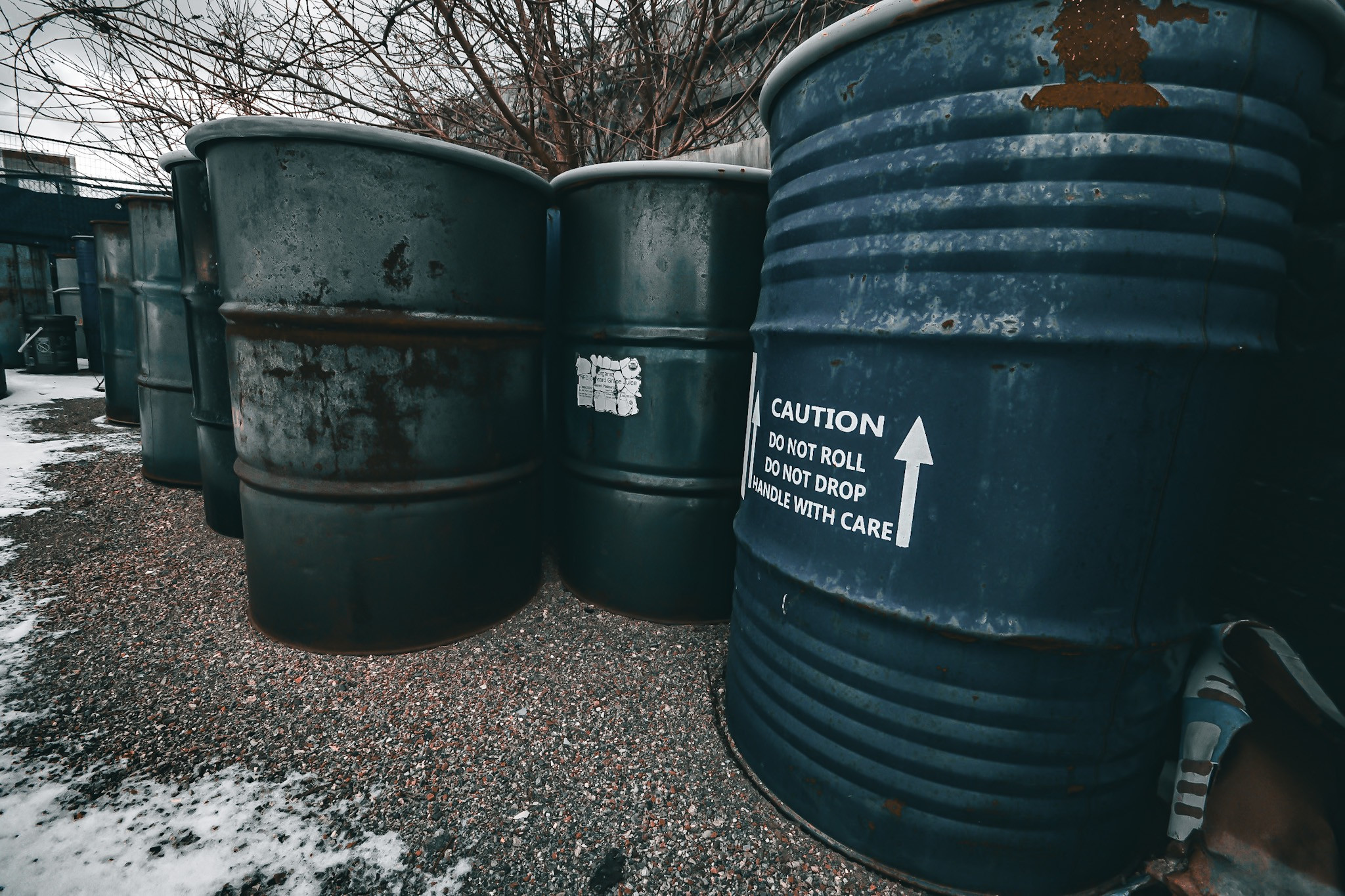
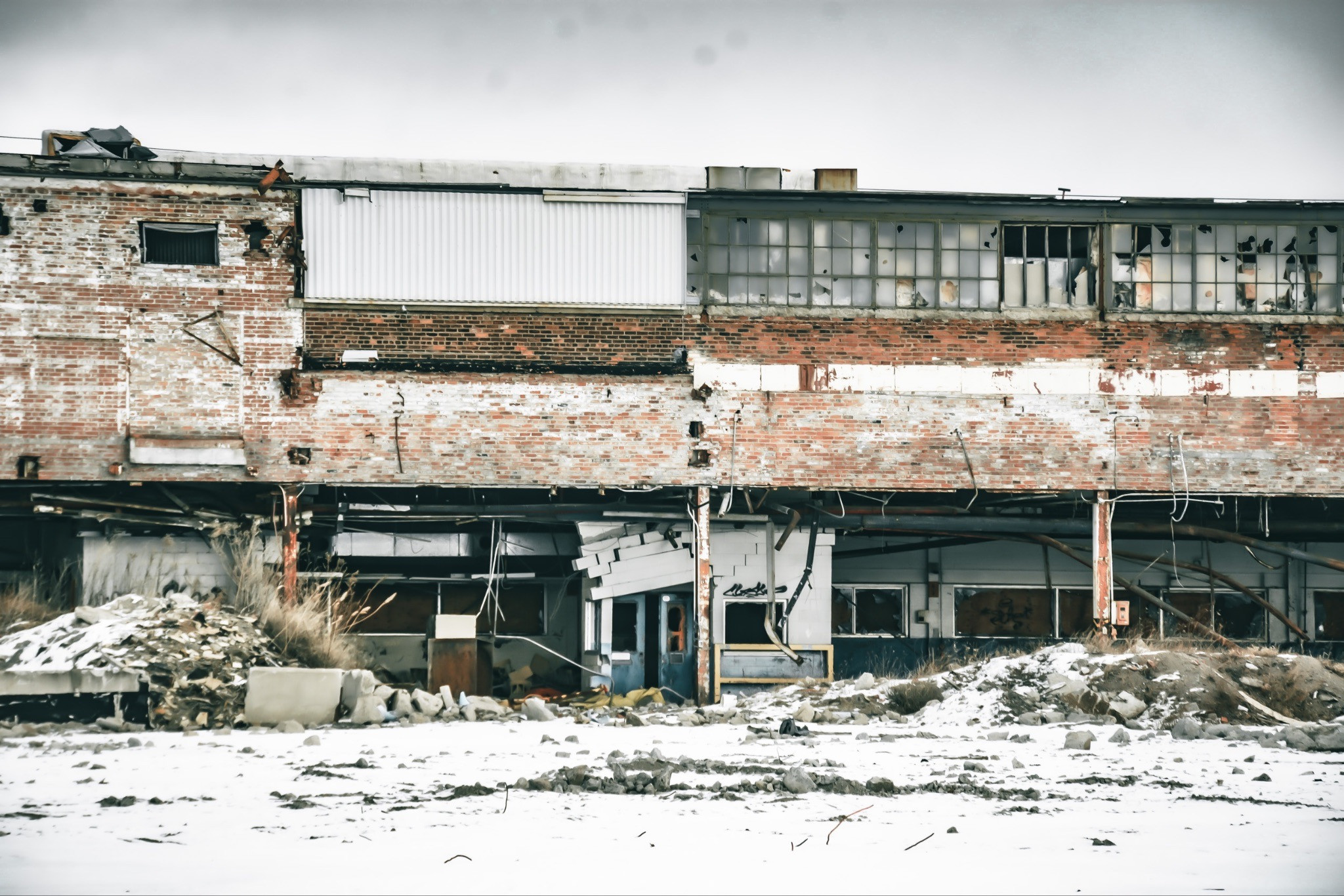
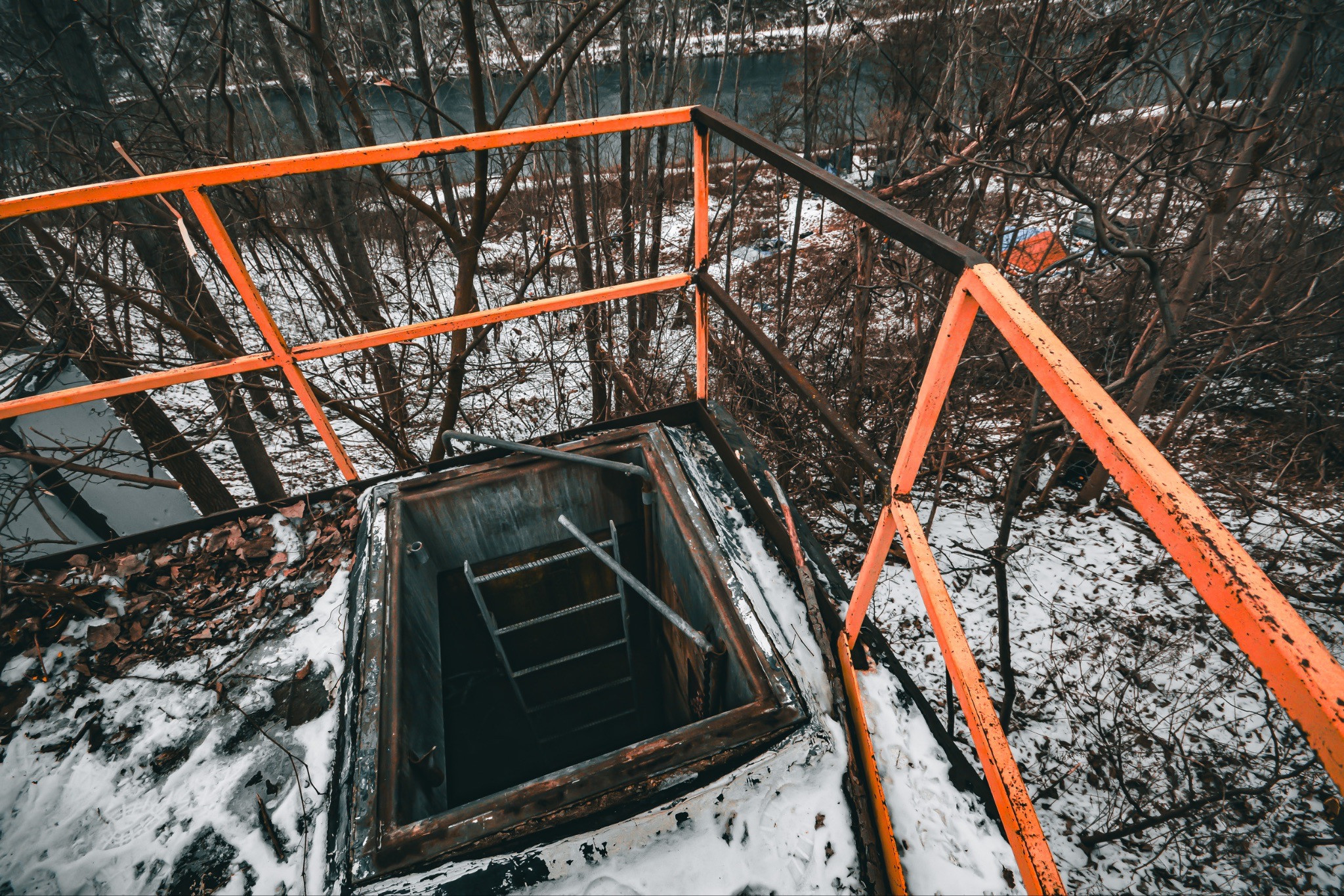
The former GM site in St. Catharines is filled with industrial waste, crumbling buildings and open pits, some of which sit outside the fenced property line.
(Joel Wittnebel/The Pointer files)
It’s no surprise that the man widely considered one of the most famous photographers in the world, and certainly the greatest chronicler of the effects of human industrial activity on surrounding environments, grew up right in St. Catharines.
Edward Burtynsky has photographed industrial devastation and the brutal rendering of once sublime natural landscapes around the world. His stunning, powerful, deeply troubling images have been featured in Burtynsky exhibits curated by the most influential museums around the world.
His father, like thousands of others across more than a century, used to work at the former General Motors plant.
After he was awarded the Order of Canada, Burtynsky addressed St. Catharines council about his idea to transform a giant old metal forge at the site into a work of public art.
“It really informed my work as an artist to try and pull the curtain back from behind those walls and bring the camera into those spaces and show them to the world.”
His intention was to honour people like his father, while depicting the complex role industry has played, and continues to play in society.
Now, only partially demolished and alarmingly exposed to the public, the property continues to raise concerns about its effects on those around it.
Safety risks, ongoing environmental hazards and the increasing blight affecting the surrounding community are not the legacy of the former workers. The city’s leaders have failed to address what has become the legacy of the centrally located site, next to homes, small businesses and parks, and one of St. Catharines’ most significant waterways, that residents fear is being polluted by chemicals leaking from the adjacent industrial site: it’s a legacy of danger to public safety, and political failure.
Over the years, reporting by The Pointer has chronicled concerns over chemical contamination including asbestos and other hazardous materials. Messaging from City staff, elected officials, and the provincial environment ministry has eroded public trust, with repeated attempts to minimize risks and prevent information from reaching the public.
Ahead of the 2022 municipal election it was a different tone, when candidates framed the GM site as a top priority. Ward Councillor Caleb Ratzlaff pledged during the campaign that, “I promise to use all the tools at the city’s disposal to move the GM site forward safely. We can’t afford more delays.” Ratzlaff, alongside fellow ward Councillor Robin McPherson and Mayor Mat Siscoe, spoke prior to the election about actions they would take if voters trusted them. Four years later, however, many residents are left questioning what, if anything, has been accomplished.
While council members have claimed the property is secure, even a cursory inspection reveals multiple access points.
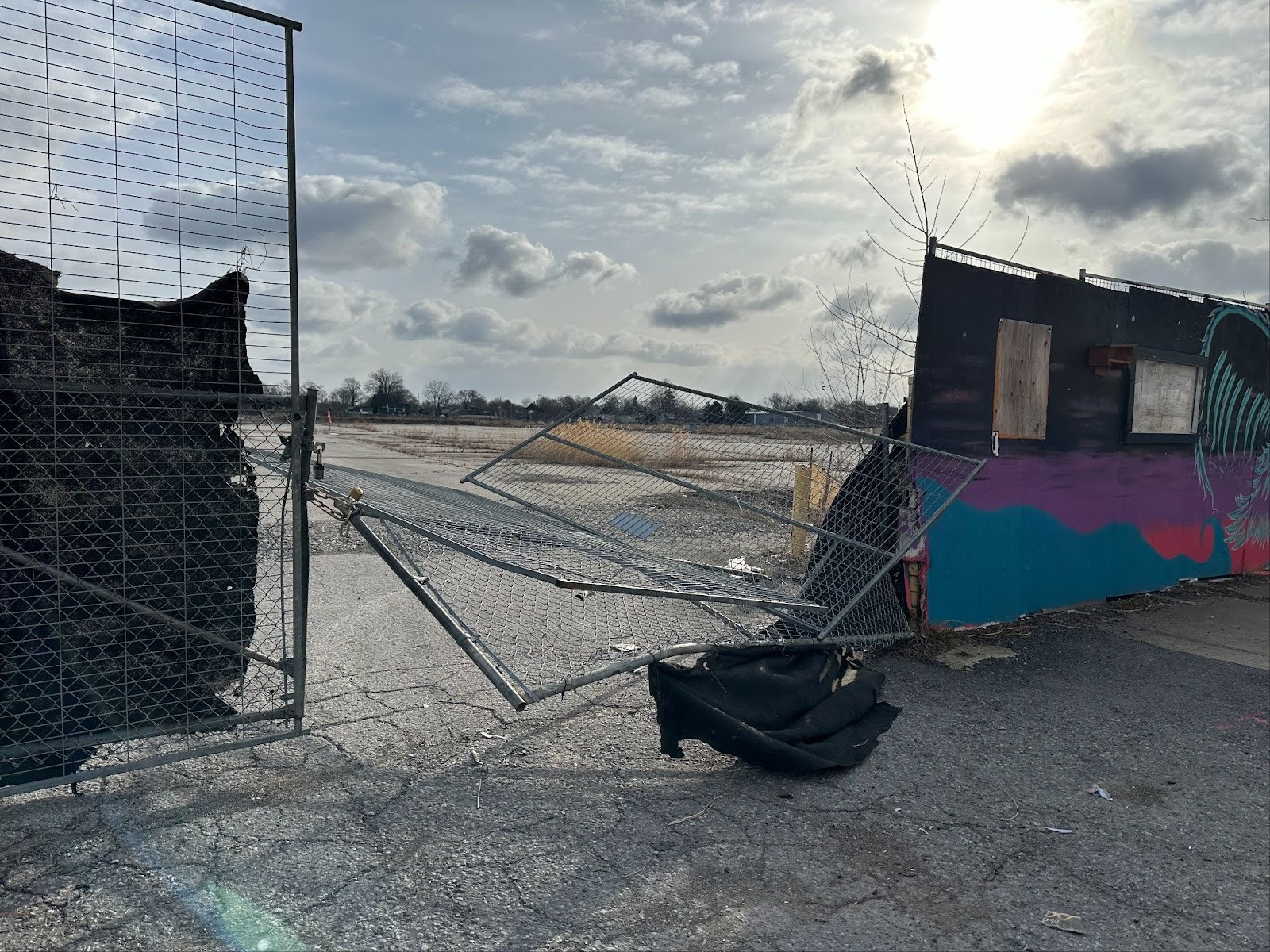

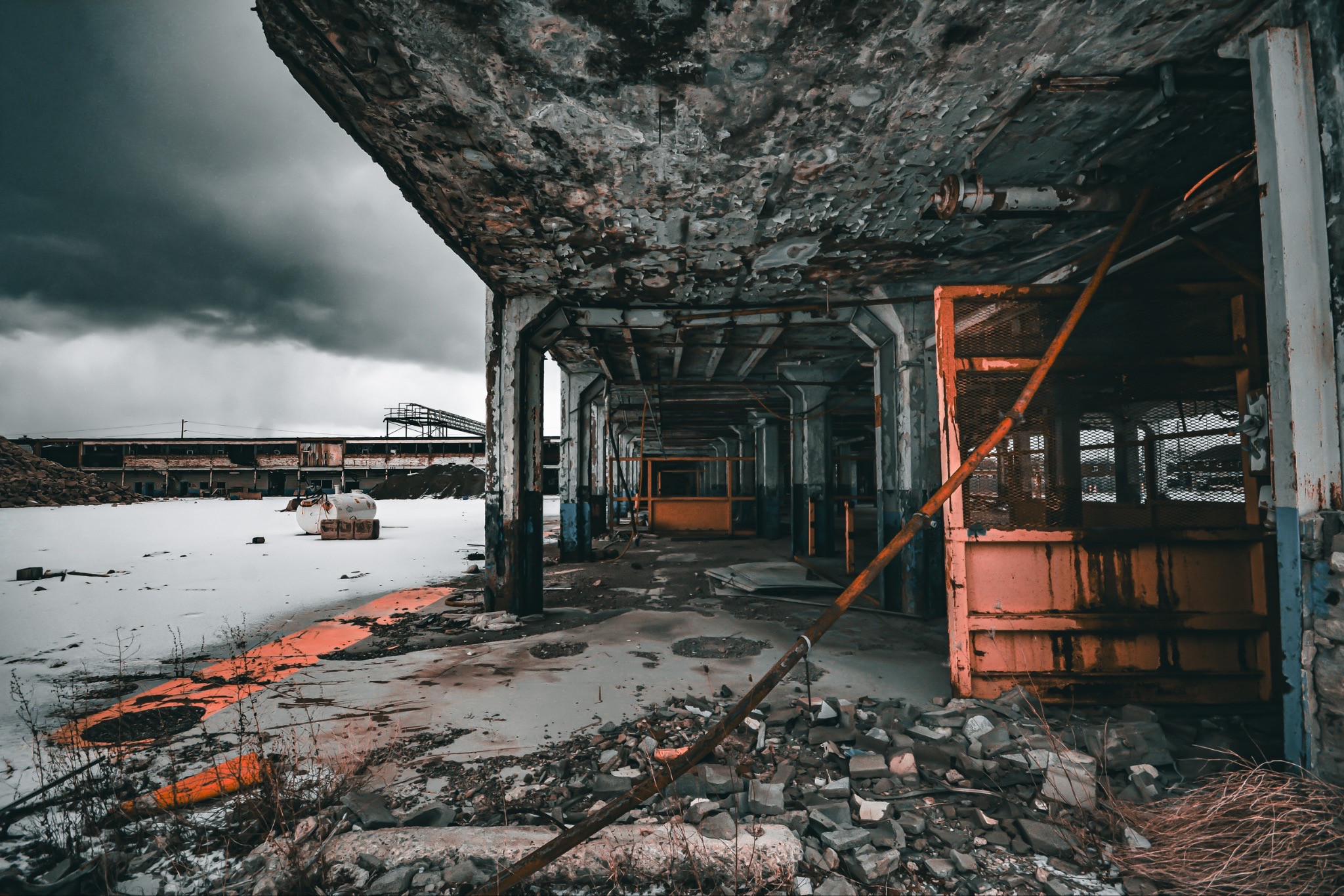
The gate to the GM site (top) pictured on March 28. Elected officials have repeatedly described the site as “secured”. For anyone who wanders through the collapsed gates, open pits, crumbling pipes and brick all pose a significant risk.
(Ed Smith/Joel Wittnebel/The Pointer)
The frustration was on full display at a recent public meeting.
Yolanta Dawe, who has lived about 100 metres from the site for roughly two decades, told The Pointer she attended the meeting to better understand recent updates and possible solutions. She described “a noticeable decline” in her respiratory health, which she believes is linked to conditions at the property. Although she has long managed asthma, Dawe said her symptoms have worsened to the point where she struggles to breathe even during short walks in her neighbourhood.
Her symptoms, she said, fluctuate with weather, worsening on windy or humid days, and noted a neighbour has experienced similar issues. Despite remaining active and able to complete long-distance walks elsewhere, Dawe wonders why her breathing difficulties are significantly more pronounced near her home.
Last August, her condition became so severe she “could not breathe” properly until December.
A naturopath she consulted around the start of winter offered some remedies but ultimately advised her to consider relocating. “I really feel like a victim here,” she said. “I got to know all my neighbours and I like my neighbourhood. Now I have to move.”
Organizers of the meeting at Mahtay Cafe in St. Catharines made it clear the intention was not only to identify the lack of action at the site, but to seek input from community members ahead of this fall’s election.
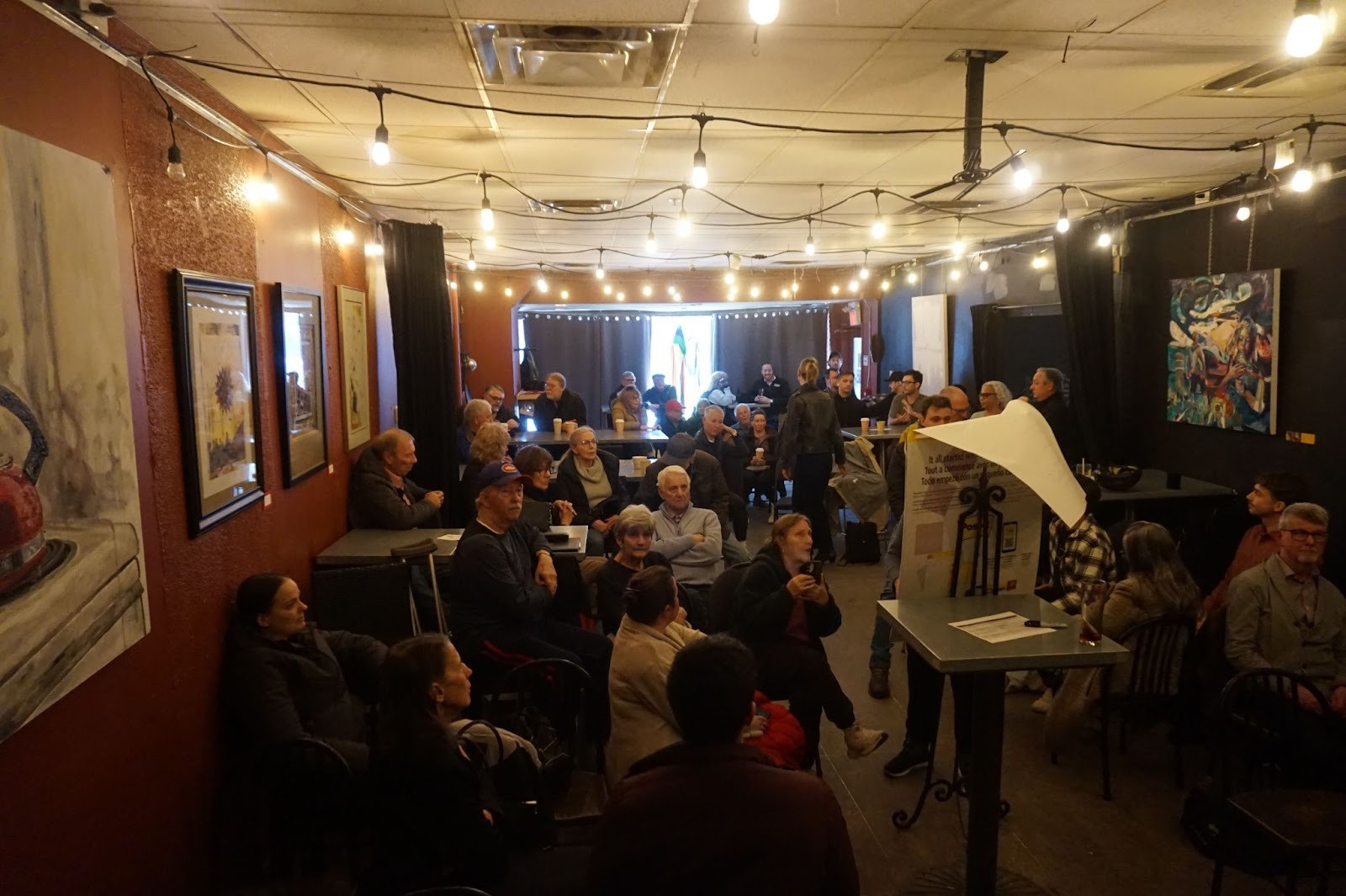
Residents gather at the Mahtay Cafe to discuss the former GM site on Saturday, March 11.
(Ed Smith/The Pointer)
Barb Scollick, a founding member of The Coalition for a Better St. Catharines, in comments to The Pointer, pointed to what she described as a pattern of repeated political promises followed by inaction: “Six years ago, The Coalition hosted a similar town hall at the same cafe. Back then, councillor-candidate Mat Siscoe was promising citizens the City would do everything to clean up the site, he would leave ‘no stone unturned’. Nothing changed. Then four years ago, councillor candidates Ratzlaff and McPherson made similar election promises.”
She continued.
“At our public meeting on Saturday afternoon, the frustration in the packed meeting room was palpable. Nothing meaningful has changed at GM. Citizens are tired of being misled by elected officials as the site remains a dangerous mess. Ward councillors beware, citizens want action, not more empty promises.”
Within days of the meeting, The Coalition moved to escalate its efforts.
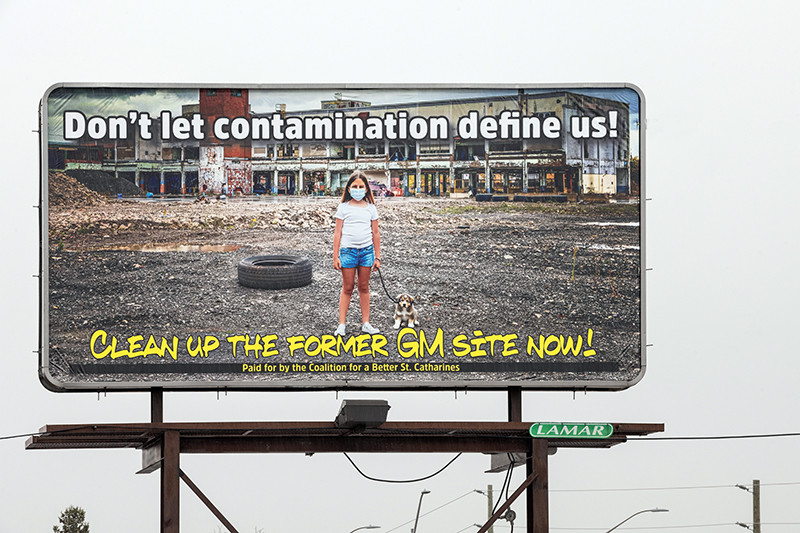
The group launched an aggressive marketing campaign designed to keep the issue highly visible in the community. Most notably, it secured a prominent billboard along Ontario Street, one of the main approaches to the GM site and a major thoroughfare in the city, featuring stark, dramatic imagery of the property in its current condition alongside messaging that calls on the City to use its full authority to ensure the site is properly cleaned up.
Positioned directly within view of the site itself, the billboard serves as a highly visible and unavoidable reminder of both the property’s current state and The Coalition’s central message to voters: that meaningful action has been delayed for far too long.
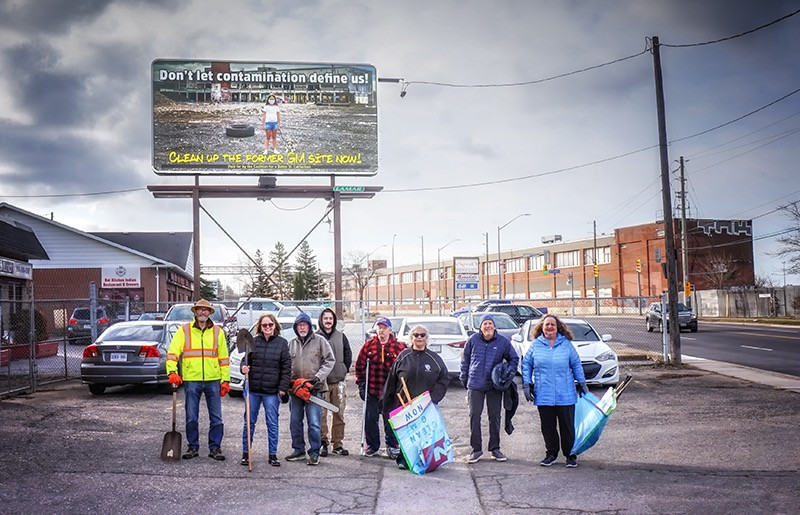
Members of the Coalition for a Better St. Catharines stand in front of the newly erected billboard.
(Submitted)
The move signals a clear strategic shift, away from advocacy that has been aimed at working with local leaders; to political action to replace anyone who stands in the way of public safety.
John Pula worked at the plant and served as a health and safety representative with UNIFOR Local 199. He told attendees that his experience gave him direct knowledge of the types of dangerous materials historically present at the site.
He raised concerns about the condition of partially demolished buildings that remain standing, suggesting that if hazardous materials are disturbed, they could pose risks beyond the property boundaries. He pointed specifically to asbestos as a potential risk, noting that hot, dry, and dusty conditions could allow fibres to become airborne and travel into surrounding neighbourhoods.
Pula also indicated that retired members of the local union have begun organizing around the issue, bringing additional pressure to bear on municipal leadership.
A formal letter addressed to Mayor Mat Siscoe and council, obtained by The Pointer, details issues raised by former members of Unifor Local 199, expressing concern over what they describe as the “unsightly and dangerous condition” of the site.
“Damaged, decaying and unsafe buildings, roaming asbestos, toxic building debris, and piles of rubble must not be the legacy of our former workplace,” the retirees wrote.
They emphasized the facility’s historical importance as “a cornerstone of our community and a source of pride for thousands of families,” while warning that its current condition poses “potential risks to residents, neighboring properties and the broader community.”
Their demands are clear: use “every authority available” to complete demolition and eliminate remaining hazards, with a focus on public safety.
As public efforts to finally take action, following failed efforts driven by a developer and the former mayor, Walter Sendzik, to rush construction of luxury residences despite all the unanswered public safety questions, municipal leaders have cited the complexity of the file.
While these concerns were absent when the since abandoned development was pushed by Siscoe and others on council last term, suddenly environmental regulations, jurisdictional constraints, and the involvement of external stakeholders have been cited as reasons for the slow pace of progress to clean up the property now that no luxury development plan is in place.
The Coalition has been informing residents about the tools available to the City, including bylaw enforcement powers that could compel demolition of remaining structures and require the site to be made safe; powers City officials have been reluctant to use on the former GM site.
As the fall municipal election nears, the question surrounding the former GM site is shifting.
According to Scollick: “It is no longer simply about remediation timelines or redevelopment potential. It is quickly becoming about accountability, it’s about community safety.”
Email: [email protected]
At a time when vital public information is needed by everyone, The Pointer has taken down our paywall on all stories to ensure every resident of Brampton, Mississauga and Niagara has access to the facts. For those who are able, we encourage you to consider a subscription. This will help us report on important public interest issues the community needs to know about now more than ever. You can register for a 30-day free trial HERE. Thereafter, The Pointer will charge $10 a month and you can cancel any time right on the website. Thank you
Submit a correction about this story

