
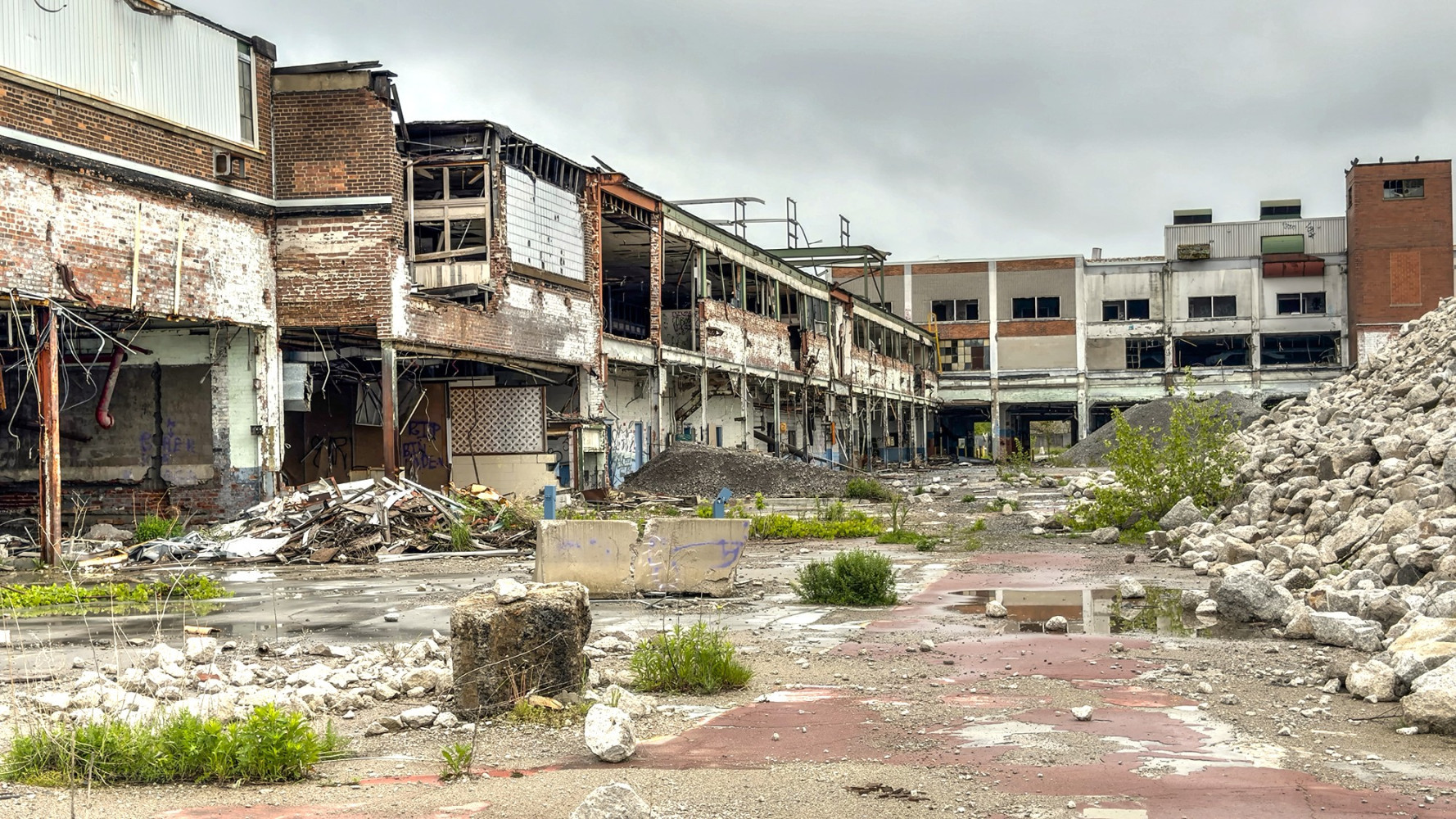
After torrential rains hit St. Catharines, dangerous contaminants could be flowing off GM property
For many residents in St. Catharines, the past two weeks have been defined by water.
Homeowners have been left reeling after record rainfall overwhelmed parts of the city, flooding basements, damaging vehicles and wreaking widespread havoc on municipal stormwater systems unable to absorb the deluge of rain. The financial impact is expected to be measured in the tens of millions of dollars.
As residents focus on recovery and the City evaluates how to improve its resilience against future storms, many eyes in the downtown area are turning to the former General Motors (GM) site, which was battered by the unprecedented rainfall, overwhelming a system meant to contain dangerous contaminants from leaking off over the property line.

On August 5, Ontario Premier Doug Ford visited Niagara to meet with the Mayor of St. Catharines, Mat Siscoe, to hear “directly from workers and community members impacted by the recent flooding” but there was no mention of the GM site according to recent reports.
(Doug Ford/X)
The massive 55-acre former industrial property has been the subject of years of environmental scrutiny because of historic contamination concerns, aging infrastructure, deteriorating buildings, and critical questions about whether the systems designed to protect the surrounding community and environment are working as intended.
During visits on August 3 and 4, The Pointer observed water flowing freely from the site’s stormwater collection pond onto nearby streets before entering municipal drainage infrastructure. The system meant to treat this water for dangerous polychlorinated biphenyls (PCBs) has been offline for months.
An investigation by The Pointer found the City and Province knew the system meant to protect the community was offline for weeks but failed to disclose that information to the public.
Despite calls from the community and opposition Members of Provincial Parliament (MPPs) at Queen’s Park, it's unclear what action the Ministry of Environment, Conservation and Parks (MECP) has taken to get the critical filtration mechanism back online.
That delay could now have serious consequences for the surrounding community.
The concerns surrounding stormwater at the former GM property have been constant for almost a decade. In 2020, the MECP identified an ongoing discharge of stormwater contaminated with PCBs flowing off the property. PCBs are considered “contaminants of concern” and are carcinogenic. These persistent industrial chemicals have the ability to remain in the environment for decades and accumulate in living organisms. It is one of the many dangerous substances that previous environmental assessments identified as being present in the soil at the GM property.
After heavy rains completely saturated the ground, it remains unknown how many of these dangerous contaminants could have been picked up by the heavy flow of water and discharged into municipal stormwater or nearby Twelve Mile Creek. The waterway runs adjacent to the former GM site and abuts what environmental assessments have found to be one of the most contaminated plots on the property.
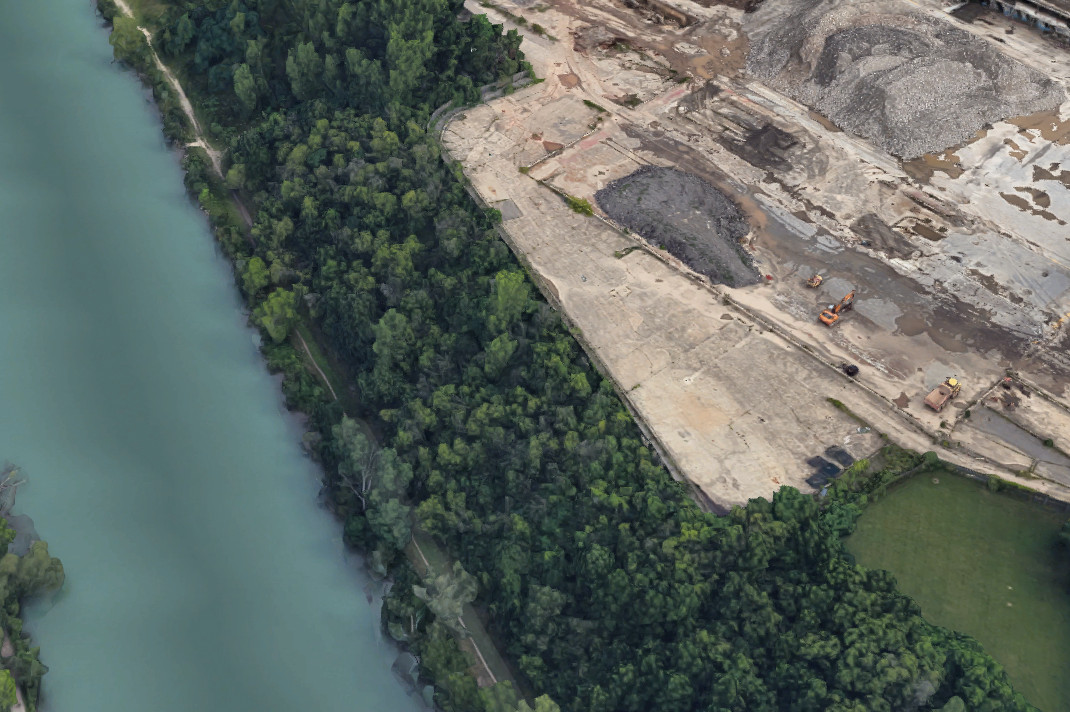
The sloped area between the former GM site and Twelve Mile Creek is known to house heavy contamination.
(Google Maps)
Following a two-year fight with the City and GM for information about the property, The Pointer obtained a pair of environmental assessments.
The reports detail a subterranean swamp of chemicals and heavy metals that sit next to homes, businesses and a major waterway in the heart of the city.
The documents previously obtained by The Pointer include Phase I and II environmental assessments commissioned by General Motors, completed in 2010 and 2012 respectively. These in-depth studies found the soil and groundwater beneath the site harboured nearly 25 different potentially harmful chemicals at levels above Ministry thresholds, meaning they could be harmful to the environment and human health.
It is a long list of cancer-causing chemicals, heavy metals, petroleum hydrocarbons (PHCs) and other industrial wastes that can be incredibly harmful to humans, fish and other aquatic life at high concentrations. Lead contamination—which can hamper brain development in fetuses, infants and children, was found at 10 times the level established to protect human health and the environment; PHC F1 (a class of petroleum hydrocarbons that includes things like gasoline) was present at levels more than 20 times healthy limits; trichloroethylene (TCE), a known human carcinogen, was present at more than 30 times healthy limits; benzene, another known carcinogen, was found at levels more than 50 times set limits; PCBs were found at more than 85 times the set limit; and PHC F3 (another class of PHCs which includes diesel) was detected at 1,100 times the limit.
Soil testing recently commissioned by The Pointer identified asbestos within the soil on the site.
It's unclear what impact the massive infusion of water into these underground channels in recent weeks will have on this toxic soup.
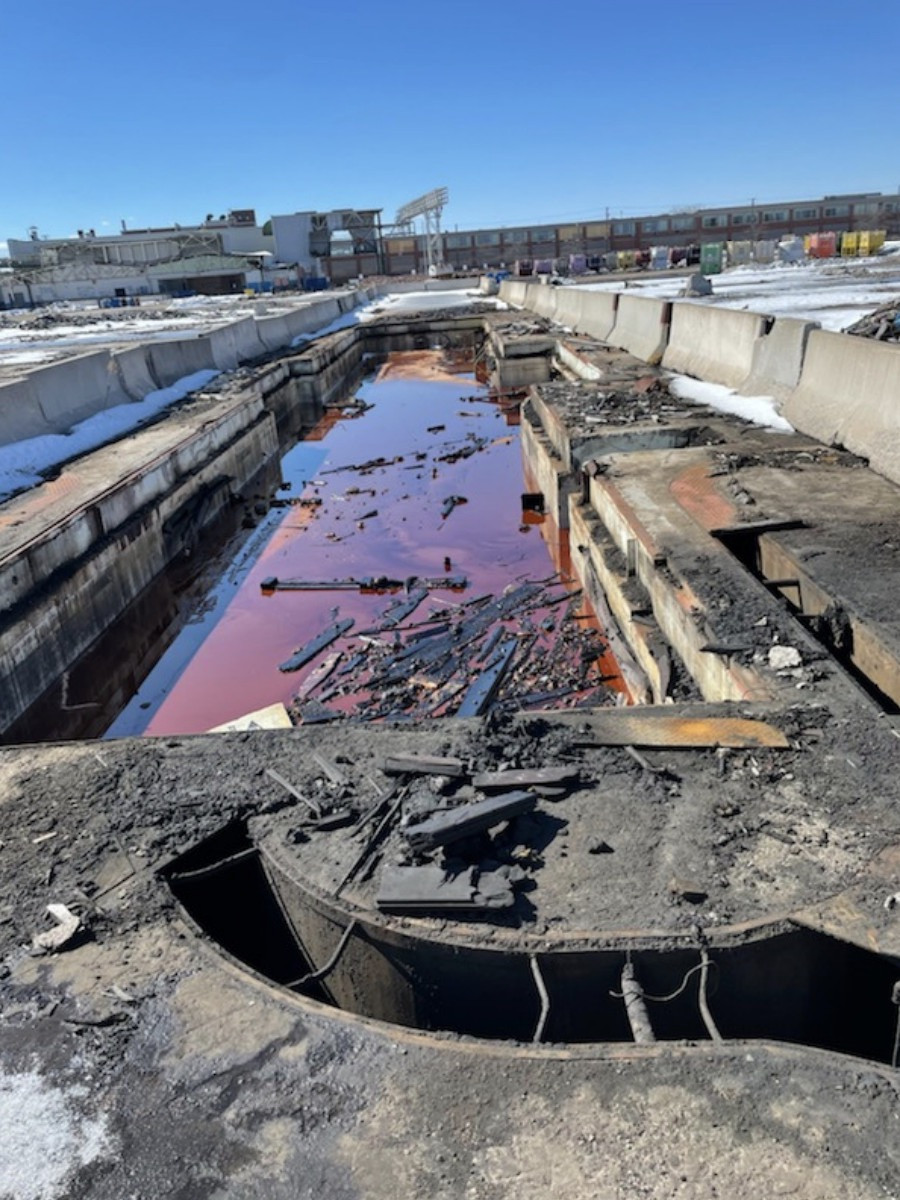
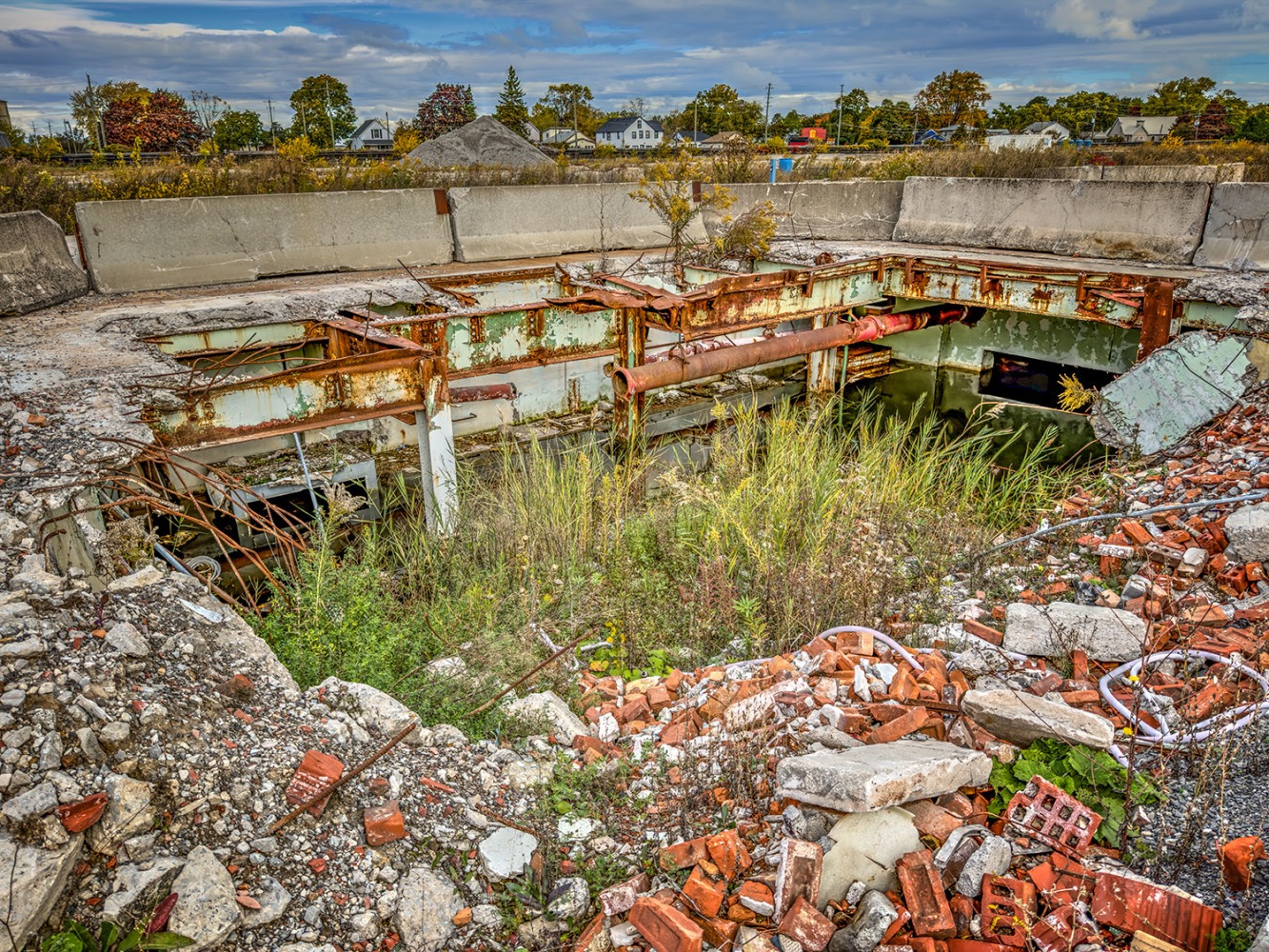
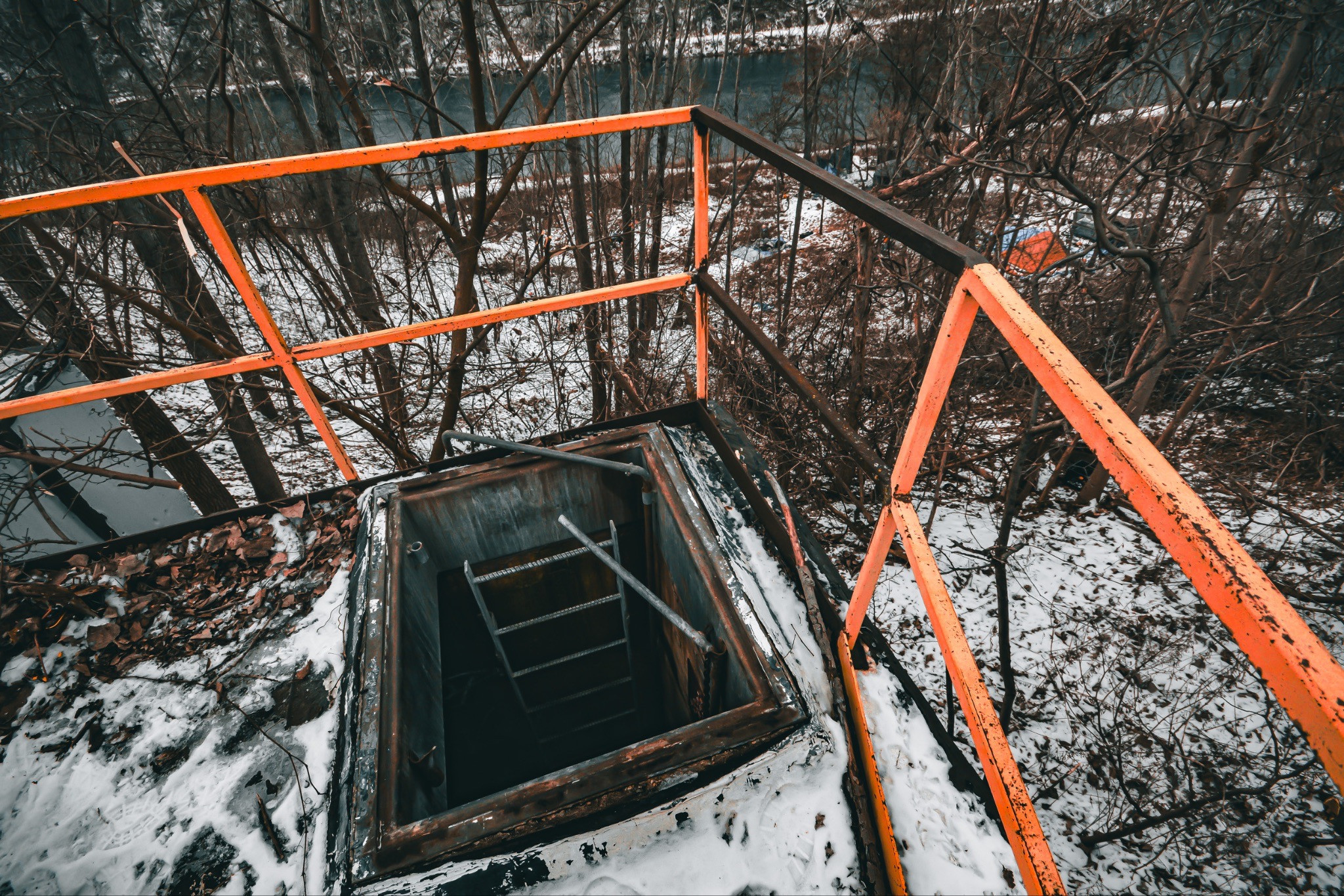
The area beneath the former GM property contains many industrial pits and tunnels that were previously used during the industrial operation. While many were filled as part of the since-abandoned demolition (image above), many still remain (pictured below). They are easily accessible to anyone who enters the site.
(Above: MTE Consultants; Below: Submitted/Joel Wittnebel/The Pointer)
To address the PCB discharge in 2020, under the supervision of the MECP, a stormwater collection and treatment system was installed by the property owner. The system uses a collection trench that encircles the eastern edge of the property to intercept surface water and direct it into a large retention pond. From there, the collected water is intended to pass through a filtration system designed to remove PCBs before the treated water is discharged into the municipal stormwater network.
This collection pond is now at the centre of renewed concern. During visits to the site on August 3 and 4, the pond was visibly overflowing. Water was observed flowing directly from the pond area, across the property boundary, onto adjacent streets and ultimately toward municipal storm drains.
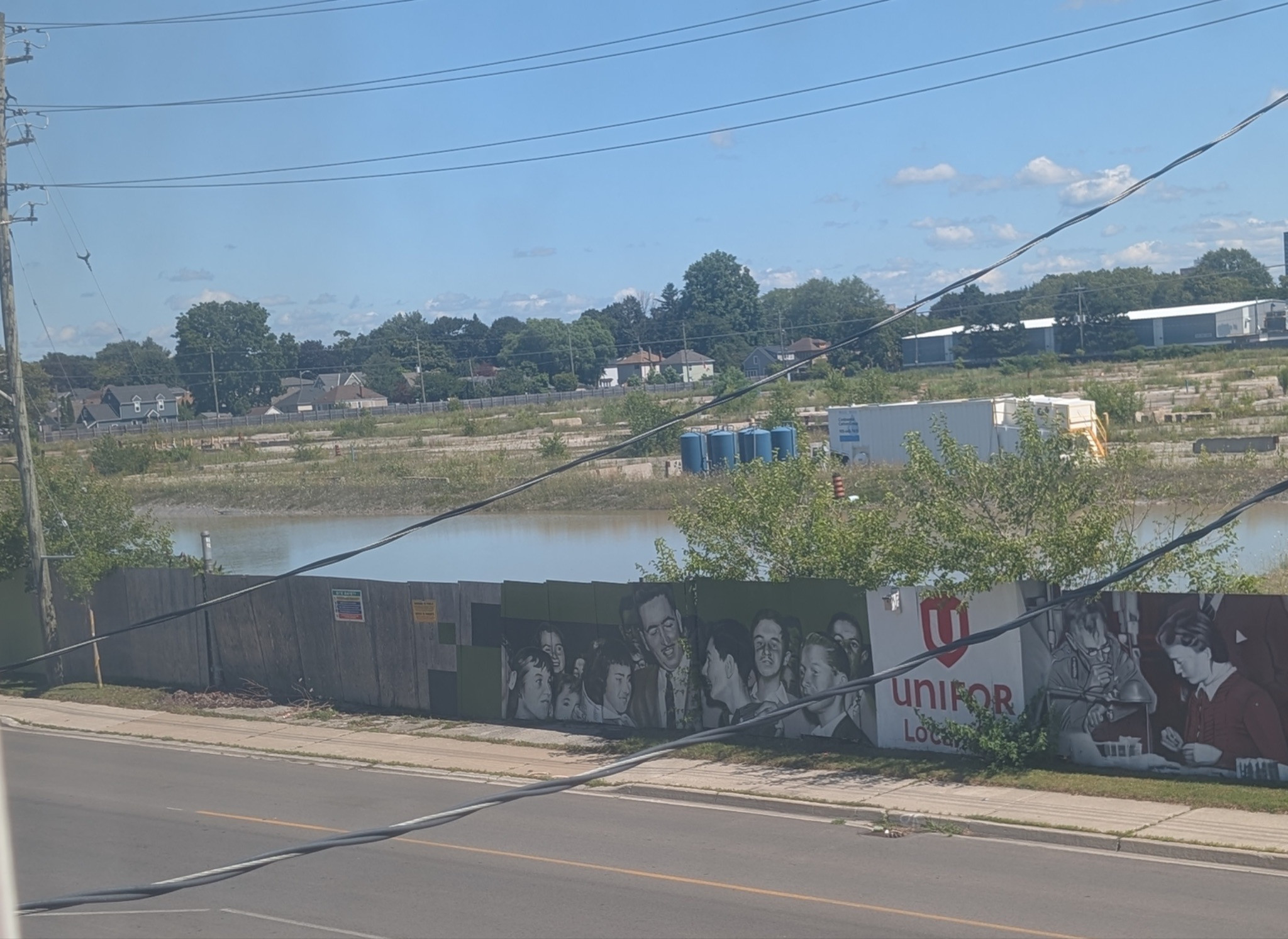
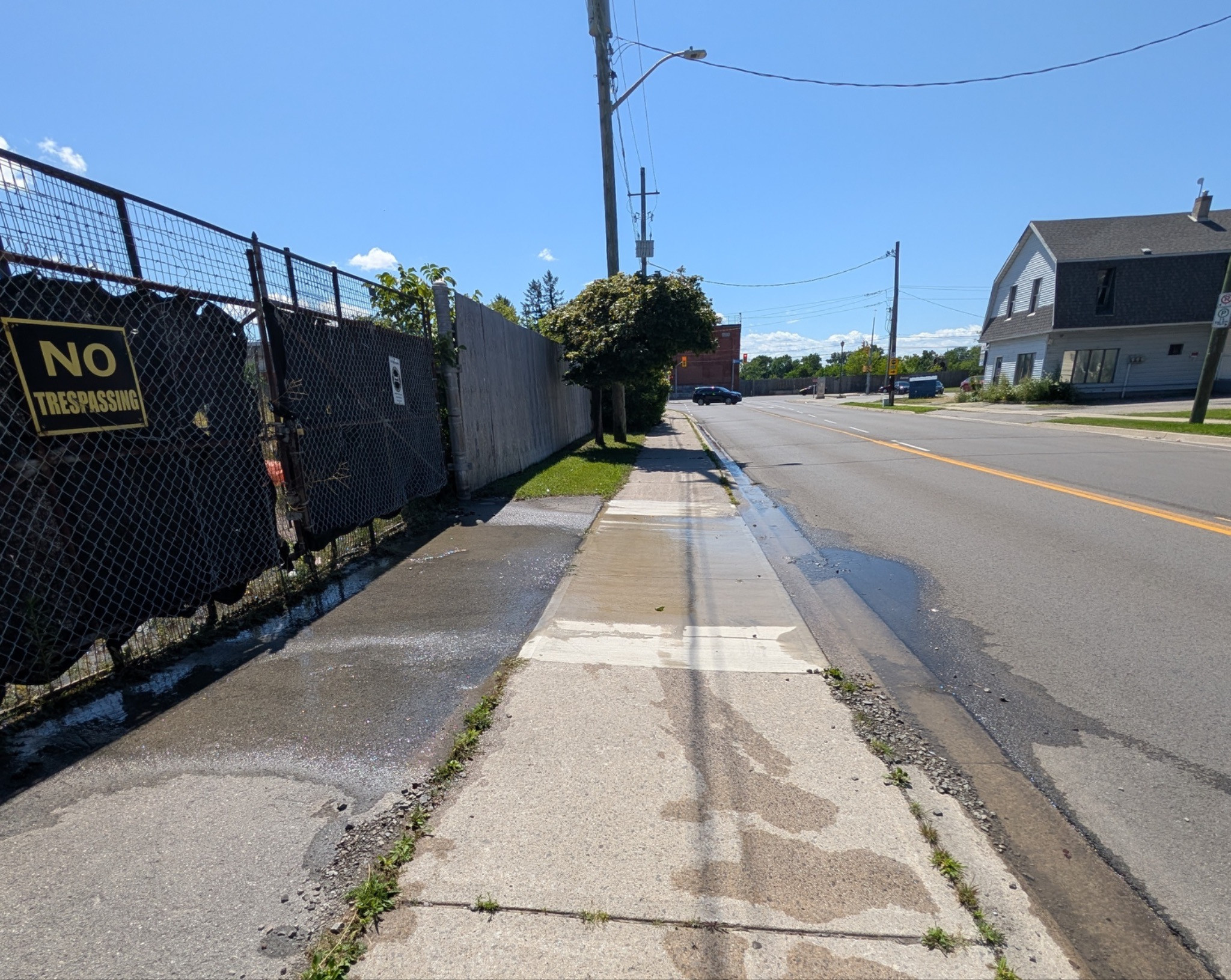
Overwhelmed by recent heavy rains, the stormwater retention pond on the GM site, meant to stop potentially contaminated water from leaving the property, was overflowing last week with water clearly leaking across sidewalks and onto the street.
(Ed Smith/The Pointer)
The observations raise important questions about the stormwater collection and treatment system, which has already been a central concern of residents for months.
In October 2025, reporting by The Pointer revealed the system appeared inactive. The City of St. Catharines admitted it had no idea whether the system was operating as intended.
It wasn’t.
At the time, the MECP acknowledged that an investigation had been launched, although ministry officials have not defined what they are investigating. Despite months of inquiries, including requests from St. Catharines MPP Jennie Stevens, the ministry has not publicly disclosed any status reports or findings. An investigation by The Pointer showed PC staff actively blocking information from being released.
The potential failure of the stormwater collection system is only one of the questions raised by the recent deluge. As an unprecedented volume of water moved across the property, it placed additional stress on the remaining buildings, which are pockmarked with holes and visibly deteriorating.
Less than two months ago, the owner was ordered to address the abhorrent condition of the industrial complex after years of complaints by residents. Municipal bylaw enforcement officers documented widespread structural deterioration, describing buildings in significant disrepair and concluding that corrective action was required to address ongoing safety concerns. The property owner is appealing that order in court.
The battering of extreme rainfall on structures already crumbling due to years of exposure to the elements could heighten the risk of further deterioration. It is well known the site is easily accessible and is frequently used by houseless individuals during the cold months of the year and frequented by curious teens and urban explorers. Many residents are concerned it is an accident waiting to happen.
“The GM site is a public safety issue brought on by an irresponsible property owner and the City’s lack of action. Property standards bylaws exist to ensure that neglected sites do not pose harm to the community. Allowing this situation to persist increases the likelihood of injury or worse,” Gwen Kennedy, a spokesperson for the Coalition for A Better St. Catharines, told The Pointer after a video of teens exploring the buildings appeared on YouTube.
The intensity of the rainfall raises questions about whether water infiltration and flooding worsened the damage done to lands and buildings already identified as a threat to public safety. Call logs from St. Catharines Fire Services obtained by The Pointer show as far back as 2019, firefighters identified five to six feet of water within the underground pits on the site. It was a clear “fall and drowning hazard”, the report reveals.
The Pointer will be doing further reporting on the startling details revealed in these years of call logs.
The stormwater questions also come as the property faces additional scrutiny over asbestos.
In June, The Pointer revealed that the carcinogenic substance had been confirmed in soil samples from the site at levels far exceeding allowable limits. It's unclear what effect the pair of recent downpours will have on this dangerous toxin.
Following the August rainfall events, information and photographs documenting the observed water flow from the former GM property were provided to the MECP by The Pointer, along with inquiries about what action was being taken to address the potential threat of escaping contaminants.
Kim Groombridge, manager of the Ministry’s Niagara district office, acknowledged receiving the images and questions.
“Thank you for the information, I have forwarded it to an Environmental Compliance Officer for follow-up,” Groombridge said.
Requests for additional information were not answered, and no follow-up was received.
According to a statement provided to the St. Catharines Standard, ministry officials conducted a perimeter check of the Ontario Street property on July 28, after the first downpour, and observed runoff. The property owners have been asked to collect samples of stormwater, provide an engineering assessment of the site’s capacity to manage stormwater and plans for preventing similar discharges in the future.
For years, residents have raised concerns about contamination, aging infrastructure, and whether the systems designed to protect the surrounding community are functioning as intended. The recent rainfall has brought those questions into sharper focus.
Email: [email protected]
At a time when vital public information is needed by everyone, The Pointer has taken down our paywall on all stories to ensure every resident of Brampton, Mississauga and Niagara has access to the facts. For those who are able, we encourage you to consider a subscription. This will help us report on important public interest issues the community needs to know about now more than ever. You can register for a 30-day free trial HERE. Thereafter, The Pointer will charge $10 a month and you can cancel any time right on the website. Thank you
Submit a correction about this story

