
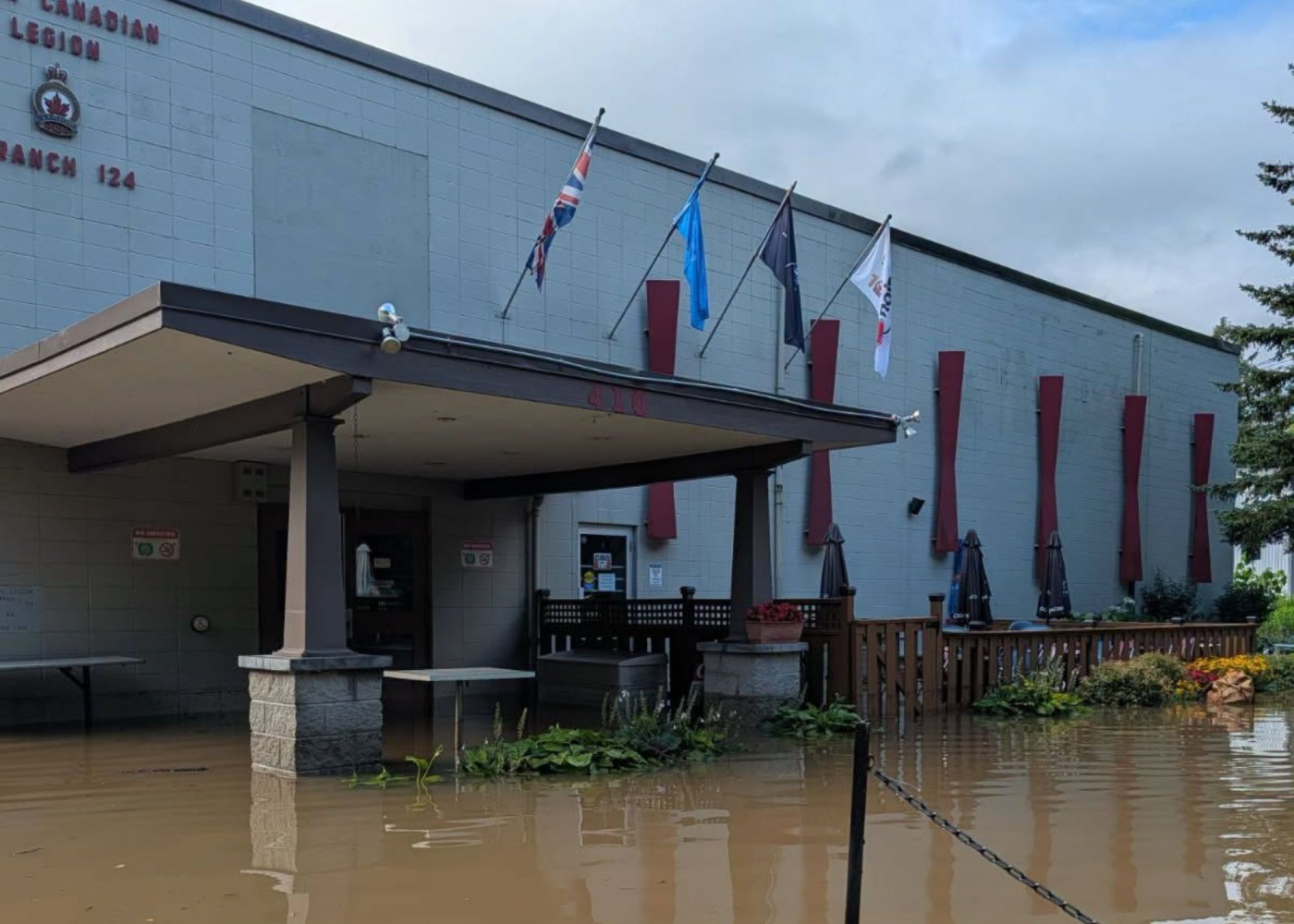
‘These storms are not going away’: After Niagara was hit by two 100-year storms in a week, residents demand new approach to flood protection
On the night of July 27, St. Catharines resident Randi Evans fell asleep to the gentle sound of rain, thinking little of it. Just after 3:30 a.m. the next morning, she was jolted awake by an unfamiliar alarm echoing through her home. It was the beginning of a nightmare that would engulf her family and hundreds of others as two once-in-a-century storms battered the region, dumping a total of more than 257 millimetres of rain within a week—an all too similar fate as the record-breaking two 100-year storms in Mississauga in 2024 that brought over 276 millimetres of rainfall and continue to haunt the community to this day.
Mississauga residents are still reeling from the financial loss. And now, across Niagara, homeowners are wondering how they will recover.
Half-asleep, Evans wandered downstairs, struggling to understand what she was seeing. “Everything just looked strange” — something “kind of yellow” was moving along the floor.
Water.
Nearly a foot of it had submerged everything.
She rushed back upstairs and woke her husband. “Panic” quickly overcame her.
For 17 years, Evans and her husband, who are in their 80s, had lived in the same St. Catharines home without a single flood.
“We’d never had any trouble…not even a drop,” she told The Pointer.
Her husband had recently removed boards from the backyard deck and replaced them. Disoriented by the “panic” they feared they had somehow caused the flooding. Then, he rushed outside to check nearby Walker's Creek.
He had a hunch.
In 2018, residents living along the creek urged St. Catharines council to address chronic flooding before approving additional development near the waterway after more runoff and frequent intense storms had overwhelmed the system.
He expected to find the creek overflowing.
Seven days earlier, on July 21, in what would prove to be a foreshadowing of the devastating storms to come, walls of rainfall brought water “over the edge to some extent” — the start of almost 400 millimetres of rain dumped on St. Catharines in twelve days.
On July 28, in the early morning, the water “was barely up to the top of the creek bed”.
“That was what was very puzzling to us: the creek had not overflowed, and it had the week before, and yet nobody's basement flooded,” Randi noted.
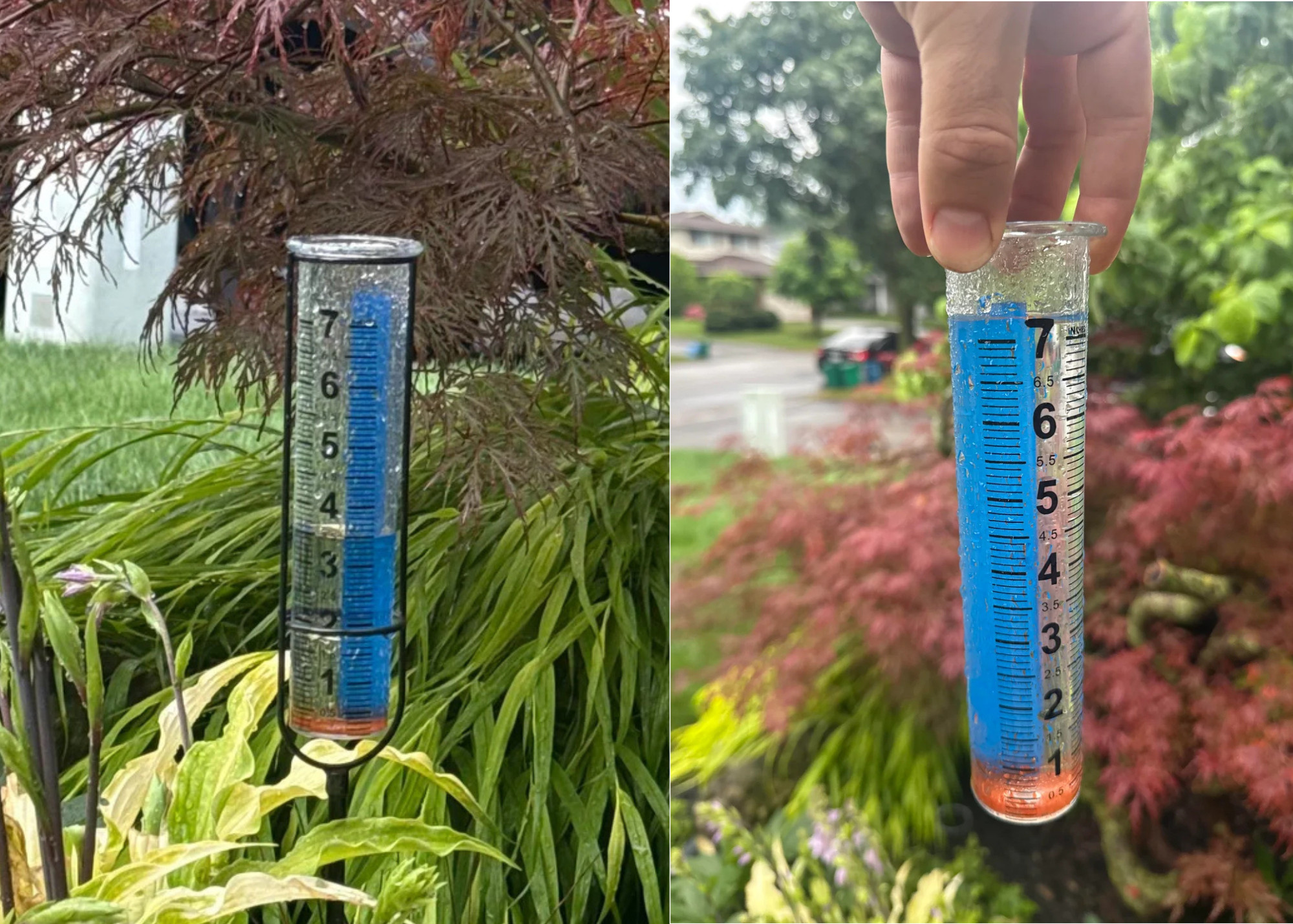
One Niagara resident's backyard rain gauge captured the scale of back-to-back storms that inundated the region: roughly 7.5 inches of rainfall between July 27 and 28 (right), more than double the approximately 3.5 inches recorded during the July 20–21 storm (left). “Typically when there is a huge downpour kinda storm it’s more like 1 inch, maybe 2 inches from my anecdotal perspective so these two rainfalls just a week apart brought an astronomical amount of rain,” the resident wrote in a post.
(Reddit)
Evans waited for her husband to return. When he didn’t, she went out looking for him. “I thought, oh my! I hope he didn’t fall in”.
What she found was the entire neighbourhood waking up to the same nightmare as porch lights flickered across the street and families wandered outside in disbelief.
“My husband was up the street and talking to people who had found out about the flood earlier, and were in the garage talking about it. There's something major going on here.”
It would take days before the scale of the disaster became fully apparent. On July 28 alone, St. Catharines got 45.7 millimetres of rain, shattering the record, when 30.7 millimetres fell in 1902.
The flooding destroyed nearly everything in the couple's basement, from the furnace, water heater, washer–dryer, furniture, flooring to the drywall.
“The walls will have to be taken off from two-feet up,” Evans said.
“We've lost pretty much everything.”
If the emotional toll was not enough, practical challenges made it tougher for the elderly couple to navigate the city’s dual 100-year-storms.
Around 5 a.m., Evans picked up the phone and started calling emergency restoration companies. She finally reached one that promised to arrive the same day.
They never came.
“We tried to contact them that evening, and the next day, and we still never heard from them,” she said on August 4.
“We still never have.”
Eventually, after discovering virtually every restoration company in Niagara was overwhelmed, the couple found a contractor travelling from Toronto, as local crews scrambled to respond to flood after flood across the region.
Just as the cleanup started, and people began to collect their lives back, residents suddenly had to brace themselves again.
On August 2, the skies darkened. An ominous feeling spread as fast as the black clouds rolled in.
“We thought, ‘Oh no, this is going to be as bad as last time.’ And it was,” Evans said.
“There were no signs of anything in our basement until later in the day, and then all of a sudden it just started coming up.”
The system meant to protect the city’s homes was overwhelmed once again.
Their restoration contractor told them, “pretty much every client” that he had serviced from the first storm had been “reflooded” — many, worse than before — with new clients calling desperately, looking for help.
By August 3, the Town of Lincoln (got nearly 300 flood-related calls within a 24-hour period on Sunday) and the City of St. Catharines declared a state of emergency “following a pair of intense storms that brought more than 140 mm of rain”.
“This declaration underscores the severity of what our community has experienced and the need for continued support from our partners at all levels of government as we work together through recovery,” Mayor Mat Siscoe, whose basement was also flooded during the historic rainfall, said.
“We know how physically, emotionally and financially exhausting this has been for our community. The impact goes far beyond material loss and it’s taking a toll on our residents.”
For the Evans family, the relentless rainfall from the second once-in-a-century storm resubmerged everything in its path, before they had even finished bailing out from the first flood.
Her husband has asthma and was unable to help with the cleanup, delaying the removal of waterlogged materials and damaged possessions. The retired couple brought small items that could be saved upstairs.
“But after the second flood, it's unlikely that we will be able to save the rest of the things after they were damaged twice,” Randi said.
There were other growing problems.
As floodwater receded, damp drywall, soaked insulation and mold created new concerns inside the home. Evans feared for the health of her husband, who had been suffering just a few weeks before due to thick wildfire smoke—declared a “crisis” by federal officials.
She was right, unfortunately. By the third day, his breathing had begun to worsen and “he was having to take his puffer”.
Windows were kept open. Basement doors stayed shut in an effort to keep mold spores from spreading throughout the house. She could still feel the air affecting her own lungs as well. A persistent cough clung inside her chest every time she went to bed.
Their health has collided with the other fallouts from the disaster.
The City offers financial assistance through the Flood Alleviation Program (FLAP) which covers up to 90 percent of costs, capped at $5,000 per property. It offers “reimbursement for eligible flood prevention measures, including backwater valves, sump pumps, and required installation work” for eligible homes that may include single-detached, semi-detached or multi-unit residential properties built before 2012 within city limits.
Evans worries approval timelines may not match the urgency homeowners face.
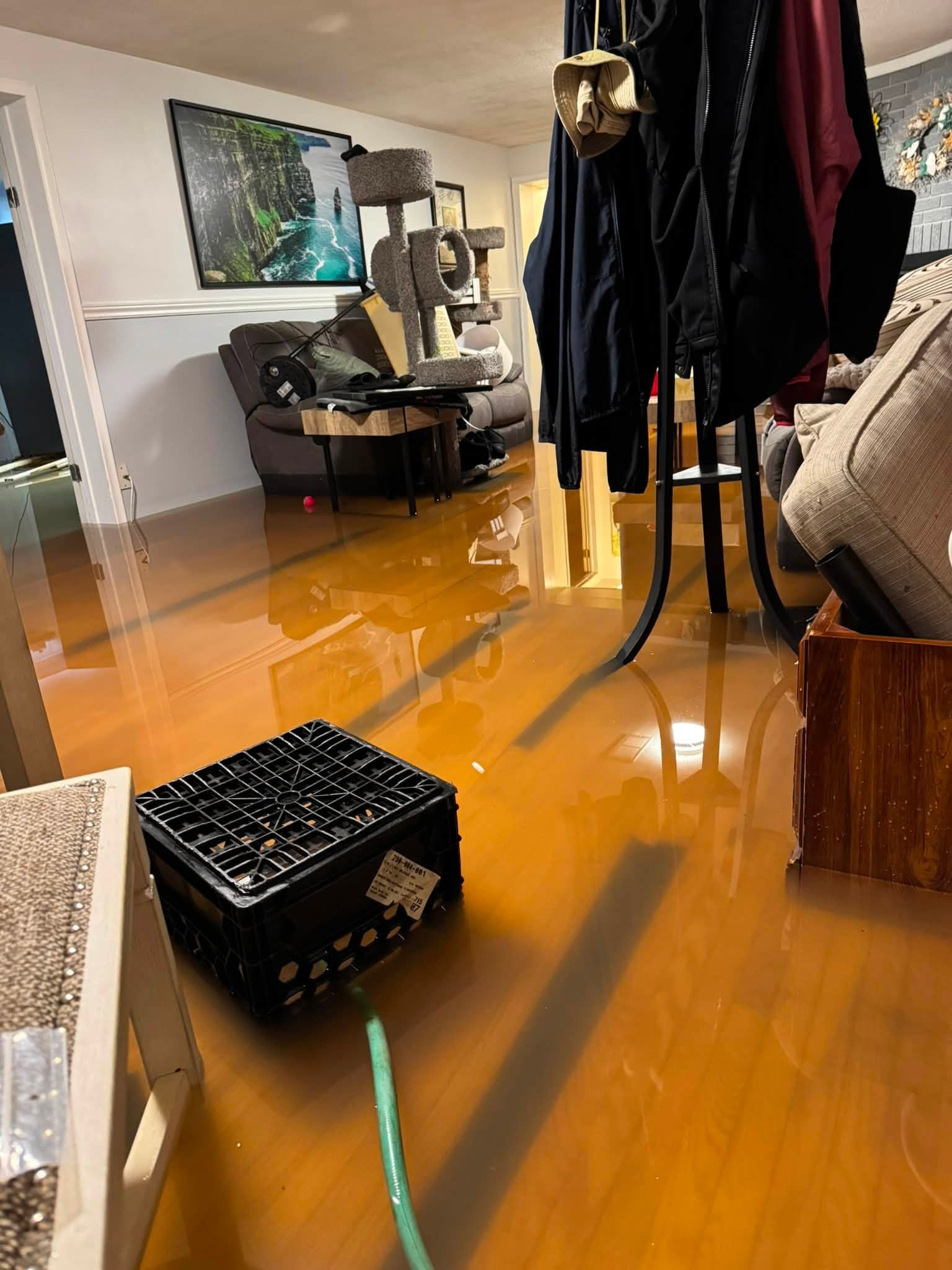
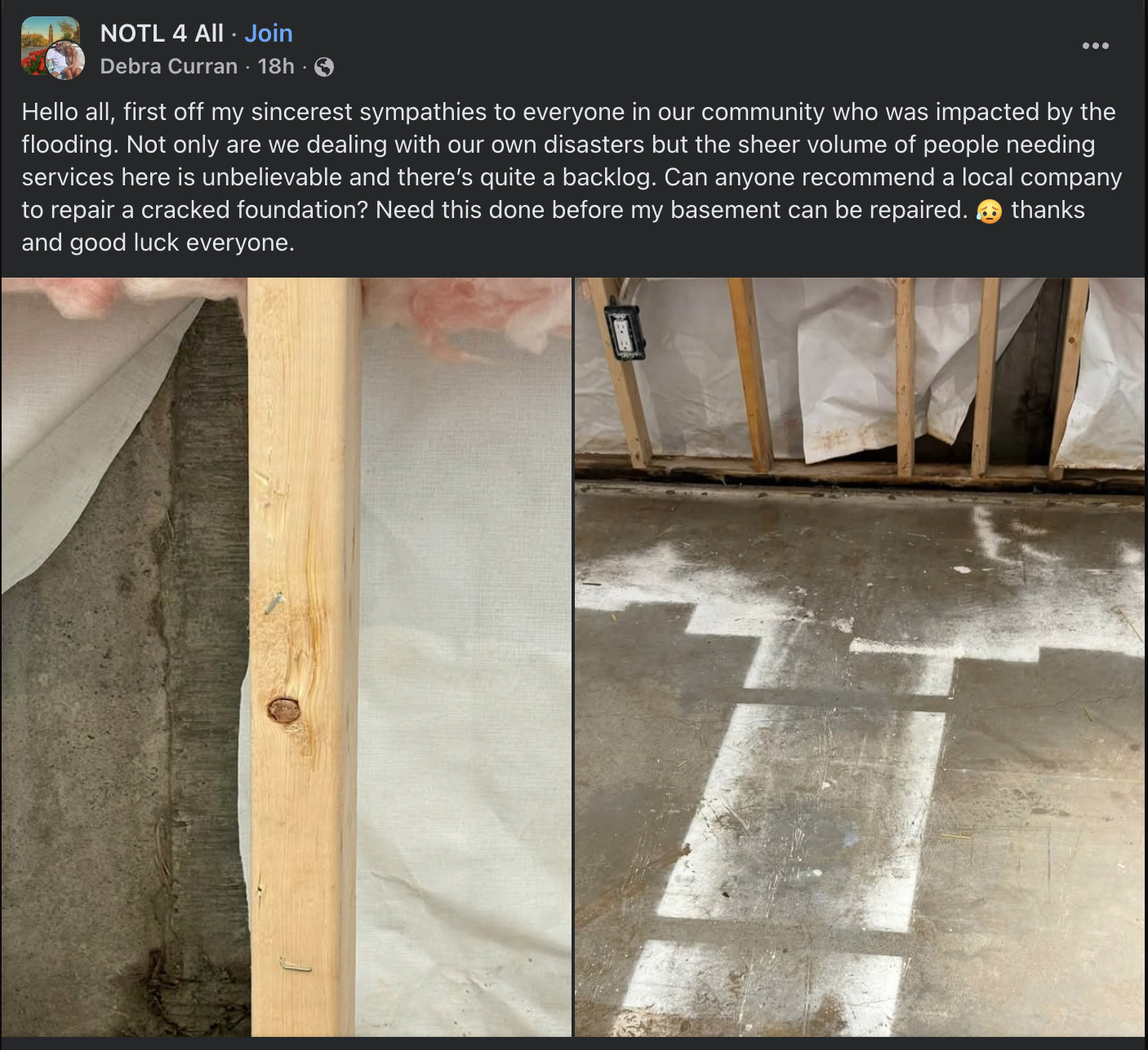
Many residents have turned to social media to share their experience and help one another showing community resilience in the face of adversity.
(First Image: Jessica Gunn/Facebook, Second Image: Debra Curran/Facebook)
Similarly, while insurance is expected to cover a portion of their losses, how much remains uncertain and waiting weeks for assessments or approvals is not an option when mold poses an immediate health risk.
Like many homeowners, they now face another expense of installing flood mitigation measures before future claims can be protected.
“Nobody can wait two or three weeks for approval. They need the work done now,” Evans said.
“I can't say that we're the only people who are feeling this. There are people in tougher health and financial situations.”
Some of her neighbours saw storm sewer backups, others watched water creep in from outside through foundation walls, while many discovered blocked drains. Many already had sump pumps and backwater valves installed.
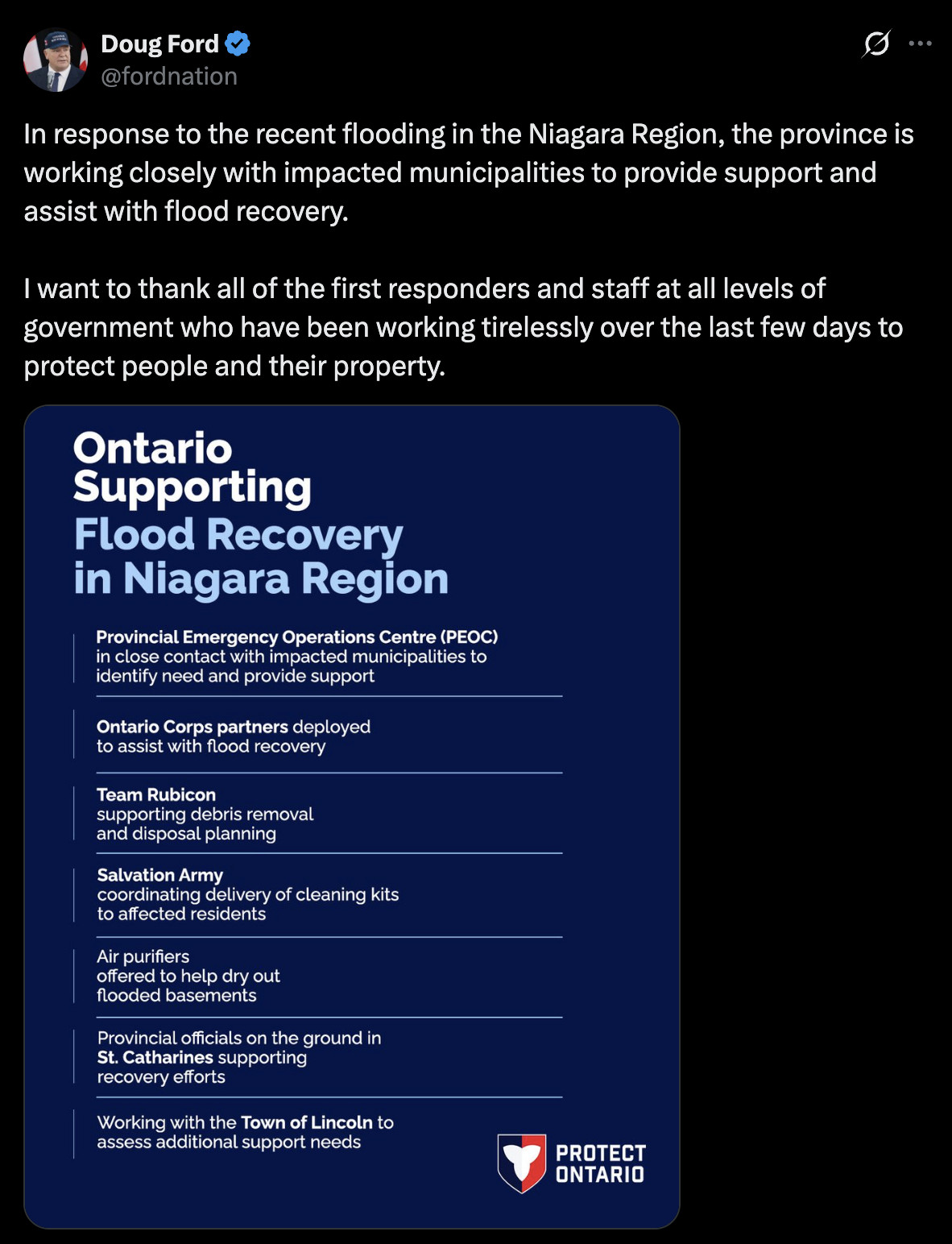
On August 3, Ontario Premier Doug Ford said the province was working “closely” with impacted municipalities in the Niagara region to provide support and assist with flood recovery.
(Doug Ford/X)
On August 4, Mayor Siscoe called on both the federal and provincial governments to provide financial support to the City.
“The federal government doesn’t get involved until the provincial government gets involved. I understand all of those things, but when you’re living through it, there needs to be a better way,” he said at a press conference.
The Pointer reached out to Ontario's Minister of Emergency Preparedness and Response Jill Dunlop for a statement on how the province is preparing to help those reeling from flooding impacts, but did not receive a response by the time of publication.
Siscoe maintained that municipal infrastructure was not at fault for the historic flooding and stormwater systems were operating normally and that the damage resulted from unprecedented, torrential rainfall rather than system blockages or failures.
“The City of St. Catharines has inspected its infrastructure and found no blockages. We received a record amount of rainfall in a very short period of time, far beyond what stormwater systems here or elsewhere in Canada are designed to handle,” Member of Parliament for St. Catharines, Chris Bittle, said while sharing his basement flooded as well.
But Evans is not convinced that explanation paints the full picture and questions whether standards have kept pace with a changing climate.
St. Catharines resident Saleh Waziruddin believes underfunding is still the main cause behind infrastructural limitations. Using the City's own data, he found “75 percent of the sewers are fully or partially combined” at a time when combined sewer systems exponentially increase the likelihood of sewage backing up during major storms.
“The money needed to fully separate sewers is over a hundred million dollars and the money spent to do this is a drop in the bucket,” Waziruddin told The Pointer.
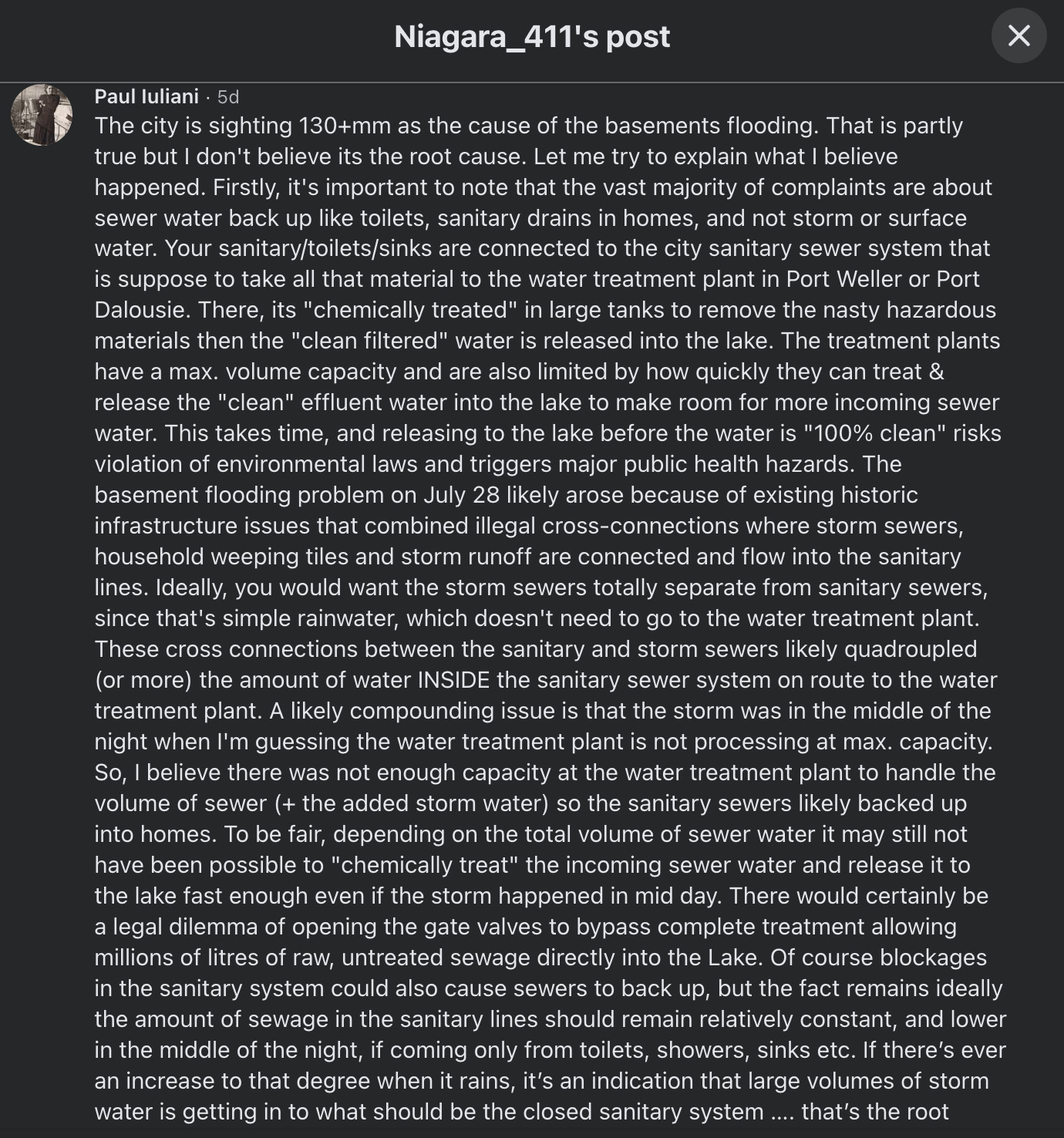
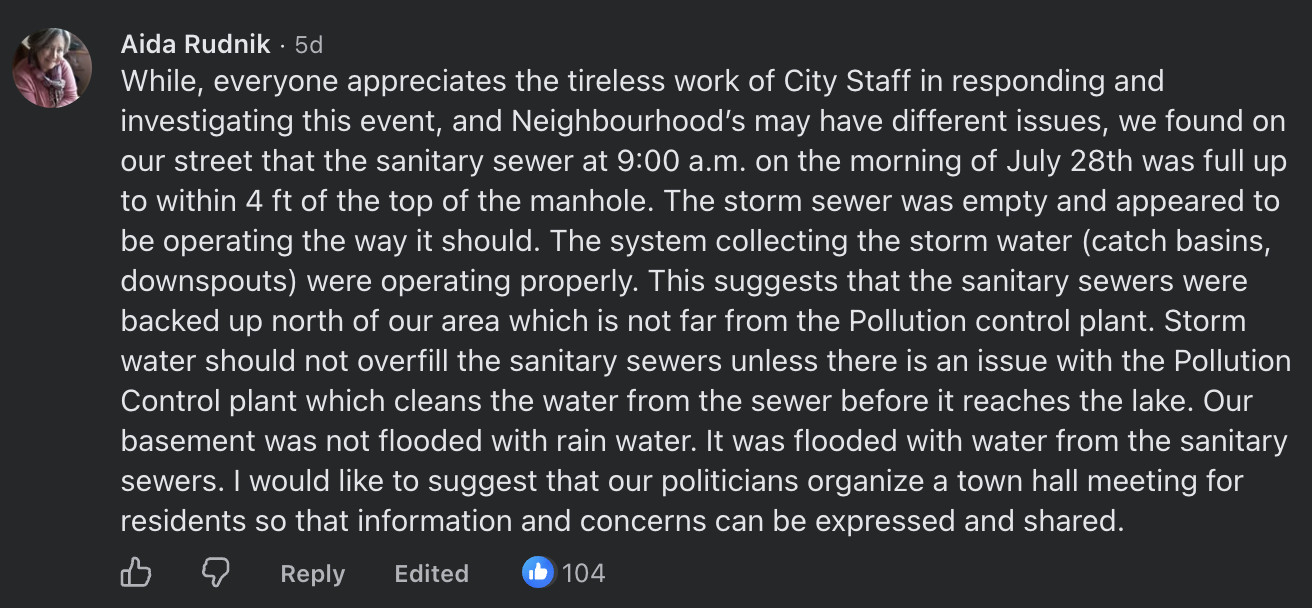
Many residents are not convinced that the City of St. Catharines’ stormwater infrastructure was working properly.
(Facebook)
In its 2023 Corporate Report, City staff identified “a $17.9 million annual funding gap” and warned, “as the assets continue to age, increasing the funding towards their replacement will be critical to maintaining existing levels of service or alternatively targeted levels of service will need to be reduced”.
“The reality is that the current infrastructure backlogs identified in the 2025 AMP [Asset Management Plan] were built over many decades,” a 2025 report by the City noted.
“The City’s anticipated tax-supported funding remains below the level needed to sustain existing service levels, requiring a strategic approach to minimize long-term deterioration.”
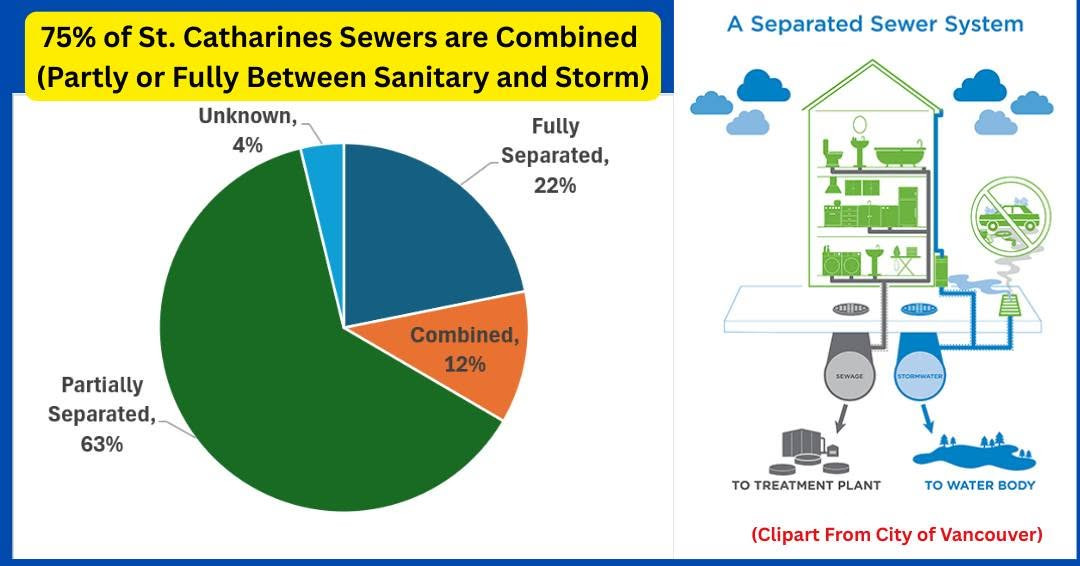
Saleh Waziruddin believes “only money from higher levels of government can pay for this” stormwater and sanitary upgrades.
(Saleh Waziruddin)
Previous council decisions have also influenced how infrastructure dollars were spent, as was evident in the 2024-2026 Multi-Year Capital Budget, which noted that when the federal Gas Tax Fund, now known as the Canada Community-Building Fund (CCBF), was first allocated, it identified continued funding for combined sewer system upgrades (storm sewer separations).
However, “council subsequently shifted focus away from underground infrastructure to include facility energy-related initiatives and non-resurfacing roadwork”.

The Canada Community-Building Fund (CCBF) provides the largest ongoing external funding contribution for capital projects.
(City of St. Catharines)
The City received $4.405 million annually through the CCBF and $1 million was allocated to sanitary sewer collection, only a fraction of what is required to tackle the massive sewer separation backlog.
“Twenty years ago I was Director of Public Works in a small municipality just outside Pittsburgh and this was a chronic problem there as well,” Waziruddin added.
“It's a problem across Turtle Island/North America and needs massive public investment as well as reversing climate change and greener urban spaces that can absorb stormwater better.”
Another major issue is that infrastructure is often only inspected after residents report problems. Therefore, many experts and residents have pointed out that beyond separating combined sewers, municipalities need to shift toward preventative maintenance and install a robust, proactive stormwater maintenance program which should include catch basin and storm lead inspection and repair as well as culvert inspections and repair— which most municipalities don’t do.
Evans agrees that municipalities must fundamentally rethink the way they prepare for increasingly intense storms that have replaced traditional monsoons with flooding season.
“Climate change isn't something new,” she added.
“We know the city has to look at what the circumstances are and what we will need in the future because these storms are not going away.”
After spending days cataloguing loss after loss, she has managed to find “one bright spot” in an escaped treasured possession: her wedding dress.
The beautiful white dress hand-sewn by her mother 57 years ago was stored carefully inside blue tissue paper and plastic in her basement.
Evans was convinced it had been ruined. But on her grandchild’s insistence, she did not throw it away and attempted to clean it. A few hours later, they were surprised to see that the dress looked “brand new” once again.
“My wedding dress is absolutely pristine. It was very sentimental,” she shared with a smile.
“I've told them they can now be the keeper of the dress.”
- With files from Ed Smith.
Email: [email protected]
At a time when vital public information is needed by everyone, The Pointer has taken down our paywall on all stories to ensure every resident of Brampton, Mississauga and Niagara has access to the facts. For those who are able, we encourage you to consider a subscription. This will help us report on important public interest issues the community needs to know about now more than ever. You can register for a 30-day free trial HERE. Thereafter, The Pointer will charge $10 a month and you can cancel any time right on the website. Thank you
Submit a correction about this story

