
‘Master plans just for show’: Brampton citizens group putting environment on the ballot as emissions rise
When Brampton resident Steve Papagiannis urged fellow residents to put the environment on the ballot this election, the response was often the same: the city has bigger problems to worry about.
Brampton has been grappling with a worsening housing crisis, relentless urban sprawl, the highest mortgage delinquency rate in Canada, stalled infrastructure projects tied to a tax freeze and a growing tide of misinformation and political silence.
He understands the challenges that come with living in one of Canada’s fastest-growing municipalities. Brampton, now Ontario’s third most populous city with 791,486 residents, has added roughly 100,000 people since 2020, according to Statistics Canada.
“But we can't let the environment disappear entirely from the agenda,” Papagiannis, who is also a board member with the Brampton Environmental Alliance (BEA), insists.
After declaring a climate emergency in sweltering June 2019, the City of Brampton unanimously endorsed the City’s first Community Energy and Emission Reduction Plan (CEERP) at a Committee of Council meeting on September 23, 2020, approving it a year later.
The CEERP outlined three key goals: reducing community-wide energy end use by at least 50 percent from 2016 levels by 2041; cutting community-wide emissions by the same margin over the same period, while establishing a pathway toward an 80 percent reduction by 2050 in line with or beyond federal and provincial targets; and retaining an estimated $26 billion in cumulative energy costs within the community by 2041.
“The Community Energy and Emission Reduction Plan is another significant step on our journey to becoming a sustainable, Green City,” Mayor Patrick Brown said in a statement at the time.
“Not only will it help us meet our goal of reducing greenhouse gas emissions in Brampton by 80 percent by 2050, but it also shows that Brampton is a municipal leader in our fight against the climate emergency.”
But the targets were already weak when compared to municipalities like Mississauga (aiming to achieve an 80 percent reduction below 1990 levels by 2050 with the long-term goal of net zero) and the City of Toronto with its pledge to reduce emissions 65 percent by 2030 and be net zero by 2040.
The communication on any progress has also been glitchy.
“Since [2019], it’s not been well communicated to the public where we’re at on those targets from a Peel perspective,” Peel’s Community Climate Council president, Miranda Baksh, told The Pointer in 2023.
At the May 20 Committee of Council meeting, councillors received an update on CEERP alongside another one of the City’s core environmental roadmaps: the ten-year Brampton Grow Green Environmental Master Plan (EMP), approved in 2014 and updated in 2021 — and it seems like not much has changed.
A staff report noted the City is continuing to “lead in environmental action” through a combination of internal coordination, partnerships with external organizations and efforts to secure funding from upper levels of government.
However, implementation of both CEERP and EMP remains a work in progress.
“Based on data currently available, the City is moving in the right direction with regard to aligning City policies with CEERP,” the staff noted, with approximately 25 percent of actions deemed complete while 50 percent are ongoing.
Roughly 30 percent of EMP actions have been completed and 40 percent of it is underway. Progress on waste-related climate actions has been lagging due to waste management currently being decentralized with different departments overseeing their own diversion programs, making coordinated action more difficult.
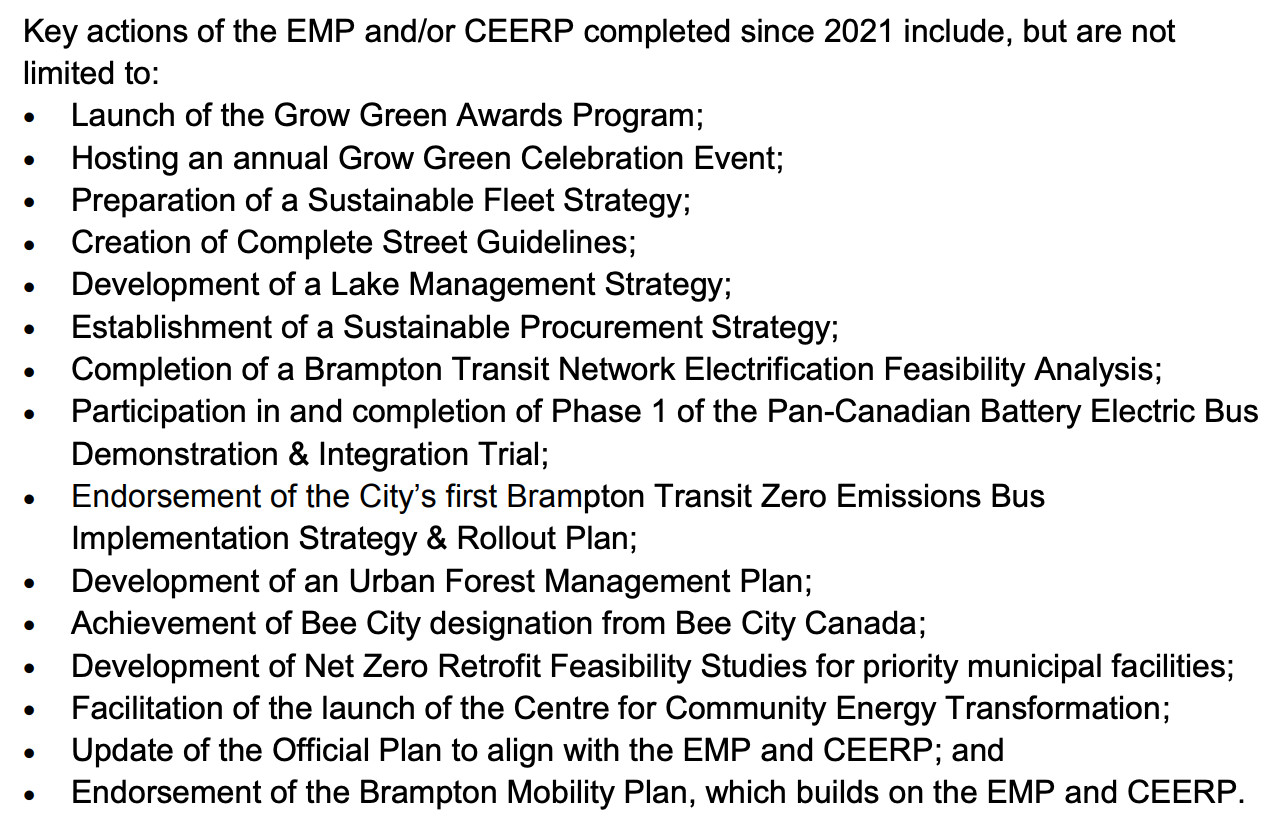
List of actions completed under Brampton Grow Green Environmental Master Plan and Community Energy and Emission Reduction Plan.
(City of Brampton)
That direction seems even more discouraging when looking at the 2026 capital budget, where Brown assigned only $90,000 for EMP’s implementation this year but took away funding for both 2027 and 2028. It feels baffling to many that $430,000 of taxpayer money can find its way to pay for Mayor Brown’s social media but not for long-term environmental goals.
That’s not the only financial roadblock.
“There are also some tightened budget constraints that may limit our capacity. A lot of our really big impactful initiatives have been supported by external funding from the province and other organizations, and these funding sources can be inconsistent,” City of Brampton Environmental Planning Manager Pam Cooper told the Environment Advisory Committee on June 2.
“Quite often now they are requiring matching funds from the municipality or some cost sharing.”
Staff is continuing to pursue grants and alternative funding opportunities wherever possible.
Both the Environmental Master Plan and the City’s Climate Change Action Plan are due for comprehensive five-year reviews, with work to define the scope of those updates beginning in 2026.
“As part of that review, we're going to reevaluate those plans in light of the evolving political and market conditions and legislative landscape that we find ourselves in,” Cooper informed.
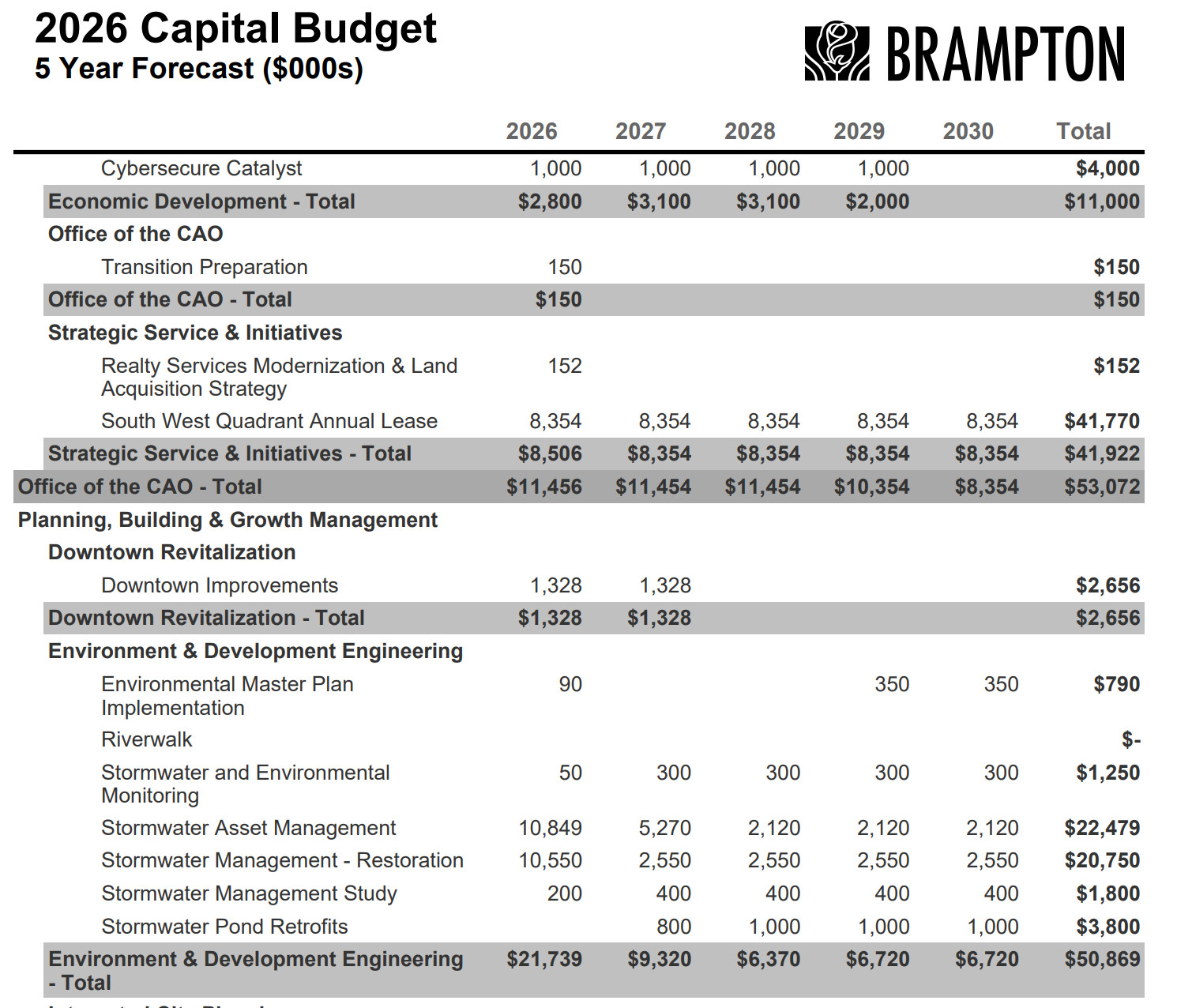
The City of Brampton set aside almost $22,000,000 for environment and development engineering. Mayor Patrick Brown has spent $430,000 of taxpayer dollars on social media in just three years.
(City of Brampton)
In the latest staff report, however, it was not clarified whether the City is on track to meet its emissions targets. It also did not provide an update on progress to date.
A presentation in June 2024 to Brampton’s Environmental Advisory Committee revealed the City’s corporate greenhouse gas emissions were 1.7 percent higher than they were in 2010. Brampton’s emissions totalled 3,971,168 tonnes of carbon dioxide equivalent (tCO2e) that year, transportation being the largest source, according to The Atmospheric Fund’s latest report.
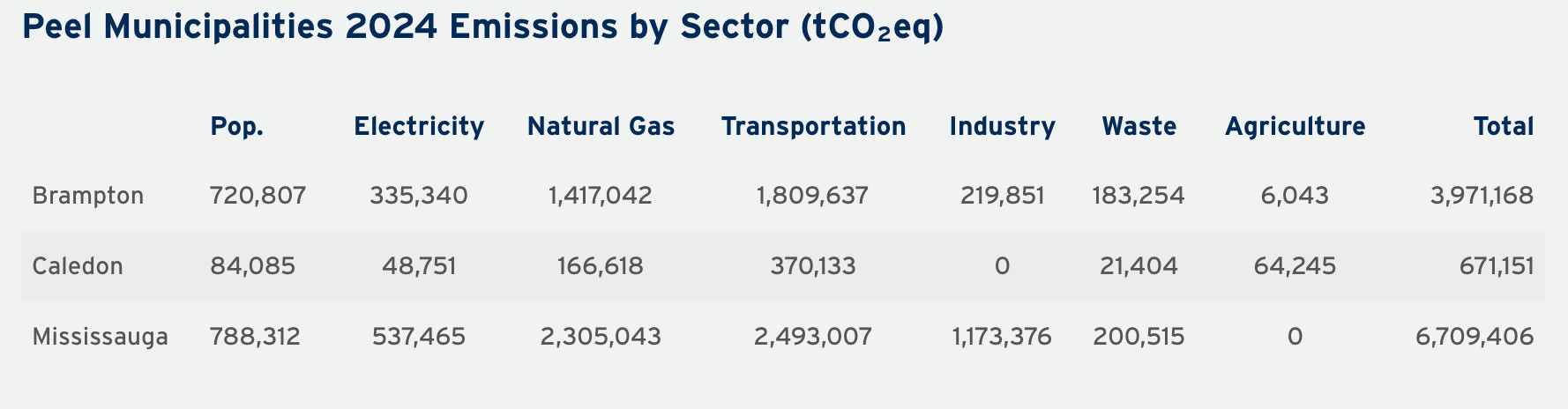
Brampton’s transportation sector recorded the highest emissions at 1,809,637 tonnes of carbon dioxide in 2024.
(The Atmospheric Fund)
One of the key goals of CEERP is to bring those emissions down through electrification of Brampton’s public transit and helping residents reduce their dependency on gas-powered cars and support those who have made the switch to electric vehicles.
Corporate emissions data shows approximately 70 percent of Brampton’s operational GHG emissions come from the Brampton Transit fleet since the City continues to rely on diesel buses.
Staff reported the City completed a transit Network Electrification Feasibility Analysis, endorsed a Zero Emissions Bus Implementation Strategy and Rollout Plan, and participated in Phase 1 of the Pan-Canadian Battery Electric Bus Demonstration and Integration Trial so far. It also secured funding through the Canada Infrastructure Bank to procure up to 450 zero-emission buses by 2027.
On June 15 last year, the City announced a $4 billion partnership with the U.K.-based fleet electrification company Zenobë to build the charging infrastructure to support 1,000 new vehicles on a newly designed electrified platform, for more than 40 million annual passenger trips.
But the deal has raised crucial transparency concerns since the beginning.
The decision to allow a foreign company to oversee critical aspects of Brampton’s future electrified transit system has left residents confused about the future of a publicly funded service relied on by tens of thousands every day: How much taxpayers might have to pay for the services that will be provided? What exactly will Brampton get? Would there be any possible contribution by other levels of government? — question after question with no answer.
Typically, deals of this magnitude undergo extensive public scrutiny with detailed staff reports, procurement reviews and months or sometimes years of council debate before being approved. But no such process appears to have taken place publicly in the case of Zenobë.
The council has not clarified how the City plans to pay for the roughly $3 billion needed to purchase the new electrified buses when Brown has failed to budget for the purchase of new buses, which the deal hinges on.
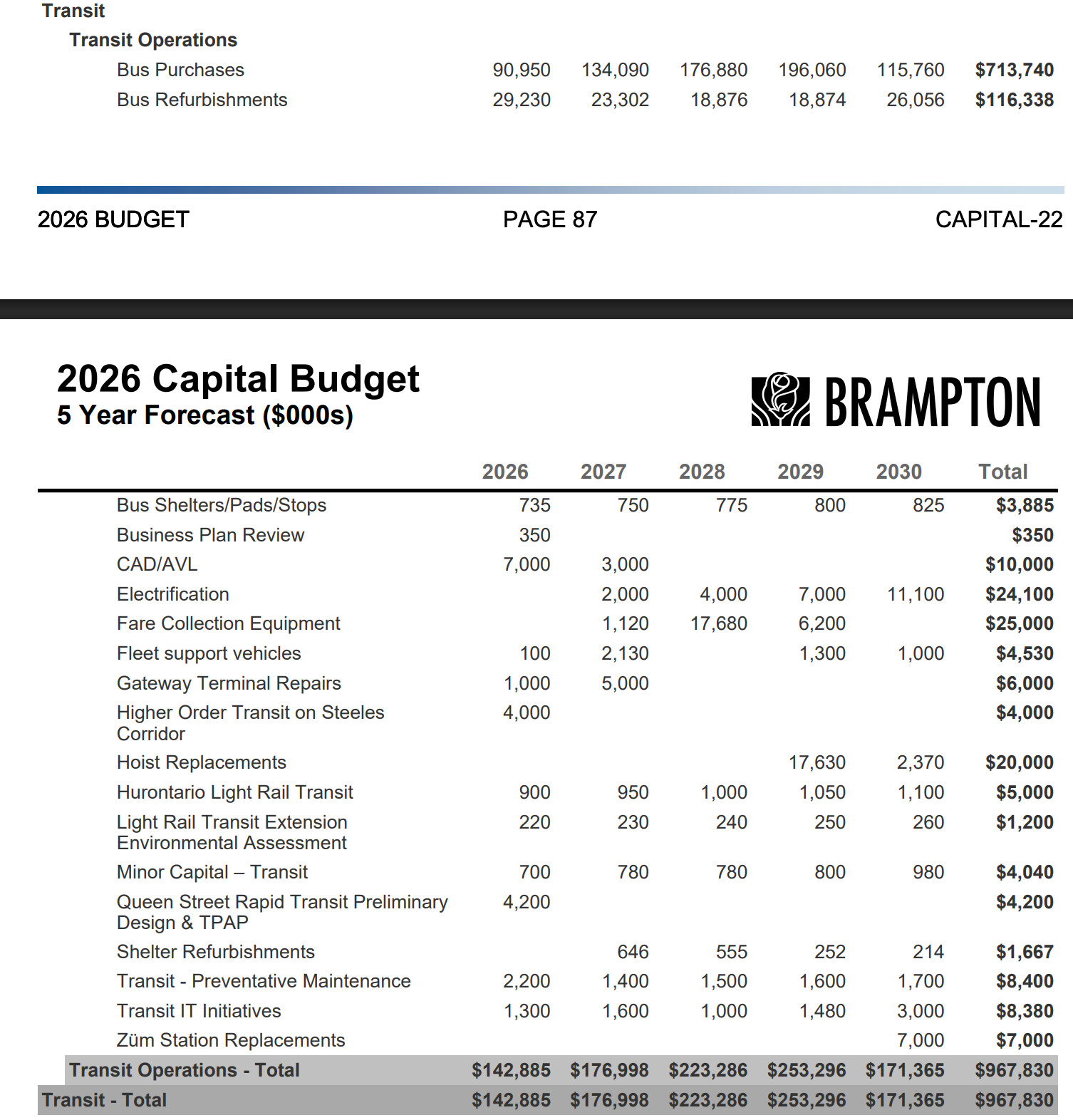
The City of Brampton has not budgeted any money for electrification as part of its funding for transit operations for this year.
(City of Brampton)
“As a resident, I don't understand how we're going to do a $4 billion deal and we have a thousand electric buses but it still says we're waiting for funding,” Brampton resident Sylvia Roberts said at the May 20 meeting.
“There's a lot of moving pieces…I spent 20 hours trying to figure this out and I cannot figure this out.”

Rendering of the Cadetta Johnston Transit Facility, located at Highway 50 and Cadetta Road in Brampton, a project vital for expanding Brampton’s bus fleet and transitioning to a greener system. In 2015, the City of Brampton’s master planning process had identified the need for two new bus garages, slated to be opened in 2021 and 2028. In 2019, council scrapped that plan and decided one large facility should suffice and be constructed in 2024.
(City of Brampton)
Municipal transit systems across Canada including Brampton Transit, MiWay and the Toronto Transit Commission have traditionally been publicly managed through local agencies or commissions, often with annual budgets reaching hundreds of millions or even billions of dollars.
But Zenobë is not an anomaly, it seems to be part of a pattern of making transit decisions behind closed doors.
Brampton’s $11 million agreement with private transit operator, Argo, has raised eyebrows. The pilot project, which introduced a “fully electric Smart Routing transit system” was advanced through a closed-session council special meeting on April 17, 2025 without a public staff report outlining its rationale, procurement process, or cost-benefit analysis. It was later made public only after approval had already been secured.

A recent staff report noted a pilot project to launch electric vehicle shuttle services between the Light Rail Transit and major employment and residential areas has not yet been initiated, even as the Hazel McCallion Line LRT remains under construction and Brampton Transit has moved forward with a separate partnership with Argo to pilot its fully electric Smart Routing system offering on-demand service in the downtown core.
(City of Brampton)
Similar to Zenobë, The Pointer’s FOI request, to seek details on how the contract was awarded and how nearly $11 million in public funds were allocated, was returned with close to 1,500 pages of records either fully or heavily redacted.
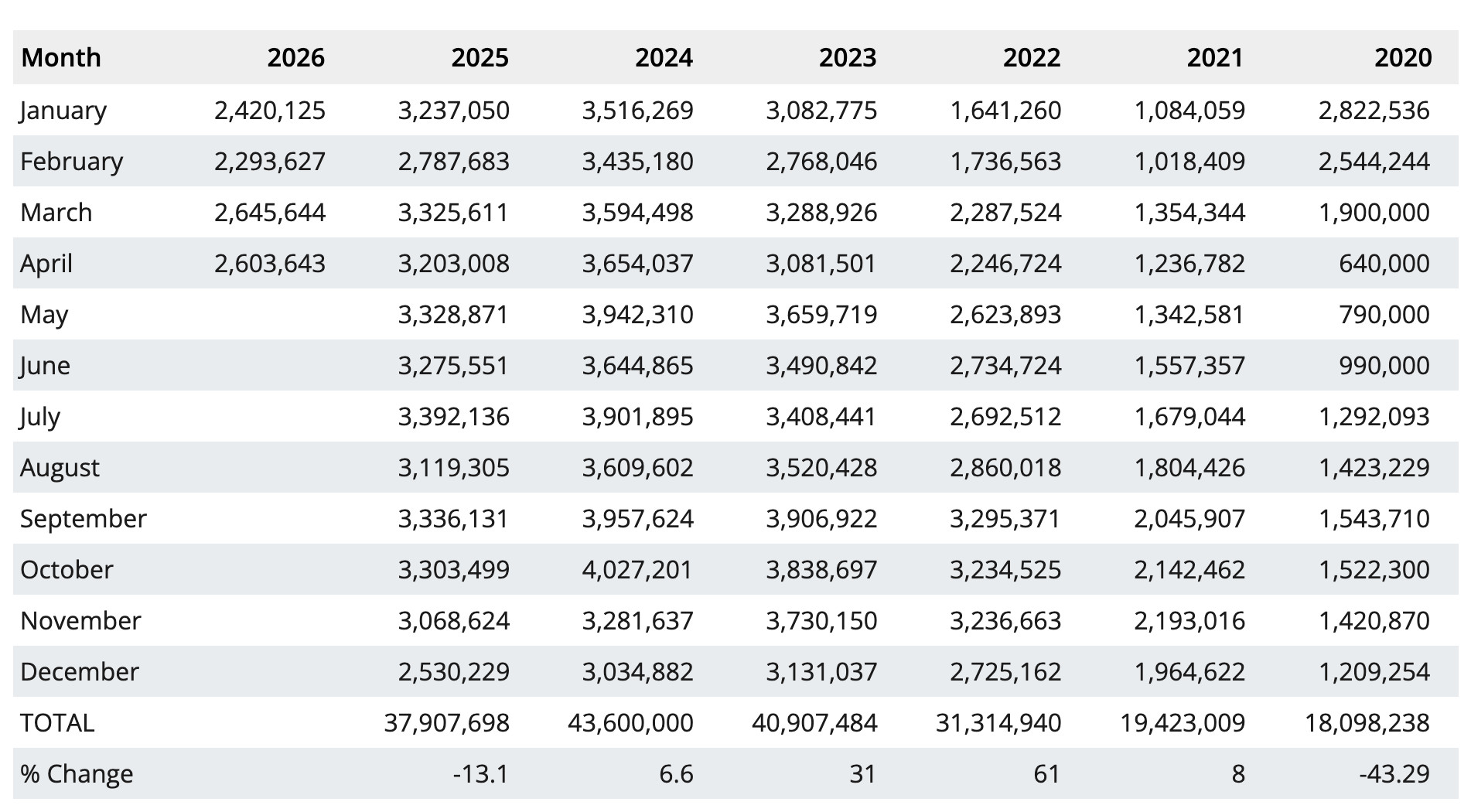
Brampton Transit ridership dropped significantly by 13.1 percent in 2025 after changes to Canada’s immigration policy as well as plummeting international student enrolment.
(City of Brampton)
For residents like Roberts, there are other more evidence-based concerns including how emissions accounting and electrification priorities were being balanced in City planning: current planning efforts appear to target both corporate emissions reductions and broader citywide emissions that include the private sector. However, how those priorities are defined remains unclear to taxpayers.
Transit expansion can reduce overall emissions by shifting commuters away from private vehicles but may still increase corporate emissions in the short term, especially if diesel buses are used during fleet growth. Roberts believes that creates a reporting tension where corporate emissions may soar even as total transportation emissions fall, impacting how Council weighs different outcomes while making decisions.
Staff will now bring back a detailed report to council in the future to clarify how emissions targets, funding mechanisms and major electrification decisions fit together.
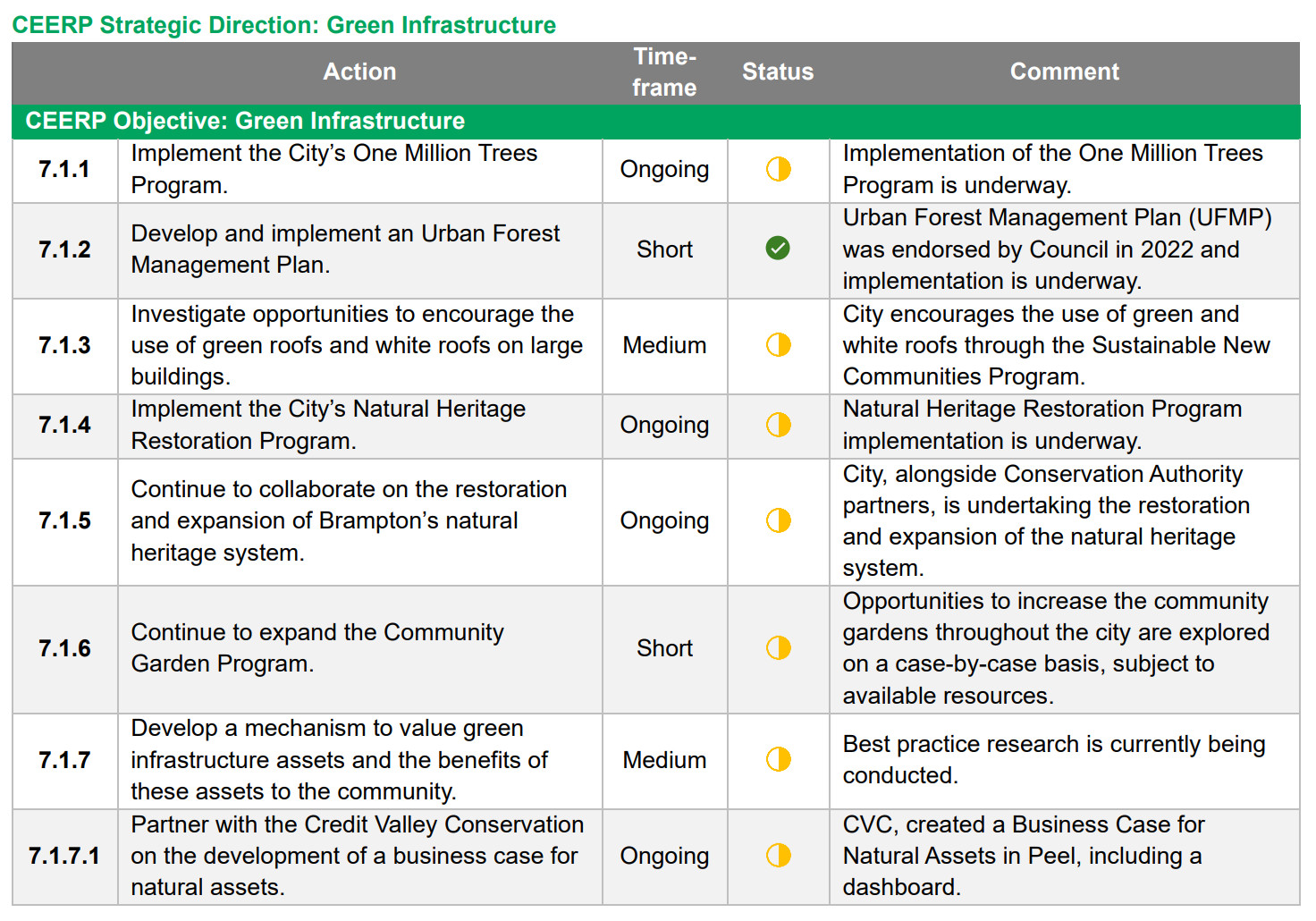
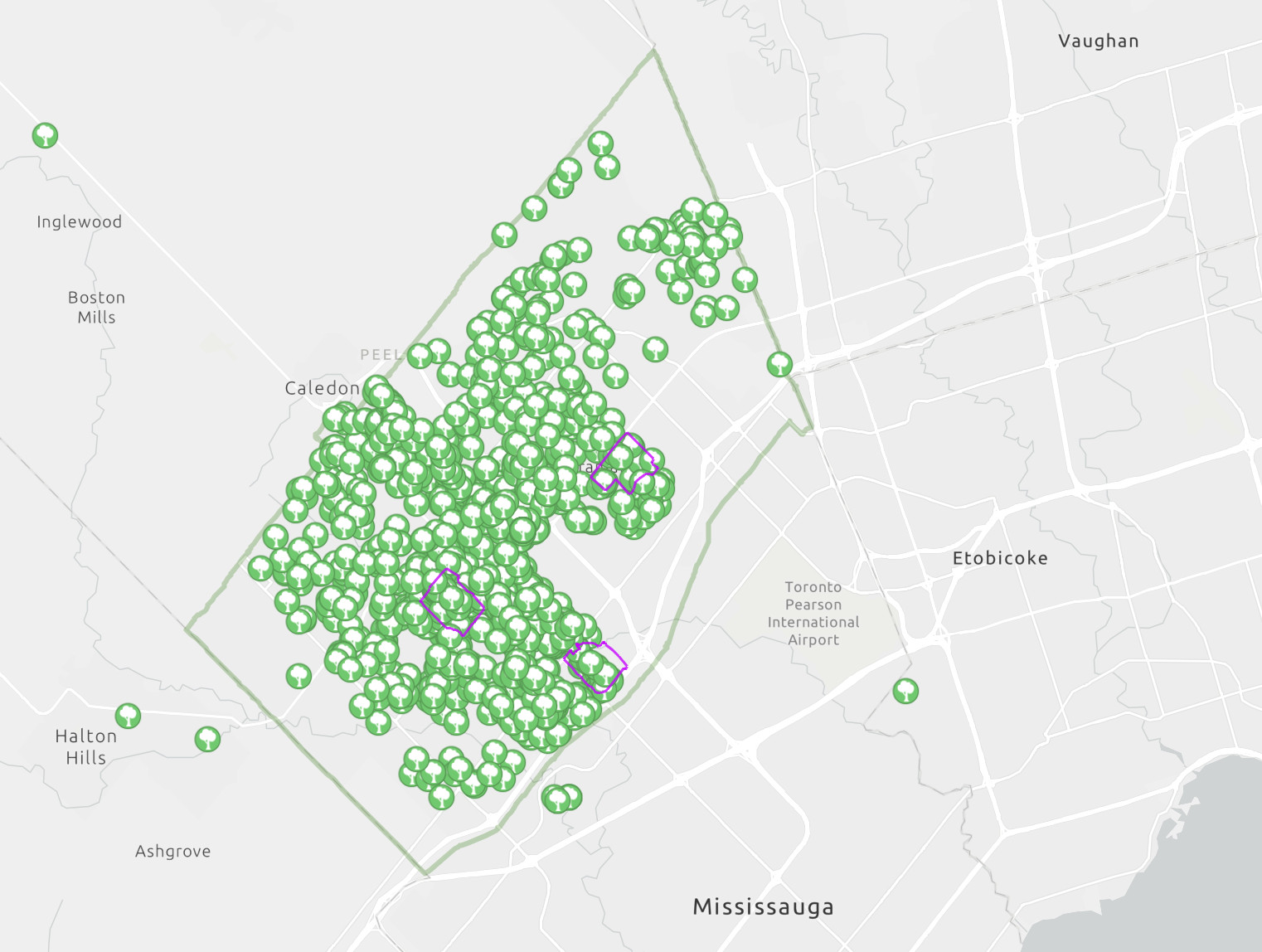
Most of the City of Brampton’s Green Infrastructure projects are currently “in progress”. Even though the staff report mentions the City has developed and implemented an Urban Forest Management Plan (UFMP) and deemed it “complete”, that may not be the case: the UFMP which was approved in 2022 is a ten-year framework to protect, enhance and grow the city's tree canopy (30 percent total canopy cover and 15 percent woodland) through the One Million Trees Program; the City aimed to plant 1 million new trees by 2040 (an average of 50,000 trees annually) but so far, only 244,558 trees have been planted across Brampton, according to the City’s website.
(City of Brampton)
It matters what Brampton does because it defines how Canada performs at the international level. The Federation of Canadian Municipalities says close to half of national GHG emissions are under the direct or indirect control of municipal governments.
But municipal progress can also often be torpedoed by both federal and provincial moves.
Brampton’s updated Official Plan and the Brampton Mobility Plan now incorporate “complete communities” principles intended to create denser, more connected neighbourhoods where residents can access jobs, transit and services with fewer and shorter trips.
The City’s Complete Streets Guidelines are currently being integrated into municipal standards and transportation planning processes with full updates expected by this year.
The municipality has also expanded support for electric vehicles with 147 EV charging ports across city facilities including 49 publicly accessible chargers located near facility entrances—leaving Brampton significantly behind Mississauga that has over 450 EV charging ports.
“City explored incorporating minimum EV-ready parking requirements into new Comprehensive Zoning By-law, however, this approach was discontinued due to potential challenges arising from Province’s introduction of Bill 17,” the City’s report noted.
Staff warned that a series of recent provincial and federal policy shifts including Ottawa’s removal of consumer carbon pricing, and proposed provincial planning changes that could weaken municipal authority over sustainable design and climate policies could dramatically undermine Brampton’s ability to meet its long-term emissions targets.
Ontario’s electricity grid became 30 percent more carbon-intensive in 2023 due to increased reliance on natural gas, which has also set dark clouds over Brampton: the Goreway gas plant, which produces electricity from fossil fuels, is awaiting provincial approval to pump out an additional 48,000 tonnes of greenhouse gases each year.
Just ten kilometres from the plant is another project greenlit by the province that is set to flush Brampton’s emissions targets down the drain.
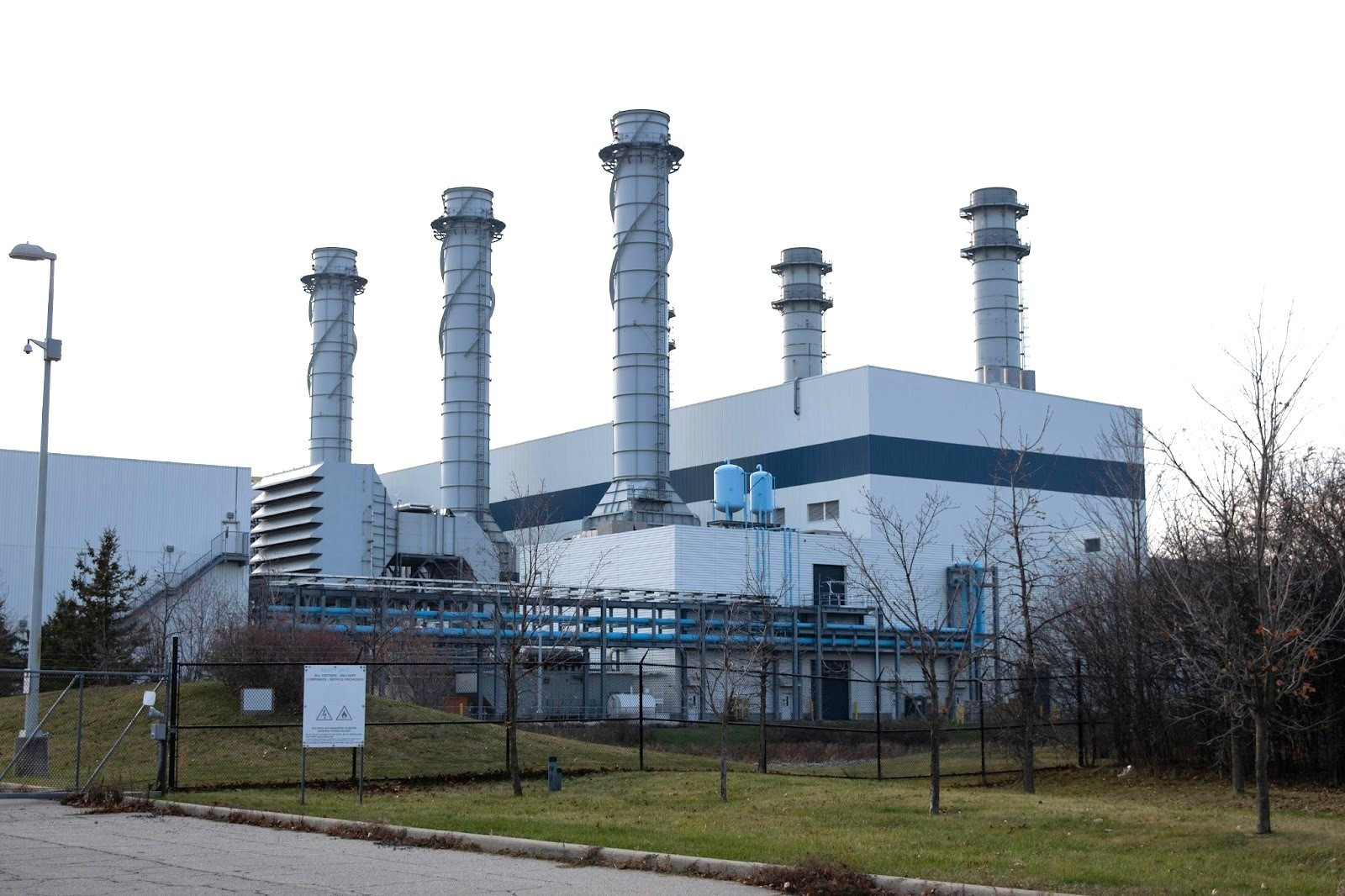
Brampton’s Goreway Power Station, located near Highway 407, is an 875-megawatt natural gas power plant owned by Capital Power.
(Alexis Wright/The Pointer)
The proposed new incineration system will be Canada’s largest of its kind waste incinerator, just steps away from Bramalea Go station, which would increase its capacity from 182,000 to up to 900,000 tonnes per year, drive a ‘six-fold increase’ in greenhouse gas emissions, posing a major setback for the Region of Peel’s climate targets as well.
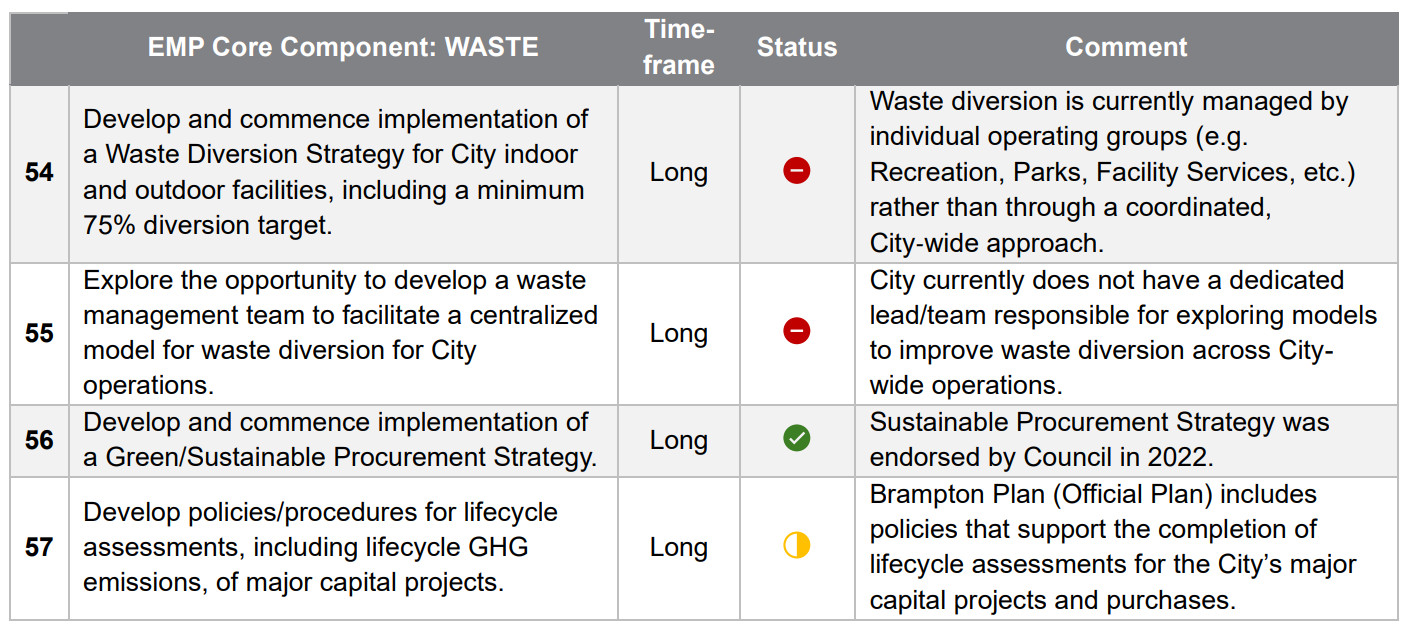
Waste-related climate actions have lagged behind other areas. Staff acknowledged that waste management within the city is currently decentralized, with different departments overseeing their own diversion programs, making coordinated action more difficult. Councillors discussed emerging waste-to-energy technologies, including systems that convert garbage into reusable material or hydrogen fuel, and suggested Brampton examine whether a more centralized waste strategy could help advance its environmental targets.
(City of Brampton)
The setback can set Brampton further back from the positive initiatives it is currently working on as part of EMP and CEERP including “funding options to support a standardized home energy retrofit program” and looking into district energy systems like the City of Mississauga’s Lakeview Village.
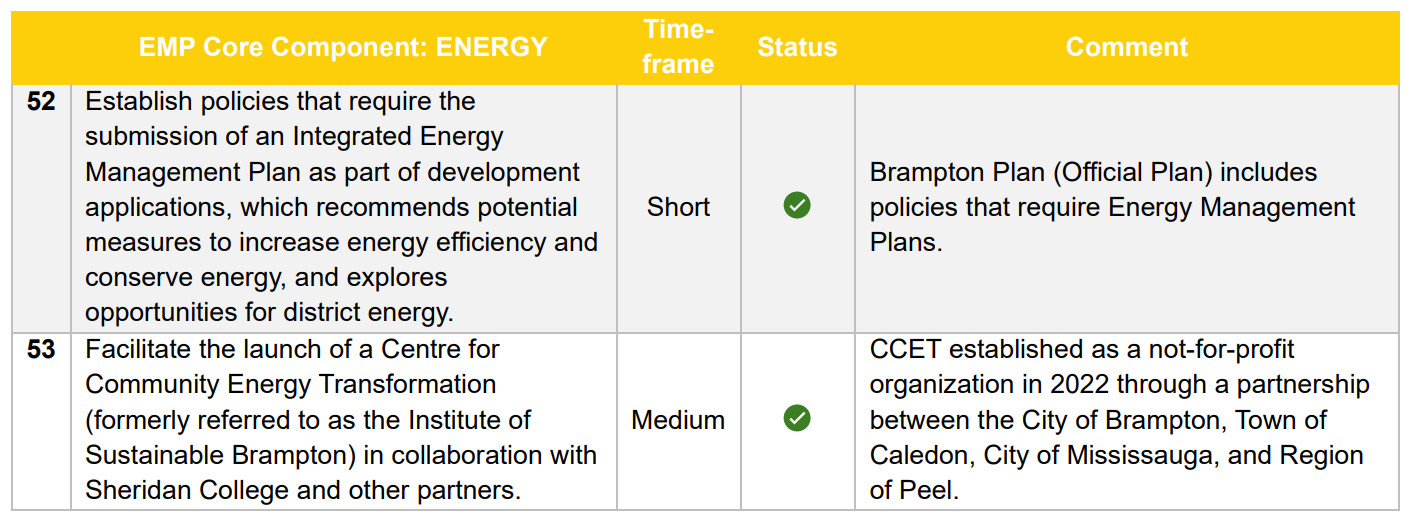
The Centre for Community Energy Transformation (CCET) is a community-based, non-profit organization focused on accelerating Brampton and the Region of Peel toward a sustainable, low-carbon future. Established in 2022, CCET partners with Mississauga and Caledon to lead local environmental and climate action, and assist homeowners with home energy-saving renovations, rebates and financing processes.
(City of Brampton)
Brampton is currently establishing an internal working group to explore the feasibility of district energy projects and opportunities to capture waste heat from sources such as data centres or wastewater systems. The working group would include departments such as finance and legal to assess how such systems could be implemented throughout the city.
Councillor Dennis Keenan asked staff to investigate partnerships with private companies that could install solar panels on City-owned buildings at little or no upfront cost to taxpayers, arguing that such arrangements could help Brampton expand renewable energy generation while potentially creating a new revenue stream for the municipality.
Staff will report back to council with solar and waste-management strategies to help achieve EMP and CEERP’s goals.
“They [council] vote for things like a climate emergency or a green master plan but when it comes to specific decisions, they often vote against them,” Papagiannis noted.
“A lot of these master plans are just for show. When actual votes come up on subdivisions, road widenings or other developments, they don’t follow through in ways that align with the broader plans they’ve supported.”
That was the motivation behind the BEA creating a free tool for the public to track how Brampton City council voted on climate and environmental issues since 2022 called Climate Voting Records, ahead of the October municipal elections.
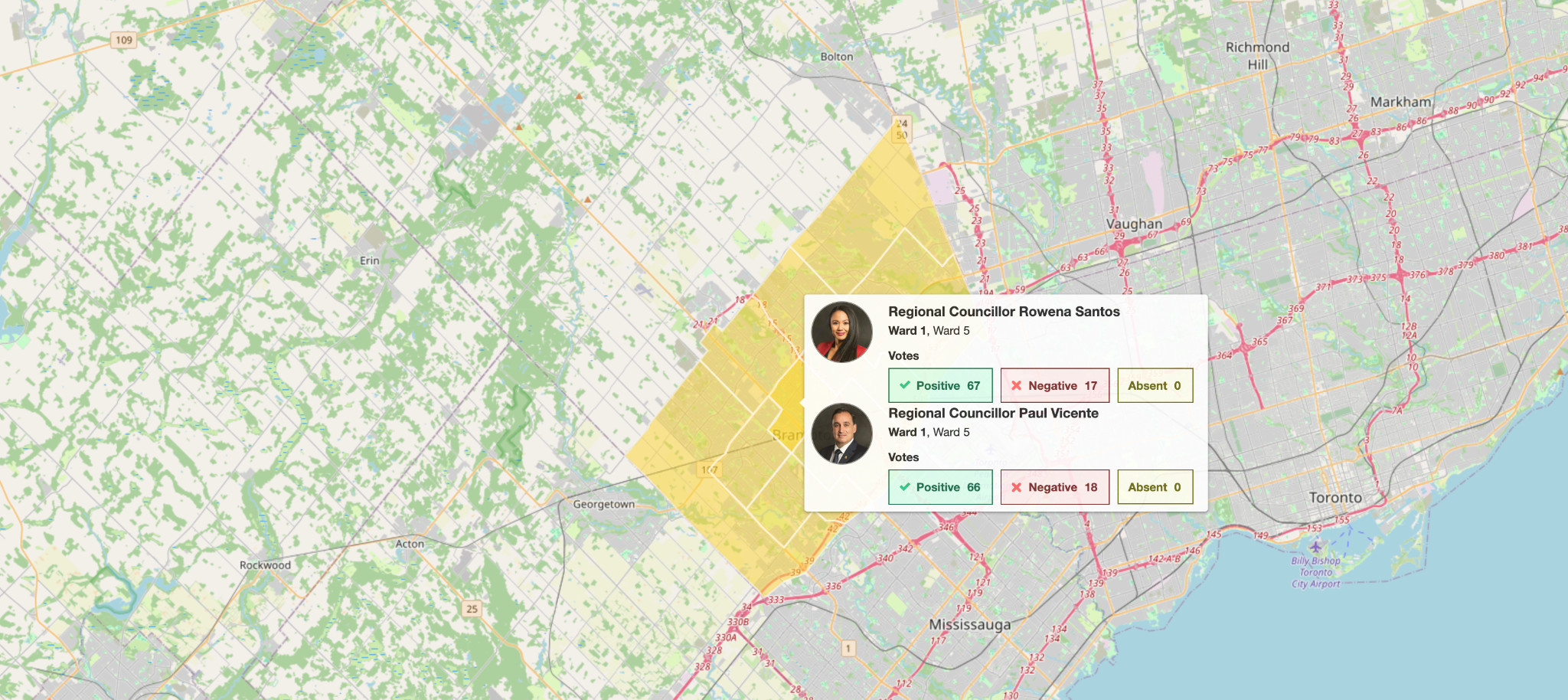
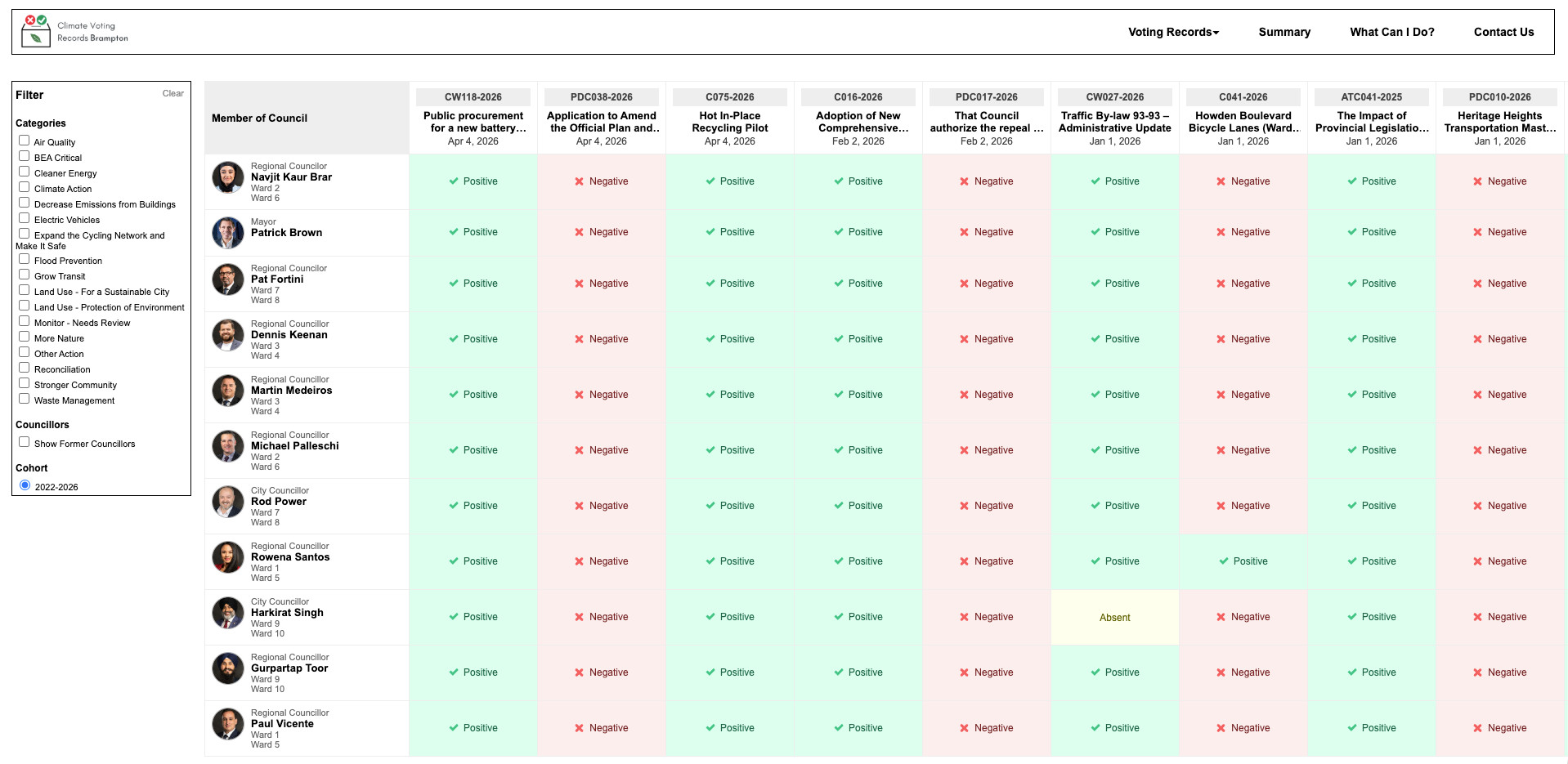
Climate Voting Records is a volunteer-led project developed in collaboration with Toronto-based advocacy group ClimateFast, which previously created a similar voting tracker for Toronto city council. Residents can simply select their ward and find out how many motions their councillor voted on that favoured environmental and climate initiatives.
A team of ten volunteers worked behind the scenes for hours for the past six months to create a list of 85 motions that council voted on that impacted the environment either directly or indirectly.
One of the motions on the platform involved the removal of protected bike lanes along Howden Boulevard between Dixie Road and Williams Parkway aligning with the province’s Bill 212, dubbed Reducing Gridlock, Saving You Time Act, which directly put Brampton’s Mobility Plan at risk.
Only Councillor Rowena Santos voted against the motion while Mayor Brown and the remaining members of council supported removing the on-street bike lanes and restoring four vehicle lanes while replacing the cycling infrastructure with painted shared-lane markings.
The motion also directed staff to allocate the remaining funds toward future active transportation projects, including a potential multi-use pathway along the same corridor.
Papagiannis hopes the easy-to-use tool will stir conversation between council and members of the community who deeply care about the environment and the future of Brampton at a time municipalities remain vulnerable to climate change.
“The purpose is not to beat council up,” he advised, “but to show how they voted and hold them accountable for their decisions.”
Email: [email protected]
Submit a correction about this story

