

Mississauga joins global Fossil Fuel Non-Proliferation movement as Ford pushes legislation gutting green development
Mississauga artist Donna Grantis is known for her musical genius, stepping onto the stage around the world with icons like Prince. But she is still a Mississauga girl who grew up in Applewood, where orchards once defined the neighbourhood shaped by generations of pioneer families and market gardens.
The idyllic history soon gave way to the dawn of industrialization, as Mississauga’s once pristine Lake Ontario waterfront was rendered by factories powered by dirty coal—and eventually the massive electricity plant where mountains of bitumen came out the other side of giant smoke stacks that rose eerily above the once bucolic neighbourhood, depositing layers of harmful soot and ash over the nearby homes.
“A vivid memory from my childhood is the view driving south on Tomken Road towards Dundas and seeing the four sisters smokestacks, a massive coal-burning power plant,” Grantis recalls.
“Now, 20 years after the demolition of the stacks, that land has been transformed into the Jim Tovey Conservation Area, opening this month. That's beautiful progress, and I can't wait to go there with my family.”
It is, indeed, a remarkable feat. After 43 years of operation, the notorious coal-fired power station on 177 acres on land along the Great Lake, which expelled a toxic plume of smoke into the surrounding air, and the rest of the sprawling plant was demolished in a matter of seconds on June 28, 2007.
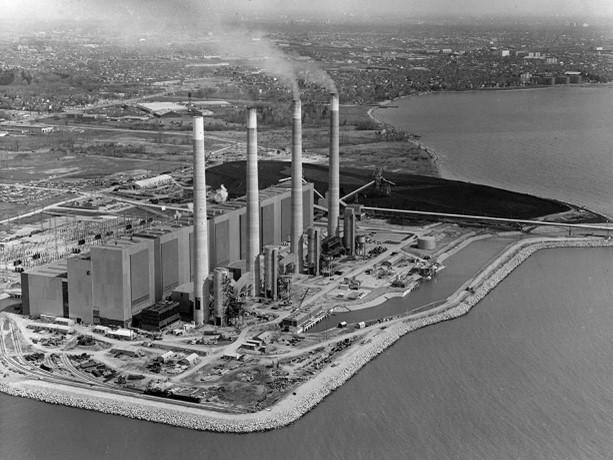


Top: the former Lakeview Power Generating Station. Bottom: renderings of the conservation areas next to the future Lakeview Village.
(Top: Lakeview Community Partners, Renderings: City of Mississauga)
In the last eight years, the City of Mississauga has positioned itself as a climate leader by declaring a climate emergency in 2019, adopting the Climate Change Action Plan, a ten-year roadmap aimed at slashing greenhouse gas (GHG) emissions by 40 percent by 2030 and 80 percent by 2050 with a long-term goal of becoming a net-zero community; strengthening resilience against worsening weather disasters, and by tightening its Green Development Standards in 2024.
In the spring of 2021, Mississauga was among the municipalities (Brampton, Kingston, Toronto, Kitchener, Waterloo, Hamilton, Barrie) that called on the Doug Ford government to start phasing out natural gas.
Instead, the provincial government poured hundreds of millions of dollars in public funds into natural gas infrastructure and slashed the climate plan.
There was another cost to Ford’s backward approach.
In Mississauga, residents in neighbourhoods like Applewood Acres, Lisgar and Rathwood say “flooding has become a way of life”, as insurance providers either limit or reportedly cancel their flood coverage, leaving homeowners responsible for any future flood damage.
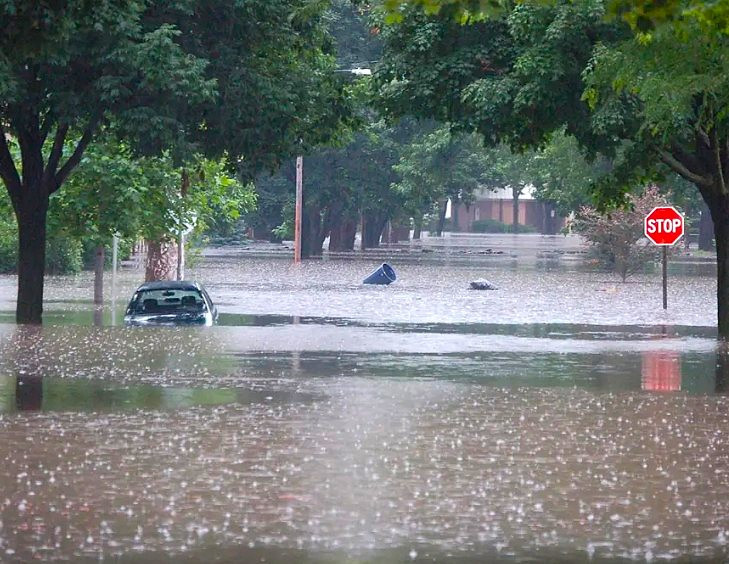
Floods over the past decade have ravaged areas of Mississauga with poor climate mitigation and adaptation infrastructure.
(YouTube)
In the summer of 2024 when two back-to-back “once-in-a-century” storms swamped parts of the city, residents lost their sense of security.
“I've always felt that the city was safe and stable, and we would get storms and heavy rain occasionally, but nothing that really disrupted our daily life,” 24-year-old Mississauga resident Krisiga Krishnarajah, who is also the Event Coordinator of Mississauga’s Community Climate Council, says.
That changed when Krishnarajah experienced flooding around the Dixie and Dundas area, caused by the overflow from Etobicoke Creek. Witnessing entire roads submerged, cars stranded and businesses shut down, while neighbours were unable to get home safely, was “pretty shocking”.
“I was especially concerned for my mother, who worked near the intersection and relies on public transit to get home, and she had to walk over the little bridge that gets to the Dixie Dundas area to find higher ground to be able to access a way to get home safely,” she says.
“Cities have a responsibility not only to respond to climate disasters after they happen, but to advocate for this larger systemic changes needed to reduce them in the first place.”
On May 13, Krishnarajah and Grantis, alongside five others, stood in front of Mississauga Council, urging members to endorse a Fossil Fuel Non-Proliferation Treaty, an international initiative calling for an end to new fossil fuel expansion while accelerating a transition toward clean energy. She had originally brought the motion forward to the City’s Environmental Action Committee on February 3.
“Endorsing the treaty will send a message to Doug Ford as he attempts to dismantle standards and increase pollution of new homes by passing Bill 98,” she says.
“It is inefficient and unfair that cities are doing what they can to lower greenhouse gas emissions, only to have fossil fuel infrastructure expanded and green standards lowered.”
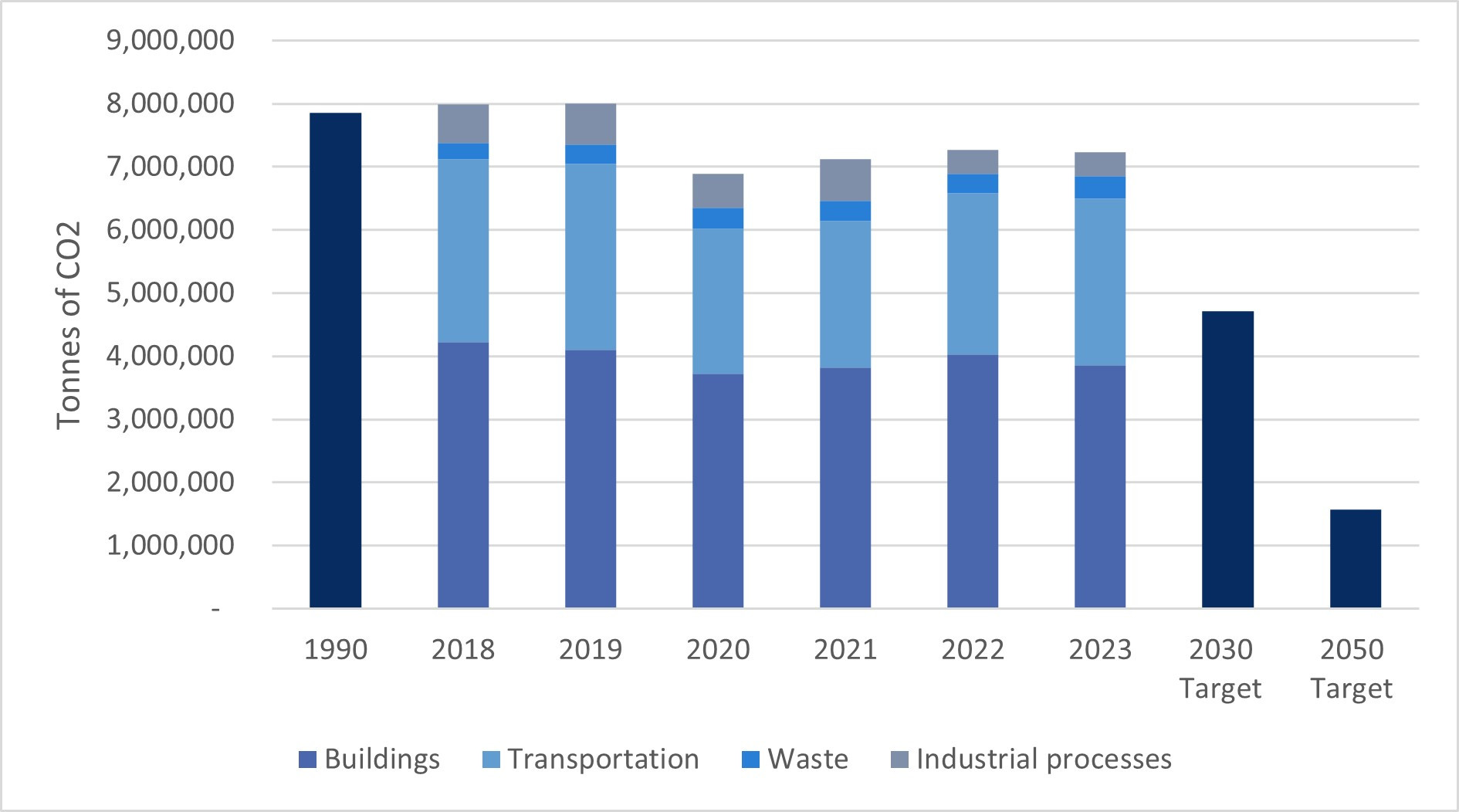
Buildings are the largest source of emissions (53 percent) in Mississauga.
(City of Mississauga)
About two decades ago, after Dalton McGuinty’s Liberal government took power following an era defined by pro-business policies pushed by former PC leader Mike Harris, Ontario’s coal phase-out marked the single largest greenhouse gas reduction initiative in North America to date. In 2007, coal supplied about 25 percent of the province’s electricity generation but by 2014 that share had fallen to zero, cutting greenhouse gas emissions by roughly 17 percent, equivalent to removing about seven million cars from the road.
Almost instantly, the clouds of thick smog that would frequently block out the sun in the summertime over the GTA, began to fade. Air quality, which had become among the worst of any region in North America, began to improve (heavy pollution from internal combustion vehicles on the area’s clogged 400-series highways has remained a source of bad air quality that still plagues the GTA, but less frequently than the past, before coal was phased out).
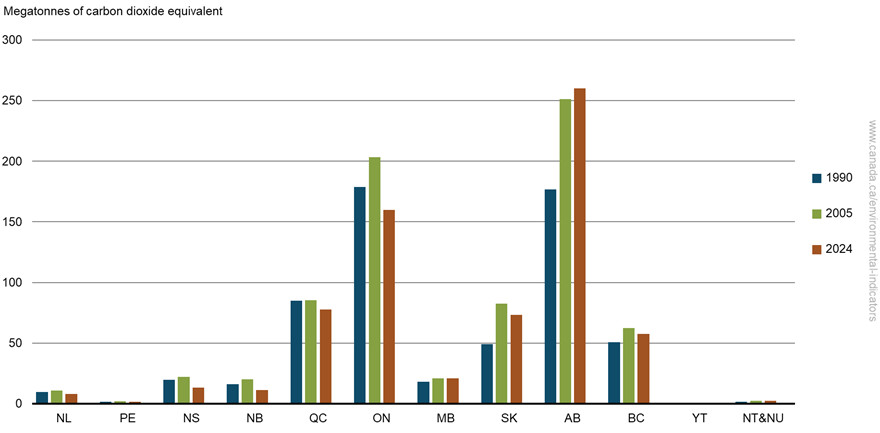
In 2024, Ontario was among the top five national emitters alongside Alberta, Quebec, Saskatchewan and British Columbia—together the provinces released 91 percent of Canada's national total greenhouse gas emissions.
(Government of Canada)
On March 30 this year, the province tabled Bill 98, dubbed the Building Homes and Improving Transportation Infrastructure Act, and turned it into law on May 14, undoing decades of progress. The legislation proposes to limit municipal authority to enforce mandatory green development standards (GDS) for new buildings by restricting local rules on energy efficiency, emission targets and sustainability features such as EV-ready parking to accelerate housing development and lower upfront construction costs.
Mayor Carolyn Parrish questioned staff on whether, despite the passage of the bill and heavy lobbying from the development industry over the costs associated with green building requirements, the City could still put pressure on builders to incorporate higher environmental standards locally.
Staff noted “there's nothing we can do to enforce” it but the City could “certainly use advocacy” to encourage developers to voluntarily exceed requirements, noting that many builders, especially in the rental and office sectors, already respond to investor expectations around environmental performance.
The City could also explore financial incentives such as reduced development charges to encourage stronger green standards, which “more cities will look at that after the bill is passed”.
“We have incentivized building by lowering development charges about as low as we can handle. So that option probably isn't on the books until the building slump comes back up,” Parrish said.
She urged staff to engage directly with industry organizations like BILD, arguing that the building sector itself is driving much of the pressure for cost reductions amid a market slowdown.
“We're really at the mercy of the province on this,” she added.
Stand.earth climate campaigner Lana Goldberg reminded council that despite Bill 98 passing, there are other tools in their armory.
“The province could update its own building code up to the standard of green development standards, or it could allow municipalities to use the new Federal Building Code, which has tiers similar to the green development standards,” Goldberg said during her delegation.
“But the province won't make such decisions on its own.”
Critics also fear the removal of GDS under Bill 98 would be the “final death knell” for birds. In Canada, window collisions already kill 16 to 42 million birds annually—a number that experts have noted to be underestimated.
Recalling a recent conversation with Mississaugas of the Credit First Nation Councillor, Fawn Davina Sault, Grantis said Sault’s words moved her to action: “What we do to the Earth, we do to ourselves,” emphasizing that supporting local climate initiatives is inseparable from protecting the health and well-being of people and ecosystems across Mississauga and beyond.
“Climate change is the single greatest threat to human health of our time, hands down. Our survival is at stake,” Dr. Mili Roy, Ontario Regional Co-Chair of the Canadian Association of Physicians for the Environment (CAPE), who was among the experts calling on the province to reinstate a climate plan on Earth Day, said.
“When we burn fossil fuels, we create two pathways of harm to health. Number one is carbon pollution leading to climate change, and number two is air pollution that spews out toxic particles and gases.”
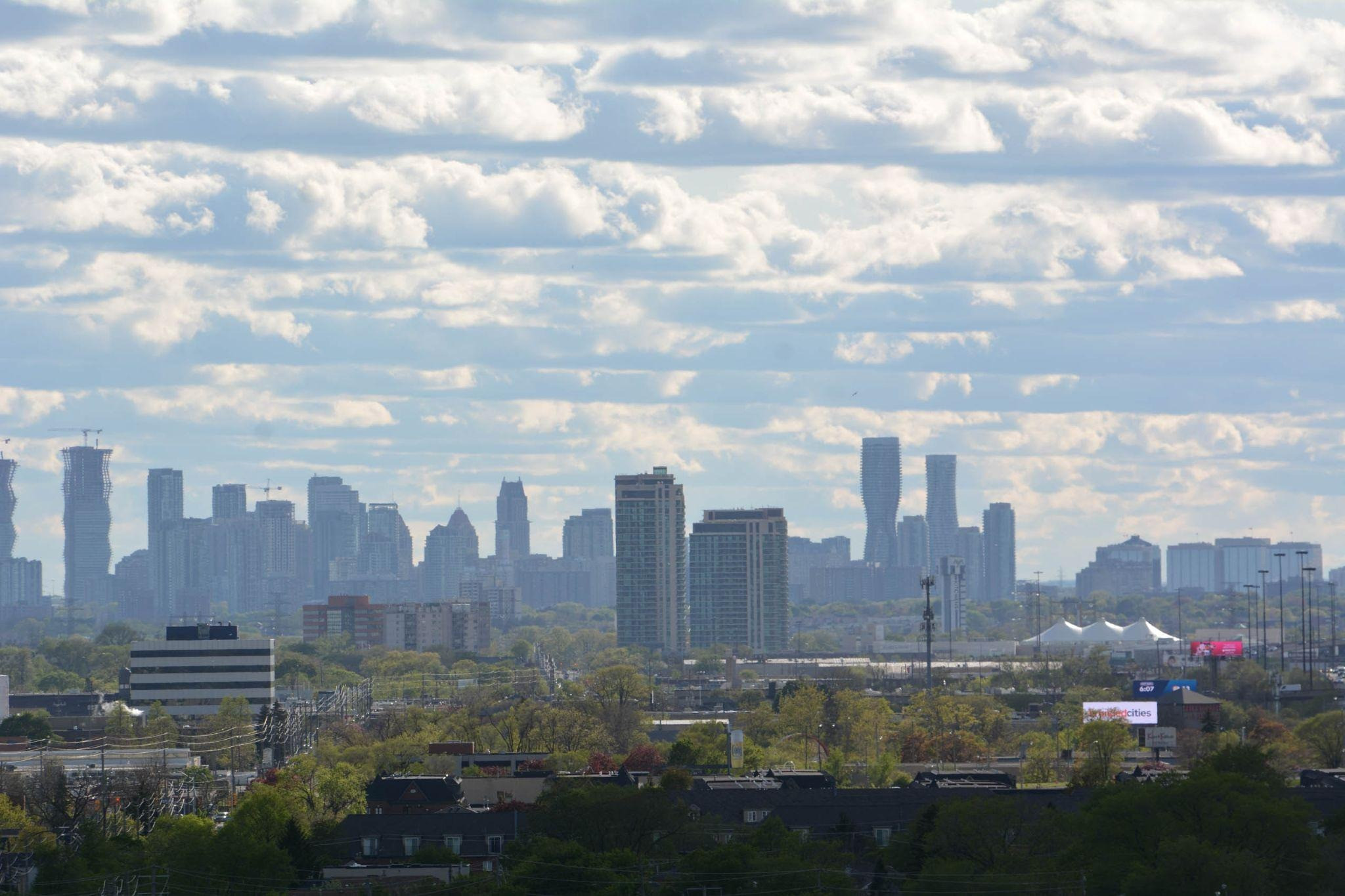
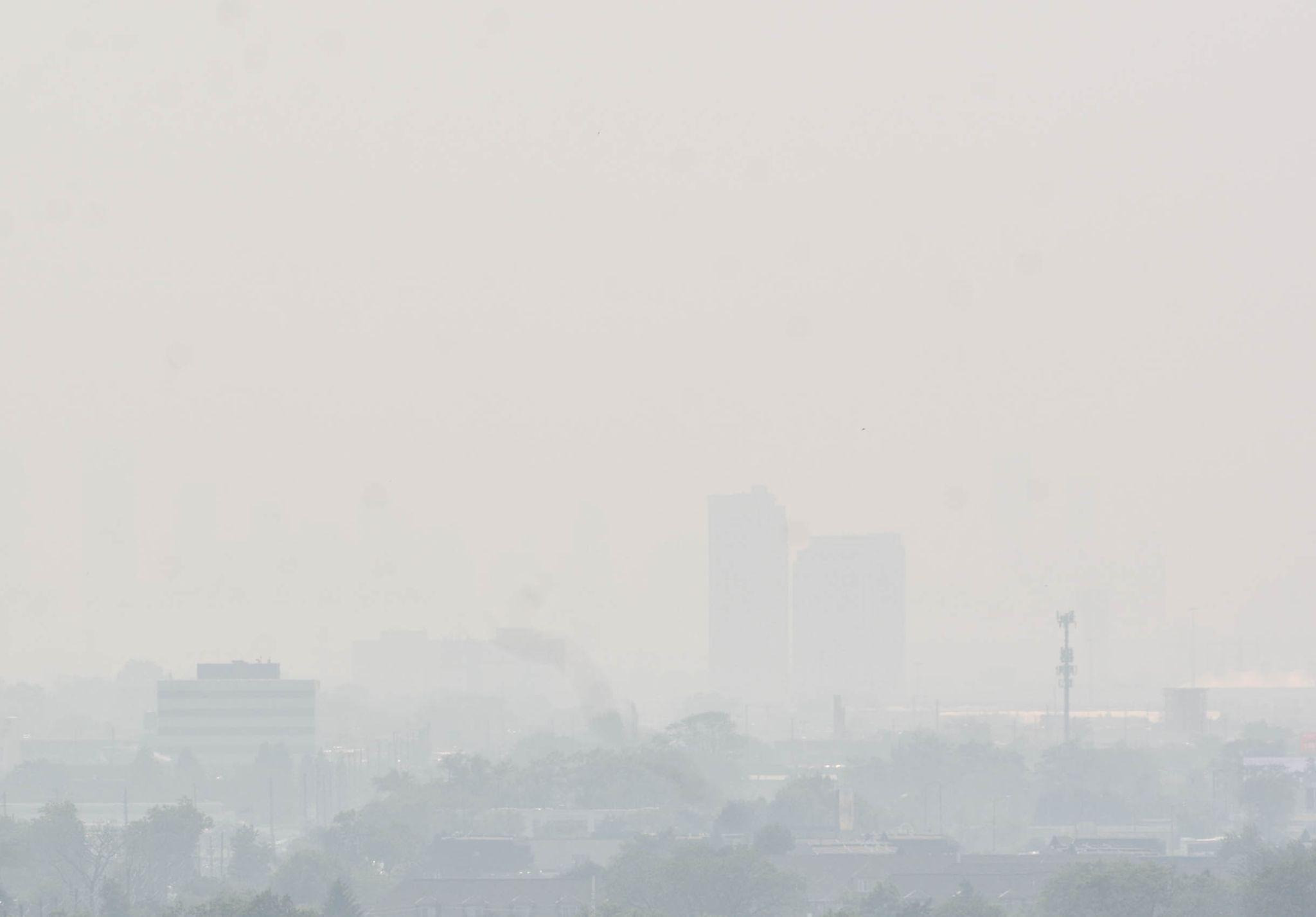
Views of the Mississauga skyline on two different days. The top is a clear, normal day. The bottom is the same view obscured by the smoke drifting over the GTA from wildfires burning in Quebec.
(Joel Wittnebel/The Pointer files)
A 2021 research found that worldwide, air pollution from burning fossil fuels is responsible for about one in five deaths. In Canada, more than one in seven deaths over the age of 14 are linked to fine particulate matter produced by fossil fuels or pollutants known as PM2.5 that have been associated with heart disease, lung illness, strokes and other serious health impacts.
Dr. Roy pointed out fossil fuels are also driving extreme heat as well as wildfires. Statistics Canada data suggest wildfire smoke results in up to 240 deaths each year due to short-term exposure and up to 2,500 deaths due to long-term exposure.
A 2025 United Nations Environment Programme report projects heatwaves will become more intense, frequent, and persistent across nearly all regions. Scientists warn the combination of extreme heat and humidity, which limits the body’s ability to cool itself, could lead to a 370 percent increase in annual heat-related deaths among older populations by 2050 if global temperatures rise by two degrees Celsius.
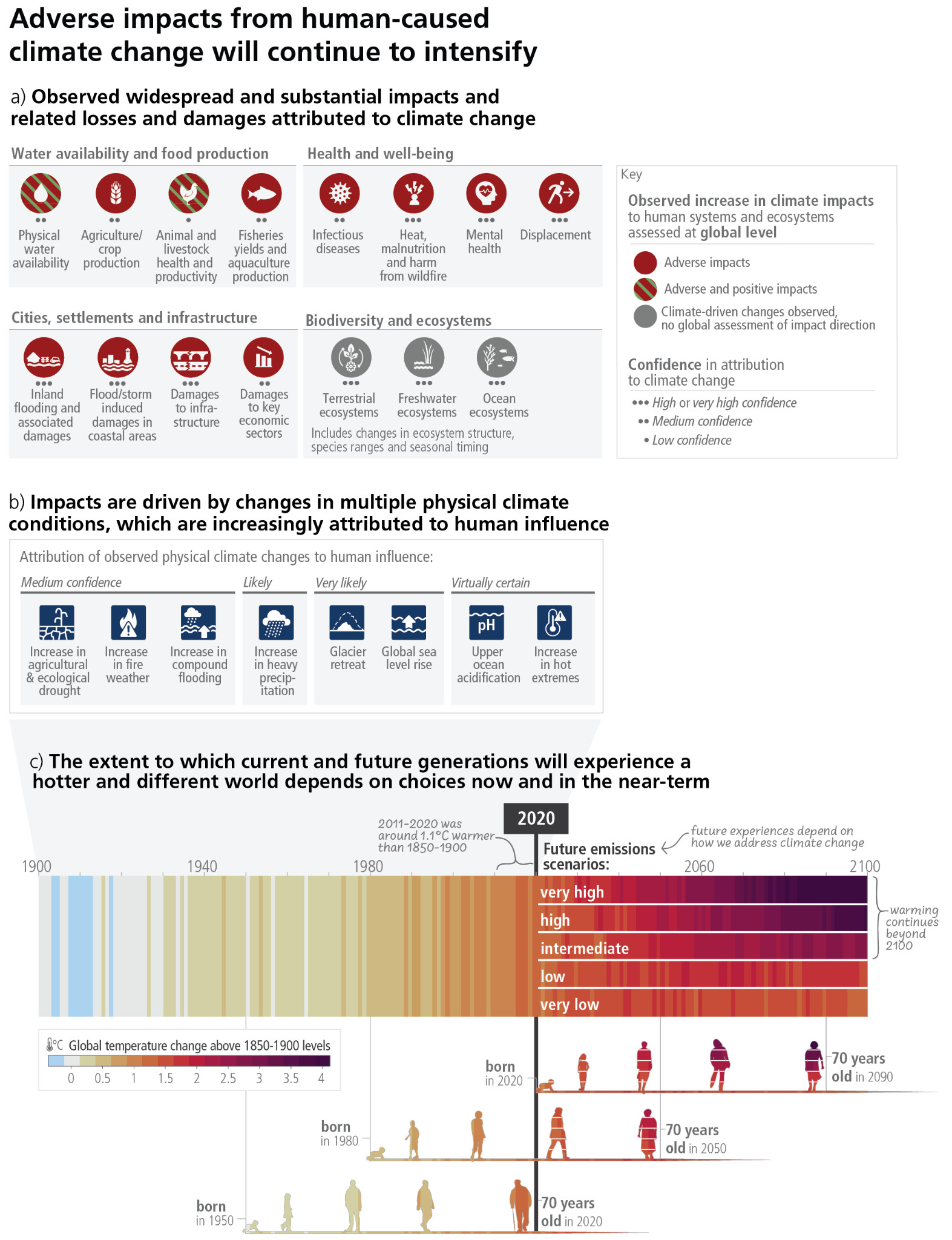
The recent Intergovernmental Panel on Climate Change (IPCC) Sixth Assessment Report underscores the significant risks heat poses to global health and ecosystems.
(IPCC)
Beyond extreme weather, fossil fuels are also undermining public health and security by worsening housing and food insecurity, increasing the spread of infectious diseases and antibiotic resistance, and contributing to a wide range of illnesses through air pollution including respiratory, cardiovascular, neurological and reproductive harms.
“Fossil fuels may escalate up to 60 percent of infectious diseases and also increase antibiotic resistance, which is of huge concern to the medical community,” Roy added.
“Here in Ontario, we're already experiencing Lyme disease, West Nile, chikungunya, but we may, in the near future, be at risk for malaria, yellow fever, Zika—and this is all linked to fossil fuels.”
She also advocated for the introduction of maximum indoor temperature bylaws, already being developed in Toronto, suggesting Mississauga could adopt similar measures as evidence shows they are among the most effective ways to save lives during extreme heat events. However, as reported by The Pointer previously, cooling measures must be intentionally paired with renewable energy sources, since rising air conditioning demand can increase electricity use as well as emissions when powered by fossil fuels.
“75 percent of global greenhouse gas emissions are due to fossil fuels, and we do not control the production, but we can control the consumption, and we can control the position we take,” Sustainable Mississauga Founder, Rahul Mehta, noted.
Just before noon, Mississauga became the 18th Canadian city and only the third municipality in Ontario after Toronto and Ottawa, to be a signatory on the Fuel Non-Proliferation Treaty after council voted unanimously in favour of the motion brought forward by Councillor Chris Fonseca.
Goldberg said it felt “great” to have a win for the environment at a time when “all other levels of government dismantling climate action”.
“The Fossil Fuel Non-Proliferation Treaty is an international agreement that engages nation-states but the pressure for countries to get involved comes from the bottom up,” she added.
“It's municipalities that are on the front lines of climate chaos and it's powerful for them to communicate the challenges they experience on the ground and demand that other levels of government take broader action.”
Email: [email protected]
At a time when vital public information is needed by everyone, The Pointer has taken down our paywall on all stories to ensure every resident of Brampton, Mississauga and Niagara has access to the facts. For those who are able, we encourage you to consider a subscription. This will help us report on important public interest issues the community needs to know about now more than ever. You can register for a 30-day free trial HERE. Thereafter, The Pointer will charge $10 a month and you can cancel any time right on the website. Thank you
Submit a correction about this story

