
‘Last generation with a choice’: Coalition calls on Doug Ford to bring back climate plan
“Climate change is a crisis we caused together, and a responsibility we all share, together. To reject that responsibility would be careless, reckless, perhaps even sinful,” former Ontario Premier Dalton McGuinty said at The Shared Air Summit in 2007. “The earth isn't ours – if it belongs to anyone, it belongs to our children. And they are counting on us. So it's important we act.”
McGuinty distilled climate change into a simple yet urgent warning as he unveiled the government’s first climate plan long after the province had been tested by disaster after disaster: Hurricane Hazel’s deadly floods in 1954, the 1971 Great Lakes blizzard, the destruction of Winisk in 1986 and the crippling ice storm of 1998—early glimpses of a warming planet.
The goal: reduce Ontario’s greenhouse gas (GHG) emissions by six percent below 1990 levels by 2014.
The result: Ontario successfully met its target.
From just 10 wind turbines in the early 2000s, the province scaled up to nearly 700 by 2007, becoming the country’s largest producer of wind power building on that momentum as it expanded solar and hydroelectric capacity and built new transmission links to bring in cleaner energy.
“All of these measures have helped us cut emissions from Ontario's coal plants by almost a third – in less than four years,” McGuinty remarked.
In 2015, under Kathleen Wynne’s leadership, the provincial government committed to a new mid-term target to reduce emissions by 37 percent below 1990 levels by 2030. It also rolled out a cap-and-trade system, phasing out coal-fired power and committing to electrifying and expanding the commuter rail network.
Incremental changes, cemented over time with action and hope, formed the foundation of every climate plan that followed.
Then came the Doug Ford PC government, which, in its first year in office, yanked out the blocks of that carefully built structure, dismantling it piece by piece, until it eventually collapsed like a Jenga tower.
In October 2018, the PCs repealed the previous government’s climate program through the Cap and Trade Cancellation Act and got rid of the provincial carbon price. The PCs promised to establish a climate plan that would “tackle climate change in a balanced and responsible way, without placing additional burden on Ontario families and businesses”. In the same period, it cancelled hundreds of renewable energy projects by passing the Green Energy Repeal Act (Bill 34), marking a sharp reversal of Ontario’s earlier clean energy policies.
Seven years later, Ford’s Progressive Conservatives repealed parts of the 2018 Cap and Trade Cancellation Act, which required the Province to prepare a climate change action plan and report progress on it to the public, as part of its fall economic statement.
A few months before the repeal, Auditor General Shelley Spence had already raised red flags about the Ford government’s failure to meet the 2030 target of reducing emissions by 3.5 megatonnes by “an even wider margin than projected”, driven largely by policies supporting the expansion of natural gas infrastructure.
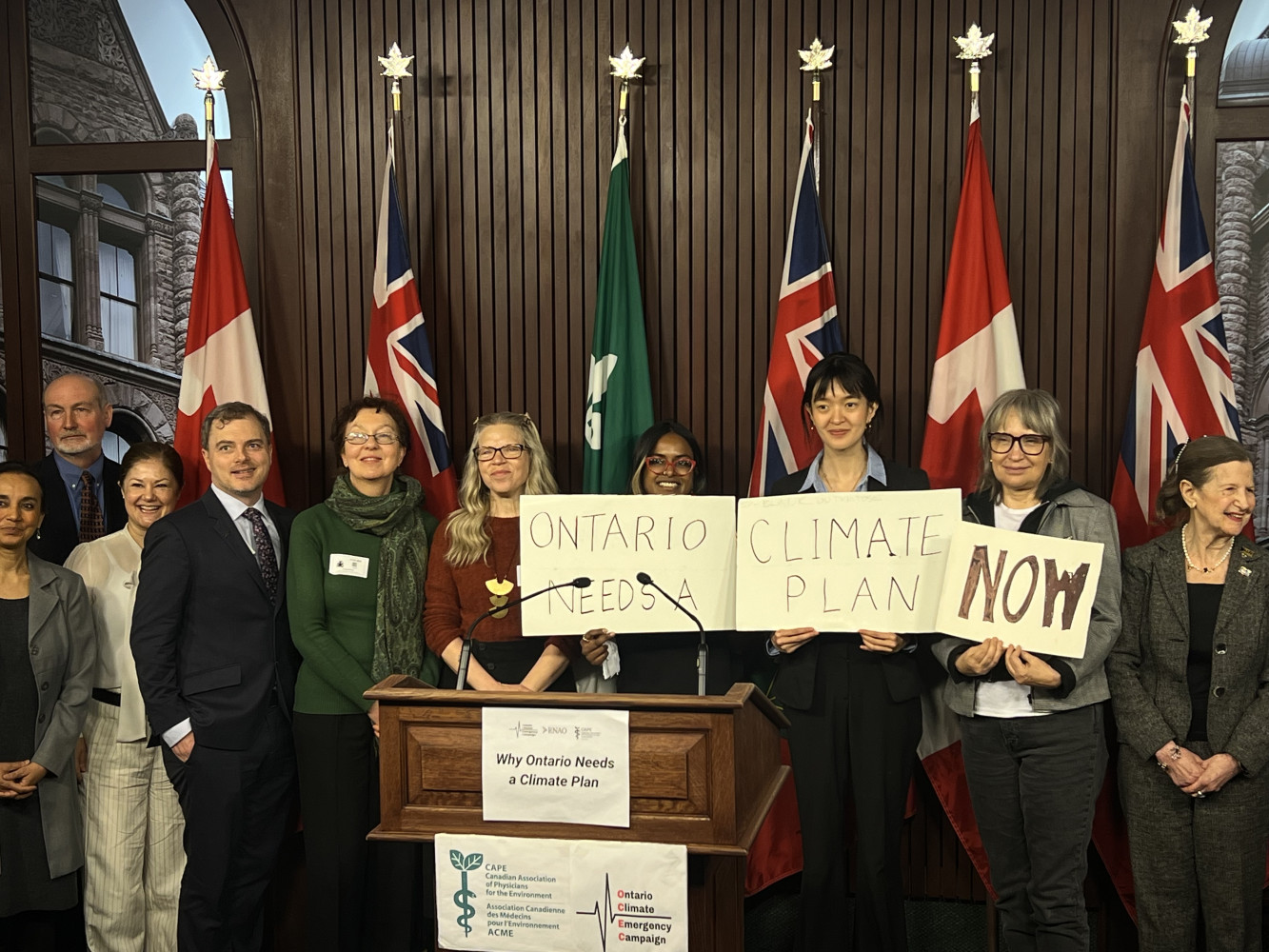
On April 22, celebrated as Earth Day globally, a coalition of healthcare workers and environmental stewards called on the Ford government to reinstate an evidence-based climate plan that aligns with the goals of the Paris Agreement.
The call comes as 2026 is on track to be the hottest year on record (at least a dozen climate models point to the possibility of a Super El Niño that threatens to trigger severe droughts, heavy rainfall and record-breaking global heat domes).
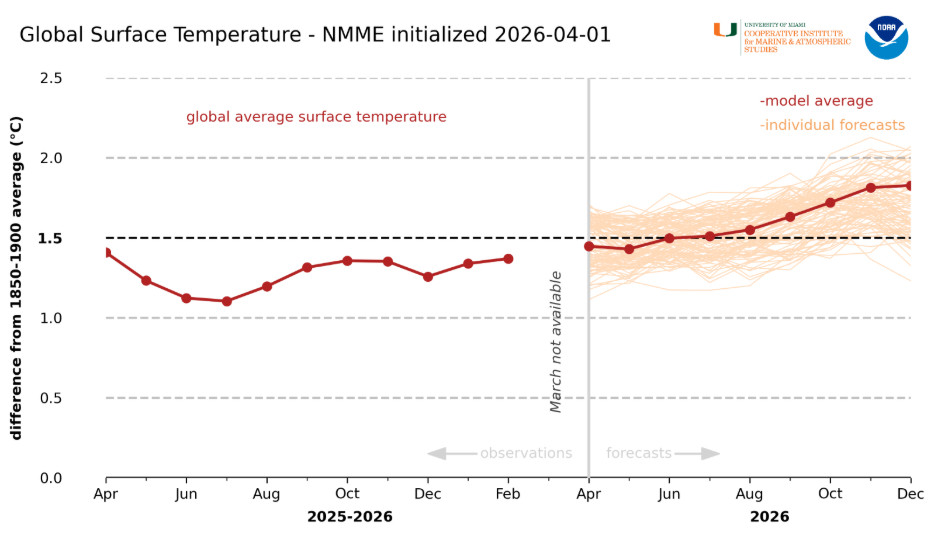
Observed and forecasted global surface temperature anomalies, measured against the 1850-1900 preindustrial baseline, for April 2025 through December 2026 show a clear warming trend, with each thin orange line in the graph representing an individual climate model projection and the thicker red line showing the average across those models. Together, they illustrate a strong consensus: temperatures are expected to remain well above historical norms, with some projections briefly approaching or even exceeding 2 degrees Celsius of warming, driven by the combined effects of ongoing fossil fuel emissions and the potential development of an El Niño event.
(National Oceanic and Atmospheric Administration)
“A climate plan is not optional; targets are not optional. They are critical to our well-being now and into the future,” Mili Roy, Ontario Regional Co-Chair of the Canadian Association of Physicians for the Environment (CAPE) said during a press conference at Queen’s Park.
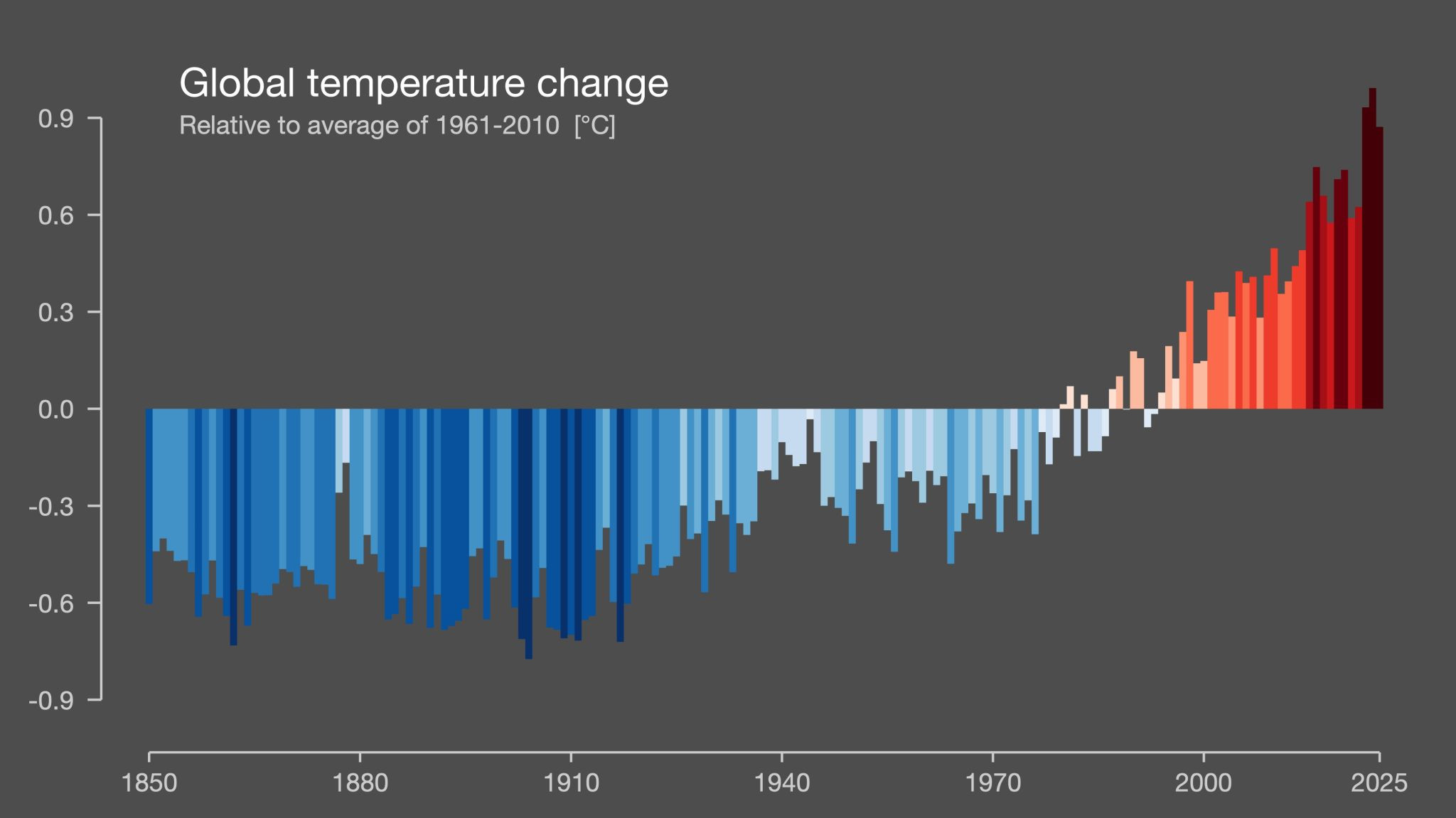
The last two decades have seen some of the warmest temperatures on record globally. Current modelling by Environment and Climate Change Canada shows the global mean temperature this year is predicted to fall in the range of 1.35 degrees Celsius and 1.53 degrees Celsius above pre-industrial levels, meaning that global temperatures will remain at least 1.0 degrees Celsius above pre-industrial levels for the 13th consecutive year.
York University’s environmental studies associate professor Mark Winfield, who described the Ford government’s fiscal approach as a “disaster”, said Ontario’s climate outlook is “one of growing concern” due to not only the absence of a meaningful climate plan but also rising emissions and calculations about the cost and environmental impacts of the province’s current energy trajectory, which relies heavily on nuclear and fossil gas.
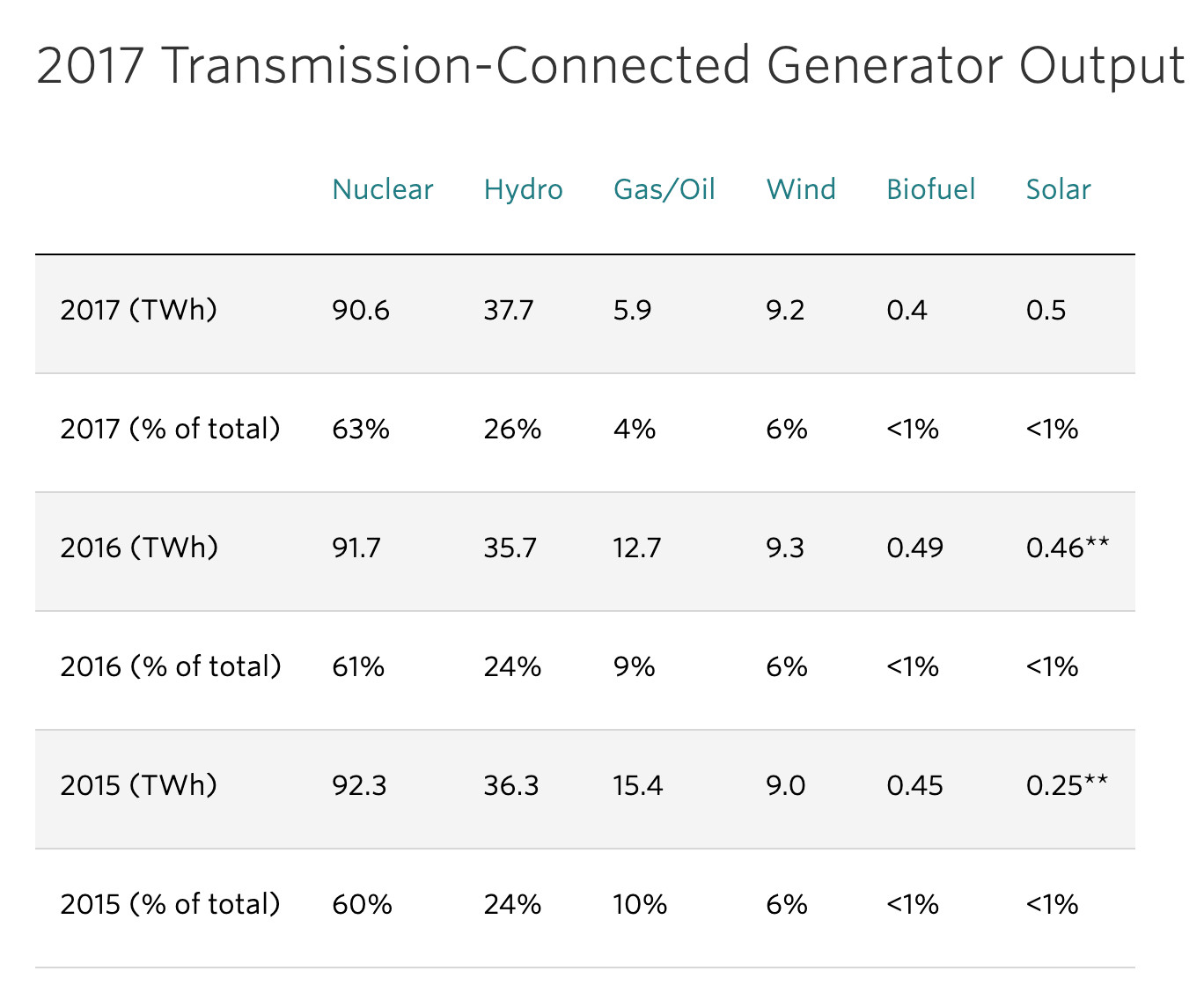
The Independent Electricity System Operator (IESO) data shows gas-fired electricity generation was decreasing every year after the province committed to reducing its greenhouse gas emissions and shifting away from fossil fuels.
(IESO)
Until 2017, when Ontario still had a climate strategy in place, gas-fired electricity made up just four percent of the province’s supply, according to the Independent Electricity System Operator (IESO). By 2025, that share climbed to 19 percent, nearly five times higher, and is projected to reach about 24 percent, roughly the same level once supplied by coal-fired generation.
“Gas-fired generation will produce lower emissions than coal but is still carbon-intensive and produces smog precursors, notably particulate matter in nitromonoxides,” Winfield noted.
“The implication of this trend is that rather than decarbonizing, Ontario's electricity grid is actually re-carbonizing intensively.”
Last year, renewable energy overtook coal to become the world’s largest source of electricity, the first time since 1919 that coal’s share fell below renewables, according to the thinktank Ember’s latest report.
The shift was driven by a surge in solar and wind, which together met 99 percent of the increase in global electricity demand while fossil-fuel generation dipped by 0.2 percent.

In 2025, solar power surged by a record 636 terawatt hours (TWh), producing more electricity than all liquid natural gas exports that pass through the Strait of Hormuz while wind recorded the second-largest increase, rising by 205 TWh. Coal continued its decline, dropping below one-third of global electricity generation for the first time in history, as the rapid growth of electric vehicles further cut into fossil fuel demand, displacing 1.8 million barrels of oil per day overall including 0.5 million from new EVs added in 2025 alone.
(Ember)
Unlike previous declines tied to economic slowdowns, this drop signals a structural transition toward cleaner power. Record-breaking solar generation alone jumped 30 percent year-over-year, accounting for 75 percent of demand growth and pushing fossil fuels into sustained decline.
The International Energy Agency’s (IEA) latest Global Energy Review reiterated these findings: solar PV alone accounted for more than a quarter of new electricity demand while low-emissions sources (solar, wind, nuclear, hydropower and other renewables) collectively met nearly 60 percent of global demand growth.
“The rollout of clean energy technologies since 2019 avoided more than 35 exajoules of annual fossil fuel demand in 2025, equivalent to around 7 percent of global fossil fuel use annually,” the report highlighted.
At the same time, growth in fossil fuels is slowing. Oil demand rose by just 0.65 million barrels per day (0.7 percent) in 2025, well below the 2010-2019 average. Gas demand also cooled, increasing by about one percent amid high prices and uneven regional growth.
Geopolitical tensions, recently between Iran and the United States, have further exposed the fragility of oil and gas dependence, as disruptions to global supply chains forced countries to confront energy insecurity and hastened the push toward renewables.
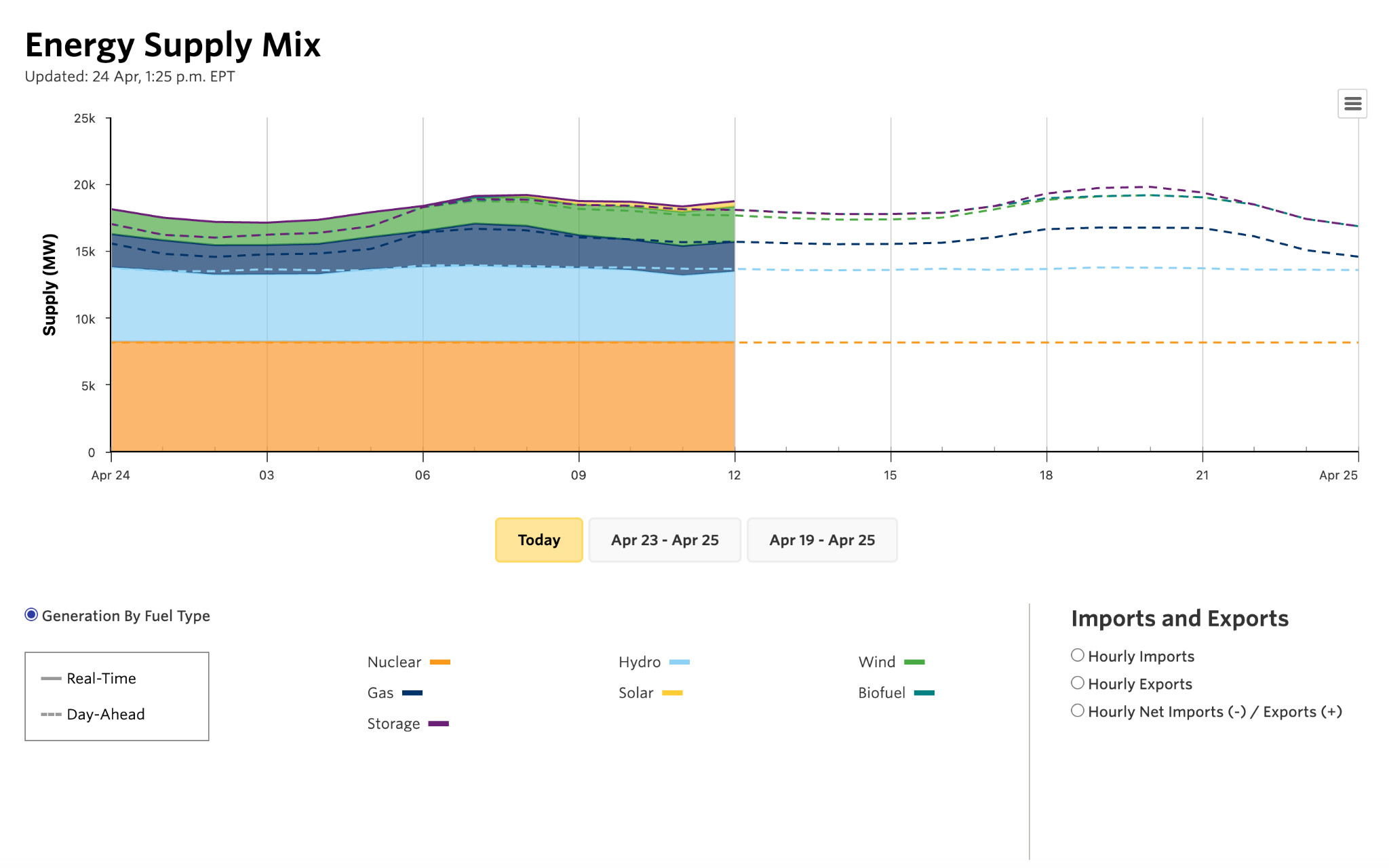

Most of Ontario’s electricity comes from nuclear sources followed by hydro, gas and wind.
(IESO)
The IESO estimates the cost of wind ($48/MWh) and solar ($69/MWh) would be significantly lower compared to $185 to $262/MWh for new gas generation. In the IESO’s Long-Term 2 (LT2) Energy Stream, the Province selected over 1,300 MWh of new wind and solar projects at competitive rates which reinforces the case for renewables being pocket-friendly.
Rather than fully tapping its renewable potential, Ontario is doubling down on what critics describe as a high-risk, high-cost nuclear path.
Nuclear power already dominates Ontario’s grid and, under current plans, could rise to 75 percent of electricity generation by 2050. This could considerably limit the integration of flexible, lower-cost wind and solar because nuclear systems cannot easily adjust to shifts in demand.
The government’s $26.8-billion refurbishment of the aging Pickering Nuclear Generating Station, announced on November 26, has intensified those concerns which were sparked by the refurbishment of Darling and Bruce Nuclear Generating Stations alongside plans for a new facility at Ontario Power Generation’s Wesleyville site in Port Hope. Opponents warned these steps could drive up electricity bills through rates or taxes.
“The estimated capital cost of these projects, based on recent experience and projections from other jurisdictions, is in the range of $400 billion over the next 20 years,” Winfield said.
With Pickering’s reactors expected to remain offline for much of the next decade, emissions from the electricity sector could surge from 2.5 megatonnes to as high as 20 megatonnes by 2030, undoing much of the province’s coal phase-out progress.
“Among many problems, far from clear how the government is going to pay for these plants, electricity from nuclear facilities are likely to cost in the range of between 20, 30 and 40 cents per kilowatt per hour — well above current rates, and at the level that would undermine affordability, competitiveness and decarbonization through electrification,” he added.
Winfield also highlighted that Canada does not have uranium enrichment capacity which is a prerequisite for nuclear expansion; ultimately, making the country dependent on the U.S.
On April 9, the province announced the approval of 14 new electricity projects through the “largest competitive energy procurement” in the province’s history. It claimed the developments will add more than 1,300 megawatts of supply, enough to power about 350,000 homes. The province said the projects were secured at prices 73 percent lower than previous contracts under former governments and form part of its “all-of-the-above” energy strategy, which includes renewables, storage, natural gas and expanded nuclear generation to meet rapidly rising demand.
Matt Jamieson, Chief Executive Officer of the Six Nations of the Grand River Development Corporation, welcomed the move but said the scale of new generation still falls short of Ontario’s projected demand — 75 percent by 2050, rising from 151 terawatt-hours (TWh) in 2025 to 263 TWh due to industrial expansion, data centers and electrification.
Six Nations, the largest First Nation in Canada, has long been a participant in Ontario’s energy sector, becoming one of the first Indigenous communities in the province to invest in major energy assets. Today, it is the largest Indigenous investor in renewable energy in Ontario and in energy storage projects across the country, a role Jamieson believes reflects a clear mandate: building a cleaner future for the next generation.
“I know one thing when it comes to business, and working with government, what gets measured gets done,” he said, stressing the need for a clear energy roadmap with specific, measurable and time-bound targets. Without such a plan, governments tend to default to the “path of least resistance” including reverting to gas-fired generation at a “higher level than originally anticipated”.
Ongoing barriers facing Indigenous participation in the sector make the transition tougher. Jamieson’s organization was unable to secure a contract in the latest procurement round due to municipalities declaring themselves “unwilling hosts for popularity purposes” alongside provincial land-use restrictions, particularly around agricultural land, that limit the development of even viable solar projects, especially where no suitable industrial-zoned sites remain with access to nearby transmission infrastructure.
“We're also champions of responsible development. Agricultural land is important but there is a smart way for Ontario to meet its energy demand while working in close relationship with municipal governments to smartly plan how that can take place,” he said.
“In our neck of the woods…there isn't any real remaining industrial lands that would be zoned appropriately for us to build a large-scale solar project.
“Revisiting that policy would certainly help.”
Smarter planning could allow Ontario to meet energy demand while working more closely with Indigenous communities and municipalities to identify suitable locations for development.
But the problem is not just how the energy is produced but where it is used inefficiently. Buildings in Ontario are responsible for approximately 24 percent of the province's total GHG emissions, making the sector the third-largest source of emissions in Ontario after transportation and industry. The PCs have moved to gut the municipal Green Development Standards (GDS) first through Bill 23 and Bill 17, and the recently proposed Bill 98, dubbed the Building Homes and Improving Transportation Infrastructure Act.
Transitioning to a long-term clean energy system takes time but “uncomfortable” and “unpopular” decisions are necessary to meet that goal: “We owe it to our future generations to make those tough decisions now and set the example of taking responsibility over our environment,” Jamieson said.

On April 23, the group reconvened again at Queen’s Park for a breakfast with members of provincial parliament to lobby for a climate plan — not a single Progressive Conservative MPP showed up.
(Anushka Yadav/The Pointer)
In 2023, a government-commissioned report on Ontario’s climate risks was already sounding the alarm of inaction in the face of climate change. The 530-page Provincial Climate Change Impact Assessment projected that southern Ontario could see up to 60 days per year above 30 degrees Celsius by the 2080s with serious consequences for food production, business productivity and public health.
The bleak report was kept quiet for eight months before being made public in August that year — by October, Ontario had undergone the worst wildfire season in history with healthcare costs estimated at $1.28 billion.
“Nurses see firsthand that climate change is not a distant environmental issue. It is a present and growing health crisis,” Dr. Doris Grinspun, Chief Executive Officer of the Registered Nurses' Association of Ontario (RNAO), said
Climate-driven events are already translating those warnings into lived reality across the province through worsening respiratory illness driven by wildfire smoke and vehicle emissions, flooding events that disrupt care and displace families, rising food insecurity, the spread of vector-borne diseases such as Lyme disease and West Nile virus, and growing mental health impacts ranging from anxiety to trauma linked to repeated climate emergencies.
In Indigenous communities, repeated evacuations due to wildfires and flooding are compounding health and social stress with entire communities facing disruption year after year.
These pressures are now clearly visible in hospitals and clinics, where overcrowded emergency departments, surges in asthma and cardiovascular cases during smoke events, and seniors arriving with heat-related illness from inadequate housing conditions are becoming increasingly common.
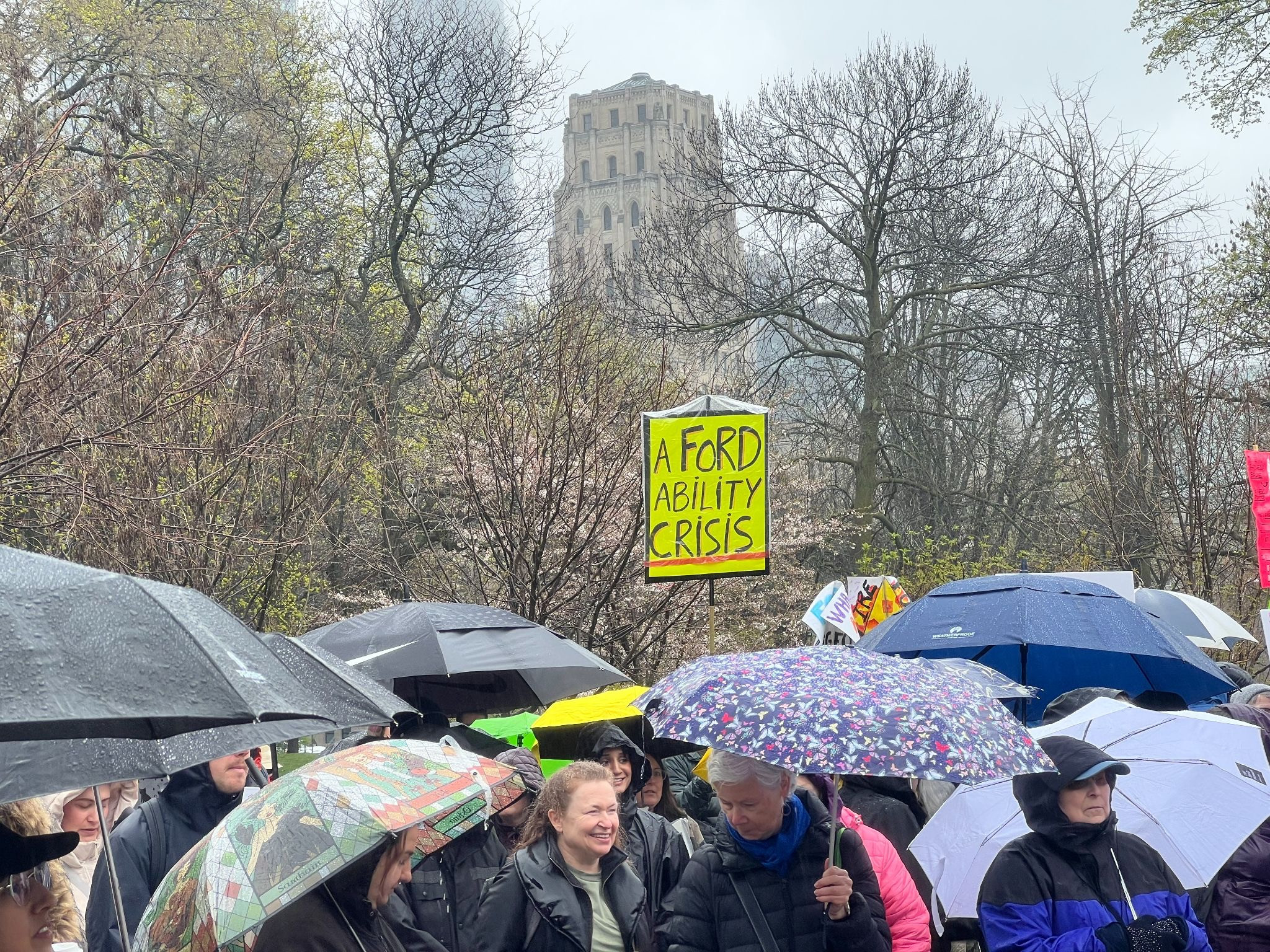
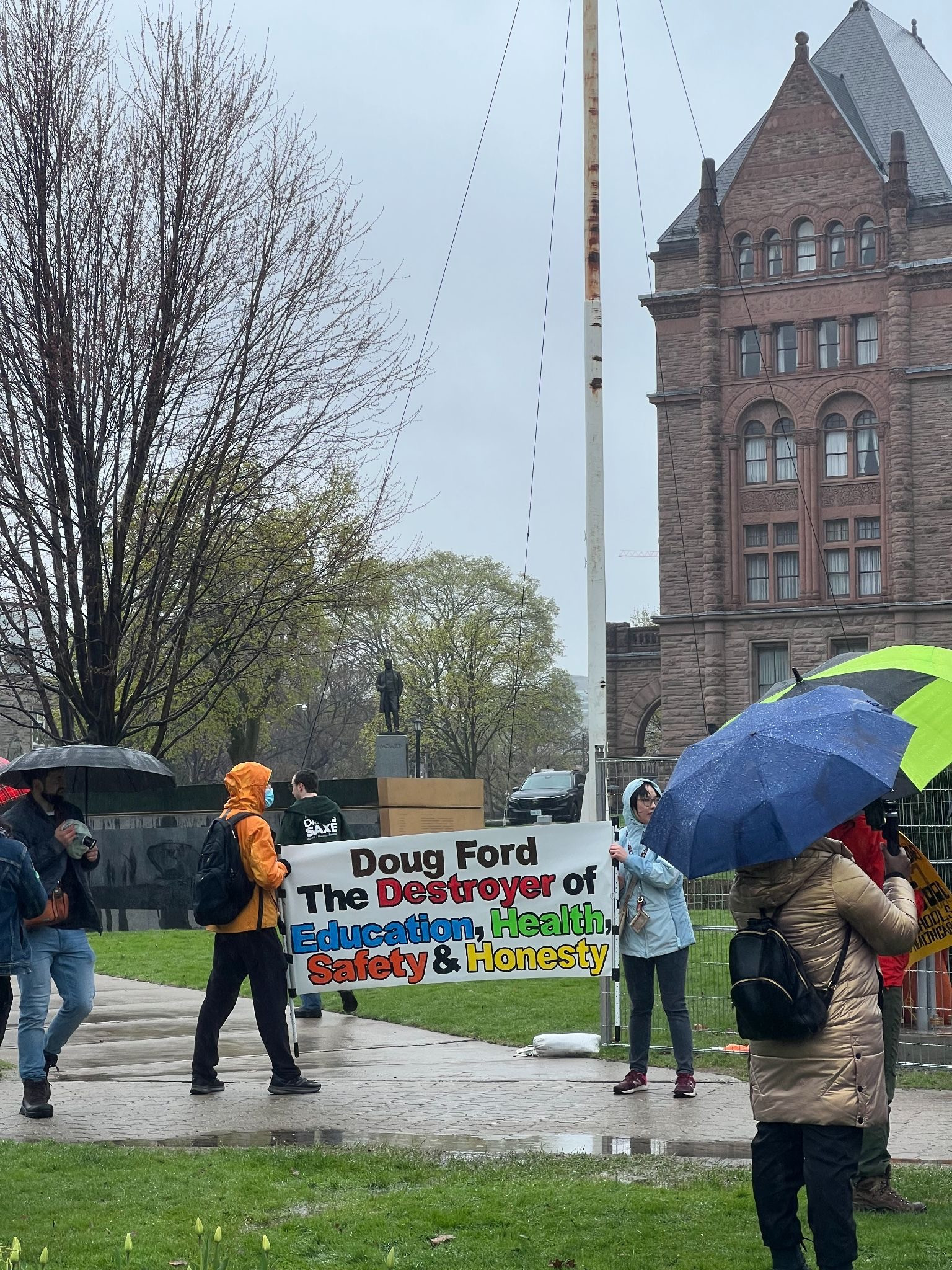


On April 25, an estimated 500 people marched to Queen’s Park in cold, rainy weather, protesting after Doug Ford’s government pushed through last-minute changes to Ontario’s freedom-of-information laws, embedded in the 2026 budget, to override a court ruling that would have required the release of some of the premier’s phone records.
(Anushka Yadav/The Pointer)
Between June 22 and June 24 last year, when the Greater Toronto Area (GTA) was under a multi-day heat warning, Toronto Public Health recorded 42 emergency room visits due to heat-related illnesses.
In Peel Region, emergency departments reported 15 heat-related visits between May 1and July 3, according to Ontario’s syndromic surveillance system. For comparison, over the five-year span from 2020 to 2024, Peel hospitals reported a total of 62 heat-related visits between May and September, with 30 heat warnings issued and 86 days under active alerts.
By July 7, Peel had already seen 17 heat-related emergency visits and two heat warnings. Of those, 13 visits, 76.5 percent, occurred during or within two days after a heat warning, the highest proportion recorded in the past five years.
Many municipalities track heat-related ER visits but Ontario still does not record deaths caused by extreme heat.
Similarly, air pollution prematurely kills 6,600 Ontarians every year with an economic impact of over $49 billion dollars, a CAPE analysis highlighted.
“Climate policy is, at its core, health policy,” Grinspun stressed as she called on the Premier to bring back a stronger plan.
On April 18, 14 environmental, climate and social justice organizations marched through Toronto’s rainy streets and gathered over 500 signatures on a petition calling on the Ford government to adopt a new climate plan that triples wind and solar power, expands battery storage, enables Great Lakes wind development, rapidly phases out fossil gas and upholds Indigenous rights to free, prior and informed consent over projects on their lands.
The petition was presented to New Democratic Party MPP Peter Tabuns, also the shadow Minister for Environment, Conservation and Parks, on Earth Day with a simple message: “The future belongs either to fossil fuels or to us [and] our children on a healthy planet…So which will it be?
“We are the last generation,” Roy warned ominously, “that still has a choice to make.”
Email: [email protected]
At a time when vital public information is needed by everyone, The Pointer has taken down our paywall on all stories to ensure every resident of Brampton, Mississauga and Niagara has access to the facts. For those who are able, we encourage you to consider a subscription. This will help us report on important public interest issues the community needs to know about now more than ever. You can register for a 30-day free trial HERE. Thereafter, The Pointer will charge $10 a month and you can cancel any time right on the website. Thank you
Submit a correction about this story

