
Can the Israel-U.S.-Iran war push Canada toward renewables?
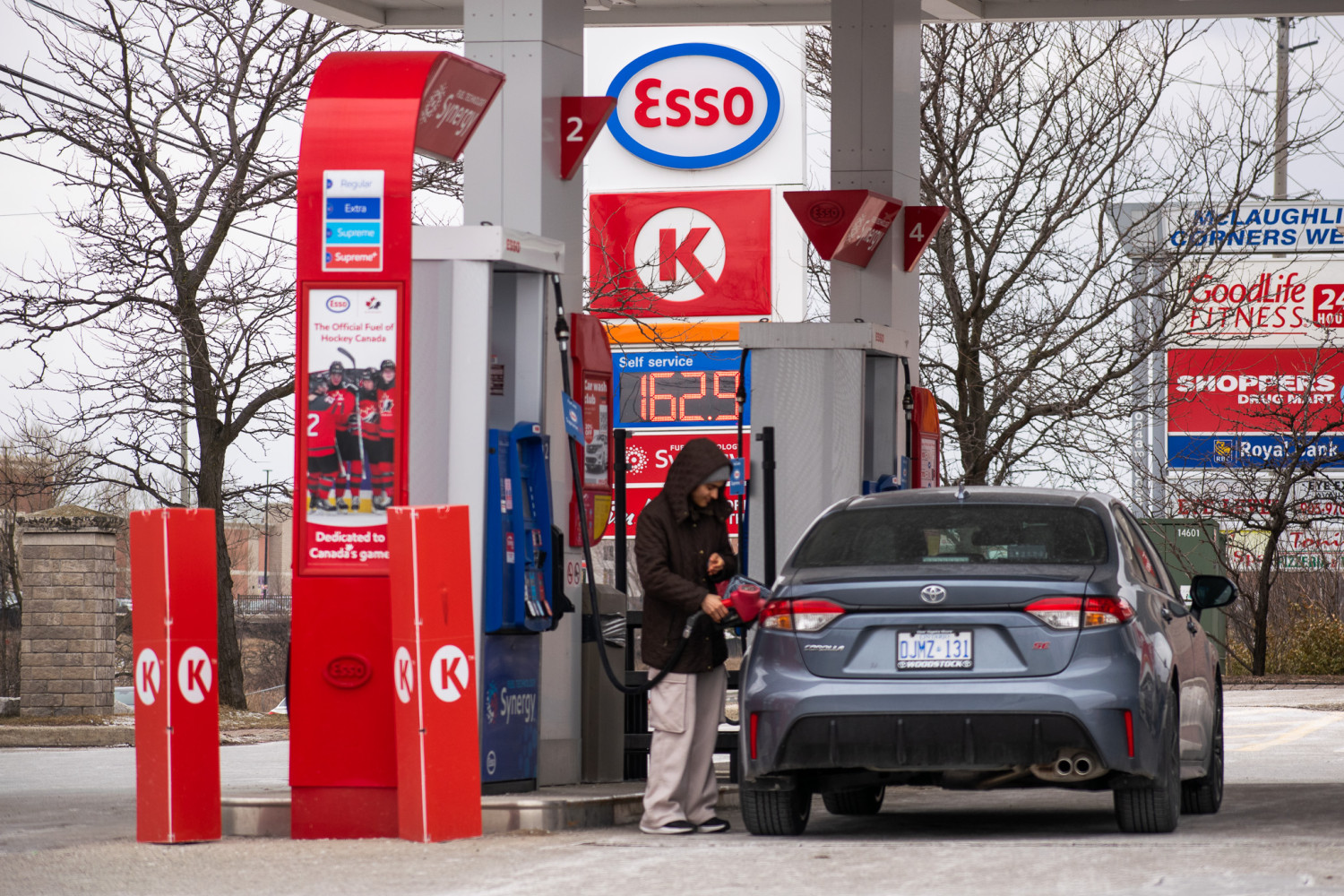
For Canadians pulling up to the pump, filling the tank has come with a deepening frustration this March, as fuel prices surged to over $100 a barrel amid the ongoing war between the United States, Israel and Iran.
For the second time in less than a decade, a major geopolitical conflict has cracked open the world’s dependence on fossil fuels, exposing how quickly global markets can be shaken when oil or gas supply is threatened.
Could this latest tremor accelerate the shift away from fossil fuels?
The answer might be as complicated as Prime Minister Mark Carney’s first year in office.
“This war is going to play a very disruptive and transformative role globally,” Abishur Prakash, Geopolitical Strategist at The Geopolitical Business, warned.
“We’re only at the beginning of the shock waves of this broken relationship’s effect on the global economy. Things are probably going to get a lot worse before they get better.”
The blowback will soon be visible beyond the pump as history has borne witness.
During the 2022 energy shock after Russia’s invasion of Ukraine, oil surged past $100 a barrel and North American fuel prices spiked initially — forcing customers to cut fuel usage and bear the higher cost.
In the second wave, rising oil and gas prices pushed up the cost of transportation, shipping and fertilizer, which quickly filtered through the supply chain to raise grocery prices and the cost of everyday goods.
The current disruption in the Middle East including threats to shipments through the Strait of Hormuz, which carries roughly a quarter of the world’s seaborne oil and 20 percent of Liquefied Natural Gas (LNG), could trigger a prolonged wave of inflation.
Iran's new supreme leader Mojtaba Khamenei, former leader Ali Khamenei’s son, has already vowed to keep blocking the trade route — pushing oil to US$200 per barrel.
That could also complicate decisions for the Bank of Canada (BoC), which may now be forced to keep interest rates higher for longer or delay expected rate cuts as it tries to balance rising inflation risks with a slowing economy.
“Many people may find it surprising or counterintuitive that, at times, monetary policy needs to be tightened when the economy is weak. Yet that is exactly the difficult trade-off we sometimes face,” BoC Deputy Governor Sharon Kozicki said.
“Generally, when a supply shock is expected to have large or persistent impacts on inflation, some degree of policy restraint will be needed to bring inflation back to target.”
It will be a rough road ahead for BoC to keep inflation anchored to the two-per-cent target, especially as U.S. President Donald Trump’s administration continues to put out mixed messages on having won the war with Iran while still asserting it needs to “finish the job”.
On March 23, Trump said the U.S. and Iran have had “very good and productive conversations” and paused strikes on Iranian energy infrastructure for five days. Iranian officials responded, claiming no such negotiations happened. Senior officials in Israel, meanwhile, said attacks on Iran are about to ramp up.
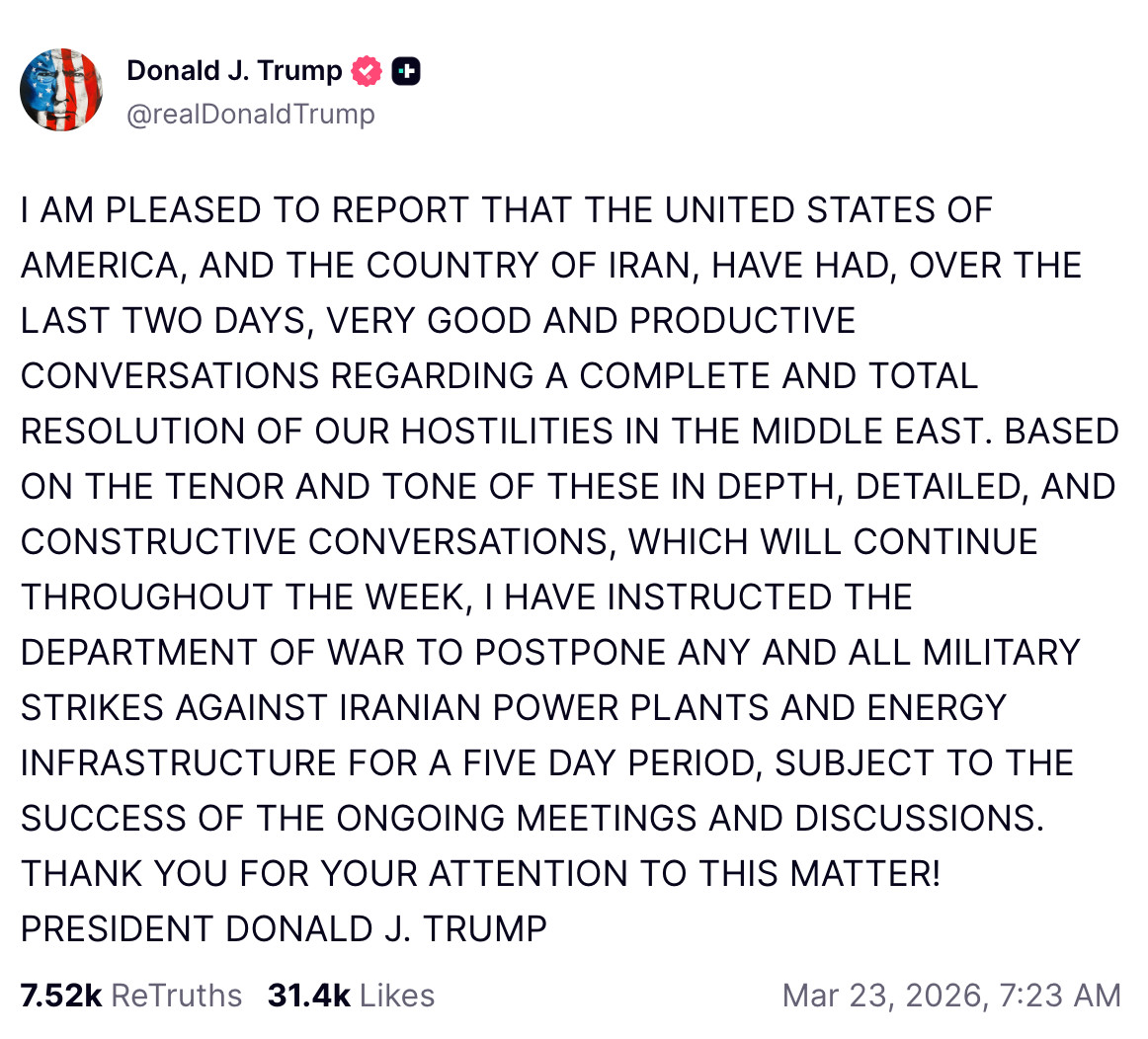
On March 23, U.S. President Donald Trump wrote that the strikes against Iran’s energy infrastructure would be paused for five days following “productive” talks with Iran.
(Donald Trump/Truth Social)
Keeping track of the chaotic claims is part of the fog of war. Energy experts argue the world no longer needs to be held hostage by oil prices whenever conflicts erupt…often motivated by control of the very resource that causes the global shocks.
“This is the start of a new kind of geopolitics where there’s zero clarity on where this is heading, what the objectives are and how exactly this is going to wrap up,” Prakash said.
The original goal as stated by Trump — provoking a revolt against the Iranian regime — has effectively vanished, replaced by a shifting focus on striking military targets and infrastructure.
It has activated a “black hole effect” where more and more countries are being roped into the crisis as energy supplies continue to be squeezed. Russia has threatened to cut off gas to Europe, the Philippines shifted to a four-day workweek, Vietnam is encouraging remote work and India is diverting diesel supplies to neighbouring countries.
“The conflict in the Middle East has created the largest supply disruption in the history of the global oil market, due to the near halt in shipping traffic through the Strait of Hormuz,” the International Energy Agency pointed out in a report last week, offering guidance on how to shelter the world from oil shock. “The loss of supply is having significant impacts in global markets, pushing up prices for crude oil above $100/barrel, and leading to much higher prices for some refined products – notably diesel, jet fuel and liquefied petroleum gas (LPG). Concerns are growing about the impacts of higher prices on households, businesses and the broader economy.”
The IEA is calling on governments to: “Reinforce the adoption of electric and more efficient vehicles and accelerate the installation of EV charging infrastructure: EVs now account for over 1 in 4 cars sold worldwide. Promoting EVs, hybrids, and other fuel-efficient vehicles – not just cars, but also two-wheelers, buses, and trucks – alongside expanded charging infrastructure can help reduce global reliance on oil. Governments can accelerate adoption through tax incentives, subsidies, low-emission zones, and other supportive policies. Some countries have recently stepped up electrification efforts amid the current crisis: Indonesia is aiming to convert its two-wheeler fleet through targeted programmes, while Lao PDR is investing in EV charging and exploring further measures. Meanwhile, integrating EV incentives into broader industrial strategies can amplify their impact. Brazil’s Green Mobility and Innovation Programme illustrates this by combining fuel economy standards with incentives for domestic EV production.”
Prakash compares the scale and speed of the latest energy disruption to the shockwaves of COVID-19, with uncertainty touching every aspect of the battlefield, global energy markets and international alliances.
Even if the U.S. had declared the war was over by mid-March, “it could take anywhere from two to six months for oil flows to return to normal” — “that’s assuming this doesn’t turn into a shadow war between the Israelis and Iranians”.
On March 10, Carney made Canada’s stance clear on the conflict while speaking in the House of Commons.
“Canada is not participating in the offensive operations of Israel and the United States and will not ever,” he said.
The next day, Natural Resources Minister Tim Hodgson announced that the government was taking steps to lower the cost of oil globally to help the International Energy Agency to release 400 million barrels of oil from its 32-member nations’ stockpiles.
“Canada will do its part to contribute to the world’s [oil] supply. That will bring prices down for Canadians, that will keep prices affordable for Canadians,” Hodgson said.
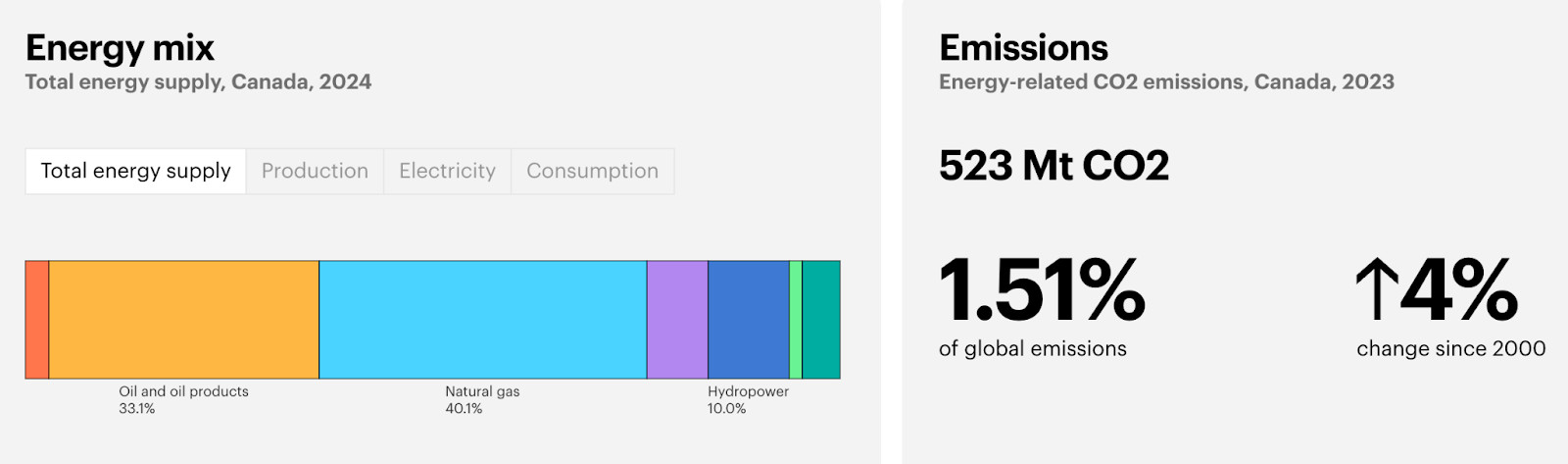
Among G7 nations, Canada is the only country that does not keep a strategic oil reserve. As a net exporter of oil, it is not obliged to maintain one despite being an International Energy Agency member.
(International Energy Agency)
Canada, like many countries reeling from the effects of this geopolitical turmoil, stands at a fork in the road: it could either double down on fossil fuels or accelerate the shift to renewable energy.
The war with Iran has underscored that electrification is no longer just a climate solution, it’s also about energy security and affordability, ensuring that no global leader can dictate what happens in one country. It is paramount to the “new world order” that Carney declared, during his Davos speech in January, where the U.S. cannot continue to be a “hegemony”.
Trade troubles have already exposed the risks of ignoring a new energy economy. “We need to move quickly to renewable energy, precisely because oil and gas dependency leaves us vulnerable to price shocks from external markets and to the actions of hostile powers like the U.S.,” Sierra Club Canada’s spokesperson Conor Curtis told The Pointer previously.
A recent BloombergNEF analysis anticipates fossil fuel disruptions due to the Iran conflict could “push customers toward technologies like solar and batteries”.
But Simon Fraser University Political Science Professor Andy Hira worries Canada, as the world’s fourth largest oil and fifth largest gas producer, is going to take the “wrong lesson” from this moment which doesn’t match the future.
Canada’s role as a stable crude producer averaging about 5.19 million barrels a day in the first half of 2025 (according to the Canada Energy Regulator) has increasingly cast it as a safe haven energy partner.
Carney himself has positioned Canadian oil as a competitive, “clearly low-risk, low-cost” option with a “low-carbon” profile, making it an attractive alternative to producers like Venezuela.
“Rising prices could lead to assuming there will be a repeat of the history of the last 30 or 40 years in Canada, where we became a major oil exporter, the future tells us a different story,” Hira noted.
“Renewable energy is becoming cheaper, the costs of climate change are rising and at some point, when the war is over, there's going to be a huge flood of oil and gas on the markets.”
Currently, roughly 97 percent of Canadian oil is exported to the United States. Pipelines like the Trans Mountain Expansion Project (TMX) and the recently completed LNG Canada project to Prince Rupert are likely to be used closer to full capacity as prices rise, offering temporary relief from dependence on the U.S. and limiting its delivery capacity.
The other challenge is that Canada’s oil sands can’t boost output overnight even if it wanted to take advantage of the situation; any possible increase would follow market signals.
U.S. investment firm GMO’s lead strategist and climate fund manager Lucas White sees the ongoing war opening the door for an “acceleration” in renewable energy, especially if hostilities persist for weeks or into 2027.
“If this were to go on for weeks or months, you can’t block 20 percent - 30 percent of the world’s seaborne oil and not have some massive reaction,” White said in an interview with Morningstar.
Rising prices and constrained access have historically had complex effects on energy markets.
“When oil prices go up and access is limited, it affects futures markets and overall energy dynamics, ultimately leading to more exploration and production,” York University Environmental & Urban Change Professor, Anna Zalik, told The Pointer.
High oil prices make previously expensive projects like offshore fields or certain shale operations economically viable, which benefits major oil companies.
Drawing on the work of her colleague Jonathan Nitzan, Zalik noted when the oil industry’s profit margins relative to other sectors decline, there is a higher likelihood of conflict in West Asia.
“Wars in the Middle East have become, in some ways, functional for the oil industry,” she explained, because elevated oil prices during such conflicts generate substantial profits for oil firms.
Zalik’s research began in the early 2000s, focusing on Nigeria and Mexico, where volatility in oil-producing regions directly influenced global oil markets. In Nigeria, reports of violence in the Niger Delta often pushed oil prices higher, benefitting OPEC countries and oil companies even amid local conflict.
“While oil firms often claim to prioritize peace and governance near extraction sites, production can continue relatively uninterrupted even during regional instability,” she observed.
White agrees that traditional oil companies may benefit from higher prices but the conflict is also creating opportunities for renewable energy and energy storage companies, especially those producing lithium batteries, which are essential for electric vehicles and storing energy from solar and wind power.
When Russia invaded Ukraine in 2022, electricity prices in some parts of Europe jumped by as much as 300 percent as the cost of coal and natural gas soared. In turn, renewable energy activity skyrocketed, particularly in solar power.
Growth in renewables slowed later as interest rates were raised to combat inflation but adoption continued.
In 2025, low-emissions energy sources reached new milestones globally, with renewables led by solar PV [photovoltaic] and surpassed coal-fired generation, pushing coal’s share of total generation below 33 percent for the first time in a century.
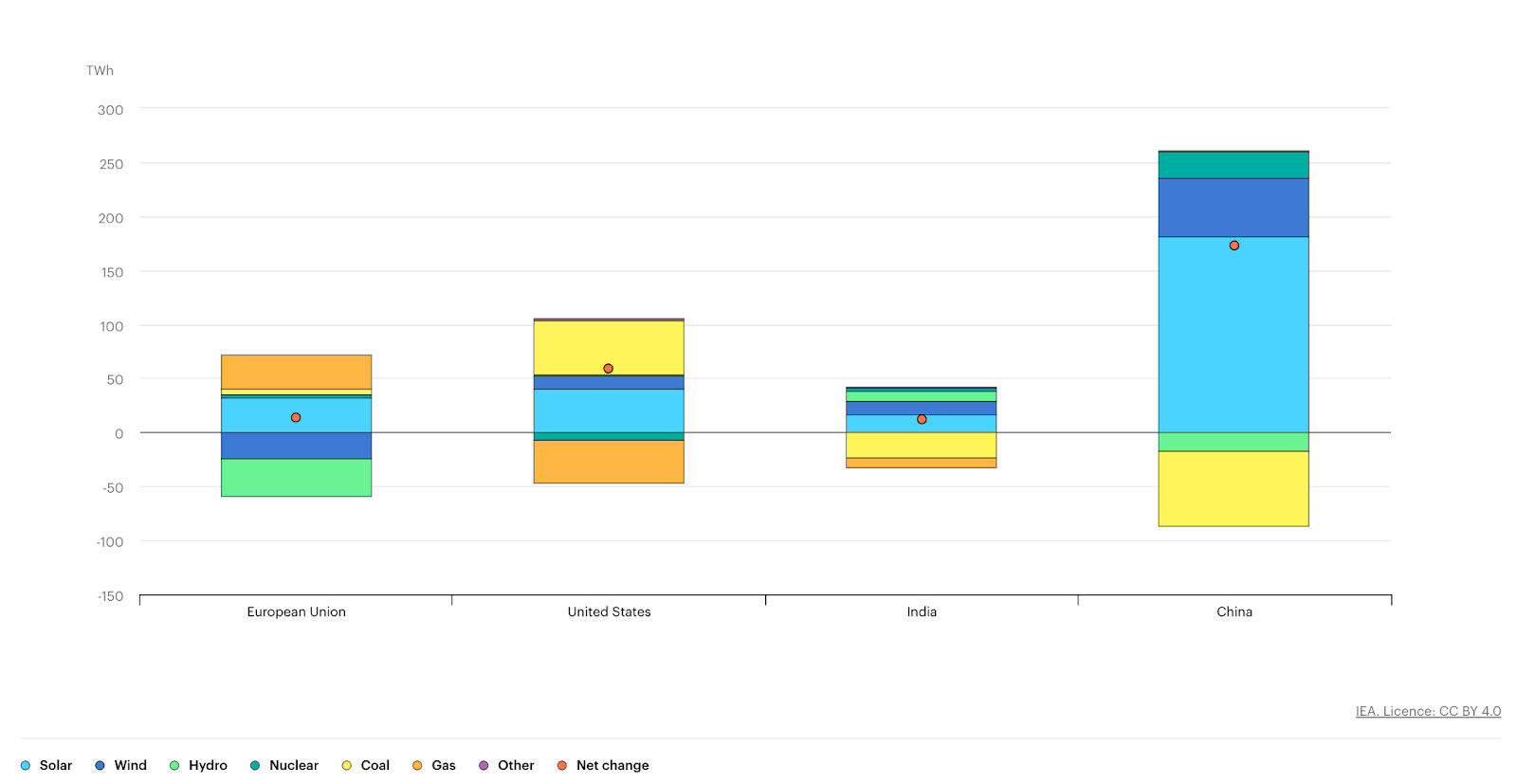
According to the International Energy Agency in its Electricity Mid-Year Update 2025, renewable energy had become the fastest-growing source of global power supply with most new electricity generation expected to come from renewables followed by gas and nuclear while coal-fired generation was projected to gradually decline as cleaner energy sources continued expanding worldwide.
(International Energy Agency)
The IEA is projecting renewable power capacity will increase by 4,600 GW between 2025 and 2030, doubling the deployment speed of the previous five years, with solar PV accounting for nearly 80 percent of this growth due to falling costs and faster permitting.
A report by the International Renewable Energy Agency revealed 91 percent of new renewable projects are cost-effective than fossil fuels like natural gas: In 2024, solar was 41 percent cheaper and onshore wind 53 percent cheaper than the lowest-cost fossil fuel alternatives.
“Clean energy is smart economics – and the world is following the money,” United Nations Secretary-General António Guterres said.
Despite the Trump administration’s vocal criticism of renewable energy and the U.S. being the largest oil consumer [followed by China and India], more than 90 percent of new electricity-generating capacity added in the United States came from wind, solar and battery storage in 2024, data by American Clean Power suggested.
Canada’s behind its neighbour: renewable energy sources accounted for up to 67 percent of Canada's total electricity generation in 2023.
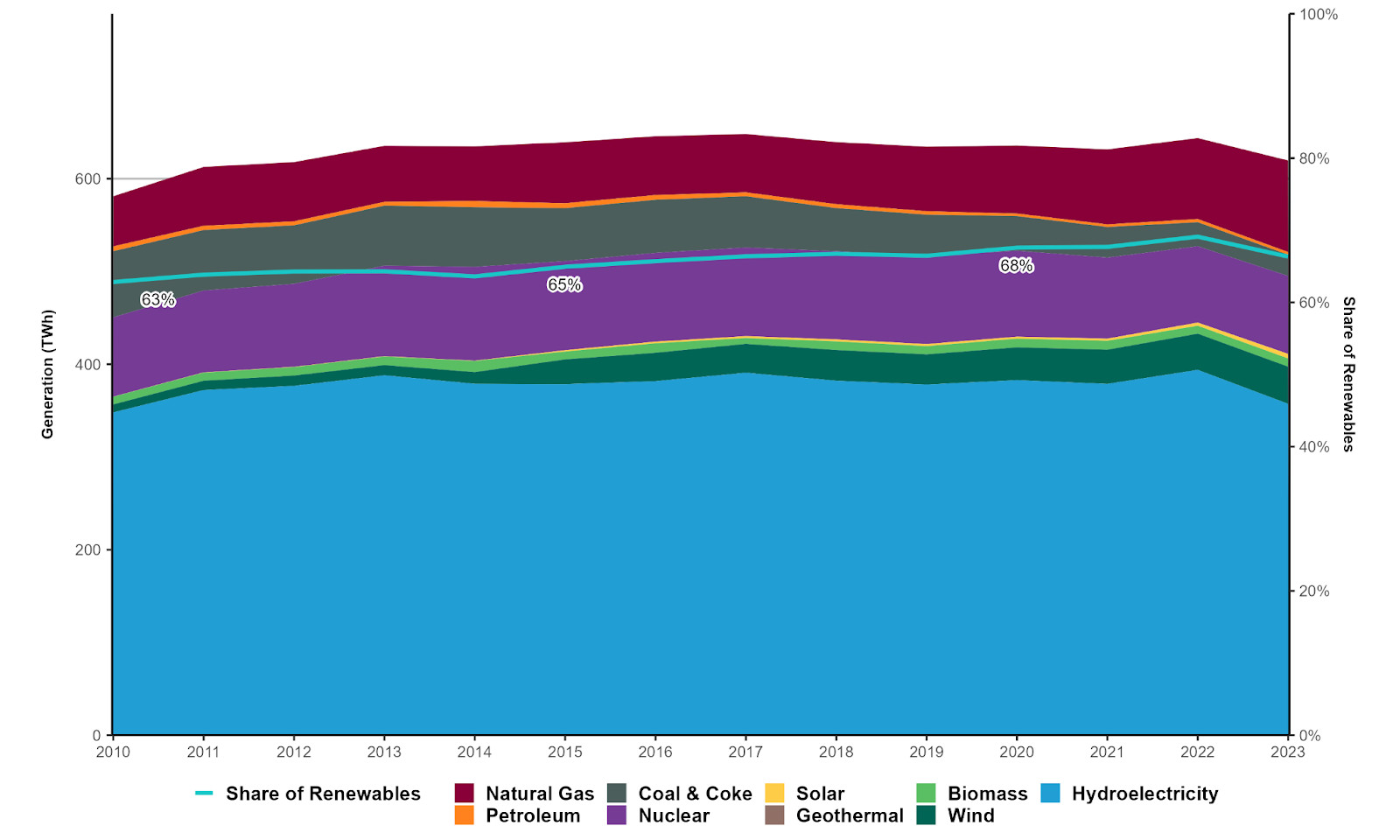
In 2023, Canada generated 620 terawatt-hours (TWh) of electricity, with about 66-67 percent coming from renewable sources. Hydroelectricity dominated the mix at 58 percent, followed by wind (six percent), solar (one percent) and other renewables such as biomass and geothermal. Between 2010 and 2023, renewable electricity grew faster than overall generation, driven largely by wind and solar. Wind output rose sharply from 8.6 TWh to 40.1 TWh, while solar expanded from almost zero to 4.9 TWh, with strong growth in Ontario and Alberta. Hydroelectricity remained the country’s largest renewable source, increasing modestly over the same period.
“Women in Canada really want to see responsible energy development, supporting all forms of energy whether they’re renewables, nuclear, hydro and fossil fuels to ensure economic independence, job security and a balanced approach to the environment,” Canada Powered By Women Chief Executive Officer Tracey Bodnarchuk told The Pointer.
Looking at China offers an example of how such a balanced approach can work in the short-term.
Beijing built strategic and commercial crude reserves totalling roughly 1.2 billion barrels, enough for three to four months of consumption. By reducing reliance on maritime oil flows through the Strait of Hormuz to around 40 to 50 percent of seaborne imports, China insulated itself from some of the geopolitical threats.
But what helped the country absorb the blow of the escalation in the Middle East better than most economies was its position as the world leader in renewables. As of February, its clean energy capacity reached 52 percent, exceeding its fossil fuel capacity for the first time in history.
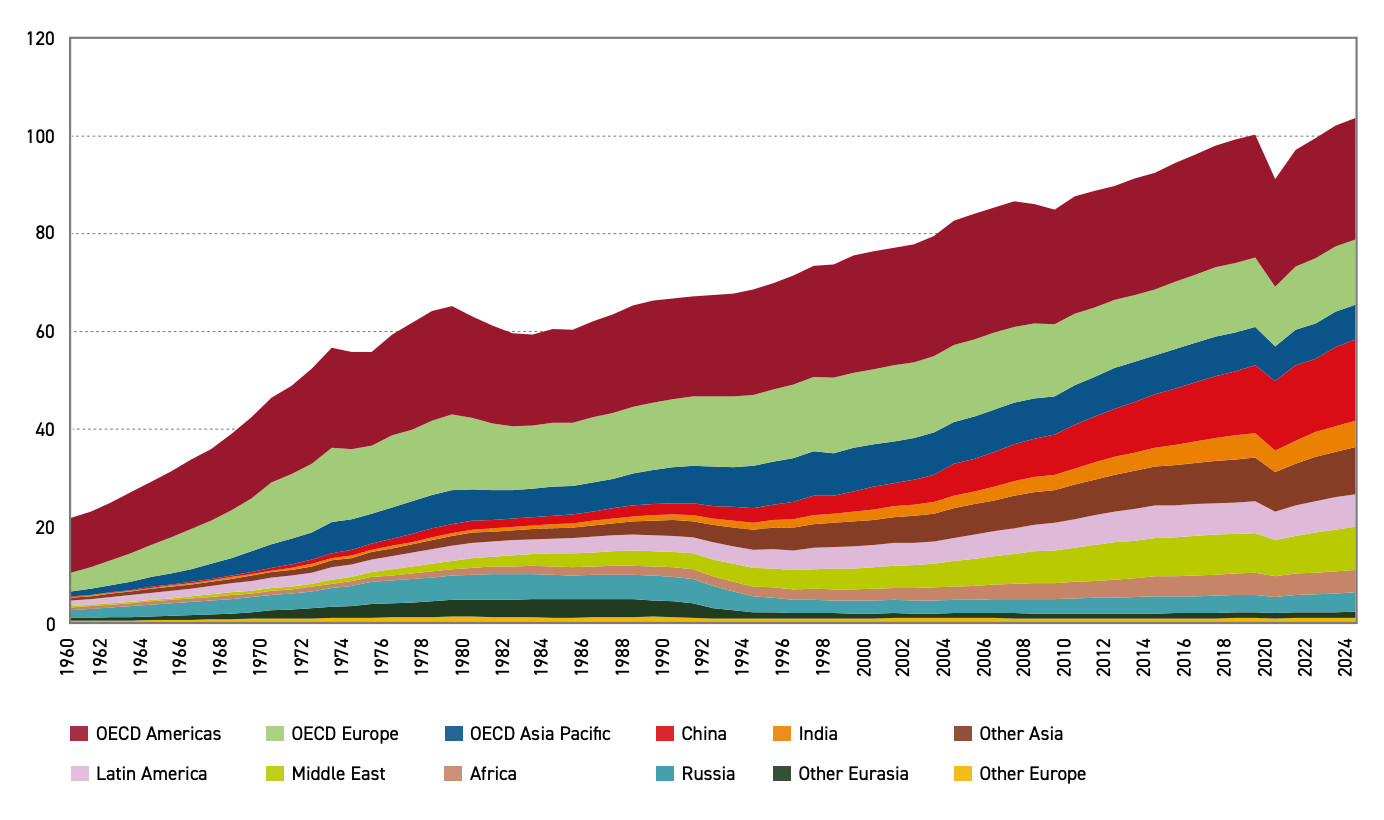
China is the world's largest importer of crude oil; in 2024, it imported roughly 11 million barrels per day (b/d) to fuel its economy. While the U.S. remains the largest overall oil consumer, according to OPEC, China is the top buyer in international trade markets and the second-largest overall consumer of oil.
(Organization of the Petroleum Exporting Countries)
China’s ongoing large-scale investments in clean energy are helping to push down the prices of solar, wind and batteries.
The long-term demand for fossil fuels is inevitably going to “decline over the long run” even as investors are kept in the dark, according to Hira.
The Institute for Energy Economics and Financial Analysis (IEEFA) recently reported that a global LNG supply glut is emerging amid weakening demand. China, the main expected market for Canada’s Ksi Lisims LNG project, has already cut its LNG imports by 20  percent compared with 2020 levels.
Two-thirds (67 percent) of Canadians favour developing clean energy over conventional fossil fuels, a 2025 survey conducted by Abacus Data on behalf of Clean Energy Canada found.
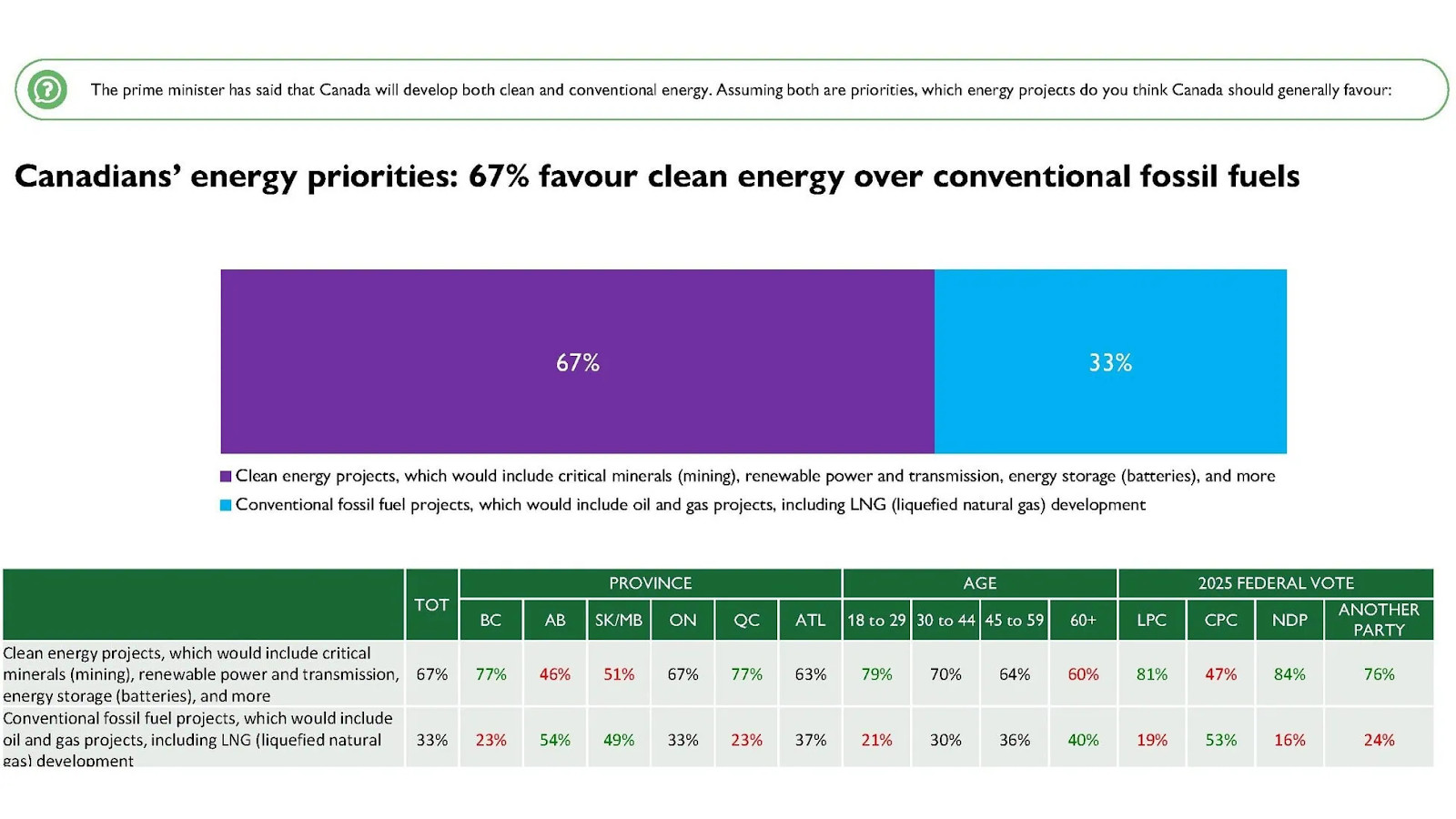
A Clean Energy Canada survey found that two-thirds of Canadians favour clean energy over fossil fuels with 85 percent supporting continued or increased federal climate action. Most also back low-carbon, EV-ready homes and prefer aligning with Europe on climate policies.
(Clean Energy Canada)
Oil and gas generate relatively few jobs, face competition from cheaper sources such as Russian oil and leave Canada vulnerable to volatile global prices. Hira remarked that recent trade deals in India, Japan and the EU focused on mineral and fossil fuel exports but those risk recreating the same economic dependence on commodities that Canada has experienced for decades.
In Ontario, the reliance on natural gas has led to an unusual shift in electricity prices for the past few months: a key charge on power bills known as the Global Adjustment (GA) has turned negative.
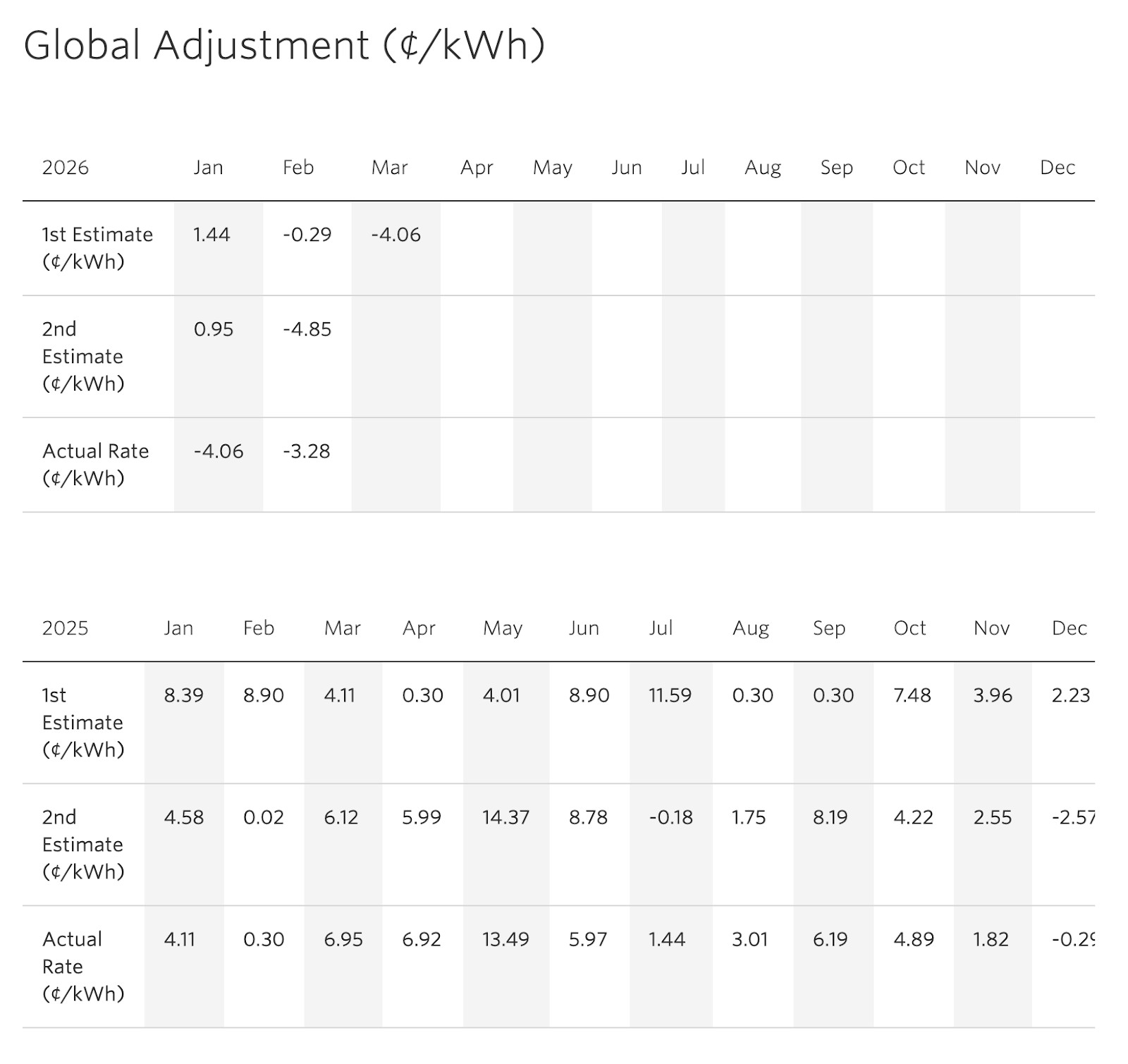
Ontario’s Global Adjustment, which helps cover the cost of building and maintaining electricity infrastructure and typically moves inversely to wholesale power prices, has turned negative for several months this year, with rates falling to about -4.06 cents per kilowatt-hour in January and remaining below zero through February and March.
(Independent Electricity System Operator)
While most households won’t notice much difference because their rates are regulated, it is a significant change for industrial users who pay market-based prices.
“For over a decade, low market prices and a high GA was considered the norm,” Pollution Probe Director of Energy Richard Carlson observed.
“We may now have seen that switch.”
Experts have noted this likely reflects market electricity prices, driven in part by higher natural gas costs and increased demand during colder-than-normal weather this winter.
Canada’s largest fossil fuel companies also continue to significantly underreport their cleanup liabilities with little improvement between 2024 and 2025 despite mounting investor pressure, a recent report by Investors for Paris Compliance found.
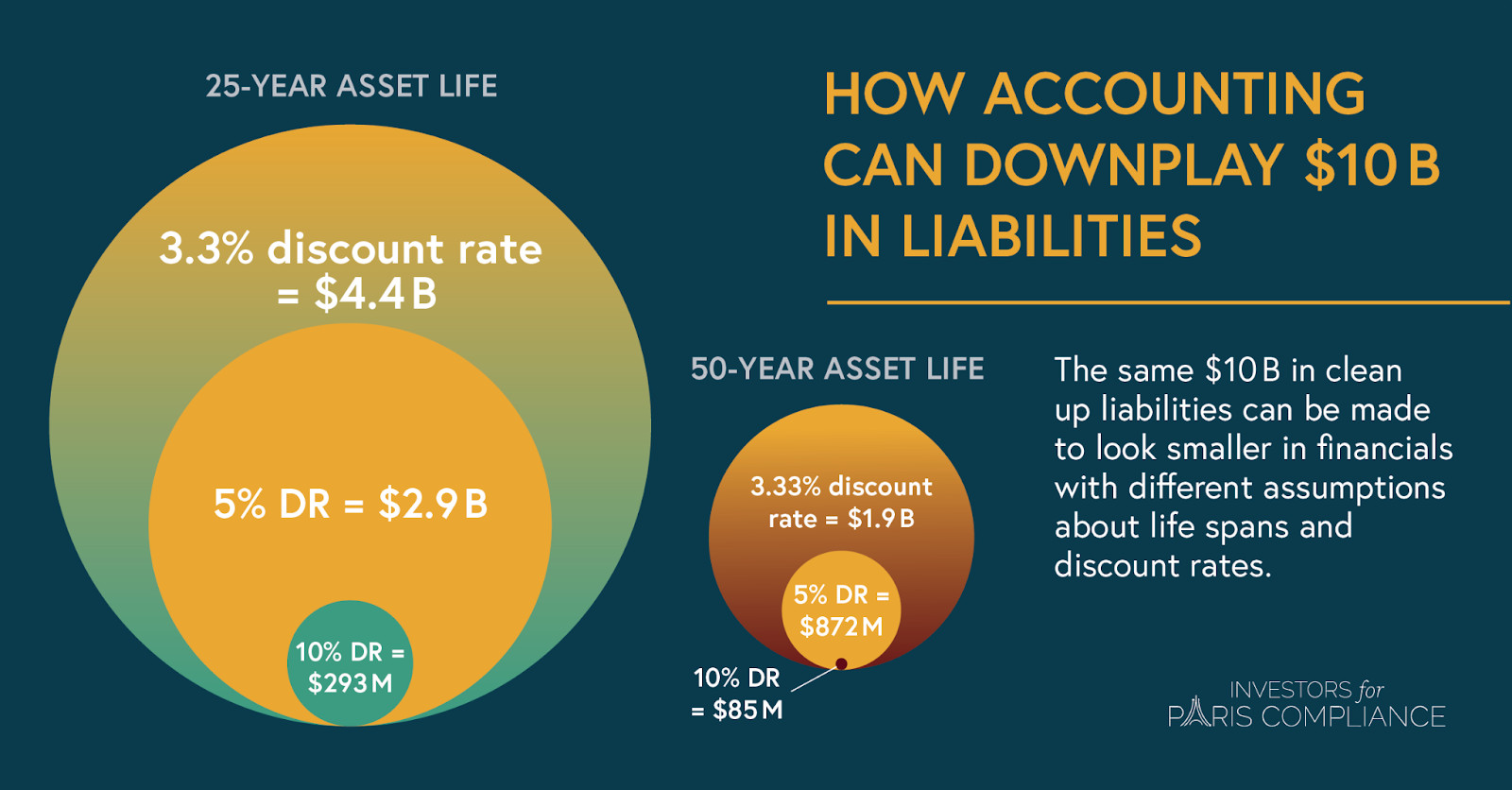
A $10 billion cleanup cost can look much smaller on paper because companies estimate what that future cost is worth today; by assuming the cleanup will happen far in the future and using higher discount rates, they shrink the number that shows up on their balance sheet.
(Investors for Paris Compliance)
Across 12 major producers, companies continue to rely on high, credit-adjusted discount rates and decades-long asset life assumptions (often exceeding 50 years) which can dramatically shrink the present value of asset retirement obligations (AROs) on balance sheets. The distortion is most pronounced among the biggest players like Suncor Energy, which reported $12.6 billion in AROs (nearly 28 percent of shareholder equity), Cenovus Energy at $4.87 billion and Imperial Oil at $3.35 billion.
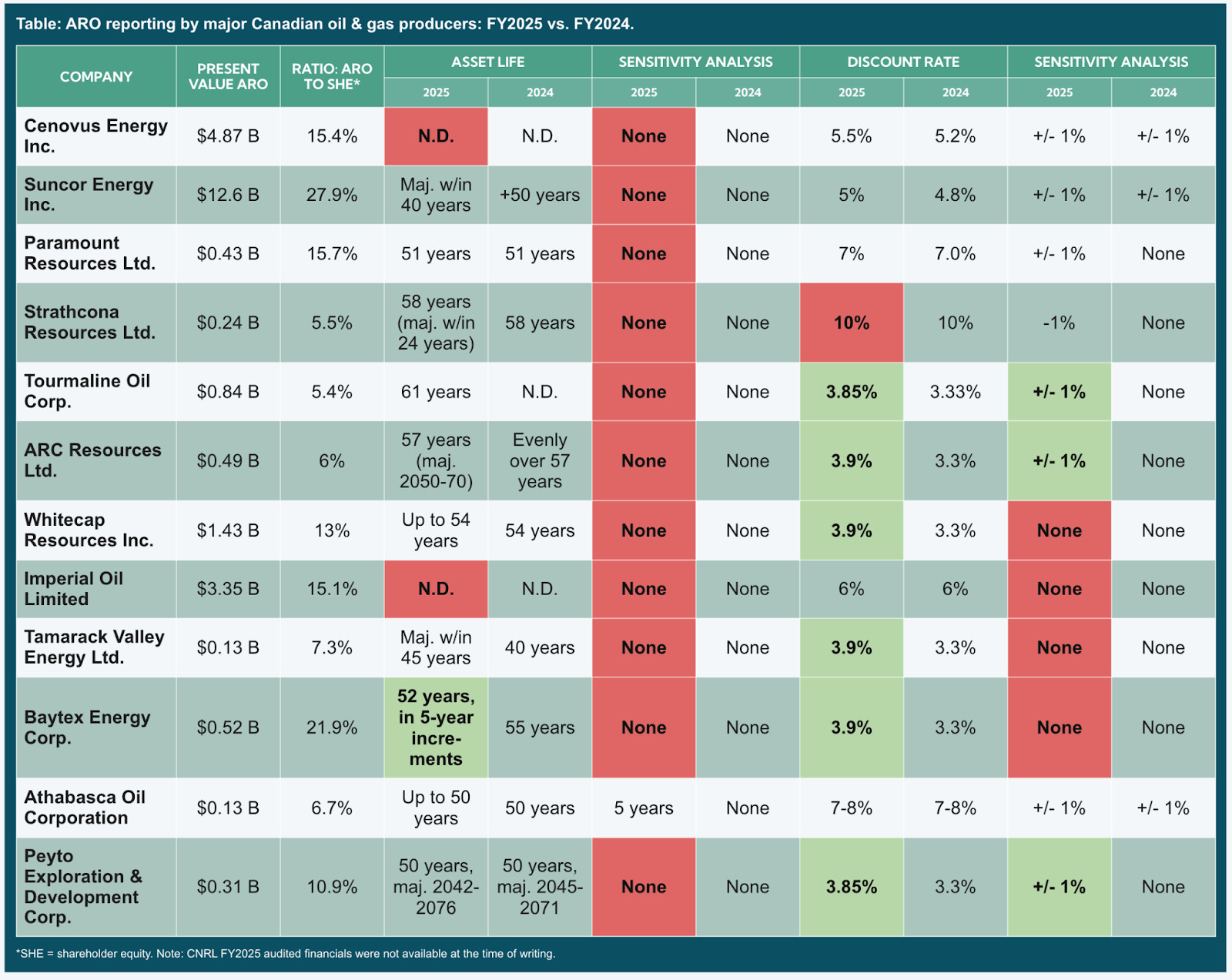
Investors for Paris Compliance’s latest analysis of 2025 financial statements highlighted little improvement in how major Canadian fossil fuel firms account for asset retirement obligations (AROs) or simply the costs of cleaning up wells, mines, and infrastructure, warning that billions of dollars in liabilities may still be missing from balance sheets. The group is now escalating its efforts by voting against the re-election of the Chair of the Audit Committee and the reappointment of external auditors at upcoming annual general meetings for Suncor Energy and Cenovus Energy, arguing that auditors are failing to responsibly scrutinize financial risks.
(Investors for Paris Compliance)
Yet, most firms provide little to no sensitivity analysis on how accelerating climate policy or a faster energy transition could impact these long-term liabilities.
Investors for Paris Compliance’s Director of Research and Policy, Kyra Bell-Pasht, warned even small changes to discount rates or asset life assumptions can make obligations appear “multiple times smaller” than their true cost, masking tens of billions in future cleanup responsibilities and leaving investors unable to precisely assess the financial risk.
The overall volatility also brings the broader ethical and strategic case for renewables to the forefront. “Some actors argue that the best impetus for shifting away from hydrocarbons is the instability itself,” Zalik said.
Renewables, being located closer to the point of use, are inherently safer and more ethical, sheathing economies from the boom and bust cycles of oil markets.
Higher fossil fuel prices can make renewables more economically attractive, yet they also raise the cost of building renewable infrastructure, which depends on fossil-based energy inputs. Zalik emphasized that major oil and gas companies are already investing in renewables not to relinquish control, but to maintain “profit-driven influence” over the energy system.
Experts don’t deny that fossil fuels are going to stick around for many years.
Financial stakeholders may consider cuts to fossil fuel investments but only time will tell if there will be a “big movement” in the markets in Canada.
“Even though Carney promised reduced holdings in fossil fuels when he was a banker of the UK, there hasn't been divestment from fossil fuels,” Hira said.
“Until governments and unions decide that they're going to really divest there's no way that the fossil fuel industry is going to slow down, and there's no way that its political power and its importance to governments is going to reduce.”
One of the main drawbacks of renewable energy is the need for storage, since batteries have a limited lifespan and capacity. Solar and wind power can continue to be added gradually and much more could be built but their intermittent nature means they cannot yet replace the entire energy supply.
“Until energy storage improves, renewables cannot fully substitute for fossil fuels,” he added.
A report by the Canadian Renewable Energy Association (CanREA) stresses that Canada's path to achieving net-zero greenhouse gas (GHG) emissions by 2050 relies heavily on wind energy, solar power, and energy storage technologies.
“Canada must decarbonize and double its electricity production. Luckily, this country has massive, untapped potential for low-cost wind and solar energy,” the report stated.
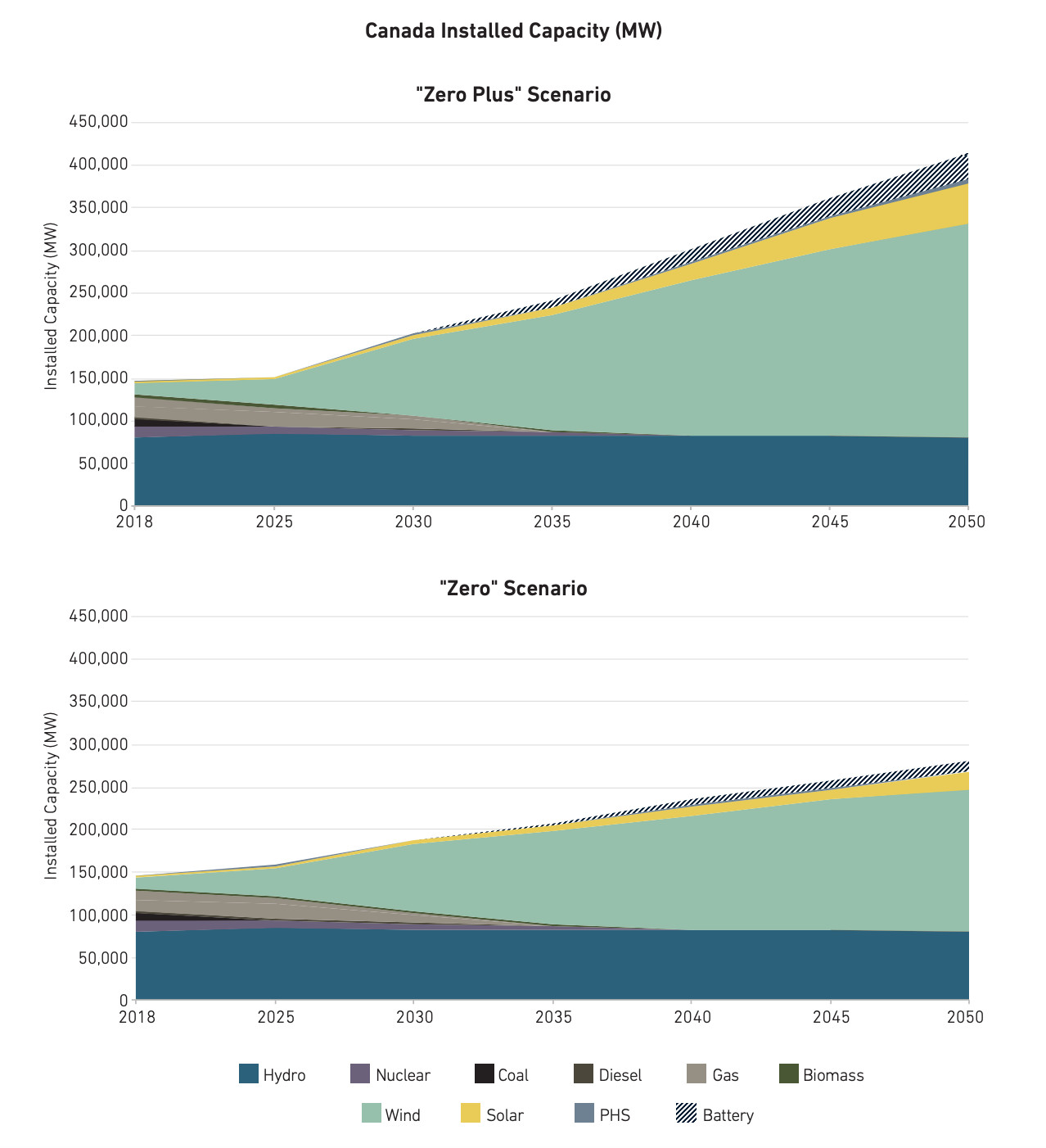
Wind and solar are central to nearly all recent models focused on reducing carbon intensity and expanding Canada’s electricity supply.
(David Suzuki Foundation)
Zalik warned that market forces alone won’t be sufficient as rising oil prices can trigger inflation, leading central banks to raise interest rates which in turn makes investment in both oil and renewables more expensive.
She argued true systemic transition will require significant public ownership of energy infrastructure to coordinate an organized shift away from hydrocarbons.
“We have all this clean electricity in Quebec, BC, and Manitoba—all hydro-based—while Ontario continues investing in expensive nuclear energy. Alberta is still dependent on natural gas,” Hira added.
“We could develop an interprovincial grid to trade electricity across provinces, creating cheap, competitive clean energy and supporting emerging green industries for export.”
He explained how an East-West grid could optimize Canada’s renewable energy potential. Atlantic provinces could replace natural gas and nuclear power with offshore wind. Quebec’s hydro could supply Ontario and the Atlantic provinces. Solar in Ontario could feed the Prairies in summer.
But provincial monopolies and utilities have been slow to develop these resources. “It’s just low-hanging fruit waiting to be picked.”
On March 4, the Ontario government launched a historic interprovincial-territorial partnership to build a national electricity corridor, aiming to connect provincial grids, boost clean energy trade and position Canada as a long-term energy superpower.
“It has potential. The problem is that there are too many interests in maintaining ongoing investment in oil and gas,” Zalik said.
By August last year, the industry had lobbied the federal government up to 355 times, nearly three times per workday, according to Environmental Defence.
Hira noted Quebec’s absence from the national energy corridor is a major limitation, as the province’s abundant hydro energy is crucial and transmission lines would still need to run across Quebec to supply Newfoundland and the Atlantic provinces.
“Renewable energy is getting cheaper globally, in places like Nepal, Sub-Saharan Africa and Pakistan, yet in Canada we continue subsidizing fossil fuels,” he concluded.
“We are missing a real opportunity to adopt clean energy, save the planet and create local jobs at the same time.”
Email: [email protected]
At a time when vital public information is needed by everyone, The Pointer has taken down our paywall on all stories to ensure every resident of Brampton, Mississauga and Niagara has access to the facts. For those who are able, we encourage you to consider a subscription. This will help us report on important public interest issues the community needs to know about now more than ever. You can register for a 30-day free trial HERE. Thereafter, The Pointer will charge $10 a month and you can cancel any time right on the website. Thank you
Submit a correction about this story

