
Nearly 1 million Canadians suffer with climate anxiety — how one Caledon artist is subverting it
A few days after Southern Ontario’s skies turned orange and the choking air carried the chemical scent of burnt trees, Caledon resident Andie Trépanier was suddenly terrified by the life-shattering sight of the family house and the entire street on fire.
Trépanier tried to fight the devouring blaze but felt “helpless”. As its rampant power destroyed everything in sight, an equally gripping sense of panic spread with the fire, consuming the local artist.
Then, Trépanier woke up.
Waking from a bad dream, however, did not change the nightmare unfolding outside the bedroom window.
Wildfire smoke drifting from northern Ontario and Western Canada blotted out the sun, turning it into a dim, washed out orb set back against an eerie sky that no longer looked like Earth.
What was once “out of sight, out of mind” was starting to feel real and that’s when “incredible grief” set in.
Grief for the people forced from their homes, for animals caught in the flames and for forests reduced to ash. Confusion and panic for so many others, too.
“I'd wake up. The wildfire smoke would be the first thing I'd smell, the first thing I would see and my migraines increased,” Trépanier told The Pointer.
“I would experience those waking pains and stressors, anxiety, depression. And I would experience that at nighttime as well when those images, my fear is really coming to life.
“And then, I started to have those dreams all the time.”
Andie is among nearly one million Canadians experiencing climate anxiety, which remains a largely invisible mental health concern.
It is “an emotion that, when felt at the right time and in the right way, can make an important difference in how individuals respond to potential environmental threats”.
But in severe cases of climate change anxiety, “daily functioning can be impacted, which can undermine well-being and agency, leading to hopelessness, burnout and apathy”.
Climate anxiety, also called eco-anxiety or ecological grief, is not yet recognized as a formal diagnosis in the Diagnostic and Statistical Manual of Mental Disorders (DSM-5), the guide used by psychiatrists in the U.S. and Canada.
There is a “rich debate” ongoing, Carleton University Associate Professor Stefania Maggi said.
“Some clinicians advocate for it to be recognized as a diagnosis because it legitimizes a real psychological struggle that deserves attention,” Maggi told The Pointer.
“But there’s also the other side that pathologizing it risks shifting attention away from climate change itself. The anxiety exists because climate change is real…it’s a legitimate threat.”
A new study estimates 2.35 percent of Canadians experience climate anxiety at a clinically significant level. Indigenous people, women, and those living in Northern Canada and in households earning less than $60,000 per year are the most impacted — the same group that is directly impacted by climate change itself.
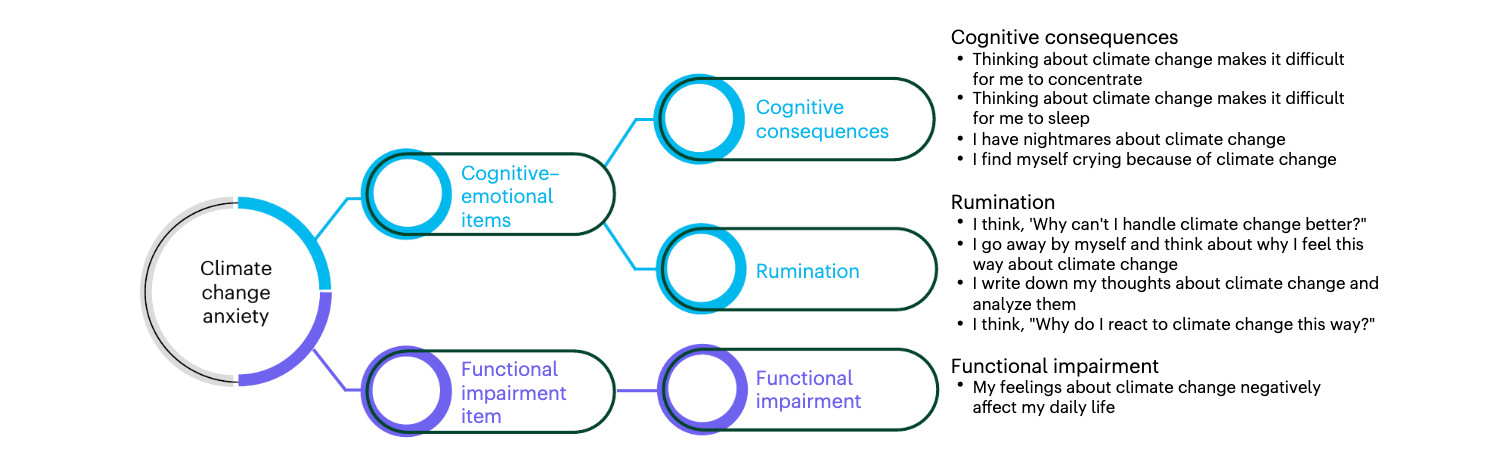
Survey questions used to assess climate change anxiety included statements on cognitive consequences, rumination and functional impairment. The new study reported 90 percent of Canadians aged 13 or older were concerned about climate change and 68 percent felt some level of anxiety but only about two percent showed clinically relevant symptoms.
(Nature)
For Andie, the wildfire smoke coincided with another battle brewing in their town with nature on the chopping block.
“Even in Caledon, there’s a lot of environmental pushback from the local government and from mandates from the Ontario government reducing protections for species and spaces. Greenbelts that were established to protect farmland are being actively dismantled.”
“You see the ripple effects right down here in Caledon; from construction fill endangering access to clean water, to industrial warehouses being built on farmland instead of homes for families. I grew up here, and over 30 years, I’ve watched the land around my home gradually get swallowed by development that prioritizes industrial profit over community needs.”
Last spring, Caledon’s mayor introduced a motion without public consultation that allowed construction fill to be dumped into a rehabilitated body of water behind local farms. Residents were swarming council chambers to support Swan Lake, a groundwater-fed reservoir formed from a former aggregate pit, which was under threat.
“Caledon is a really important carbon sink too. Its green status has helped balance carbon output in the GTA for years. Seeing it threatened was shocking,” Andie said.
The combination of local environmental threats and visible climate disasters pushed Andie’s anxiety. Already seeing a therapist for day-to-day well-being, they began discussing climate anxiety in therapy as well.
“When I started doing that, I understood that anything that brought me that much stress should probably be brought up in therapy,” Trépanier shared.
“A really important part of my therapy was seeking guidance and understanding, although often the therapists that I saw were feeling the same spirit.”
One registered psychotherapist who deeply feels the same way is Natalie Thomas, Ontario Coordinator for Climate Psychology Alliance of North America.
Thomas believes there is power in conversation.
“I realized years ago, mostly from teaching environmental philosophy and ethics, how learning about climate change was affecting me emotionally,” she explained.
“The more I learned, the more anxious and depressed I felt, but I wasn’t sure why at the time. It became clear that thinking about the future, about what’s happening to the planet, was taking a serious emotional toll.”
Climate distress can show up differently depending on a person’s age and life circumstances. Some people ruminate endlessly or doom-scroll through climate news, which only feeds anxiety. Others, like young parents, feel overwhelming guilt and fear about bringing a child into a precarious world where war and climate crisis are the norm.
“Older generations often feel anger at the state of the environment and grief for the future of their children and grandchildren. Each generation experiences it in its own way, but it all falls under what I call climate distress: anxiety, grief, anger and hopelessness,” she noted.
Many people avoid talking about it because it’s “overwhelming or political” but that silence only intensifies anxiety.
“For people who have mental health challenges already, climate change anxiety can make things worse,” Thomas said.
“Just being able to talk about it helps people feel less alone and reminds them that these feelings are normal.”
Learning that was her eureka moment! It led to the creation of Climate Cafés in 2020, which focus on the emotional and psychological impacts of climate change, including eco-anxiety, grief, guilt, anger and existential concerns.
The concept was inspired by Death Cafes, informal gatherings where people come together to talk openly about death — a topic that’s often avoided but deeply affects everyone.
Held monthly for 90 minutes, Climate Cafés are virtual and flexible, and provide a similar platform for participants to confront the difficult emotions tied to climate change, offering support and understanding without the “pressure to take action”.
In individual therapy sessions, Thomas often incorporates nature-based or eco-therapy methods, drawing inspiration from Indigenous land-based healing practices and other cultural traditions.
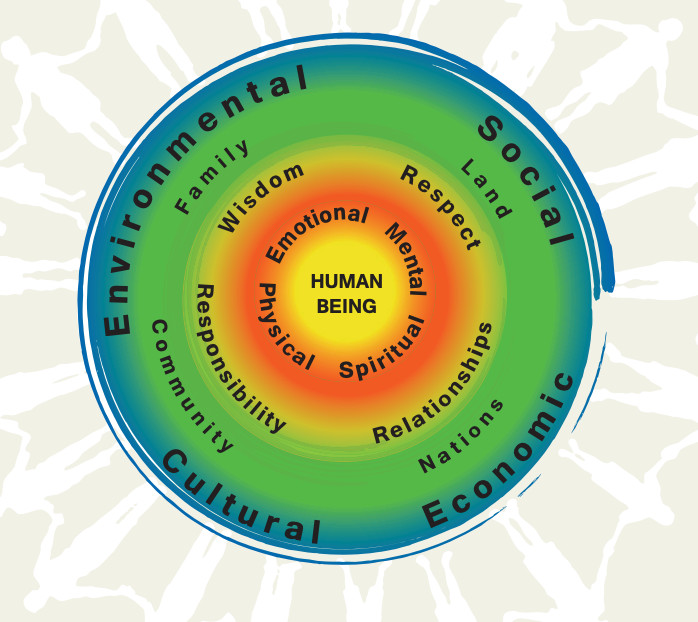
Land-based treatment and healing reconnect individuals to the land, supporting the revitalization of traditional wellness practices while honouring cultural, social, environmental and spiritual values and fostering relationships, responsibility, wisdom and community well-being.
(First Nations Healthy Authority)
The focus is on the therapeutic relationship between humans and nature, recognizing that being in natural spaces can reduce anxiety, foster mindfulness and deepen a sense of connection to the environment.
Some sessions include walking, others sitting in quiet, natural spaces like a forested bridge over a creek, where clients can observe wildlife, listen to the sounds around them and reflect.
“It’s not like you’re using nature to heal, but you’re in a relationship with nature that is healing,” she explained.
“There’s nature, the therapist, and the client. It becomes almost like a three-way relationship, which makes it naturally more relaxing than sitting in an office facing each other.”
Forest bathing (shinrin-yoku) is one of the increasingly popular Japanese practices that engages the senses, what you see, smell and hear, to create a meditative and calming experience.
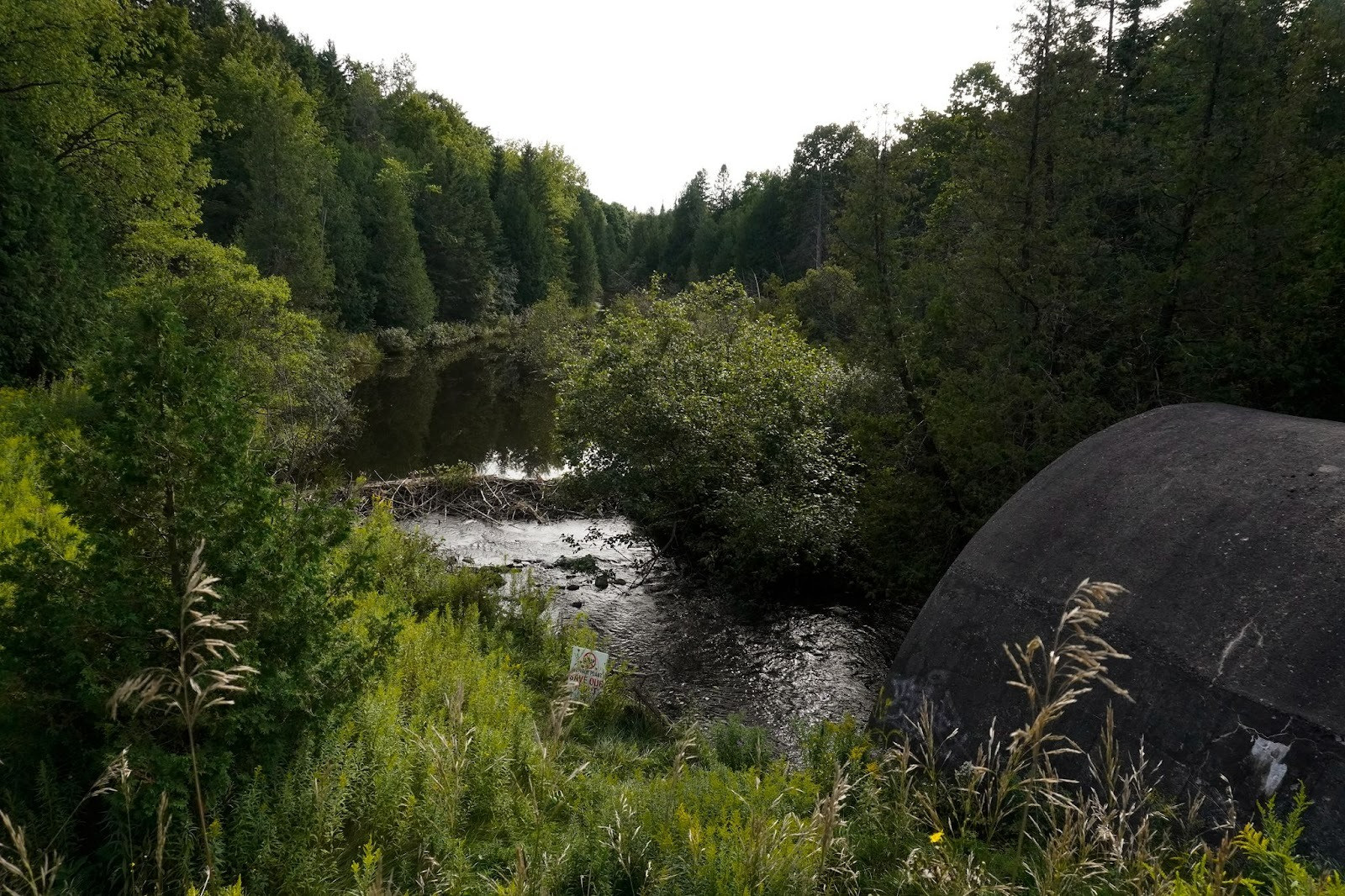
Forest bathing or shinrin-yoku is a Japanese practice that encourages immersing yourself fully in nature to engage all your senses to cultivate calm and mindfulness. Studies have shown that even short walks in the forest can reduce stress, improve mood and boost physical health, thanks to cleaner air and phytoncides (natural compounds released by trees that support the immune system). The practice is simple and accessible for all: unplug from distractions, move slowly, breathe deeply and observe your surroundings, whether walking, standing or sitting quietly.
(Alexis Wright/The Pointer)
Being in nature has been an integral part of Andie’s identity. They were raised outdoors, spending much of their childhood camping in national parks and backcountry areas, homeschooled by her late father, who was also a landscape artist, Cory Trépanier.
Last summer, after a vivid dream of their house burning, Trépanier sought refuge in the wilderness, embarking on a solo journey that took them from the rugged shores near Wawa on Lake Superior, part of the vast, wild shoreline of Lake Superior Provincial Park, into the deep forests and lakes of Algonquin Provincial Park, one of Ontario’s oldest and most iconic wilderness areas.
Trépanier ventured to the furthest lake with no cottages in sight.
“I portaged out on my own and saw the hills in Algonquin, the really big hills, and I just started crying.”
“I was shocked at the thought: it’s still here. I was so moved and relieved. I didn’t realize how loudly I was carrying that fear [of losing my home, Caledon to a fire] until I saw it…I’d almost forgotten that some parts of nature are okay, healthy, and still have the potential to be like this.
“All I’ve seen recently is destruction.”
Those triggers bring back anxiety, but being in nature reminds Andie that “there’s still something to protect and to hope for”.
Thomas and Maggi both say emotions like anger and grief, while difficult, can also be powerful catalysts for action — inspiring Thomas to start Climate Cafes and Maggi to work on a video game about climate anxiety, Mochi 4 the Planet.
“Climate action is not just activism,” Maggi reminded.
“It’s one form of action…there is a widespread misconception that climate action is only things that you do outside of yourself.”
Small, intentional steps ranging from planting a garden, engaging in conversations, environmental projects or personal lifestyle changes can help individuals feel empowered and reduce feelings of helplessness.
“Climate action is sustainable when it combines personal strength, relationships with others, and connection with the natural world,” she added.
Action for Andie meant picking up the paintbrush.
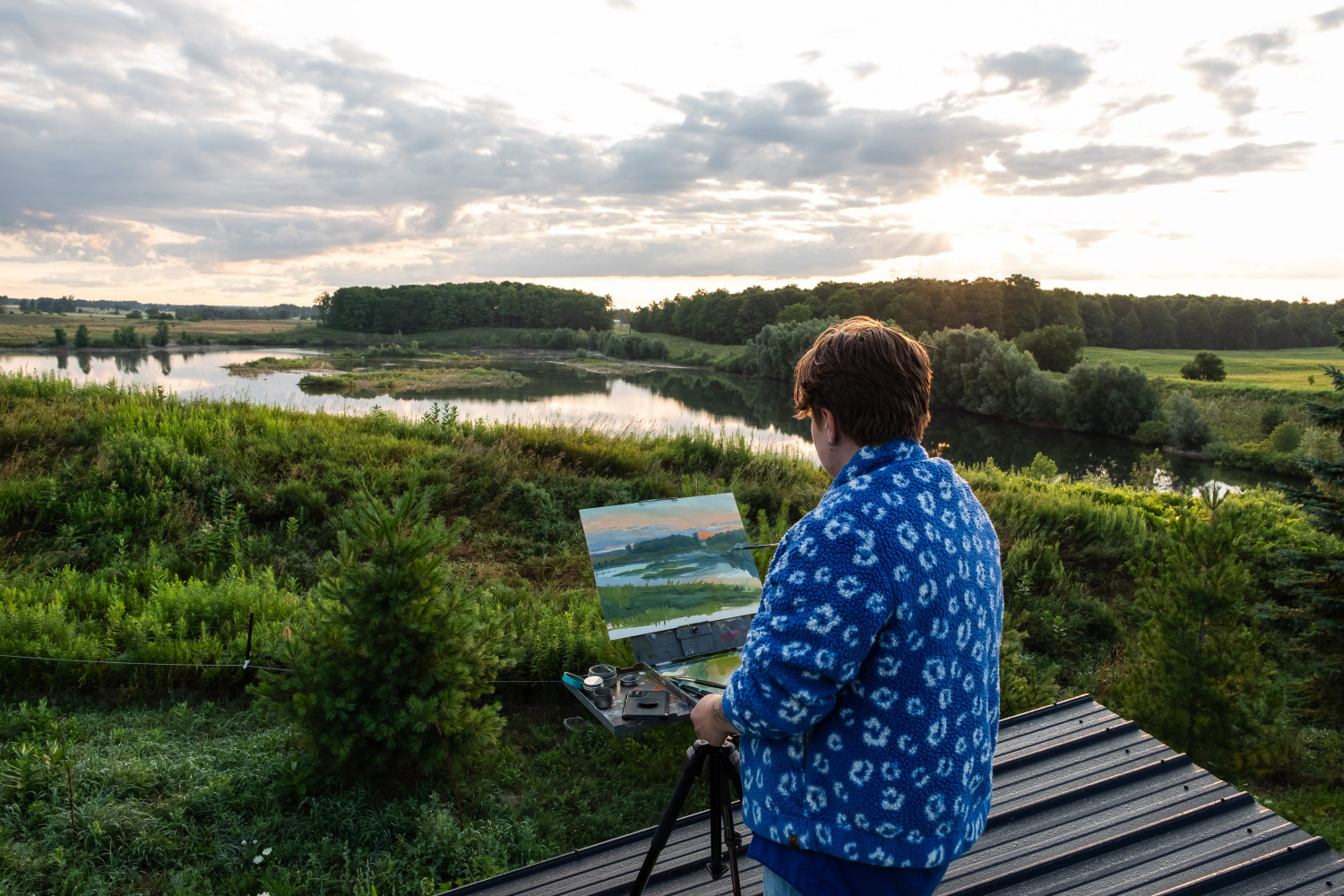
In July last year, after meeting with the farmers surrounding Swan Lake, Andie climbed onto the roof of a nearby barn with their paints and supplies at 5 a.m.
From that vantage point, they captured the lake plein air (painting from life, a practice used by the Group of Seven and early French artists to capture the natural world directly) or as it truly was: a living, breathing piece of the community, not the “pit” developers and officials were calling it.
That small study, titled ‘The Pit’, a nod to the misnaming Swan Lake had endured and has now evolved into a larger, more ambitious painting.
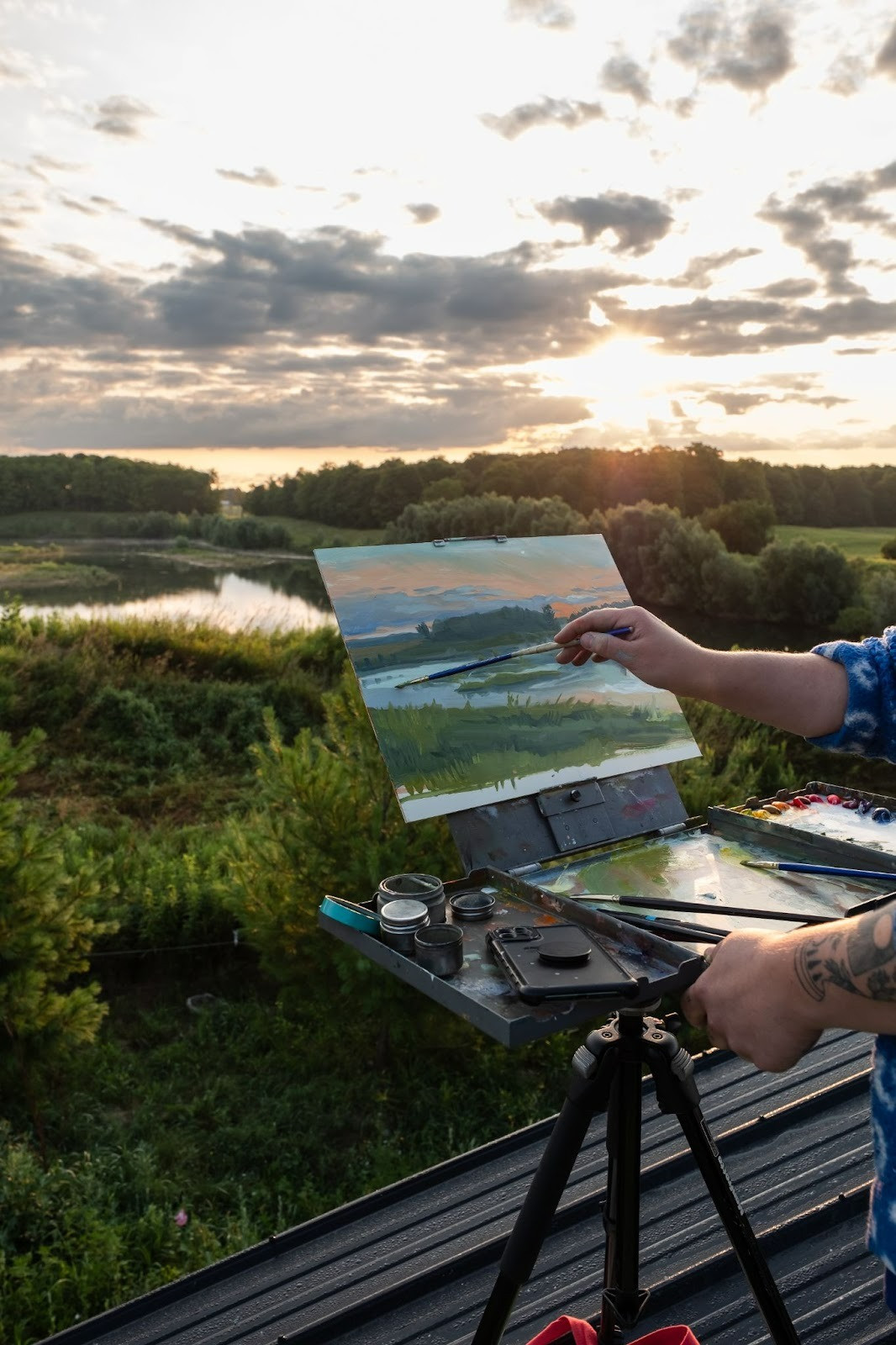
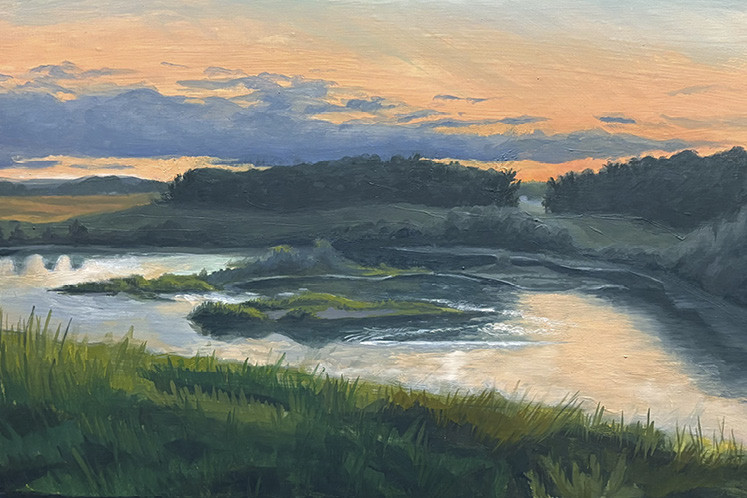
‘The Pit’ oil painting on panel by Andie Trépanier.
(Top: Elaine Li; Andie Trépanier)
It uses that moment in Caledon as a springboard to explore the broader issues facing Ontario, and beyond: development pressures, government decisions, and the fight of communities to protect the land they love.
“Where we live is an extension of who we are. It should be treated as such,” Trépanier said.
“As an artist, you're not really sure how to get involved, because I'm not a politician…But my skills and my trade is in making art.”
Andie is now working on a painting about climate anxiety and the dreams that have followed since wildfire smoke has fogged summers for many Canadians like them.
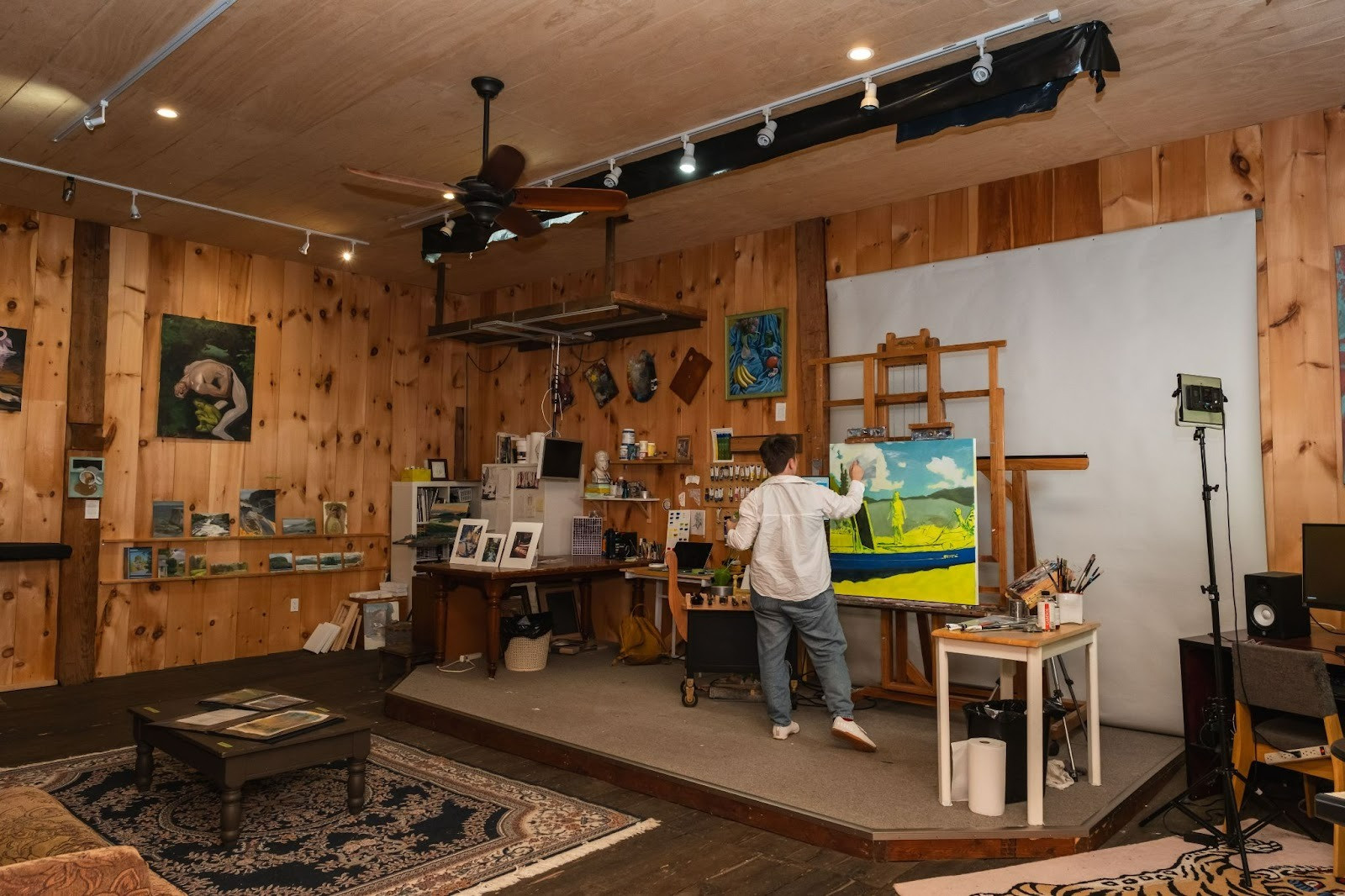
Caledon-based artist Andie Trépanier painting in their studio.
(Elaine Li)
Trépanier hopes the piece will do more than express personal fear. It is meant to spotlight a community that has been rallying, resisting and organizing for change — a reminder to government officials that residents are not obstacles to development, but people with deep ties to their land.
“The government exists not to profit off of our land and listen to directions from men from provincial mandates but to protect their community and provide what’s best for the people and their interests,” Andie said.
The proceeds from the painting’s sale will go to the lawsuit launched by Democracy Caledon against the Town of Caledon over rushed zoning for 35,000 homes in 2024.
“When I paint, I channel the helplessness and anxiety I feel about the environment into something tangible,” Trépanier said with optimism.
“History shows us that resistance is always possible from fights against pipelines to revolutions for rights. Art, writing, activism are ways to process grief and turn it into action. When we heal ourselves, we can bring others with us, and together demand dignity for our communities and the land itself.”
Email: [email protected]
At a time when vital public information is needed by everyone, The Pointer has taken down our paywall on all stories to ensure every resident of Brampton, Mississauga and Niagara has access to the facts. For those who are able, we encourage you to consider a subscription. This will help us report on important public interest issues the community needs to know about now more than ever. You can register for a 30-day free trial HERE. Thereafter, The Pointer will charge $10 a month and you can cancel any time right on the website. Thank you
Submit a correction about this story

