

In the search for new funding, Family Services of Peel’s close connection to the community may be its biggest asset
Funding. Funding. Funding.
It always comes down to funding.
For social service agencies like Family Services of Peel (FSP), the crucial programming they provide families, vulnerable individuals and those dealing with all forms of abuse, is always one unsuccessful grant application away from being shuttered.
A binding force in Peel’s social safety net for more than 50 years, FSP connects families and individuals to counselling services and helps those with developmental disabilities access the correct forms of care. It offers employment support for local residents—Peel’s unemployment rate (6.7 percent) is above the provincial average (6.0 percent), and even more so for youth at 15.6 percent compared to the provincial rate of 11.7 pecent—making this a critical lifeline at a time of record unaffordability. FSP helps families improve communication and build stronger bonds. In a region where intimate partner violence is the number one citizen-initiated call to police, FSP assists women who have experienced gender-based violence navigate life after abuse.
The organization’s research arm, the Peel Institute of Research and Training (PIRT) has developed critical studies on social and public health issues plaguing Peel. Its Human Trafficking Needs Assessment and the stakeholder survey that followed provide the most in-depth look at human trafficking in Peel ever completed—a region that has become a hub for this heinous crime—and its revelations about the lack of support for survivors has triggered real change.
All of these services and research projects rely on dollars to keep them running. Most of those dollars come from short-term pockets of funding offered by upper levels of government. Despite its valuable work, the Region of Peel has cut funding to FSP.
The short funding timeframes force vital organizations looking to help residents in cities and towns across the province, to compete against one another to secure the drips and drabs that come out of government budgets. It’s a stark contrast to the funding offered to other services, like police agencies, that get massive chunks of municipal tax dollars, often without having to show where the funding is going, or the benefit it will serve the community. Agencies like FSP are forced to complete lengthy applications, proving the need for vital social services or research, even when the need for such funding is well established.
FSP is in constant competition with other organizations, even those with shared goals, like ending gender-based violence, connecting residents to necessary services, or helping lift people out of poverty. It stifles collaboration among agencies when working together is a critical part of solving the multi-sectoral issues plaguing many of Ontario’s major cities.
“How can you build partnerships when you’re in competition?” asks Monica Riutort, the director of PIRT. “There is always a small pot of money and there is a call for proposal, we all run with a proposal to the small pot of money.”
The shadow of financial insecurity is always looming in the corner of Executive Director Sandra Rupnarain’s Mississauga office.
“Any decision revolves around finances,” she tells The Pointer.
She admits her colleagues may sometimes shake their heads at her persistent focus on the bottom line, but without financial sustainability, there is no FSP.
Without FSP, potentially thousands of vulnerable individuals in Peel will lose programs and services they rely on.
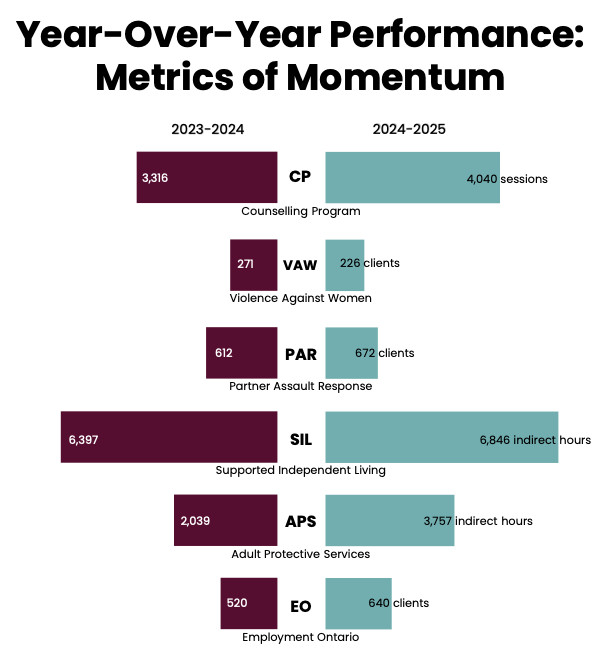
Year over year, the need for many of the services offered by Family Services of Peel has increased.
(Family Services of Peel)
This possibility has forced Rupnarain to learn how to see around corners and find new ways of making the organization’s programming financially sustainable.
That’s why the news of FSP’s successful application to the Canadian Institutes of Health Research (CIHR) sent a ripple of joy through the organization.
“There is no word to express how happy I am,” Riutort told The Pointer, saying it’s a dream come true for FSP.
The CIHR, as the name suggests, is the federal government’s health research agency. It administers significant amounts of funding—nearly $1 billion throughout the 2024-25 fiscal year—in large part to academic institutions to support research on an array of health topics from physical, mental, social and environmental issues.
FSP is the first social service agency in Canada to be approved to administer CIHR funds.
“This authorization empowers PIRT to expand its research and deepen its impact,” Riutort says.
The authorization will not only allow FSP to apply for CIHR funds to support the work of the PIRT, but opens the door to partnerships with other academic institutions who are looking to study health-related issues in the Region of Peel.
“This approval marks a transformative step in our development as a research institution,” Rupnarain says. “It affirms the integrity of our research and opens new opportunities to support community-driven health initiatives.”
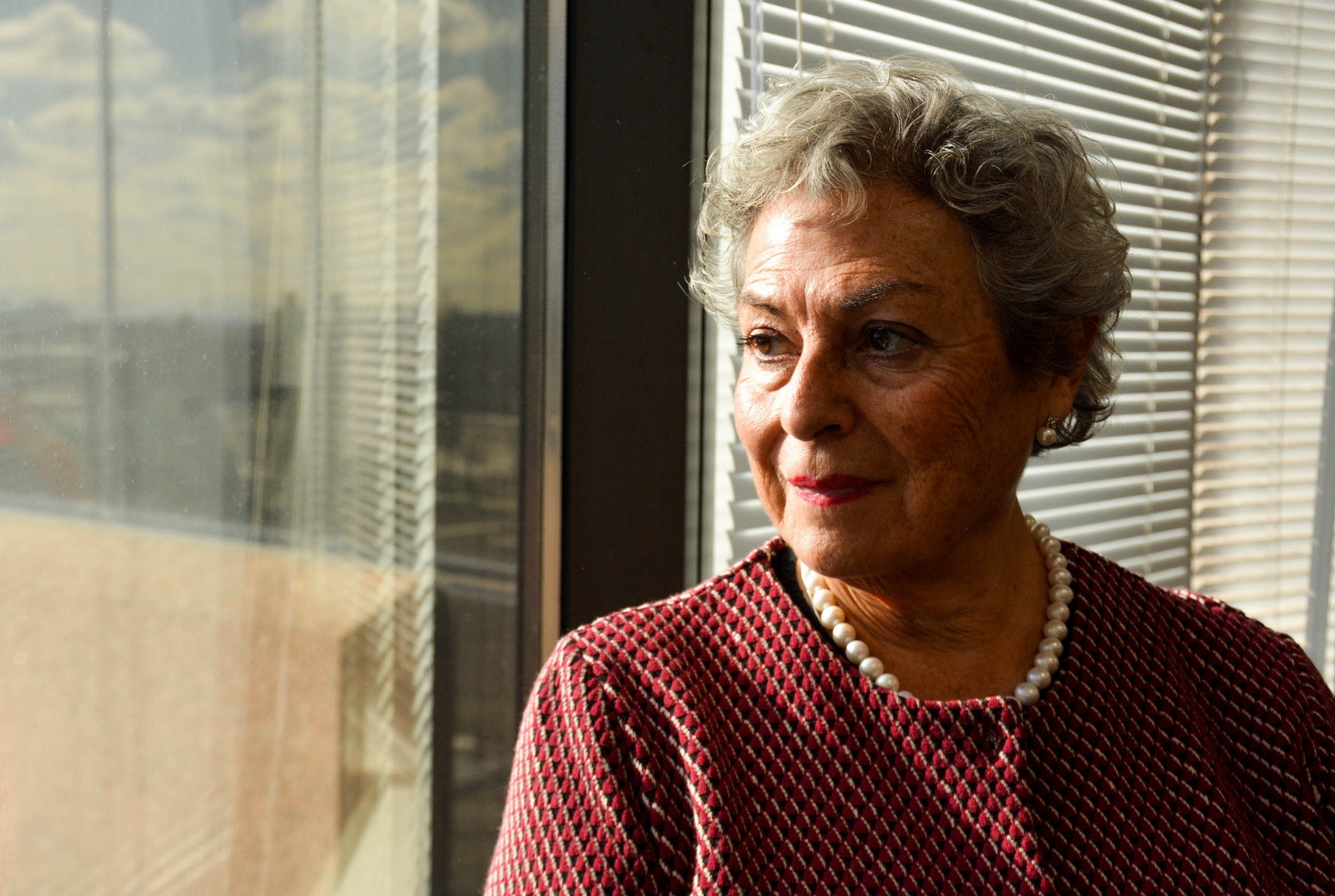
Monica Riutort, the director of the Peel Institute of Research and Training says the successful application to the Canada Institutes of Health Research (CIHR) will be game-changing for Family Services of Peel. “Having that kind of opportunity to be able to apply for funds from such a large national institute gives us a different profile,” she says.
(Joel Wittnebel/The Pointer)
Along with the year-long application process with the CIHR, the road to this crucial designation was not easy.
When the PIRT launched 13 years ago—then labelled the Peel Institute for Violence Prevention—there was very little political will, or community buy-in to support the initiative.
“We tried to get community partners to come on board,” Rupnarain says. “Nobody wanted to be a part of the board, a part of sustaining it.”
FSP, knowing the importance the institute could provide Peel, pinched funds in order to keep its vital work alive.
It’s built on the premise that conducting evidence-based, academic research at the community level, can help policy makers and elected officials identify the gaps, and take action by funding the programs that are needed most.
“Bringing research and evidence into community social service settings and breaking the historical divide between academia and community requires creative and innovative approaches to doing research and mobilizing knowledge,” a history of the PIRT explains. “It requires doing research with rather than on communities to ensure programs, interventions, and practices are aligned with the needs, wants, and capacities of the community.”
It is this close connection to the communities being studied that academic institutions often lack.
While the FSP will still be in competition for CIHR funding, its position as a social service agency with a large client base and connections to Peel residents, will give it a leg up over colleges and universities.
“As a researcher I have to go and find the community, and set up the partnerships and beg them to work with me,” says Soo Min Toh, a professor at the University of Toronto Mississauga, member of FSP’s advisory committee and a research partner. “FSP is like a living lab. You can ask the questions, you can run the programs and you can use that to measure impact, outcomes and then to justify more funding.”
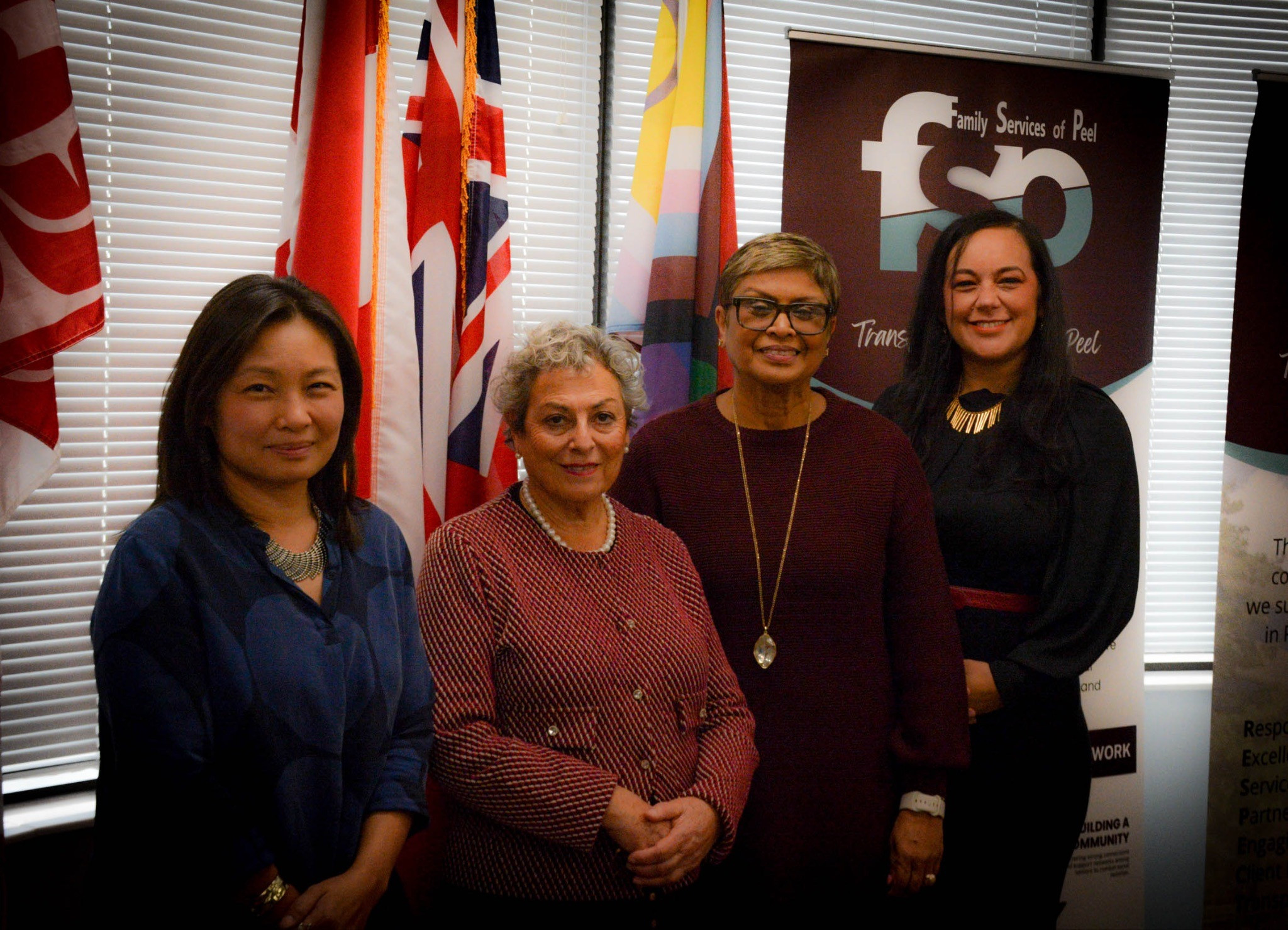
(From left to right): Soo Min Toh, a professor at the University of Toronto Mississauga and member of FSP’s advisory committee; Monica Riutort, the director of the Peel Institute of Research and Training; Sandra Rupnarain, the executive director of Family Services of Peel (FSP); and Cilia Mejia-Lancheros, a senior research fellow with FSP.
(Joel Wittnebel/The Pointer)
There is no shortage of potential areas of study in Peel Region, an area that has been chronically underfunded by upper levels of government in all major public health and social service areas. According to research by the Metamorphosis Network, a collective of social service groups looking to bring awareness to this funding gap, Peel is short-changed approximately $868 million annually for critical services.
In Peel, homelessness has increased by 223 percent since 2021 and 97,000 households are in core housing need. There are 32,329 households on the waitlist for social housing. This list only continues to grow as the amount of affordable housing available in the region does not keep pace. Currently Peel has 8.5 units of affordable housing per 1,000 residents, well below Toronto’s 25.3.
Peel’s per capita mental health funding is less than half the Ontario average and the region has half as many mental health services and two-thirds as many support services compared to similar sized regions.
Peel receives $42 per capita for public health from the provincial government, well below the Ontario average of $67.
Research that is able to expose the lasting community impacts these numbers create, and offers up solutions that have been tested, and proven to work through CIHR-funded studies, could help to close these gaps once and for all.
“This is really important in highlighting that there is a need for this and it's critical,” Toh says.
Cilia Mejia-Lancheros, a senior research fellow with FSP, says Peel’s diverse demographics is very attractive to academic researchers.
“They’re trying to engage more communities,” she says. “I think many things are coming and I really see value for academia, how they (FSP) are centred more in the community.”
The CIHR designation marks a turning point for FSP, which just a year ago was struggling to understand why the Region of Peel was not properly funding its vital service agencies. In February last year, Rupnarain told The Pointer quite bluntly, “I’ve lost confidence in the Region to support the work of what we do for the community.”
Since then, the Region has only continued to ignore the major social issues in Peel, and the gap between those in need and the levels of funding necessary to support them has only grown.
It’s why FSP has found new ways to support their vital work, apart from a municipal government that has shown an unwillingness to support them.
Rupnarain is confident that with the CIHR, the PIRT, and willing academic partners, it means big things are coming for FSP, and those living in Peel.
“FSP is now poised to be a thought leader, to be a leader.”
Email: [email protected]
At a time when vital public information is needed by everyone, The Pointer has taken down our paywall on all stories to ensure every resident of Brampton, Mississauga and Niagara has access to the facts. For those who are able, we encourage you to consider a subscription. This will help us report on important public interest issues the community needs to know about now more than ever. You can register for a 30-day free trial HERE. Thereafter, The Pointer will charge $10 a month and you can cancel any time right on the website. Thank you
Submit a correction about this story

