
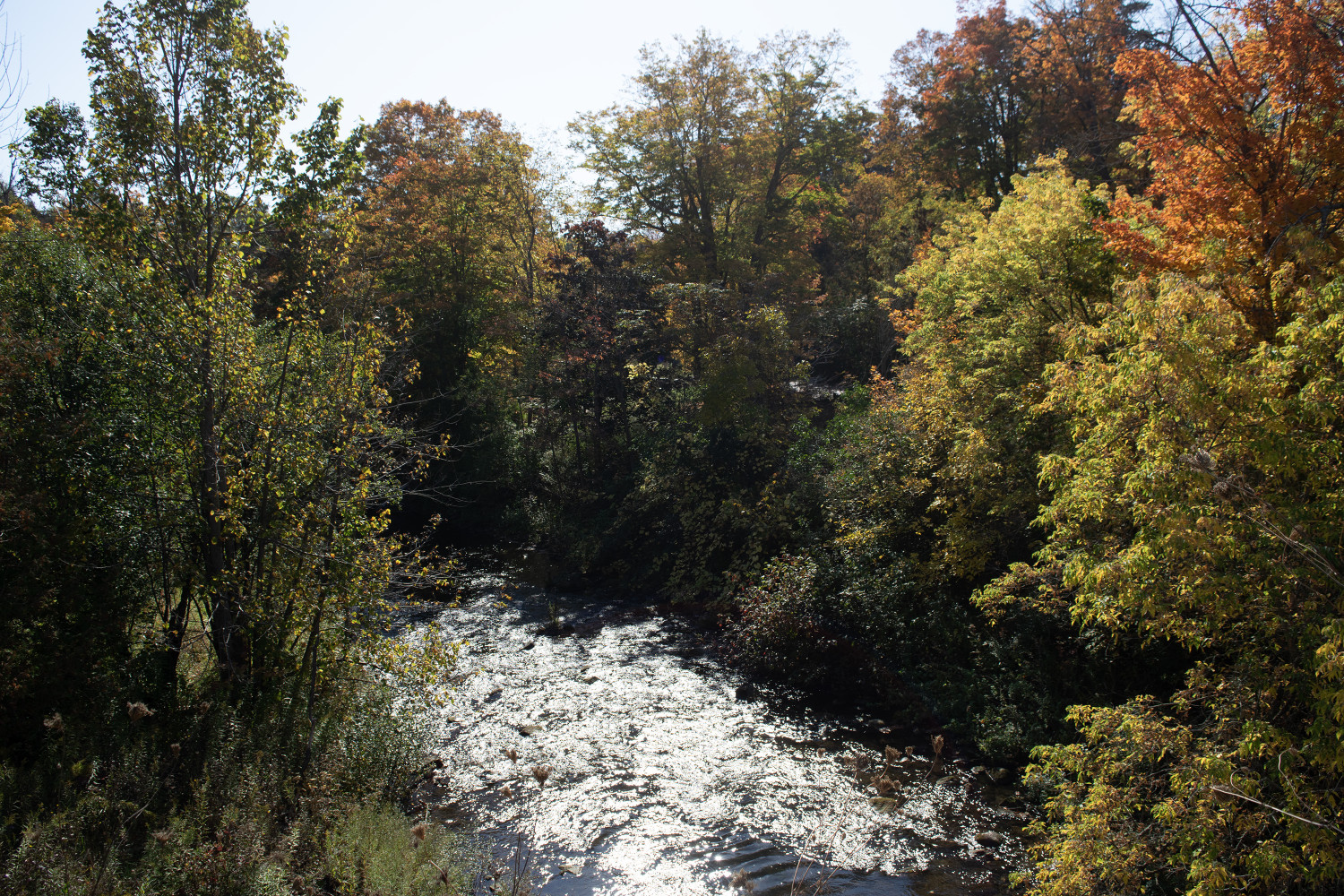
Five heroes celebrated for defending nature against unchecked development in Caledon
Hat on. Glasses lowered. Notes in hand. Ian Sinclair moves toward the podium with the deliberate steps of a man who has come prepared, not just to speak, but to challenge. Conversations hush and heads turn, intently. In Caledon’s council chamber, his confident walk and heavy voice are a familiar sight, and a comforting one for any residents who care about the town’s beautiful natural landscapes. In many ways, Sinclair has become the voice of those spaces.
The decades of dedicated effort, both inside and outside the council chamber, has earned Sinclair, a former councillor, a lifetime achievement award from the Ontario Headwaters Institute alongside four community advocates receiving Watershed Guardian Awards.
He will be honoured in a ceremony on February 26 next to Tony Sevelka, Paul Newall, Debbe Crandall and David Sylvester.
“Ian has just been an incredible example of both a volunteer working at a high level for the community,” Ontario Headwaters Institute Executive Director Andrew McCammon told The Pointer.
“But the most important model that Ian represents is that when he was on Peel Regional Council and when he was on Caledon council, he was one of the very few municipal councillors who were trained in environmental sustainability.”
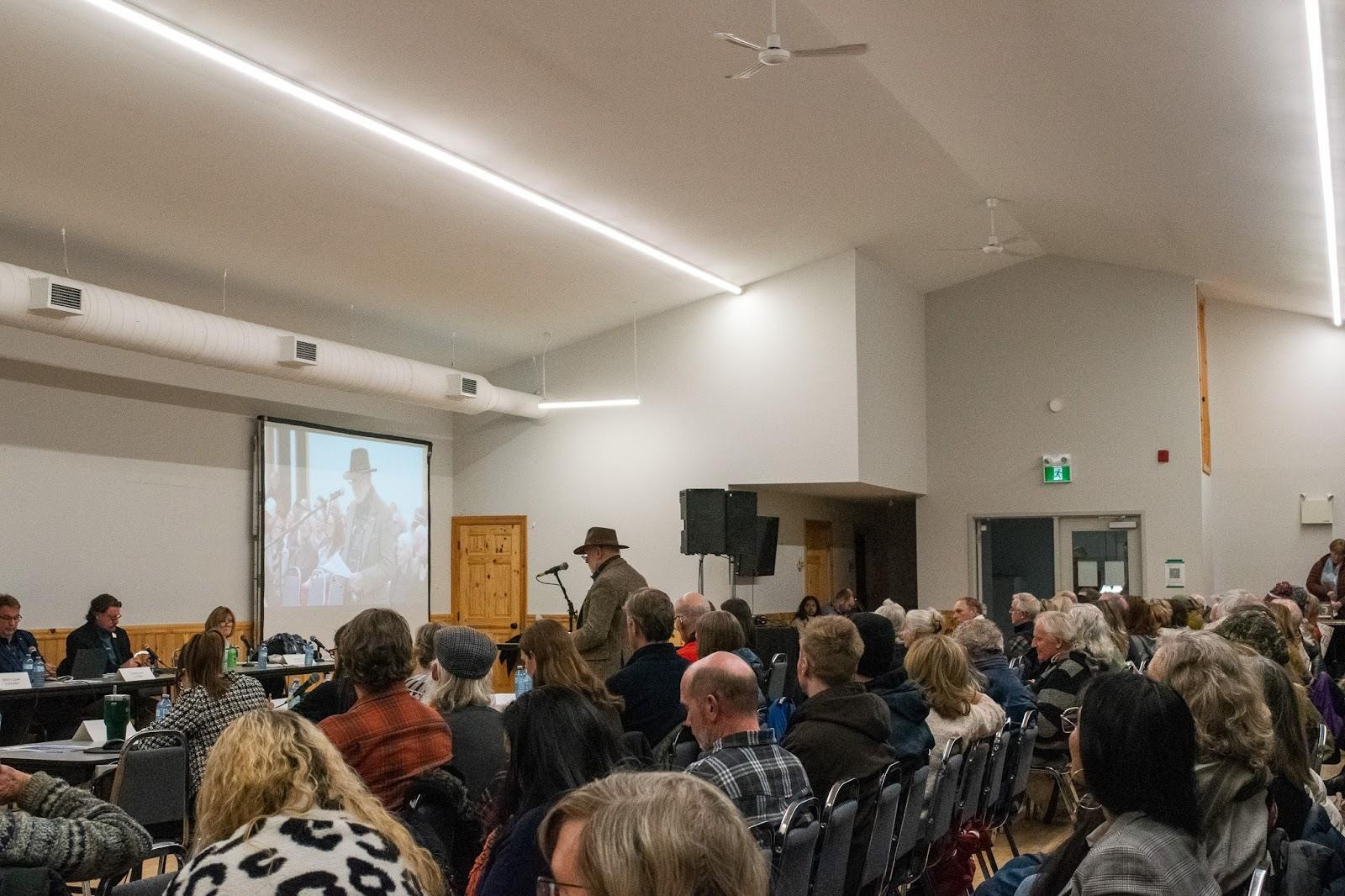
Caledon resident Ian Sinclair pressing council with detailed questions at the January 29 public meeting on the proposed CBM blasting quarry at the Alton Legion. With a bachelor’s degree in environmental studies and a master’s in applied environmental studies from the University of Waterloo focusing on ecology, urban and regional planning and political philosophy, Ian Sinclair is also a certified horticulturalist and landscaper under Ontario’s Apprenticeship and Tradesmen’s Qualification Act. He holds a certificate in negotiation and mediation sponsored by the Ministry of Municipal Affairs.
(Alexis Wright/The Pointer)
After moving to Caledon in 1975 with his family, he established a design-build landscape firm rooted in environmental principles. From thereon, both his professional and public life was inspired by the town’s rolling farmland, forests and headwaters.
His political resume is as lengthy as the notes he brings to public and council meetings: three years as an area councillor, six as a regional councillor for Ward 1, a commissioner with the Niagara Escarpment Commission, board member of the Toronto and Region Conservation Authority and its Watershed Management Board, 22 committees across Caledon and the Region of Peel.
He first served on Caledon council from 1994 to 2004. After stepping away, he remained a persistent presence in local politics, including a 2014 mayoral run before returning in 2018 as Ward 1 regional councillor. He left office again in October 2022, choosing not to seek re-election.
But Sinclair never really left.
He continued to press for transparency and responsible growth as President of Gravel Watch Ontario outside of council chambers.
“We’ve lost control over Caledon,” Sinclair said at a packed Town Hall meeting on April 25, 2024, criticizing current council leadership for a lack of transparency around proposals that would open the door to 35,000 new homes in the town.
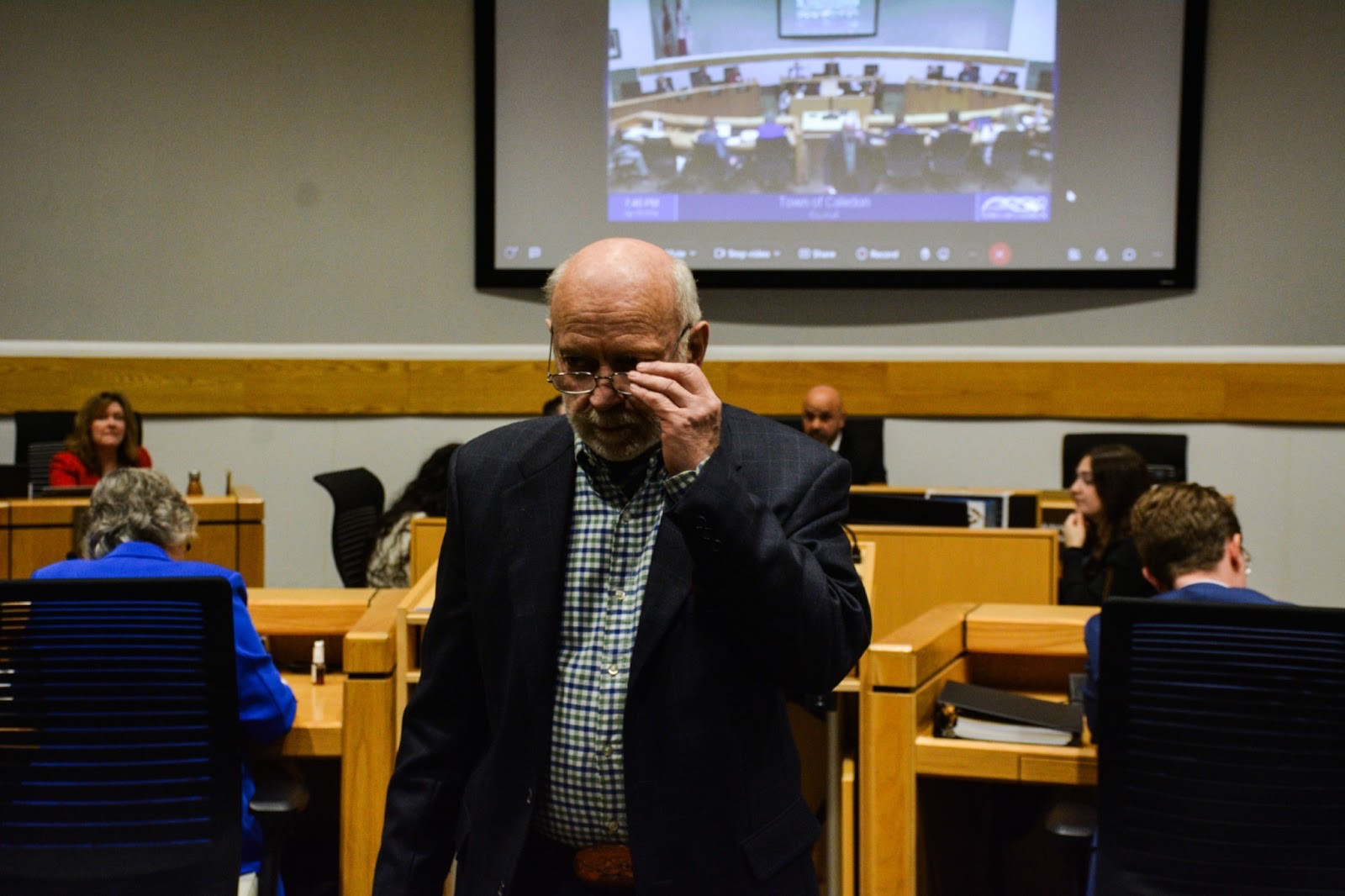
Former Caledon councillor Ian Sinclair at a town hall meeting in April 2024. He was in attendance to speak out against a plan from Mayor Annette Groves to prematurely rezone land to allow 35,000 homes in the small town.
(Joel Wittnebel/The Pointer files)
In an era when fewer probing questions are asked at the municipal level and Caledon faces increasing development pressures, Sinclair’s willingness to challenge staff reports and policy shifts stand out, McCammon noted.
“So many municipal councillors don’t have that vision and training and knowledge. Ian has always asked very simple questions that drill down to the core: What will this cost? Will it save money? How will it benefit the environment?,” he fondly remarked. “We’re in tough times right now…Ian is a model for councillors; someone who asks penetrating questions about traffic, tax rates and budget impacts. Most aren’t trained to ask the right environmental questions and Ian has been a champion in showing how that expertise can truly benefit the community.”
On January 29, Sinclair spoke at the second public meeting for the CBM blasting quarry proposal, zeroing in on the legal agreements tied to the lands, questioning whether a memorandum of understanding could limit council’s authority under the Planning Act to refuse the application.
He pushed for clarity on groundwater protections, calling for binding conditions, not just “contingencies and protocols” to ensure nearby wells and recharge areas are safeguarded.
“We don’t want this extraction to be an experiment. We want certainty, absolute certainty on water supply, road safety, noise and vibration,” Sinclair told council, garnering thunderous applause from residents in attendance — a common sight at many meetings.
Another advocate who commands attention with her presence, sharp wit and thorough research is Debbe Crandall.
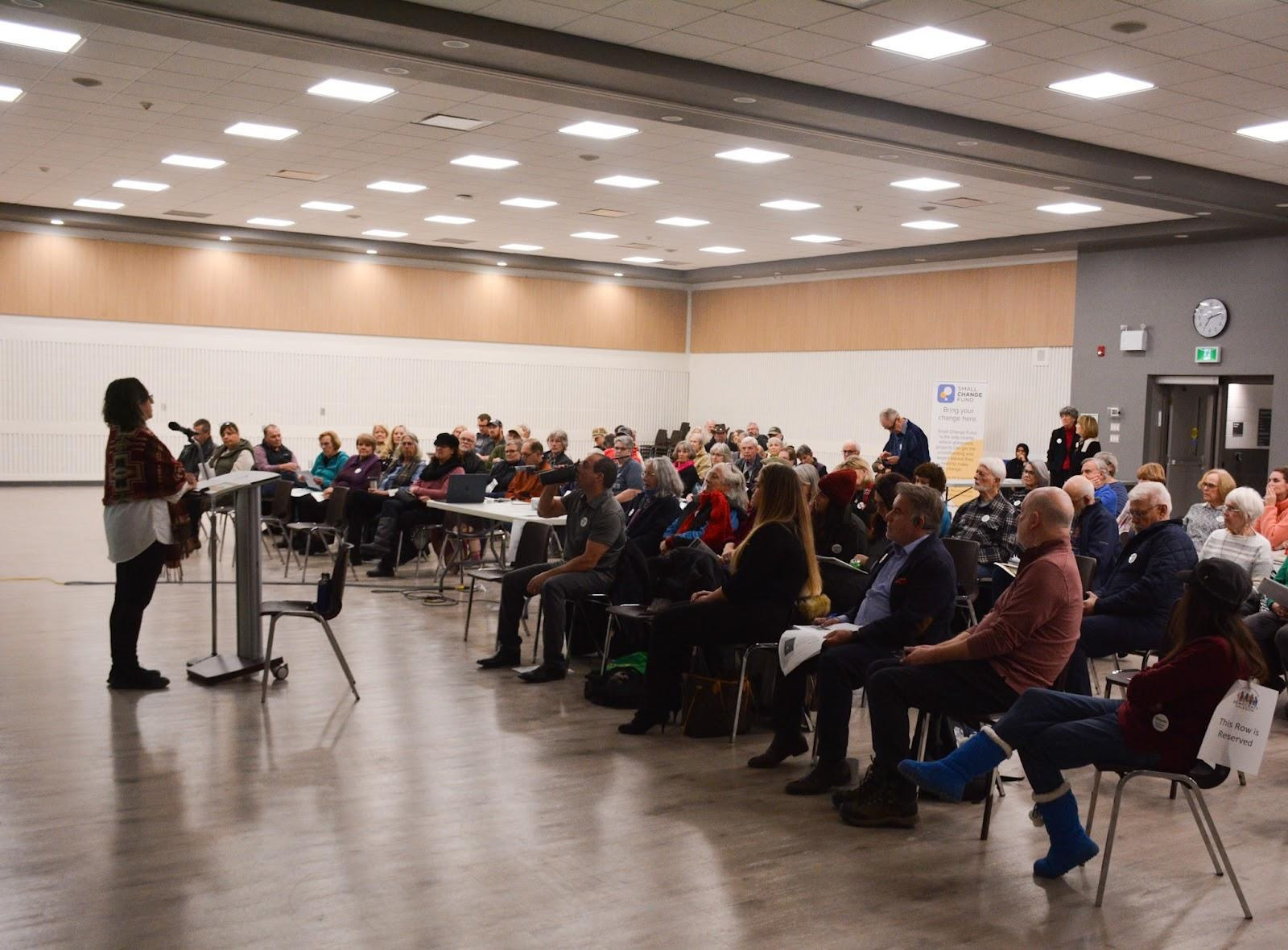
Democracy Caledon president Debbe Crandall speaking about the impact of sprawl on the town’s ‘farmland, wildlife, headwaters and Greenbelt’ on December 11, 2024 while explaining why the local group was taking the Town of Caledon to court over its controversial June 25 rezoning decision.
(Joel Wittnebel/The Pointer files)
As president of Democracy Caledon, Crandall has helped galvanize resident action around transparency and accountability in municipal governance including mobilizing community opposition to the town’s handling of multiple bylaws and open houses that she and her group have described as limiting meaningful public consultation.
Democracy Caledon under her leadership has publicly and fearlessly called out council over procedural changes, opposed rushed land‑use decisions and as well as greenwashing.
The group also launched a legal challenge in the Ontario Superior Court of Justice aimed at quashing a set of 12 zoning bylaws that would pre‑zone thousands of acres of land, including greenspace, farmland and portions of the Greenbelt, to facilitate the construction of new homes.
Since 2024, Crandall has been a leading voice in Caledon for protecting natural heritage, watershed health and agricultural lands, and for promoting sound land‑use planning that truly reflects the public interest. Her work has helped sharpen public understanding of planning processes and empowered residents to participate in decisions that will shape Caledon’s future.
“Foundationally, Democracy Caledon is dedicated to building a socially and ecologically resilient Caledon –
thriving, transparent, inclusive and fiscally sound for generations to come,” McCammon added.
In recognition of their sustained efforts to support strong civic engagement and protect the region’s watersheds, Democracy Caledon is being accorded with a Watershed Guardian Community Advocate Award.
While Sinclair and Crandall spoke at meetings and shared their expertise through webinars on the gravel industry and other local issues, another resident turned to books, computers and relentless research on the CBM quarry proposed to open just steps away from his house.
A retired forensic real estate appraiser, Tony Sevelka spent countless hours locked in the cold, blue glow of his computer screen, his eyes fixed on research, writing papers and crunching numbers as heavy trucks carrying aggregate drove past his house, shaking walls, rattling paintings and sometimes toppling vases.
Often quiet and observant at council and public meetings, Sevelka became a resilient presence at protests with the Forks of the Credit Preservation Group and inside Town Hall, carefully taking notes on every detail.

Caledon resident Tony Sevelka, who turned years of research into published studies on blasting quarry risks, was seen listening attentively to the presentations at the second public meeting of the Votorantim Cimentos/CBM blasting quarry proposal on January 29.
(Alexis Wright/The Pointer)
Today, he is known as one of the region’s foremost experts on blasting quarry risks, particularly flyrock, while sending emails to neighbours, journalists and decision-makers at both the provincial and municipal levels.
A journey to protect his family’s future became a vow to fill the gaps left by regulators, municipal and provincial policies and the aggregate industry itself.
“That was never the plan,” he told The Pointer previously.
Sevelka and his wife settled in Cataract, a tranquil hamlet in northwest Caledon in 1999, drawn by its serene charm and welcoming community. He envisioned quiet retirement days filled with collecting coins, walks with his dog, Lexie, going to Zumba classes and hosting friends and family in their backyard.
Then came a curveball when in October 2019, residents learned a mega-blasting quarry might be developed down the road from their home, a blow made harsher by years of growing accustomed to disruptions they had never anticipated when they first bought their humble abode.
Over the course of seven years, Sevelka has written eight peer-reviewed papers dissecting the science and policy of aggregate extraction including on-site operations and both below-the-water-table and off-site impacts.
Where provincial legislation like the Aggregate Resources Act provided only vague guidance on flyrock, Sevelka dug into international and national historical incidents, compiling data, definitions and case studies to clarify the real dangers posed by blasting debris or flyrock.
Eventually, he proposed concrete standards for safety measures and setback distances, left undefined in both provincial and municipal regulations, including a 500 metre minimum onsite setback, a 1,000 metre offsite separation distance from sensitive land uses and a requirement that contaminants remain onsite.
He also identified the deep cracks in the Town of Caledon’s record of public opposition to the quarry after filing a freedom of information (FOI) request. In July last year, he submitted a formal complaint, requesting the Ontario Ombudsman’s Office investigate the Town’s handling of Votorantim Cimentos’ quarry application, citing serious concerns over procedural fairness and abuse of power.
But he wasn’t alone. Cataract resident David Sylvester who “ignored environmental issues and just carried on with (his) day-to-day life” running a small business also changed after learning about the 700-acre blasting quarry.
“I believe in free enterprise and the system of capital markets, but my views on environmental issues and priorities have evolved considerably in the last five to ten years,” Sylvester told The Pointer previously. “It's been mind boggling to just to see the alarming changes that are happening, but not even slowly, rapidly, overnight.”
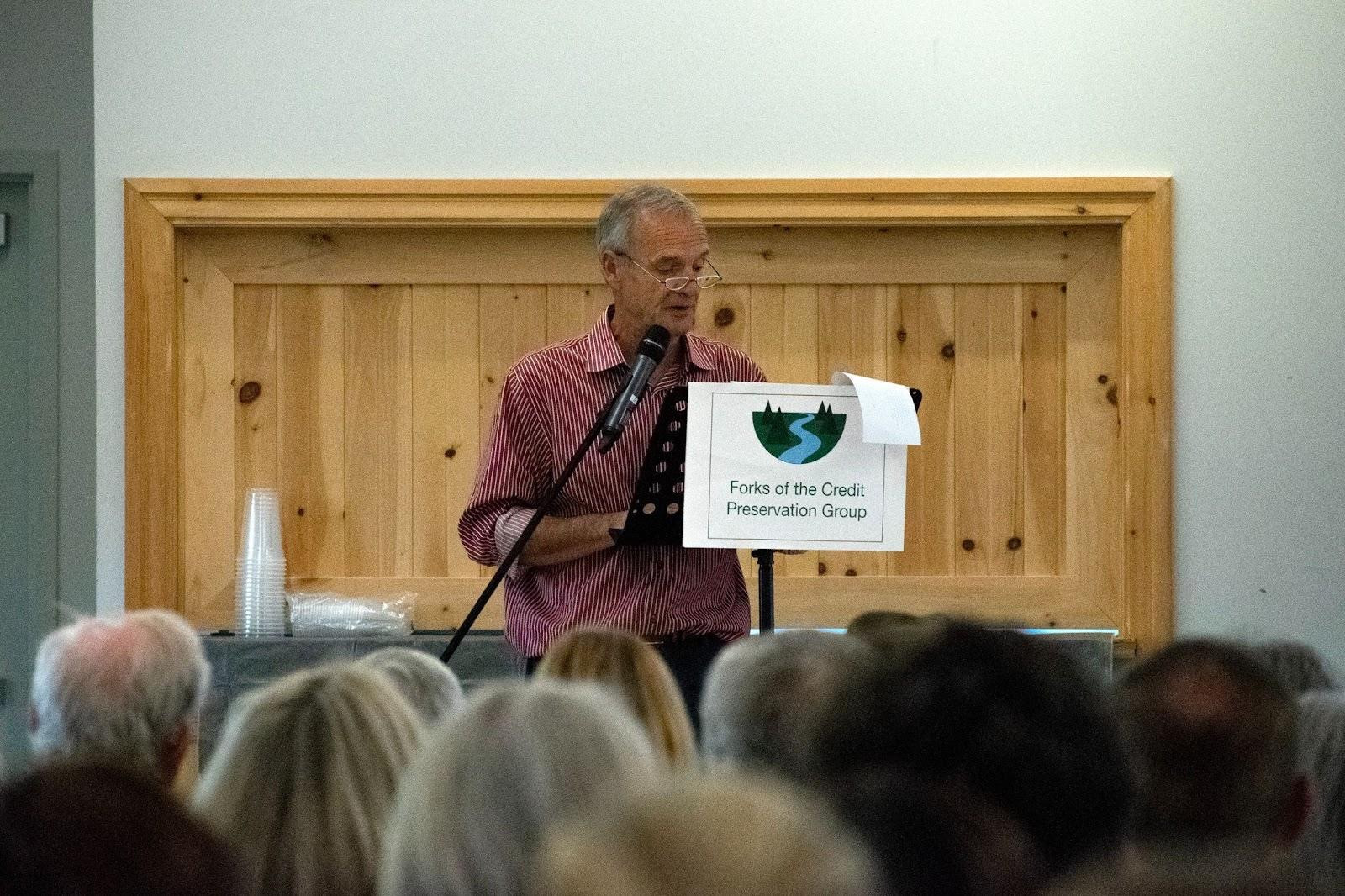
Caledon resident and Chair of the Forks of the Credit Preservation Group (FCPG) David Sylvester making a presentation on traffic safety at a public awareness meeting on May 17, 2023.
(Alexis Wright/The Pointer)
As Chair of the Forks of the Credit Preservation Group (FCPG), he became a vocal presence in the movement to halt the quarry with his focus expanding beyond local concerns to the larger implications for Caledon’s rural way of life under Doug Ford’s leadership.
Sylvester’s focus was not just on protecting local land, but on safeguarding the area’s delicate ecosystems, home to the brook trout that rely on the cold, clean waters of the Credit River.
“There is too much at stake here to turn our backs on this.”
Sylvester was among the first few to shine a light on how the quarry’s impacts “won’t just stay local” and would extend far beyond the local community, with the potential to disrupt groundwater supplies and negatively affect families who rely on private wells.
Sylvester remains committed to protecting his community, where he and his family have lived for more than 35 years.
While FCPG is being honoured with the Watershed Guardian Community Advocate Award for “research and informed positions on a local mega quarry and the need for revised environmental safeguards”, Sevelka is being awarded for his “research and publications on the negative impacts on blasting quarries, including on damage to groundwater, fly rock, and air quality and public health.”
An emotional McCammon said “like Tony”, there was another environment steward who was “just as tenacious and independent”.
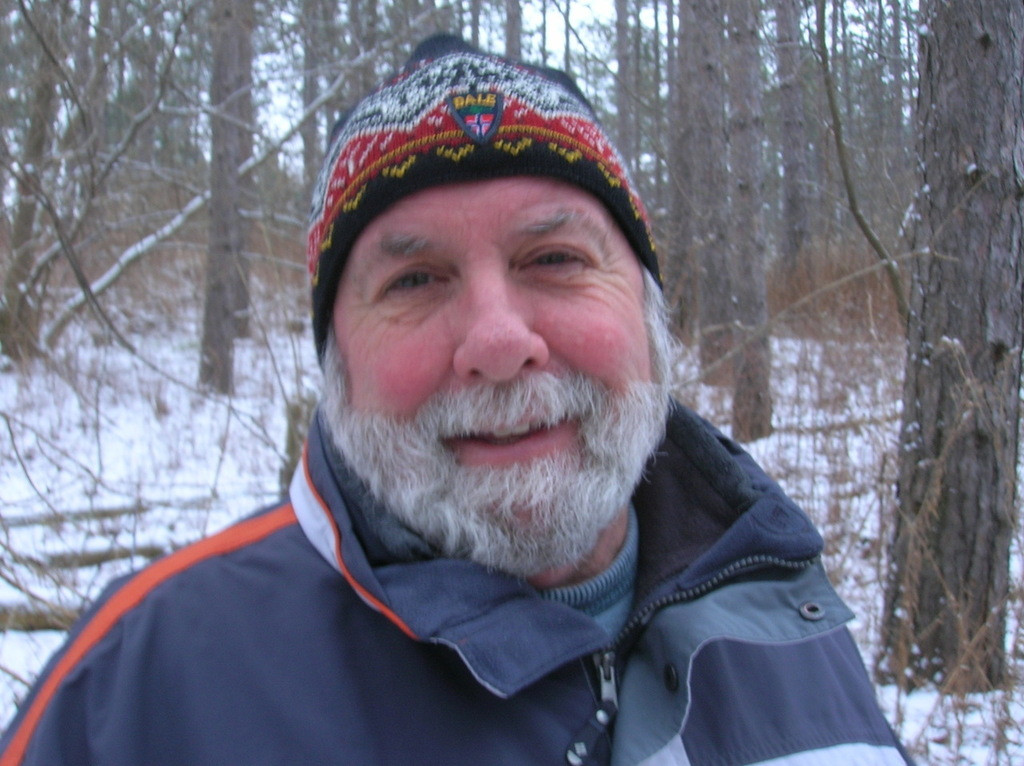
After earning a Master’s in Urban and Regional Planning from Western University, Alton resident Paul Newall spent 28 years with Ontario Power Generation, later transitioning to a consulting career with his own consulting firm in 2005. Newall was also a dedicated volunteer, contributing to local groups like the Alton Grange Committee, the Credit River Alliance and the Alton Legion. From 2007, he served as a member of the Council for Clean and Reliable Energy and was a board member for Electric Mobility Canada from 2011 till 2015, supporting electric transportation. Even in retirement, he continued his advocacy and enjoyed being in nature. He honoured for leadership on watershed planning, permitting, and the protection of surface, ground-water, and drinking water on February 26.
Paul Newall, who will be honoured posthumously with a Watershed Guardian Community Advocate Award, was born and raised in Caledon “in the very house he lived in as an adult”.
Newall returned to Alton in the early 1970s and raised five children, bringing with him formal training in environment, energy and planning from a long career in the electrical union and as an energy consultant.
“He always brought sustainability to things because of his love for Caledon,” McCammon said.
Fueled by his environmentalism and love for the community, Newall took on “scores of local planning and stormwater permit issues”, exposing repeated failures in stormwater retention that caused erosion and flooding on neighbouring properties. He tied those site‑level problems to the lack of comprehensive watershed planning for parts of the Upper Credit River watershed including the provincially significant Alton Grange wetland, areas that had gone without sub‑watershed plans for decades.
His advocacy led him to serve as president of the Credit Watershed Alliance and as a director with the Alton Village Association.
“He was just an extraordinary local champion,” McCammon noted, his voice tinged with sadness that Newall passed away on February 12. He was able to receive his award, privately, four days before his passing.
What Newall, Crandall, Sinclair, Sylvester and Sevelka have in common is that all of them have faced persistent and often misinformed criticism even as they did painstaking research and took responsible, evidence‑based positions on issues affecting Caledon.
“Despite their deep knowledge and responsible preparation, they haven’t always received the fulsome discussions,” McCammon said. “But each of them continued to make really important contributions and have pressed on in spite of a lack of ambition and from municipal councillors to understand what's at stake.”
To celebrate these local heroes, the Ontario Headwaters Institute is inviting the public to a ‘February Blues Buster’ event on February 26 at 4 p.m. at the St. James Anglican Church (6025 Old Church Road) in Caledon East with an interactive discussion on the health of the Credit and Humber watersheds. Those wishing to attend are encouraged to register with McCammon at [email protected].
Email: [email protected]
At a time when vital public information is needed by everyone, The Pointer has taken down our paywall on all stories to ensure every resident of Brampton, Mississauga and Niagara has access to the facts. For those who are able, we encourage you to consider a subscription. This will help us report on important public interest issues the community needs to know about now more than ever. You can register for a 30-day free trial HERE. Thereafter, The Pointer will charge $10 a month and you can cancel any time right on the website. Thank you
Submit a correction about this story

