

Caledon residents furious after FOI documents uncover gaps in Town record-keeping around opposition to mega-blasting quarry proposal
Caledon resident Tony Sevelka’s days turned into weeks, weeks turned into months and now years since he started digging into the details of a proposed blasting mega-quarry steps away from his home.
His quest led him to file a freedom of information request this summer, seeking access to all public objections to the contentious project.
Instead, what he received revealed a systemic failure.
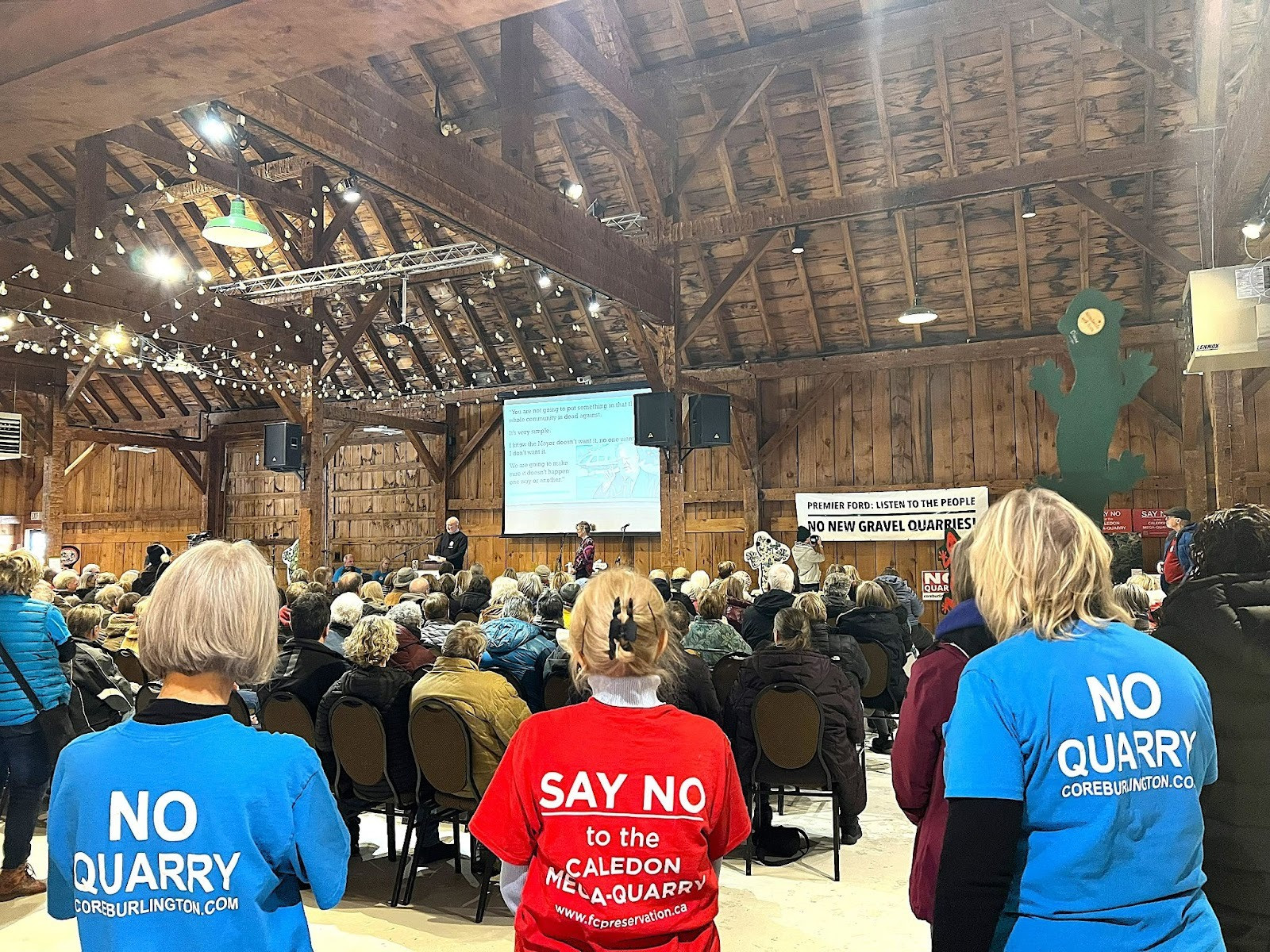
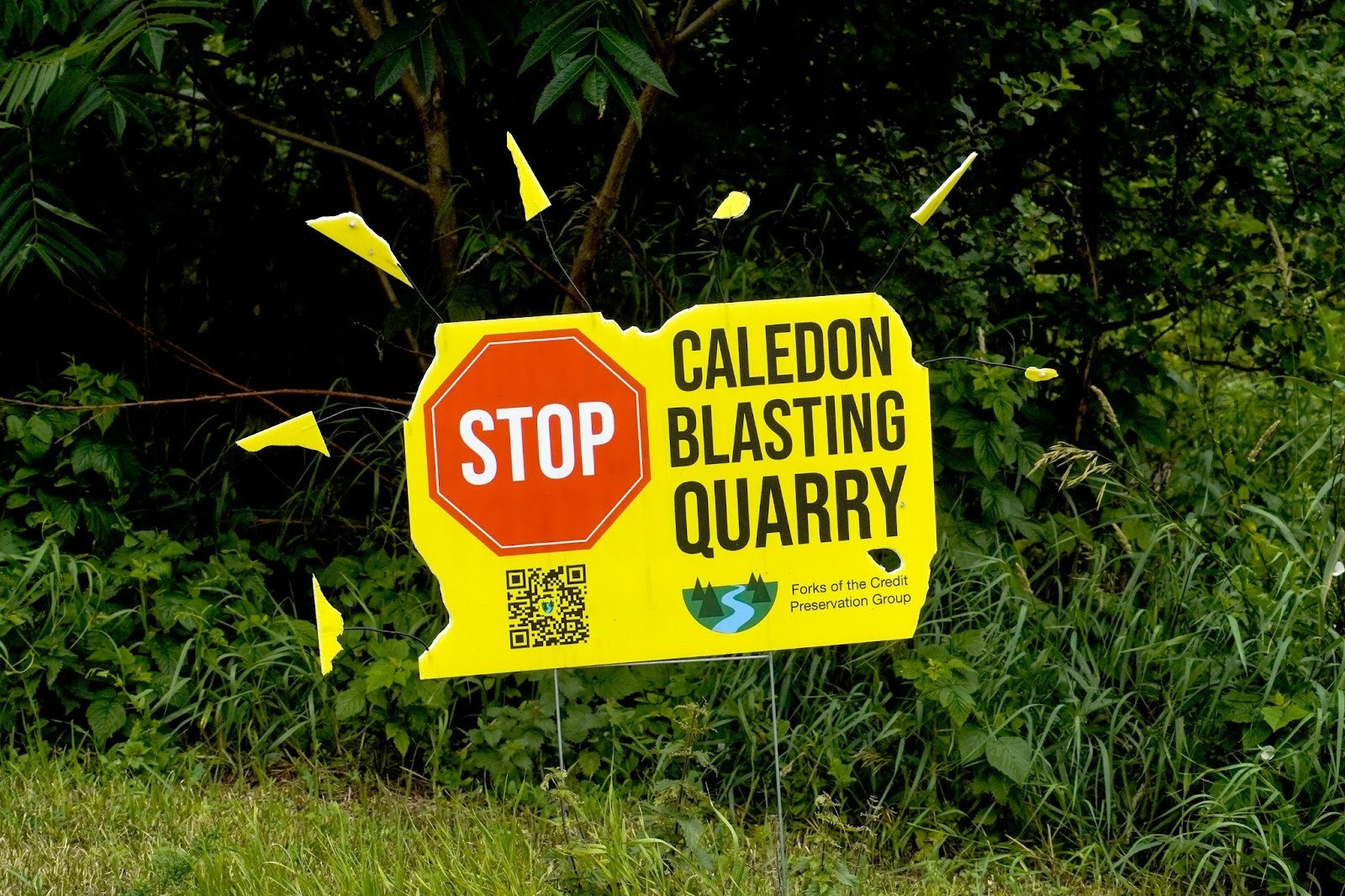
Caledon residents have been rallying since the proposal of a mega-blasting quarry next to the village of Cataract.
(Alexis Wright/The Pointer)
Out of the 73 pages the Town of Caledon sent him in response to the specific public information he had asked for, Sevelka found dozens of submissions against the quarry proposal were missing, including many formal objections that Sevelka and his neighbours had assumed would have been entered into the public record.
For a proposal that could reshape the region’s water, ecosystems and safety for decades, the absence of a transparent record feels like a betrayal and has disturbed many residents including Pat Hertzberg, who is using art to make sense of the world around her.
Limestone ready to be extracted from the earth, moonscape craters carved into once-lush green spaces, a dark sky framing the distant Toronto skyline: that’s what spilled onto the canvas when the award-winning Caledon fibre artist tried to make sense of the “helplessness” she felt after learning the proposed blasting quarry could shatter the quiet life she and her husband sought when they moved to Alton 12 years ago.
Back then, leaving Mississauga and her role as a Resident Artist at the Living Arts Centre had felt like the right decision, even when her colleagues questioned why she would walk away. She was done with the traffic, endless noise and constant chaos that came with life in the city.
She wanted quiet. She wanted trees. She wanted to build a life surrounded by the rolling hills and protected landscapes of the Greenbelt.
Instead, she now drives past heavy gravel trucks, worries about road safety and remembers how both she and her husband had to replace their car windshields within months of moving because of flying debris.
“There are already a lot of trucks on the road that are dangerous and if this mega quarry were to go through, it would change our life and the life of all the people in our community,” Hertzberg told The Pointer.
“[It] will transform our tranquil area, disturb the natural wildlife habitat, threaten our water supply, fill our clean, healthy air with dust, eliminate valuable farmland — thus slowly eroding local food security, and set a new blasting quarry precedent in Caledon with the jarring noise of blasting rock.”
She returned to the one place where she knew she still had power: her art.
“I can’t personally make a difference through politics, but I can through art,” Hertzberg said.
“If Torontonians understand what’s happening to the Greenbelt, this place they visit for peace and tourism, maybe they’ll care enough to act.”
Channelling her “devastation” with the lack of political opposition to the proposed blasting quarry, she created a fibre artwork titled ‘STOP the Blasting Mega-Quarry!’.

Caledon-based artist Pat Hertzberg has offered the Forks of the Credit Preservation Group free use of the image of her artwork ‘STOP the Blasting Mega-Quarry!’, hoping it becomes another tool in the fight against the blasting quarry proposed in the town.
(Anushka Yadav/The Pointer)
The 800-acre, below-water-table limestone blasting quarry proposal was first brought to the Town of Caledon’s attention in the summer of 2019. It comes from CBM (Canada Building Materials) Aggregates, a subsidiary of Brazilian conglomerate Votorantim Cimentos, the world’s eighth-largest cement producer.
On March 23, 2023, planning firm Glen Schnarr and Associates submitted Official Plan and Zoning By-law Amendment applications on the company’s behalf.
In April 2023, Caledon Mayor Annette Groves pledged that all nine members of the council would stand against the blasting quarry proposal.
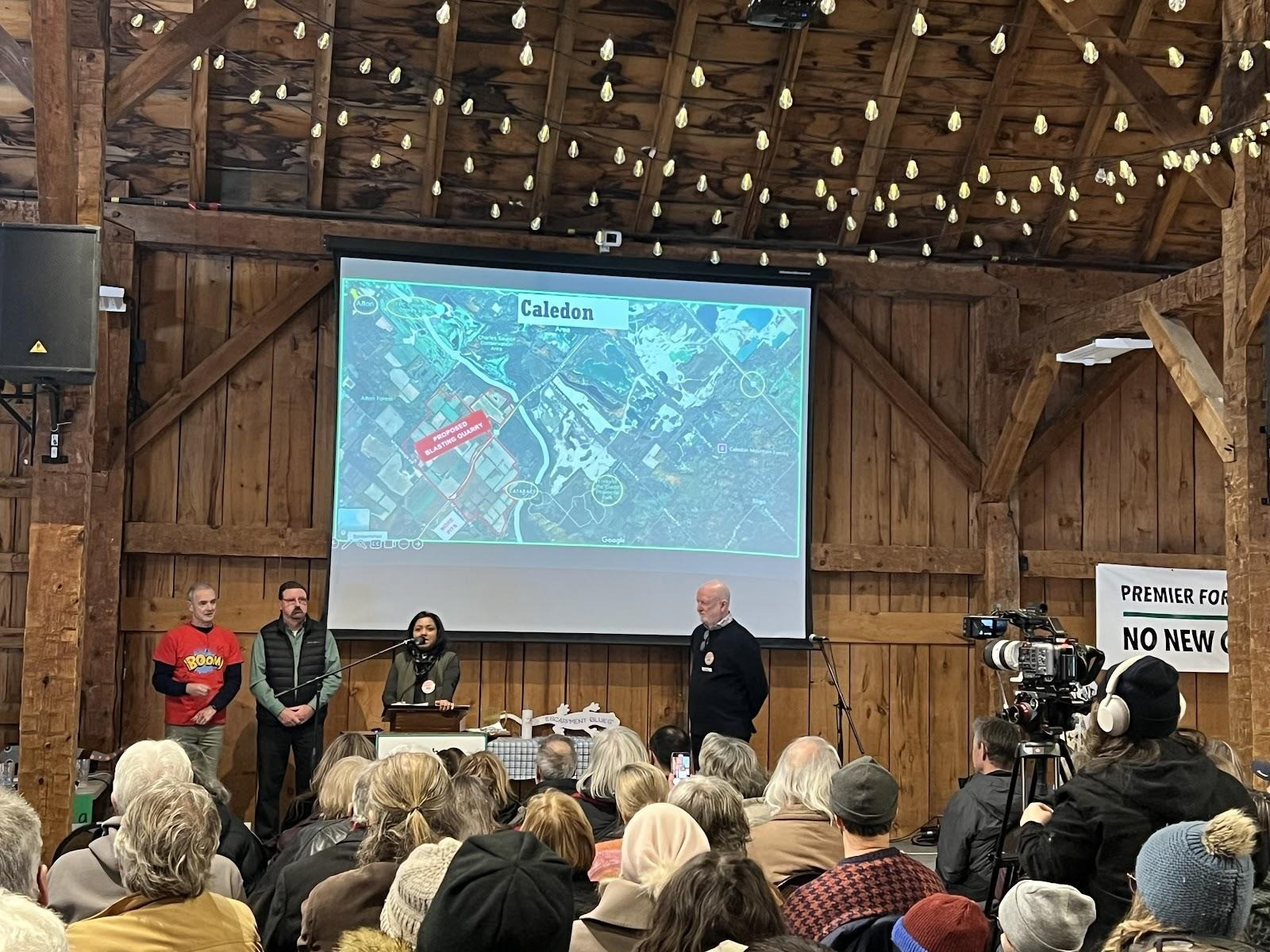
On January 25, Caledon Mayor Annette Groves attended a rally in Milton organized by activists opposing aggregate operations and quarry expansion. Her presence signalled support for the movement, but her remarks focused less on environmental or land-use concerns and more on the financial burden these operations place on municipalities. Groves emphasized the strain that aggregate trucks and infrastructure demands put on local roads, calling on the province to ensure municipalities are fairly compensated.
(Anushka Yadav/The Pointer)
Years of studies, including the Town’s own, highlighted how the quarry would blast below the water table feeding the Credit River, risk altering groundwater flow and diverting its natural course, destroy habitats, fragment ecosystems, threaten well water, generate dust and heavy truck traffic, and harm the neigbouring 188-acre Charles Sauriol Conservation Area and Forks of the Credit Provincial Park less than a kilometre away.
With added dangers like flyrock, emissions, and lasting visual and environmental damage, the quarry’s impacts would be severe and far-reaching. If approved, the operation could be permitted to run for more than 50 years.
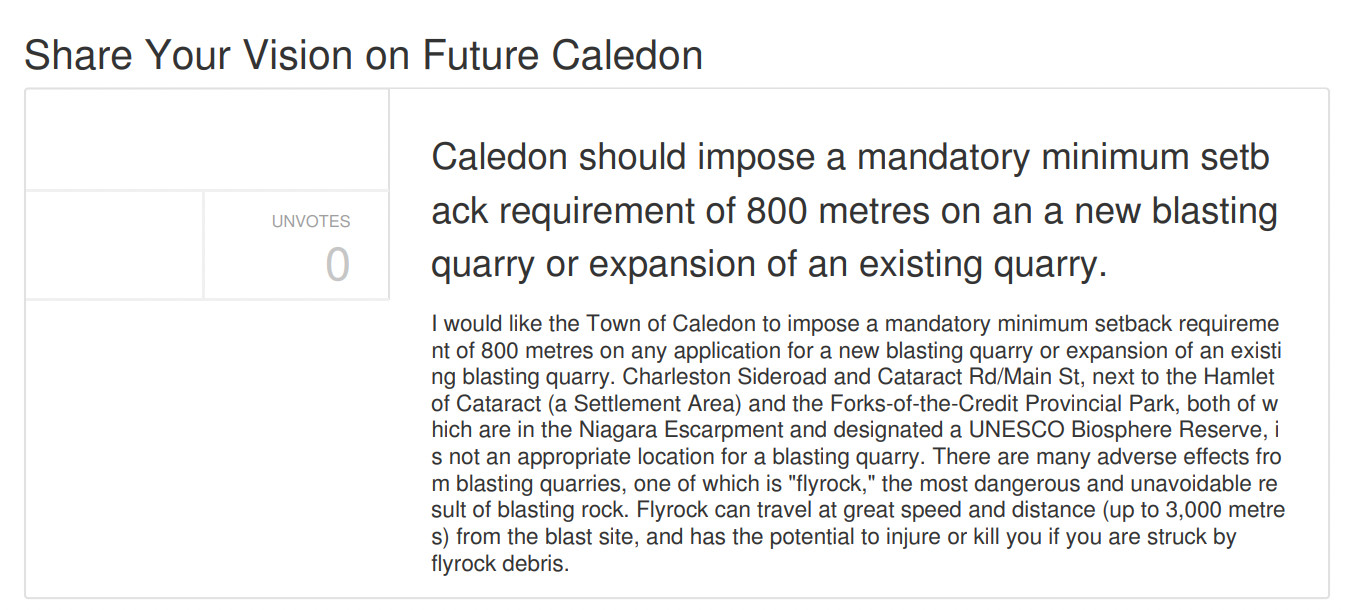
In 2021, the Town of Caledon, in its official plan, noted it would “restrict the number of aggregate operations”, considering the “clear” community opposition against ongoing aggregate operations as well as the blasting quarry.
(Top: Alexis Wright/The Pointer, Below: Future Caledon/Town of Caledon)
Another Caledon resident with a story resembling Hertzberg’s is Tony Sevelka.
Living only steps from the proposed site, Sevelka, who imagined a slow-paced retirement for himself, has immersed himself in research, becoming a self-taught expert on flyrock and blasting operations with over 250 peer-reviewed papers on the topic.
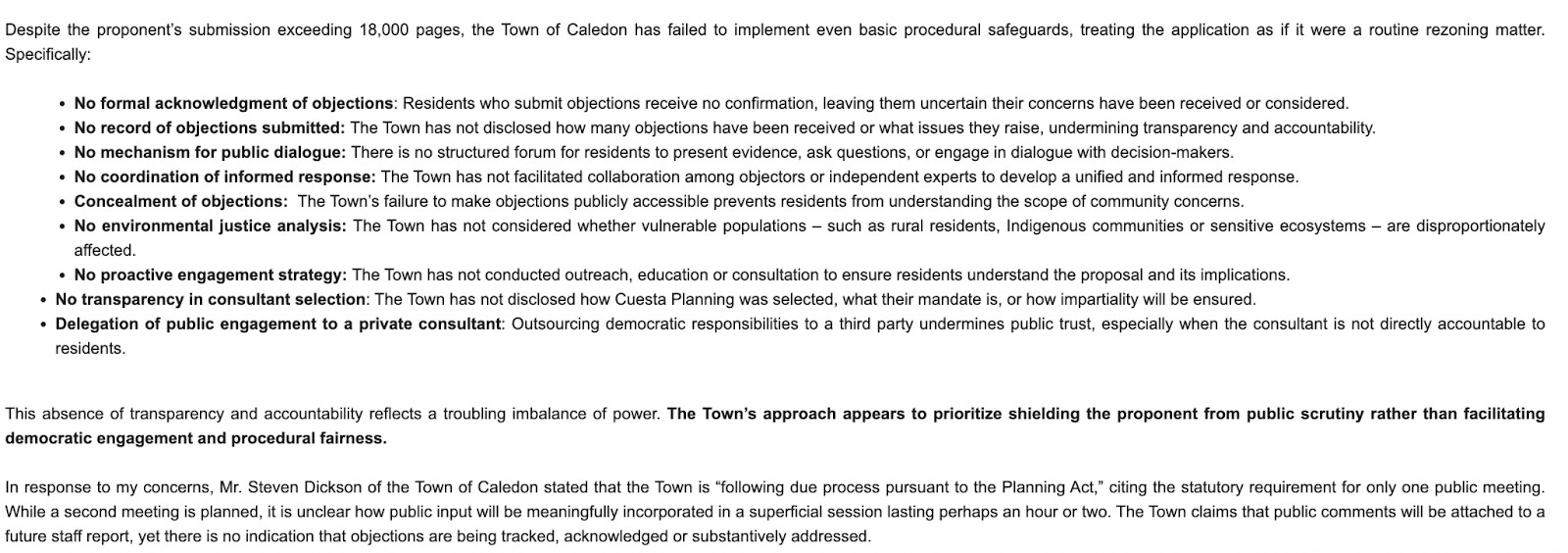
On July 25, Tony Sevelka filed a formal complaint, requesting the Ontario Ombudsman’s Office investigate the Town of Caledon’s handling of Votorantim Cimentos’ quarry application, citing serious concerns over procedural fairness and abuse of power. He argues that the Town’s failure to acknowledge or track objections, prevent public dialogue, and outsource public engagement to a private consultant undermines transparency and accountability. Sevelka calls for corrective action to ensure a fair process, highlighting the need for transparency, public participation, and environmental justice in such a significant development.
(Tony Sevelka)
Most of his days are now spent warning neighbours about the risks and pressing the Town, email after email, to take a stronger stance against the project.
On August 5, Sevelka filed a freedom of information (FOI) request to the Town of Caledon, requesting to obtain the public objections submitted to the Town regarding the quarry’s license application and related planning files between June 1, 2019 and August 6 this year.
Sevelka thought to himself, “how hard would it be to find these objections that they needed an extra 60 days to find them, because the reality is they don't exist.”
He received a response from the town on September 4, asking for an extension till November 3. When the Town released its response, he discovered that the record was incomplete.
Despite sending dozens of formal objections with each outlining distinct ecological, statutory, and infrastructure concerns, only five of his submissions appeared in the disclosed file.
“Some of my submissions are like 300 pages, so they obviously were not included in those 73 pages that they sent,” Sevelka told The Pointer.
He immediately alerted residents through his email chain, which he often uses to spread awareness on the issue.
“The Town’s response reveals a troubling procedural gap: there appears to be no formal protocol ensuring that public objections are acknowledged, logged, and considered by the Town’s internal professional staff or external review consultants. This undermines the integrity of the planning process and risks excluding critical public input from technical and statutory review,” Sevelka wrote in an email.
He urged residents to review the partial record and check whether their own objections had been logged, misattributed, or omitted entirely.
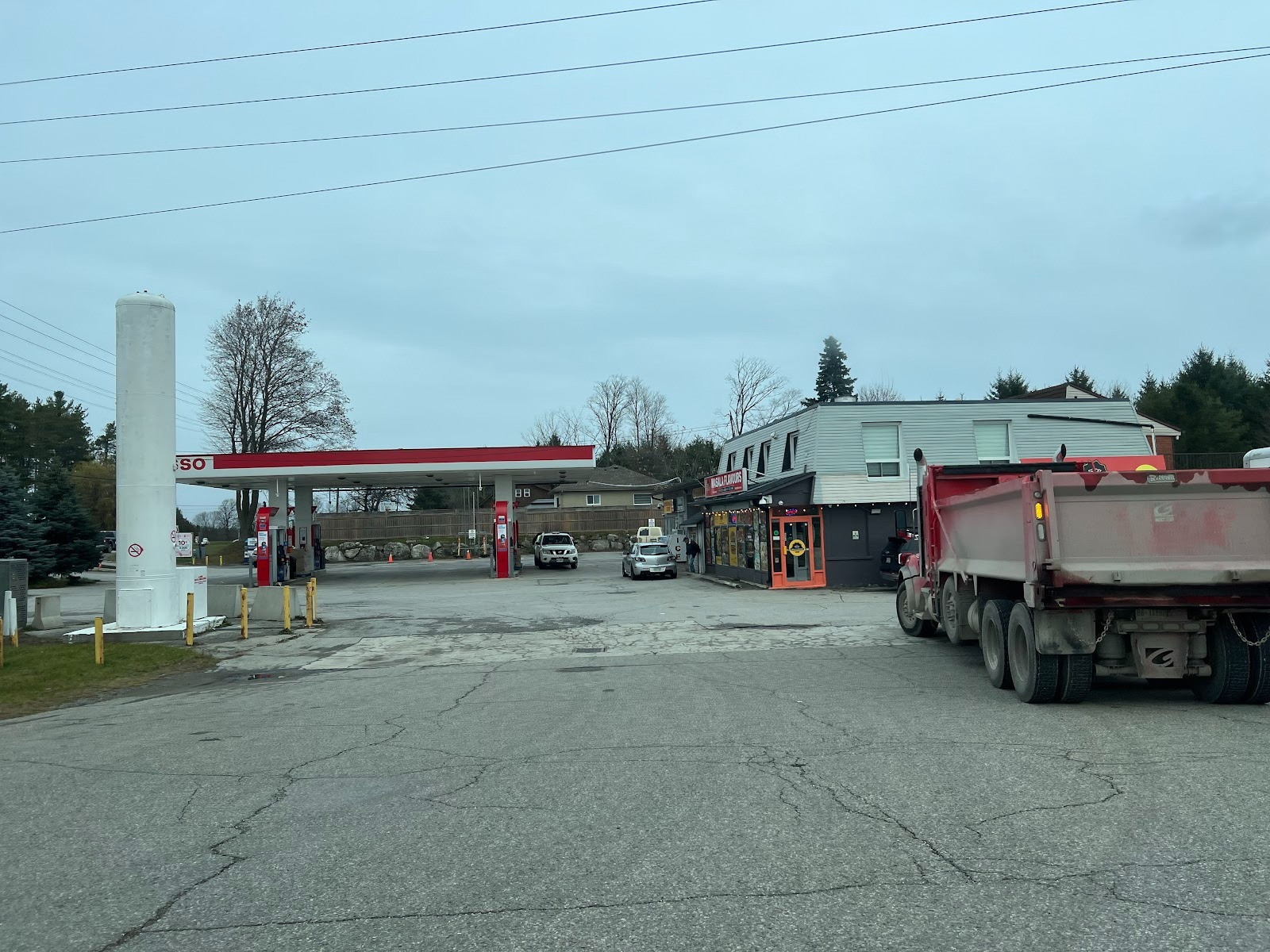
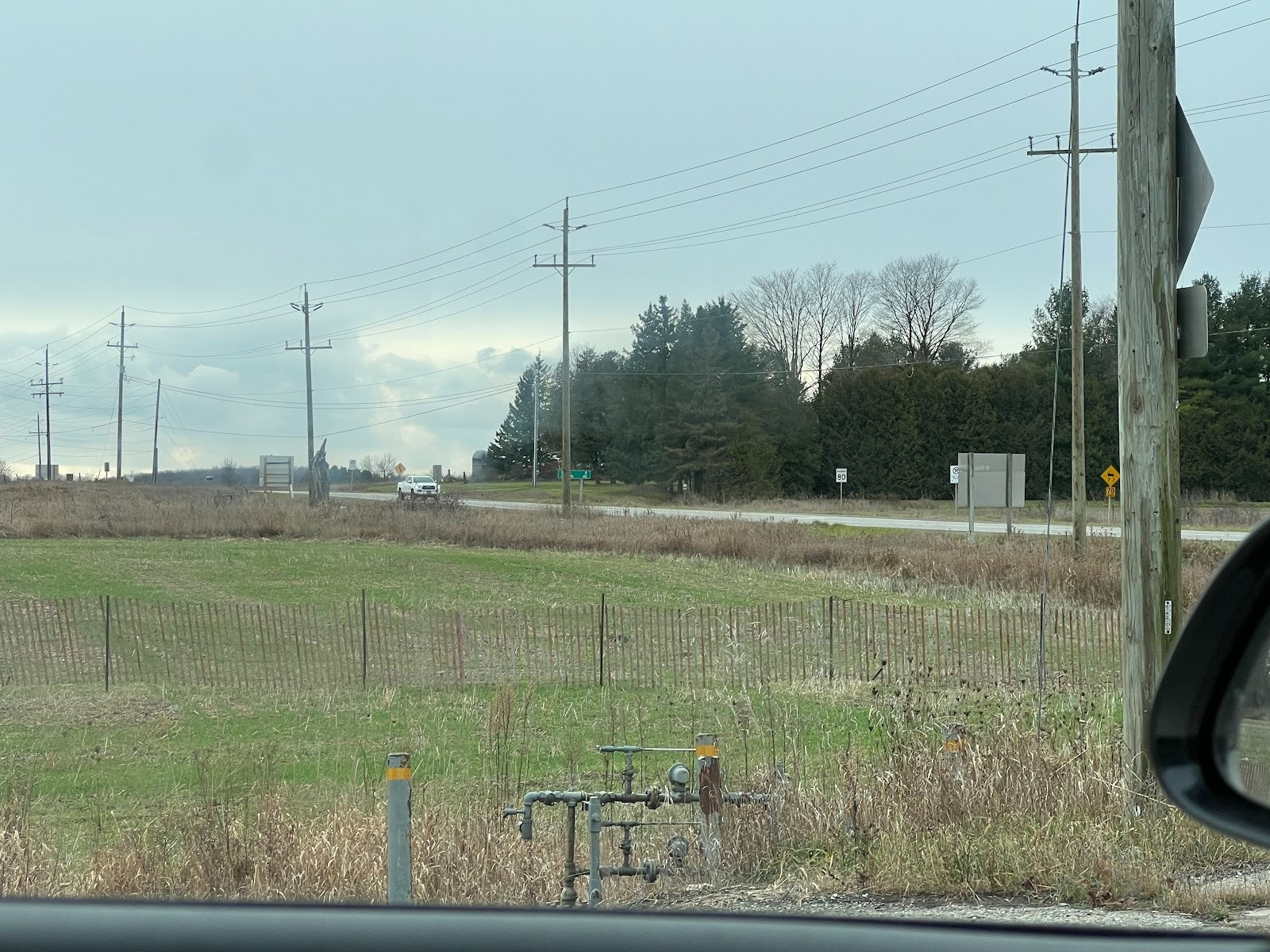
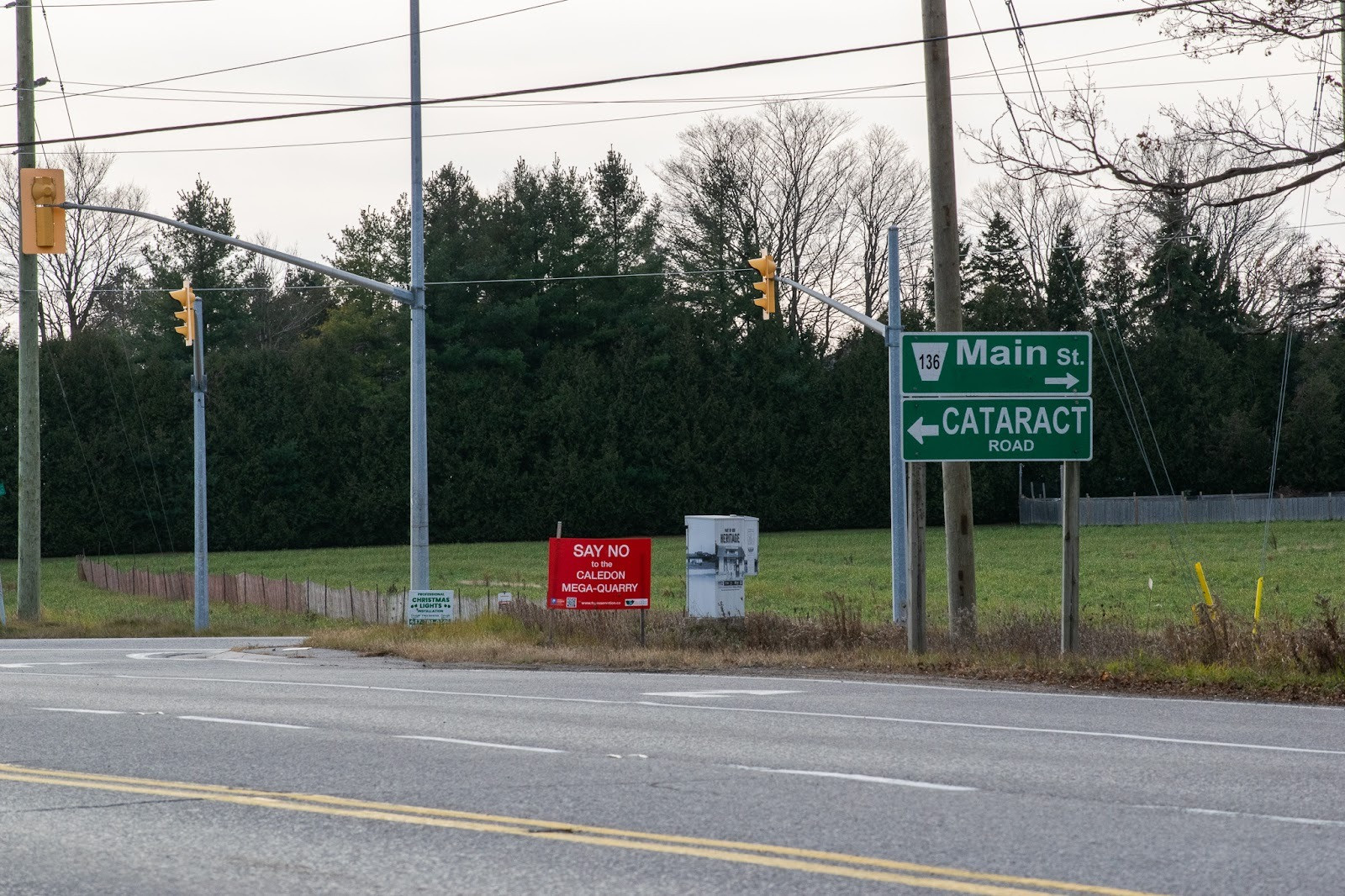
The proposed blasting quarry is diagonally situated next to a gas station, a detail that has received little attention but could have disastrous consequences in the event of a flyrock incident or blasting-related disruption, endangering public safety and causing severe damage to nearby houses.
(Anushka Yadav/The Pointer)
As part of its ongoing effort to oppose the proposed blasting quarry, the Forks of the Credit Preservation Group (FCPG) urged local residents to make their voices heard by submitting formal objections to the Ministry of Natural Resources (MNR). Many took up that call, and more than 120 formal objections were raised.
Resident Nestor Golets submitted a formal objection to the CBM proposal, emailing it to the MNR’s Aggregate Resources Act Approvals office, copying FCPG, and hand-delivering a hard copy to Votorantim Cimentos’ Toronto headquarters on June 26.
“As these were all official responses to a formal Ministry procedure (as opposed to a random letter of complaint sent to the Town of Caledon or the Provincial Government) one would assume and expect that they would form part of the official record and be readily made available to anyone who asked,” he told The Pointer.
“This does not seem to be the case.”
The most “enduring mystery” to Golets is the role of developer Chris Humeniuk, owner of TPC Toronto at Osprey Valley Golf Course, located directly across from the proposed quarry site.
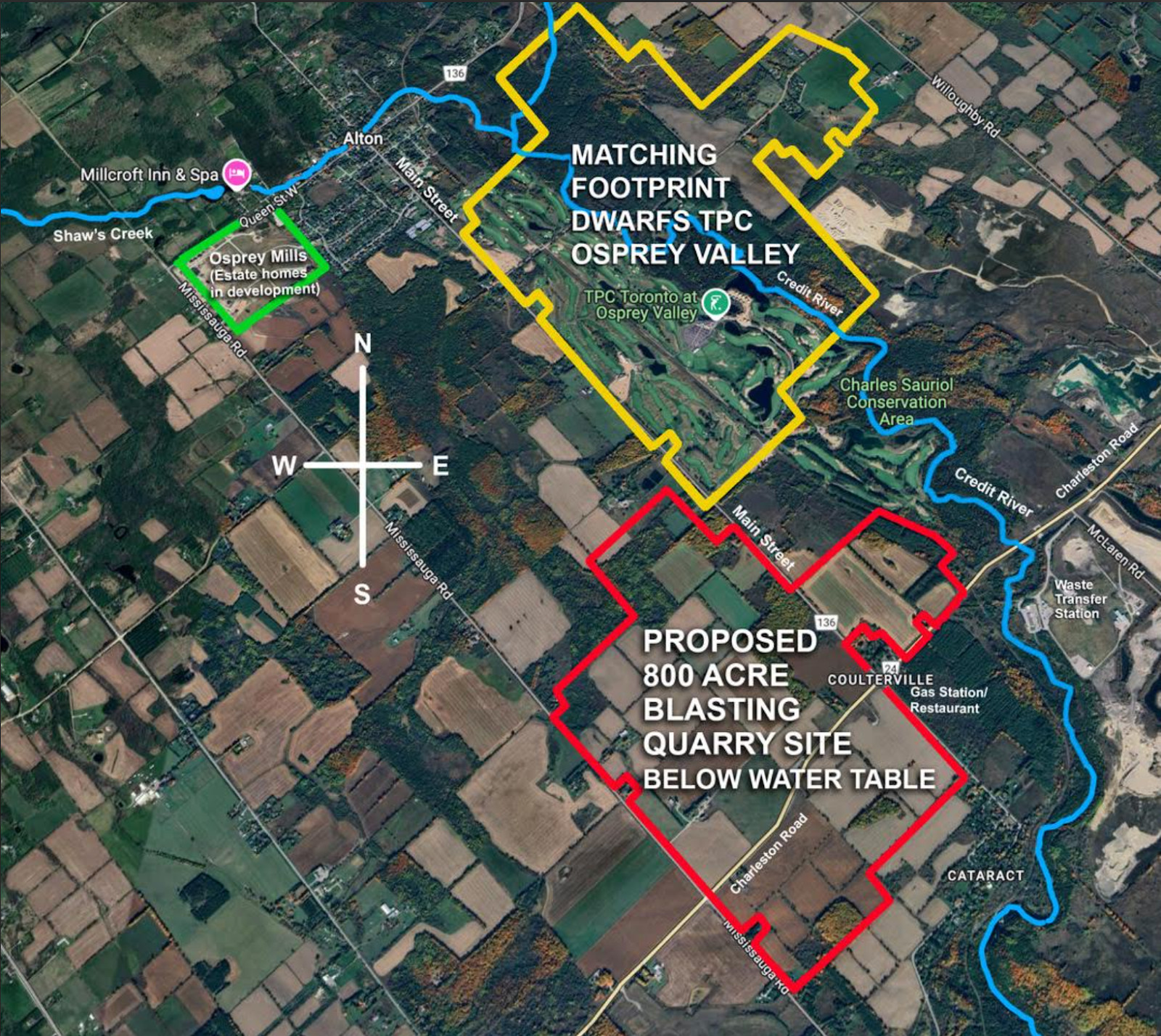
The topography just south of the TPC Toronto at Osprey Valley has already been altered by massive quarries that ripped out green spaces just east of the village of Cataract in Caledon.
(Google Satellite)
Much of the land in question was leased to the quarry proponent by Humeniuk, a fact that stands in stark contrast to his public statements.
On June 4, during an FCPG-organized protest timed with the announcement that Osprey Valley would host the 2025 Canadian Open, Humeniuk expressed disappointment, claiming he was not involved in the quarry application and dismissing concerns about potential community hazards as “speculation.”
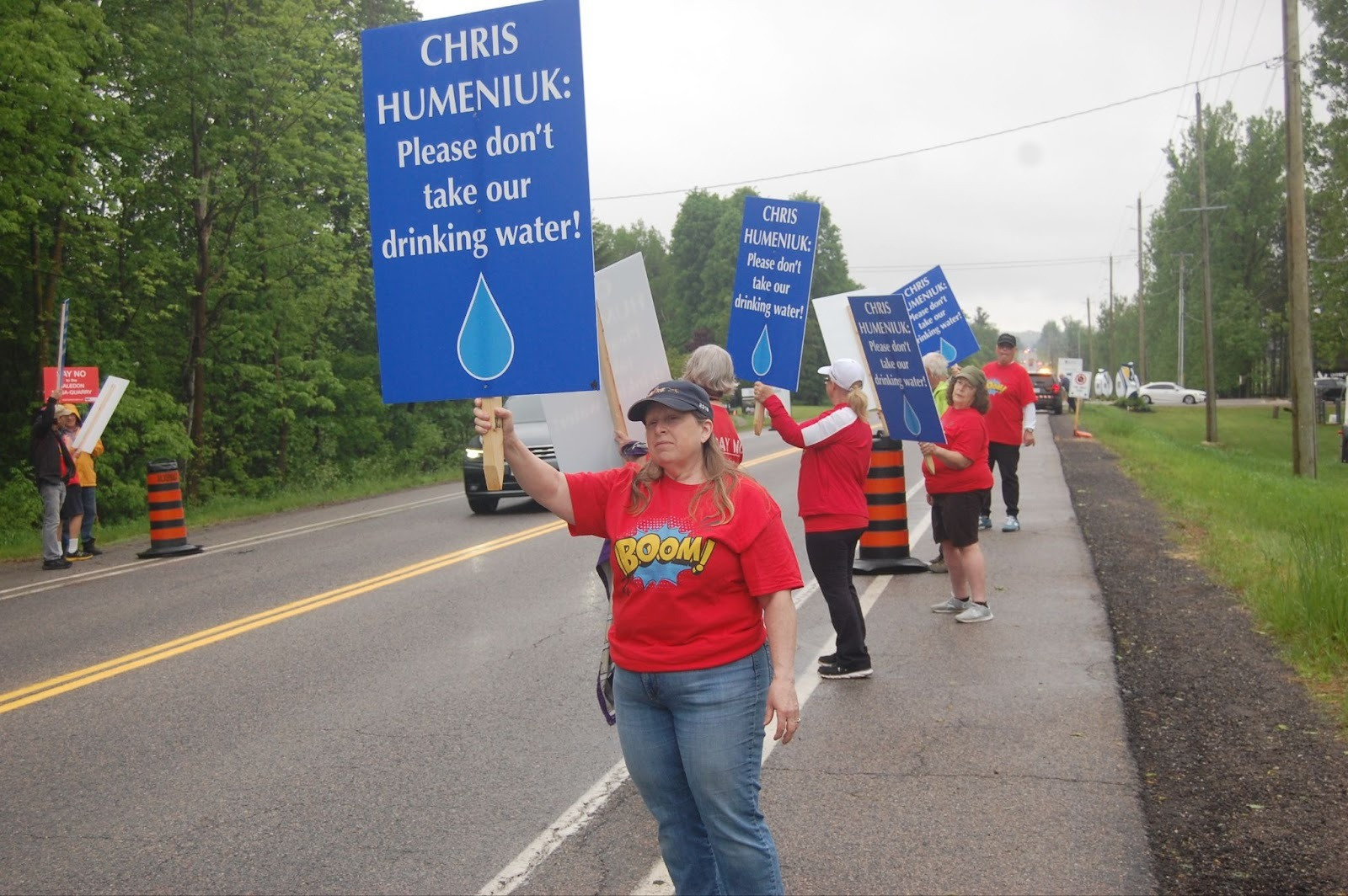
On June 5, Caledon residents rallied outside TPC Toronto at Osprey Valley again, which was now hosting the RBC Canadian Open at the time, opposing the blasting quarry and its impacts on the community’s drinking water.
(Forks of the Credit Preservation Group)
Golets says this was “disingenuous”, given the clear business relationship between the golf course and the proponent, including sponsorship arrangements and a proposal to route extracted quarry water through the golf property.
“The question to ask Mr. Humeniuk is: How does he expect he and his golf enterprise to be immune from the disastrous impacts from the quarry and onsite industrial processing plant just a chip shot away?” he said.
“Dust, noise, flyrock, huge polluting volumes of daily heavy truck traffic are just a few of the negative factors that would ultimately undermine the viability and success of his golf empire. It seems to me that he has grossly miscalculated this dual venture of golf and gravel.”
In June, Humeniuk told The Pointer that his team has engaged with FCPG “on several occasions” and “offered to have their qualified consultants attend the properties and review alongside us the independent, third-party reports that form an important part of the regulatory approval process.”
Despite this, he said, the group remains opposed to the project.
Forks of the Credit Preservation Group Chair David Sylvester noted that in June 2024, “following several outreach efforts from our group and concerned community members,” experts affiliated with FCPG were granted only “limited access—less than a day—to a small portion of the proposed quarry site, specifically the South Area.”
“We appreciated the opportunity; however, the scope and duration of the visit were not sufficient to fully assess the potential environmental impacts of a project of this scale,” Sylvester told The Pointer, adding that FCPG has shared its concerns directly with Humeniuk, “particularly regarding the risks to groundwater and the Credit River, which flows into Lake Ontario and affects communities downstream.”
He says the group has not received a clear or meaningful response that addresses their primary concern: the threat to the region’s water resources.
“There are roughly 88 million metric tonnes of limestone there [at the proposed site], and at current market prices the revenue potential is north of $3 billion, so the incentive to push this forward is enormous,” he said, noting that there has been no communication with CBM in more than six months now.
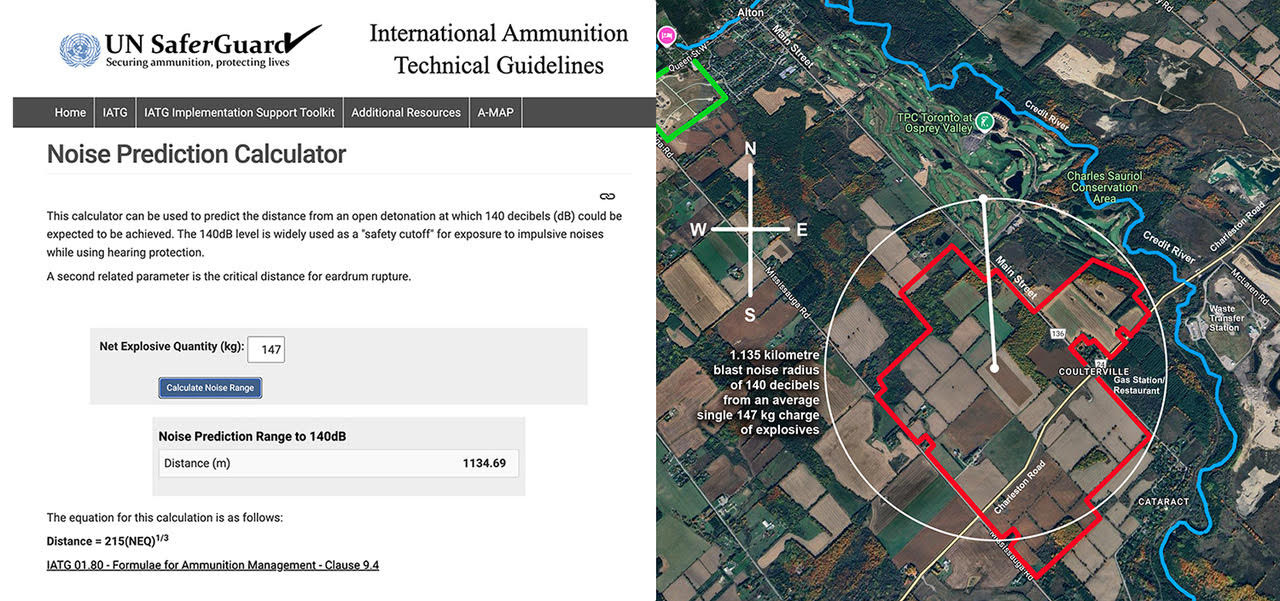
A single blast using 147 kilograms of explosives can generate noise reaching 140 decibels from more than 1.1 kilometres away, according to a United Nations’ Noise Prediction Calculator. The proposed blasting quarry in Caledon would use explosives on a far greater scale, Alton-resident Nestor Golets observed.
Sevelka’s neighbour Genevieve Delaney, who has sent at least three objection letters to the Town in the last four months alone, on top of several more last year, found her responses were also missing from the FOI documents.
“I’m just frustrated…it’s bad enough that this is all happening with the lack of transparency that’s truly concerning,” Delaney told The Pointer, confirming she has never once received a confirmation from the Town that her letters were even received.
“The voices of the people that this is going to be affecting the most are completely overlooked.”
Like many residents, Delaney and her family, who have lived in Caledon for more than 18 years, now find themselves circling the same agonizing question: Do we move? And if we do, who would even buy our home at a fair price?
“I love where I live. We have trails behind us. We have buses full of people who come to look at that landscape,” she said.
“I’ve had two real estate agents sending me listings. We haven’t pulled the trigger because it’s really not what we want to do, but if the blasting quarry goes through…our houses will be devalued.”
Homes situated near an active blasting quarry face steep and well-documented drops in value, a 2023 study written by Sevelka and published by the Appraisal Institute of Canada noted.
Large-scale proximity studies show that even moving just one mile closer to an operational rock mine can depress a home’s price by 2.3 percent to 5.1 percent, with higher-value properties absorbing even greater losses.
In communities studied across Ohio, New York, Michigan and Western Australia, the pattern is consistent: houses within a half-mile to two kilometres of a quarry experience some of the most dramatic declines, ranging anywhere from 20 percent to more than 30 percent, driven by blasting vibrations, truck traffic, dust, noise and the broader reputational damage to the area.
The effects ripple outward, lowering comparable sales and eroding homeowner equity even for those who never plan to sell.
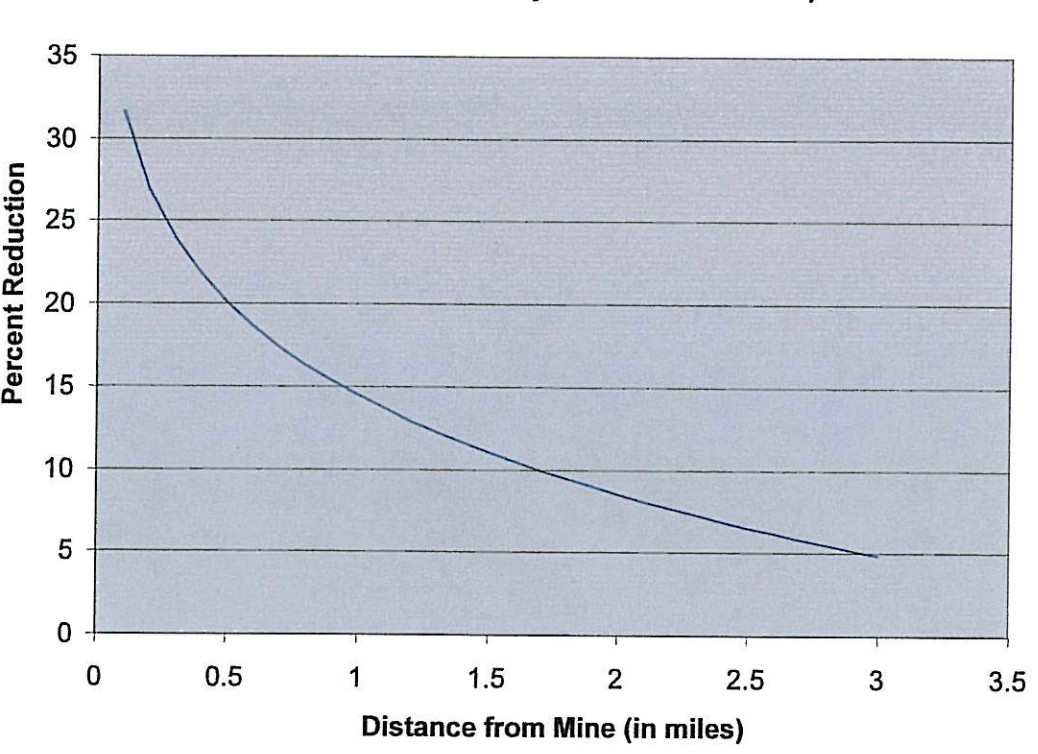
A 2006 study examining gravel operations in Richland Township, South Carolina, in the U.S. found a stark relationship between proximity to a gravel pit and declining home prices. A house located just half a mile from a mine was estimated to lose roughly 20 percent of its value. At one mile, the loss dropped to 14.5 percent, at two miles, 8.9 percent and at three miles, about 4.9 percent.
(W.E. Upjohn Institute for Employment Research)
“I’m being put in a position where I’m leaving the place I thought was going to be my forever home…you can’t help feel a little resentful for that,” Delaney said.
But property prices are just the tip of the iceberg. For Sevelka, recently diagnosed with atrial fibrillation, a condition that sends the heart’s upper chambers quivering in erratic, fluttering rhythms, the relentless stress of the blasting quarry fight leaves him wondering whether the burden itself is worsening his health.
“Whether this is part of the problem, I don’t know, but having to spend all this time and effort and receiving partial information is heartbreaking in many ways,” Sevelka said.
Already coping with health issues, he installed an air purifier this year, fearing that the airborne dust including carcinogenic crystalline silica, and the toxic gases released during blasting could lead to respiratory illness.
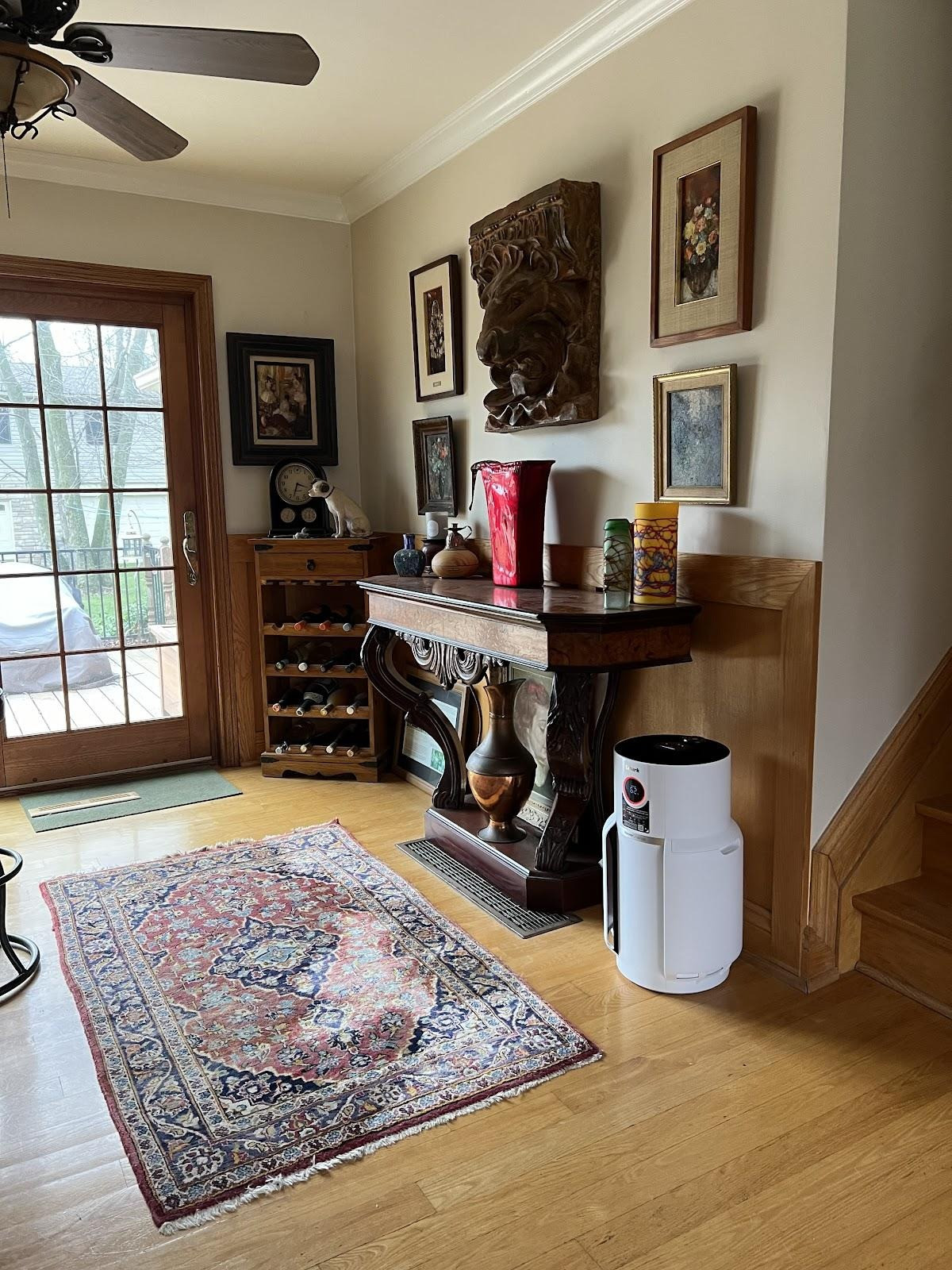
Tony Sevelka installed an air purifier in his home, hoping to ease the sting of worsening pollution and air quality. Every day, he and his wife find themselves adjusting paintings and artwork, disturbed by the vibrations of trucks hauling aggregate past their house. They can’t help but imagine the chaos a blasting quarry nearby could bring.
(Anushka Yadav/The Pointer)
Currently, 1,800 hectares of land within the Town of Caledon are subjected to the cutting, digging and hauling of aggregate extraction, primarily in Ward 1.
In October last year, Ontario's Ministry of Natural Resources released an updated study on aggregate supply and demand in the Greater Golden Horseshoe, confirming a 6.2-billion-tonne reserve capable of meeting construction needs for the next 38 years without opening new pits or expanding existing ones, reinforcing calls to pause approvals of new quarries.
But CBM “has claimed in the past that aggregate from the proposed blasting quarry is needed for building Highway 413, the Ford government’s hotly contested and (not so) stealthy incursion across the Greenbelt. Lurking in the shadows is the colossal Ford fantasy of a 55-km-long tunnel under Highway 401 stretching from Brampton to Scarborough,” Golet highlighted in a memo addressed to Caledon residents on March 17.
Last year, residents were finally able to catch a breath when the Town proposed updating its Official Plan with a series of policies to govern and control aggregate operations, to include new blast impact assessment requirements, including a flyrock management plan and a vibration management plan, directly tied to the CBM quarry proposal, prompted in part by a 2022 study that ranked the town last in policies addressing air and water quality, hydrogeological impacts, and First Nations consultation.
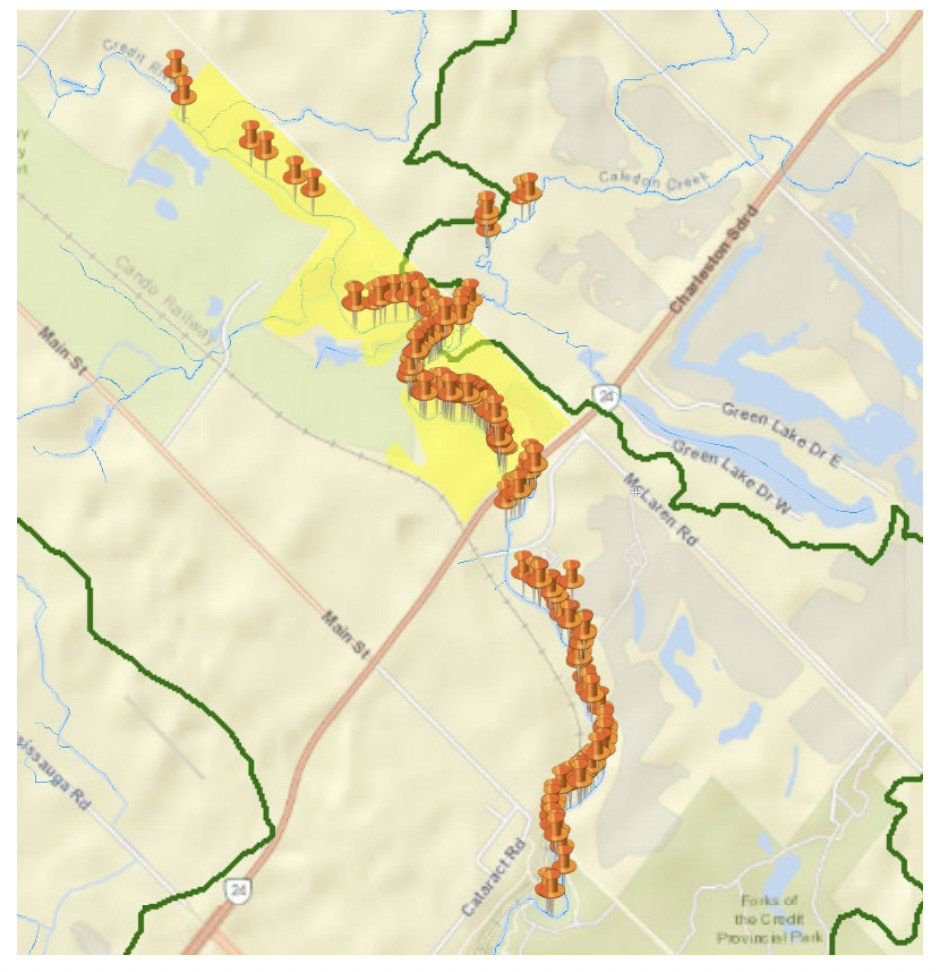
In a memorandum dated March 19, North-South Environmental senior ecologist Shannon Catton reviewed data confirming multiple Brook Trout and redd (spawning habitat) locations along the section of the Credit River that runs the length of the proposed pit. Credit Valley Conservation (CVC) has provided extensive data, including recent 2024 surveys, covering the stretch from Charleston Sideroad upstream to the boundary of CVC’s property (highlighted in yellow on the map). Notably, redds have been recorded within 400 metres of the proposed extraction limit and adjacent to the golf course where quarry dewatering discharge is planned, underscoring the critical need for a comprehensive impact assessment to protect this critical fish habitat.
This was especially critical because the Aggregate Resources Act (ARA), which governs the aggregate industry in Ontario, currently lacks clear definitions or enforceable standards related to flyrock, leaving a serious regulatory gap.
“A licensee or permittee shall take all reasonable measures to prevent fly rock from leaving the site during blasting if a sensitive receptor is located within 500 metres of the boundary of the site,” the ARA states.
Among other recommendations laid out in the proposed Official Plan amendment, which is expected to create a new chapter of policies around aggregate, the Town stipulated that mineral aggregate operations will be prohibited in evaluated non-provincially significant wetlands and in unevaluated wetlands and their supporting features.
The active steps taken by the town’s council were welcomed and widely praised, but the language in the proposed policies also drew criticism for being non-committal, wherein blasting operators are merely “encouraged” to conduct certain studies or “may” create specific plans, rather than being explicitly required to do so.
“They're on the desk of Minister [of Municipal Affairs and Housing of Ontario] Rob Flack, awaiting approval for more than a year now,” Sylvester reminded.
He observed something “unusual” — there is a dialogue between Flack’s ministry and the Town of Caledon that is currently taking place. Typically, decisions on Official Plan amendments are final, with little or no discussion.
In this case, the conversation appears to have begun when Groves personally contacted Flack to initiate dialogue. Since then, discussions have reportedly been handed off to ministry staff, reflecting a rare instance of negotiation on a policy matter that is normally considered settled, Sylvester claims.
The CBM quarry proposal has effectively been on hold since the Town implemented the Interim Control Bylaw (ICBL) at the start of the study process. The bylaw, extended in 2023, was appealed by CBM at the Ontario Land Tribunal, which the company lost, with the ICBL ultimately expiring on October 18, 2024.
Sevelka has formally asked the Town to confirm whether a centralized tracking system exists, to release a full and accurate record of all objections, and to clarify how concerns submitted by residents are incorporated into staff recommendations. Sevelka is yet to receive a response.
He has also filed an appeal with the Information and Privacy Commissioner (IPC) on November 19.
“It's a head scratcher. I just cannot fathom any reason why a town would not process such a significant expression of concern and opposition from their community,” Sylvester said.
“It is truly bizarre and puzzling. There has been a considerable turnover in planning staff within the Town of Caledon over the past three years. While it’s unclear whether this excuses delays in processing public comments, but I suspect that's a factor.”
Chuckling, Sevelka said, spending his retirement fighting for a happy and healthy life was “never” on his “bucket list”.
The Pointer contacted Outside Planner Cuesta Planning Consultants to ask whether they ever see these objections, and also reached out to the Town of Caledon for a statement, but did not receive a response by the time of publication.
Email: [email protected]
At a time when vital public information is needed by everyone, The Pointer has taken down our paywall on all stories to ensure every resident of Brampton, Mississauga and Niagara has access to the facts. For those who are able, we encourage you to consider a subscription. This will help us report on important public interest issues the community needs to know about now more than ever. You can register for a 30-day free trial HERE. Thereafter, The Pointer will charge $10 a month and you can cancel any time right on the website. Thank you
Submit a correction about this story

