
As Ottawa extends hope for Brampton’s Stellantis workers a 22-year veteran describes the anxiety
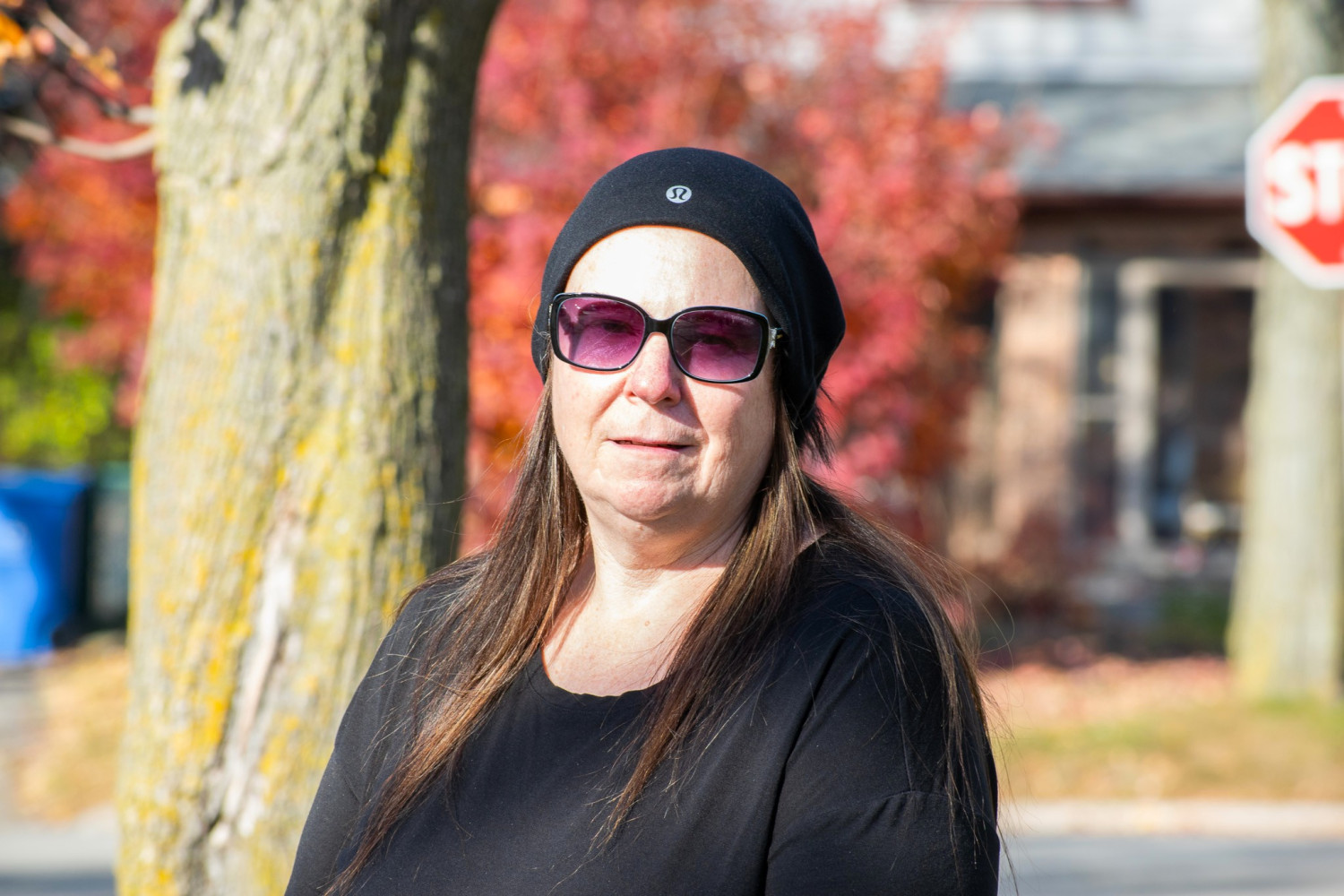
Julie Luckasavitch is one of the more than roughly 3,000 workers given an impossible choice when the Brampton Stellantis plant began to wind down operations in 2023.
It was supposed to be a temporary re-tooling to make way for a bright future. But things quickly didn’t seem right.
In 2024, Donald Trump was elected.
The anxiety felt by many Americans would soon spread to those in Canada whose lives would be thrown into turmoil.
The global automaker with a range of brands had planned to start producing the Jeep Compass in Brampton, after Dodge muscle cars had stopped rolling off the line. But what was communicated by Stellantis didn’t fit the shocking ultimatum Luckasavitch and her colleagues were suddenly presented with.
The Jeep plan was falling apart.
“They told us that we were getting a new product,” she says. “Then the new product was taken away.”
She could either choose a layoff package lower than what they were being paid, or relocate 300 kilometres west to the company’s Windsor plant. That option was not viable to someone like Julie, who had just placed her husband in long-term care, and was looking after a 17-year-old.
Her mind was consumed minute to minute by thoughts that relentlessly pushed in on her: uproot her life and leave her family behind; or accept a pay cut and spend each moment hijacked by anxiety, hoping that complex high-level decisions by executives staring at the bottom line would deliver the result she desperately needed.
The Netherlands-based auto manufacturing giant’s share price sat at 27 Euros in March of 2024. A year later it had fallen to below 8 Euros. Trump had decided that any automobile produced outside the United States and imported into the country would be subjected to crippling tariffs in a heavy-handed move to repatriate manufacturing jobs to the U.S.
The company’s brands like Chrysler, Dodge and Jeep that were primarily made for the American market, would now be subjected to massive cost hikes if cars made in Canada were sent south of the border.
Panic set in for the approximately 3,000 unionized workers laid off in Brampton for what was supposed to be a months-long upgrade to make way for the production of the Jeep Compass, the latest model that would roll off the assembly line at a plant that had been making different cars for the American market since the ‘80s.
Now, the cars that were supposed to be made by the re-tooled Brampton assembly line, would instead be produced in Illinois.
Suddenly, Julie’s life and the lives of thousands of colleagues who were more like family, seemed crushed.
But it was a slow pressure that was applied, as if weight was added onto her chest each day for two years, as the union, Unifor, entered into bargaining for a new contract, expecting that Stellantis would honour its commitment to the workers and an agreement with Ottawa that had seen about $530 million of taxpayer money earmarked for the re-tooling operation and protection for Canadian jobs.
While the Brampton facility remained shuttered, news dripped out that it was no longer part of the company’s future plans.
Workers felt “betrayed”.
Luckasavitch says the mixed messaging sent by the company during the three years she and her colleagues were laid off made them feel worthless, like pawns sent out every day to do the heavy lifting, only to be sacrificed later.
After months of speculation, on November 9, Stellantis and Brampton-based defence contractor Roshel, which converts and produces armoured vehicles for combat, jointly announced an asset purchase agreement for the idled Brampton plant, with no price disclosed and a signed deal expected at the end of 2026.
The stunning news did not come with any information about the thousands of workers laid off since 2023.
The deal followed a Memorandum of Understanding (MOU) reached on September 11, signed the same day Unifor paused bargaining before the September 20 expiration of the old contract between Unifor and Stellantis.
Stellantis had told the union on August 12 that it would open sale talks, which Unifor’s President Lana Payne framed as a “lose-lose scenario.” Earlier in the year Local 1285 President Vito Beato’s addressed a February 12 meeting when Stellantis Canada’s Trevor Longley said, “if we were going to close Brampton, we would have closed it already.” Beato cautioned this as “only talk” and said the union still wanted a reversal on the Jeep Compass decision.
On Friday, November 20, a four-party meeting involving Stellantis, federal government officials including Industry Minister Melanie Joly, Unifor and the provincial government, resulted in vague commitments to meet again about the future of the Brampton plant slated to be sold to Roshel.
“The future of our Canadian operations and our employees remained the focus of today’s second meeting with representatives of the Canadian and Ontario governments and Unifor. We remain committed to continuing constructive discussions,” Louann Gosselin, head of Canadian communications for Stellantis, wrote in an email to The Pointer shortly after Friday’s meeting.
Luckasavitch, who used to be an assembler working on the line and a part-time health and safety trainer, is tired of the mixed messaging which just makes dedicated employees feel even more disposable.
She describes working alongside her colleagues as like being with “family.”
“We work six days a week. So these people, you spend more time with these people than you do with your families. Like they literally feel like family.”
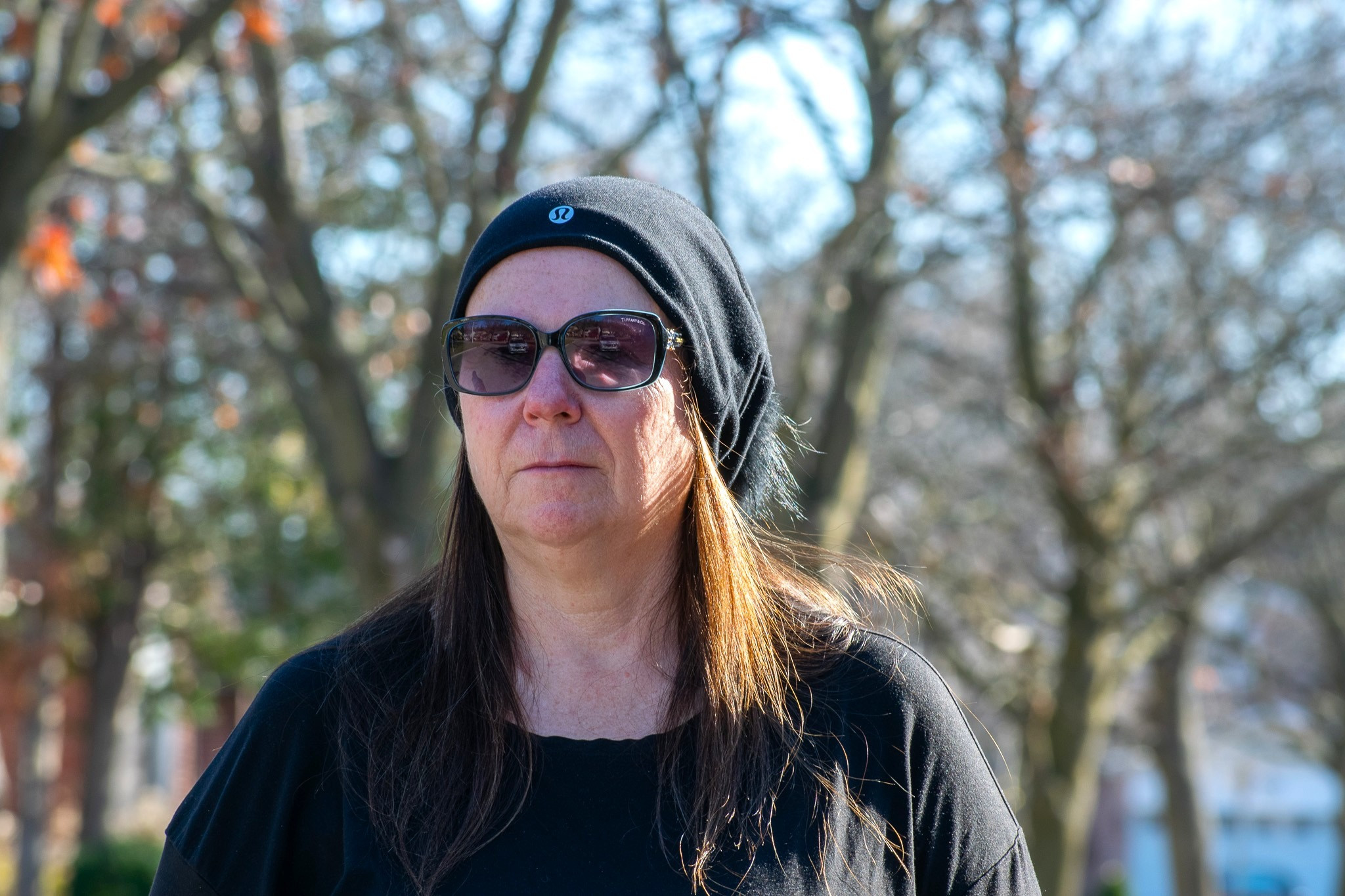
Working six days a week at the Stellantis Brampton plant, Julie Luckasavitch was able to support her husband in long-term care and a 17-year-old living at home. (Alexis Wright/The Pointer)
She feels betrayed by the way information was communicated by the company in the three years since she and her colleagues were laid off.
In November of 2023, Unifor members ratified an agreement with Stellantis tied to $3.6 billion in investment to move the Brampton and Windsor plants toward electric vehicles. Beato said at the time that Brampton members were protected through the retooling process. The plant was idled to prepare for the next-generation Jeep Compass, and about 3,200 workers were impacted.
Retooling was paused in February 2025 after a 25 percent U.S. tariff on Canadian-made cars was announced. What was meant to be an eight-week stoppage stretched past eight months. In July 2025, a Stellantis release still said Compass production would begin in the second half of the year, which gave Luckasavitch and her Unifor family a little hope.
It quickly sank.
On Tuesday, October 14, 2025, members received a robocall from the plant manager saying production was shifting out of Brampton.
The news, delivered so impersonally, sent workers crashing, their bodies tightening with anxiety, Luckasavitch says.
Just before, Stellantis had announced a $13 billion (US) investment, part of the plan to produce the Compass in Illinois. Beato called it “disrespectful and disgusting” and said it was the company’s first contact with members since February of 2025. Stellantis said afterward that it still had plans for Brampton.
Luckasavitch called it “heartbreaking”.
“You give your life to these companies and it’s like a gut punch with the way that they communicate with you. Even the stuff that we get from the union, we hear it on mainstream media before we hear it from the union. It’s very upsetting.”
She knew things looked bad in 2023, when the new contract was signed and the company claimed it was interested in continuing doing business, but the plant was not being retooled.
“If they were really concerned about doing business, [the plant] should have been retooled and back up and running within a few months, not years. Anytime any other vehicle has ever been retooled, it’s been months, not years, that it takes for a retool.”
She also expressed her disappointment with City of Brampton council members for ignoring the situation thousands of workers in the municipality have faced for three years, even making things worse for them. “They passed legislation so that the company can only be served for automotive. But they sold off a piece of the land and it’s all being built up now. So if they were really concerned about keeping Stellantis there, they should have never been able to sell that piece of land.”
Mayor Patrick Brown has faced criticism from Unifor members for being more focused on his own political career than the residents of Brampton, and his recent declarations of advocating to Ottawa officials have been described as too little, too late.
In January 2025, Stellantis sold approximately 32 acres of its Brampton property to Dream Industrial REIT, a property management company which operates in Canada, U.S., and Europe, without any intervention by Brown. Luckasavitch criticized the move, as the entirety of the property along Williams Parkway should have been designated specifically for the production of automobiles.
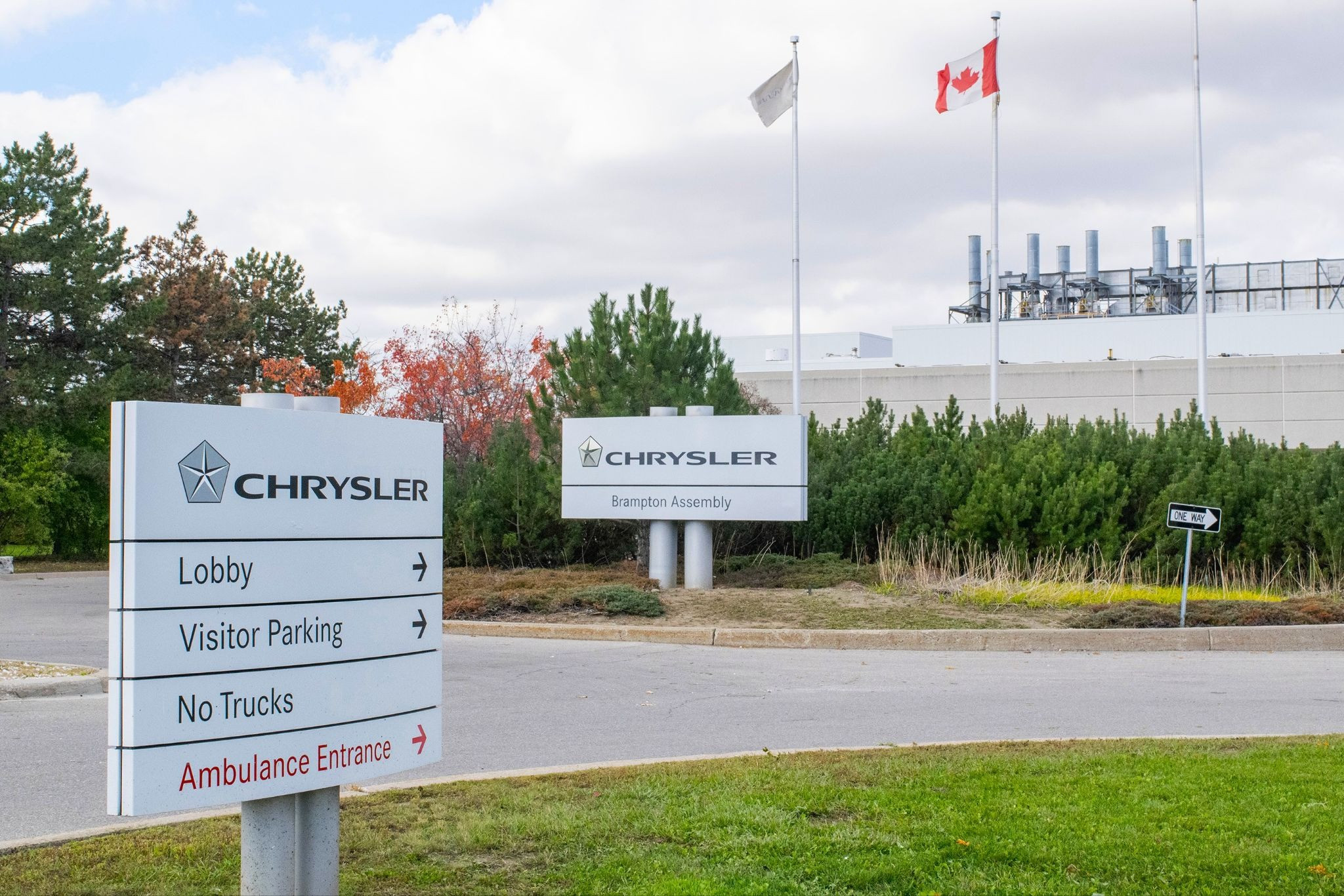
Julie Luckasavitch says everyone who has worked for Stellantis is “distraught” after working for Stellantis for 22 years. Starting over now feels like a daunting task. (Alexis Wright/The Pointer)
She believes the reason behind the sale of the plant is because Stellantis is not doing well financially.
“Everybody is distraught. I put 22 years in there. I’m going to be 53-years-old and now I’m going to have to start my career all over again. It’s heartbreaking.”
Ardis Snow, plant chairperson for the Brampton Assembly, spoke with The Pointer while at a rally outside the plant as passing drivers and strangers showed their support by honking their horns or dropping off food.
He said Brampton was Stellantis’s top-performing North American plant by the company’s own measurement. He does not see Roshel as a viable alternative. He pointed out that the sale agreement between the companies guarantees nothing about employing the 2,300 workers still attached to the facility.
Roshel CEO Roman Shimonov reiterated this, saying he cannot guarantee jobs for the laid off workers if Roshel acquires the plant. Both Snow and Luckasacitch say Roshel’s pay, benefits and pensions fall far short of what their Stellantis contract guarantees.
Snow said the deal between Stellantis and a Canadian company “feels like a total betrayal on their part.” Speaking before the four-party meeting on Friday, Snow said he would like to feel optimistic, but it is difficult with what union members hear from the governments and the lack of communication from Stellantis.
United Way of Greater Toronto and Toronto Pearson Airport recently announced, along with Peel Region, an initiative to help workers affected by disruptions in the economy by helping them “transition into in-demand jobs across the Pearson Economic Zone.”
The initial program is supposed to support nearly 200 workers, especially those like Julie who are affected by the Stellantis layoffs in Brampton. It will provide skills training, job placement and employment preparation. Luckasavitch says these jobs pay “significantly less” and it’s not enough to take care of families, especially during times when affordability has become so hard. She appreciates the efforts and will certainly pursue opportunities but is aware there is no guarantee of a job.
Nation Cheong, VP of Community Impact and Mobilization at United Way of Greater Toronto, describes the initiative as a cross-sector effort with Peel Region and the airport authority that began before the U.S. tariffs. Its aim is to connect low-income and displaced workers to growth in the Pearson Economic Zone, which he says has nearly 18,000 employers.
Tariffs, AI and Stellantis’s decision accelerated the need for this program. So, the first 200 participants, according to Cheong, will be Stellantis workers.
They will go through skills assessments, a personal career plan, job placement and a follow-up. Cheong also says supports such as mental health help and childcare are built into the program. Following its completion, workers can hope to find new positions in construction, transportation, mechanics, warehousing or logistics. The initial intake is supposed to begin in December, and an official launch is expected in February or early March.
“People are struggling with fear and uncertainty,” he said. “Many are angry. Many are worried about how they will pay their mortgage or pay their rent or put food on the table.”
Cheong recognizes that the initial group of 200 is less than ten percent of the Stellantis employees who could be out of work.
Snow welcomes retraining programs, but says all that he and his colleagues want are their jobs back. Many are second or third-generation employees.
Both Snow and Luckasavitch do not see a future where they would be working for Roshel, as industry experts have pointed out the defence contractor only has contracts and capacity for a very small percentage of the workers still employed but laid off by Stellantis.
“It's a roll of the dice every day when you get up,” Luckasavitch says. “You have no idea what's going to happen from one hour to the next.”
“All our workers want to do is just go back to work,” Snow says.
Luckasavitch wants Unifor to flex its considerable influence. “Let the union get in there and get us a deal. And let us move on with our lives.”
Email: [email protected]
At a time when vital public information is needed by everyone, The Pointer has taken down our paywall on all stories to ensure every resident of Brampton, Mississauga and Niagara has access to the facts. For those who are able, we encourage you to consider a subscription. This will help us report on important public interest issues the community needs to know about now more than ever. You can register for a 30-day free trial HERE. Thereafter, The Pointer will charge $10 a month and you can cancel any time right on the website. Thank you
Submit a correction about this story

