
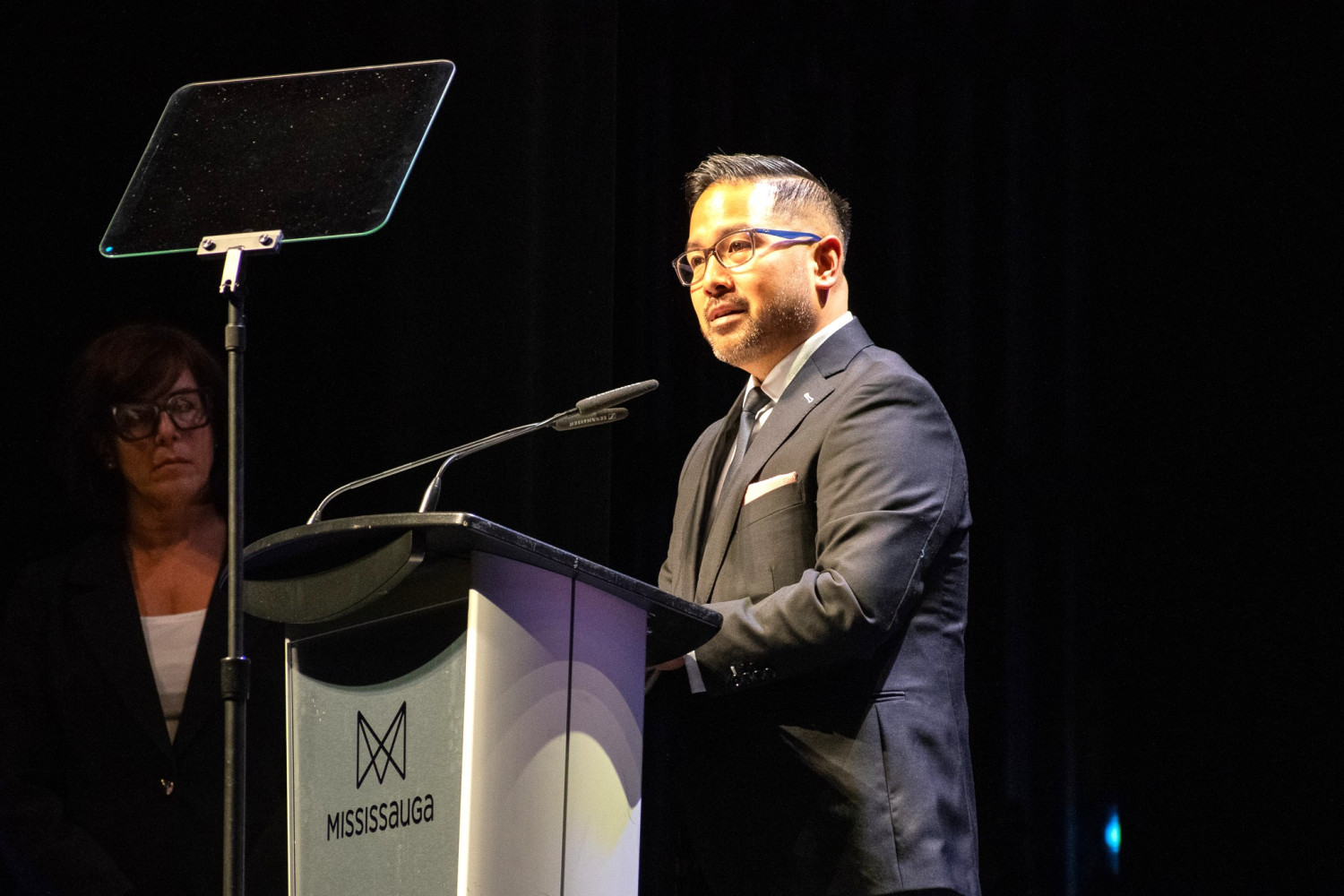
Tedjo offers few details on where Mississauga will find savings to deliver two-year tax freeze
Alvin Tedjo began his tenure as Mississauga’s new mayor Monday evening with one big question on the minds of taxpayers: how will he deliver the two-year tax freeze he promised in return for votes.
Following the city’s inauguration of its new council on November 16, Tedjo reiterated his commitment to affordability and the need for City Hall to become more financially efficient during a media scrum with reporters. However, when asked repeatedly how he intended to achieve those savings, the new mayor offered few specifics about which departments, expenditures or internal operations he would examine to make the numbers work.
He repeatedly said efficiencies need to be found, leaving taxpayers waiting for a clearer picture of what his promised tax freeze will mean for the city's finances.
“Right now, the burden is on residents. I think before we ask residents to tighten their belts even further, we need to tighten ours, so the city has a responsibility to make sure that we're not the cause of people's financial problems, and that's what I'm doing and I think our first budget is going to show that we can get this done,” Tedjo said.
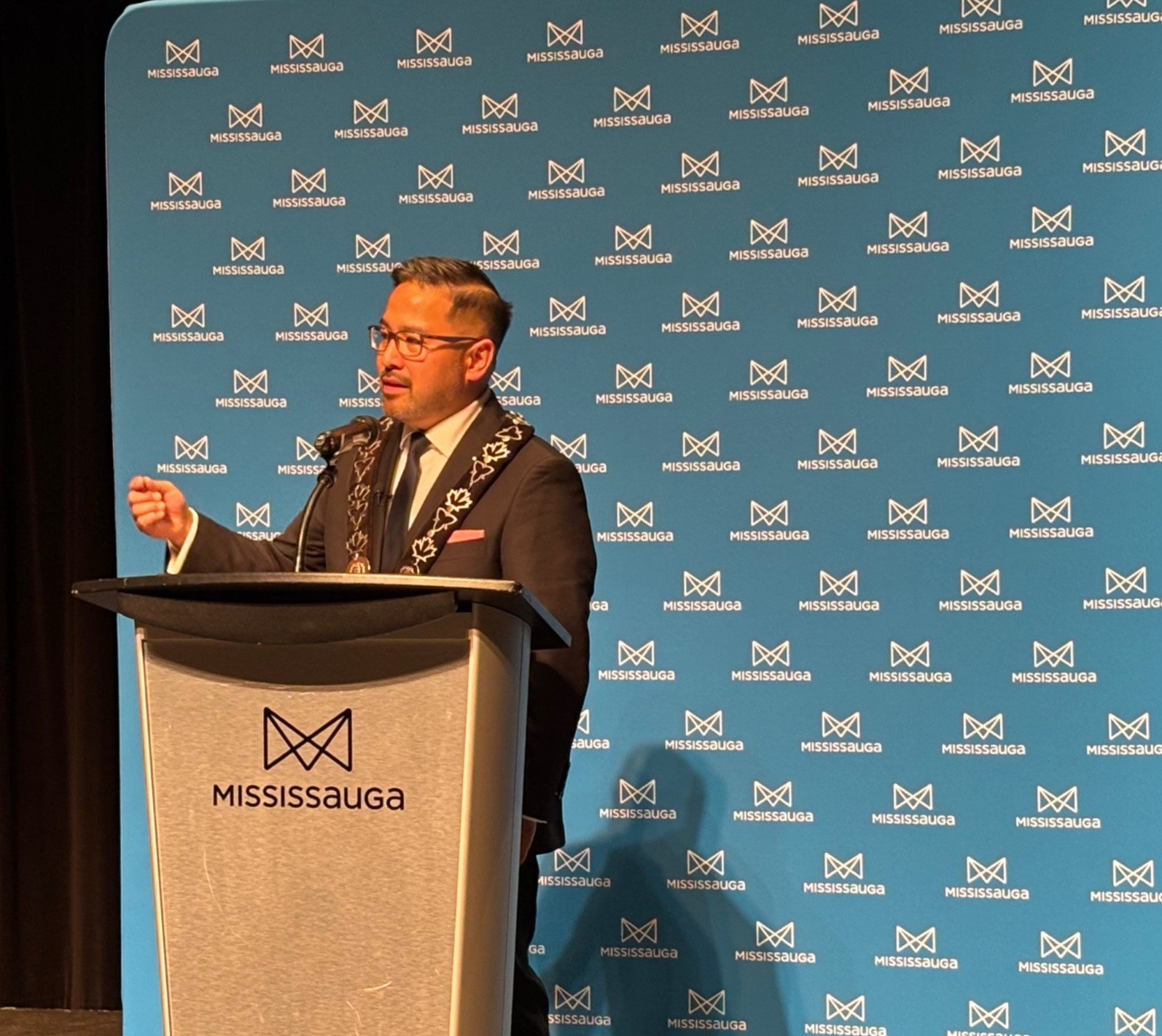
When speaking with reporters following the inauguration of Mississauga’s new city council, Mayor Alvin Tedjo provided few answers on where his administration will finding savings and efficiencies to make good on his campaign promise of a two-year tax freeze. (Benjamin Steeves/The Pointer)
Tedjo’s tax commitment became the central part of his mayoral campaign, as he positioned himself as the candidate who could deliver the biggest savings for voters.
When asked by reporters Monday evening about his proposed tax freeze and how his campaign pledge was put together, Tedjo said City Hall would need to pursue parallel strategies.
“When it comes to the budget, we have to do two things. We have to find more efficiencies within government to reduce our expenses, and we have to find more revenue sources to increase our revenues.”
Beyond stating the obvious, the former councillor who worked with the budget and each of the municipal departments closely for four years, offered no glimpse into what he has learned and observed about which savings and efficiencies should be prioritized.
He did not identify any particular area where he intended to look for savings. He pointed toward one of his predecessor’s key priorities, the federal government’s payment-in-lieu-of-taxes arrangement for Toronto Pearson International Airport, which Carolyn Parrish said for years needed to be dramatically increased to cover all the services Mississauga provides to Canada’s largest airport. The City’s fire department covers the airport and the regional police force paid for by Mississauga and Brampton taxpayers also handles Pearson. A range of other infrastructure and utility-related costs are delivered through City Hall under a funding formula from Ottawa that Parrish and other critics have argued for years shortchanges Mississauga.
“We need a new deal when it comes to Region of Peel and how the City of Mississauga funds [the] Region of Peel and specifically Peel Regional Police,” Tedjo said. “The Premier has committed publicly to finding a new way to fund that, because he knows that it's inherently unfair that Mississauga taxpayers continue to pay a disproportionate share of that, and that burden can't continue. There's a number of different things that we need to do too that we've been advocating for.”
During the campaign, Tedjo was quick to distinguish between skyrocketing policing costs and expenses City Hall controls, suggesting that would not be his responsibility as Mississauga Mayor, as the police budget is under the control of Peel Region council, which he also sits on. On Monday, however, he pivoted to the police budget when asked about the City Hall tax freeze he now has to deliver, even though the police budget does not directly impact the Mississauga portion of the overall tax picture.
He also focussed on the airport.
“The payment in lieu of taxes for the airport hasn't changed in 25 years, so it hasn't covered inflation, it hasn't covered the new and rising costs of infrastructure around the airport. We need that renegotiated.”
Parrish and others have tried.
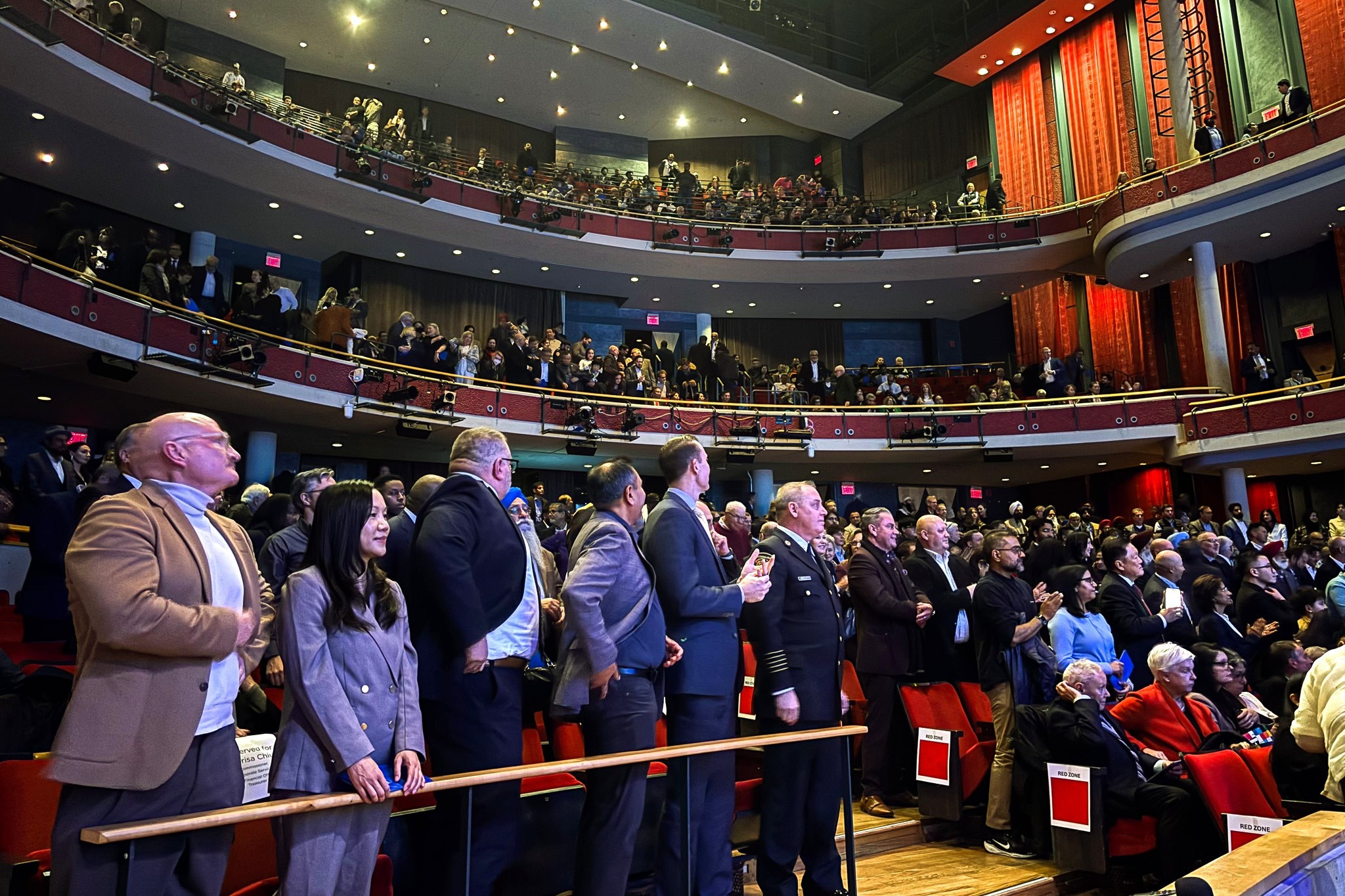
Mississauga’s Living Arts Centre hosted the inaugural meeting of Mississauga’s new council for the swearing-in ceremony on Monday evening. (Alexis Wright/The Pointer)
While the newly crowned mayor is causing speculation about his tax-freeze promise, Tedjo singled out individual departments and questioned whether annual increases were justified, even staffing levels, during a campaign interview on The Pointer’s Ballot Vox podcast.
“We need to do a deep dive into every department, see where what's working, what's not. I'm not looking to just fire people, that's definitely not the goal here. But we have to be conscious of inflationary costs, or the excuse of inflationary costs being what is used often to sort of say, ‘we need to grow by eight percent.’ Do you? Because most companies, most organizations don't,” he said during the interview last month.
Tedjo also expressed support for introducing an independent Auditor General and conducting value-for-money audits to examine municipal spending to help find additional savings, but the issue has been raised repeatedly by residents who have questioned if taxpayers are getting value for their money.
As reported by The Pointer, 2,449 Mississauga employees appeared on Ontario's Sunshine List in 2025, collectively earning $317 million before benefits, with an average salary increase of 6.5 percent in one year for those who made the list last year.
A decade earlier, there were 985 City of Mississauga staff on the Ontario Sunshine list, in 2016, which shows all provincial public sector employees making $100,000 or more.
George Tavares, a resident of Ward 7 who ran for council and regularly attends City Hall meetings and presents recommendations on municipal spending, argued that the city needs greater scrutiny of how money is being spent.
“The City is dreadfully inefficient,” he said.
Tavares wants to see zero-based budgeting, which would require departments to justify their expenditures rather than automatically carrying forward previous spending levels. He identified the City's vehicle fleets as a potential area where unnecessary expenses could be reduced.
For Tedjo, however, the specifics of how those efficiencies will be identified and implemented remain unclear. During the media scrum after the formalities at the Living Arts Centre Monday evening, he also discussed new revenue tools, including a vacant home tax, and seeking provincial permission to give Mississauga greater financial powers.
“New revenue tools are incredibly important. One of the things I've been talking about is about fairness for the City of Mississauga. We are next to the City of Toronto and yet the City of Toronto has its own Act where they can have special privileges. I've told the Premier we need the same privileges. Every major city in Ontario should be treated the same way, and that is one thing that I'm looking for. We want to be able to introduce a vacant homes tax. We can't do that without permission from the Region, so I'm asking the Province to give us those powers. We can't fulfill…property tax freeze deferral (for seniors, which he promised) without the approval from the Region.”
Tedjo said his first budget will be brought forward by February 1. The question is whether he can deliver relief without simply postponing costs, reducing necessary investments or relying on provisional revenue to compensate for spending, particularly on highly-paid staff, that remains unchanged.
Any tax freeze may offer residents a reprieve from increases to the City's portion of their property tax bill, but many said they will be watching to see if Tedjo just pushes off costs to the Region or onto the utility bill, or user fees, leaving residents no better off.
Email: [email protected]
At a time when vital public information is needed by everyone, The Pointer has taken down our paywall on all stories to ensure every resident of Brampton, Mississauga and Niagara has access to the facts. For those who are able, we encourage you to consider a subscription. This will help us report on important public interest issues the community needs to know about now more than ever. You can register for a 30-day free trial HERE. Thereafter, The Pointer will charge $10 a month and you can cancel any time right on the website. Thank you
Submit a correction about this story

