
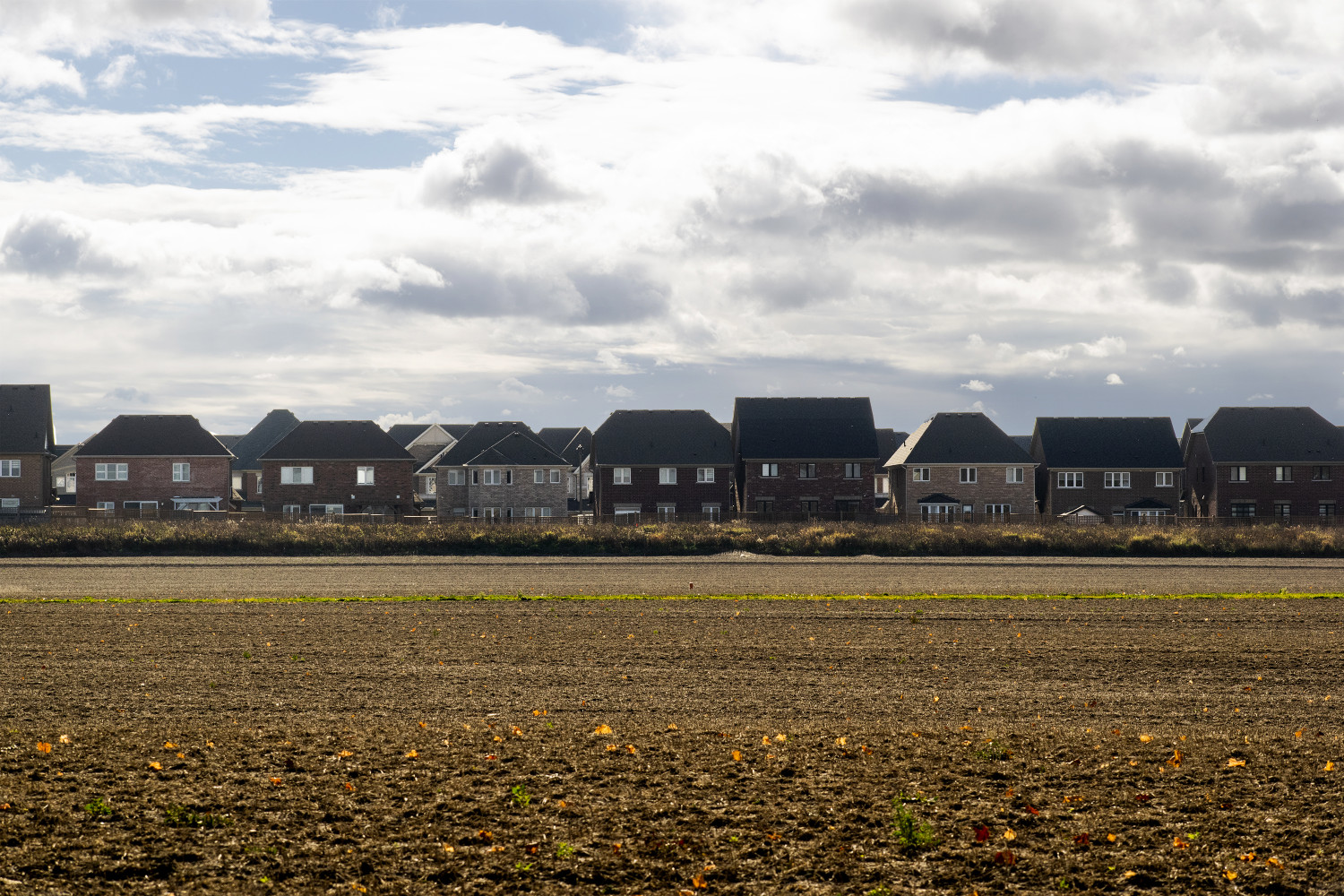
A home in Mississauga or Brampton, at what cost? Housing market remains unattainable for most residents, while NIMBYism only makes it worse
For most residents across Peel, the idea of defining themselves as property owners seems more like a mirage. The image appears tantalizingly before them, shimmering in their mind, but when they reach out for it…nothing is there.
In Mississauga and Brampton, where the cost of buying a home ranks among the world’s top 15 least affordable places, even the mirage is growing more distant.
Four years after being elected, Ontario Premier Doug Ford assigned ambitious new housing targets to 29 municipalities across the province: tasking Mississauga with onboarding 120,000 new homes by 2031, and Brampton with 113,000. What followed was a long, exhaustive list of sweeping legislative changes to accelerate development, many of which weakened environmental protections and eased restrictions on developers under the guise of making housing within reach for Ontarians.
Did it do either?
In 2024, Ontario’s own housing tracker revealed that all three Peel municipalities missed their target, with first-quarter 2025 housing starts at their lowest since 2009 and the province’s six-month average falling to a decade low, pushing it further from its goal of 1.5 million new homes by 2031.

All three municipalities in the region of Peel are not on track to meet their housing goals set by the PC government. (Anushka Yadav/The Pointer, Data: Ontario housing tracker)
Meanwhile, the units on the market remained out of reach despite 20.3 percent of Peel’s population having “a household after-tax income of $150,000 or higher”, as per its latest census. The Region has reported that 80 percent of Peel’s residents cannot afford the cost of buying a home.
The cost of living has grown faster than wages, while the average home price has refused to budge to meet buyers’ earnings, standing at $906,719 in September, up 3.5 percent from the previous month.
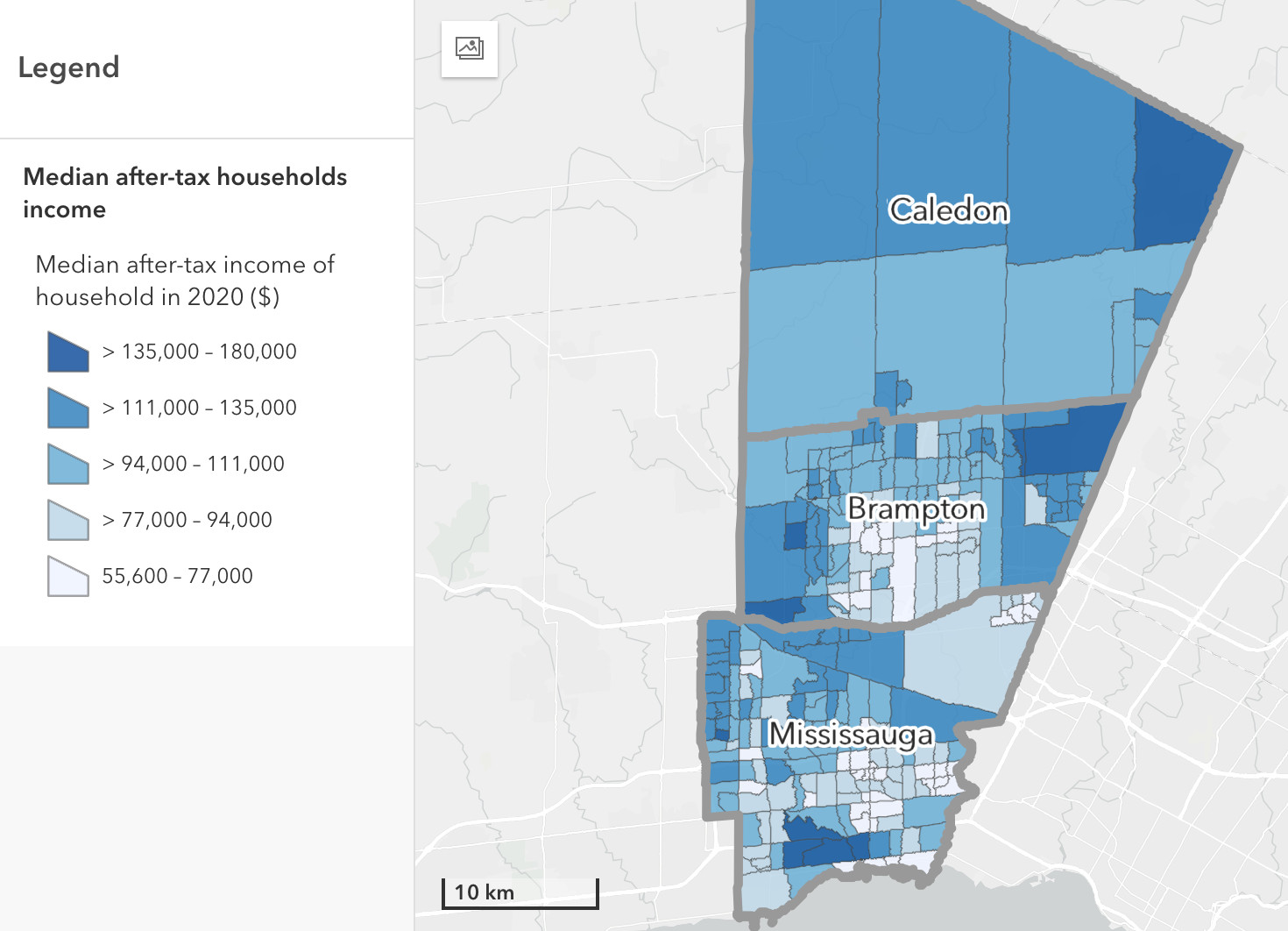
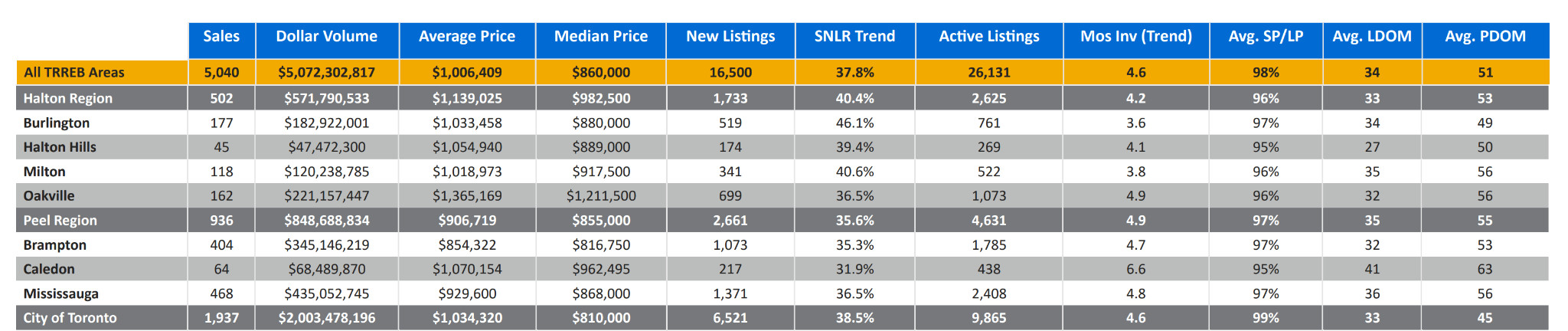
Data for September 2026, released by the Toronto Regional Real Estate Board, shows the average home prices in Peel were up 3.5 percent or $31,090 from August 2026. (Map: Peel 2020 Census, Table: Toronto Regional Real Estate Board, Photo: Alexis Wright/The Pointer)
The most recent October sales data from real-estate site Zolo puts the average sold price (all units combined including condos) for a Brampton home at $938,341 and $949,000 for a unit in Mississauga—($1.5 million for a detached 4-bedroom house), pushing homeownership financially out of the picture for many despite prices retreating from the peaks recorded earlier in the decade.
For residents trying to enter the market, the difference between a lower-priced property and the average home can still represent hundreds of thousands of dollars, and for those who rent, the pressure is not limited to homeownership.
The City of Brampton has been falling behind on its housing target with ground broken on only 4,759 units last year against the 11,300 required annually.
Advocates say that rising prices are shutting many buyers out of the market as Brampton residents struggle to regain their financial footing after four consecutive years of property tax hikes — totalling more than 28 percent between 2021 and 2025.
That is not to say housing is not being built in the city. But it’s clearly a struggle. Many existing residents don’t want to see the types of homes others desperately need. When they are planned for certain neighbourhoods, backlash can be swift, organized and determined.
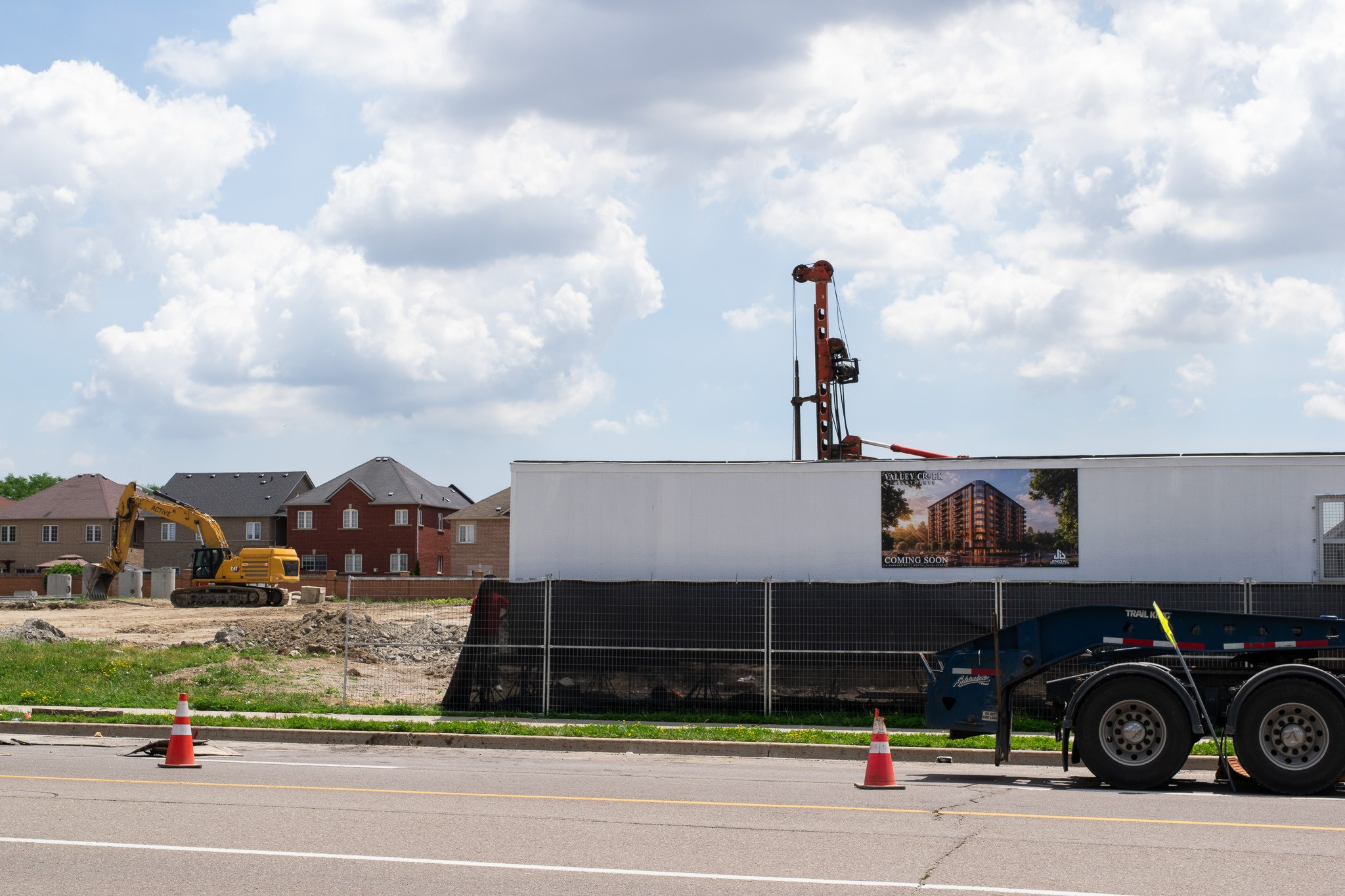
Jindal Developments is constructing a rental building at Cottrelle Boulevard and McVean Drive. The groundbreaking ceremony was attended by Mayor Patrick Brown earlier this year.
The Ontario Land Tribunal (OLT) approved a seven-storey condominium in 2022. Residents in the area say they have concerns with the building currently under construction, a 10-storey rental.
For residents like Ravi Sharma, it is a question of transparency. “Out of nowhere last year, he changed this from a condo tower into a rental building,” he said at a community demonstration this week organized by local residents to protest the project. “Not until the construction started, we didn’t even know that this is a rental building.”
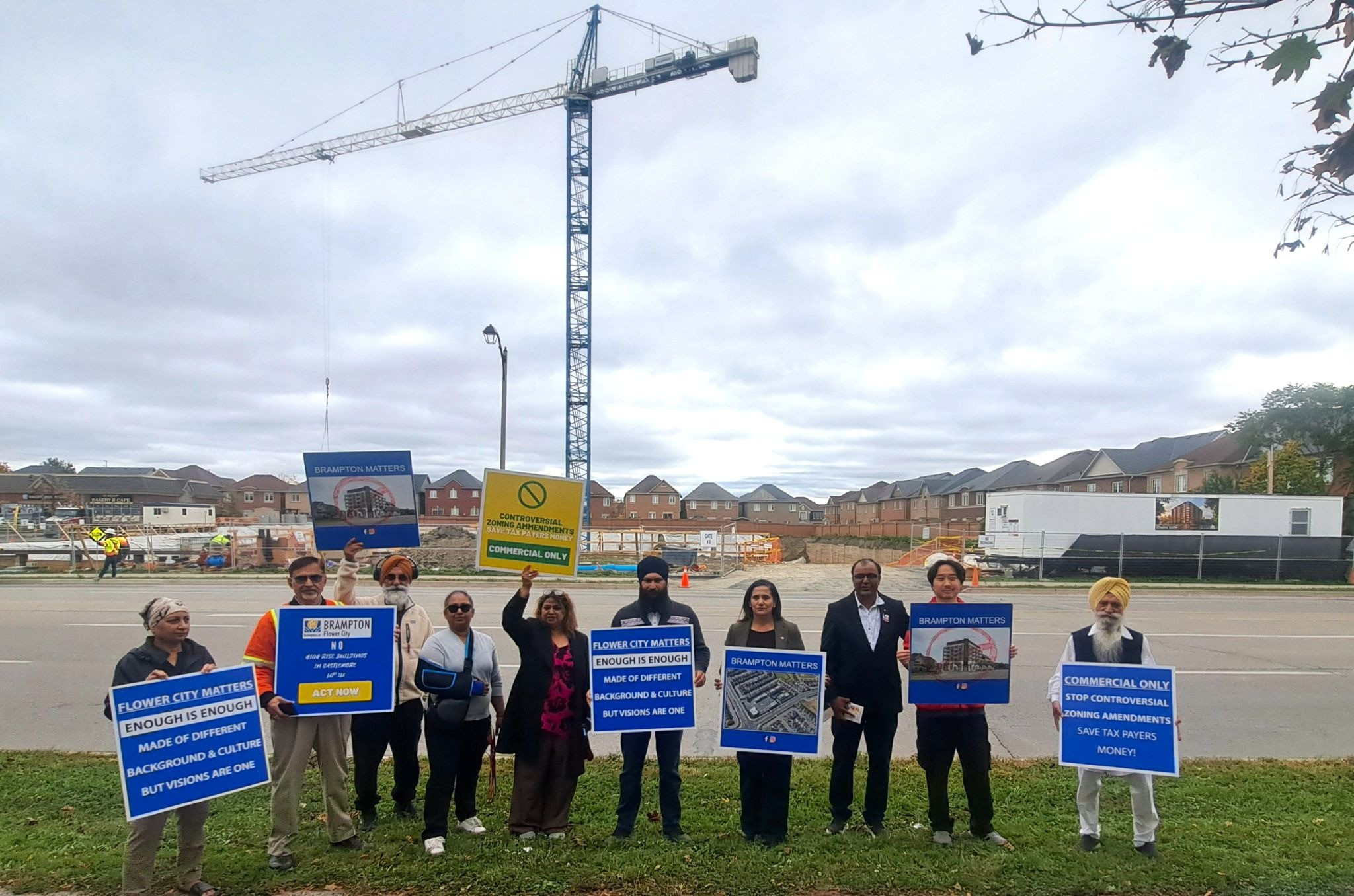
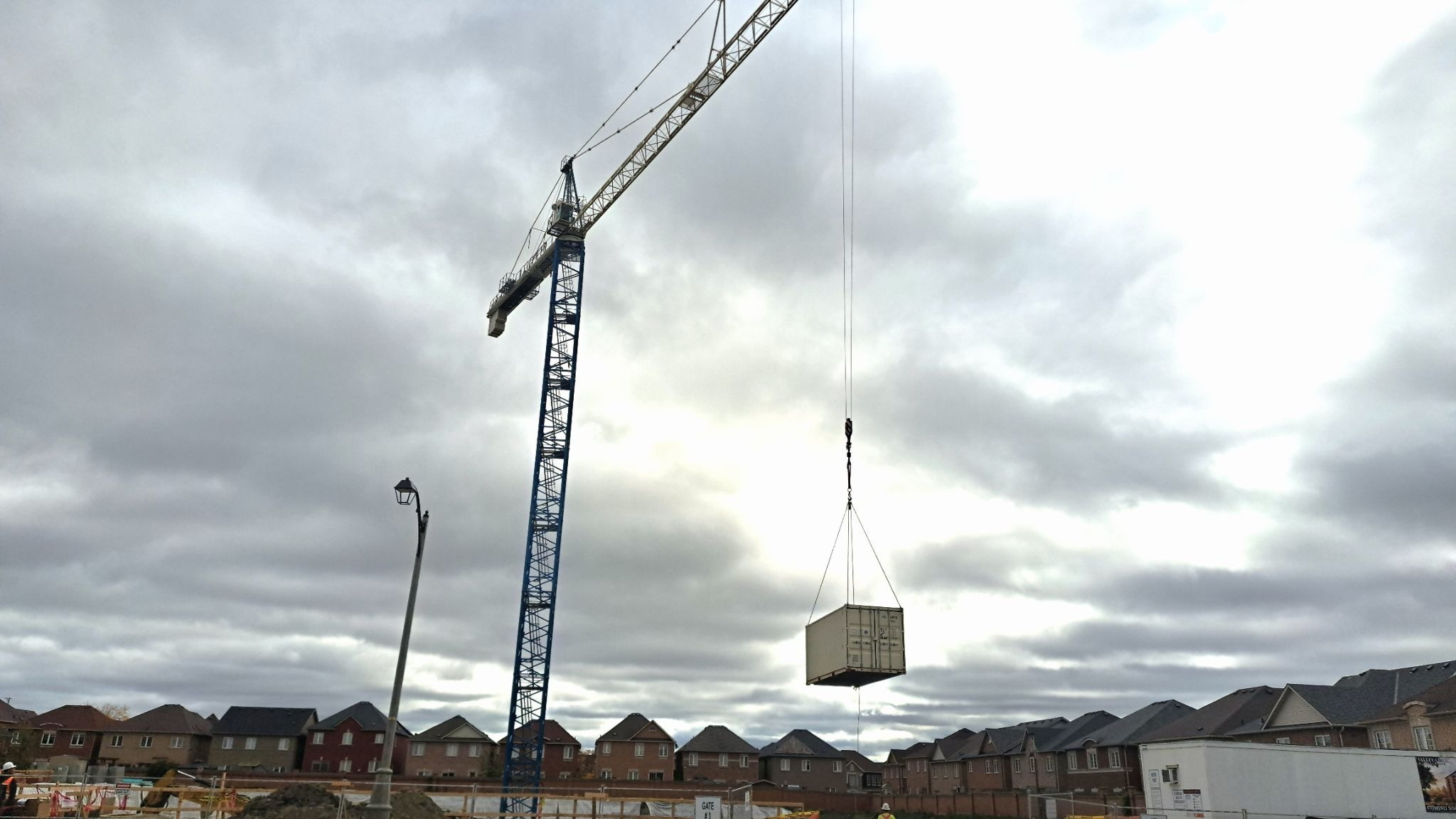
On October 14, a protest organized by Cynthia Sri Pragash (fourth in picture from left) brought residents, including Ravi Sharma, as well as mayoral candidates (Prabh Gill, Monica Singh Soares and Nayan Brahmbhatt) near Cottrelle Blvd and McVean in Brampton to oppose controversial zoning amendments. (Adrian Peries/The Pointer)
Cynthia Sri Pragash, a resident and council candidate for Wards 7 and 8, also raised concerns about construction and safety in the neighbourhood. Right now, a tower crane stands in the middle of the construction site, with its jib swinging over neighbouring houses. She believes this is hazardous, especially to children attending Calderstone Middle School, which is near the construction site.
Another resident, Jitesh Tripathi, says this project doesn’t belong in a “matured neighbourhood. “I’m not against any development, first of all. I’m against development which is not sustainable,” he insisted.
Pragash, who wants the project stopped, said residents would welcome something that is closer to their own height. “If the developer wants to put something similar to our residents, our height, we are more than welcome and will encourage that,” she said.
Nayan Brahmbhatt, a candidate for council in Wards 7 and 8, agreed that Brampton “needs more houses,” but also that the City should be more receptive to the residents’ concerns—a sentiment shared by their neighbours in Mississauga.
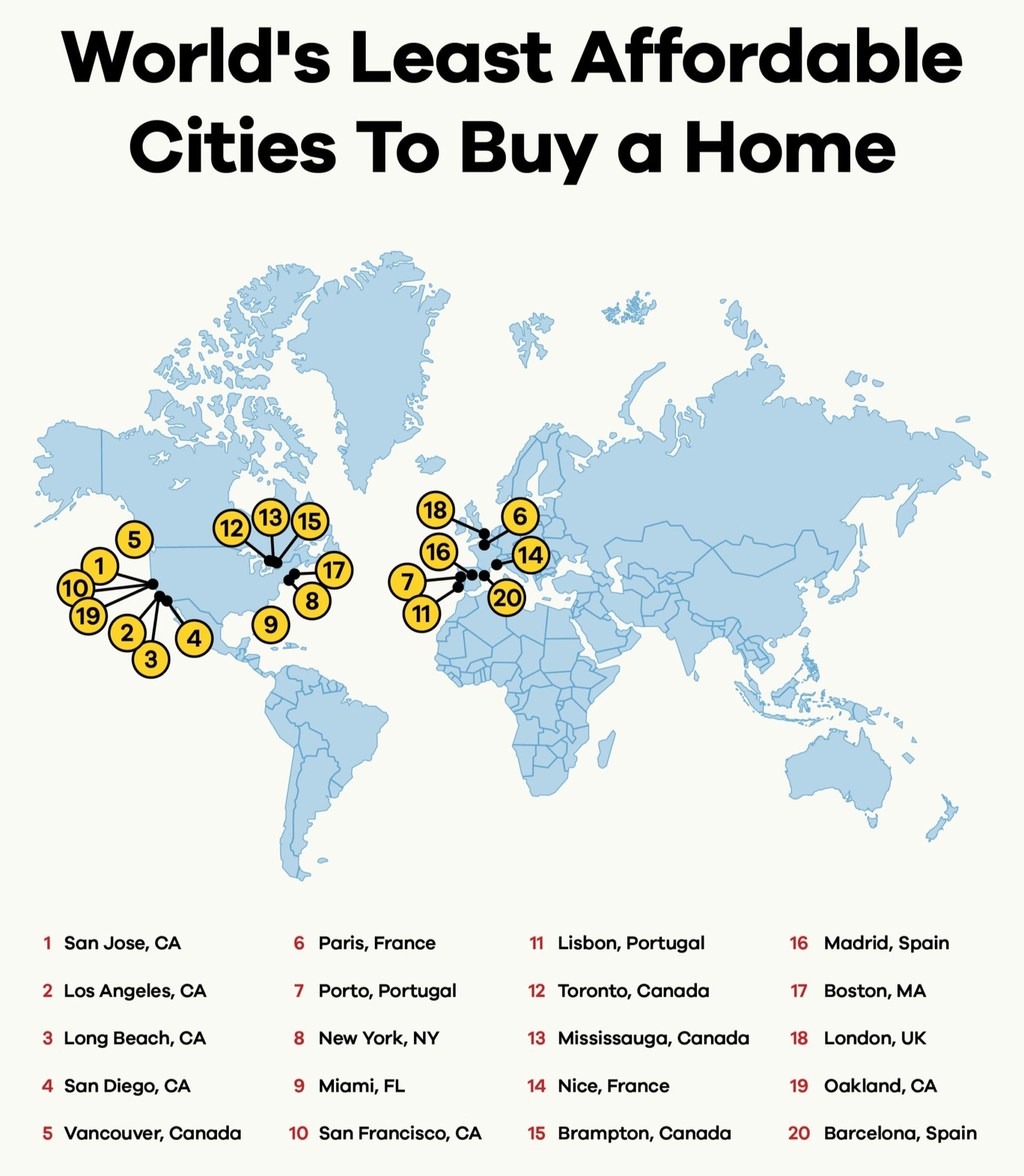
Data released by Remitly earlier this year ranked Mississauga and Brampton among the top 15 cities across the world struggling to offer affordable homes to their residents. (Realtor.com/Remitly)
Over the last three years, Mississauga residents have also borne consecutive hefty property tax increases: a 6.8 percent increase in 2024, followed by a 9.2 percent spike the next year and a 5.2 percent increase in 2026.
The public backlash was so fierce that Mayor Carolyn Parrish was compelled to release a lengthy statement in 2025: “Why are Your Taxes so High? A Message from Mayor Carolyn Parrish—where she credited the increase to rising regional costs, mainly a 23.3 percent jump in Peel Police budget.
But for residents already struggling to keep up with the cost of housing, the burden does not simply end with a down payment or monthly rent; property taxes, mortgage payments, wages and the rising price of everyday necessities all compete for space in household budgets—making affordability a much more arduous challenge than the price of a home alone.
Although Mississauga’s housing market has cooled from the steep price increases of the pandemic years, homeownership can mean breaking the bank, especially for those who bought at the market’s peak in recent years and are now managing substantial mortgage payments.
The financial strain extends to homeowners across the country: The Bank of Canada recently reported that Canadian households continue to carry elevated debt relative to income. Over the next 12 months, a group of five-year, fixed-payment mortgages taken out during the pandemic (representing about 12 percent of all outstanding mortgages in Canada) is expected to come up for renewal. “On average, these borrowers will see their payments increase by about 15 percent, broadly in line with increases similar borrowers have faced over the past 12 months,” the 2026 Financial Stability Report, released on May 28, estimated.
In Mississauga, then, the housing affordability question therefore extends beyond whether prices are rising or falling in a particular month. It is whether residents can manage the full cost of keeping a roof over their heads without sacrificing the ability to afford everything else.
For candidates seeking to lead the city, that presents a unique question: what can Mississauga realistically do to ease the pressure — as a creature of the province — and how might those local decisions affect the supply, type, and cost of housing?
Bonnie Crombie, who is running to return as Mississauga’s mayor in the upcoming 2026 Municipal election, identified housing affordability as one of the reasons she decided to seek the position again.
“The lack of affordability and the suffering from the same thing here everyone else is, which is the lack of housing being built and lack of affordability in housing. It's not being negotiated with housing [being] built. There aren't enough affordable units,” she told The Pointer.
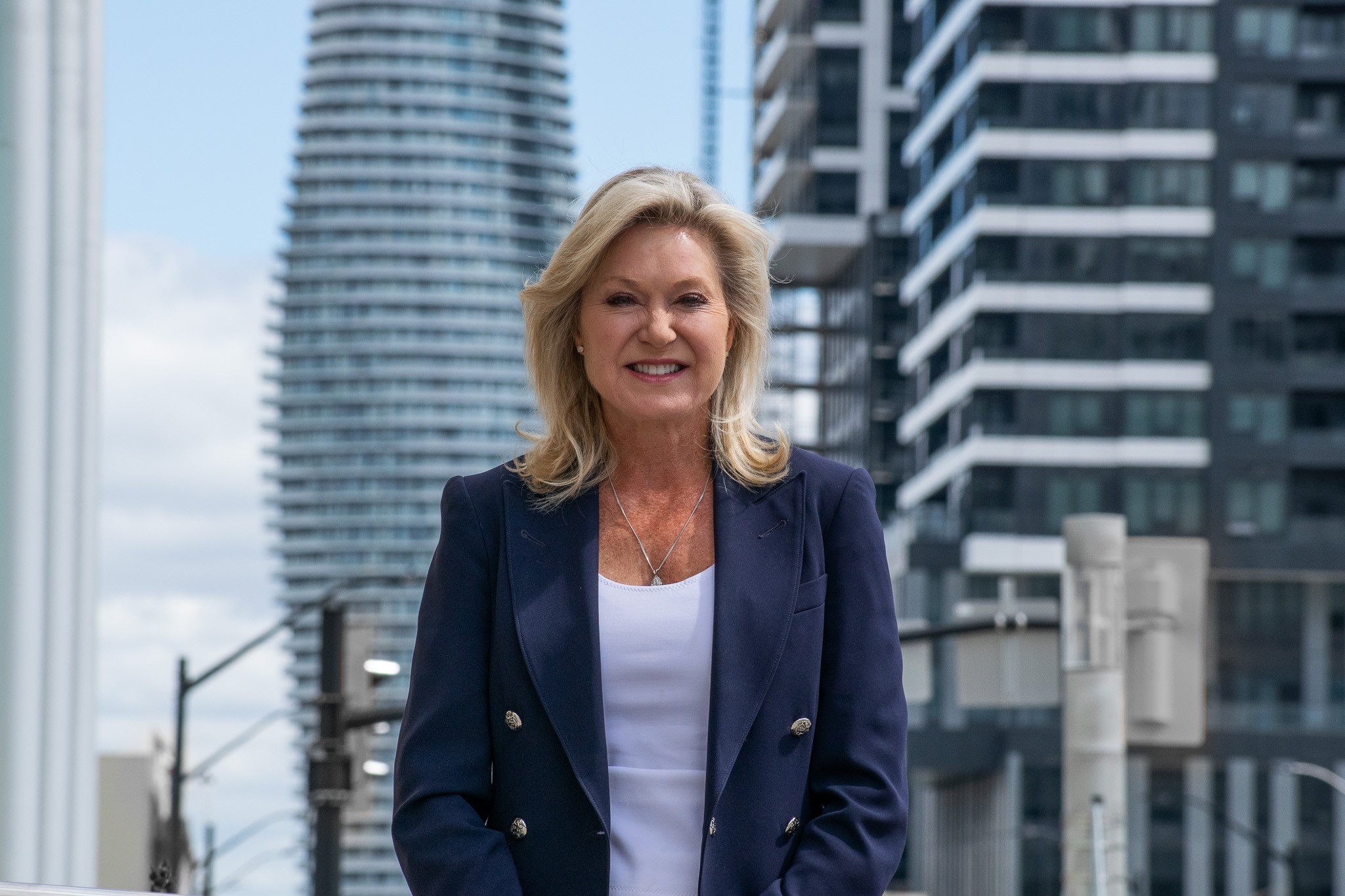
Bonnie Crombie is hoping to return to Mississauga for another term as mayor with the motto: ‘A Future You Can Afford. Experience You Can Trust’. (Alexis Wright/The Pointer)
Crombie connected the housing issue to the types of homes being built. She believes Mississauga needs a broader range of housing formats and prices, particularly because not everyone wants or can afford a large, detached home.
“Not everyone will have a four-bedroom single standalone home; not everybody wants one. They're happy [to own] stack townhomes. I think people prefer either low or medium density to high density,” she noted.
Her focus would be on creating what she described as more livable-sized units at lower and medium densities—in line with her previous policies as mayor; in 2023, she used strong mayor powers to override a council vote that had rejected fourplexes, becoming one of the first mayors to endorse the ‘missing middle’.
“I think they [residents] want more livable size units in lower medium density and that's what I would focus on as well,” she said.
That approach places the type of housing alongside the amount of housing. Rather than treating the issue simply as the number of units constructed, Crombie’s comments point toward a mix of housing intended to appeal to different households.
During her interview, Crombie was asked about Mississauga’s reduction of development charges (the fees builders pay to cover the infrastructure needed for the homes they sell) and whether she would restore those charges. She would not, she said.
“When I was leader of the party in Queen's Park, I wanted to eliminate all DC's development charges. I would have created a fund, the Ontario Building Fund, that would have made cities whole because cities have become reliant on development charges as a source of revenue,” she responded.
Crombie said reducing development charges could lower the cost of construction but argued that municipalities would need another way to replace the revenue.
“The point of reducing the development charges is to make the cost of building lower for the developer, but ultimately that would have to lead to a rejection in the price of the home,” she explained.
She also said she supported reducing costs to the development community if the savings ultimately benefited purchasers. “There has to be a way that municipalities are made whole,” she added.
Previously reported by The Pointer in 2023, Mississauga estimated it could lose between $815 million and $885 million in development charges for infrastructure over the decade as a result of Bill 23 and that the city had added $5 billion to its 10-year capital forecast to address projected infrastructure needs.
Development charges traditionally help municipalities offset the cost of infrastructure associated with growth, including roads, utilities, transit, parks, community centres, libraries and fire stations, creating tension for municipal leaders. Lower development costs may be intended to encourage construction and ultimately reduce the cost of delivering housing, but municipalities still have to pay for the infrastructure needed to support new communities.
Dipika Damerla, who has represented Ward 7 and is also running to be Mississauga mayor, described her housing philosophy in straightforward terms when discussing the future of the city's waterfront and large-scale development.
“Build the homes people want, and the density should be the right amount of density at the right place. That's really important, not max profits,” she told The Pointer.
For Damerla, the issue is not simply whether Mississauga builds more housing. She said the City needs to consider what is being built and whether the housing reflects what residents are looking for.
“What I don't want happening is if Mississauga doesn't build the right mix of housing, which means I know that we may not be able to build as many single-family homes as we did in the past, but at least townhouses; we will lose young people to Milton and Cambridge,” she said.
Damerla wants Mississauga to remain a place where young people can find housing options that work for them and criticized an approach that she said focuses too heavily on the number of units rather than the homes and neighbourhoods those units create.
“People don't live in units. People live in homes, people live in neighbourhoods, and that's what I want to build,” she said.
The distinction is significant because Mississauga is being asked to accommodate substantial housing growth, a target of 120,000 new homes by 2031, equal to the number of new homes the City had previously planned to add over 30 years.
The challenge for municipal officials is therefore not only increasing supply, but determining where that housing should go, what forms it should take and how the infrastructure supporting it will be paid for.
Housing affordability does not exist separately from municipal taxes.
Both candidates have spoken about taxes while supporting an independent audit, although their approaches differ. Damerla has proposed freezing the City of Mississauga’s portion of property taxes for one year while Crombie has cautioned that a freeze could be sustained for only a limited period without drawing on municipal reserves.
“I think you could do it a year, maybe two, but you would be dipping in reserves,” Crombie noted.
“A more practical solution is to cut, to look for ways to save money, and to find efficiencies, do the value for money audit that I proposed with an outside auditor or the new auditor general that we would hire, and find savings, and then keep the increases at or below the rate of inflation.”
The disagreement is part of a larger question about how Mississauga can keep taxes manageable while simultaneously dealing with the infrastructure demands created by growth.
Currently, the City of Mississauga oversees $19.8 billion in physical infrastructure spanning roads, parks, community centres, and stormwater systems. In 2024, staff reported an estimated $44 million funding shortfall for that year with its existing revenue sources not fully covering state-of-good-repair needs. At the time, Mississauga was exploring alternative revenue streams because the traditional property-tax base could not support all of the city’s growing infrastructure needs.
By June 2026, the projected gap ballooned to an average of $118.4 million over the next 10 years.
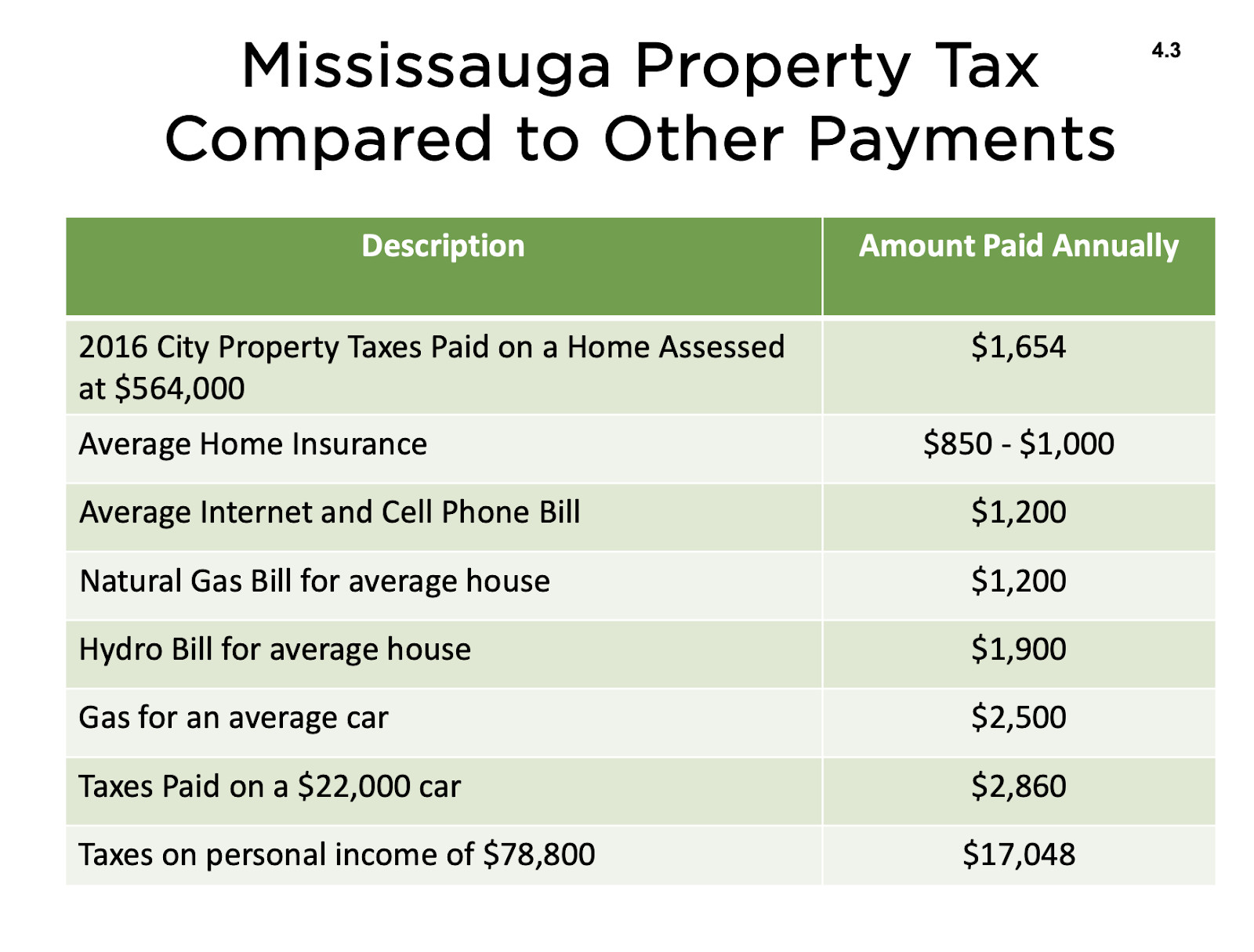
The average home insurance premium in Mississauga was between $850 and $1,000 in 2016-17. As of 2026, the estimated average has risen to $1,782 per year or about $149 per month, according to Rates.ca Home Insuramap data. (City of Mississauga)
In 2025, Ontario’s housing policies reported that the province’s Bill 23 lowered development charges and parkland fees municipalities collect from developers. Those charges help municipalities offset infrastructure costs associated with growth. Mississauga’s building-permit activity had fluctuated significantly in the years examined and was described as a significant indicator of the impact of provincial housing policies.
In August, Toronto Regional Real Estate Board (TRREB) also directly addressed the role municipalities play in housing costs. TRREB CEO John DiMichele said governments should take advantage of a more balanced resale market to address barriers to attainable housing, including zoning restrictions, taxes, development charges and lengthy approval processes.
The issue is therefore not confined to the mayoral candidates’ platforms. It is also part of a larger policy debate about how municipalities can encourage construction while paying for the infrastructure needed to support it. Crombie specifically raised the issue of renters during her interview, including seniors living on fixed incomes.
“People not being able to afford their rent and [I’m] especially concerned about seniors who are on fixed incomes, paying their property tax and thinking about how we could relieve them. Seniors who are renters with escalating rents as well,” she said.
The comments point to an affordability problem that extends beyond the purchase price of a home. For someone earning minimum wage, the difference between income and housing costs remains central to whether they can afford to live in the city.
The Bank of Canada similarly highlights differences in financial pressure between households. While it says overall household financial health has remained relatively stable, it also notes that some highly indebted households have little savings or financial flexibility to deal with unexpected costs.
Housing affordability therefore sits at the intersection of several municipal and household pressures: the price of a home, the availability of different housing types, rent, property taxes, wages, debt and the cost of building new homes.
At the same time, the City is facing the financial demands associated with accommodating new growth. Provincial housing targets mean thousands of additional homes must be supported by roads, transit, parks, fire services and other municipal infrastructure.
That leaves the next mayor facing two competing pressures: making it easier and less expensive to build housing while ensuring the City can afford the infrastructure required to support it.
For residents already struggling with housing costs, the outcome will not be measured only by how many units receive approval.
It will also be measured by whether those homes are within reach of the people who work in Mississauga, whether renters can remain in their communities, young people can afford to stay in the city and whether homeowners can continue to carry the cost of living there.
As the mayoral and councillor campaigns continue in both cities ahead of the October 26 municipal election, housing affordability is likely to remain tied to a much larger question about what kind of places Brampton and Mississauga want to become — and who can afford to live in them.
Email: [email protected], [email protected]
At a time when vital public information is needed by everyone, The Pointer has taken down our paywall on all stories to ensure every resident of Brampton, Mississauga and Niagara has access to the facts. For those who are able, we encourage you to consider a subscription. This will help us report on important public interest issues the community needs to know about now more than ever. You can register for a 30-day free trial HERE. Thereafter, The Pointer will charge $10 a month and you can cancel any time right on the website. Thank you.
Submit a correction about this story

