
Rebate sparks strong Canadian EV sales with record highs in Ontario but a move by Ottawa could slow the gains
After pledging to continue Canada’s legacy as an “auto nation” where “EVs are the future”, Prime Minister Mark Carney has received a clear signal from Canadians: they are ready to put the electric-vehicle market back in gear.
The return of federal rebates has helped spark new demand for electrics as recent sales data show strong growth this year.
On February 5, as Carney unveiled Ottawa’s new auto strategy with few details, he brought back incentives for those who choose electric vehicles — a move that would prove timely just weeks later, as the U.S.-Iran war sent gas prices in Canada from a low of $1.34 per litre (the national average in late February) to as high as $1.90 in May, according to CAA, amid severe shipping bottlenecks through the Strait of Hormuz.
A June report by the Financial Accountability Office of Ontario estimates the sustained rise in oil prices is set to add nearly $650 in annual fuel costs for the average Ontario household.
The highest rebate for a battery electric or hydrogen EV purchase, $5,000 (only for vehicles that sell for $50,000 or less), is only available this year, and the market has responded with cars flying off showroom floors. The rebate amount will decrease to $4,000 next year, $3,000 in 2028 and 2029, $2,000 in 2030, and then will end. Plug-in hybrids come with a $2,500 rebate this year, which gradually drops to $1,000 in 2030 before ending. It’s possible rebates could return after that but industry and government officials hope by then base prices will be much lower and incentives will no longer be needed to attract buyers looking for competitive deals.
Research has shown that while many consumers want to drive more sustainable vehicles, and others see the value in moving away from increasingly expensive fuel, the upfront sticker shock of expensive alternatives has prevented sales from matching the market interest in non-internal combustion cars.
Currently, the lowest priced EVs in Canada, such as the KIA EV4, the Tesla Model 3, the Fiat 500e and others, sell for between $39,000 and $40,000, before extra charges such as freight, delivery, inspection fees, taxes and upgrades. Similar fuel burning internal combustion models, such as the Hyundai Venue, the KIA K4 and the Toyota Corolla sell for between $22,000 and $25,000 before all the additional charges.
The $5,000 EV rebate this year has narrowed the pricing gap and motivated more buyers to make the move, with almost 22,000 ZEV (Zero Emission Vehicle) purchases across the country in June, accounting for 11.5 percent of all vehicle sales, compared to 7.9 percent in June of last year when the rebate was not in place.
While Ottawa reinstalled rebates for future EV buyers, another move could send sales in the opposite direction, critics fear, after the Trudeau-era EV Electric Vehicle Availability Standards (EVAS), or the sales mandate, was scrapped. The controversial move came after a 60-day pause and review of the 2026 EV sales mandate, which originally required 20 percent of new light-duty vehicle sales to be zero-emission amid concerns about the impact of U.S. tariffs on Canada’s auto industry.
By October 2025, Stellantis announced it was moving its planned Jeep Compass production, including electric models, from Brampton to the U.S., leaving about 3,000 workers at the giant assembly plant unsure about their livelihood.
The halt also hit Canadian EV sales which fell from 17,101 in September to 14,653 in October, a 14.3 percent drop, before slipping further to 14,199 in November, nearly 17 percent below September’s level.
The renewed $2.3 billion federal rebate program recharged the EV market by offering buyers up to $5,000 for battery-electric and hydrogen fuel cell vehicles and up to $2,500 for plug-in hybrids starting February 16. The full rebate amounts are only available this year after which they will gradually decrease each year until the program wraps up in 2030 to minimize market disruption when incentives end.

Under the renewed federal EV rebate program, Canadians can receive up to $5,000 for battery-electric and hydrogen vehicles and up to $2,500 for plug-in hybrid electric vehicles.
The appetite for EVs was evident almost immediately: In March, 21,574 EVs had been sold.
By June, EV adoption in Canada jumped to 11.5 percent of new car sales—an increase of 56.1 percent from one year earlier and roughly matching June 2024 levels.
New Statistics Canada data show there were 21,876 new zero-emission vehicles (ZEVs) sold in June, accounting for 11.5 percent of all new motor vehicle sales, up from 7.9 percent in June 2025.
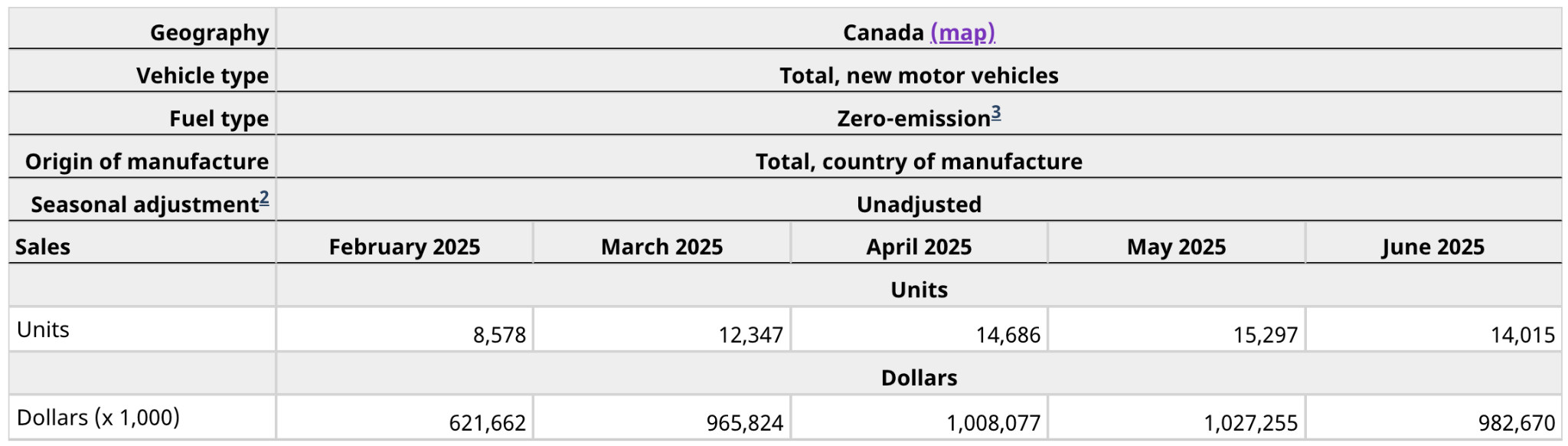
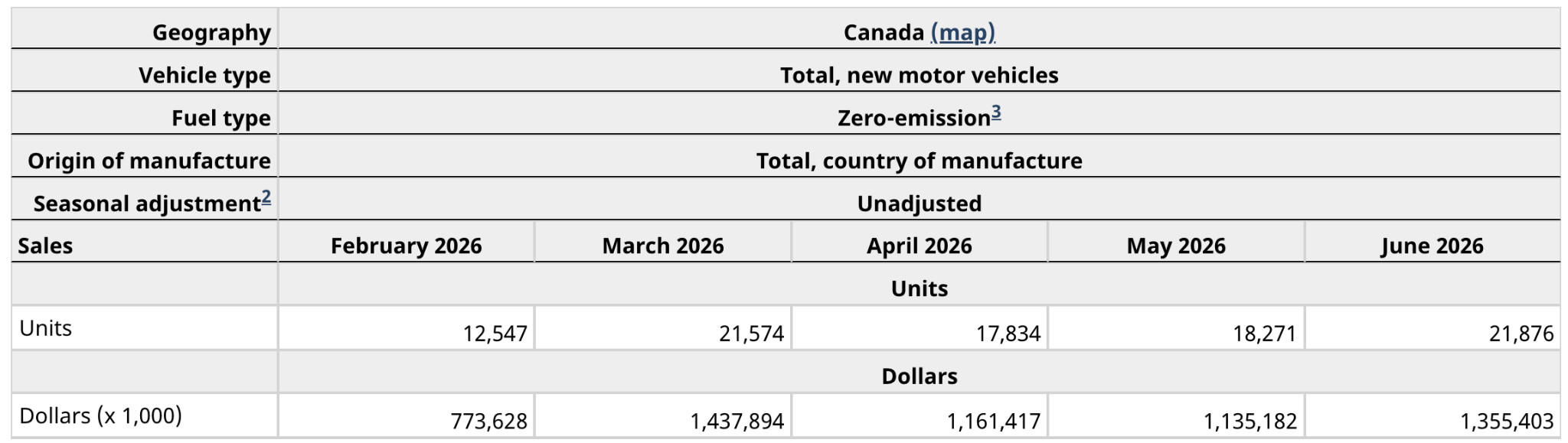
Between February and June 2025, there were 64,923 zero-emission vehicles sold in Canada. For the same time period in 2026, 92,102 EVs were sold.
(Statistics Canada)
Clean Energy Canada’s Director of Policy & Strategy Joanna Kyriazis believes “EVs are having a comeback year in Canada” due to a combination of three factors: higher gas prices, the return of the federal EV rebate and falling EV prices as more affordable models enter the Canadian market.
“Cheaper models are also partly a response to the way the federal EV rebate is designed because it included a $50,000 price cap, and we've seen many car makers price their models accordingly to come in under that cap,” Kyriazis told The Pointer.
“For the longest time, upfront cost has been the major key barrier to EV adoption.”
The majority of new EV sales are now below $45,000 compared with an average new vehicle price of about $63,000 — “unlocking EV ownership for a lot more Canadians”.
In June, B.C. reached 21.7 percent (4,550) of new vehicle sales being electric while Quebec was close to 19 percent (7,604) — the two provinces have had higher EV adoption rates historically.
However, it was Ontario that emerged as the bright spot, recording its highest-ever EV market share in June with EVs accounting for 9.4 percent of new vehicle sales, or 7,365 cars — up 94 percent from June 2025.
Kyriazis stressed that comparison needs to account for the changing provincial rebate landscape since “the rebate environments in B.C. and Quebec are fundamentally worse than they were in 2024”.
Both provinces offered substantial rebates in 2024 that could be stacked with federal incentives, steering sales upward. In Quebec, the government’s decision to wind down its rebate beginning January 2025 prompted a rush of buyers hoping to take advantage of the incentive before it disappeared. By the end of 2024, EVs skyrocketed to nearly 40 percent of vehicle sales in the province.
“Ontario is a better kind of signal for just normal market forces because Ontario hasn't really had a rebate for a long time,” she said.
“The fact that we're seeing EV sales rise significantly this year is a barometer for how mainstream drivers are thinking about EVs.
“Ontario’s now almost even with Quebec in terms of the percentage of EV sales it’s accounting for in Canada.”
Despite the Doug Ford government cancelling the Electric and Hydrogen Vehicle Incentive Program (EHVIP), which offered up to $14,000 till July 2018, just months after taking office, the latest Ontario EV sales reflect a shift in demand even in the absence of generous government incentives: With more new EVs priced below $50,000 and many closer to $40,000, the upfront price gap is narrowing against the average new vehicle while higher fuel costs make the potential savings of driving electric more attractive.
While climate change-fuelled wildfires may be prompting some drivers to move away from fossil fuels, “cost savings” remain a top consideration, with EV owners able to “save thousands of dollars a year on fuel by charging with Canadian electricity rather than relying on gas, whose price is shaped by ever evolving global geopolitical dynamics abroad”, Kyriazis added.
Could rising consumer demand translate into a stronger EV manufacturing future in Ontario? That may not be as certain.
On August 14, Unifor confirmed that Stellantis notified the union of its intent to explore selling or closing the Brampton Assembly Plant and shift its production to Illinois.
“We are preparing to enter the collective bargaining process and have nothing to announce at this time. Our focus remains on finding a sustainable manufacturing solution for Brampton Assembly,” a statement shared by Stellantis with The Pointer noted.
Kyriazis noted the decision reflects uncertainty facing North America’s EV manufacturing sector in its entirety, as automakers navigate shifting U.S. policies, tariffs and pressure to move production.
“Canada and the U.S. had been on track under the Biden administration to build up their EV battery and manufacturing industries and close the gap with Europe and China,” she said.
Then came U.S. President Donald Trump who made a “U-turn” on EV policies along with stirring tariff storms that have had “serious repercussions” for the entire continent’s EV manufacturing sector, particularly for the Detroit Three — Ford, General Motors and Stellantis.
In October last year, U.S. Commerce Secretary Howard Lutnick told Canadian officials and business leaders that the Trump administration was committed to consolidating auto assembly within the United States, with Canada coming “second”.
The remark prompted Ontario Premier Doug Ford to caution that Canada faced a “massive threat” to its manufacturing base.
Kyriazis believes “Canada’s best chances for building EVs here is to be looking for other partners” like German automakers behind Volkswagen and Mercedes-Benz, South Korean companies including Kia and Hyundai, and Chinese automakers such as BYD, Chery and Leapmotor — “car makers that are investing in the future and are investing in EV technology”.
So far, however, there have been few signs that automakers with established manufacturing footprints in Canada are prepared to pivot back toward EV production specifically for the Canadian market.
One company she is watching closely is Toyota.
The Japanese automaker was “one of the last car makers to start moving towards EVs”, instead focusing heavily on conventional hybrids. But as other automakers have begun shifting back toward gas-powered vehicles, Toyota has been moving in the opposite direction, expanding its EV lineup and recording its strongest-ever EV sales in Canada.
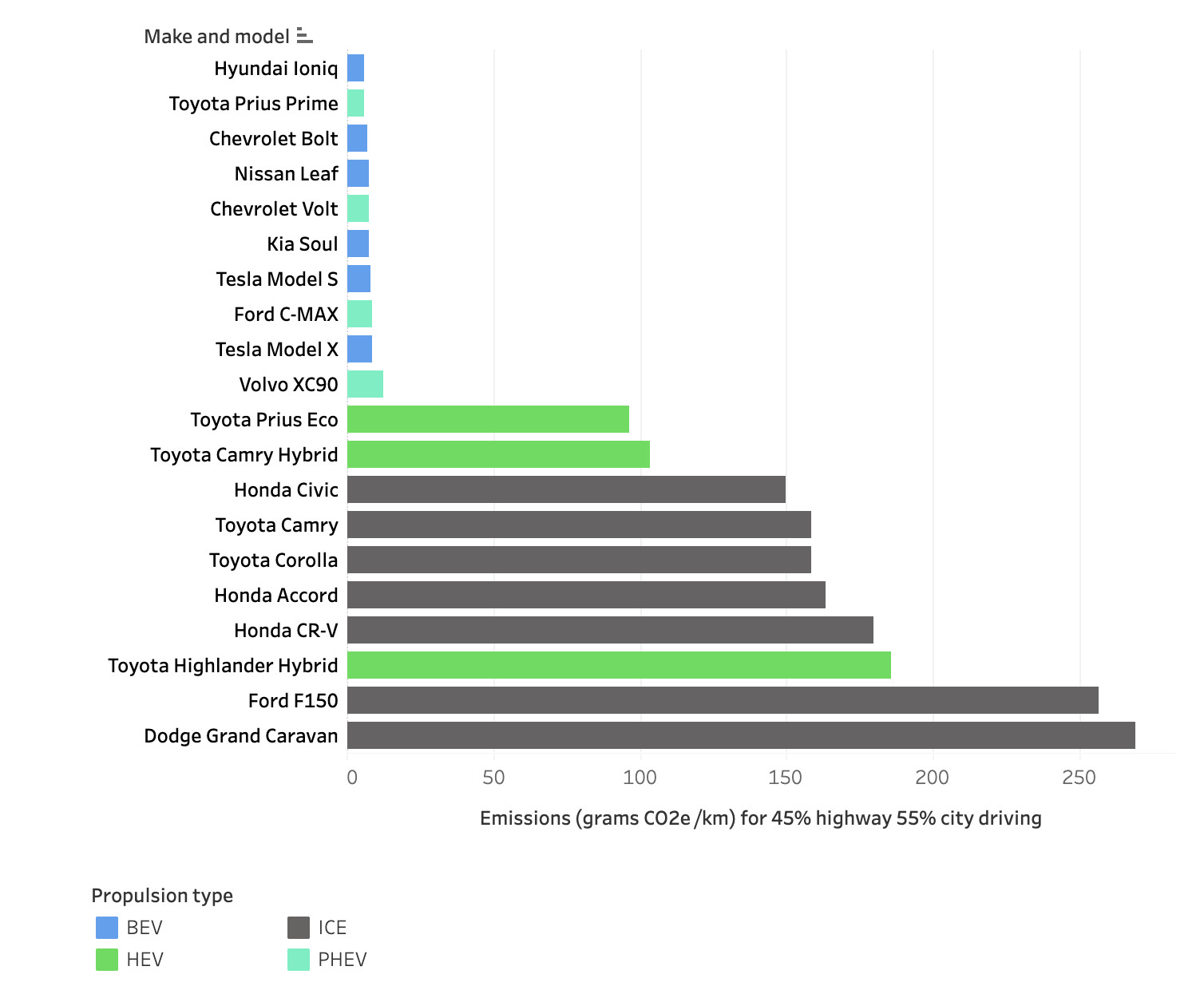
In Ontario, internal combustion engine (ICE) vehicles and hybrid electric vehicles (HEVs) account for most vehicle-related greenhouse gas emissions as both rely on petroleum fuels such as gasoline or diesel.
In July, Toyota led Canada's federal Electric Vehicle Affordability Program (EVAP) as the top manufacturer for rebate claims as a result of strong sales across its electrified lineup including the Toyota bZ electric models, Prius Plug-in Hybrid, and RAV4 Plug-In Hybrid frequently rank among the top-claimed slots.
On April 13, Toyota also announced a $300-million investment in Canada to build three new facilities: a new head office building in Toronto and two new parts distribution centres in Surrey, B.C. and Calgary, Alberta.
“If it is forging ahead with EVs, and if its EV sales are doing well in Canada, is it possible that they would be interested in bringing some EV production here?,” Kyriazis said.
“That’s kind of the question mark that I have.”
Regardless, she expects Canada’s EV market to climb back toward the peak levels of sales seen in 2024—which will still be “behind the rest of the world”.
Latest data from the European Automobile Manufacturers’ Association shows battery-electric vehicles accounted for 20.7 percent of new car registrations in Europe through June 2026, up from 15.6 percent a year earlier, while hybrids remained the most popular choice at 37.3 percent and the combined share of petrol and diesel cars fell to 29.7 percent from 37.8 percent.
Norway remains the global leader, with EVs making up an estimated 97 percent of new car sales in 2025 while China is the world’s largest EV market by volume, with more than 13 million EV sales estimated for the same year.
In both cases, a combination of strong policy incentives, tax exemptions and widespread charging infrastructure have been responsible for widespread adoption while “Canada continues experiencing some collateral damage from the decisions that the U.S. is making”.
But Trump might not be the only obstacle in this race…
On August 14, the federal government repealed Canada’s Electric Vehicle Availability Standard (EVAS) with no substitute.
Environmental Defence’s Clean Transportation Program Manager Sam Hersh called the repeal of EVAS “another gift to the auto industry”.
“It shows that Canada is not taking its climate priorities seriously,” Hersh told The Pointer.
“[EVAS] encouraged production and manufacturing here in Canada, which is certainly what we need right now in the midst of a trade war and in a climate crisis.”
In February, Carney had promised to replace EVAS with tougher emissions standards that will cut tailpipe carbon pollution by nearly 57 percent, from 172 grams of carbon dioxide equivalent per mile to 74 grams per mile.
Initially, the new standards were expected to be released in summer or by the end of June but the federal government has yet to unveil a replacement despite months of consultations and questions from environmental groups.
Hersh criticized the decision to repeal EVAS without an immediate replacement creating uncertainty for both the auto industry and consumers: “It is not good policy”.
The federal government’s own cost-benefit analysis, released on August 15, estimates that repealing EVAS would result in a net societal cost of $90.3 billion between 2026 and 2050. While fewer EVs on the market would save consumers an estimated $57.6 billion in upfront vehicle and home-charging costs, those same consumers would forgo an estimated $53.8 billion in fuel savings from EV ownership.
The repeal is also expected to result in 326 megatonnes of forgone greenhouse gas emission reductions, valued at $94.2 billion in potential global climate-related damages.
Critics have noted those numbers could be higher as the calculation does not account for the losses occurring during the interim period, as uncertainty persists and the replacement standards could potentially be delayed beyond the 2027 model year.
The public comment period for the proposed repeal remains open until October 29 but Hersh worries the delayed consultation process could result in further weakening of the eventual targets, as the auto industry continues to lobby against those policies.
“Even though Prime Minister Carney lowered the target, the auto industry is still saying now, it’s too aggressive a target,” he warned.
“So, the government can cave to the industry as much as they want but it's never going to be enough.”
A recent Transport & Environment (T&E) analysis of the European Union’s proposal to ease its ban on internal combustion engine vehicles, effectively weakening the carbon reduction target for cars from 100 percent by 2035 to 90 percent found that, under the softer target, roughly 85 percent of new cars sold in 2035 would be battery electric vehicles (BEVs), instead of 100 percent. It will lead to an additional 720 metric tonnes of carbon dioxide equivalent emitted between 2025 and 2050.
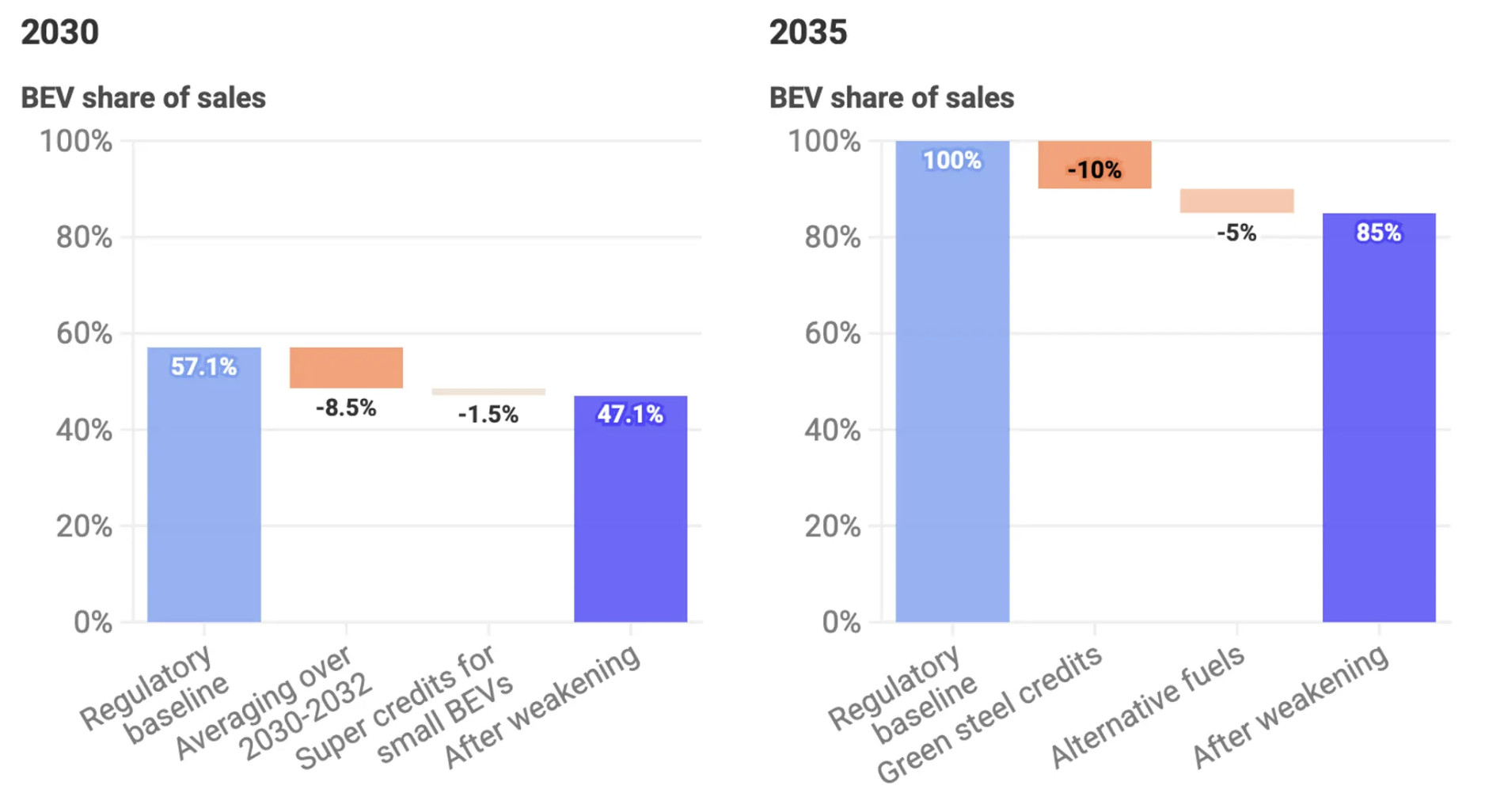
The European Commission’s decision to weaken the 2035 carbon reduction target is projected to lower the share of battery electric vehicles (BEVs) among new car sales by 15 percent in 2035, leading to cars emitting an additional 720 metric tonnes of carbon dioxide equivalent between 2025 and 2050.
(Transport & Environment)
Hersh argued EVAS would have been the “cheapest, most cost-effective and efficient way” to accelerate EV adoption across Canada. Now, in its absence, the federal government needs to introduce ambitious tailpipe emission standards more closely aligned with those in Europe.
Environmental Defence is calling for targets closer to 90 percent by 2035, rather than the 75 percent target the government has moved toward.
He has been attempting to seek clarity from the federal government about when those standards will arrive but has received little information about the timeline or rationale behind the delay.
“There’s a lot less access given to environmental groups and advocates, and a lot more is given to industry, especially the auto industry,” he added.
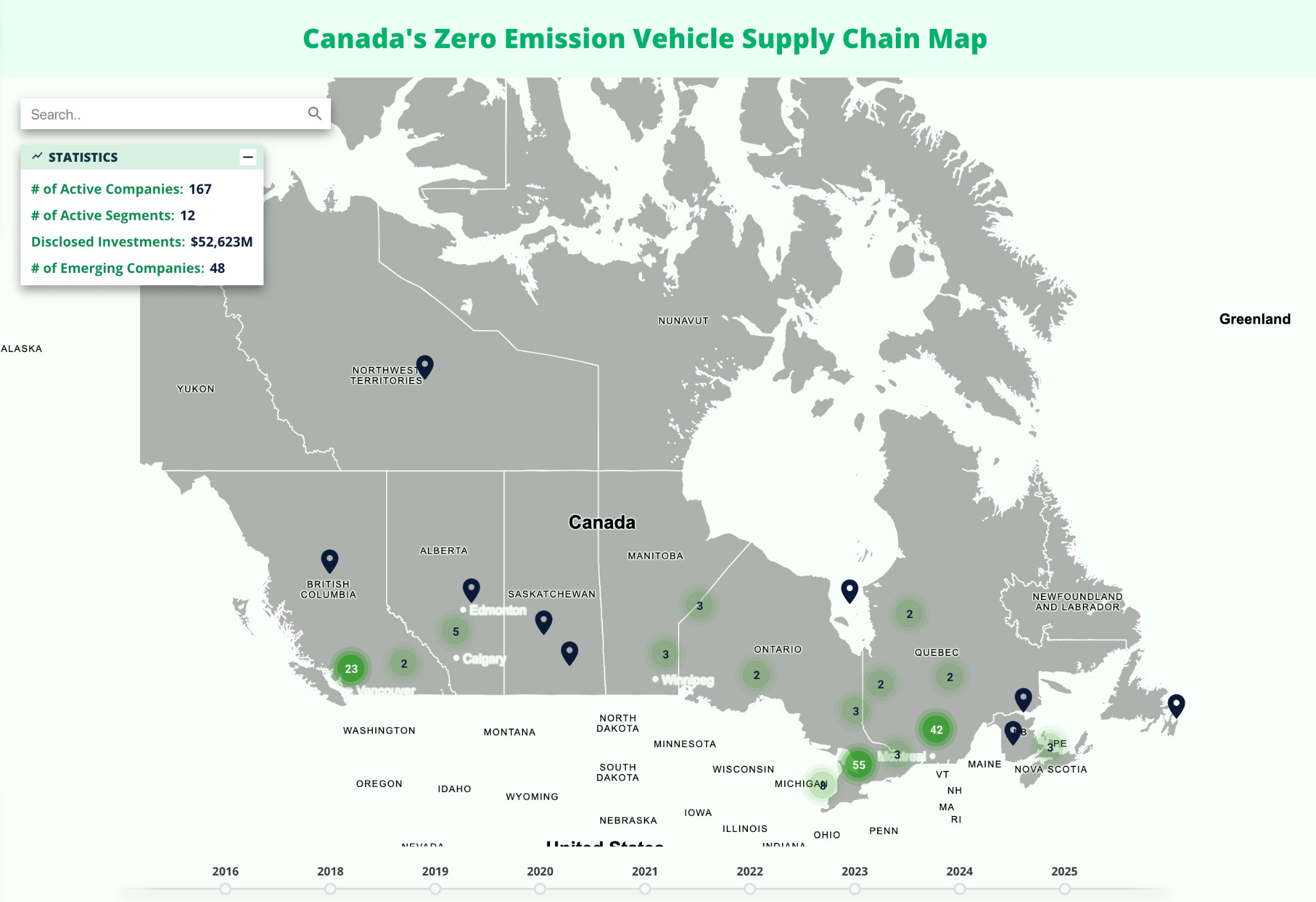
“Canada attracted $50 billion in EV investments over the last few years and is ranked one of the top countries in the world for battery supply chain potential. Yes, Trump’s tariffs and u-turn on EV policy put the Canadian auto industry at risk, but with today’s package and recent efforts to work with other auto partners still committed to EVs—like our friends in South Korea and Germany—Canada has a much better chance of competing in a changing global car market,” Joanna Kyriazis, director of policy and strategy at Clean Energy Canada, said in February.
Kyriazis agrees the absence of EVAS “leaves a massive gap in the market”, especially for charging infrastructure investors “whether it's electric utilities, municipalities or the private sector” who relied on the policy to provide certainty that a growing number of EVs would be on the road and generate a return on investment.
“It was one of the best ways to de-risk private investment because you’re giving that industry certainty that there’s going to be a certain percentage of EVs on the road year after year, and they're going to see a return on their investment,” she explained.
“Without EVAS, there's not the same pull for global car makers to be sending their EV inventory here, and so it's possible that we start to see supply constraints as a result.”
In Europe, rather than directly requiring consumers to buy EVs, the EU uses strict fleet-wide tailpipe carbon standards that effectively push automakers to increase EV sales, while countries such as the United Kingdom have gone further by imposing direct zero-emission vehicle sales mandates with annual targets.
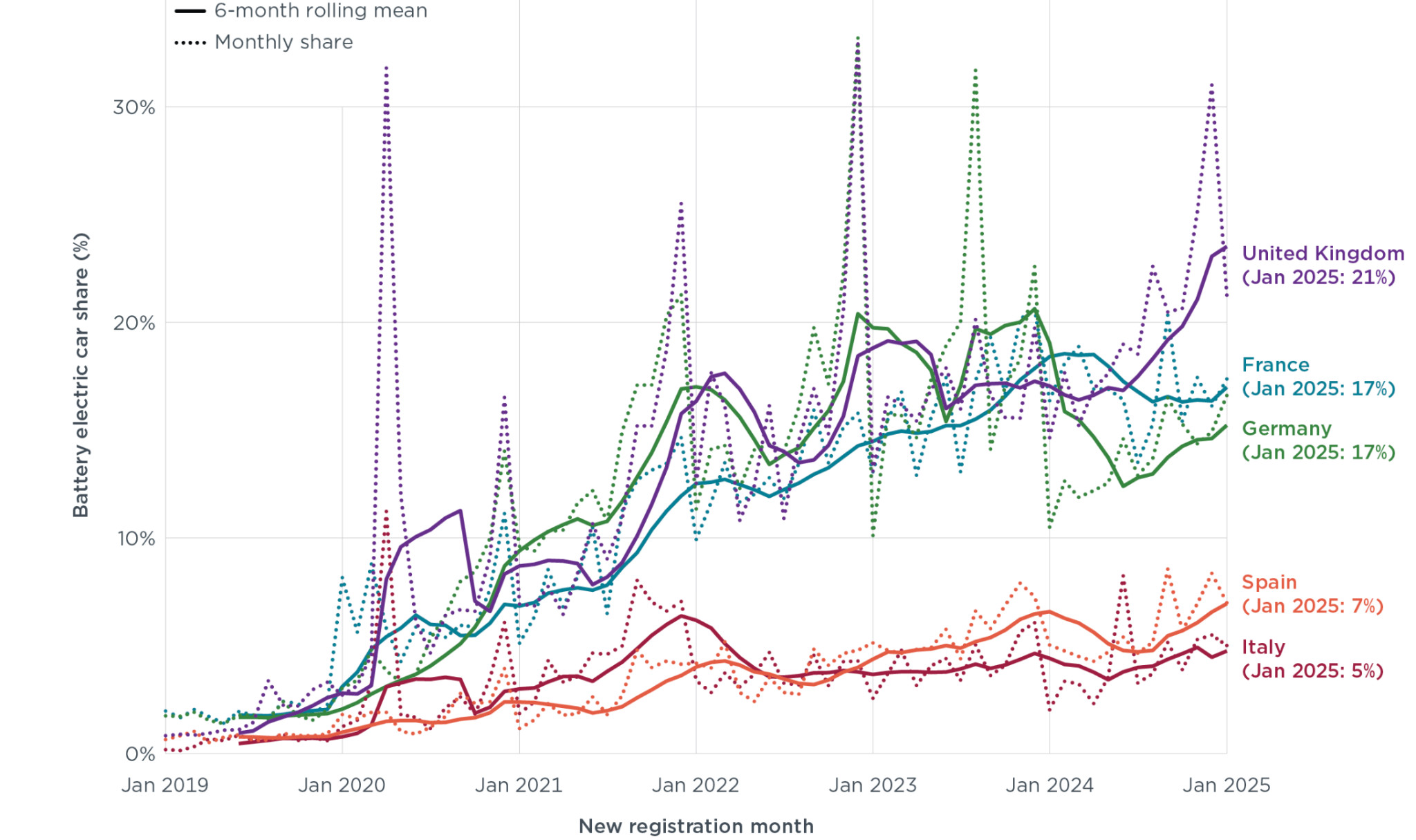
In 2024-25, the United Kingdom’s zero-emission vehicle (ZEV) mandate played a crucial role in boosting sales as battery-electric vehicles accounted for 19 percent of new purchases in 2024, up from 16 percent the previous year, surpassing Germany and making the U.K. the leading large European market.
(The International Council on Clean Transportation)
Ottawa’s promised replacement tailpipe emission standards could provide similar certainty while encouraging automakers to send more EV inventory to Canada.
Email: [email protected]
At a time when vital public information is needed by everyone, The Pointer has taken down our paywall on all stories to ensure every resident of Brampton, Mississauga and Niagara has access to the facts. For those who are able, we encourage you to consider a subscription. This will help us report on important public interest issues the community needs to know about now more than ever. You can register for a 30-day free trial HERE. Thereafter, The Pointer will charge $10 a month and you can cancel any time right on the website. Thank you
Submit a correction about this story

