
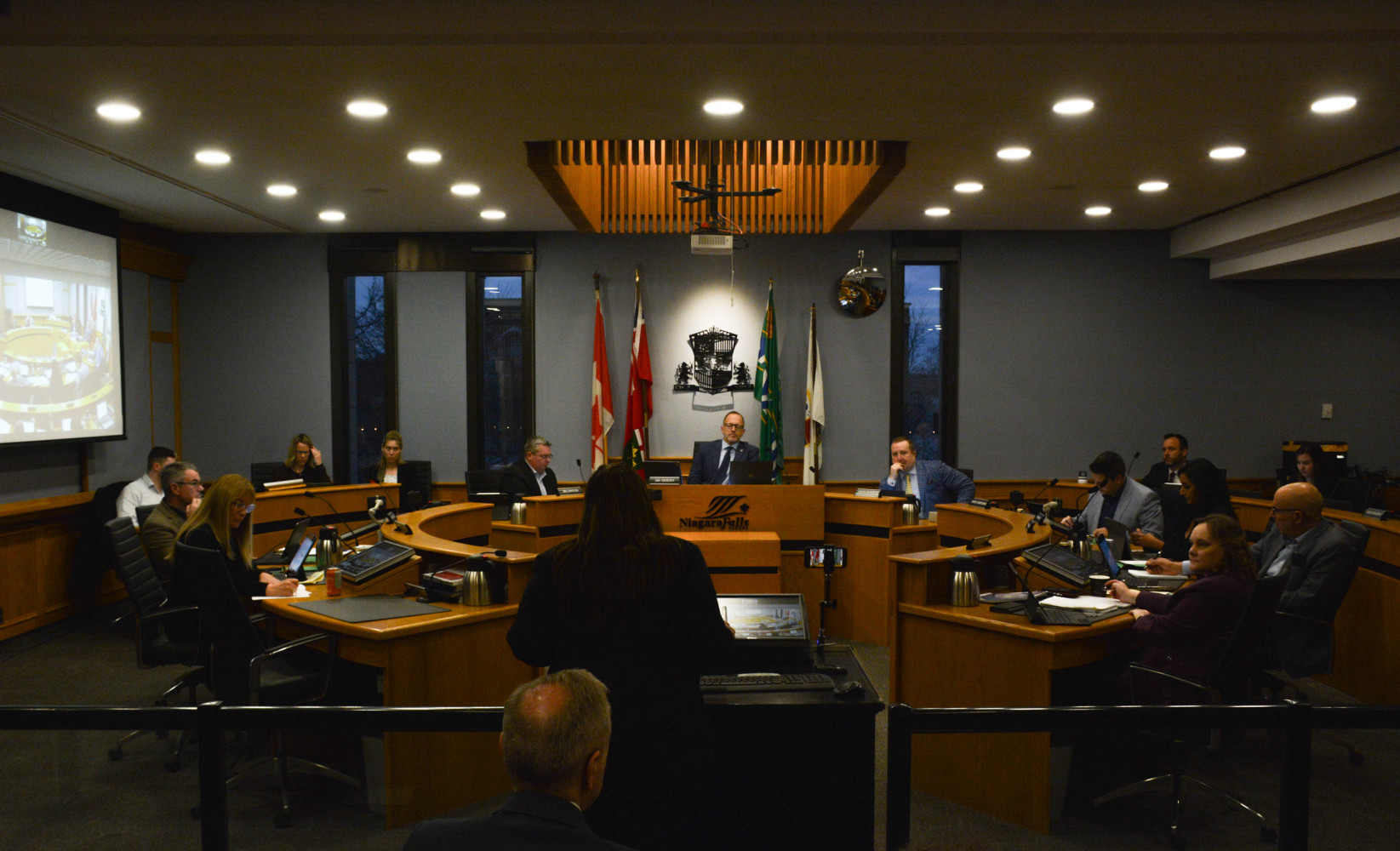
After increasing the fee for residents trying to hold local politicians accountable, Niagara Falls Council moves to recoup costs from complainants
At its July 12 meeting, Niagara Falls City Council passed Bylaw 2026-60: to recover a portion of the City’s costs when responding to complaints to the Integrity Commissioner that are labelled frivolous or vexatious.
The bylaw, which passed on a 7-1 vote, with only Councillor Lori Lococo in opposition, is the latest in a long line of systematic actions the Council has taken related to the Code of Conduct process — which allows for an inquiry to be undertaken by an integrity commissioner against a council member who has possibly run afoul with the municipality’s conduct rules.
Since the 2019 legislative requirement for Ontario municipalities to appoint an Integrity Commissioner and adopt a Code of Conduct, Niagara Falls City Council has imposed, and regularly increased, a fee for filing a request, limited requests to residents of Niagara Falls only, and, with Bylaw 2026-60, it will now attempt to recoup costs incurred for the legally mandated service, from the individual seeking to hold elected officials accountable.
While each fee increase and action by Council has arguably discouraged legitimate complaints from coming forward, it has been less effective at reducing so-called frivolous and vexatious complaints. With Councillors and staff touting the new bylaw as protecting the municipality’s taxpayers, it seems the bylaw is geared toward the actions of a single resident, who has regularly filed Code of Conduct complaints.
In March 2019, it became mandatory for all Ontario municipalities to appoint an integrity commissioner and develop a Code of Conduct to govern the behaviour of Council and local board members. Although the City’s Code indicates that all members shall conduct themselves with decorum and in accordance with the City’s Procedural Bylaw, the Integrity Commissioner for the municipality has regularly found that the City’s Code does not explicitly enable the review of complaints about decorum or conduct by members during council meetings.
In September 2020, Council imposed a $200 administrative fee that was only to be refundable if the complaint was found to be valid. When the fee did not reduce the number of requests, in June 2021, Council upped the cost to $500. The complainant would also forfeit their entire filing fee if the Integrity Commissioner found the complaint to be frivolous or vexatious or no violation had occurred.
The imposition of the fees prompted Ontario’s Ombudsman to send letters to Niagara Falls Council in 2023 and 2024 denouncing the move. “Charging a fee to complain is entirely inconsistent with the primary intent of the Integrity Commissioner scheme, which is to foster democratic legitimacy and public trust at the local level,” the Ombudsman wrote.
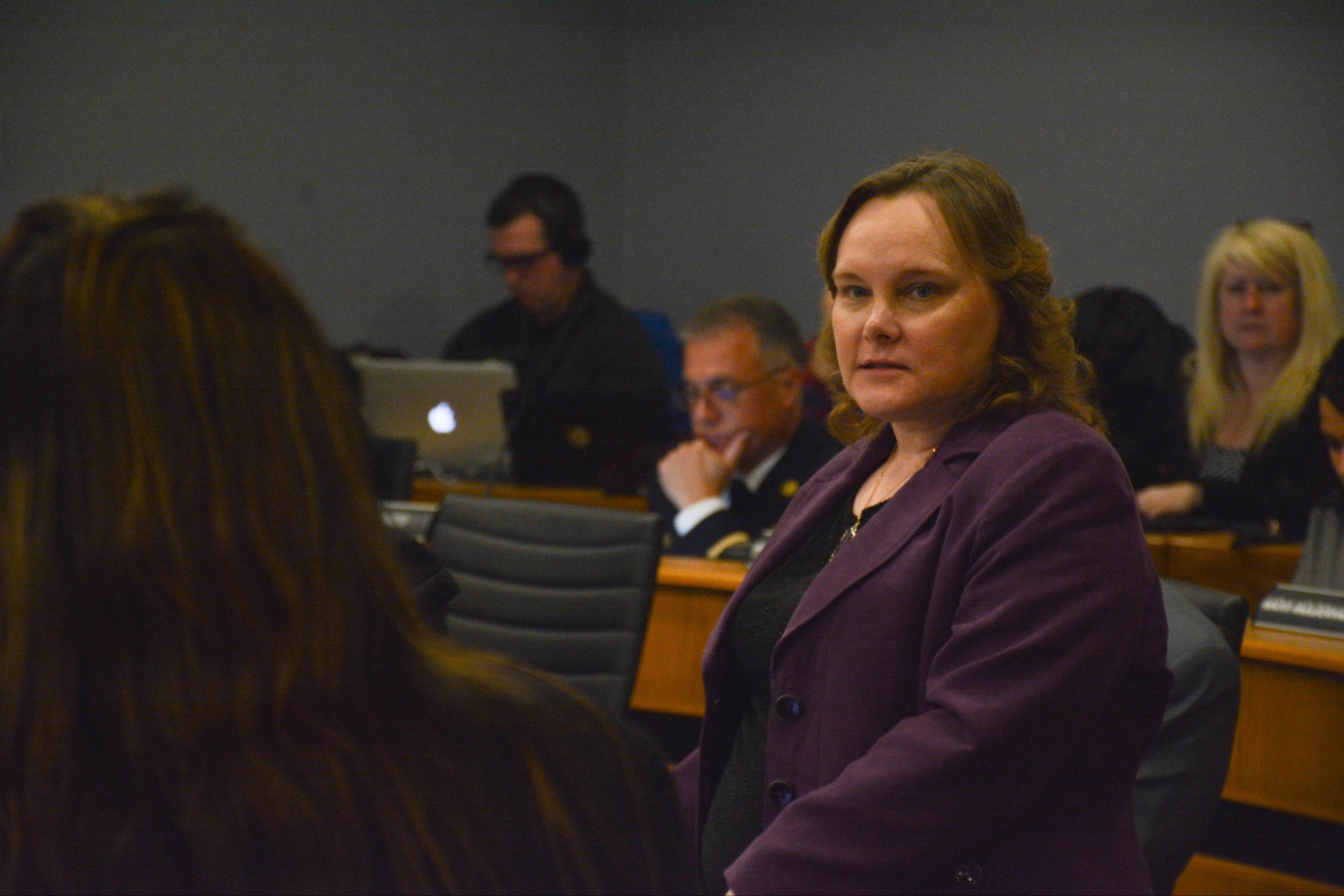
Niagara Falls Councillor Lori Lococo was the only council member to oppose a new bylaw that seeks to recoup integrity commissioner costs from residents seeking to hold their local elected officials accountable.
(Joel Wittnebel/The Pointer files)
A report came forward to Council from the City Clerk in 2023 after the imposition of the $500 fee seemed to imply that the point of the fee was not just to reduce the number of Code of Conduct complaints but to effectively eliminate them: “While the number of complaints filed with the Clerk’s office have reduced over the past couple of years, they have not stopped. In fact, at the time of writing this report there are currently two active complaints that have been filed, and both included the complainant paying the $500 filing fee.”
In addition, the City’s Code of Conduct has a geographical barrier that stipulates complaints are to be initiated by a “resident of the City of Niagara Falls.” This wording differs from the more generic language seen in other municipal codes that describes a complainant as a “member of the public”—language that also appears in the Municipal Act.
In 2022, the City’s Integrity Commissioner had to decline considering a complaint from St. Catharines resident, Sabrina Hill, who alleged that former longtime Council member Wayne Thomson called her a “sick dog” during a phone call when she pressed him on his support for Marineland.
Last year, two Niagara residents were barred from filing complaints against Mayor Jim Diodati after he had the police come and arrest them for holding a peaceful protest in the council chambers.
In February of this year, Councillor Vince Kerrio got a motion passed, with Councillors Lococo and Mona Patel voting against, doubling the filing fee to $1,000, with the continued proviso that the complainant would forfeit the four-figure filing fee if no violation was determined by the Integrity Commissioner. A full refund would only be provided if a violation was found.
“The City paid hundreds of thousands of dollars on frivolous complaints or complaints that were just personal vendettas from some people against some of the councillors. For the taxpayers to have to pay hundreds of thousands of dollars to satisfy these people's whims is absolutely ludicrous,” Kerrio argued.
At its next meeting the following month, Council gave direction to City staff to prepare a bylaw for recovery of costs "associated with continued unfounded complaints”, leading to the bylaw on July’s Council meeting agenda.
The latest fee increase by Niagara Falls did not go unnoticed. In his 2025-2026 annual report, the Ombudsman wrote that there are better ways of dealing with frivolous and vexatious complaints:
“The City of Niagara Falls chose to double its complaint fee from $500 to $1,000, despite the Ombudsman’s explanation that frivolous and vexatious complaints are best managed at the discretion of the integrity commissioner, rather than a financial barrier that could deter legitimate complaints by those who cannot afford the fee.”
Council members have also bemoaned the fees incurred by the municipality related to Code of Conduct complaints. Councillor Mike Strange, in February, dubiously claimed that the cost of the complaints would “bankrupt the city”. A March staff report noted that “Council has inquired not only about the costs associated with the investigations but also about the amount of staff time administering the complaints.”
The fees incurred by the City on Code of Conduct complaints, however, are almost entirely based on the fees charged by ADR Chambers, the company that provides the City its integrity commissioner service. Under questioning during a 2024 Council meeting, City Clerk Bill Matson admitted that there was not a “tremendous amount of staff time” involved in Code of Conduct complaints other than the occasional back and forth with the integrity commissioner, and that staff would be merely receiving and forwarding the complaints.
A staff report from March of this year indicated that during the current term of Council (commencing in November 2022) there had been “several Code of Conduct complaints, six of which have been completed, totaling $79,049.”
While any expenditure of the public purse should be scrutinized, if the $79,049 was solely for 2026, it would equate to approximately 0.004 of a percent of the $179,702,000 of total expenses from the City’s 2026 tax supported operating budget. The municipality has annually budgeted $45,000 for the integrity commissioner.
During the current term of Council, as per the public reports on the Council agendas, Code of Conduct complaints have been levelled specifically against Councillors Victor Pietrangelo, Kerrio and Lococo. None of the councillors were found to have violated the City’s Code of Conduct but the complaints all led to reports and in the case of Pietrangelo, the Integrity Commissioner noted that the “issues warranted investigation.”
If Bylaw 2026-60 had been in effect at the time of those complaints, it would not have been triggered as there was not a finding that those complaints were frivolous or vexatious.
Councillors Strange and the late Councillor Wayne Campbell have each been the subject of two complaints during this council term, with one of those complaints, for each, being deemed frivolous and vexatious, and one complaint being investigated, reported on and deemed to have found no violation.
A review of Council agendas over the course of this term (November 2022 to present) finds a total of nine Code of Conduct complaints that have been the subject of reports that the Integrity Commissioner asked to be placed on the Council agenda.
Of the reported nine investigations, three were deemed by the Integrity Commissioner to be frivolous and vexatious. All three were filed by local resident Joedy Burdett, who filed six of the nine complaints that have been publicly reported over the council term. Mr. Burdett ran for Council in 2022, finished 20th out of 26 candidates and has filed again for the 2026 municipal election.
While not specifically naming him, Mr. Burdett’s persistent communications to Council led to a 2024 staff report entitled "Restriction of Certain Forms of Participation and Engagement in Council Meetings” that recommended staff exclude communications from agendas if “frivolous, without factual or legal merit or abusive.”
With regard to his Code of Conduct complaints, the September 12, 2023 Council agenda had an Integrity Commissioner’s report on a Burdett complaint that related to a number of issues including how correspondences he had submitted were being presented to City Council; actions that occurred during Council meetings that he was critical of; and the lack of information that had been promised to him regarding one of the City’s Business Improvement Areas.
The Integrity Commissioner declared the complaint as “improper”.
“The complainant was well aware that the filing of an omnibus complaint of this nature is inappropriate and unacceptable. He proceeded to do so anyway,” the report pointed out. The Integrity Commissioner also took exception with Burdett tagging his correspondences to Council with such self-proclaimed titles as, “The Official Opposition Party to the City of Niagara Falls” and “the Niagara Falls Shadow Council”.
In a complaint against Councillor Kerrio, reported March 3 of this year, Mr. Burdett accused the council member of an act of reprisal related to a motion denying him the opportunity to speak to the municipal operating budget.
Councillor Kerrio asserted that Burdett routinely filed frivolous complaints costing taxpayers significant sums in fees paid to the integrity commissioner.
During an interview with The Pointer earlier this year, Rebecca Hines, who is currently the Integrity Commissioner for Welland, questioned the handling of such complaints.
“There would be no reason for an integrity commissioner to investigate a complaint unless they thought there were reasonable and probable grounds to believe that a contravention may have occurred.”
There is a possibility that the new City of Niagara Falls bylaw could be moot. Bill 9, the Municipal Accountability Act received royal assent on June 2nd, nearly thirteen months after being introduced.
Bill 9 proposes to standardize municipal codes of conduct across Ontario.
According to Minister of Municipal Affairs & Housing Minister Rob Flack, a lack of standardization of municipal codes of conduct has meant 444 iterations, limited access to best practices, and “undermined public confidence in the fairness and effectiveness of accountability mechanisms.”
At the hearing on Bill 9 in London last summer, Minister Flack remarked that “some of our municipal friends like to operate on their own island, so to speak”, words that could describe Niagara Falls City Council’s actions related to the code of conduct process.
While there has been no specific mention that fees for complaints will be standardized or eliminated, the Ombudsman’s Office advocated for their elimination in its submission to the provincial government in August 2025.
At the July meeting, Councillor Lococo attempted to make the case that Niagara Falls City Council should hold off on passing Bylaw 2026-60 until the Province introduced regulations that she believed could happen sometime this summer. Her effort was unsuccessful.
“The government promises to do a lot of things quickly, but sometimes years go by. So, I say, let's put this (bylaw) in place, and if things change, we’ll change ours,” Councillor Kerrio responded.
As for Joedy Burdett, he submitted a twenty-five-page written rebuttal to the bylaw that was included on the July 12 agenda.
“Given Bill 9, the Ombudsman's guidance, the lack of public consultation, the absence of complaint statistics, the absence of transparent cost of evidence, and the open-ended financial exposure to residents, I do not see how the proposal can be supported,” Burdett said, as he addressed Council remotely.
He also gave some indication as to why he has been compelled to challenge the Council’s decisions and members over the term.
“In my opinion, the institutional moral compass of this administration has become compromised. I do not make that statement lightly. I am not suggesting that every individual within the organization lacks conscious or good intentions. I am speaking about the direction reflected in institutional decisions…This is not a routine cost recovery adjustment. It is a proposal that may teach residents that questioning elected officials carries an unknown financial price. It is a pathway to silent obedience.”
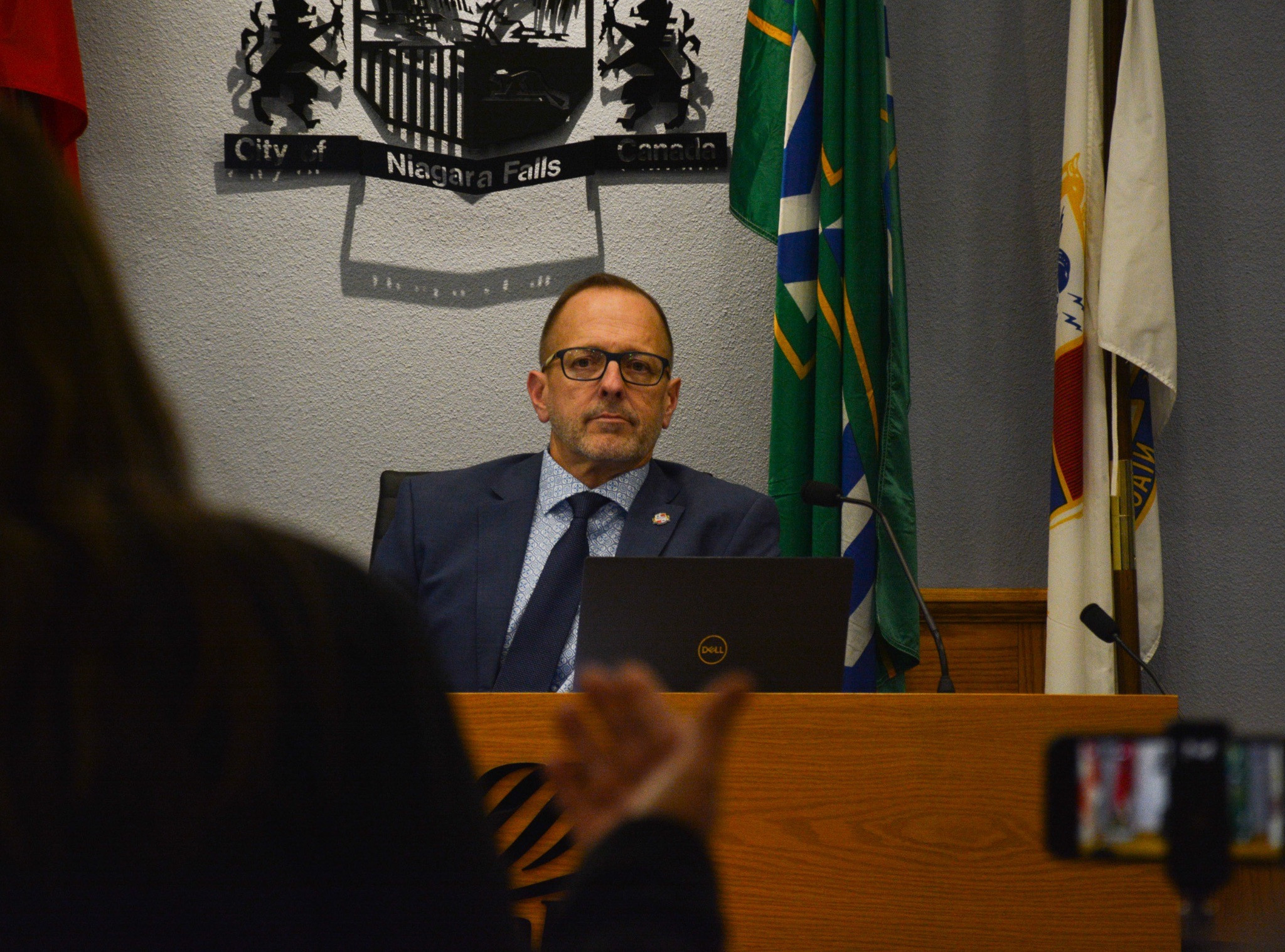
After Niagara Falls Mayor Jim Diodati had a trio of women arrested in the council chambers for a peaceful protest in June last year, two of those arrested were unable to file complaints against the mayor as they were not residents of Niagara Falls.
(Joel Wittnebel/The Pointer files)
Should Burdett launch another Code of Conduct complaint that is declared frivolous, Bylaw 2026-60 would allow him to appeal the decision to Council, though based on experience, it is difficult to see him gaining any sympathy from the members.
At the meeting, Burdett indicated that he was considering an application for judicial review to challenge the bylaw.
It will cost him $645, substantially less than the $1,000 code of conduct filing fee and 50 percent of additional costs that the City of Niagara Falls will charge him.
Email: [email protected]
At a time when vital public information is needed by everyone, The Pointer has taken down our paywall on all stories to ensure every resident of Brampton, Mississauga and Niagara has access to the facts. For those who are able, we encourage you to consider a subscription. This will help us report on important public interest issues the community needs to know about now more than ever. You can register for a 30-day free trial HERE. Thereafter, The Pointer will charge $10 a month and you can cancel any time right on the website. Thank you
Submit a correction about this story

